
 ← PreviousThe slow ride back up to Seoul
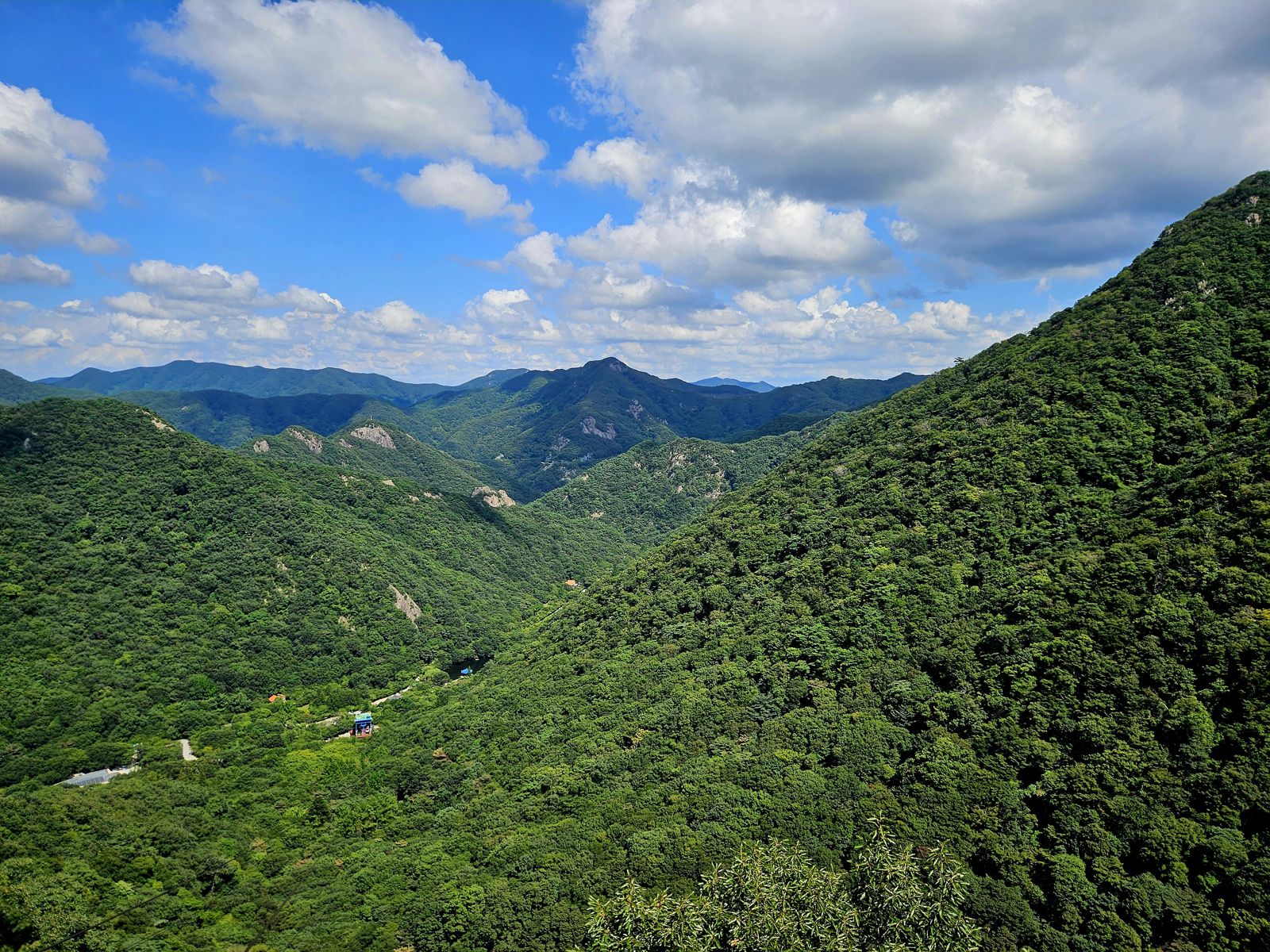
After two months of pedalling through the sticky Asian summer, we've learned to live with a clammy heat that never leaves us. More than landscapes or monuments, it's sometimes sensations that mark a journey: the ever-present humidity, the sweat beading with every movement, the deafening song of the maemi cicadas. Between Gunsan, Buyeo and Gongju, our route takes us into a South Korea that is both peaceful and surprising, where modern cycle paths blend with traces of history and our little Korean daily habits. For clarity, the map below shows the route described in this story.
Thursday 28 August
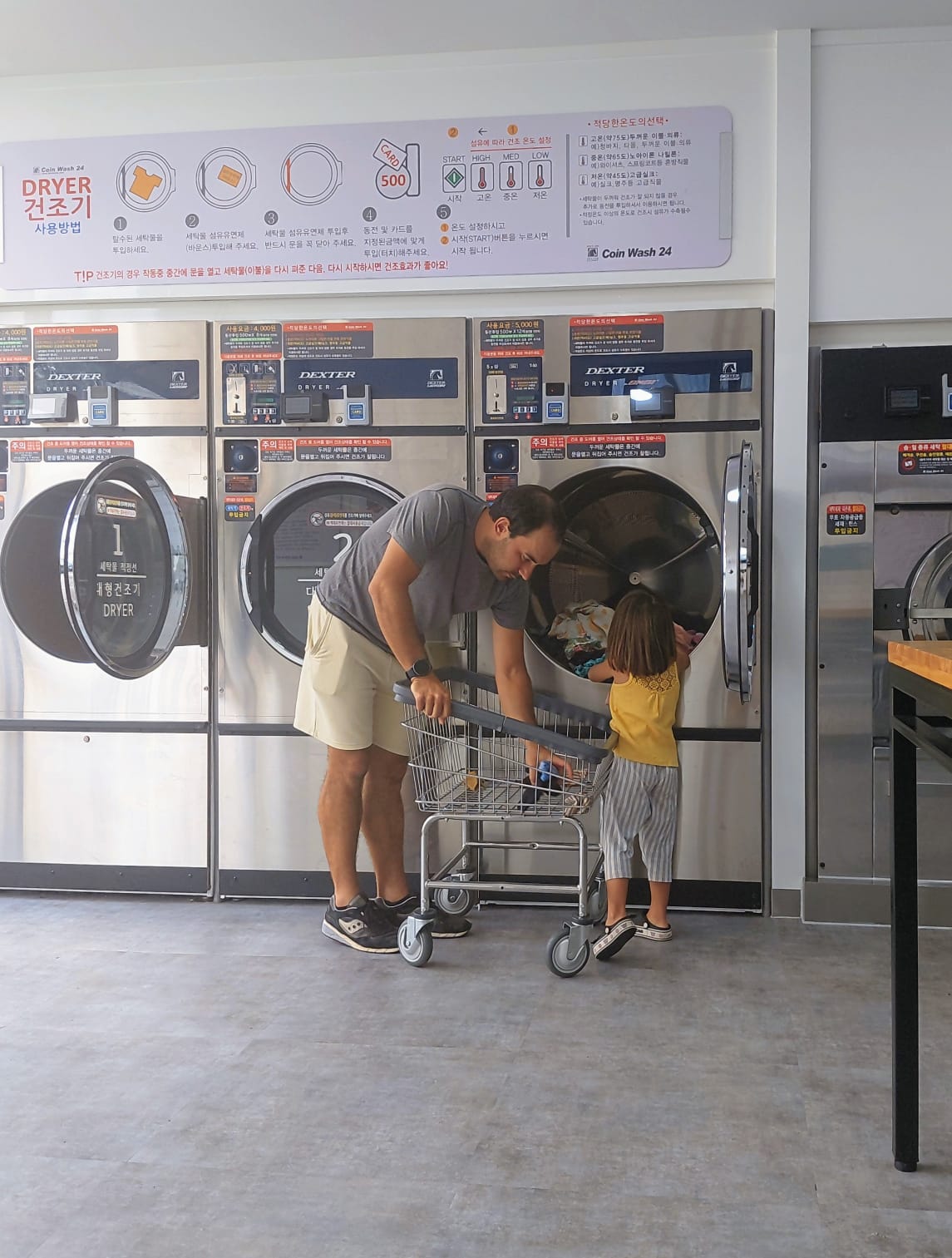
After several months of summer in East Asia, sweat is becoming a second skin. We don't often mention it, but humidity easily reaches 75%, and the slightest movement squeezes sweat out of every pore. Some mornings Stéphane can be drenched just from pumping up the bike tyres. It's part of the experience, and it may be the only part of the trip that truly belongs to us alone. In the age of social media, influencers and endless guidebooks, there's no corner of the civilised world that hasn't been described somewhere on the internet. So all that's left for us to discover is what can't be passed on through pictures: sensations. And this feeling of constant stickiness will stay with us for a long time.
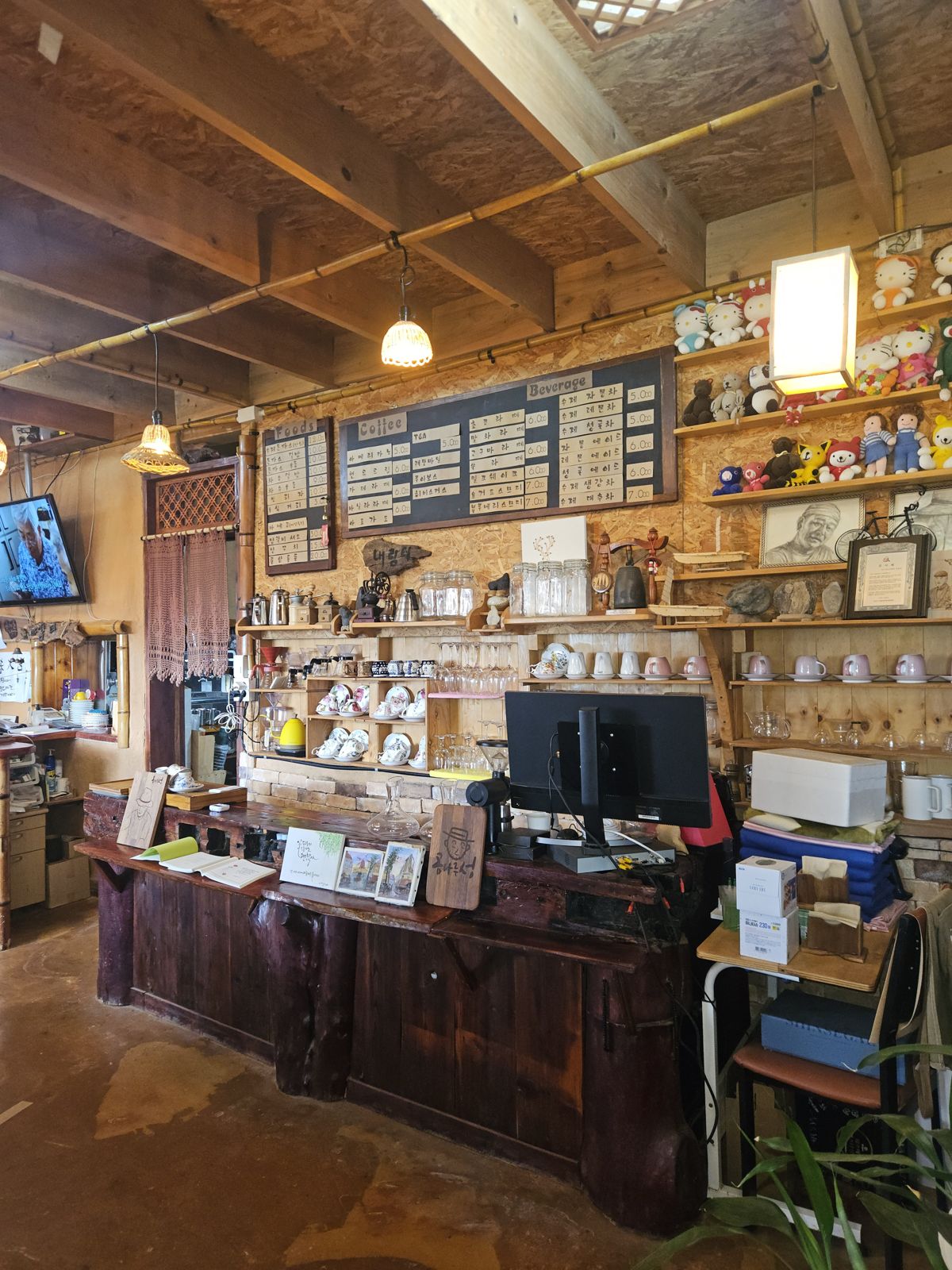
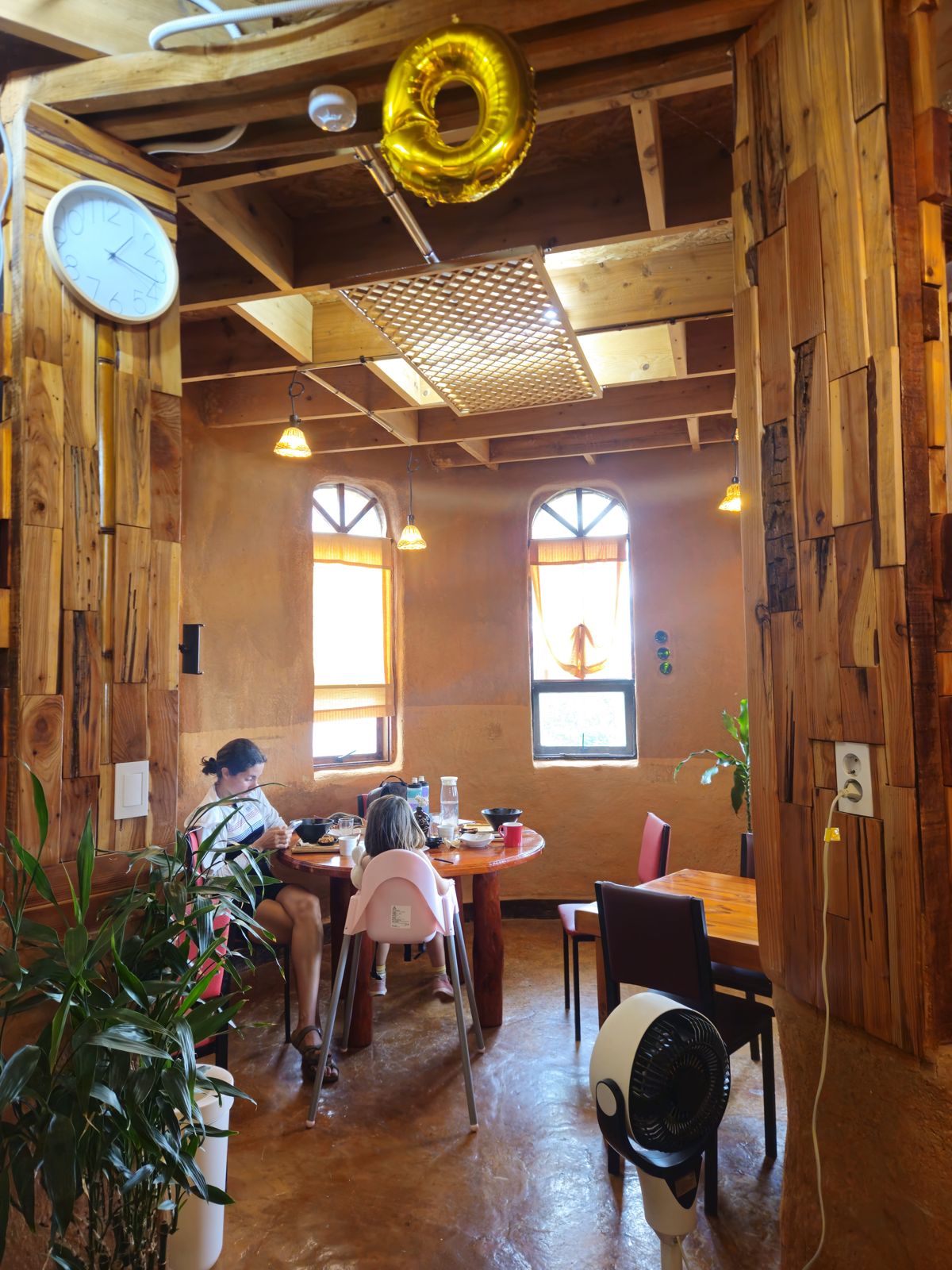
This morning it isn't even that hot, but with that famous humidity we're already sweating a lot while we're still in Gunsan. The cycle route follows the Geum River (Geumgang in Korean) for 150 kilometres. The path is monotonous, but it's nice to ride by following simple signs, without having to keep looking for the way or checking your GPS constantly. We ride twenty kilometres, then stop at a café at the top of a nasty slope. It's clearly Japanese in style, all wood. We eat fried pork and udon noodles (in broth). Clémence works her charm once more and gets a free dessert.
The road to today's stopover town is nothing to write home about. Sometimes there's nothing to report, like today. We still see a few scars from the July floods, and we're directed onto a detour through the countryside around a damaged section. We arrive at 3 pm at the hotel we'd spotted. We're now at ease in the Land of the Morning Calm and turn up at hotels without booking. South Korea must be one of the most convenient countries to visit by bike. The lady at reception confirms there's room, and we have the luxury of choosing a room with two beds.
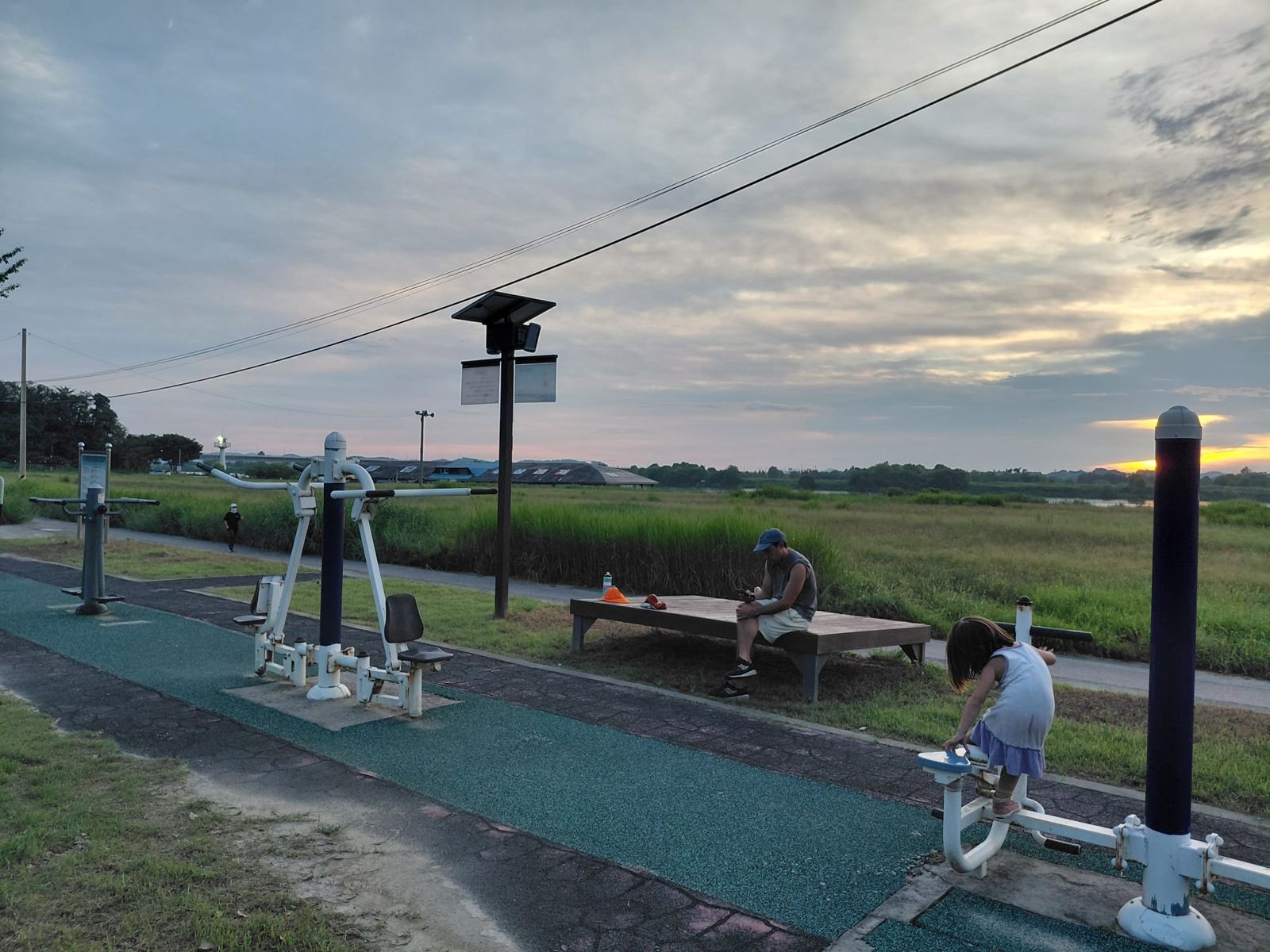
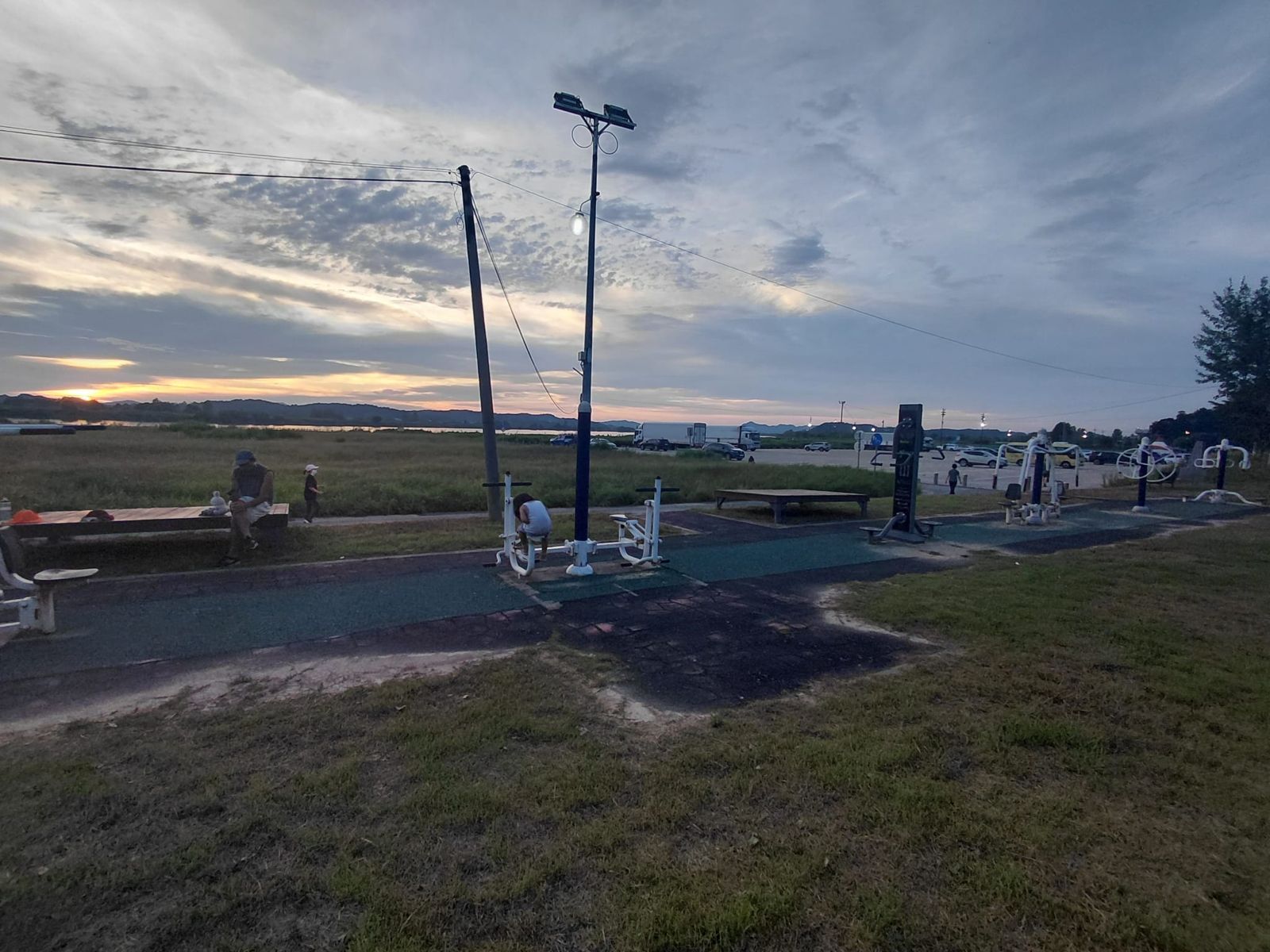
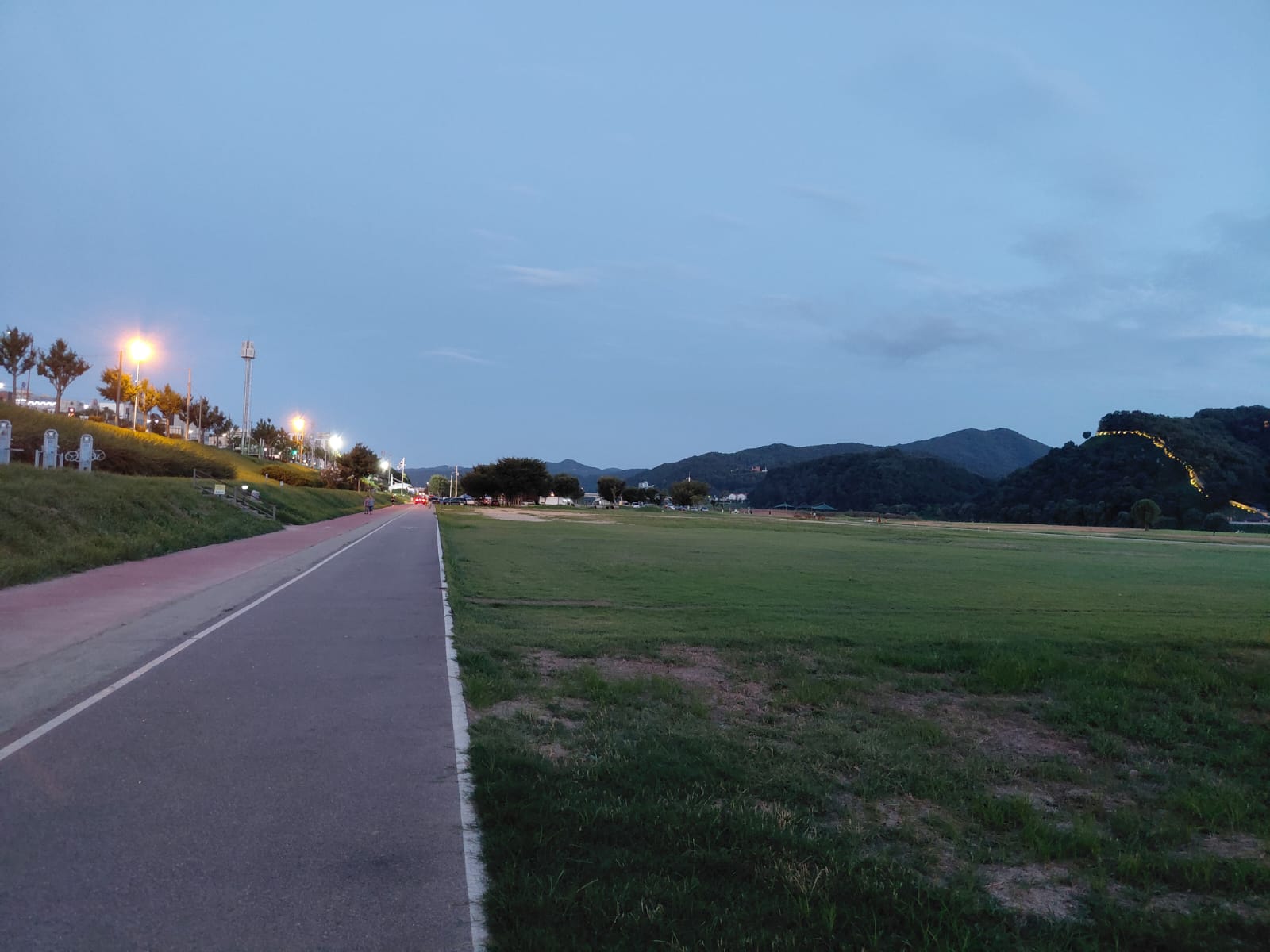
The place has a slightly odd layout, with reception on the third floor and rooms from the fourth to the sixth. On the second floor there's a café where we have a snack before strolling along the river. As usual, everything is very well laid out, with a cycle path, footpaths, green spaces, shady places to sit and so on. We come across an outdoor gym like so many here, and Clémence asks for nothing better to stretch her legs and do acrobatics. We're beginning to understand the routine of elderly Koreans. They arrive on foot or by bike, spend a few minutes on each machine, then leave the way they came, a little sweatier. These little areas are truly part of the country's deep culture. We wonder how such facilities would be used in France. By whom? When? What state would they be in?
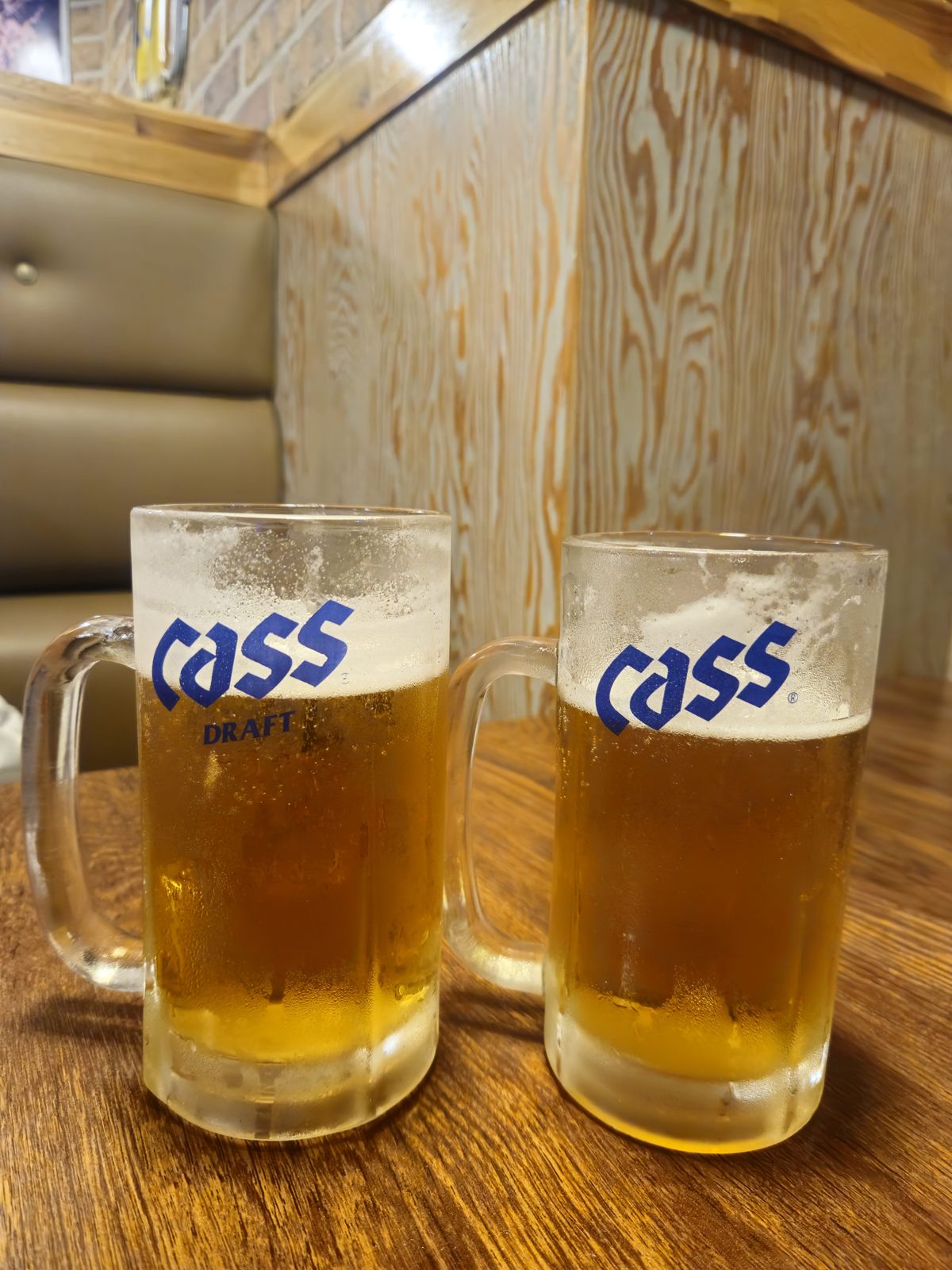
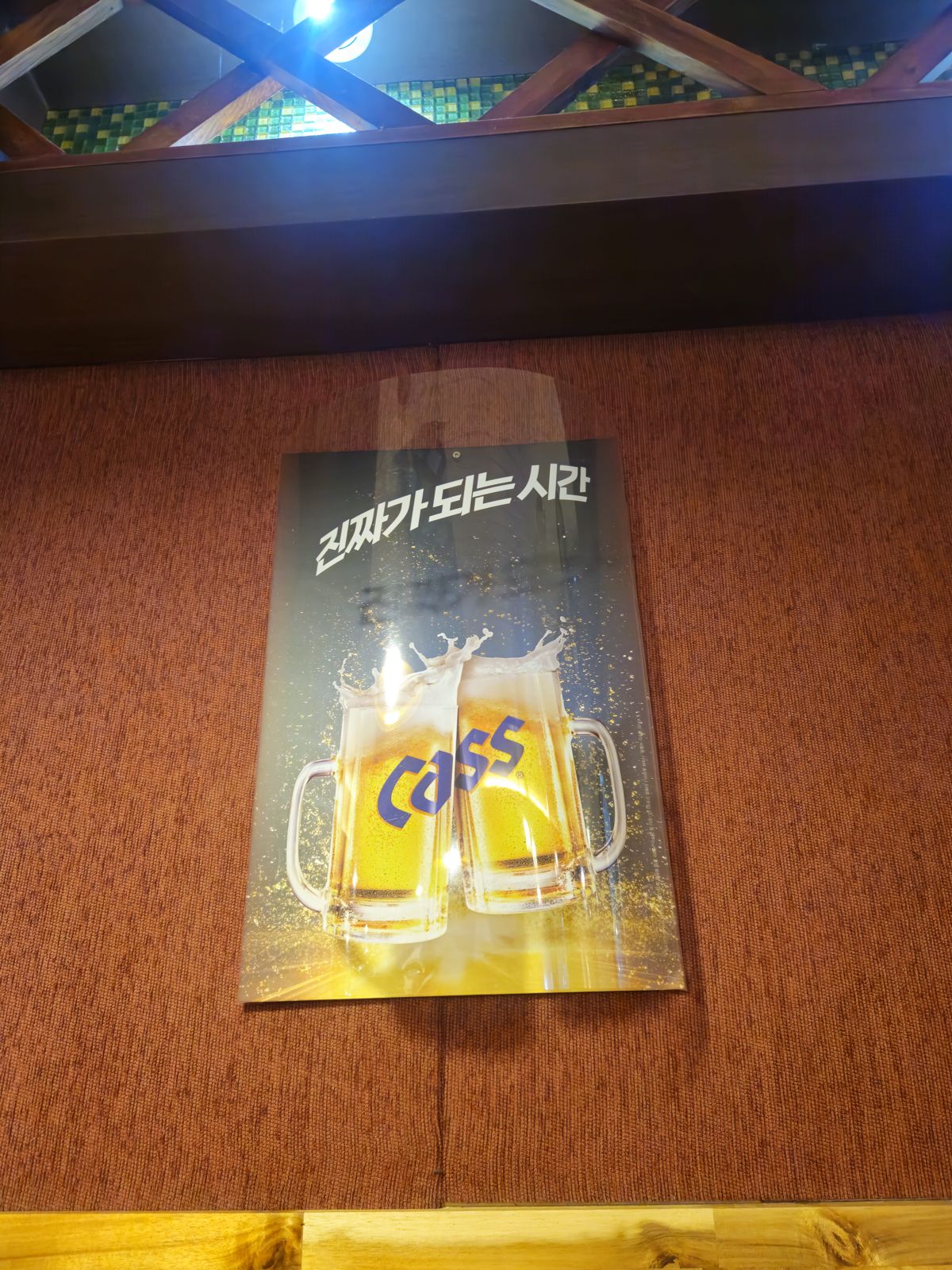
The sun sets and we head back to the hotel. On its ground floor there's a pub-style restaurant serving simple food at a reasonable price and in big portions. We end the day here, clinking two pints of Cass, the local beer. No, it's not a joke: Korea's most popular beer is called Cass. It's the only one we drink when we fancy a beer, and we realise we'd never even told you. Now we have!
Friday 29 August
In the south of France, cicadas colour the air with their song. They say you're in Provence when you start hearing them, and it's always a harmonious sound that evokes the holidays. In terms of decibels, though, they're utterly crushed by Korean cicadas, the maemi. Their song can reach 120 decibels, and it's no exaggeration to say you can't hear yourself think under a tree where they're giving a concert. It's a real festival in the town where we're sleeping, and despite the urban setting, you can't ignore them every time you open the window.
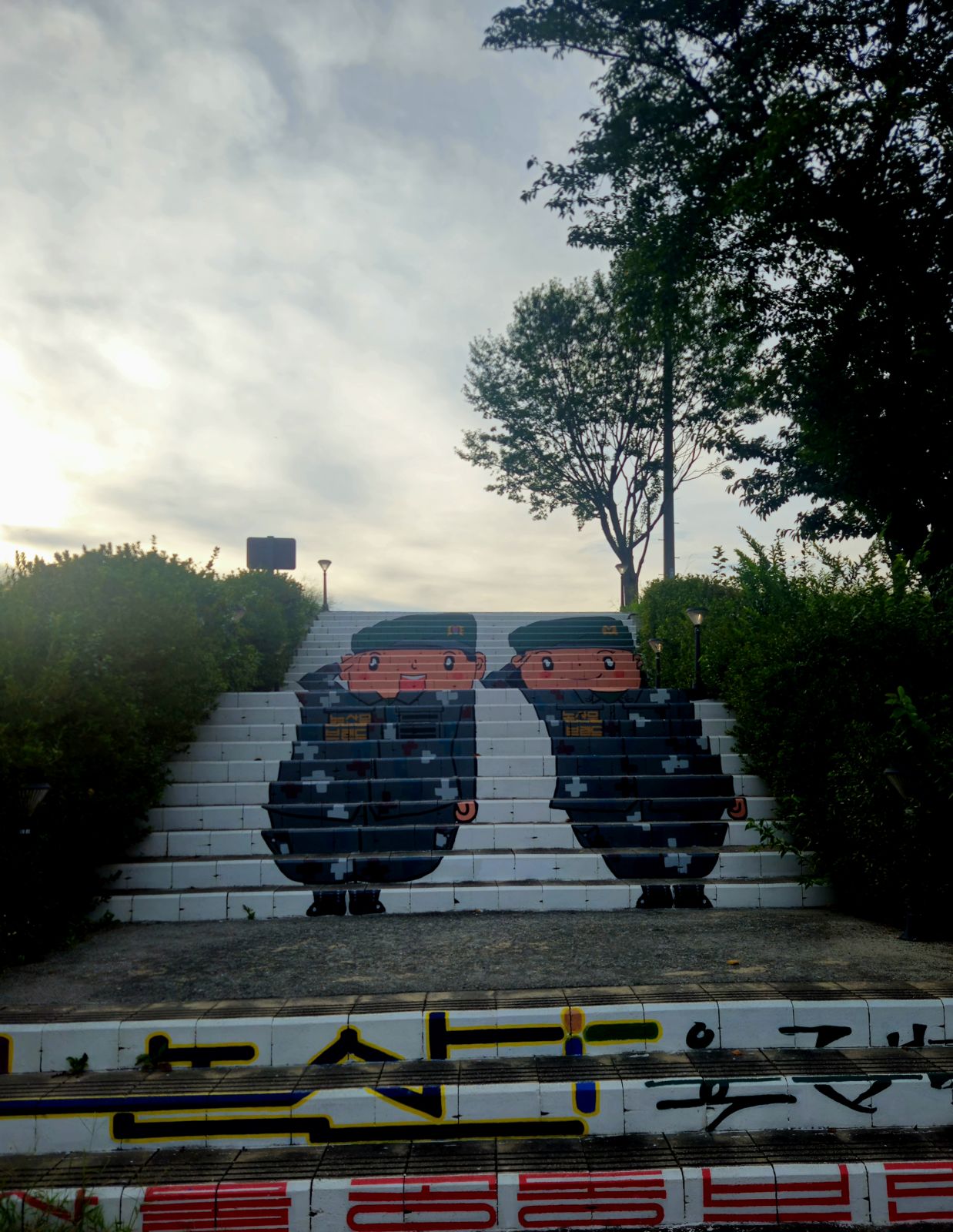
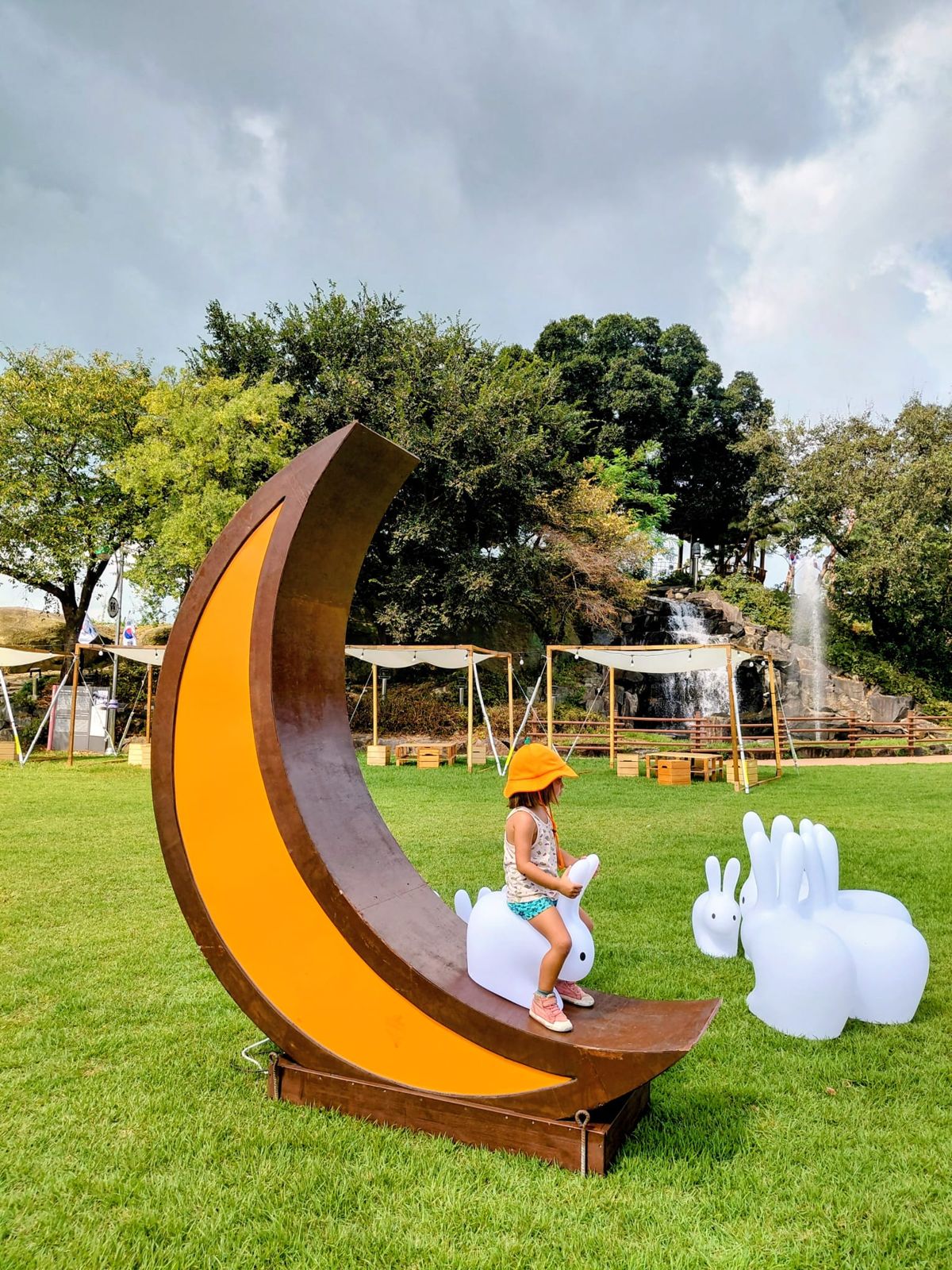
We only have about twenty kilometres to ride today, so we take our time. After buying our favourite corn bread at "Paris Baguette", a Korean bakery chain (yes, that name is entirely serious), we have breakfast in the room and set off around 10. We stop after only a kilometre to climb the little hill of Ongnyeobong, home to Korea's first Baptist church (destroyed by the Japanese after the congregation refused to turn it into a shrine), a monument to the anti-Japanese independence movement, and a playground and outdoor gym.
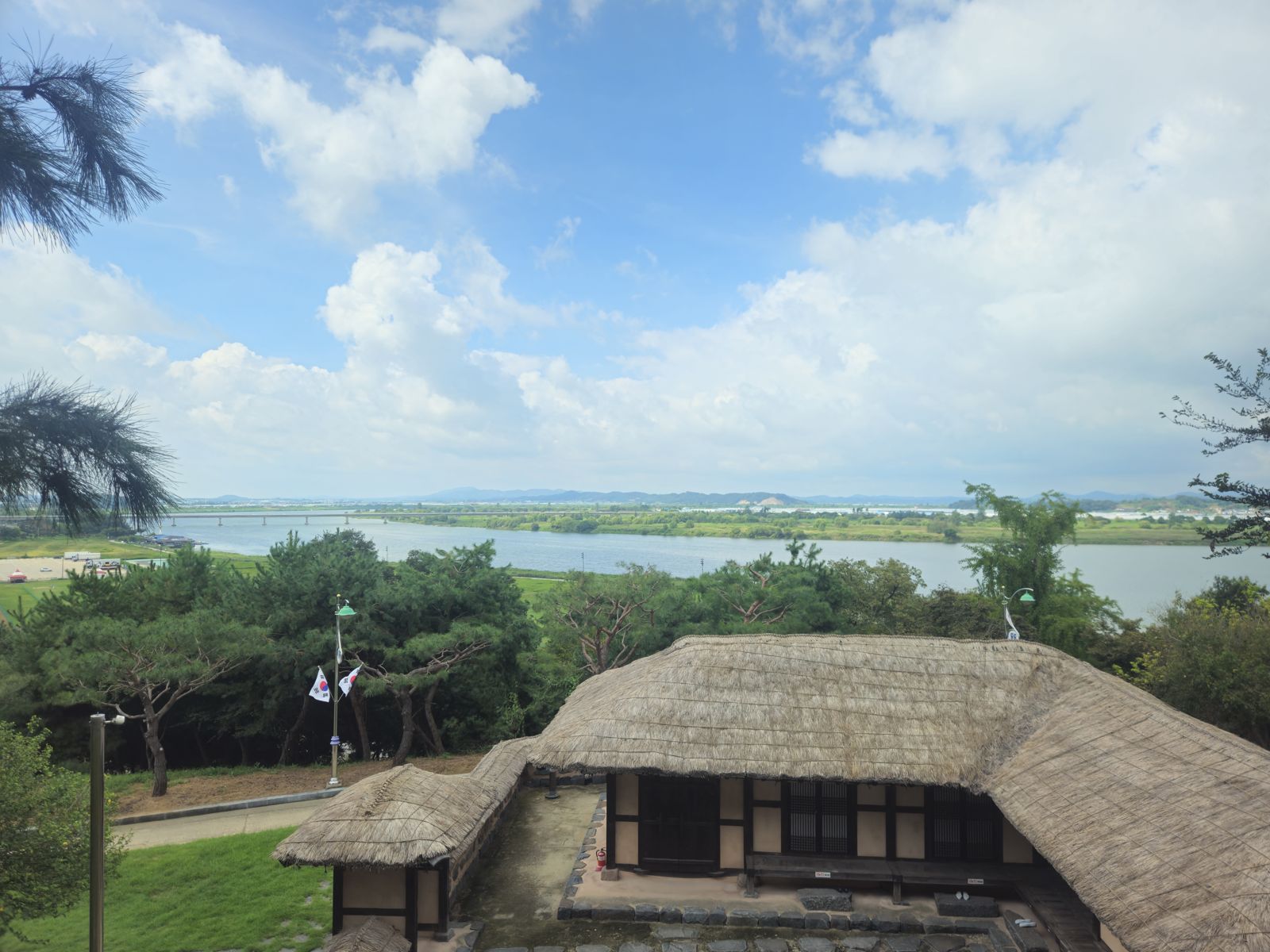
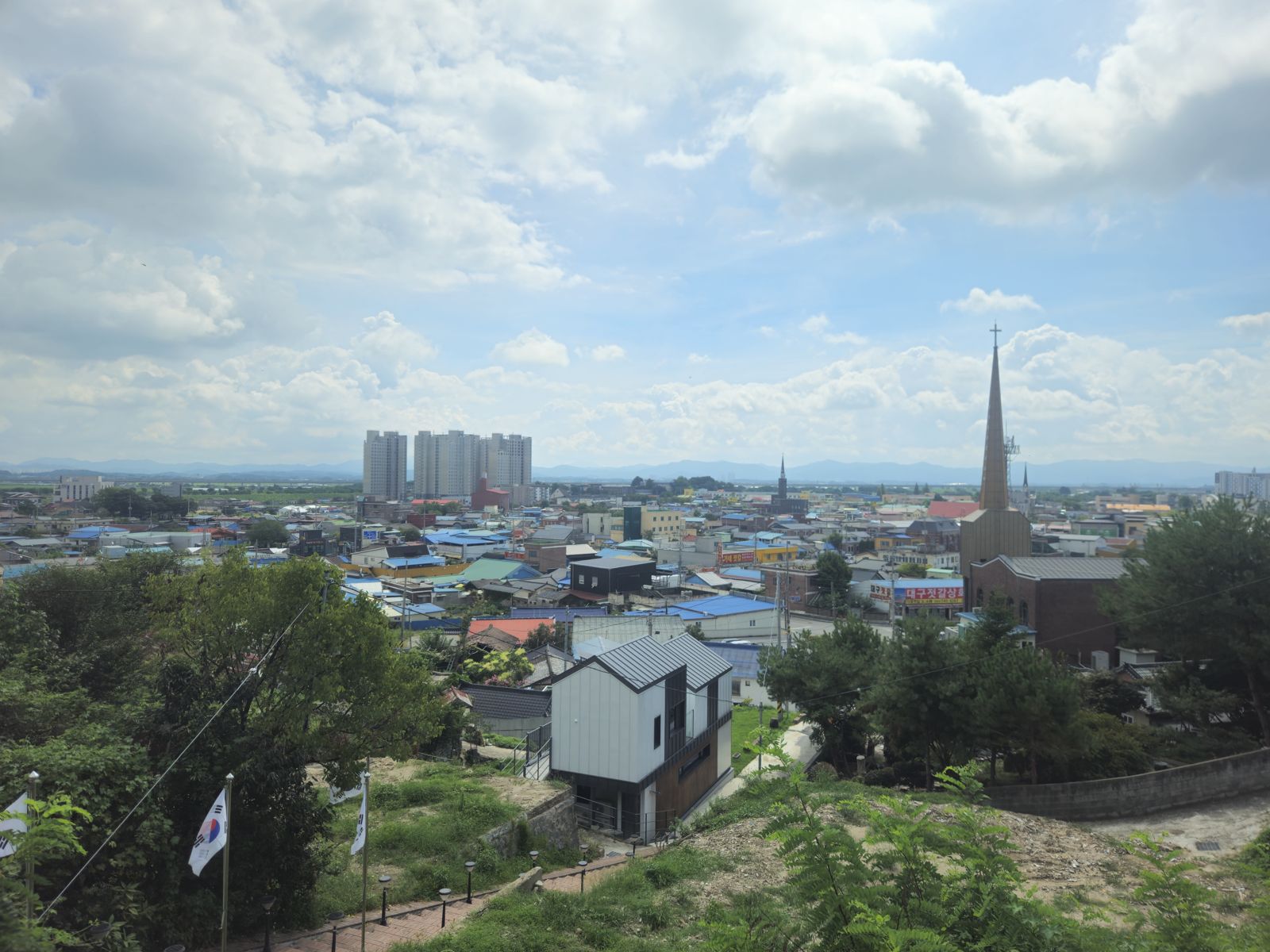
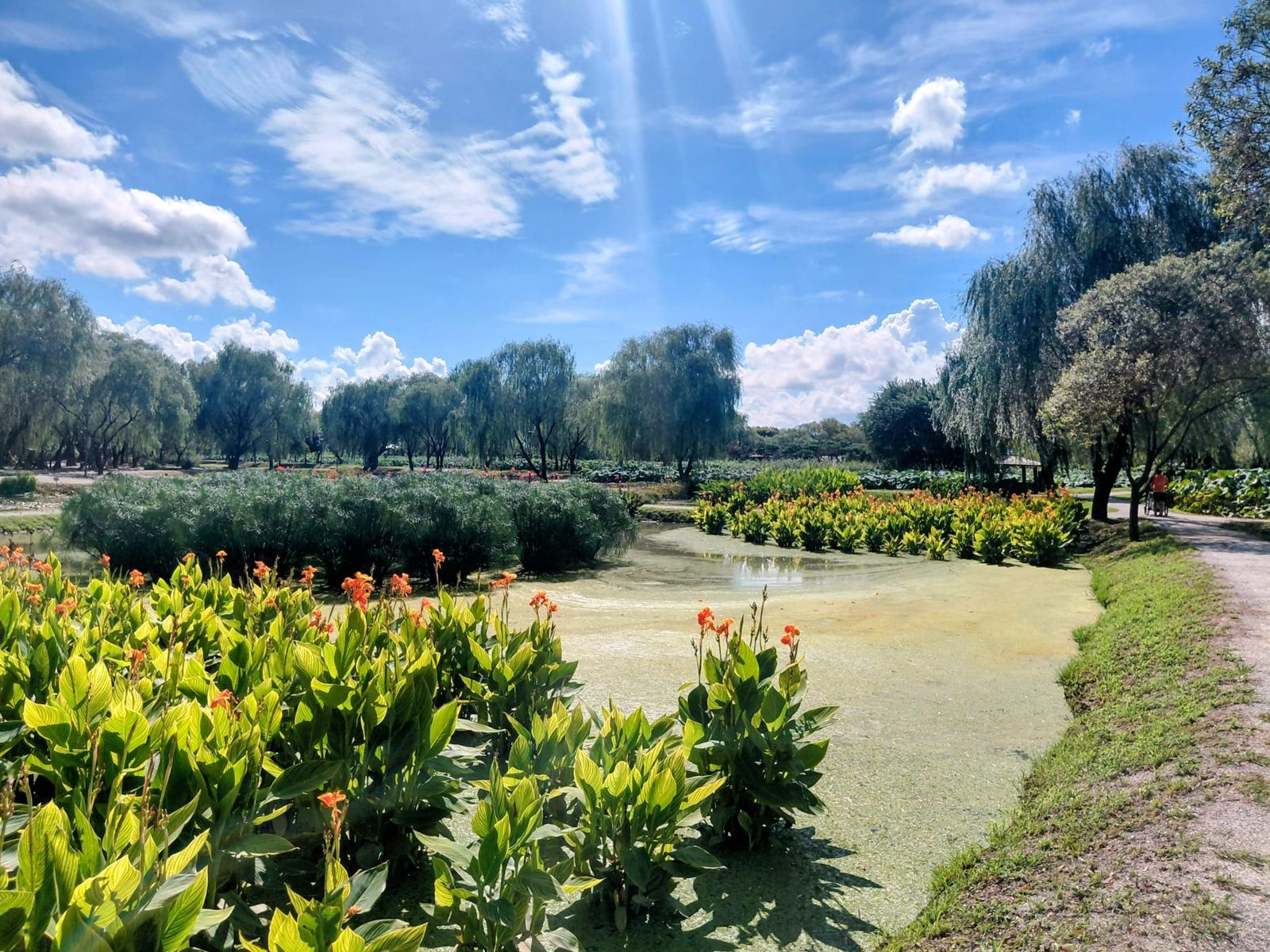
A nasty cloud approaches and a light rain starts to fall, so we decide to get going. By the time we reach the bikes, the rain has stopped. We ride the 22 kilometres to the town of Buyeo in one go, into a gruelling headwind that slows us down considerably. We reach Buyeo just in time for lunch, which we have in a small café on the edge of Seodong Park, a big park made up of many small ponds full of lotus flowers and water lilies. Since we're right by the park, we go for a little walk after eating to help digestion.
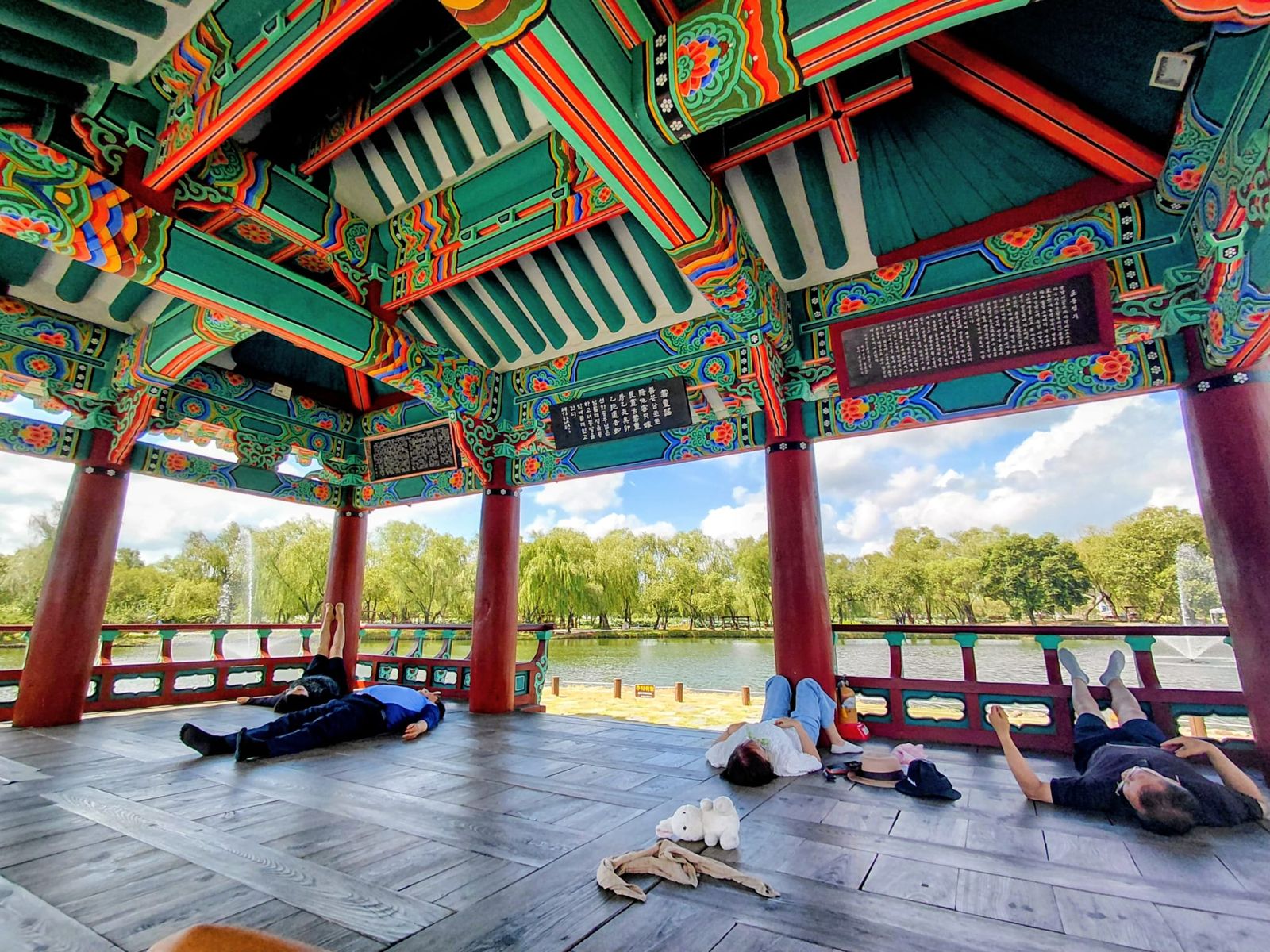
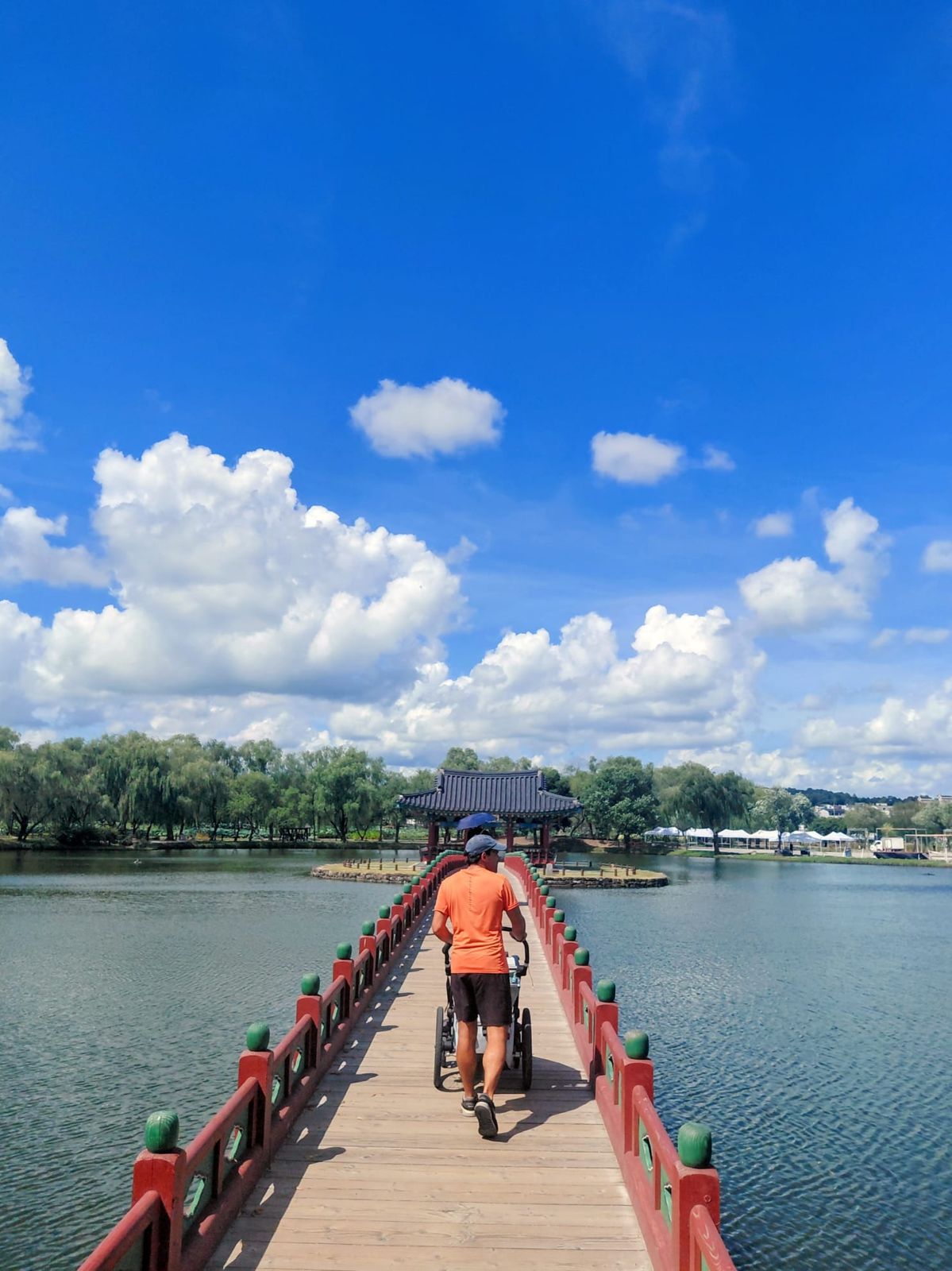
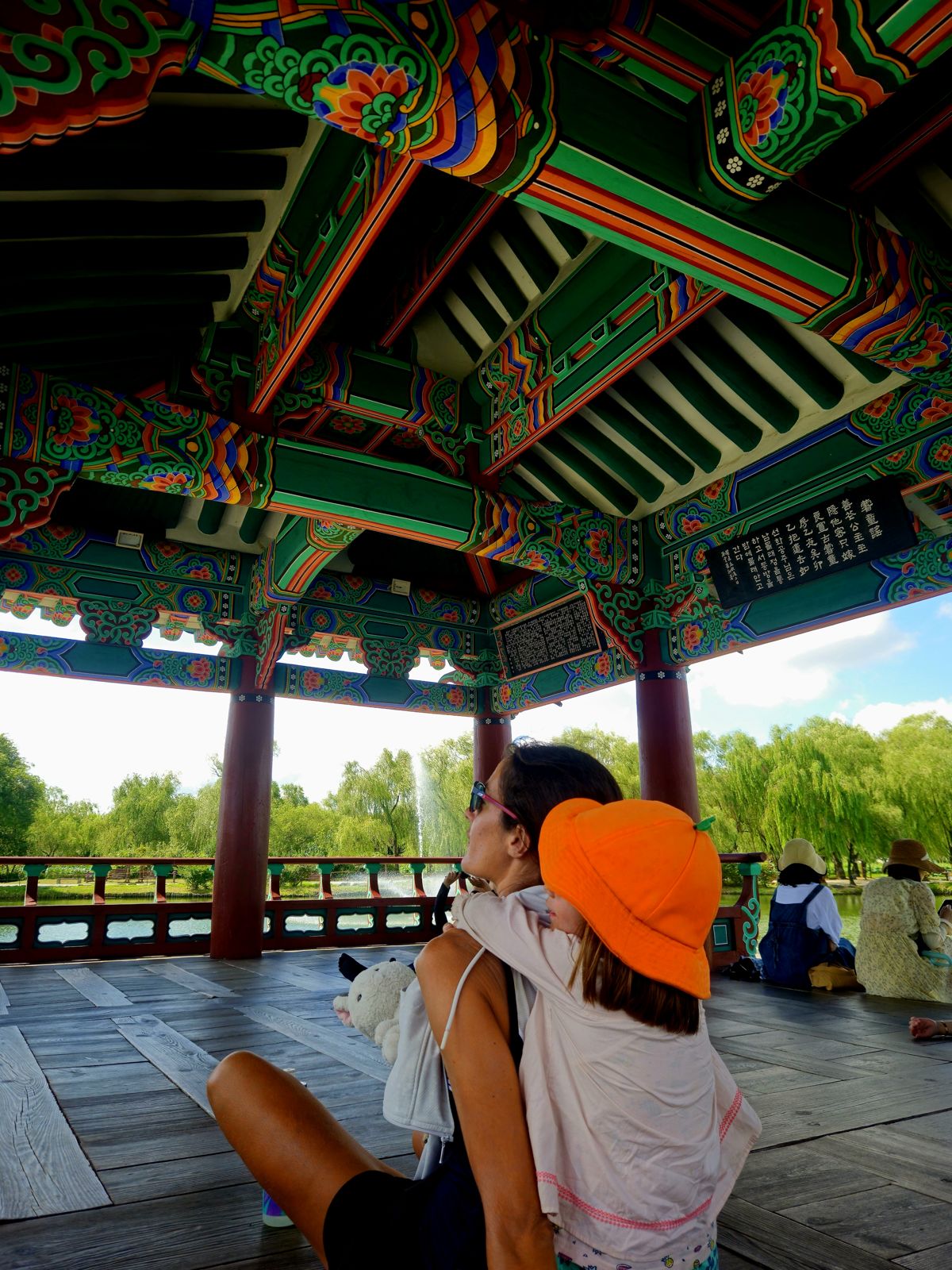
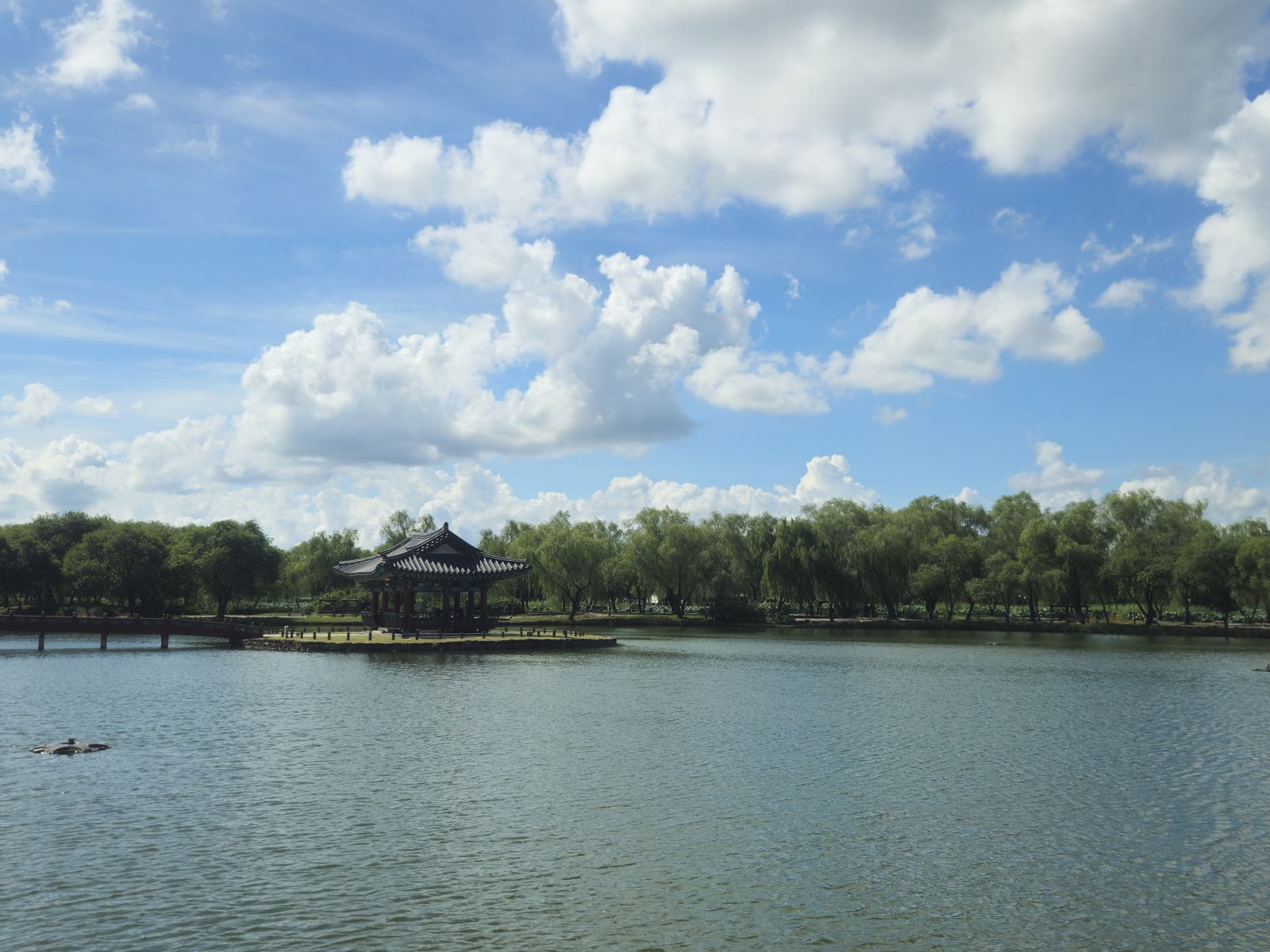
The park is very peaceful, very green and breezy. In the middle is Gungnamji Pond with its island and magnificent pavilion, reached by a wooden bridge. We walk out to the little island and copy the Koreans already there: we take off our shoes and lie down. Their pavilions are always strategically placed to catch the breeze. There are no walls, so they're very well ventilated, and with the shade of the roof it's always very pleasant inside (whereas one step out into the sun and you turn into a puddle in no time).
We carry on walking, finish our loop of the park and go a little further to the town's national museum. We don't visit it, but focus on its children's version. To get into children's museums, you usually have to register in advance on their website for the slot you want (a slot lasts an hour, and you can only do one a day). However, you're often asked for a Korean phone number to complete the booking, so we very often get stuck at that stage. The staff on site have always been very flexible, though, and have always let us in by registering us with one of their own numbers. The lady at reception is no exception and signs us up for the slot that's just starting.
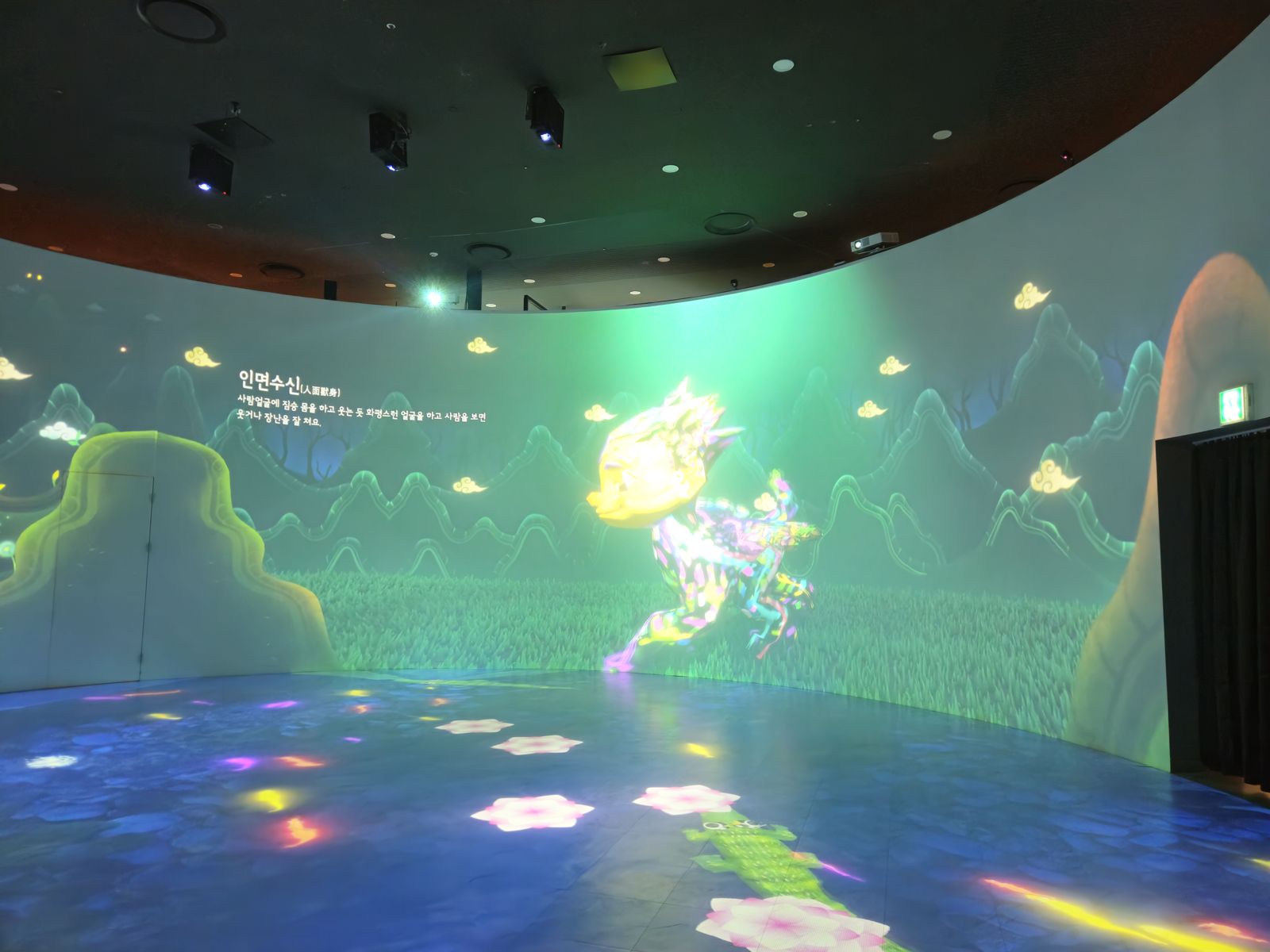
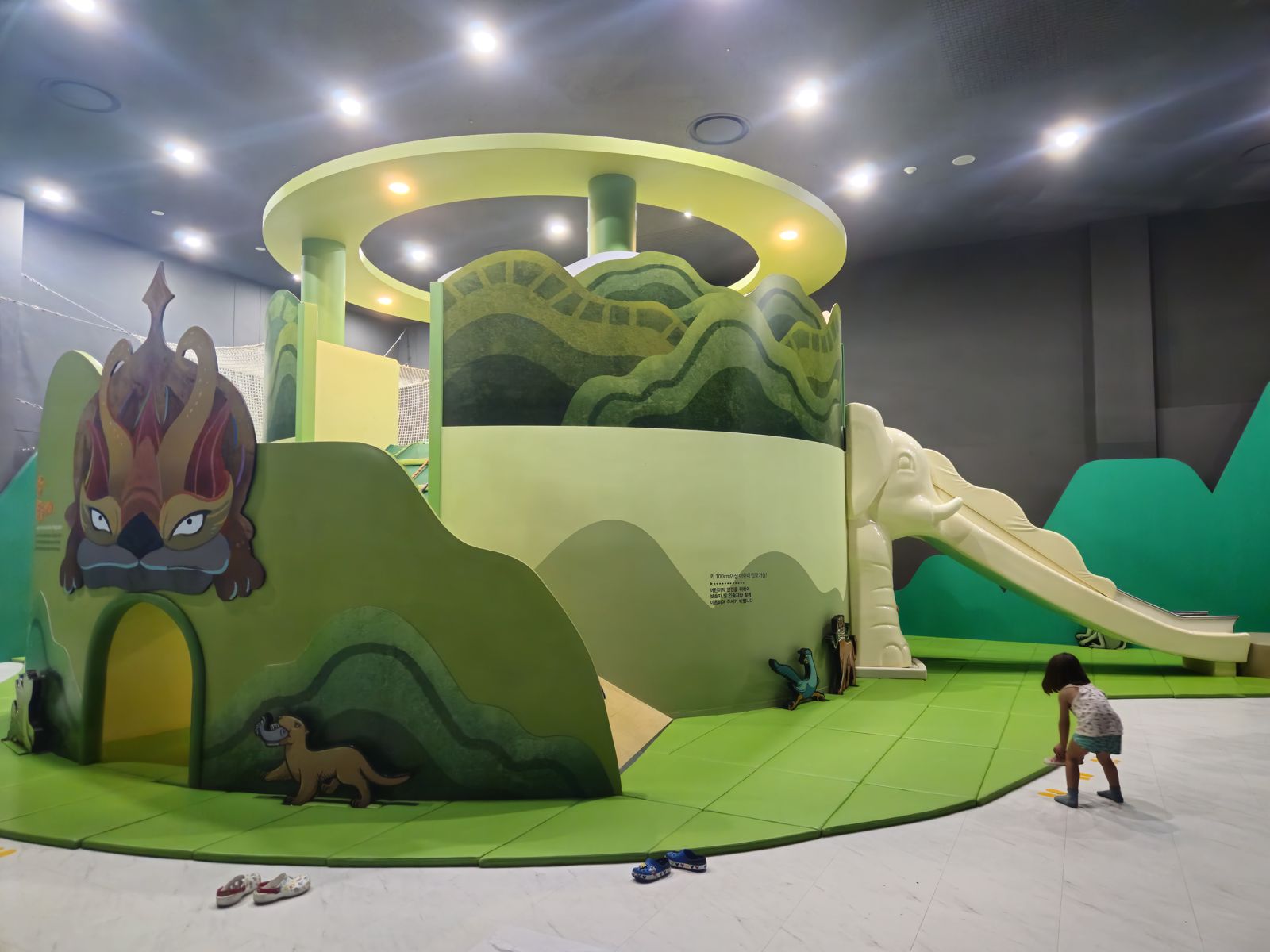
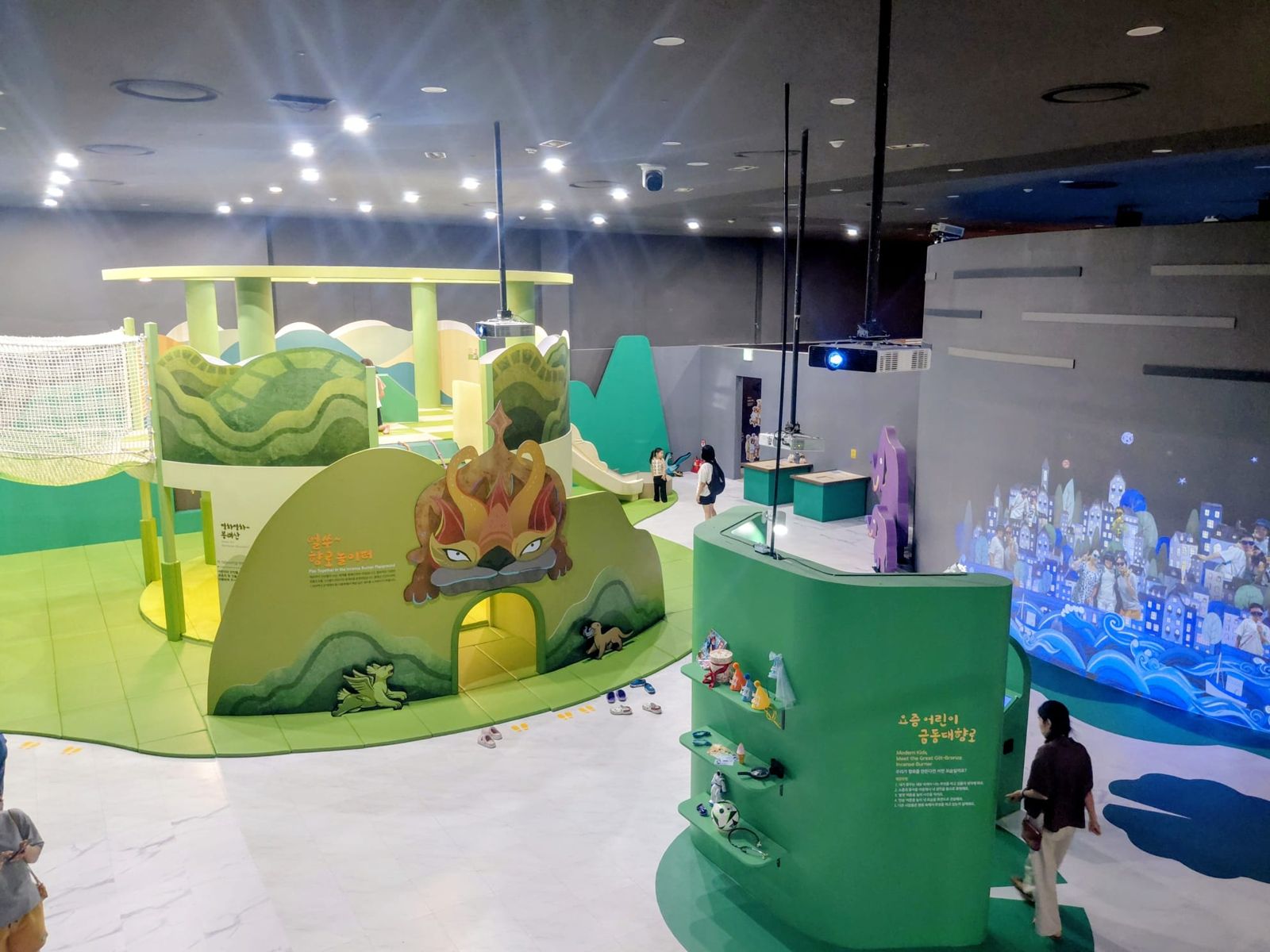
The whole children's section of the museum revolves around the Gilt-bronze Incense Burner of Baekje, a 6th-century artefact. Children have to help characters find it through fun games. As usual, we don't understand everything, but we have a great time. The staff are strict about the time and we have to give up our place after an hour. We then make our way through the town's streets, flooded with cars, to find somewhere to sleep.
At the first hotel we stop at, we call out hello and ask if anyone's there, but there's nobody at reception. In any case the hotel looks shabby and a bit dirty, and after five minutes of waiting we leave and try our luck elsewhere, a few streets away. Here someone is working, and we get the room key in two minutes. We spend the evening strolling in a park and through the side streets.
Saturday 30 August
A former capital of the Baekje dynasty, Buyeo is a charming little town with a turbulent history. In 538 it became the capital of one of the most powerful kingdoms in the country, and during that time it enjoyed unprecedented prosperity. Yet just over a century later, in 660, it fell to attacks by one of its allies, the Silla dynasty, backed by China's Tang dynasty. After this defeat, Buyeo was looted and then abandoned. Today, archaeological digs on the site of the old capital have uncovered treasures that bear witness to its rich past.
Walking around Korea, we sometimes witness the attack of the clones. Or else we feel we're seeing double, triple or quadruple. Almost all the old ladies in the country have the same haircut, a sort of curly perm. When we take the bus we always go to the back, because Clémence has decided so, and sometimes there are seven or eight perms in front of us bobbing with every bump in the road. It's the same this morning as we climb towards Busosanseong, the fortress on Mount Buso. A group of old ladies, all identical, is walking up to the impressive fortress north of the town centre. It dates from the time when Buyeo was still the capital of Baekje.
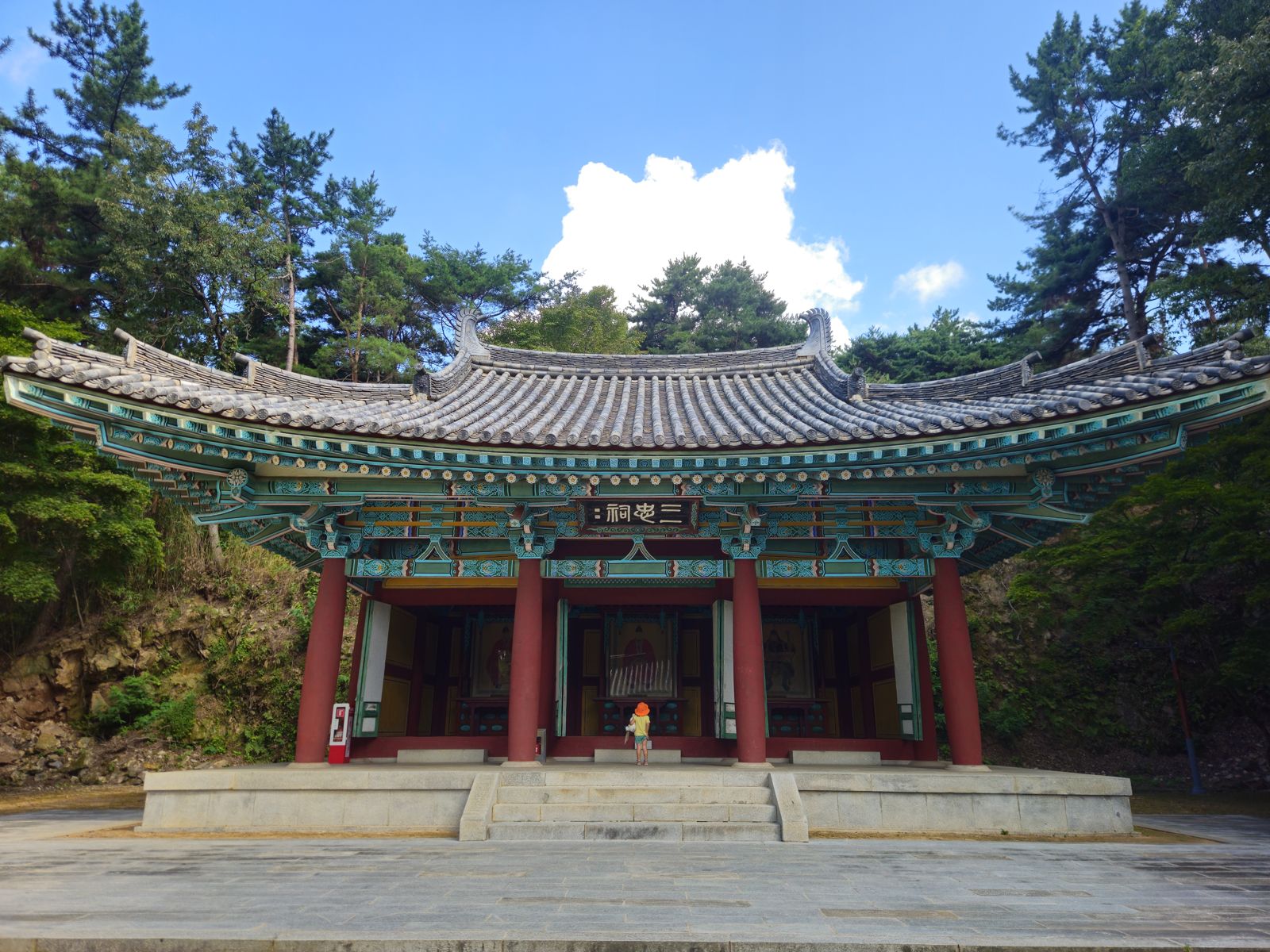
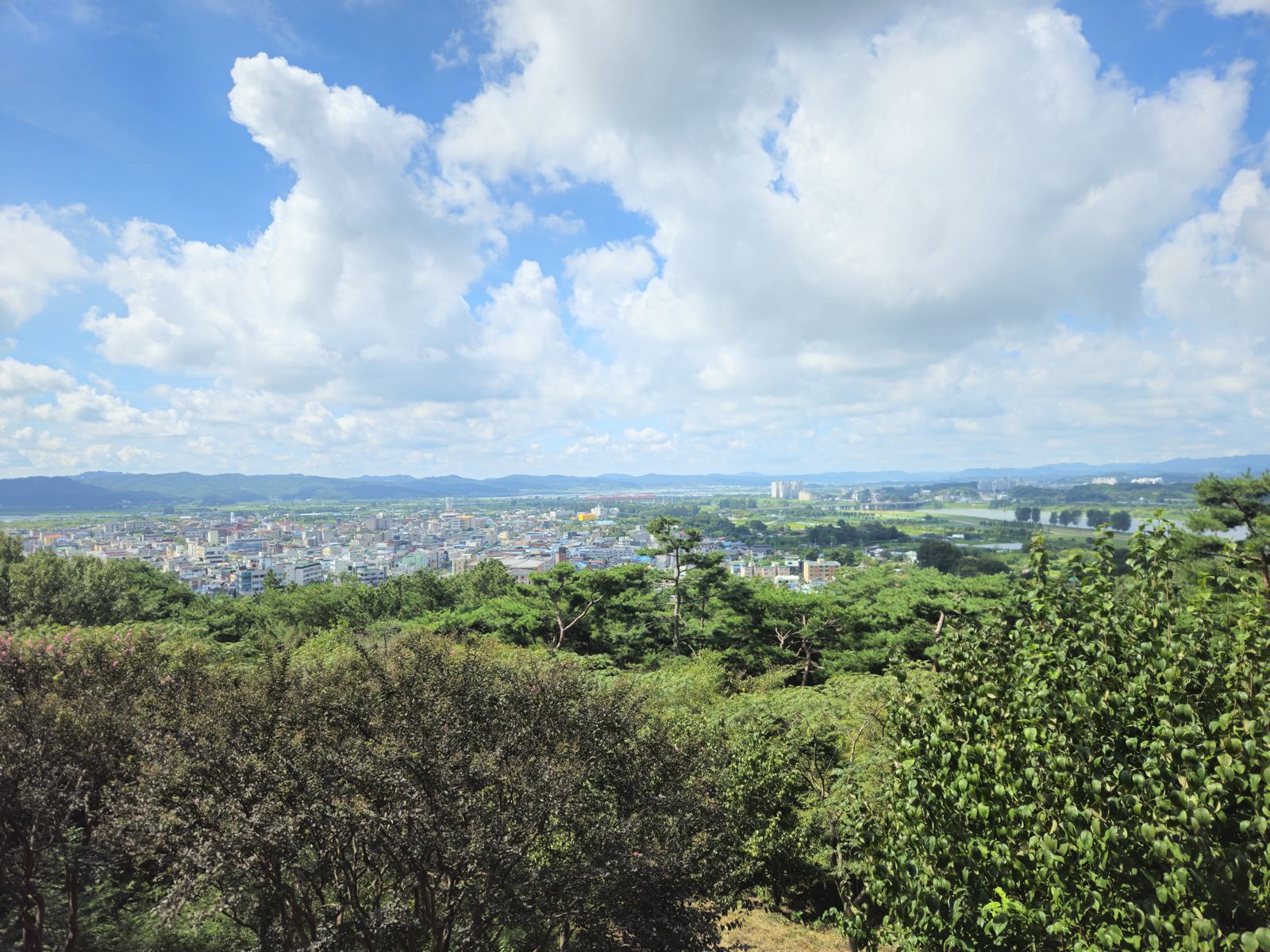
Since 2015 the site has been a UNESCO World Heritage Site. A walk in the shade of the pines takes you all the way round. We don't do the full loop as we don't have time, but it's a fairly pleasant walk if you forget the constant buzzing of the gnats fluttering around us. We stop at a few pavilions, where you take off your shoes and climb a few steps. These places are always very restful and Clémence loves going up into them.
After an hour's walk, we return to our bikes, buy snacks at a convenience store and start today's stage. We only have about thirty kilometres to the city of Gongju, and we gobble them up almost in one go. The tarmac is brand new and perfectly smooth, which lets us ride fast, and we stop for coffee almost at the finish. On a gravel roadside, at a nondescript rest area with a run-down building, we park the bikes and climb a small staircase. As usual, you shouldn't judge a book by its cover: the café is lovely, spacious and nicely decorated. The young man working there is very helpful and seems a little intimidated by us.
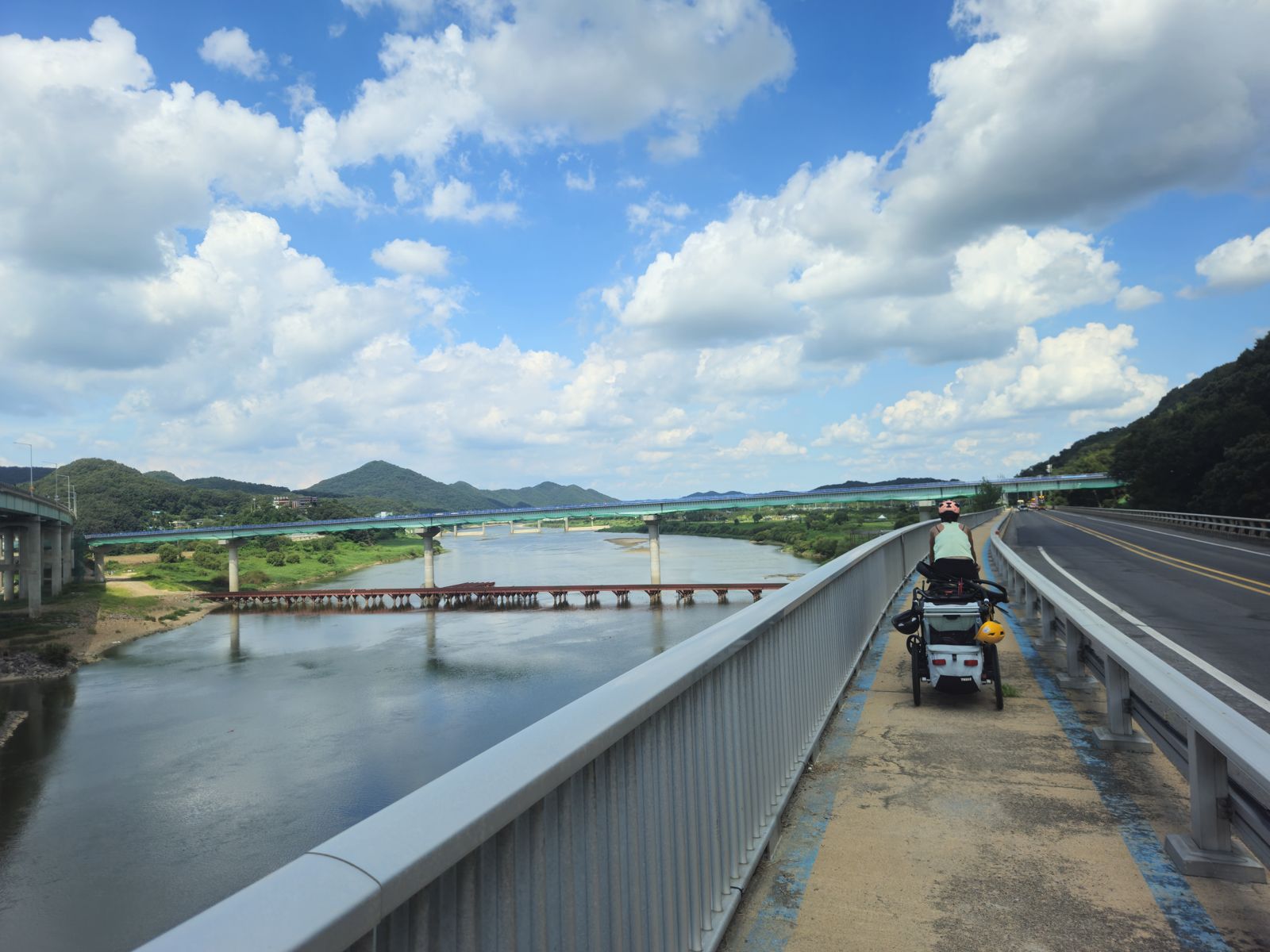
Our routine for going into enclosed spaces is well honed, and we never forget our jackets. The thermal shock is always striking, with at least twenty degrees' difference between outside and in. For a few moments, a shiver of happiness runs through us when we step out and the heat radiates through our bodies. This moment of grace doesn't last long, as sweat immediately joins the party. We then reach a playground a few kilometres on before taking refuge in the Gongju museum. Cars keep coming and going; the place is extremely busy on this Saturday afternoon. As always, we can't register for the children's museum session, but the man at the desk kindly lets us in to play.
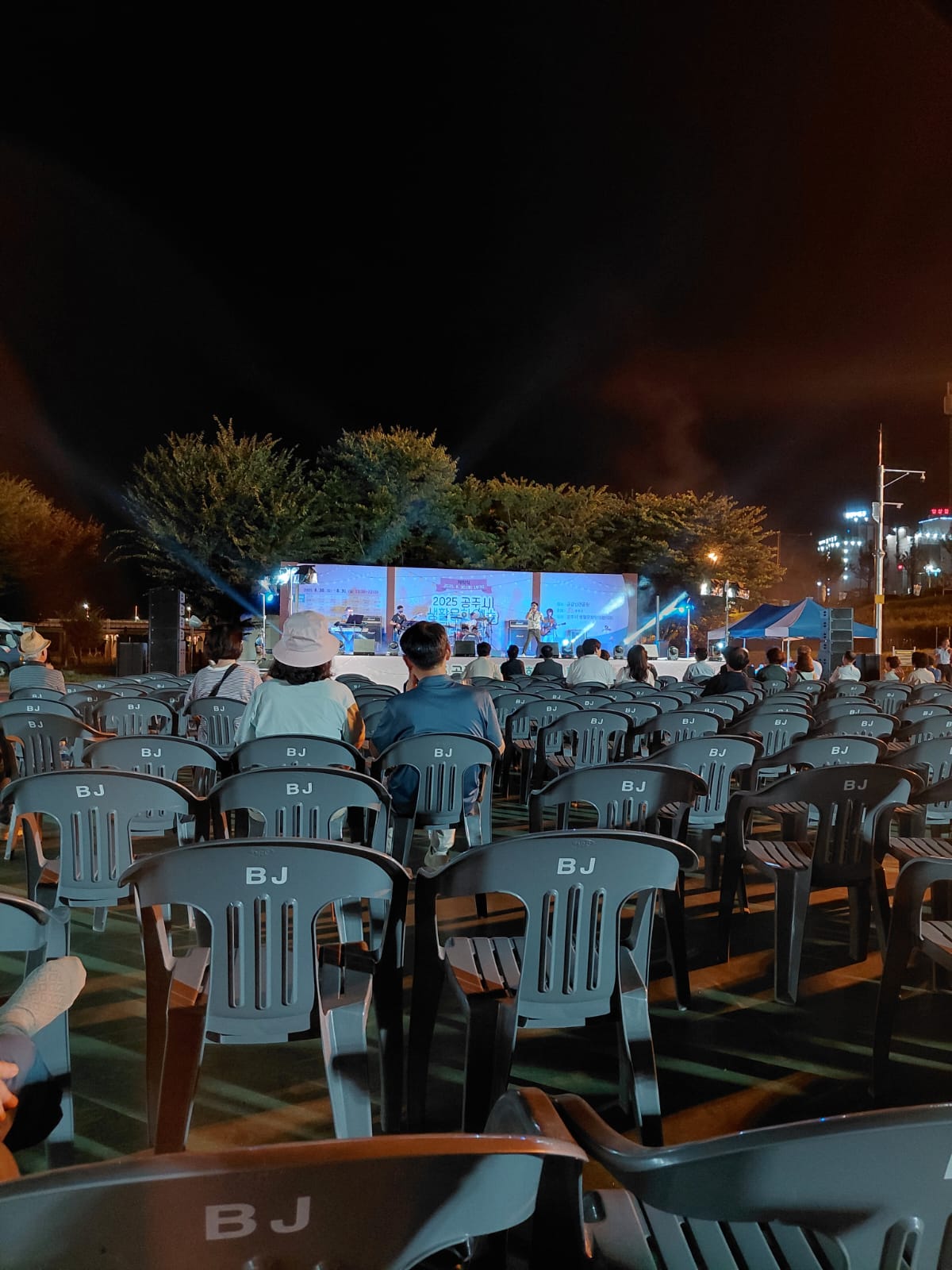
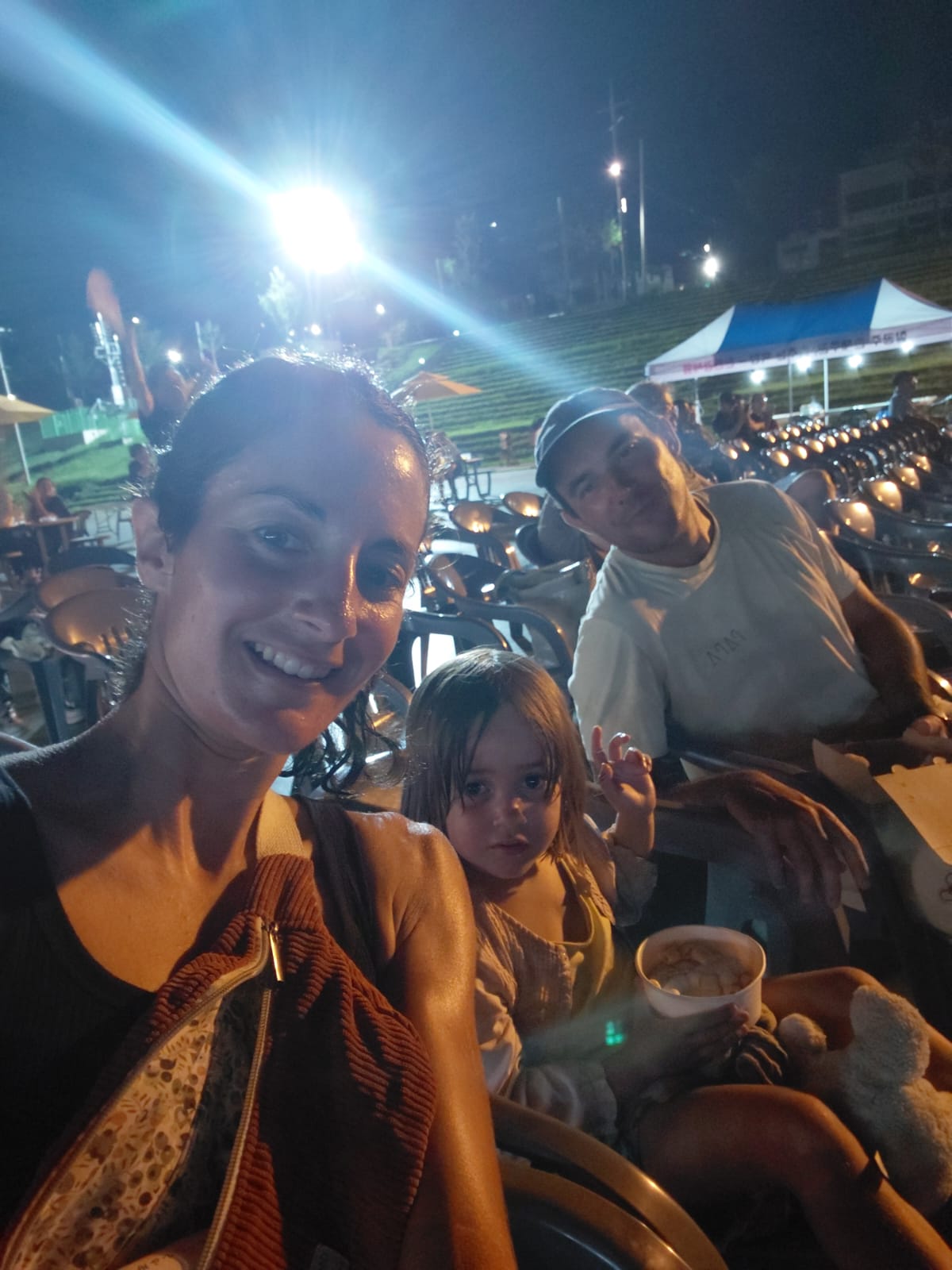
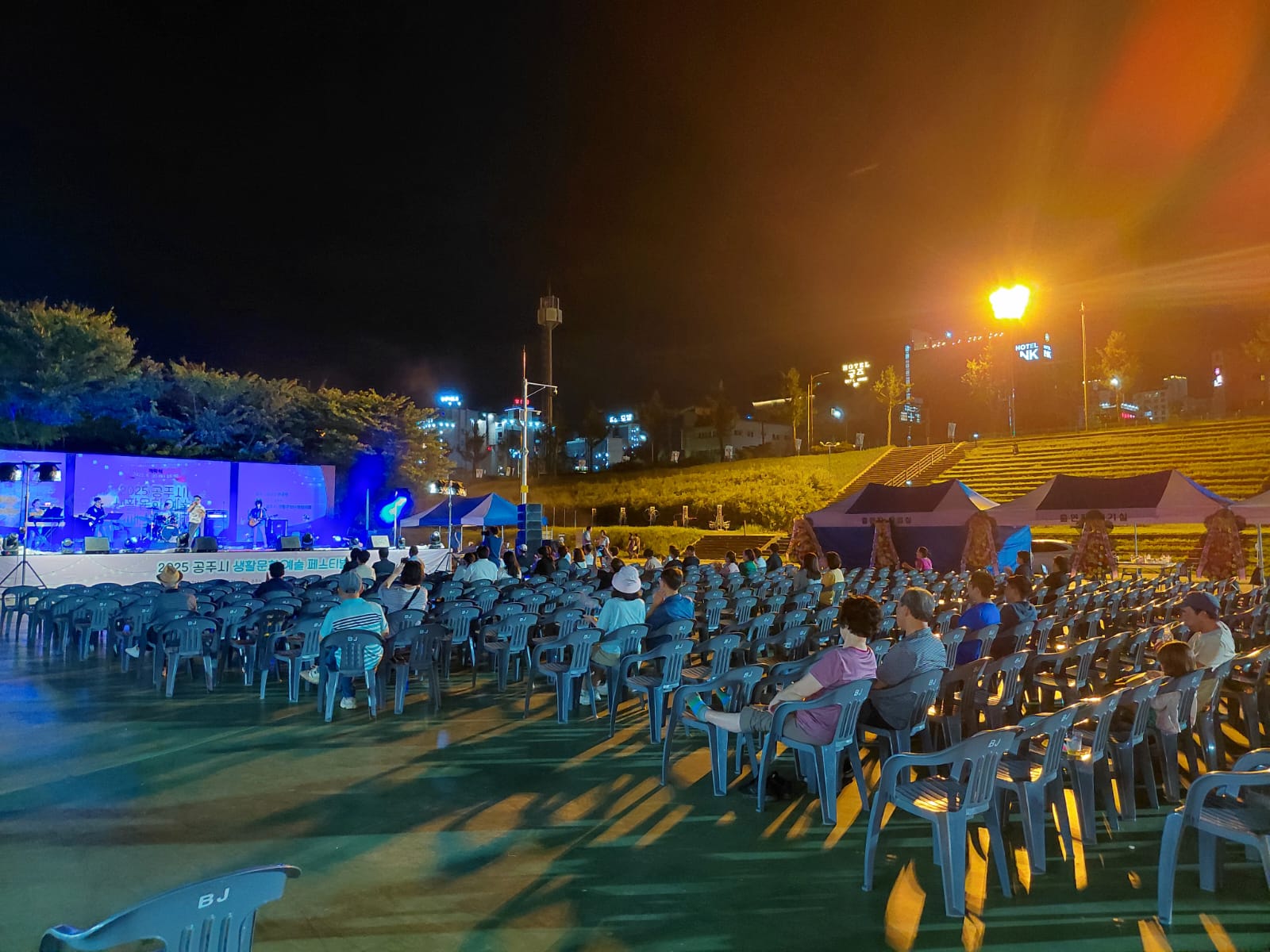
The museum is rather small and less fun than the others, so we head to the hotel earlier than planned. The Geum River runs just below, and a long 3-kilometre oval has been laid out with running tracks and sports grounds. We go out of curiosity and discover a stage. It looks like a neighbourhood party, maybe an open mic. There are food trucks, and we're buying something to eat when a lady comes up to us. She explains that the beer, cakes and water are free and invites us to share, which we gladly accept. The concerts are interesting; Koreans love to smother their music in synthesisers, which gives the atmosphere an 80s touch. The alcohol flows freely and people keep coming back for refills, but the mood stays friendly. We don't see anyone overdoing it, and we head home to bed as the first stars come out.
On the road