 ← PreviousSeomjingang, continued and concluded
Monday 30 June
On long journeys, you need to build in periods of rest. It's necessary even if you don't necessarily feel the need. We've been pedalling for almost six weeks and we can see our bodies changing. Muscles are getting stronger, legs leaner and waists slimmer. We're lucky to be able to exercise every day while travelling through often splendid landscapes, and we savour it.
But today in Suncheon, there'll be no cycling. Clémence wakes up early, but we take our time going to breakfast. It's included in the room price, but Koreans don't see this meal the way we do. Here they offer instant noodles or ramyeon, which doesn't really suit us at nine in the morning. We pop into the Paris Baguette bakery near our place to buy bread and a few pastries.
After this meal, we hop on a bus to Seonamsa temple. The density of the bus network never ceases to amaze us, as it lets you reach lots of sights quickly from towns. Our bus takes winding roads and even makes improbable detours to serve little hamlets along the way. Of course it's hot when we arrive, and we keep to the shade of the footpath to reach the temple.
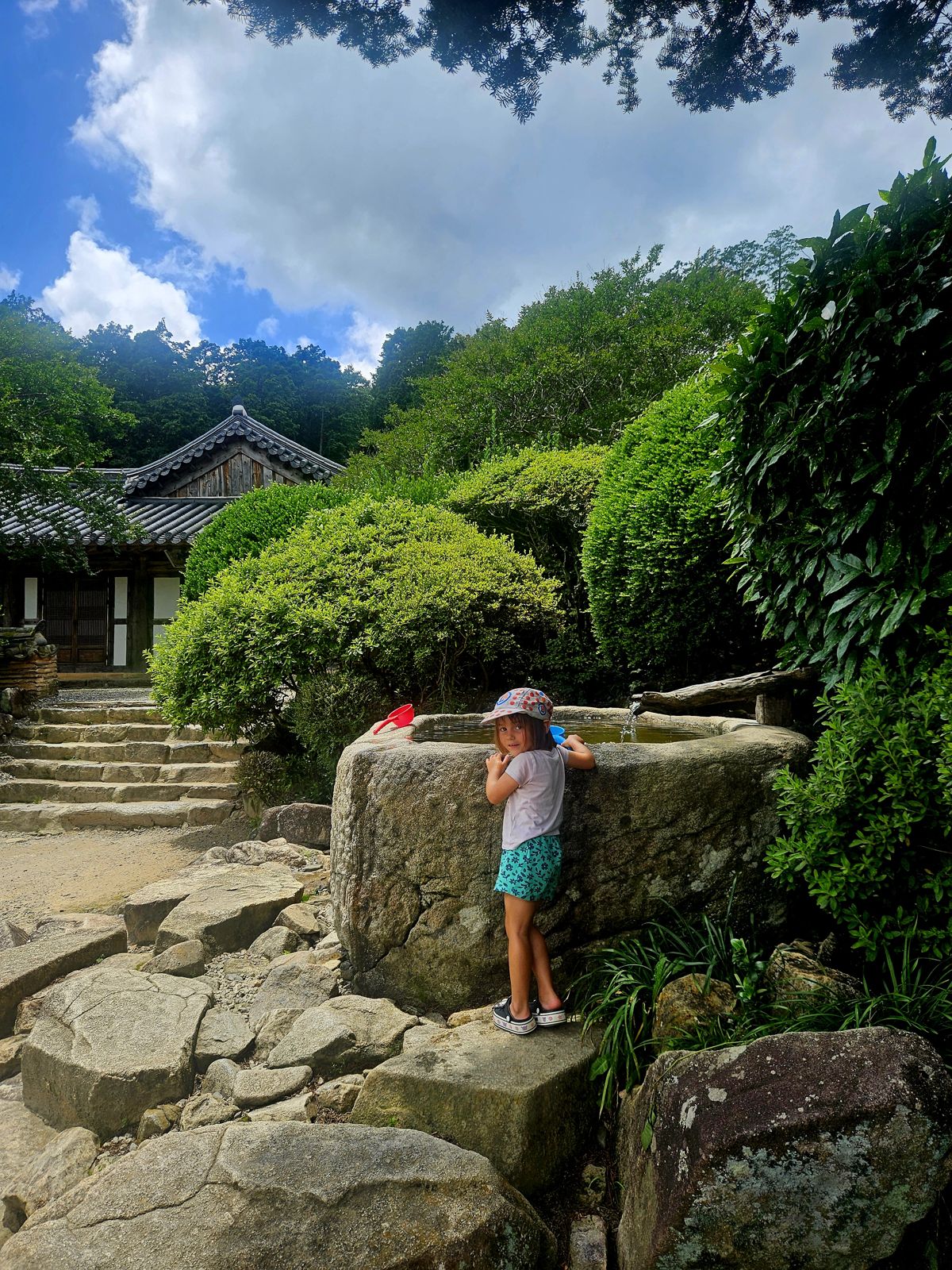
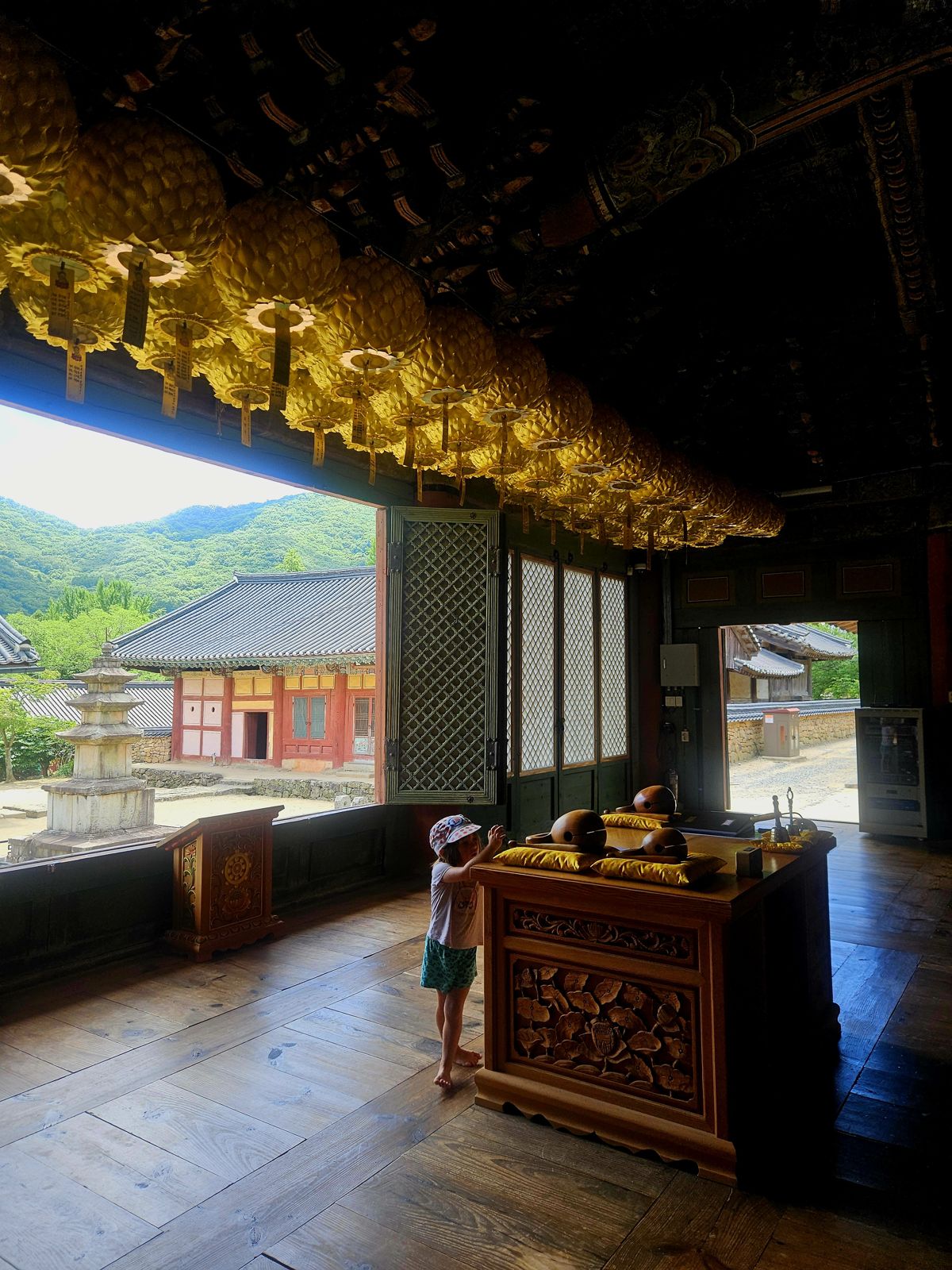
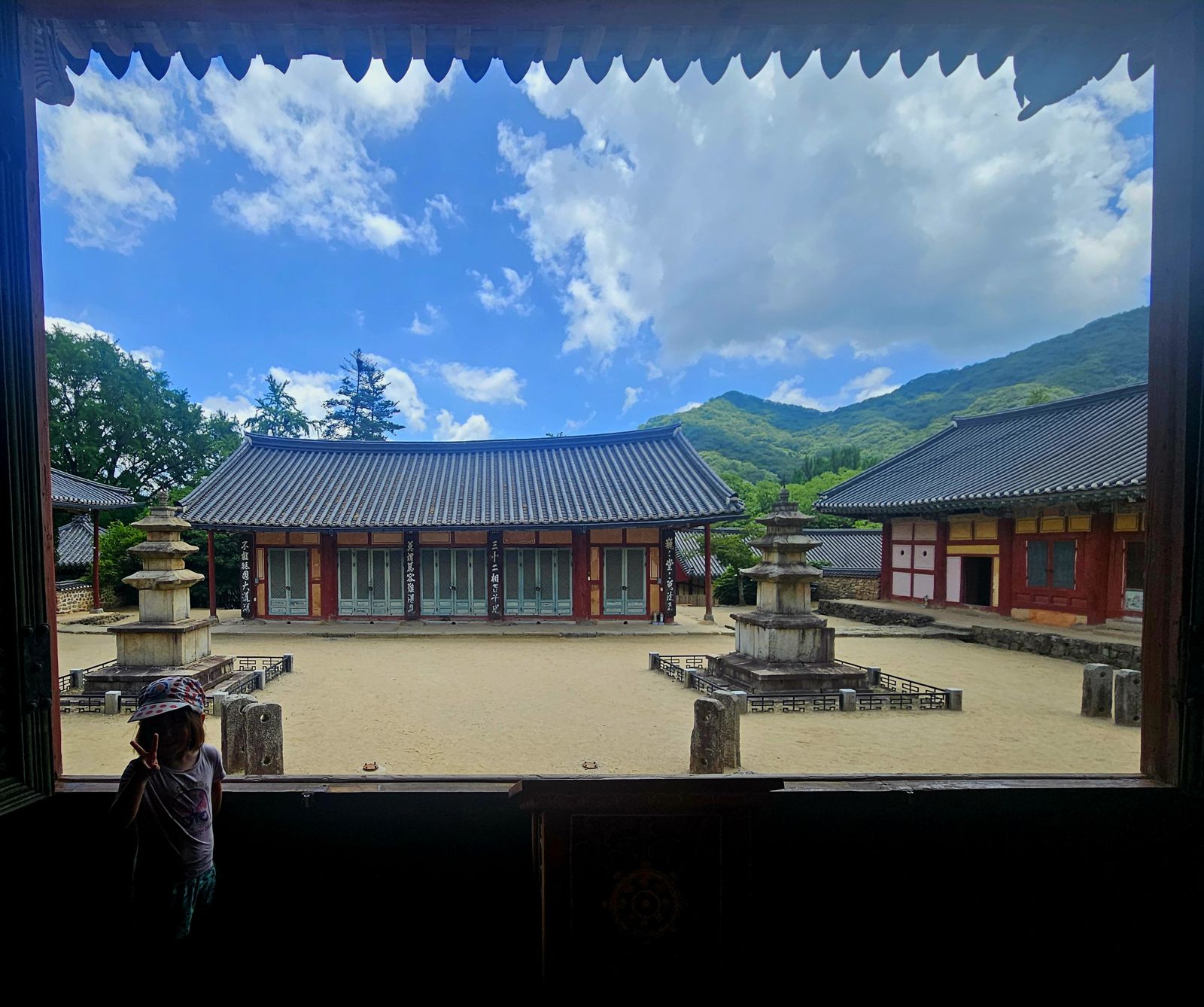
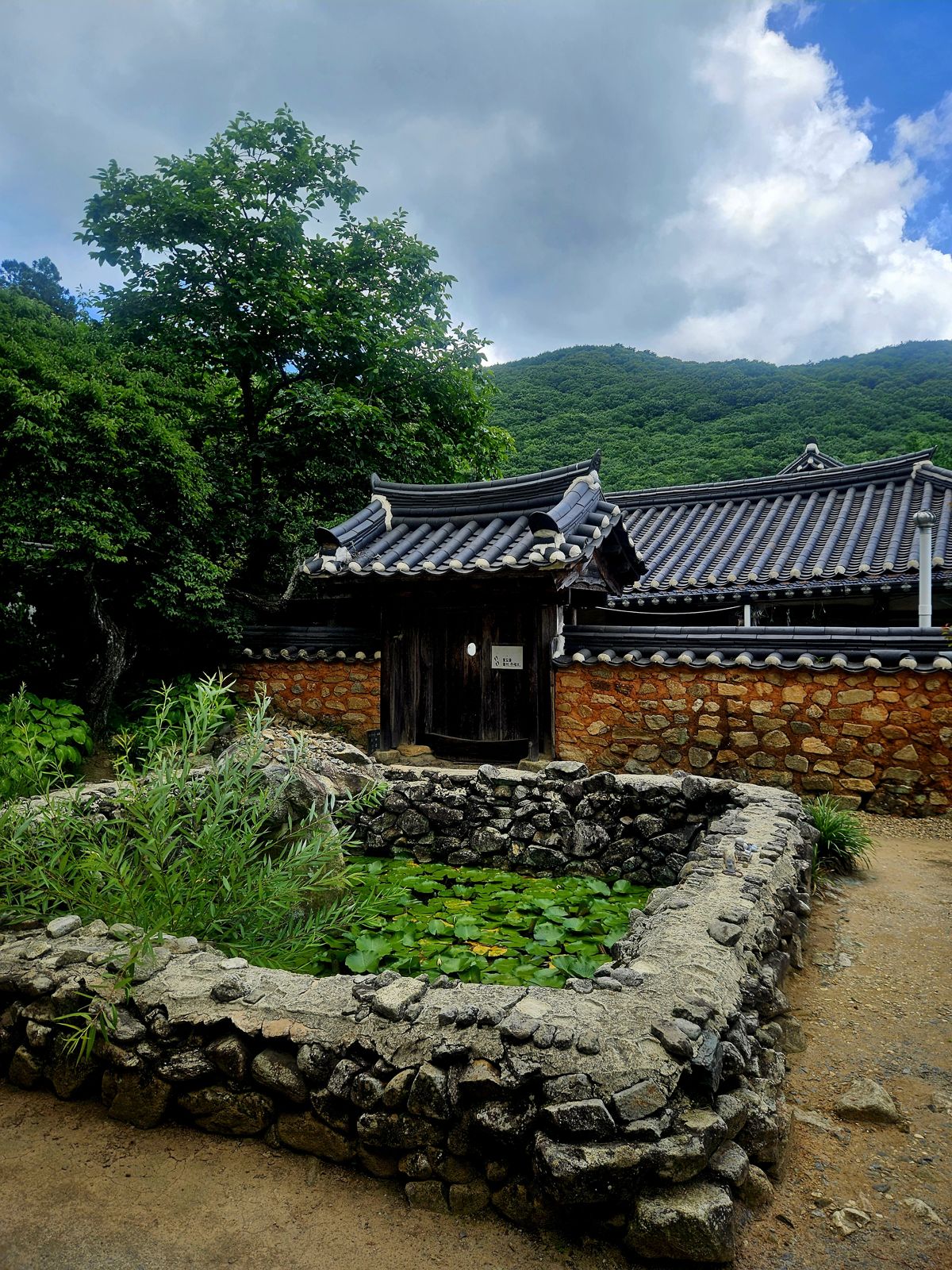
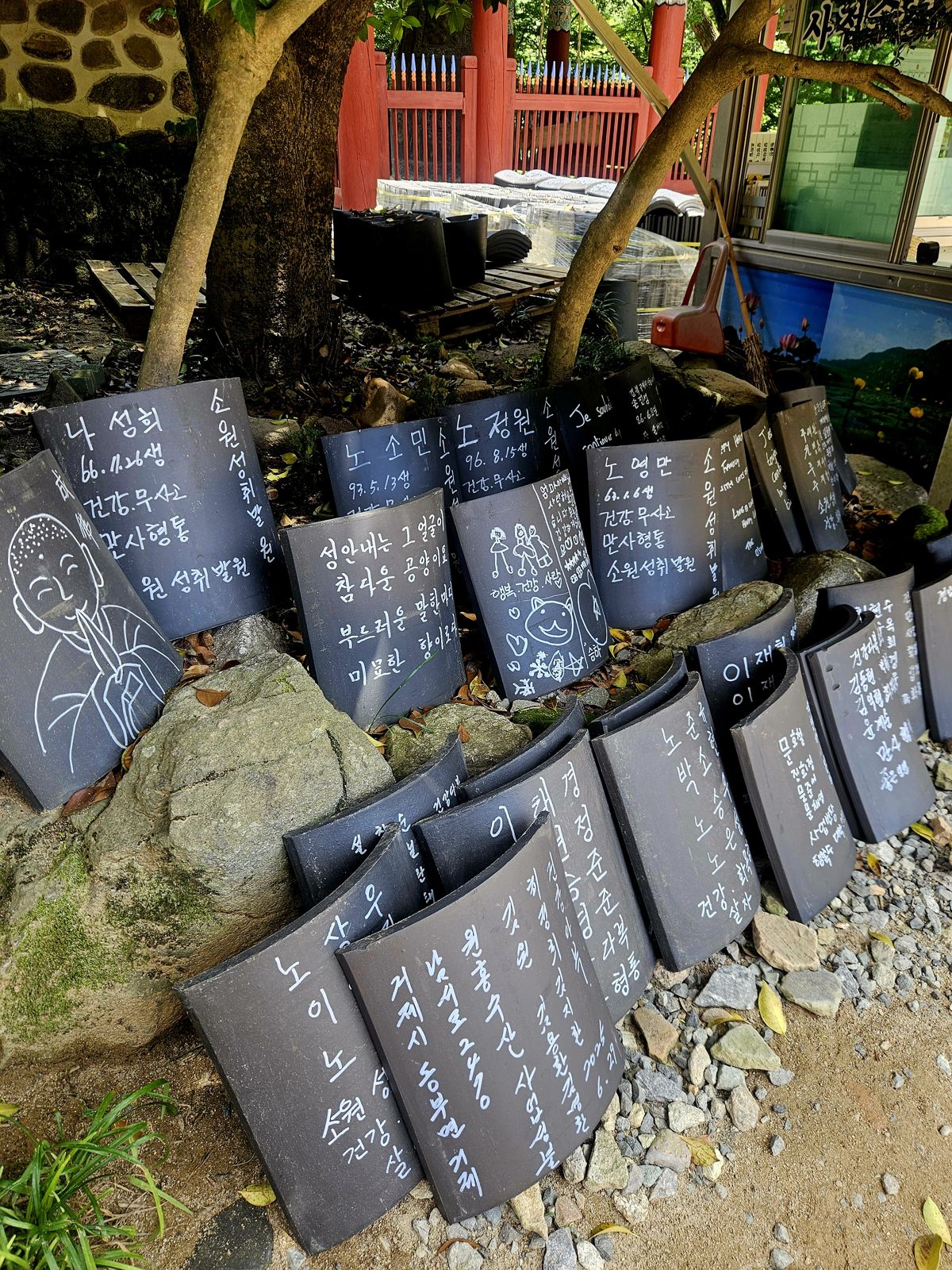
Like many sanctuaries, it sits in the middle of a forest so peaceful you'd like to stay the night. In fact, you can stay in many temples in South Korea. It's called a Temple Stay: tourists can take part in the life of the temple as if they were part of it. We're tempted, but having a toddler makes it complicated. Anyway, we wander around this timeless place; some buildings date from the 16th century and survived the barbaric Japanese invasion of that time.
The Suncheon area isn't very touristy for foreigners, and we see very few people on this Monday. After lunch in a big riverside restaurant, we take another bus to a folk village. The driver goes extremely fast on the winding roads; you'd think Jean Alesi had retrained as a Korean bus driver. We all feel a bit queasy after the 30-minute ride, but we arrive safely and come across one of the cutest villages in South Korea.
Naganeupseong is a small traditional village enclosed by 13th-century walls. The village is well preserved, letting visitors see houses and ancestral ways of life, some of which still continue. It's an important historical and cultural site for anyone wanting to study traditional Korean folk customs. Of the 96 similar villages that once existed and were destroyed under Japanese colonial rule, only a few remain today, and Naganeupseong is the best preserved. Today there are about 90 houses and nearly 300 people still live there. So we're not visiting a tourist site but a living neighbourhood. The houses have thatched roofs, which immediately gives them a timeless look.
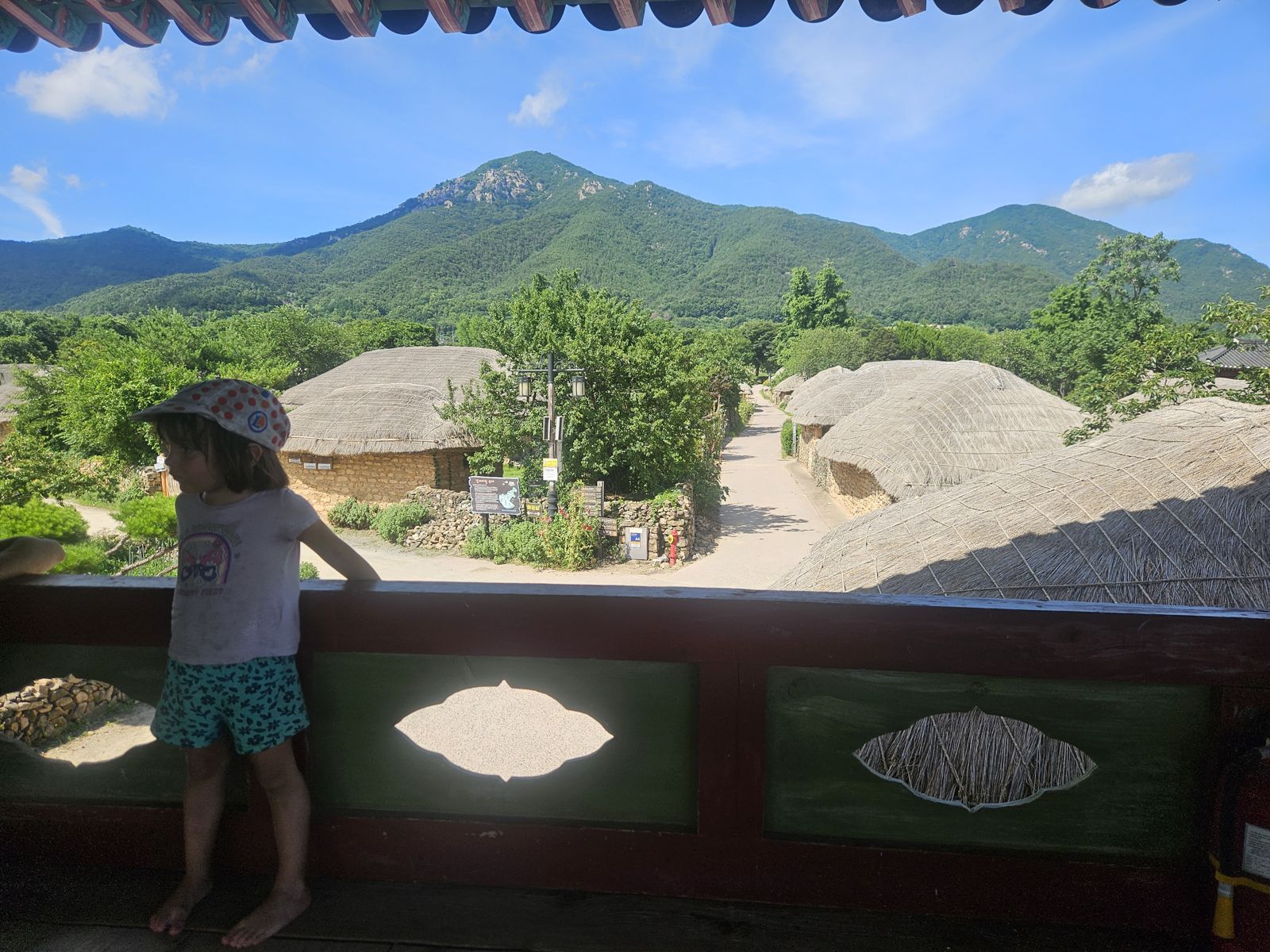
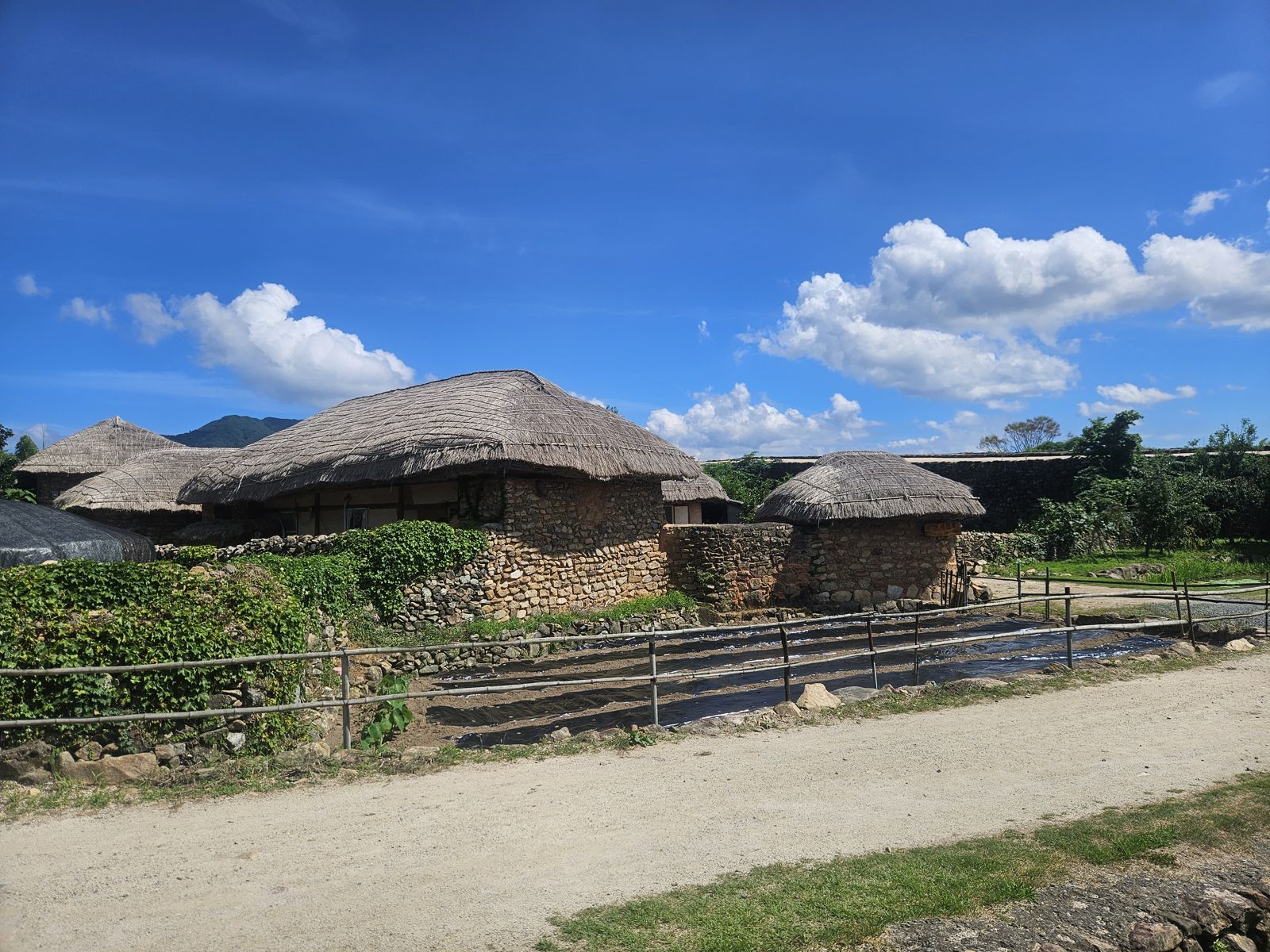
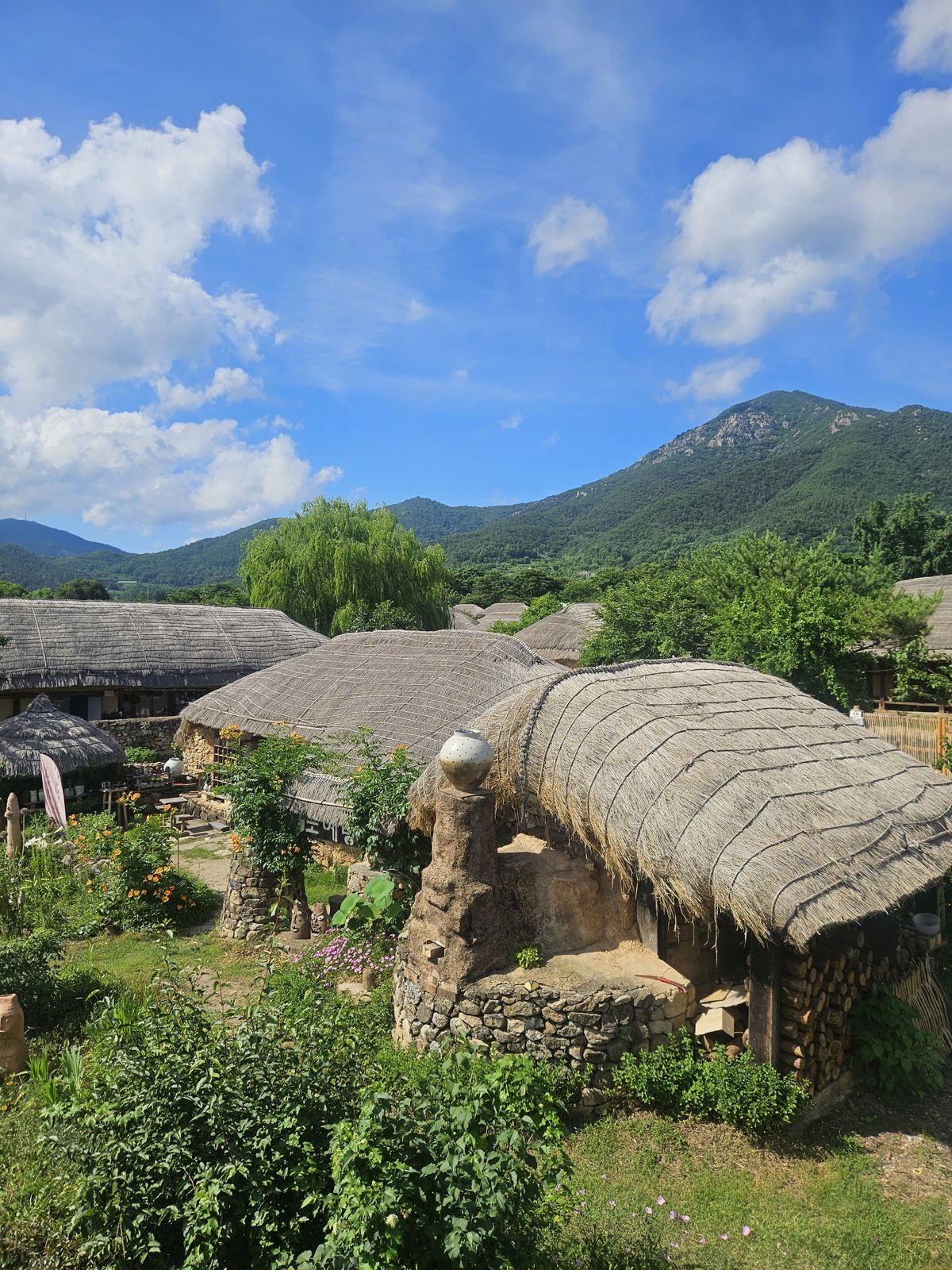
In fact, this kind of house was fairly common when the village was built, but very few villages like it survive in Korea today. The setting is splendid, with mountains and rice paddies all around. It's been extremely hot and humid for a few days, so every scrap of shade is welcome. As we walk, we come across the Ssangcheong-nu pavilion, which gives us a breezy break in the shade with a view over the roofs of the little houses. The village also lets you try all sorts of traditional practices (blacksmithing, funeral rites, natural dyeing, weaving and so on), but with a three-year-old it's not ideal, so we just wander the lanes.
After a quick snack at a convenience store, we take the bus back to Suncheon, and our evening is unremarkable.
Suncheon (순천시), in South Jeolla Province, South Korea, has around 281,000 inhabitants. Famous for its magnificent wetlands — an important sanctuary for migratory wildlife — it attracts ecotourists and nature lovers. The city is also known for its huge national garden, a legacy of the 2013 international expo, and for historic temples such as Songgwangsa and Seonamsa, which bear witness to its rich cultural heritage.
Tuesday 1 July
Rest days aren't memorable. Yet Suncheon isn't an unpleasant city in itself. After a lie-in and a drawn-out breakfast, we go shopping to restock what we need (sun cream, small toys for Clémence) and go back to the kids' café we visited when we arrived two days ago, because these quiet times without a timed agenda also let us plan activities centred on Clémence.
After stuffing ourselves with grilled fish for the modest sum of €10 for three, we stumble upon a huge, perfectly landscaped flower park as we stroll. The grass is deep green and not a single blade sticks out on the beautifully mown lawn. In this heatwave, its fountain is a real lifesaver, as we were seriously starting to bake in the city despite the river running through it and the sea nearby. Even the shade isn't enough to cool us down any more. We play like mad in the fountains, then it's snack time.
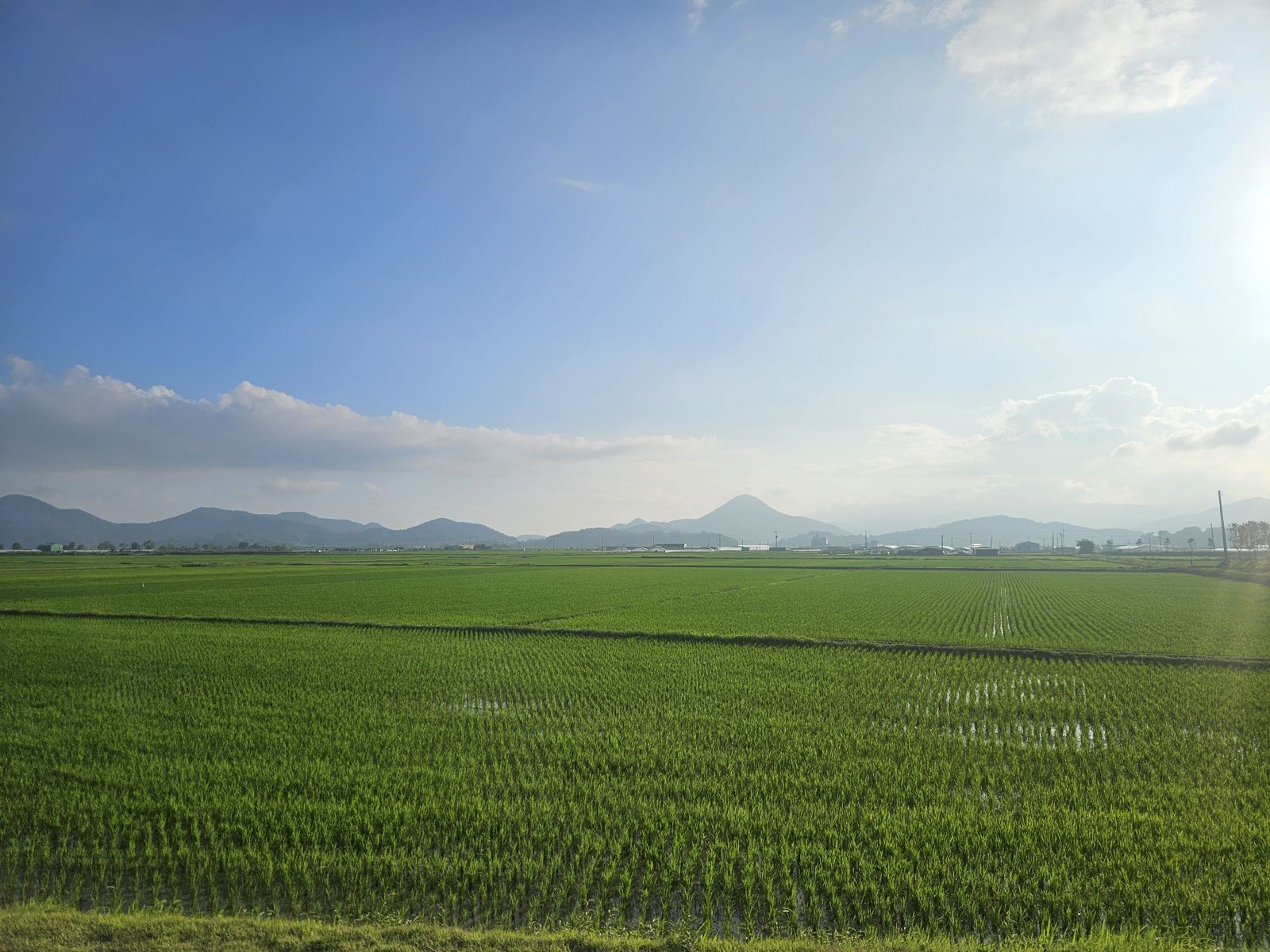
We find a nice, very cheap café on our way with a superb view of the river, but there seems to be no one to take and make our order. Three people sitting at a table chatting make us understand that the manager has stepped out and they don't know when he'll be back. This kind of situation, improbable in France, is fairly common in South Korea; at any rate it's not the first time we've seen staff (who may also be the owners) leave their post to make a delivery or run an errand without any indication of when they'll be back.
It's even quite comical when you're the only customers, already served, and the person leaves you alone in their shop. If you leave in the meantime and they're not back yet, the shop is left completely empty and open; you could just help yourself. After 10 minutes of waiting, we give up on the iced tea and waffle and make do with little cakes from the convenience store before taking the bus to Suncheon Bay wetlands.
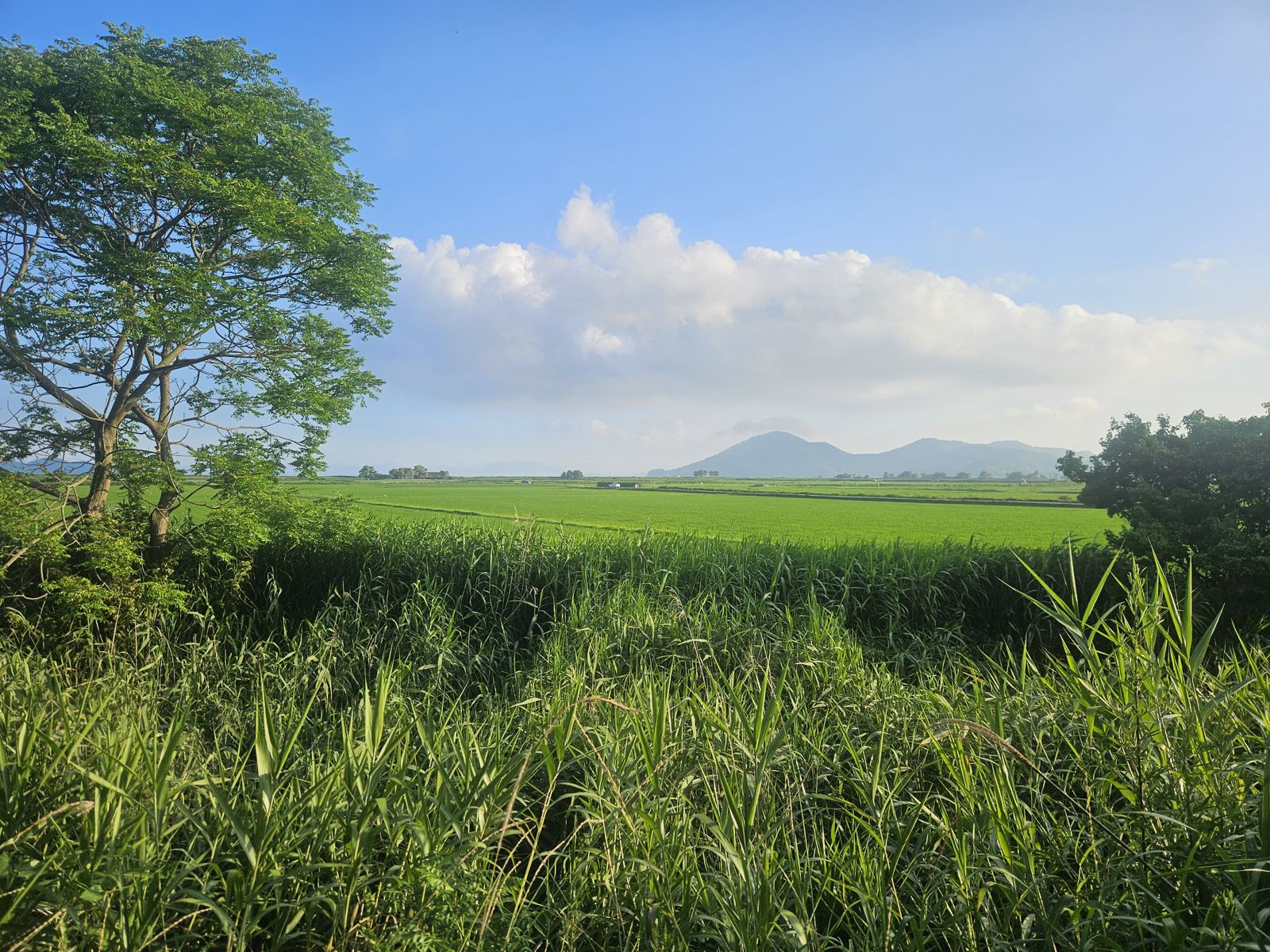
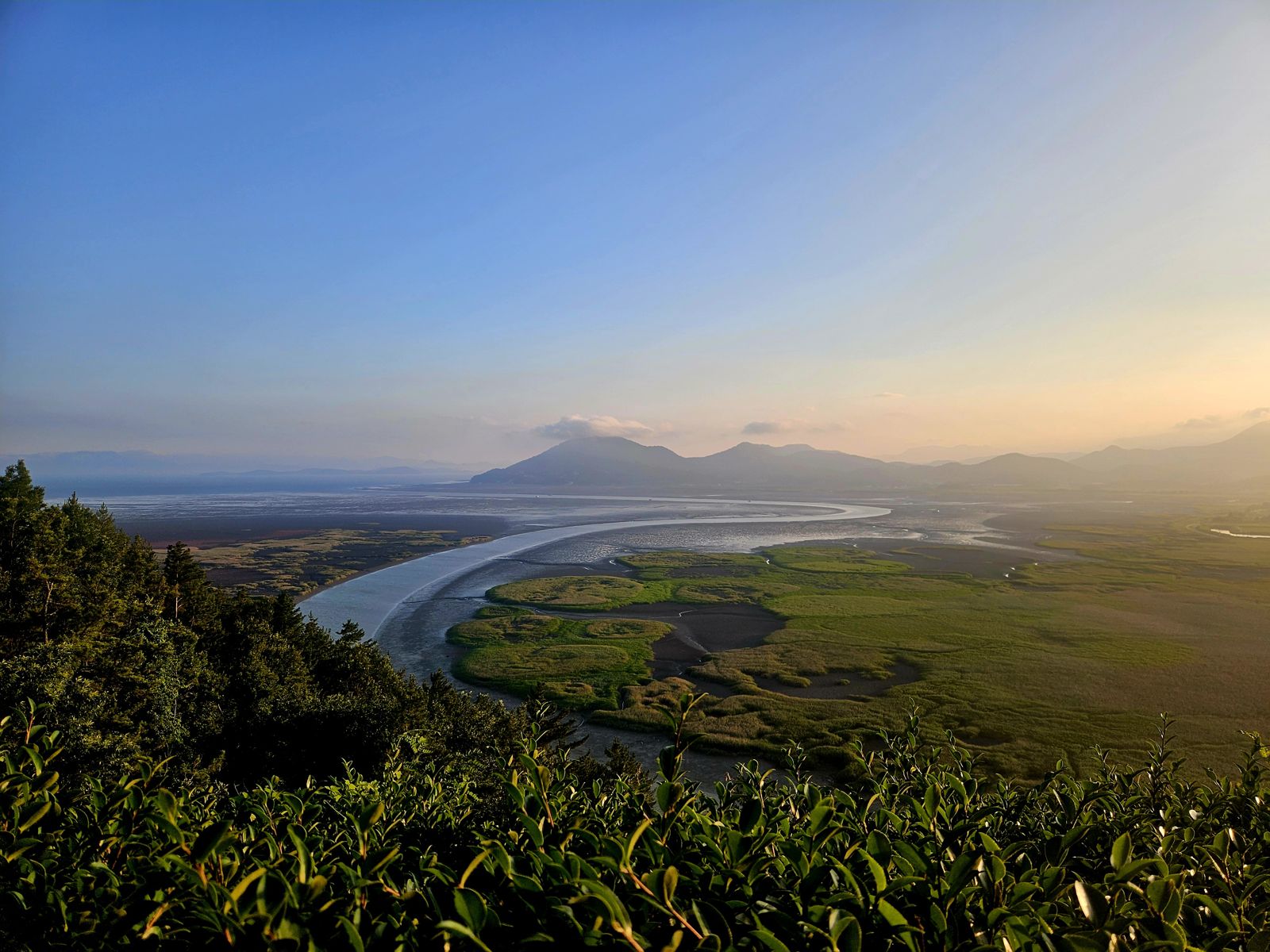
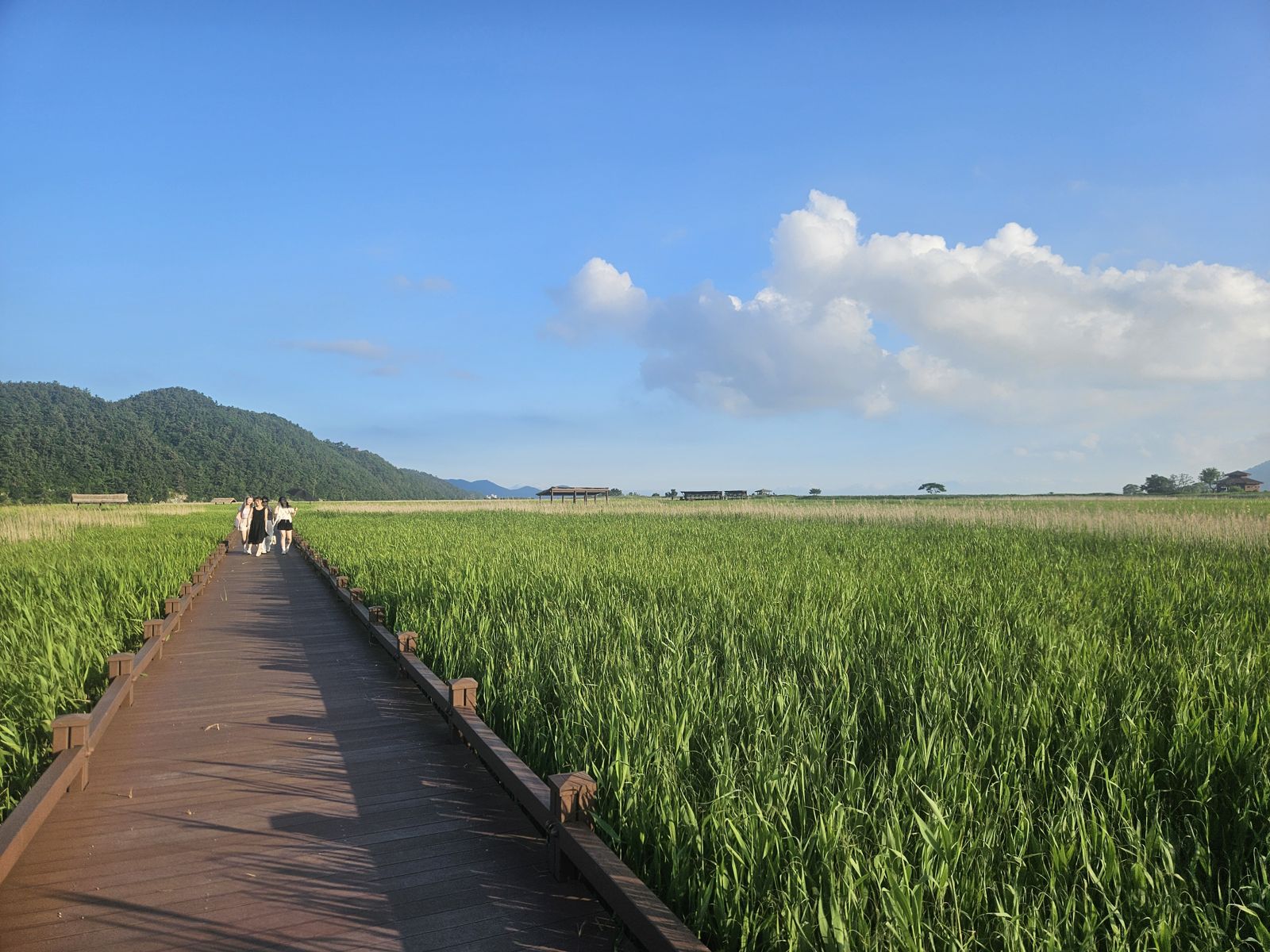
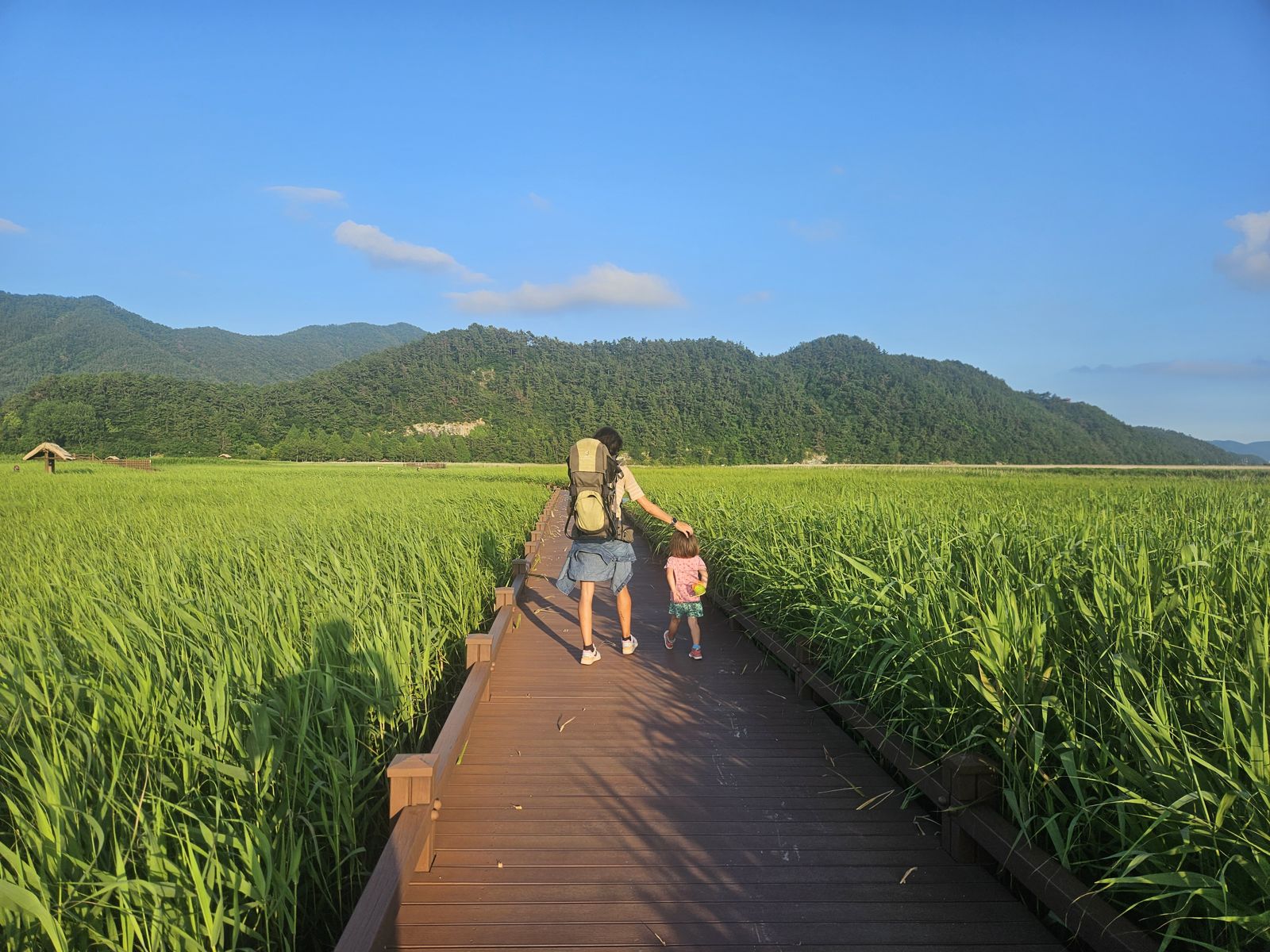
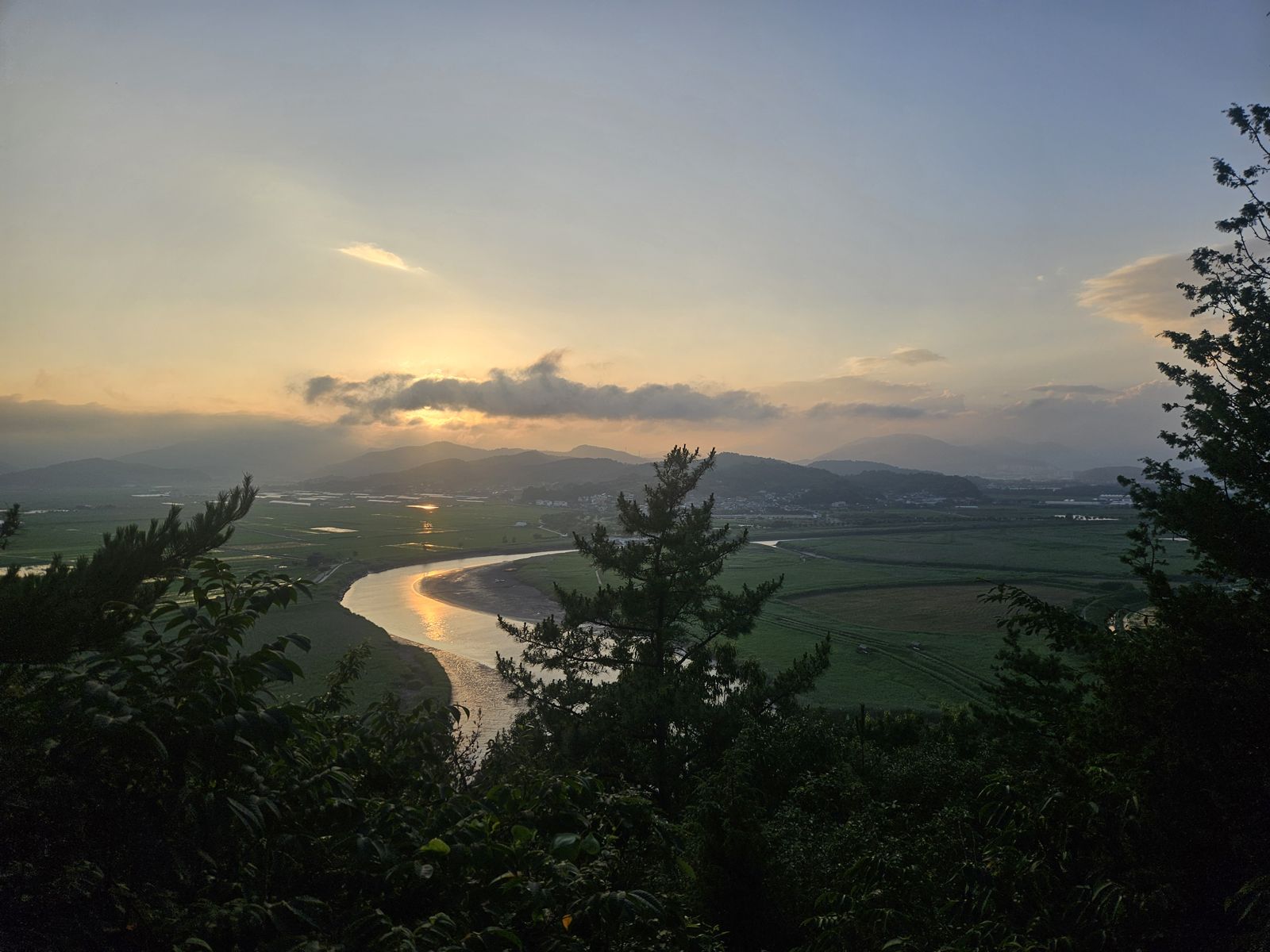
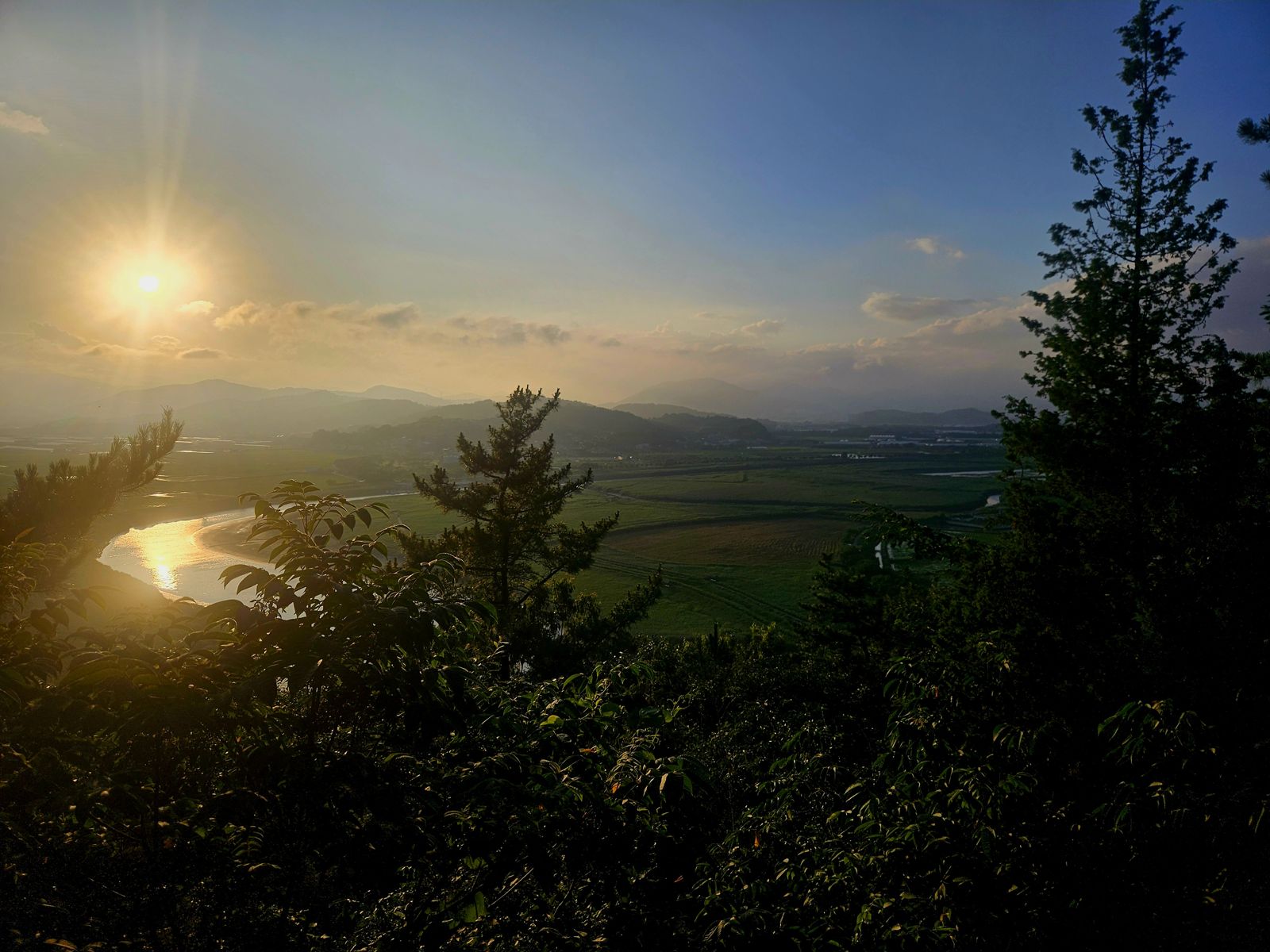
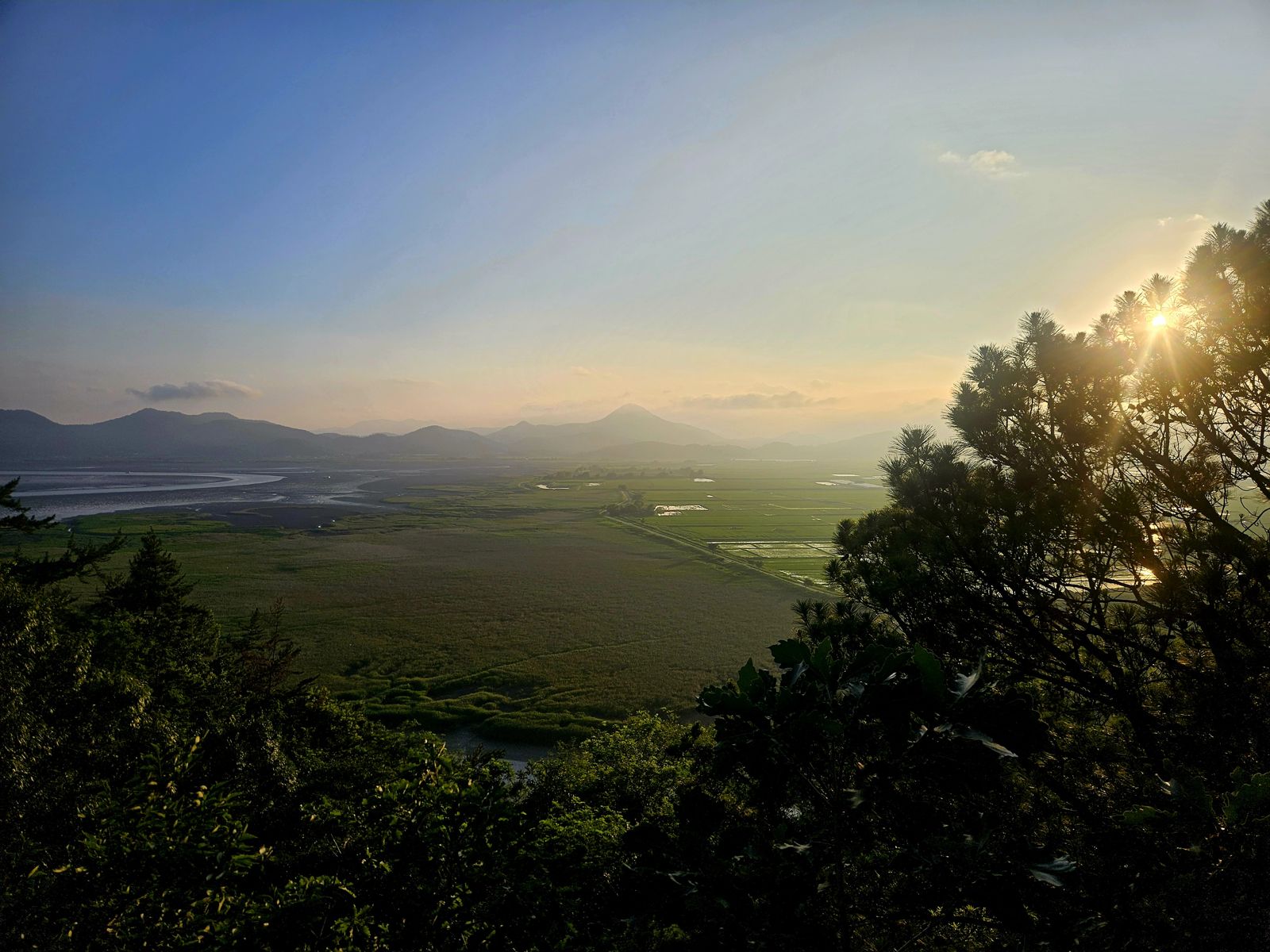
This protected area is home to one of the world's largest salt marshes and is watched over by wonderful mountain scenery. It shelters more than a hundred bird species and has South Korea's largest reed field, in the shape of a giant S. Several small wooden boardwalks cross the reserve, making it easy to explore. The place is fascinating and very photogenic. We climb to the highest viewpoint to take in the panorama as a whole. The park closes at 8 pm and we get out just in time. Stéphane runs home while Cassandre and Clémence take the bus after eating a bowl of rice and some sausages at the local convenience store. It's so hot that he arrives at the hotel completely soaked. Once again, we've well and truly earned tonight's sleep.
Wednesday 2 July
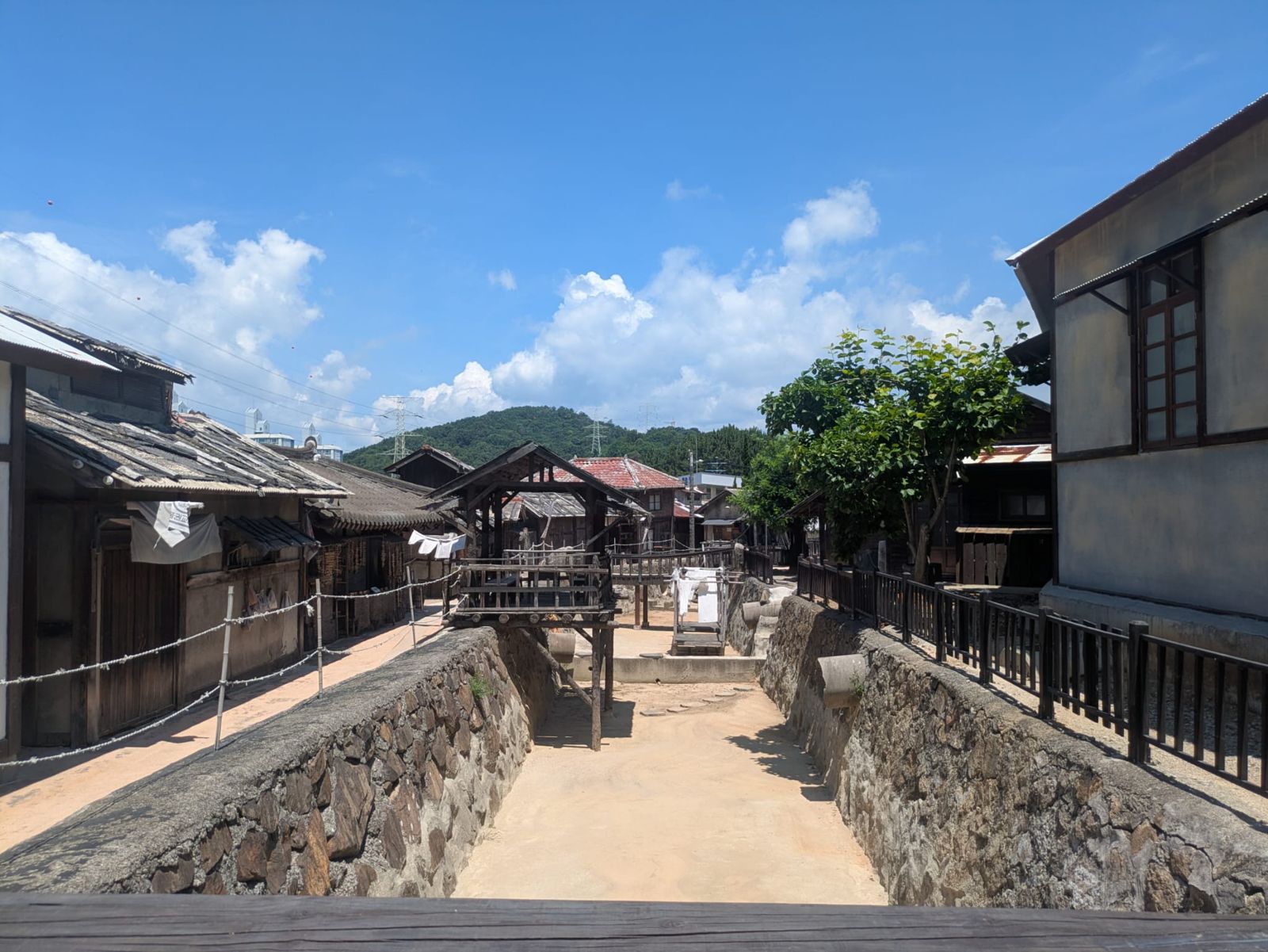
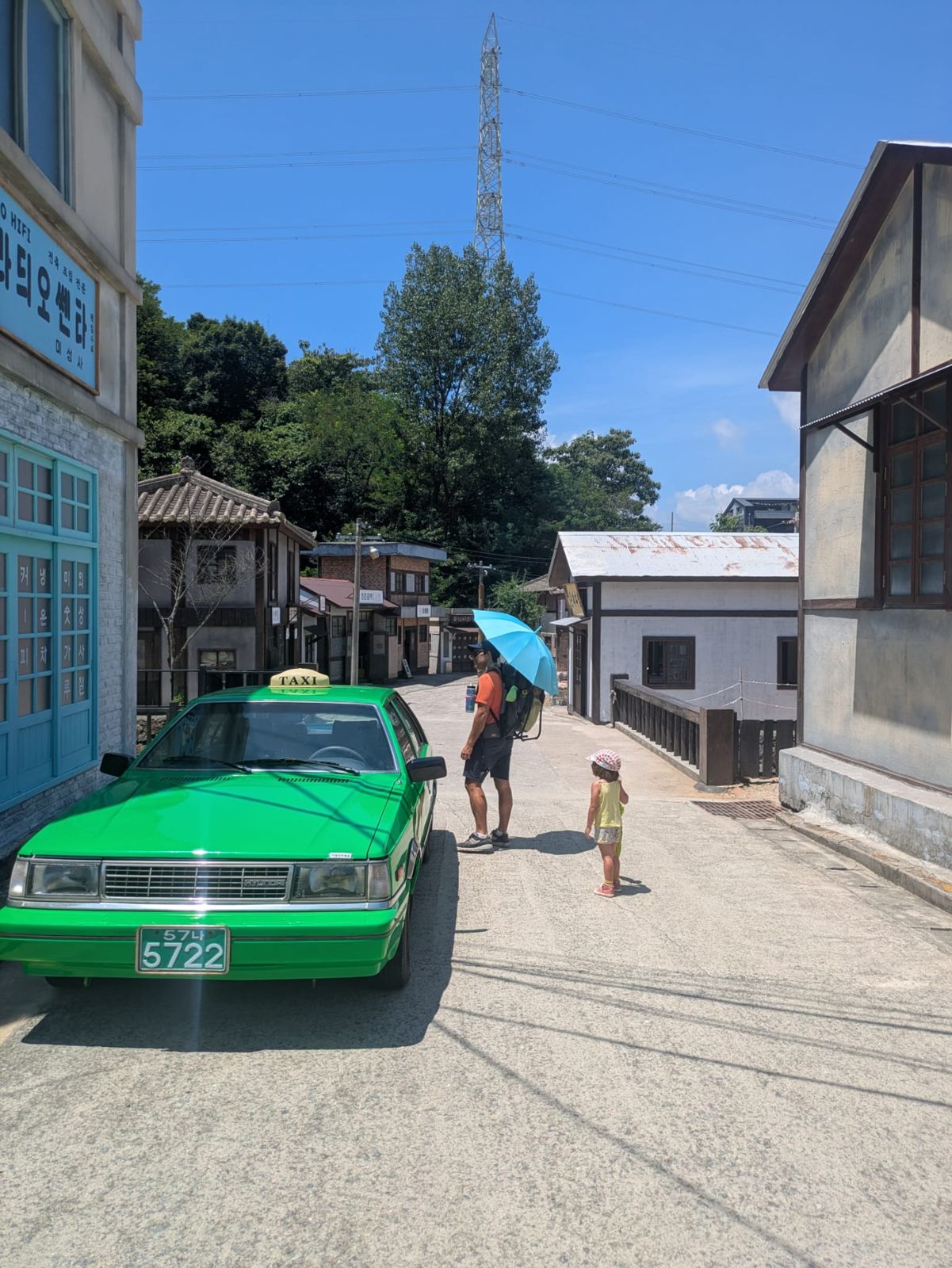
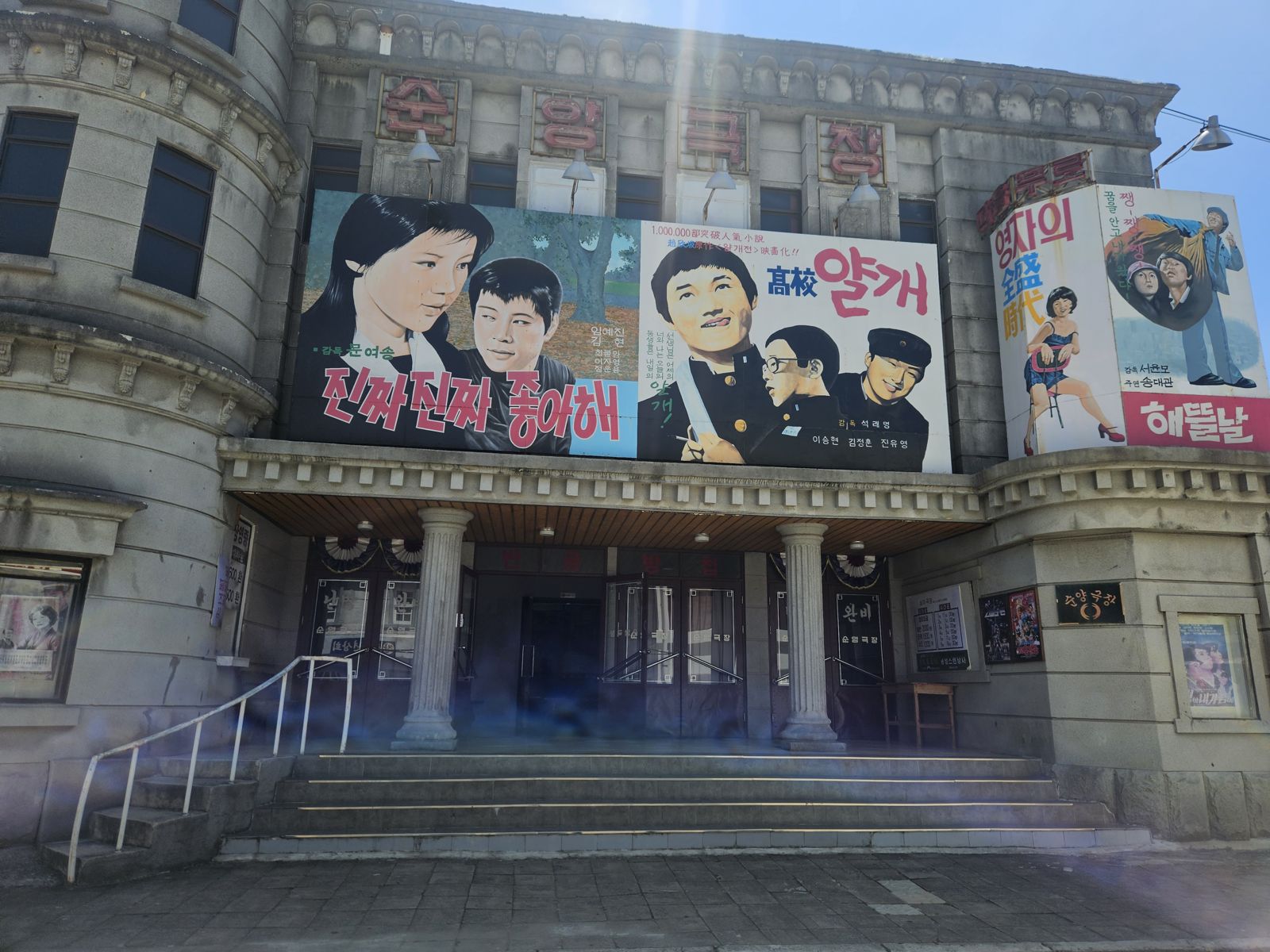
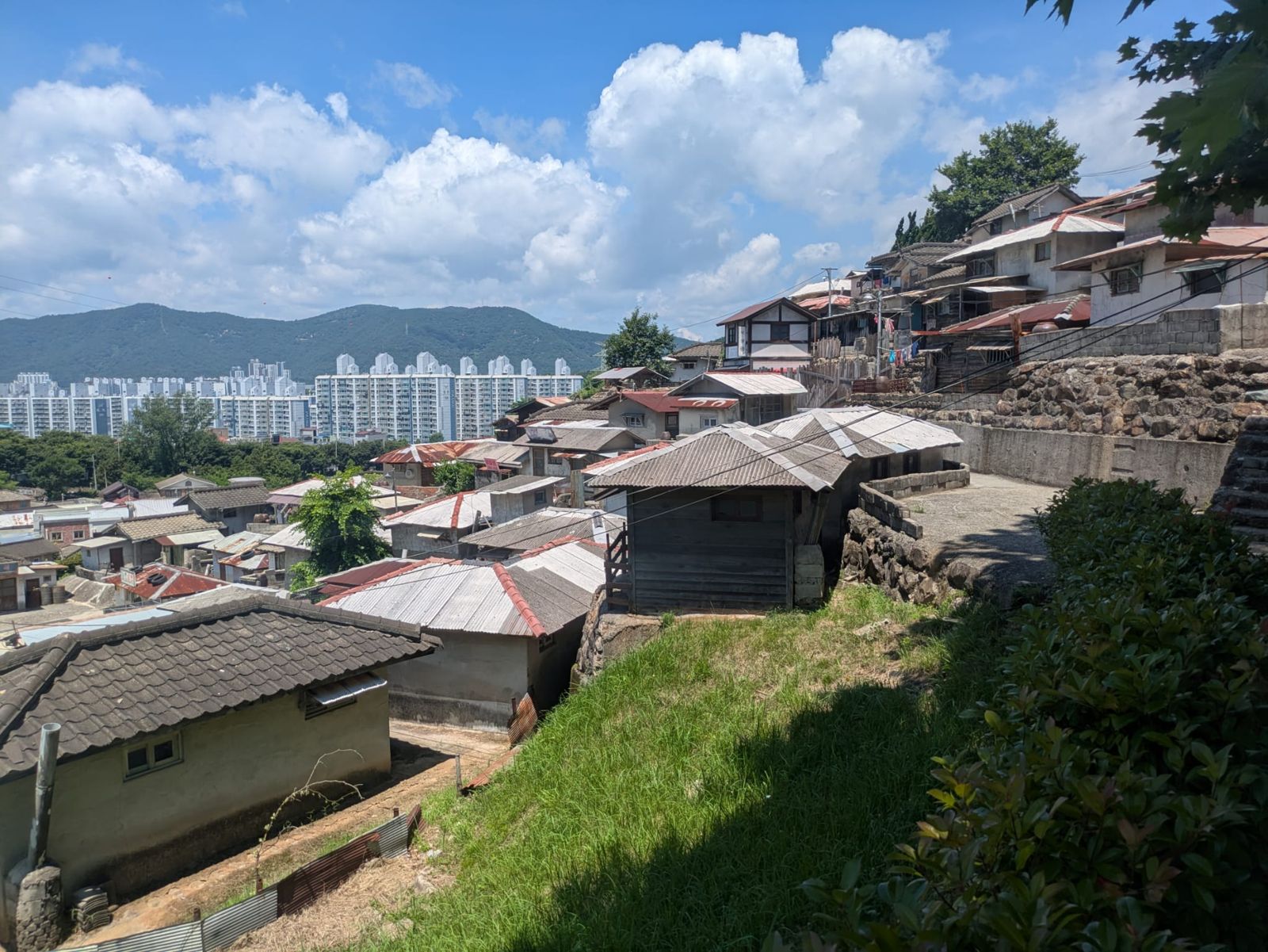
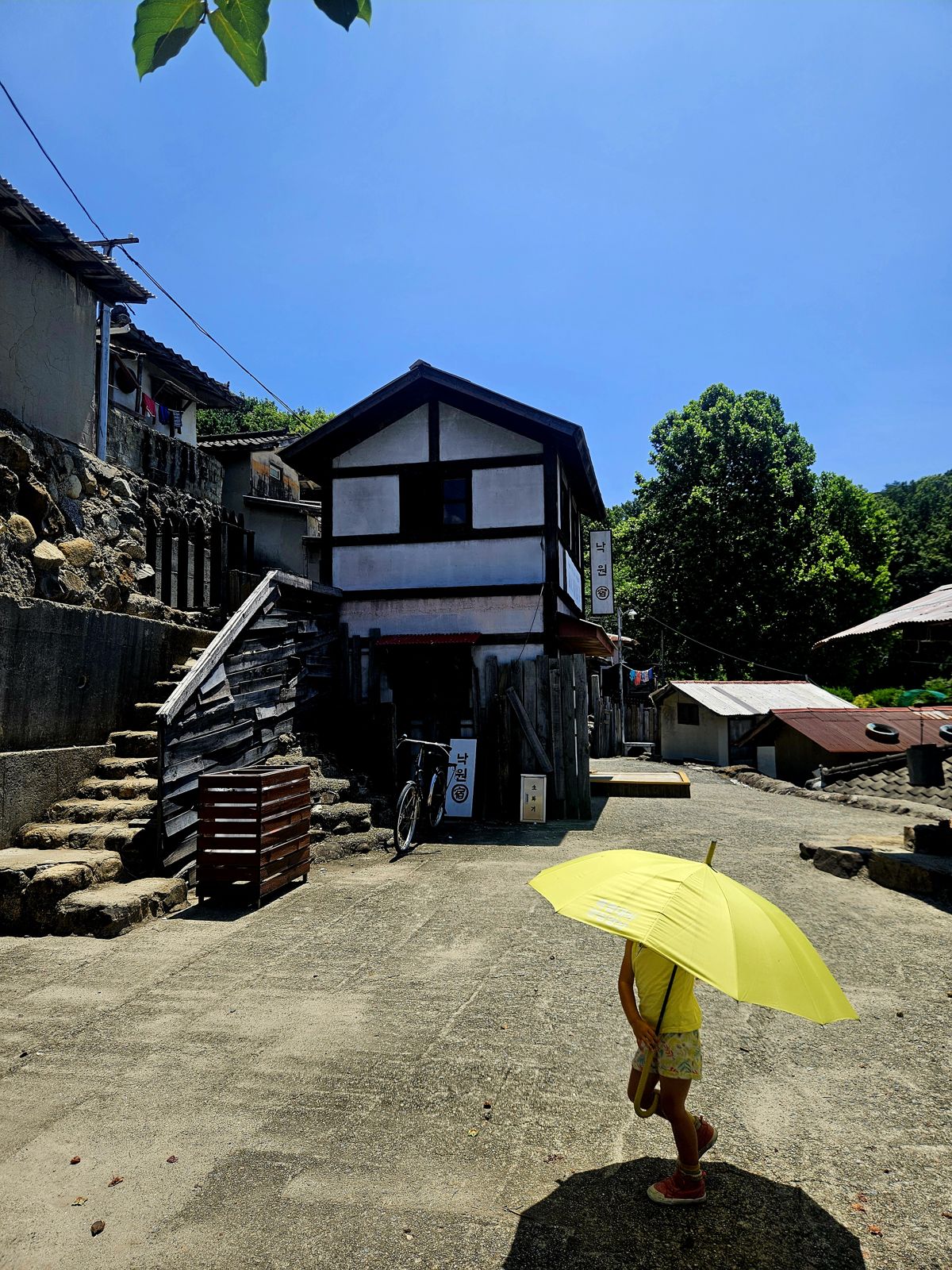
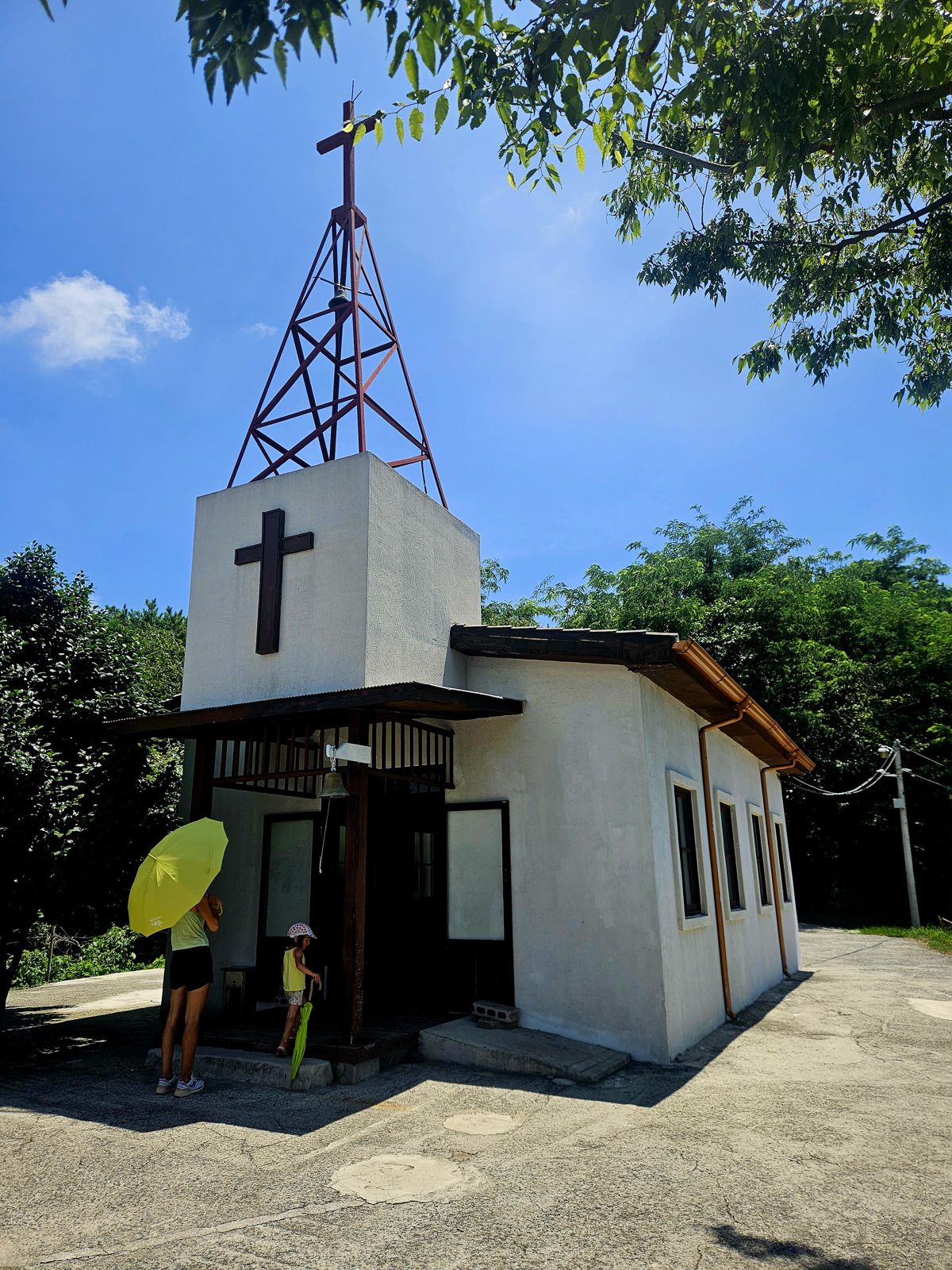
Today is Stéphane's birthday! He's turning 38, but we can't do much for the occasion, as Suncheon isn't the ideal city for celebrating. After breakfast, we take the bus to visit a film studio. On a hillside, over several levels, typically Korean neighbourhoods have been recreated to represent different decades. So you can stroll through 1980s and 1950s Seoul, which have absolutely nothing in common with the megacity we visited almost two months ago.
We take the bus back to collect our bags at the hotel and catch a long-distance bus. The reason we stopped in Suncheon was to take the ferry to Jeju from the nearby city of Yeosu. But that's the difficulty of travelling in countries with few tourists: we hadn't been told that this boat stopped running a few months ago. Even South Korea's official tourism website still lists it.
So we have to take a bus for an hour and a half to the town of Nokdong and sleep there. When we arrive at Suncheon bus terminal, we learn a bus leaves in under ten minutes. That would have scared us when we first arrived in the country, but we're so well drilled now that we move very fast. Between the two of us, we load the bags, the trailer and the bikes into the hold in a few moves. We've become terribly efficient!
Nokdong is a deserted port town that probably only comes to life when a ferry arrives. That's not the case today; there isn't a living soul near our hotel. When we turn up at reception around 3 pm, there's nobody there. Cassandre goes up every floor looking for someone but comes up empty. The number posted at reception rings out and we can't reach anyone. We have to ask for help at the hotel next door, where a very nice lady gets us out of this fix in a rather surprising way: she shouts from the street, clearly used to it. When we go back to reception, the owner comes out of the lift looking annoyed and finally gives us our room key card after a 45-minute wait.
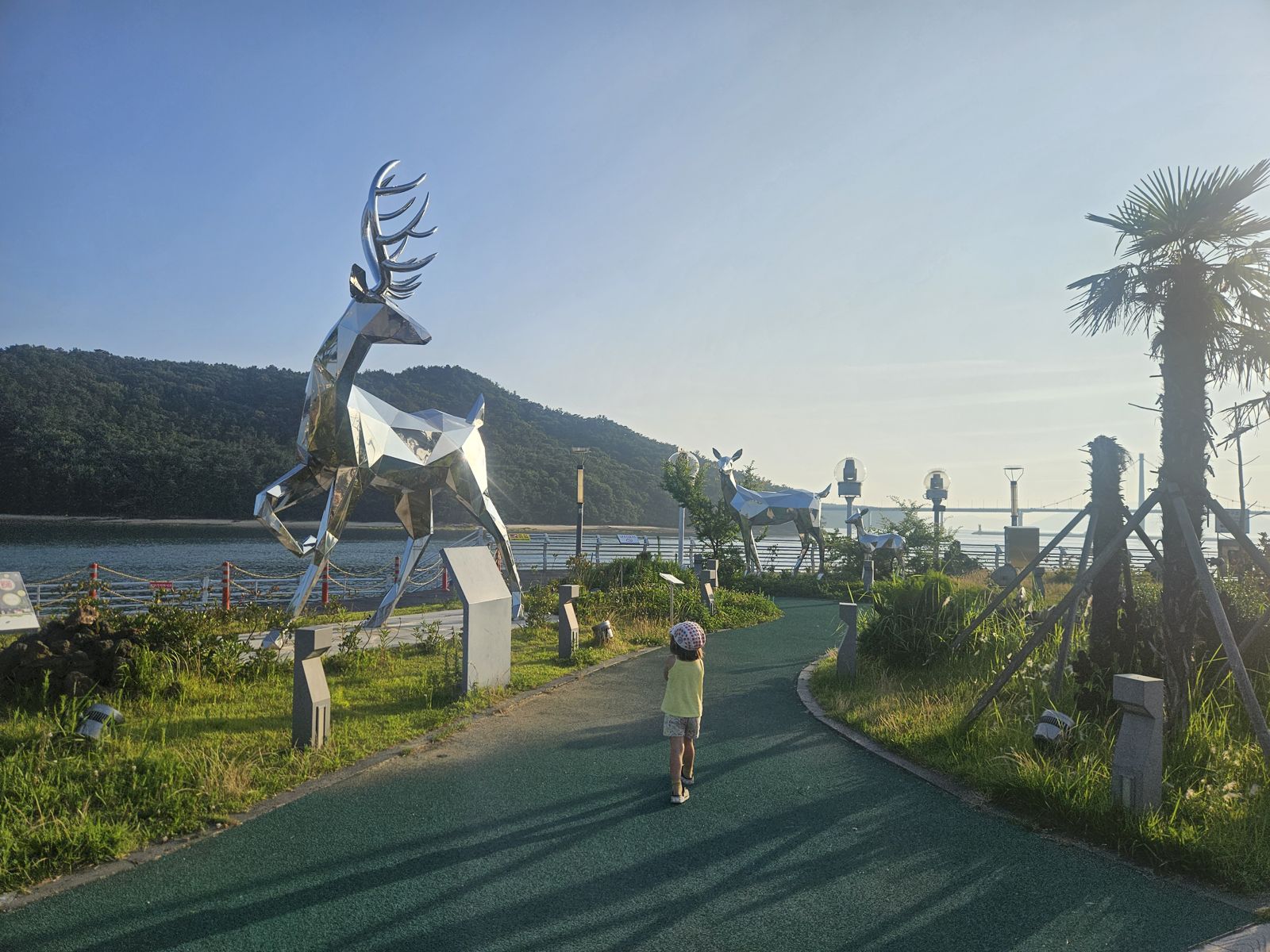
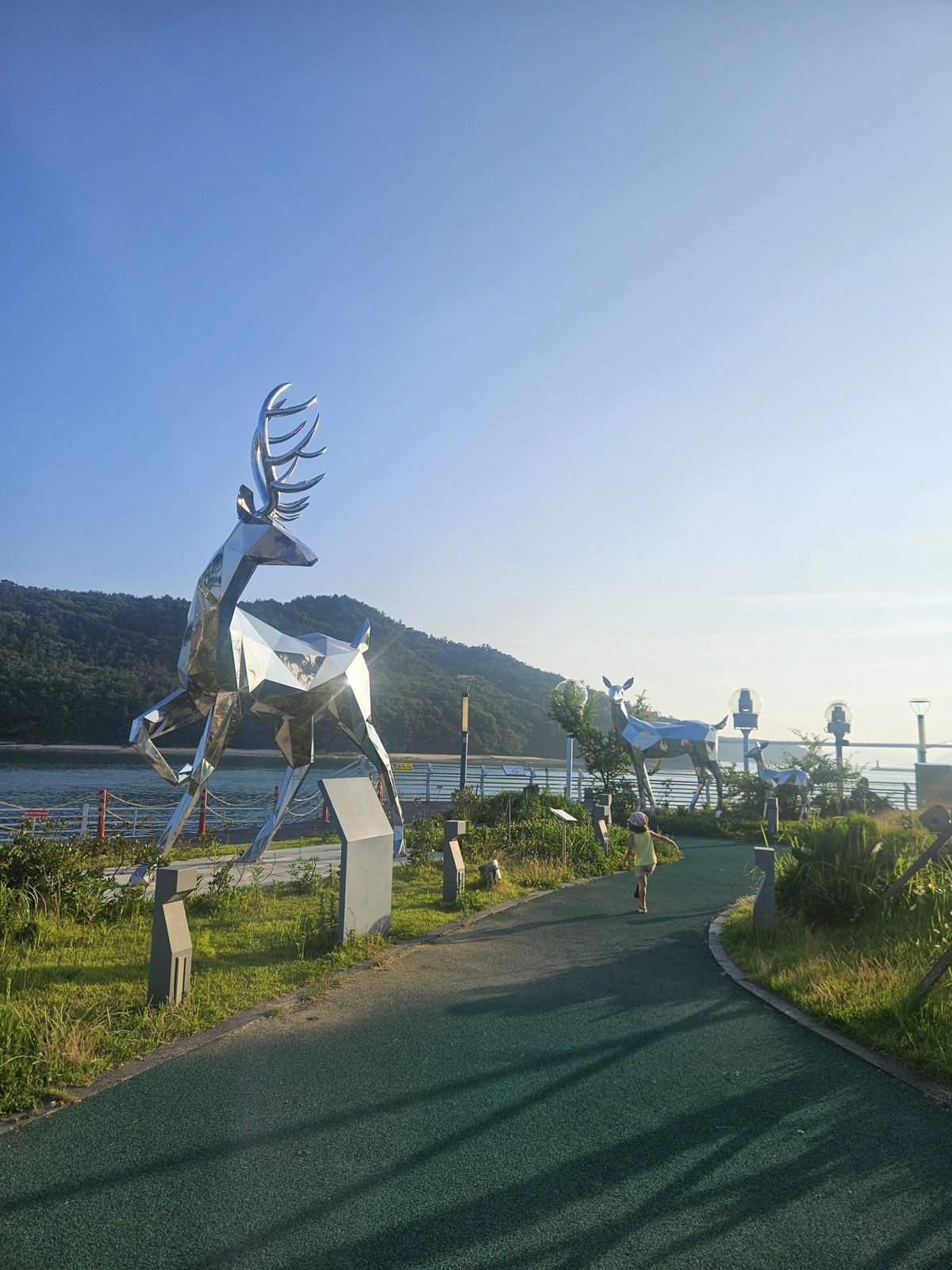
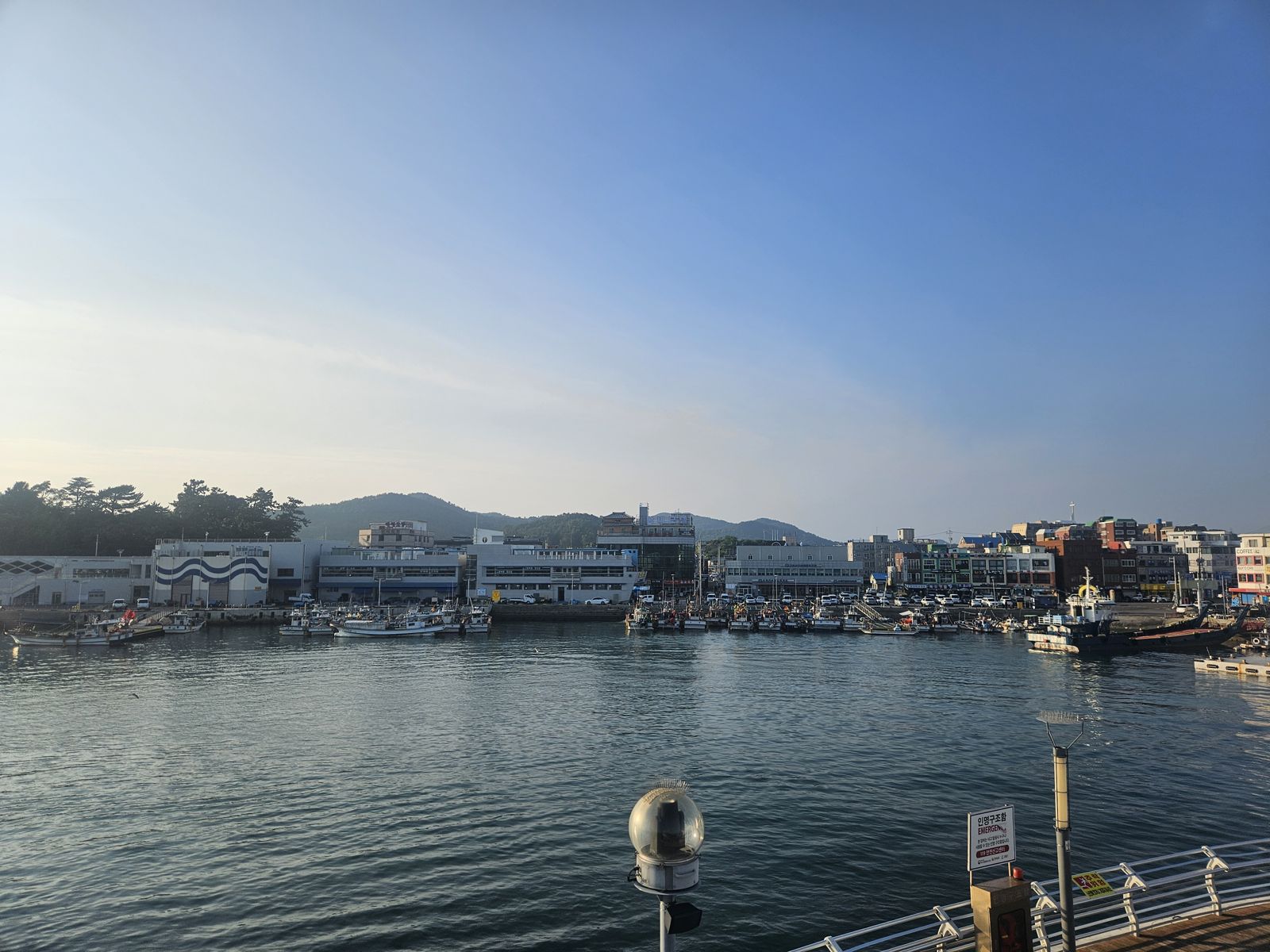
Phew, we can drop our bags and go and ask at the ferry terminal. We already have our tickets but would like to know the procedure for boarding with bikes. The place is empty too. We meet a staff member who explains there are no boats today because it's maintenance day. He's very friendly and explains the procedure at least ten times. We've got it, and we thank him warmly.
After a short walk around the town's unremarkable port, we have dinner in a pub so we can have a drink for Stéphane's birthday. It's not very lively, but it does the job. In any case we have to go to bed early, as the ferry leaves at 9 tomorrow morning and we have to be at the counter by 7:30.