
 ← PreviousAlong the Yeongsangang River
Leaving Mokpo for the islands of the Sinan archipelago means venturing far from Korea's classic routes. An early ferry, a terminal almost empty of tourists, some surprisingly lengthy formalities… and already the feeling of setting course for another world, between the sea and the giant bridges linking these little-known islands. For clarity, the map below traces our three days.
Friday 22 August
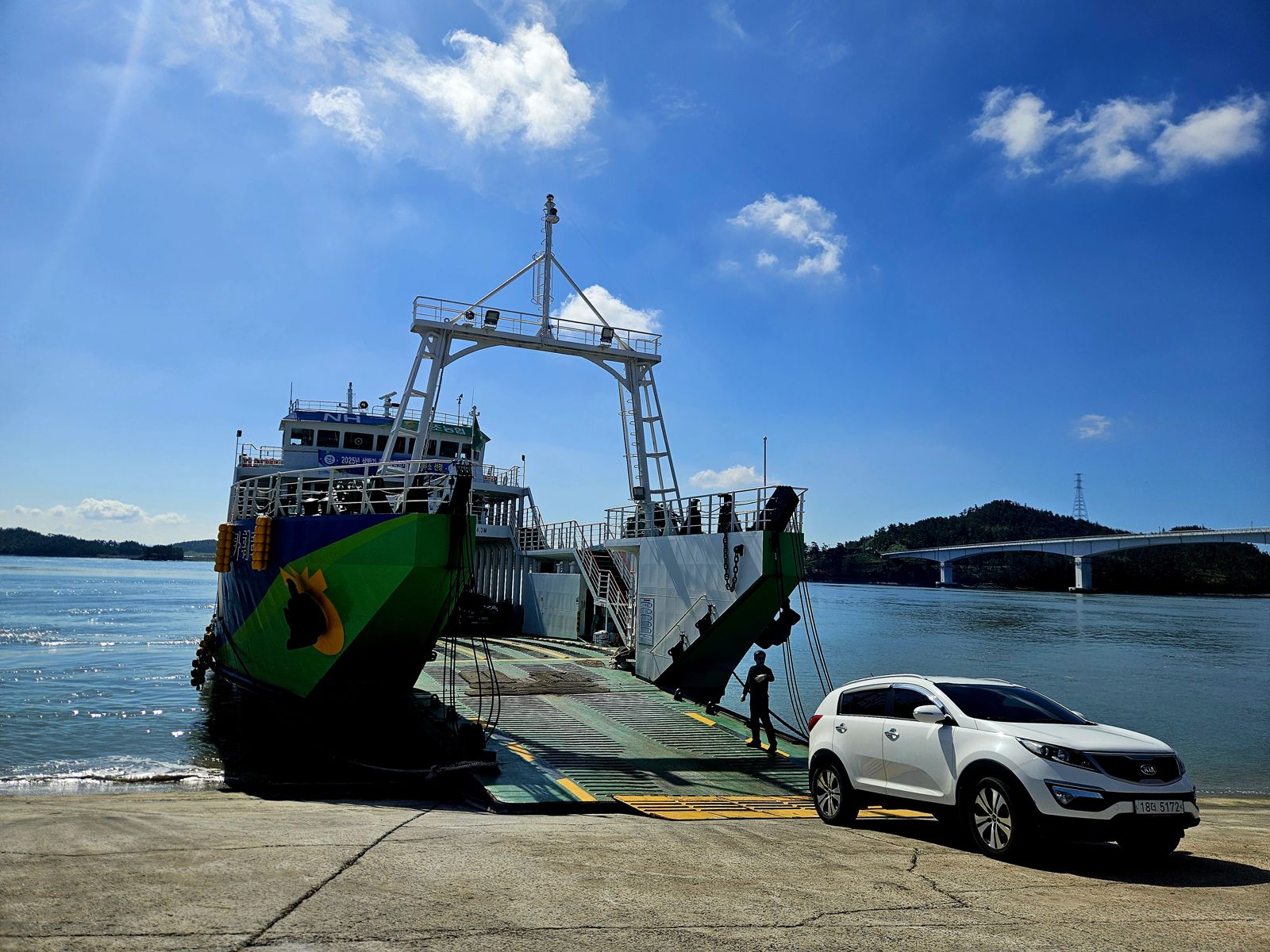
Our time in Korea wouldn't be complete without a tour of the islands to the west. Standard tourist itineraries focus on Seoul and Busan, and we can pride ourselves on getting into the very heart of the peninsula. We get up early to catch the 8:45 ferry to one of the islands of the Sinan archipelago. We don't have much choice, as there are only two ferries a day: this one and another at 6 pm. All the main islands of the archipelago are linked by huge bridges, so you can reach them by road, but it's quicker as the crow flies across the sea. After a few kilometres through Mokpo, we reach the terminal, where of course we're the only Westerners. The lady at the ticket desk takes so long to issue our tickets that we wonder if the boat will leave without us. She studies our passports, notes down every detail and types non-stop on her computer. We're only taking the ferry for an hour, and we're not crossing international waters either.
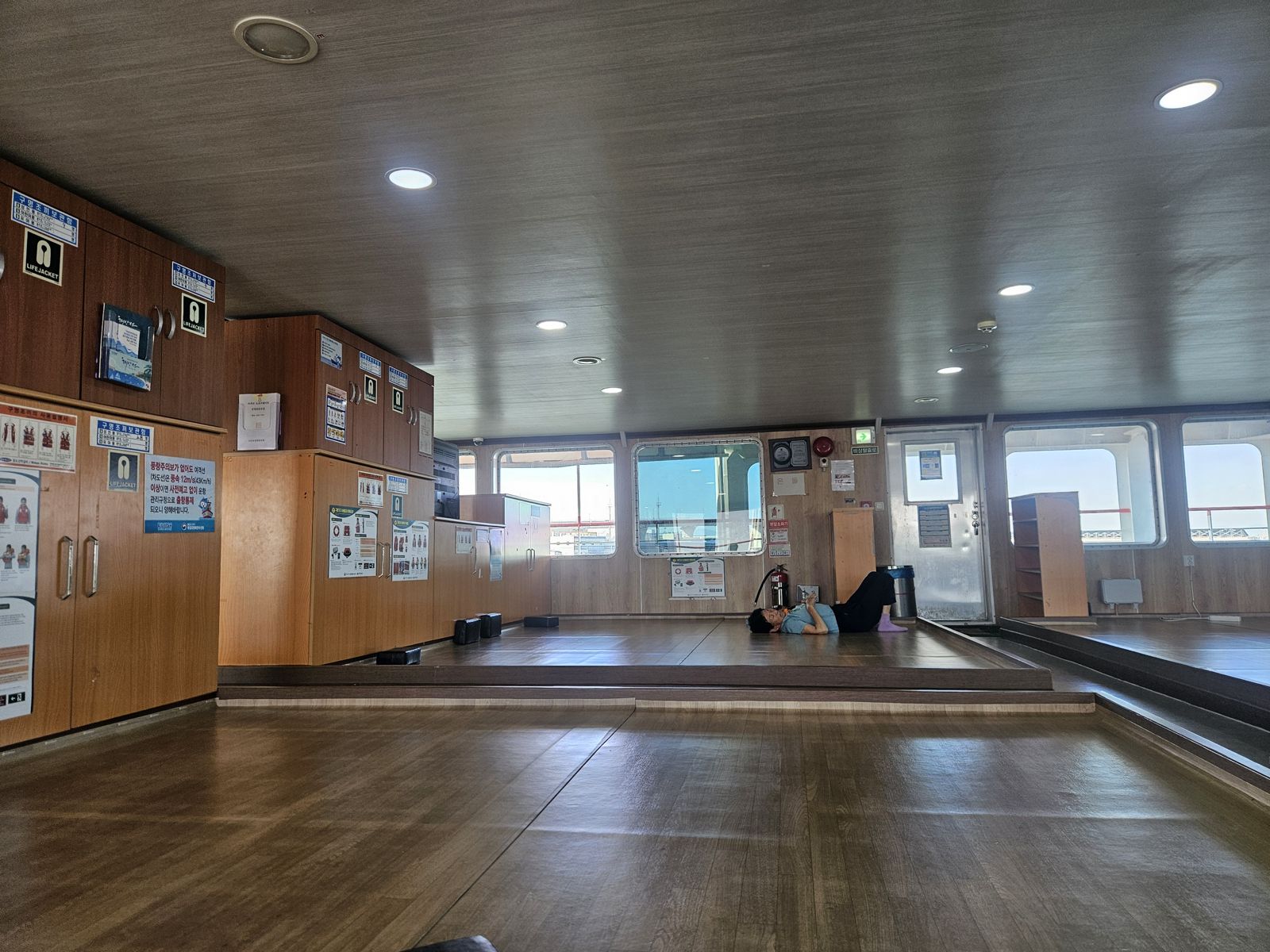
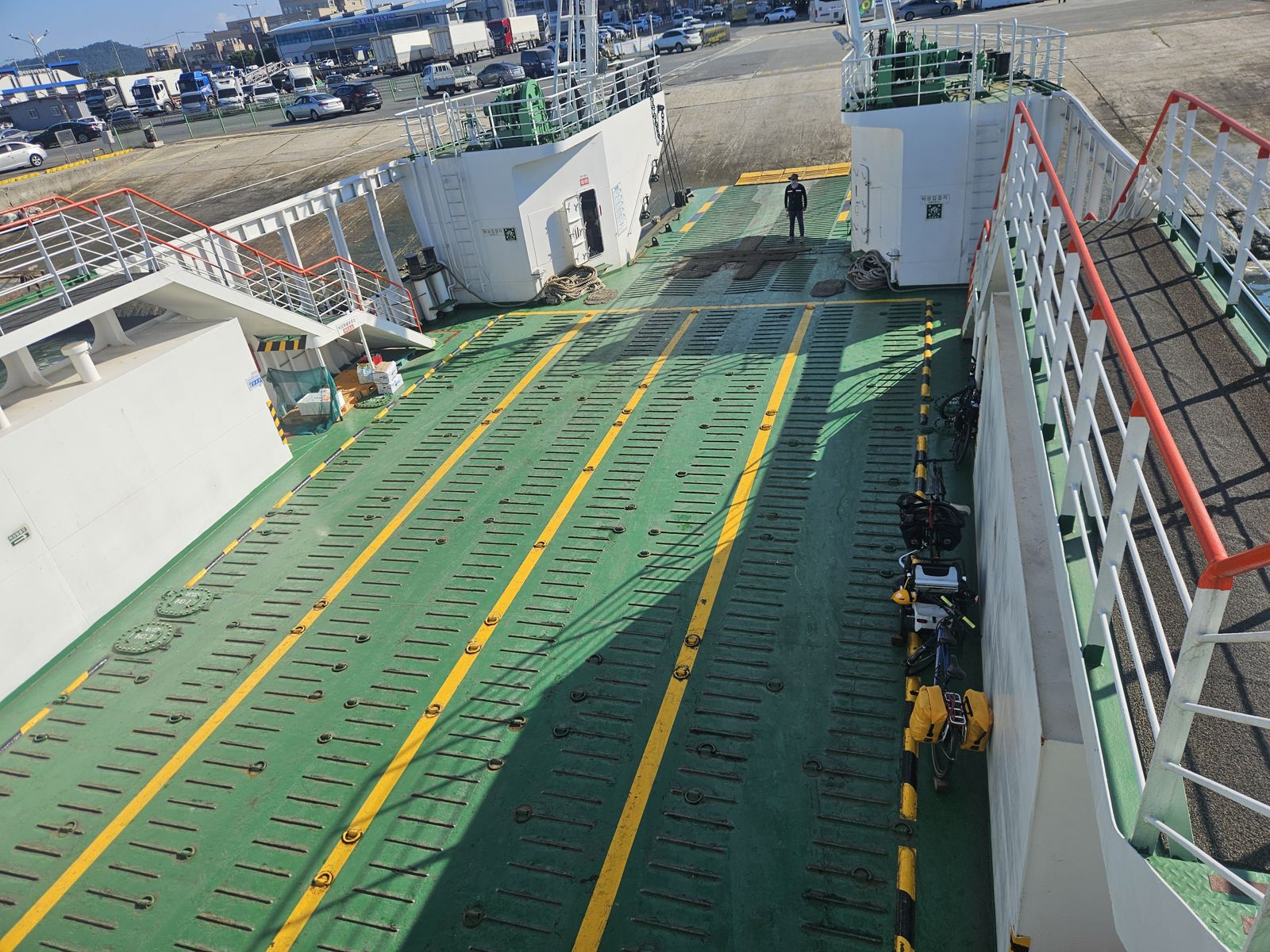
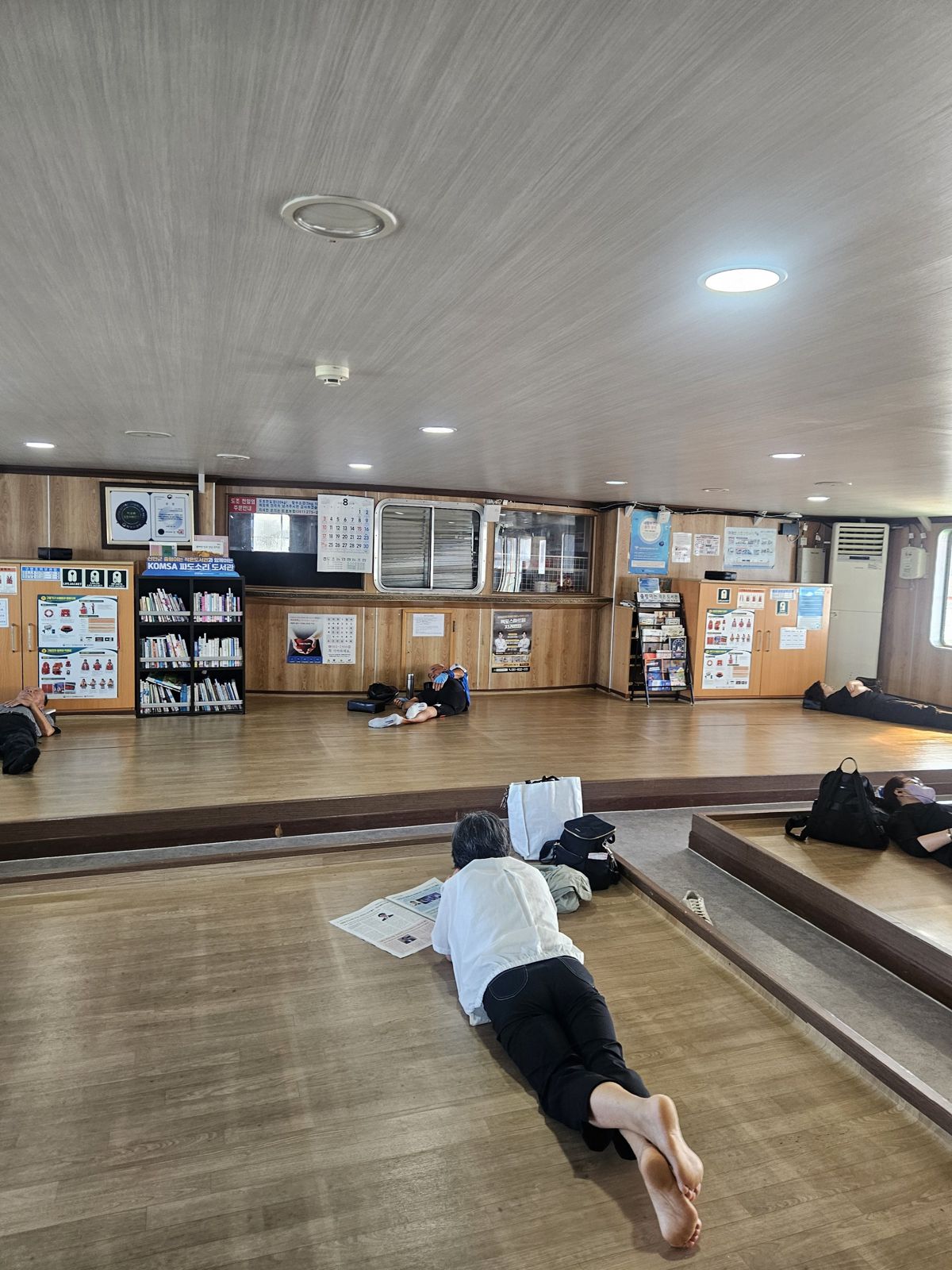
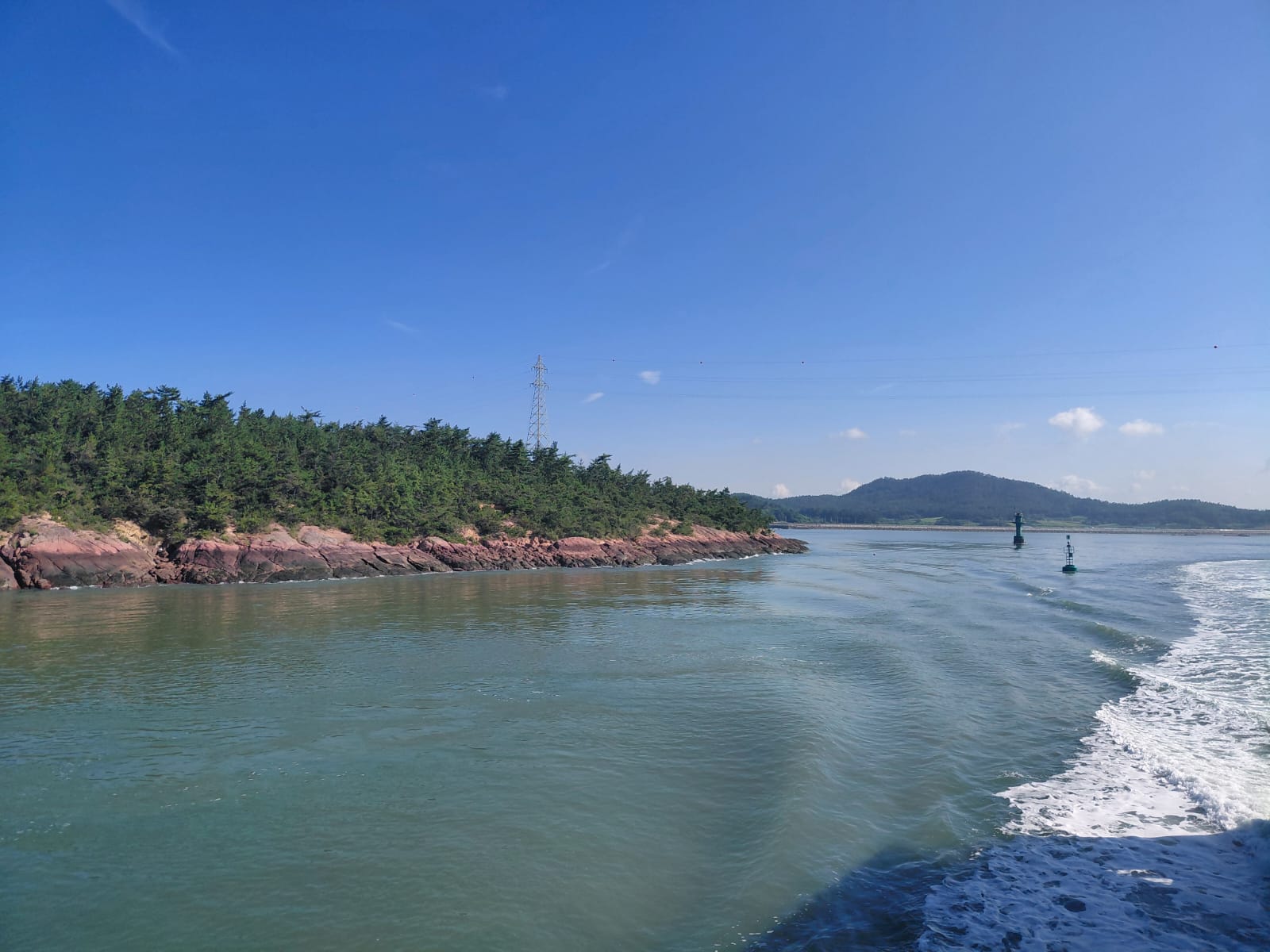
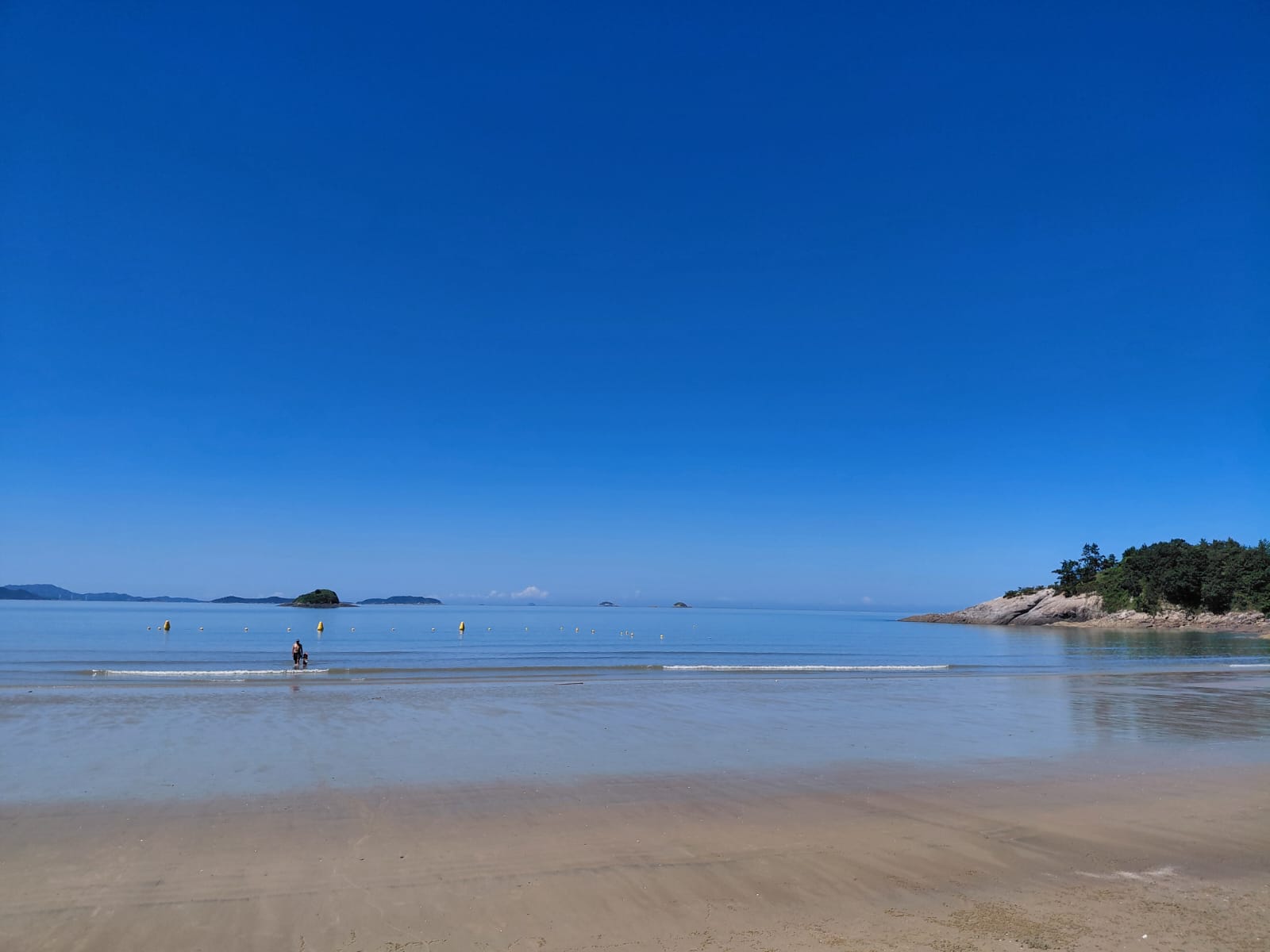
After a long wait we have our tickets and hurry onto the ferry, which leaves almost at once. As usual on Korean ferries, there are no seats, just floor areas where you have to take off your shoes. We copy the locals, who happily stretch out on the floor. Clémence builds things with the little brick-shaped pillows provided (almost as hard as bricks, too!) and we're soon there. We collect our bikes and ride a few kilometres to the beach of a big resort plonked in the middle of nowhere. On the way, a Korean driver pulls up alongside us and hands us cold drinks through his window. It's not the first time this has happened, and the generosity of people in this country will never stop surprising us. The resort beach isn't crowded despite the school holidays, so we enjoy a paradise beach almost to ourselves.
The resort has a small convenience store where we eat in the cool. It's still very hot today, so we're happy to linger somewhere air-conditioned. We go back for a swim in water at around thirty degrees, and while it doesn't cool us down, it at least keeps us entertained. Clémence and Stéphane never tire of building in the sand, today a failed replica of the Gwangju stadium. We manage to drag Clémence away and stop to drop our things at the hotel a few kilometres further on.
The concept of "unmanned" hotels, with no staff, in South Korea is very peculiar. They're often places for couples seeking discretion who don't want to be seen by anyone. You reach the rooms through individual garages to park a car (or bikes), and a staircase leads to the room just above. There's a machine at the room entrance: you just pay and the room is yours. In theory there's no staff on site, but someone is always reachable and can be there within two minutes if anything goes wrong. In our case, the machine doesn't take cards, only banknotes. We feed in our notes, but the machine spits them out whichever way we insert them. We try dozens of times; a few miraculously get accepted, but after ten fruitless minutes we end up calling someone on the intercom to sort it out. We stay shut in for an hour to shower and rest in the cool before going out to discover another beach a few kilometres away.
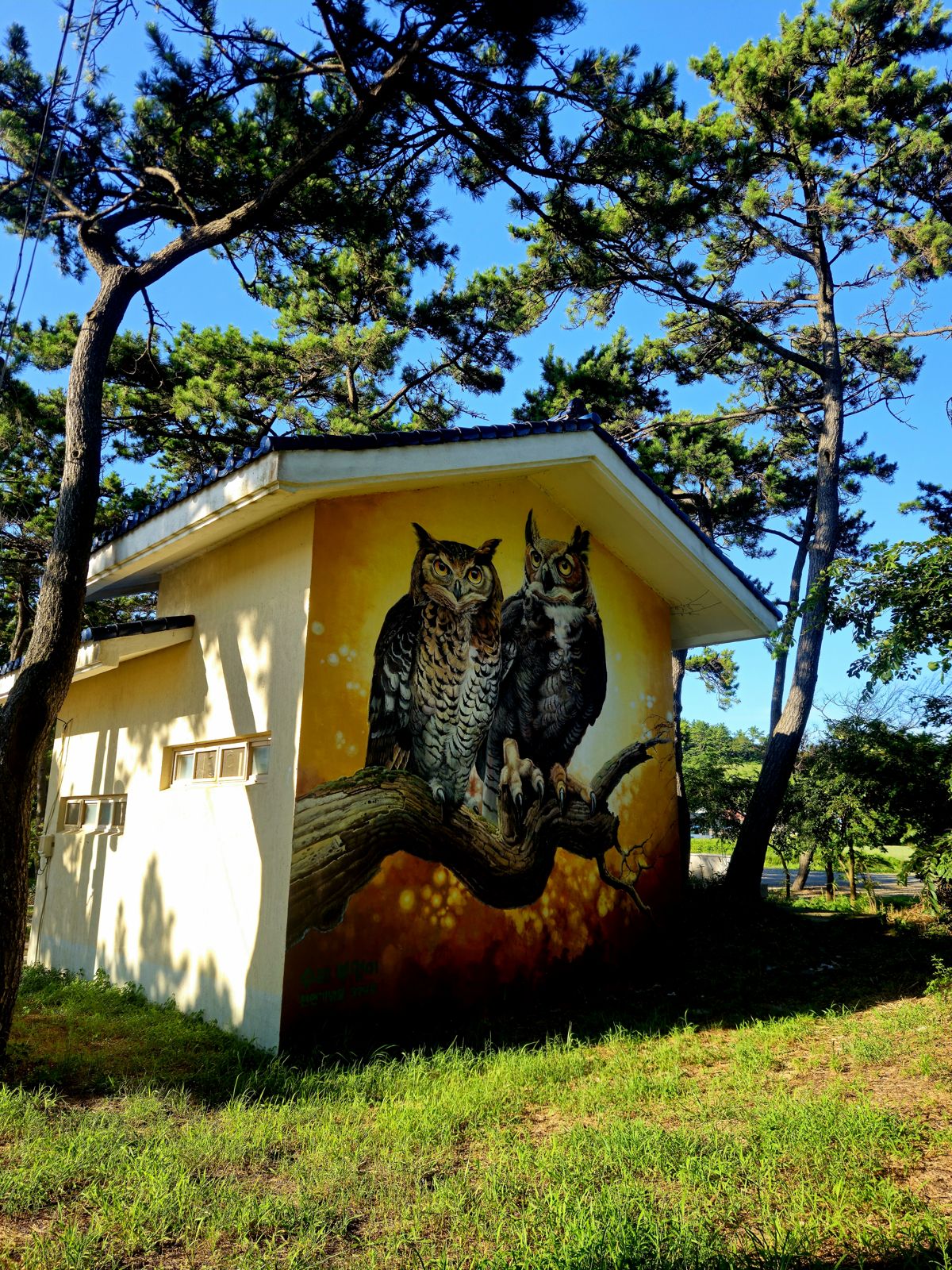
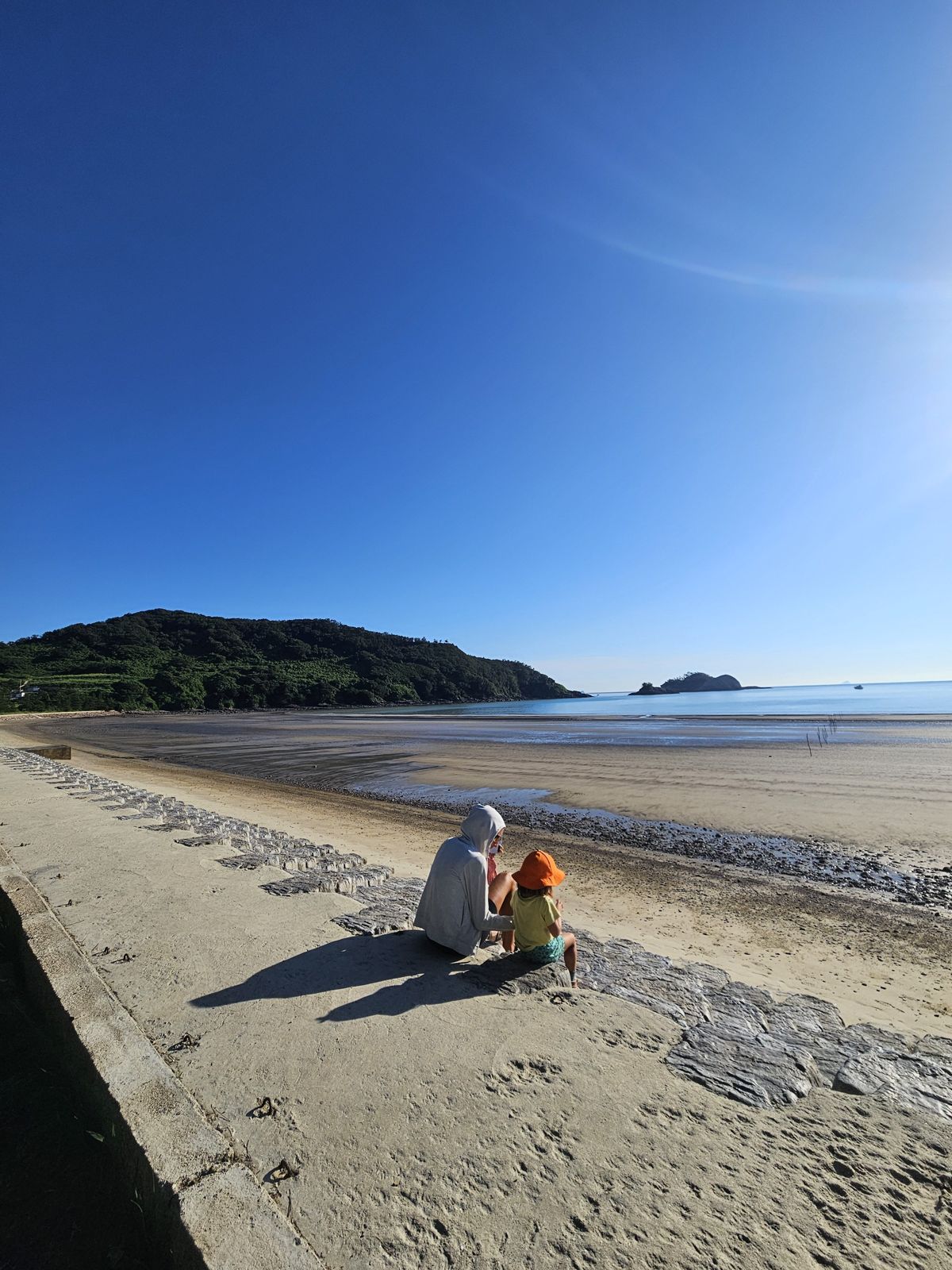
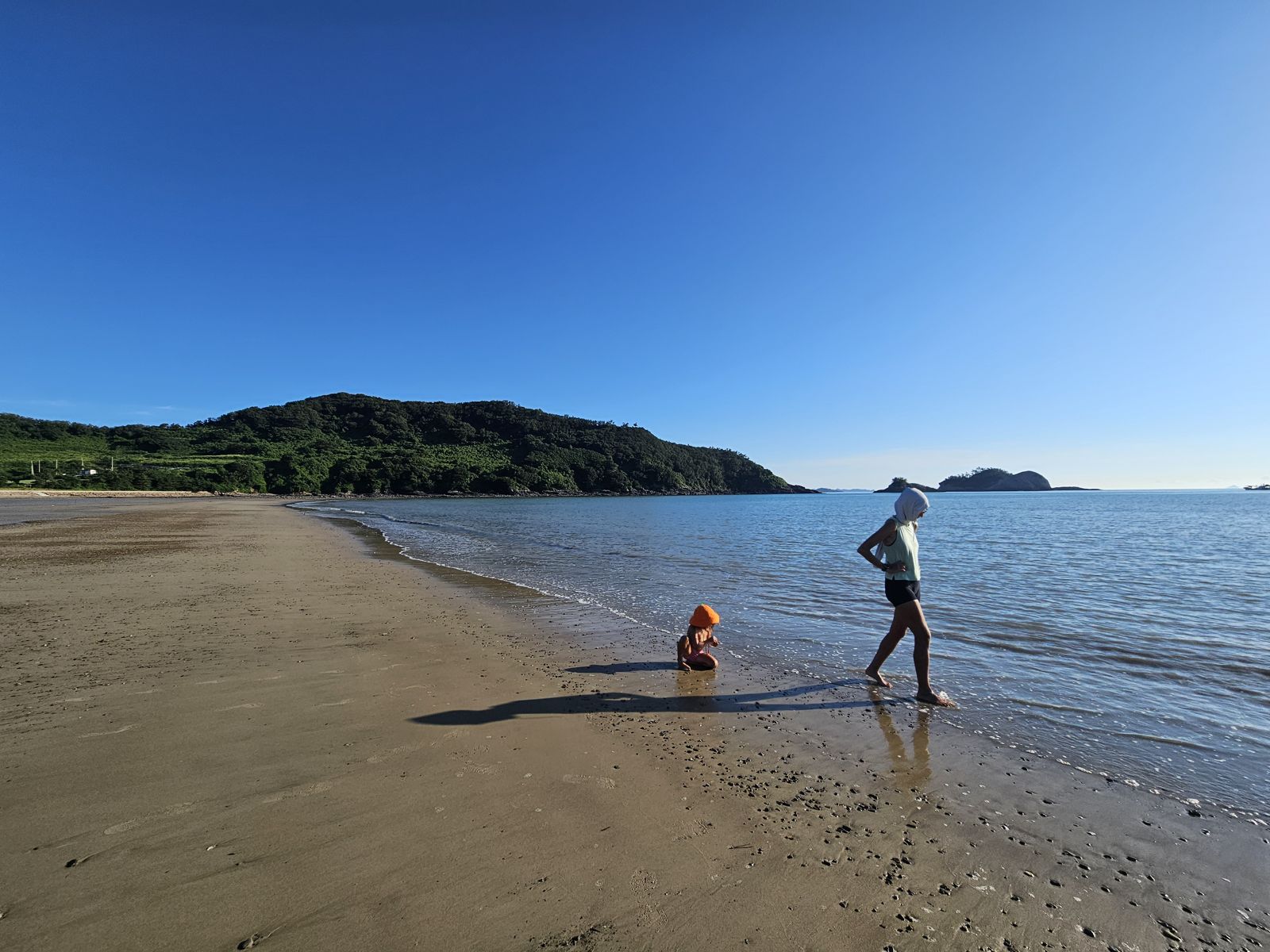
Even in the most remote places, Korea always has pretty cafés to offer. We order cold drinks before going for a walk by the water. Well, by the water normally, because for some reason the sea goes out extremely far on this side of the country, a good hundred metres or so. Clémence still manages a little swim. We then go back to the village to buy something quick to eat and go to bed.
Saturday 23 August
We wake up slowly this morning, as there's no rush. We do have a ferry to catch at 11:40, but it's only about ten kilometres away, so we have plenty of time. After an unremarkable breakfast, we set off at a snail's pace to enjoy the scenery. We're in the deepest rural countryside, surrounded by rice paddies and onion fields as far as the eye can see. The road winds through tiny villages, where the few people we pass always greet us with a nod or a little wave. Korean drivers are as careful as ever with cyclists, and there's a feeling of calm and of being at the end of the world on this archipelago of confetti islands.
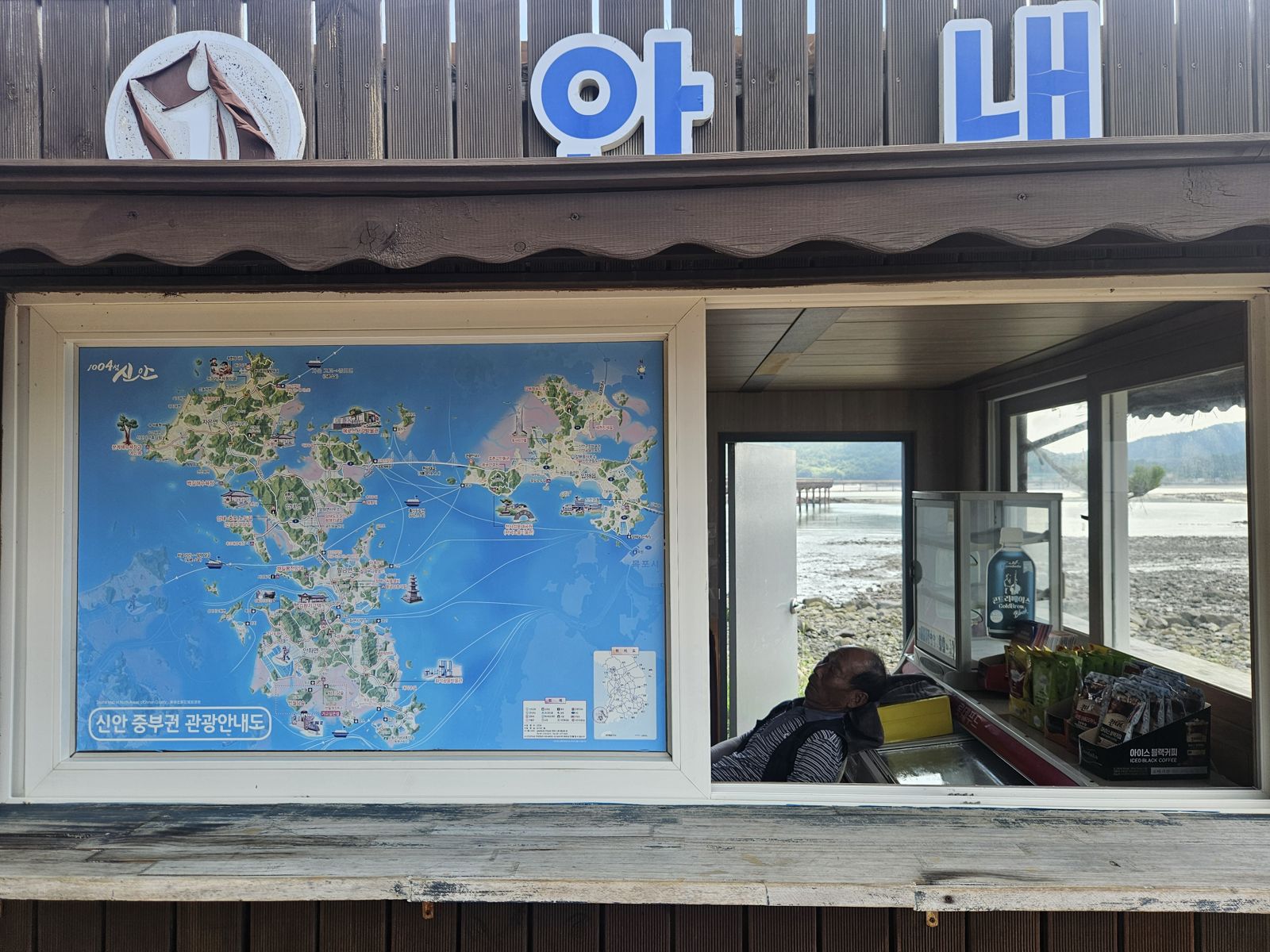
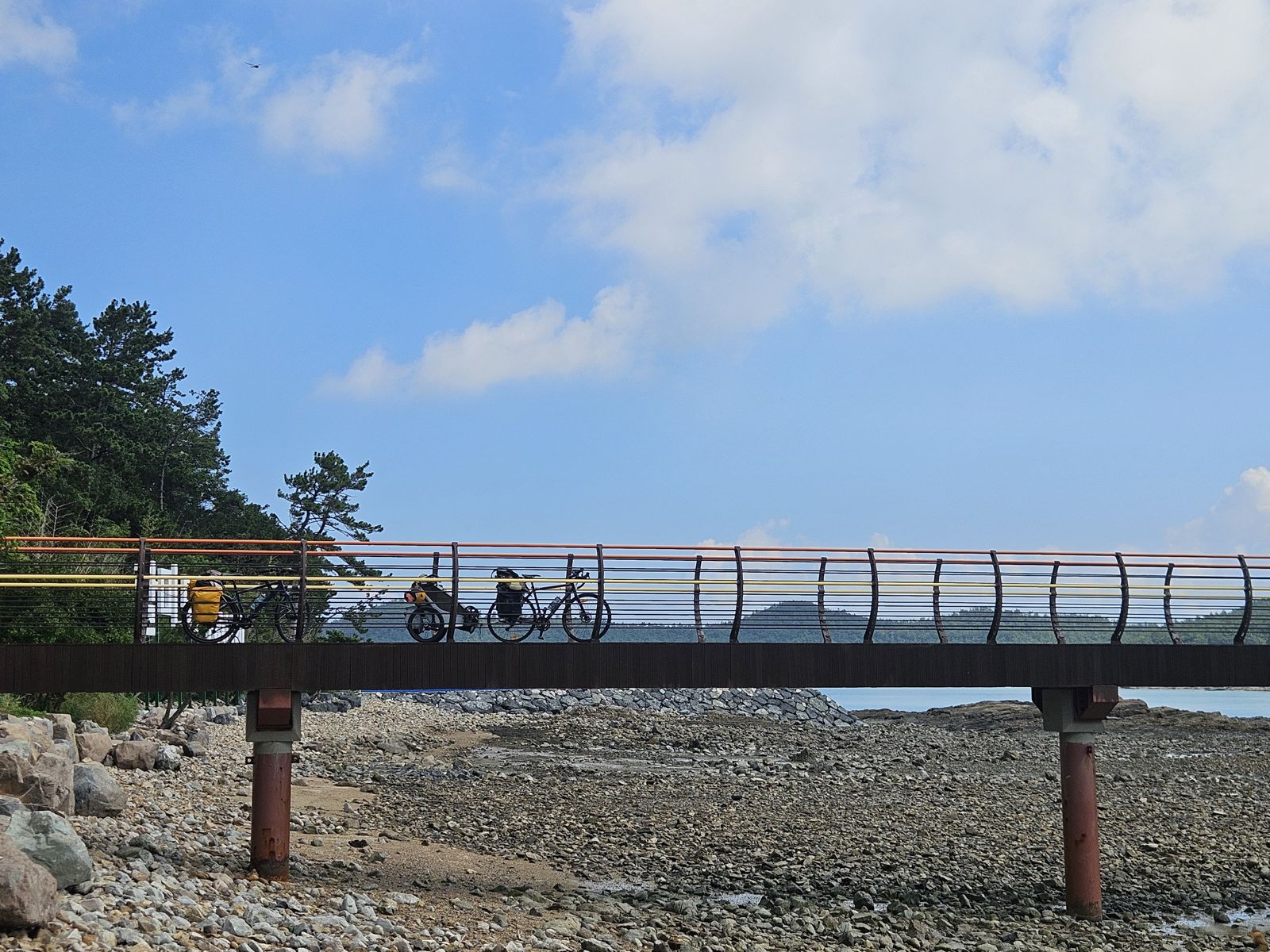
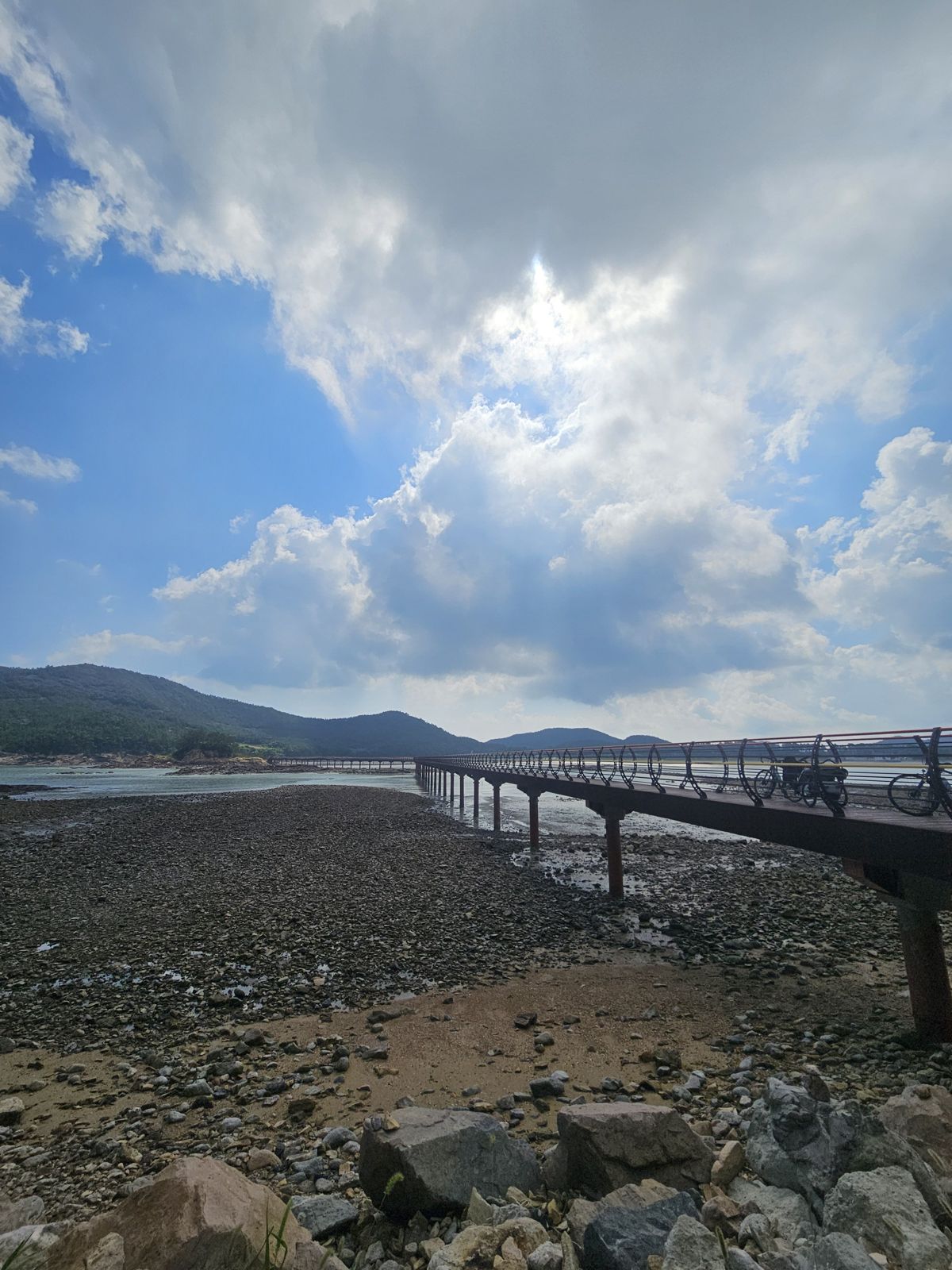
The road takes us to the Ponte dell'Infinito, a gigantic one-kilometre footbridge whose name is written everywhere in Italian without us ever finding out why. Was the architect Italian? Did Koreans think it sounded classy? We'll probably never know. We ride all the way across anyway and find a pretty landscape and an old man asleep in his little stall selling drinks and snacks. Only 4 kilometres separate us from the ferry terminal and we're still well on time. We take a route that turns out to be a real nightmare for a touring or road cyclist: a gravel road. Sometimes GPS apps see roads that aren't really roads, and you only find out once you're on them. After all our misadventures with tyres, we prefer to get off and push until we're back on smooth tarmac.
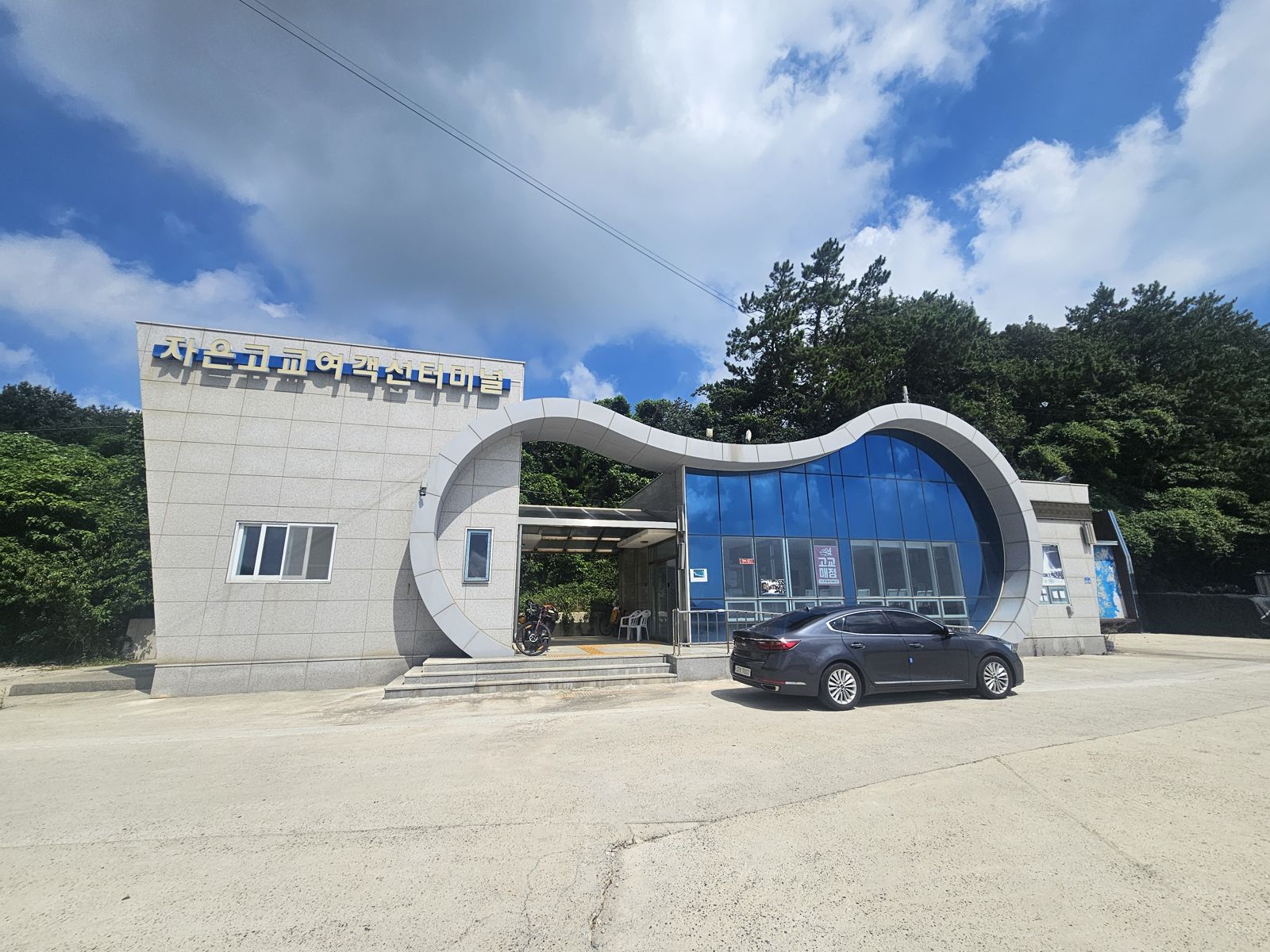
We're a little early at the ferry terminal, but it lets us cool off. The port is deserted; only one small room has air conditioning and a water fountain. We don't need to be asked twice to make use of both while we wait. The other passengers are surprised to see us with our bikes and talk to us in Korean in a very impressed tone. When locals talk to us, we generally answer two things: France and three years old, because we assume they want to know where we're from and how old Clémence is. But maybe they're asking about the make of our bikes or our jobs, in which case our answers fall flat.
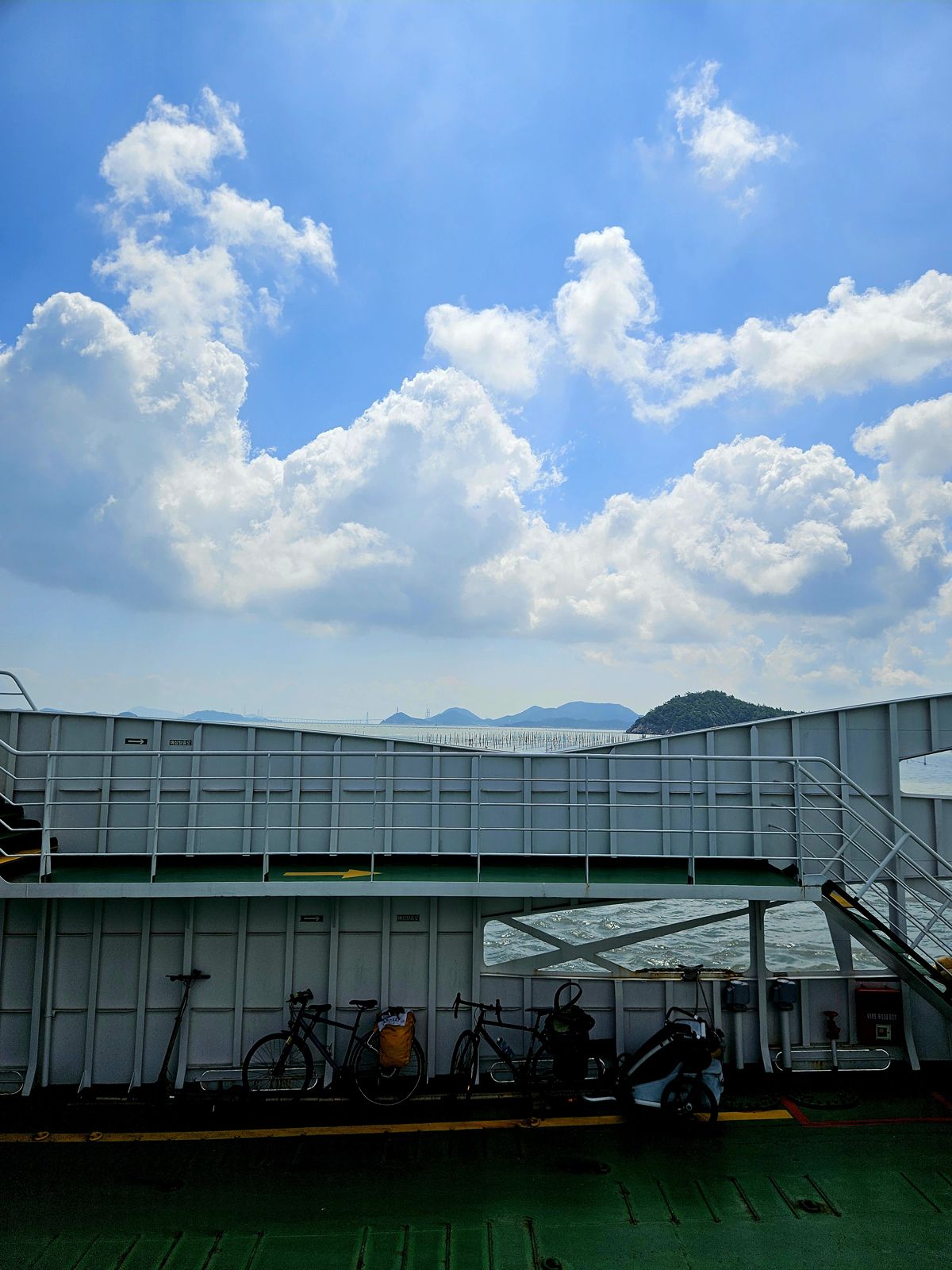
Our boat arrives, we board; we're getting to know the drill. The crossing only takes fifteen minutes, and we wonder what on earth the lady talking non-stop over the loudspeaker is saying. "We will soon arrive at our destination. Please collect your cars in alphabetical order. The weather is lovely today. I'm selling a garden table. You may now leave the boat." She can say whatever she likes; we just copy everyone else, and when we see movement, we go. Back in the saddle, we carry on north through the islands.
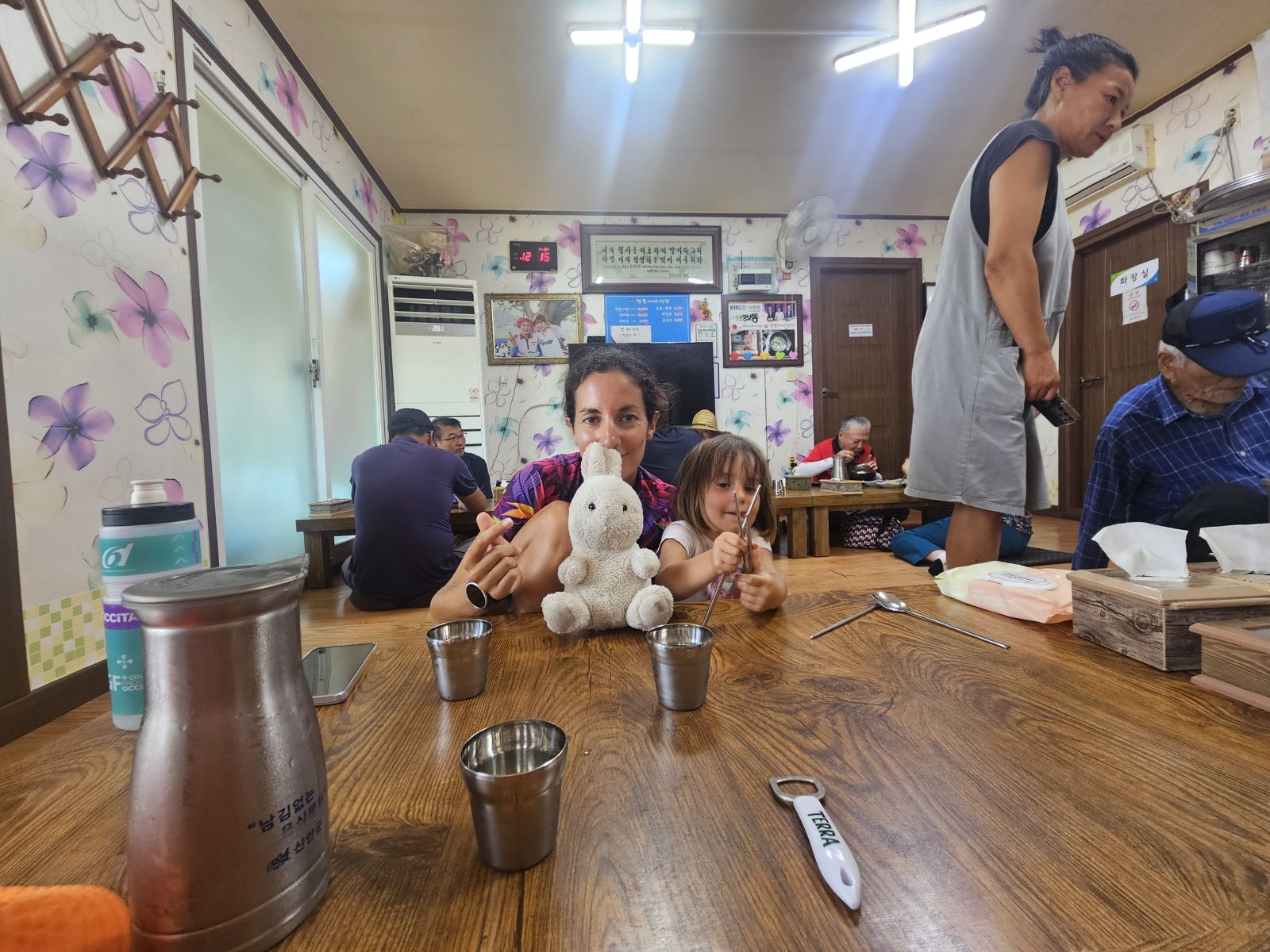
Since it's almost lunchtime, we stop at a small family restaurant by the road. It could hardly be more family-run, as the tables are in the family's dining room. As we walk in, staff and customers give us big smiles with astonished eyes. They can't see many non-Koreans in this part of the country! We sit cross-legged on the floor and eat a fish stew with mandu, big Korean dumplings. The place is popular: the sliding door keeps opening and a head pokes in to check if there's room, so we give up our table quickly once we've finished.
We head for the beach. Here too the water is boiling hot and the sand is covered in big shells. We collect them with Clémence to decorate our sand turtle, which bravely resists the tide but eventually gives in to the waves. It's 3 pm and, like yesterday, we think it wiser to go to the hotel to bring our temperatures down. We've noticed that Clémence copes better with days that have this break in the middle. She no longer naps, but some proper quiet time does her good.
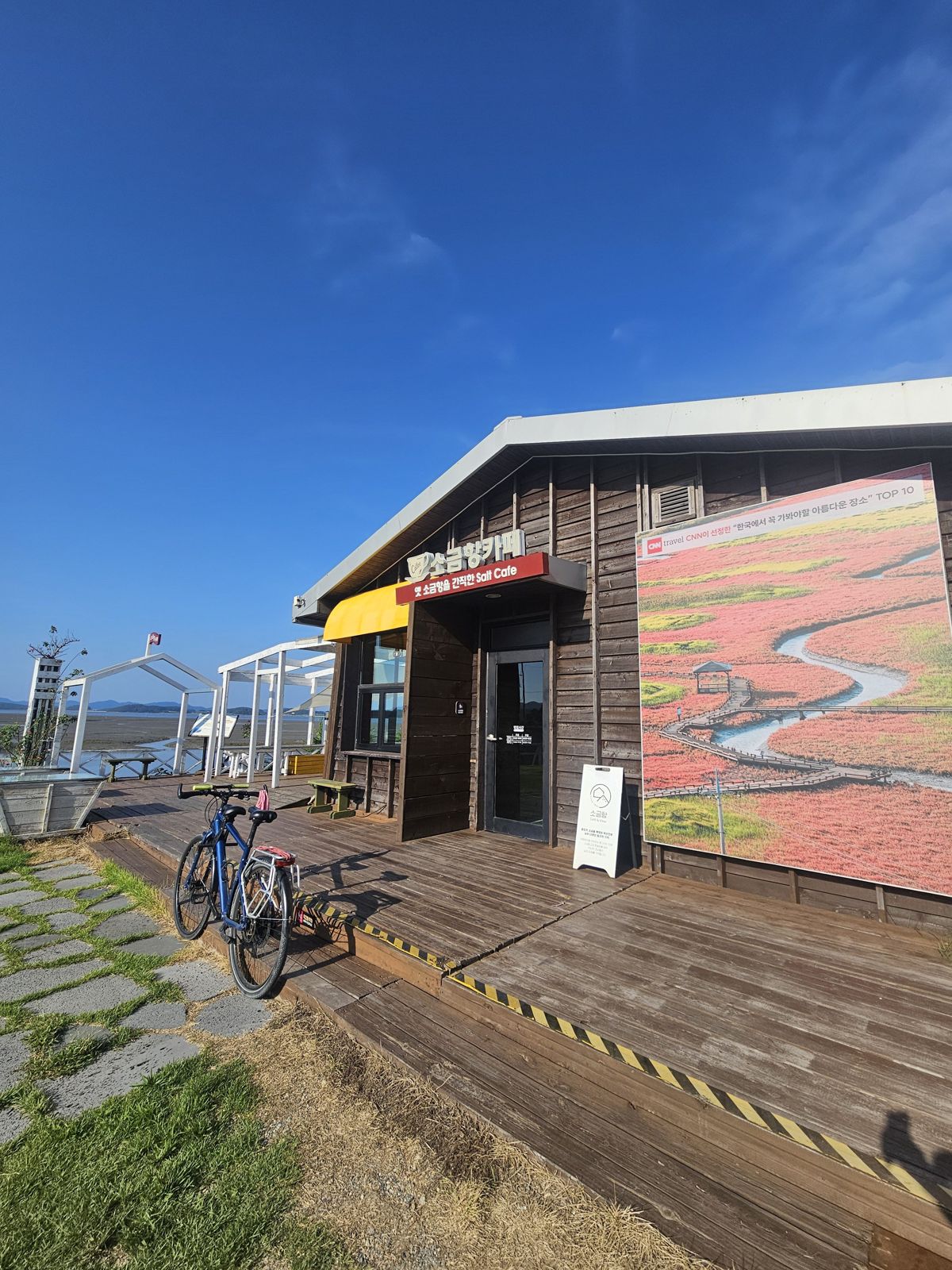
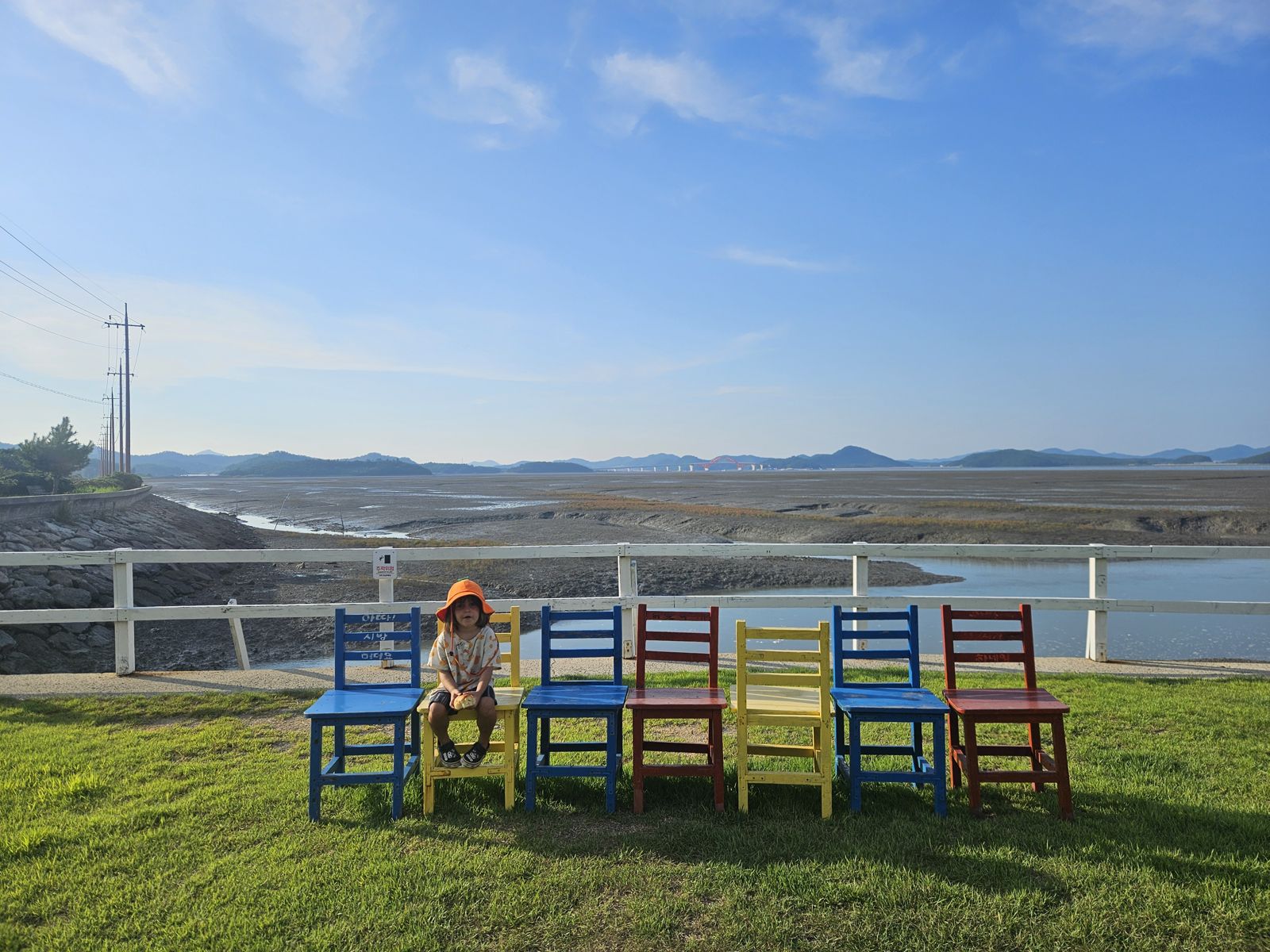
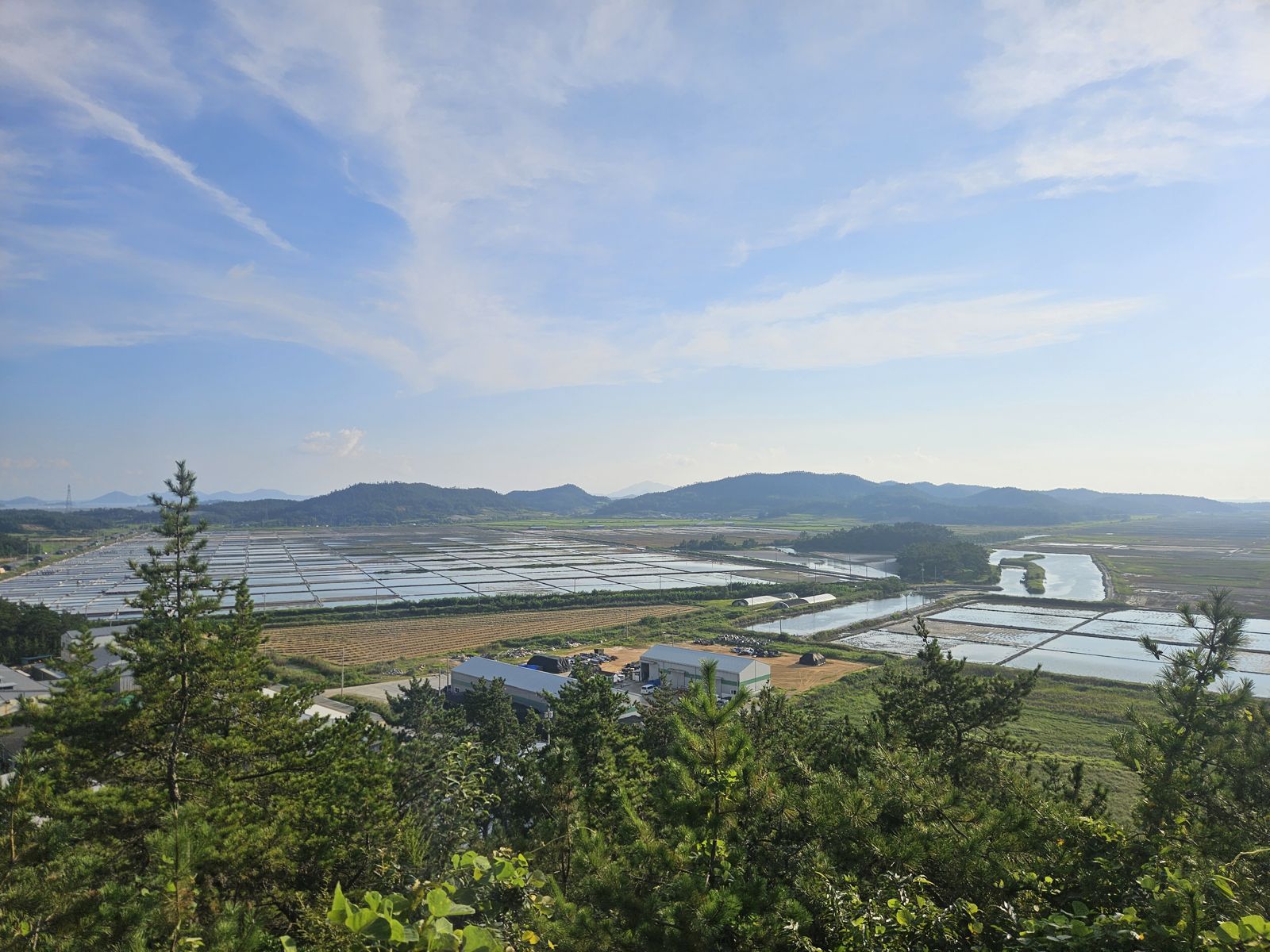
We go out again for a snack, crossing several kilometres of salt marshes. The Sinan region is famous for its salt farming, and from a viewpoint at the top of a hill we see salt pans as far as the eye can see. The setting sun lights up the area and we realise it's already late. We stop at a restaurant in the town centre, where we happen to sit next to the owner's table. He strikes up a conversation and gives us two big crabs, another local speciality, caught by his brother sitting next to him. We devour them along with a whole chicken and head back to bed well fed.
Sunday 24 August
The guesthouse where we're sleeping isn't in the first flush of youth. The walls are cracked and the paint is peeling in many places. Its seaside location can't help the fittings, which are starting to rust badly. But it's comfortable all the same and we had a good night. We wake up early, and the clouds lingering in the sky push us to leave quickly. It's a luxury we can't afford to pass up.
We start riding at 9, but despite the lack of sun it's already very muggy. Today's stage is a big one, almost 60 kilometres, so we can't dawdle too much. Komoot once again sends us on improbable detours to save a few hundred metres, and we end up on dirt tracks through rice paddies in stifling heat and humidity. We reach a modest rural village where the smell of slurry clings to our nostrils.
We take refuge in a café for a coffee and a hot chocolate before eating at the local convenience store. The people we meet are all very friendly, but we look at them with fresh eyes after what we learned last night. The Sinan islands have a very bad reputation in Korea; they're sometimes even called "Sinandreas", after the video game GTA and its island of San Andreas, where anything goes. The last ten years have tarnished the archipelago's reputation.
It was discovered, in far-fetched circumstances, that people with disabilities were being sent to work in the salt fields by temp agencies and ended up reduced to slavery. One of them tried to escape three times but was always caught by his "owner" or by other islanders. He finally managed to get a letter to his mother in Seoul, who alerted the police. The investigation that followed freed dozens of slaves from several farms and led to several police stations being set up on the islands.
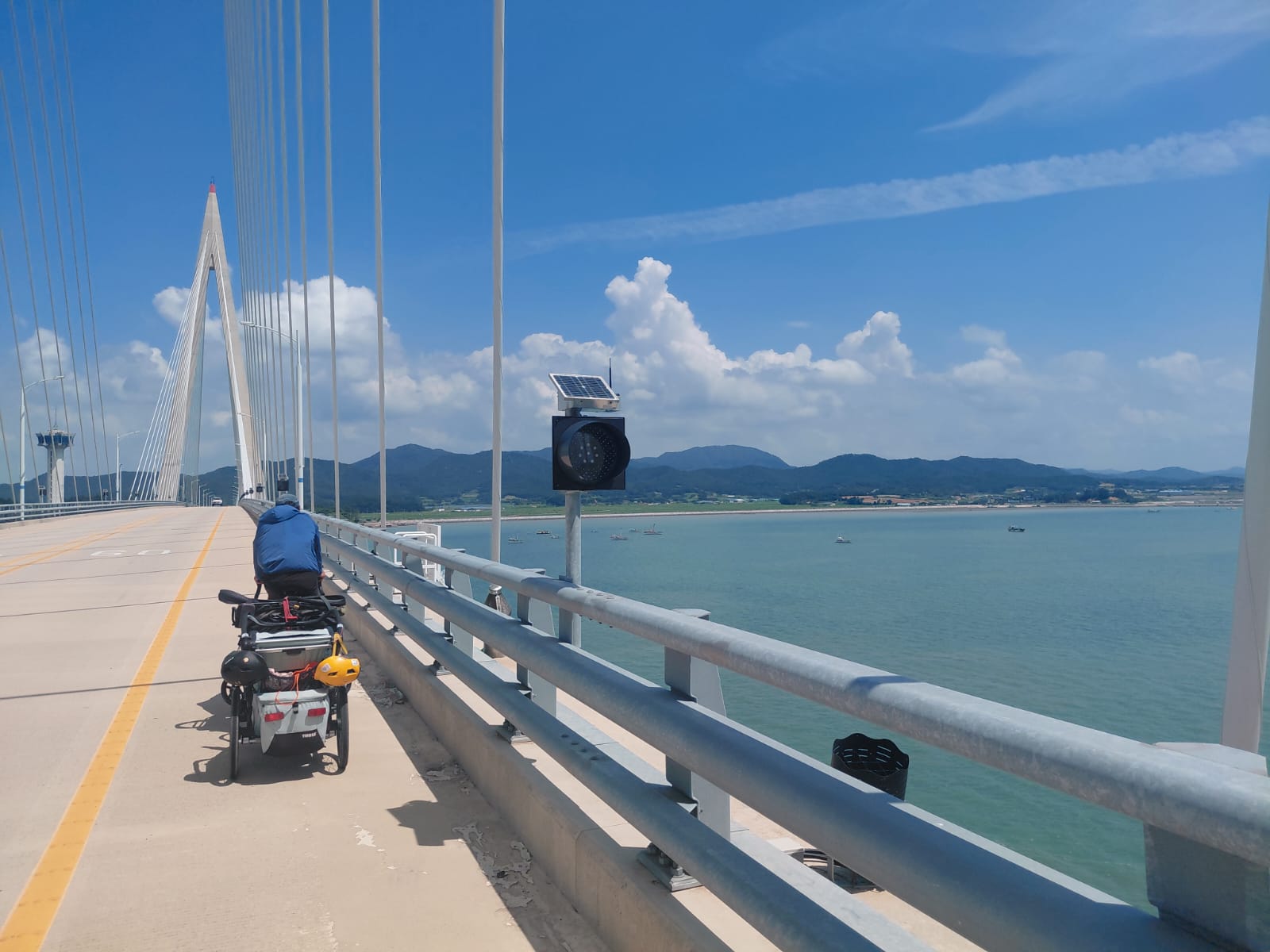
It's true that we're riding through remote areas and that the communities seem very close-knit. We carry on our way, crossing a few bridges before reaching the mainland. The second part of the ride is flat and we make excellent speed despite the stifling heat. We're not on a cycle route at all; we're very far from one. It's a very wide road, a key route linking the archipelago to the mainland, and yet every vehicle overtakes us at a reasonable distance. When there isn't room to move into the opposite lane, they slow down and pass carefully.
We're soaked in sweat from head to toe when we reach the hotel. Here again there's no receptionist: we choose our room on a machine and get our key that way. We hide from the sun for an hour before heading out to visit the small town of Yeonggwang.
It's very built-up, with big avenues and good-sized buildings. The bus terminal is nearby, so we buy our tickets for tomorrow and go for a cold drink in a local café. After the obligatory visit to the playground, we eat in the restaurant next to our hotel alongside a big group of young men. We suspect they're a sports team; they've come to celebrate a birthday and they offer us a slice of the cake. Clémence is a hit with these boys, something we've noticed all over Korea. Men seem strangely more taken with children than women do.
On the road