
 ← PreviousPohang, gateway to the Sea of Japan
The word "trail" sometimes takes on its original meaning. Trails were trappers' paths full of obstacles, carved out by people's repeated passage. All things considered, that's sometimes how the east coast cycle route feels to us. We find ourselves wearing out our tyres on bumpy pavements, riding over hundreds of metres of wooden boards that lift as we pass, or on gravel. In Korea as in France, the people who design cycle routes clearly don't cycle.
Opening the curtains of our run-down guesthouse, we have a stunning view of the horizon. Well, it was there when we went to bed, so it must still be there behind the thick layer of fog. Clémence wakes up exactly when Cassandre's watch alarm vibrates, and she's in an excellent mood. It's fairly early, which lets us reach Hupo port, 10 kilometres north, before 10 am for breakfast in an ordinary café. After some supermarket shopping for lunch, we climb a few steps to a glass skywalk with a plunging view of the sea. Koreans love this concept; there are loads of them all over the country.
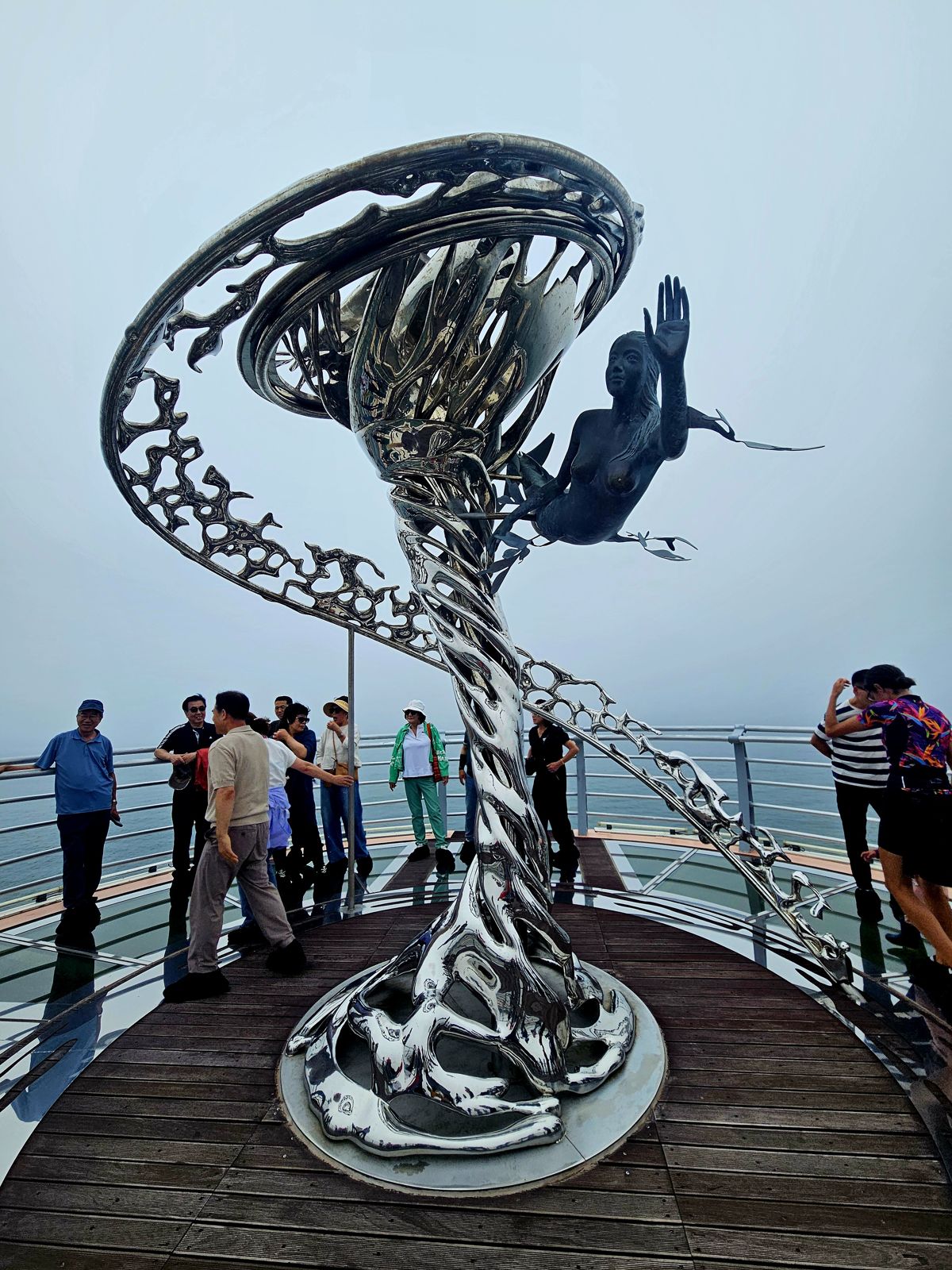
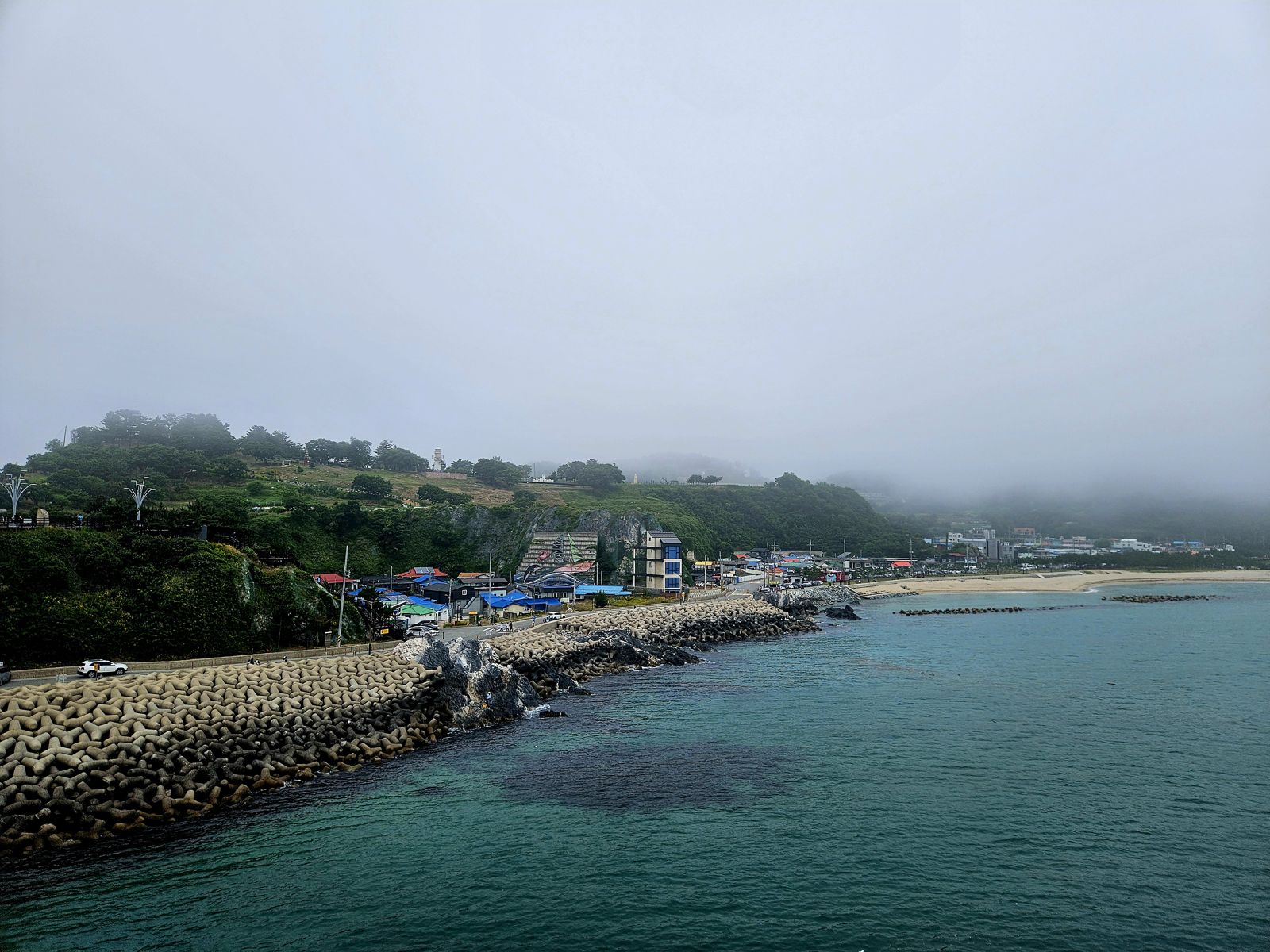
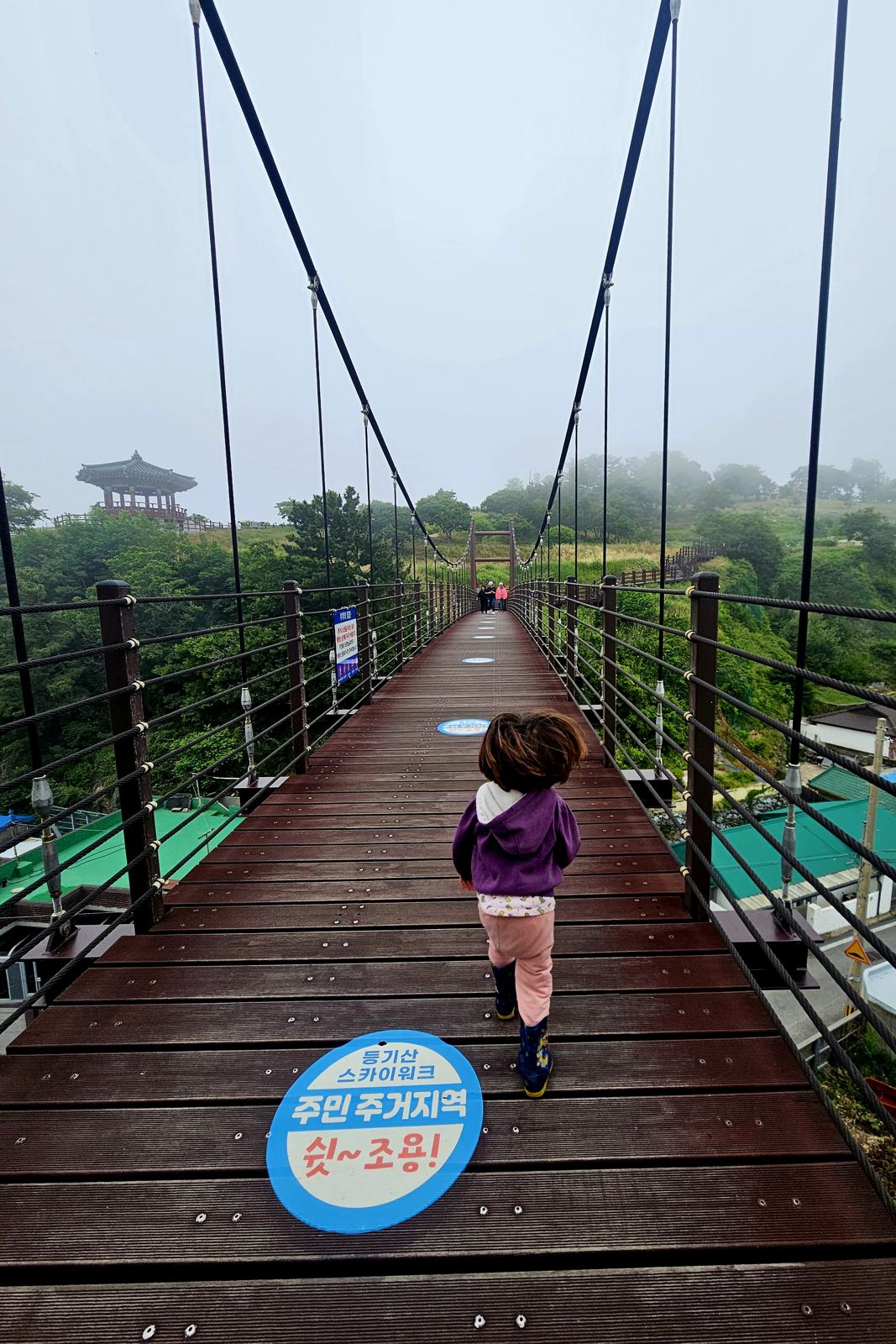
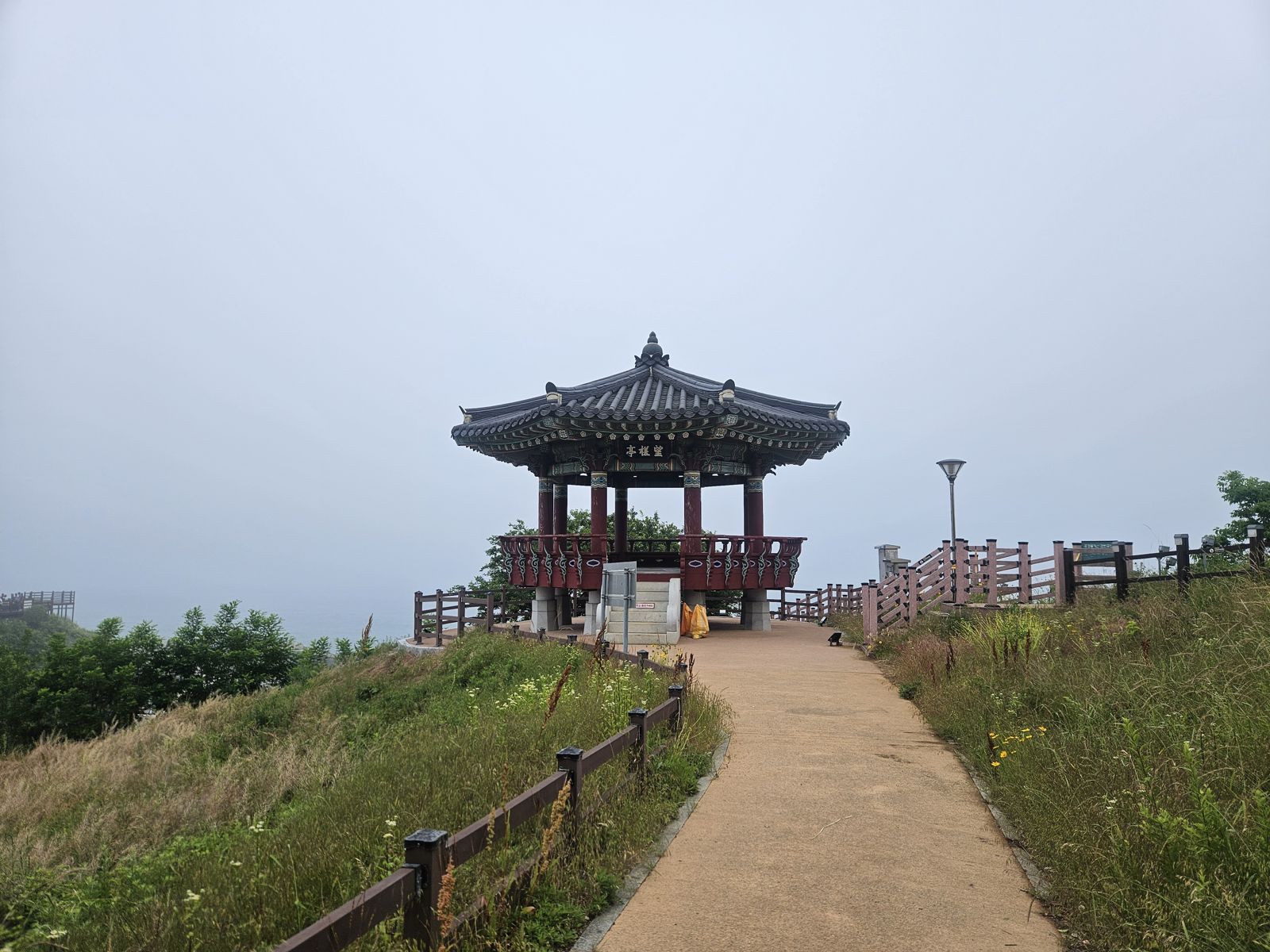
It's Sunday and the place is packed. It's hard to get around, not because of the crowds but because people block all the space to take photos of themselves. They'll make you wait thirty seconds without the slightest embarrassment — the excess of the all-about-me ego of our times. We don't linger and ride to the Wolsongjeong pavilion, which is rather ordinary. Fortunately there's a big beach behind it with a small convenience store.
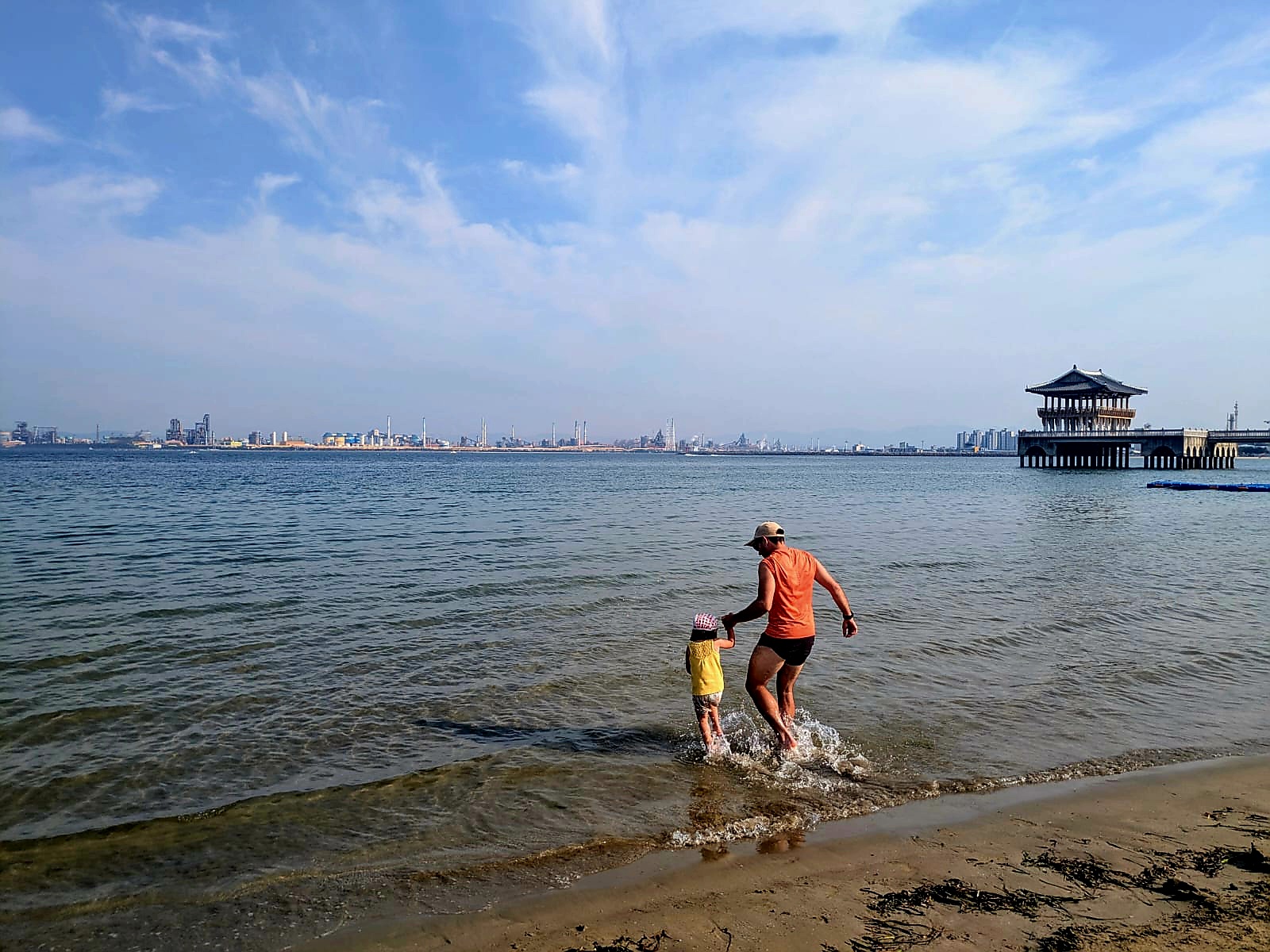
We top up our morning shopping there for a cheap picnic and rush off to play in the sand. Clémence really loves it, and she reaches another milestone by agreeing to pee in it, which she had flatly refused to do until now. We're starting to sense the end of nappies approaching. The weather is unstable: sometimes it's bright sunshine, and then the fog comes back and almost makes us cold. Unfortunately, the sun is out in force when we have to tackle the five-kilometre stretch with 300 metres of climbing. The last climb hits 10%, and we're really not sure we'll make it before the summit finally comes into view.
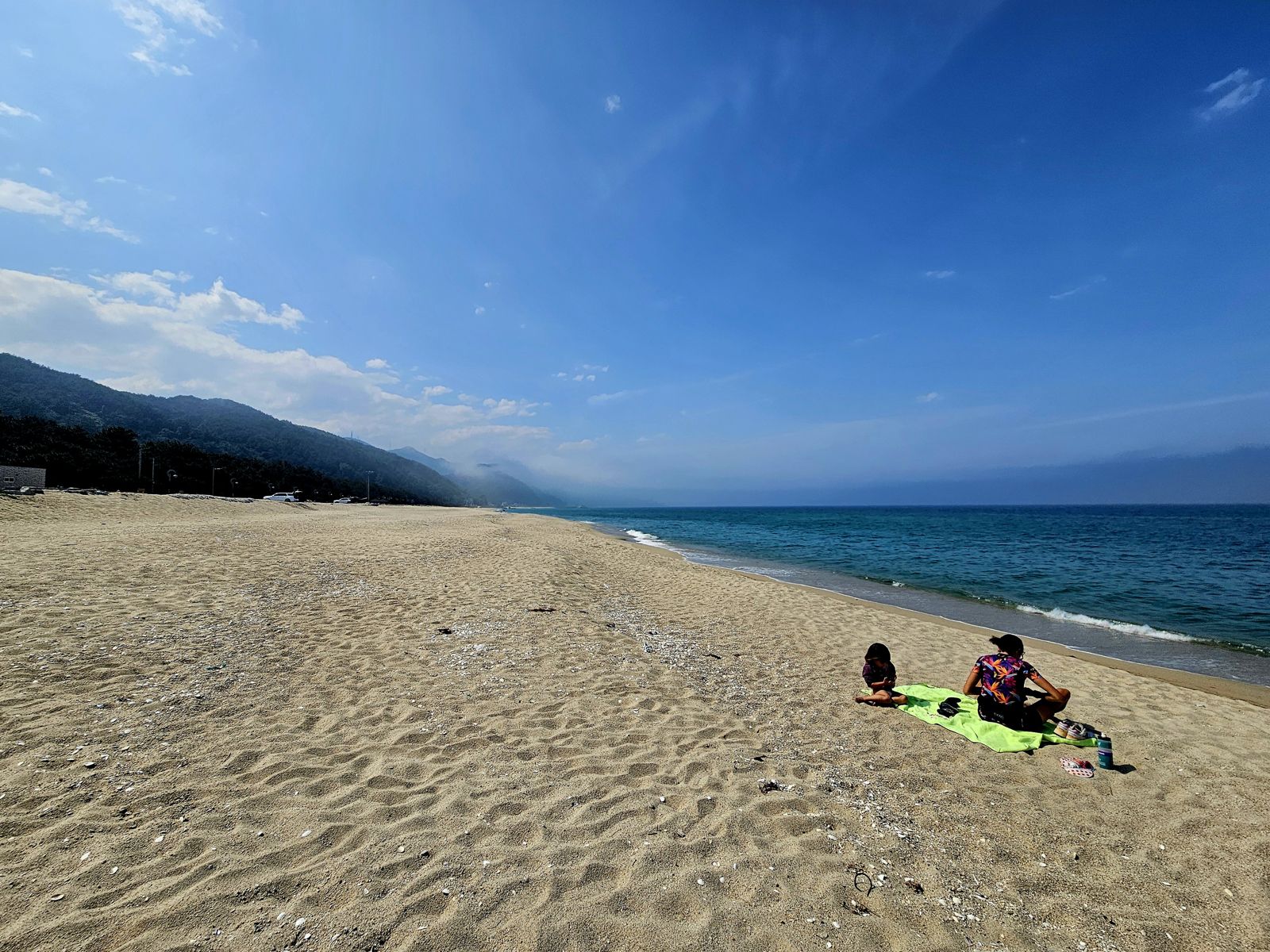
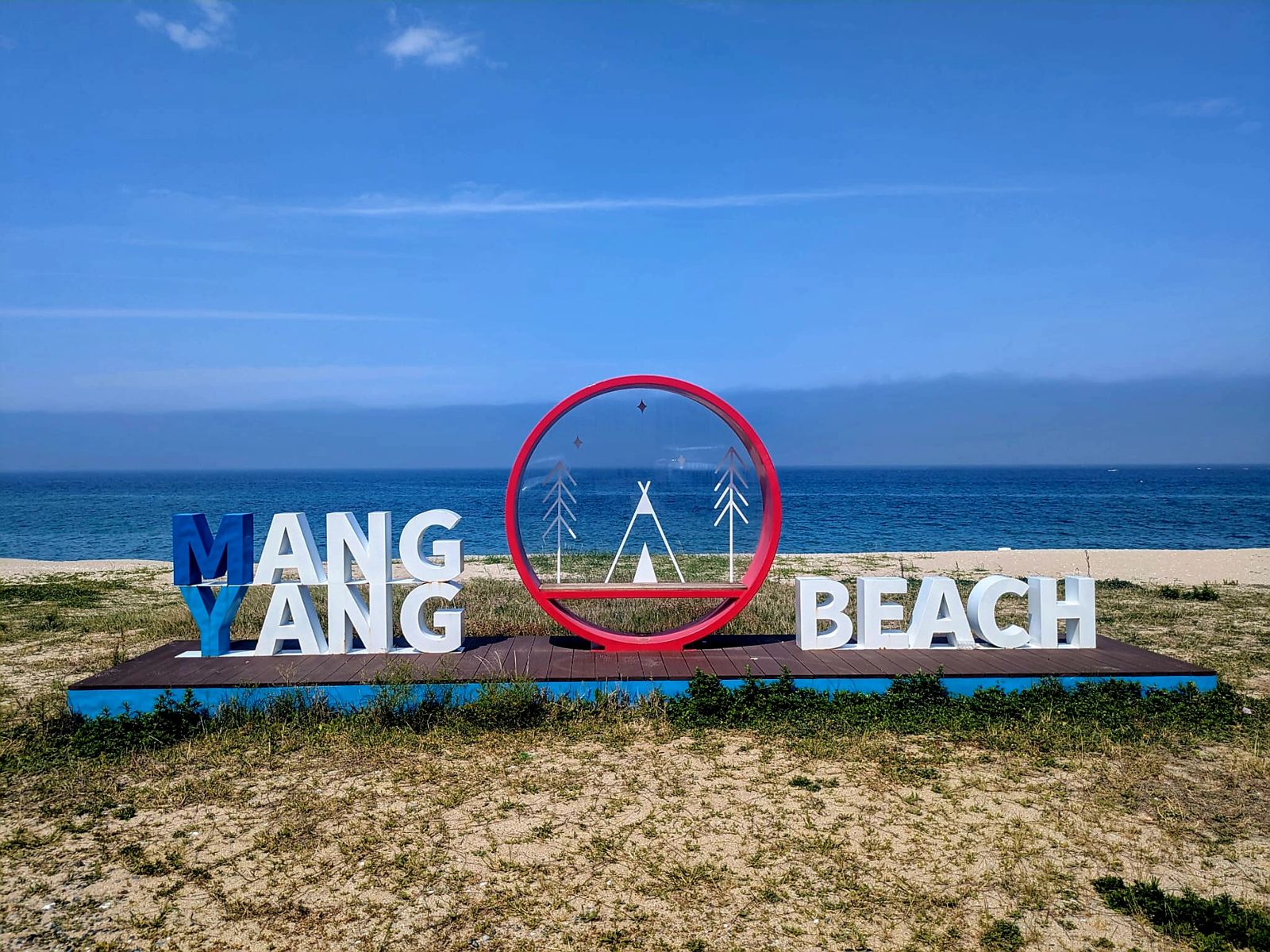
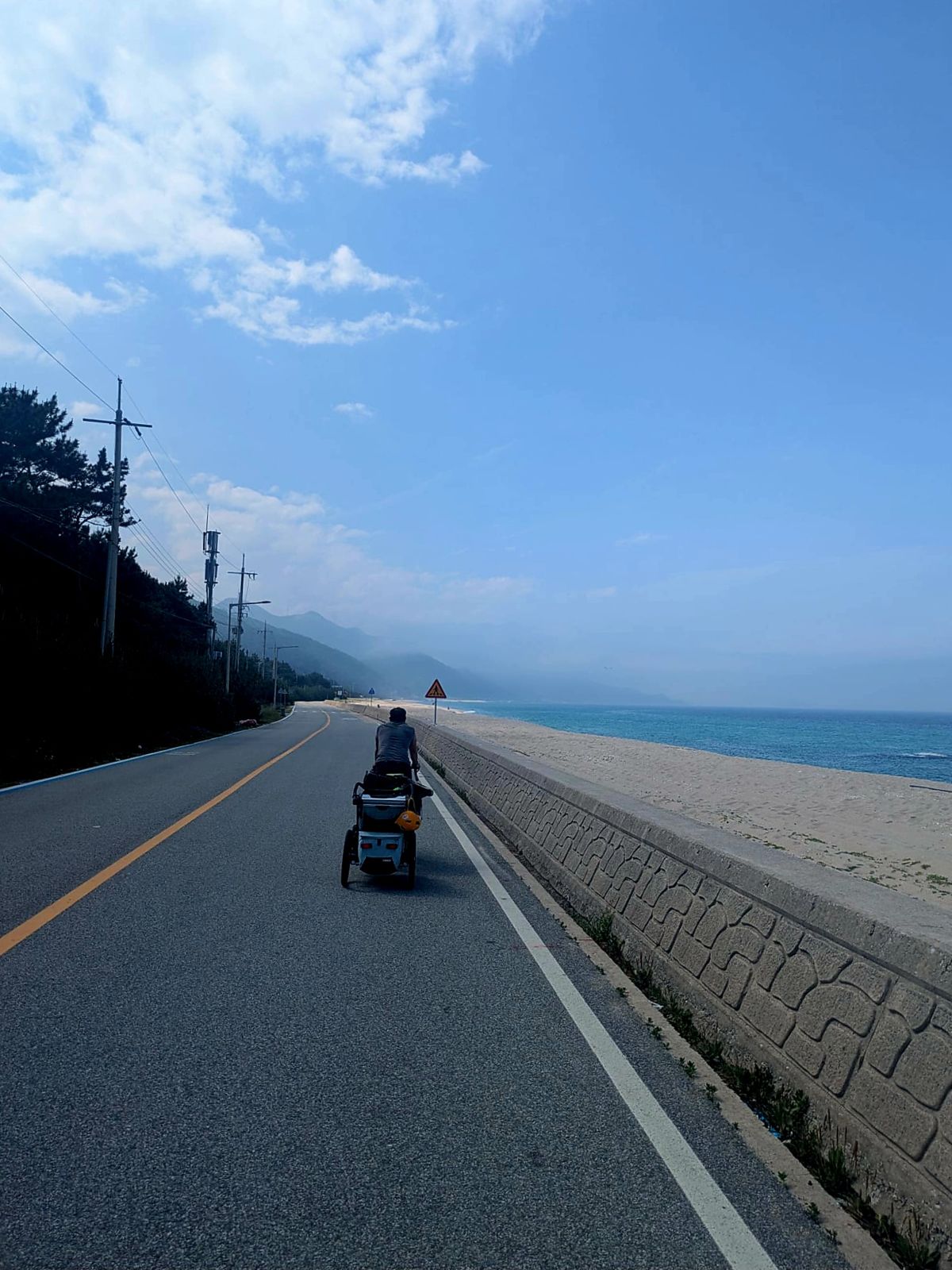
At the bottom of the descent there's another beach, and this time the sun comes with a huge blue sky, a first for the day. We take the opportunity to lie down and explain to Clémence the concept of beaches without sand. Here there are only tiny pebbles and bits of shell, which intrigues her a little. She soon gets used to it, and it's only the return of the sea mist (the same as this morning) that drives us away. We finish our stage in the town of Uljin, accompanied by a strange creamy fog that doesn't bode well for tomorrow.
Monday 16 June
People who share their travels tend not always to be honest. Our times demand that you only tell the positive and only show the beautiful. But sometimes there are gloomy, even depressing days that make you question everything. In short, you wonder "what on earth am I doing here?" That's more or less our state of mind this morning. It's still pouring and our hotel isn't the most pleasant. Around 10, we motivate ourselves to pack our bags to store them in the huge lobby of the Uljin Grand Hotel and get on our bikes despite the rain to go to a café. We're in Uljin precisely because we knew Monday's weather would be uncertain or rainy, and the town has lots of indoor activities: a fascinating ocean museum for children, a science museum of the same calibre, a kids' café (a café with an indoor play area), a cave… What we'd simply forgotten to check was whether they were open. You can see it coming… It's Monday, and those attractions are open every day except… Monday!
Since we can't do anything, we might as well make ourselves useful. There's a launderette right opposite the café where we're sitting. We go back to the hotel for our bags of dirty laundry, put everything in the machines and then go to a bike repair shop run by an insufferable owner who makes us feel very clearly that we're bothering him. Despite the rain, he doesn't invite us in to shelter and barely lets us pump up our tyres.
It's quite refreshing, really, because until now Koreans have been so kind that it's almost embarrassing at times. We'd planned to buy a few things, but given the man's charm, we decide not to buy anything from him; too bad. Our washing is done, but the clouds aren't finished with us. The weather app says the rain will stop around 2 pm, so we settle into the same restaurant as last night, more to pass the time than out of hunger.
When we come out, a very fine drizzle is falling, the last trail of this big storm, as we can finally see blue sky. We do our best to wipe down a playground so Clémence can enjoy it a little, and then we finally set off. The weather is clearing at last, but along the coast the mist clings to the hills. It's like cotton wool snagging on them, yet it vanishes as soon as you ride through it. We reach the port of Jukbyeon, where a dilapidated attraction lets tourists ride little capsules along a cliffside monorail. The structure is eaten away by humidity and rust and the cars creak all over, but the view is fantastic. Clémence is in heaven, pointing everything out to us.
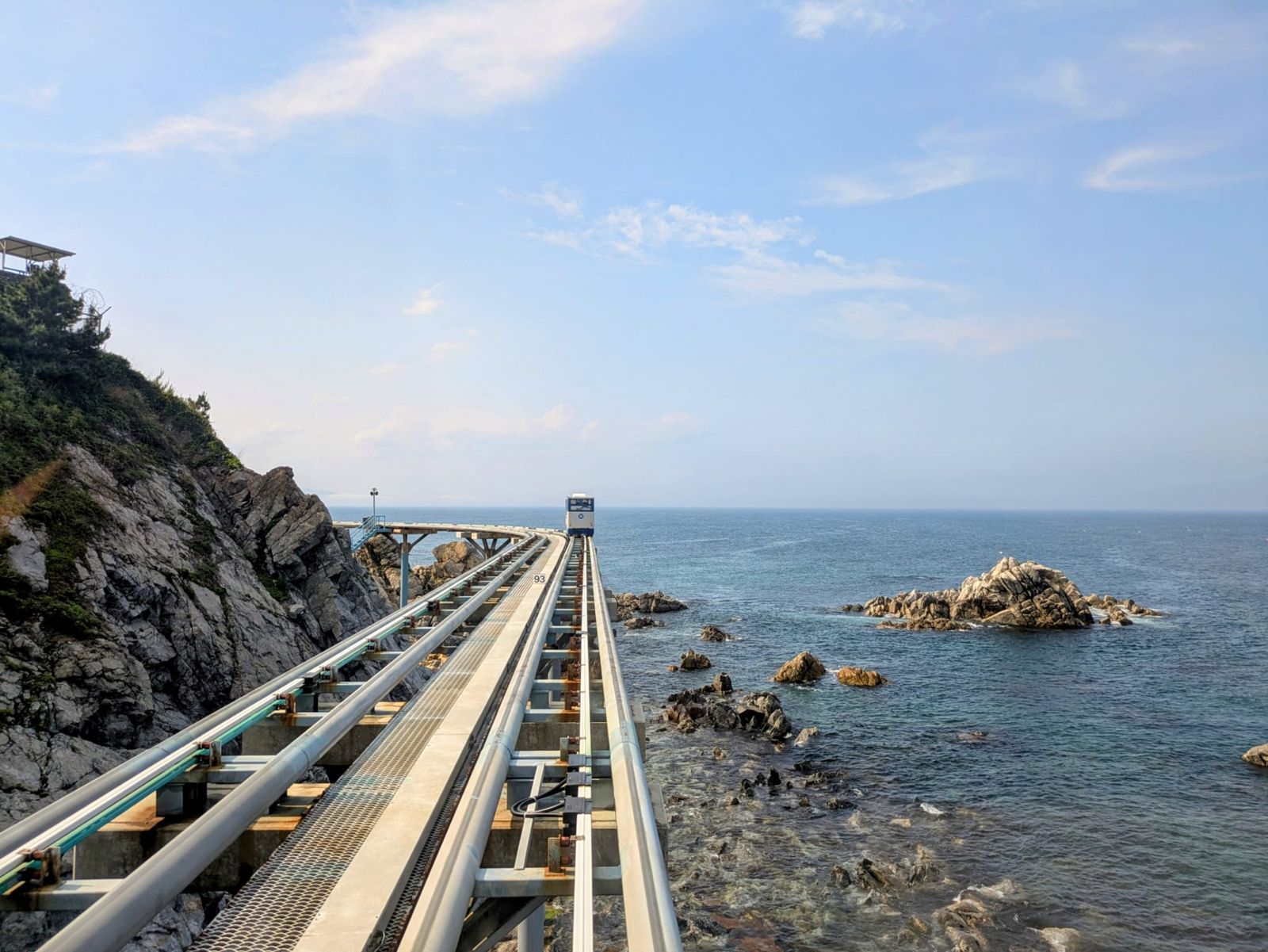
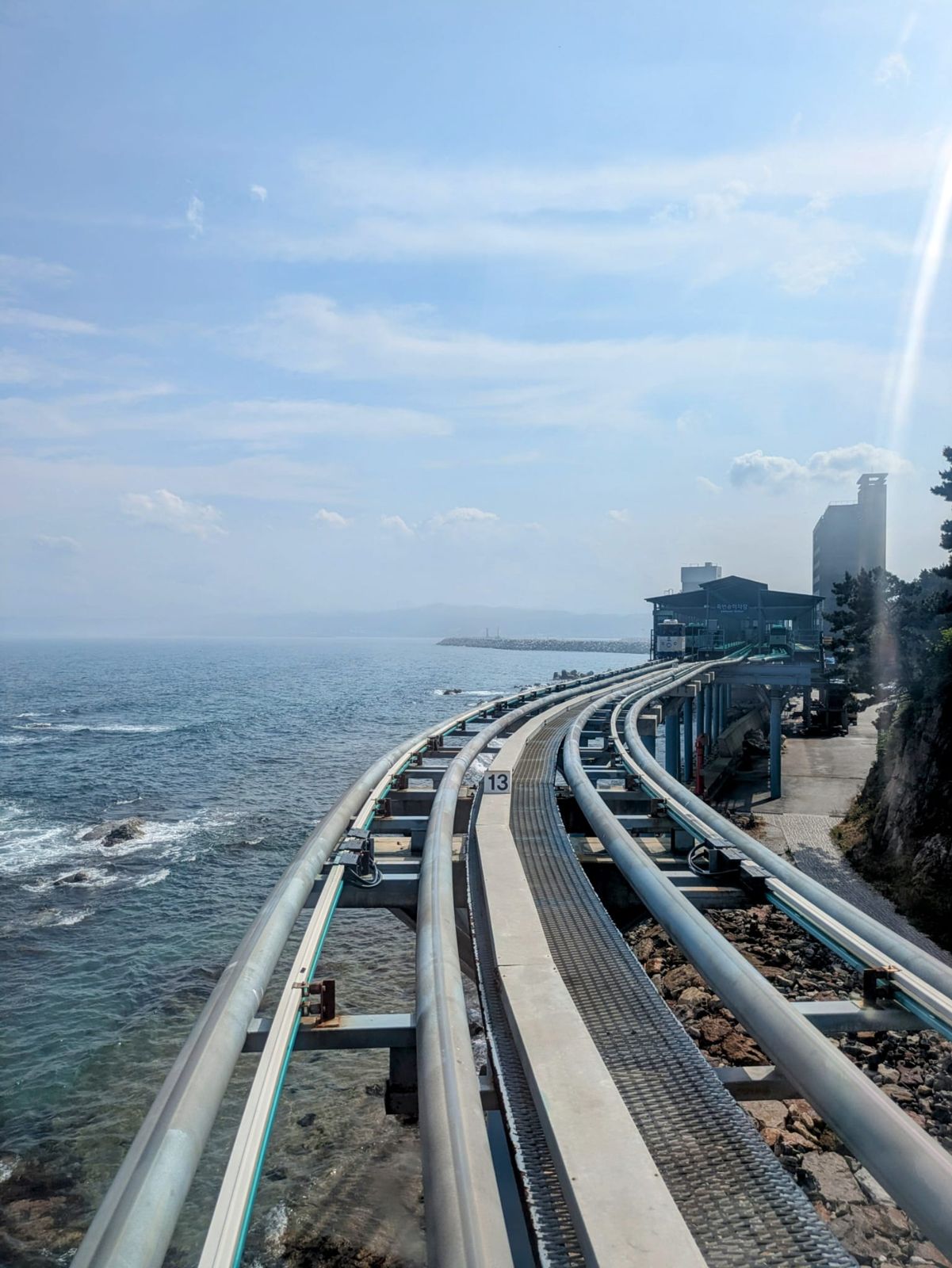
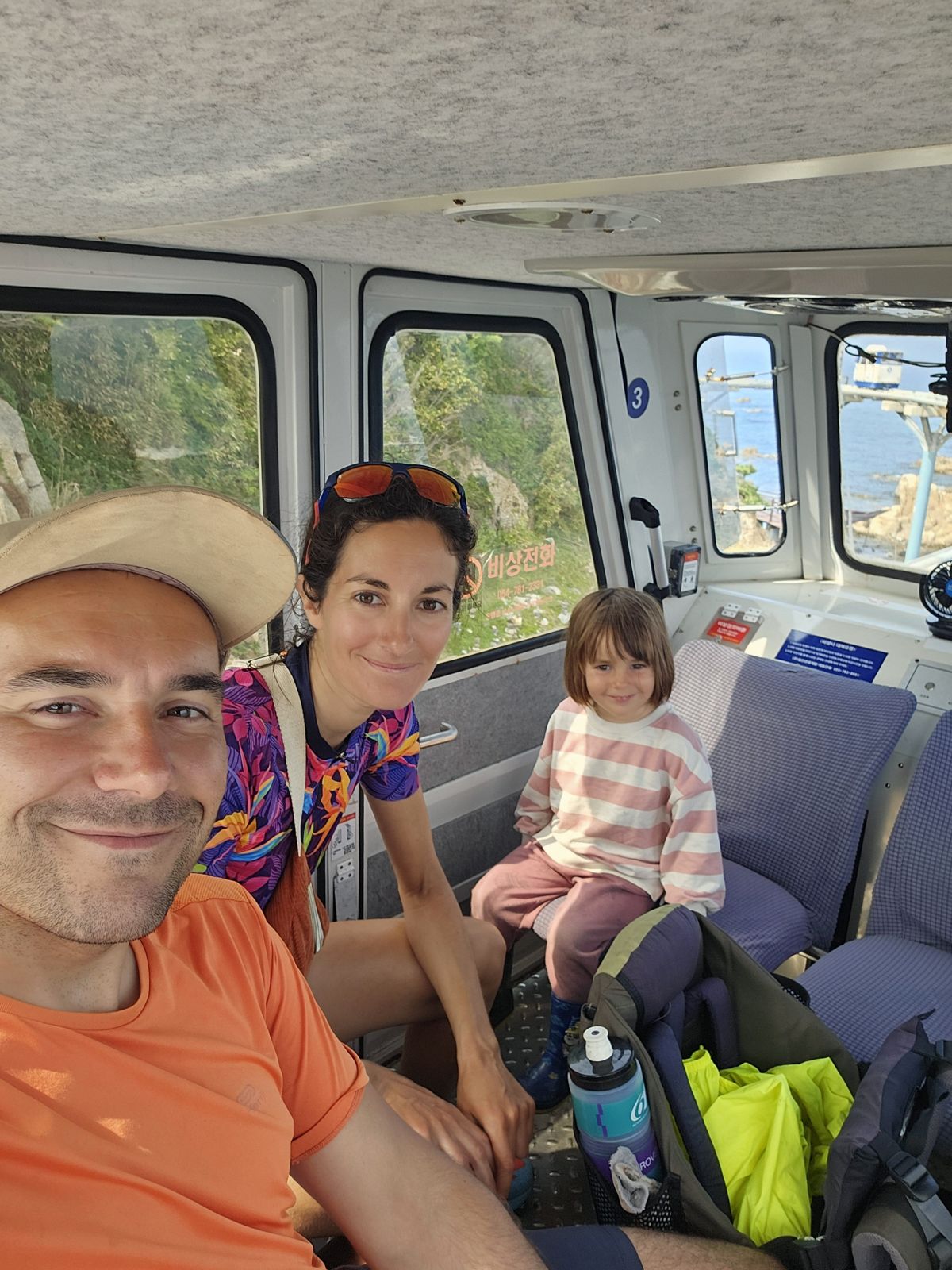
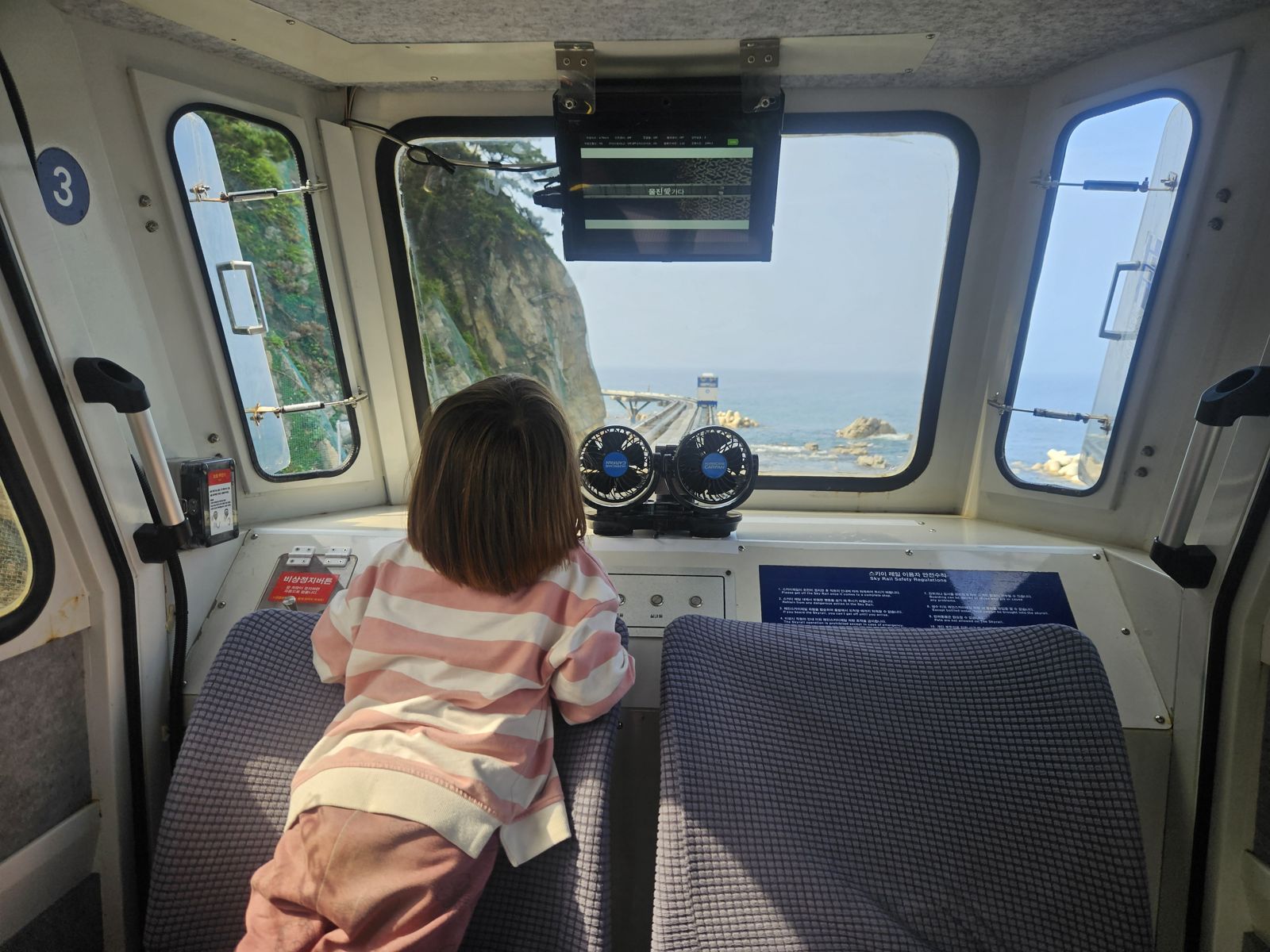
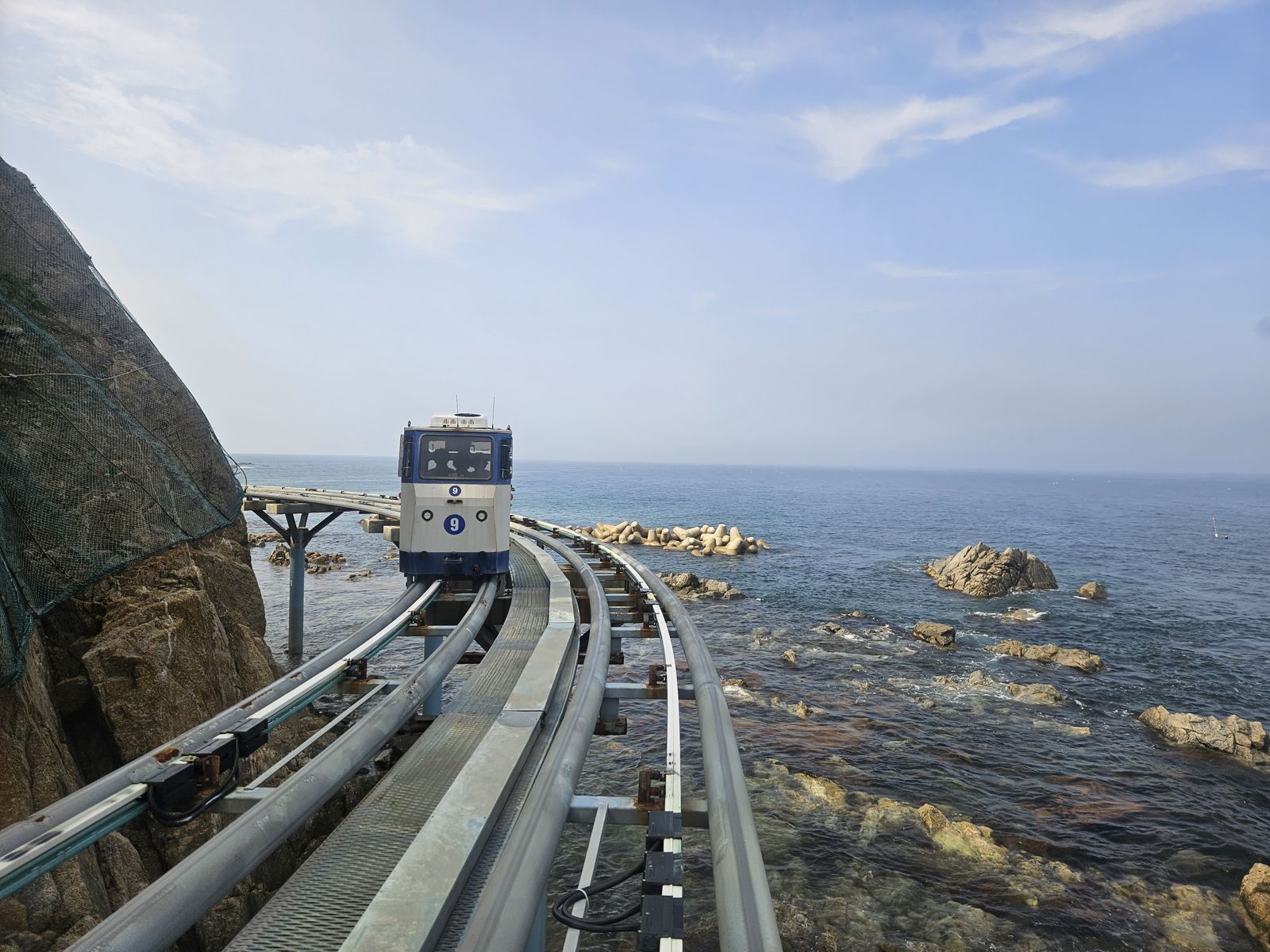
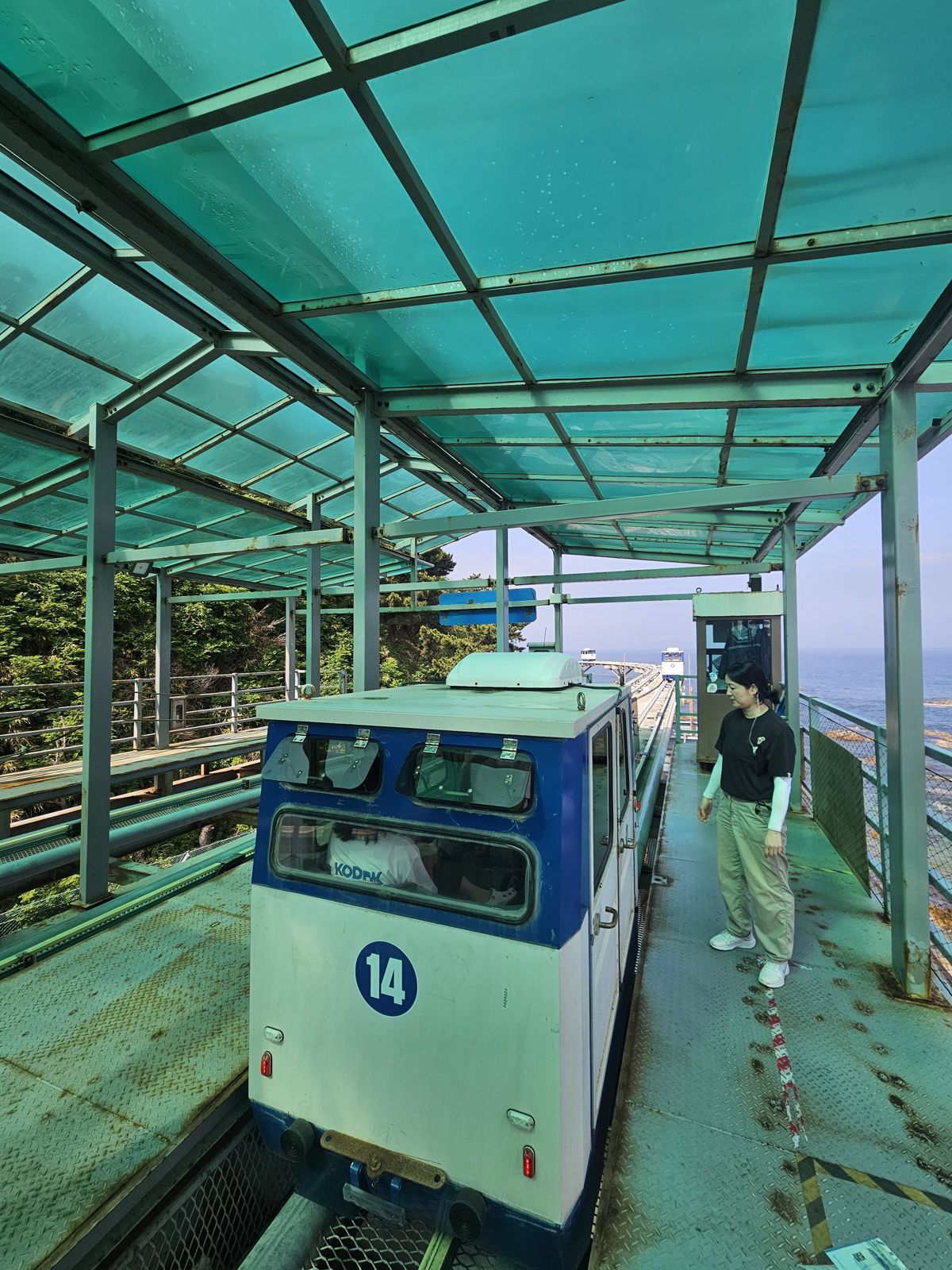
After the round trip, we have to move on. We stop at a huge ocean museum, which sadly is also closed on Mondays. Its playground is open, which is more than a consolation for Clémence. It's so big you can even play hide-and-seek, which has us roaring with laughter. In the end we take our time getting to the hotel under radiant sunshine and spin out the evening on the beach.
Tuesday 17 June
Today we tackle the hardest part of the whole east coast. Seven small passes in under 40 kilometres, with more than 700 metres of climbing. Road cyclists will laugh in our faces, but bear in mind we're loaded like Alpine mules. After a hearty breakfast straight from a 7-Eleven, we start with the first climb. No warm-up, no respite: it's right there under our wheels.
We get over it without too much trouble, but it's the succession that scares us. It's very hot and we're dripping litres of sweat. Fortunately, the first coffee break comes after 16 kilometres in an ordinary little port. The fishermen go about their business. This is also nuclear power station country; they're massive by the water. Not very reassuring, as since we reached the coast we've regularly seen tsunami signs. They show where to gather in case of an alert and what to do.
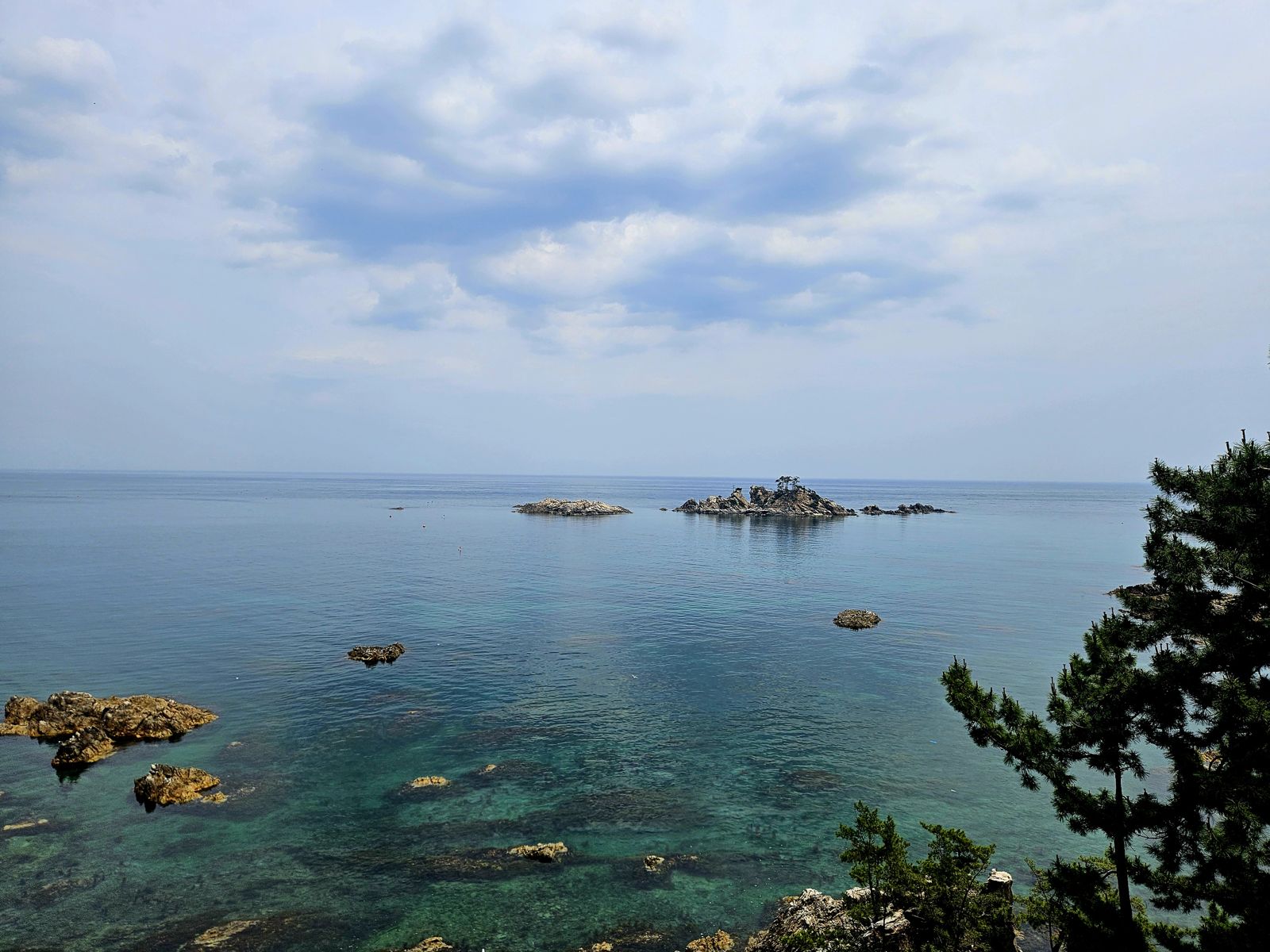
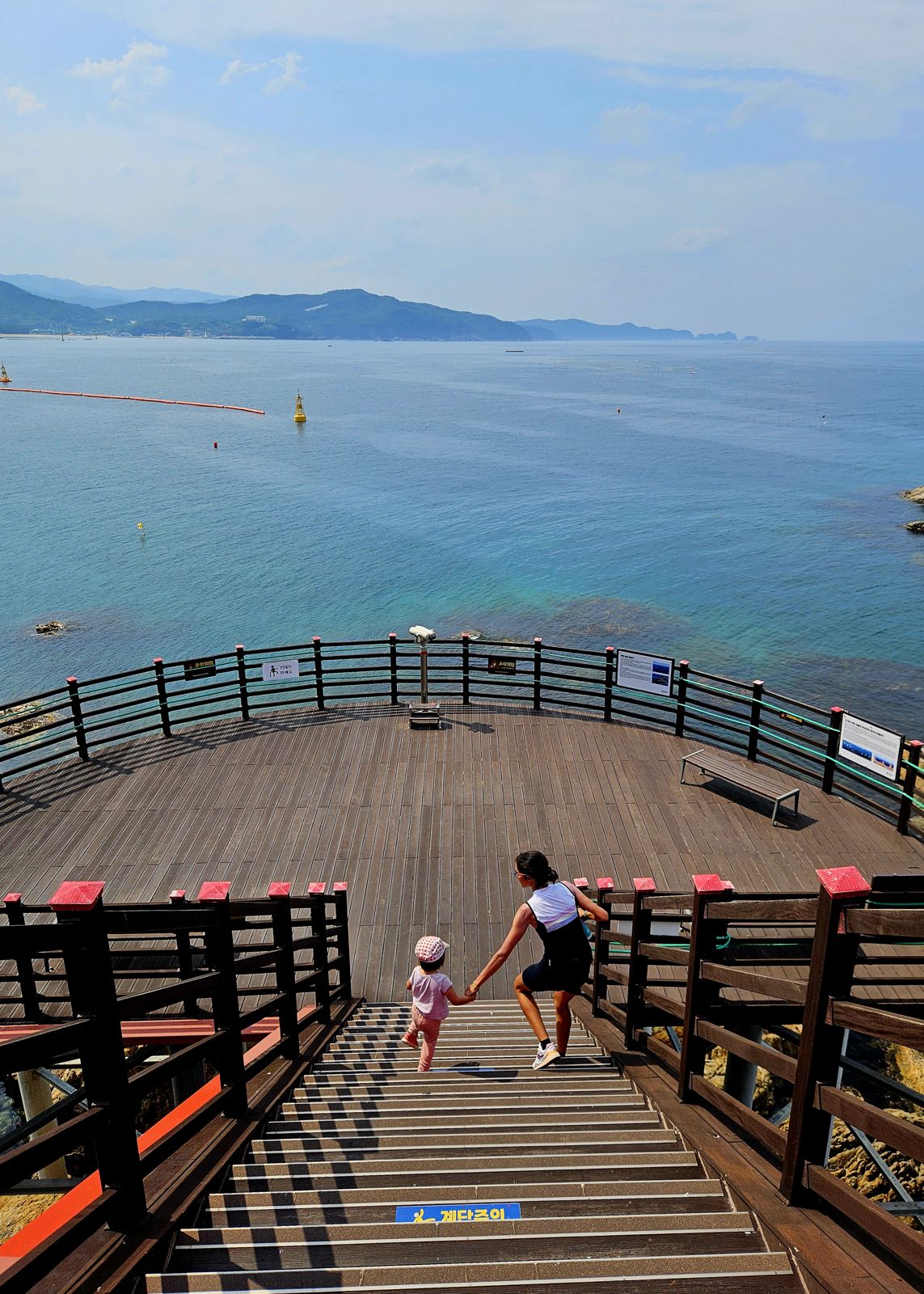
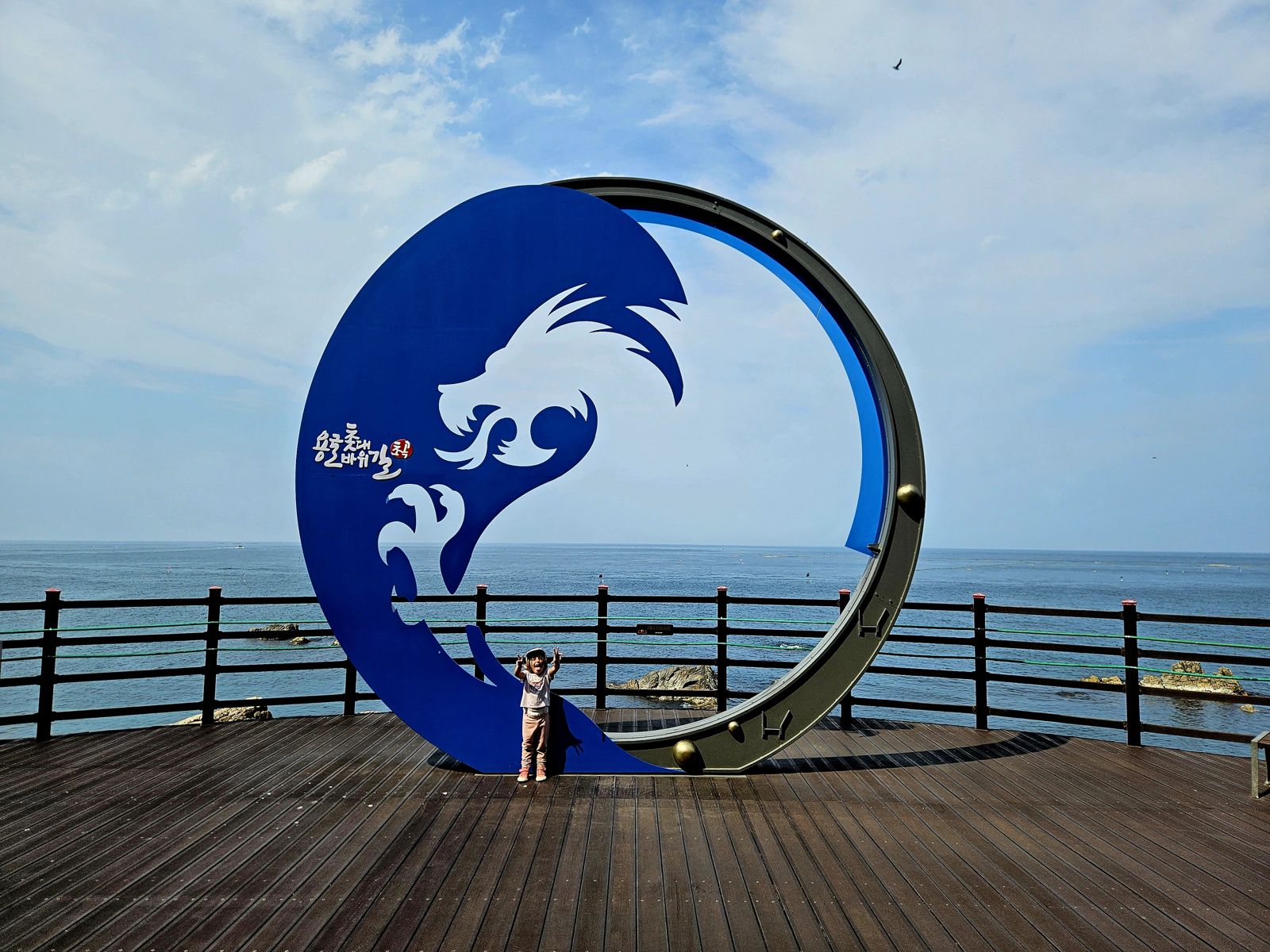
After 25 kilometres, it's lunch on the beach. The water is beautiful, the sand fine, and a lady comes up to our towel to give Clémence a tube of bubble mixture. We give her one of our sugar doughnuts in exchange, which makes her laugh a lot. Their kindness really knows no bounds. We eat quickly before setting off to face the day's last climbs. They're really hard because they come one after another, up and down, never letting you find a rhythm.
We finally reach Deoksan around 4 pm, the village we'd targeted that morning. We park in front of a café that's also a hotel and ask the price on the off chance. The owner takes Cassandre to see the room, but she has to turn it down when he says 100,000 won (about €63). Our budget tops out at 60,000 won (€38) a night. When she tells him so, he replies that he'll do the room at that price because we're French and he finds Clémence very cute.
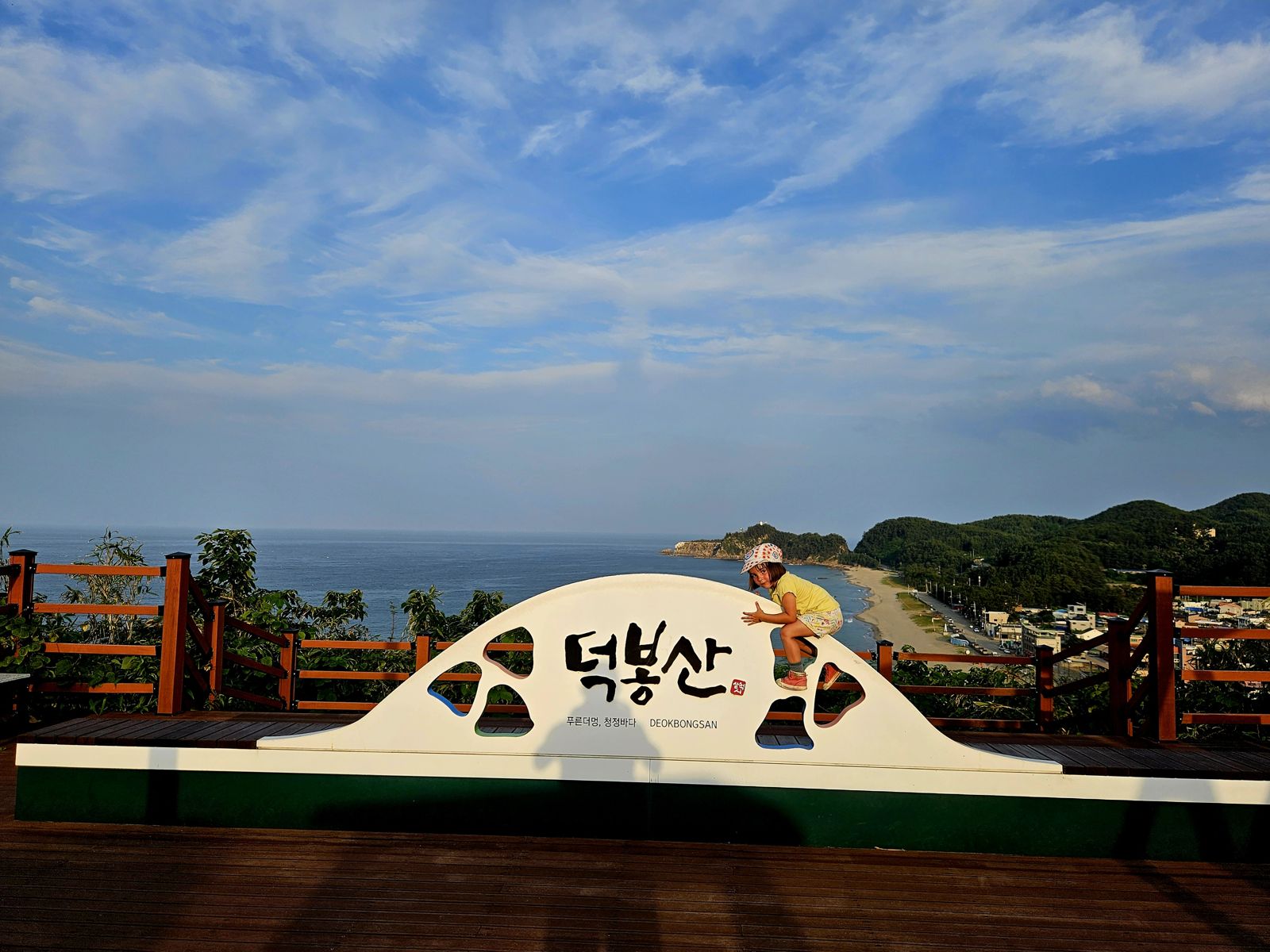
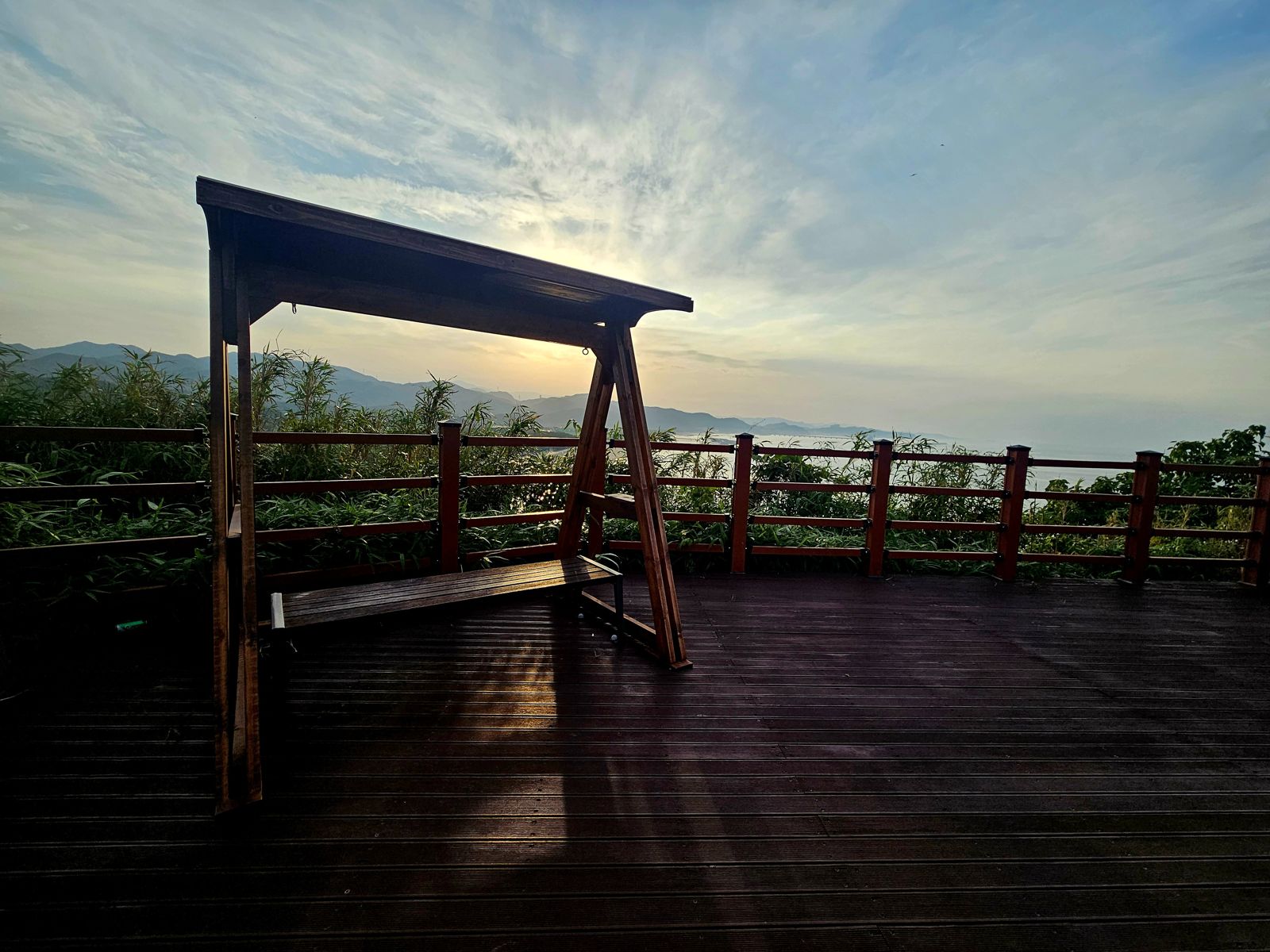
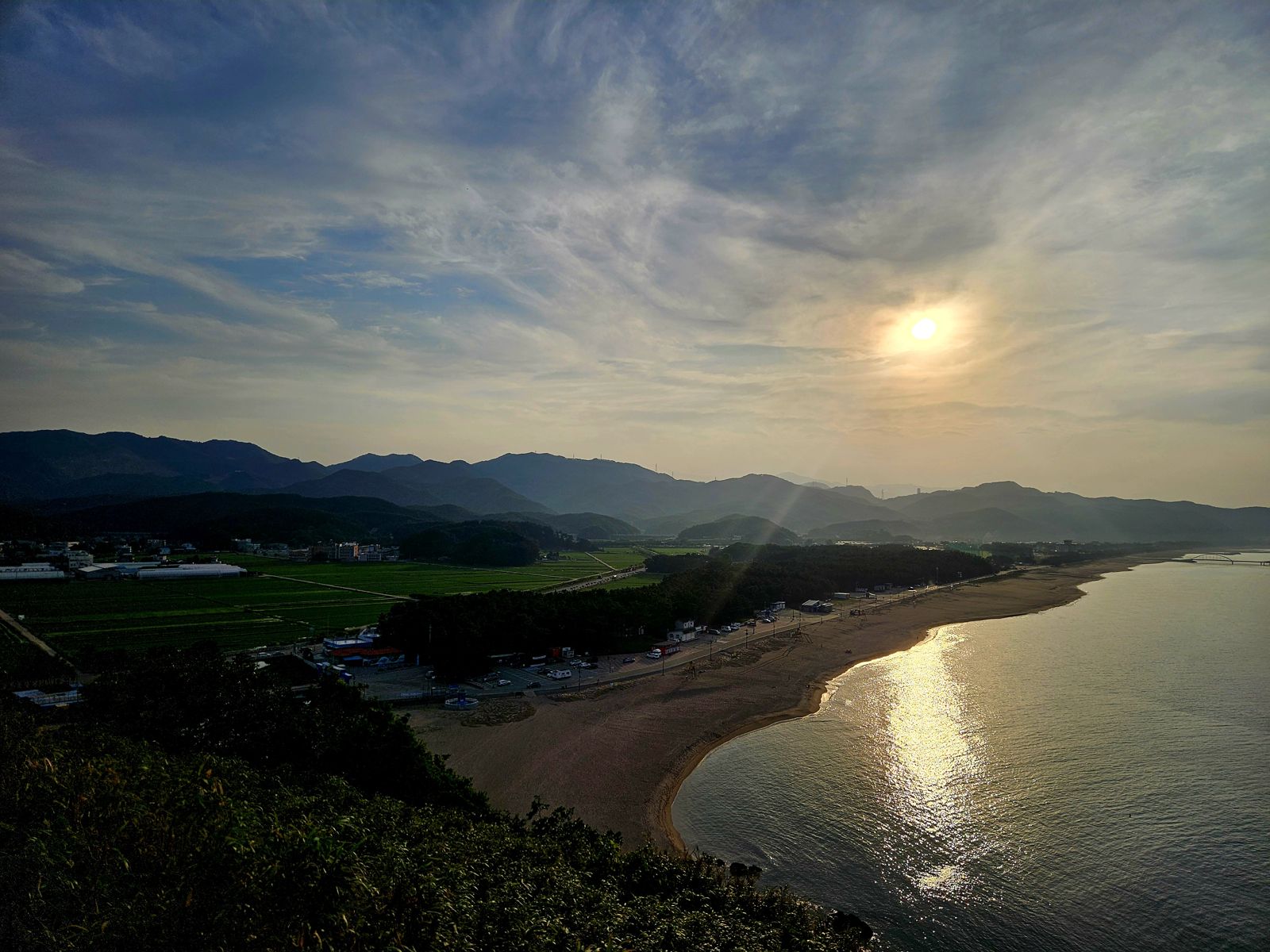
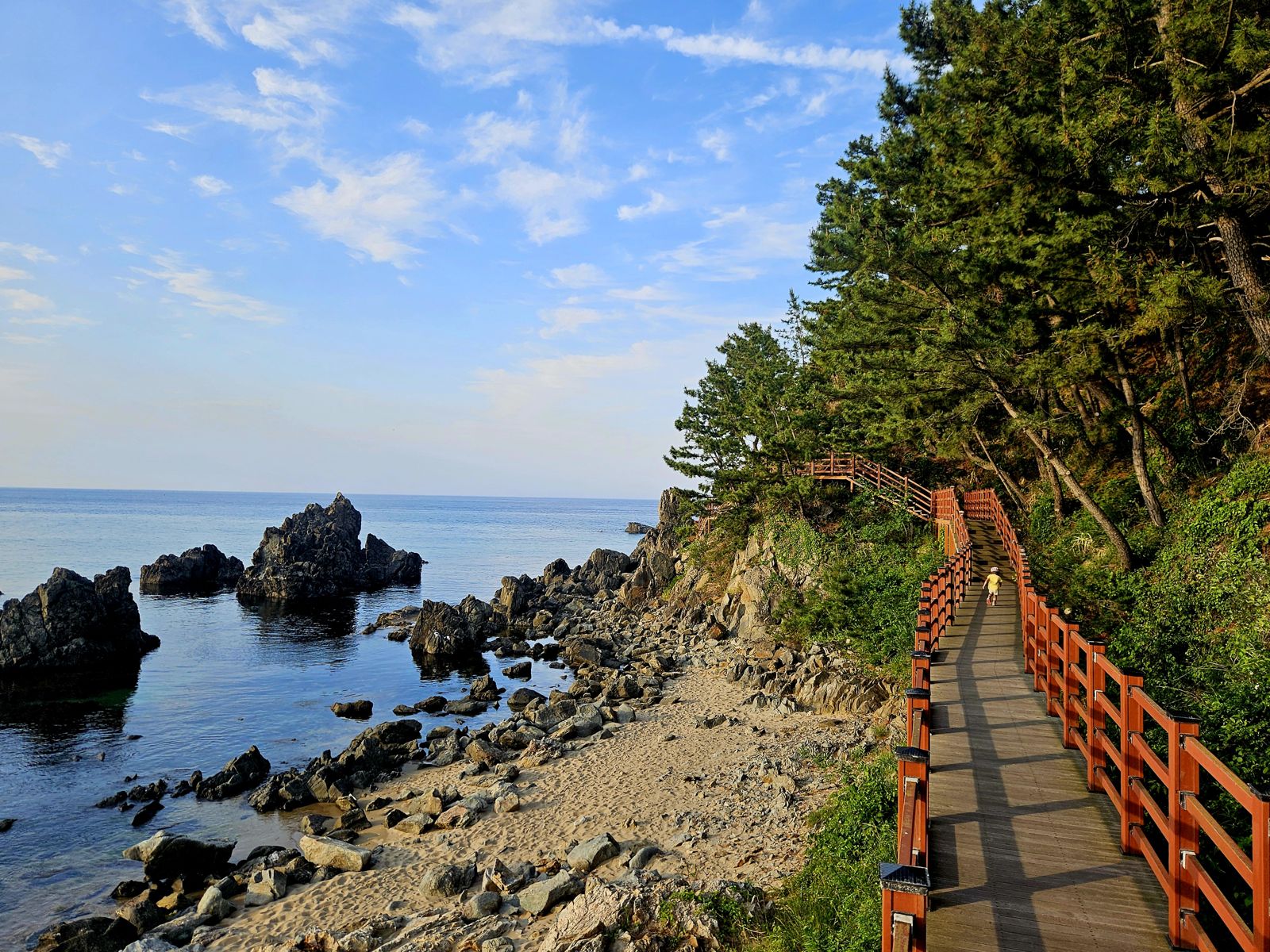
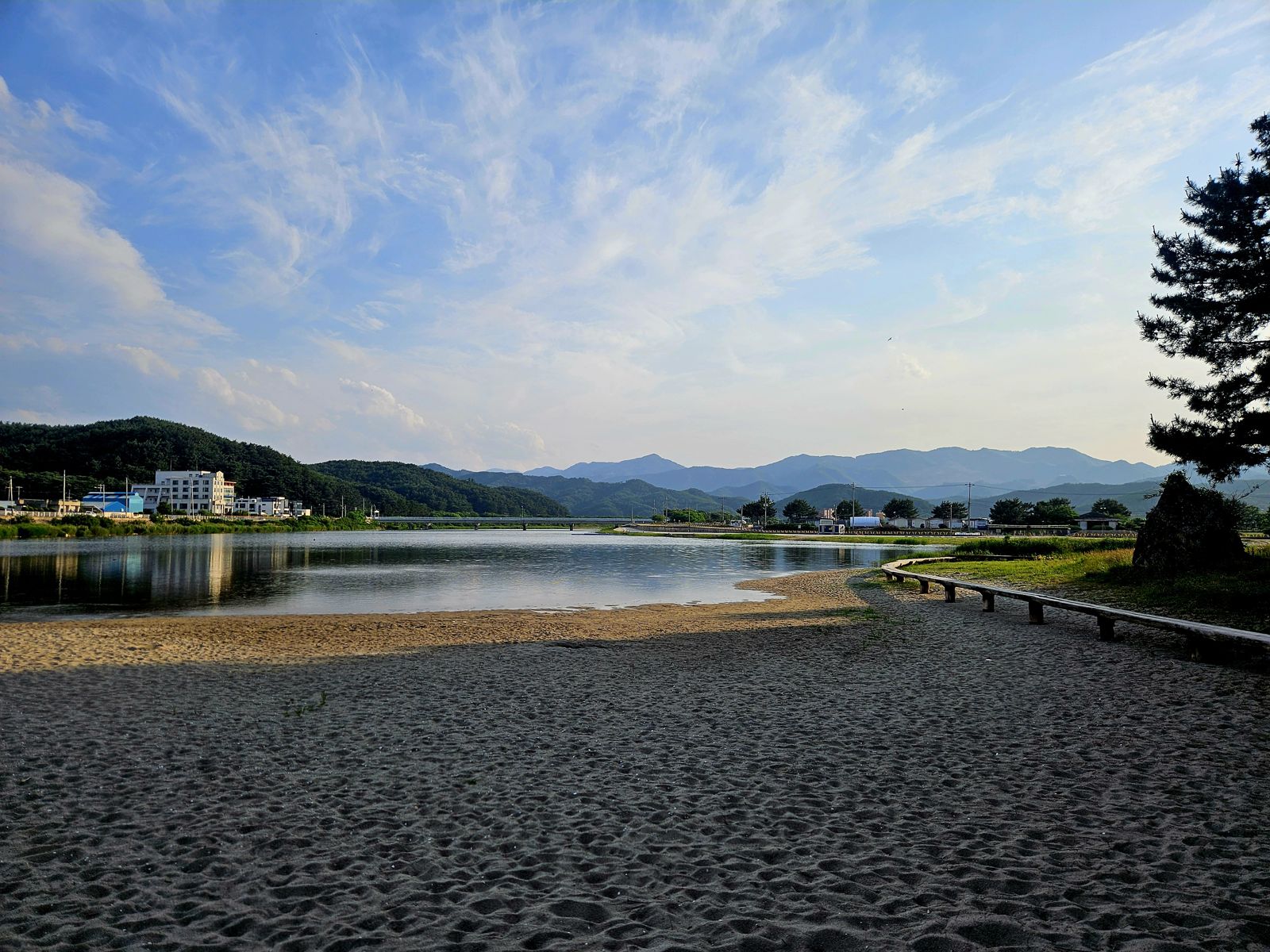
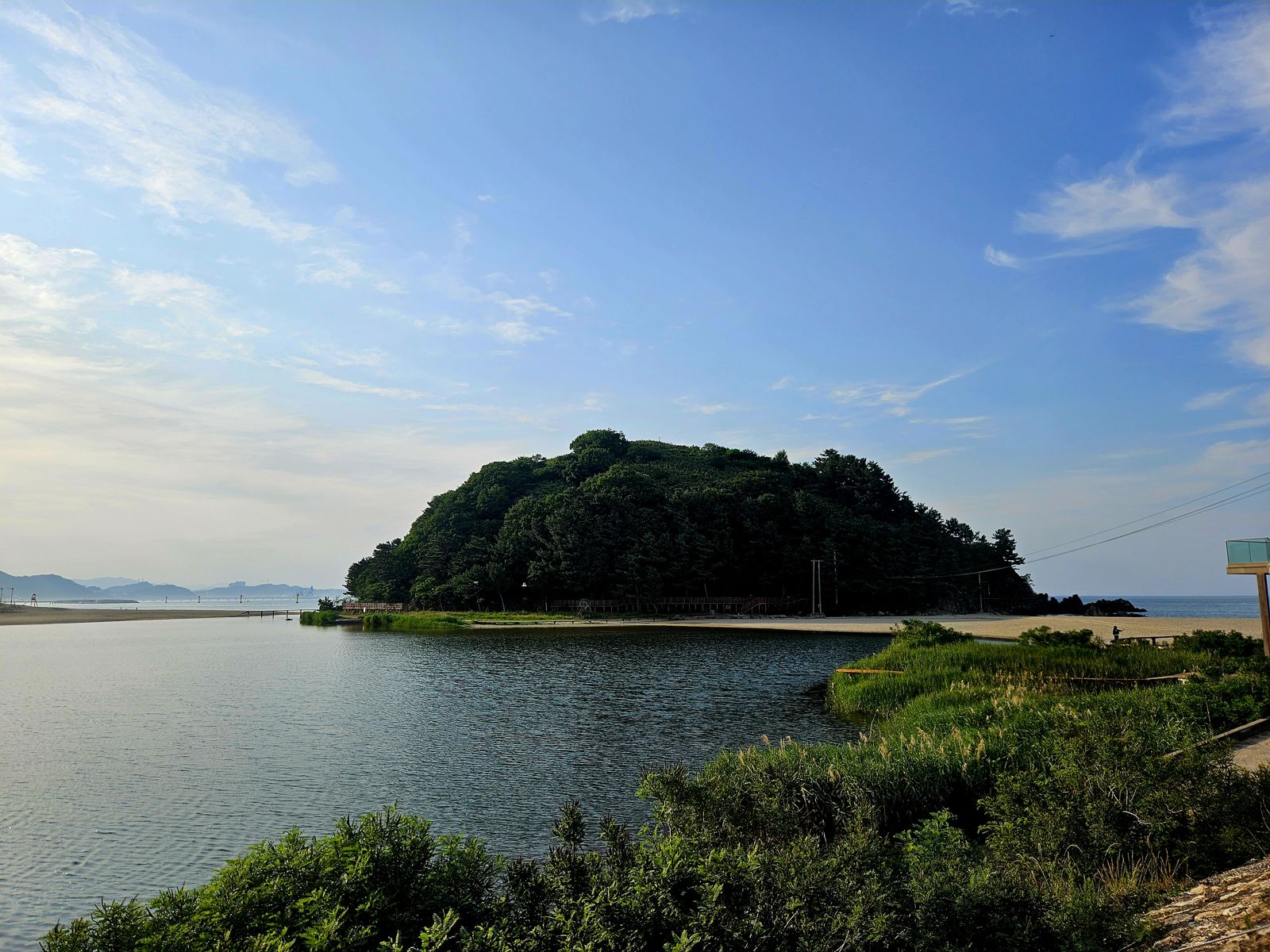
On top of that, he gives her a cake and a smoothie. We did well to stop here! He's really friendly and speaks very good English, a rarity in this part of Korea. The room is more of a small flat with a big terrace, perfect for enjoying a well-earned rest. We go out to explore the area, where two magnificent beaches are separated by a river overlooked by a little 60-metre hill. A wooden walkway has been built all around it and leads to the top. One last little sweat — negligible compared with today's on the bike — before buying a few things for dinner, which we eat quietly on our terrace with the sunset over the hills as a backdrop.
On the road