 ← PreviousThe last kilometres to Sokcho
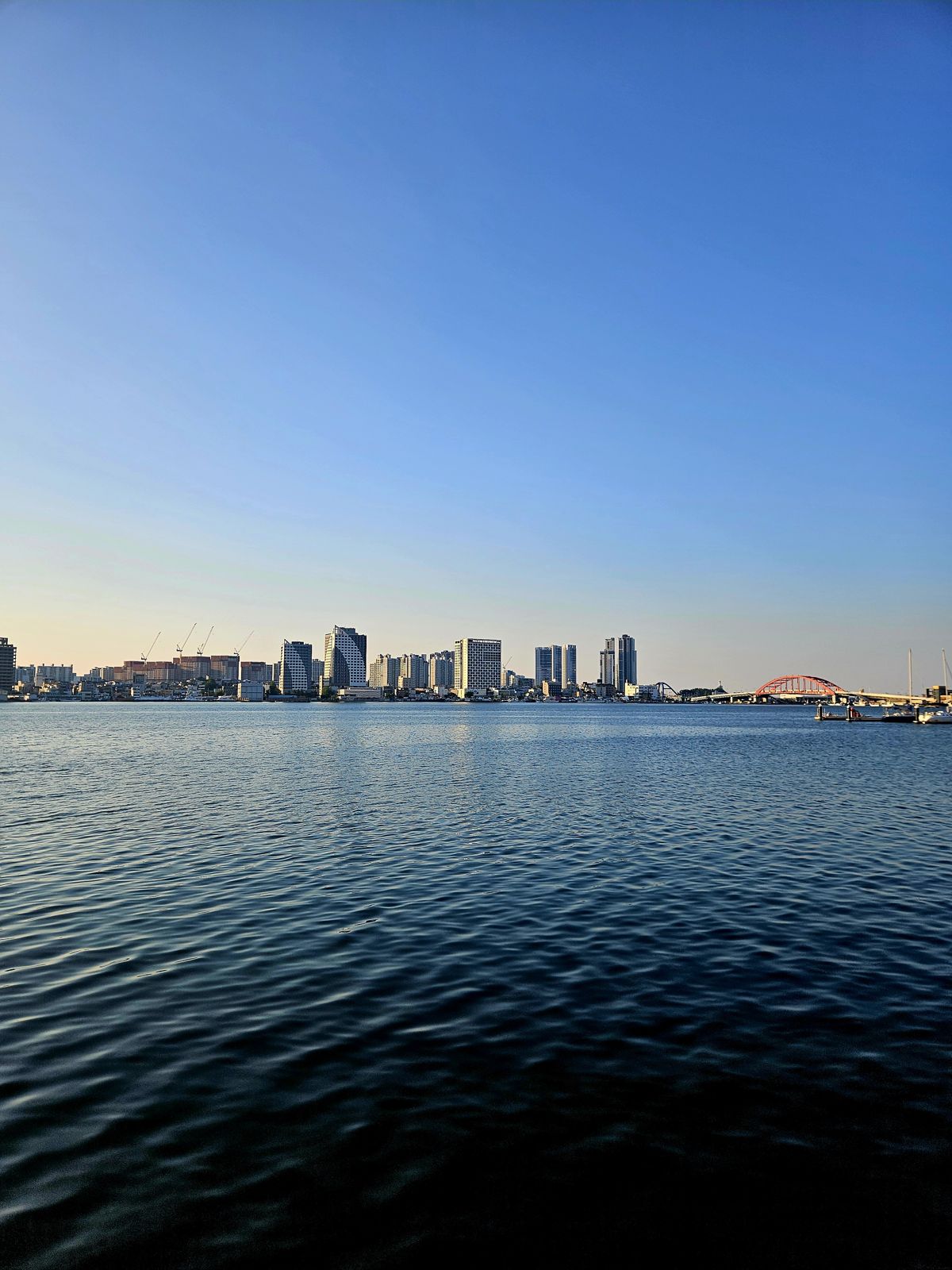
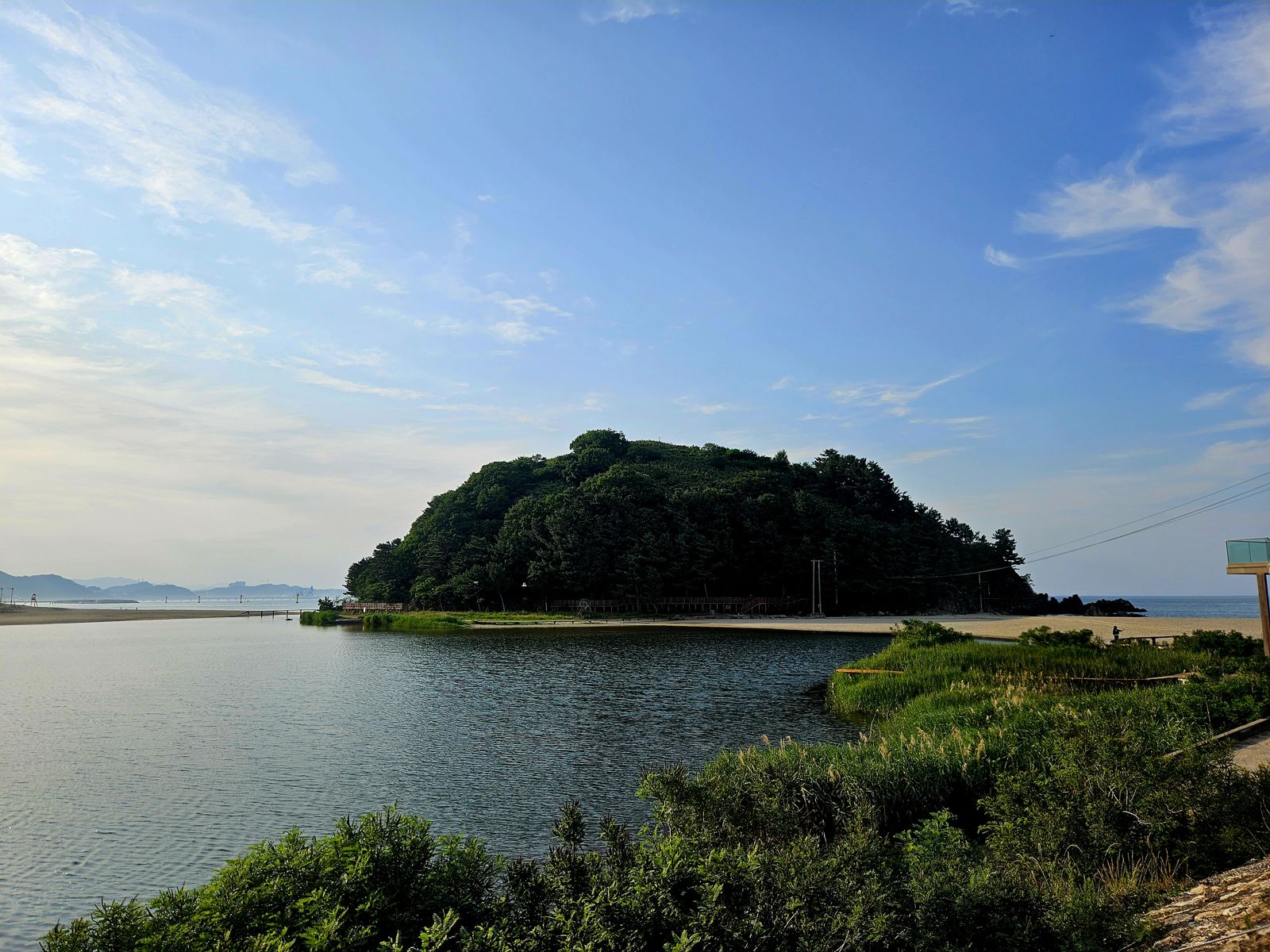
We forgot to celebrate two events when we arrived in Sokcho. First, we've finished our second official South Korean cycle route! That's no small feat with a three-year-old, and we can hardly believe what we've already accomplished! We've crossed the country diagonally from north to south, then ridden up the whole east coast. And second: summer officially starts today! So we're giving ourselves two days' rest in Sokcho, a seaside town wedged between the Sea of Japan and the Seorak mountains, one of the country's most beautiful national parks. A little anecdote: Sokcho was part of North Korea from 1945 until the end of the war in 1953, when the border was officially moved. As a result, many residents have family in the North, families that were brutally separated at the time.
We use the first day to deal with our clothes. It's been almost six days since we last did a wash and the need is starting to be sorely felt. Luckily we find a launderette right next to Sokcho beach, where we plan to spend the whole day. Koreans don't bare much skin at the beach; it's not unusual to see people swimming fully clothed. Sometimes they're covered up to the face, with only their eyes showing — enough to give the French right wing cold sweats. Here nobody minds, and we feel a little awkward in our swimsuits, even though we're not the only ones.
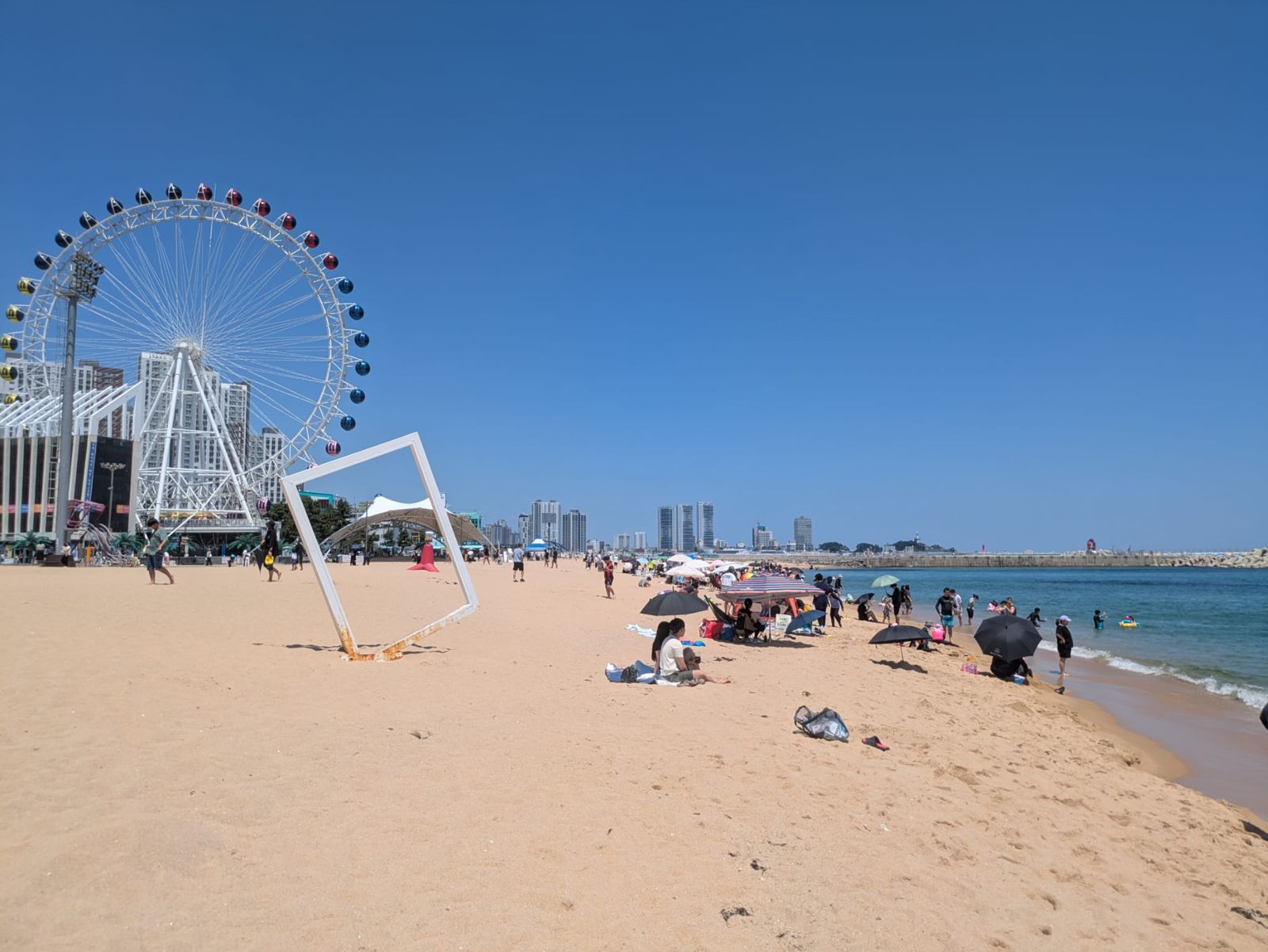
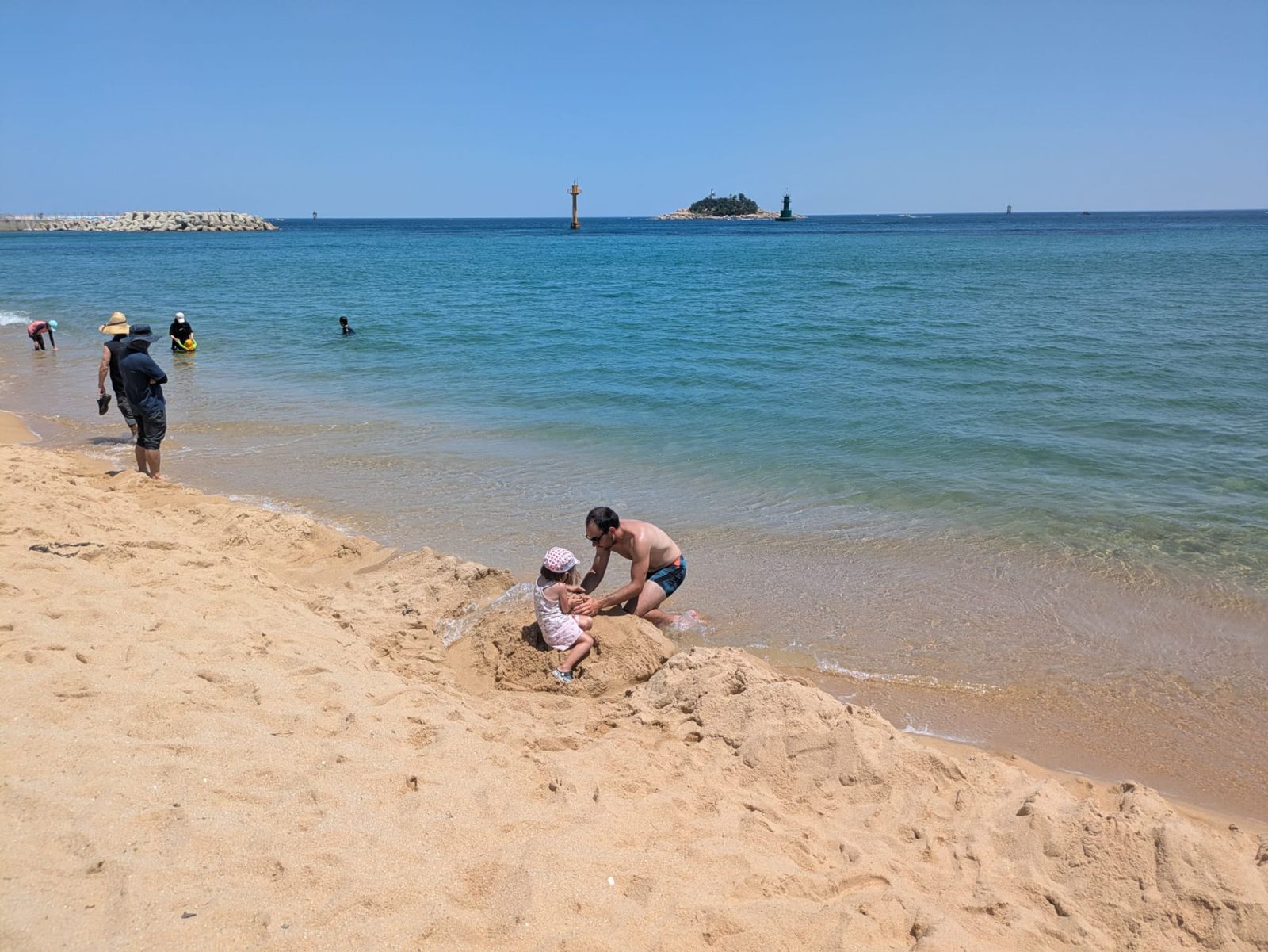
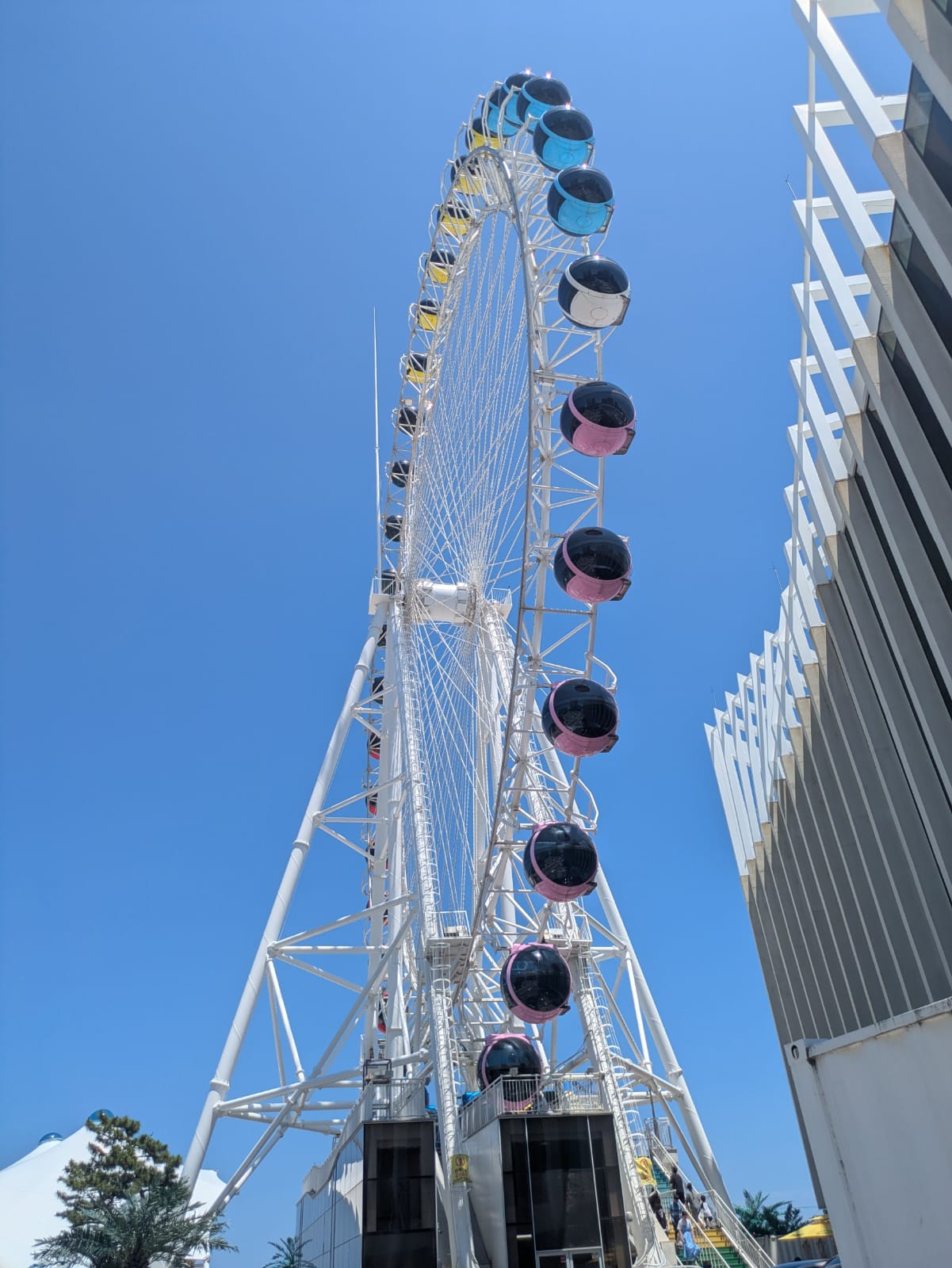
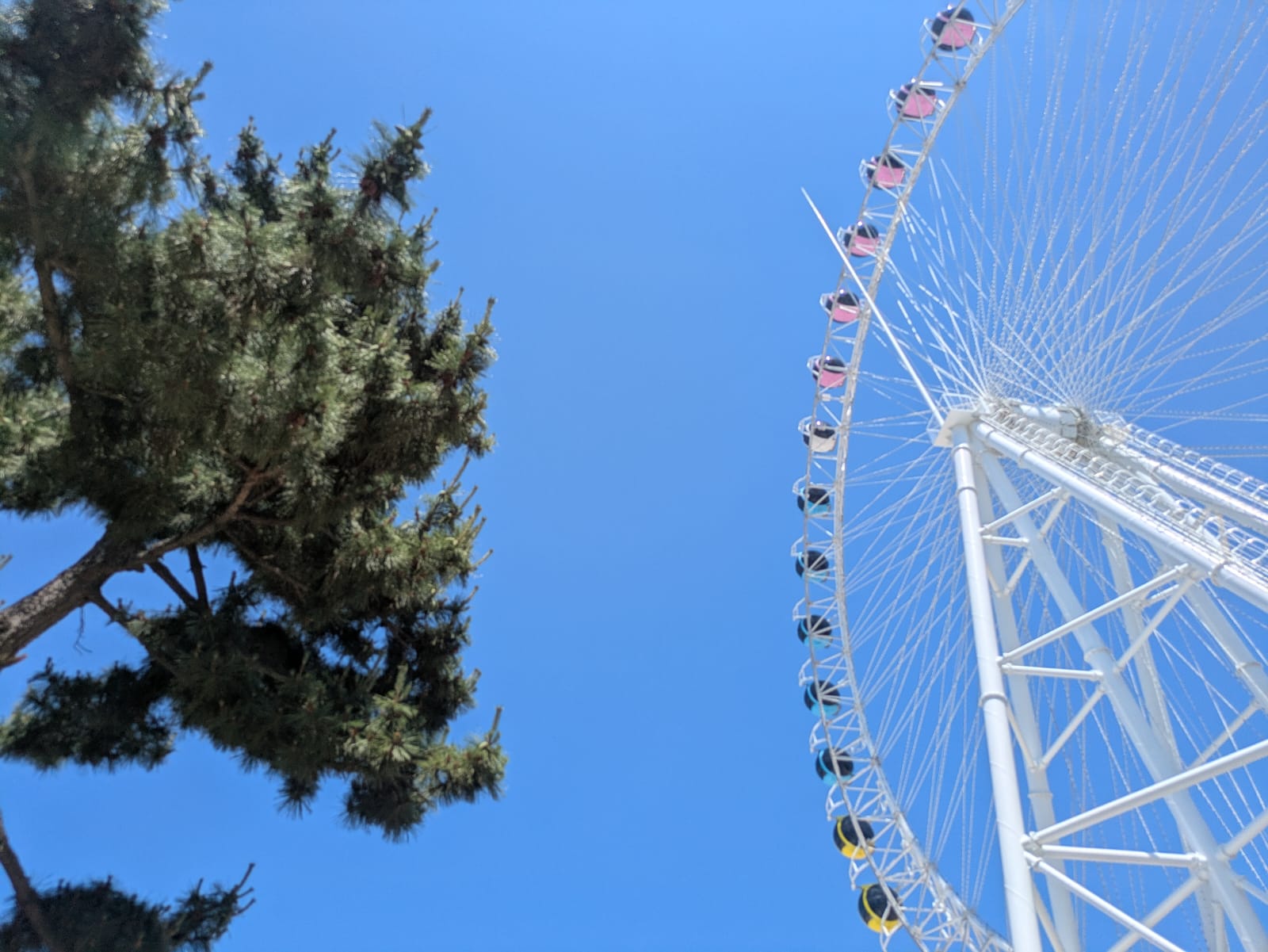
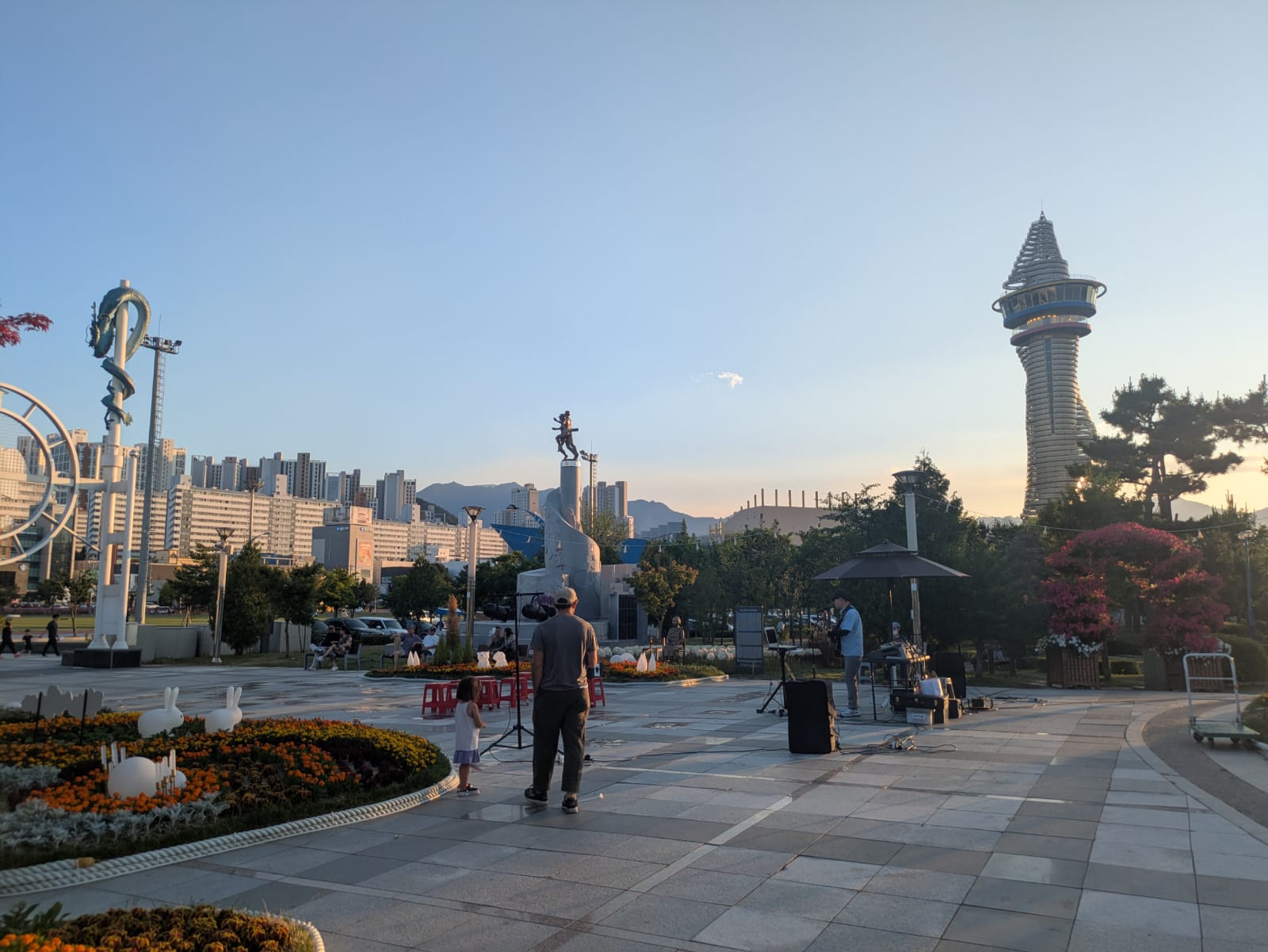
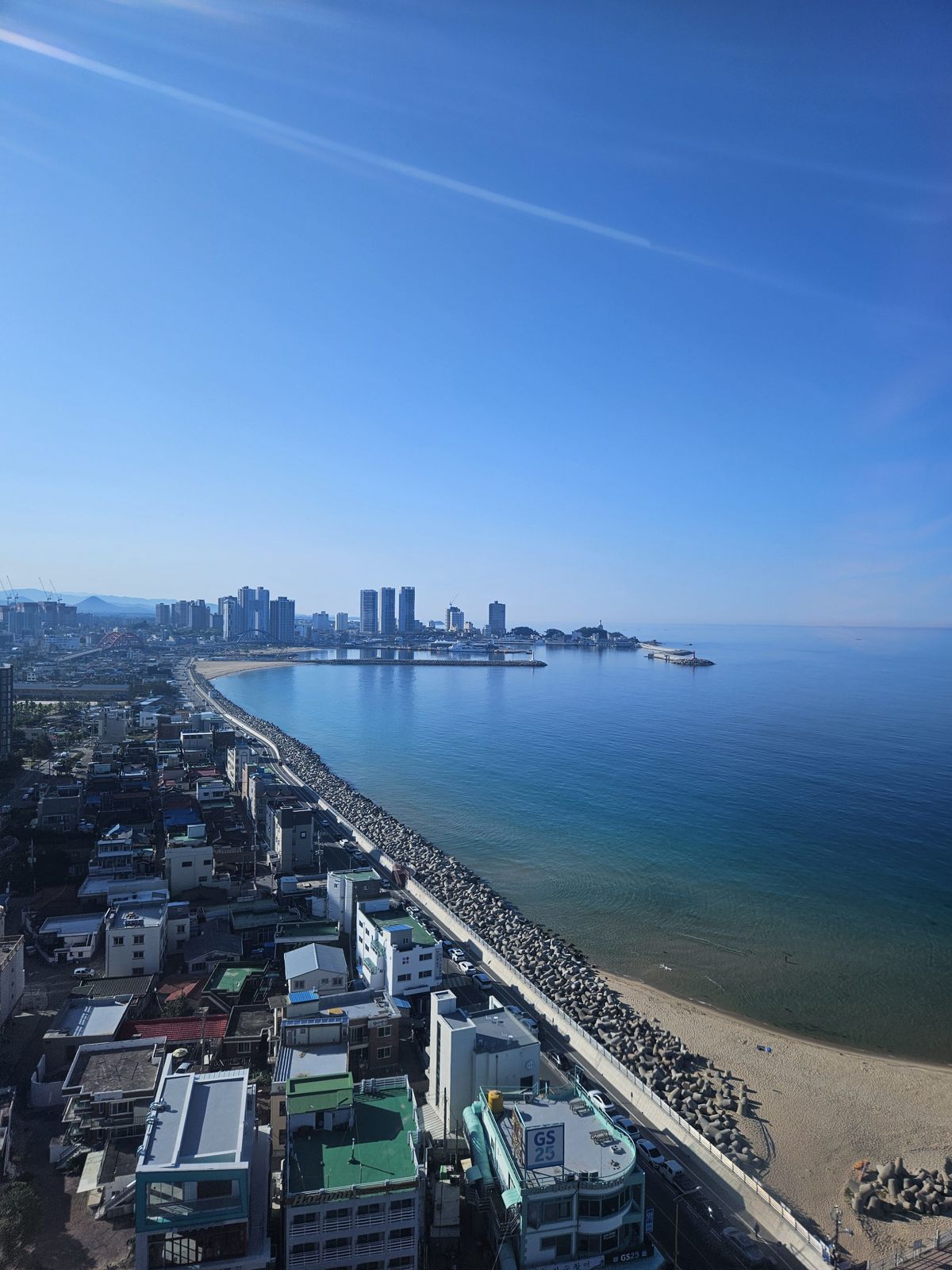
Sokcho has the charm of seaside towns. It's an immense privilege to have a place where everyone comes with the sole aim of relaxing. That's what makes seafronts so often pleasant. Add to that clean, well-designed facilities, a boardwalk, a Ferris wheel called the Sokcho Eye and superb water. The hours pass slowly, giving us time to watch the interactions between the people here.
As everywhere we've been, the atmosphere is relaxed. You never feel the slightest hint of conflict brewing. People only have issues with the sun, which we're also learning to be wary of. To let Clémence's skin breathe, we slip into a simple-looking restaurant whose staff are adorable. We feast on potato pancakes and royal dumplings (called "mandu" here) for a more than affordable price in a truly child-friendly setting. Dishes and cutlery are adapted, and the staff fuss over all the little ones, who each get a little carton of apple juice. We end the day at the beach, then move to an adjacent but much cheaper hotel. The budget is tight, so every saving is welcome.
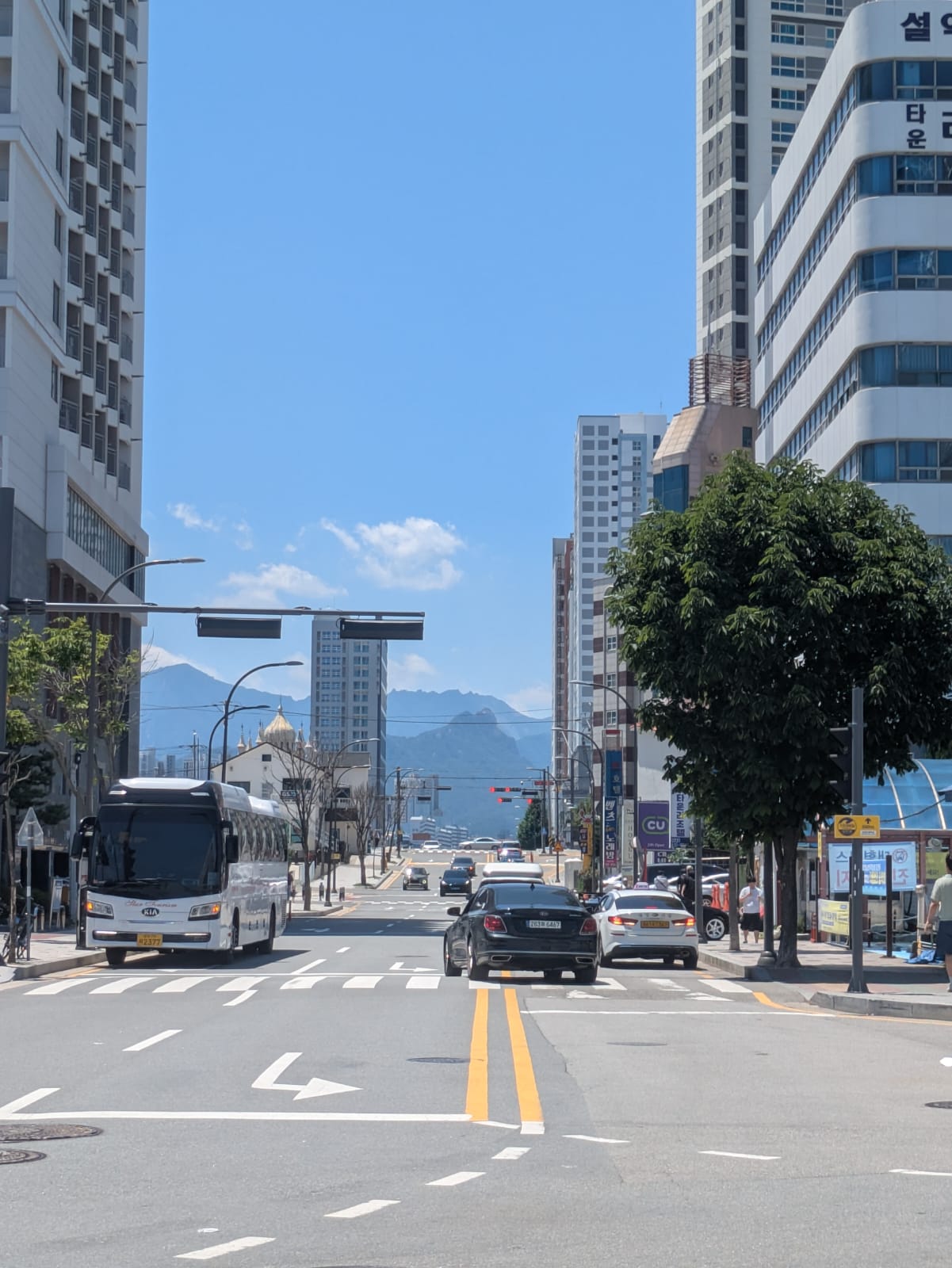
The next day we get up a little earlier to go hiking in Seoraksan National Park, the highest mountain range in the east of the country. One of its peaks reaches 1,700 metres, making it Korea's third-highest mountain. The country is riding the "K-wave", the term used here for the sudden global craze for all things Korean. The whole planet has gone wild for BTS, Squid Game and Bong Joon-ho's film Parasite. But the little peninsula is also becoming a hikers' paradise. More and more tourists are coming to tackle the mountains that cover 80% of the country.
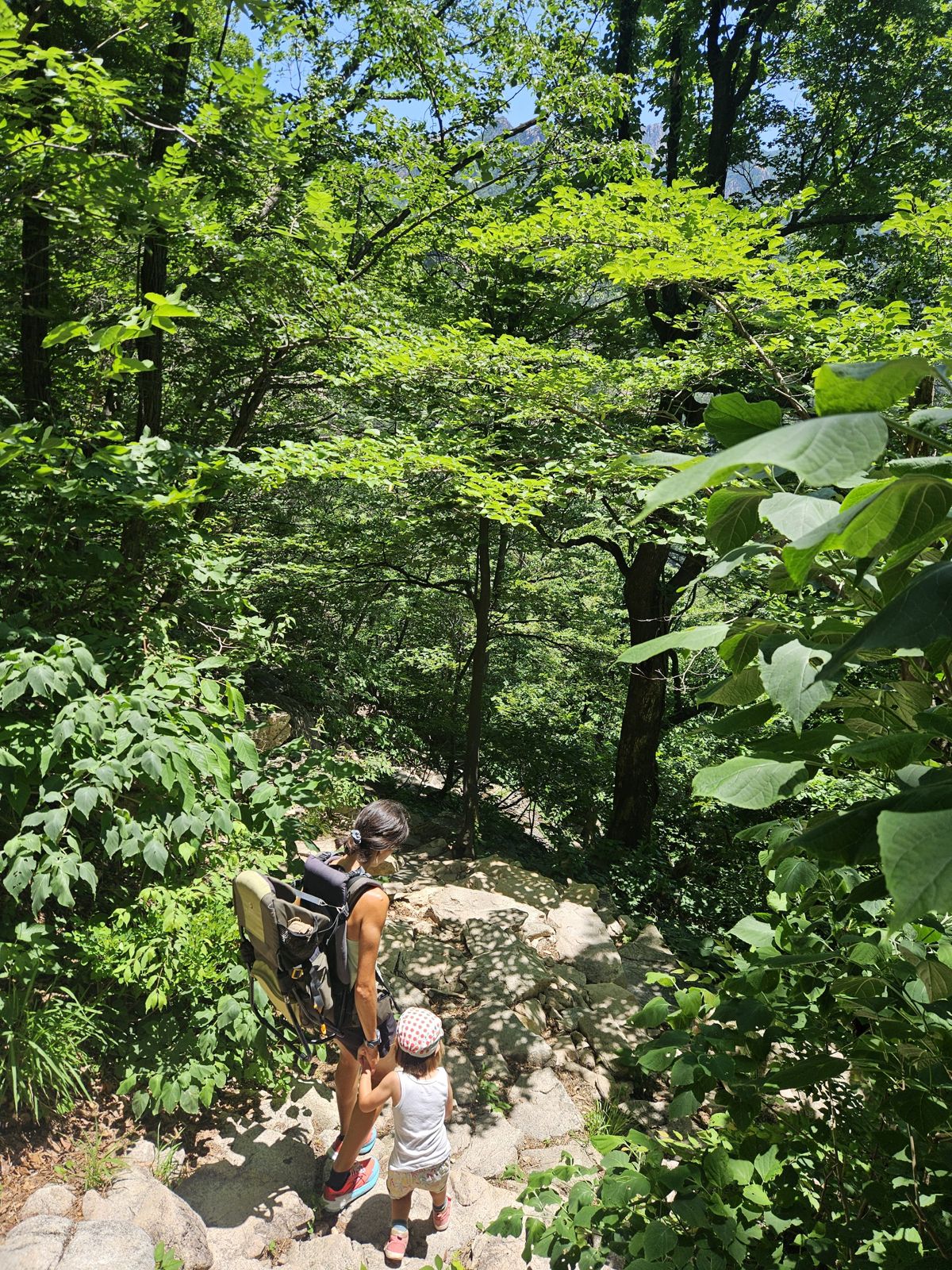
After 30 minutes on the bus, we're already walking. As always the facilities are perfect and the maps very clear, which lets us picture where we're heading. Our route is only 7.5 kilometres there and back, but with 350 metres of climbing over the last 600 metres. In other words, sheer. On the cliffside. Clémence walks a good part of it but has to admit defeat; she climbs into the backpack Stéphane is carrying and together they tackle the last flight of steps.
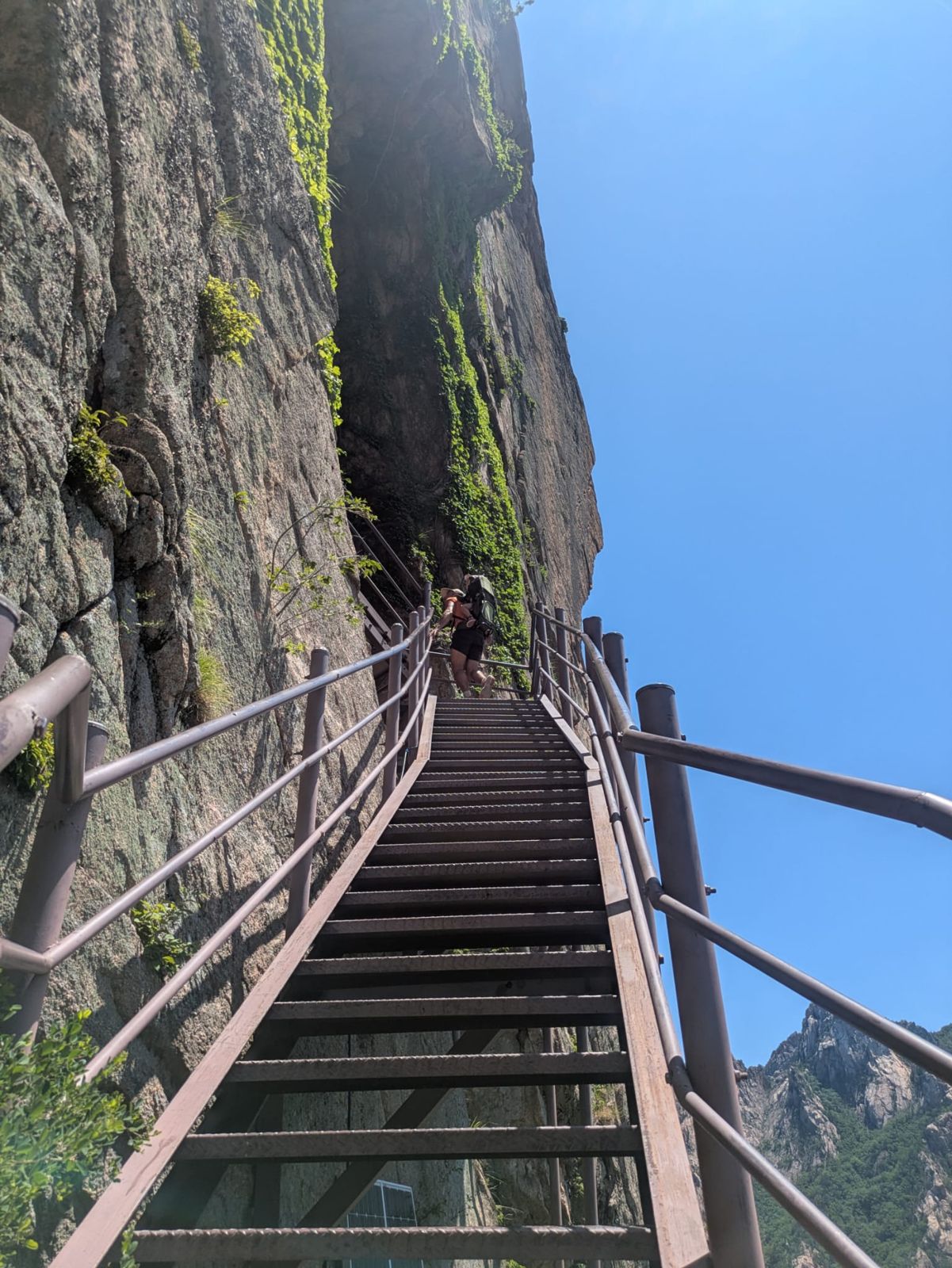
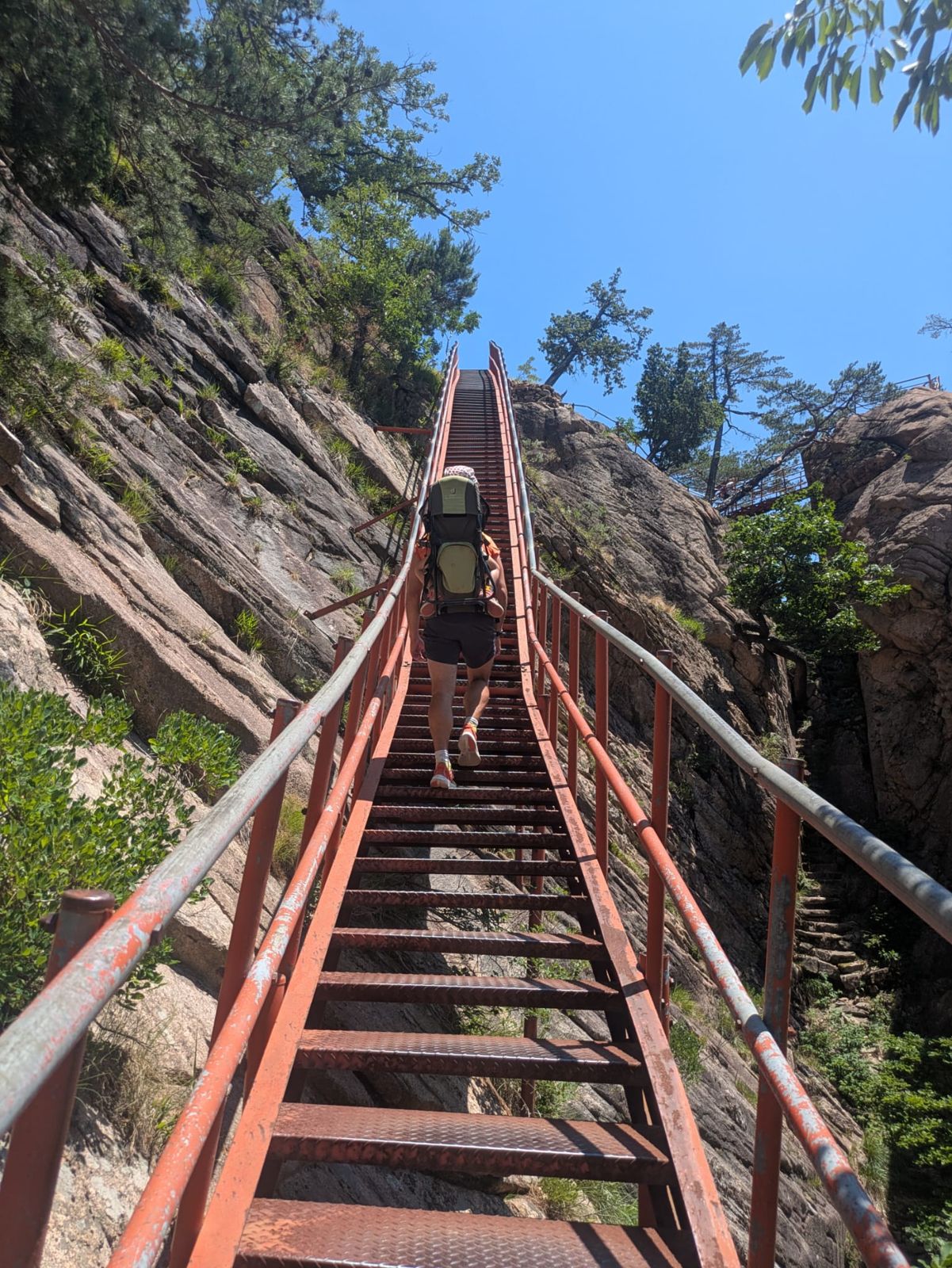
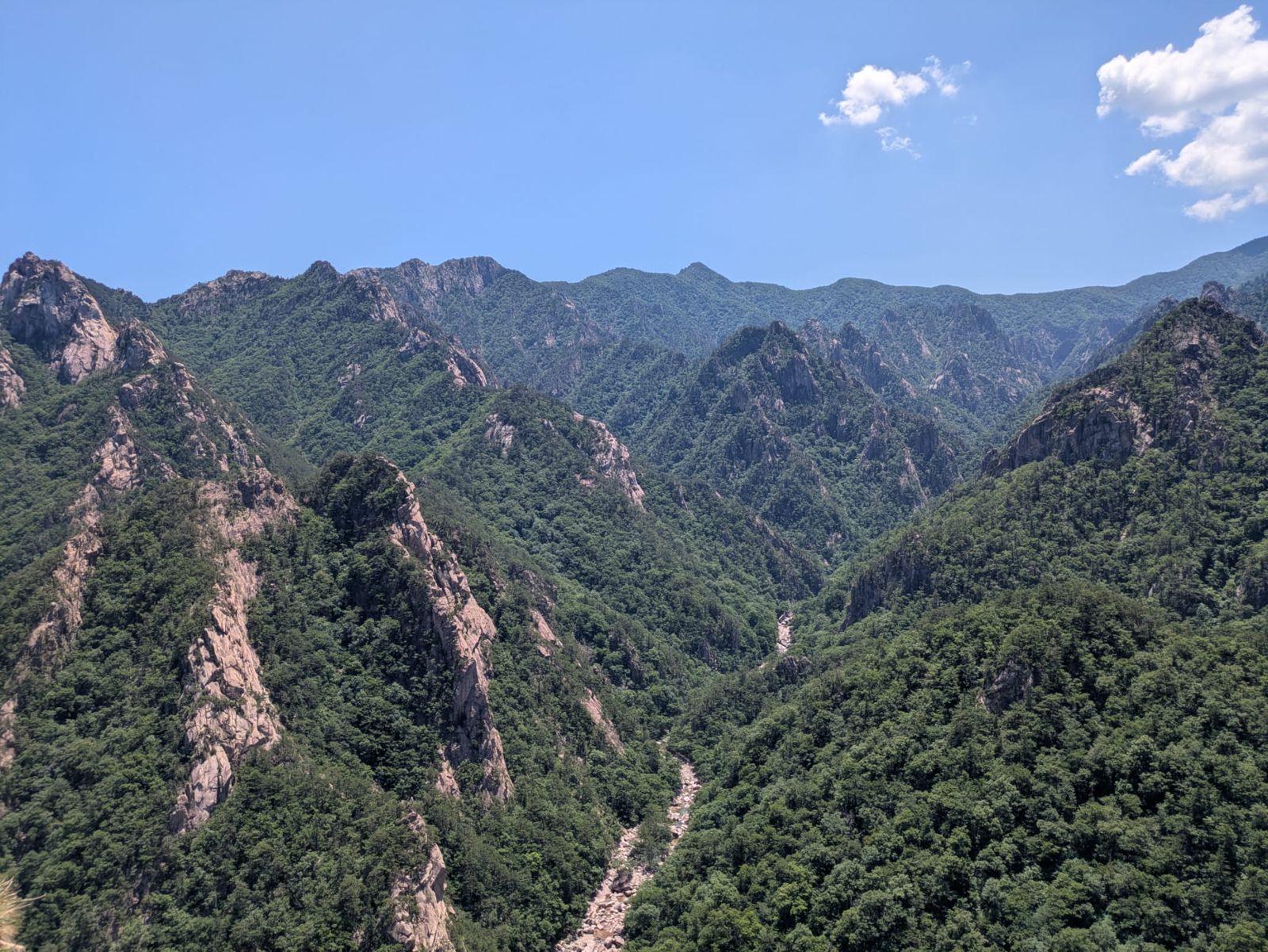
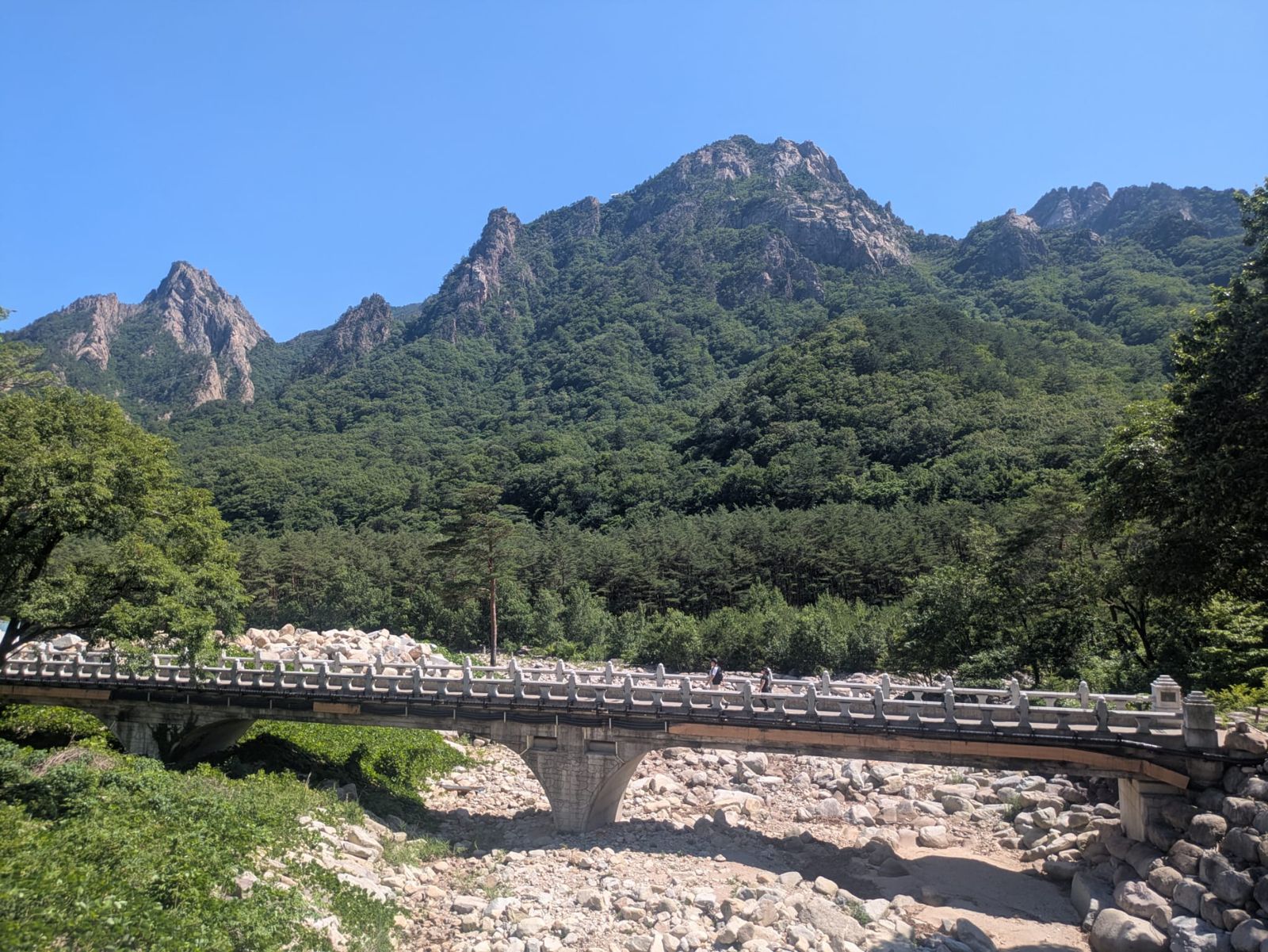
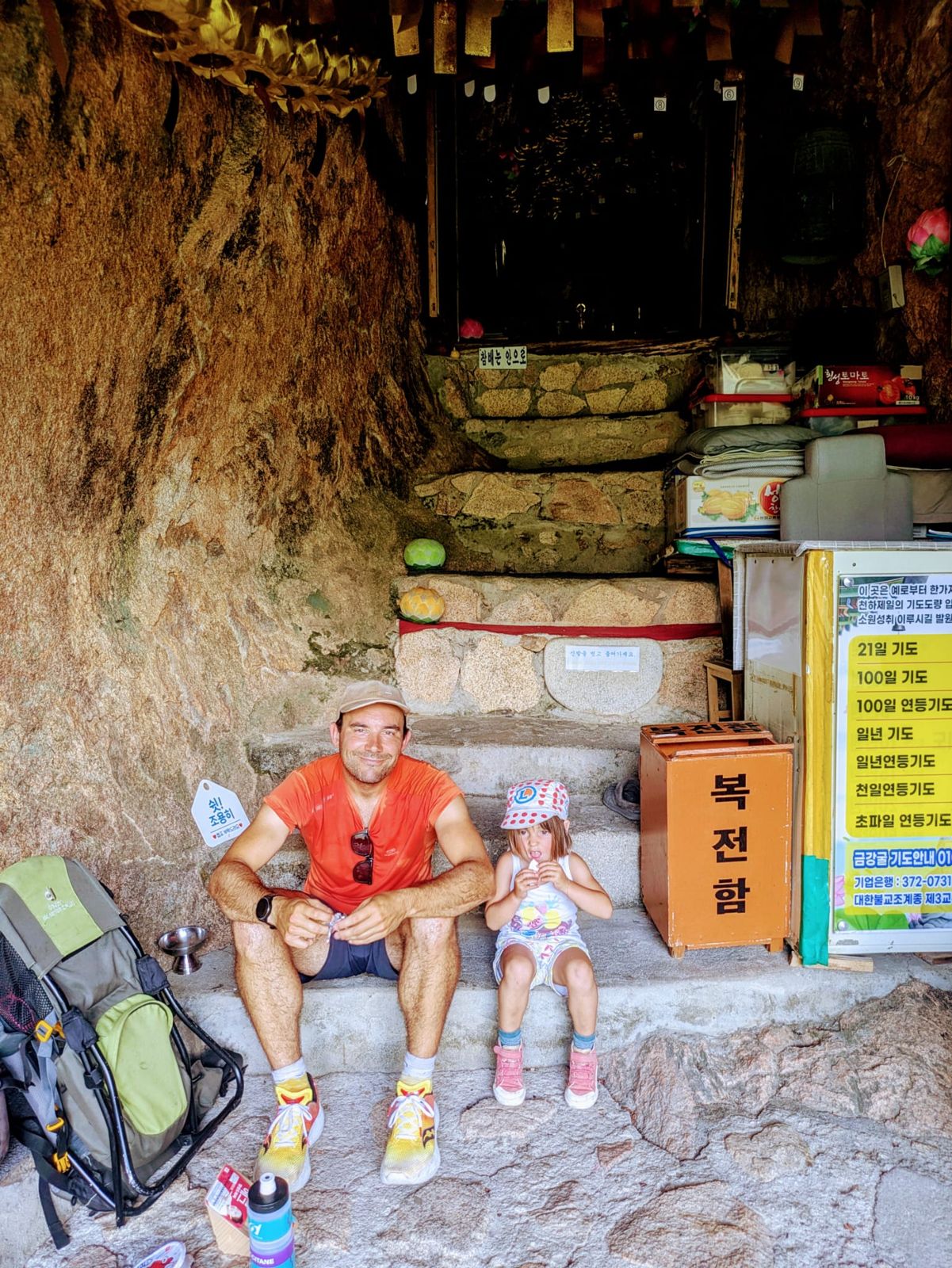
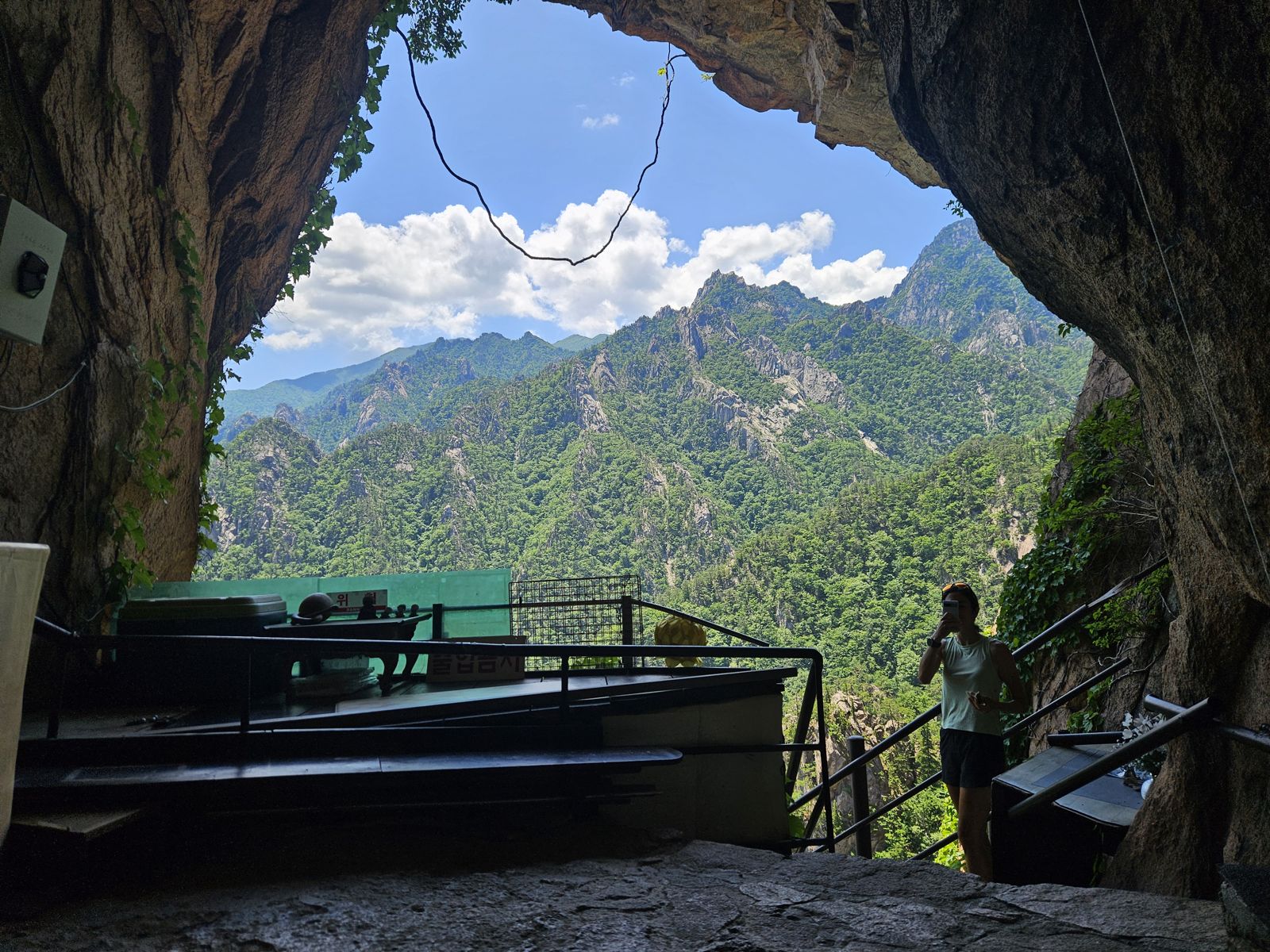
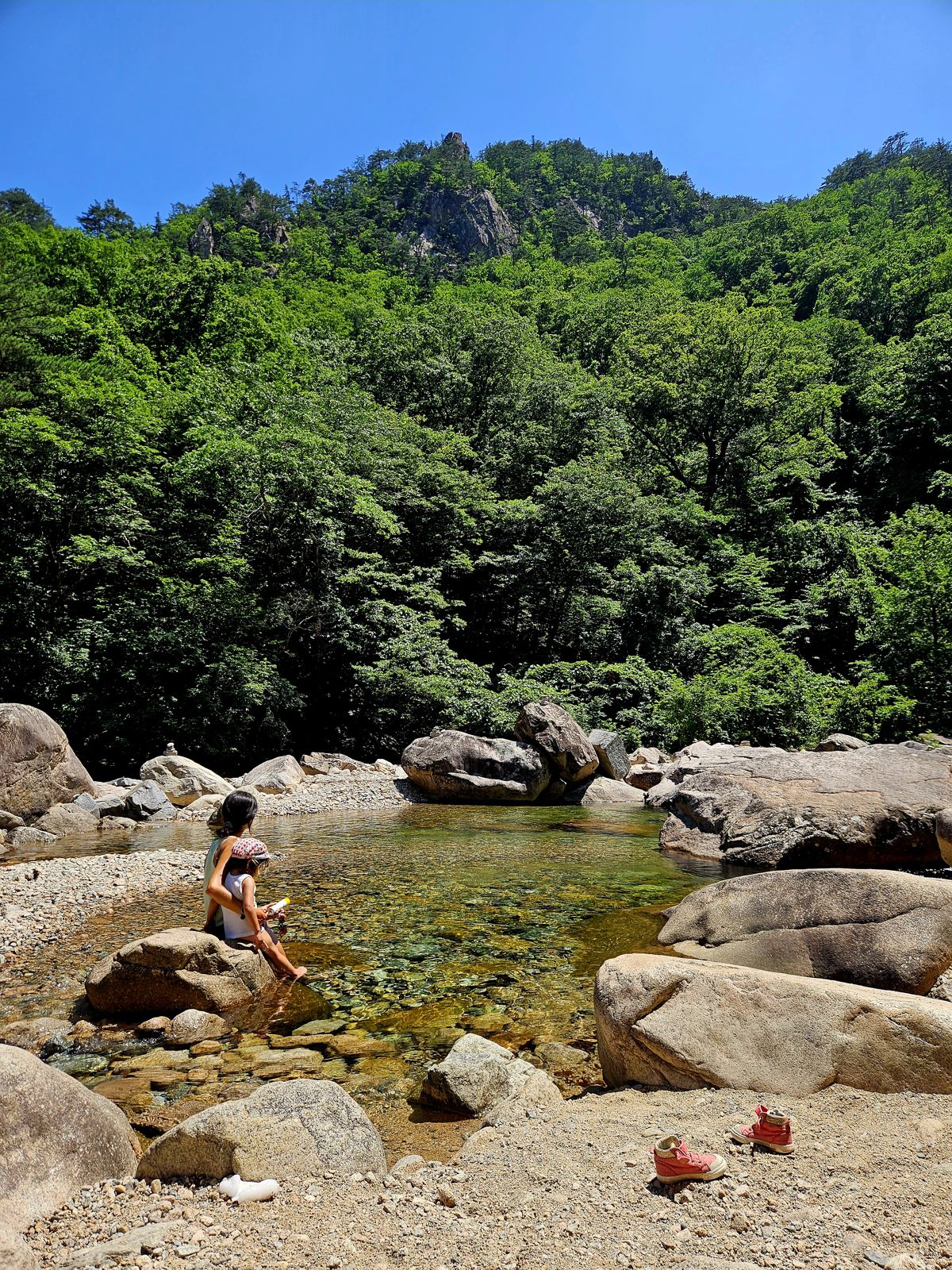
Fortunately, the reward is spectacular. In a little cave, a place of prayer has been set up, and the view is absolutely breathtaking. Clémence has fun repeating the word because Stéphane has said it at least ten times. We eat our frugal snacks of sliced bread and Laughing Cow (yes, that stuff is exported everywhere) sitting in this timeless place like stowaways on the mountain. The descent goes on forever. Clémence insists on walking down, so we go slowly, doubly careful she doesn't fall. We'd spotted a lovely place for a dip on the way up, so we stop there once we're at the bottom.
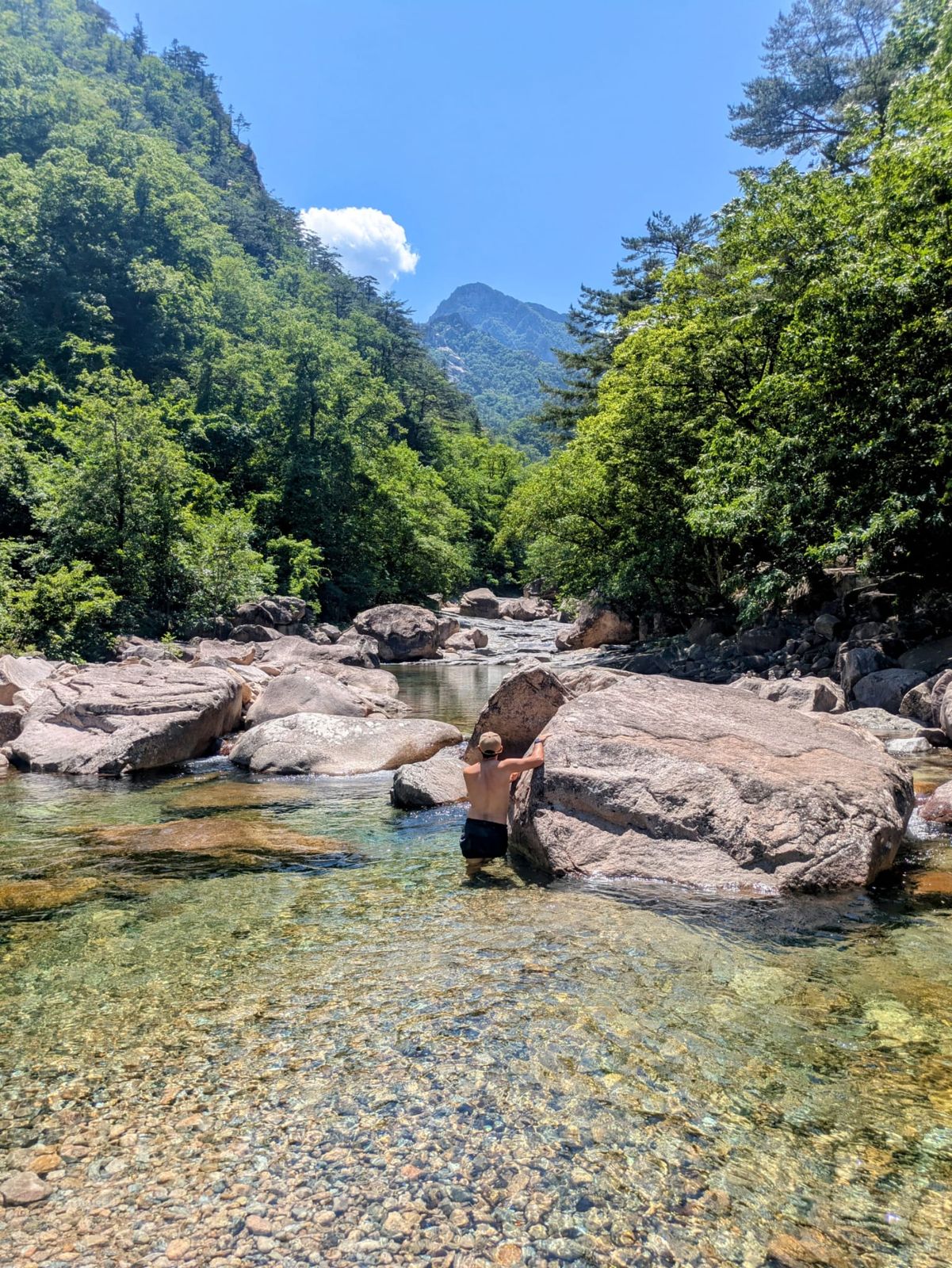
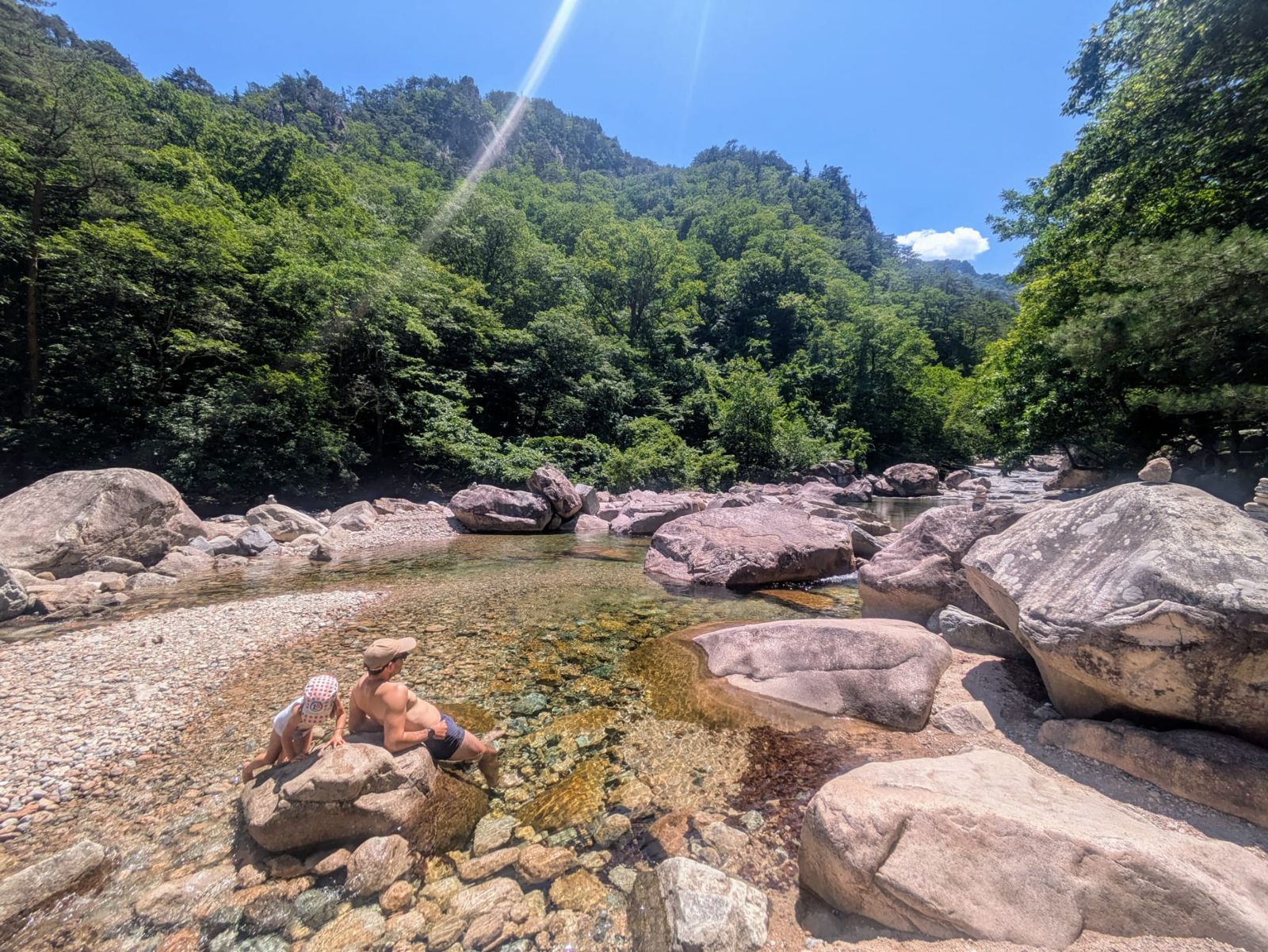
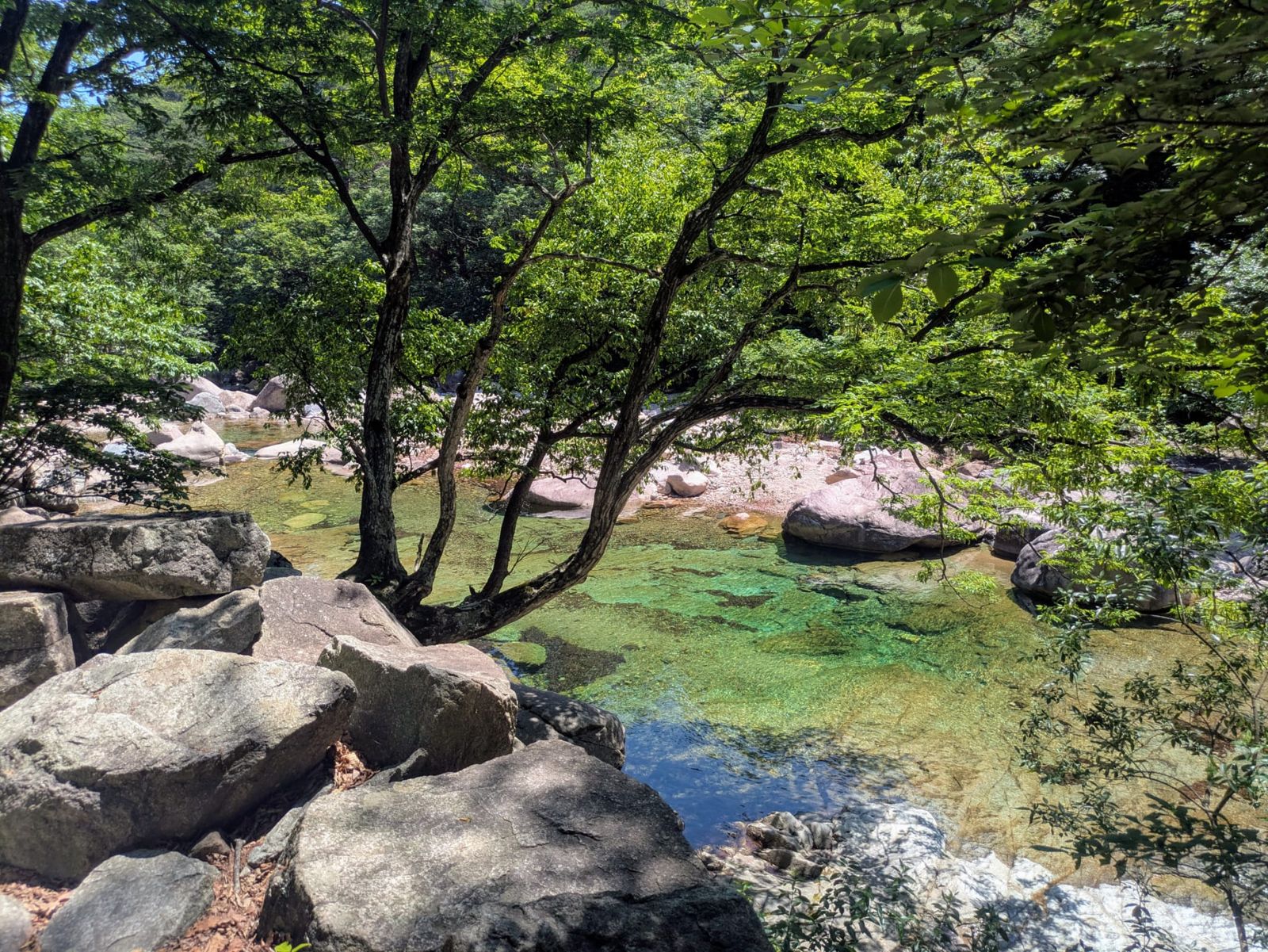
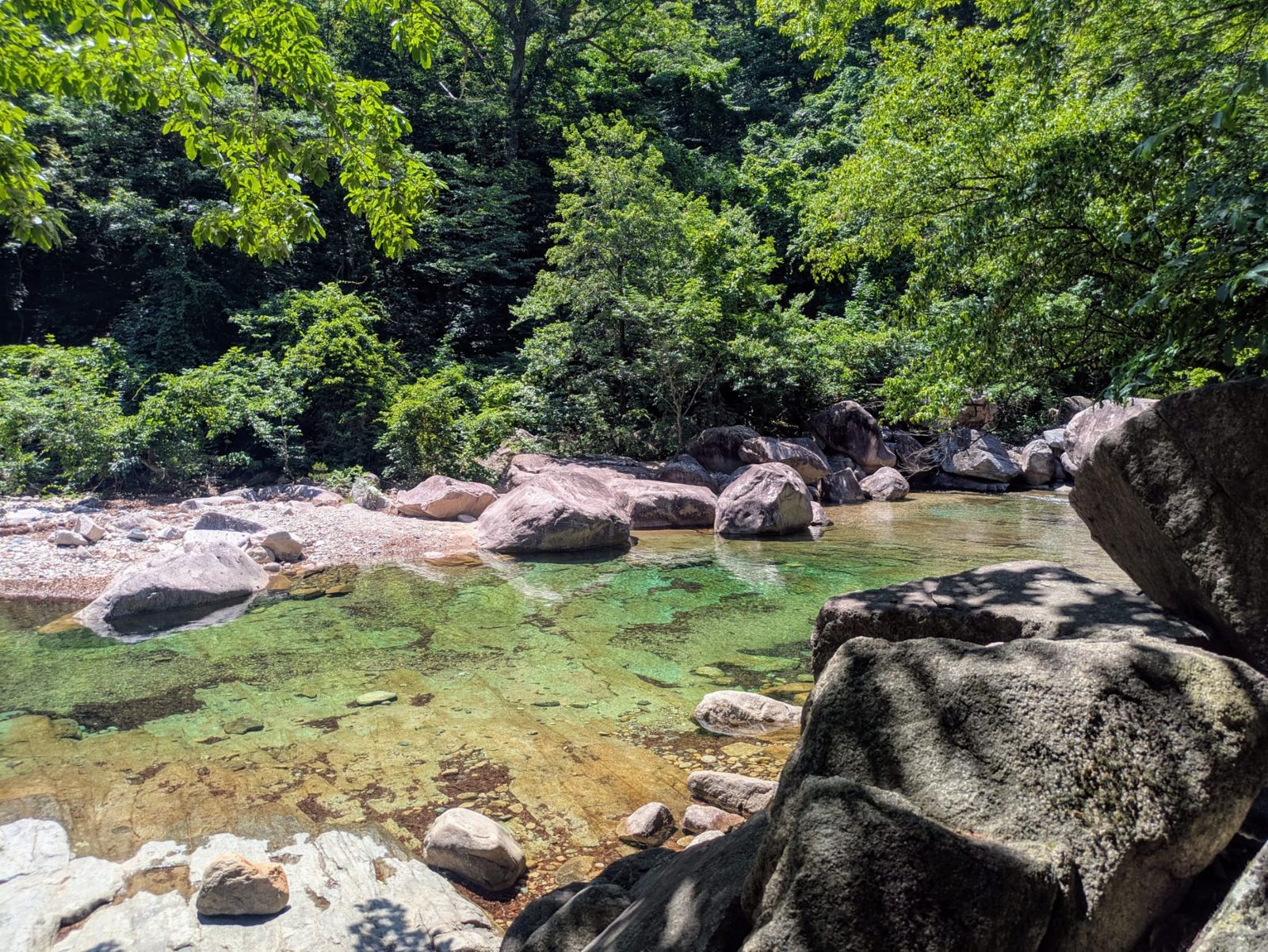
The water is splendid; the huge boulders create pools everywhere. And once again, not a soul in the water or even on the bank. We always wonder why Koreans don't make more of it; places like this would be packed with swimmers in France. Two grannies do settle not far from us, waving, but they just timidly dip their feet while making sure to stay in the shade. That confirms it's not forbidden, as we were starting to wonder whether swimming was allowed. A wild goat appears to drink from the riverbed 30 metres away. It seems used to people and isn't scared; it pays no attention at all to the humans around it. It's hot, but the majestic forest provides enough shade to make it perfectly bearable.
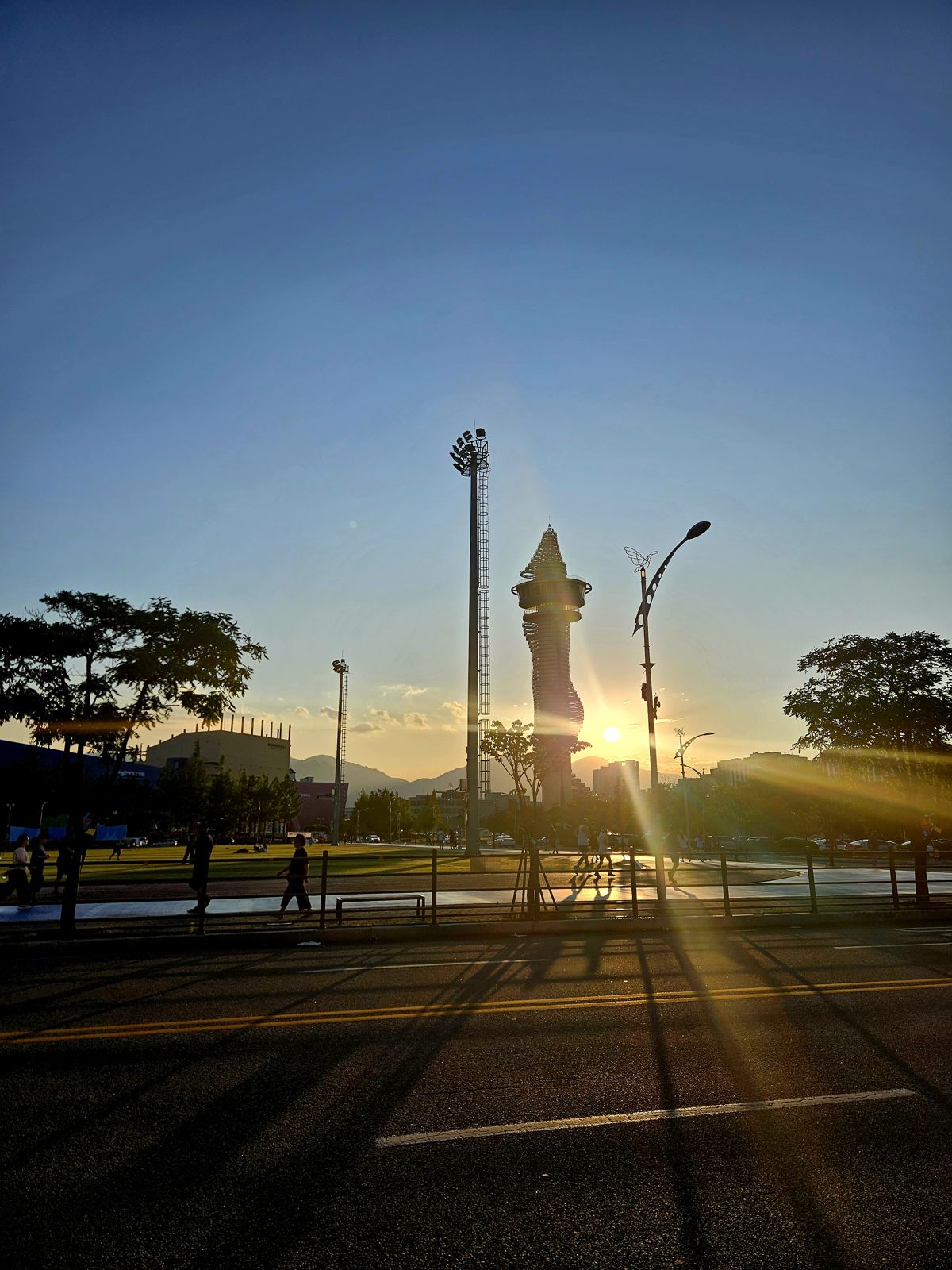
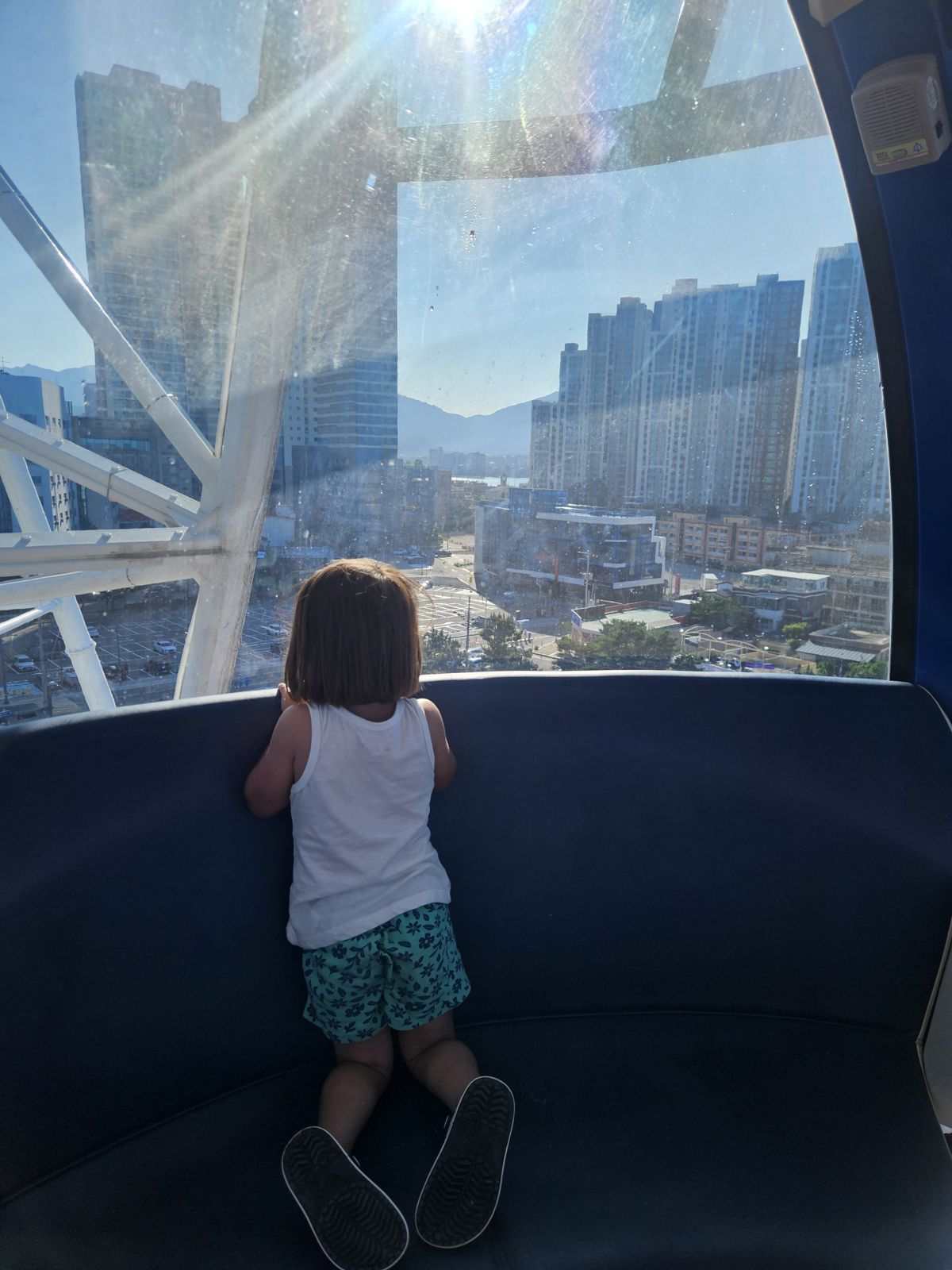
On the bus back, we decide to return to the hotel to drop our things, jump on the bikes and enjoy the beach one last time. We'd thought about staying another day in Sokcho, but the forecast is bad, so what's the point? Arriving at Sokcho Beach, Clémence asks if we can go on the Ferris wheel. She'd refused yesterday, so we gladly agree. Unfortunately the lady at the ticket desk refuses to let her ride free as a child of four or under without seeing her passport. We try to negotiate — it's obvious she's not five — but she's adamant. Put off by the idea of spending €25 for the three of us on the Sokcho Ferris wheel, in the end Clémence only goes up with Stéphane for her ride. The view from the top is impressive; you can clearly see how close those huge mountains are, almost tumbling into the sea. The sun is already slipping behind the peaks, and we go back to eat at yesterday's restaurant. The welcome is great again and the food delicious. If we lived here, this place would be the perfect canteen.
On the trail