 ← PreviousBack to Korea
If you've never set foot in South Korea, there are lots of cities you've never even heard of. The average French person knows Seoul, maybe Busan, and that's it. Yet the country has several cities of over a million people, and Gwangju is one of them. In South Jeolla Province, it's the cradle of the Korean revolution and the city that symbolises the struggle for democracy. Not two centuries ago, as in France, but in 1987. That's when military dictatorship truly ended in the country, giving way to one of the best democracies in the world.
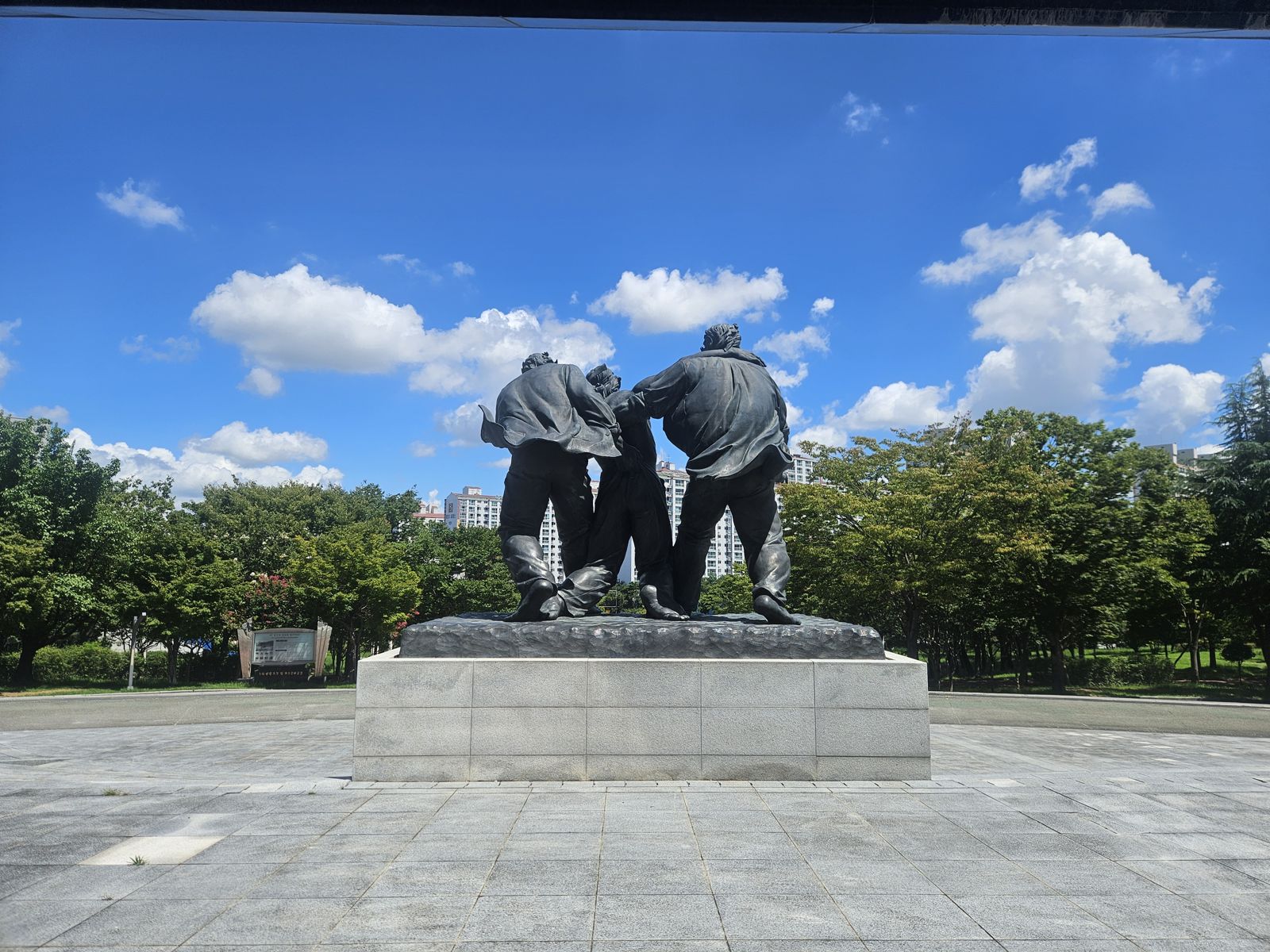
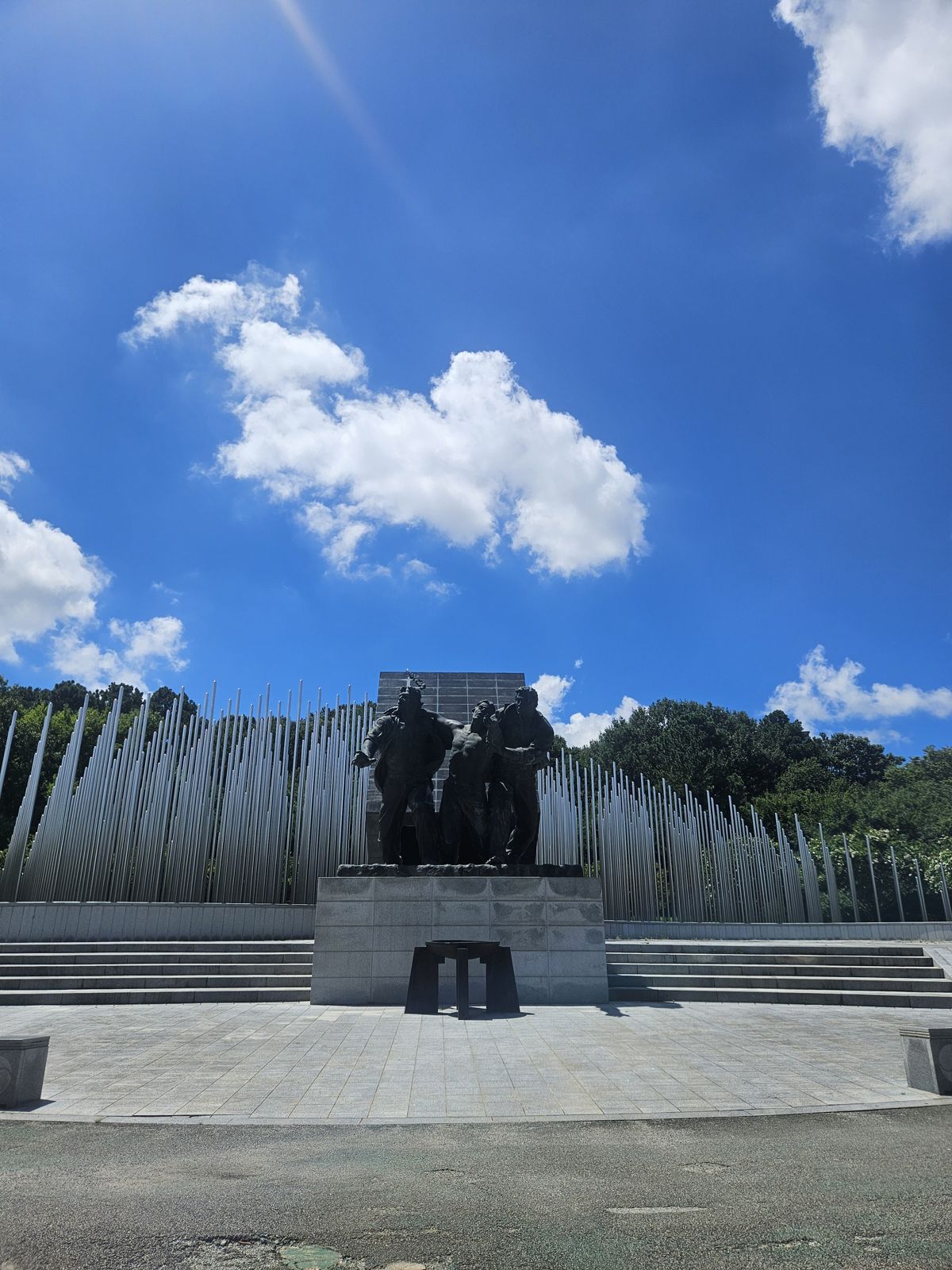
Our hotel is next to May 18th Park, where we start our day of sightseeing. It commemorates 18 May 1980, when the military violently crushed a demonstration by students and unions protesting against the establishment of a new military regime. The official toll was two hundred dead, but human rights organisations now estimate the total in the thousands. This barbarity deeply shocked Korean public opinion and helped bring down the dictatorship a few years later. The park pays tribute to the brave young people who faced the guns. There are several statues and names carved in stone in their memory.
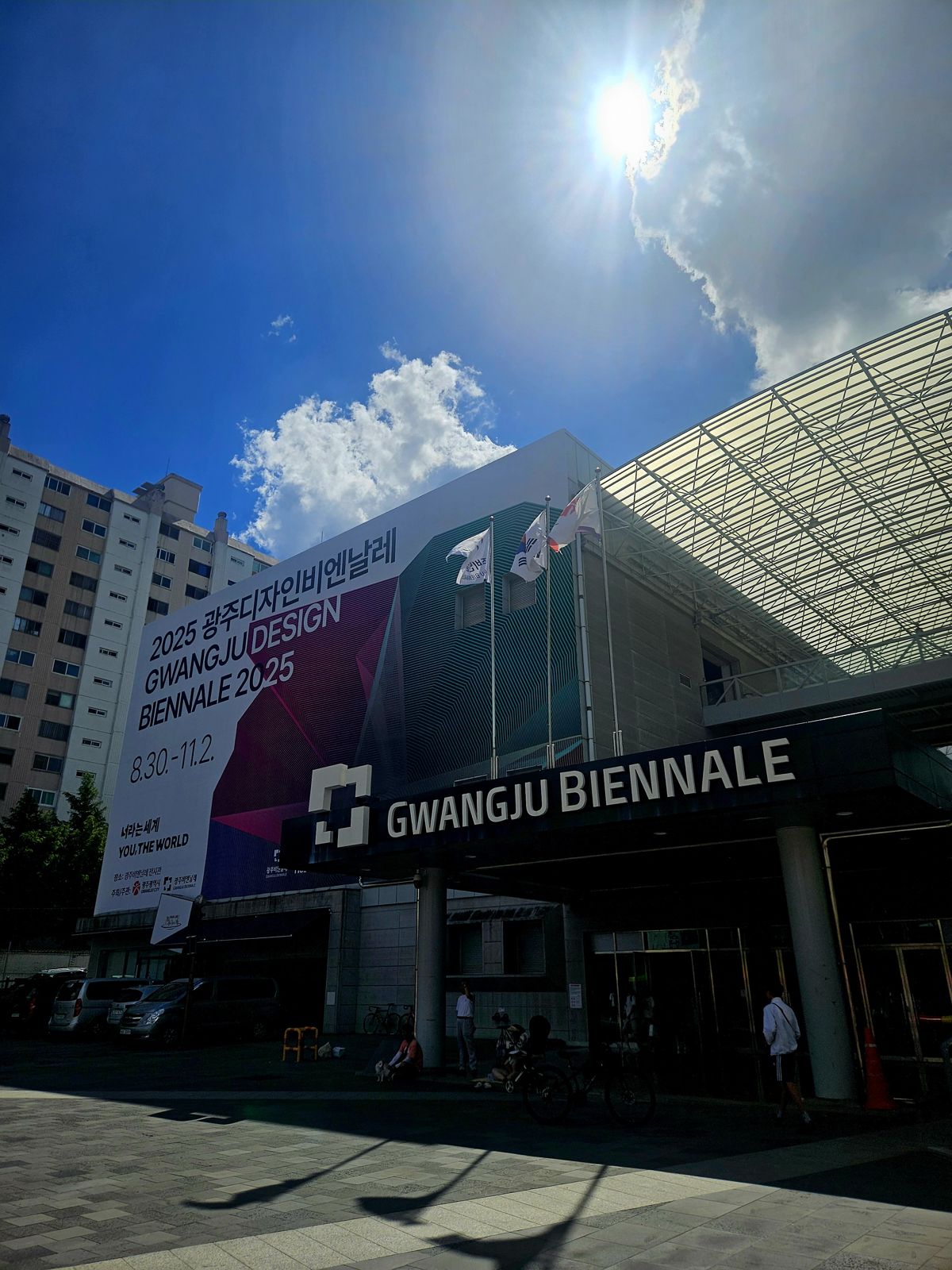
Gwangju is also a big sports city, with top-flight clubs in many disciplines, including football and baseball. It even hosted matches at the 2002 World Cup, notably a famous South Korea v Spain quarter-final in which, amid a crazy atmosphere, Korea became the first Asian team to reach the semi-finals. Above all, it's a city of culture, with museums galore and a biennale. Today we're visiting the Asia Culture Center, known as the ACC.
It's a fact few people in France know, but the song of the Gwangju revolutionaries, "The Song of May", is sung to the tune of Michel Polnareff's "Qui a tué grand-maman ?". At the time the song was very popular in South Korea, and nobody really knows how it was transformed into the symbol of the struggle. To this day, it's the song of workers and demonstrations.
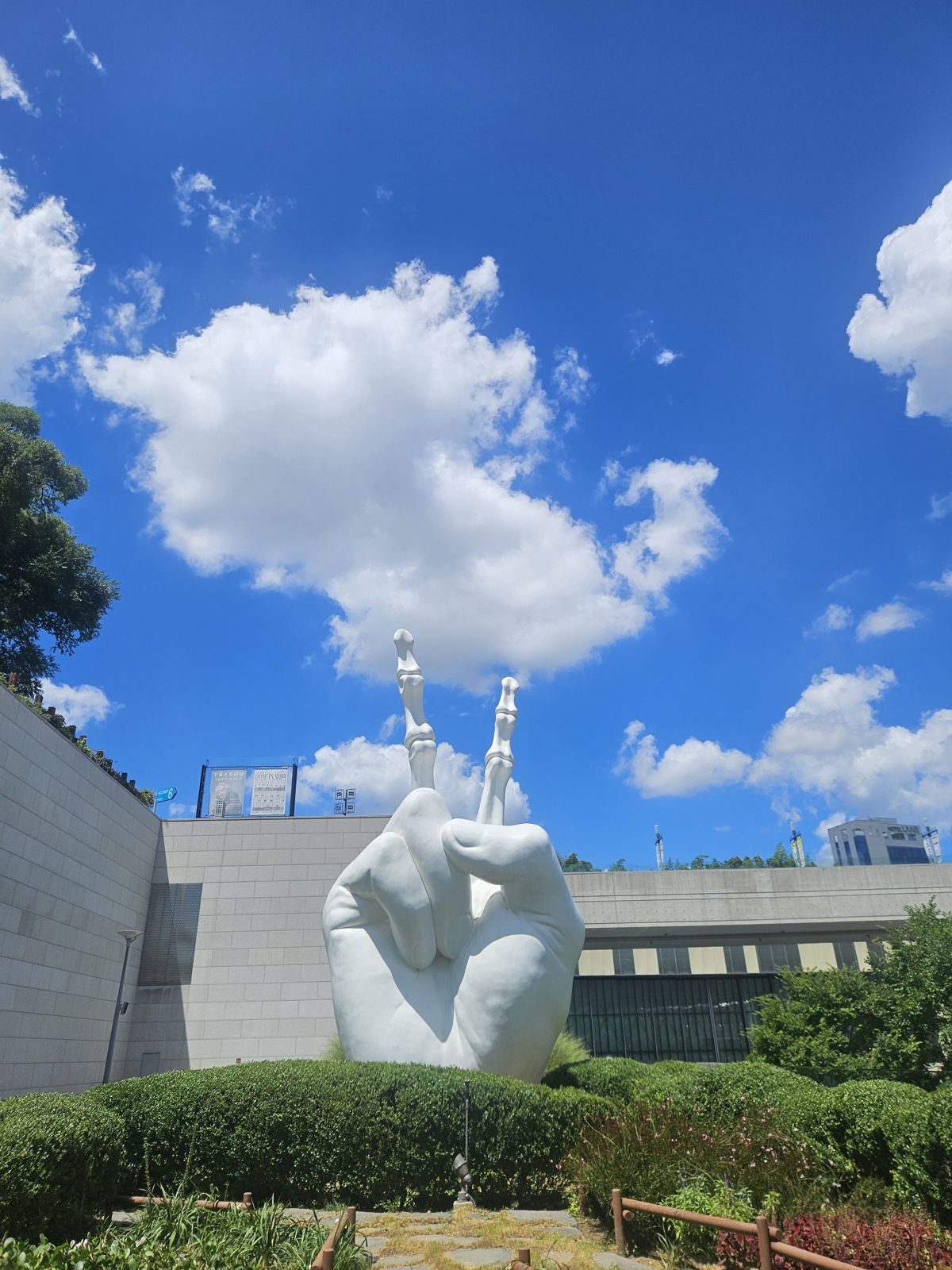
This cultural and arts complex focuses on promoting Asian cultures and offers a variety of spaces and programmes, including contemporary art exhibitions, performances, workshops and creative residency spaces. Built on the site of the former provincial government building, it's tied to the May 1980 democratic movement and stands as a place of memory and cultural renewal. It's this centre that hosts the Gwangju Biennale and other international arts festivals.
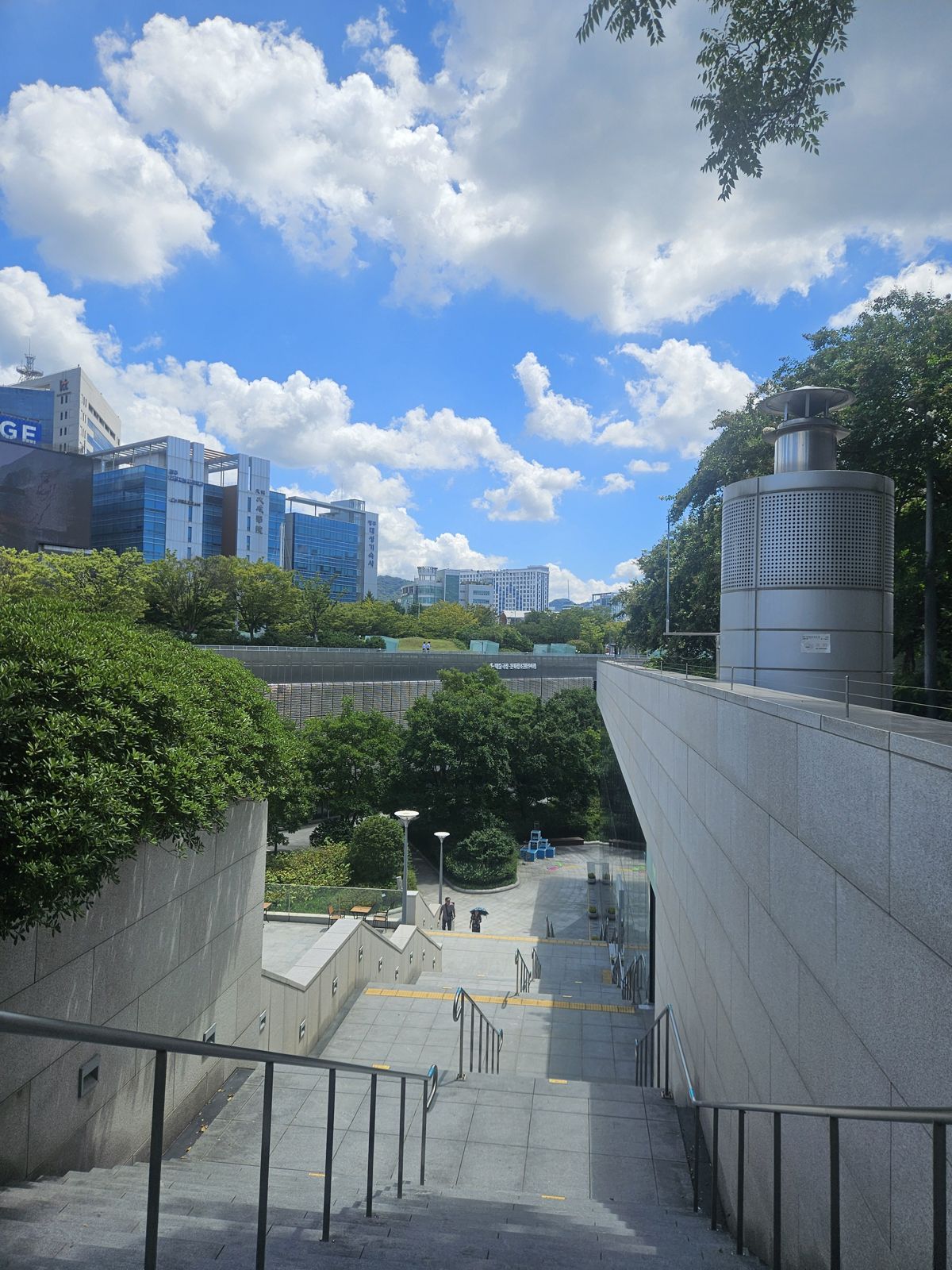
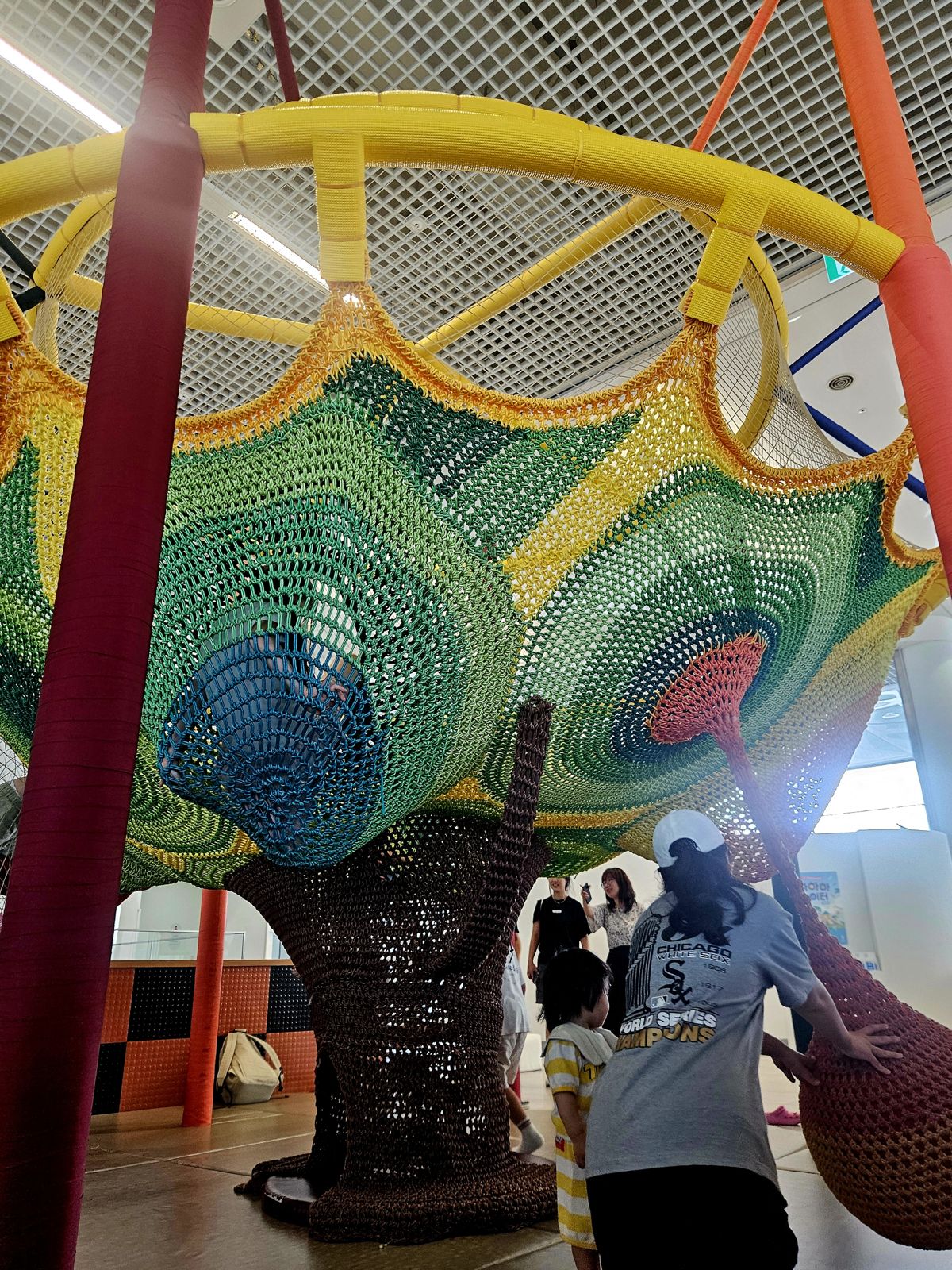
Koreans have a talent for creating welcoming, green and airy spaces where you immediately feel at ease. Despite the crowds, the place breathes. There are sections in every direction. We head for the part of the centre dedicated especially to children. Another feature of the country: every cultural venue has its version for little ones. And it's not a second-rate museum, as children are invited to learn through play. Here they celebrate the culture of the immense continent that is Asia in all its diversity. First we play at placing flags in the right spots on a big map, then at stamping iconic monuments on a sheet of paper. You can also make paper puppets for shadow play. In short, there's a whole range of games and fun activities to try.
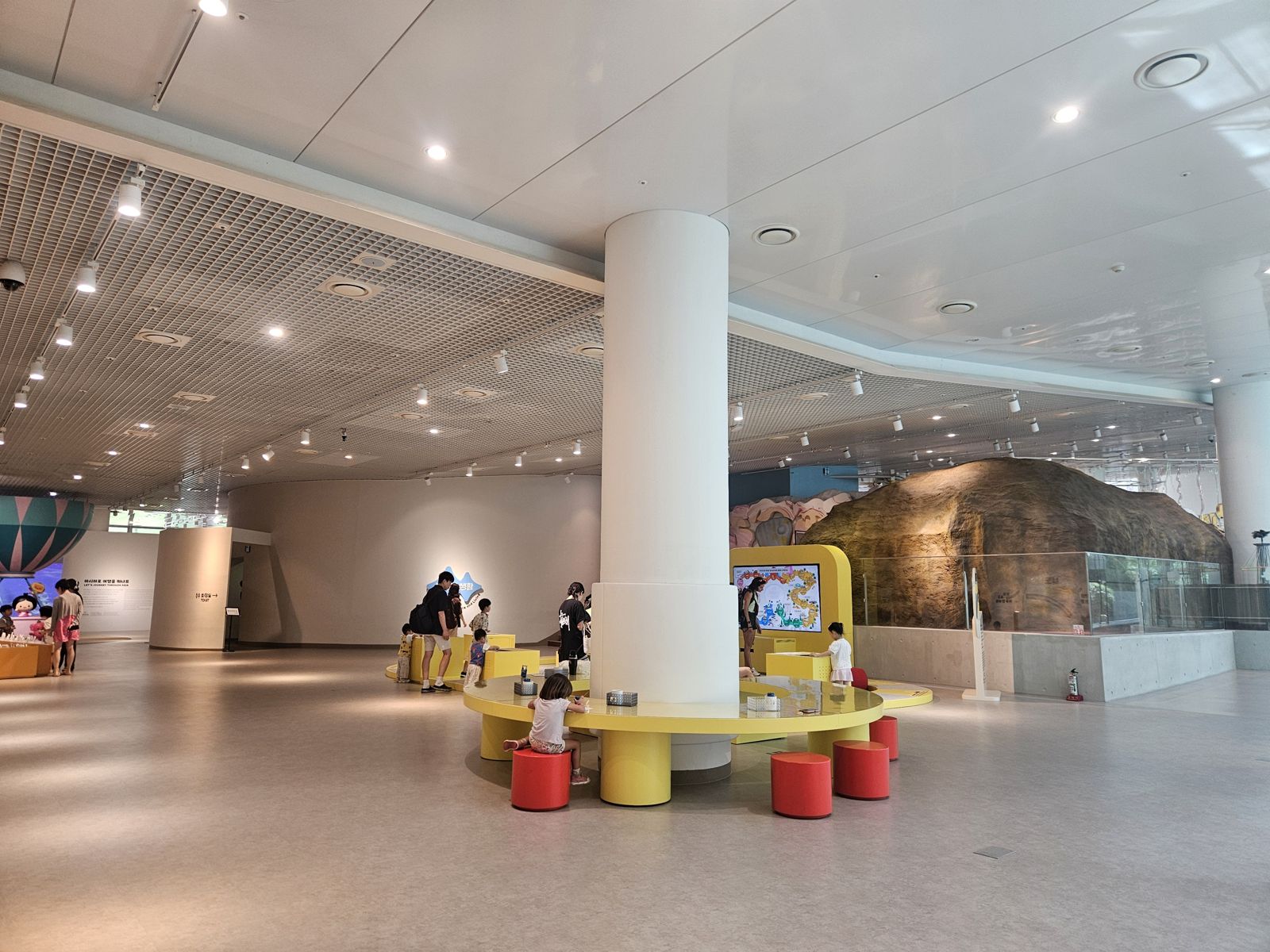
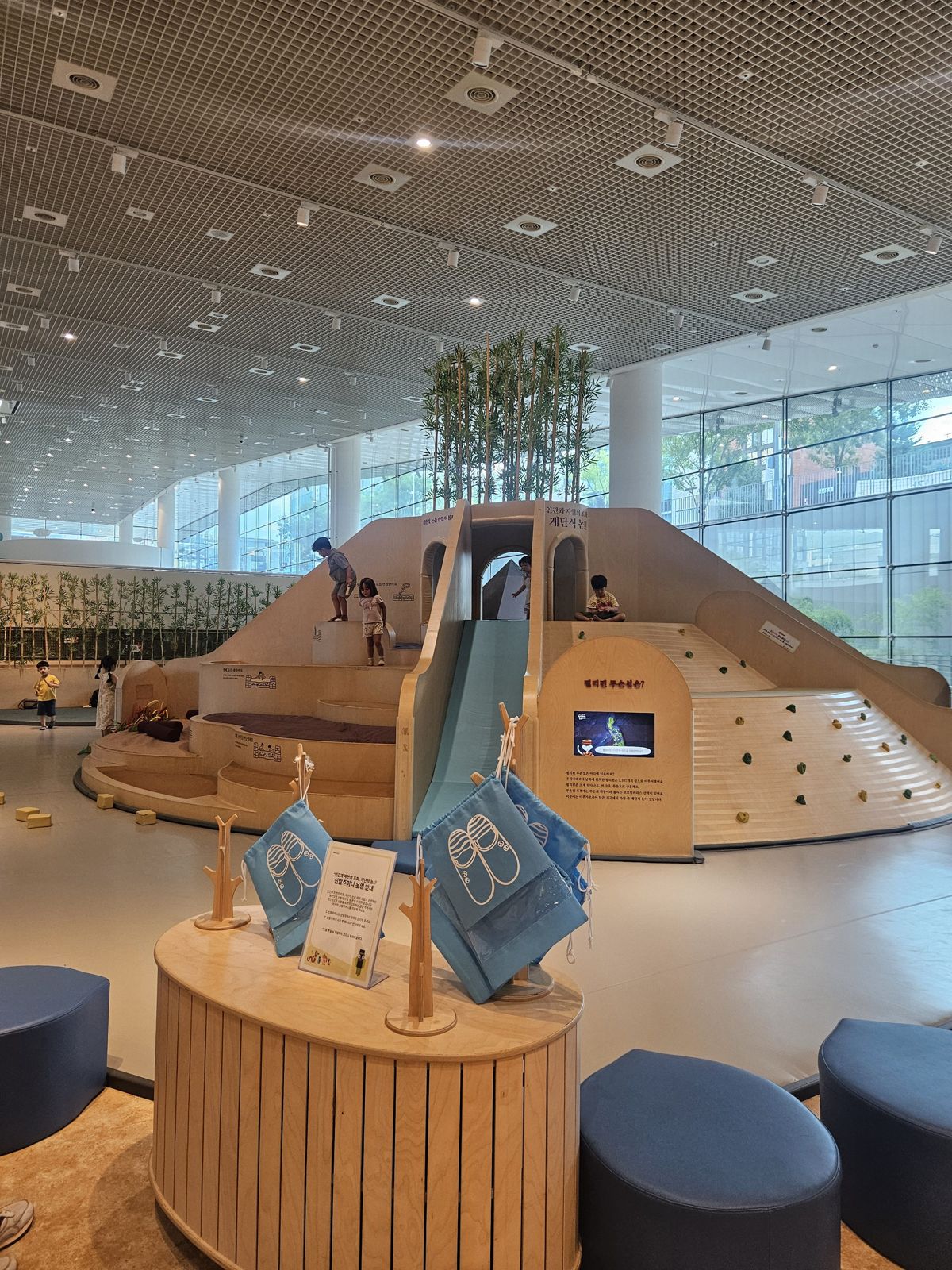
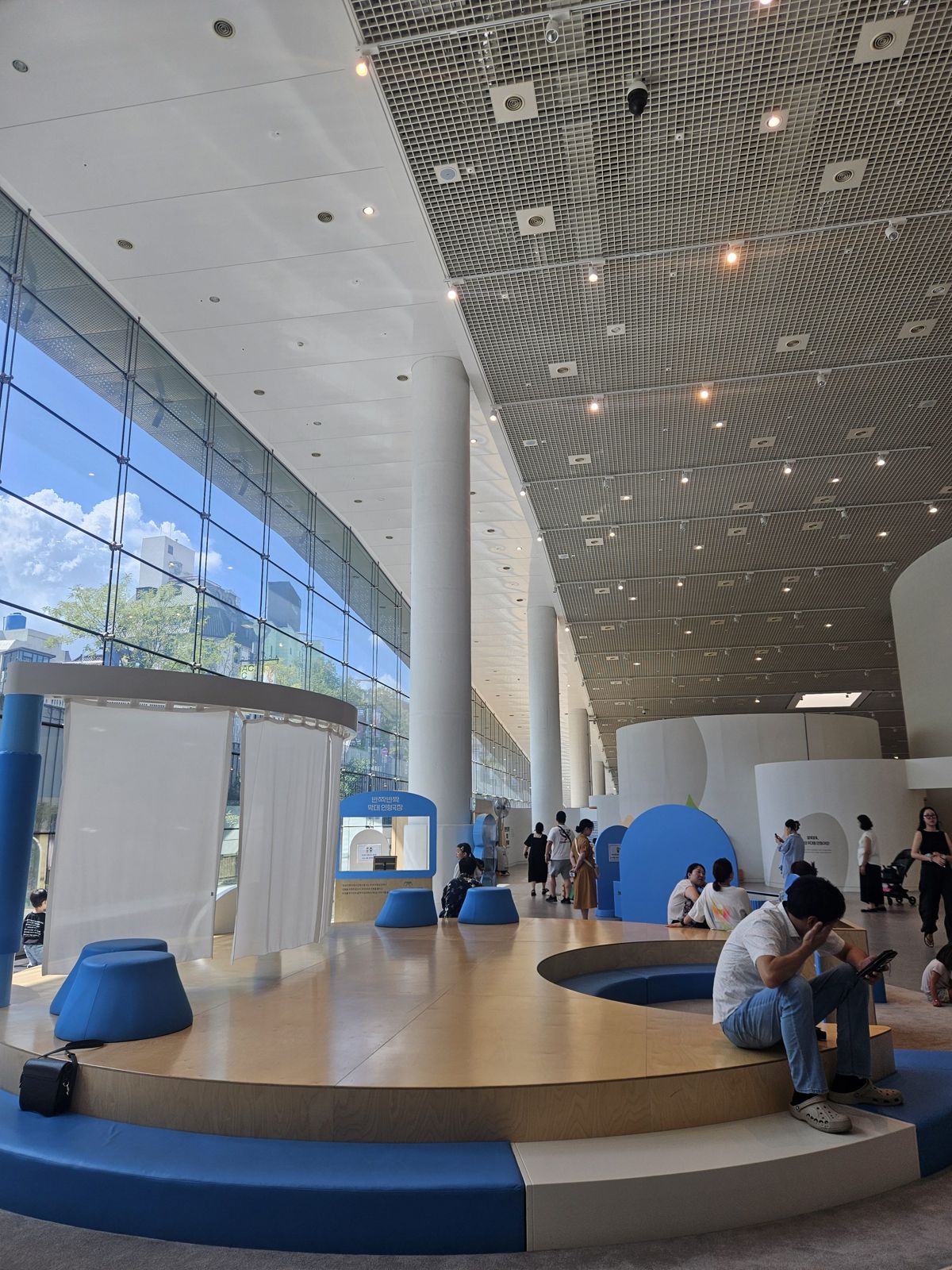
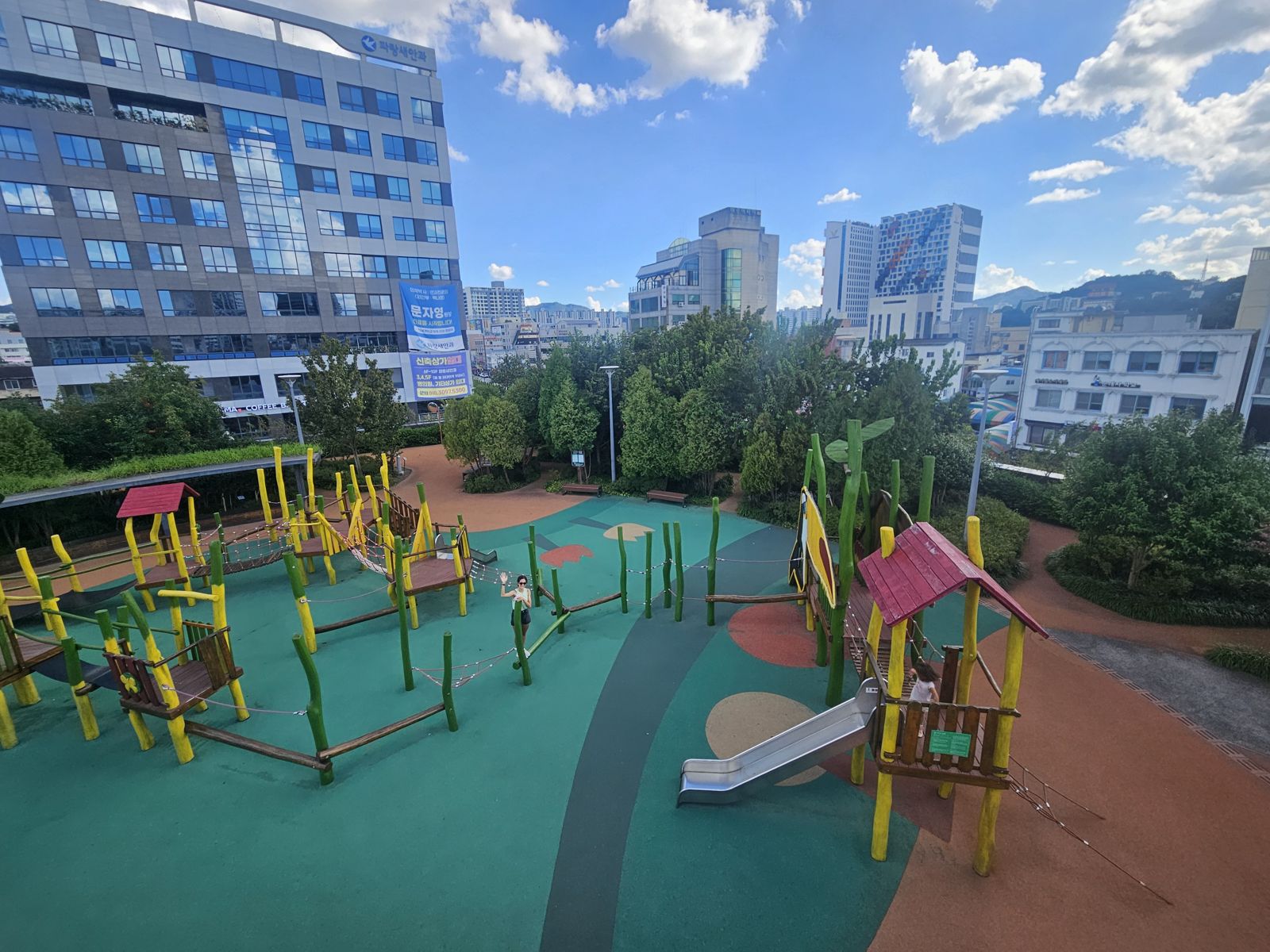
The play areas are themed too: you play next to a yurt, a ball pit represents an Indian bathhouse, and you can build walls the way the Mesopotamians did. You learn lots of things while having fun. The place has several indoor and outdoor play areas, and we end up spending the day here. What we love about these places is that we're always the only foreigners. They're not touristy at all; on the contrary, they're very popular with locals. It's already 6 pm when we come out as the building closes for the day. Clémence is delighted; she made the most of it, and so did we.
Saturday 16 August
Today is Cassandre's birthday, and as with Stéphane's in July, it's hard to organise anything when you're on the move and don't really know where you'll be the following week. Apart from calls and messages, it's a day almost like any other. We start slowly with breakfast in a café and head for the Gwangju National Museum, which once again has a section especially for children.
If we visit these cultural places so often, it's not only out of a thirst for knowledge but also because they're cool inside, which is a lifesaver with a three-year-old. Clémence copes very well with the heat and never complains about it, but we still try to spare her. After a metro and bus ride, we reach the Gwangju National Museum. It's less well designed than yesterday's Asia Culture Center and a bit more of a hassle to reach. We book a slot for the children's museum, and at 1 pm we're in the queue with the little Koreans.
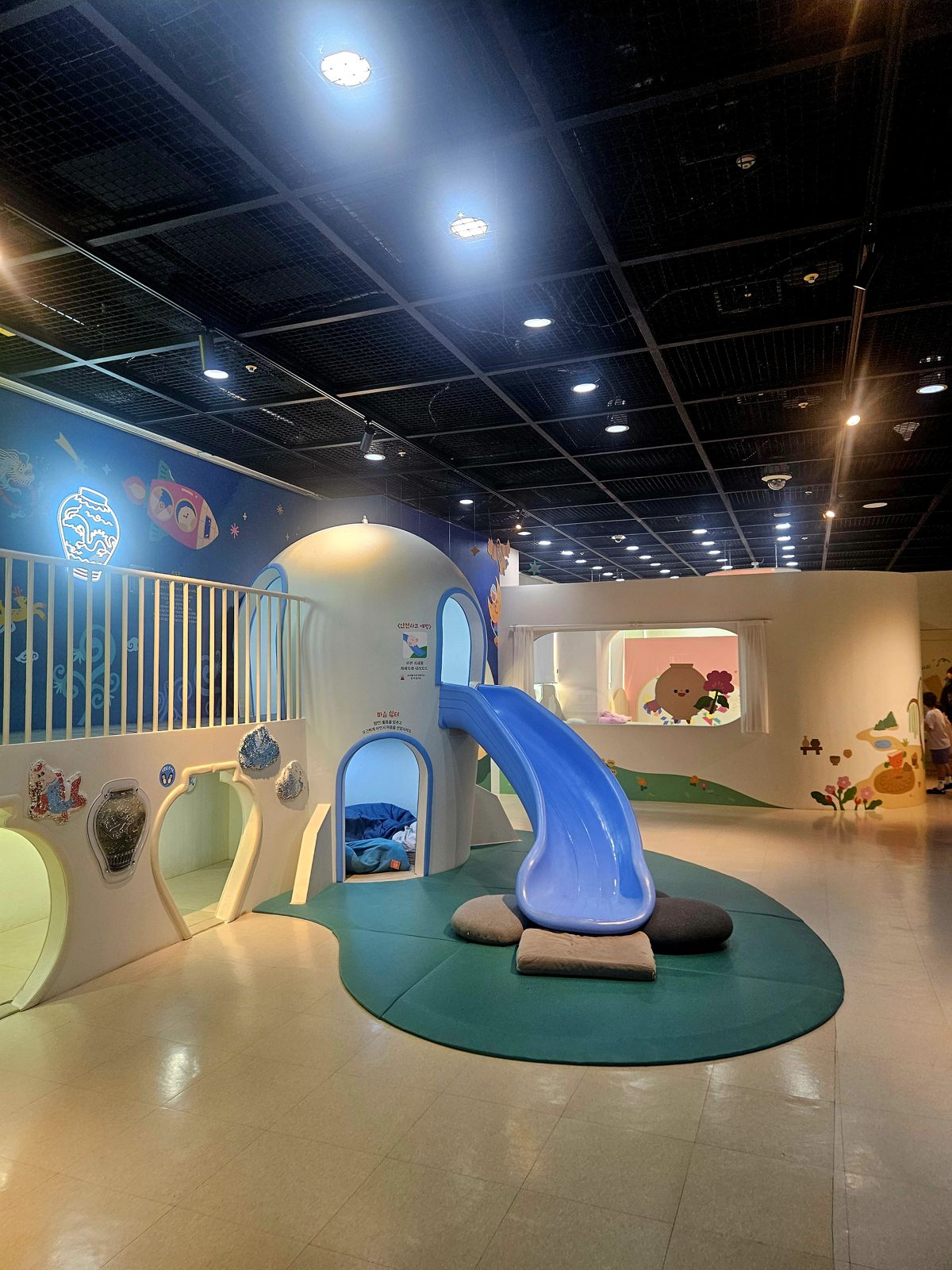
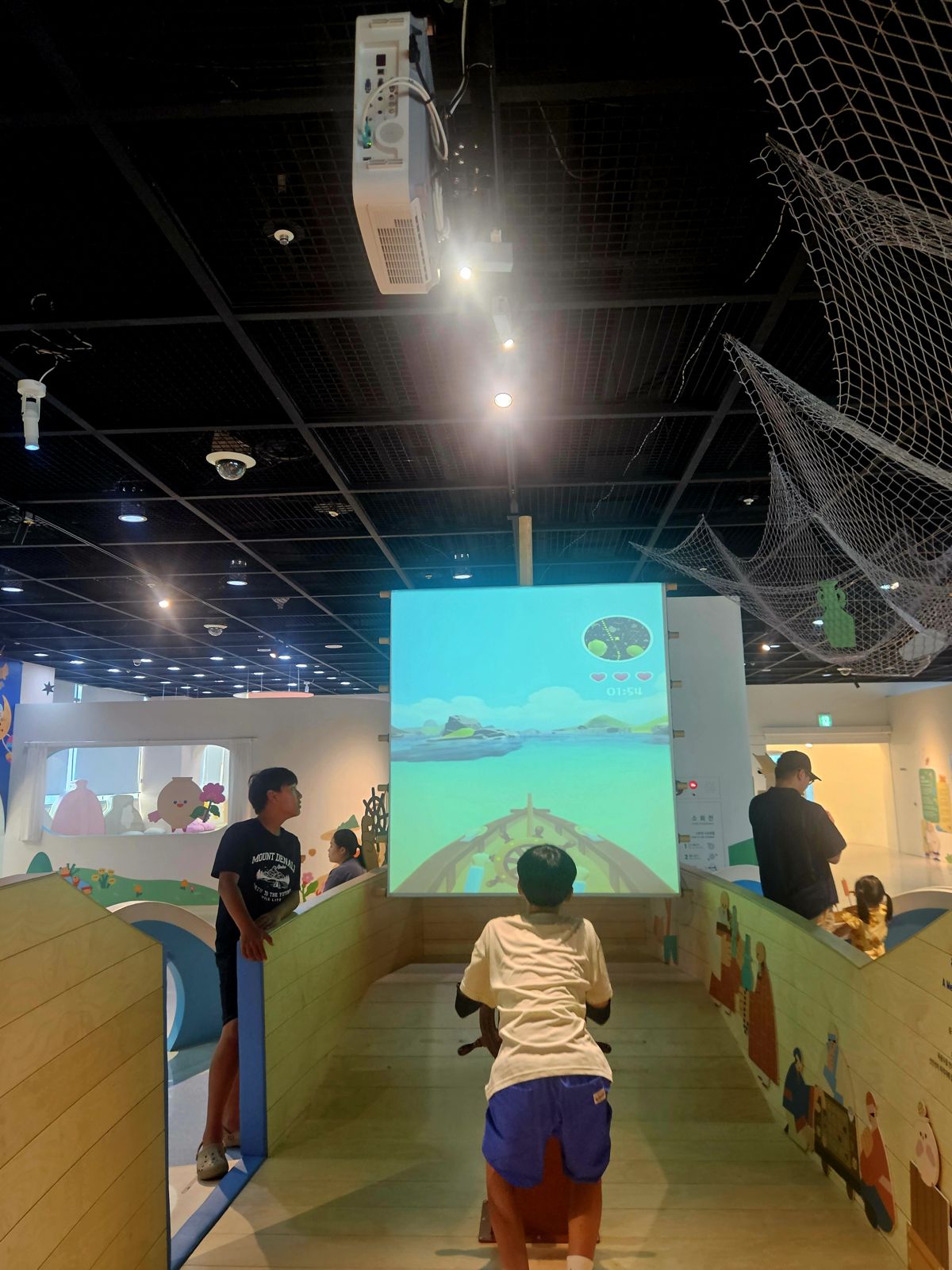
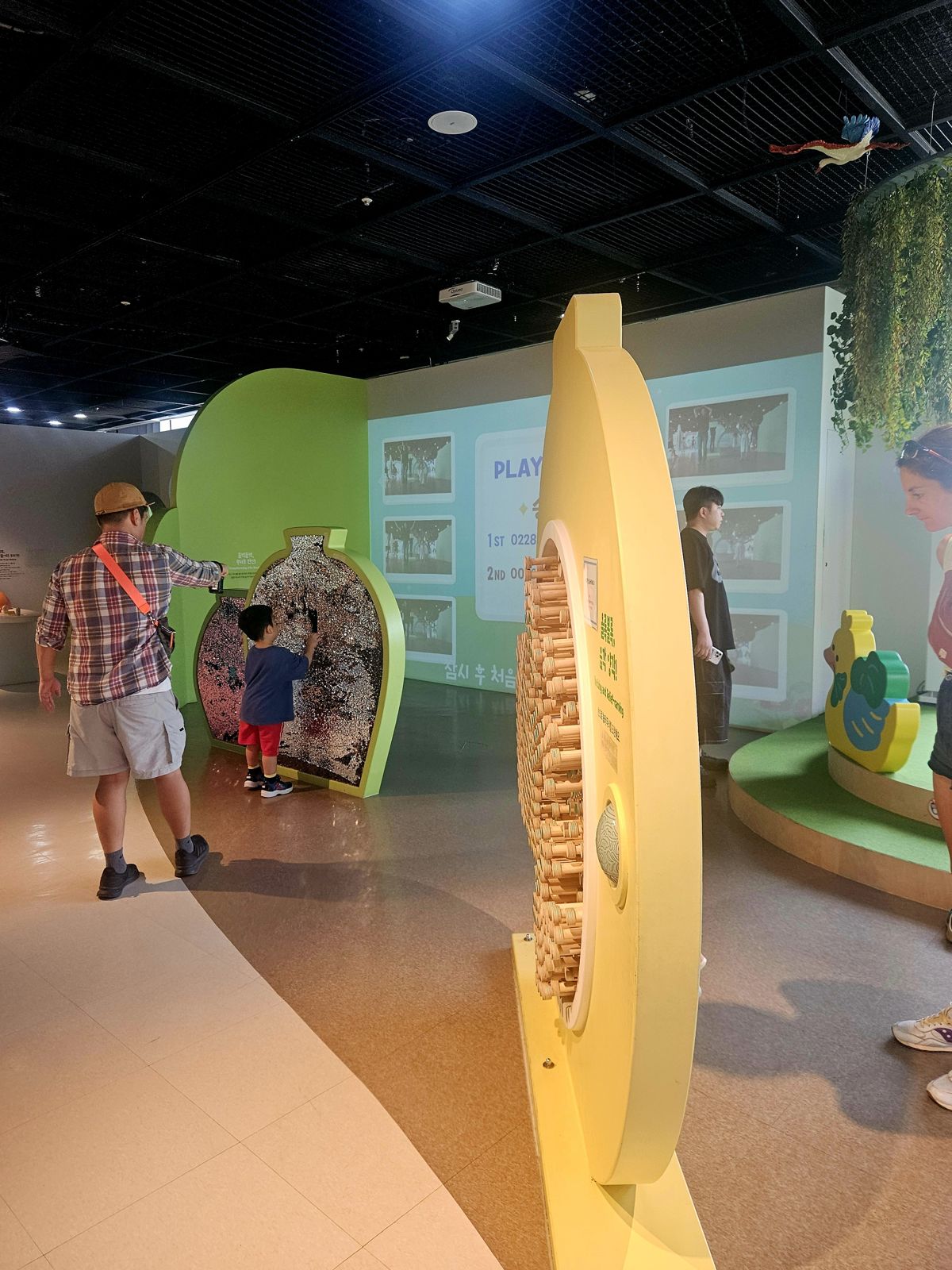
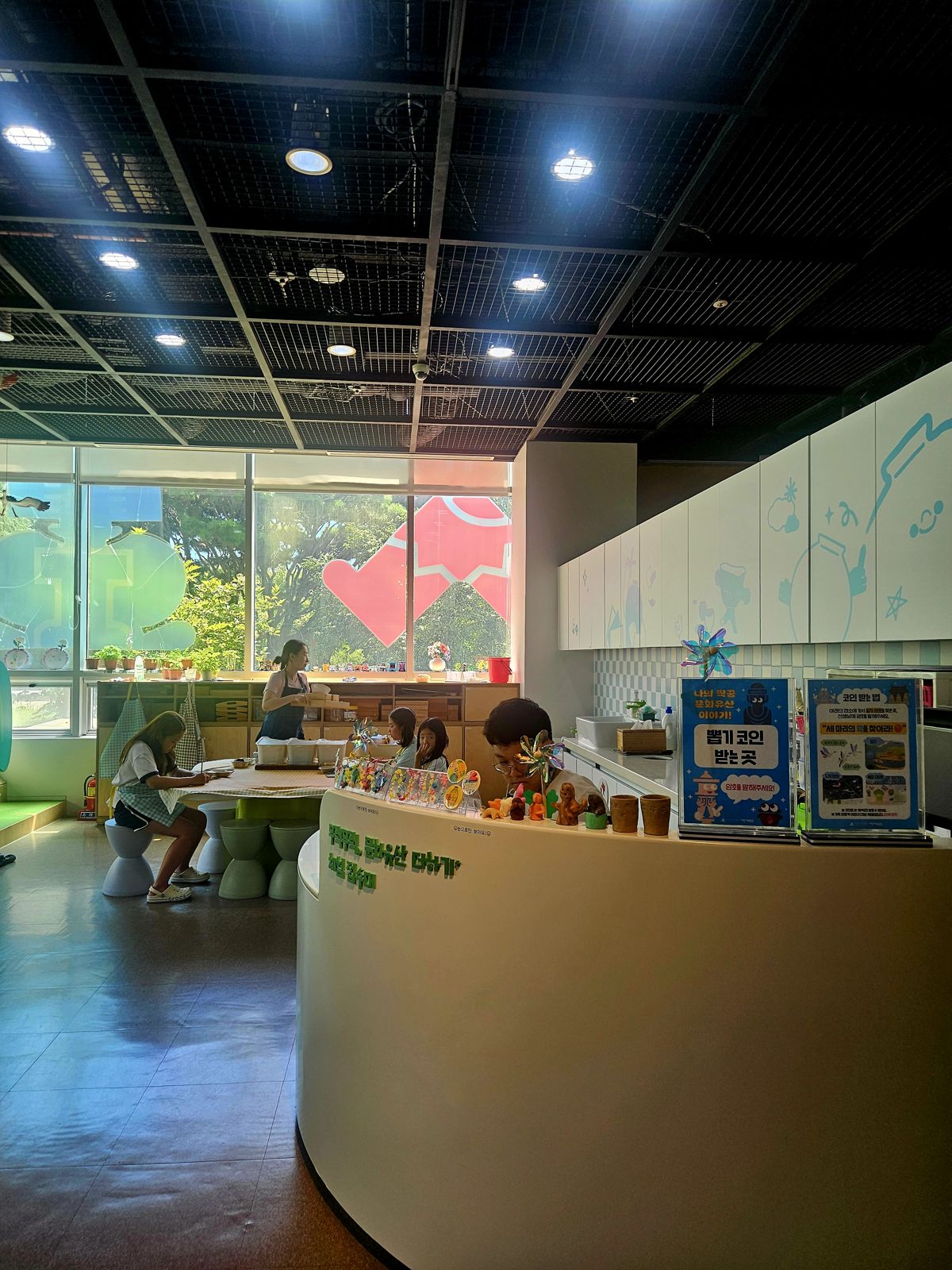
Gwangju has a history of ceramics, pottery and river shipping, so the whole children's section revolves around those themes. You can play with clay, go down a slide, steer a boat linked to a video game, and discover the whole process of making pottery by creating animations. Older children even get a real pottery workshop where they make little vases. Our slot only lasts an hour, though, and it goes by very quickly.
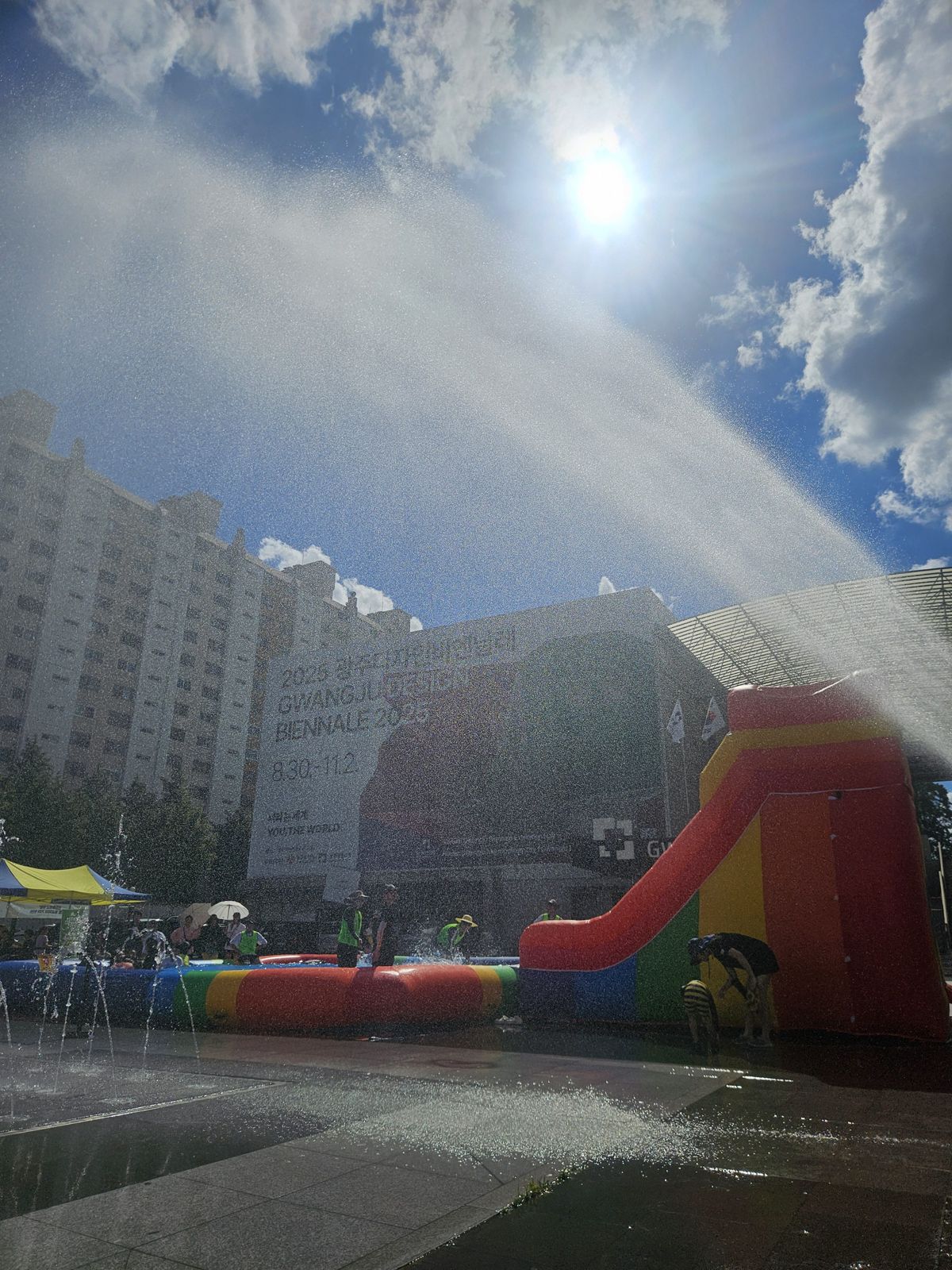
Once out, we head for the convenience store to grab a bite when we come across a lively esplanade. There's a K-pop dance contest, water jets and an inflatable pool. There's a lovely family atmosphere, and although Clémence isn't allowed in the pool, we still play with the fountains while watching the teenagers dance. Some are excellent, others less so, but they all deserve credit for performing on a big stage in front of a jury. What was meant to be a quick stop turns into a long break, and it's already snack time when we leave.
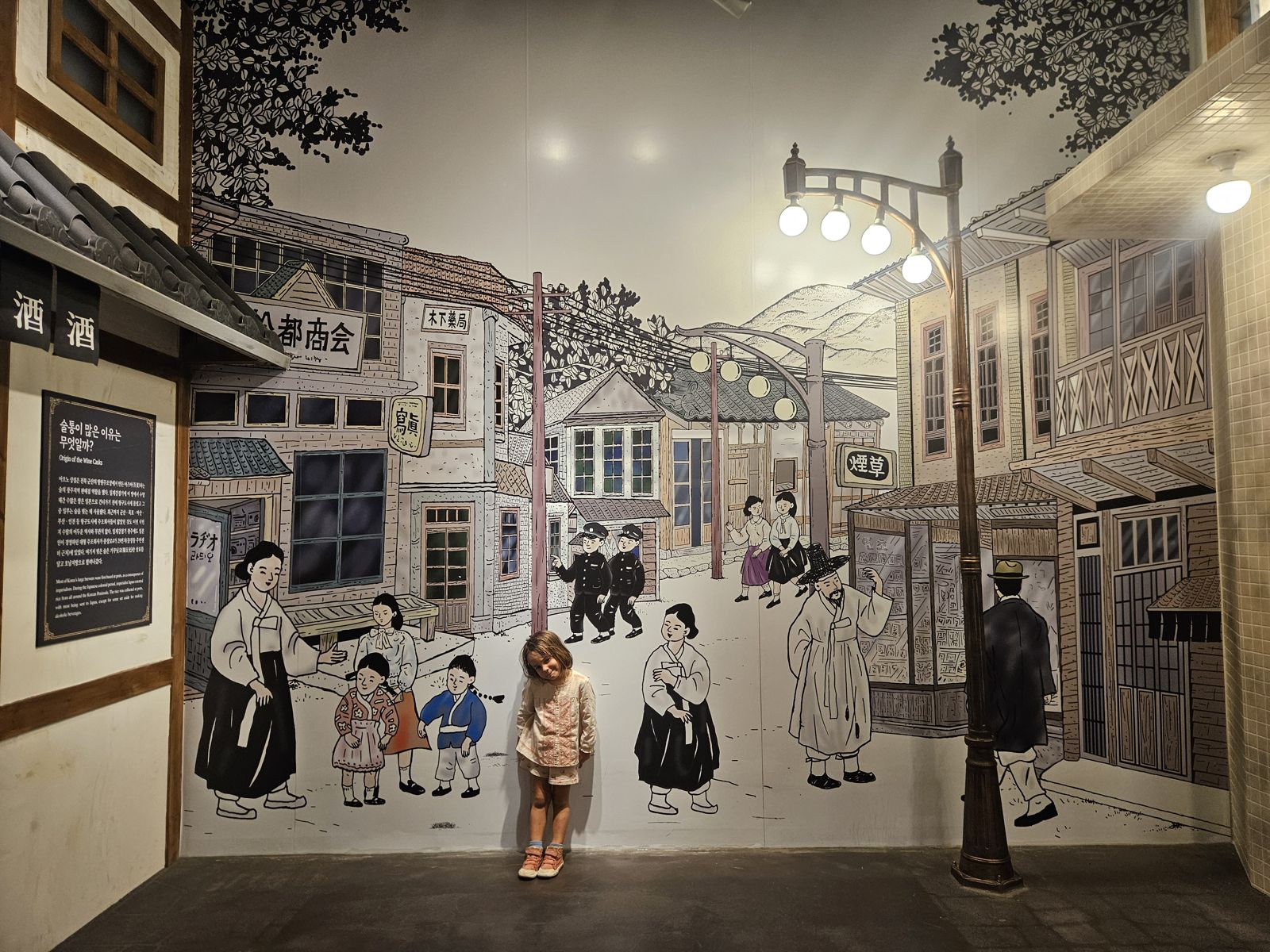
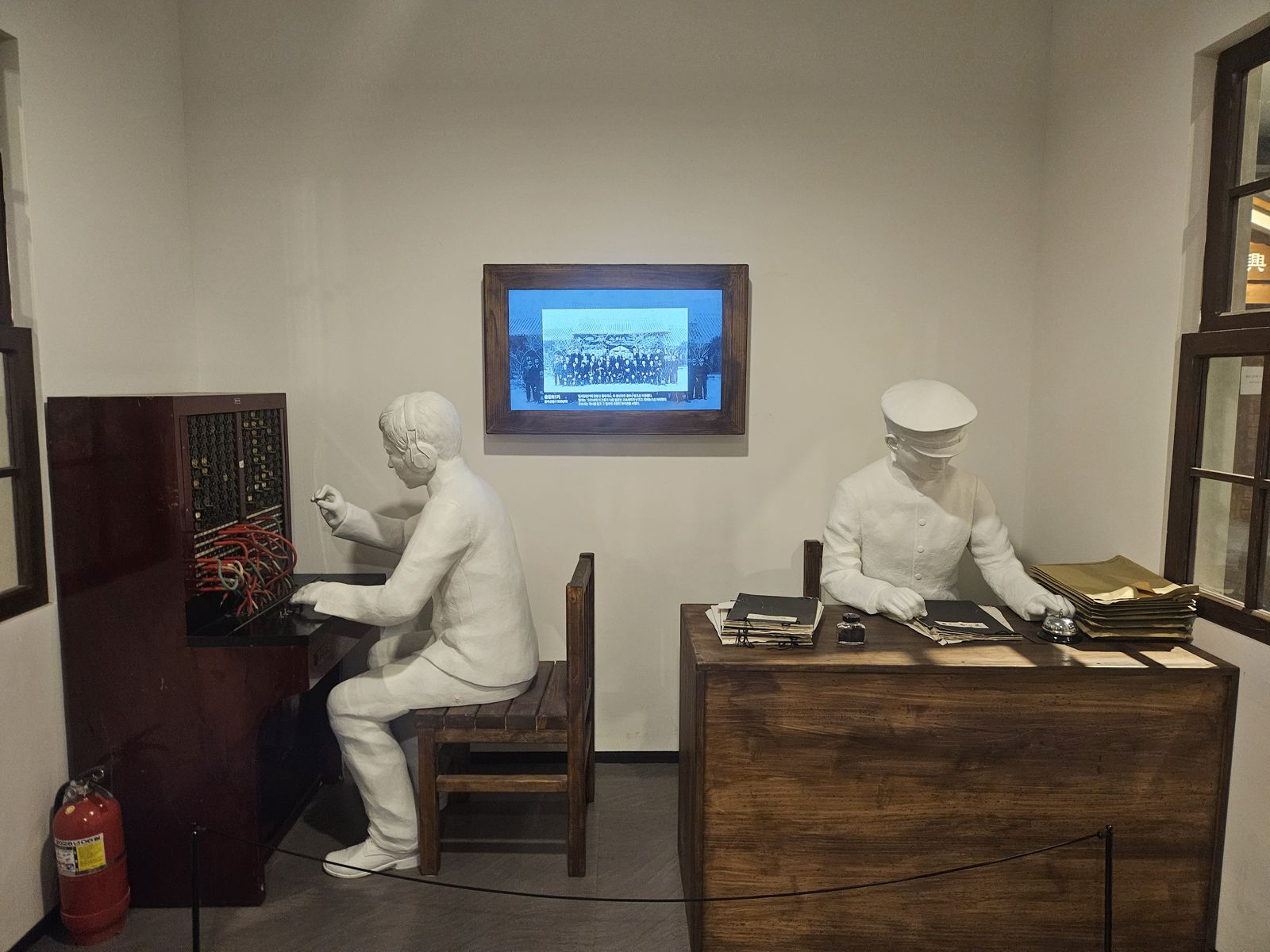
Next we head to the Gwangju Folk Museum, housed in a beautiful traditional building. This big, spacious building traces the city's evolution with lots of models and reproductions. You see traditional houses, fishing boats with their ingenious nets and rudimentary tools. The upper floor is devoted to contemporary history, and it's fascinating to learn that the city has grown from 80,000 inhabitants in the 1950s to 1.5 million today. There's a lot about the Japanese occupation, which left lasting scars on bodies and minds in Korea.
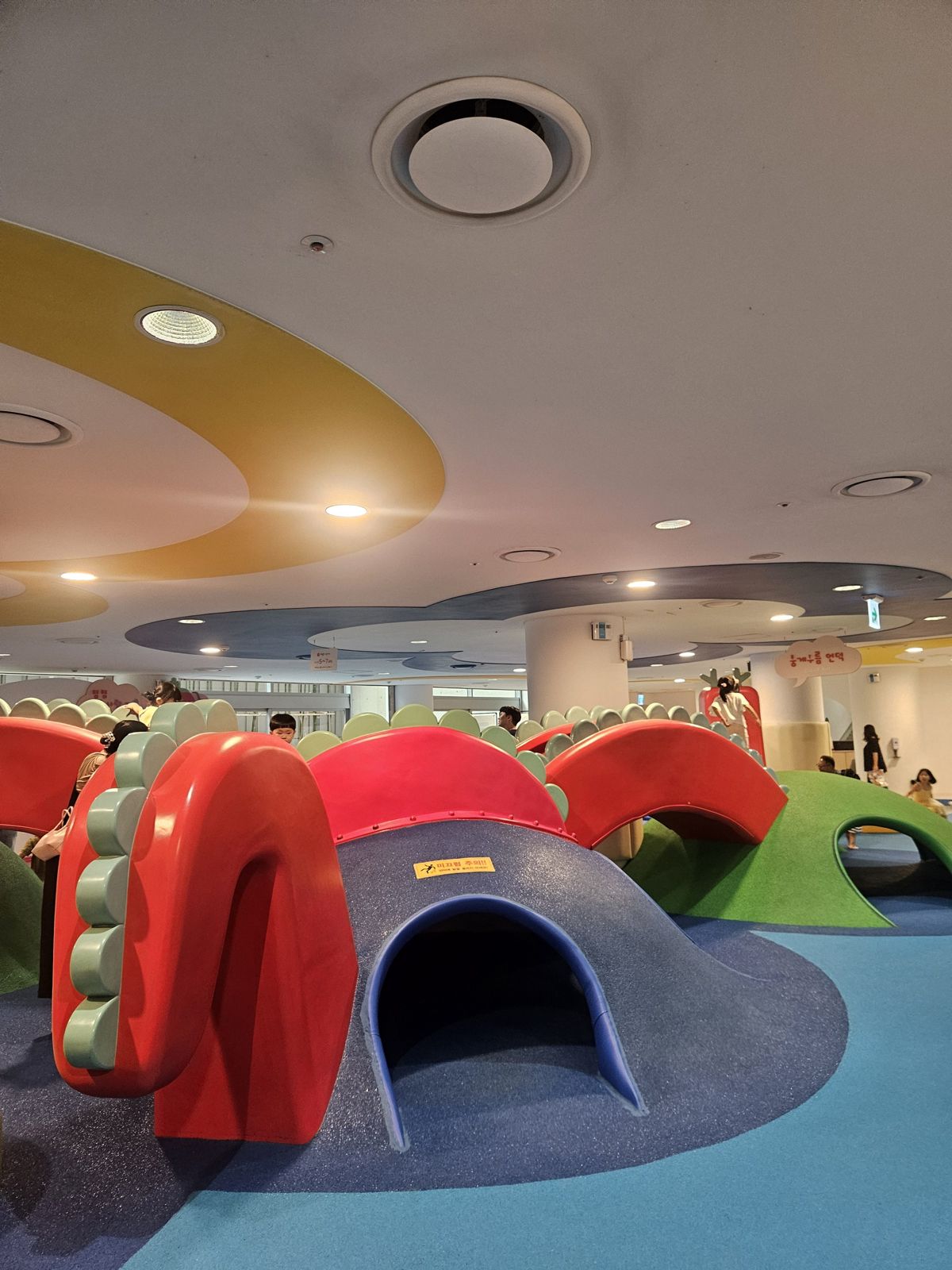
We carry on with the traditional daily playground. And what a playground! It's so big we wonder if we've walked into a theme park. In its central part, young men are draining a big water play structure for children that has unfortunately just closed. Never mind, there's plenty to do, and we have a hard time getting Clémence to leave more than an hour later, as we still need to get back to the hotel.
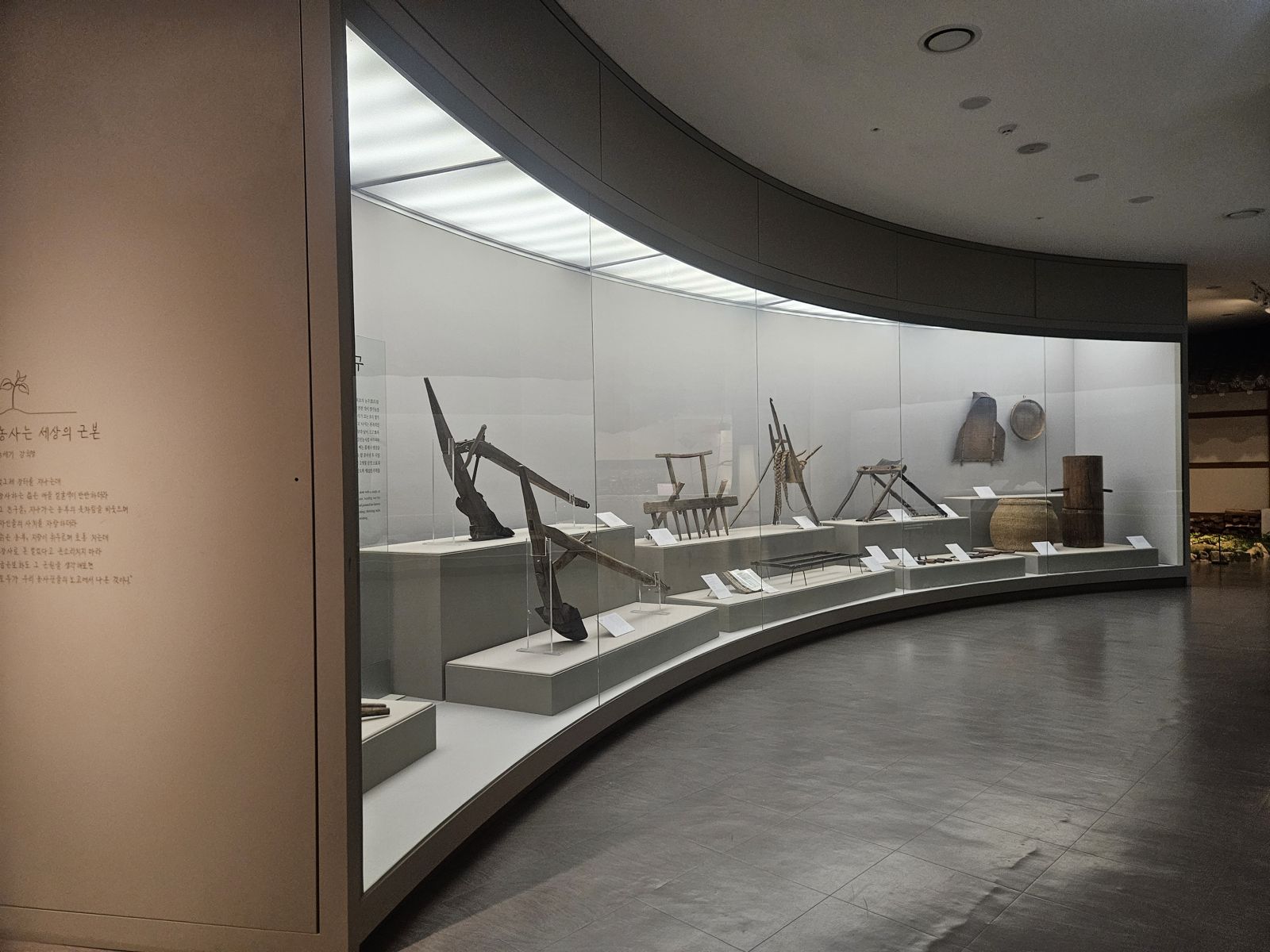
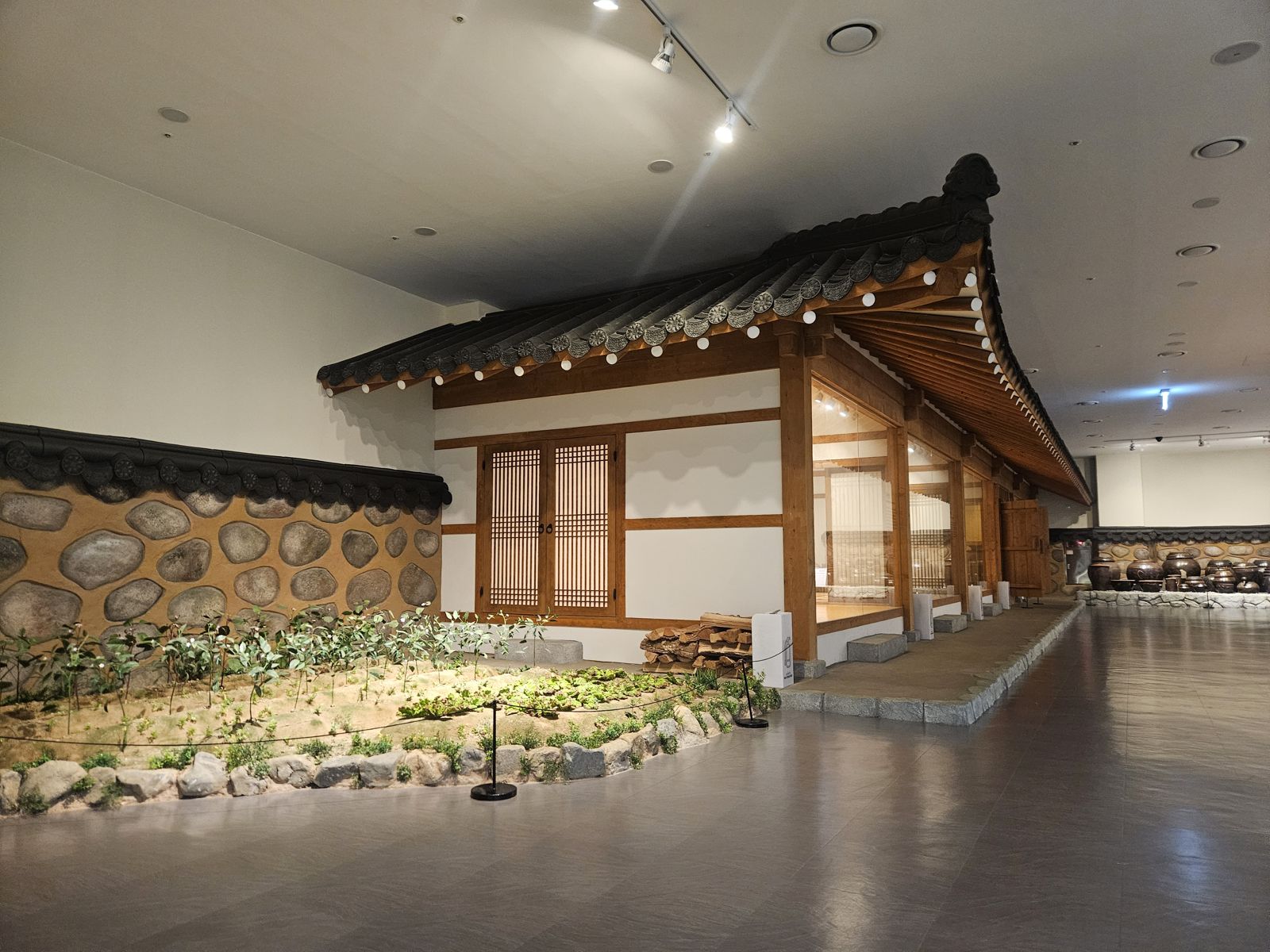
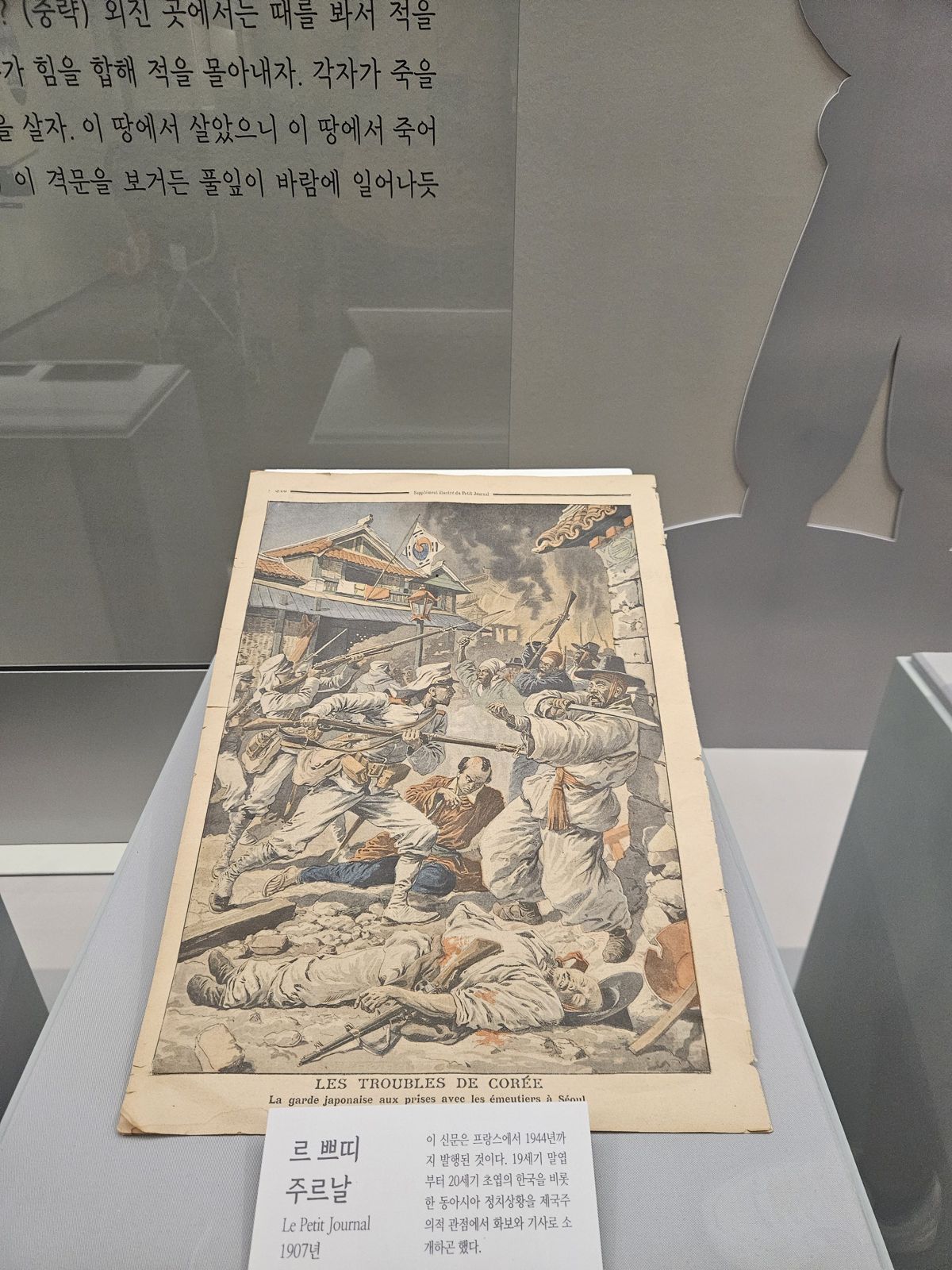
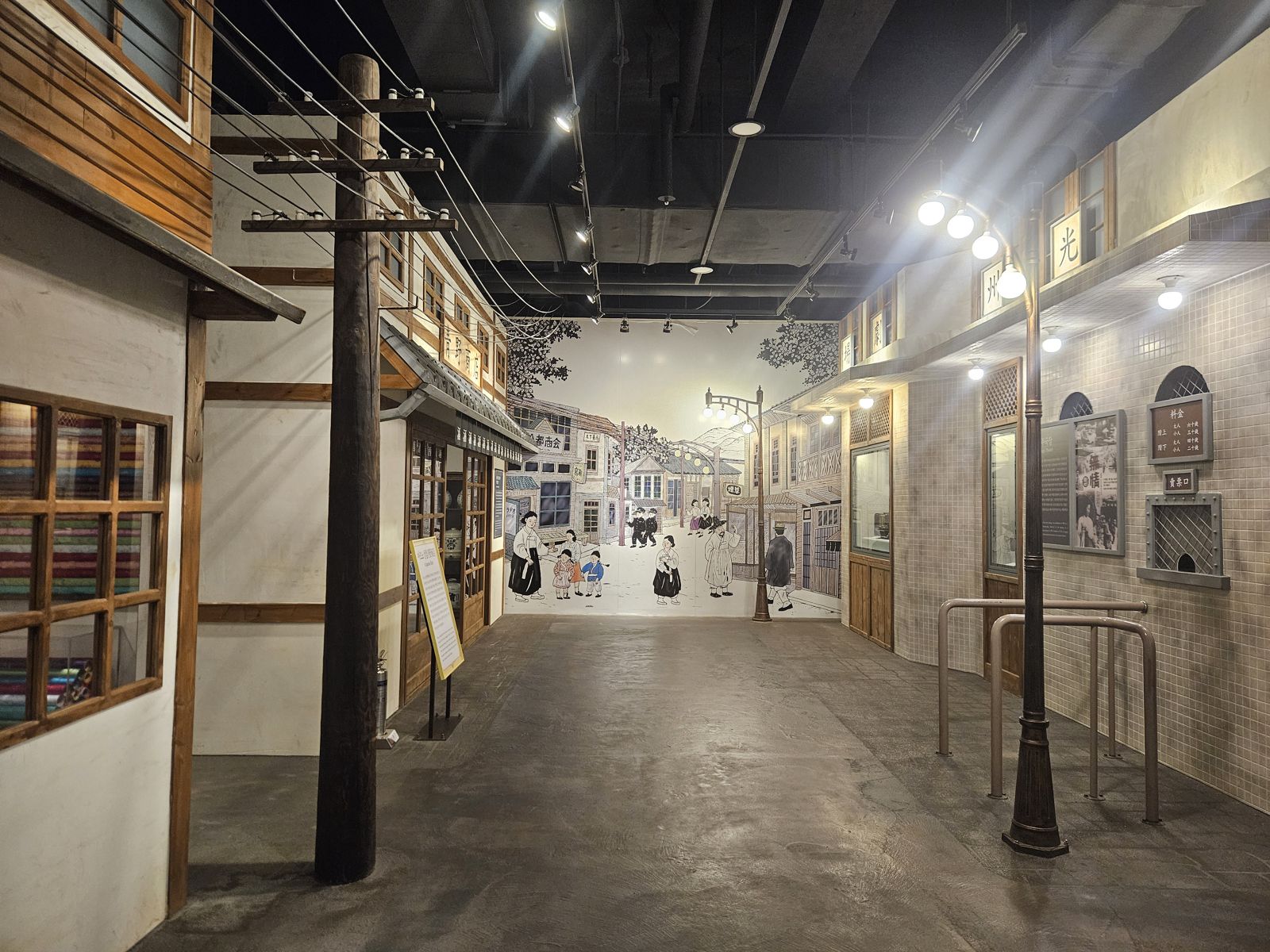
While Koreans are very respectful of cyclists, they couldn't care less about pedestrians. Here you don't exist when you're walking, and it shows in how zebra crossings are treated. To cross one of their big boulevards you sometimes wait five minutes, and it almost makes us miss our bus. Luckily we just catch it to go to a big market. We thought it was one of those night markets with lots of street-food stalls, but we simply find an ordinary market with vegetable stalls and clothes shops. We take the metro back to the hotel; Clémence eats a quick dinner before dropping off to sleep, and we go out to the restaurant right downstairs to celebrate Cassandre's new year in style!
Sunday 17 August
We'd planned to go hiking today, but Clémence woke up in the night. She lost at least an hour's sleep, and so did Stéphane, which makes leaving Morpheus's arms difficult. So we decide to change plans and have another quiet day. To stretch our legs, this time we take the bikes and join the greenway along the Yeongsangang River, which runs through the city.
It's incredible how urban planning is the same all over South Korea. Every river and stream in town has a footpath and a cycle path running alongside it from end to end. We make use of an exercise area with a canopy to give our bikes a little TLC while Clémence climbs everywhere. We then go back to yesterday's playground to enjoy the water play structure. It's free and open to all, with a huge shade canopy to keep the children out of the sun.
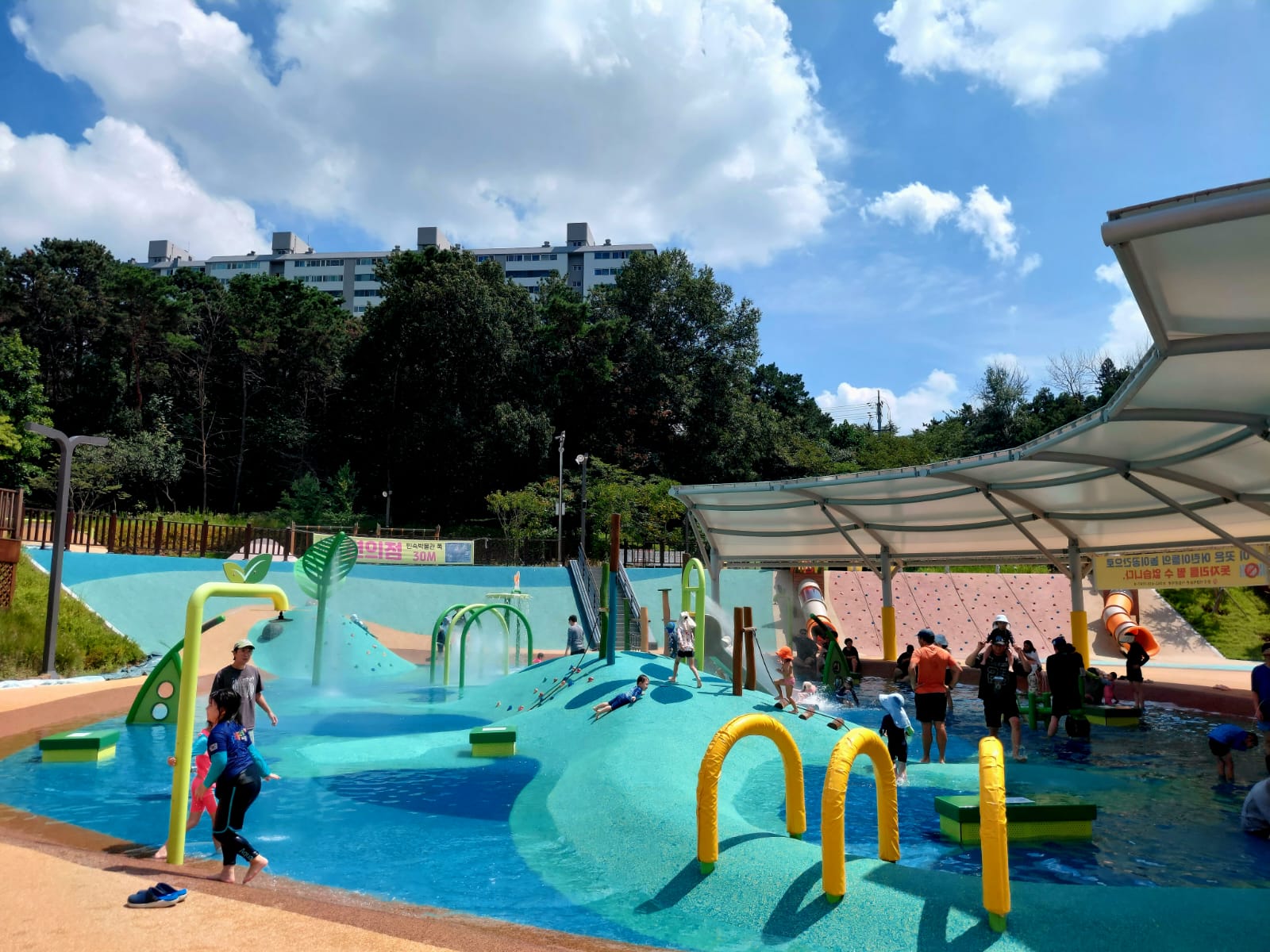
What strikes us is that there are only young children. The oldest must be eight at most. There's no age limit, but an unwritten rule seems to apply. We can't help thinking the place would be full of teenagers in France. Ingeniously, the whole structure stops for ten minutes once an hour. The staff clear everyone out and check the water before reopening. It lets the little ones take a break, drink and eat, as it's easy to lose track of time when children are having fun.
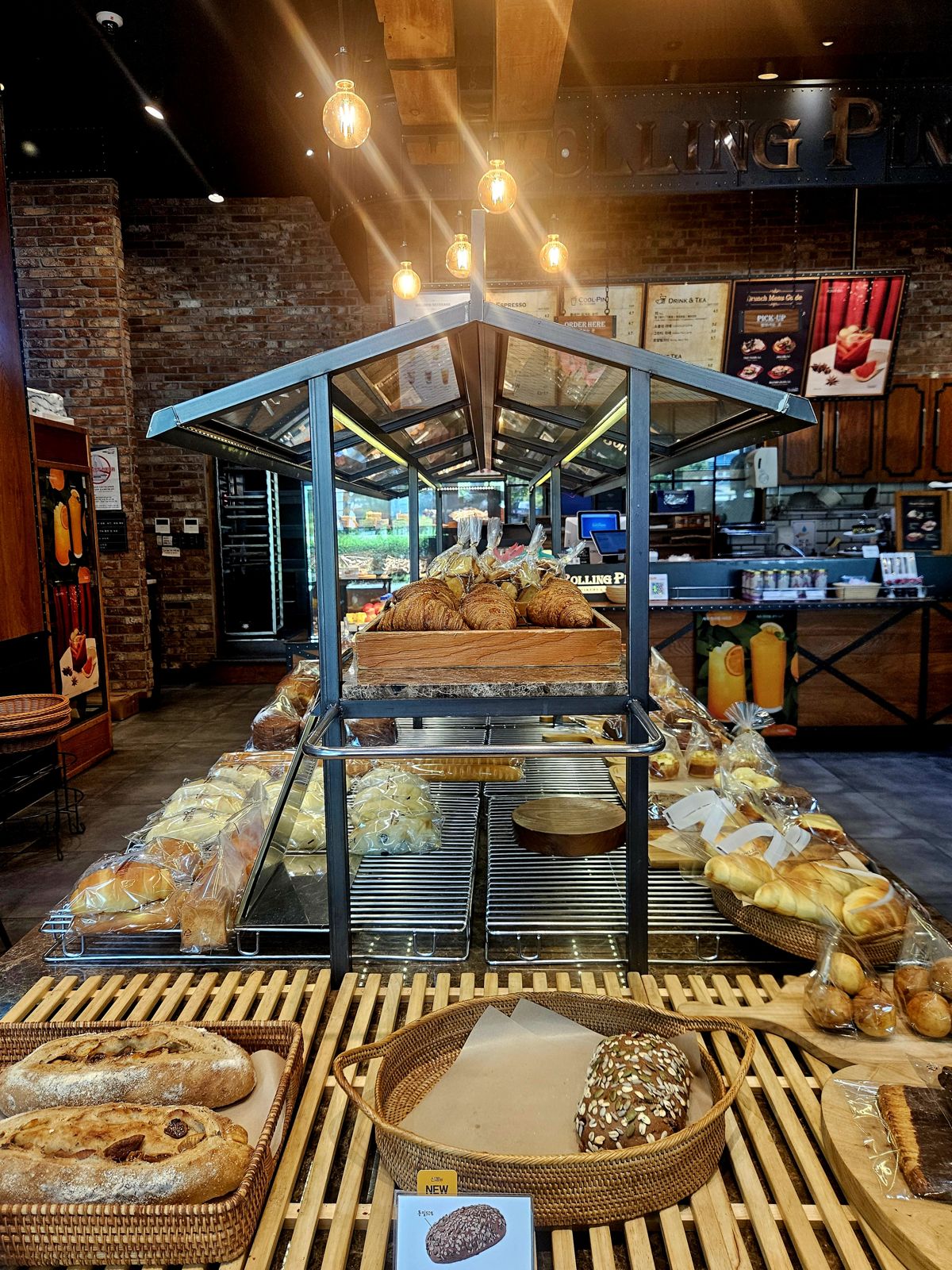
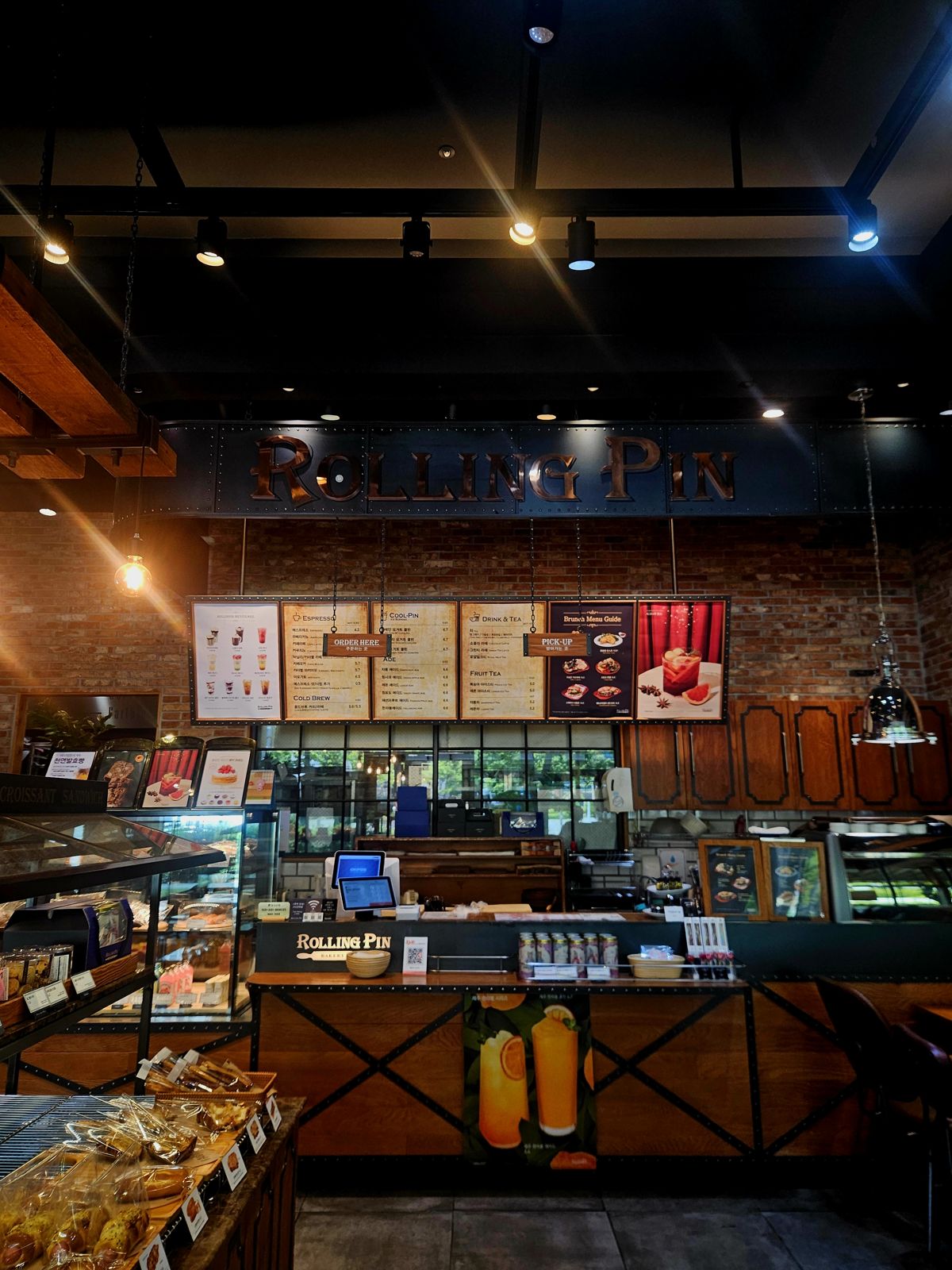
We stay three hours, and when Clémence starts showing signs of tiredness, we get back on the bikes for a snack. We'd already noticed it on our first trip to South Korea, but Koreans are excellent pastry chefs. In the bakery where we stop, everything is very good. Cakes and doughnuts are often made with rice flour, which gives them a chewier, tastier texture. We head back to the hotel for quiet time before going out for a slightly different experience.
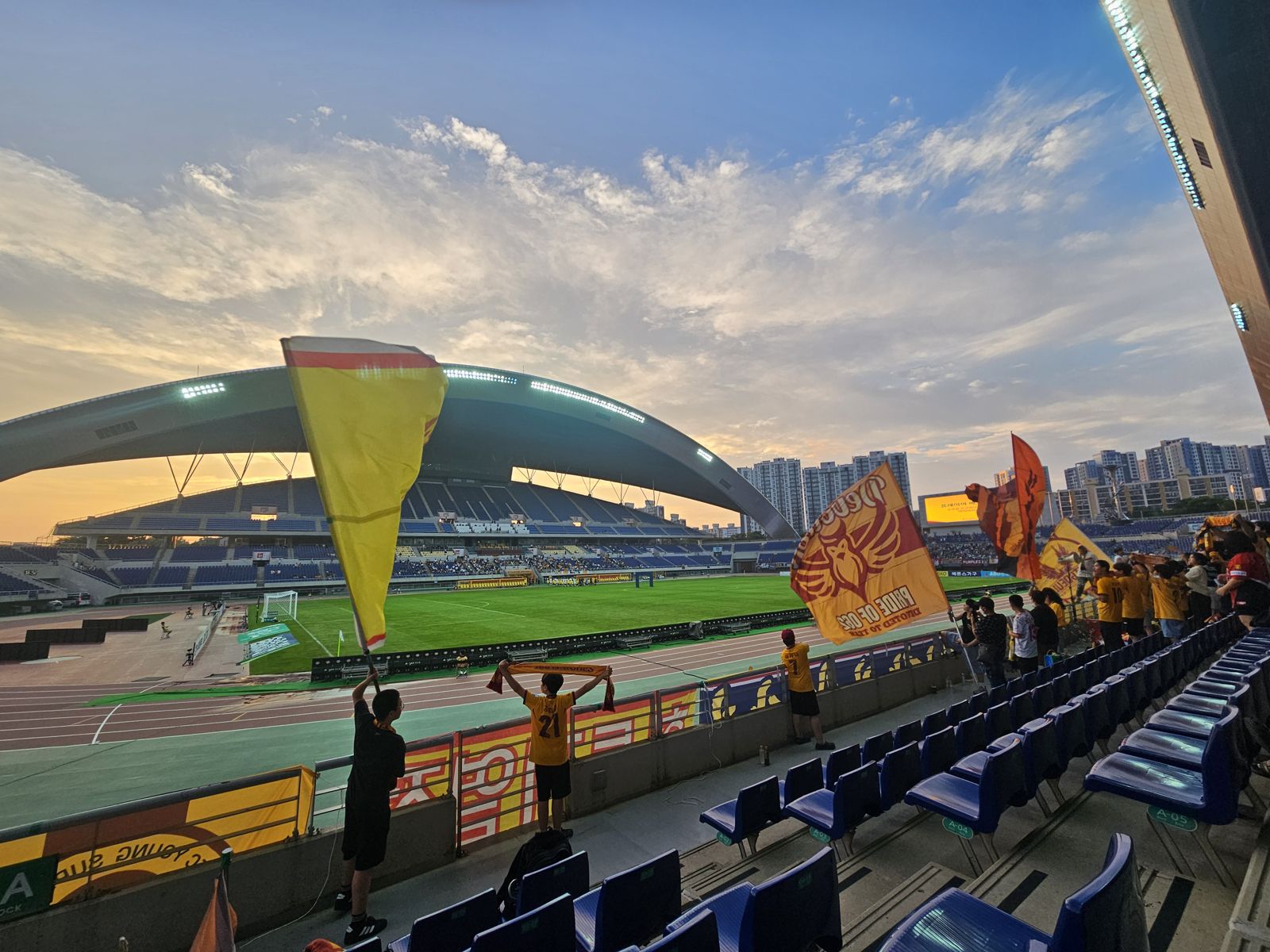
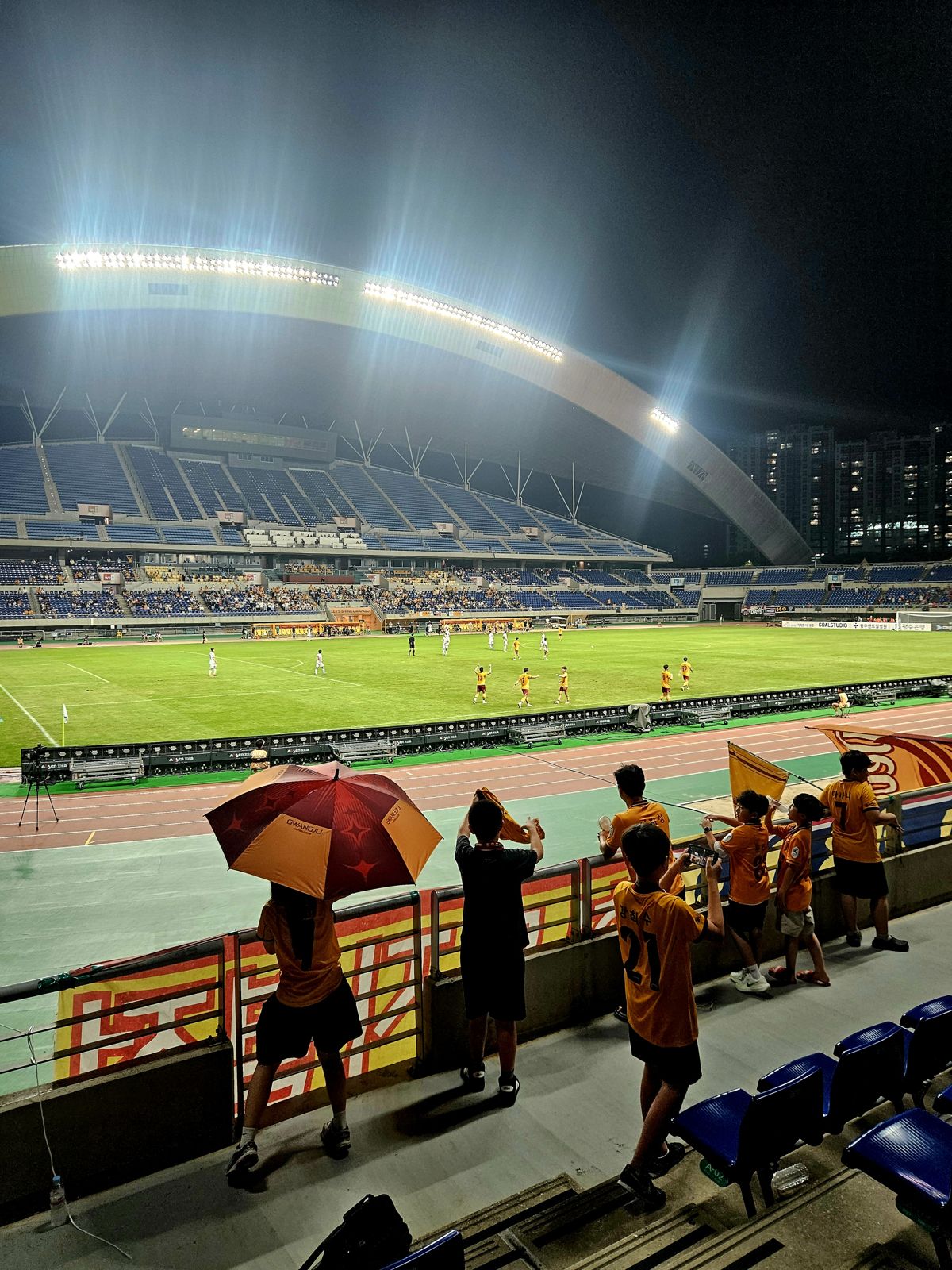
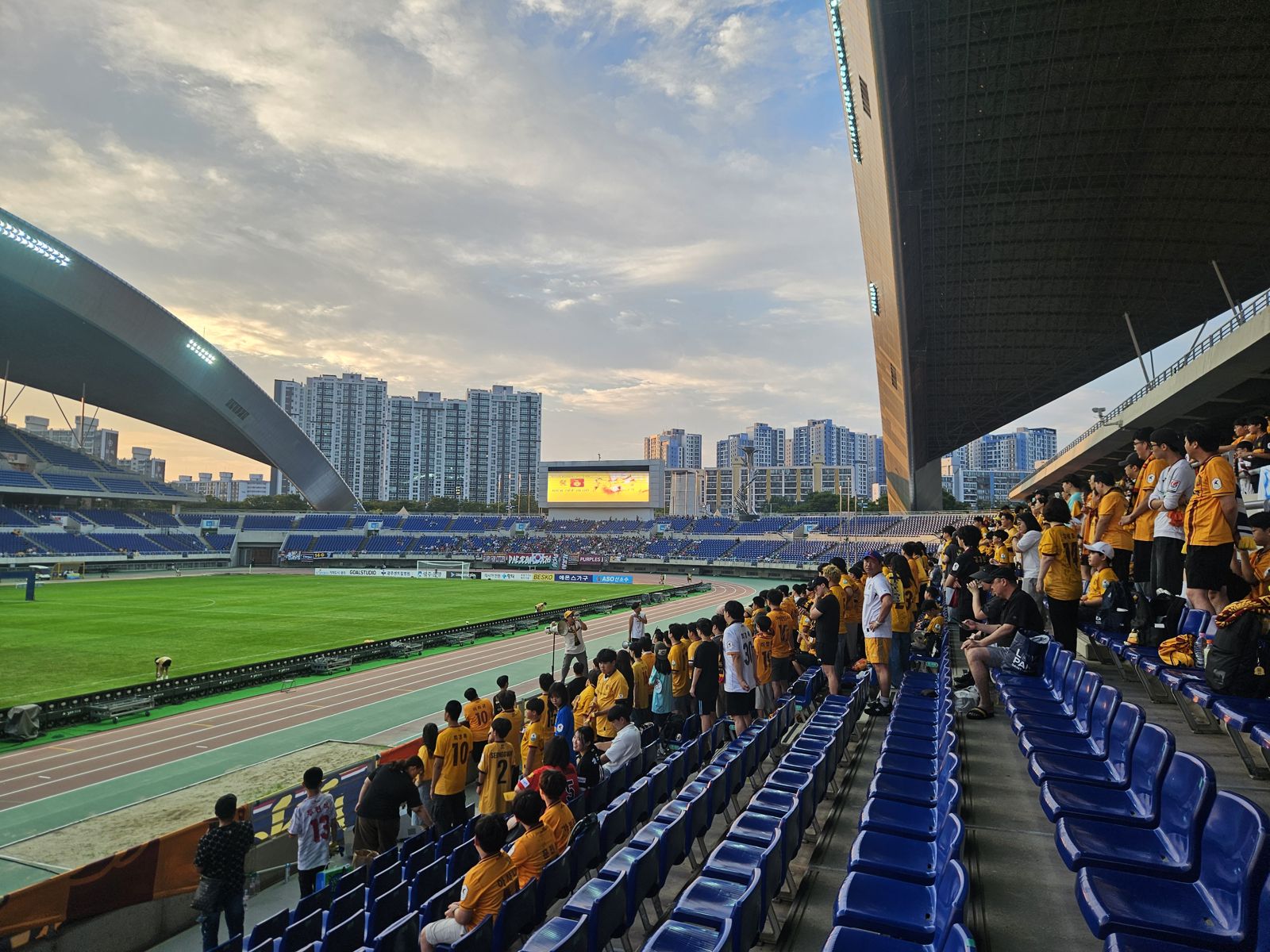
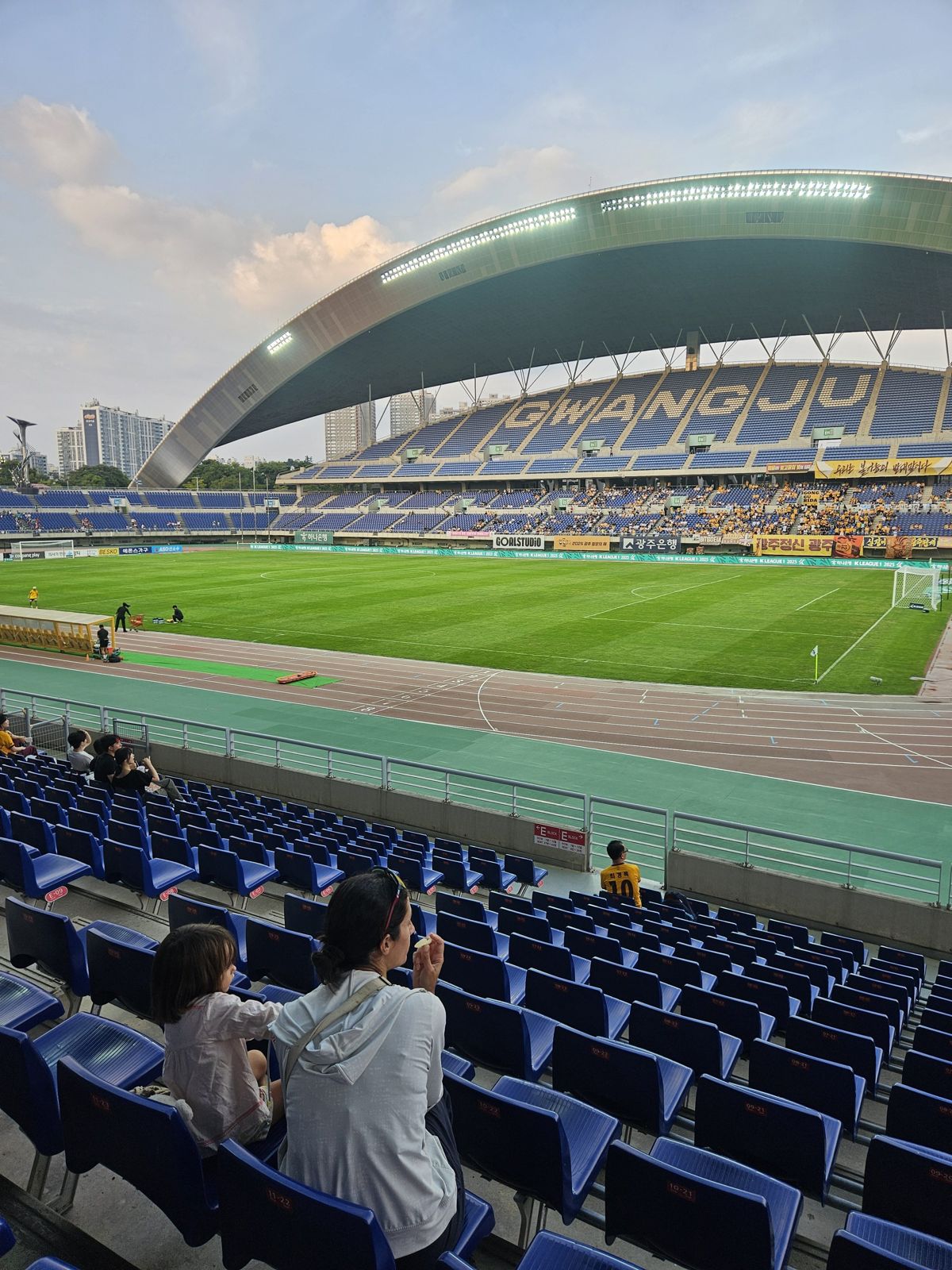
We take the bus to Gwangju World Cup Stadium to watch a Gwangju FC match. The timing is comfortable, as kick-off is at 7 pm. It's not crowded, barely 4,000 people in a 40,000-seat ground, but there's a lively atmosphere in the stands. We sit next to the Gwangju ultras, who are proudly making themselves heard. The crowd surprises us a little: unlike Europe, where football fandom is mostly a young man's affair, here there's a mix of ages and sexes. The match isn't thrilling, Gwangju against Daejeon, but it's still enriching to mingle with the locals. People are very surprised to see us, and we get thumbs-up by the bucketload. We try to join in one of the many chants the fans strike up, but we can only follow the tune. We head back to the hotel after a 2–0 win for the home side.