
 ← PreviousA foray into car country
Friday 30 May
The hotel smells of the sixties, old carpet and the lingering smell of cigarettes from a time when people smoked everywhere. Our bed is as hard as stone; we secretly envy Clémence's mattress, which looks more comfortable. We didn't have a very good night, which is odd, as insomnia often gets both of us at once.
We're already awake when Clémence wakes up around 7:30, fairly early for her. We have time to dawdle, pack our panniers slowly and then hitch up the bikes. At 9 on the dot we're at the door of a café for a gentle breakfast. We set off calmly over an hour later. It's sunny and hot; Clémence climbs into her trailer and we cover thirty kilometres in no time. The path is continuous, in good condition and fast, so our wheels seem to fly over the tarmac.
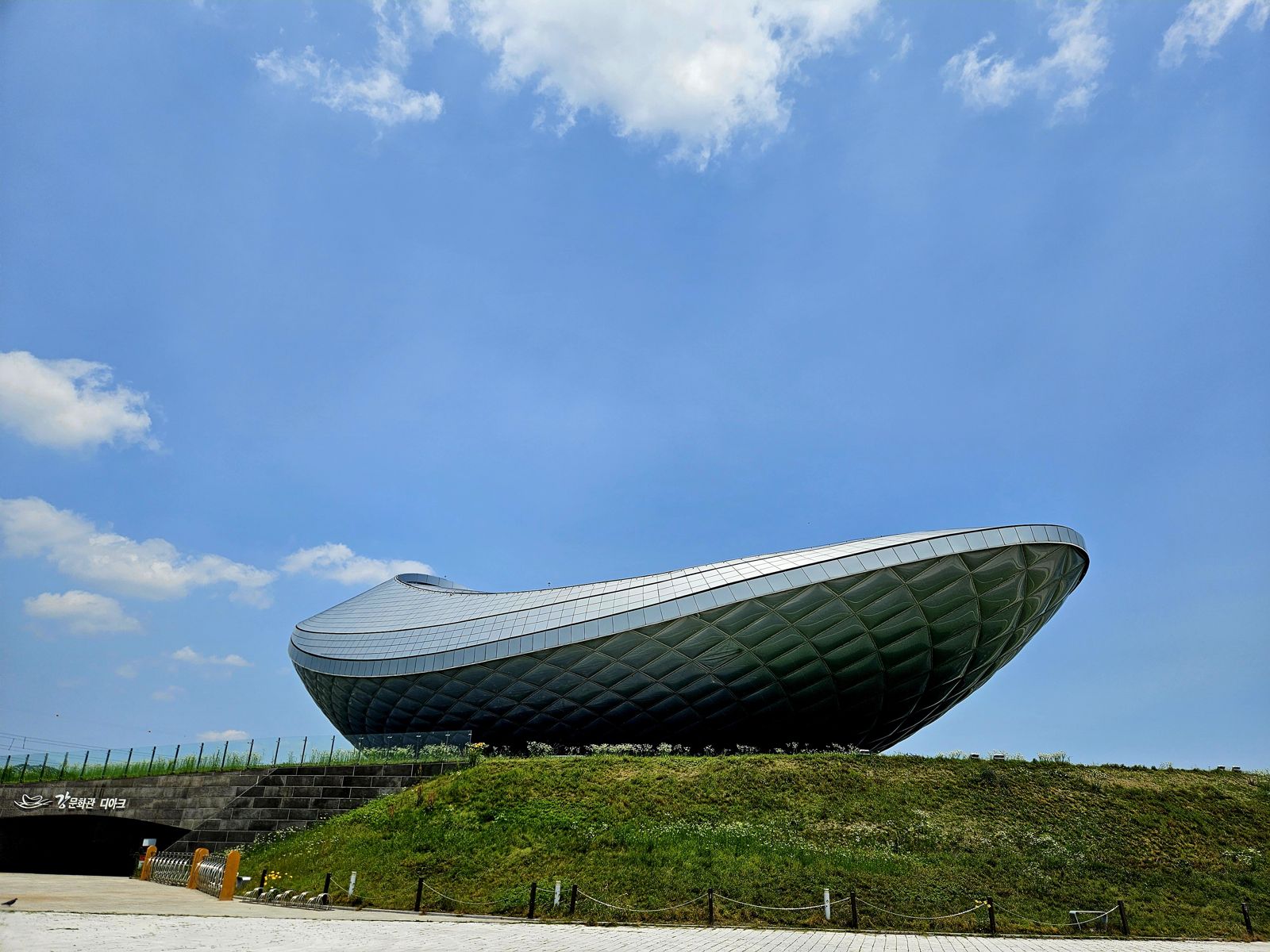
It isn't even noon and our stage for the day is almost over. We stop for lunch at a café with a very big garden, which lets us play outside for ages with a bottle of bubble mixture. With some apprehension, we start the last little stretch to our hotel in Daegu. With 2.5 million inhabitants, it's the country's fourth-largest city, and our recent experiences of crossing cities have made us a little wary.
We even changed our hotel booking to be closer to the cycle route, but we still have two kilometres of city to cross. Fortunately, Daegu is more pleasant than Gumi. The pavements are wide and the long avenue leading to our place has a big cycle lane. So we arrive quickly and settle in before heading straight out to the Bamwoldang area, after a snack in a delicious bakery-café in the neighbourhood.
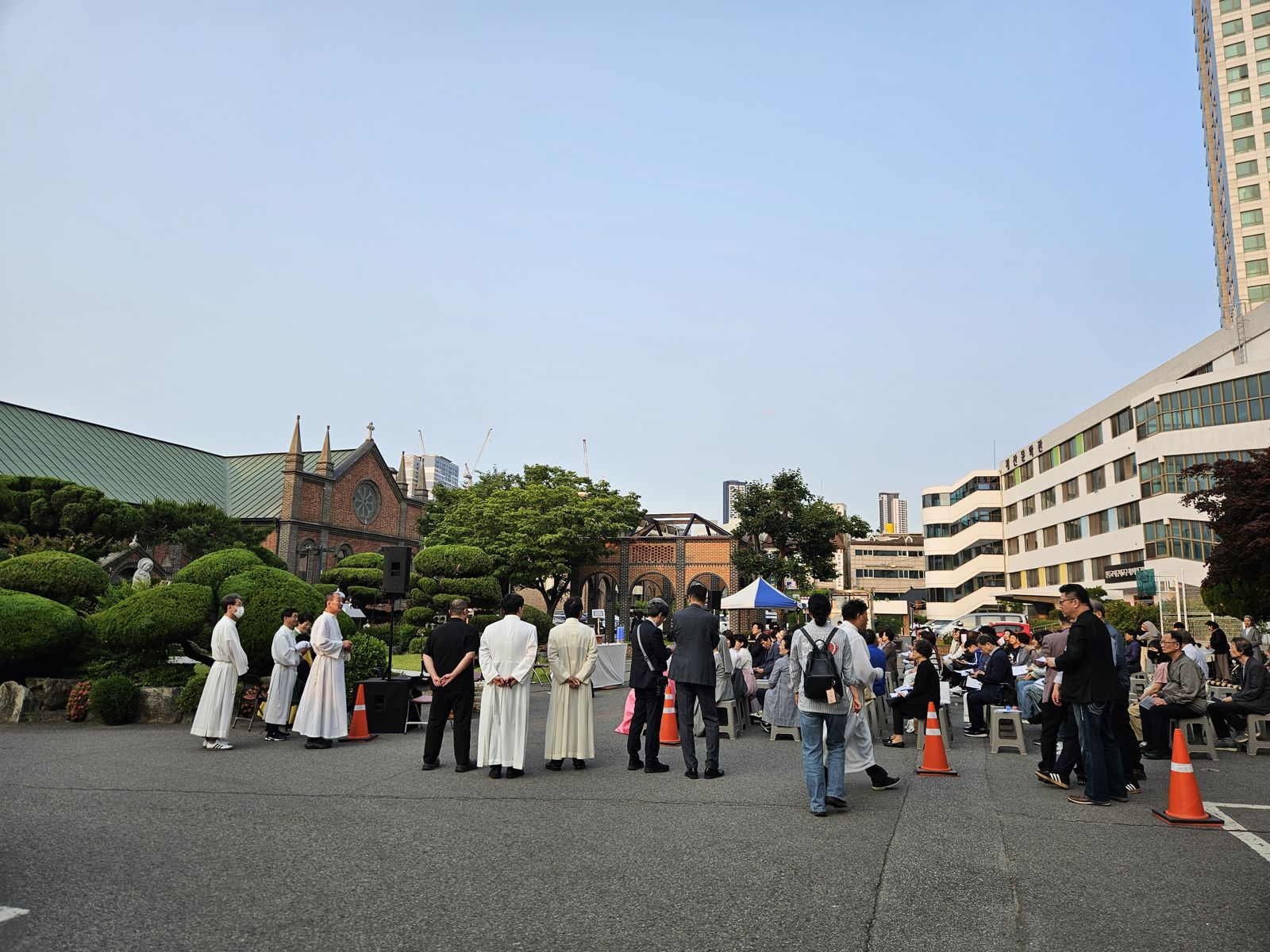
Coming out of the metro, we start crossing Cheongna Hill, the historic district where Christian missionaries settled when they arrived in Korea at the beginning of the 20th century. There's a church, a cathedral and the houses where the missionaries lived. On the cathedral forecourt, a wedding is taking place, with a Korean priest officiating in Latin. We don't stay curious for too long and carry on wandering through the lanes. We get a little lost but eventually find the buzz of Dongseong-ro, Daegu's lively district. The nicest restaurants are packed on this Friday evening, so we fall back on an excellent Vietnamese place, which satisfies Clémence's appetite.
Saturday 31 May
No alarm this morning. We let Clémence sleep as much as she needs, and she makes the most of it. It's 9 when she finally opens her eyes, in an excellent mood. She gets dressed quickly and in a flash we're sitting down to breakfast. Daegu is the place in Korea with the most cafés per inhabitant. They're big and spacious and often double as bakeries. Koreans are excellent pastry chefs, and we often feast on things we pick at random.
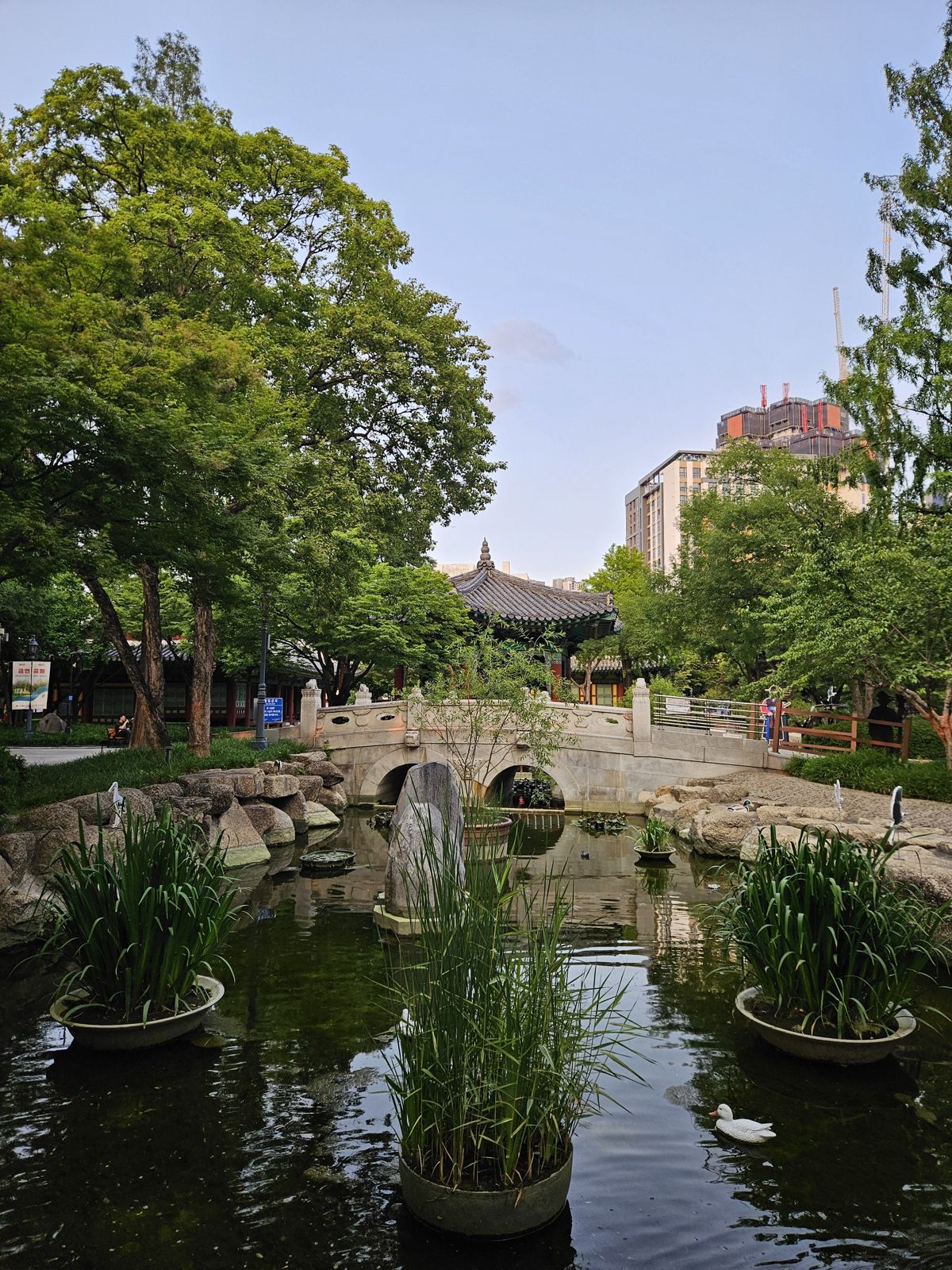
Daegu is a very spread-out city with several green spaces. We start with Duryu Park, which is of little interest apart from being car-free and having a playground. After wearing herself out for an hour, Clémence climbs into the backpack and we take the chance to stroll through the neighbourhoods by roundabout routes. That brings us to Apsan's Coffee Street, which is a coffee street in name only.
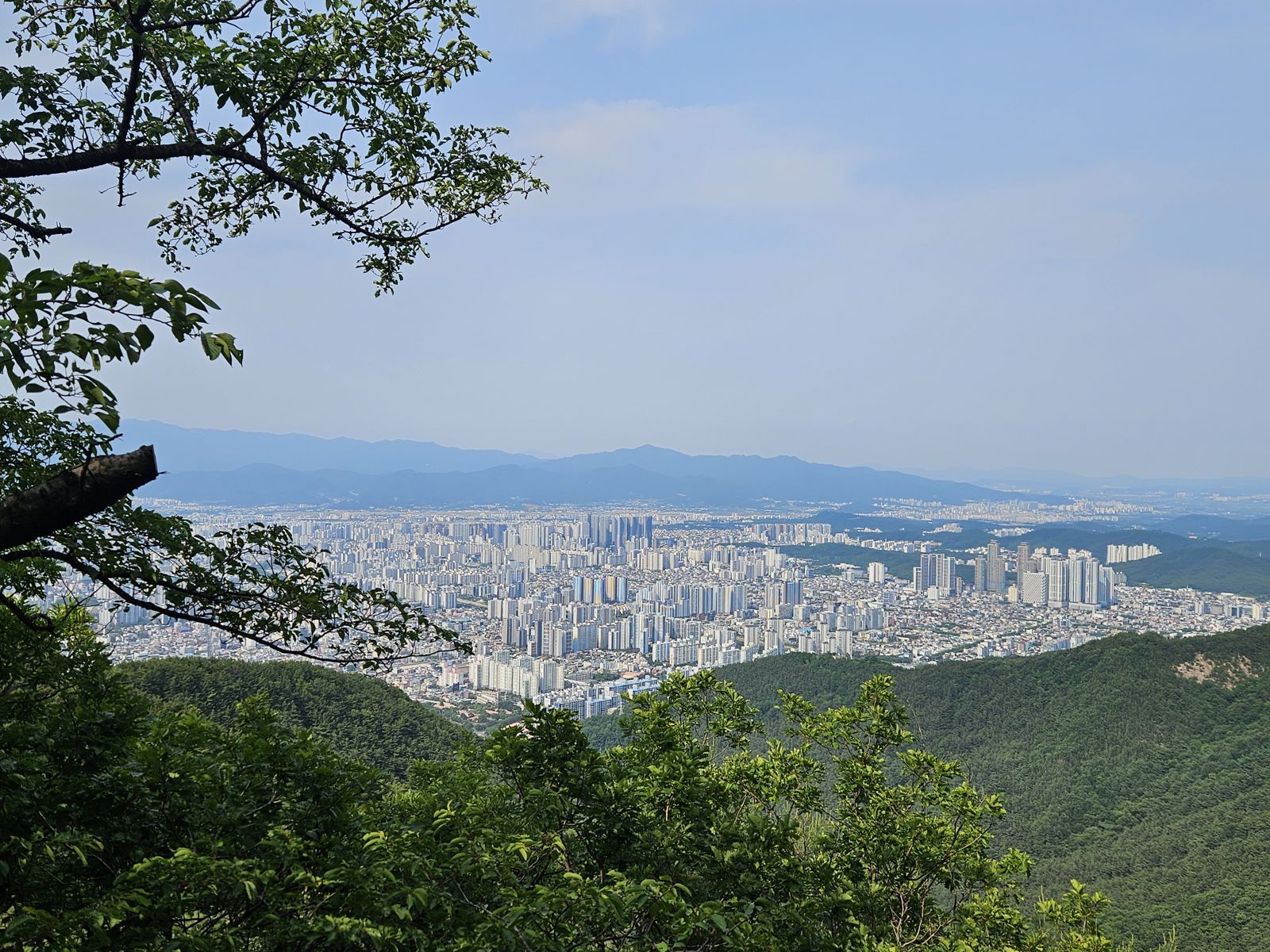
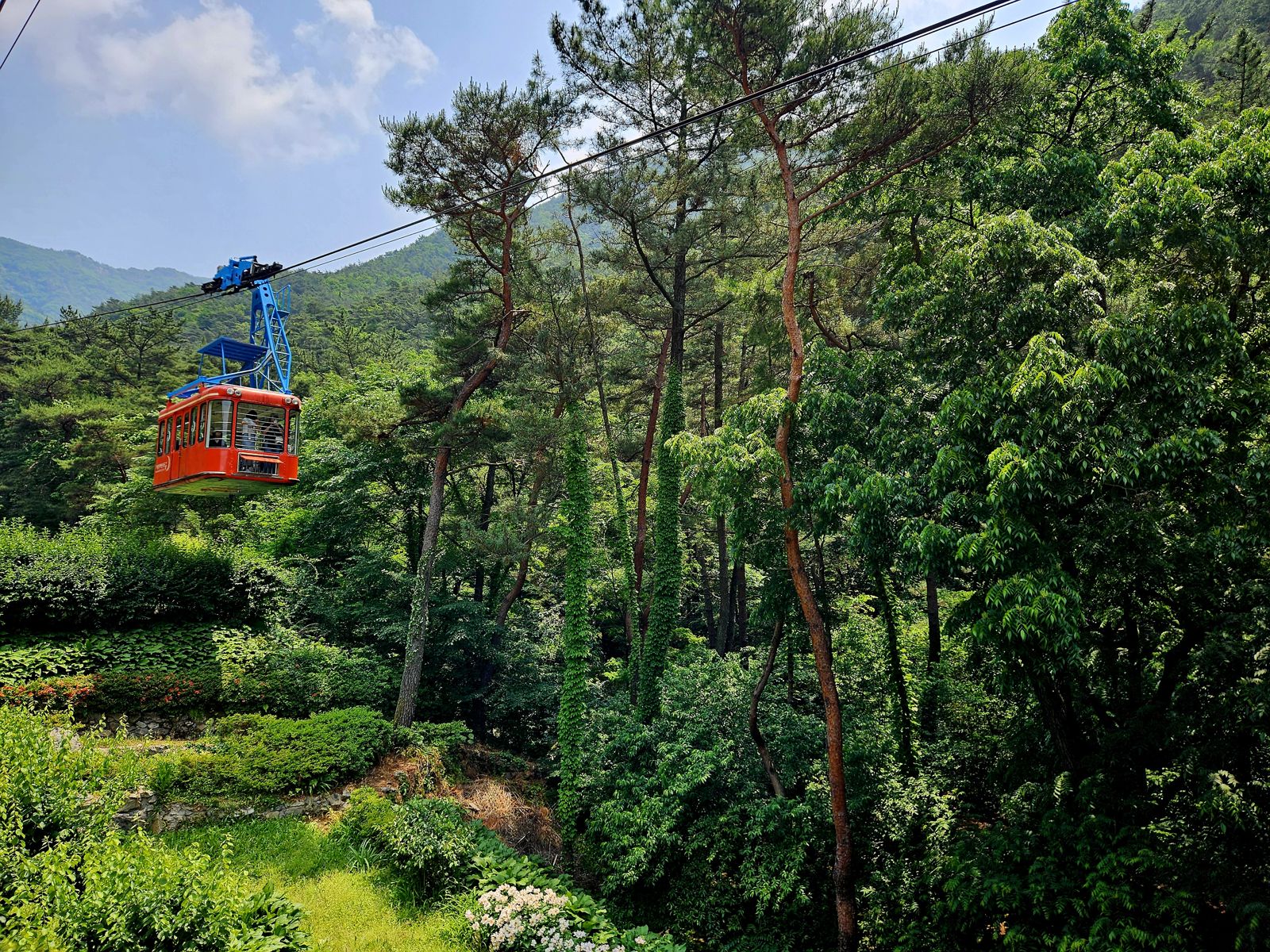
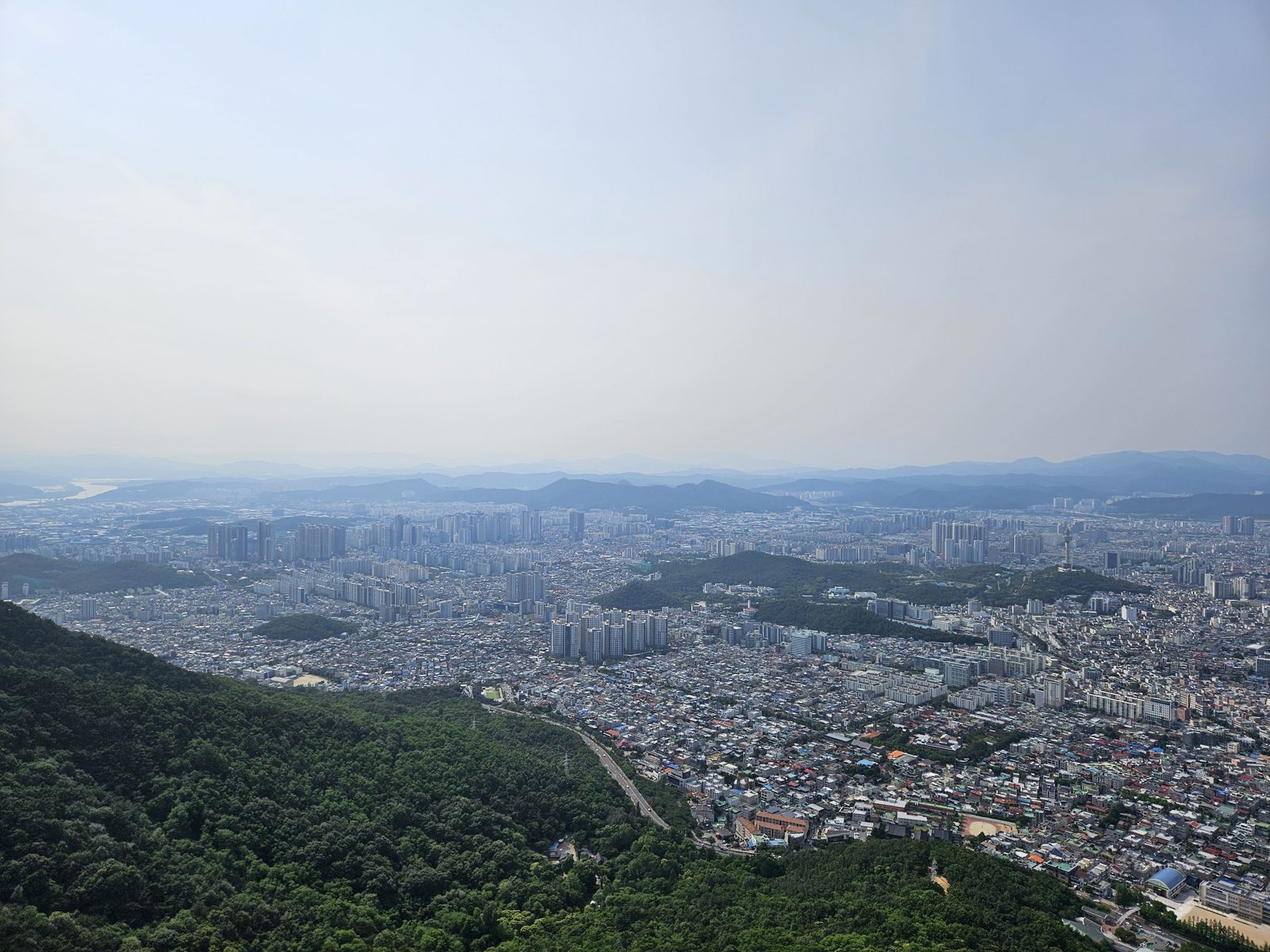
We expected a cute little street, but it's just a huge boulevard with a few shops. We don't find what we're looking for, eat quickly in a pasta restaurant and walk on to the cable car. It takes us to the top of Apsan mountain, where the spectacular view offers a complete panorama of Daegu. Indeed, the city stretches as far as the eye can see between the mountains and hills. From above, you can see the sights and barely make out the river we rode in along.
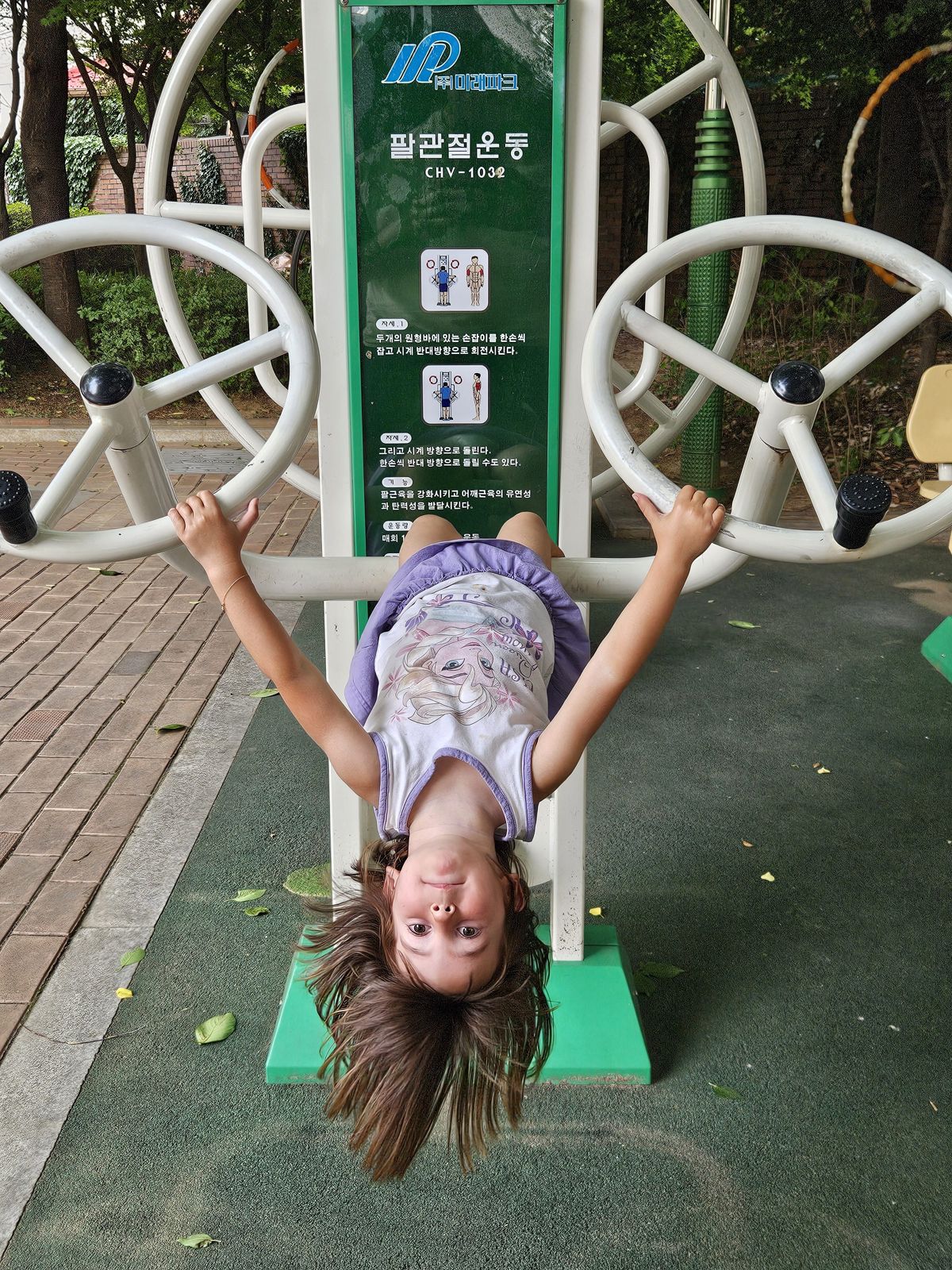
To enjoy the calm of the forest, we walk down. The air is cooler under the trees, and Clémence chats from her backpack, asking lots of questions and having fun repeating what she hears. To keep her happy, we stop again at the same playground as this morning. They're often paired with exercise machines, which are often used by elderly people. It's really common to see them doing a bit of exercise.
They also seem to be places to socialise, as we often see groups of old women chatting on benches and then getting up to work their legs or arms a little. It's a mix of genres and generations, between the rare children on the slide and the elderly keeping fit. Mind you, Clémence now prefers doing acrobatics on the machines, which makes the ladies laugh.
Another notable feature of Korea is the lack of bins. It's very hard to throw your rubbish away, and this seems to be a cultural trait shared with Japan. If you managed to go to the shop to buy packaged products, you can manage to bring them home to throw the packaging away. We think that's the underlying reasoning, and it seems to work, as you see much less litter than in France.
Heading back to the hotel, we can't help noticing that in Daegu cars take up a lot of space. They're parked on pavements and zebra crossings, and you often have to weave your way through. In the end, as in France, the further south you go, the more invasive cars become. Maybe it's the heat?
Sunday 1 June
June turns up on time this Sunday. From the moment we wake up, the heat is there and we know the day will be hot. To get ahead of it a bit, we turn up as the café next to the hotel opens at 9. Cafés open late here and we still struggle to understand the logic. Koreans don't see coffee and pastries as an early-morning pleasure at all.
Daegu has a nice cycle path out of the city, which is welcome given the long multi-lane boulevards. We can tell it's Sunday, as we pass lots of bikes as soon as we join the cycle path. Koreans seem to have a very social approach to cycling; they often ride in groups but without necessarily chasing performance. We're rarely overtaken at incredible speeds, as can happen in France.
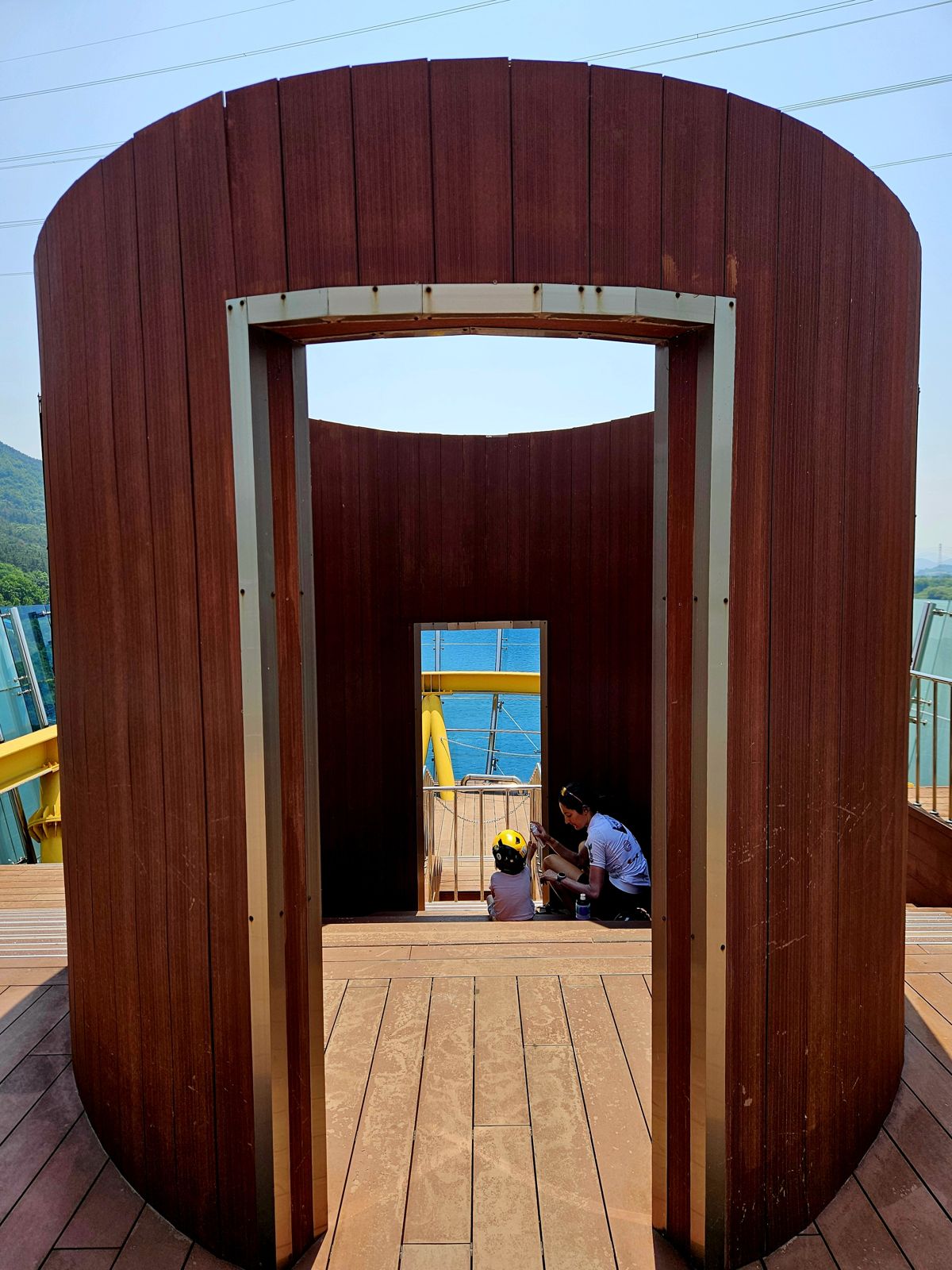
At our first stop, at the foot of yet another dam on the rivers, dozens of riders are taking a break. The atmosphere is friendly, conversations fly between tables and there's a real sense of belonging. Of course, all eyes turn to us when we arrive. A woman strikes up a conversation and asks if she can take our photo for a friend in Seoul. We agree without quite understanding why.
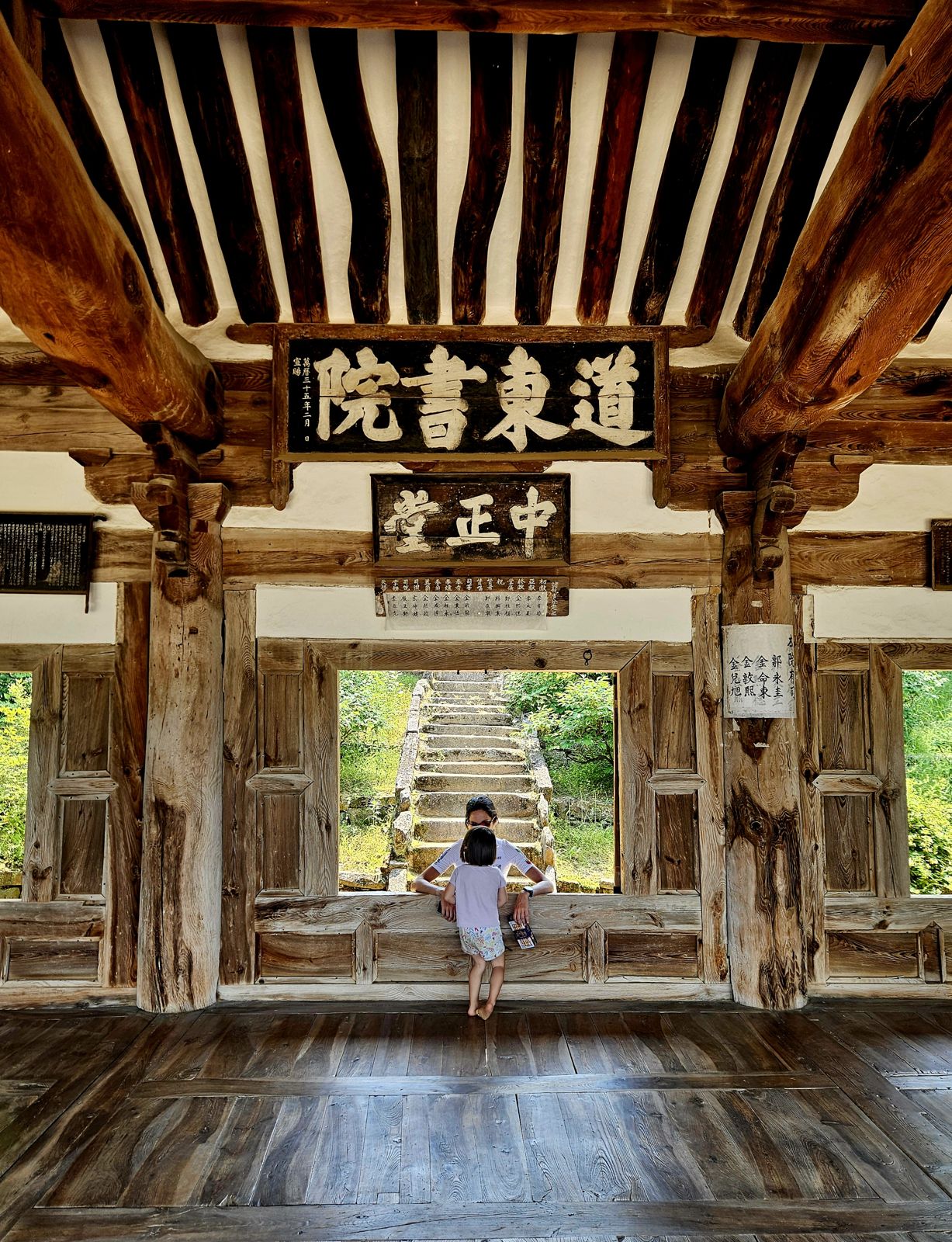
As we set off again, the heat really gets us. The air feels like the desert, and reaching an old Confucian academy brings real respite. The temple is disconcertingly calm and its shade is precious. We stay a long while, and one of the caretakers comes to give Clémence cakes, a scene that now happens several times a day.
Once again we adapt to local customs and turn up at hotels without booking. The first is well rated online, but the owner immediately strikes us as unfriendly, so we go for the second, right next door. The woman at reception is very pleasant and we strike a deal. With the panniers dropped and quick showers taken, we go back out into this uninteresting little town to find a playground.
The streets are deserted; it's almost like a post-apocalyptic film, all the more striking as the boulevards are gigantic and empty of cars. We assume we're in an industrial zone or a commuter town and that it'll be much busier tomorrow.
On the road