
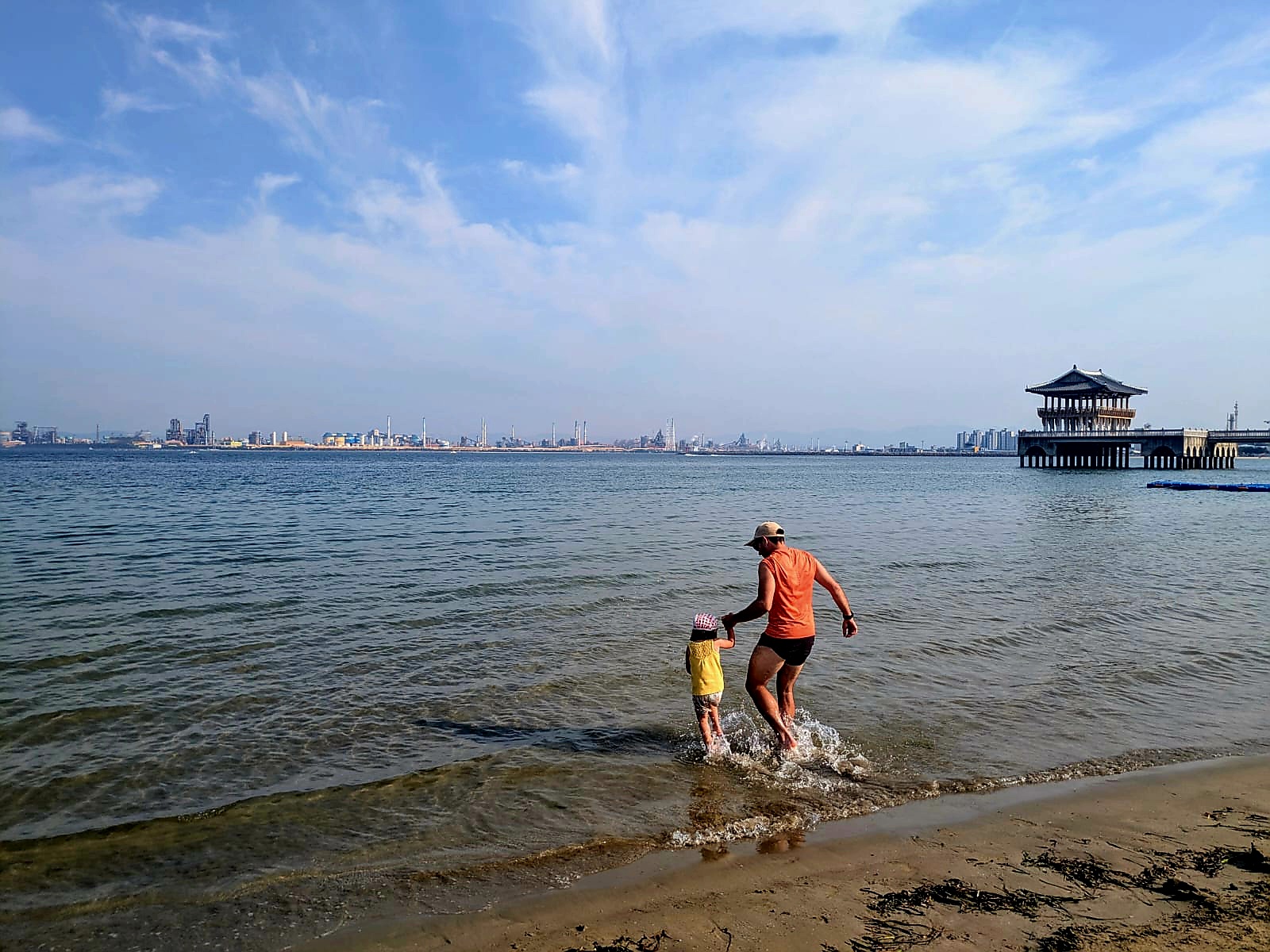
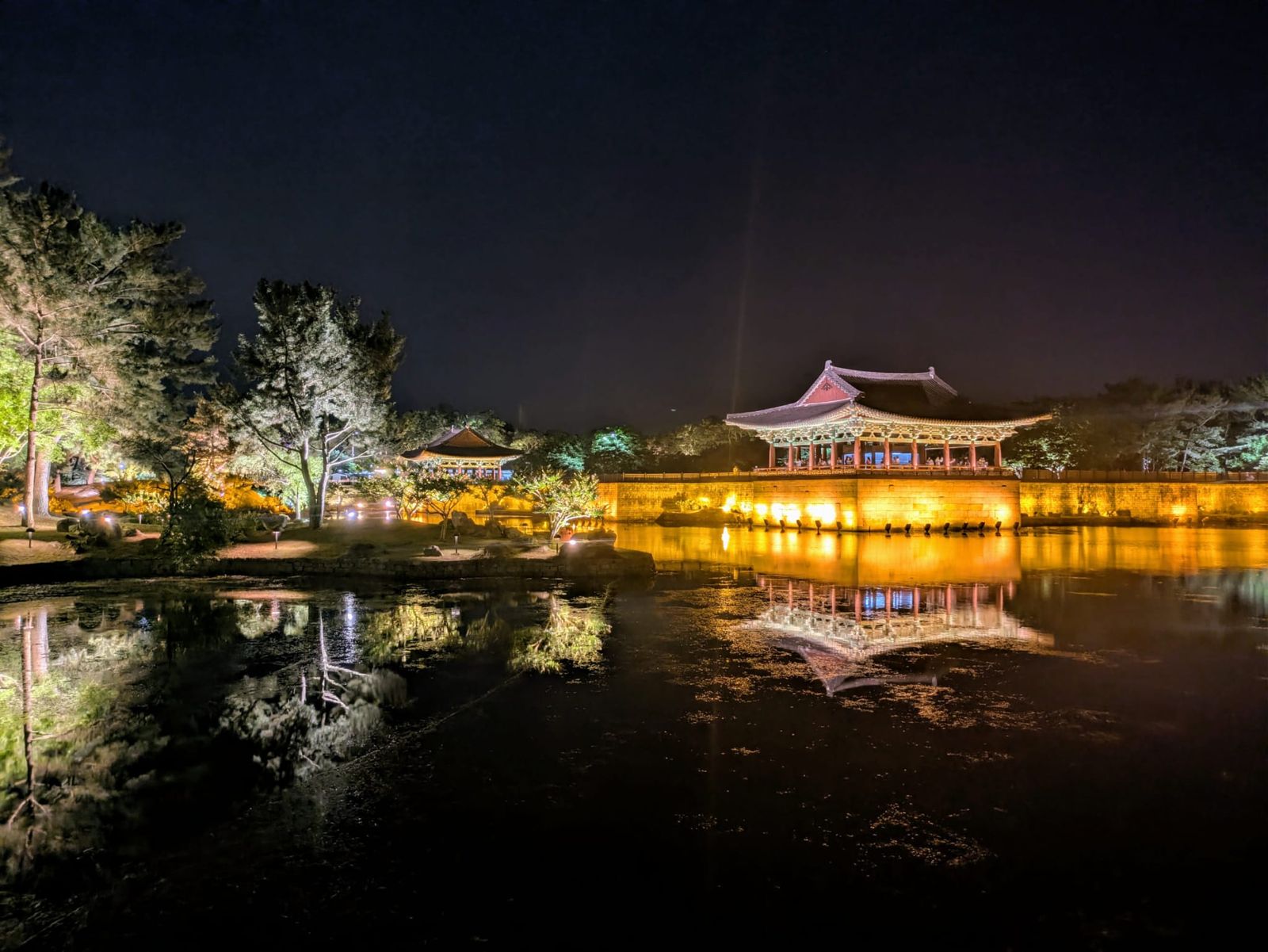
 ← PreviousOn the way to the east coast, a stop in Gyeongju
If we're already on our bikes by 9:30, it's because Clémence was wide awake at 8 on the dot. That leaves us time to enjoy the hotel's hearty breakfast, pack without rushing and hitch up our rigs. After a few hundred metres, we ride down to the river to join a greenway.
We're always a bit apprehensive, because the legend on navigation apps isn't clear. The red line is a continuous, protected cycle path; we've understood that. But the dotted line is a catch-all that includes pavement lanes and sometimes roads. Luckily for us, between Gyeongju and Pohang it's a real cycle route that unrolls under our wheels. Away from the cars, we feel so relaxed that we barely notice we've already covered 30 kilometres. The big factories we see in the distance already mark our arrival in Pohang.
Pohang, between steel and sea spray
A port city on Korea's east coast, Pohang has nearly 500,000 inhabitants and is home to one of the world's biggest steelmakers, POSCO. It's known for beaches such as Yeongildae, Jukdo fish market and the spectacular sunrise at Homigot. A surprising mix of heavy industry and coastal charm, Pohang also appeals with modern works like the Space Walk and its typical cuisine.
So we push on to Yeongildae beach, our final destination for the day. It was stifling when we left this morning, but now it's almost cold. The Sea of Japan brings a strong, cool wind onto the Korean coast, which doesn't stop Clémence rushing off to play in the sand as soon as she's out of the trailer. We grab a quick lunch in the shelter of the trees and enjoy the beach a little now that the wind has dropped and it's warmer, before going to offload our bags at the hotel.
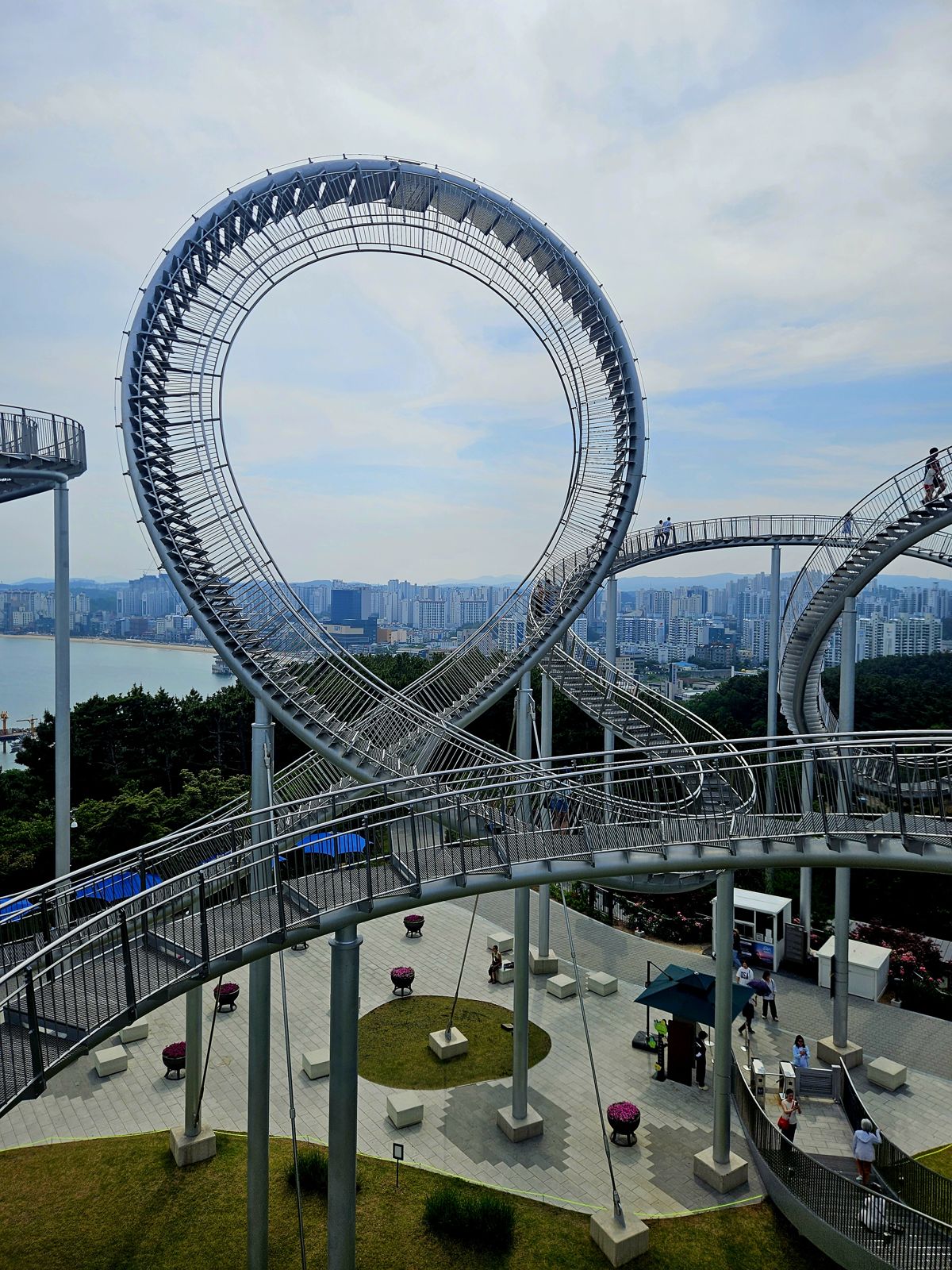
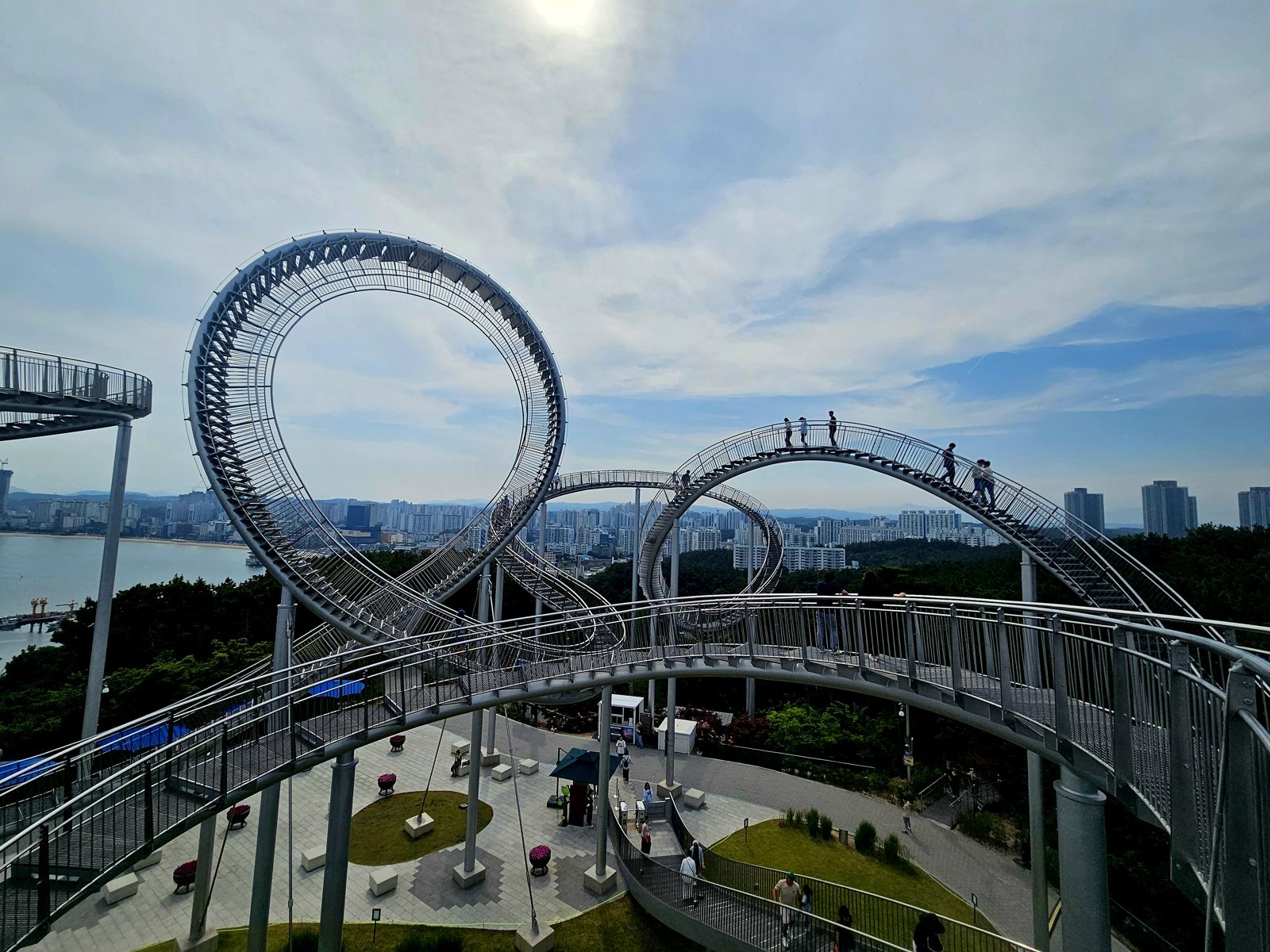
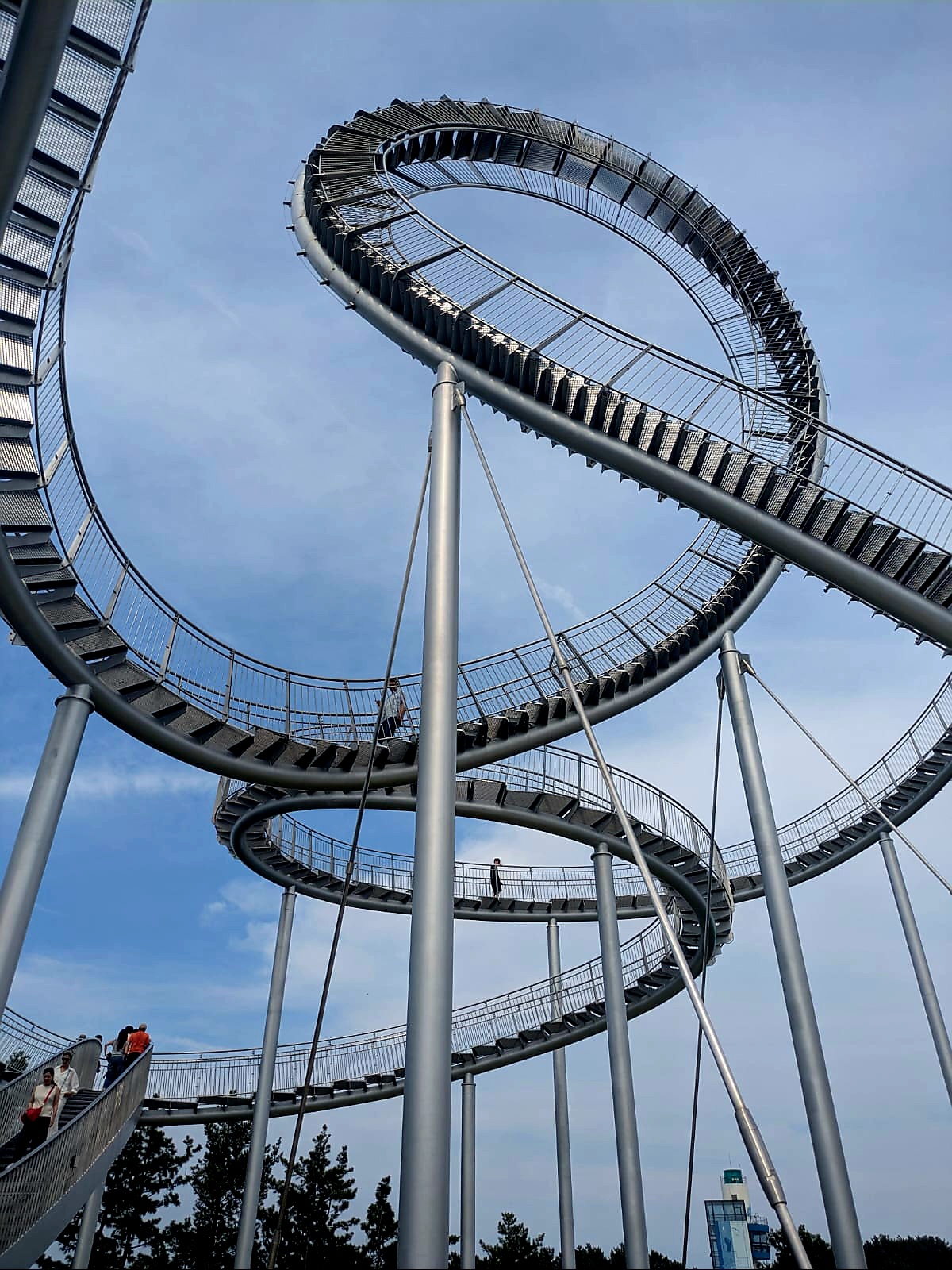
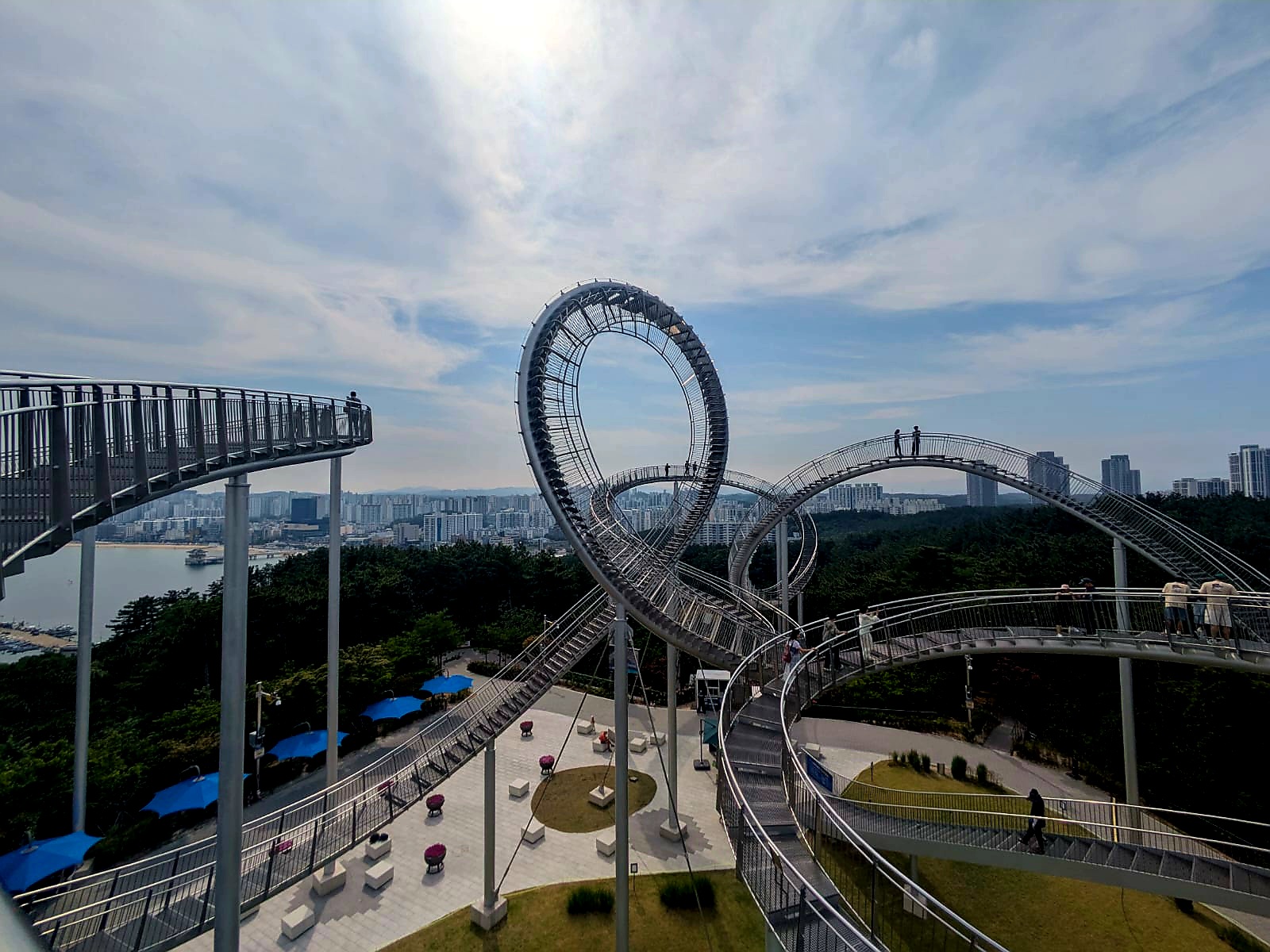
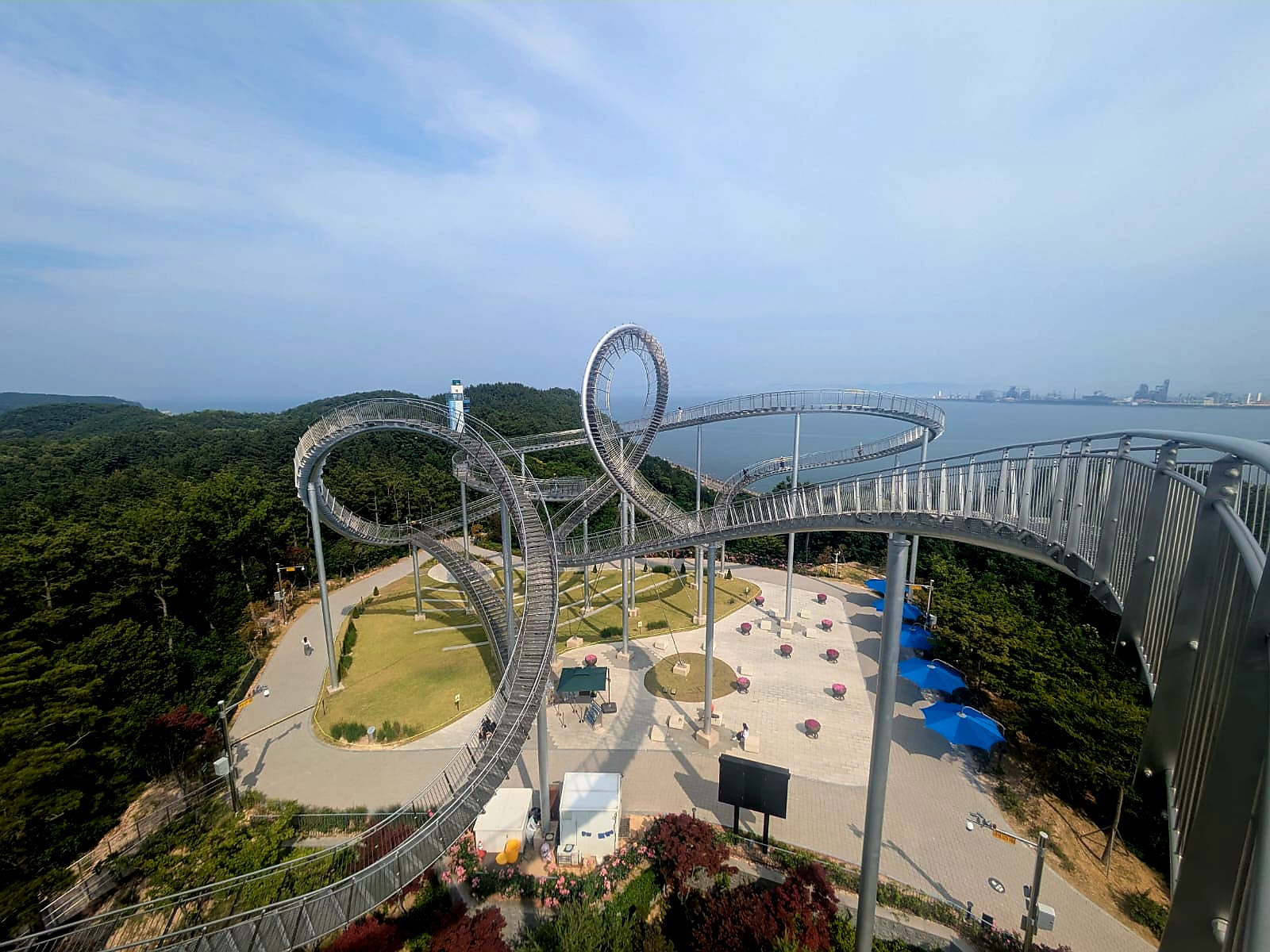
We feel lighter heading to the Space Walk, a structure opened at the end of 2021. Funded by the multinational POSCO (Pohang Iron and Steel Company), the world's fourth-largest steel producer, this rollercoaster-like structure was built to boost local tourism and showcase the city's steel industry.
Unfortunately, at the bottom we learn it's forbidden for children under 110 centimetres. Clémence isn't even a metre tall yet and doesn't understand why she's being refused. She keeps telling us she's big and not scared, which we know very well. We don't really understand the logic, as the side barriers go up very high and there's absolutely no risk of a child climbing over. Stéphane and Cassandre go up in turn anyway, but the little one is so disappointed that we don't hang around and head to a café for a hot chocolate and a smoothie, her new guilty pleasure.
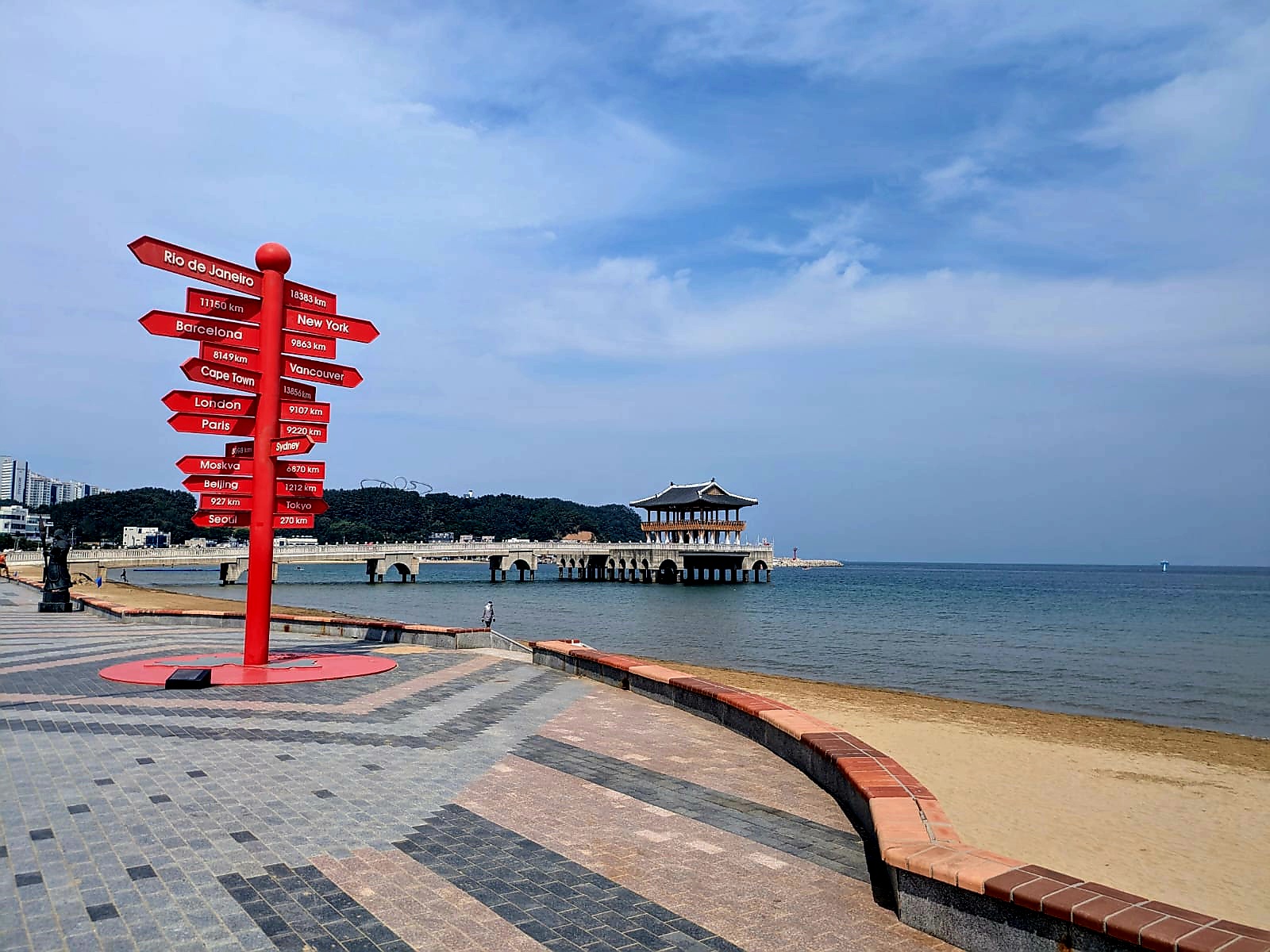
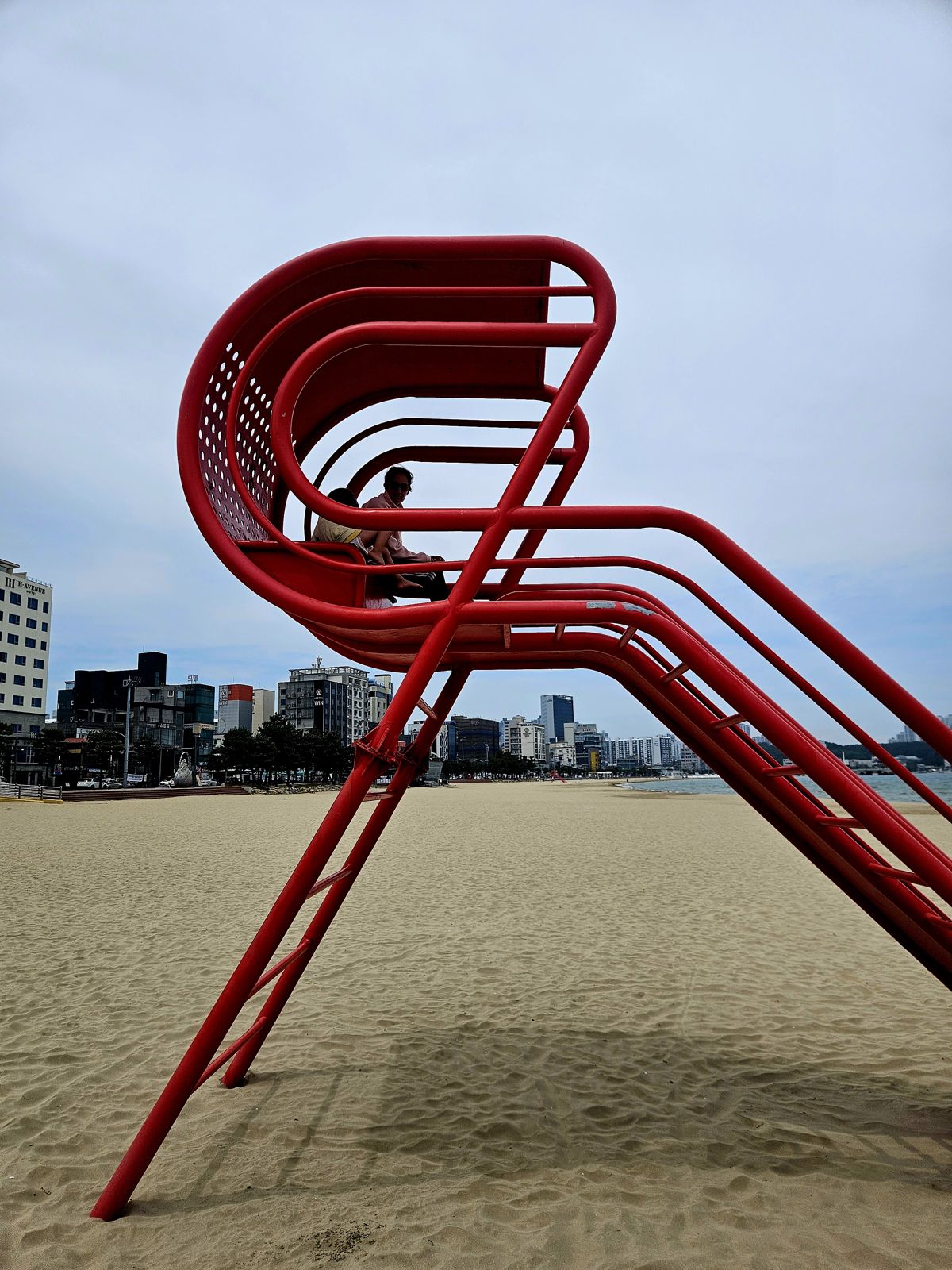
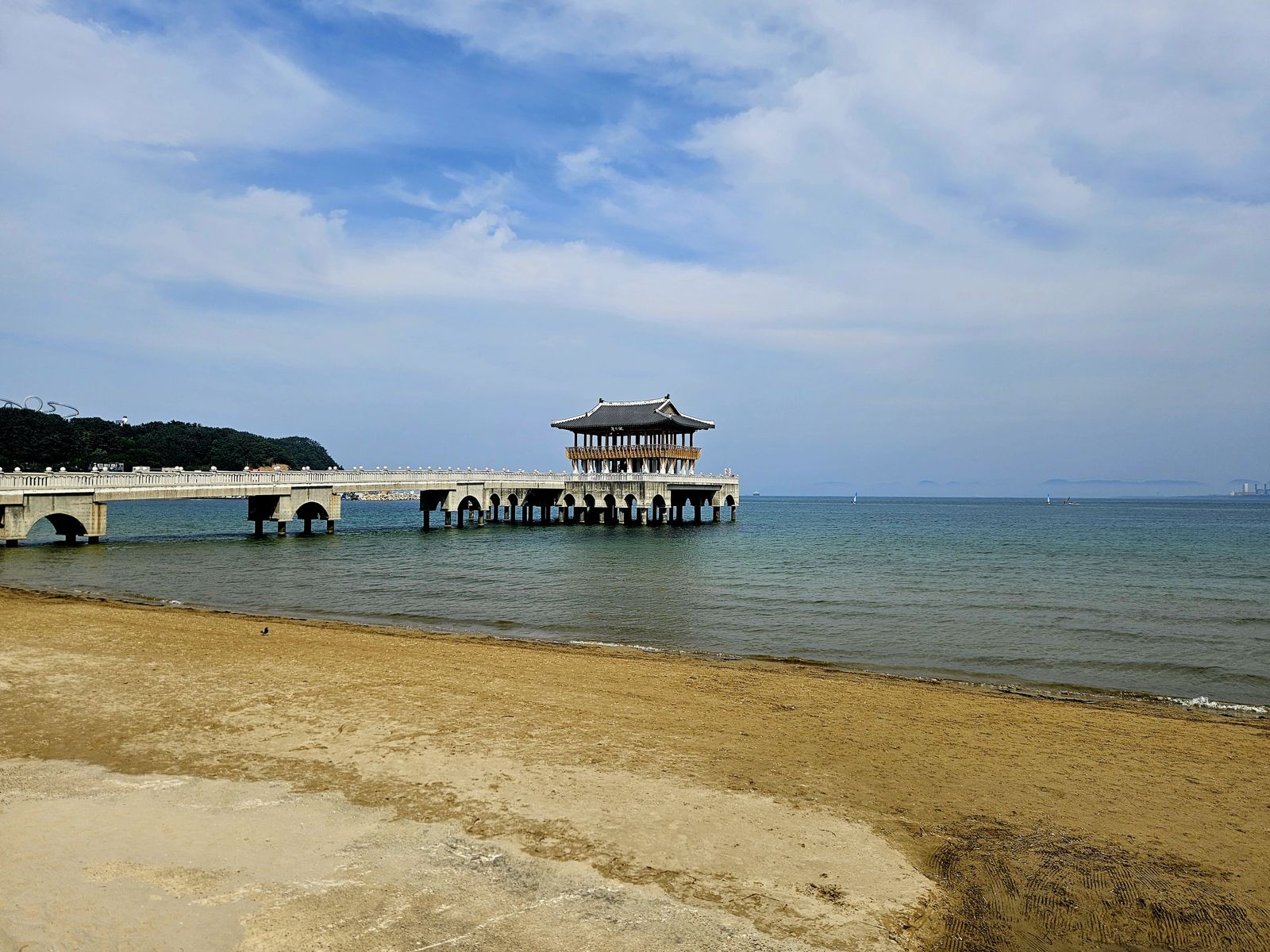
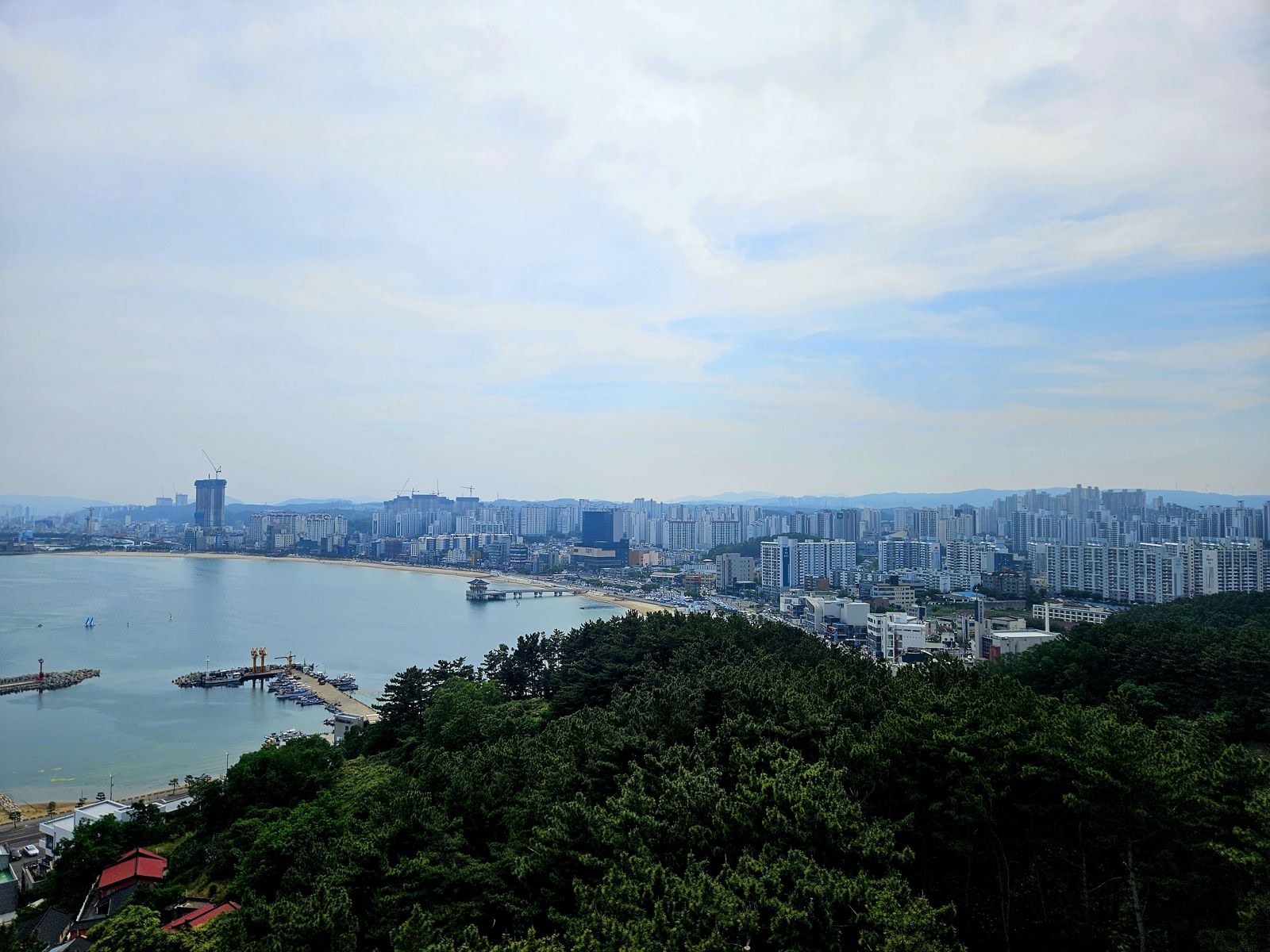
Then we go back down to play on the beach. Not only is she no longer afraid of the waves, but she now runs into the water at full speed. The sea is like glass, which is a strong invitation to swim. We're becoming masters of sand games; the three of us try to sculpt the most lifelike shoe possible, which makes us laugh a lot. She's very happy because she knows we're going to ride along the sea for a while. We just hope the good weather holds: we've been in the middle of the monsoon season since mid-May, and the forecast for the next four days looks unsettled. Let's hope it's not too bad.
Friday 13 June
The raindrops accompanying us at the start of today's stage don't bode well. They're sparse and fine, but the forecast for the coming days doesn't make us optimistic. We get out of Pohang really easily, a rarity for big Korean cities. The path soon reaches a wilder, steeper coast. It already has its share of difficulties, with little climbs followed by descents, and so on.
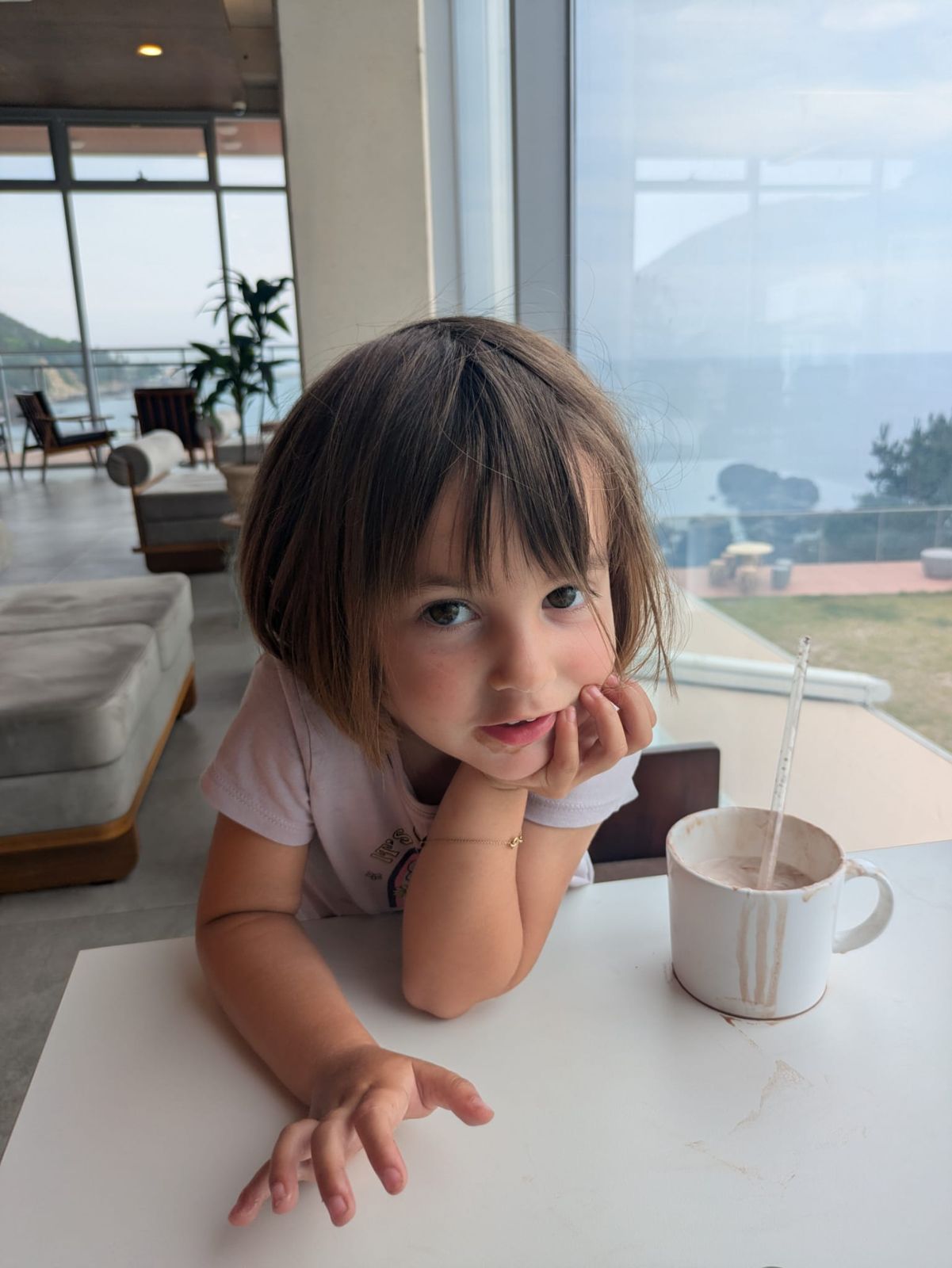
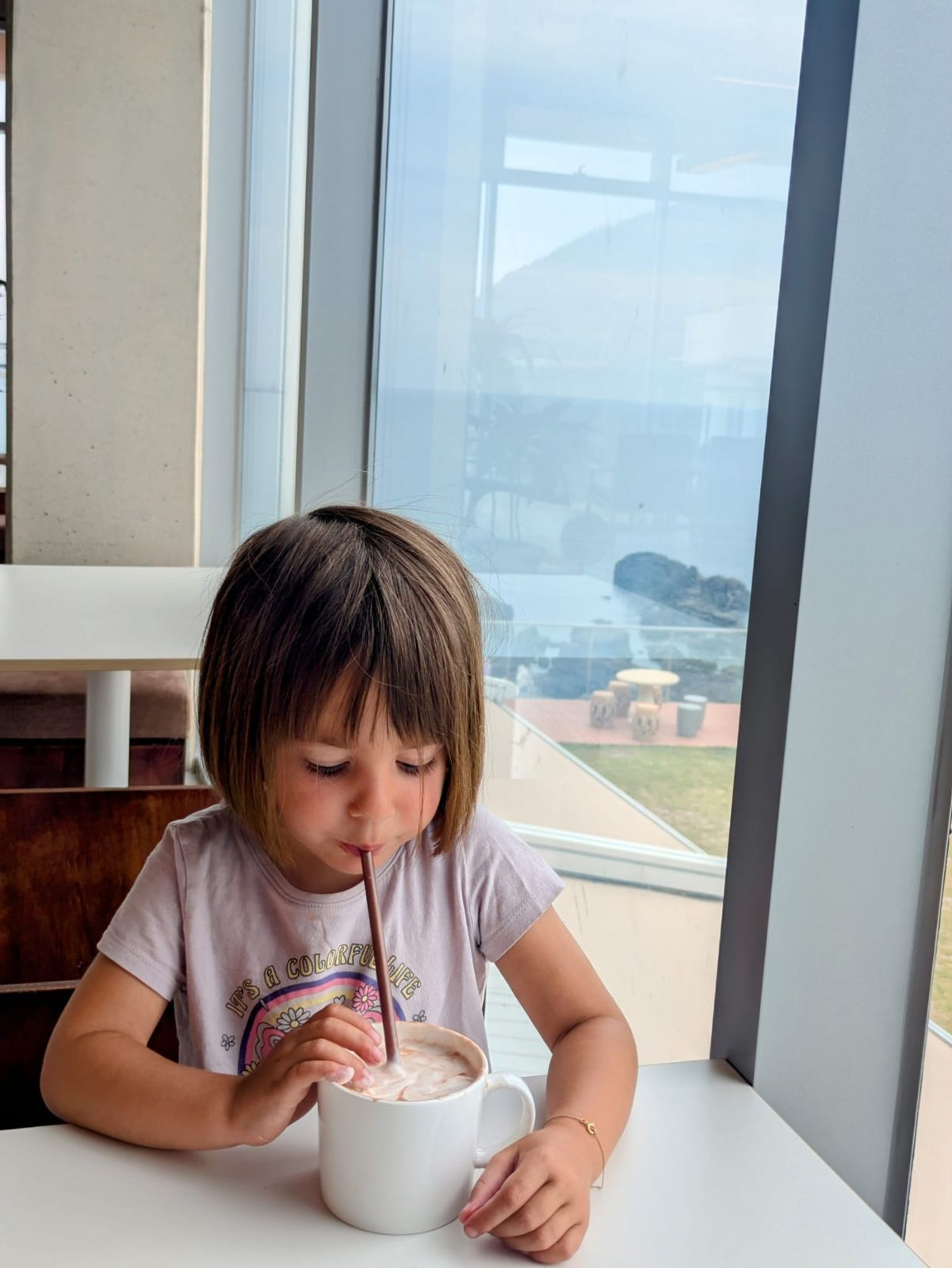
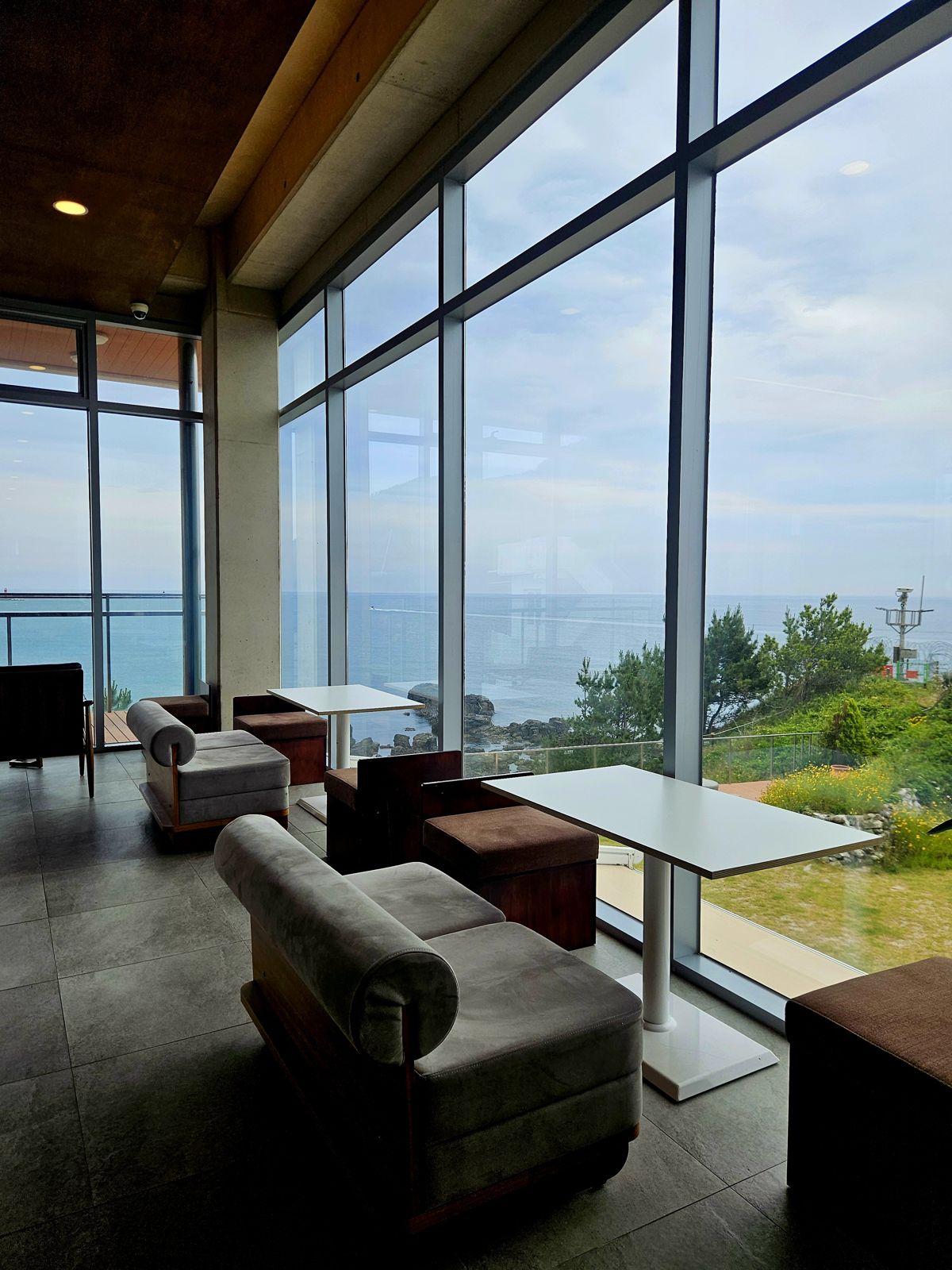
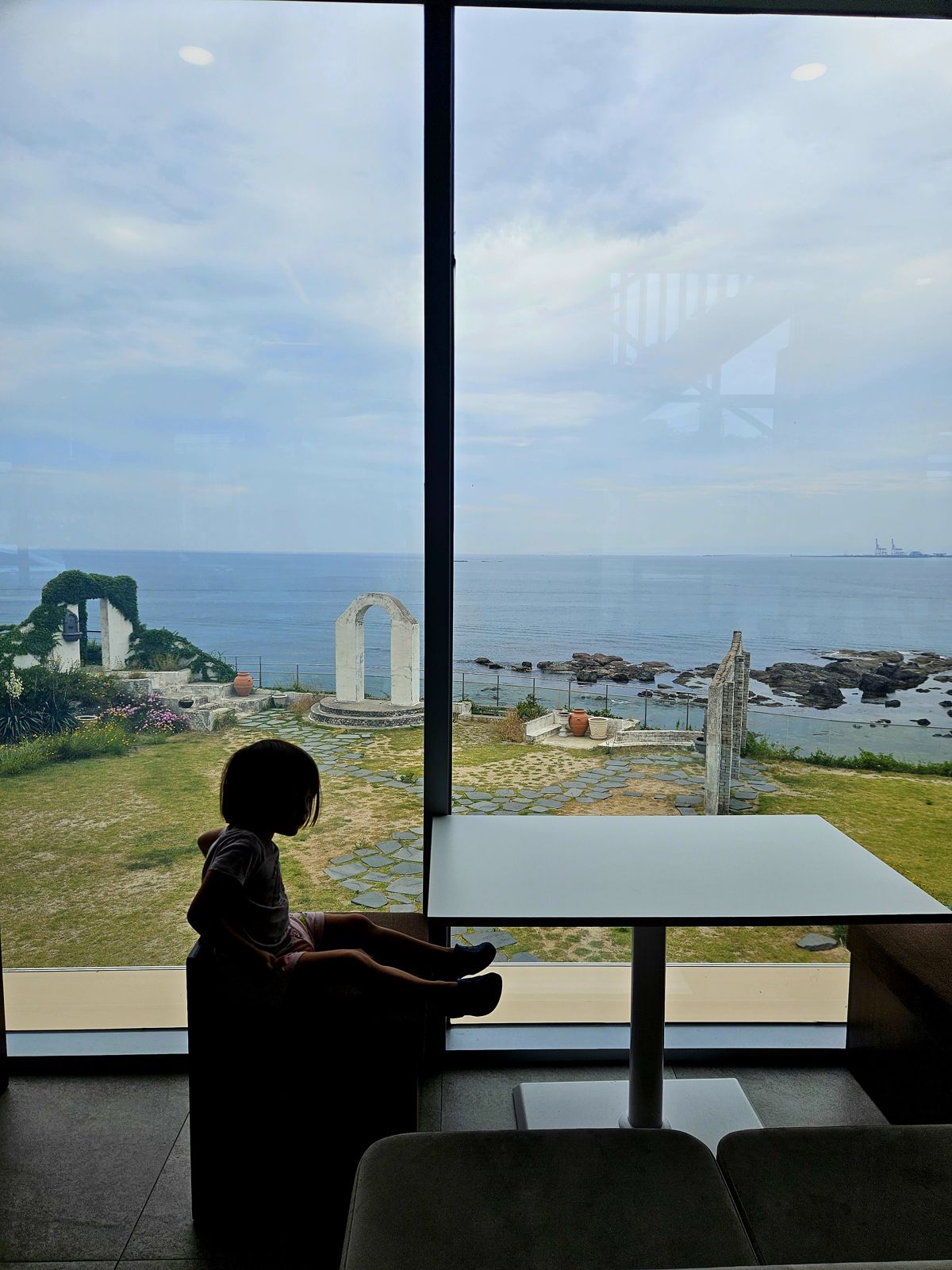
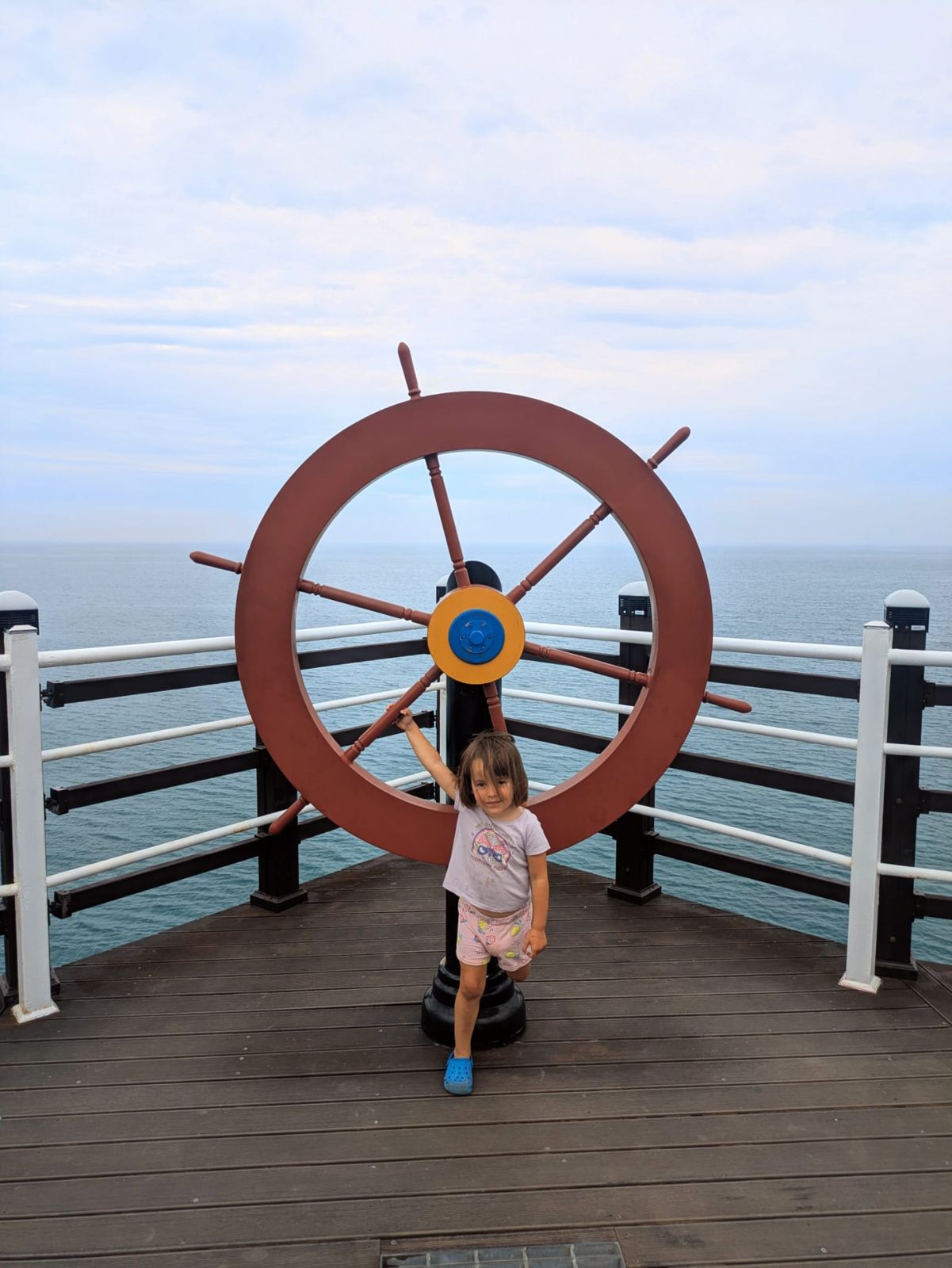
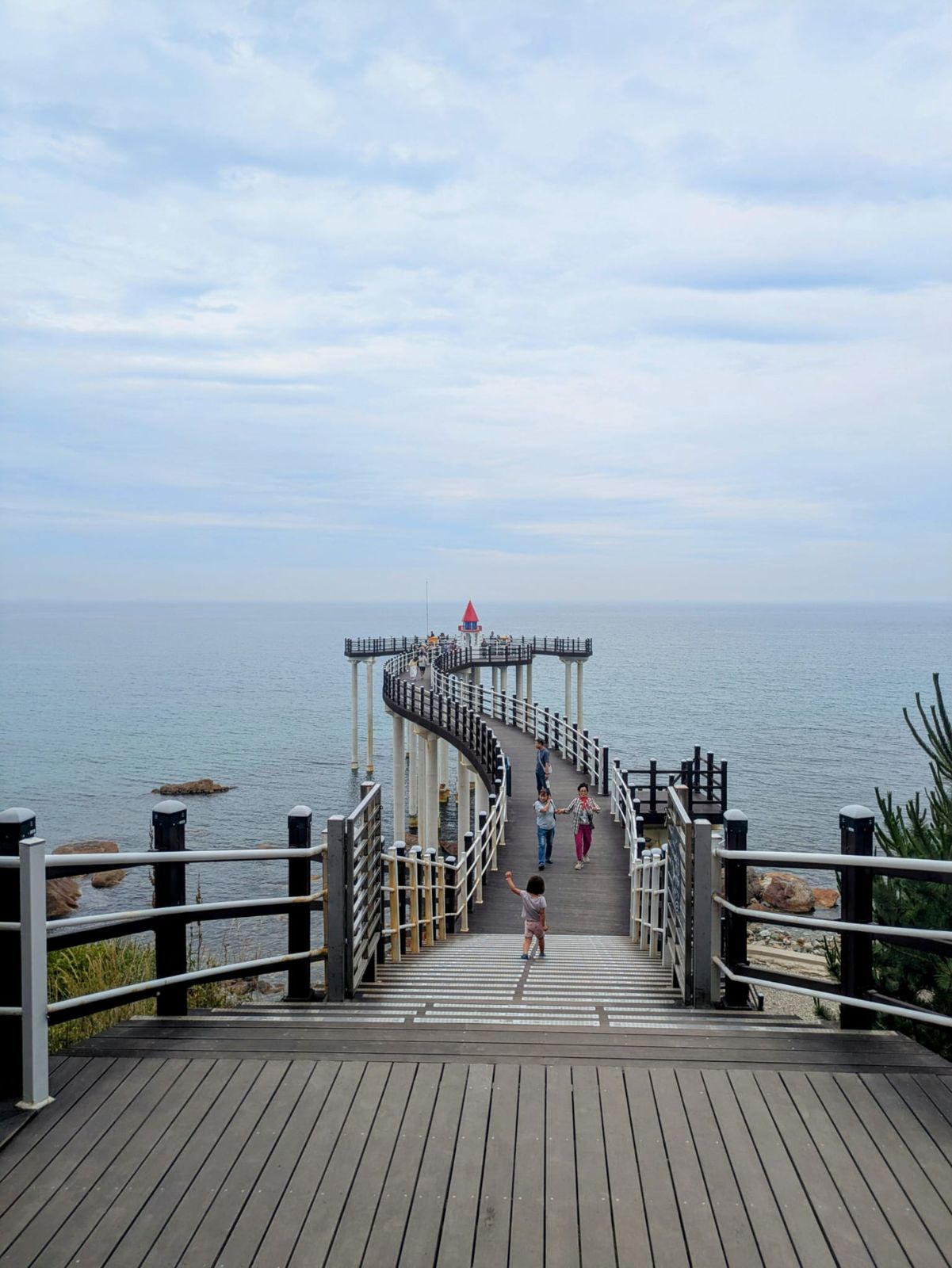
We try not to dawdle, as the drizzle won't stop. We do stop to eat at a sublime café, where Clémence has what is now her traditional hot chocolate. The east coast is studded with viewpoints and skywalks over the sea; we visit one before pushing on for lunch. Around 2 pm, a sunny spell peeks through as we ride along a beach.
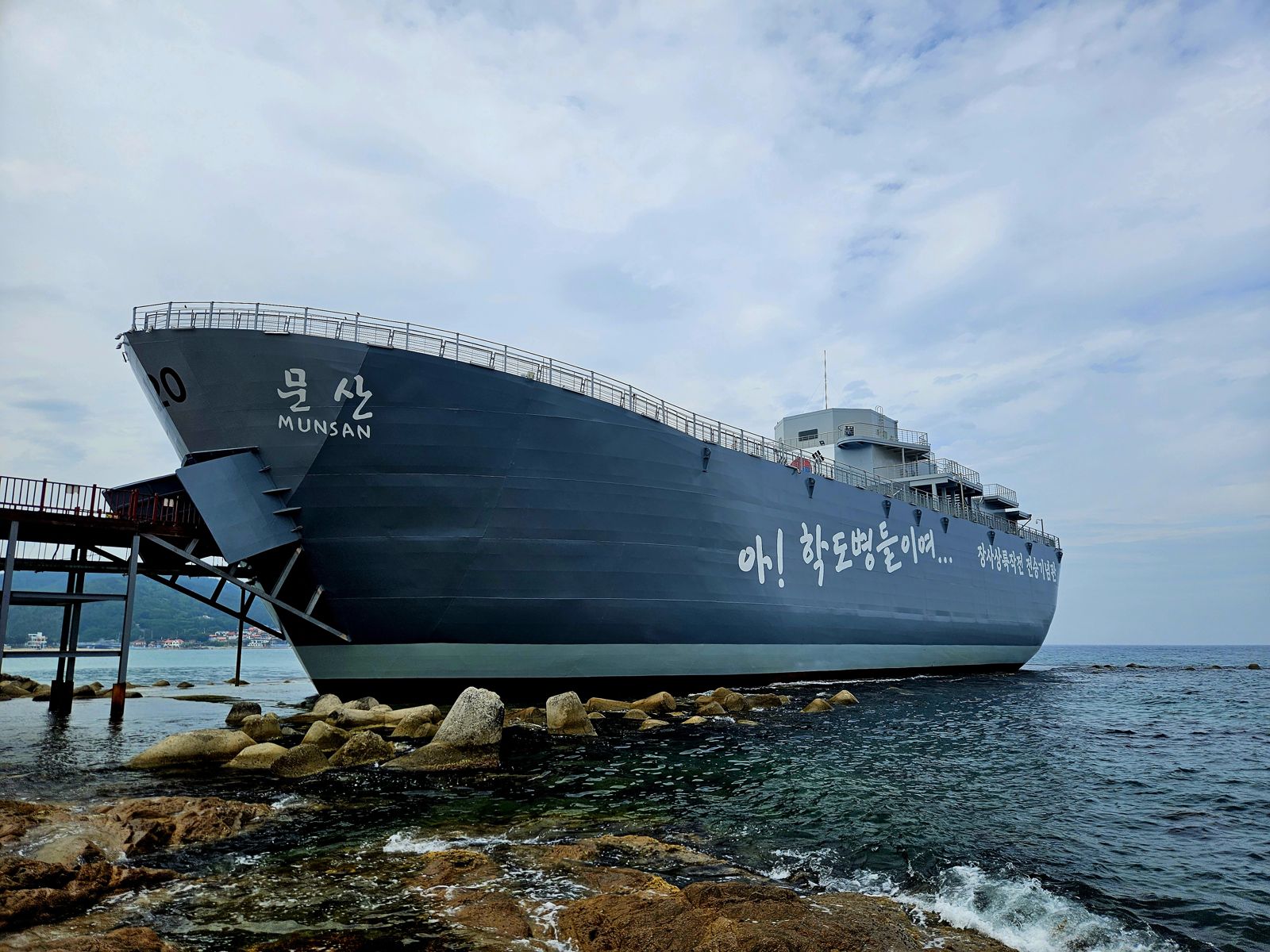
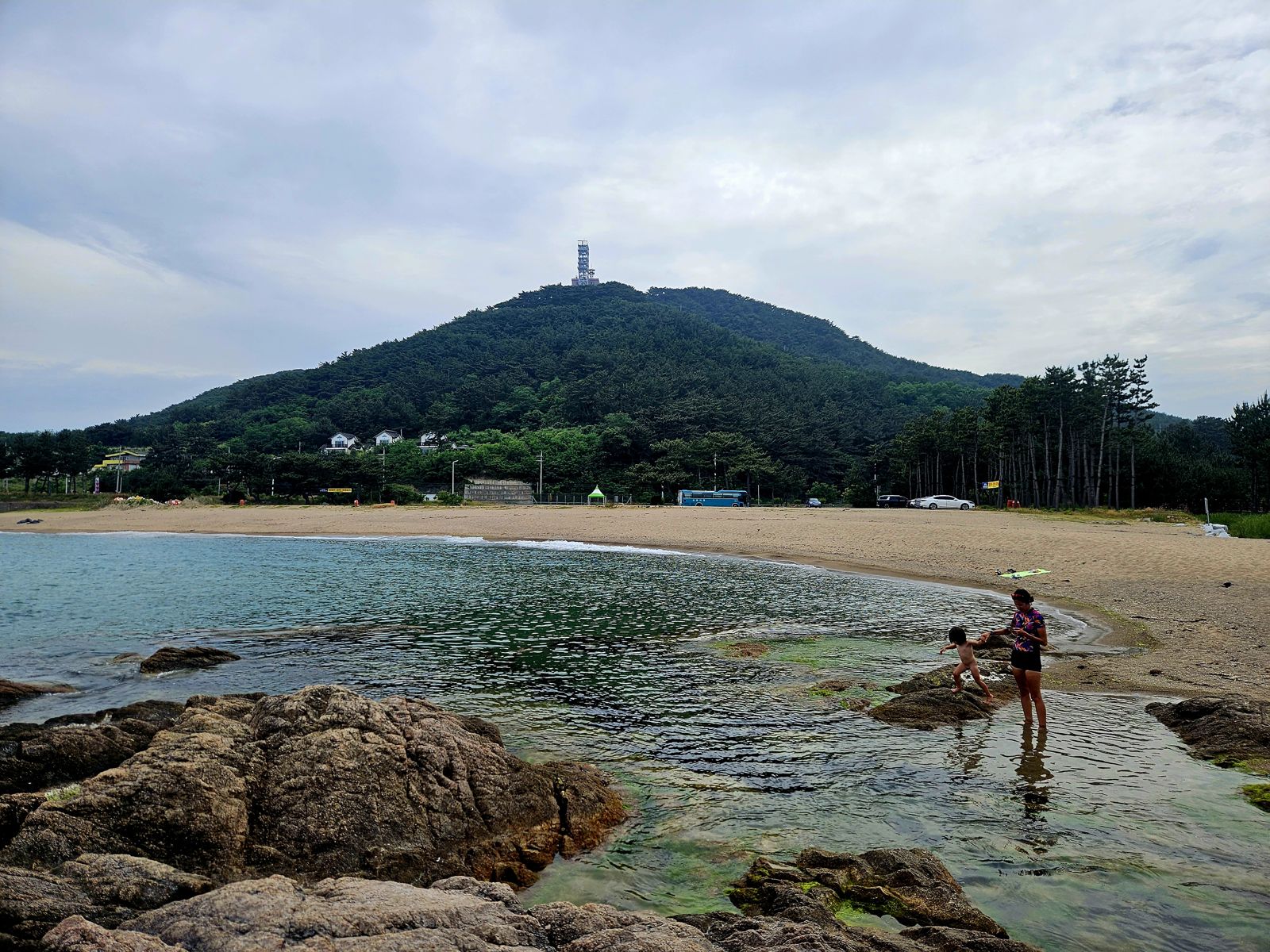
It doesn't take us long to be paddling and playing. Clémence has a whale of a time. Oddly, we swim next to a gigantic military ship turned into a museum. We stay on the beach until the sun disappears behind nasty clouds that make us flee in a hurry. We arrive at the hotel early, around 4 pm, but we'd rather that than get caught in a potential deluge.
As in almost every hotel, our room has a bathtub, which lets Clémence extend her playtime. Because when we do try to take her to a playground afterwards, it starts pouring and we can only take refuge under the shelters in a park. The day is a bit gloomy; we go back to change at the hotel before going out to eat. Tomorrow will probably be worse; we're even receiving weather warnings on our phones. We'll have to be clever to dodge the drops.
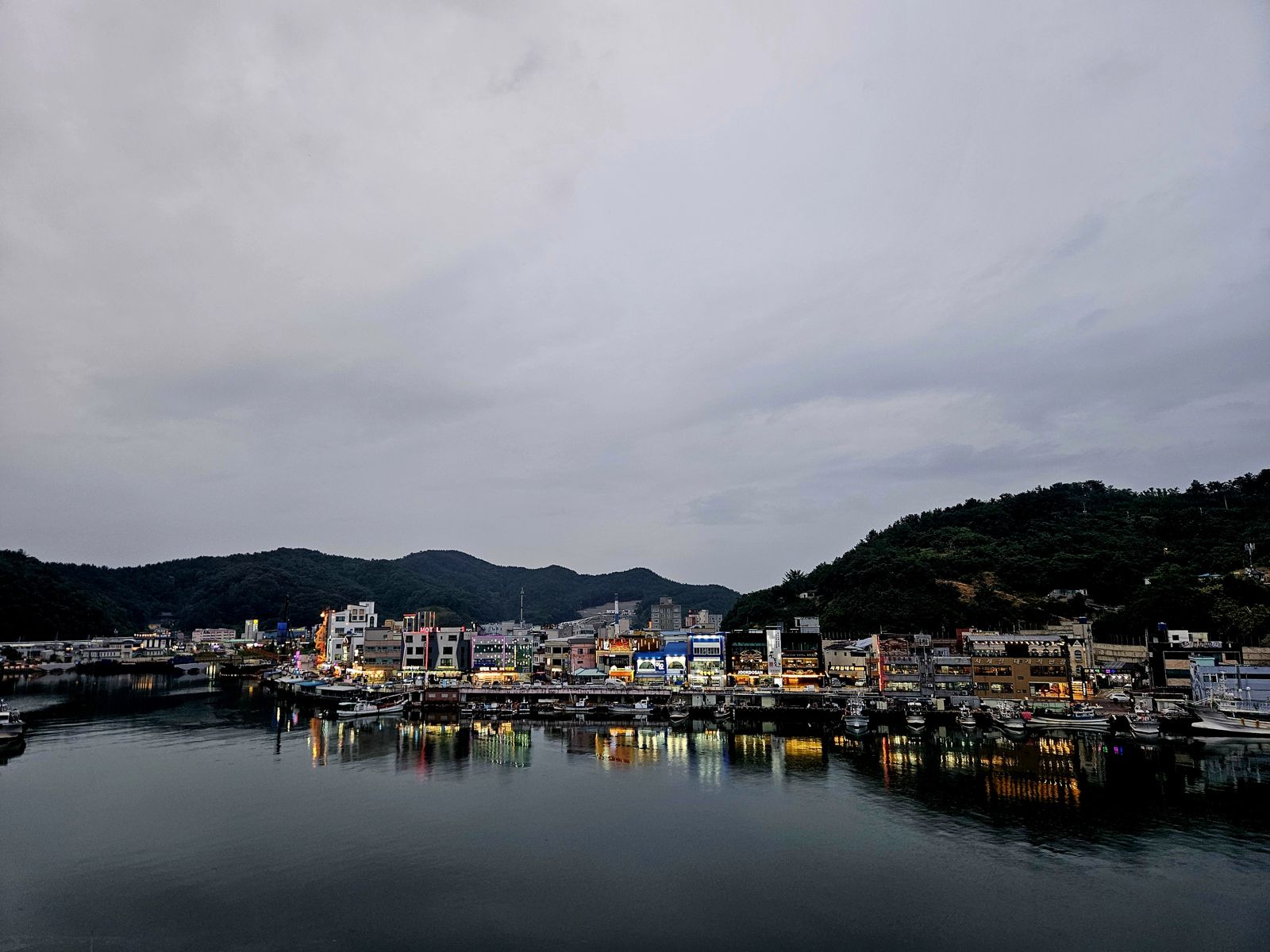
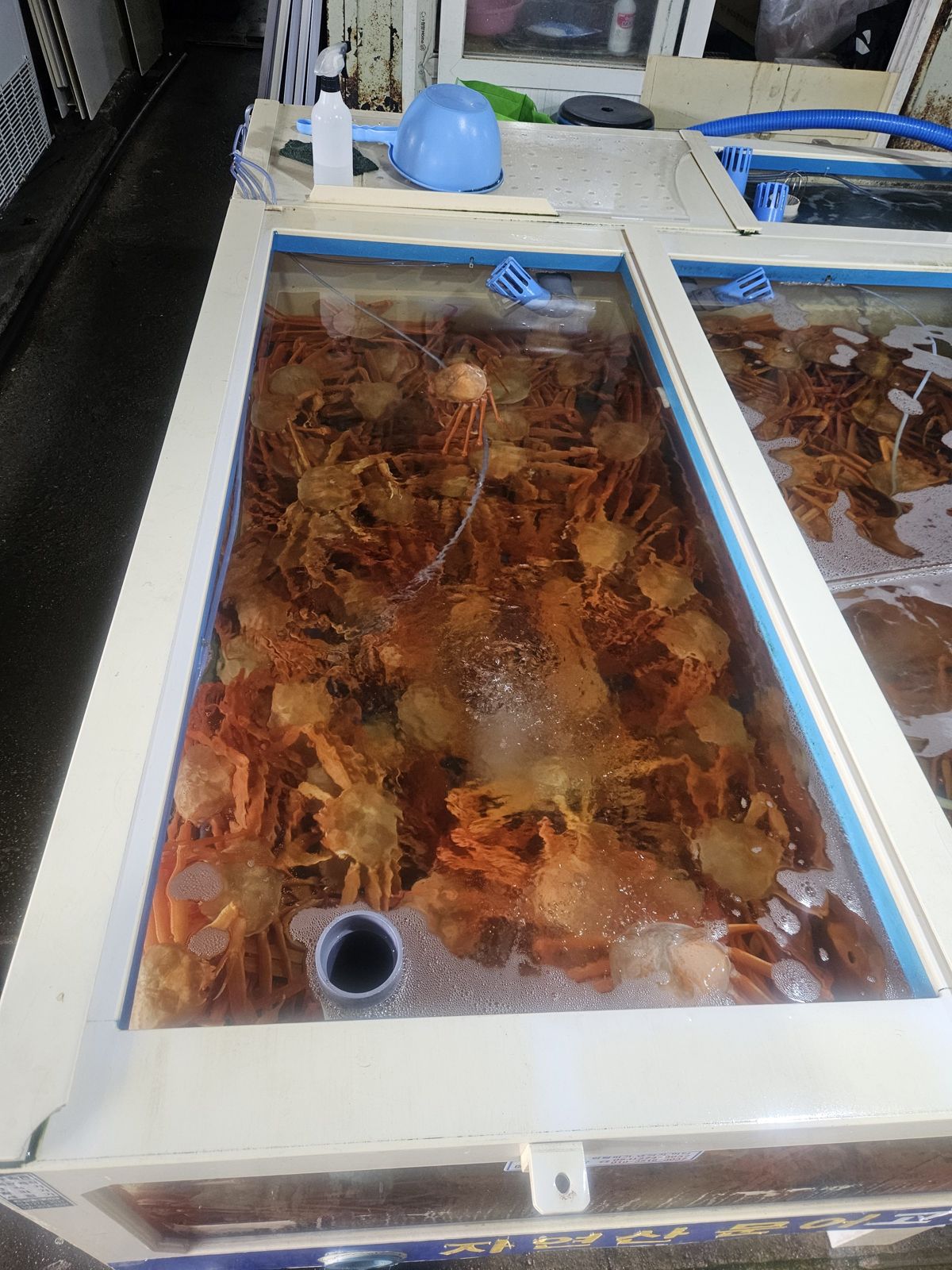
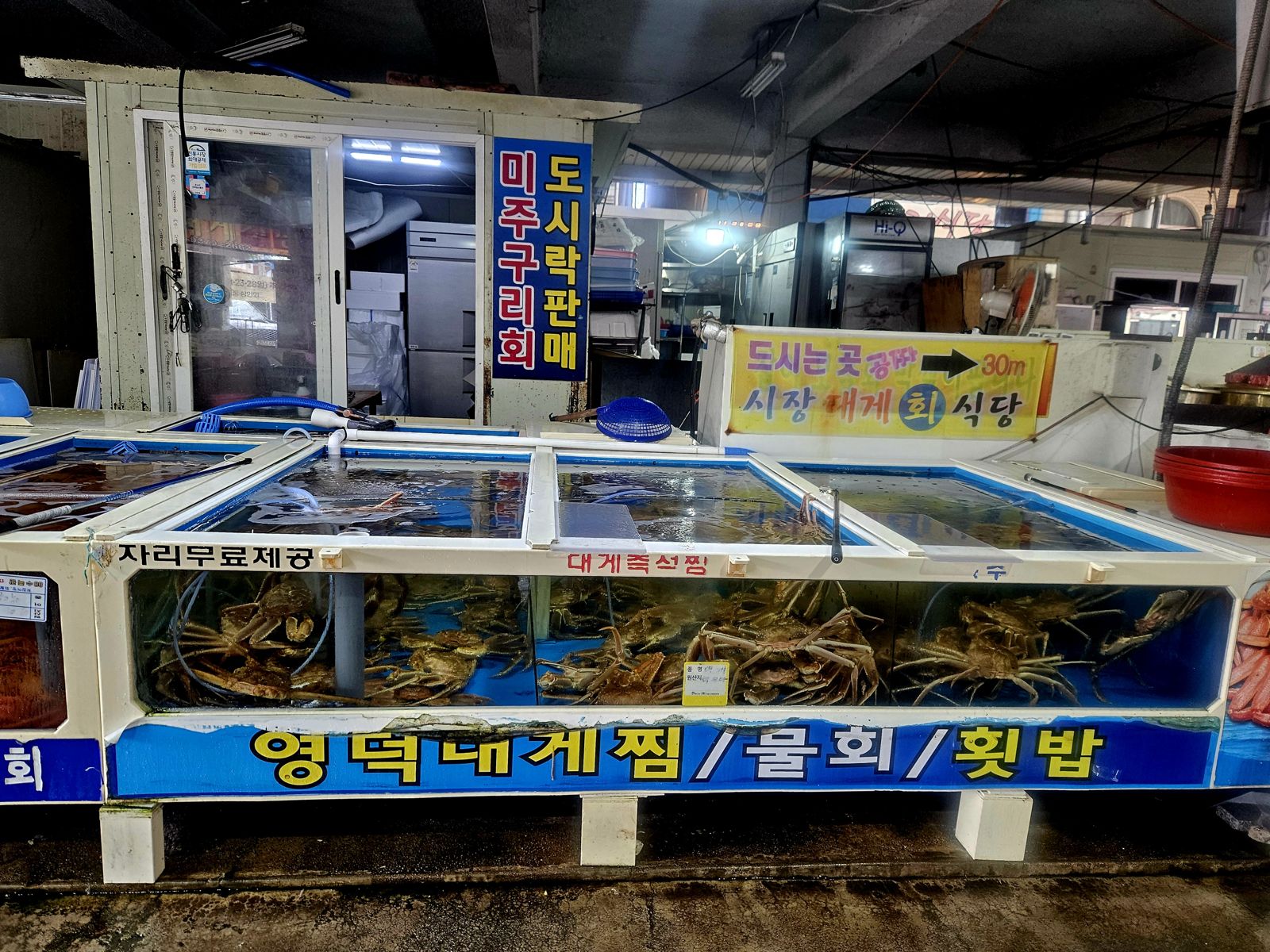
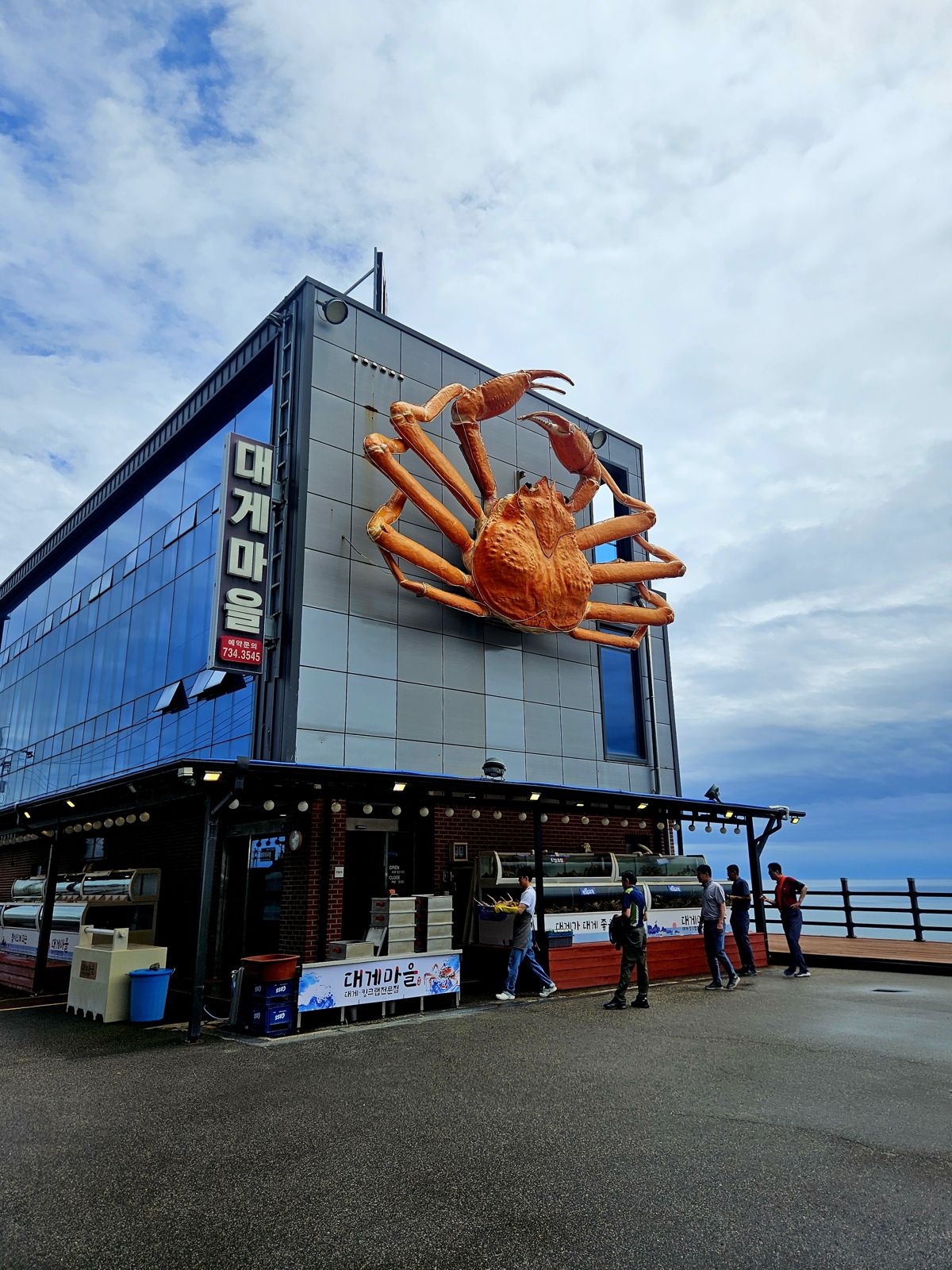
Tonight's stop: Ganggu is a small port town in Yeongdeok County, with about 6,000 inhabitants at the 2020 census. Its port is famous for its impressive snow-crab catches: more than 100 restaurants serve them in high season, drawing gourmets and visitors.
Saturday 14 June
Rain has a way of repainting a place's face. Koreans love lights; the smallest hotel glitters and the streets look like Las Vegas at night. But when buckets of water fall from the sky, it all takes on a seedy, sad look. When we get up at dawn to close the curtains properly, the clouds are so low you could almost touch them, and the river below is pierced by the drops. On top of that, since last night we've been receiving constant weather alerts from the district authorities warning of high risks of flooding and landslides and advising us to stay indoors. Reassuring.
This forces us to rethink our plans, because what do you do when it rains this much? We're not going to ride, especially along a steep coast where the hills plunge into the sea and mudslides can easily happen. Fortunately we can always take the bus to move on, and that's our backup plan if the rain doesn't stop. At 11 it hasn't given up, but it's starting to tire and turns to drizzle. When we leave the café where we had breakfast, it has even disappeared completely, and now it's very muggy. The clouds are still threatening, but we decide to try our luck on the bikes anyway, as we're starting to see patches of blue sky.
Off we go, and just as well, because a brilliant sun comes out. It's sunny and hot! We'd never have bet on that when we got up this morning. We make good progress, full of good cheer at having escaped an awful day. We even treat ourselves to a stop at the beach to picnic and swim. Clémence is in heaven; we'd told her we wouldn't be able to have much fun, so she enjoys it twice as much. We dig out the beach clothes we'd buried at the bottom of the panniers.
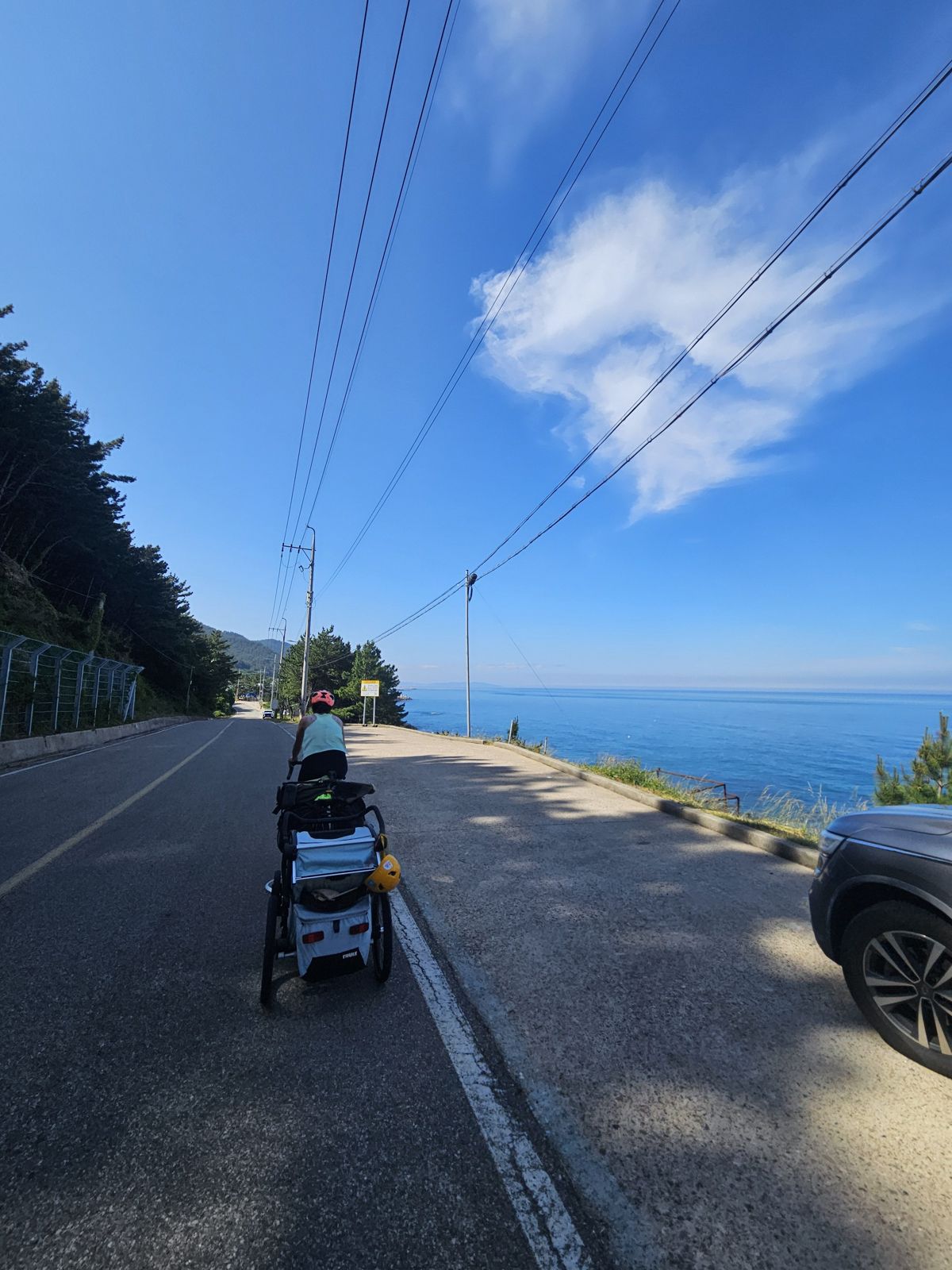
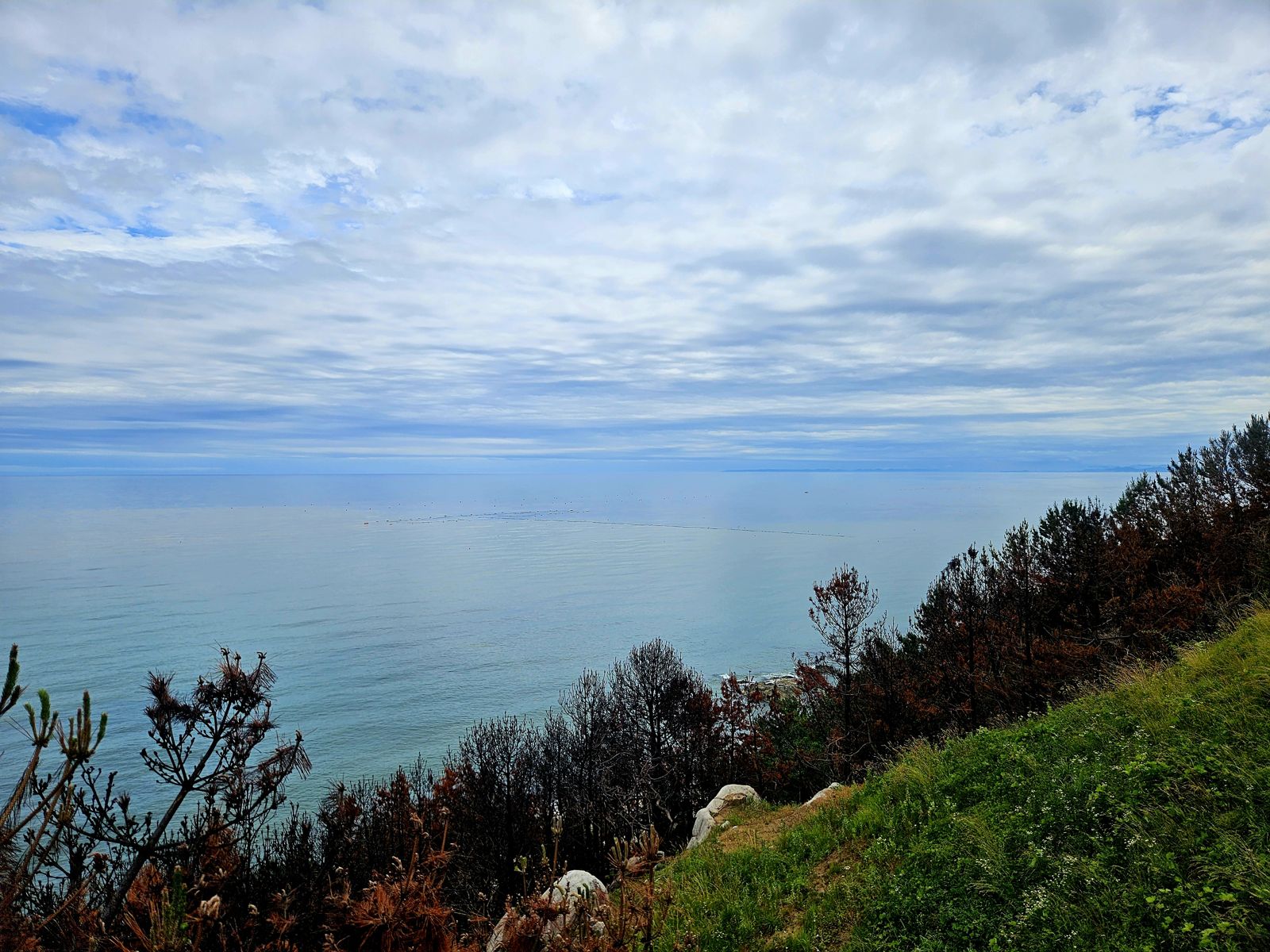
The east coast shows a wilder face. A three-storey building passes for a skyscraper, a change from the huge buildings of every Korean city. We have the sea on our right, the hills on our left, and together they create spectacular landscapes. The terrain is of course hilly; we do nothing but go up and down. We take turns on the bike pulling the trailer, in equal shares.
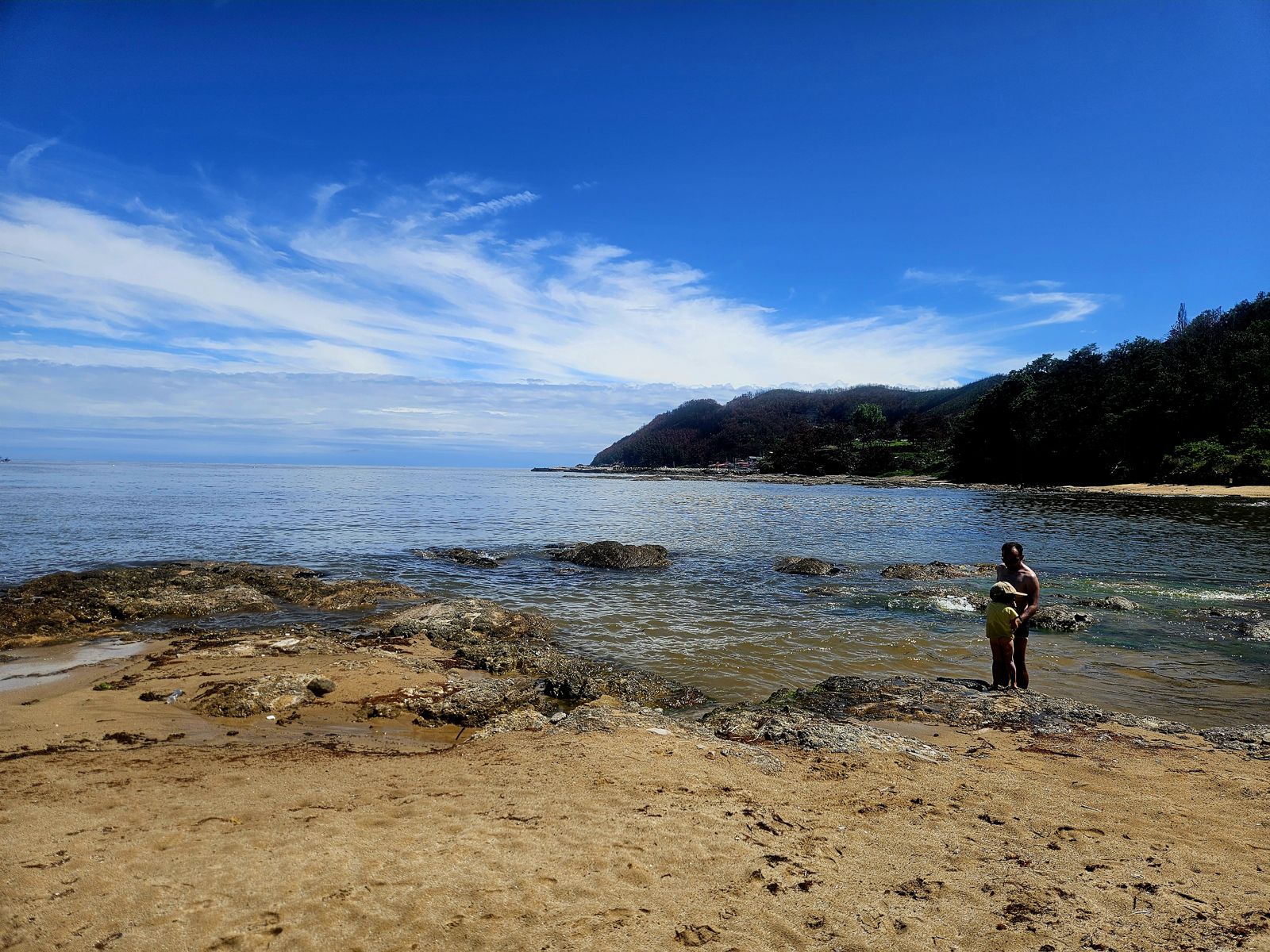
Yeonghae welcomes us at snack time, a destination we really didn't think we'd reach by bike today. Since we haven't booked anything, we go hunting for guesthouses and hotels. It's Saturday and most places are full. As we arrive at one of them, a group of Koreans comes out and we ask if they speak English. Fortunately one of the young men does, and he calls the number on the door to ask the owner if there's still room and at what price. Phew, there's one room left, which we take. It's basic and a bit expensive compared with what we've had so far, but where we are, Goraebul beach, is very popular with Koreans, which explains the fairly high prices. Anyway, it'll be just what we need to recover from a day that was a real emotional rollercoaster.
On the road