 ← PreviousDiscovering Jeju Island
With this oppressive heat, we've decided to take our time and go round the island very slowly. That's why we're staying in Seogwipo again today. The southernmost little city in South Korea has a few charms going for it.
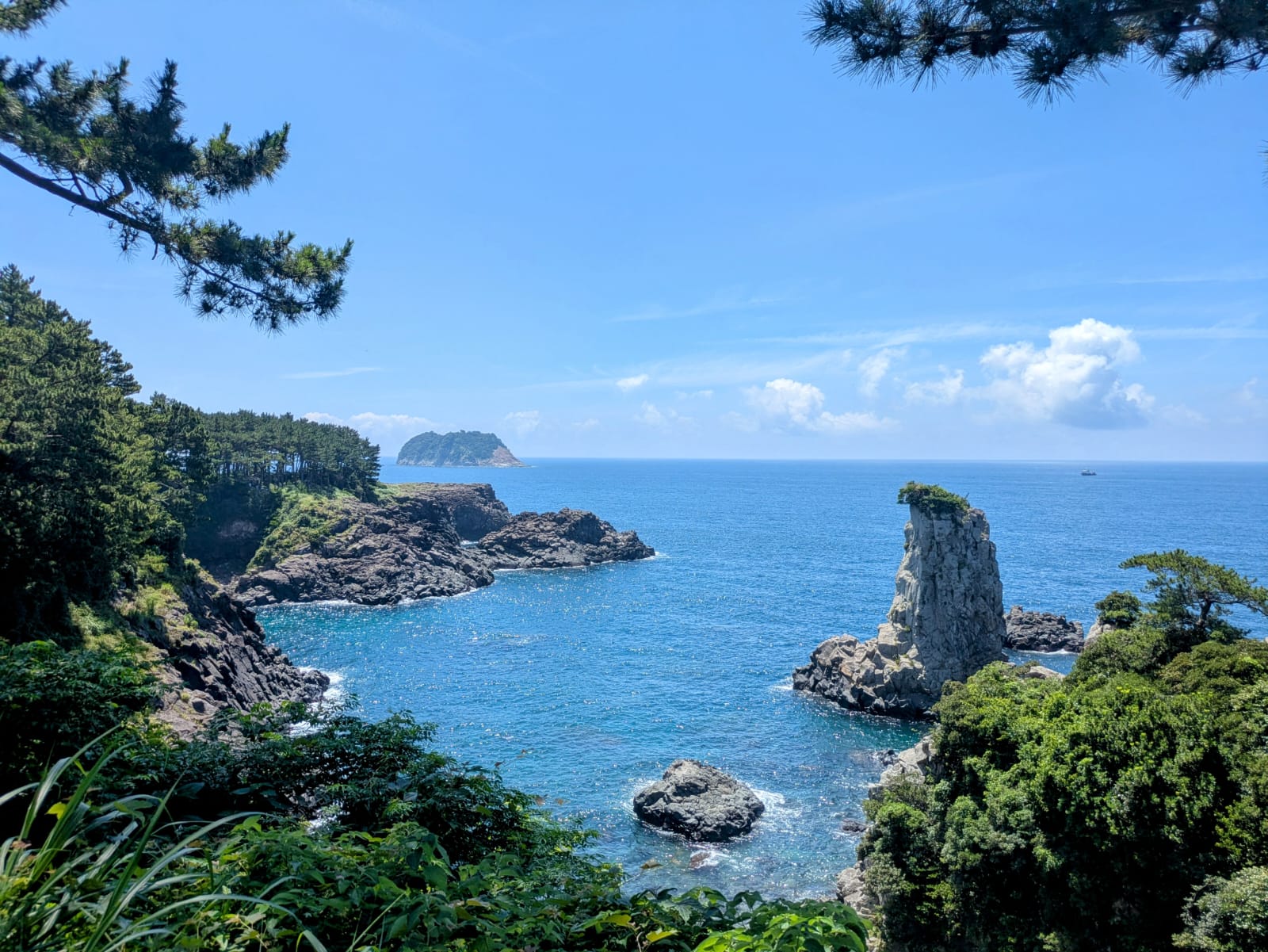
We let Clémence sleep as long as she likes this morning and turn up to the hotel breakfast around 9. It's disappointing: everything is cold and the choice isn't very varied — in short, too expensive for what we paid. That doesn't dent our legendary good mood; we drop our bags at reception and ride off to Oedolgae, a viewpoint on one of the island's great hiking trails, the Jeju Olle Trail. Riding light is an indescribable joy; every time, we feel we have Pogačar's legs, we go so fast.
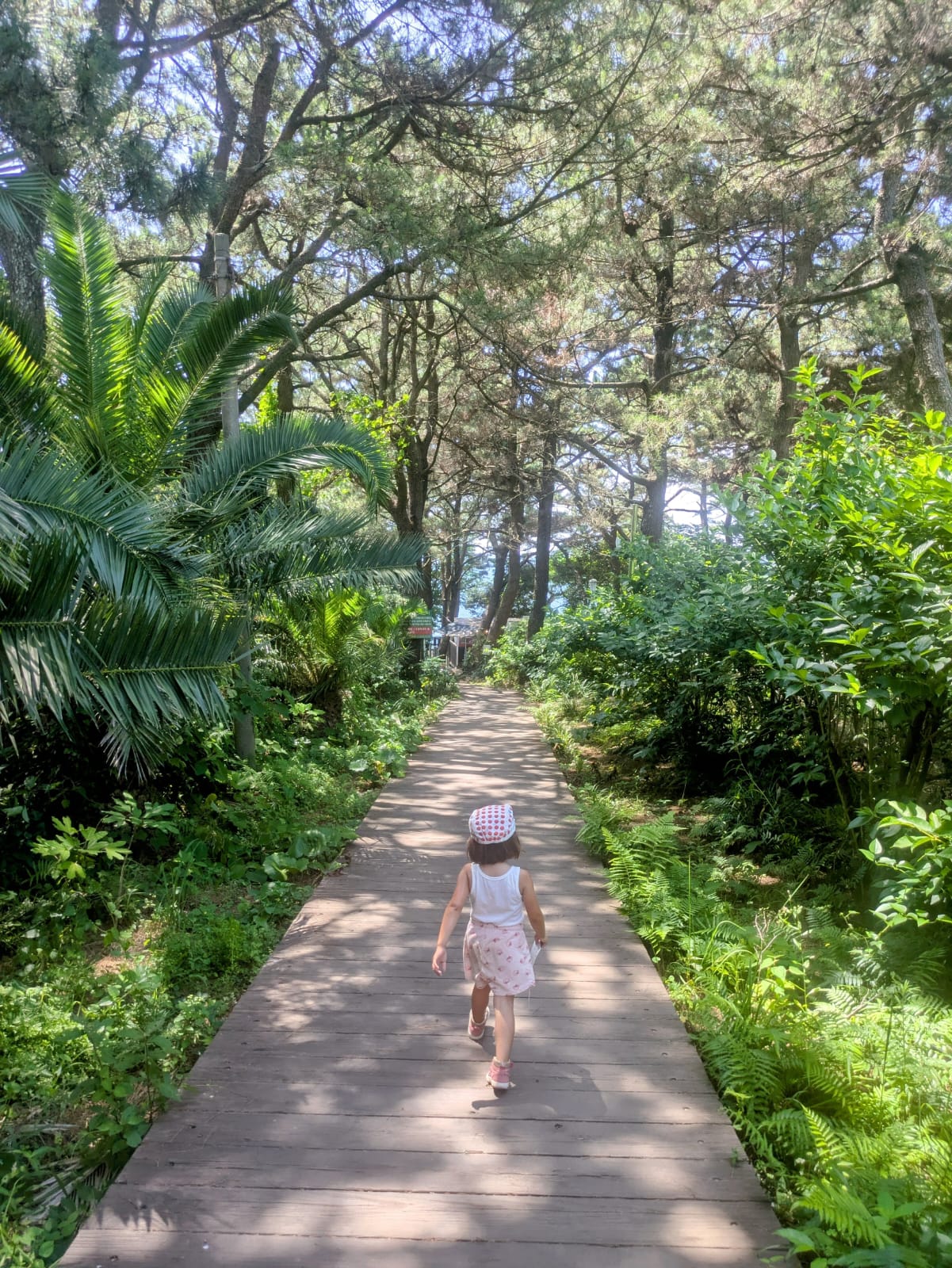
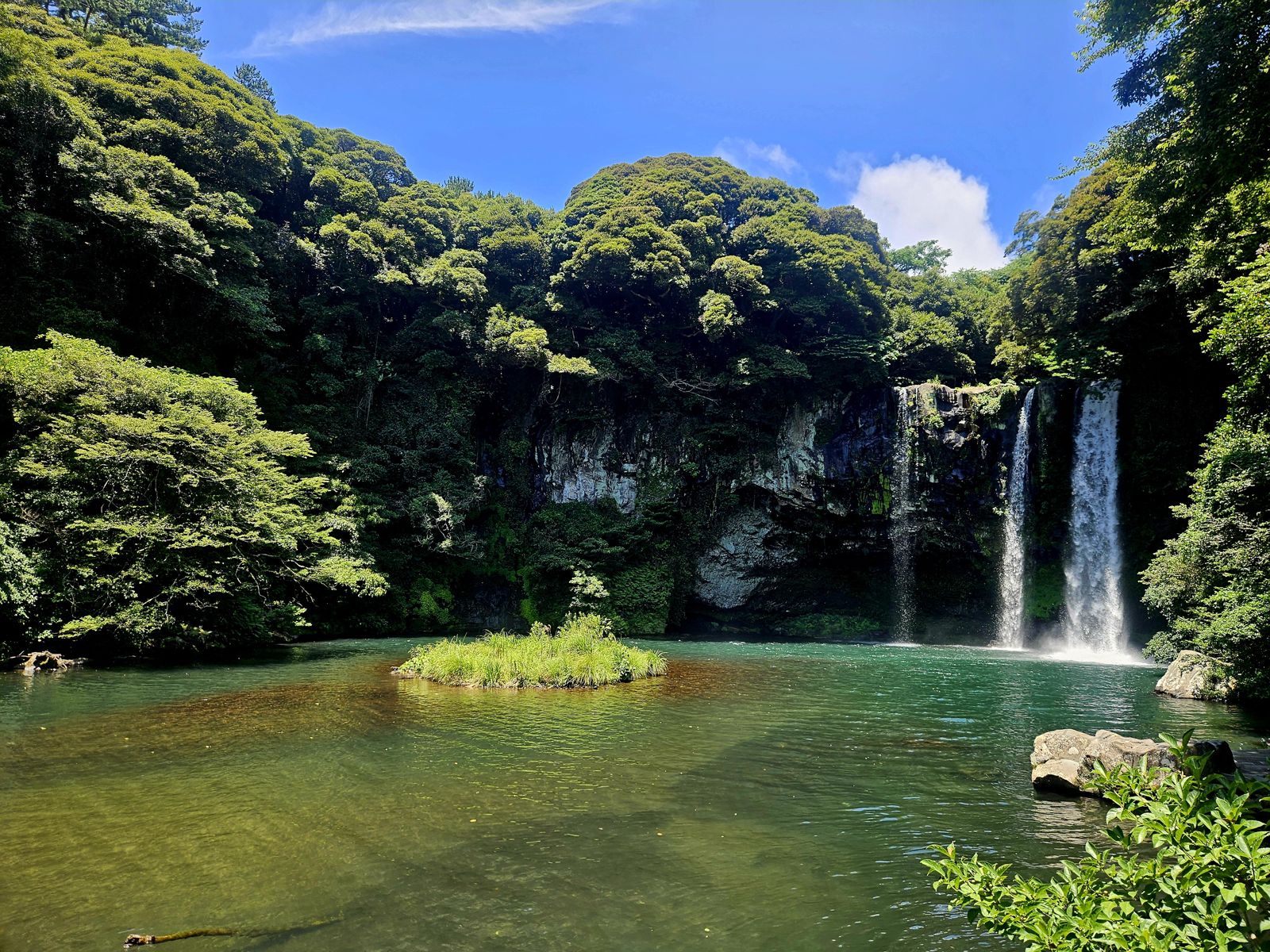
On the little trail, Clémence wins over a group of Korean retirees once again. She's given a pastry and a little postcard, but she still doesn't dare say thank you with "gamsahamnida". She knows as many Korean words as we do, which isn't saying much. Back on our bikes, we ride down a big hill to visit Seogwipo's main attraction: Cheonjiyeon waterfall. We know we've come to the right place when we arrive, as the car park is full of big tour buses.
As at every tourist site, everything is superbly laid out. It's easy to buy tickets, the signposting is very clear and the path is accessible to people with reduced mobility. You can even borrow a wheelchair or a pushchair for free, which we do, as ours is at the hotel. Following the path, we're less than five minutes from the waterfall, and we can only confirm its beauty. It's surely not the most beautiful on the planet, but it has the particularity of being right in town. The water comes from Mount Halla, the volcano whose last eruption dates back to the year 1007 and the highest point in Korea.
We then use our lunch break to wash our clothes at a launderette. We usually last a week between loads. On the way to the next hotel, we stop again at Jeongbang waterfall. Twenty metres high, it falls straight into the sea, making for a truly beautiful sight. We then have only a few kilometres left, and soon we're splashing about in the hotel pool.
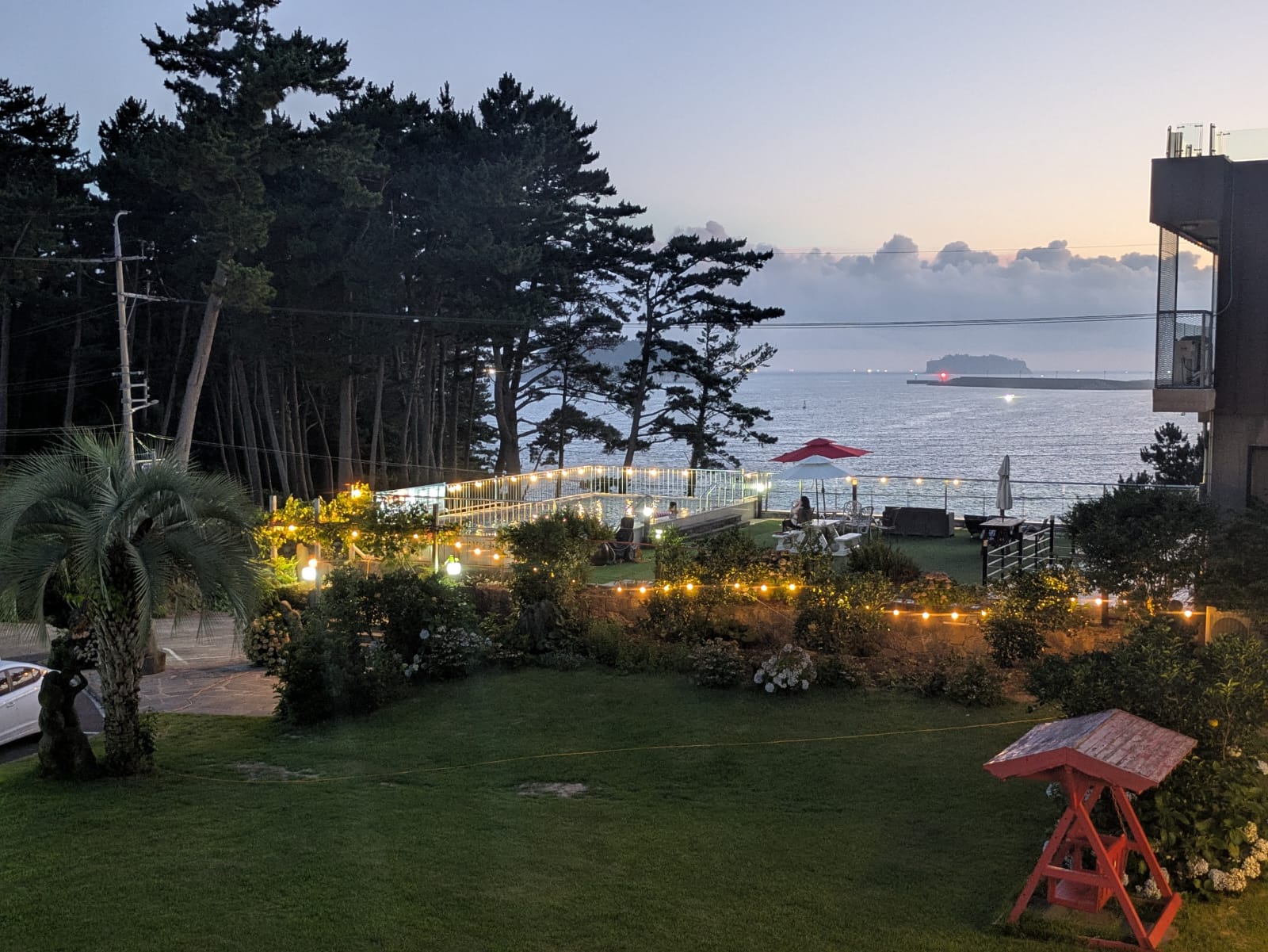
We also make the most of having an equipped kitchen to cook for ourselves. It's too rare when travelling, but it does us a world of good. The dish is hardly worthy of a Michelin-starred restaurant — noodles, eggs with dried seaweed — but it delights us. Clémence enjoys it too before falling into Morpheus's arms at 8 pm. Yes, playing in water is tiring.
Seogwipo (서귀포시), a port city on the south of Jeju Island, has around 216,000 inhabitants in 2025. Perched on a spectacular volcanic coast, it charms with its iconic waterfalls (Jeongbang, Cheonjiyeon), its Olle trails and its rich cultural heritage (Seongeup folk village, Sanbangsan volcano). It's a destination that skilfully combines nature, tradition and tourist activities.
Monday 7 July
Since we have a small flat, we make use of the kitchen for breakfast. On the menu: toast, scrambled eggs, fromage blanc and apple juice. A good way to start the day. Unfortunately for her, Clémence prefers to sulk over something trivial and eats absolutely nothing. She only calms down when it's time to leave.
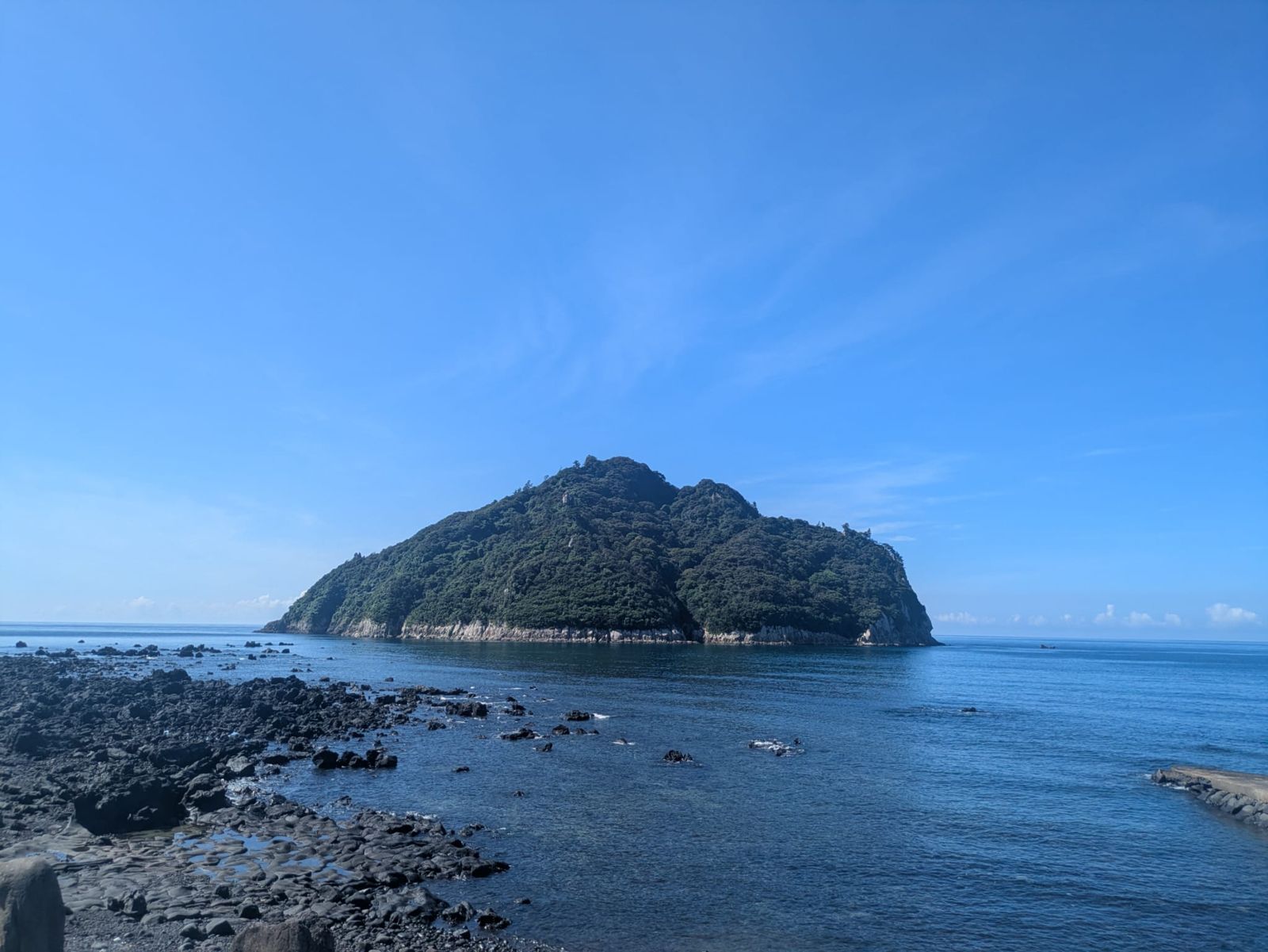
The Jeju Fantasy Trail sometimes lives up to its name, we have to admit. When the cycle route hugs the coast so closely you could almost dip your hand in the water as you ride, it sometimes leaves us speechless. The whole island is one big volcano. Sometimes a strange little hill rises out of the glassy sea, as if placed on the water. We keep stopping for photos and don't make much progress, which doesn't matter, as we're only riding about thirty kilometres today.
We'd spotted a restaurant with a water play area, which isn't common, but it only opens at weekends and during school holidays. Korean children only have one month of summer holidays, in August. We have lunch there anyway, as the menu looks appetising and the owner is very friendly and speaks English. He even offers us a Jeju tangerine panna cotta for dessert (well, he offers it to Clémence). She's not keen, so we eat it without a qualm. The island is especially famous for its tangerines, which are seedless, very easy to peel and extremely sweet. Koreans flock from all over the country to pick them, and you can easily buy all sorts of products made from the citrus (chocolate, jam, soap, cream and so on). Locals have even made it their emblem, with lots of orange merchandise (soft toys, caps, hats, keyrings and so on).
Our next stop, Sogeummak beach, is two kilometres past the hotel. When we get there, the water is surprisingly far away. The beach is at least a hundred metres wide and you have to walk a long way across the sand to reach the sea. The place is paradise, looking once again like a Greek lagoon. It's a joy for any parent, as Clémence can touch the bottom a long way out and we can play without worrying.
While we're fooling around in the water, Cassandre turns her head and says: "Isn't the towel in the water?" It is! We run off to save what we can. Our clothes are soaked, and so is the towel. Fortunately we got there in time for Cassandre's little bum bag not to be completely soaked. It holds the cash and our bank cards. Our phones also narrowly survived, more by luck than skill. We move our things a little further, but the tide is coming in fast. So we give up and carry them back to the grass with the bikes to dry.
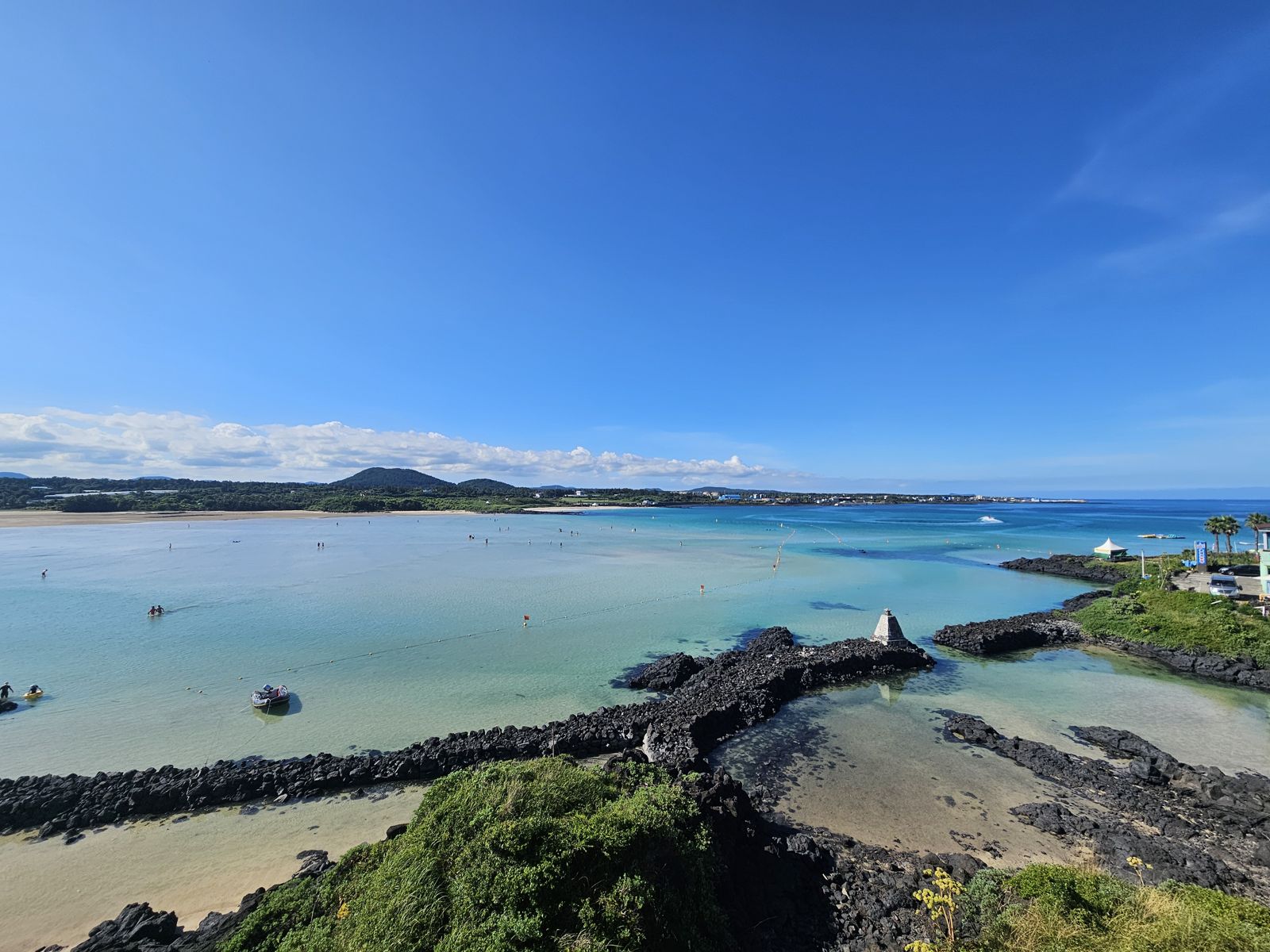
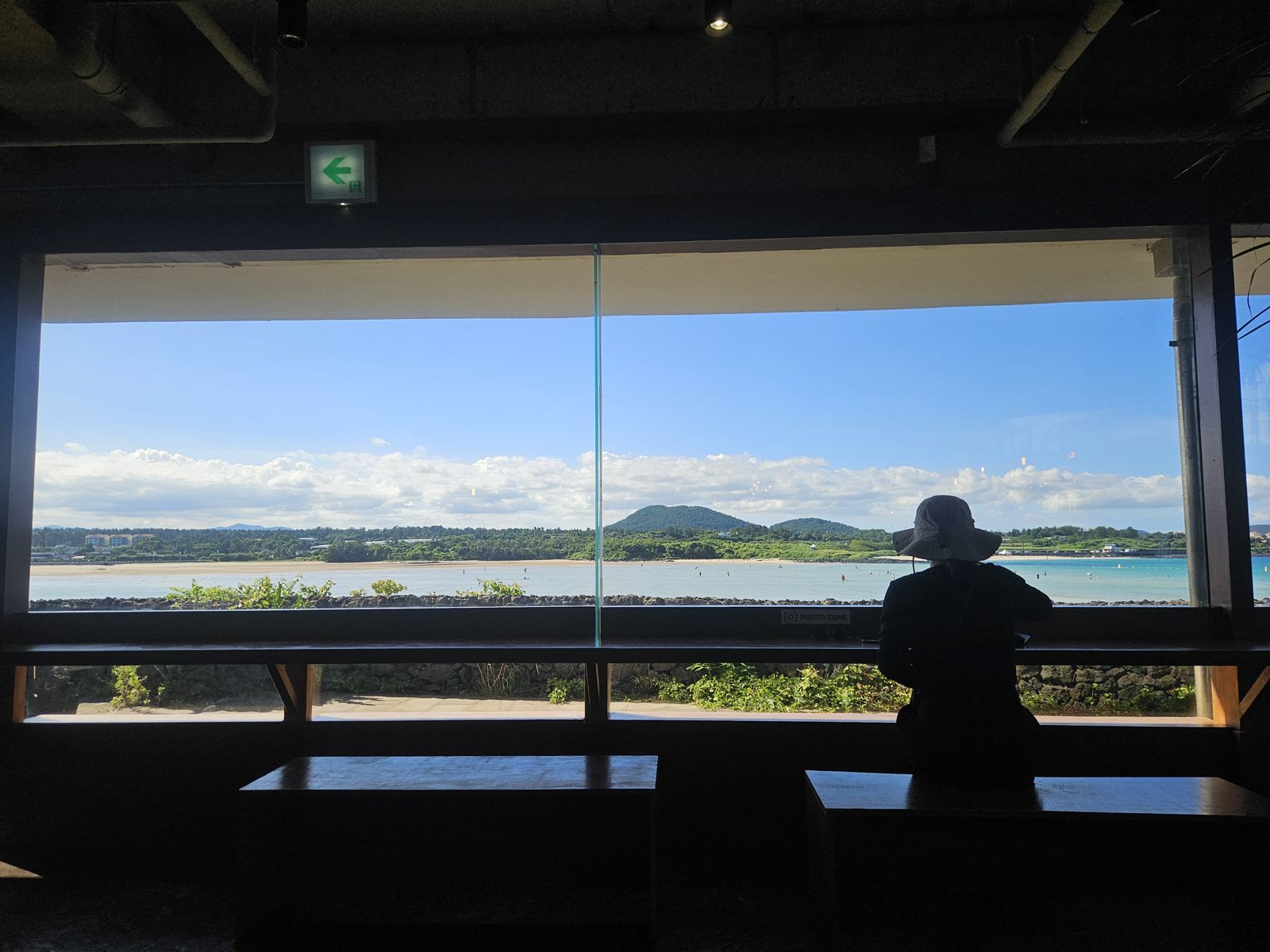
This little mishap doesn't spoil our fun and we keep enjoying the beach. It's fascinating to watch how fast the water rises; it has already swallowed at least fifty metres by the time we leave for a snack. From the café with its stunning view, we watch it still creeping forward. We ride slowly to the hotel, which is only a stone's throw from the beach. But nobody is there to welcome us. Stéphane calls the number given, but he doesn't speak Korean and the person on the line doesn't speak English. We have to call three times before the owner comes to look at the car park and realises we're there.
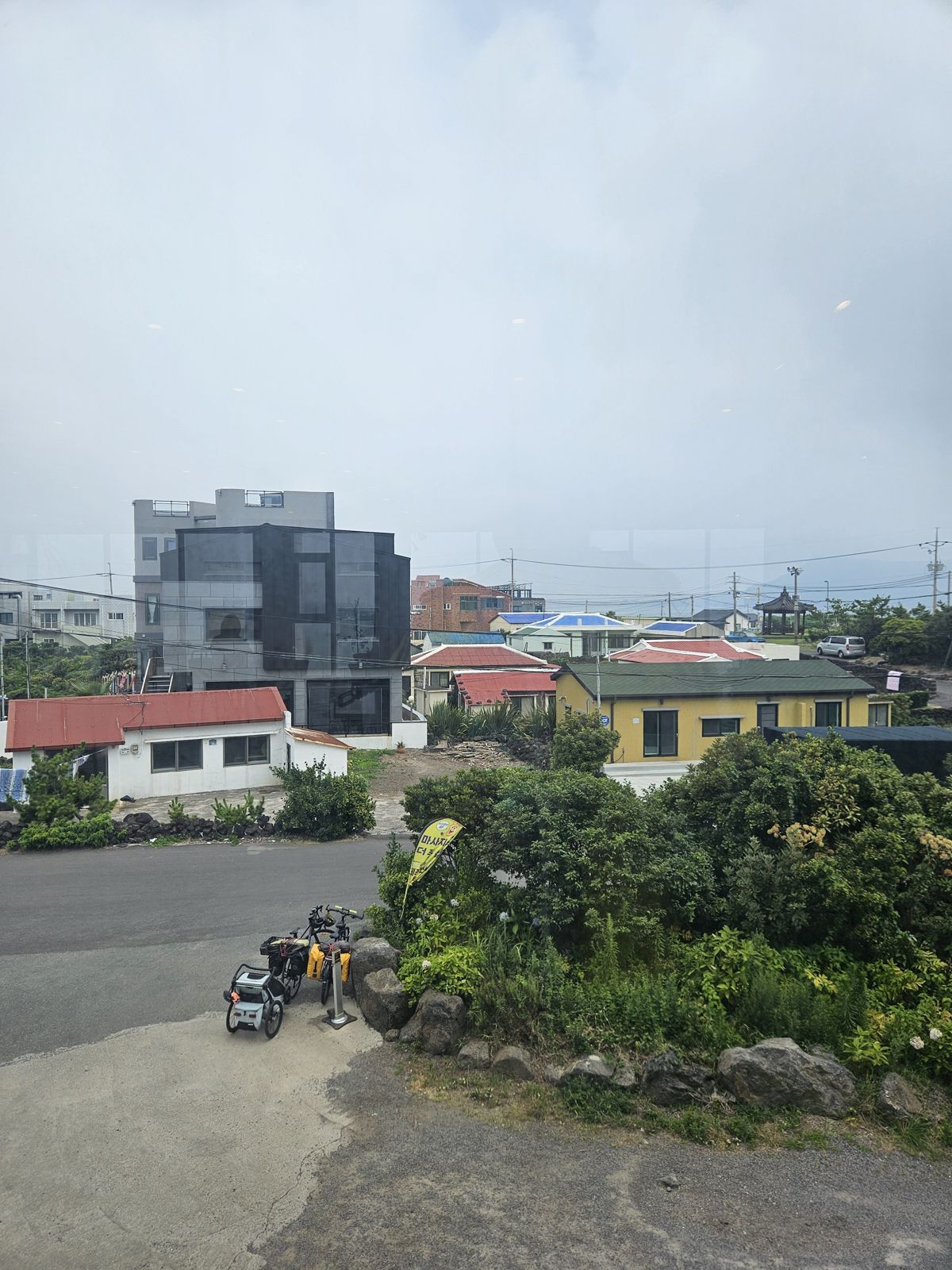
He hadn't seen our booking, so he wasn't expecting us. He's really sorry and very friendly, so we happily forgive him. His guesthouse is all solid wood and it's as hot as a sauna inside. Fortunately the room is air-conditioned. After a much-needed shower, we go out to eat in the little town. There's a bit of life, and we're surrounded only by locals in the little Japanese restaurant where we sit down. Jeju is a very touristy island, but you only feel the density of holidaymakers at the most popular spots. The island still has plenty of hidden secrets.
Tuesday 8 July
The guesthouse owner has left us eggs, toast and tangerine jam for breakfast. Unfortunately he's not there to say goodbye this morning, as he works on a plantation. After a good meal, we leave fairly early, as we're heading to a major attraction, at least for Clémence: Jeju Aquarium. Even though we're on an island, it's the biggest in all of East Asia! To get there, we have to brave about twenty kilometres into an awful headwind that has us moving at a snail's pace.
We stop for lunch just before reaching our goal and are surprised to find ourselves among tourists again. They're not hard to spot; the outfits are immediately more colourful. Cassandre and Clémence go to the aquarium on their own, as the price is prohibitive. Meanwhile, Stéphane has a puzzle to solve.
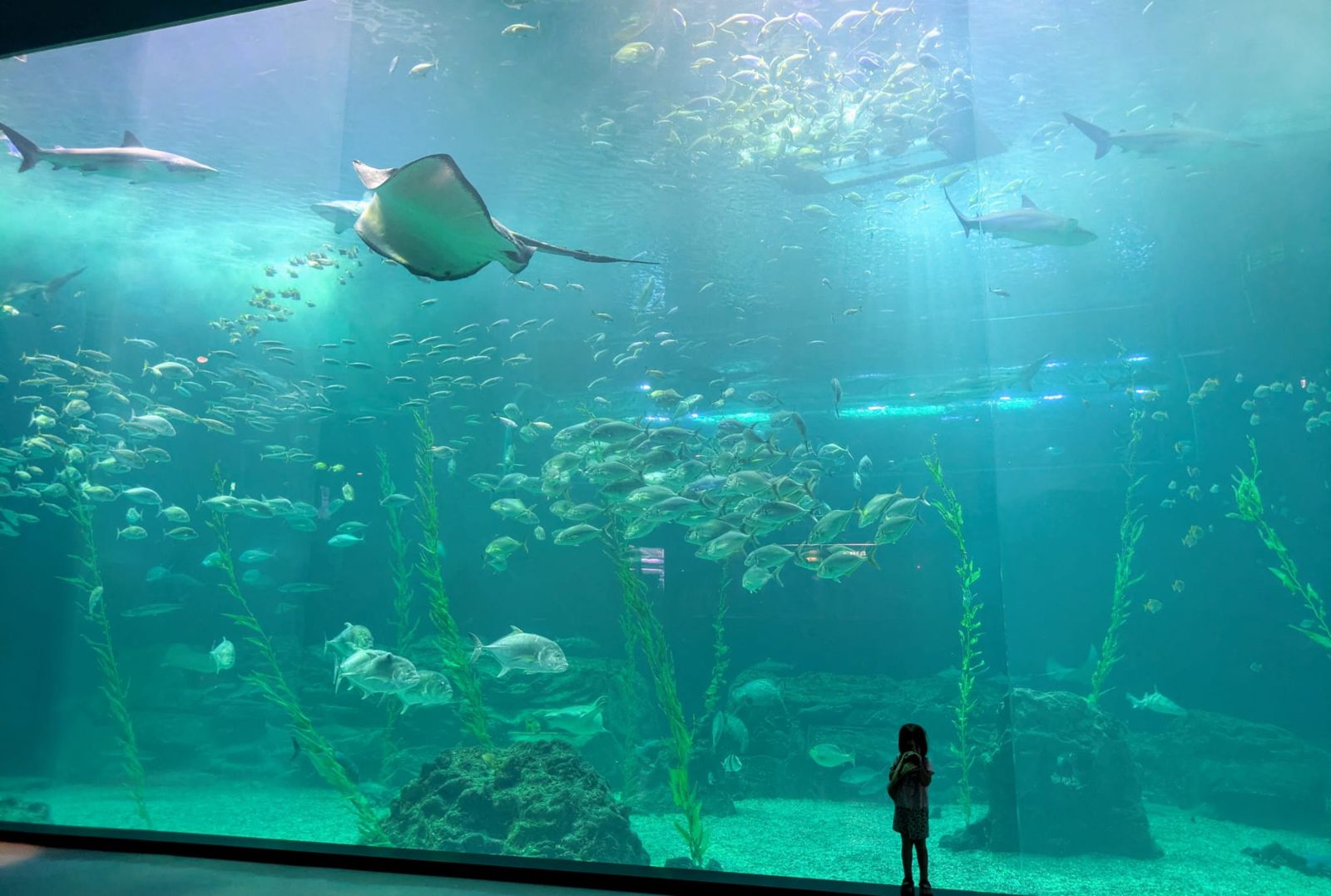
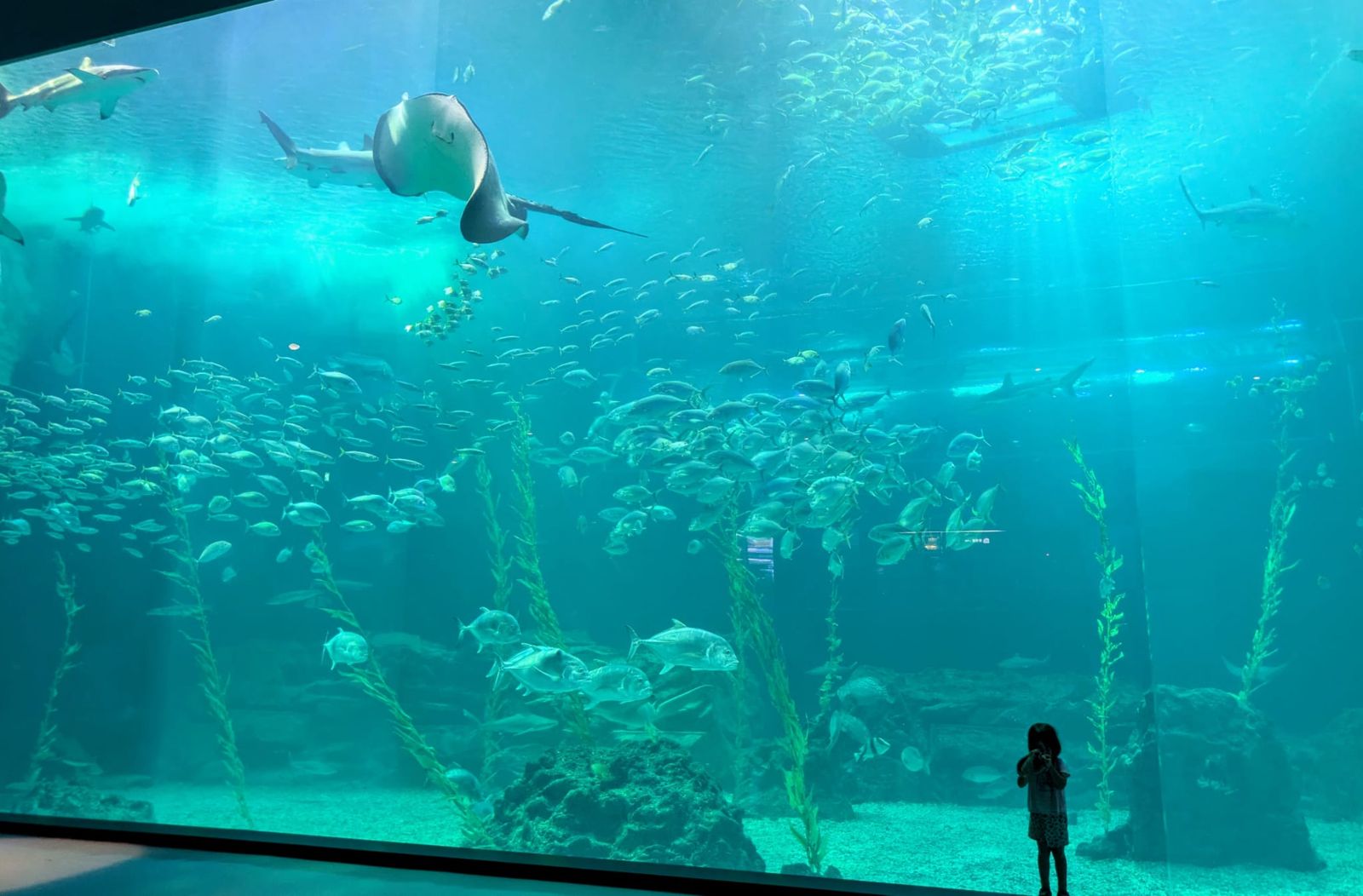
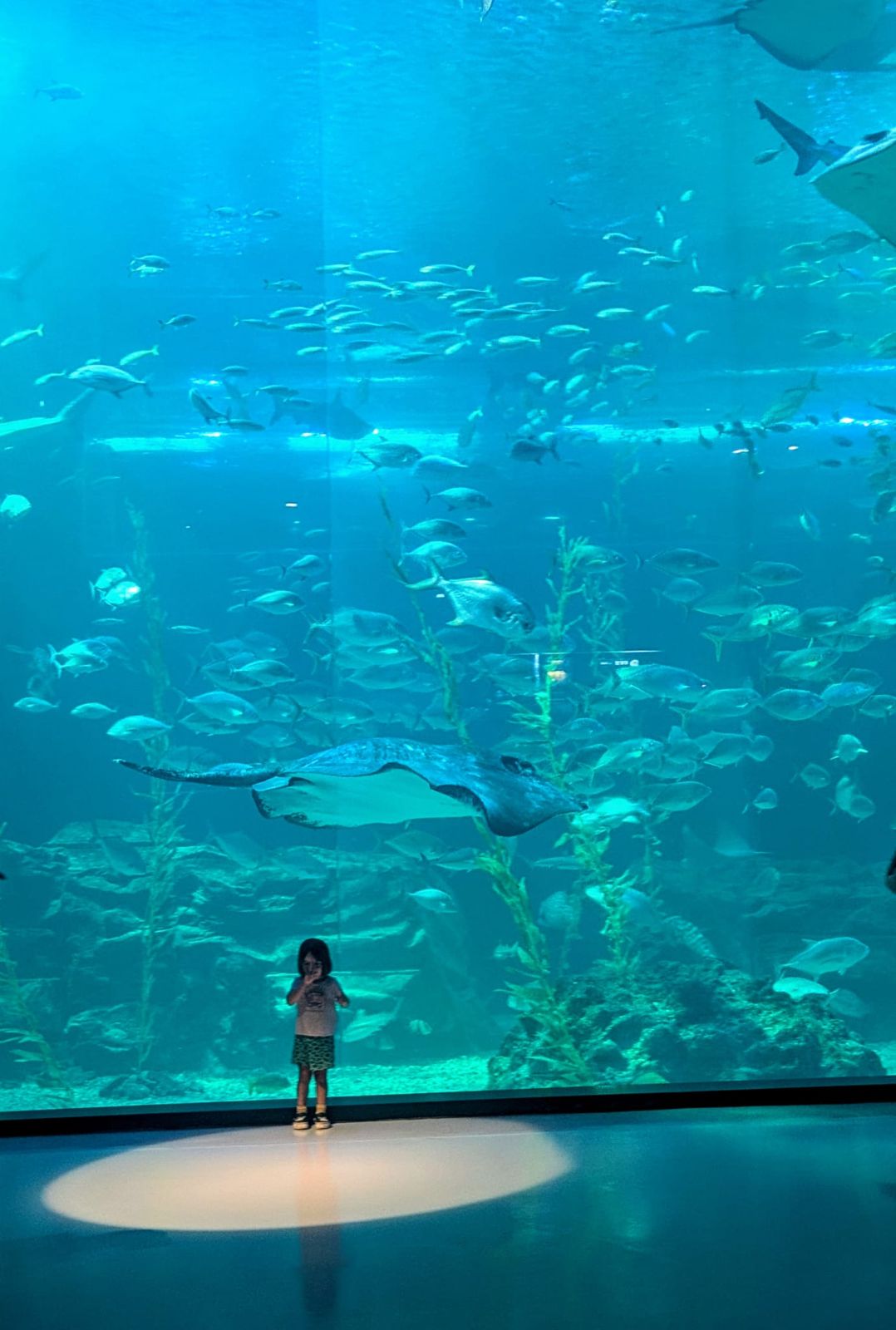
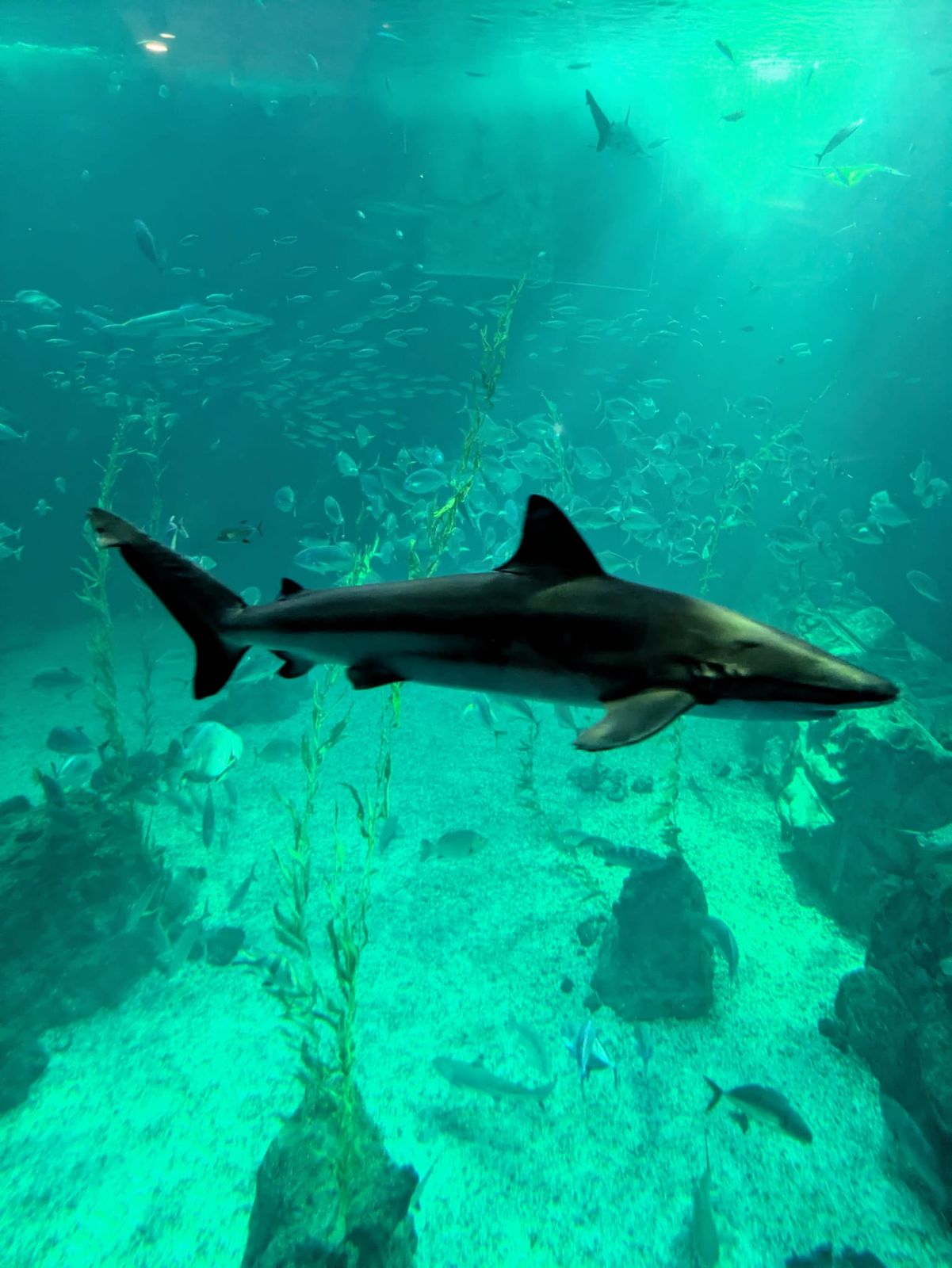
The information online about Korean ferries is wrong, and the ones we'd planned to take no longer run. To get back to Busan, we'd need to take a boat, two buses and probably two days of travel. So we've decided to fly from Jeju airport to Fukuoka in Japan. But for that we need to find bike boxes. So Stéphane sets about writing to every bike shop in the city, in English and Korean, to find the holy grail of the cyclist taking a plane. The girls come out of the aquarium delighted; they've seen amazing things!
For the first time since we arrived on Jeju, the weather is grey. The clouds are low, and the black-rock coast looks like Scotland. We're not complaining, as we're no longer sweating litres every kilometre. Our hotel isn't far now, but we take a little beach break to perfect our sand constructions and water channels with Clémence.
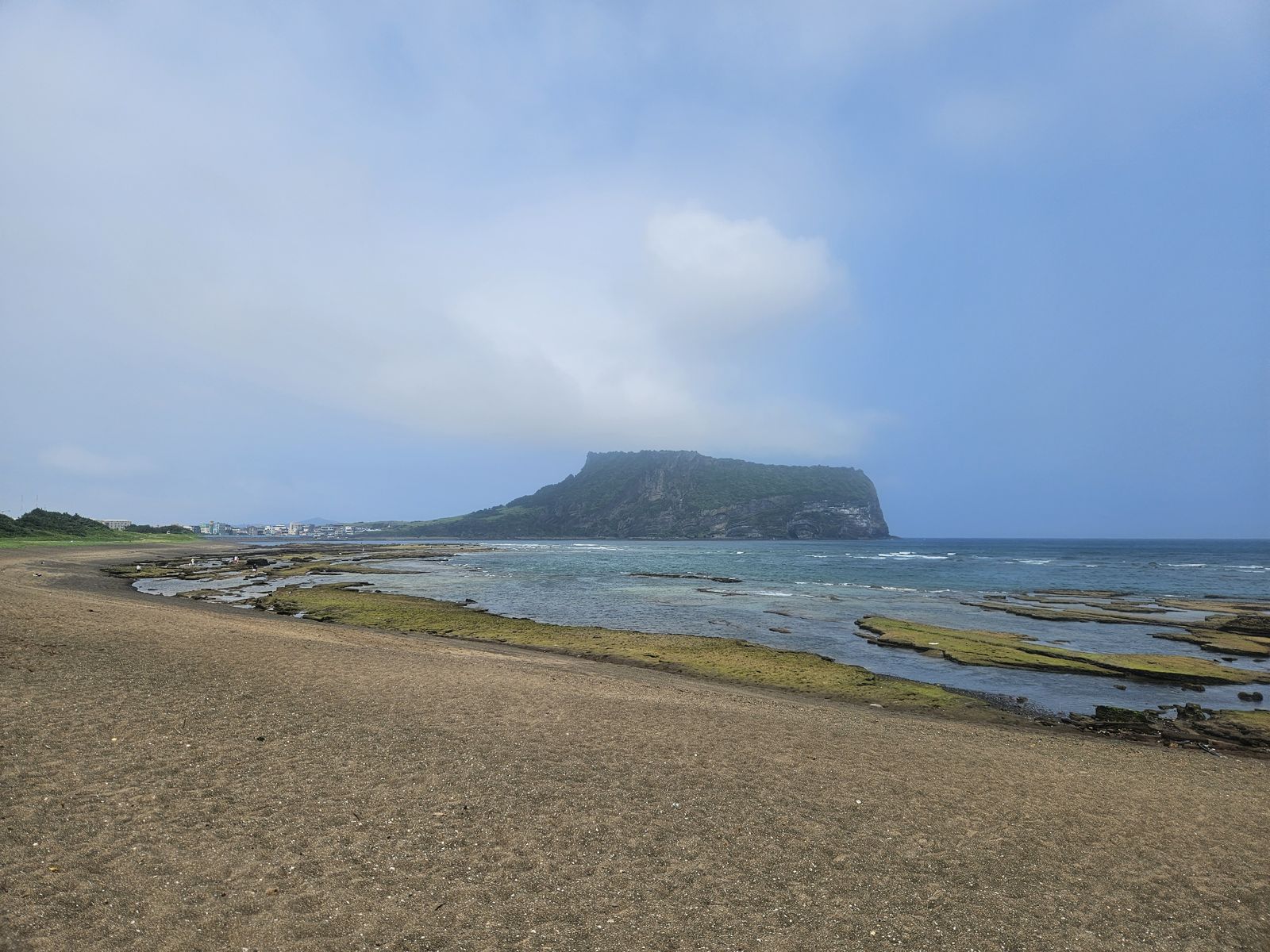
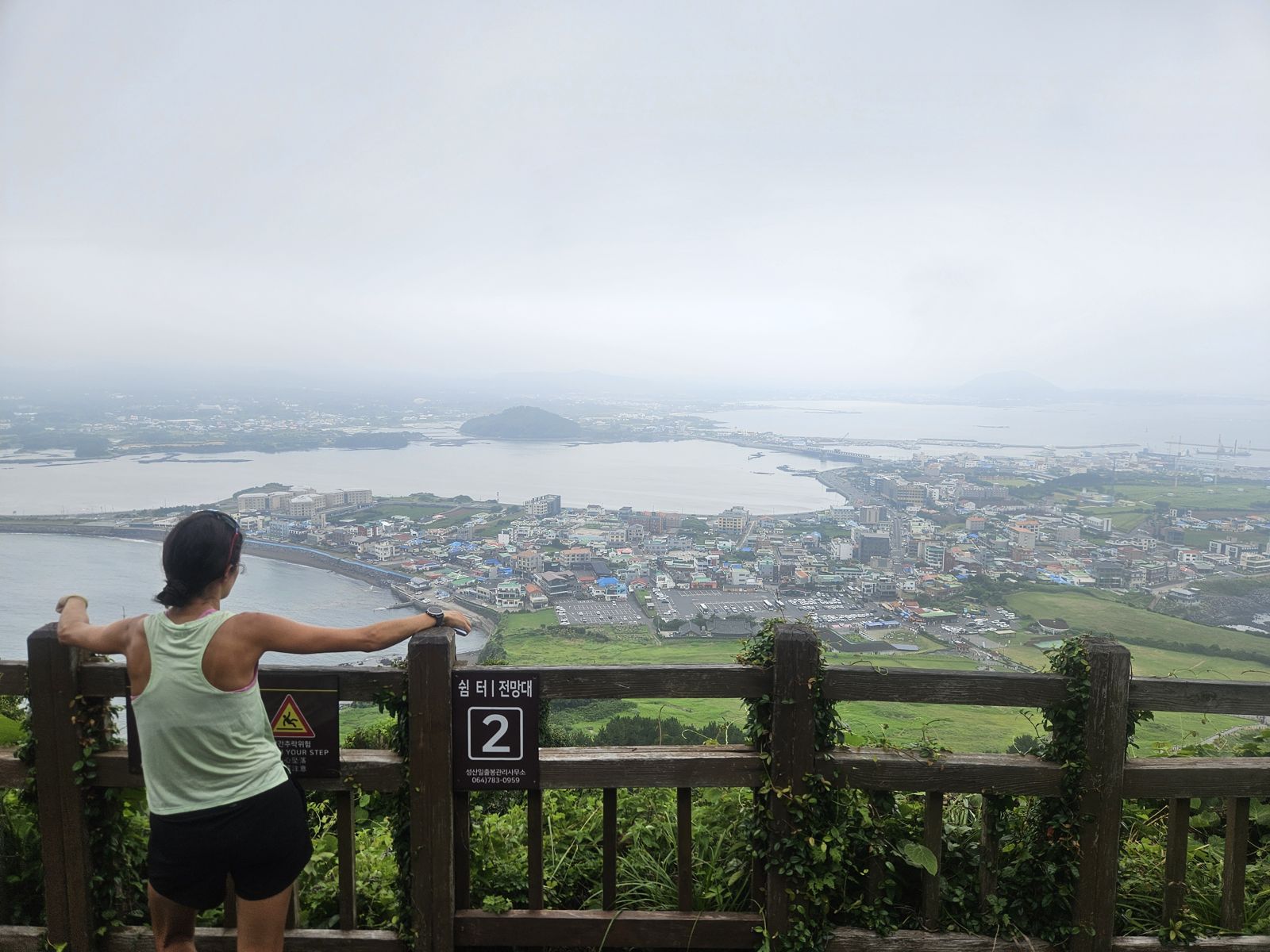
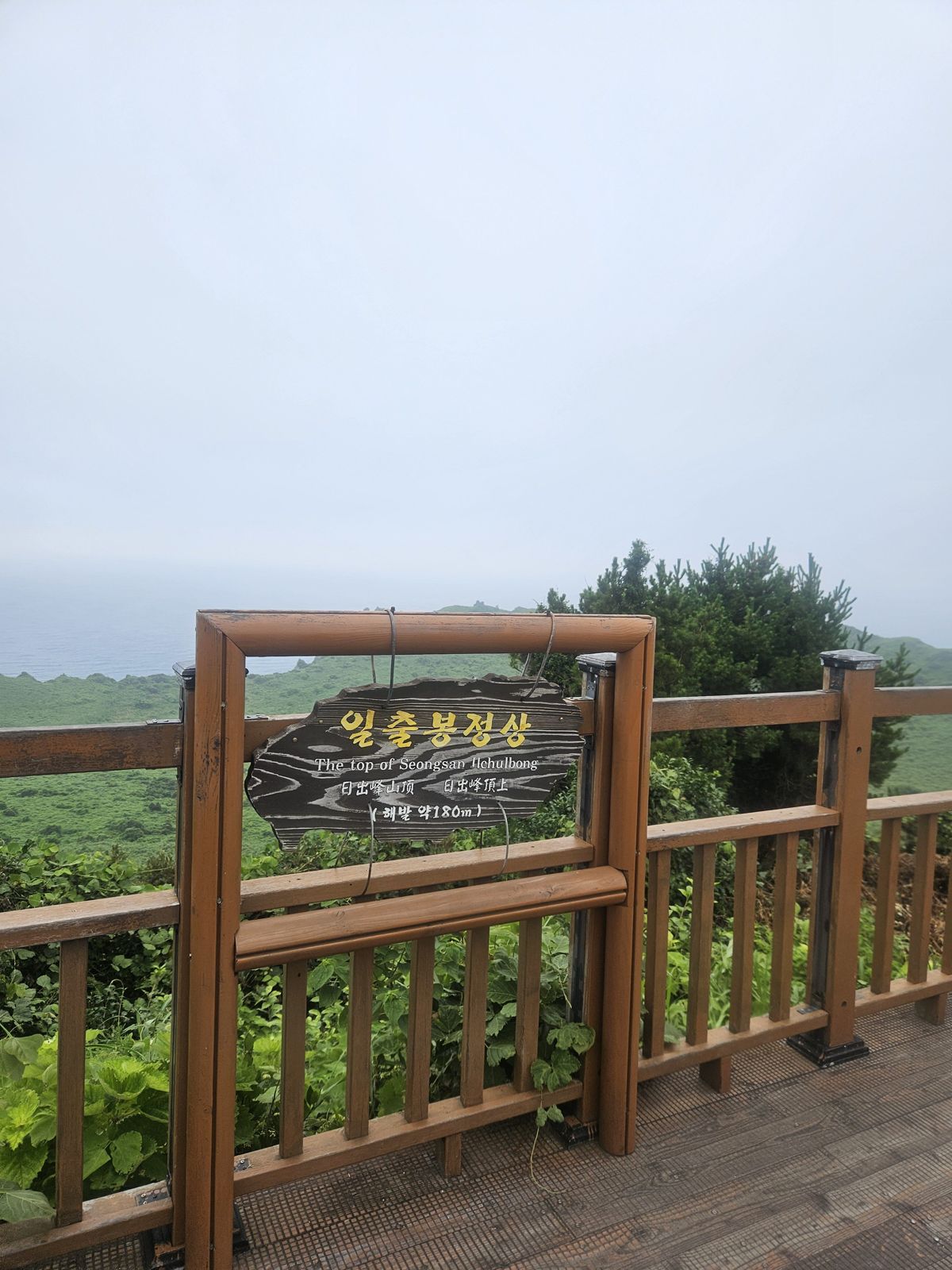
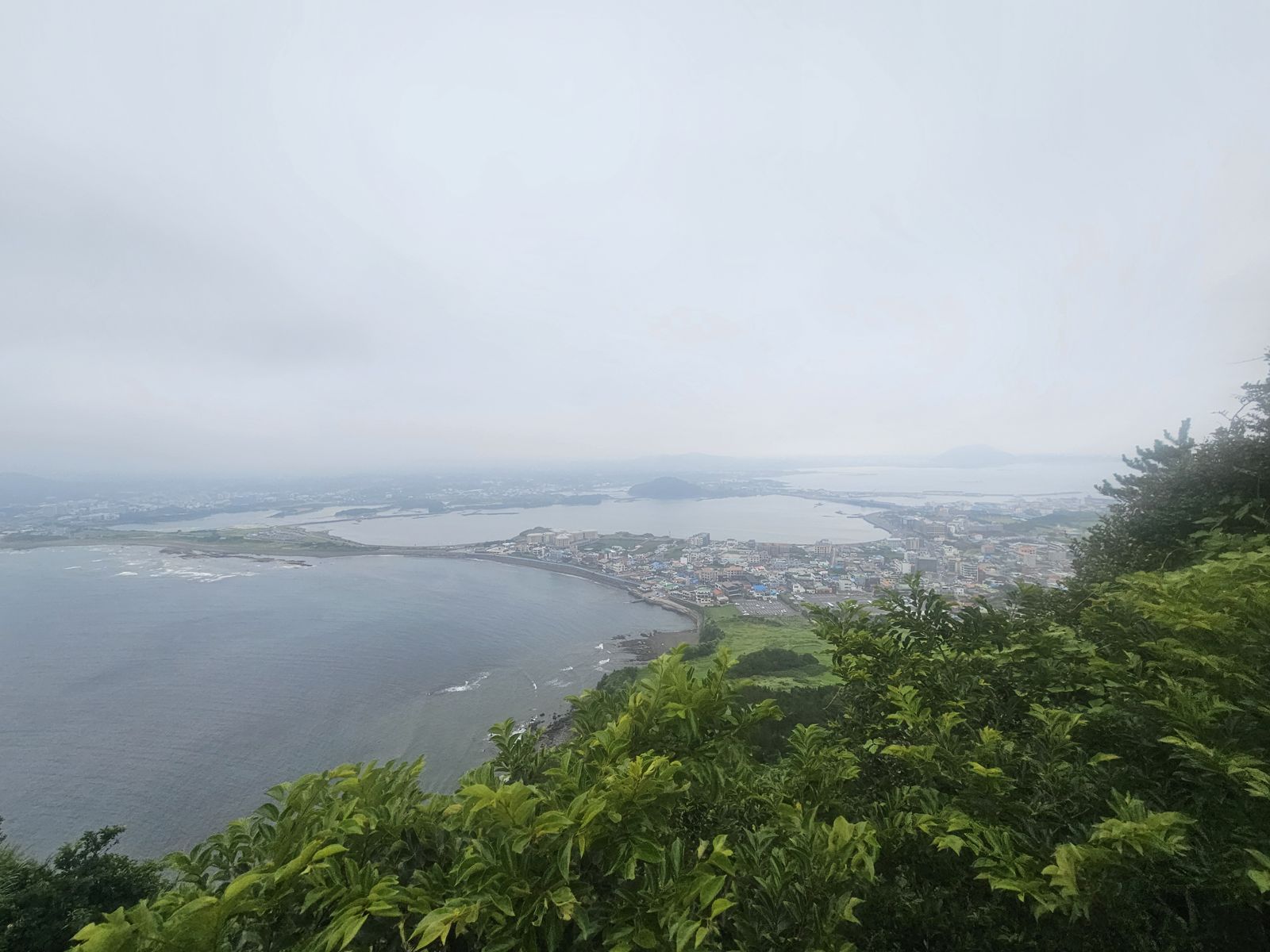
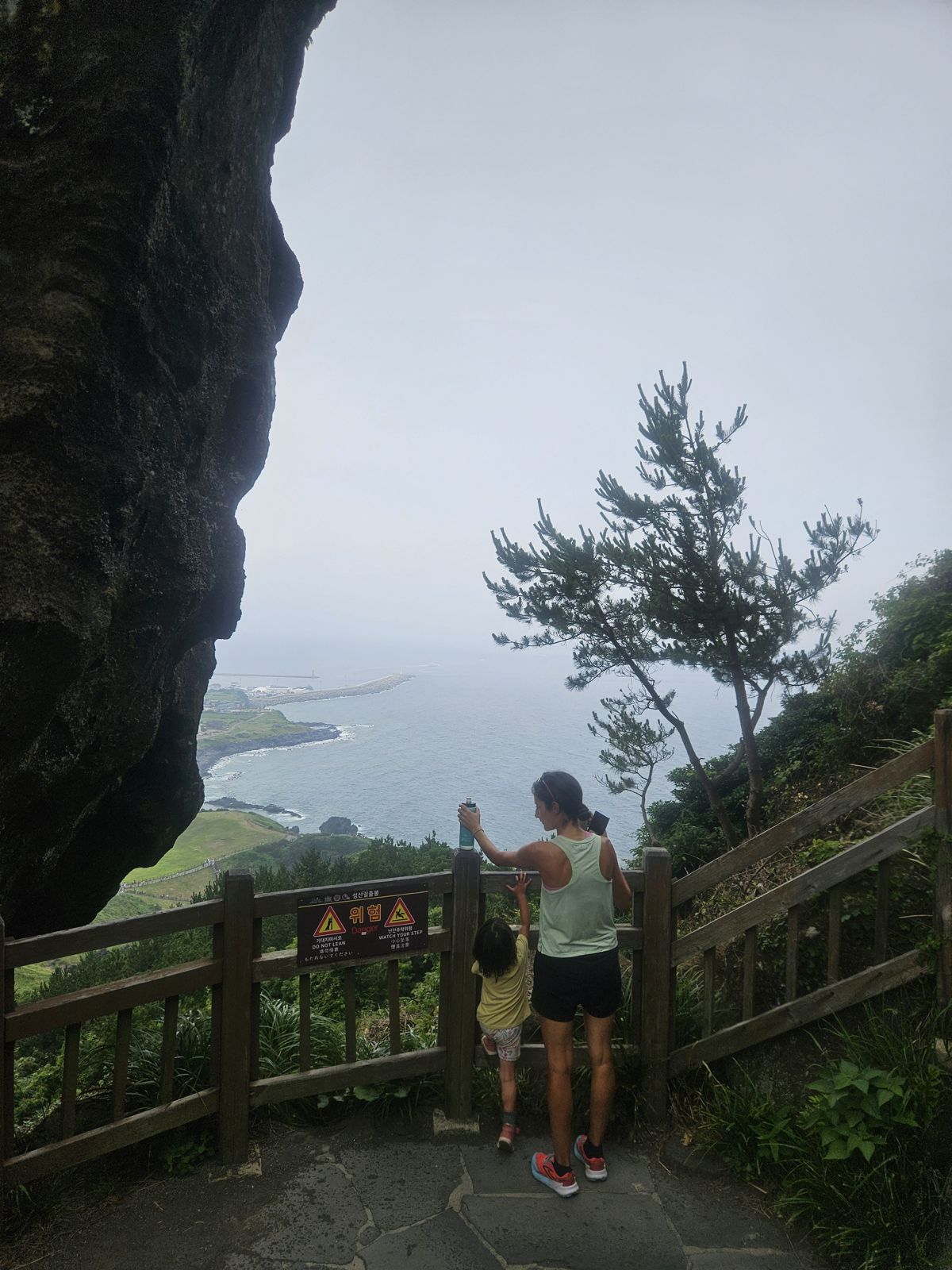
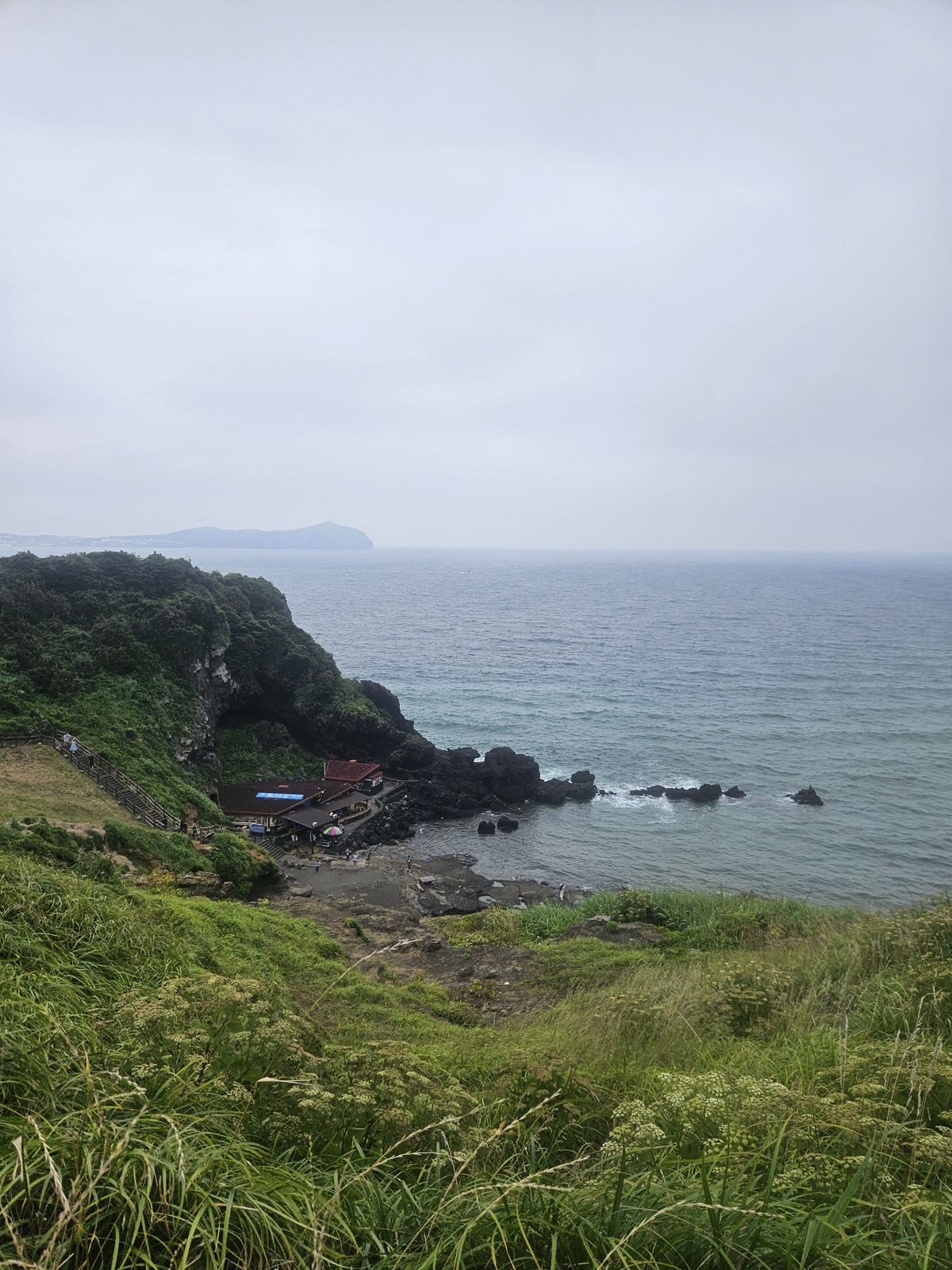
After a quick shower in our room, we head straight for Seongsan Ilchulbong. It's a huge crater, the scar of a hydrovolcanic eruption. You have to climb 250 metres of steps to get there, and Clémence climbs them all without help, which greatly impresses the other walkers. The crater is truly impressive: completely covered in grass, it forms a huge bowl that looks as if it were shaped by human hands. Apparently the sunrise is spectacular, but we don't have the faith to get up at 5 am to see it. We'd rather take people's word for it.
On the road