
 ← PreviousIsland-hopping in the Sinan archipelago
From Jeongeup to Gunsan, our journey back towards Seoul continues through misty mountains, summer rain and unexpected encounters. Between the crushing heat of the valleys, the spontaneous generosity of Koreans and the still-vivid traces of the colonial era, these few days give us a concentrated dose of truly unusual experiences.
Monday 25 August
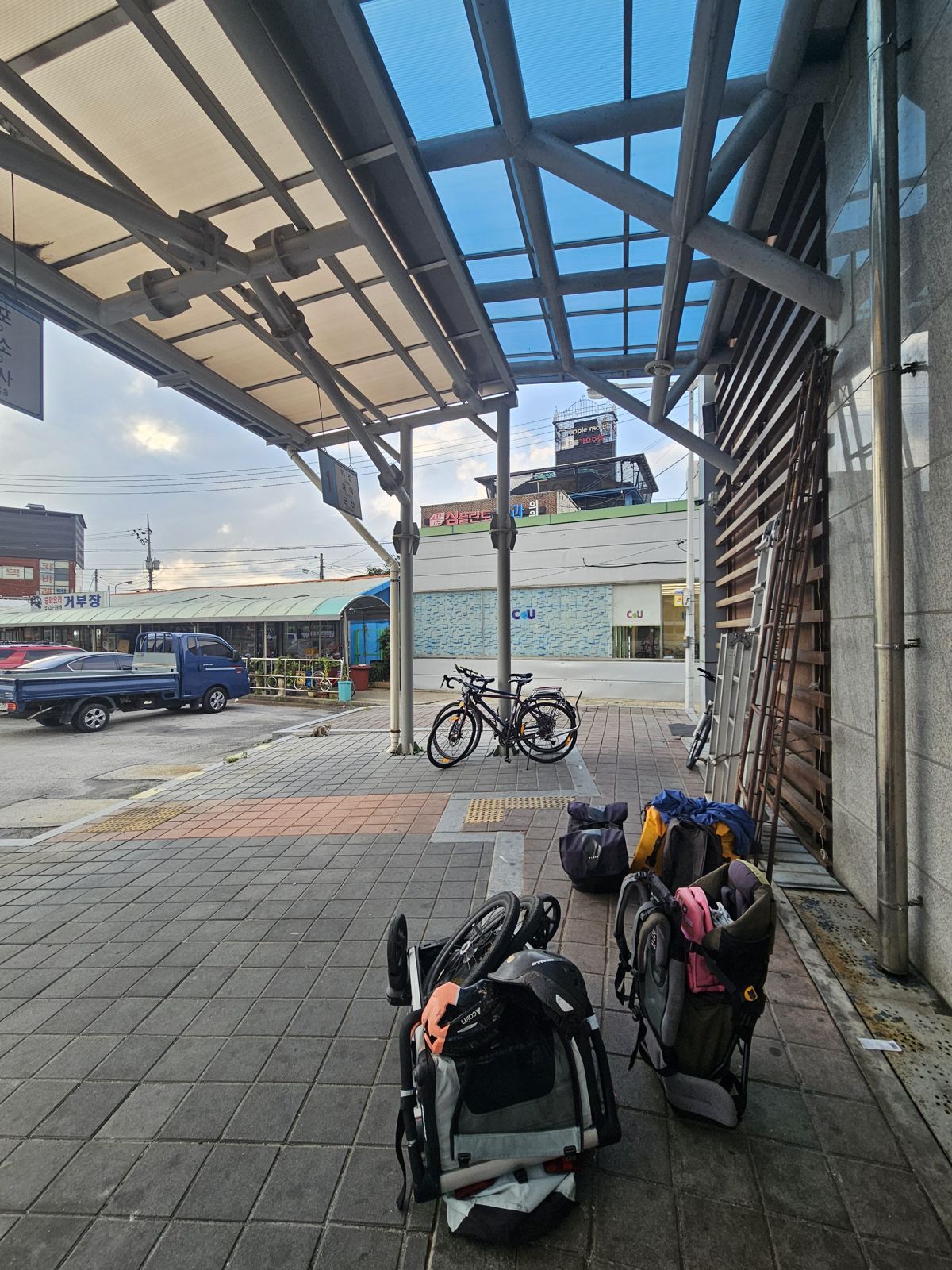
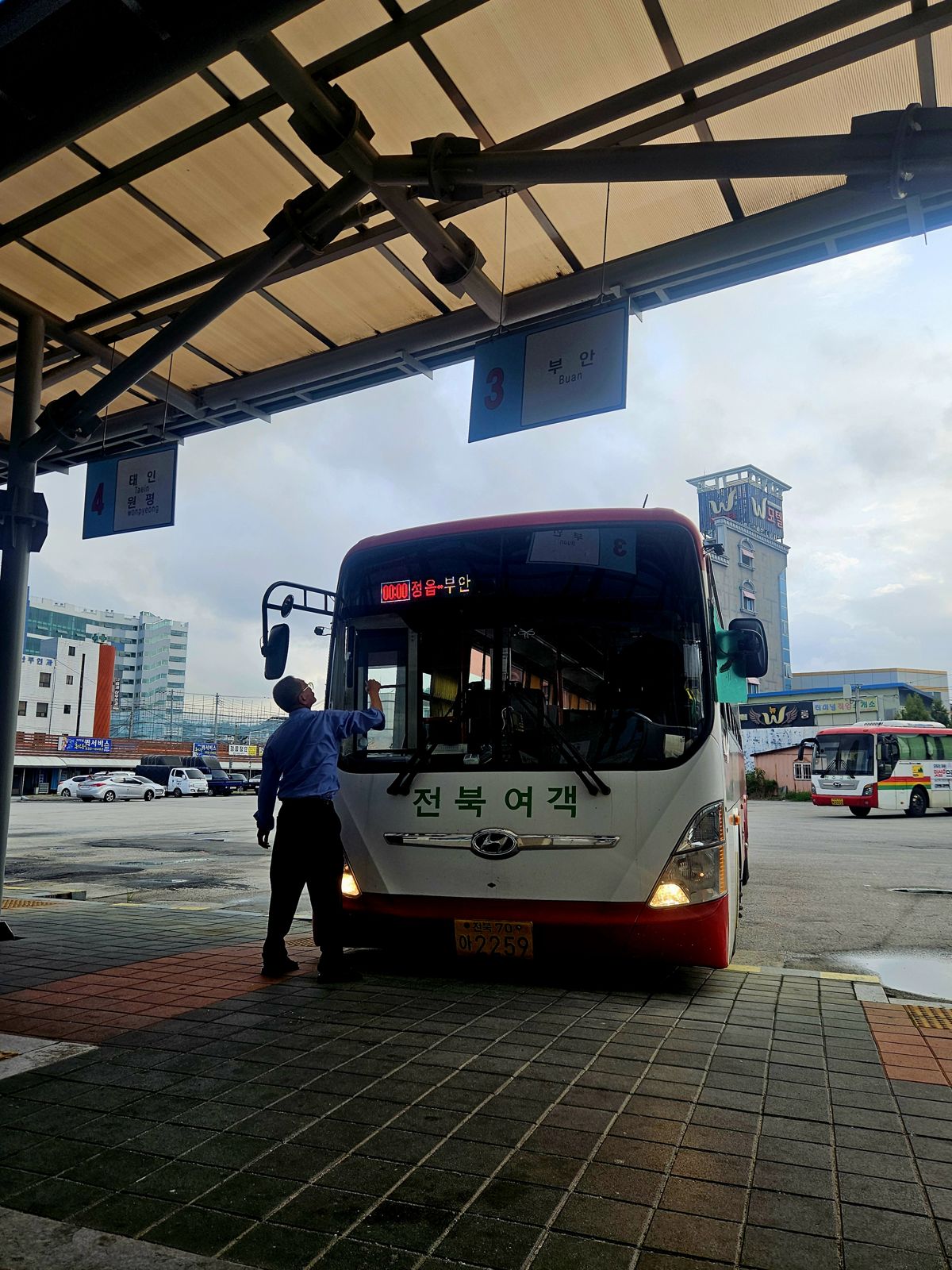
Today we begin a slow ride back up towards Seoul airport. After our setbacks in Japan, our trip has been cut short by a good month, which we've decided to spend between Croatia and the south of France instead. So we need to be at Incheon airport on 9 September. Which is why we're heading about fifty kilometres north to Naejangsan National Park. The town we're in has a bus terminal serving most of the region's towns, including Jeongeup, where we're going. We're always amazed at how many destinations you can reach by bus, and how cheap it is: here we pay €10 for the three of us for more than an hour's ride. We bought our tickets the day before, so we can get to the terminal without rushing. We wait barely ten minutes, just long enough to take off the panniers and fold the trailer, and the coach arrives. In barely two minutes everything is loaded in the hold and we're on board. The bus is almost empty.
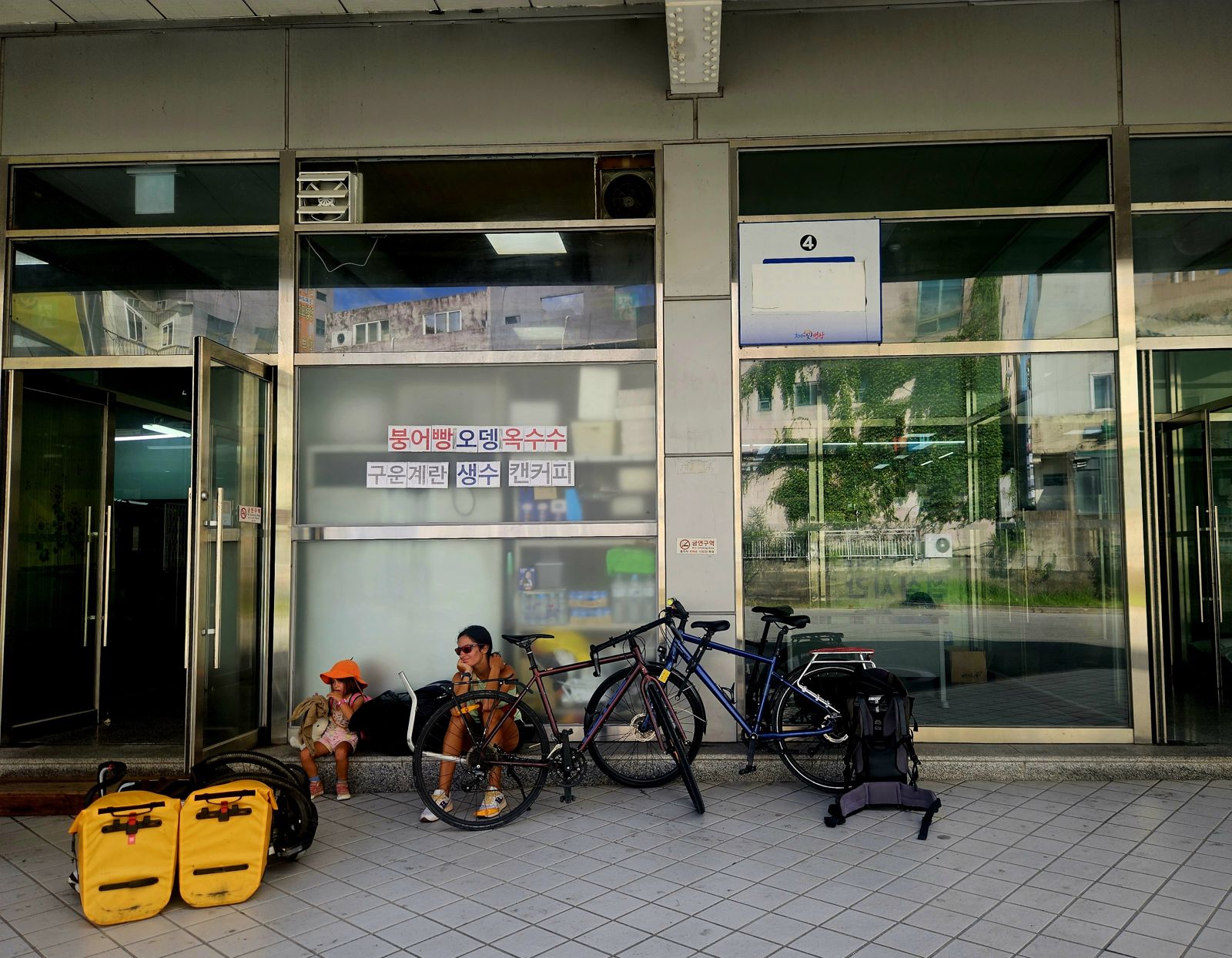
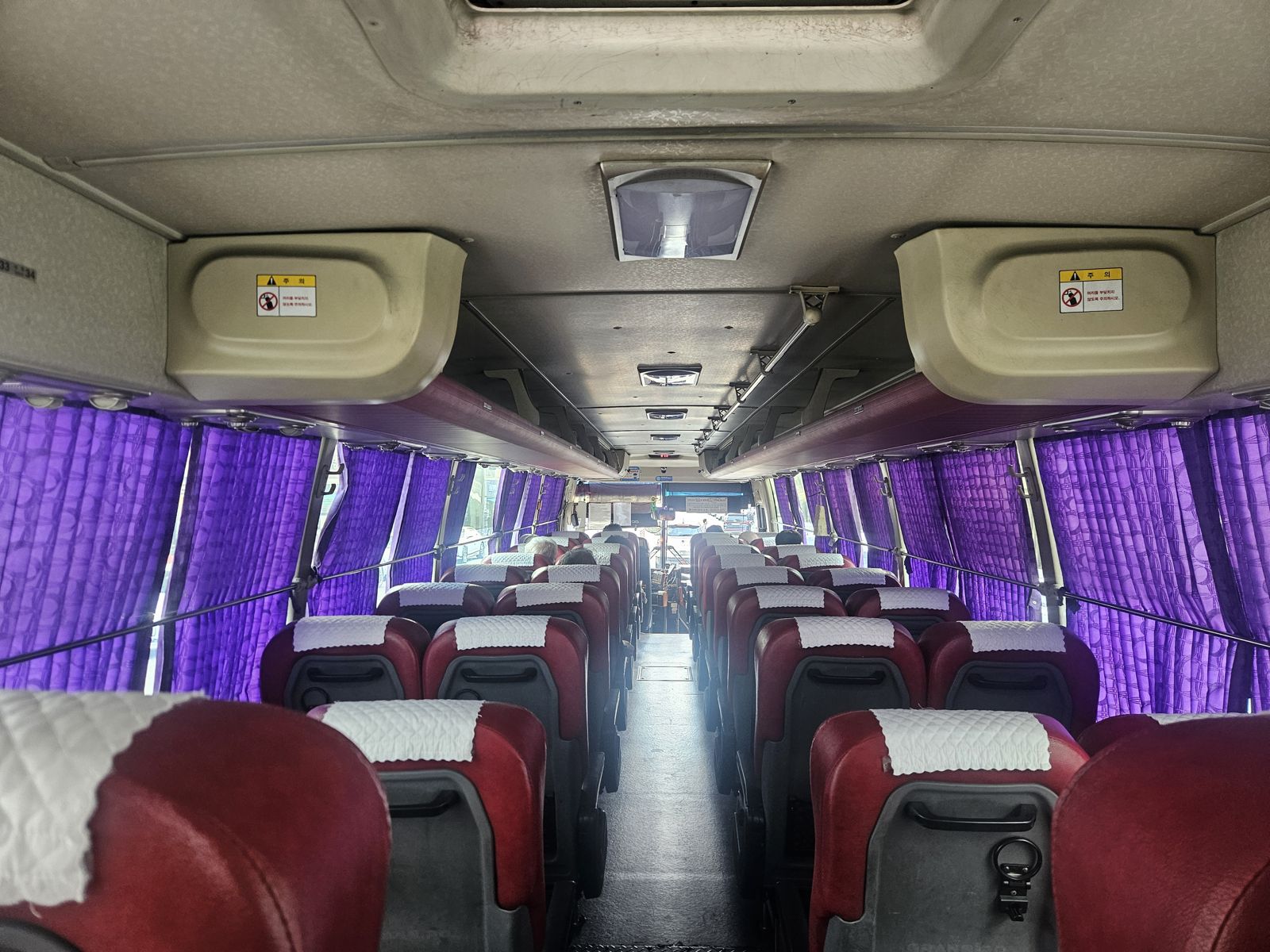
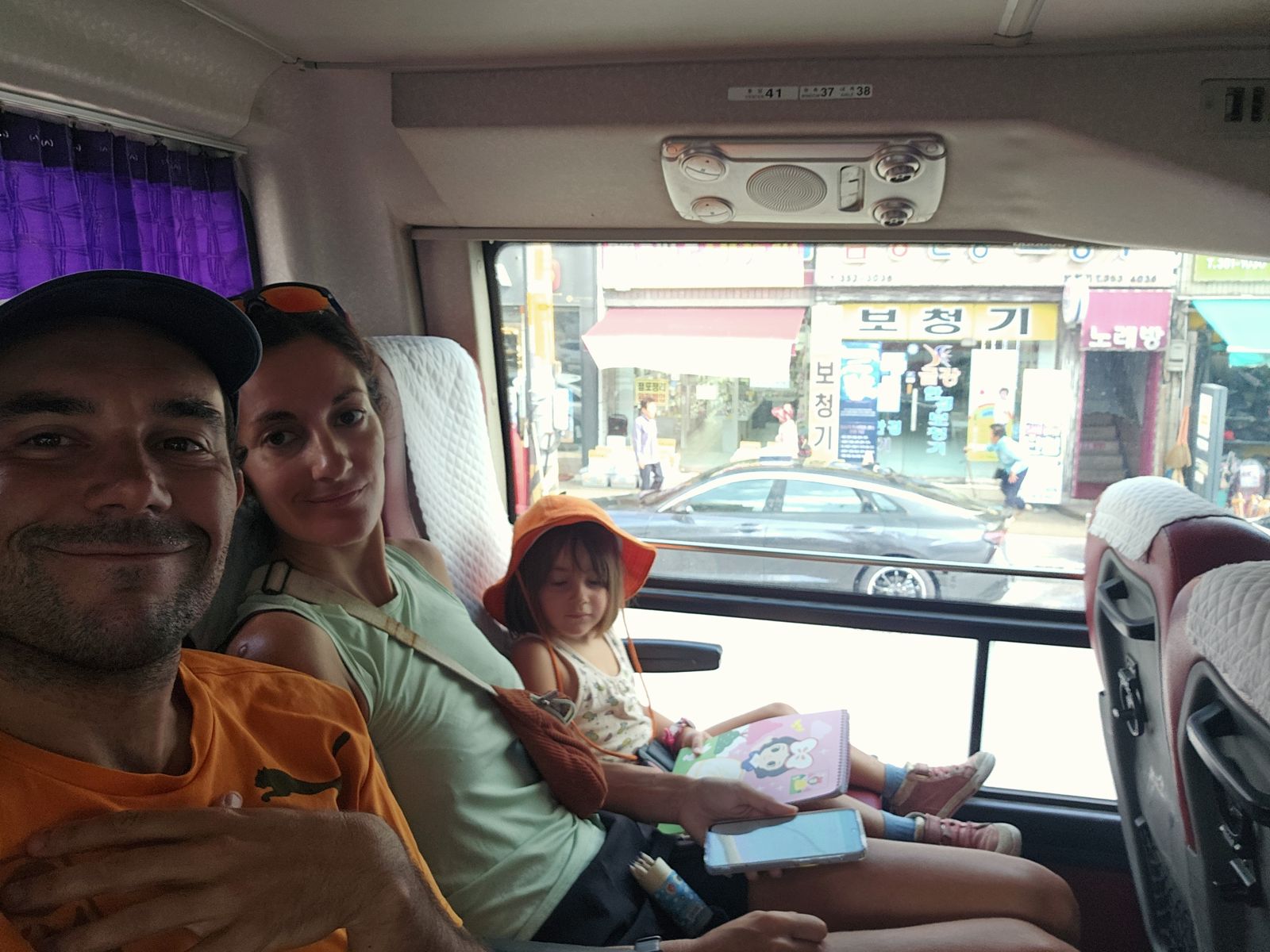
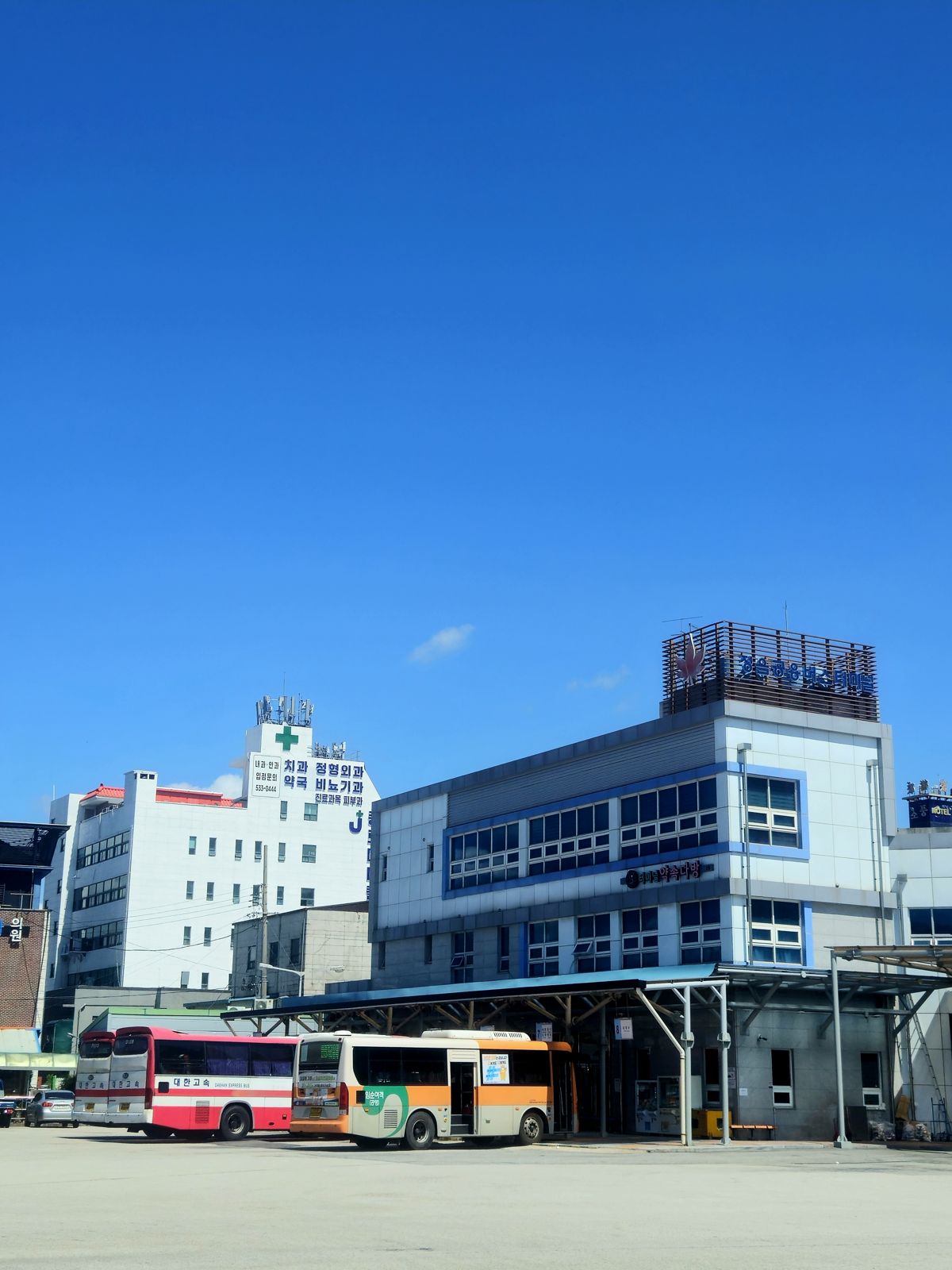
The journey only takes an hour but, since it isn't an express, the bus makes several stops in the small towns strung along the way. In Jeongeup the riverbanks have been landscaped and a greenway leads straight to the park, 15 kilometres away. It's very easy to pick up from the terminal, and then you just follow it. It's past 11 and, as usual, very hot. We didn't have much left for breakfast this morning, so we soon get hungry. We stop halfway at a locals' restaurant serving mainly boiled pork soup. Nothing off-putting about that, you'll say. Except when it's mostly offal, fat and bits of the head…
For Stéphane it just tastes of pork, but Cassandre can't stomach it. The broth is quite good, though, so she makes do with that and the bowl of rice served with it. Same for Clémence. She swallows a few pieces but ends up spitting some out, saying "that one's not nice". Some bits do have a rather strong taste. You either love it or you don't! Culinary discoveries are part of travelling; sometimes they're disappointing, but they're unavoidable in countries where you can't read the menus.
There are only men in the restaurant, and they all look at Clémence completely smitten. A man on his way out hands us 3,000 won, saying it's to buy her an ice cream. Our neighbours at the next table go as far as paying our bill… If you want to travel cheaply in Korea, travel with your toddler! Several Koreans give us a thumbs-up and ask how we manage to travel with so much weight in such heat. We're not sure what to say, except that we don't have a choice; the trip was planned this way and you have to adapt to the elements.
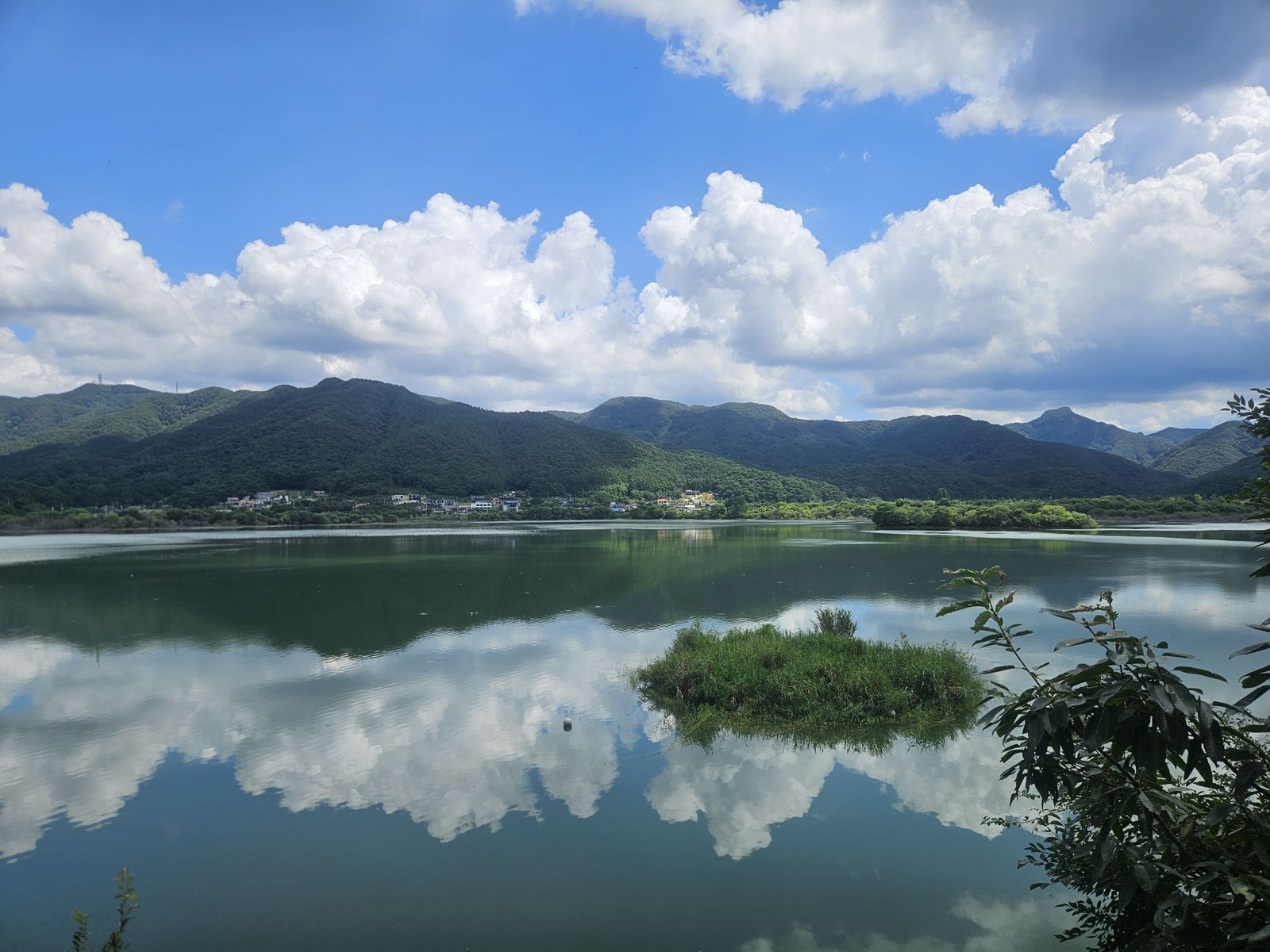
With that, we set off again. There are only 7 kilometres left, on a gentle climb, to the finish. The road is very quiet, and much of it is shaded by the avenues of maples lining it, which makes the climb very bearable despite the 35 degrees. Naejangsan is one of Korea's most beautiful national parks, especially during the season known as "danpung" (a kind of Indian summer), because of its autumn colours. In November it draws huge crowds. August is another story. The park is lush and green, but it's very hot and there are lots of gnats because of the humidity, so there are very few hikers. When we reach the little settlement (or rather the string of restaurants and small motels) at the park entrance, it's hard to imagine that in two months this same street will be packed.
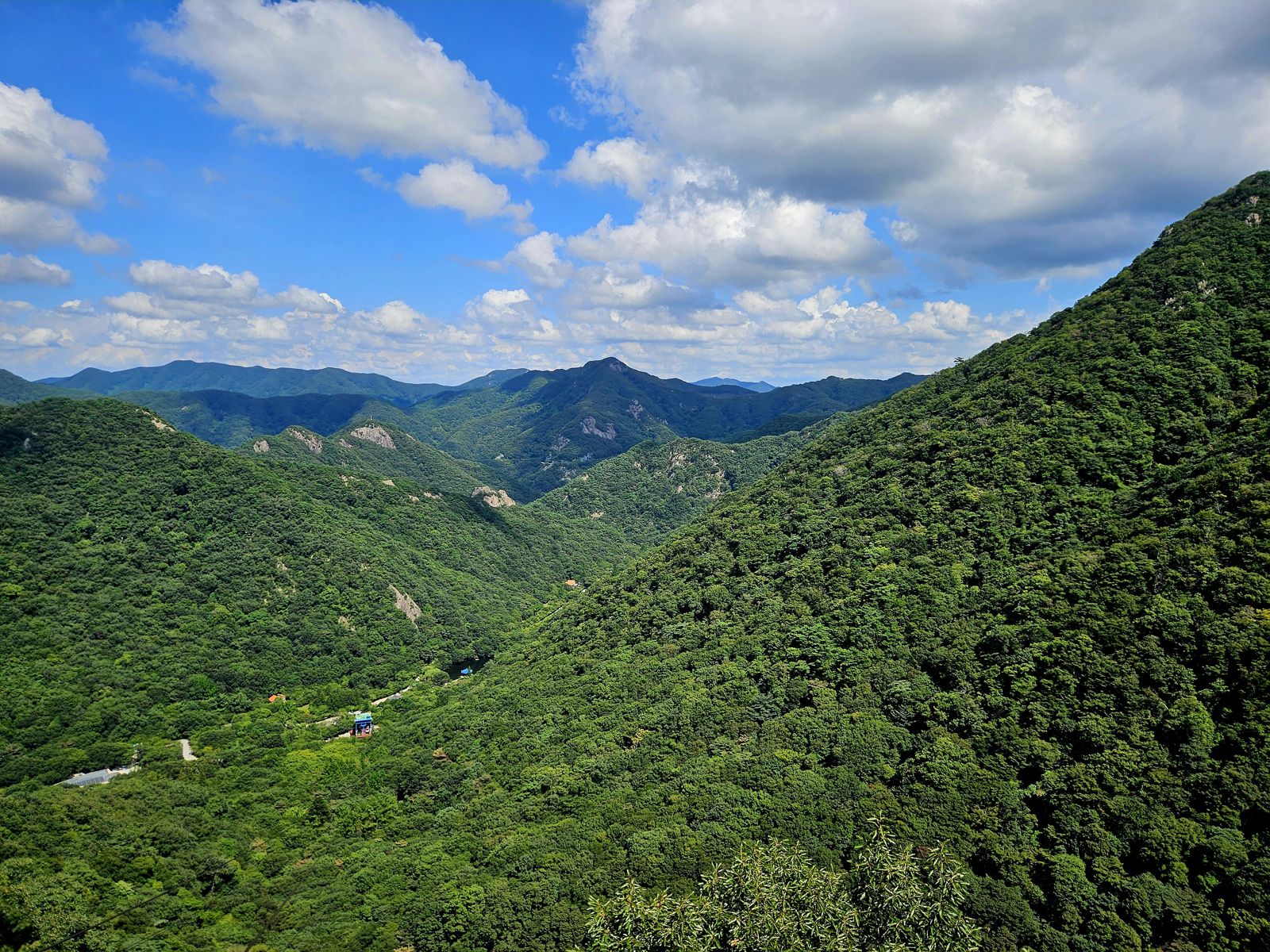
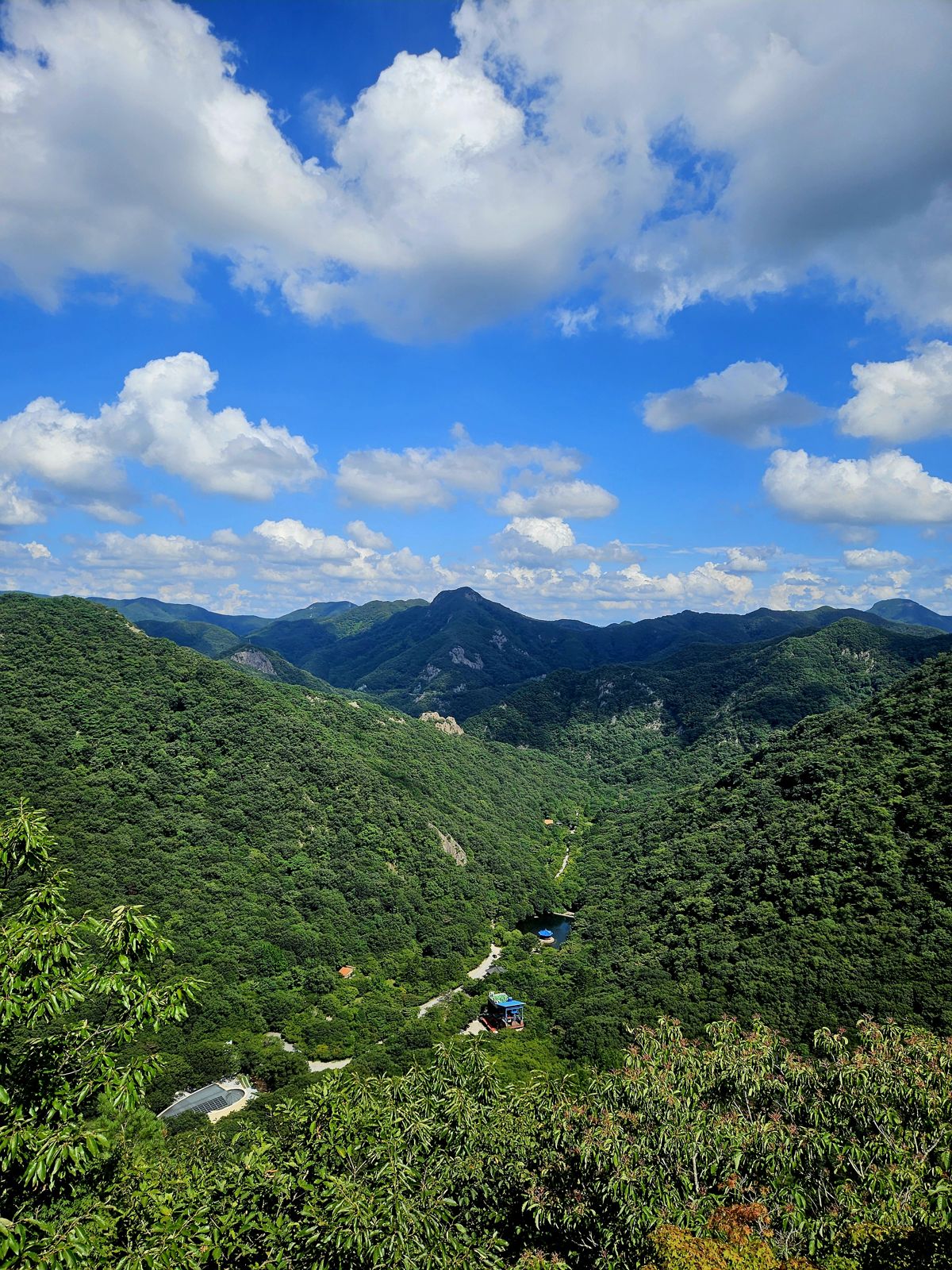
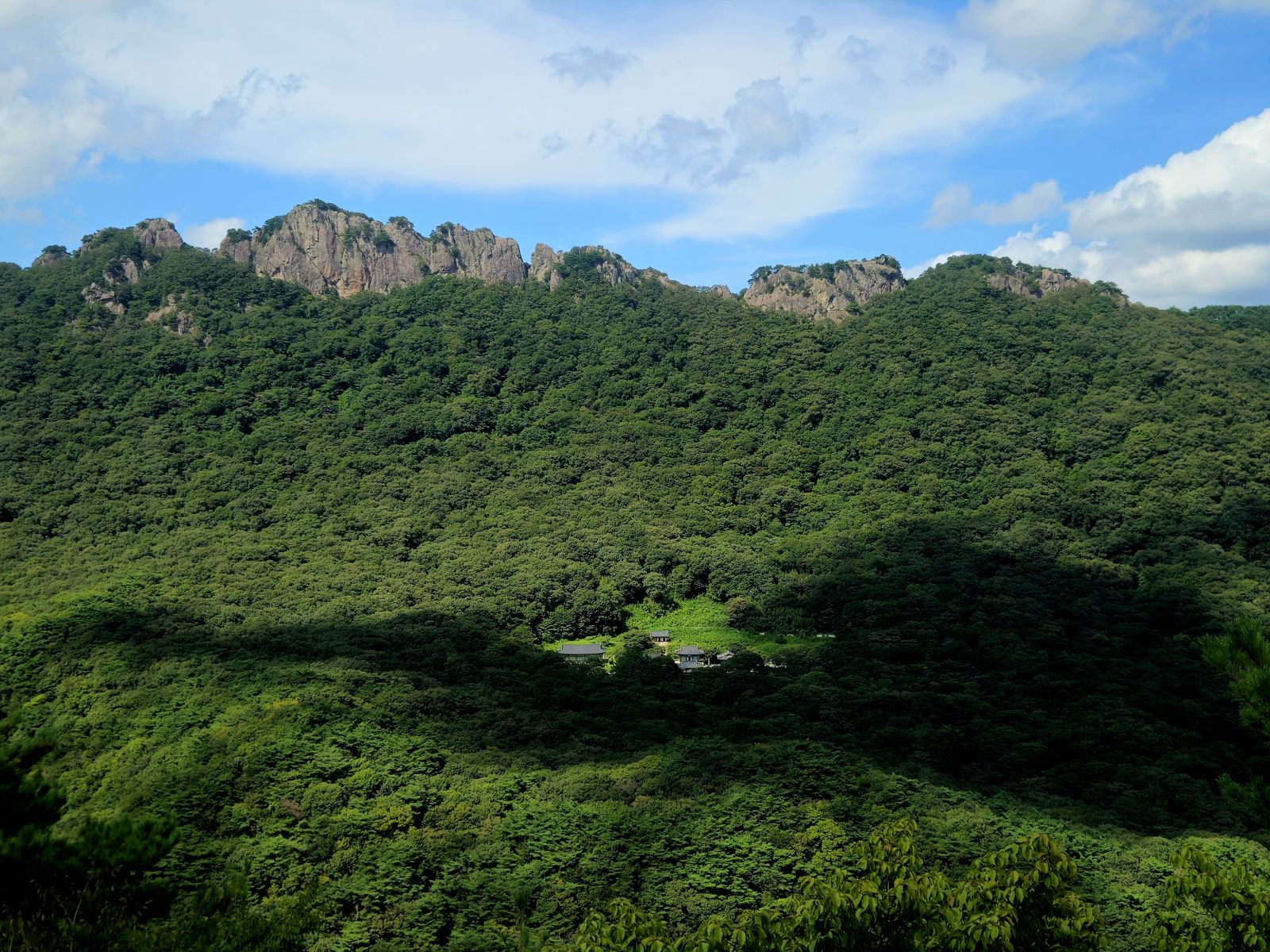
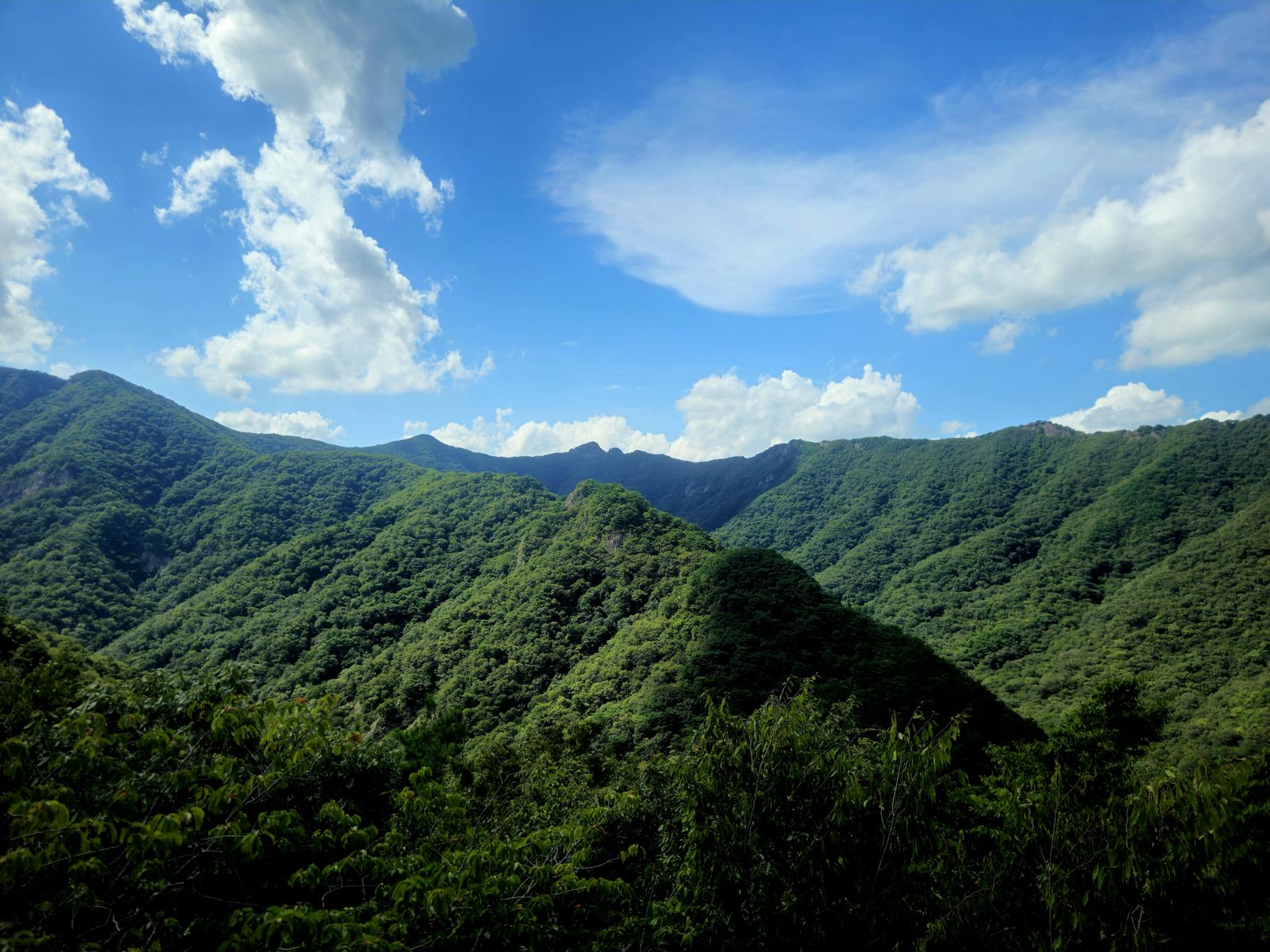
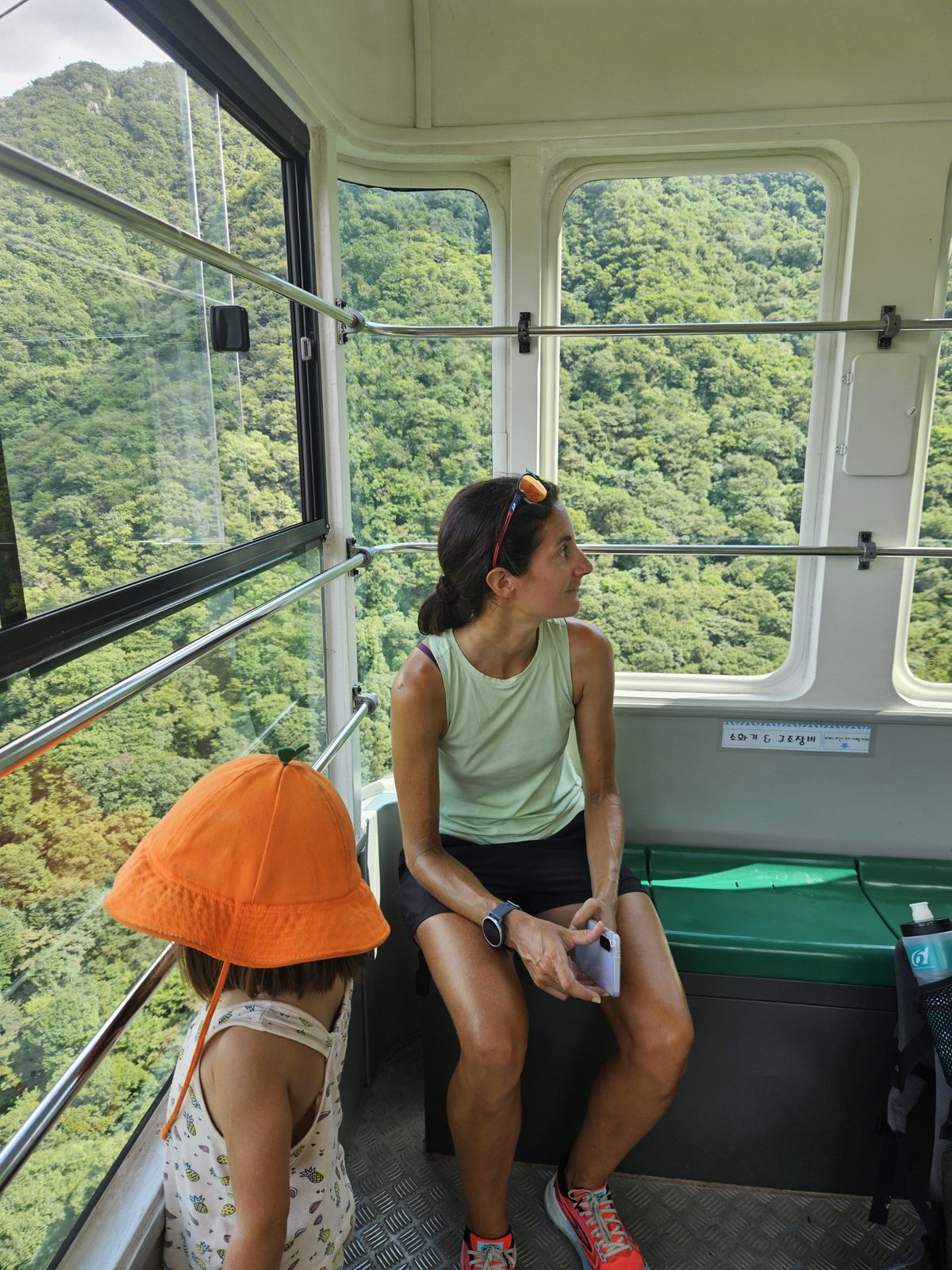
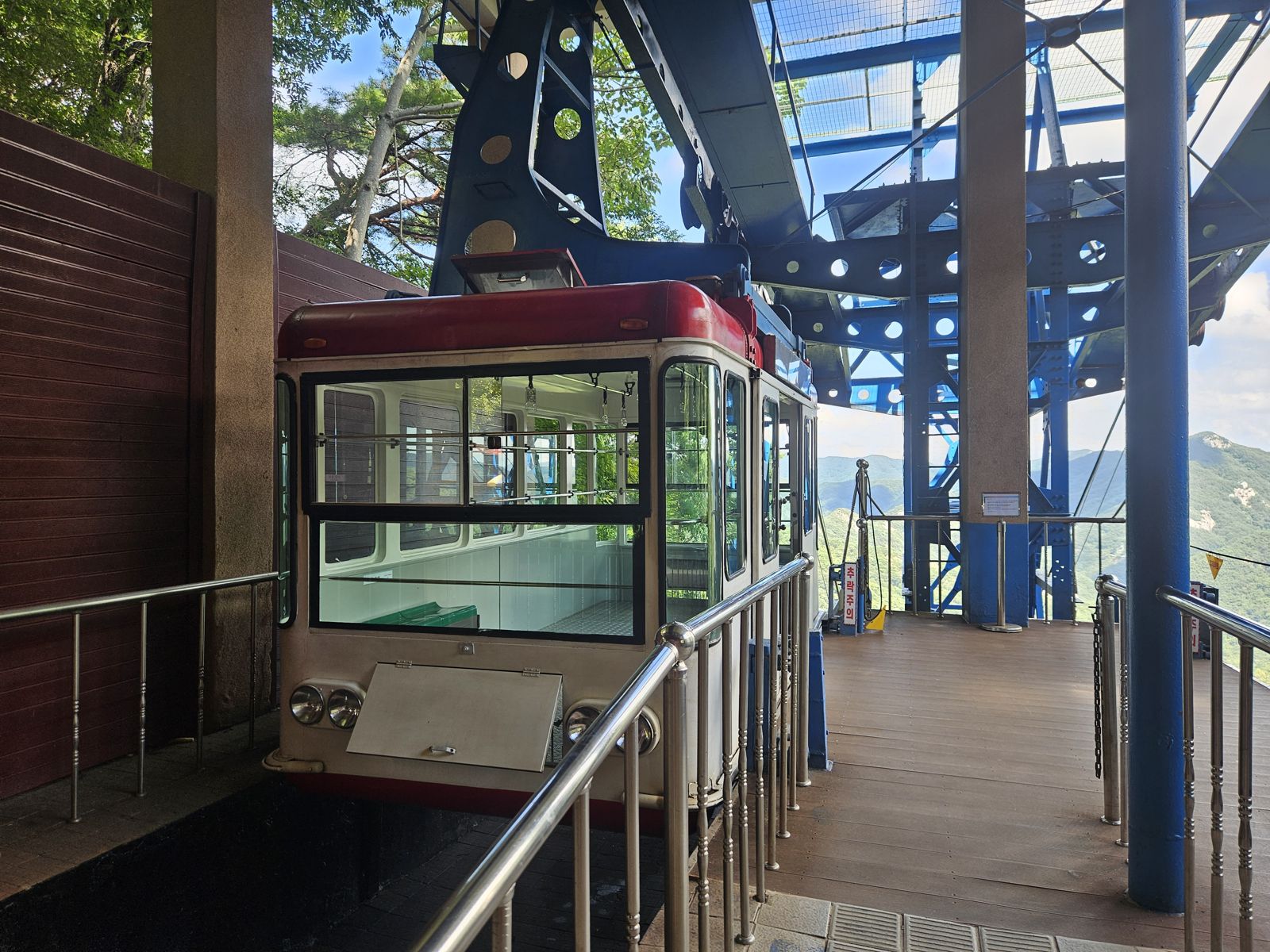
When we arrive, there isn't a soul about. Only a few visitors' cars heading to the park drive through the little village. We stop at one of the motels to ask if there's a room. The hotel is empty, deserted. The décor is dated, like a grandparents' house, but everything is clean and well kept. We get the room key straight away and drop off our bags before heading out for a walk. The official park entrance is 3 kilometres further up. We get back on our much lighter bikes and ride up to it. From there we take a little cable car that carries us 300 metres higher. It's already 2 pm, the heat is stifling, and the prospect of being surrounded by clouds of gnats for hours has killed our motivation for a long hike.
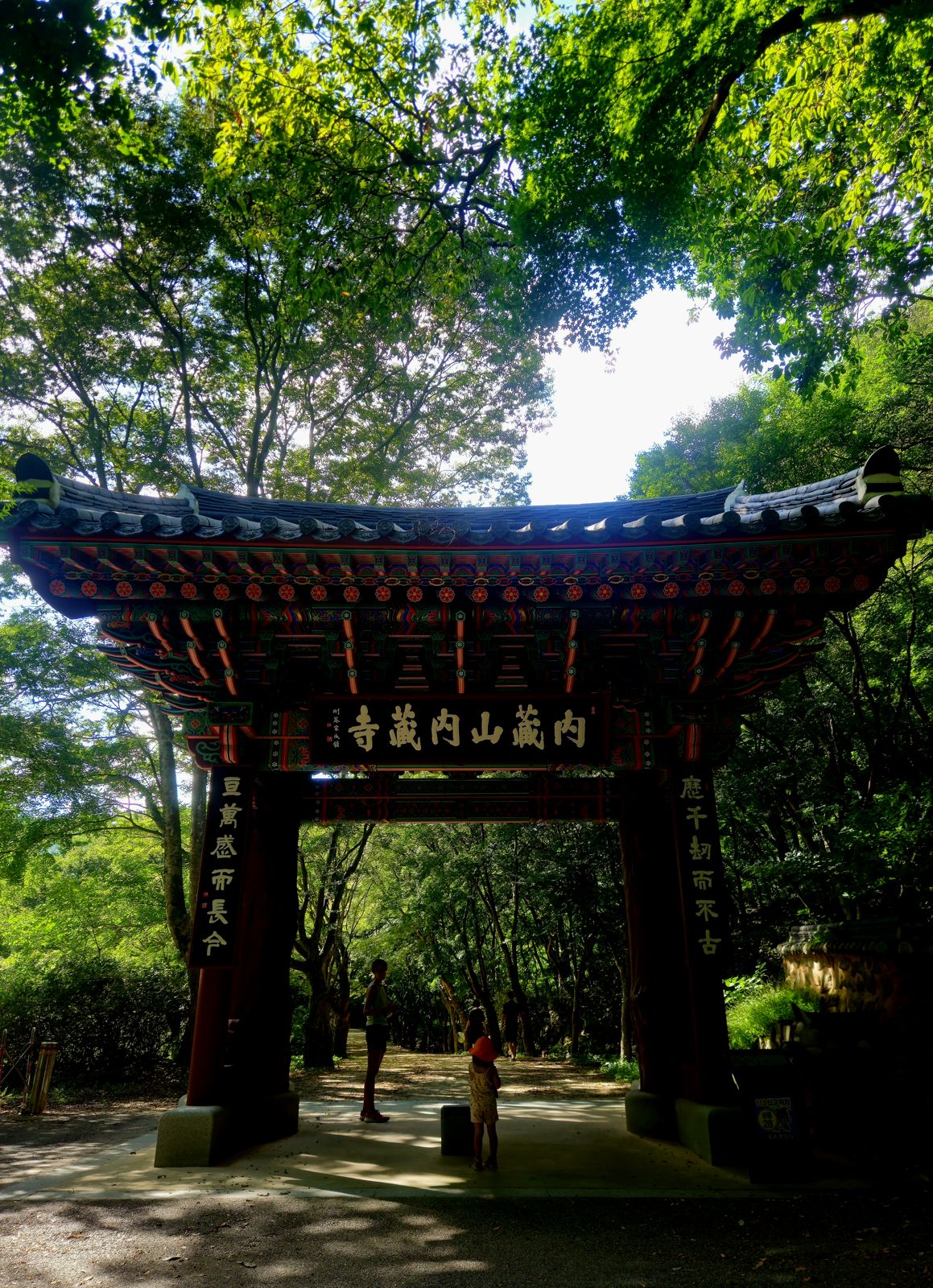
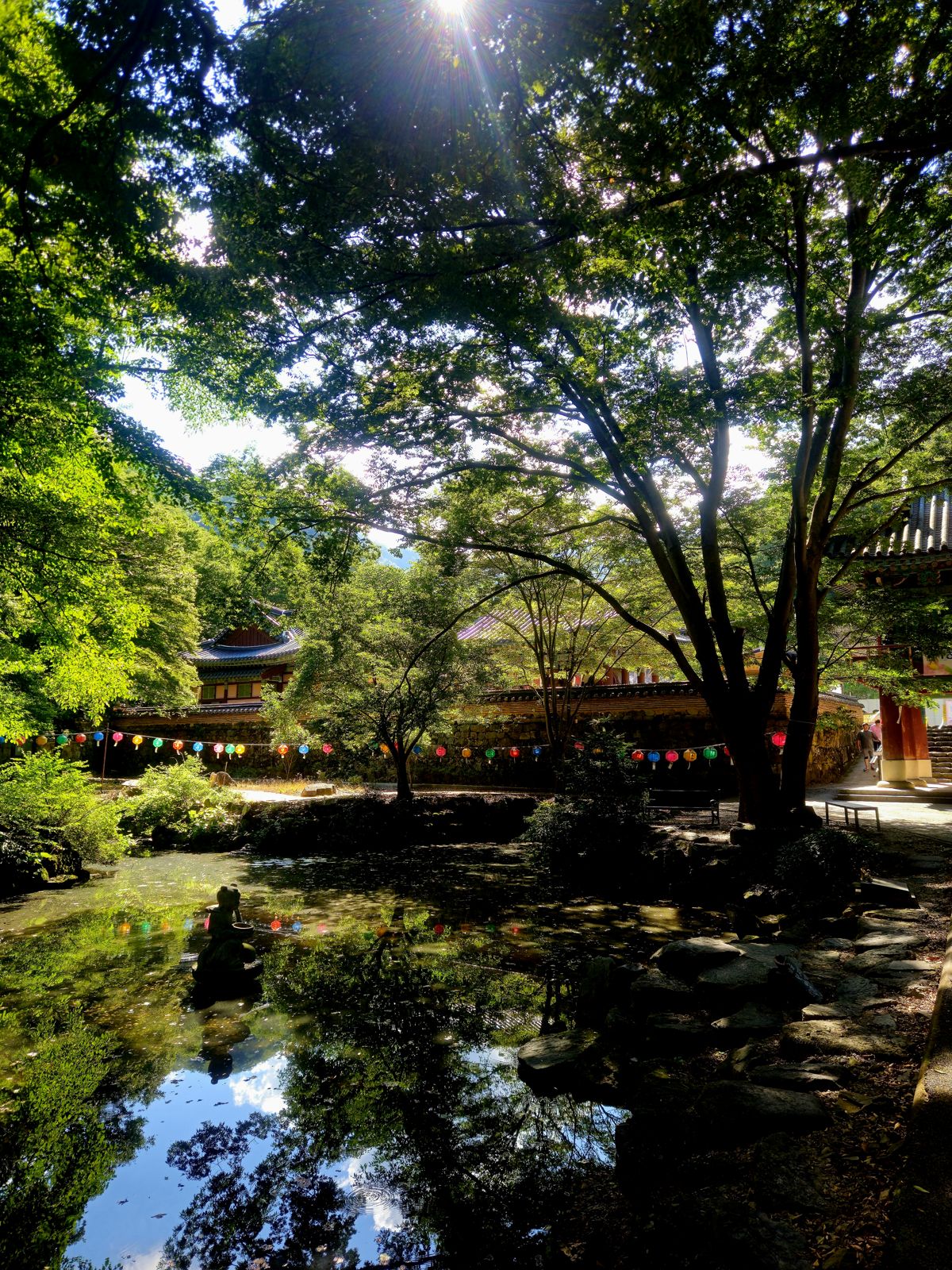
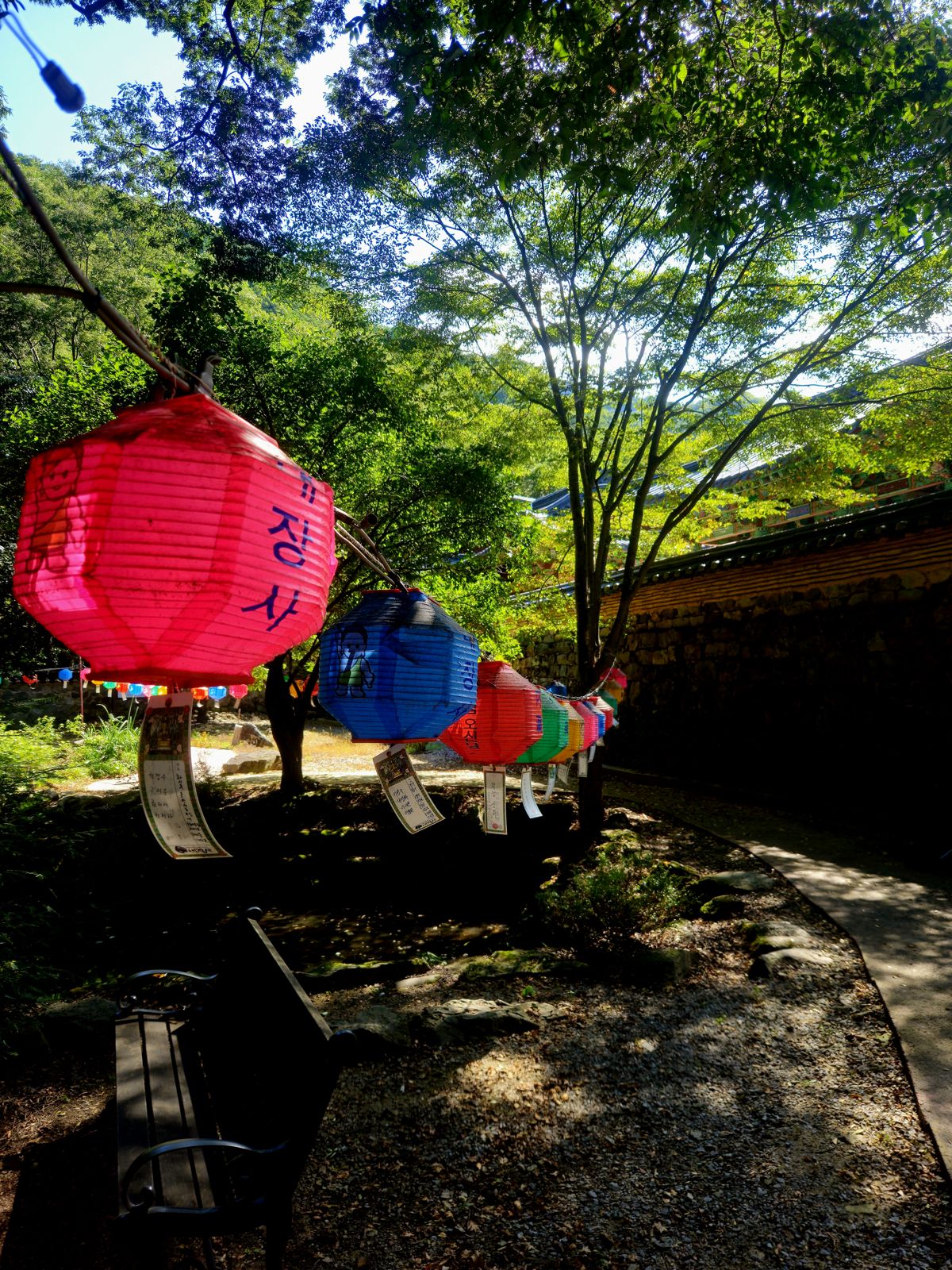
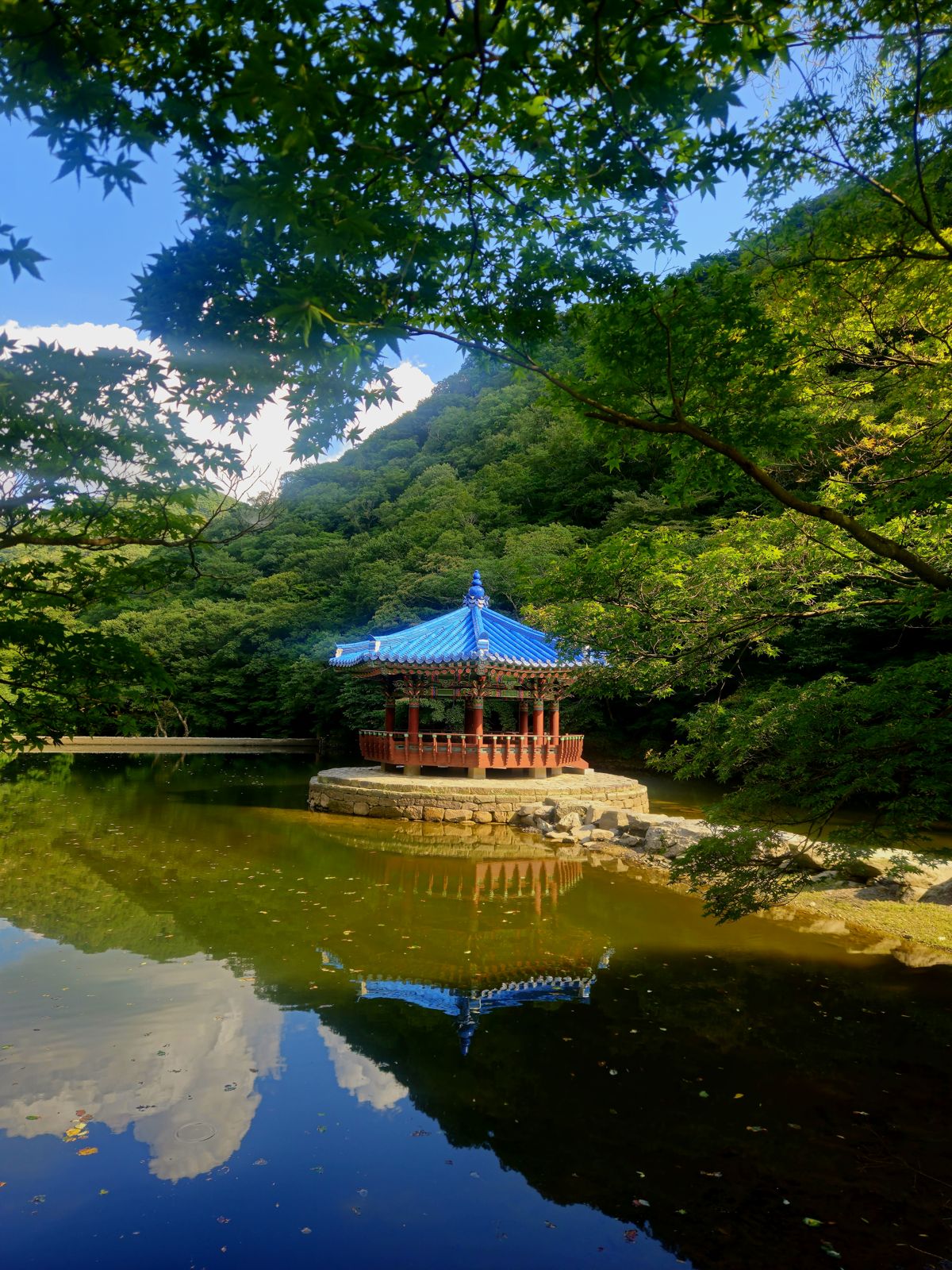
We stick to the small viewpoints, which give a fabulous panorama over the national park. From here, it's easy to see that the place must be magical in autumn colours. After taking the cable car back down, we visit a temple with an enormous Buddha. Koreans are as devout as ever and come in numbers to pray before the big golden statues. We go down to the village for a snack, where one of the cafés sells dacquoises, the little cakes from Dax. We wander through the desolate, abandoned streets before going back to the hotel.
In the evening we eat in a huge but desperately empty restaurant. The owners, a couple in their sixties, seem very anxious, and the man tries to collar the few tourists from his doorstep. There are so many shops and hotels in Korean towns that we often wonder how they all keep going without competing each other out of business. The meal is excellent, but Clémence is dropping with tiredness, so we head back to put her to bed.
Tuesday 26 August
The rain is back. Stepping back a little, we realise we've been lucky on this Asian journey, as we can count the rainy days on our fingers. Apart from Japan, where we had several days of continuous rain, it never lasted long. And it's really bad luck that it doubles in intensity just as we're leaving Naejangsan National Park. We thought we'd catch a dry spell, but we end up riding the descent in torrential rain. When you ride downhill, the water follows the same path down the road, and our wheels end up throwing whole puddles into our eyes. We take shelter at a petrol station, where the owner kindly invites us to sit under cover. He even makes us coffee and gives Clémence sweets.
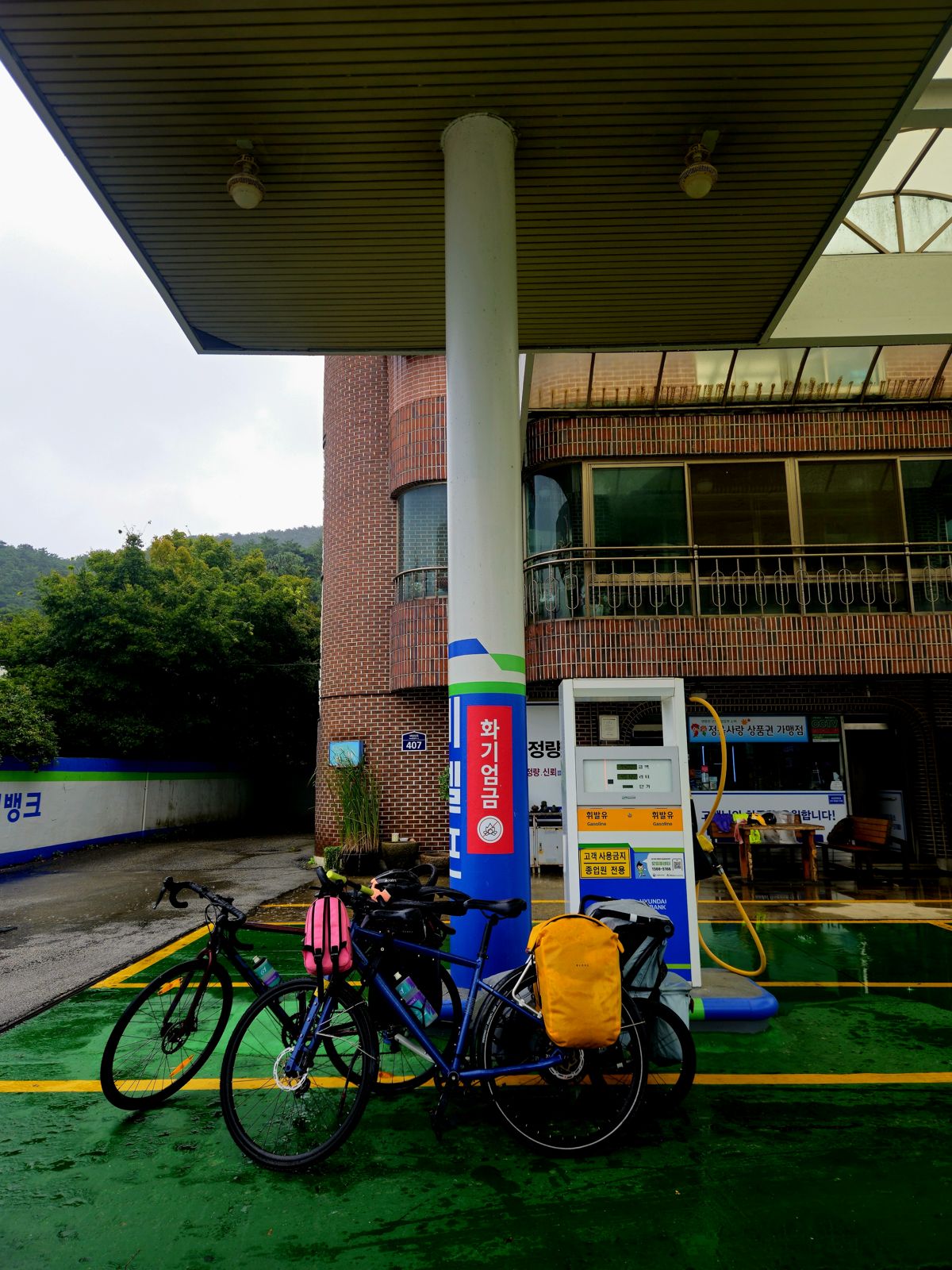
Kindness is rooted in Korean culture; you can tell it isn't just with us. They're courteous to each other, give treats to every little one and do each other favours. We sometimes wonder what makes an entire society like that. We'd never dare give sweets to unknown children in France; it would be frowned upon. The owner has the same conversation with us: he wants to know where we're from and what we're doing, and his eyes pop out like everyone else's when he hears we've ridden around the country by bike.
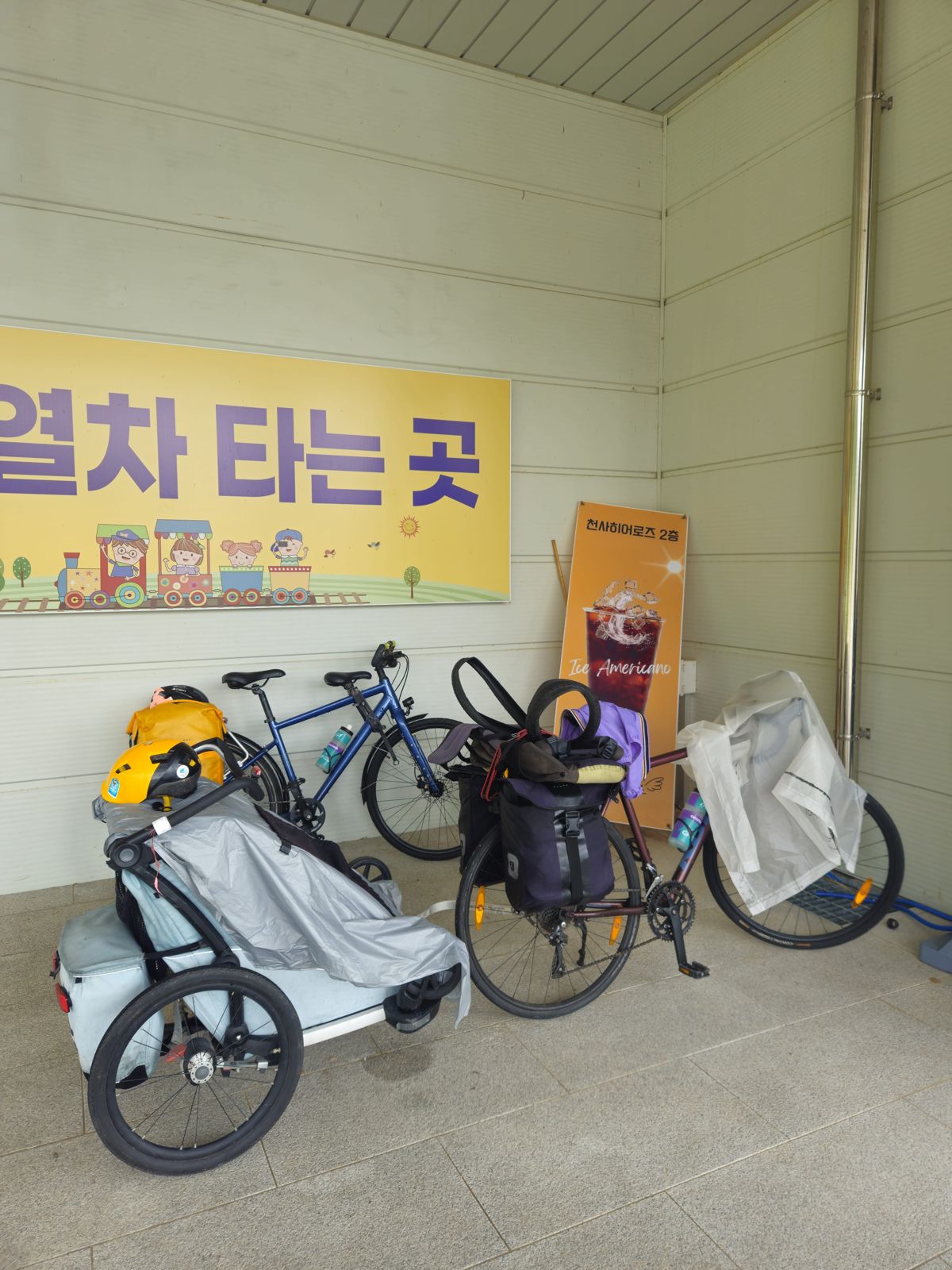
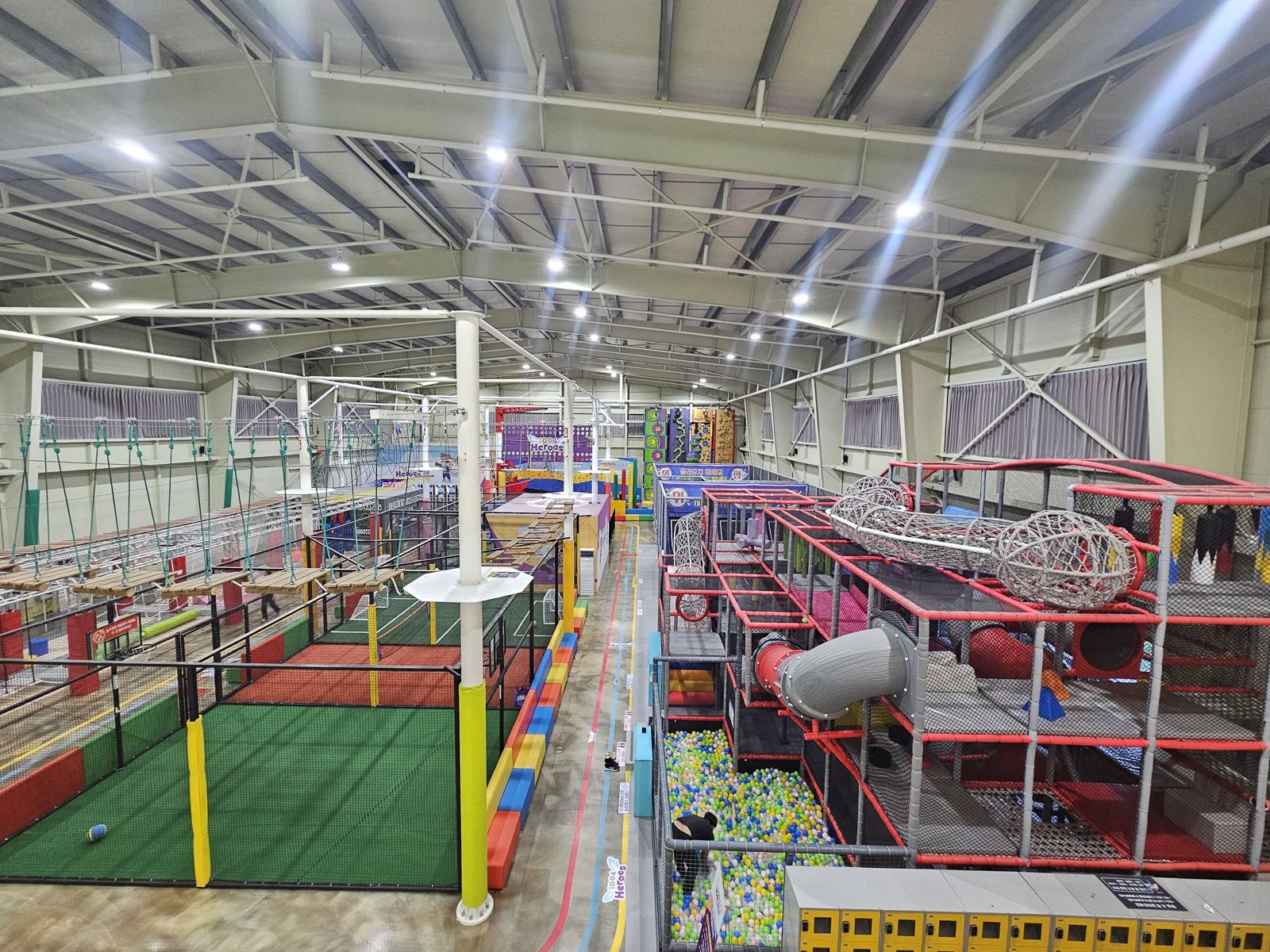
We thank him warmly when the rain eases and push our bikes to the café next door. The heating is comforting, we're the only customers, and we order food and drinks. This time the rain really seems to have passed, though the cloud cover is still very thick. We take Clémence to an indoor playground we'd spotted the day before. It's our little pact: on rainy days we try, as far as possible, to do only activities for her. We've given up riding today's stage and will take the bus to the start of another cycle route. It's safer and less stressful than riding under the threat of rain.
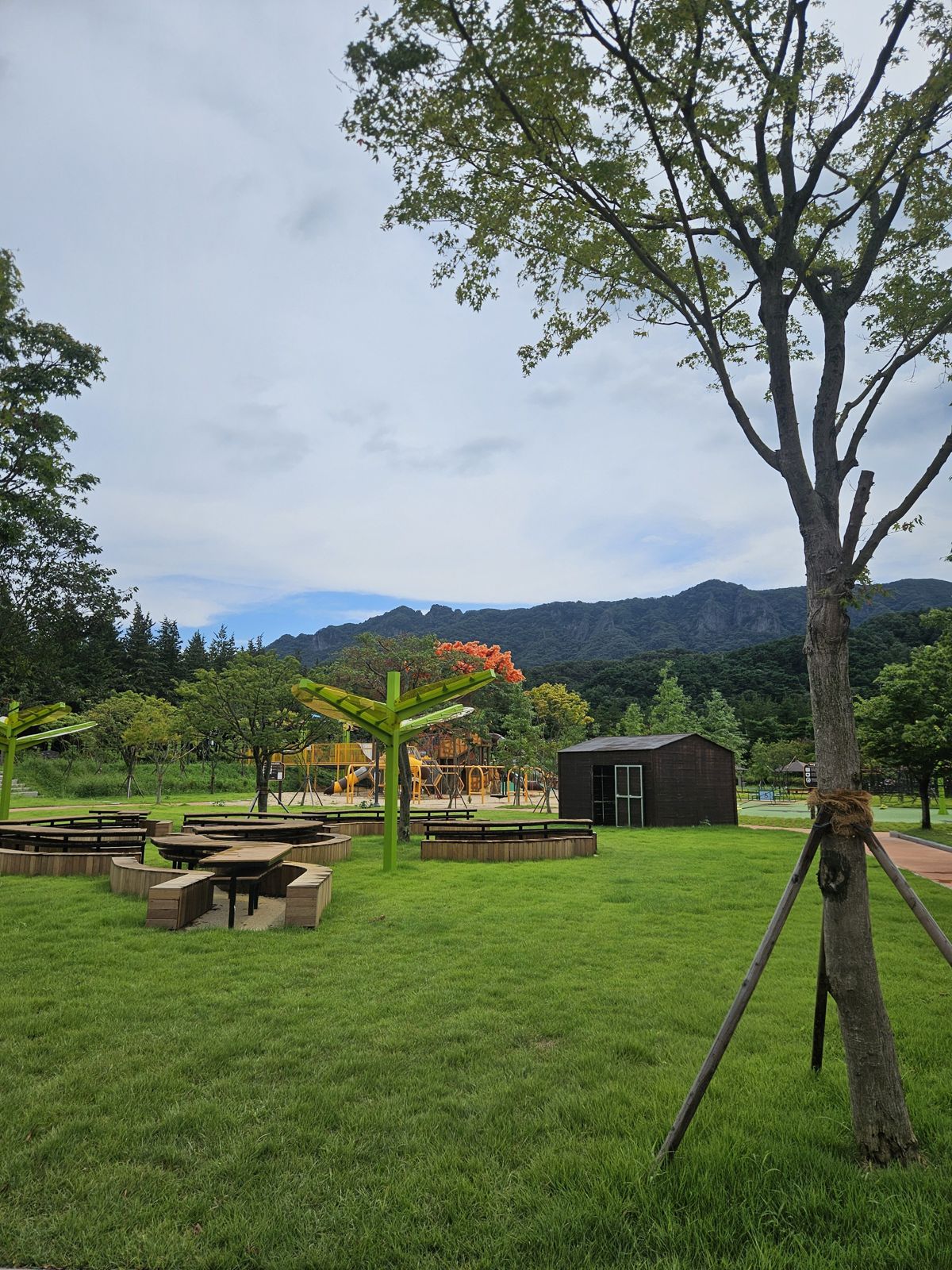
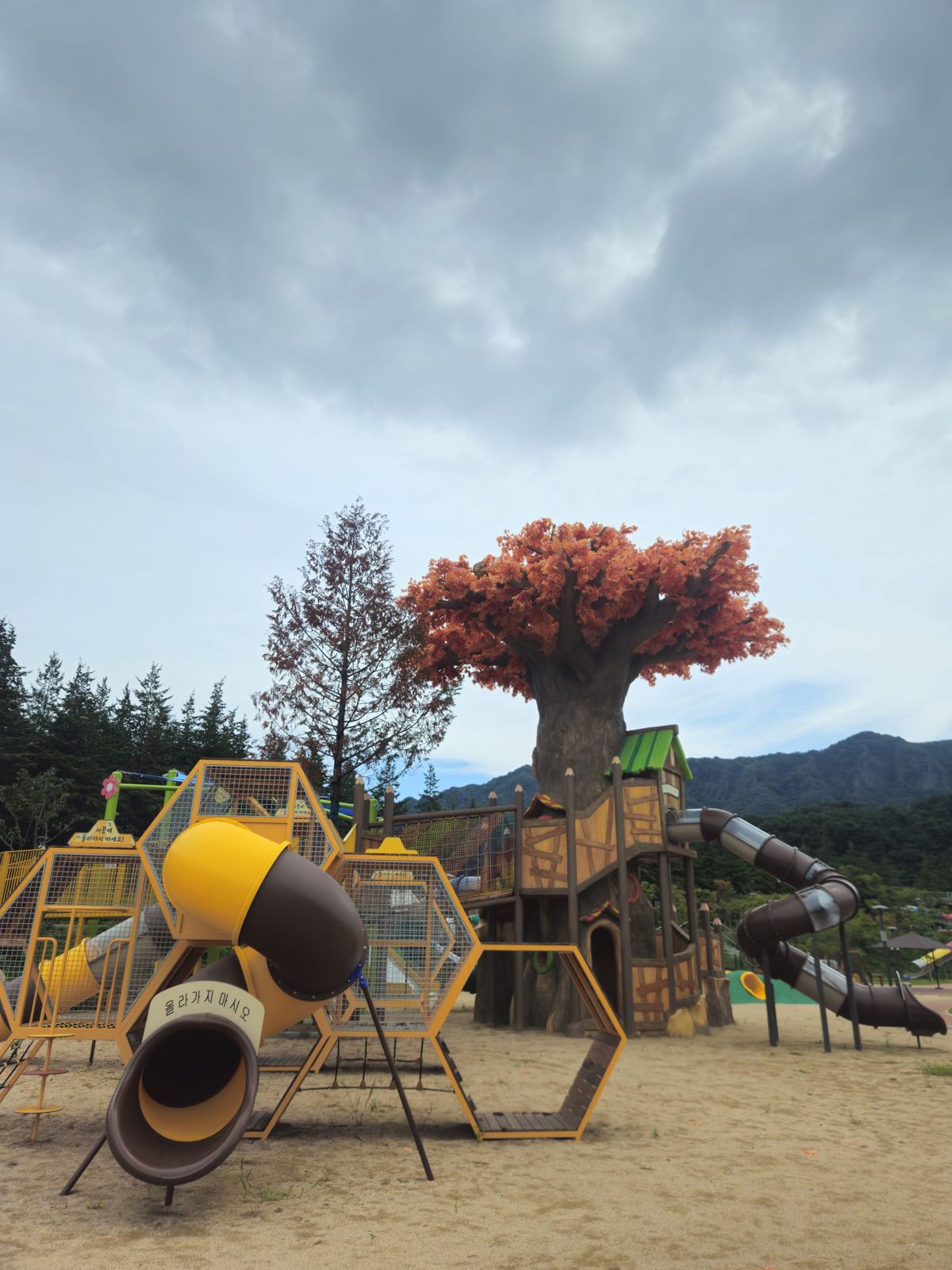
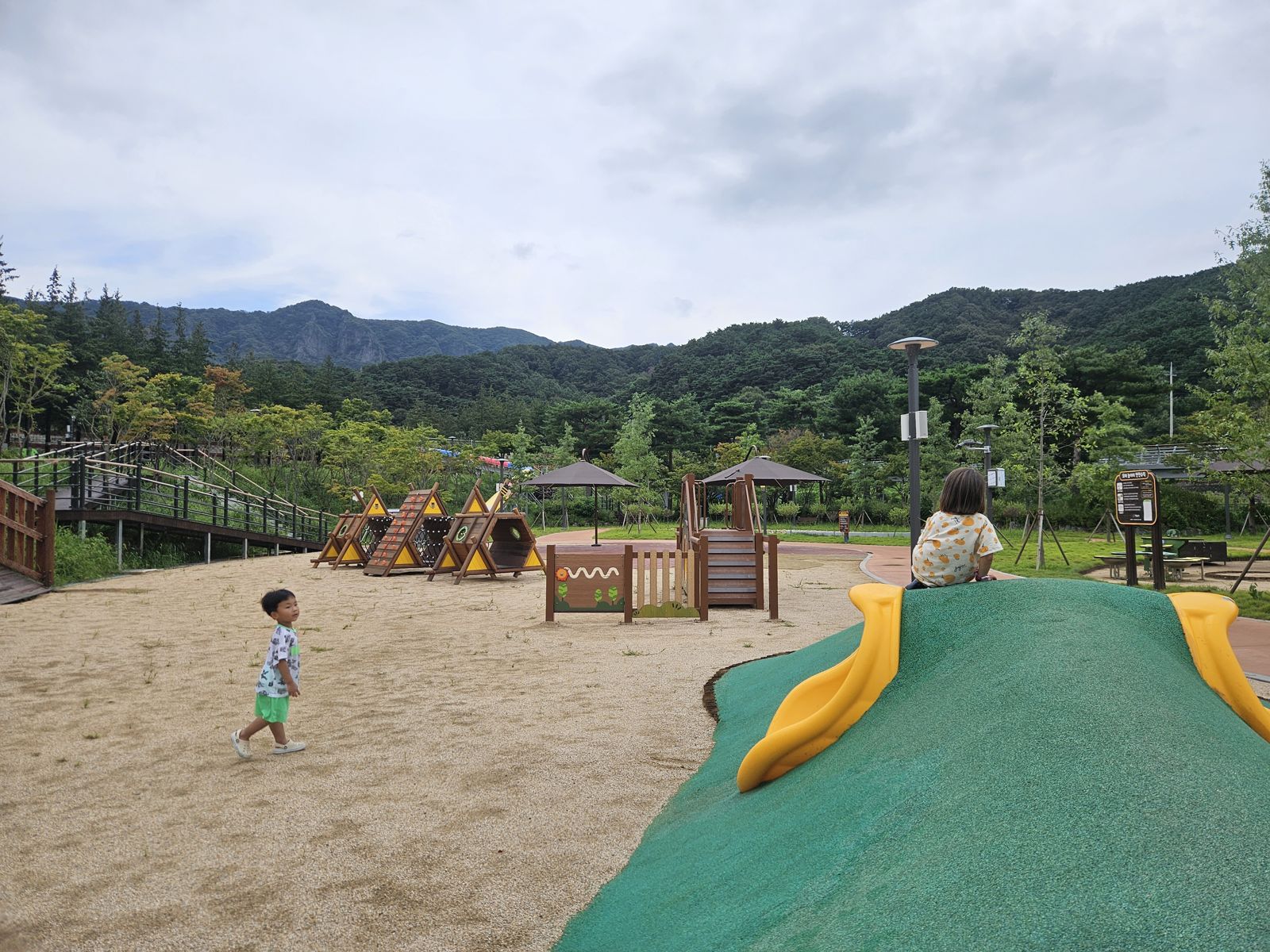
The playground is expensive for Korea but reasonable compared with similar places in France. Adults have to pay to get in too, so Clémence chooses to go and play with Cassandre. Once our turn is over, we make full use of the area's many outdoor playgrounds. The area must be really busy in autumn to have so much tourist infrastructure. It's surprising that it's deserted in August, when Korean children are still on holiday. Clémence finds a little friend and plays for hours.
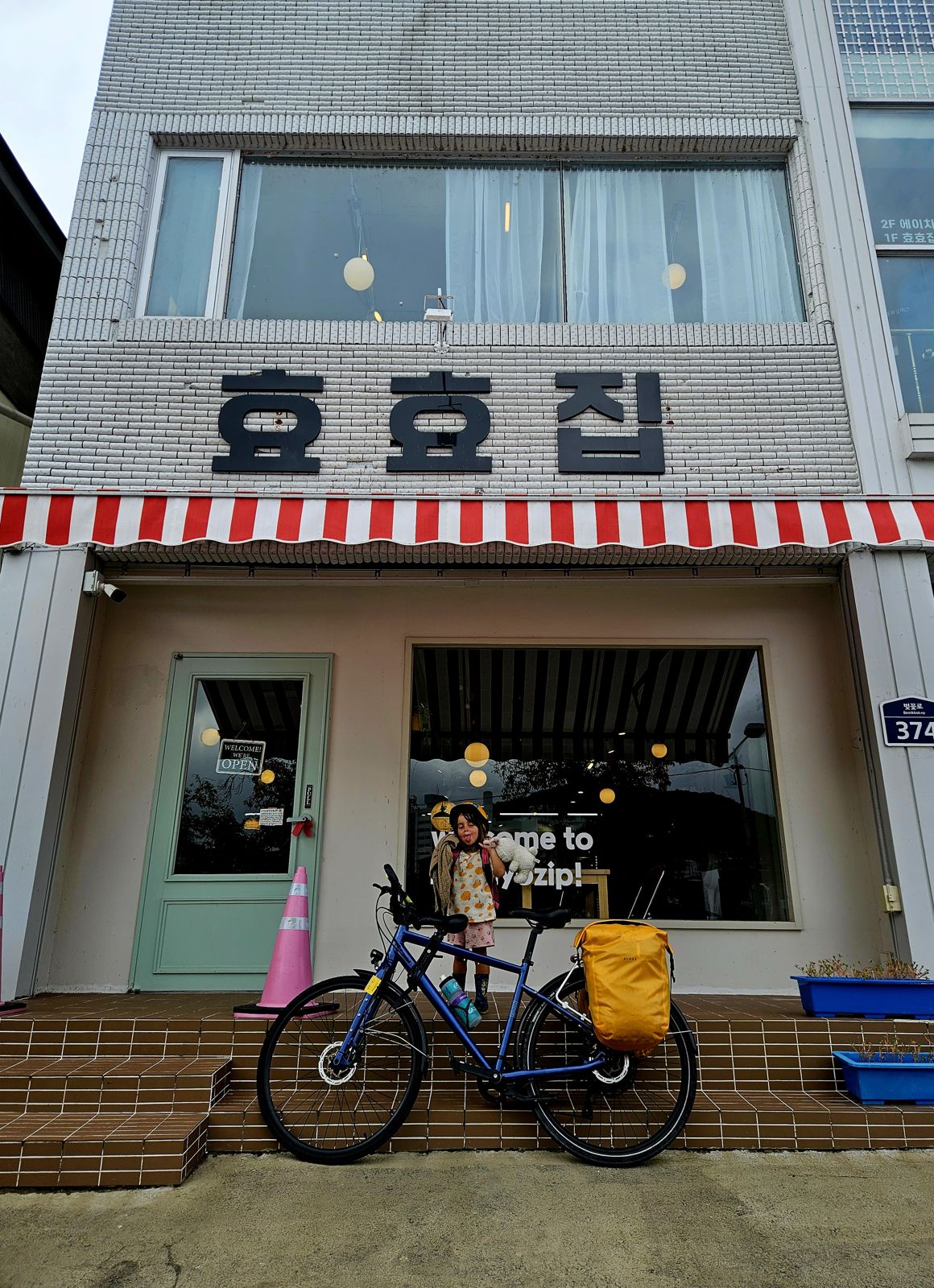
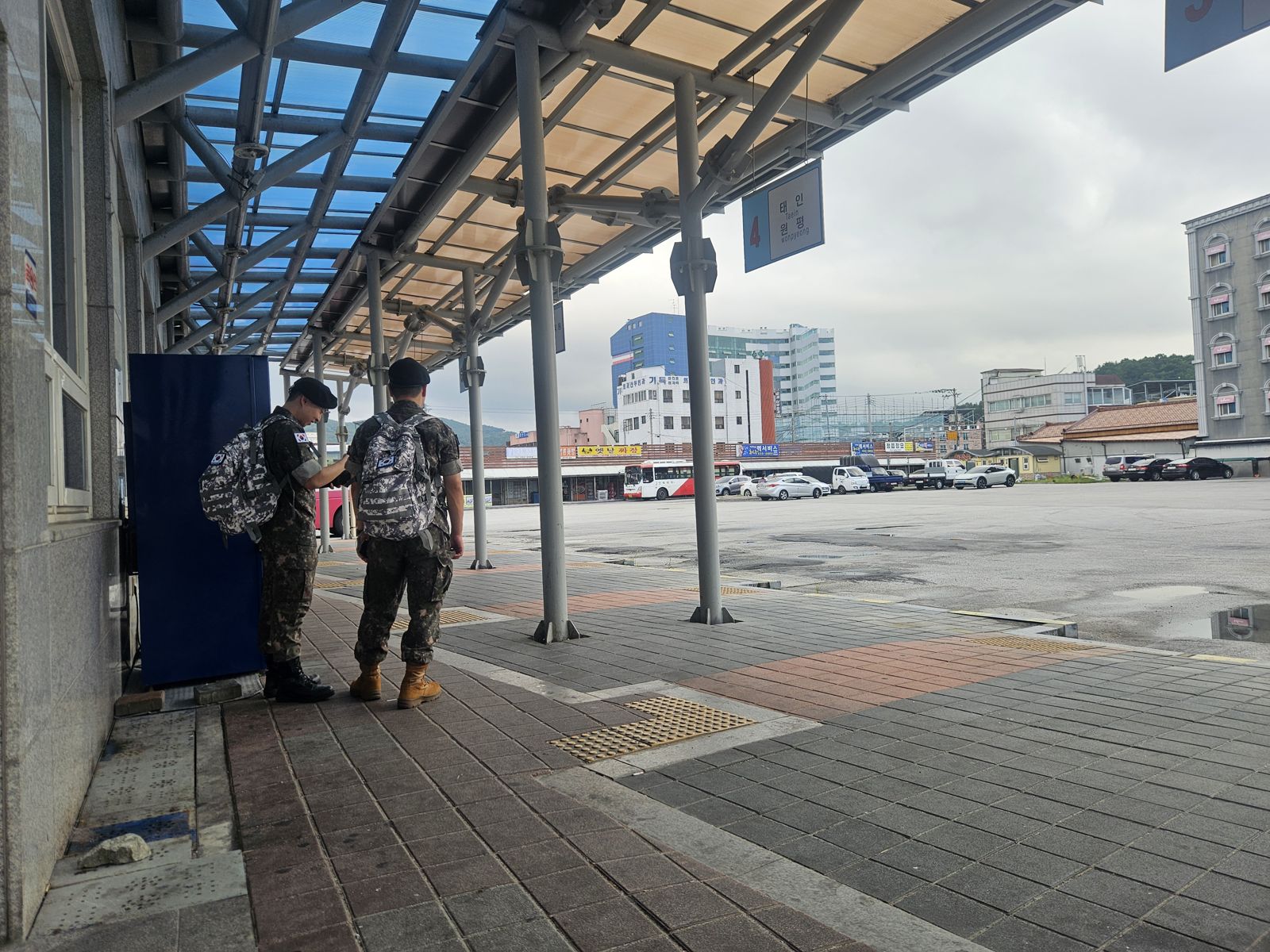
After a few kilometres by bike, we have a snack in a café and head to the long-distance bus terminal. We're so well drilled now. We can load our whole outfit into the hold in under a minute. We have a departure date, and our trip is now draped in a light veil of nostalgia. We don't know if we'll ever find another country where it's so easy to take the bus with bikes and a trailer. Our coach to Gunsan is nearly empty; it leaves at 6:20 pm sharp and arrives an hour and a half later. It's dark when we reach the hotel, so we soon put Clémence to bed after a light meal.
Wednesday 27 August
Gunsan is a port city on the west coast of South Korea, in North Jeolla Province. Long turned towards the Yellow Sea, it grew into an important centre for fishing, trade and shipbuilding. The city still has many traces of the Japanese colonial era, visible in certain neighbourhoods and buildings, which contrast with its modern industrial zones. With 250,000 inhabitants, it almost counts as a village by the country's standards.
Our first stop is Gyeongamdong Train Village, an unusual place where an old railway line has been turned into a lively, colourful street. The tracks, which once ran through this industrial district, are now taken over by passers-by, little stalls and cafés set up on either side. You walk along following the wooden sleepers, glancing at the many shops. Most sell typical souvenirs or tourist gadgets: printed fans, colourful hats, local sweets and a multitude of trinkets that catch the eye but that you know will soon be forgotten at the bottom of a bag.
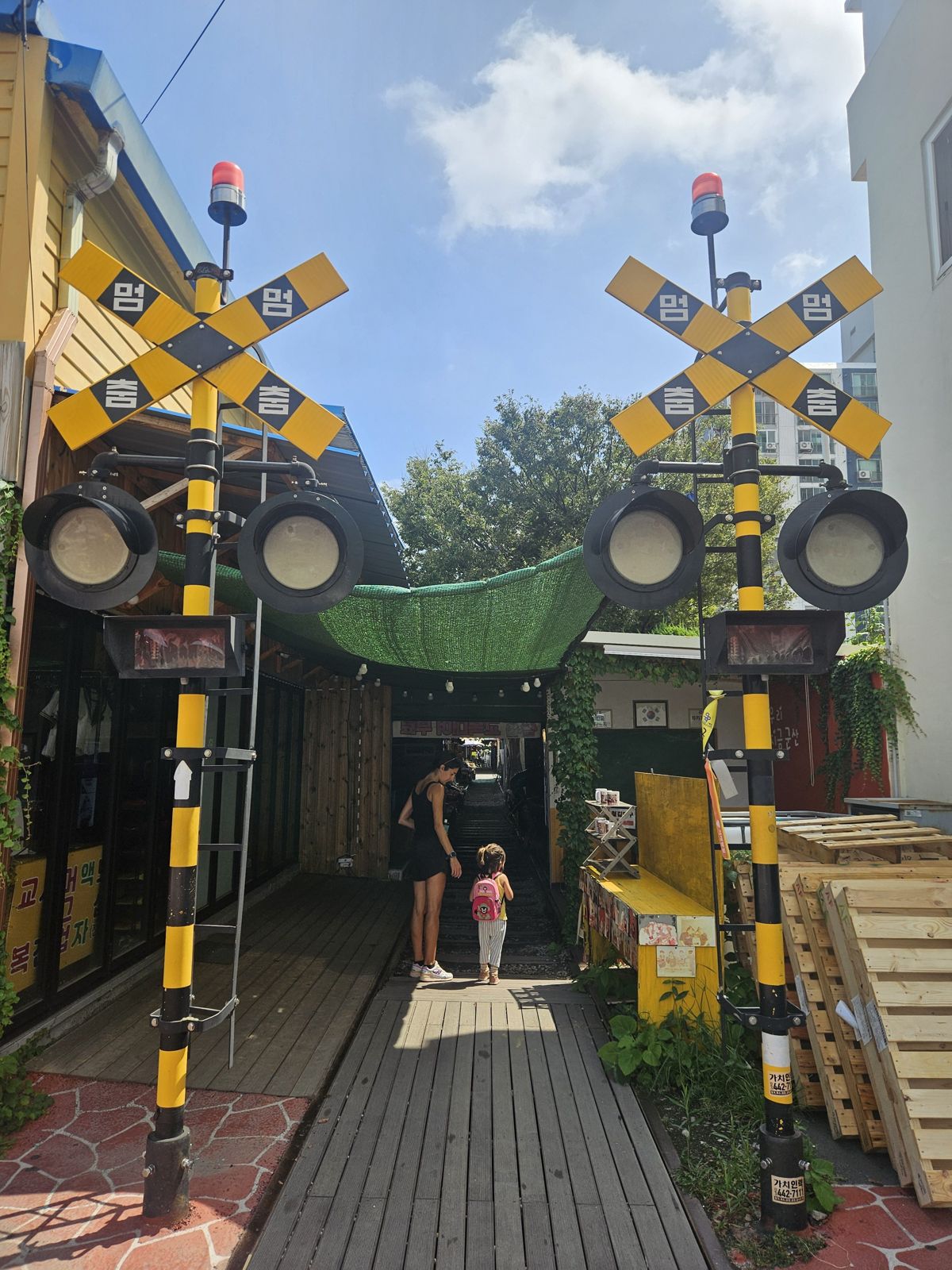
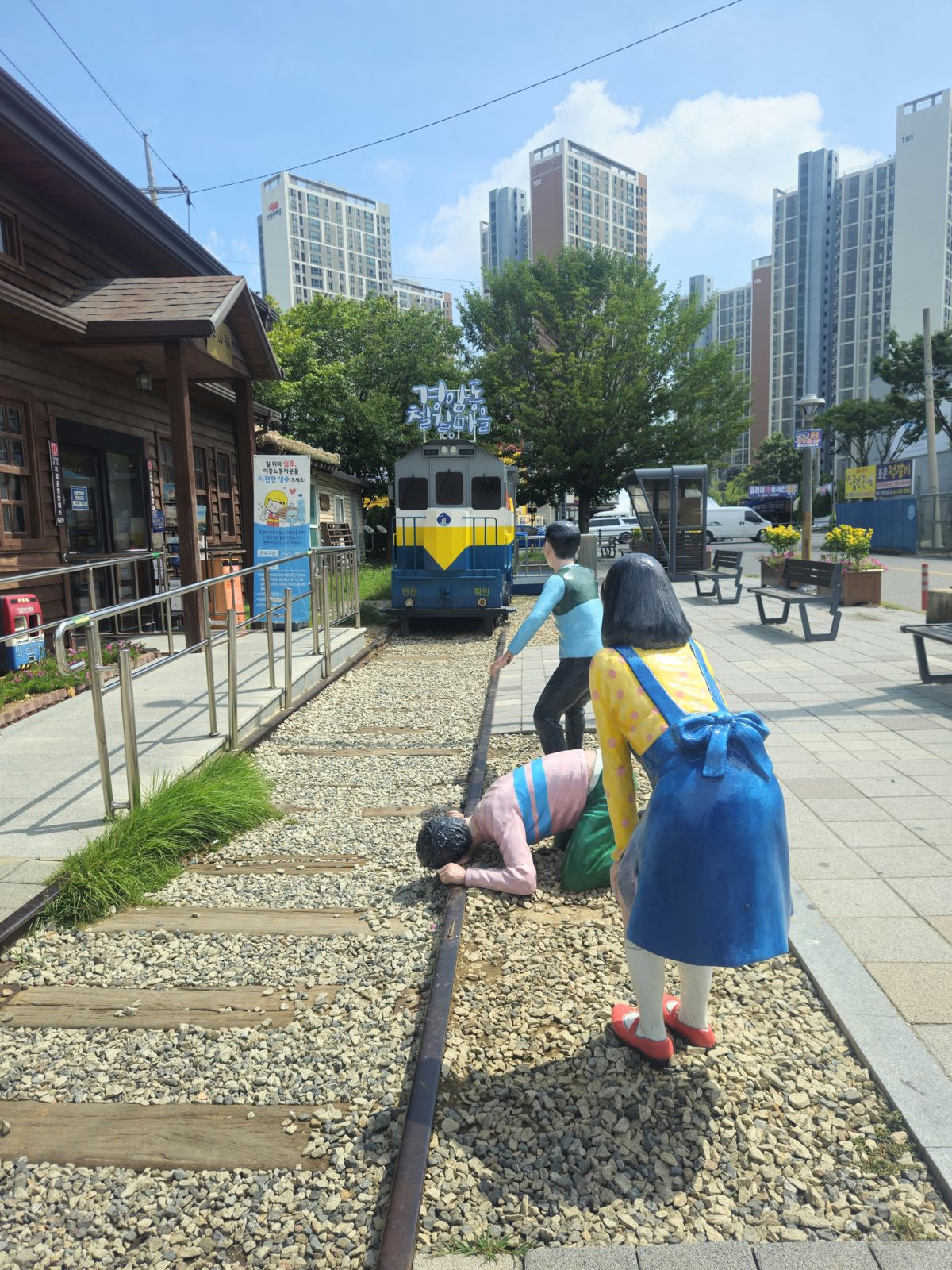
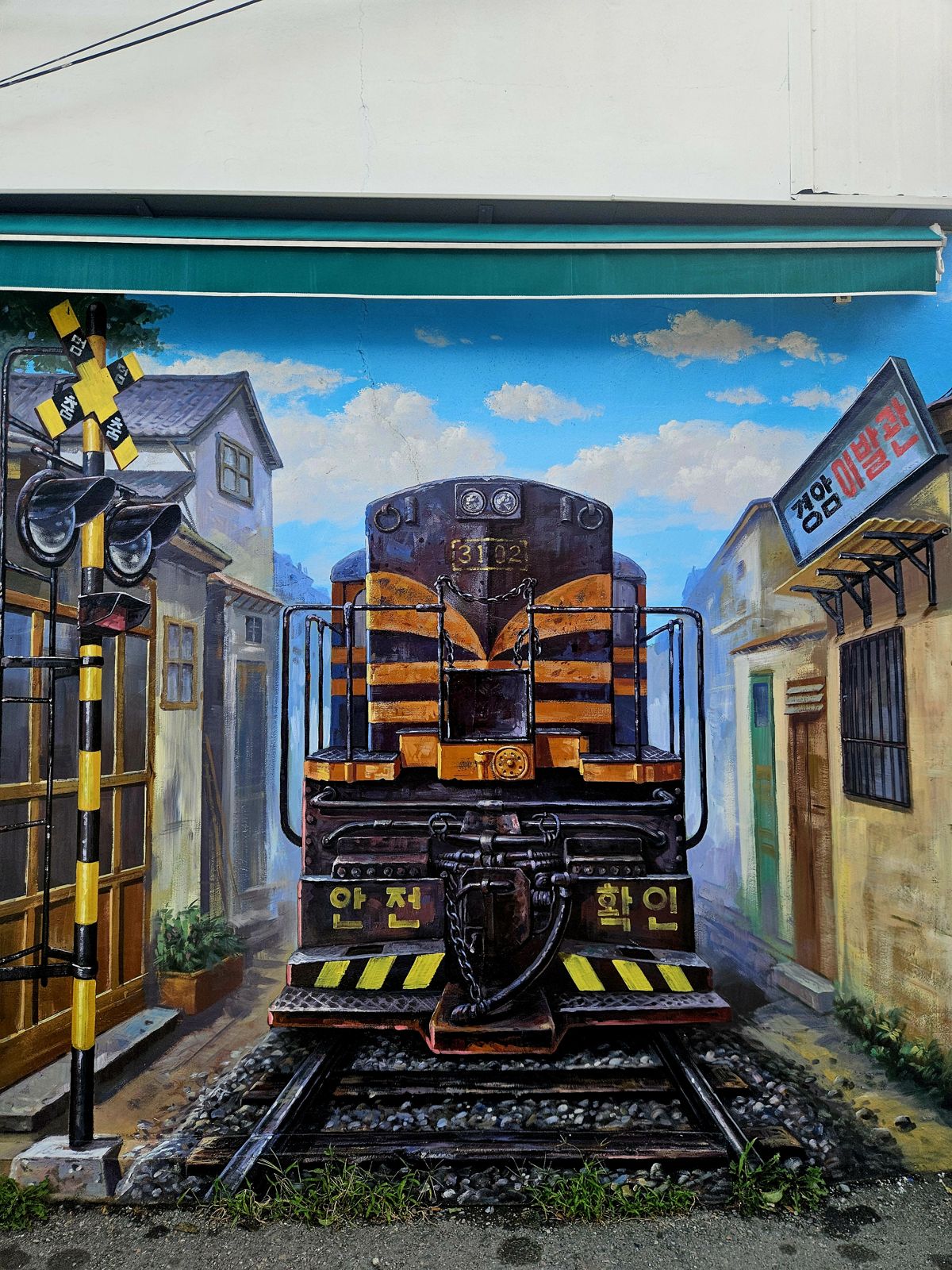
Still, the place has a special charm. The façades are decorated with murals and garlands, and you can feel that neighbourhood life has reinvented itself around this disused line. For us, the walk is mainly an excuse to wander, watch people go by and soak up the cheerful, slightly chaotic atmosphere. Clémence has the time of her life. She runs from one sleeper to the next, laughing, as if the tracks had become a playground just for her. Every shop draws her like a magnet, especially those overflowing with soft toys and colourful playthings.
We then stroll along the seafront, where boats and planes are on display. Clémence is more interested in the playground just behind, and we spend quite a while there before eating in a rather ordinary café. Our experience of the country is completely different on foot and by bike. As pedestrians, we find drivers terribly selfish, ready not to stop even when we're in the middle of a zebra crossing. It's an absolute contrast with their attitude towards cyclists.
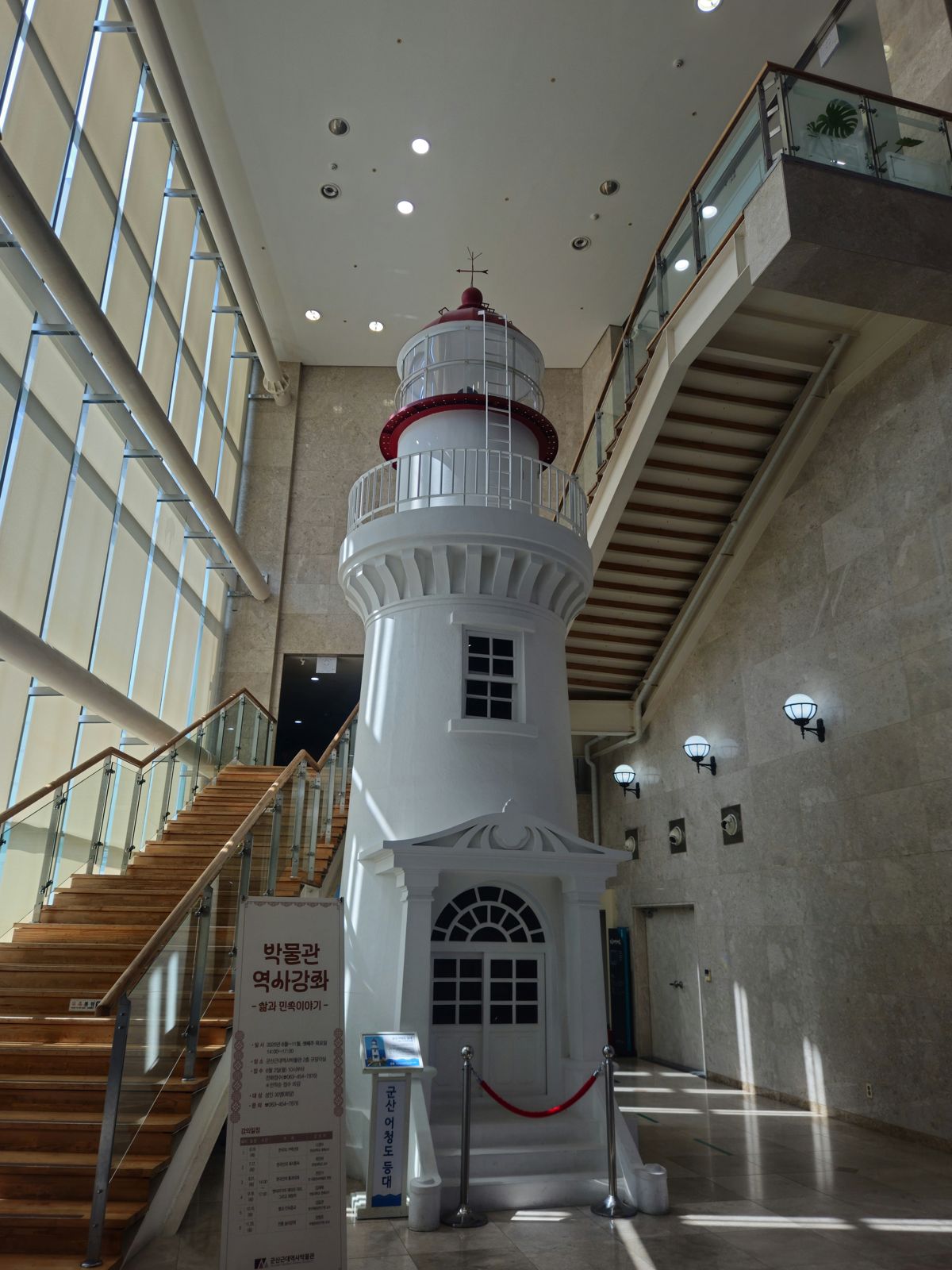
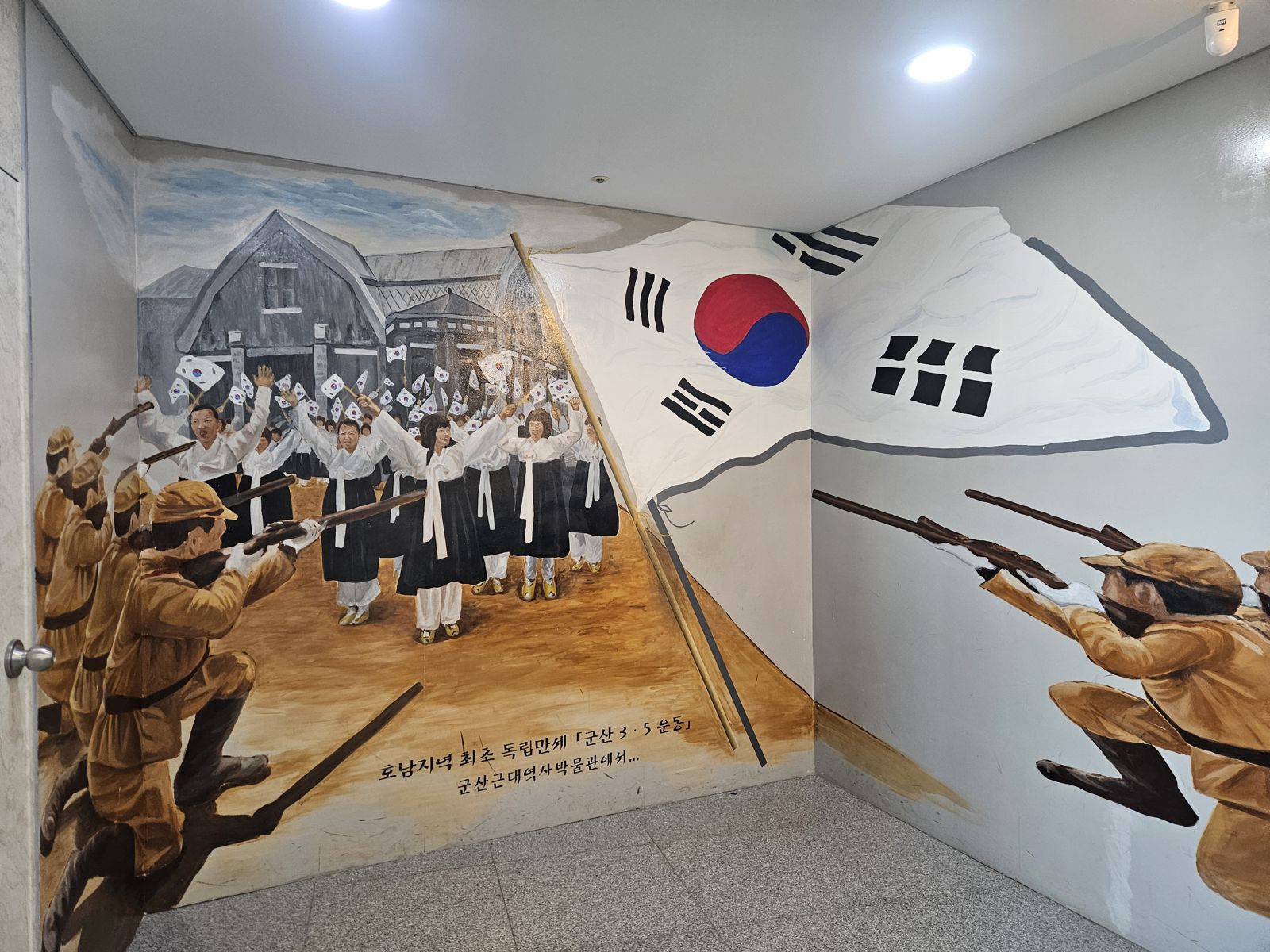
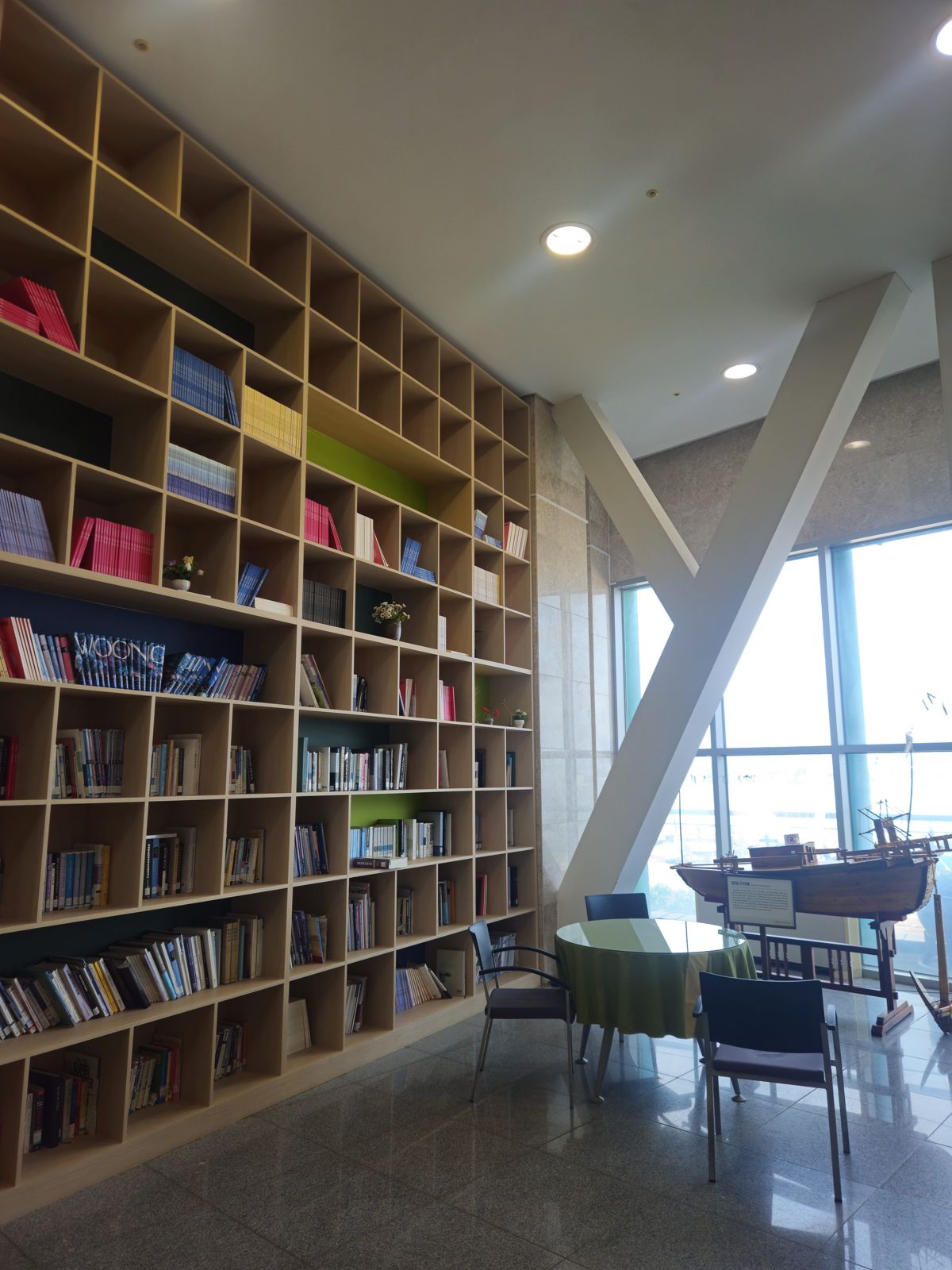
We carry on by bike to visit the Gunsan Modern History Museum. Opened in 2011, it traces the city's rise as a major trading port at the turn of the 20th century, especially during the Japanese colonial period. Over several floors it offers immersive exhibitions: ship models and maritime objects, a reconstructed 1930s street, scenes of daily life and a room dedicated to local figures of the independence struggle. Accessible and lively, it lets you dive in an hour or two into a pivotal era for Gunsan, between modernisation, painful memory and a recovered identity.
There's a lot about the infamous Japanese colonial period (fifty years, after all) and the abuses inflicted on the local population. Before the Japanese arrived, Gunsan was just a rural riverside village. The Japanese turned it into a major port and trading post so they could export goods and produce from the province's rural hinterland on a massive scale, mainly rice. On arrival they looted villages and seized all the farms, imposing huge rents on farmers (75% of the profit on production went to them, making farming life more than miserable), then exported everything to Japan. This contrasts sharply with how the Japanese spoke about Koreans in their museums, describing them as willing workers and Korea as Japan's granary in a rather peaceful collaboration. Japan struggles to face its history as an imperialist, colonising and unparalleled cruel nation, and it has never apologised to the countries it victimised, such as China and Korea.
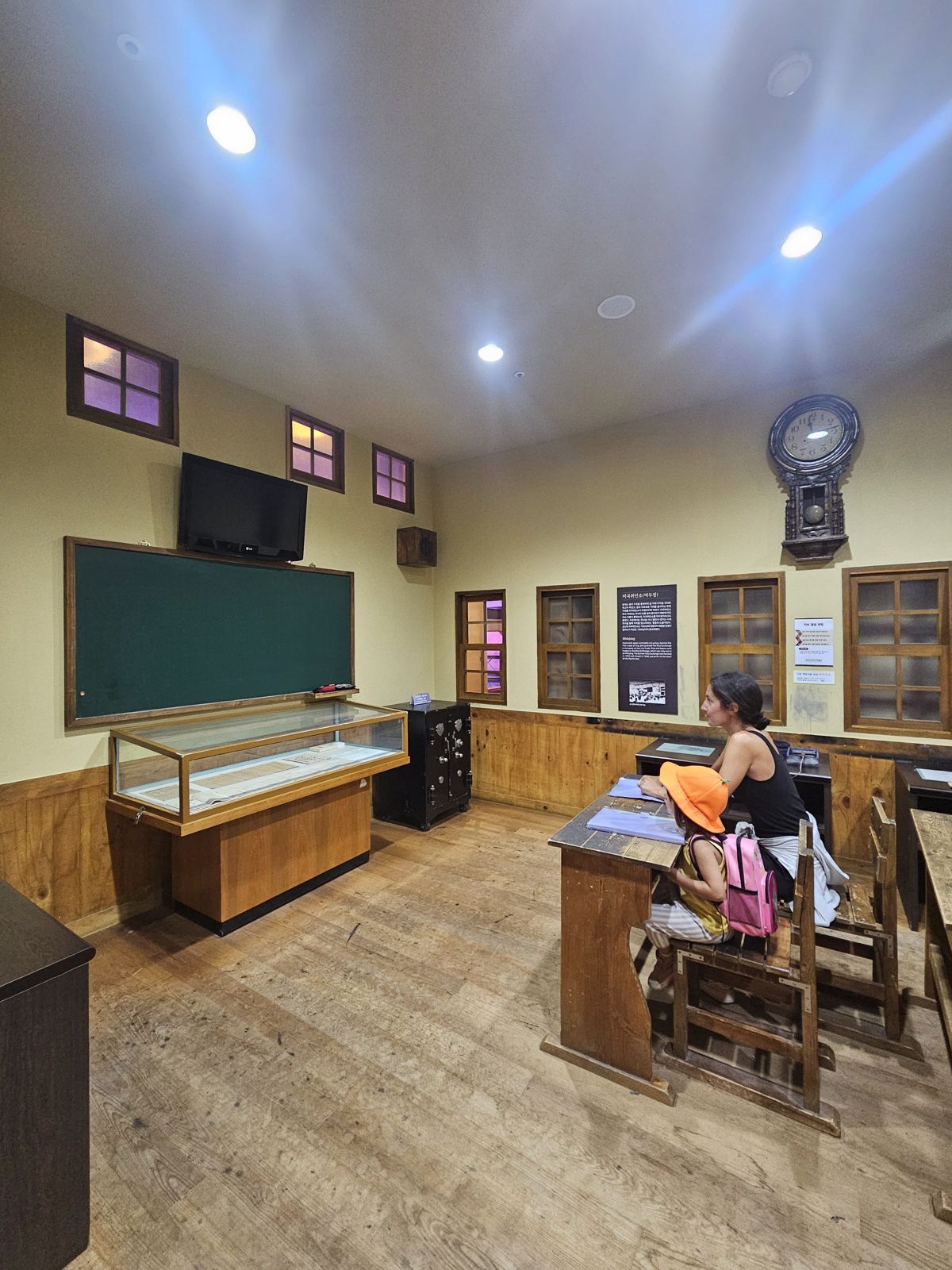
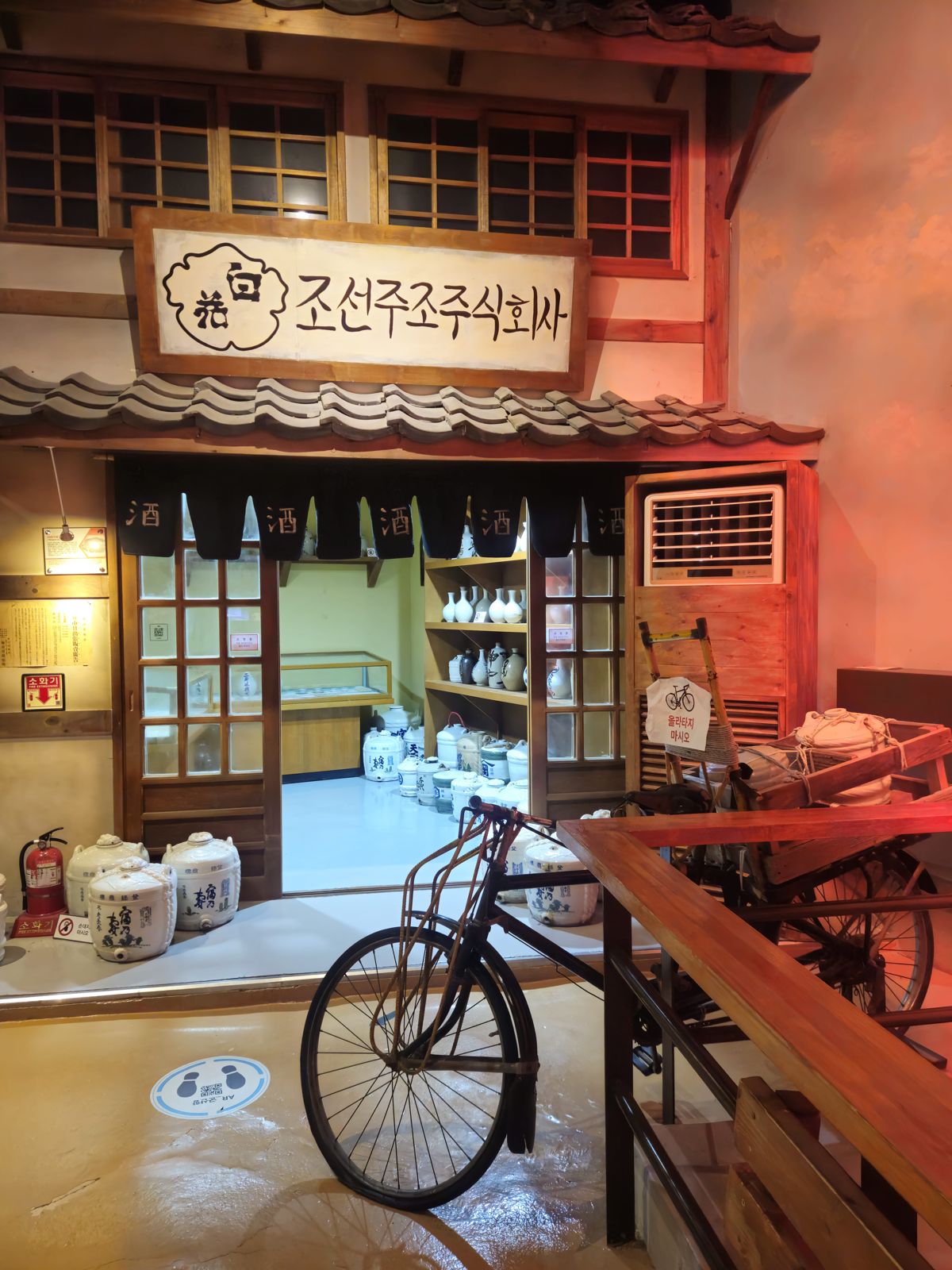
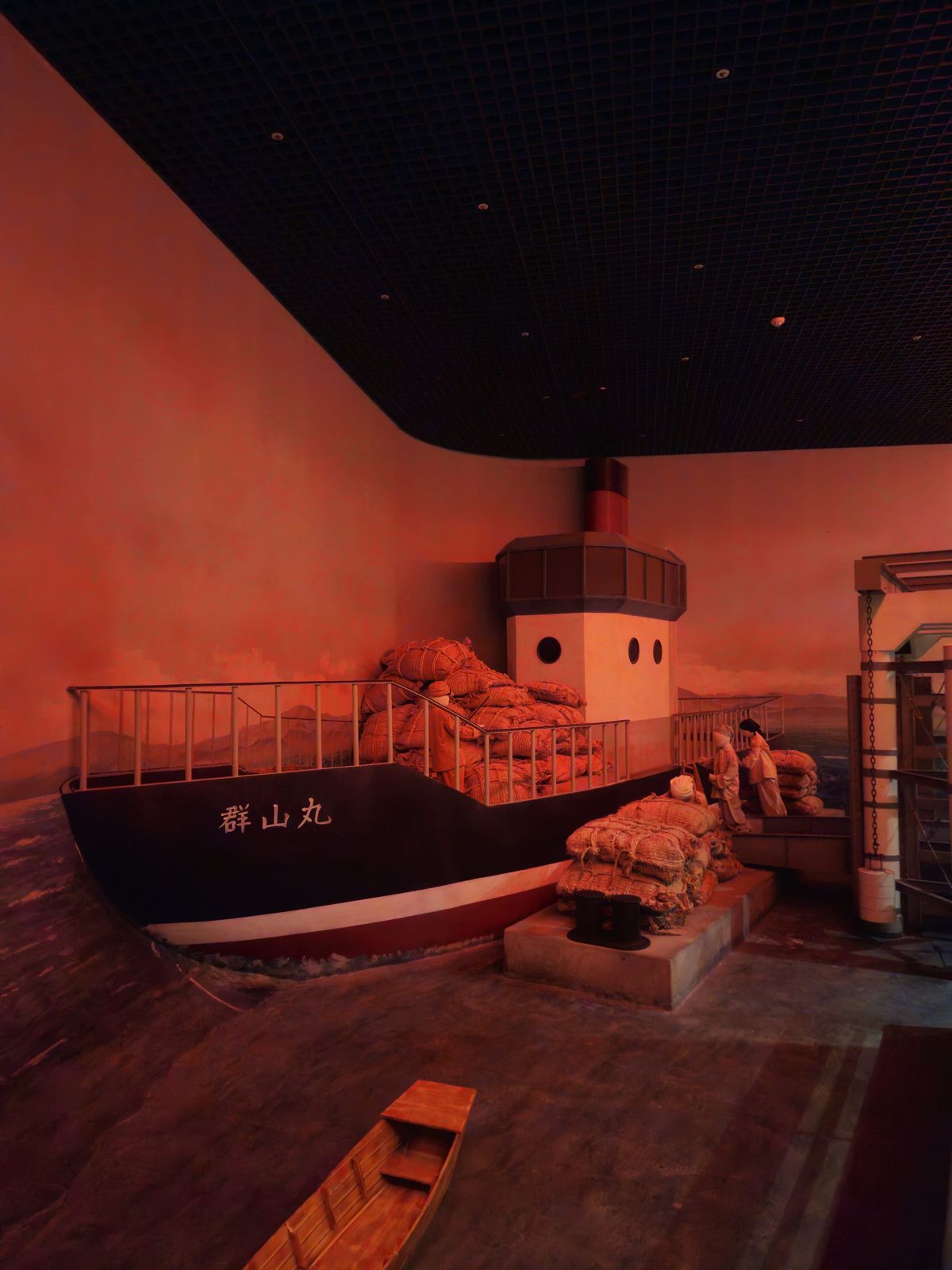
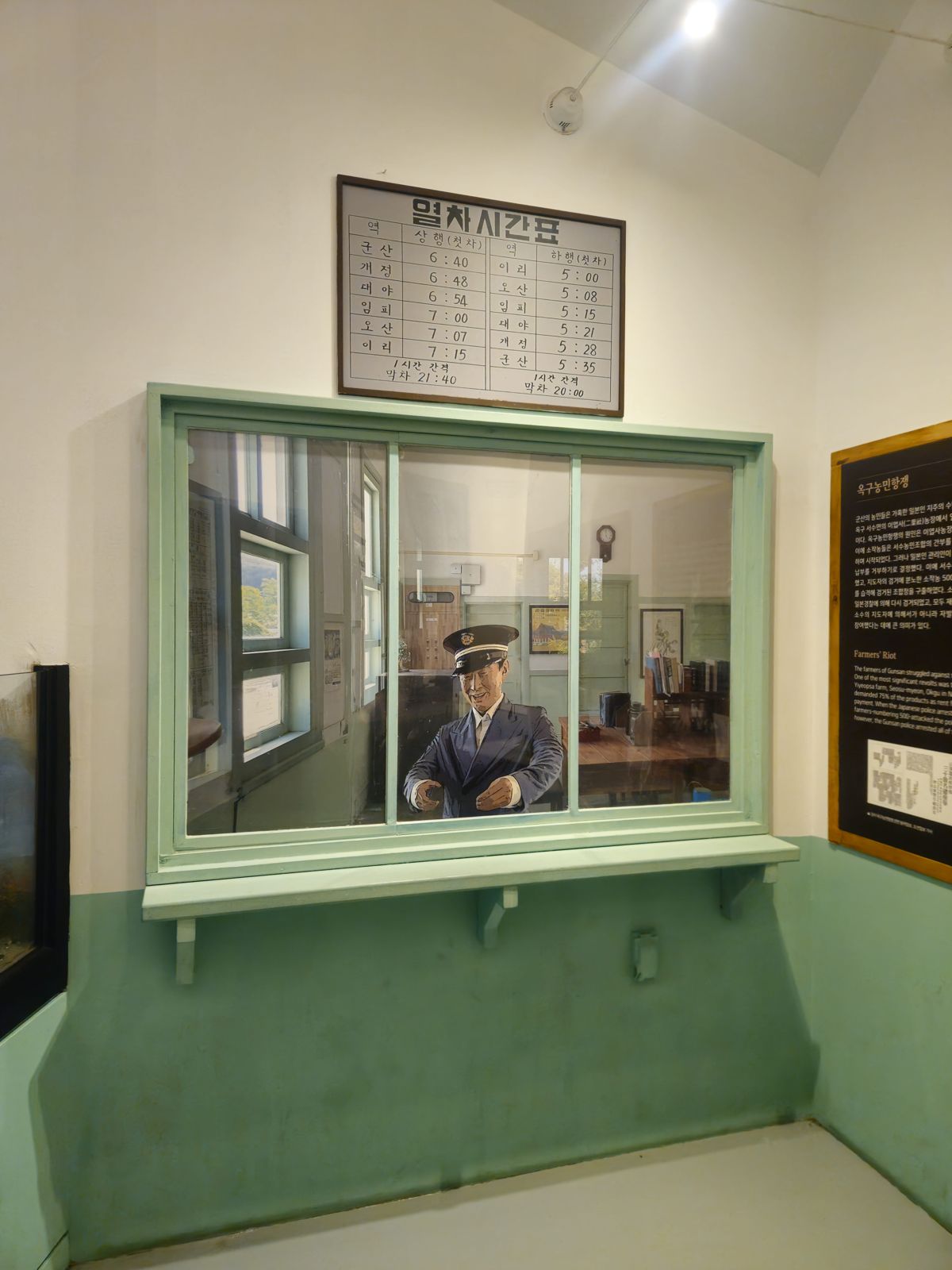
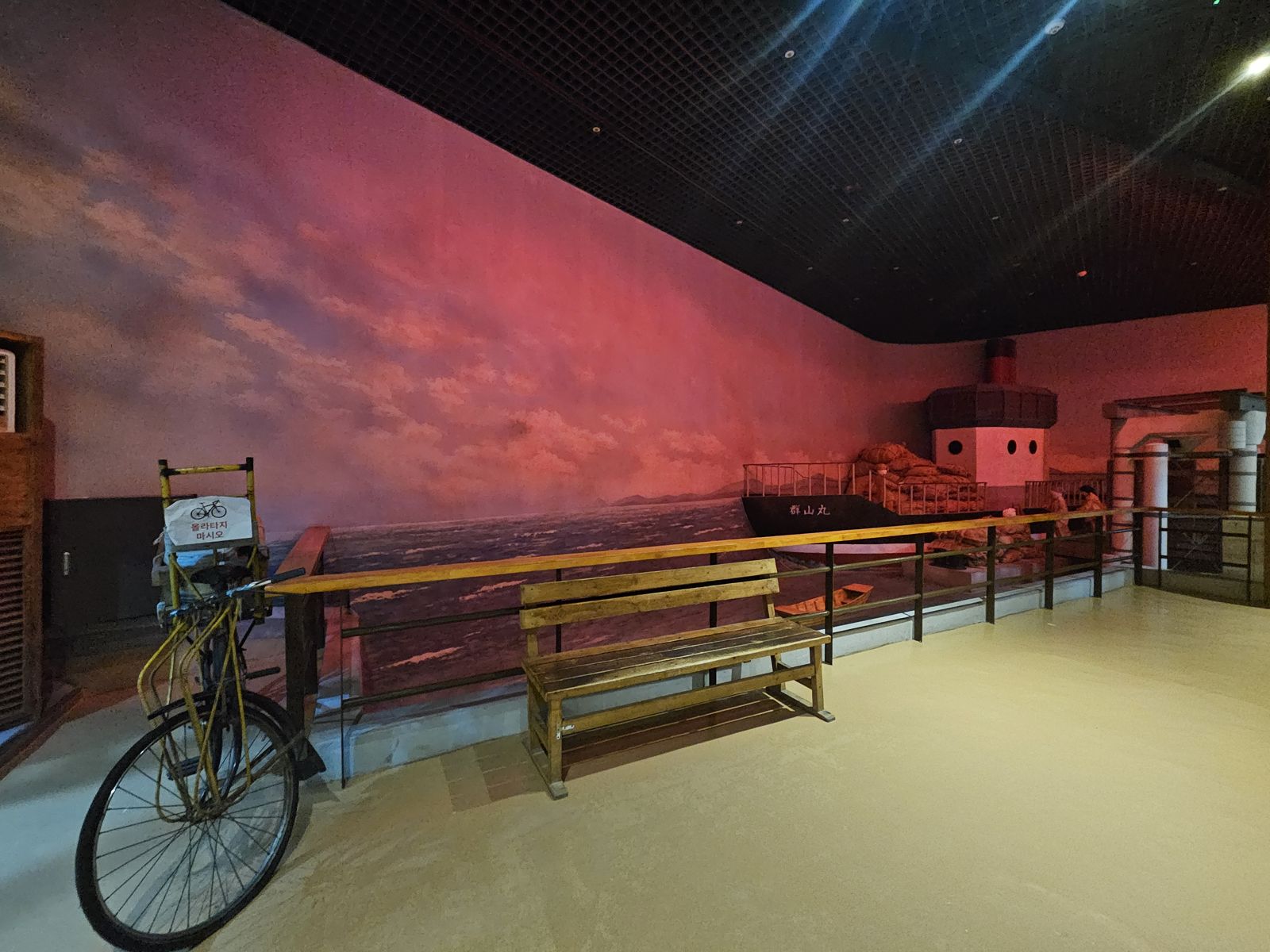
As always, the museum has a children's area where you can build period buildings with 3D puzzles or try to repel the invaders' ships by throwing balls at a screen. It's less hot today, summer is starting to run out of steam, and Stéphane and then Cassandre take the opportunity to go for a run. We have dinner in a big craft brewery set up as a giant food court, where half the counters are closed and we're the only customers. We're a bit disappointed, as the place looked really appealing. Maybe it opened recently, or maybe it's busier on a Friday or Saturday night. A place like that in a Western country would surely be packed, but in Gunsan going out here clearly isn't a local habit. The evening goes by slowly, in step with a rather quiet city.
On the road