
 ← PreviousGwangju the revolutionary
We wake up excited this morning because we're finally starting a new cycle route. We're not in the most densely populated part of Korea, so we've had to split our 90 kilometres a little oddly. Today's stage will only be about thirty kilometres, which explains our late start. Check-out at Korean hotels is late, usually 11 or noon, and we make the most of it to have a lie-in and eat breakfast at leisure in the room.
We set off around 11 with a stop at the local post office to send some things back to France. Unlike the Japanese post office, everything is very simple here. The clerk understands our request straight away and gives us an envelope of the right size; we write the addresses and that's that. For the modest sum of €3 per parcel, things cross the world, while a simple letter costs €1.39 in France.
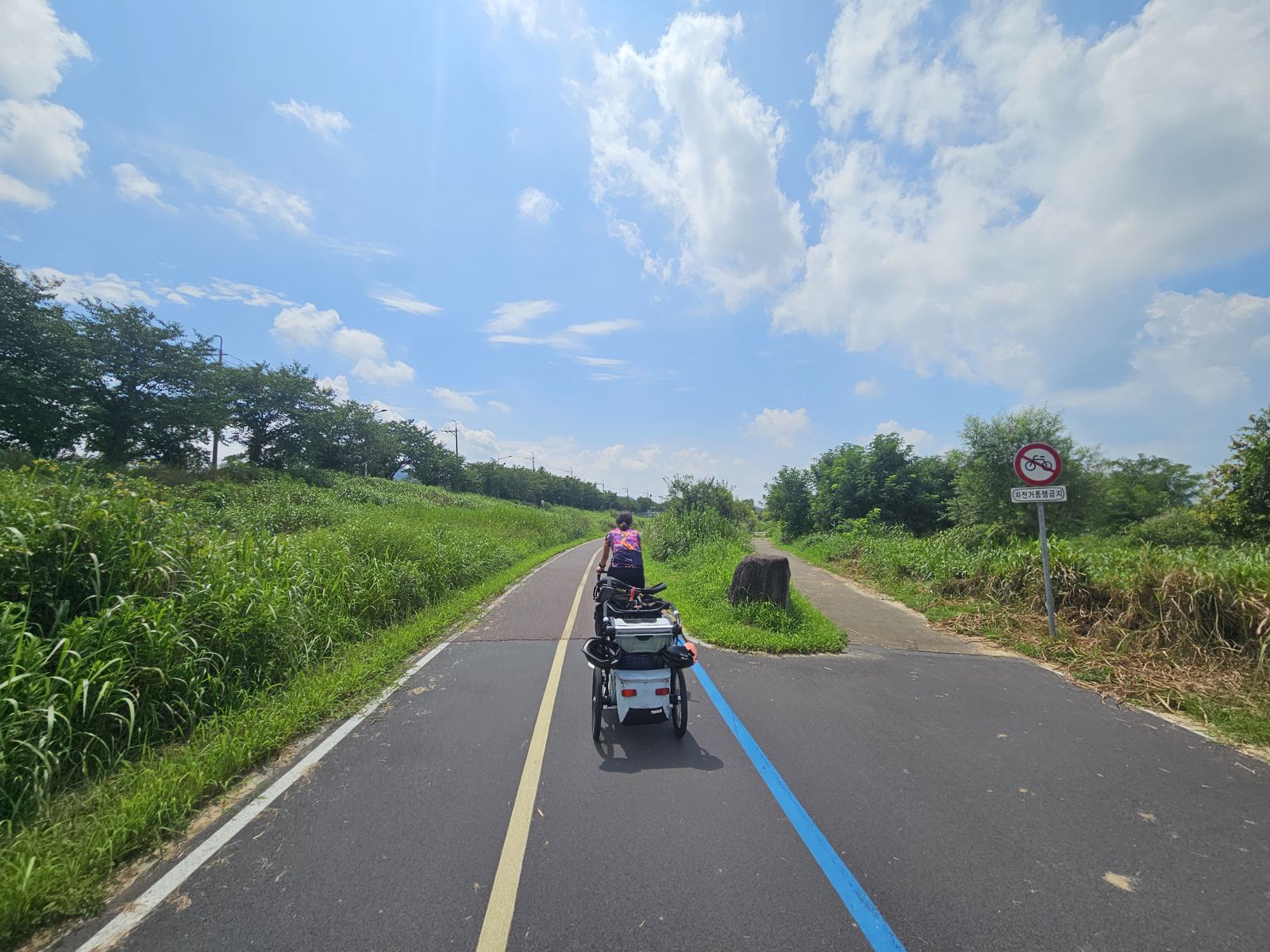
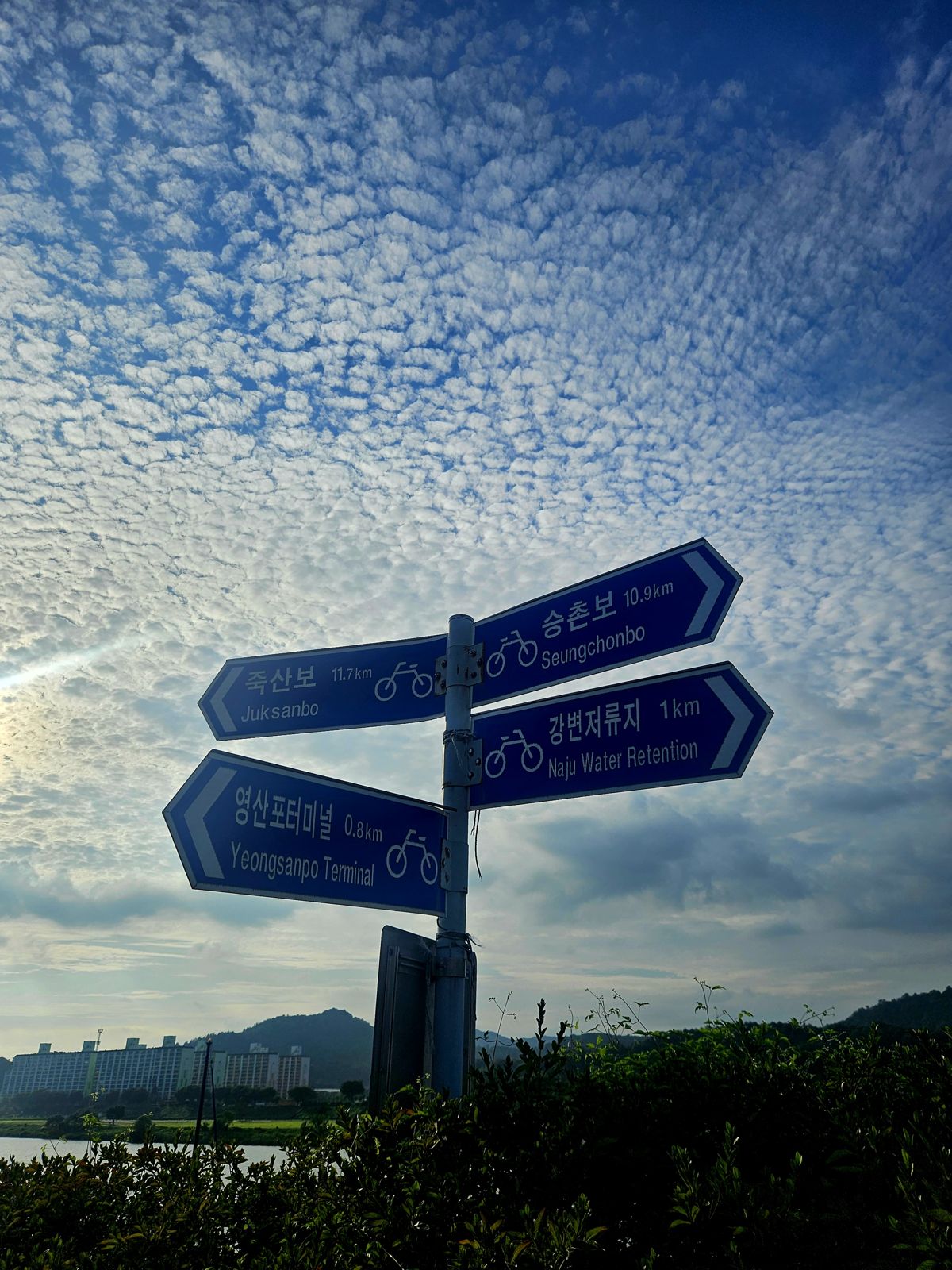
The cycle route we're taking between Gwangju and Mokpo was damaged by the big mid-July floods, as we soon see. The riverbed is wrecked in places, pedestrian fords have disappeared and there's a lot of plant debris on the path. We still find our way fairly easily; the route is flat and pleasant. The sun isn't too fierce yet, hidden behind thick clouds. It's still hot, though, and we sweat profusely.
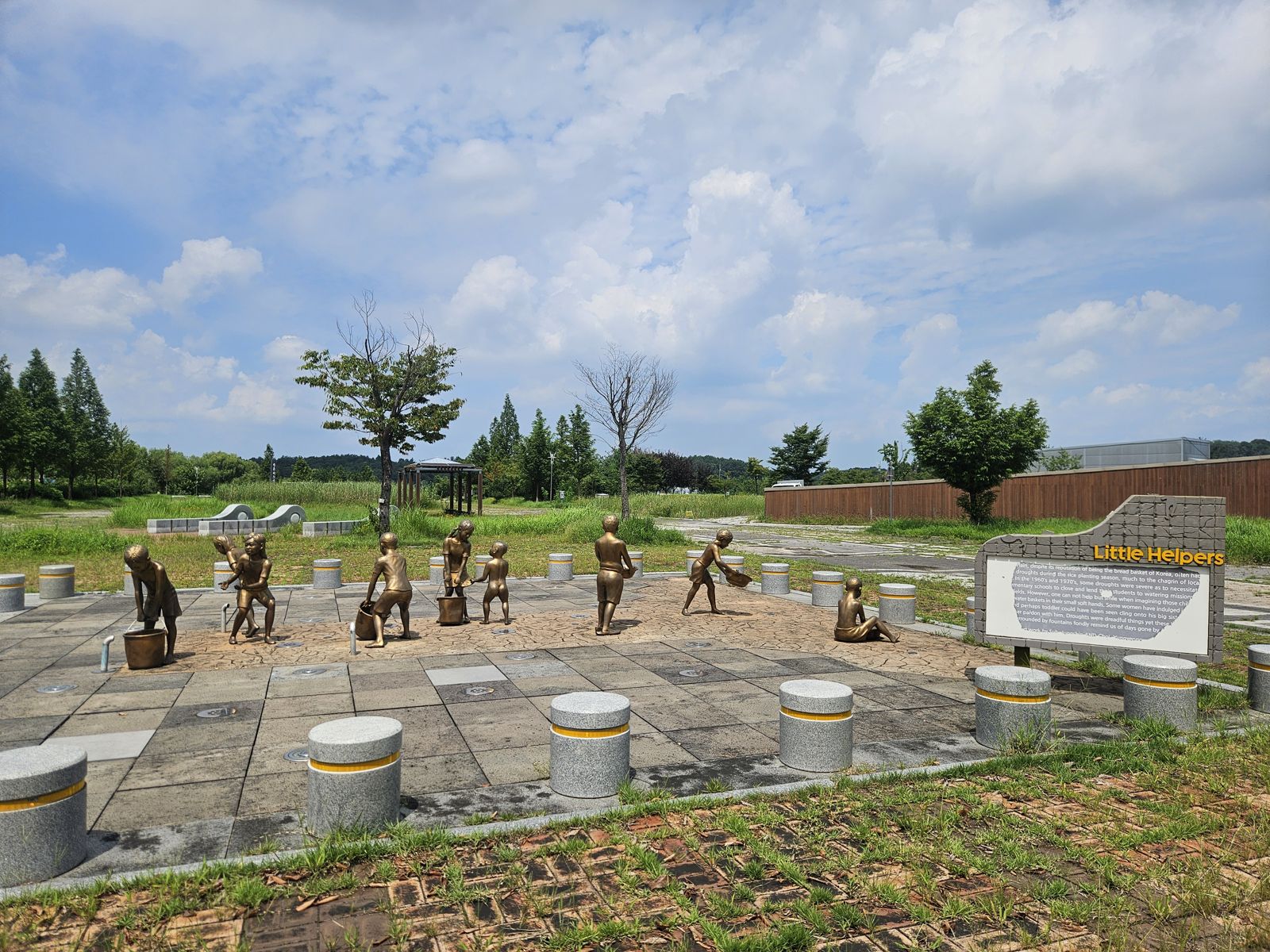
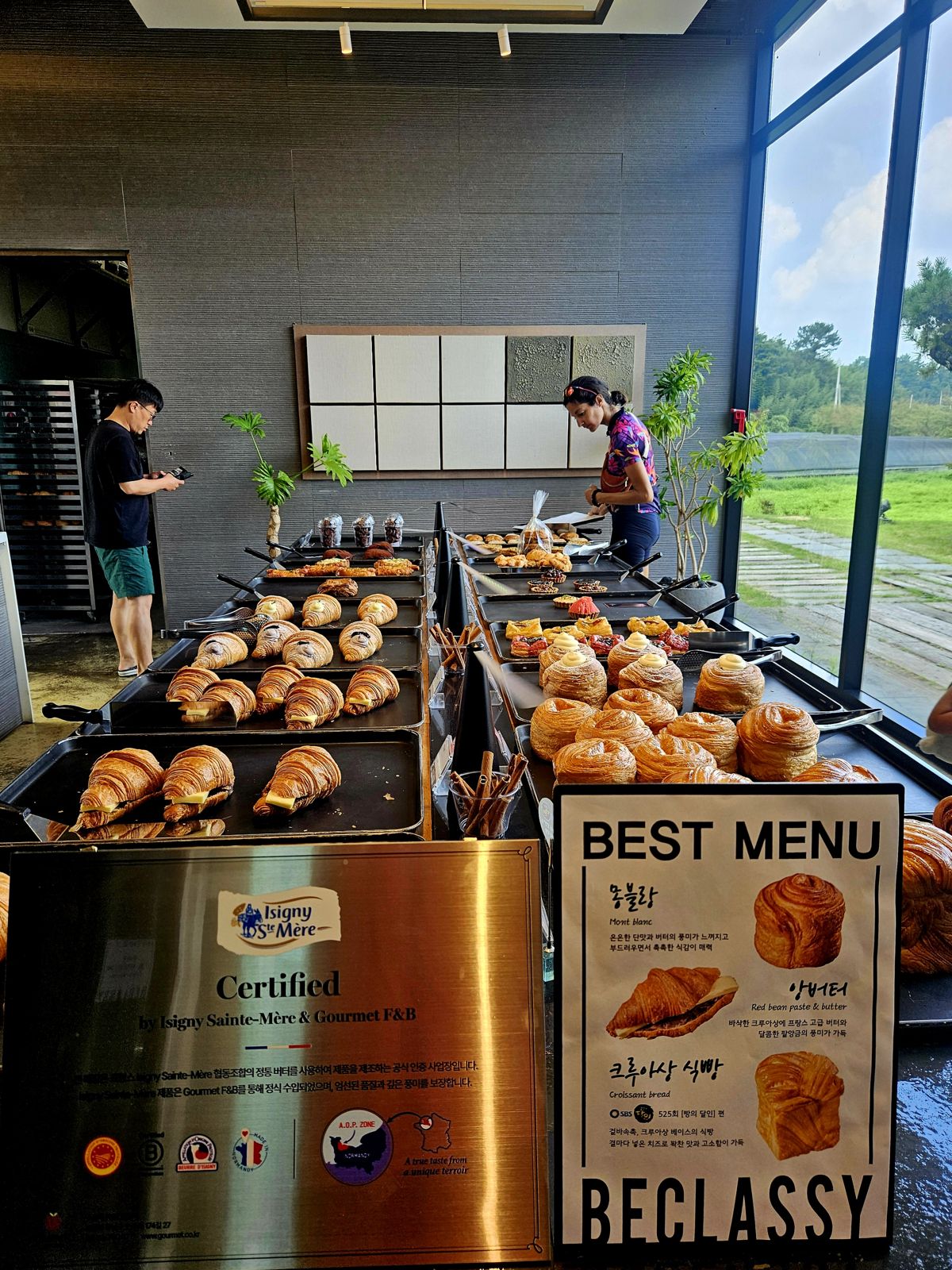
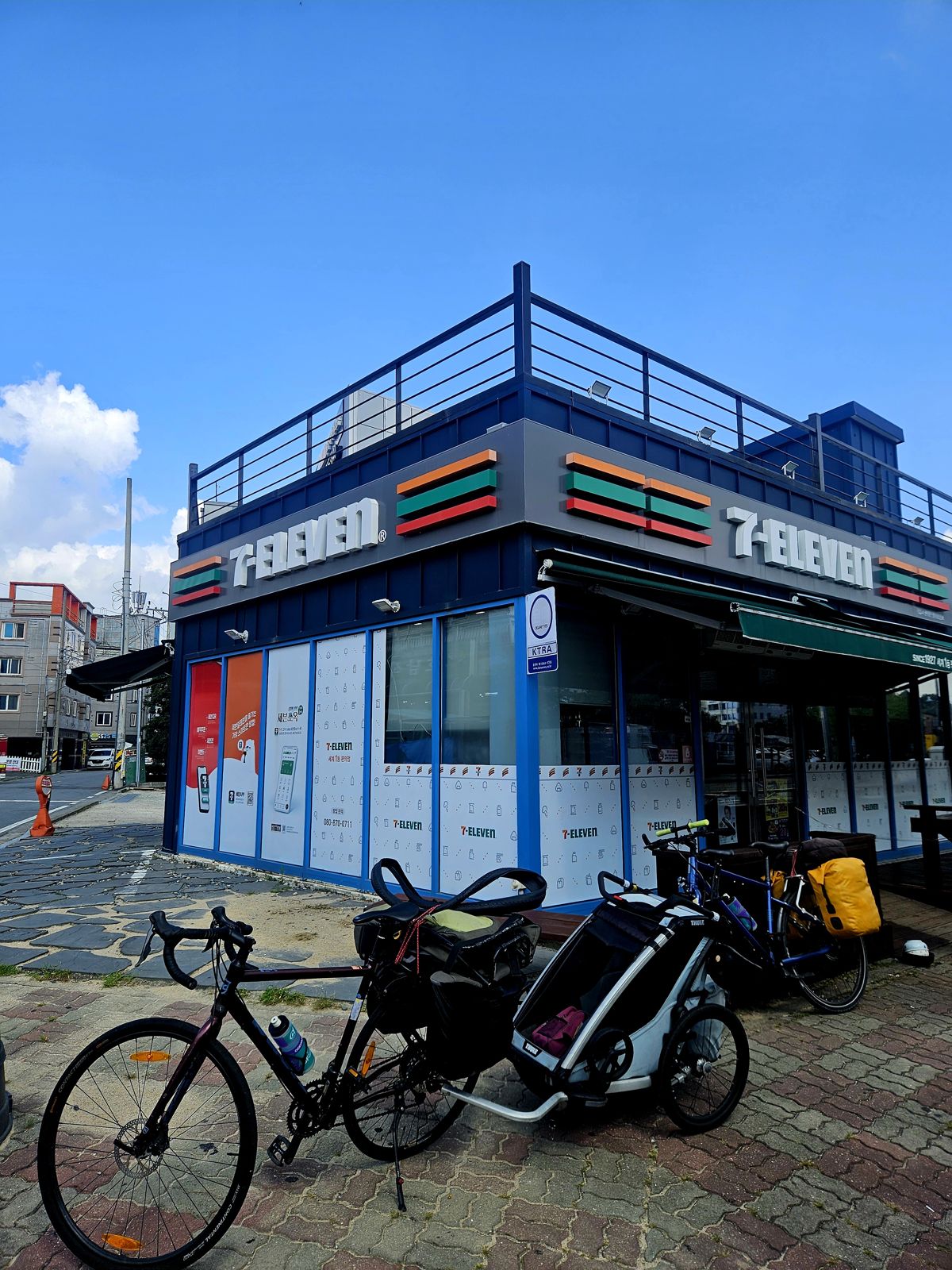
Halfway, we seize the opportunity of a cultural centre (sadly closed the day we pass) to take a cool-down break. South Korea has a knack for putting big public buildings where you'd least expect them. The place is clearly very popular with cyclists, judging by the bike racks and the giant map of the country's cycle routes. A small convenience store is open where you can buy something cold, a snack or a coffee. We set off again towards a very pretty café not far away, where we enjoy a few pastries heavily inspired by ours.
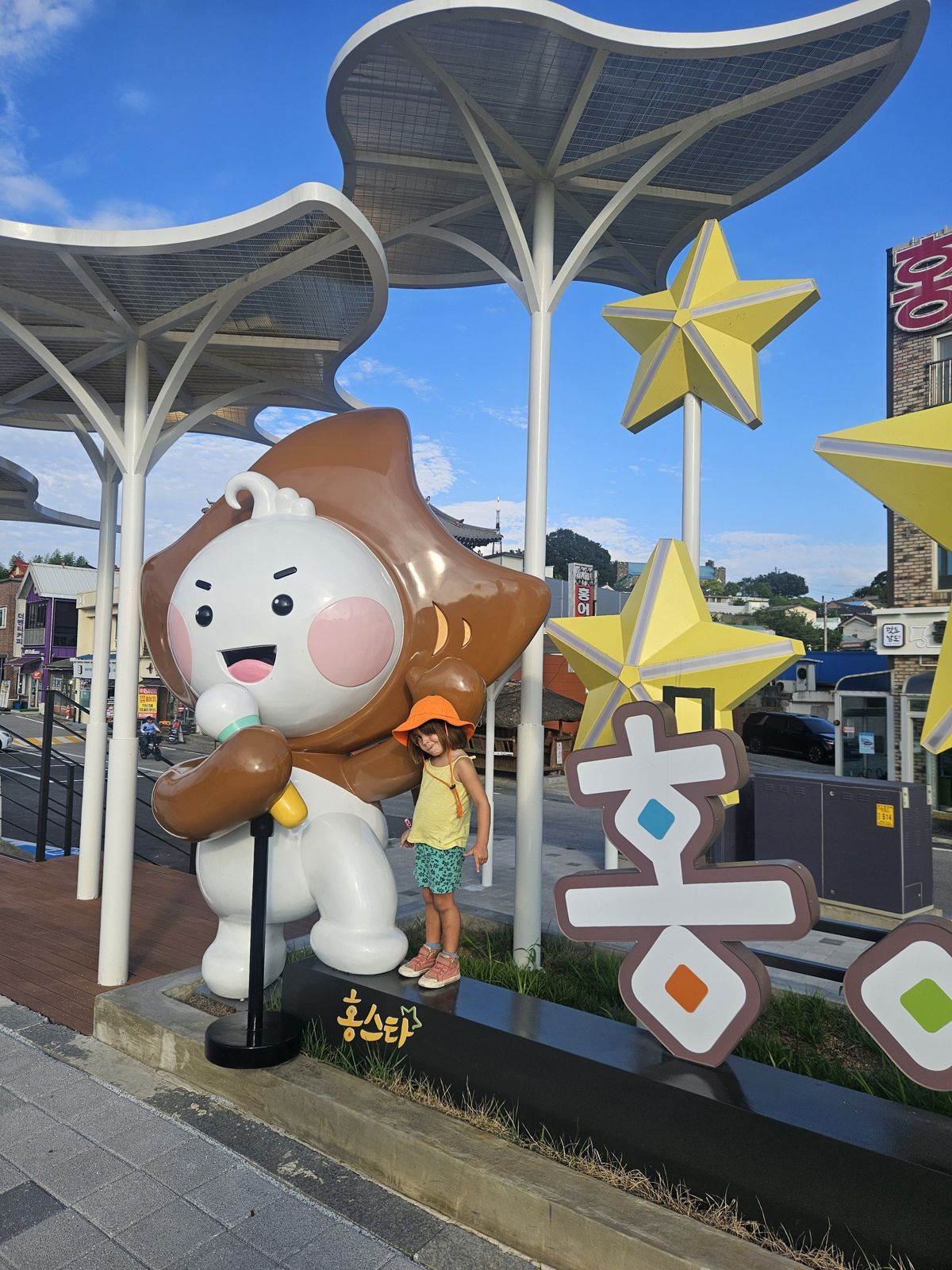
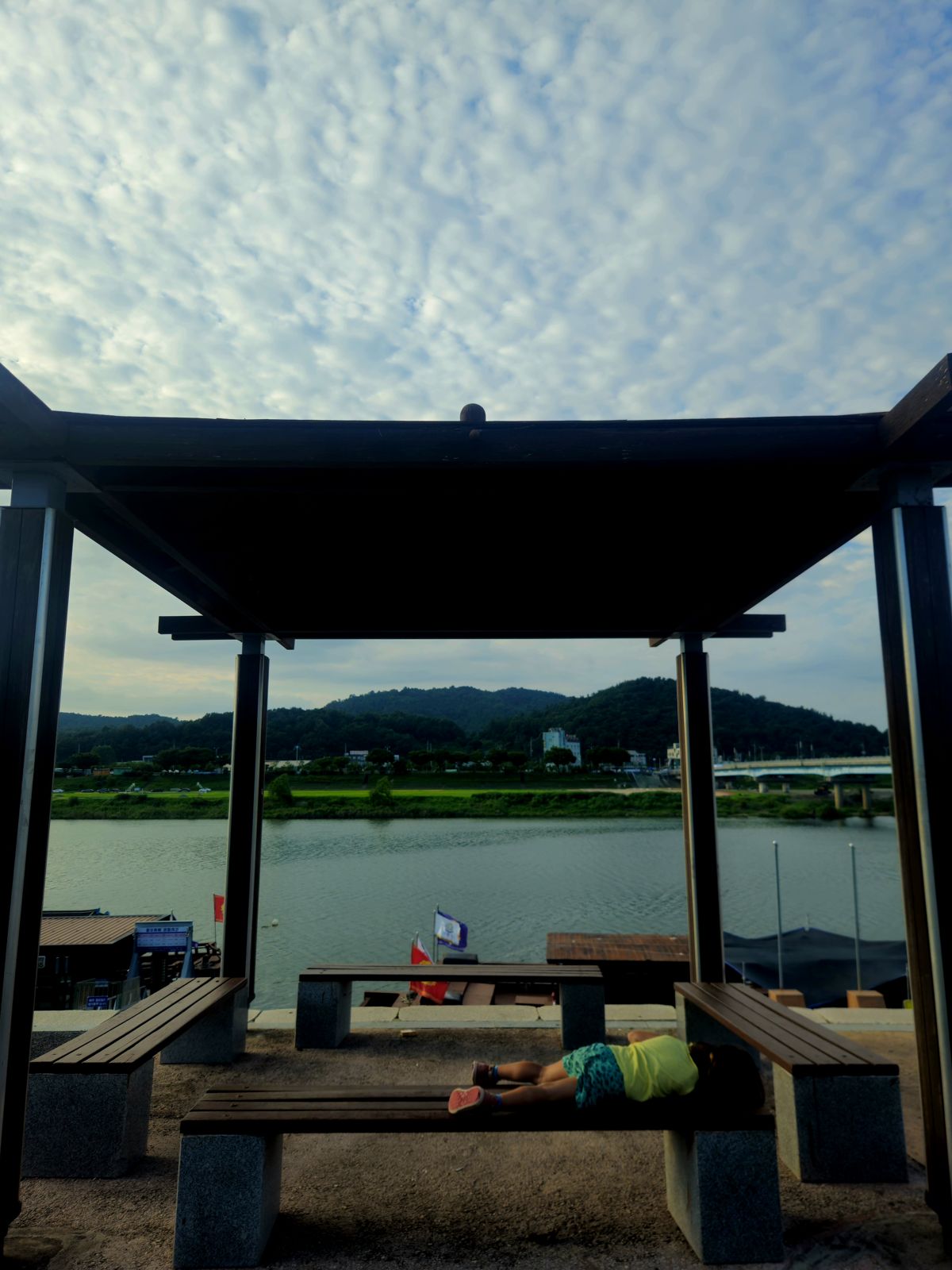
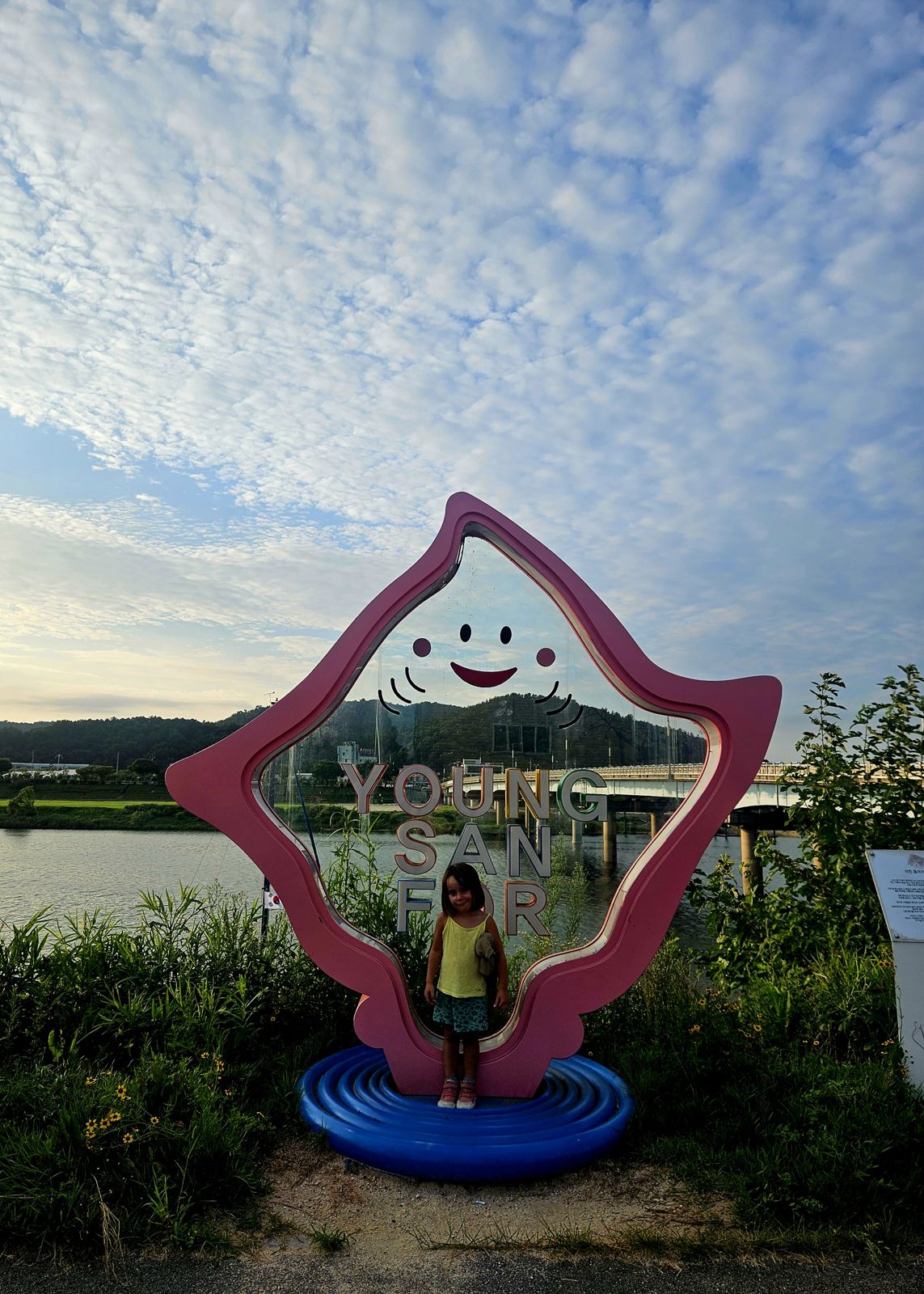
We arrive early at the hotel, but our room is ready, so we don't miss the chance to hide from the sun for a while. We go out again for a snack in a pretty café before walking along the river. The town of Naju is known for its river fishing port and its skate, a kind of ray. The town's façades are covered with the creature and the smell in the air gives its presence away. The town offers a different landscape, much lower-rise. No tall buildings here, just small houses. It has a village feel that suits us very well, and we spend the evening strolling.
Tuesday 19 August
A long stage awaits us today and we wake up a little later than we'd like. Since the start of this trip, it's been rare for any of the three of us to still be asleep at 8. So this is an exception, as it's already past 9 when we open our eyes. We do have the whole day ahead, but one of the rules of bike travel is that it's better to have done most of your stage early in the day. It's never pleasant to be racing against the clock late in the afternoon.
The first hour goes smoothly and we make good speed through the South Jeolla countryside. The path is good and the sun not yet too scorching. But since things can't always go smoothly, we come across a cycle-path diversion. It sends us on a detour to rejoin the route at a point… where the path is completely fenced off. The wooden footbridge behind it has collapsed, probably as a result of the recent floods. Except there are no signs, and we have to find a way through the farm tracks crisscrossing the landscape. After much zigzagging on tiny roads that sometimes turn into tracks, we finally find the official route again. The path is smooth as a billiard table once more. We follow it for 5 km to the top of a hill with an observation point.
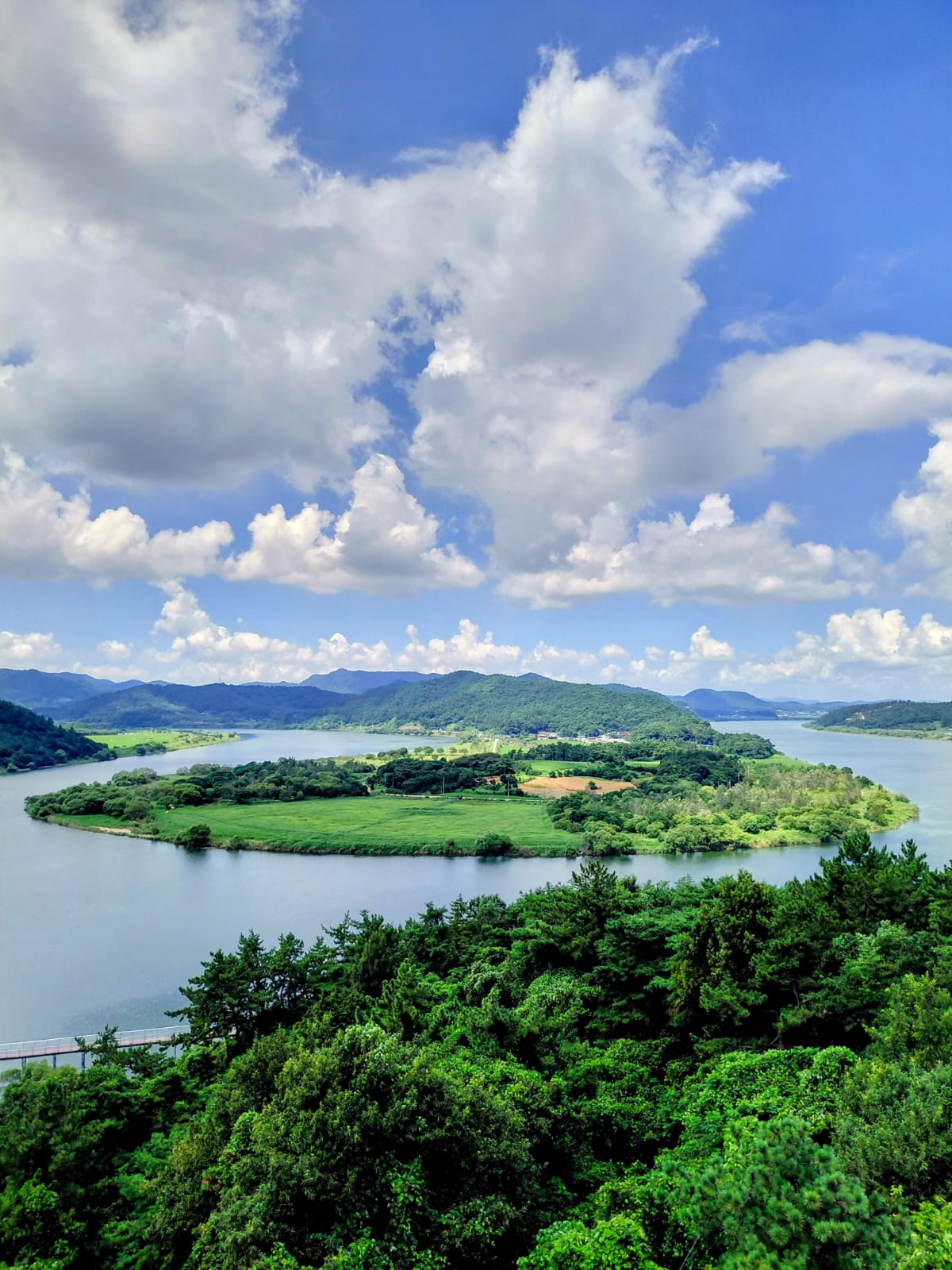
The slope is steep, but the place is worth a little break. With their attention to detail, Koreans have thought of a lot, and up there we find a small prefab building. It has air conditioning, a fridge with drinks and food inside, a microwave and a kettle. Public service to the power of a thousand. We make full use of it, especially the air con, as we're dripping. It's the perfect place for a lunch break. As usual, the cyclists who stop are very friendly, and Clémence gets more little sweets as presents. We've already seen more bikes in one day here than in a month in Kyushu.
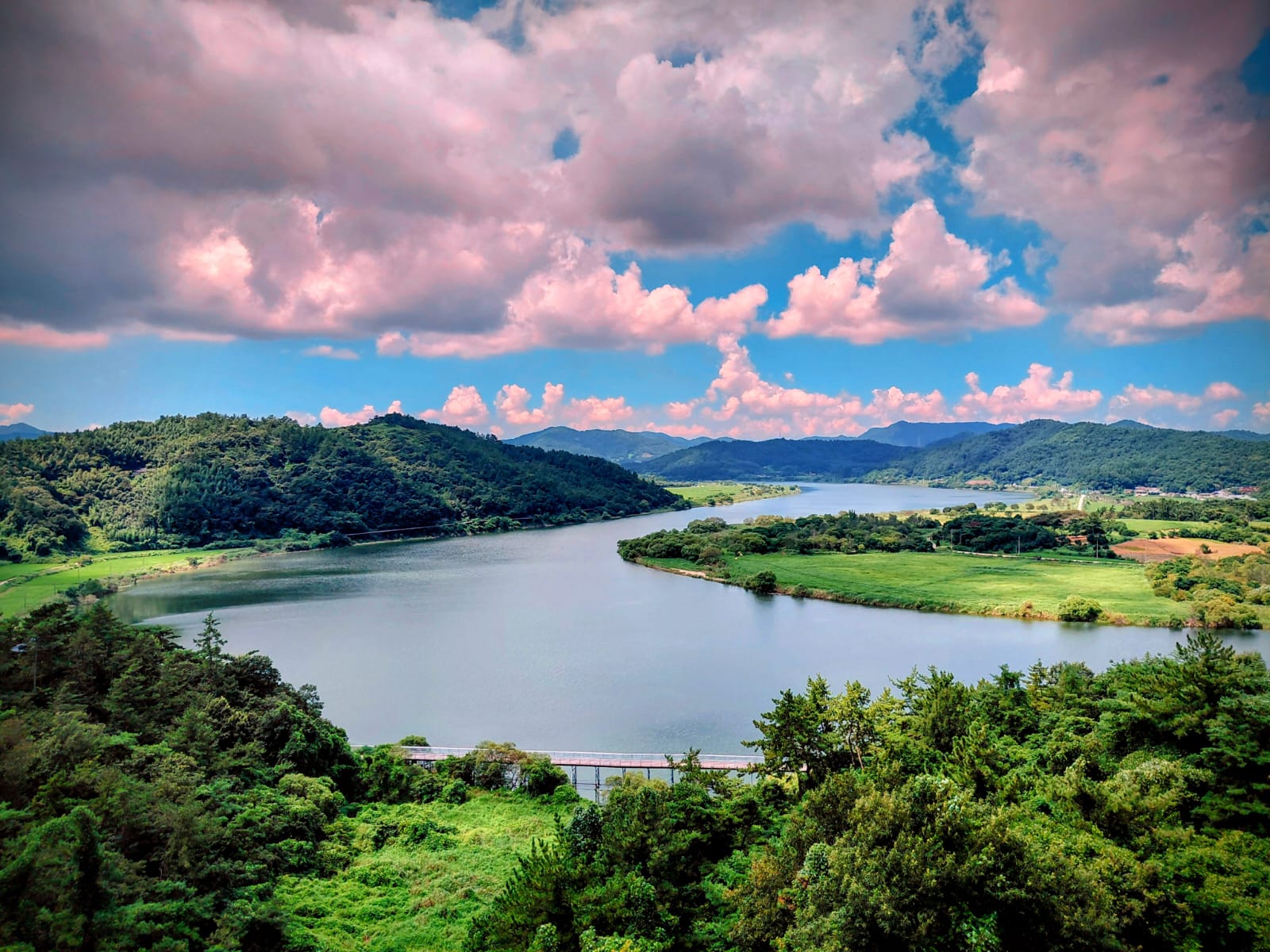
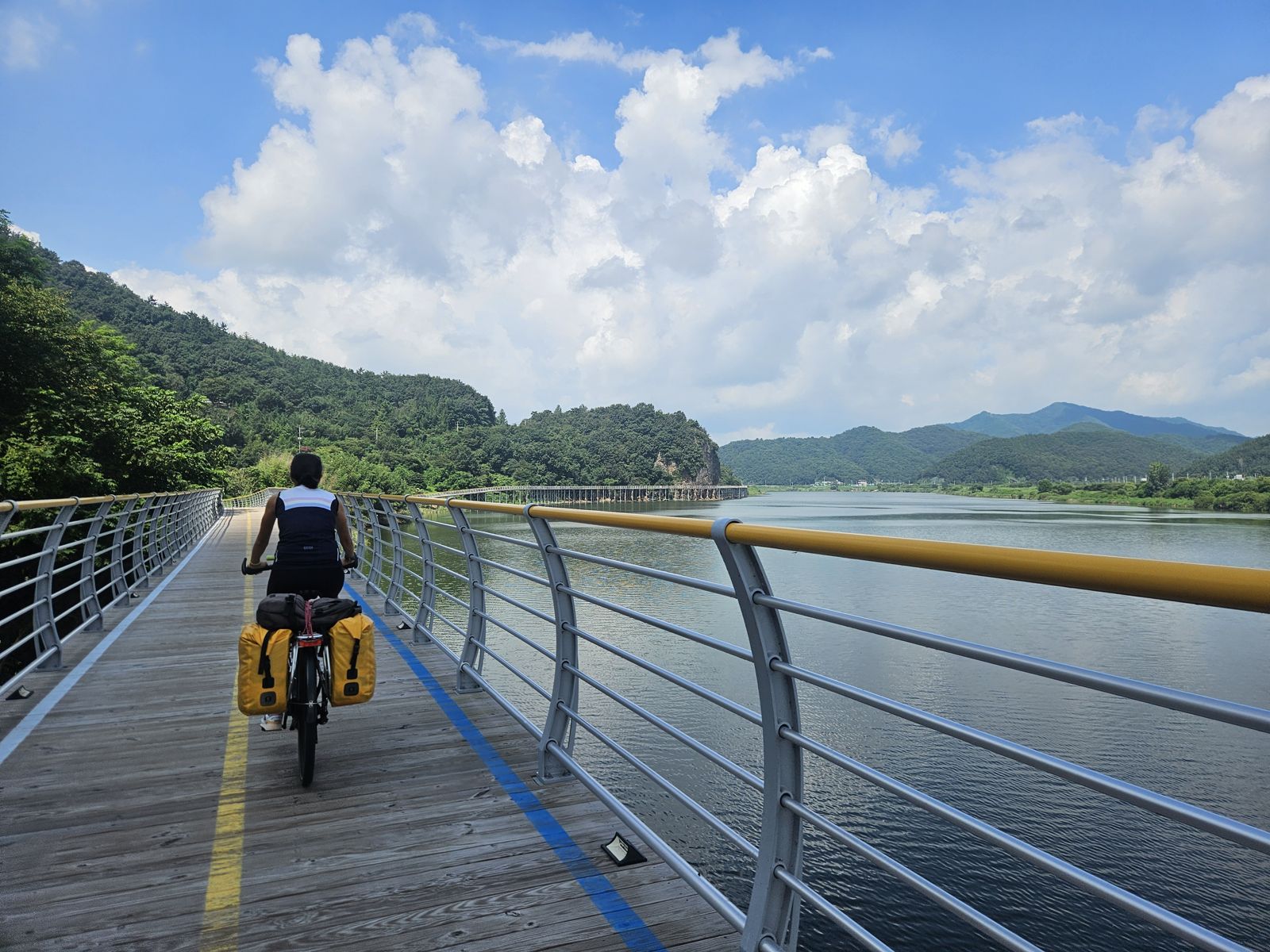
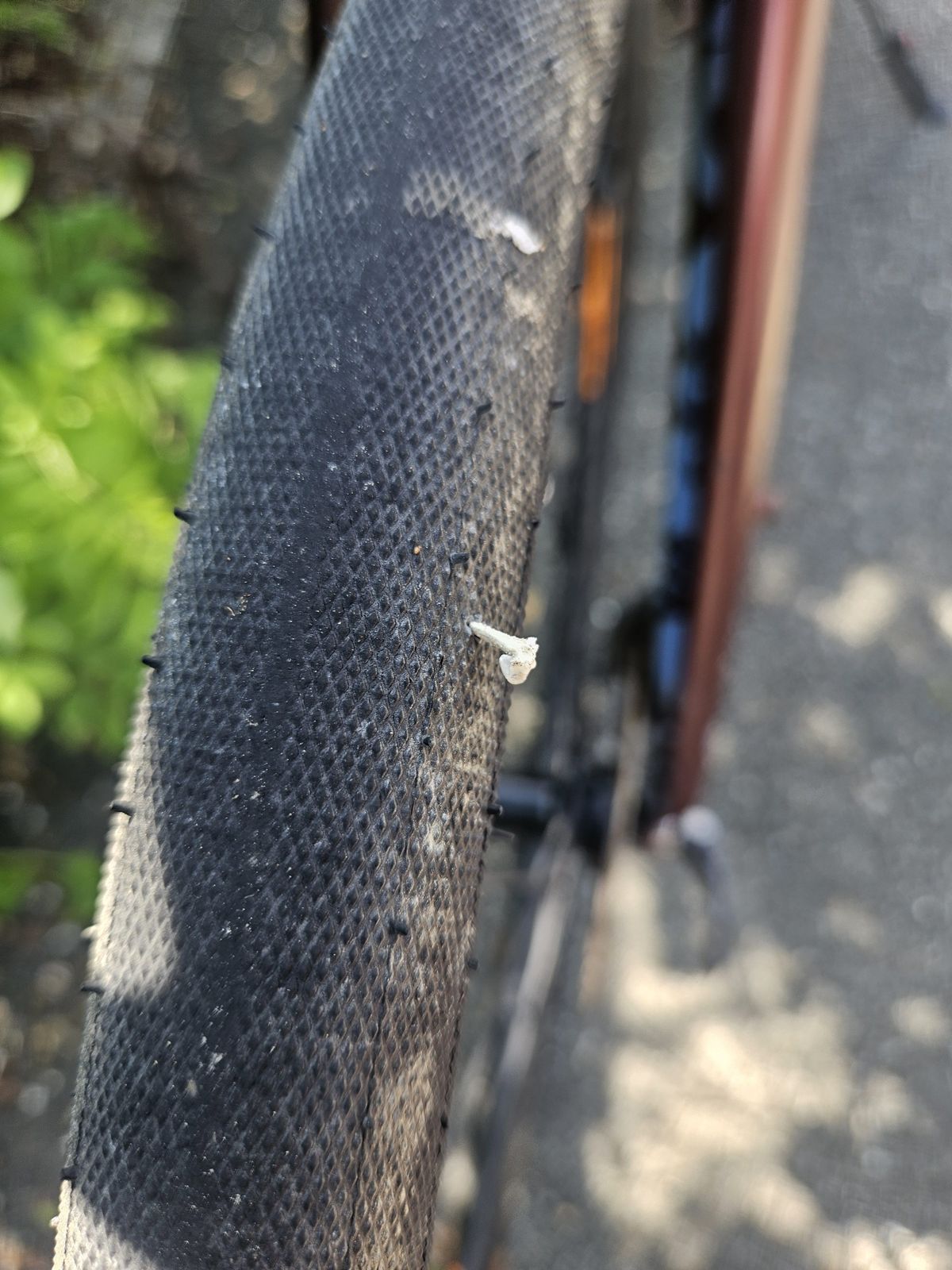
We set off again for the last thirty kilometres on a greenway that's damaged in places, and since we've passed behind a hill, we now have a headwind. As everywhere in Korea, bridges are sprouting here and there. Round a bend, one of our front tyres gets a puncture. A little bone is stuck in it vertically; we have no idea how it got there, but one thing's for sure: the inner tube needs changing. We're off again ten minutes later, and round another corner, as the headwind gives us no respite and wears us down, a godsend of a café appears.
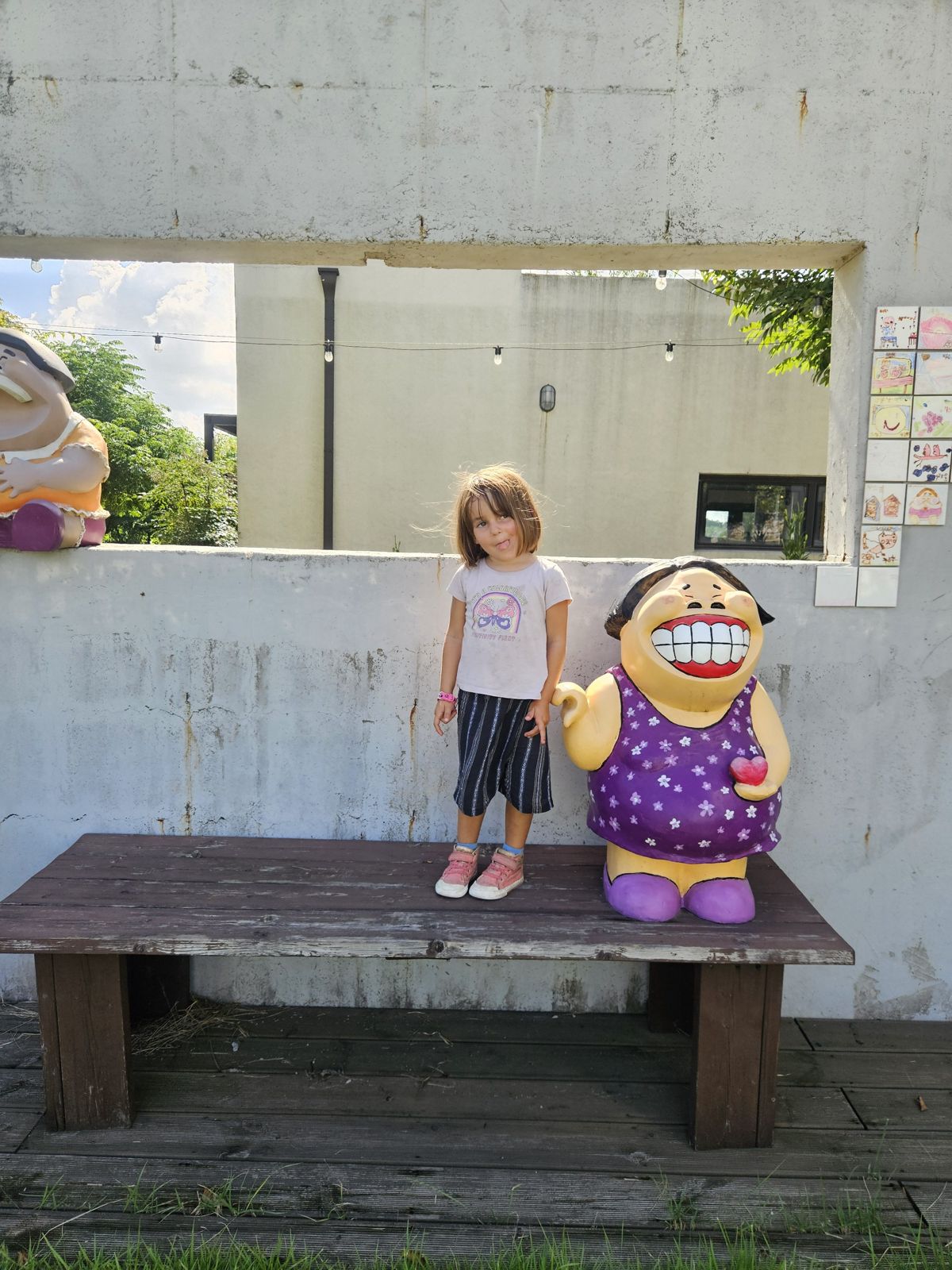
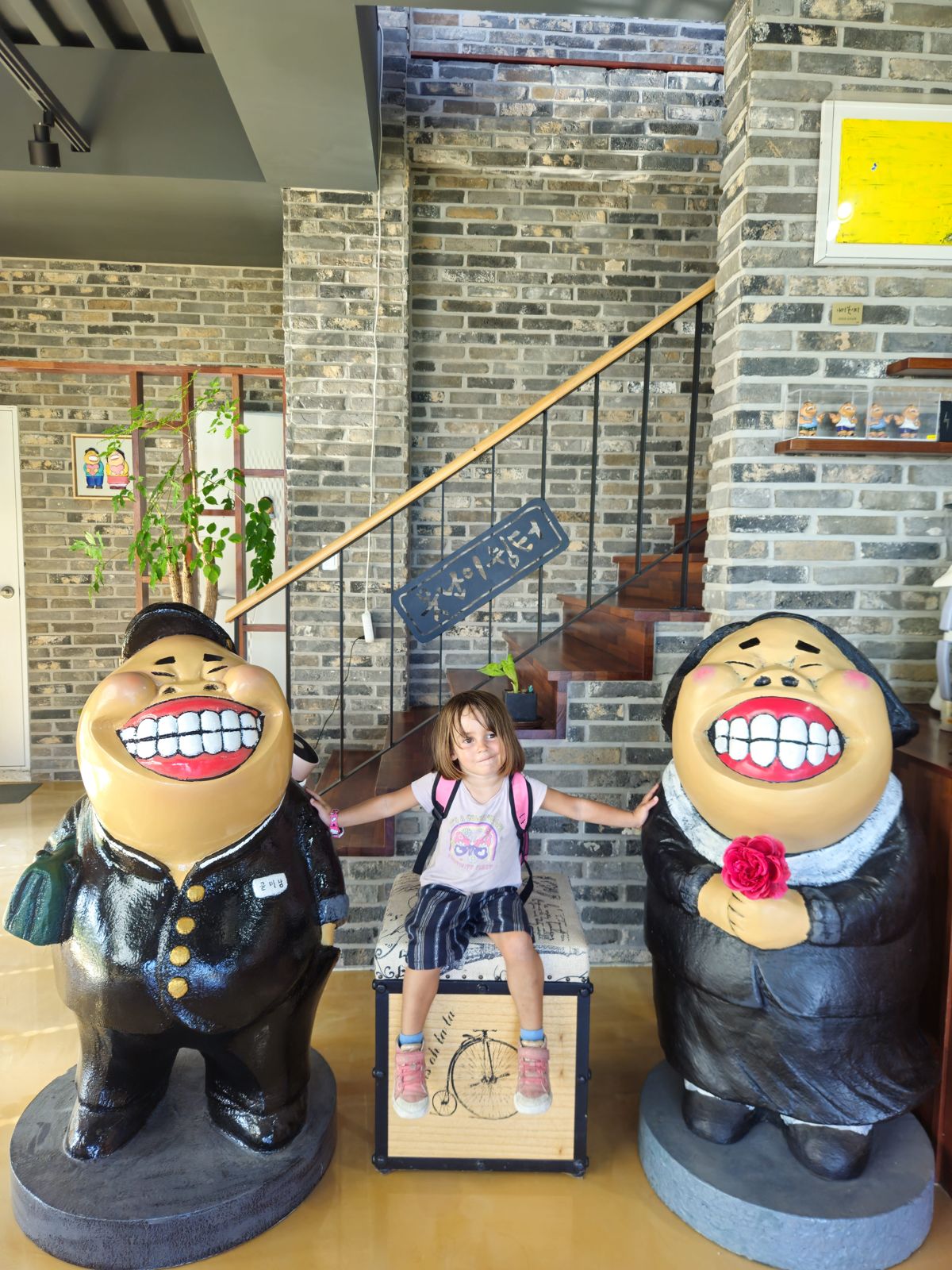
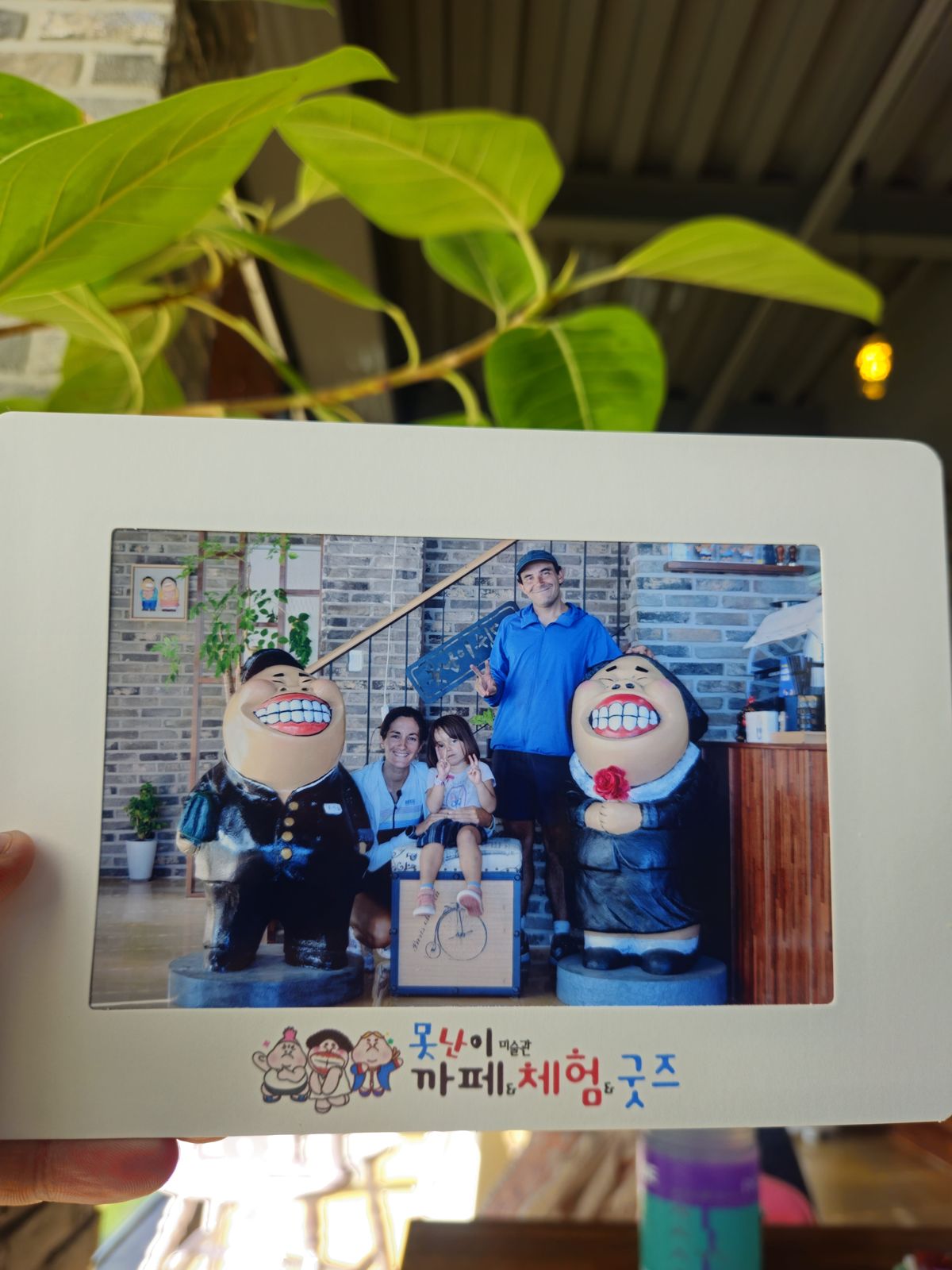
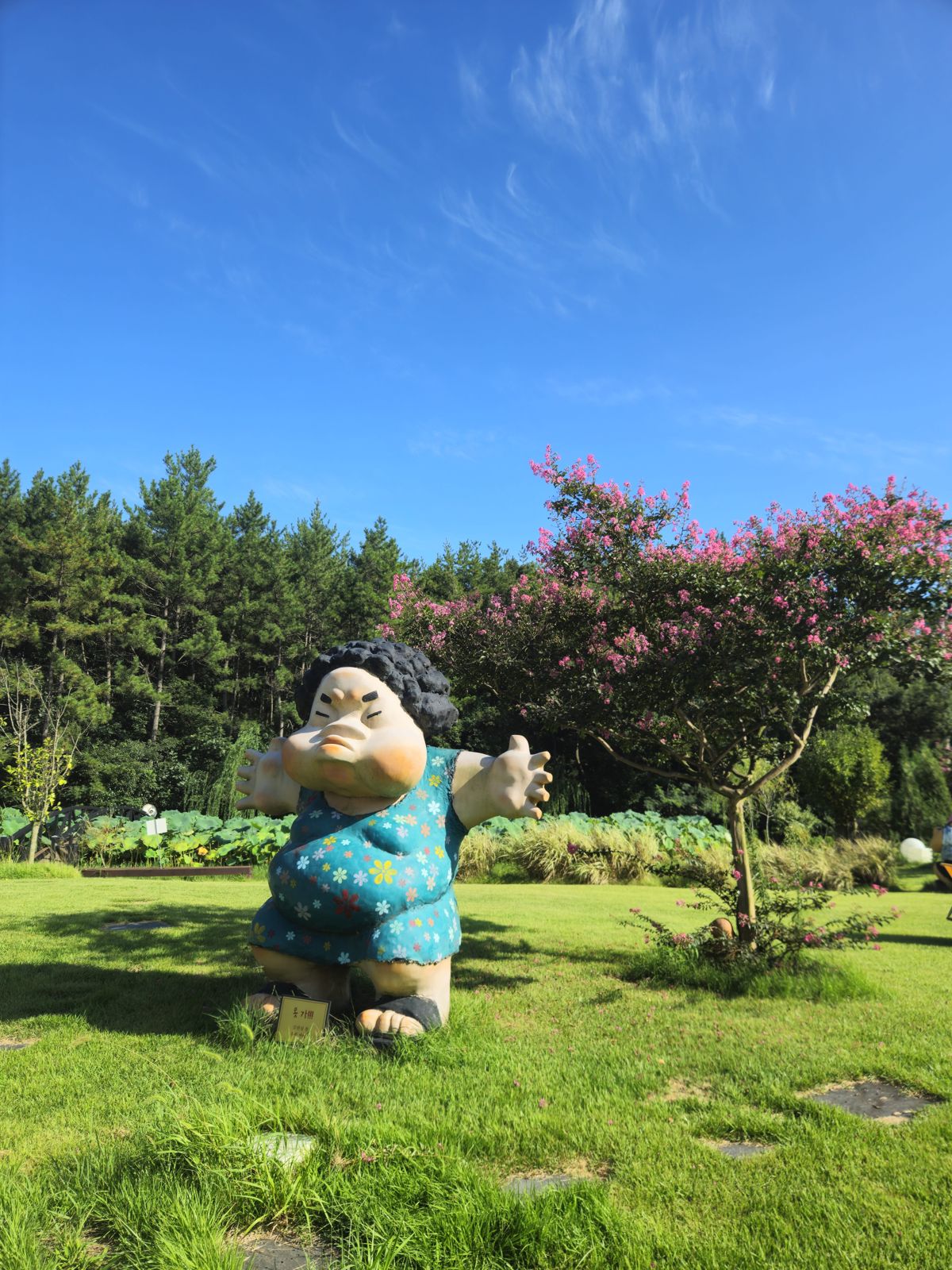
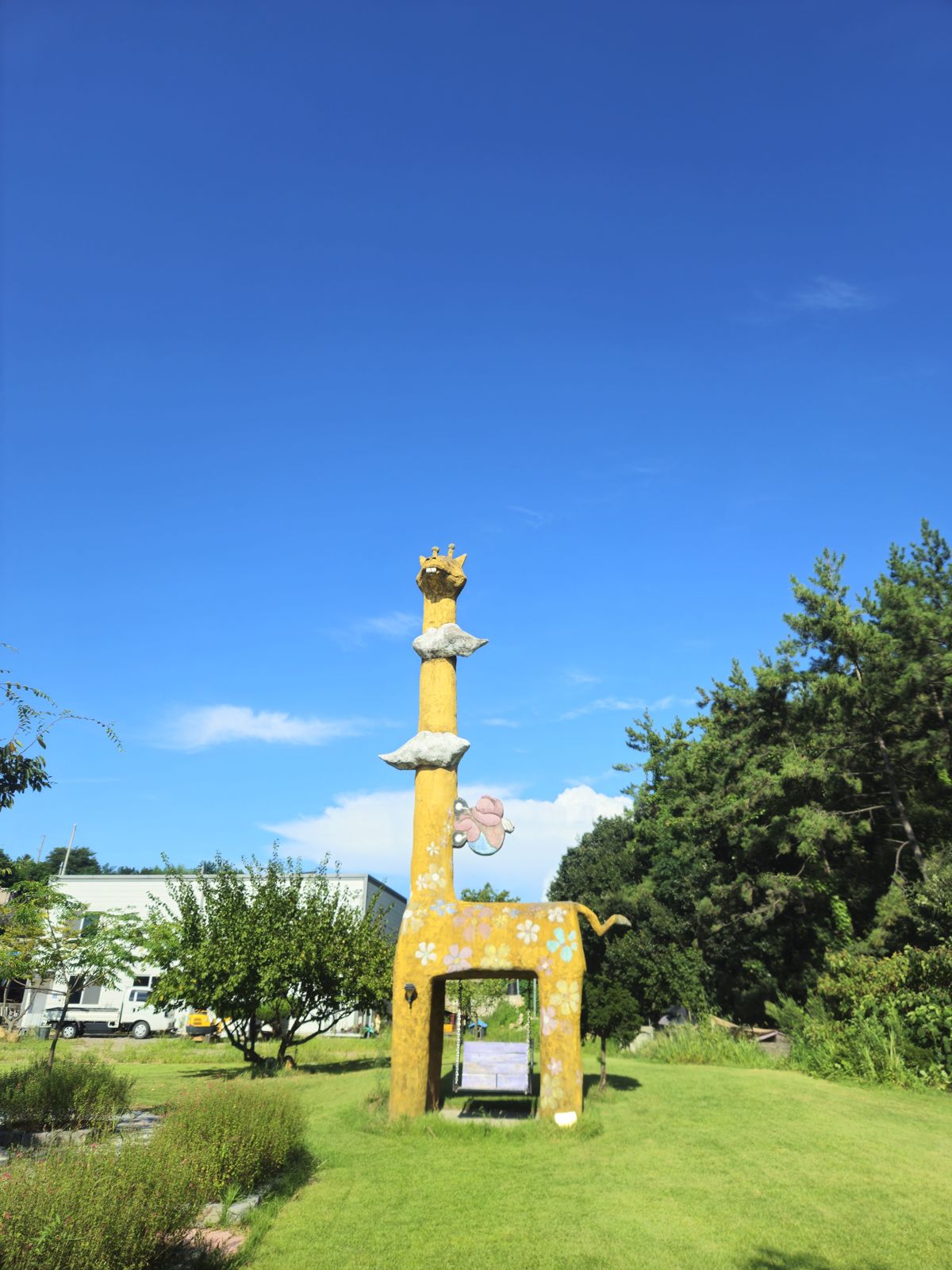
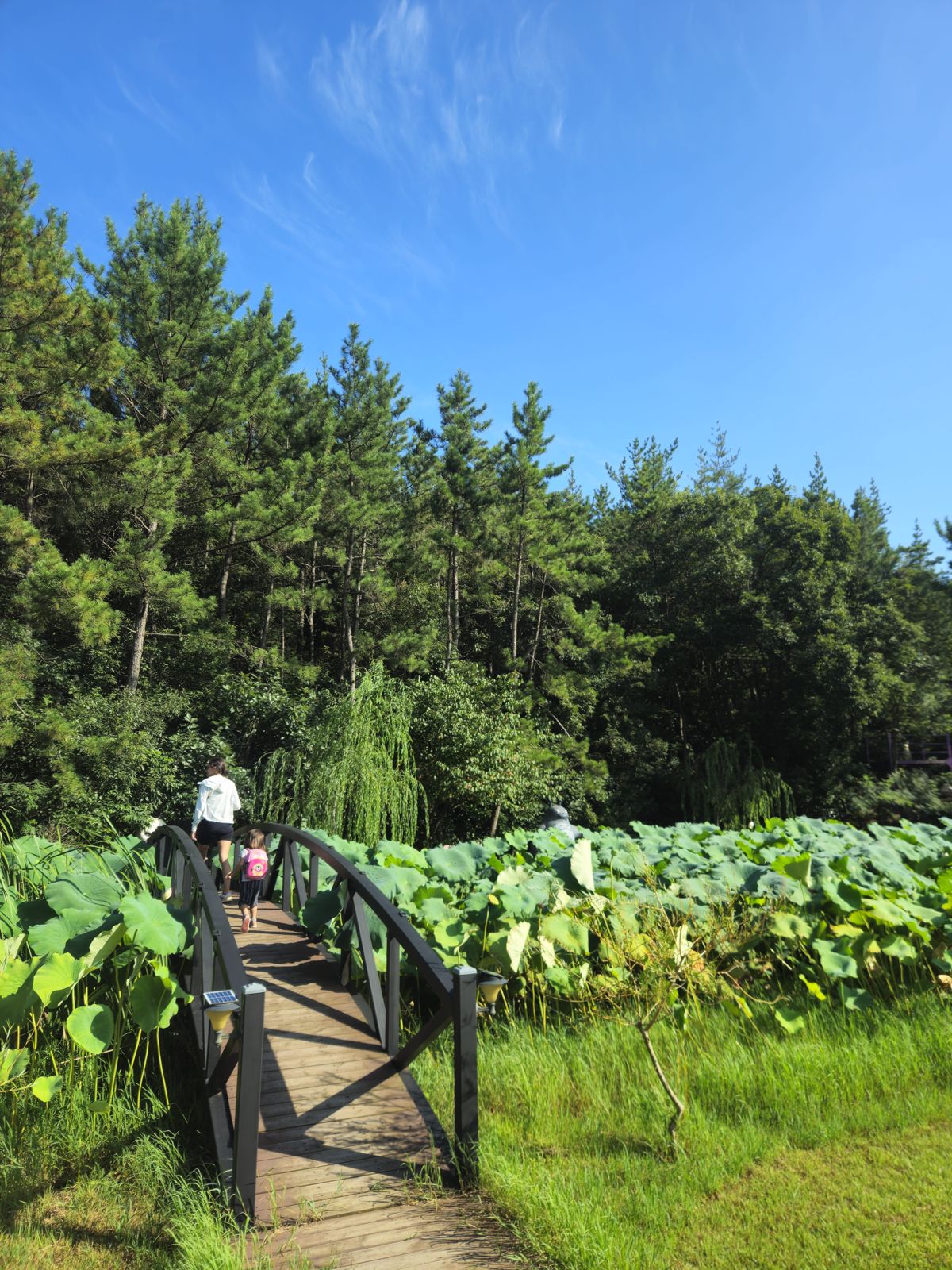
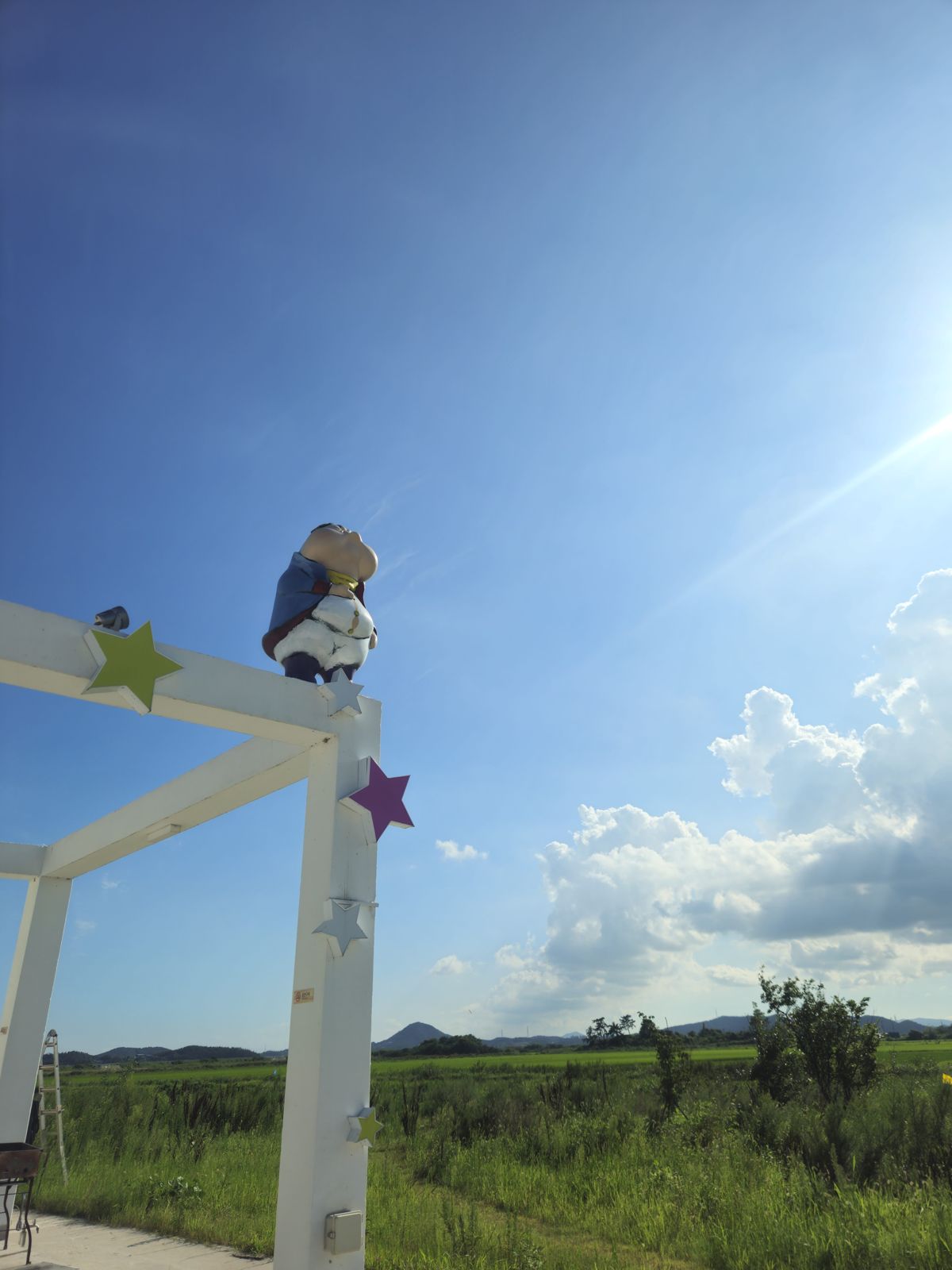
We don't know where we've landed, but there are four buildings surrounded by lush gardens full of little statues of funny characters, the monnani, which literally means "ugly person" in Korean. We walk around them before cooling off inside the café, where the owner obviously finds us exotic, as he asks to take our photo. He brings out his fancy camera, shoots us and prints the photo instantly to give to us. Clémence is delighted and won't let go of it. We have fun in this micro-village, but we still need to finish the stage and reach Mokpo.
Eight short kilometres later, we park at the hotel. Once again everything is astonishingly simple, and we have the room key in under three seconds. The room is big, with a spacious bathroom. We go out early to eat at a tonkatsu (breaded pork) restaurant and then enjoy the neighbourhood, which seems very new. Everything is very clean and well laid out, with wide pavements and cycle paths. We head for the huge esplanade near our hotel, and music blaring at full volume catches our attention. We get closer and discover that a free open-air zumba class (or let's say fitness to Korean techno) is taking place. Women and men of all ages are giving it their all, copying the routines of the instructor, who leaves them barely three seconds' break between songs. We stay and watch, and fool around ourselves, for quite a while.
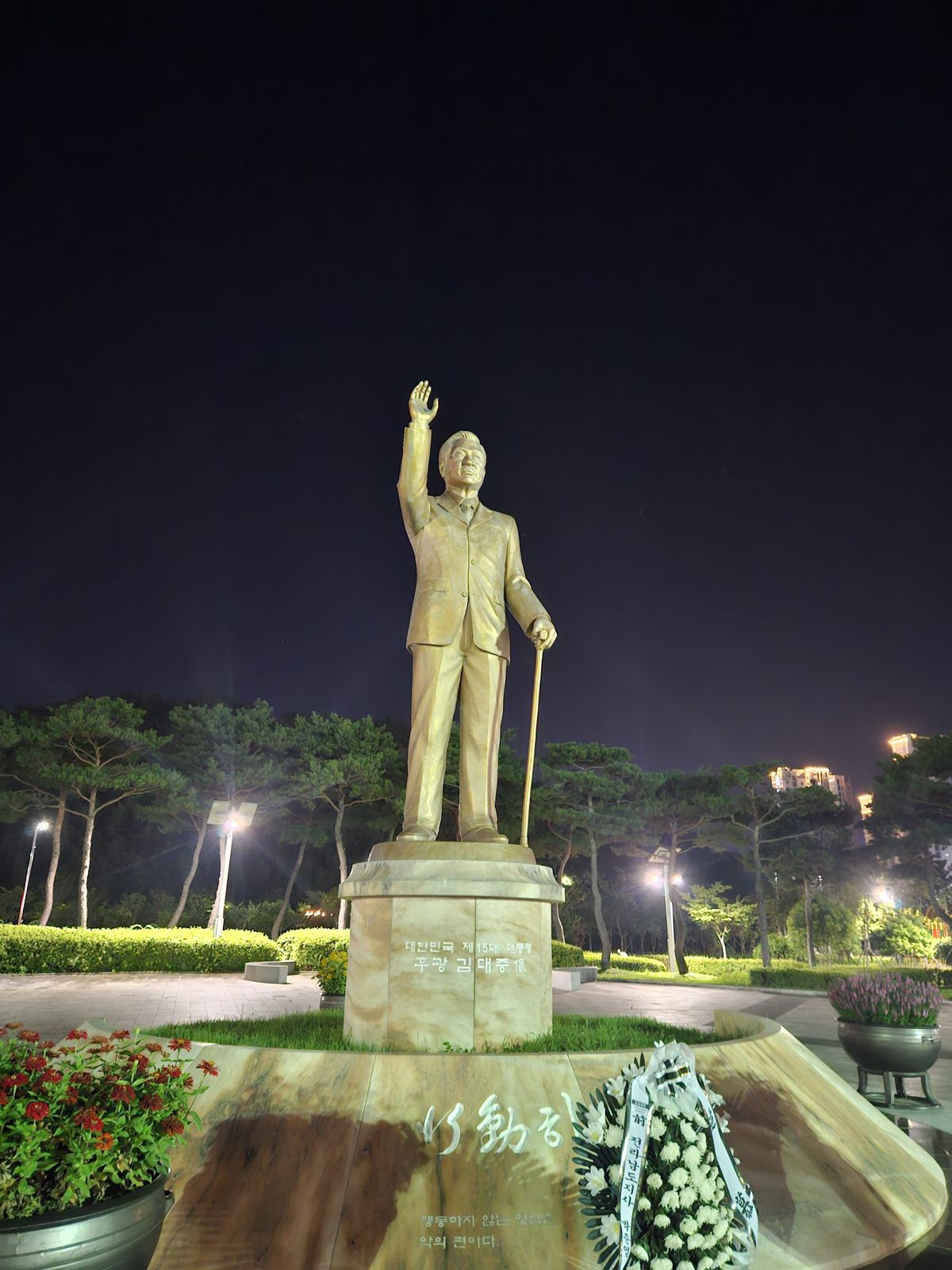
A little further along the same esplanade, there are big musical fountains with light shows, as Koreans do so well. We see them very often in the country's cities; Koreans love sound and light shows. There are also the outdoor gyms Clémence loves so much (as do all children, in fact, who often prefer them to the playgrounds designed for them). Between the "show-cum-dance class", the illuminated fountains and the exercise area, she doesn't know where to look. But it's well past her bedtime, so we head back to the hotel to start the bedtime routine. A bedtime that ends up taking a long time, as the young lady doesn't fall asleep until after 10:30 pm.
Wednesday 20 August
Korean cities sometimes have a strange idea of tourist zones. Where we slept last night is more of an outlying district of Mokpo, inhabited only by locals. It's very airy, pleasant and spotlessly clean. When we arrive at noon at our hotel in the "tourist centre", we can't hide our disappointment. It's just a row of hotels without pavements, with an overall feeling of dirt and cars everywhere.
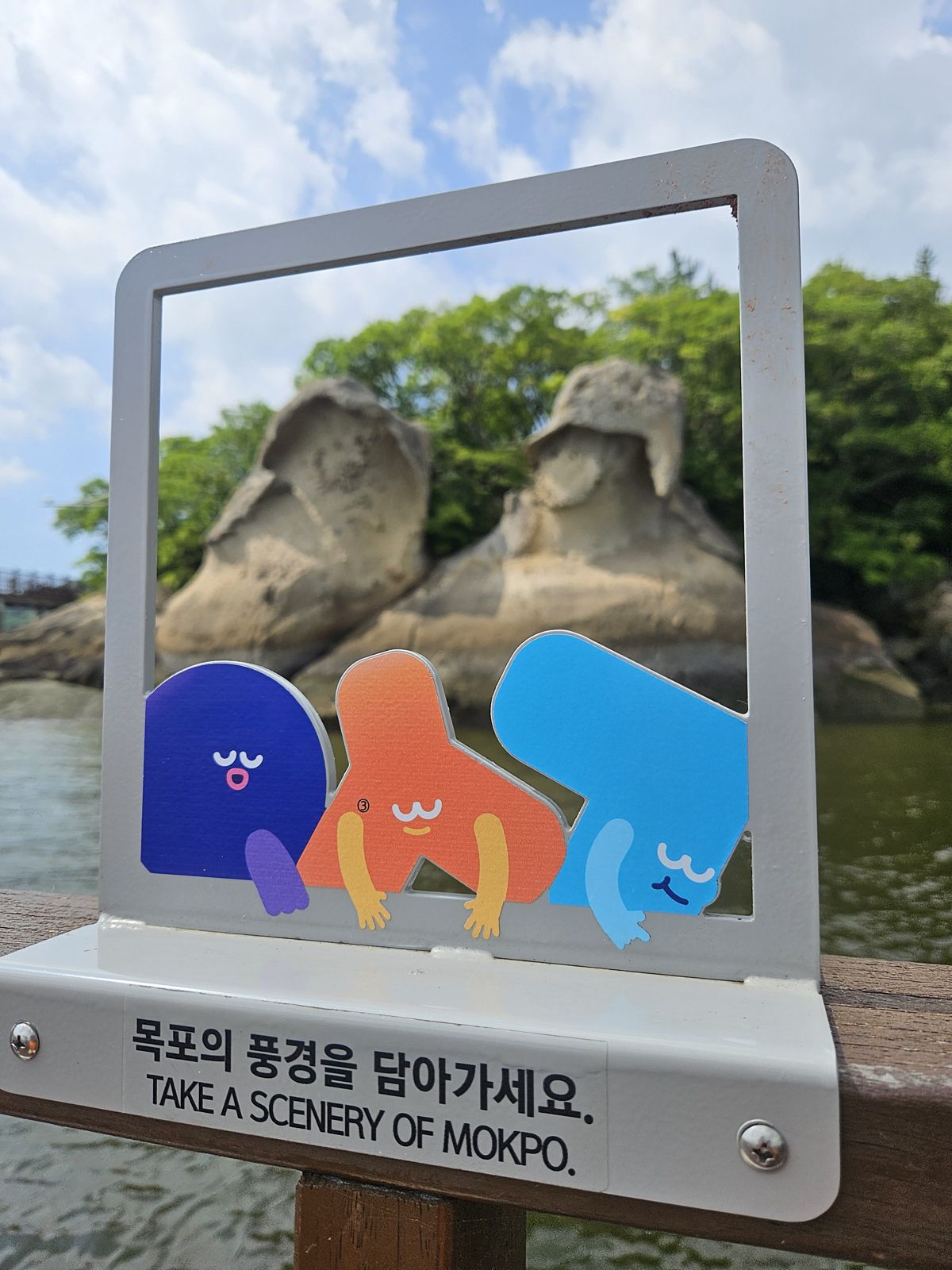
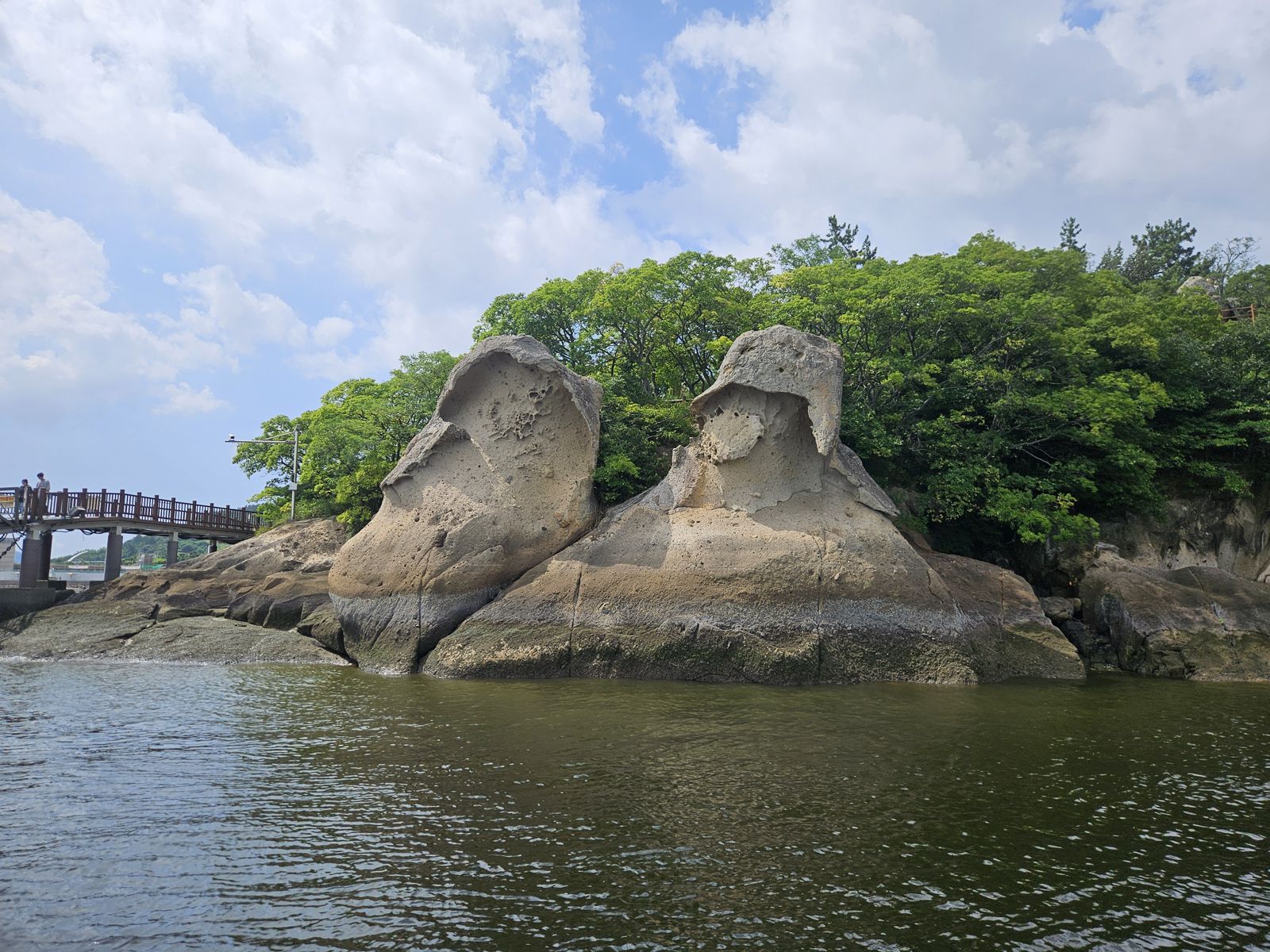
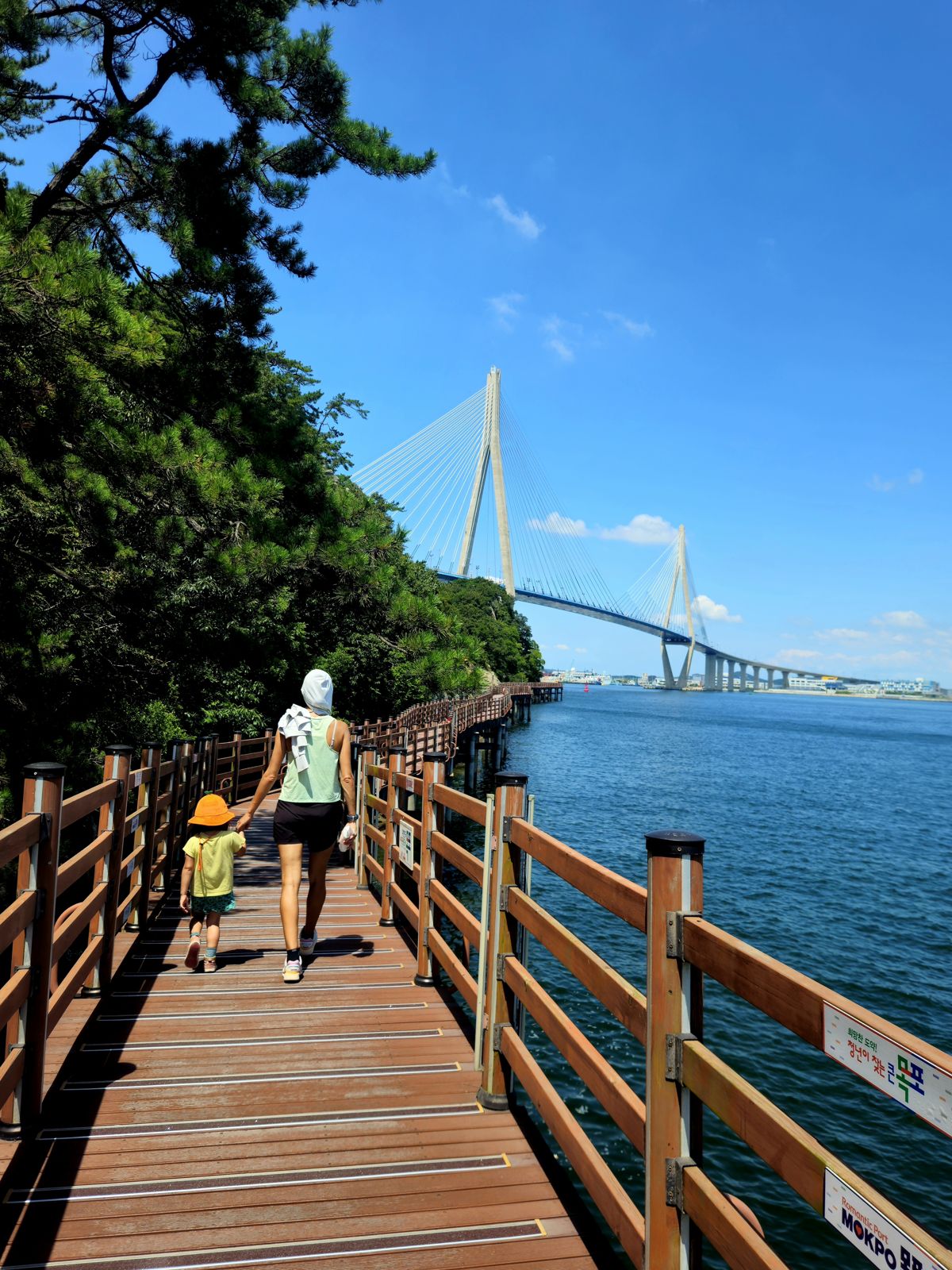
We'd only come to drop off our bags, but the owner, on discovering we're French, gives us the key card to a room that's already ready. We don't need to be asked twice to take shelter for a while; the heat is stifling again today. After lunch in a pasta restaurant on a nearby corner, we get on the bikes, lightened of their panniers, and head for a wooden boardwalk. Koreans love landscaping their coastline and do it everywhere. We ride along it to the Mokpo Marine Science Museum. As usual it has a children's section, where we spend a long time before trying to get into the adult museum.
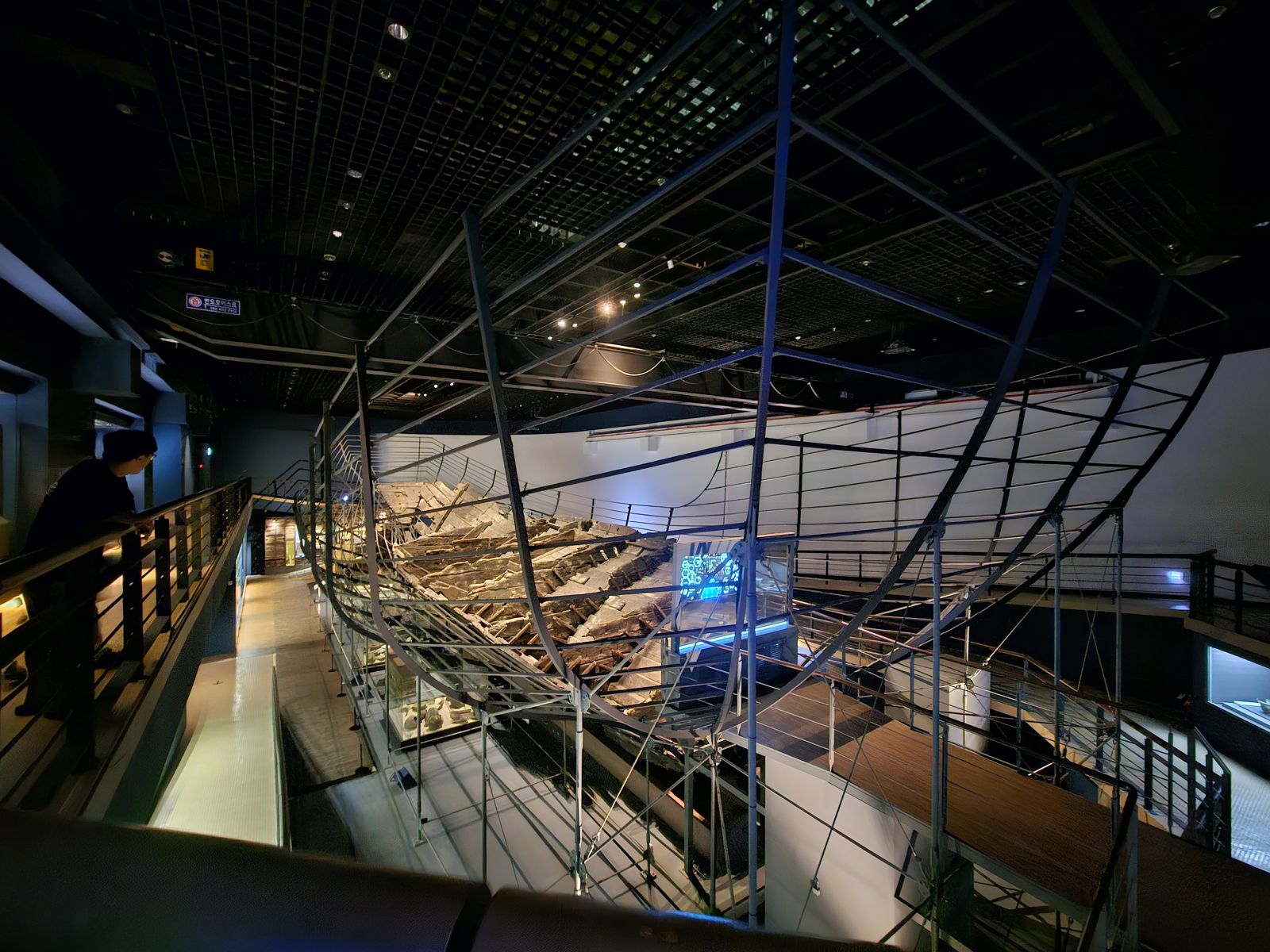
But today a large-scale military exercise is taking place across the country. Koreans who wish are invited to take part in civil-defence drills, in particular taking shelter in buildings. The whole first floor of the museum is closed off, but seeing our dismay, one of the guards escorts us to the second floor. Here you can admire wrecks recovered from the Sinan archipelago. Off Mokpo lie 1,025 islands grouped into a county: Sinan. People have fished there since time immemorial, and some of the boat hulls are almost a thousand years old. All the explanations are in Korean, but we manage with translation apps.
We then retrace our steps for a snack and to play at one of the playgrounds on our way. We don't stay out too late, because we've planned to see another show that locals particularly love. Three times a night, at the end of Peace Square, huge dancing fountains move in time to K-pop songs. It's a feast for the eyes, and the crowd lets out well-deserved cries of delight. Clémence goes to bed with stars still in her eyes.
Thursday 21 August
As often when we're not eating up the kilometres of a cycle route, we like to take our time. It's necessary for our bodies, but also for Clémence, who sometimes needs a little stability in this ocean of constant novelty. So our days in town are all about slowness, which explains why we leave the hotel around eleven.
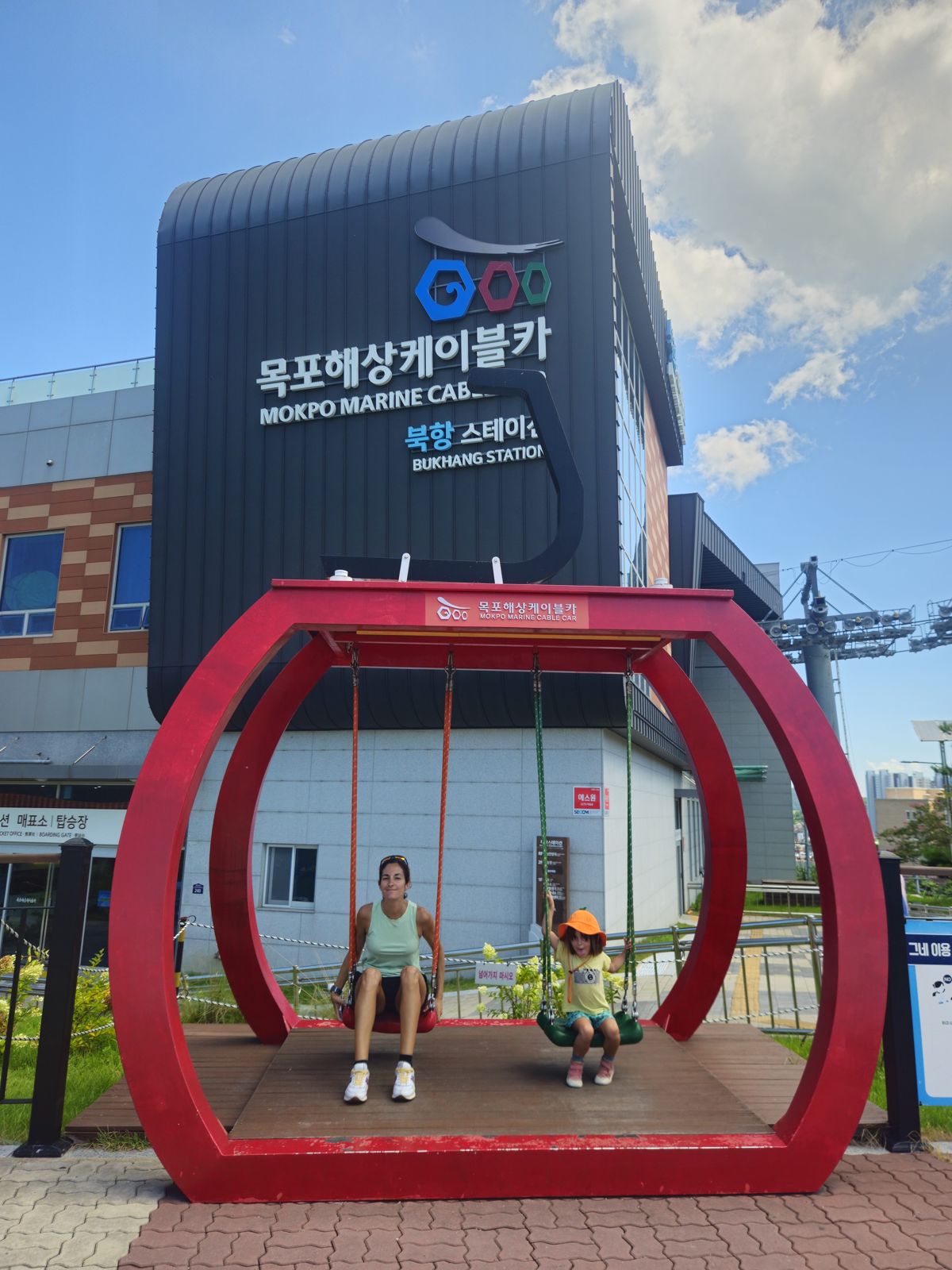
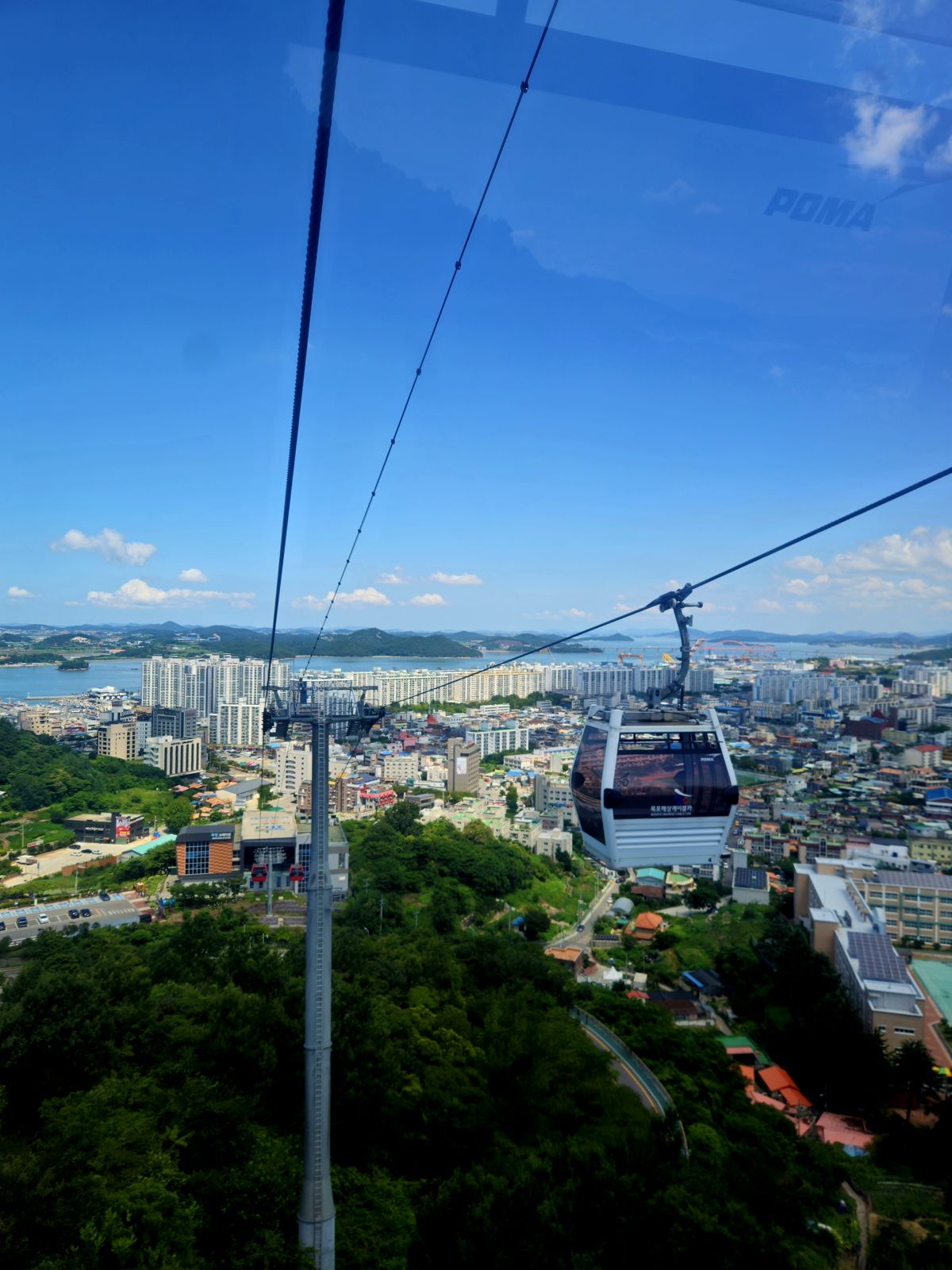
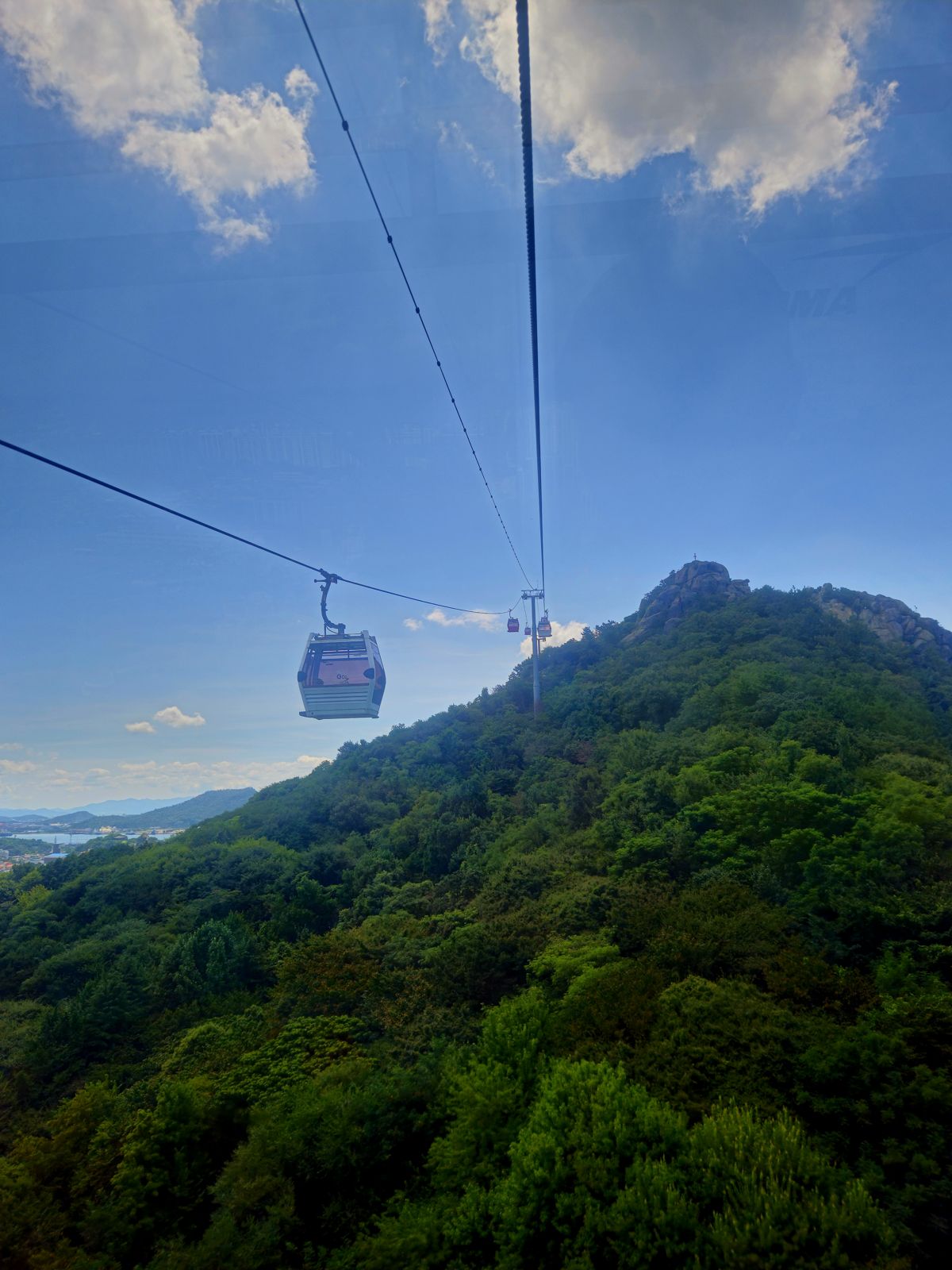
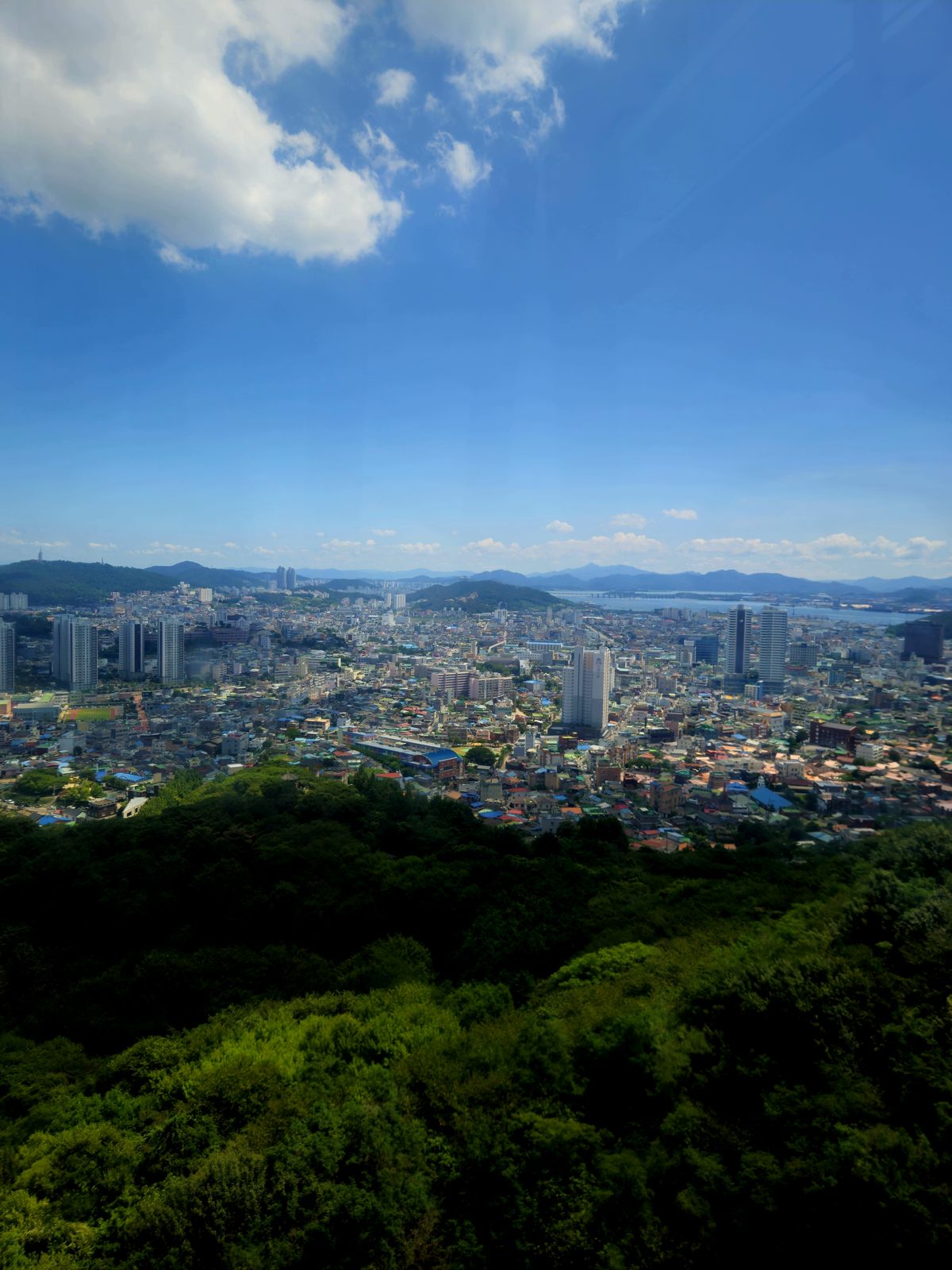
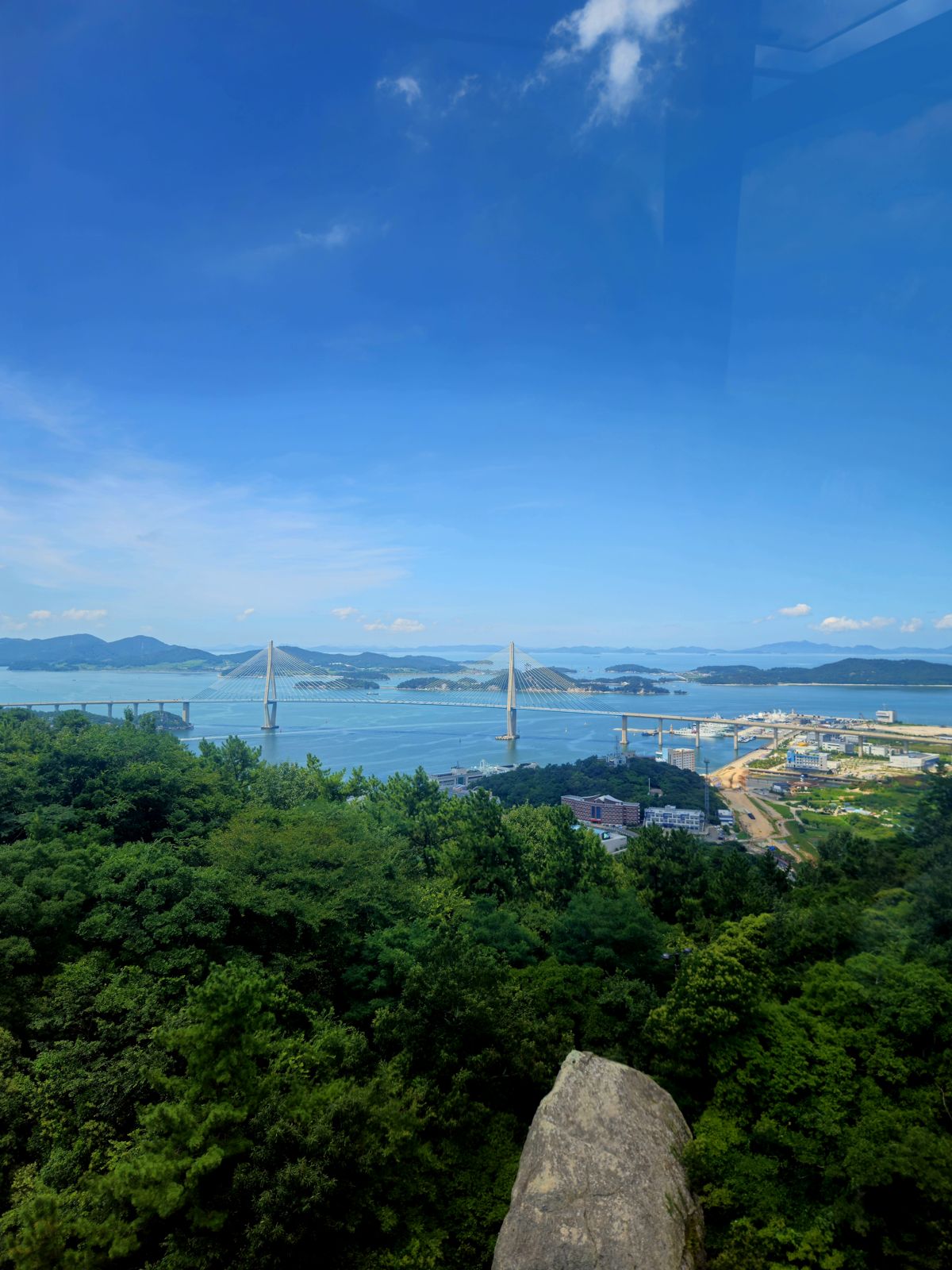
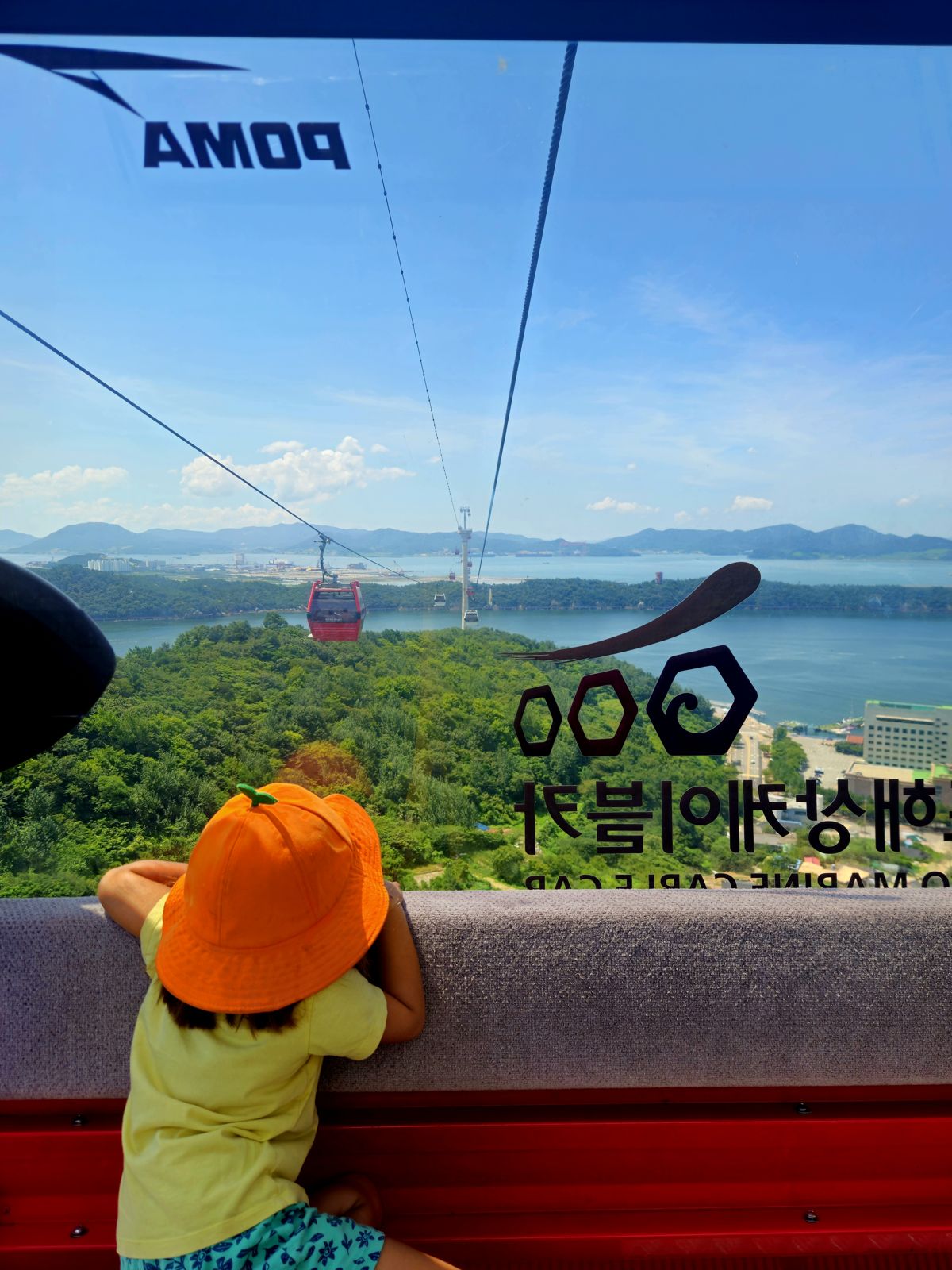
This time we take a bus to spare ourselves the torpor of the Korean August. It drops us at the foot of the Mokpo cable car, the longest in the country at 3.23 kilometres. It's also the highest, reaching 155 metres at its highest point. Clémence is over the moon, and so are we. The ride out takes twenty minutes; we get off at the far end to walk around Gohado Island. The views are incredible, with wild nature on one side and nature tamed by huge bridges and industrial ports on the other.
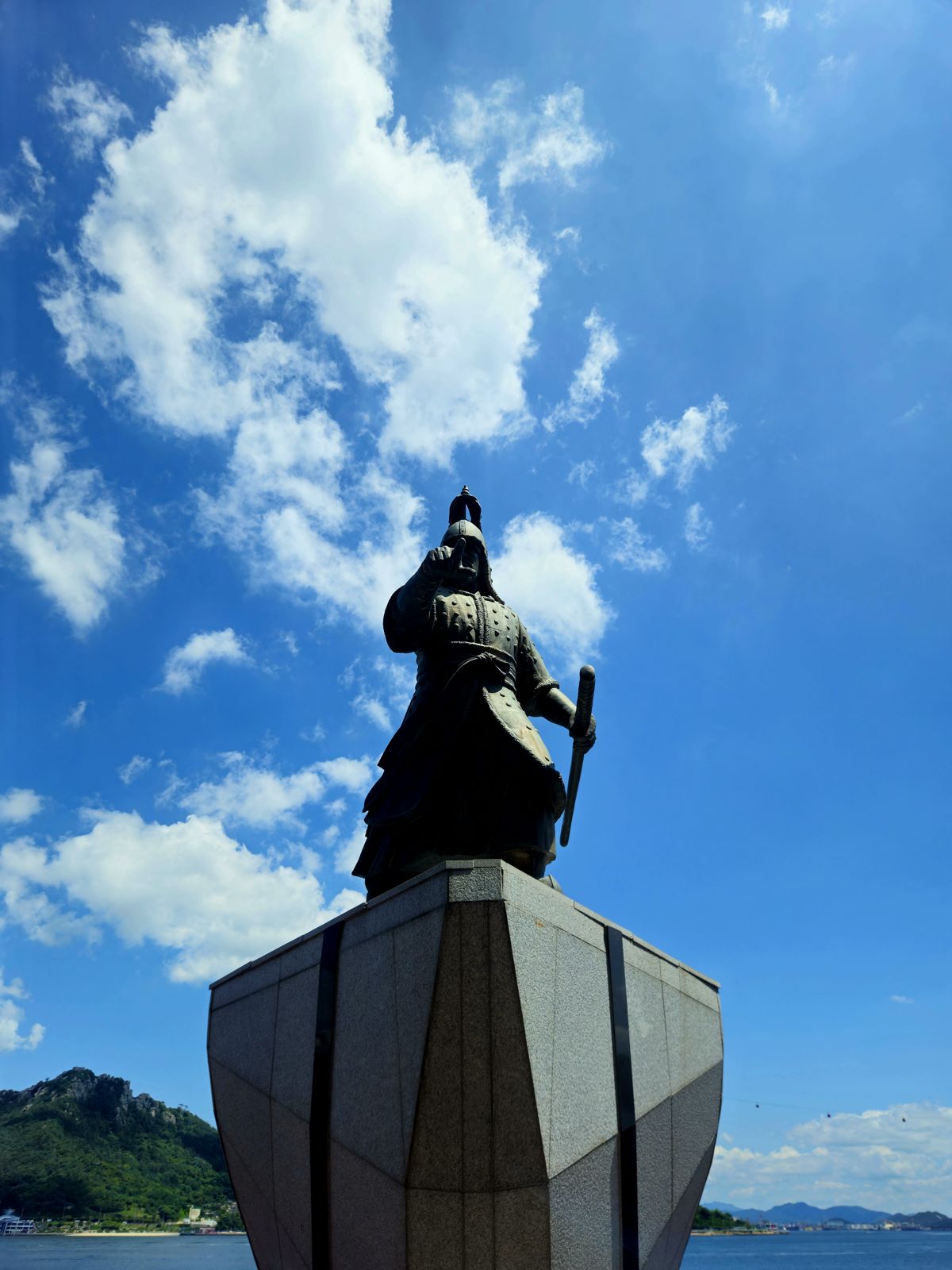
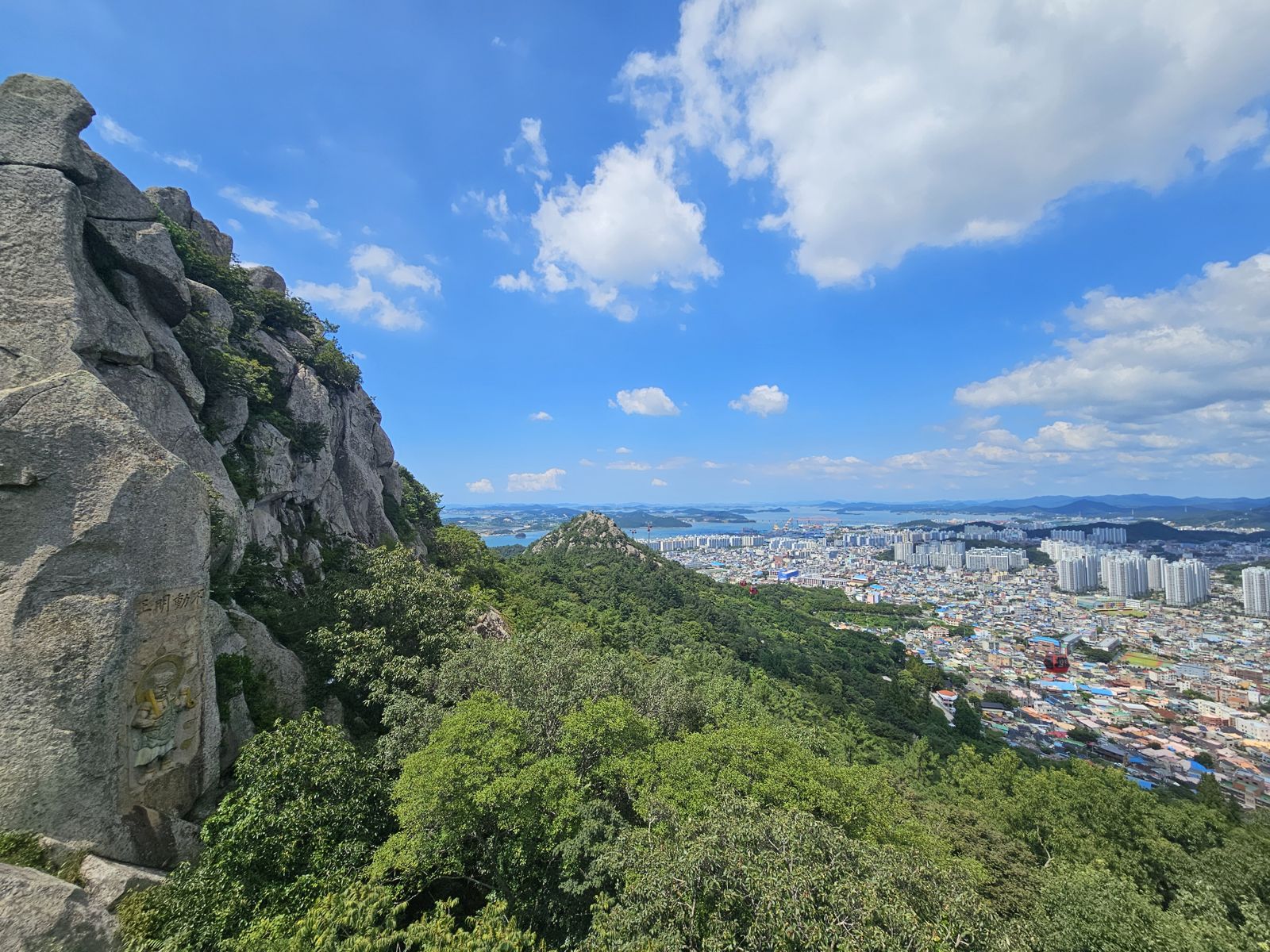
On the way back, the cable car lets you stop halfway at the "near-summit" of Yudalsan Park, a small massif right in the middle of the city. The cable-car station doesn't take you all the way to the top; you have to climb a good flight of steps to reach it. Clémence always amazes the people we pass, because she walks as long as, and often faster than, adults. They let out little cries of admiration seeing her little legs climbing at full speed. We make the most of the summit to dry off a bit; we're dripping. For the last part of the ride, we board a cabin with a glass floor, because all the "standard" cabins going our way are taken. It's quite dizzying to see our feet passing over the trees and the sea.
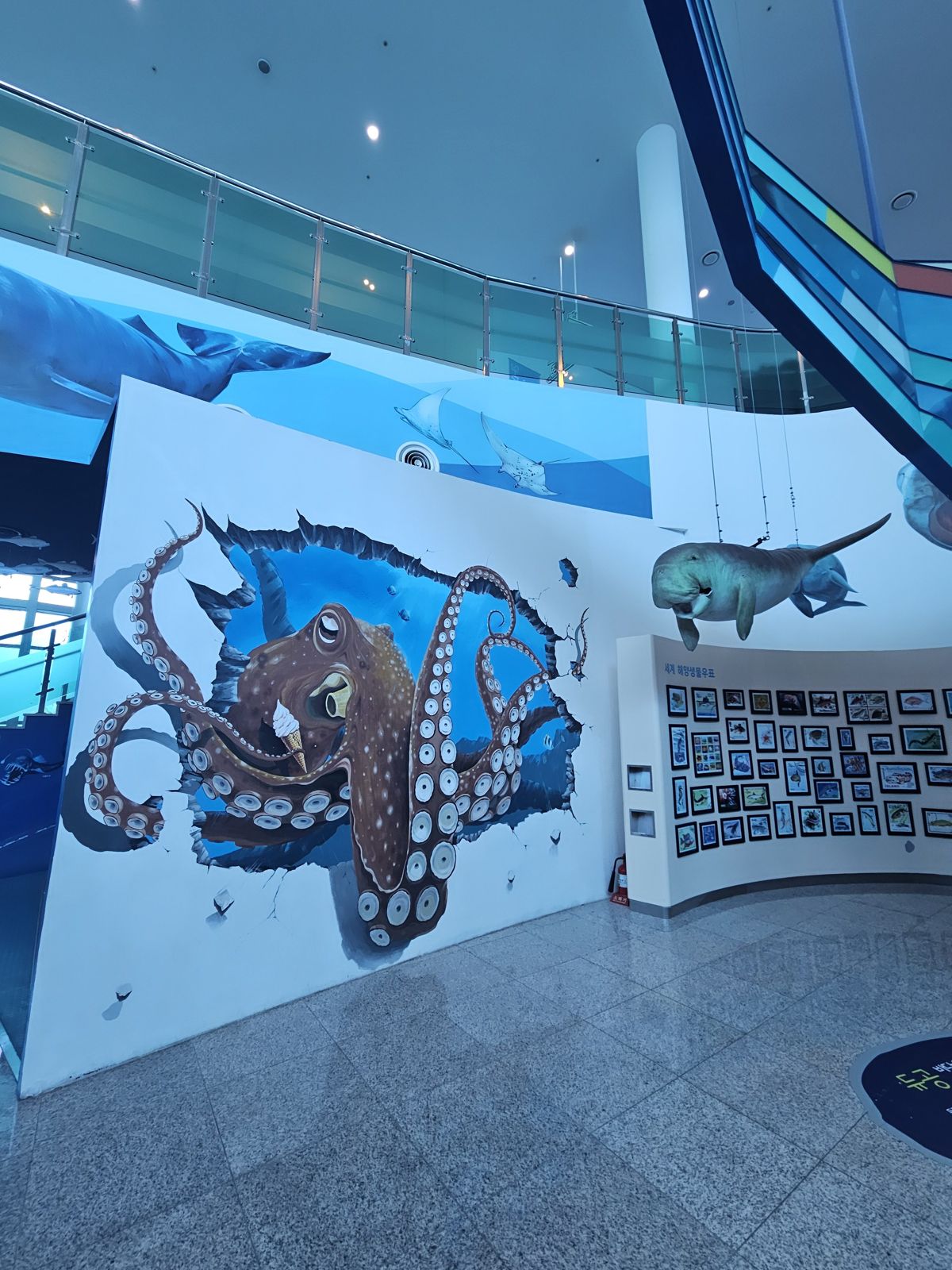
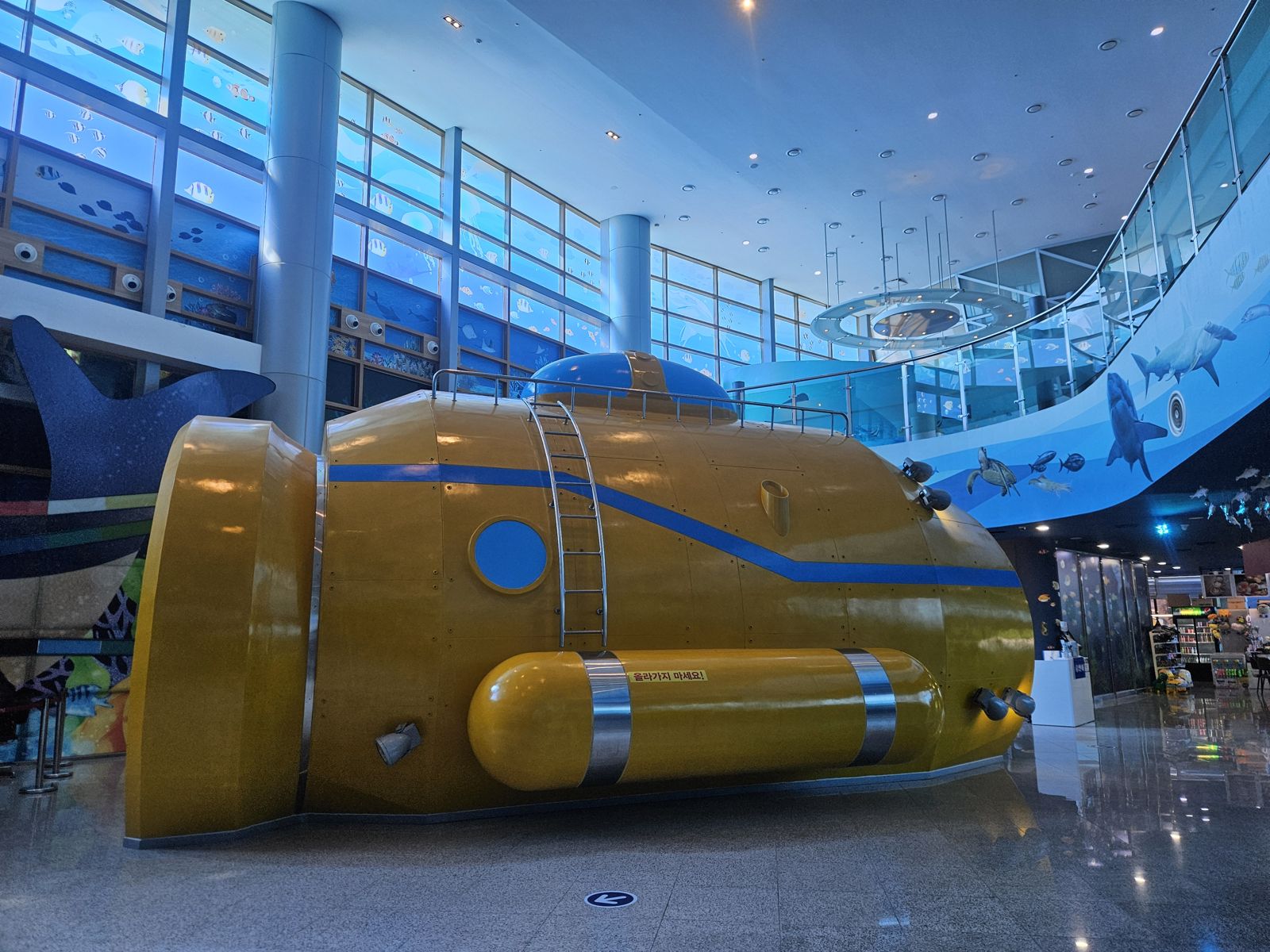
We then take another bus to the children's maritime museum. The place is surprisingly badly served by public transport, and we regret not taking our bikes. We walk a good distance; Clémence has given up and is resting in the hiking backpack. At the museum ticket desk, none of our bank cards work and we don't have enough cash for the modest entrance fee, so the lady kindly lets us in for free. Just as well, because the place doesn't live up to everything we've seen so far in South Korea. There are a few interactive displays and activities, but it's not very exciting, and we're done in under an hour. As soon as we're out, we almost run to catch one of the rare buses into the centre to go back to the hotel. After a snack in a very good patisserie playing Philippe Katerine, a load of washing and a pasta dinner, we head back to put Clémence to bed, as we have to get up early tomorrow to catch a ferry.
On the road