
 ← PreviousKayaking through tunnels, then Winnipeg
Friday 7 August
The Canadian Museum for Human Rights has been at the centre of a controversy since the start of the summer. Former employees have denounced on social media the racism and homophobia they say they suffered. A cruel irony for a museum devoted to raising awareness of human rights: women's rights, workers' rights, voting rights, Indigenous rights… This one-of-a-kind museum is the only national museum located outside the capital region. Its location is no accident: Winnipeg was the scene of several major events, such as the 1919 general strike, that shaped the history of rights in Canada, notably those of Indigenous peoples, women, French speakers and workers. And its many French speakers, First Nations members, Métis and immigrants make it one of the most diverse cities in the country. A discrimination problem arising inside the museum itself does enormous harm to its image.
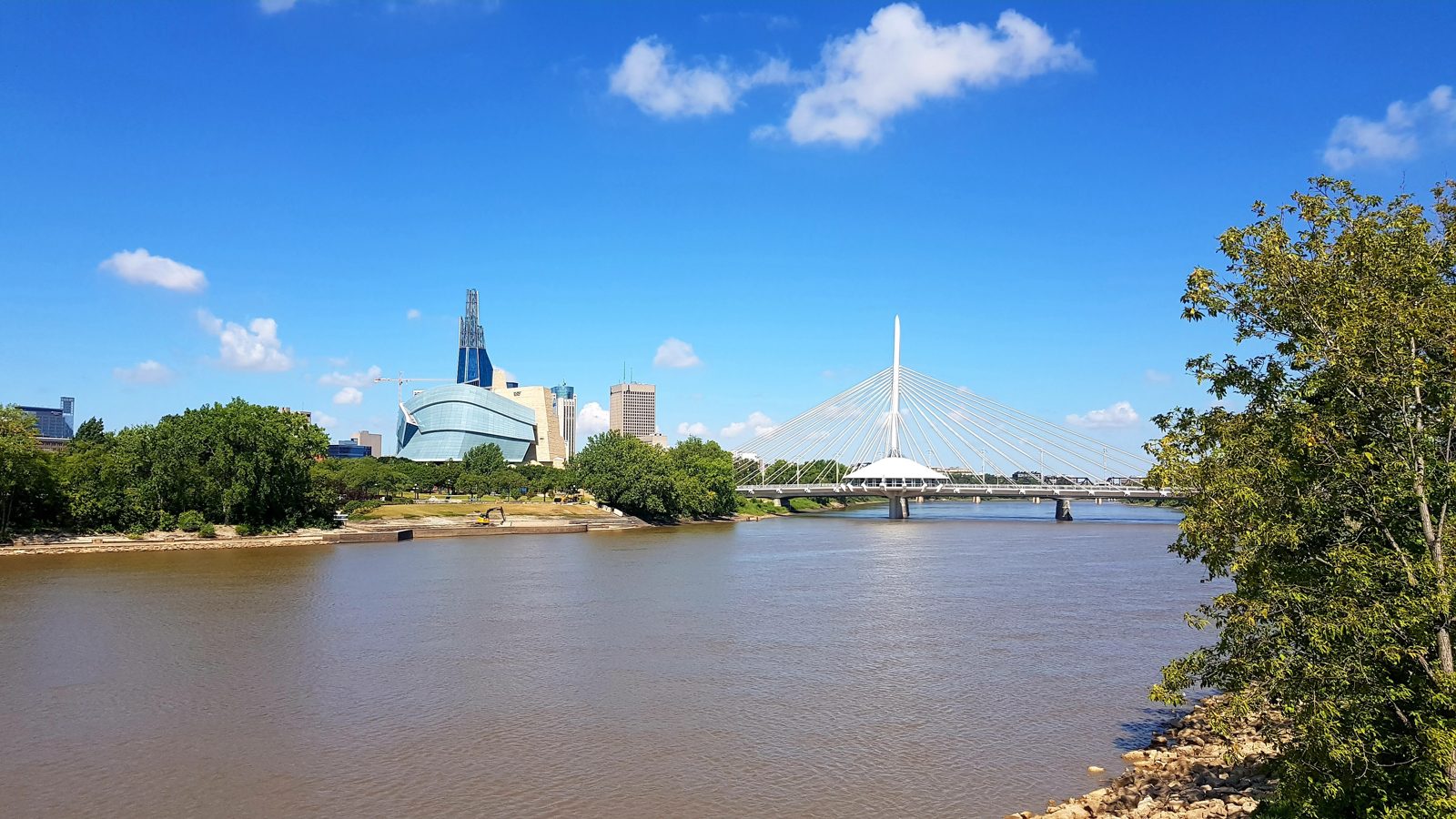
We go for its reopening. From outside, the building mixes great glass panels and massive stone to evoke the diversity of Canada's landscapes, and it has to be said it's very successful. The inside is even more beautiful, with dizzying volumes and carefully coloured installations. The visit is designed as an ascent: starting at ground level, it rises through ten galleries via immense alabaster ramps to the Tower of Hope, which looks out over downtown. Every subject is covered, and the museum proves fascinating, engaging and unflinching.
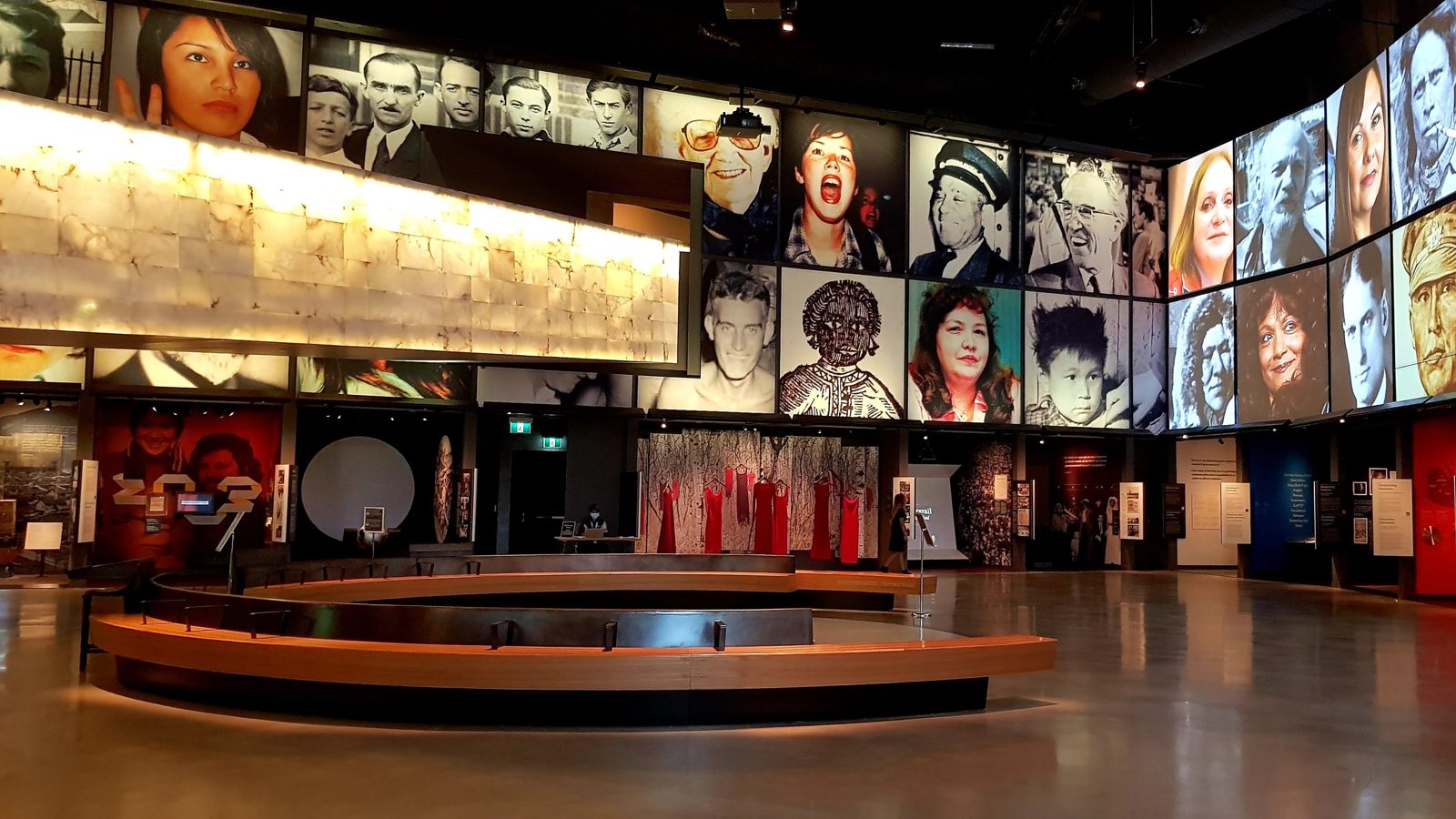
Unlike France, Canada isn't afraid to look its history in the face, and the horrors suffered by Indigenous peoples are described bluntly. A chilling section shows how the government tried to assimilate Indigenous peoples by tearing children from their parents and placing them in residential schools where they suffered all kinds of abuse and mistreatment, to turn them into good Christian Canadians. The stated aim: “to kill the Indian in the child”. To give an idea, the last of these schools closed in 1996, and the scars of this vile treatment remain deeply visible in society. We also learn that Canada was, among the Allies, one of the countries that took in the fewest Jews during the Second World War, because of deep antisemitism. Asked how many Jews the country should accept, a senior official is said to have replied: “None is too many.” As in the United States, Canadians of Japanese origin were sent to internment camps for fear of betrayal, stripped of their property and rights. Not to mention discrimination against Black people which, though it resonated more loudly in the United States, was very present here too. You realise you actually know very little about this country, and that its history is far from rosy, like that of many others.
The museum isn't afraid to change its mind either, as with Aung San Suu Kyi, a human-rights icon in the 1990s who became complicit in the persecution of the Rohingya. Her photo still hangs among the great figures in the entrance hall, but it's no longer lit, and a notice says it will soon be removed. We spend six hours in the museum without managing to see everything. What we take away is that human beings, and men in particular, have always committed atrocities, but there have always been women and men to rise up and put an end to them. Perhaps it's in that fragile balance that human nature lies.
Saturday 8 August
After three pleasant days in Winnipeg, it's time to take the wheel again. We head north to visit another reconstructed trading post, Lower Fort Garry. As at Fort William the week before, actors in period dress line the way and describe the workers' daily life. Further north still, the little town of Gimli will surely make Lord of the Rings fans do a double take. Though it predates Tolkien's novels, this town founded in 1875 by Icelandic immigrants takes its name from Gimlé, a paradise in Norse mythology. Paradise it isn't, but it's a little resort on the shore of Lake Winnipeg. The water is far less clear than in Lake Superior, and the wind blows hard, making the beach unappealing: we don't linger.
Another factor to reckon with on a long journey: fatigue. Even taking our time and respecting our bodies, constant movement wears you out.
And when energy is low, irritation creeps in more easily. Like when, on the way to Neepawa, said to be the prettiest village in the area, we find ourselves on a gravel road, a provincial road no less, without any sign warning drivers. In this central part of Canada we often come across these bumpy, dusty, pothole-ridden tracks, which make driving tiresome and sometimes dangerous. This one goes on and on: Cass has been driving on it for more than thirty minutes and we've had enough. At the next junction a paved road heads off to the left, and we take it. Too bad for the little off-the-beaten-track villages: we rejoin the Trans-Canada and speed towards Regina, in Saskatchewan. For the second time in less than a week we change province and time zone. We reach the city five hours later, and don't stay up long.