
 ← PreviousDodging the raindrops on Ontario's beaches
Tuesday 21 July
If someone tells you about spectacular wooded cliffs above white pebble beaches with crystal-clear turquoise water, you'll probably think of the calanques of Marseille or southern Italy rather than Canada. Yet the Bruce Peninsula is a reminder that this country-continent is full of surprises. Between Georgian Bay and Lake Huron, this long strip of rock is part of the Niagara Escarpment, a ridge running for more than 725 kilometres. Its trails promise lookouts with stunning views, and that's how we'll make our way to the tip of the peninsula, where the little port of Tobermory nestles.
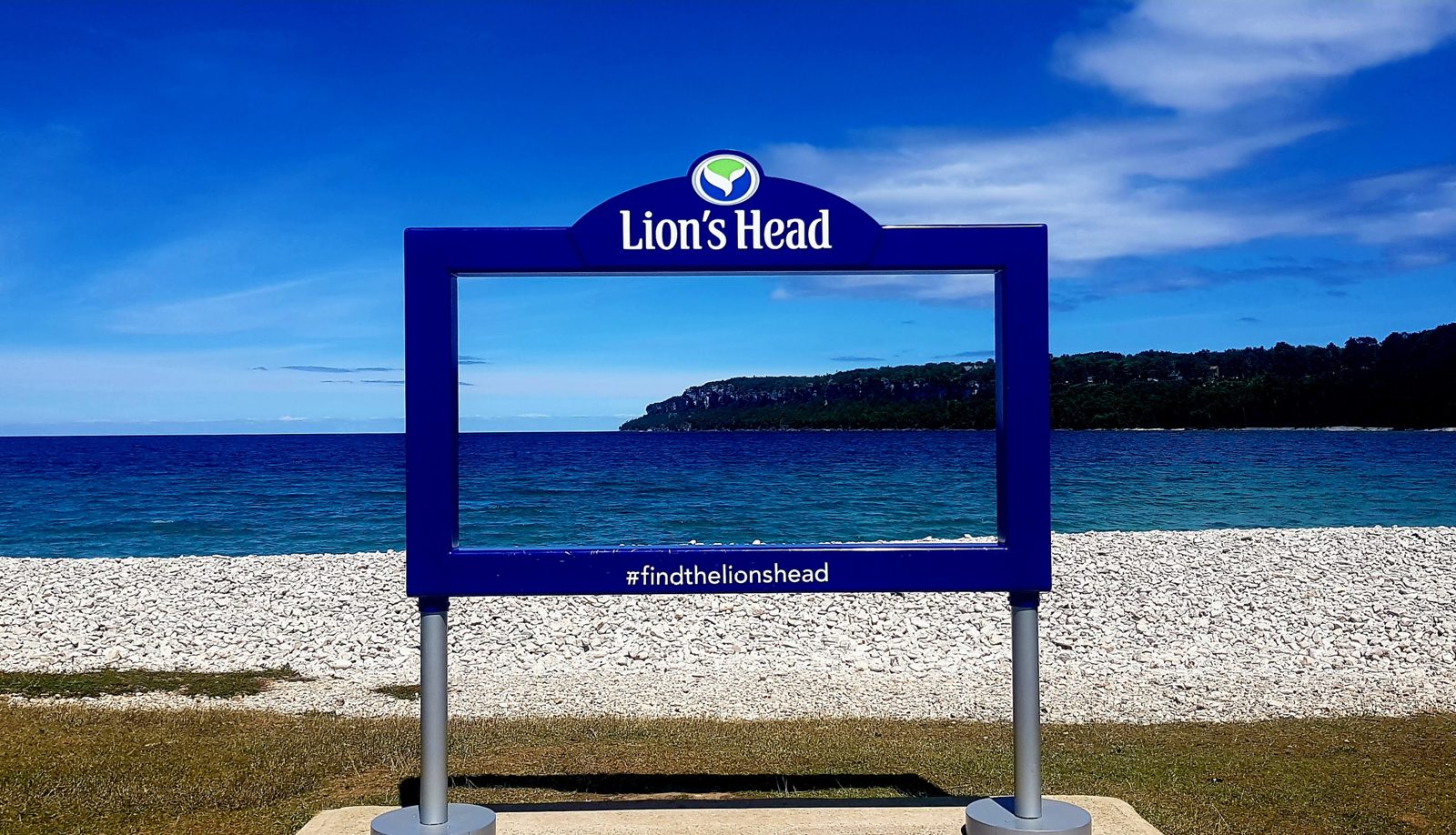
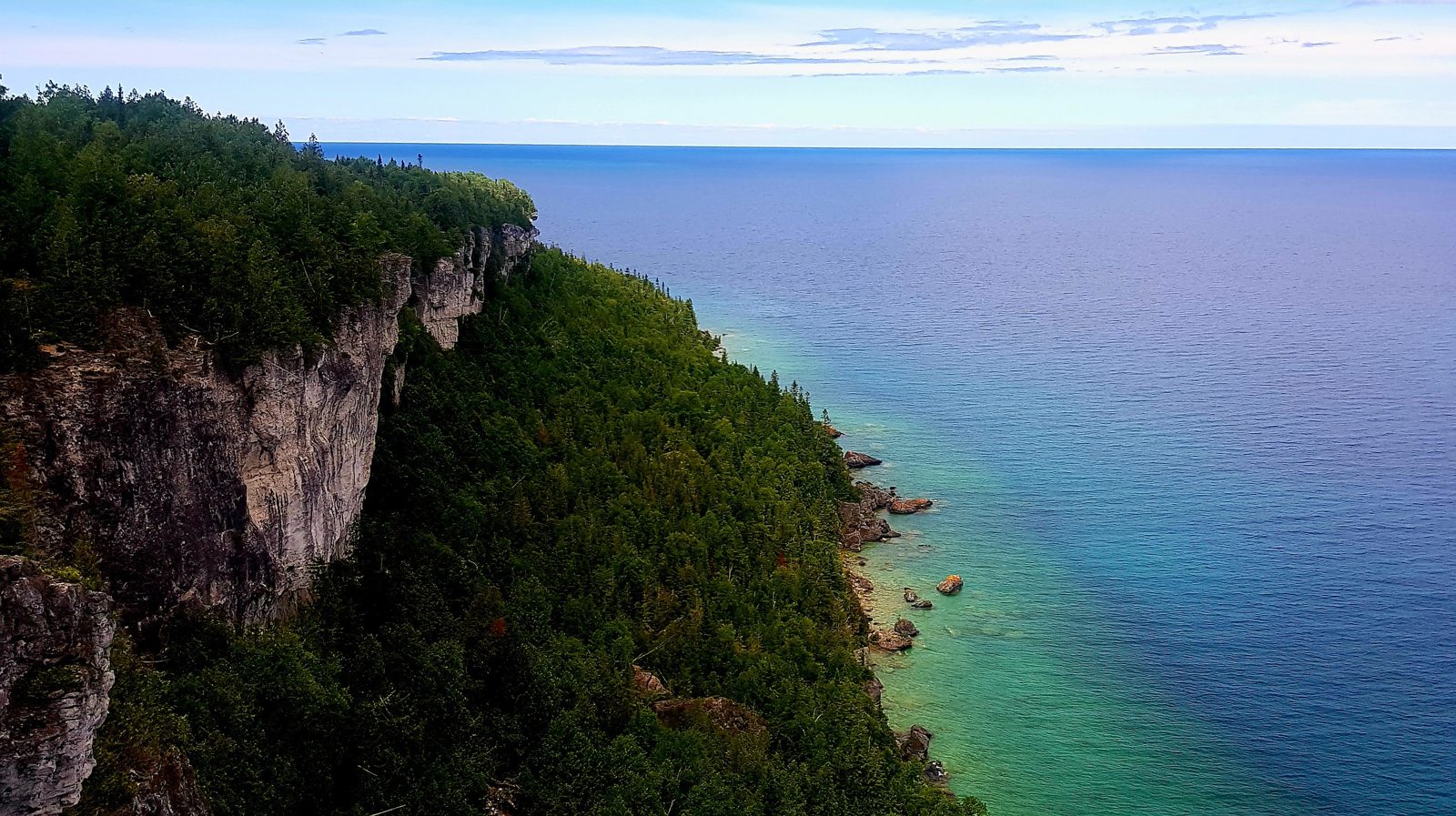
Rather than the monotonous Highway 6, we take small back roads, where once again we glimpse, between the pines and cedars, huge and magnificent houses overlooking the lake. A stop in the picturesque village of Lion's Head, with water so clear you'd think you were beside a giant swimming pool. The village owes its name to the cliff facing it, whose outline is said to evoke a lion's head, if you have a bit of imagination. An easy short hike leads up that very cliff, with striking views over the turquoise water more than a hundred metres below. Several natural lookouts dot the escarpment, but you need to be fairly nimble and like walking, which isn't the case for 95% of the people on the trail in flip-flops or city trainers. Past the first viewpoint we carry on until we're completely alone and picnic on the cliff edge with no one to disturb us. Next we want to see the port's pretty little lighthouse, but it's nowhere to be found. After a few puzzled minutes we realise it has simply vanished: all that's left is a sorry square of concrete, lonely and ugly.
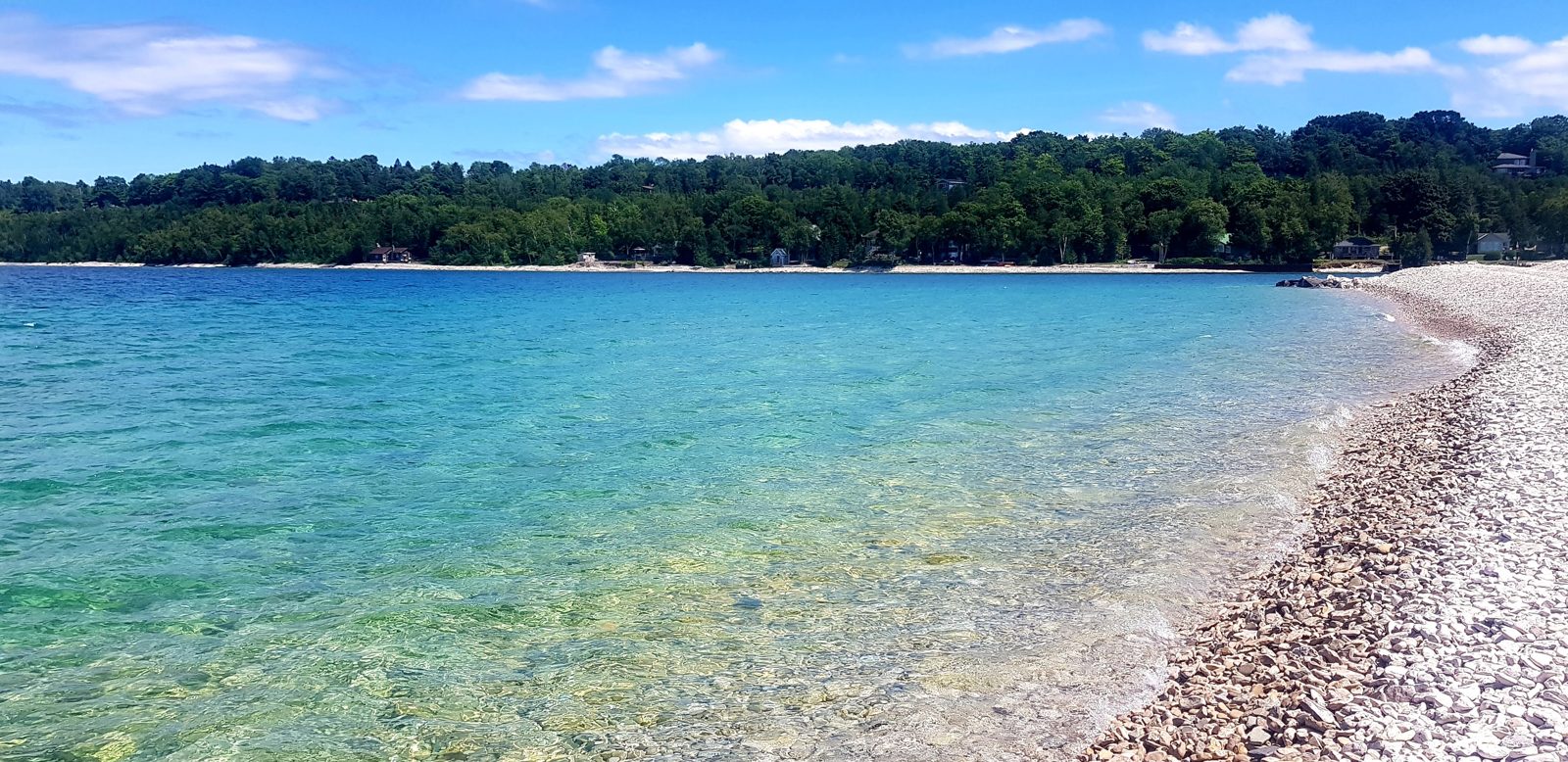
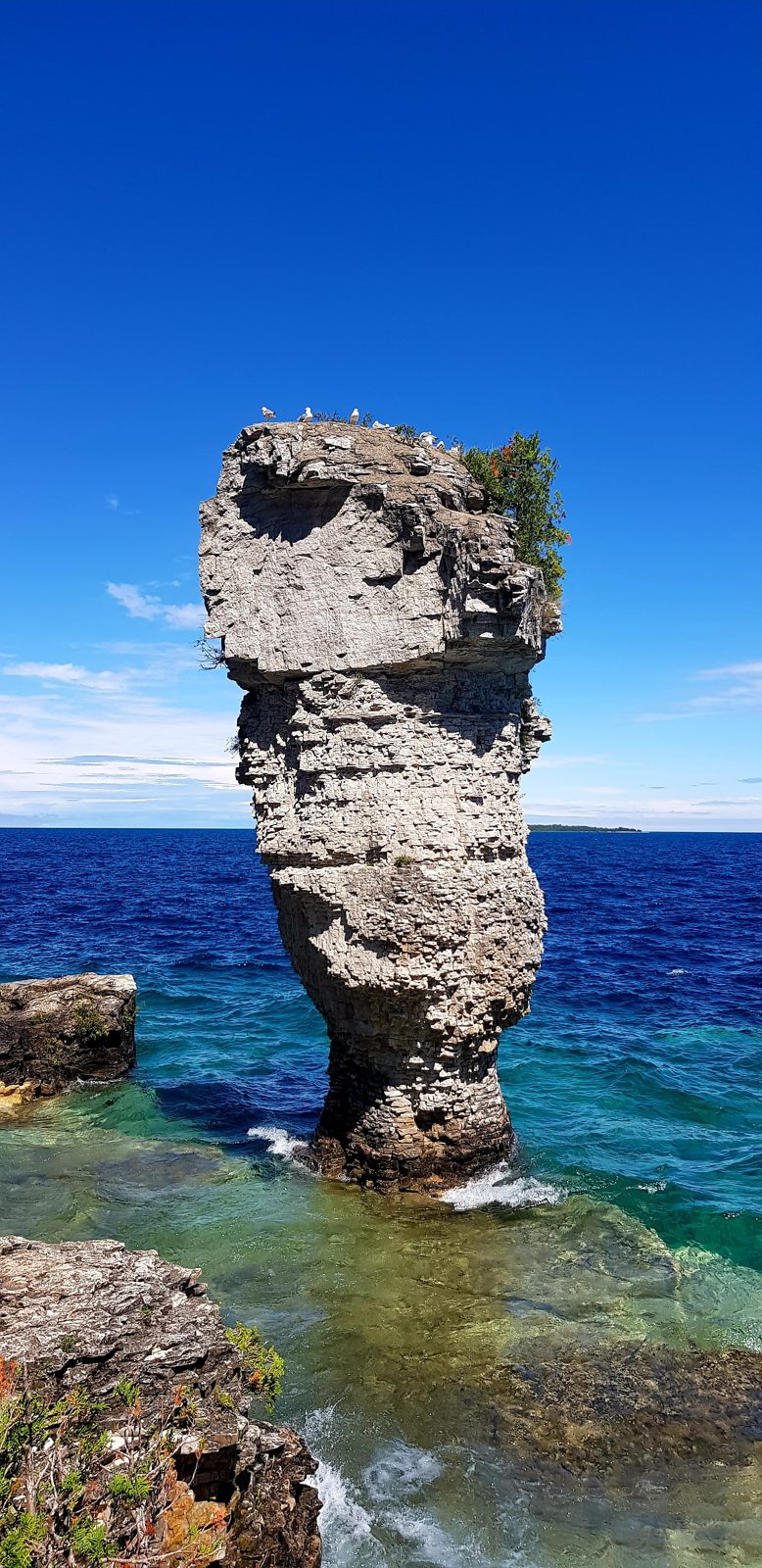
Before our final destination, a quick detour to the Devil's Monument, the biggest rock “flowerpot” on the peninsula. These big pillars are the work of erosion: waves, rain and wind have eaten away the soft rock at the base faster than the hard rock at the top, giving the stack its flowerpot shape. Behind it, a pebble beach with crystal-clear water lets those who've walked this far linger and swim at the end of a lovely day, provided they don't mind the cold: the water is icy in this part of the lake.
Tobermory is the caricature of a tourist town. Empty most of the year, it fills up as June approaches and stays packed for three months. Such seasonal activity has stripped it of its soul: there's none of the friendly atmosphere of the other little towns we've passed through. Everything is pricier, and the few restaurants lining the tiny harbour are no exception: passable food at unreasonable prices, but full dining rooms, because the tourists have to be fed. We pay for it on the very first evening. To enjoy the mild evening and the view over the bay, we treat ourselves on a terrace, only our second restaurant since we set off. Two tasteless burgers with supermarket crisps, four canned beers, and there's the modest bill: eighty dollars. Message received, we won't be caught again! The campsites around here are just as expensive, and don't hope to find a free one: we'll spend the next nights in the car, in a quiet little street.
Wednesday 22 July
One of the most striking cultural differences between France and Canada is openness to strangers. Here, in every little café, every queue, every local spot, people strike up a conversation. This morning is no exception. Woken by the rain, we linger all morning in a café twenty minutes from Tobermory. It's a charming place: the two staff are mother and daughter, and the shop has a family warmth that offsets the blow the weather deals to our morale. Two old ladies and a long-distance cycle tourist are sitting there; they don't know each other but are already chatting. An old man takes the next table and slips into the conversation. It's a constant here: the average Canadian is curious and very sociable.
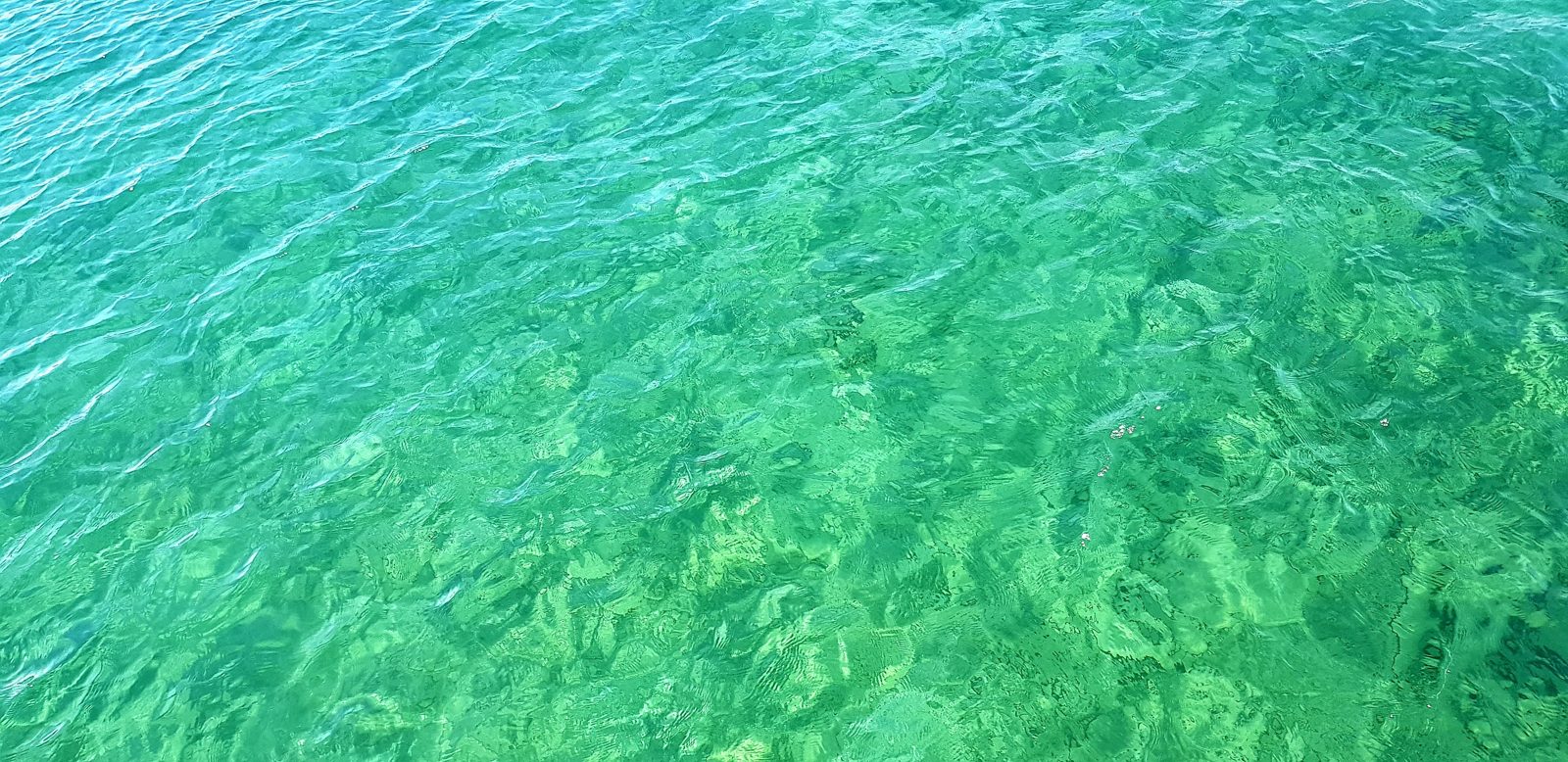
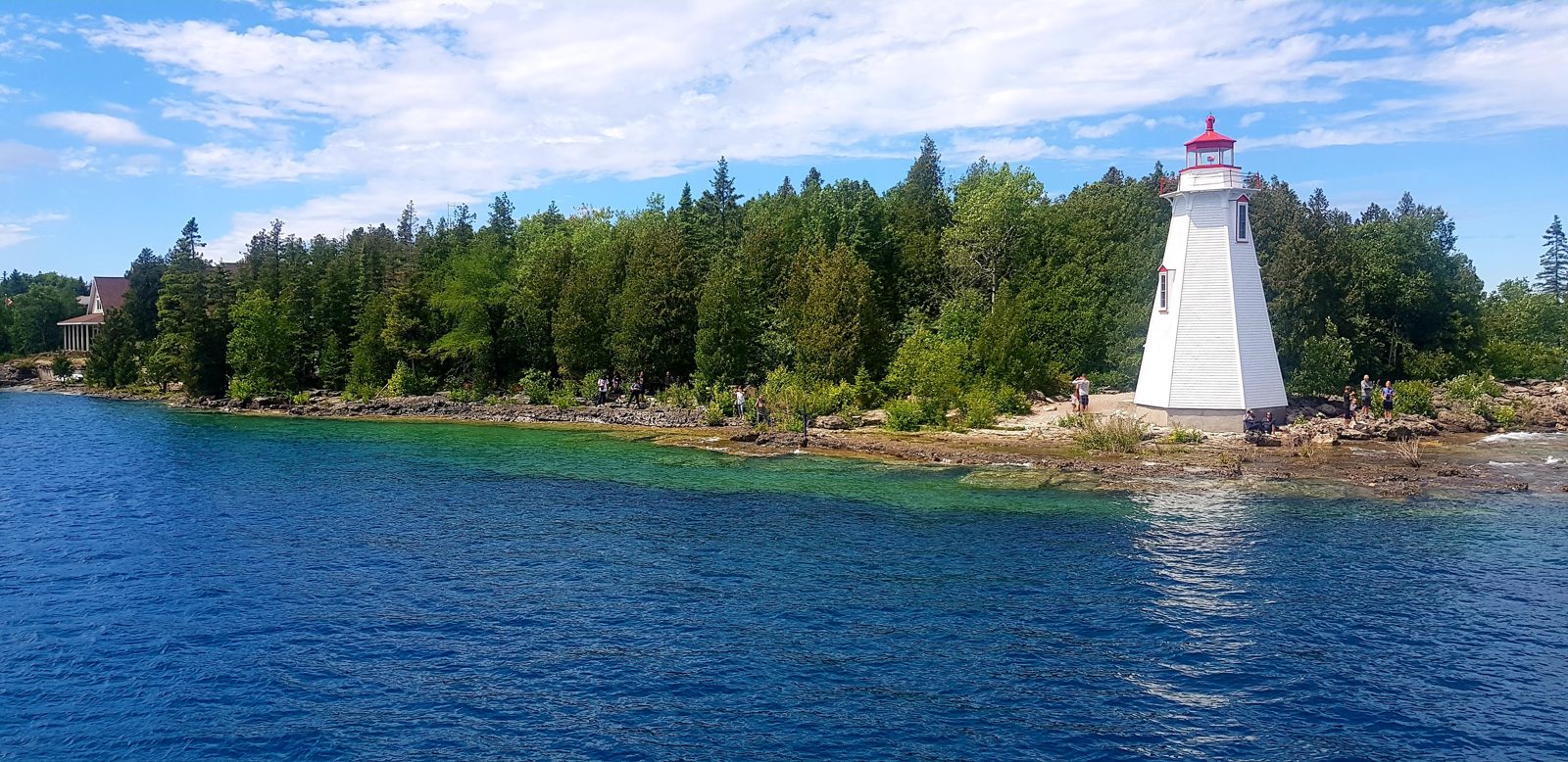
We stay a good two hours, then, the rain finally stopping, we head back to Tobermory. A quick snack, and as the sun peeks out, we go to the harbour ticket office to buy two tickets for Flowerpot Island, named after the two flowerpot-shaped pillars on its east shore. The boat has a glass bottom for looking underwater, an impressive turquoise blue when you remember it's a lake. It first cruises a little bay at the harbour mouth, between a pretty lighthouse and big villas dotted along the shore. But the bay's main interest is underwater: two wrecks, among the best preserved in the country, which make Tobermory Canada's scuba-diving capital. The boat pauses over them for a few moments. The water is so clear the glass bottom is superfluous: you see just as well from the deck.
It's a chance to observe that we're well and truly in the age of the self-portrait. To have any hope of seeing a sight, you now have to weave between posers looking for the best angle to collect the most likes on Instagram. It's perfectly understandable to want souvenirs of the most beautiful places, but sometimes it's beyond comprehension. As all the passengers gaze, fascinated, at the wrecks through the glass, a young woman literally throws herself on the floor to be photographed, blocking almost everyone's view. Shamelessly, she poses for portrait after portrait, oblivious to the bemused looks around her.
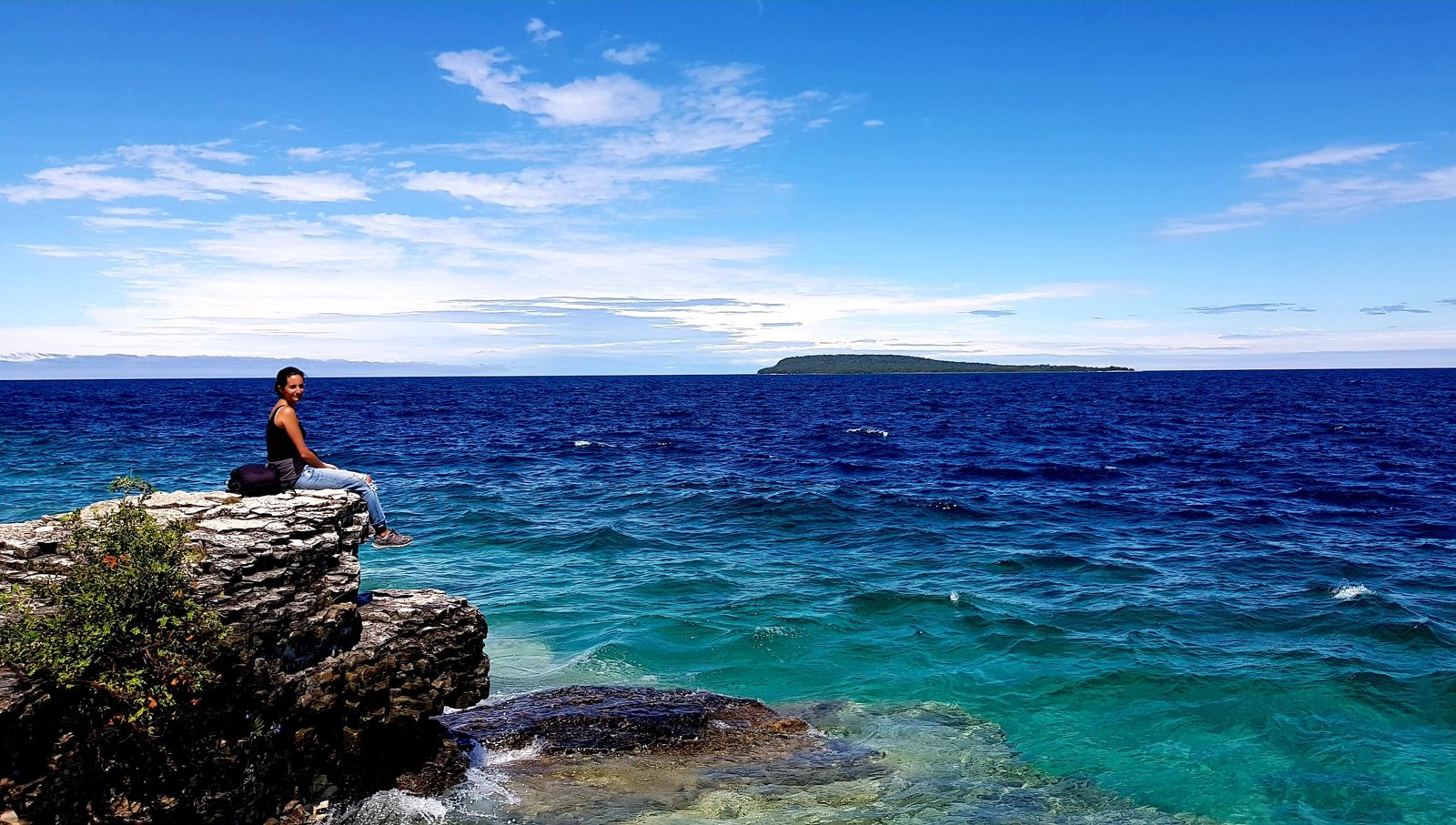
The boat then heads out towards the island five kilometres away. Settled at the bow, we're surprised by the height of the waves: nearly two metres, you'd think you were at sea. Before this horizon of water stretching out of sight, you understand why the first explorers thought they'd found an ocean. Flowerpot Island is very popular because the trail around it is flat and perfectly laid out: no need for walking boots, most visitors are in flip-flops, and we even pass a few girls in heels in the middle of a photo shoot. The island is all rocks, without a grain of sand to lie on. We walk round it, take a few pictures, and two hours later board the boat back.
Back at the harbour we enquire about booking the ferry to Manitoulin Island, two hours north, to continue our journey west. It avoids going back down the whole peninsula and round Georgian Bay: seven hours of driving saved. A very kind employee explains that because of Covid, bookings are by phone only, which the website doesn't say anywhere; we'd innocently thought you just turned up. We call the number given, and a recorded message warns us the wait can be long: currently, a hundred and twenty minutes. A cold shower. A two-hour wait to book a ferry by phone in 2020, it's the world turned upside down. We'll try again tomorrow when the lines open, but we need a plan B: retrace our steps and go round the bay the other way. Travel is full of surprises, but we didn't see this one coming! Never mind: neither Canada nor Covid will get the better of our determination to cross the country, and if it takes a six-hour detour, so be it!