
 ← PreviousLake Superior, a ranger and a bear cub
Friday 31 July
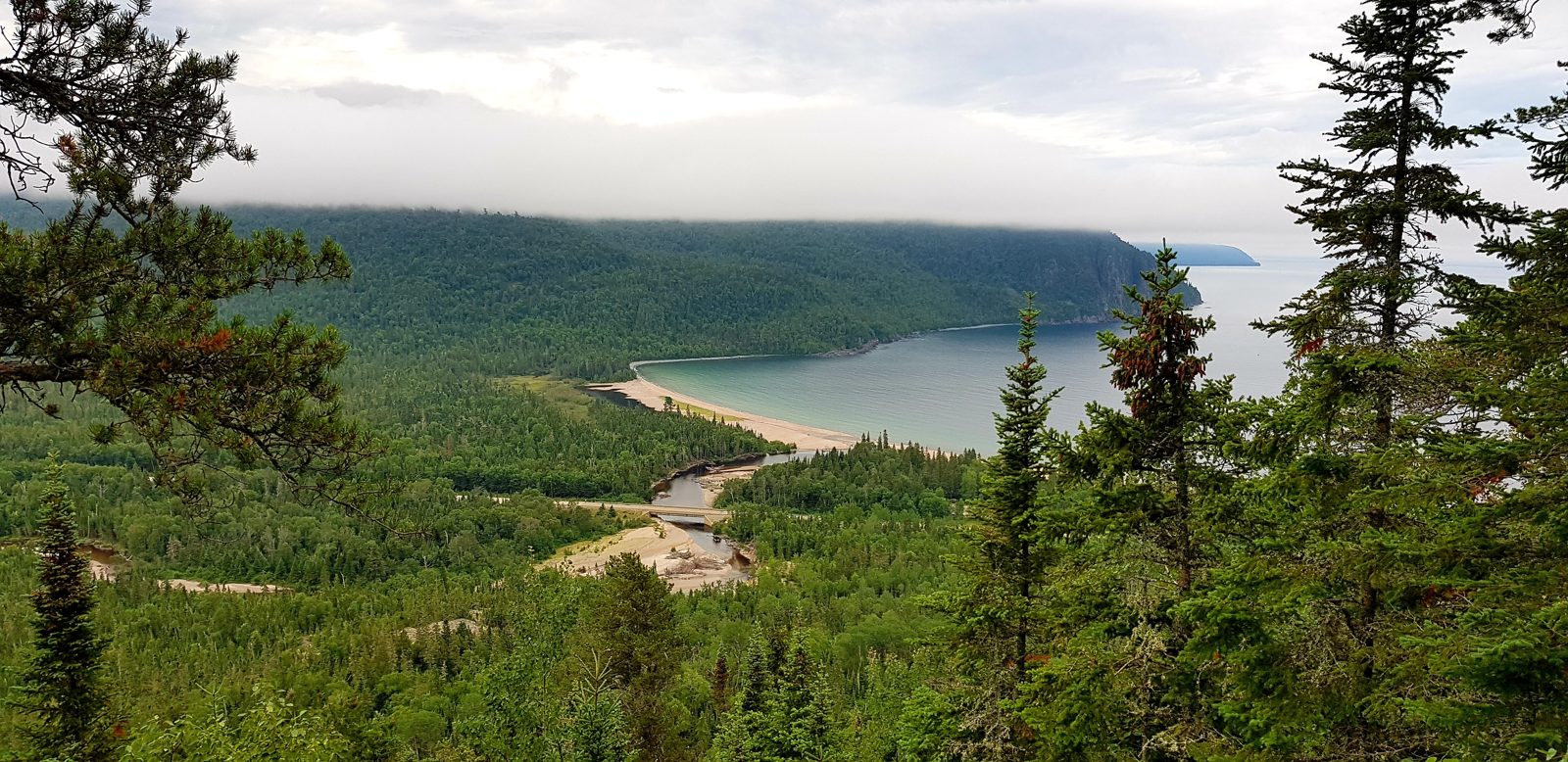
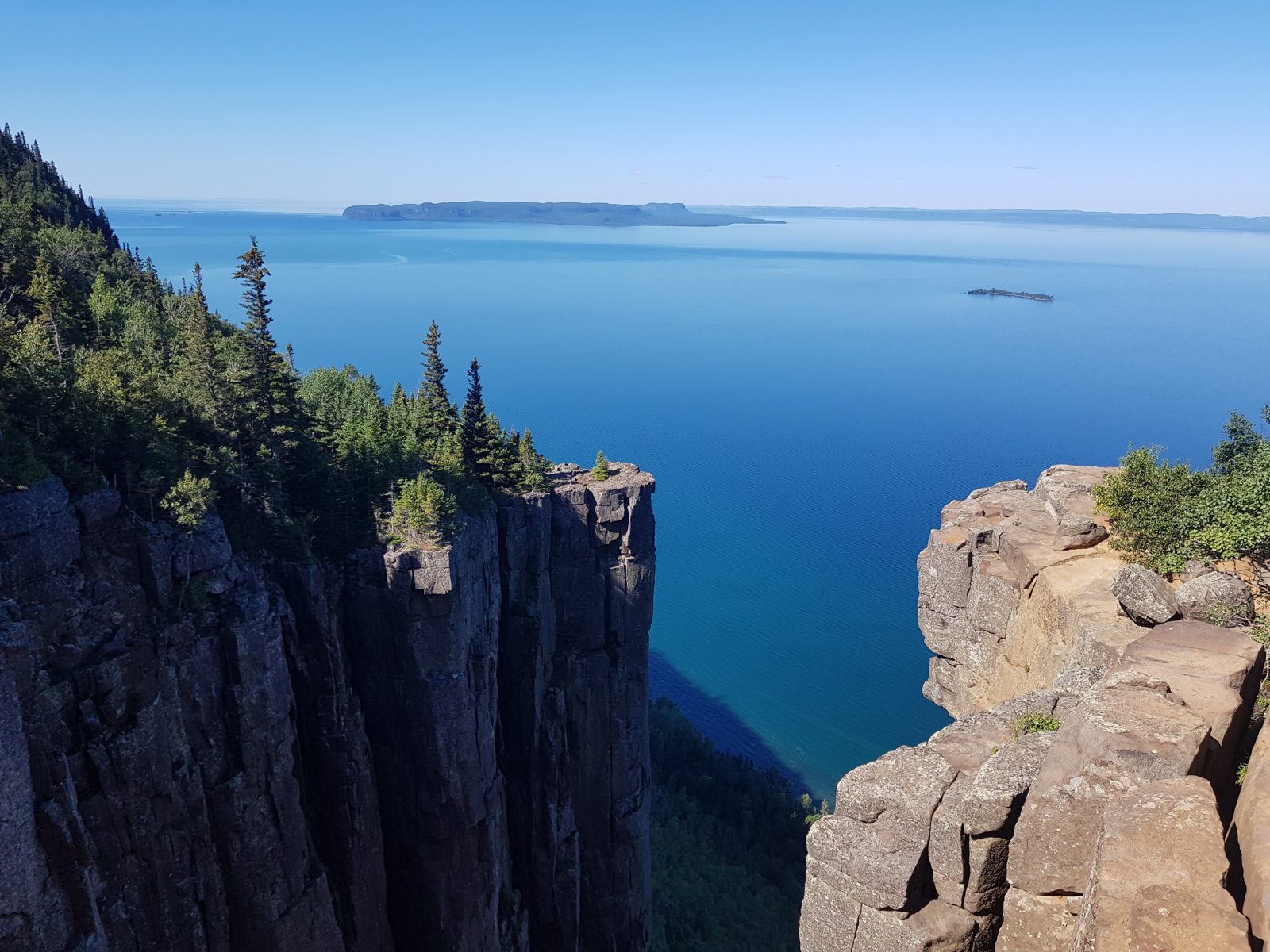
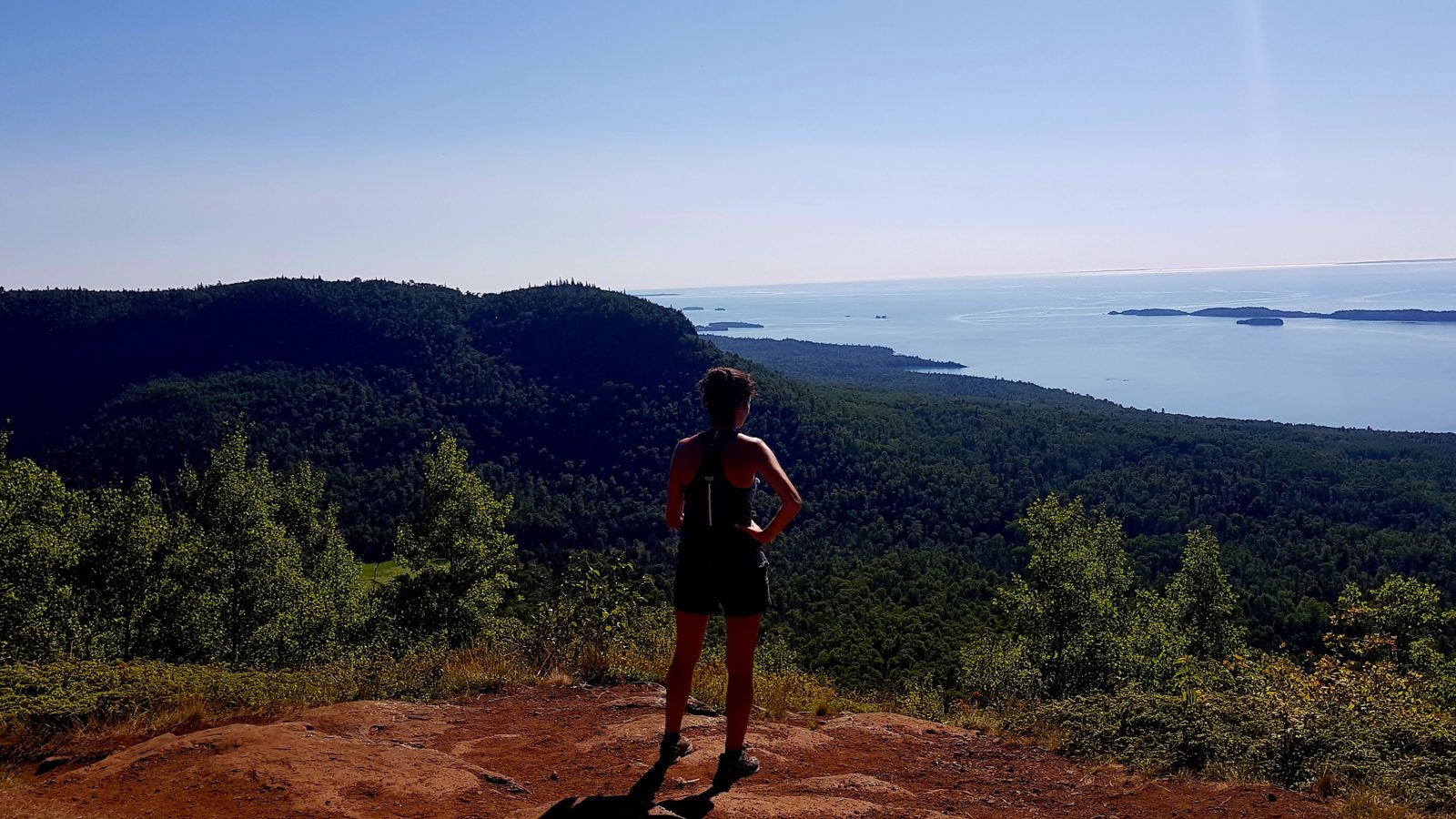
Sleeping Giant Provincial Park covers the Sibley Peninsula and offers some of the province's finest views over Lake Superior, from the top of the Top of the Giant trail, which we set off on early. Twenty-two kilometres there and back, leading to the top of Ontario's highest cliffs, with spectacular views over both shores of the peninsula. The park owes its name to the rock formation that dominates it, which looks like a giant lying on his back. Allow about seven hours: we set off prepared, with four litres of water and food. Not a cloud on the horizon, and at 8:30 it's already hot.
We meet only two people on the way up and reach the top in two and a half hours, faster than expected. Two Canadians are already settled there and we strike up a conversation. They're from Dryden, a small town four hours west, and recommend a few places in the Rockies, where we'll soon be, before leaving us alone before the endless blue of Lake Superior. The summit is ours for a picnic, but the flies end up getting the better of our patience. Canada has its black flies, which spend most of their time biting people and animals: the females slice into the skin of their prey, mammals or birds, to take the blood they need for their eggs. Our repellent doesn't seem to deter them, so we beat a retreat. Back at the car, the twenty-two kilometres are making themselves felt in our legs, and we go and rest in the sun on the shore of Lake Marie Louise, a little further on.
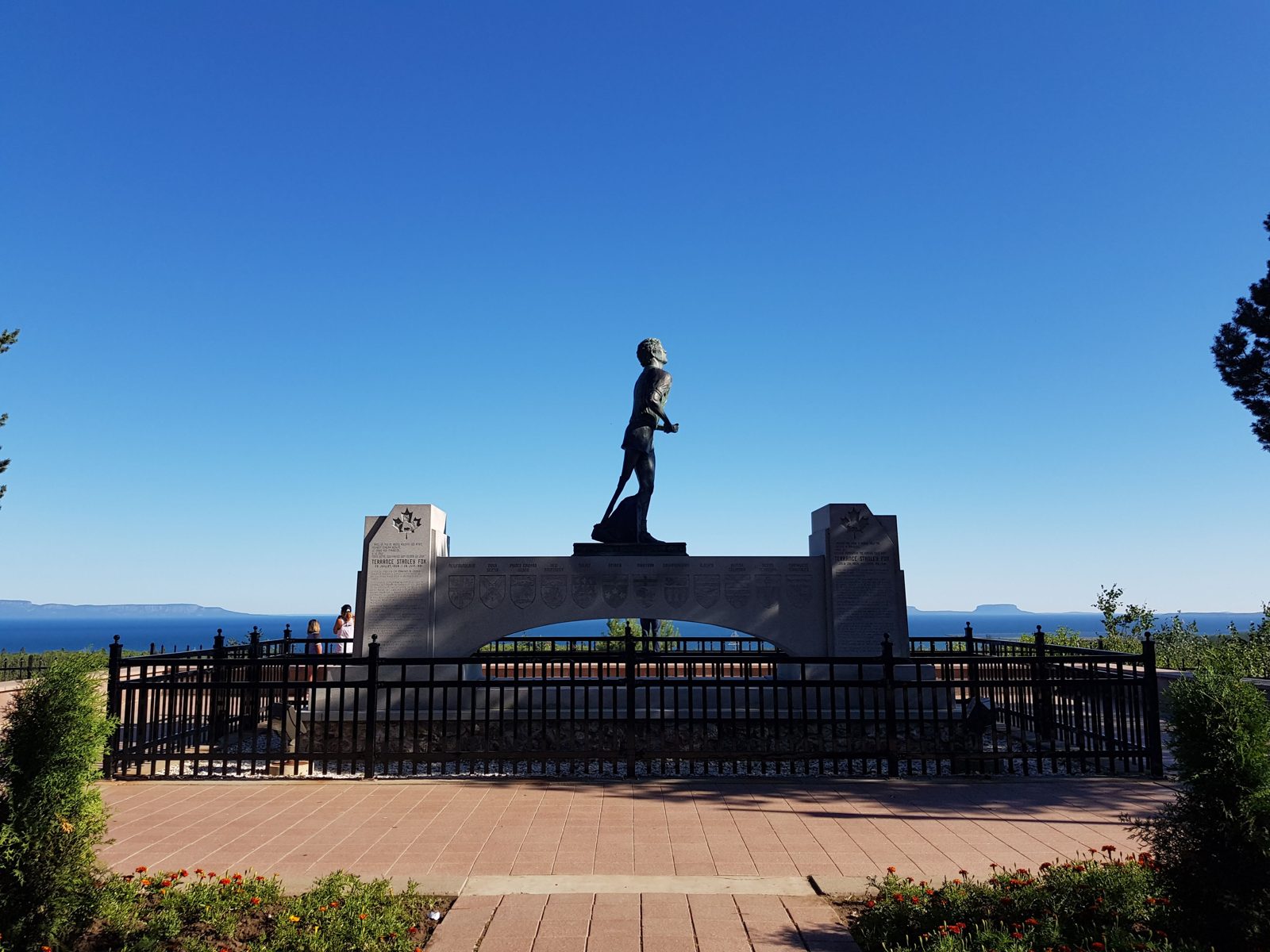
The water isn't so cold there, and we laze on the beach for a few hours before heading on to Thunder Bay. Perched about ten kilometres from the city stands a memorial to Terry Fox, a major figure in Canadian heritage. This twenty-one-year-old, with a cancer that had already cost him a leg, launched an incredible project on 12 April 1980: to cross Canada from east to west running the equivalent of a marathon a day, raising money for research, with the aim of collecting a dollar from every Canadian. He dipped his foot in the Atlantic and filled a bottle with ocean water, which he planned to empty into the Pacific at the end. Sadly, after crossing the eastern provinces and much of Ontario, his health deteriorated sharply as he neared Thunder Bay. After 143 days of running and 5,373 kilometres, Terry Fox had to stop. He died a few months later, prompting an unprecedented wave of emotion across the country and a huge flood of donations. After this moment of history we reach our Airbnb for some well-earned comfort.
Saturday 1 August
Thunder Bay is a surprising city. Heir to Fort William and Port Arthur, and to the “Baie du Tonnerre” named by the French, it was long a hub of Canadian trade, between the way west and the gateway to Lake Superior. Surprise: one of the city's largest immigrant communities is Finnish, and the historic centre grew up around its institutions. The industrial past shows in the red brick of the old buildings, but Thunder Bay mostly looks like a long string of big boulevards and nondescript neighbourhoods.
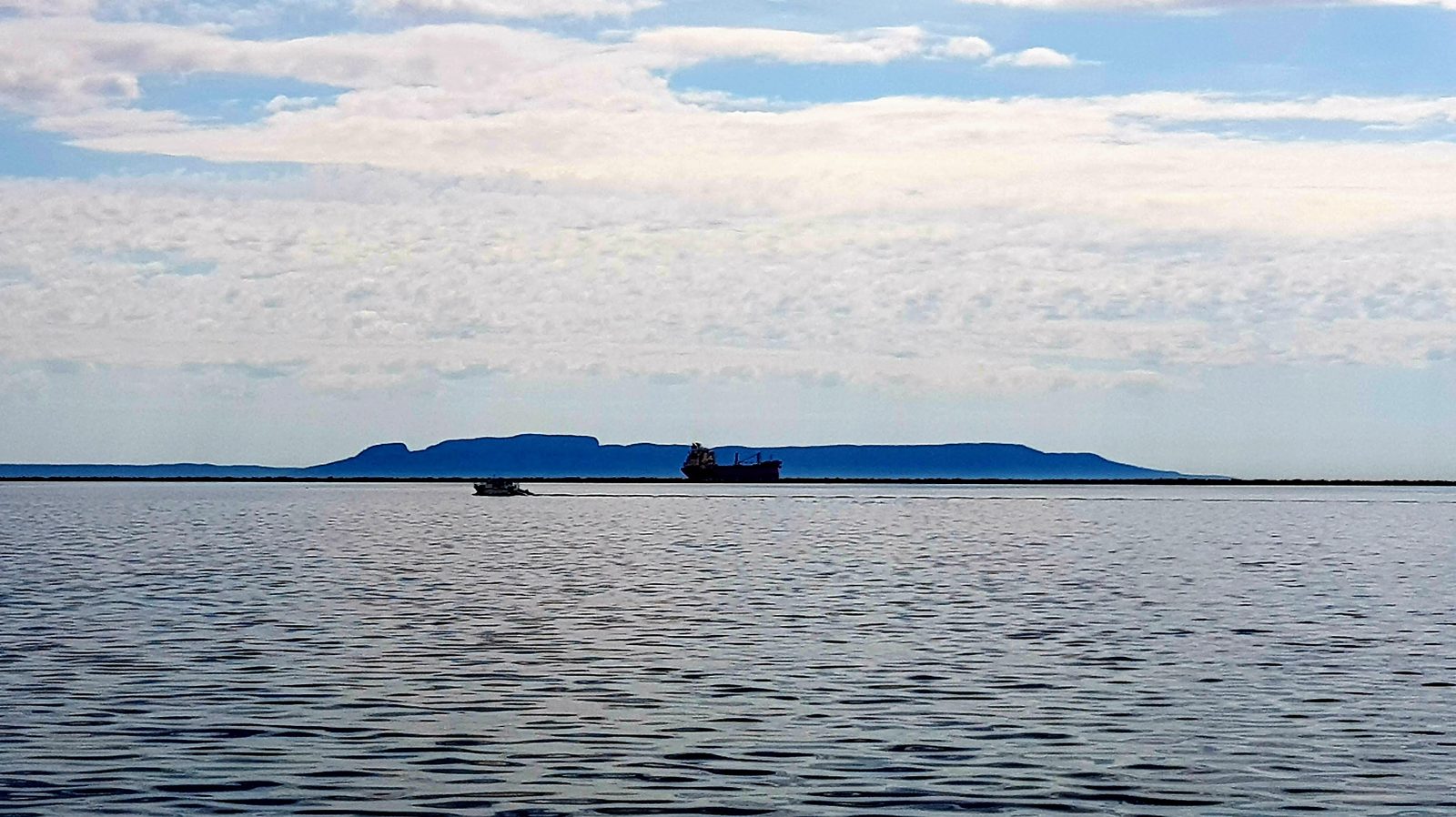
Walking around, we see it has a serious drug problem. We pass faces deeply marked by opioid use and even witness deals in the street. A national newspaper recently ran the headline “Thunder Bay has a drug problem”, explaining that overdoses keep rising. Yet we don't feel unsafe, and we let these people go about their business.
Fifteen kilometres west is Fort William, an impressive reconstruction of an 1816 fur-trading post. Trading, and even bartering: the North West Company's merchants understood they had to adapt to the First Nations by exchanging goods. Guides in period costume play their roles to perfection, and we learn a lot. The standard of exchange, for example, was the pelt of a beaver killed in winter, for the quality of the fur obviously: eight bought a gun, two a length of European cloth. Trade worked like this: goods from England came from Montreal by canoe, after weeks of travel, while Indigenous hunters brought their furs from all over the western territories, and everyone met at the great summer “rendezvous”, a French word used at the time that has stayed in the English language.
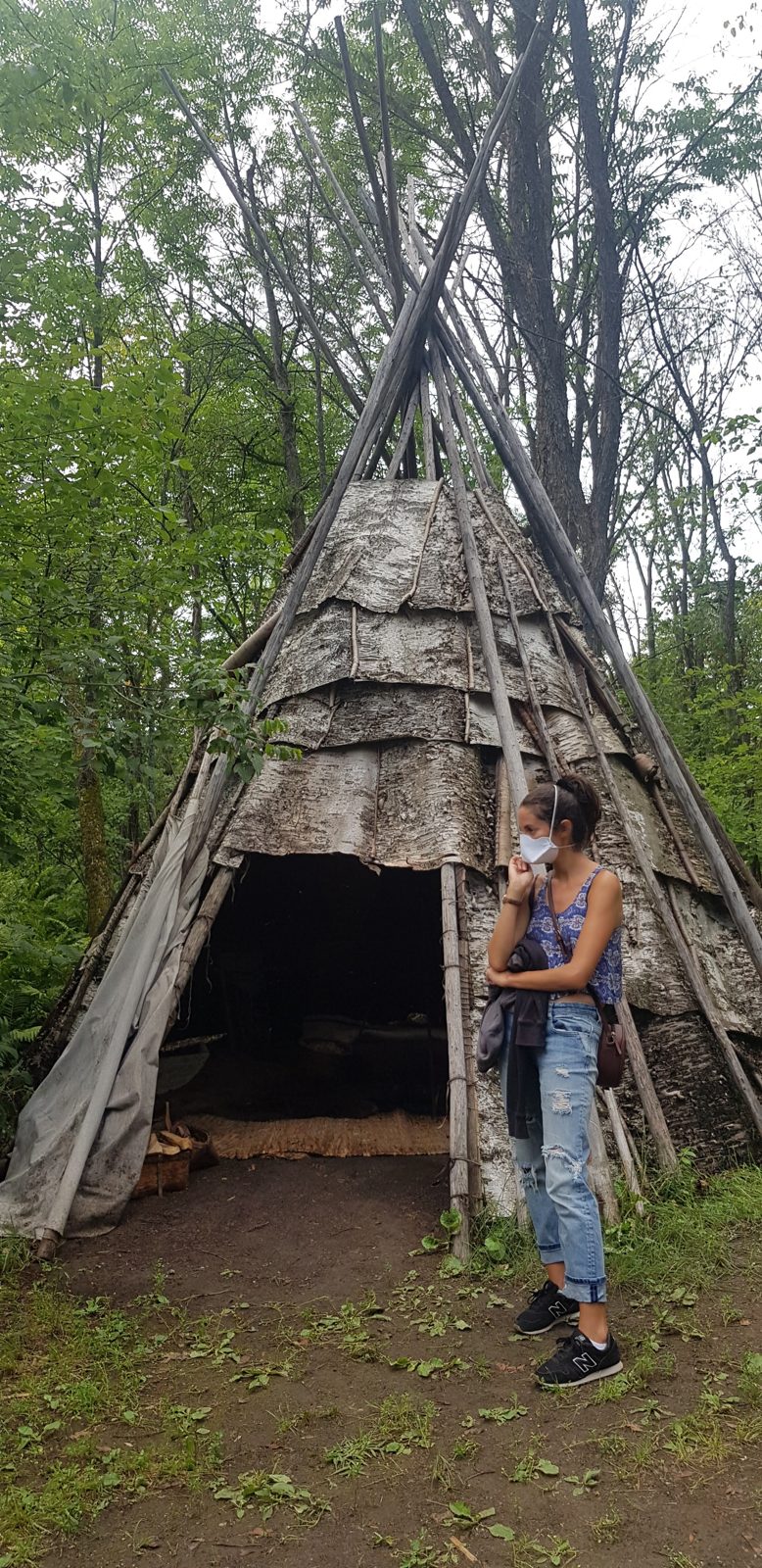
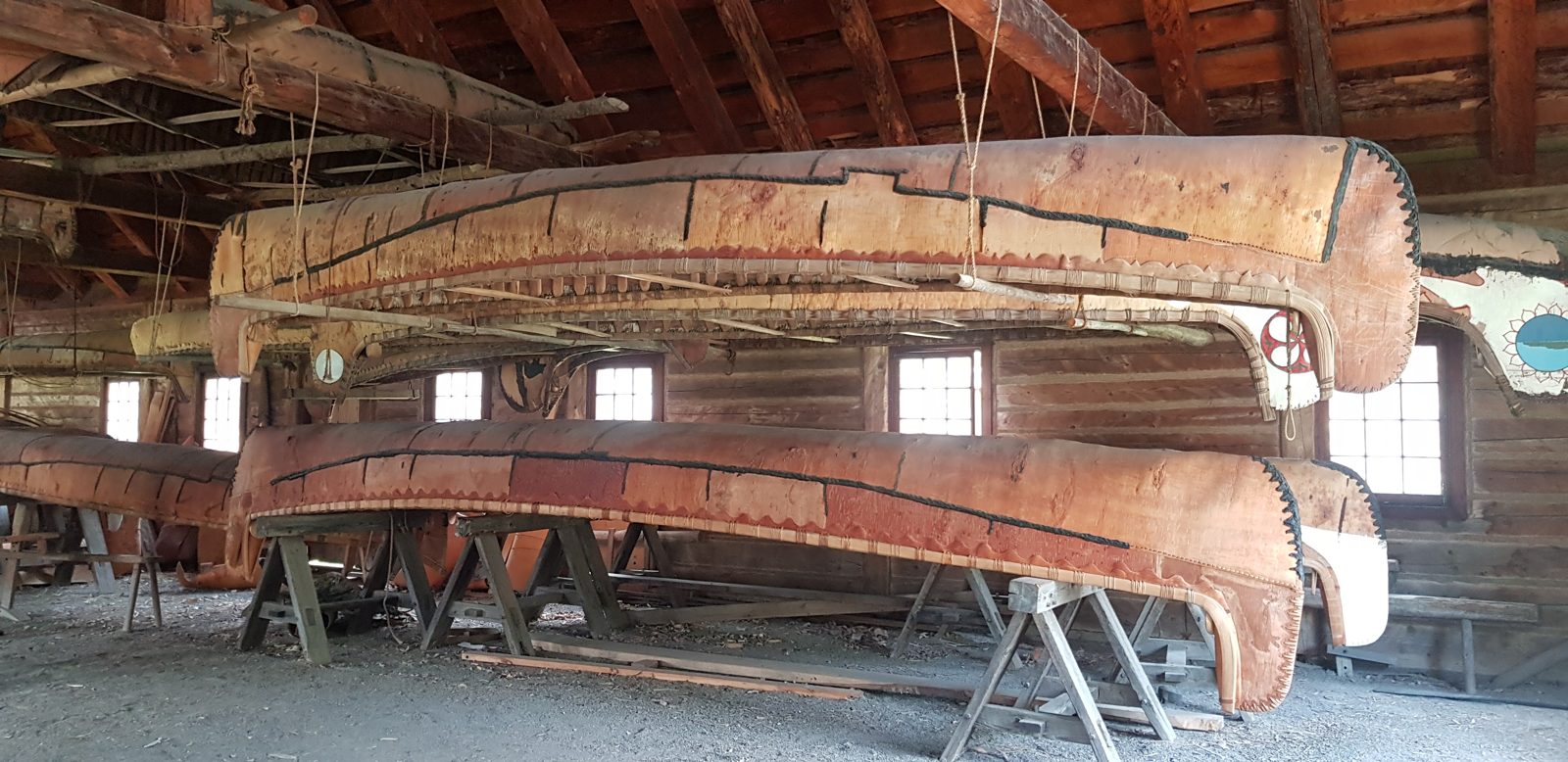
The visit is a little long but rewarding, thanks to the young man playing a period tinsmith, and we leave a little wiser. Then we drive to a lookout over Thunder Bay and the Sleeping Giant. From afar, the silhouette of the sleeping giant is clear, and our aching muscles remind us we walked twenty-two kilometres to climb it.