
 ← PreviousThe Bruce Peninsula, between cliffs and wrecks
Thursday 23 July
Up just before 8, we call the switchboard straight away as it opens. We burst out laughing when the automated message tells us we're seventieth in the queue. We leave the phone on speaker through breakfast and the morning shopping: after nearly an hour, we're fiftieth. Having no wish to spend the day on the phone, we hang up and switch to plan B: we'll go round Georgian Bay by land, to the east.
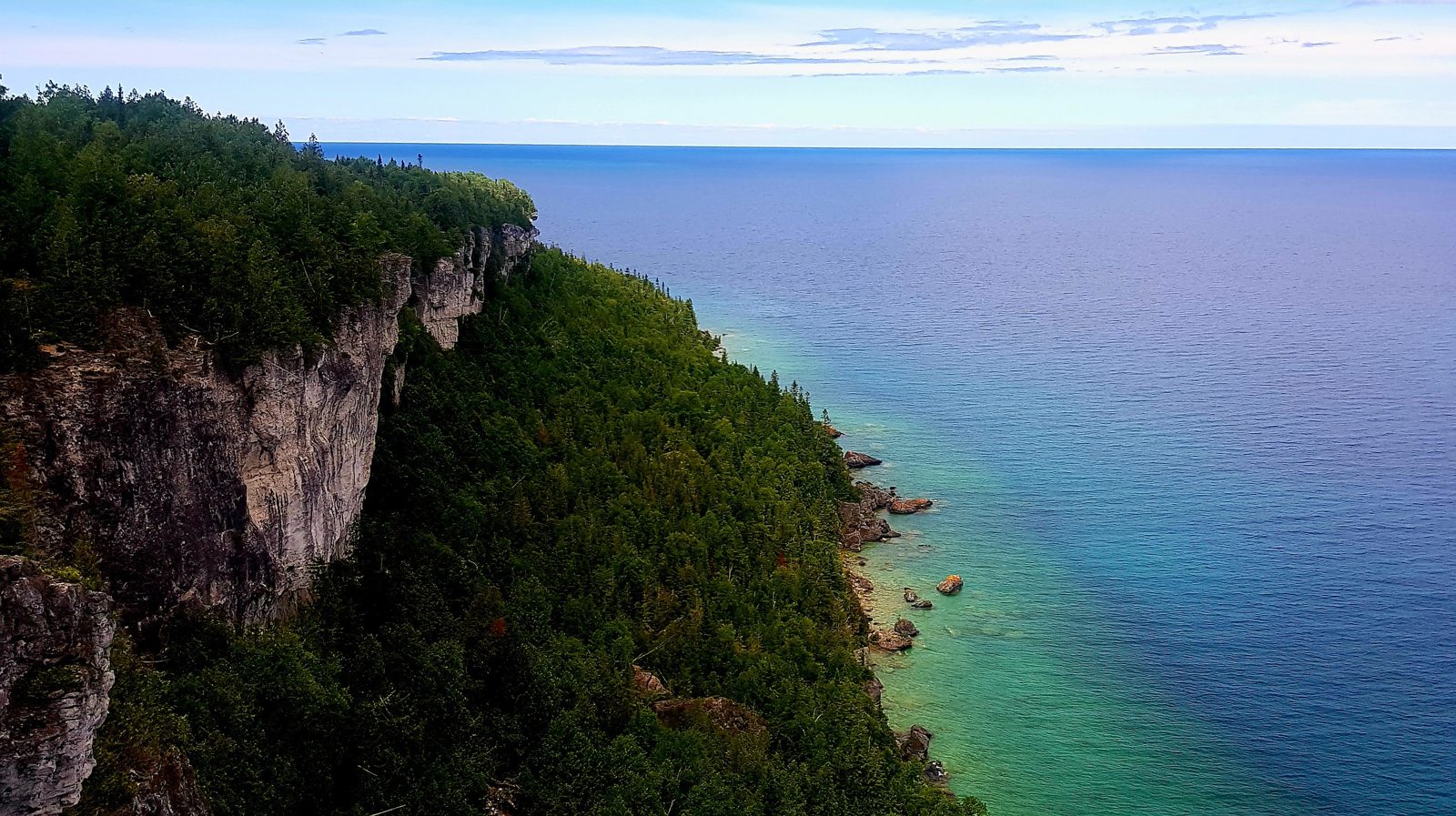
Hikers have a saying that “a day on the trail is eight days of health”, and it's surely no accident that walking is recommended in every wellness guide. France, with its long-distance GR trails criss-crossing the country, was a pioneer, and the Canadians may have drawn inspiration from it for their long-distance trails. Along the peninsula runs the Bruce Trail: it starts at Niagara Falls and ends in Tobermory, nearly nine hundred kilometres later, no less! You can of course walk just sections of it, and it's on one of them that we set off this morning. Hiking is good for the body, but also for the spirit. Sometimes we talk all the way; sometimes, like this morning, we let ourselves be wrapped in the calm of the forest, broken only by birdsong and the mad dashes of squirrels. We meet no one and enjoy the beaches and lookouts on offer.
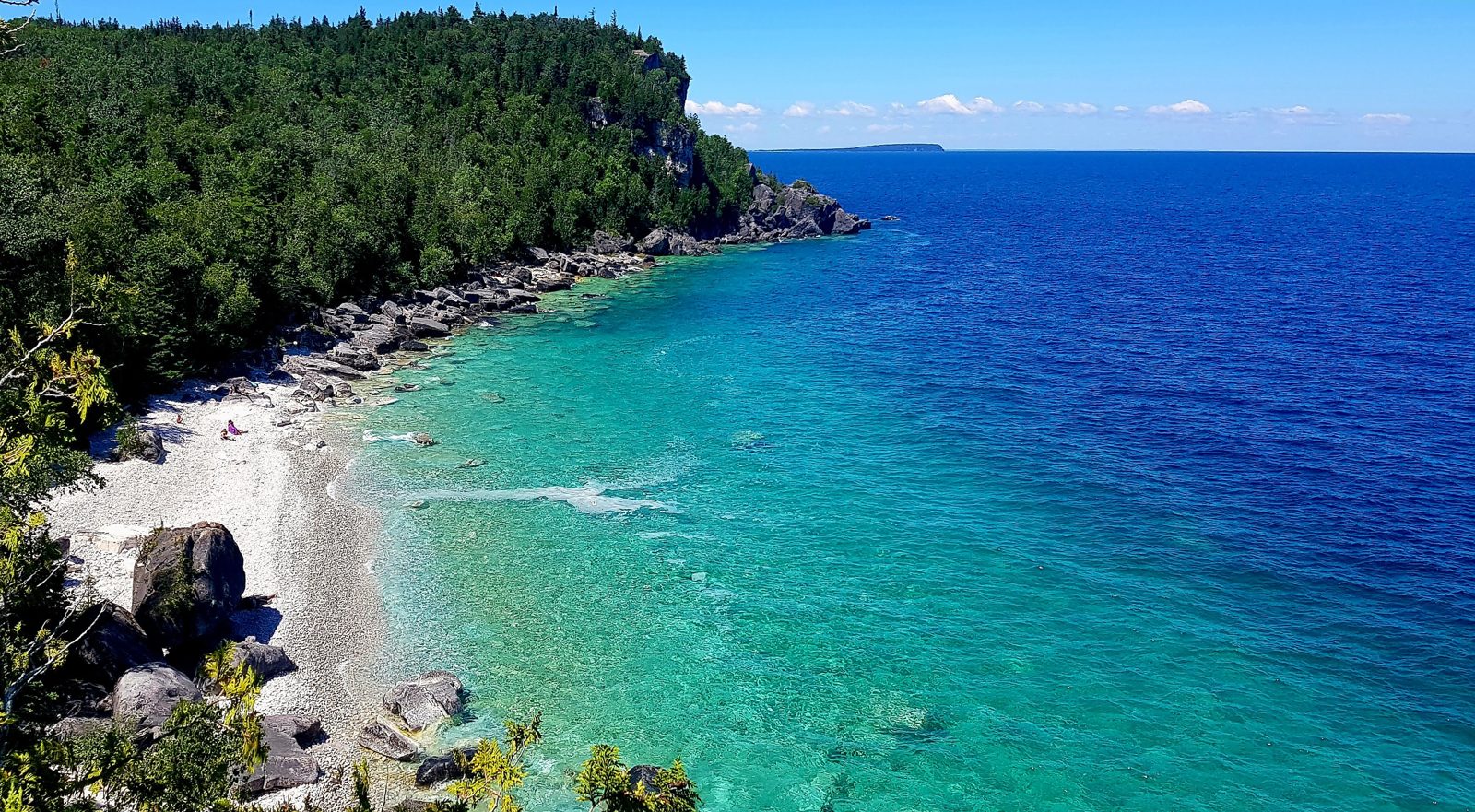
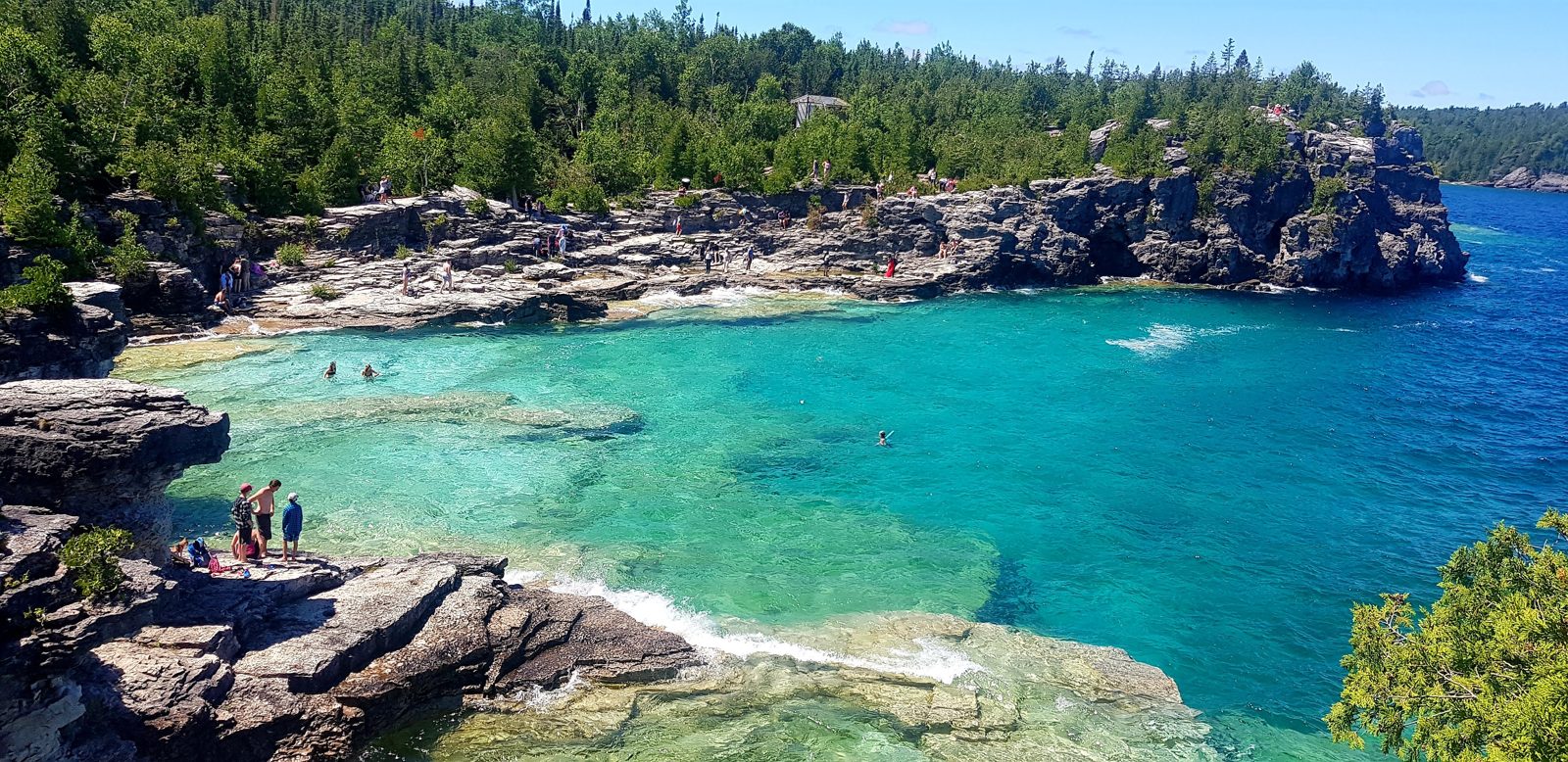
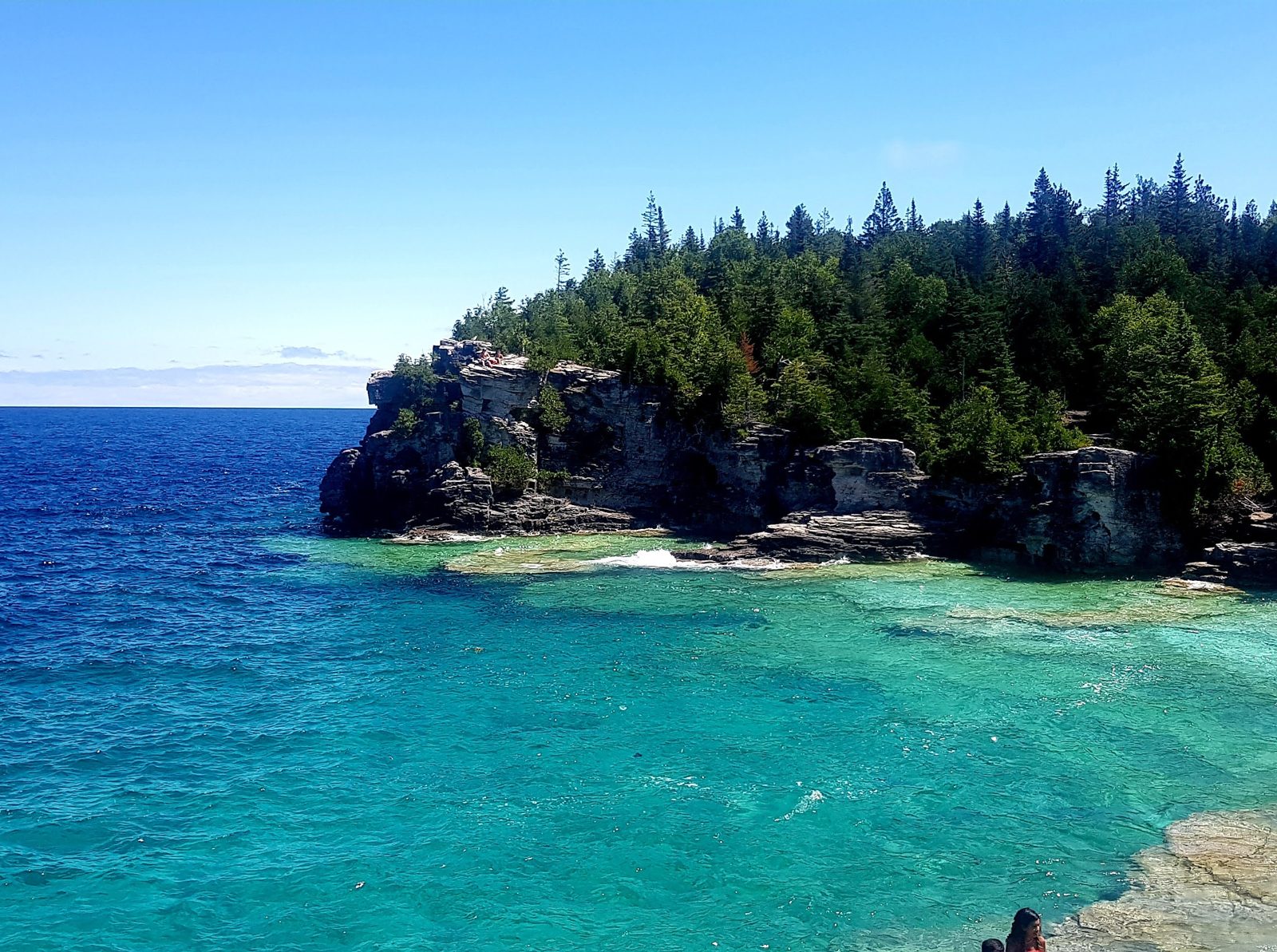
After more than two hours of walking we reach The Grotto. Close to a campground, the place is packed, and you can see why: it's like a little Étretat, miniature cliffs dropping sheer into turquoise water. The lake is choppy, which stops neither the young from playing on the rocks nor the vainer ones from being photographed from every angle. What always surprises us in these trendy spots is that you only need to walk five more minutes to find an even more beautiful landscape, completely deserted. We have lunch beside an emerald lake ringed by a conifer forest of a green straight off an old master's palette. Hard to leave such a picture, but two hours of walking still separate us from the car, and five hours of driving await after that.
At 9 pm, after four hours on the road, we stop at a supermarket in Parry Sound, where we were just a few days ago, to buy a quick bite, then set off in search of somewhere to sleep. Unlike Australia, you can't just drive a little way from the towns to find a free campsite, and there isn't a single one on our route. Night is falling: no point looking for a campsite and pitching the tent in the dark. It'll be the car again. But even finding somewhere to park turns into an obstacle course. Along the highway, more of a country road really, there's nothing but forest and pristine lakes, and the rare hamlets ban non-residents from parking, in car parks and on the streets alike. Luckily, round the bend of a small country lane, we find a patch of earth just big enough for the car. That's where we spend the night, among the trees, under a sky studded with stars, lulled by the honking of geese.
Friday 24 July
Last night was far from idyllic, but we wake after a good night's sleep: the car works its magic. An hour and a half's drive still separates us from Killarney Provincial Park. Created at the urging of the Group of Seven, the famous Canadian landscape painters inspired by its beauty, the park is known for its pink granite shores plunging into Georgian Bay, the white quartzite ridges of the La Cloche hills, among the oldest mountains in the world, and the crystal-clear lakes scattered across it. Like so many Canadian parks, it shelters abundant wildlife: lynx, wolves, bears… A network of trails, short or long, invites you to explore the shore or the La Cloche hills, and the most intrepid can paddle to the far reaches of the park by canoe-camping, with portages. Beauty to the power of a thousand. The park is remote, its only campground is often booked months ahead, and of course it's full; the lodging around has little appeal. So we'll only spend a day here.
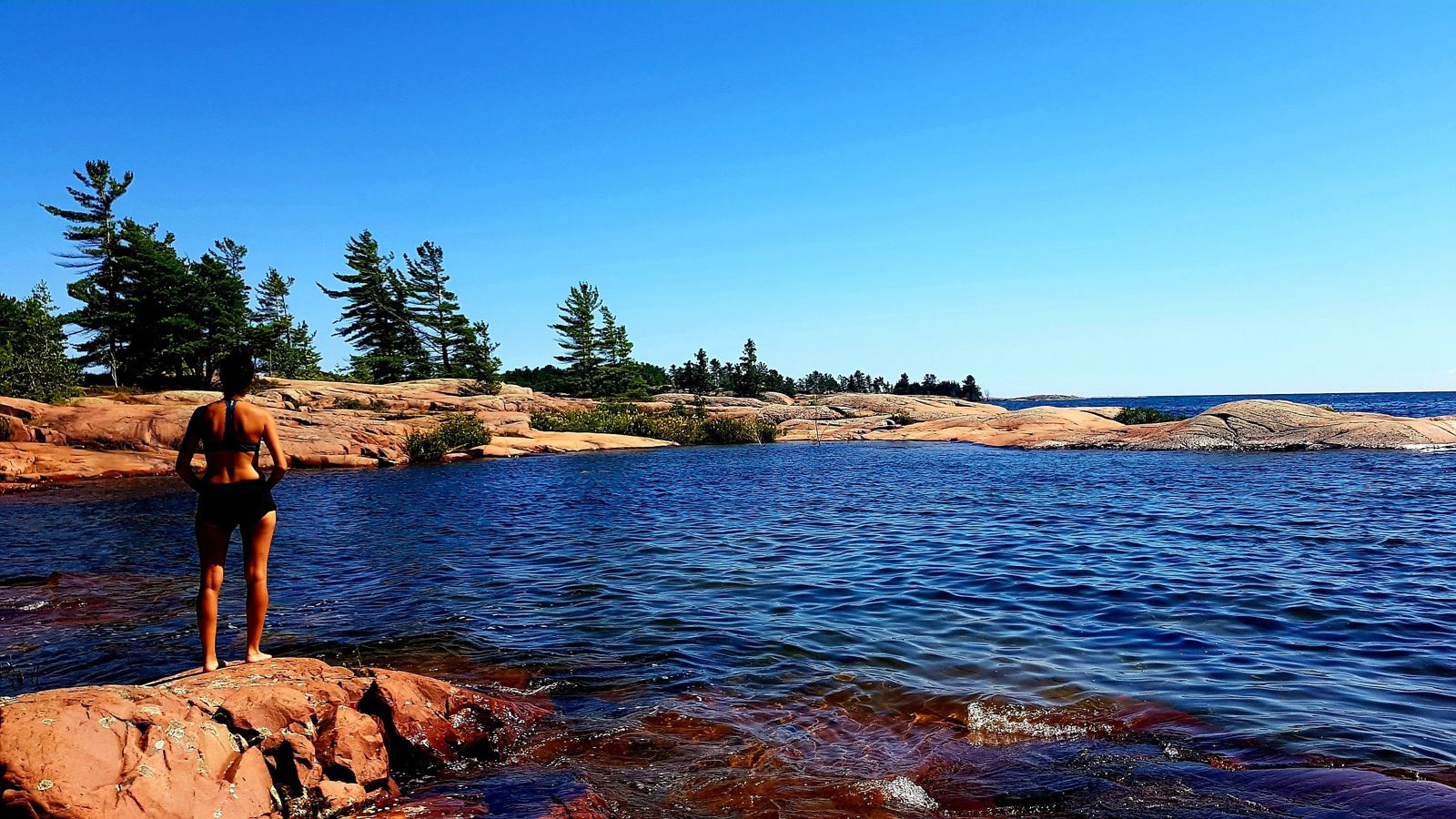
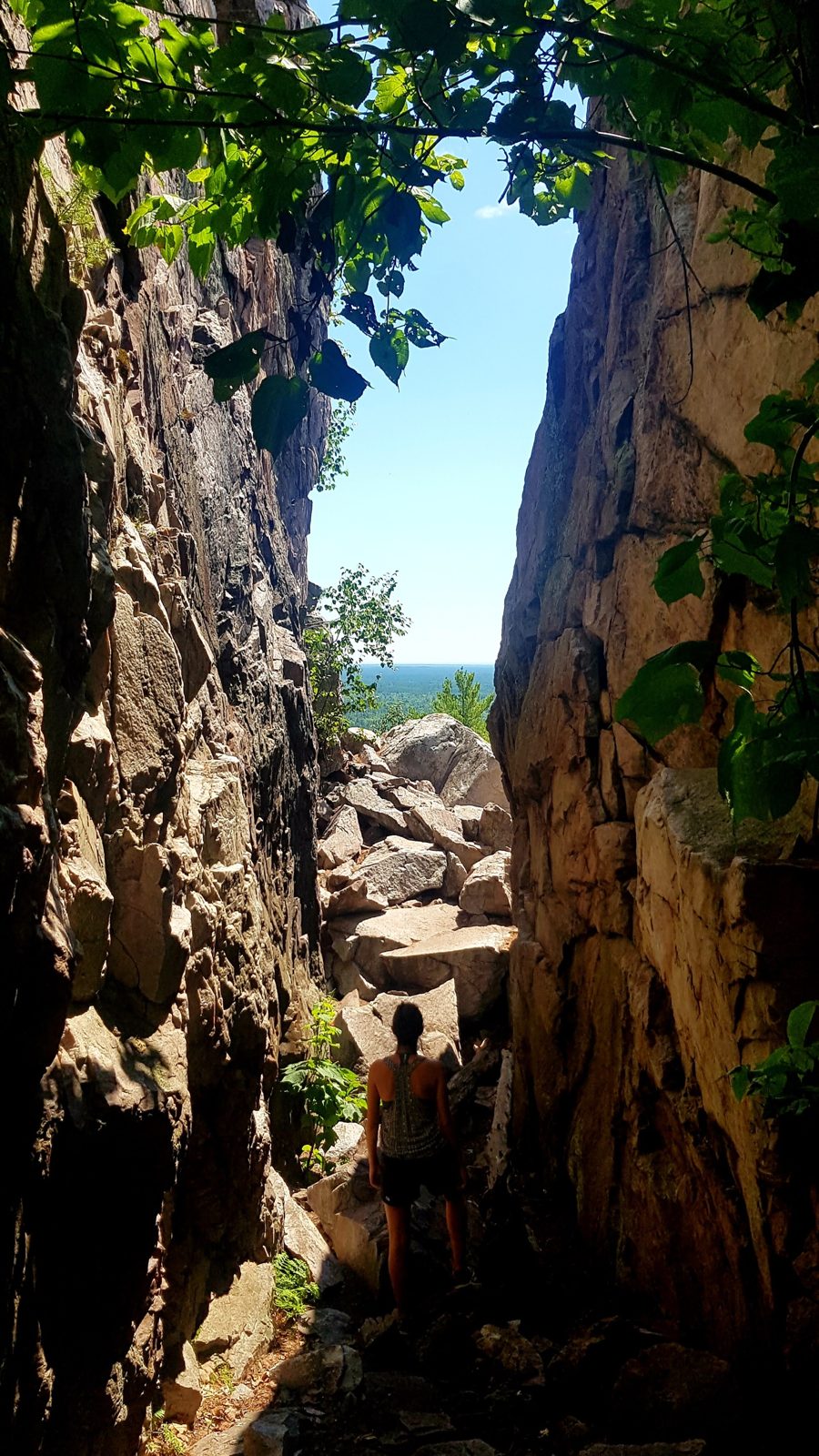
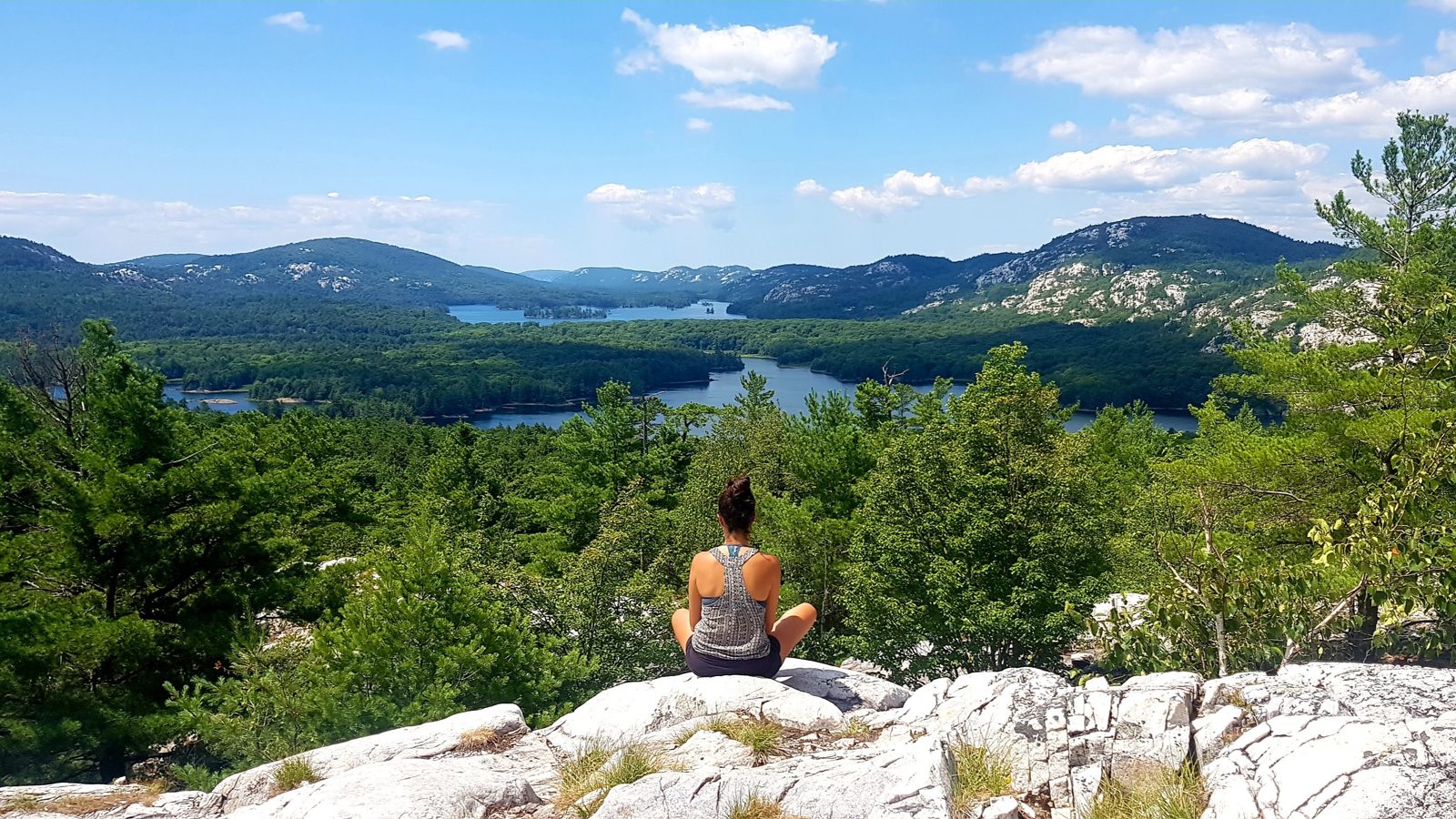
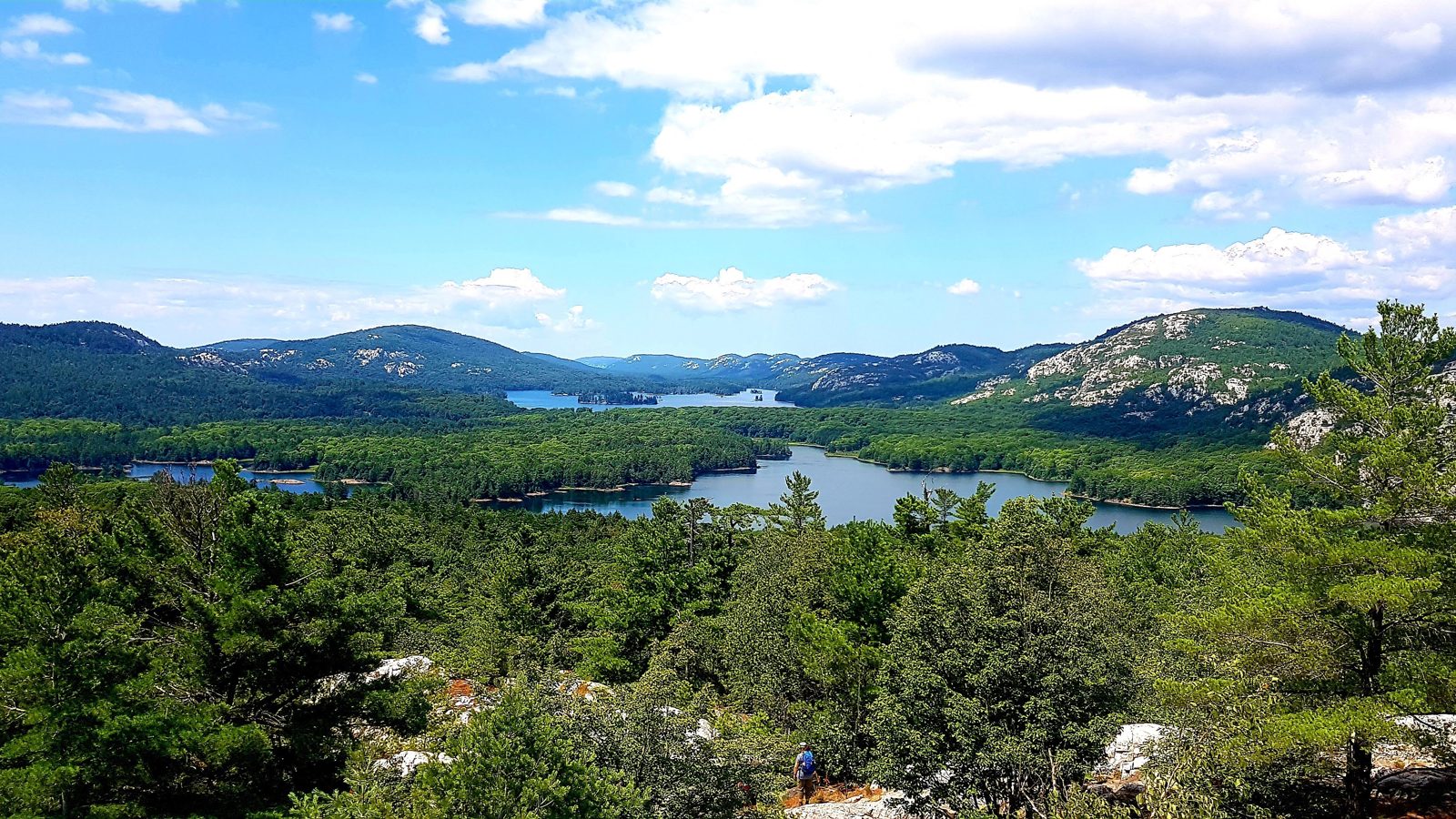
The best way to get a good overview in little time is The Crack trail. Don't be fooled by its six kilometres: it takes us two hours to finish, at a brisk pace. The first part runs easily through the woods; the second is nothing but scrambling over a jumble of huge boulders. From the top, magnificent panoramas of lakes and mountains surround us, and we have lunch facing the view. We then do two shorter trails, one of which follows the park's southern ridges. Rocks slope into the water and invite a swim: we don't need asking twice.
After three nights in the car, tonight we treat ourselves to a hotel. Let's be honest: if we stop in Sudbury, it's not for its architecture but because one establishment fits our budget. Even the Lonely Planet, usually generous with compliments, doesn't recommend stopping there, and we soon see why: the town looks like a mushroom that sprang up haphazardly as residents and factories arrived, around its nickel mines. We'd rather have slept under canvas somewhere remote, but because of Covid the campsites turn away anyone not travelling in a caravan or motorhome, and camping in this wealthy part of Canada really is a headache.
Our room is huge; we appreciate this regained comfort at its true value, and after several days washing in lakes, the hot shower reminds us of the wonders of civilisation. Philosophers said it long ago: when you learn to be content with little, the slightest extra becomes a luxury. To round off the day we dine at a restaurant that doesn't look like much and turns out to be excellent. That's another gift of long-term travel: you learn to take your time and make the best of circumstances.