
 ← PreviousAn epic hike in the Rockies: challenges and rewards
Friday 4 September
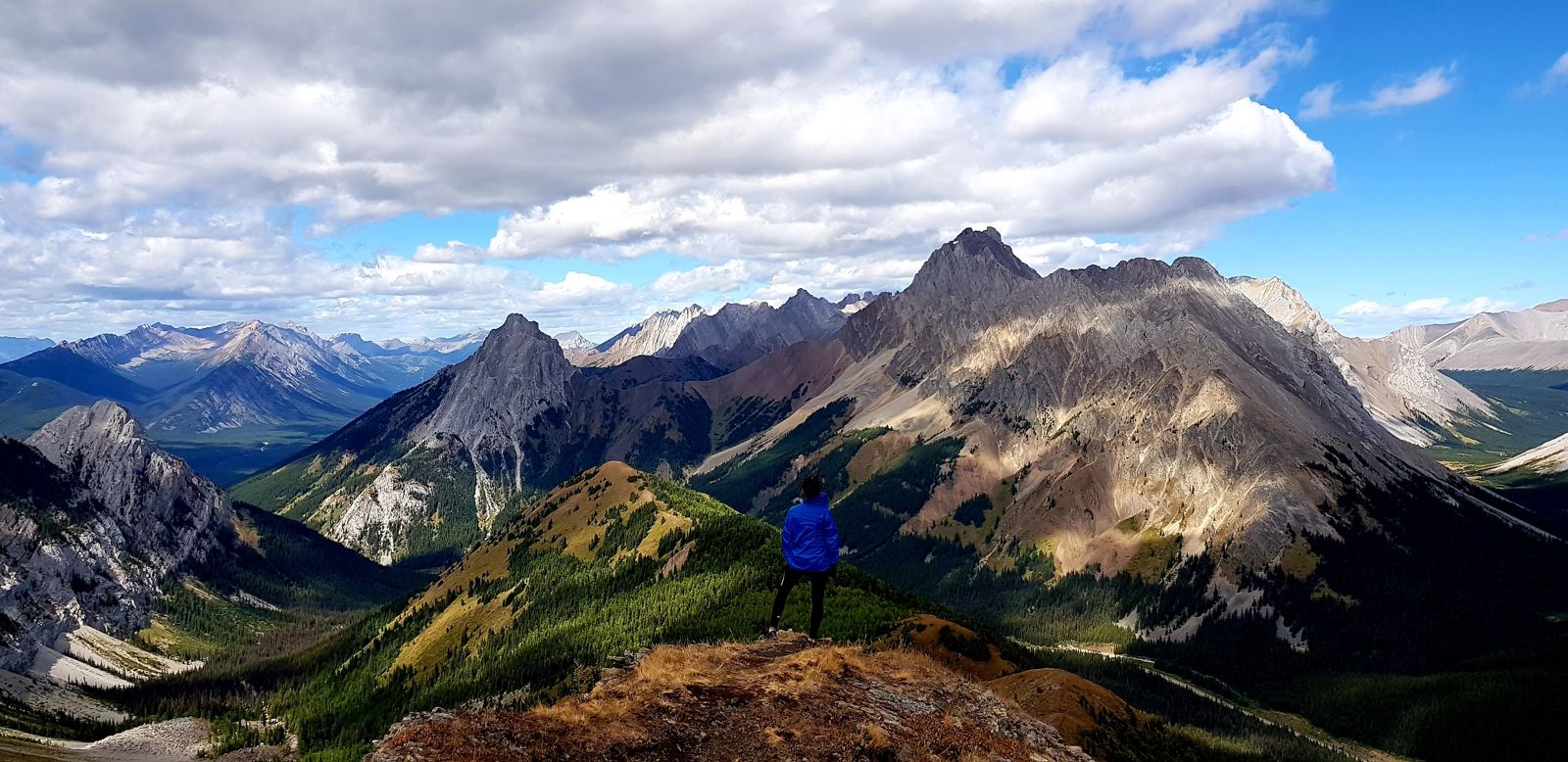
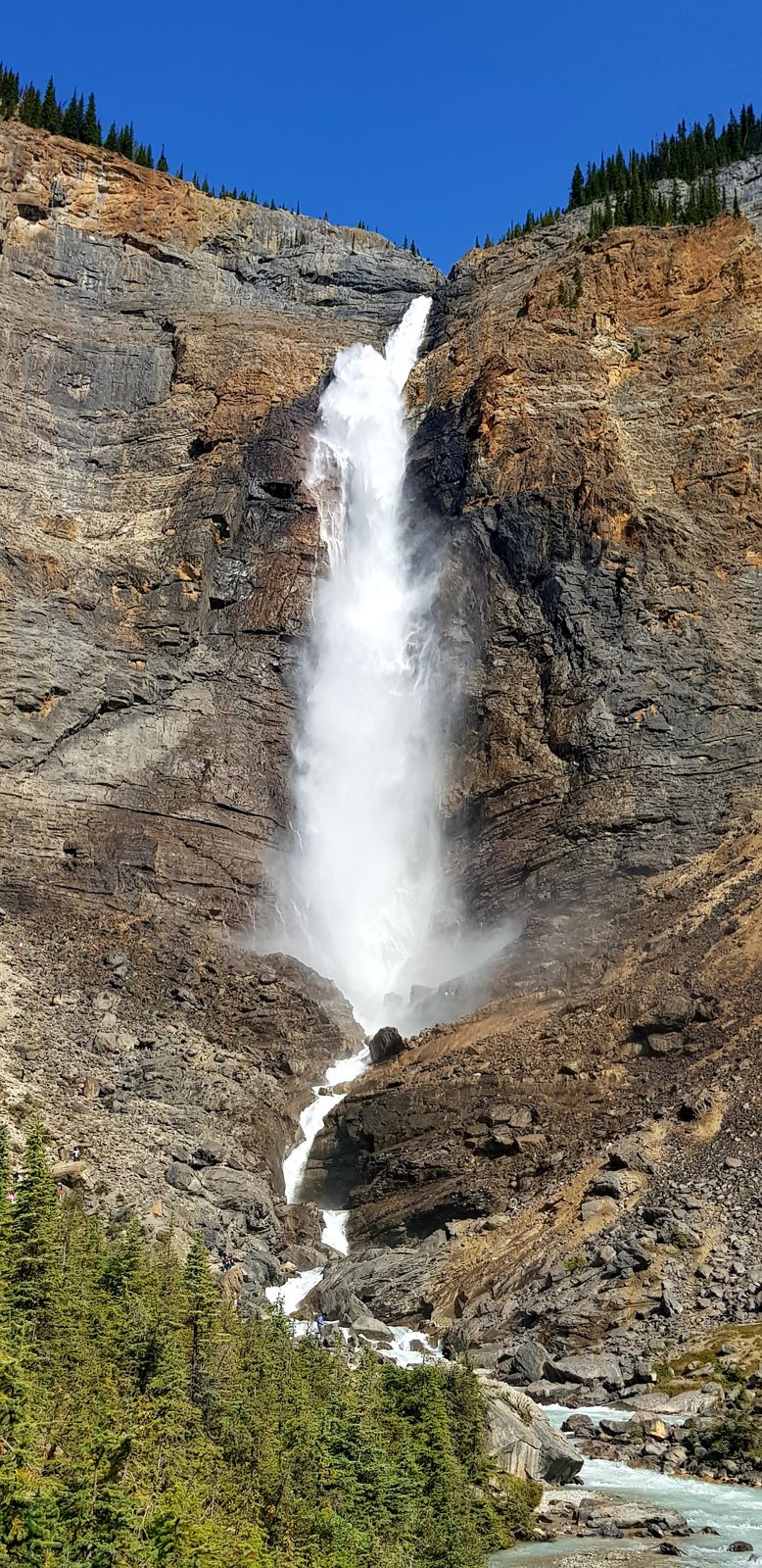
Some waterfalls amaze you with their flow, an incredible power crashing onto the rock below and spraying everything around. Others impress with their width and the feeling that they could fill a lake all on their own. Takakkaw Falls has one of those two qualities: narrow at the top, they roar down in a modest column of white foam whose endless rebounds evoke dozens of white wolves charging an invisible enemy. With this natural wonder at our backs, we start the 22 kilometres around the Yoho Valley and the glaciers of the Iceline Trail. Tired of playing music to scare off bears, we've switched to audiobooks. After all, the authorities recommend hiking in fours and making lots of noise, so we figured a voice coming out of our speaker would be the perfect compromise for the fact that there are only two of us. It's common knowledge, too, that in the forest you have to make your presence heard by any means to avoid an untimely face-to-face with a bear.
But not everyone seems to know that. After walking for an hour, we catch up with a trio made up of an old man, a woman in her forties and a child. They barely return our hello and hurry to get back in front of us after we've overtaken them. We find their attitude strange but pay it little attention, absorbed in our story. We catch up with them again as the trail starts to climb, and we sense some irritation. Finally, the old man asks us to turn off our speaker because they've come to the forest "to enjoy the quiet of nature".
Taken aback, we explain that we use it to signal our presence to bears, but he replies condescendingly that clapping your hands and talking loudly is enough to avoid bad encounters. We then ask him what we're supposed to do when the walking gets too intense to talk, but he has no answer. Voices start to rise and we cut the conversation short, saying that all the rangers and guides recommend playing music and he'd do well to look it up.
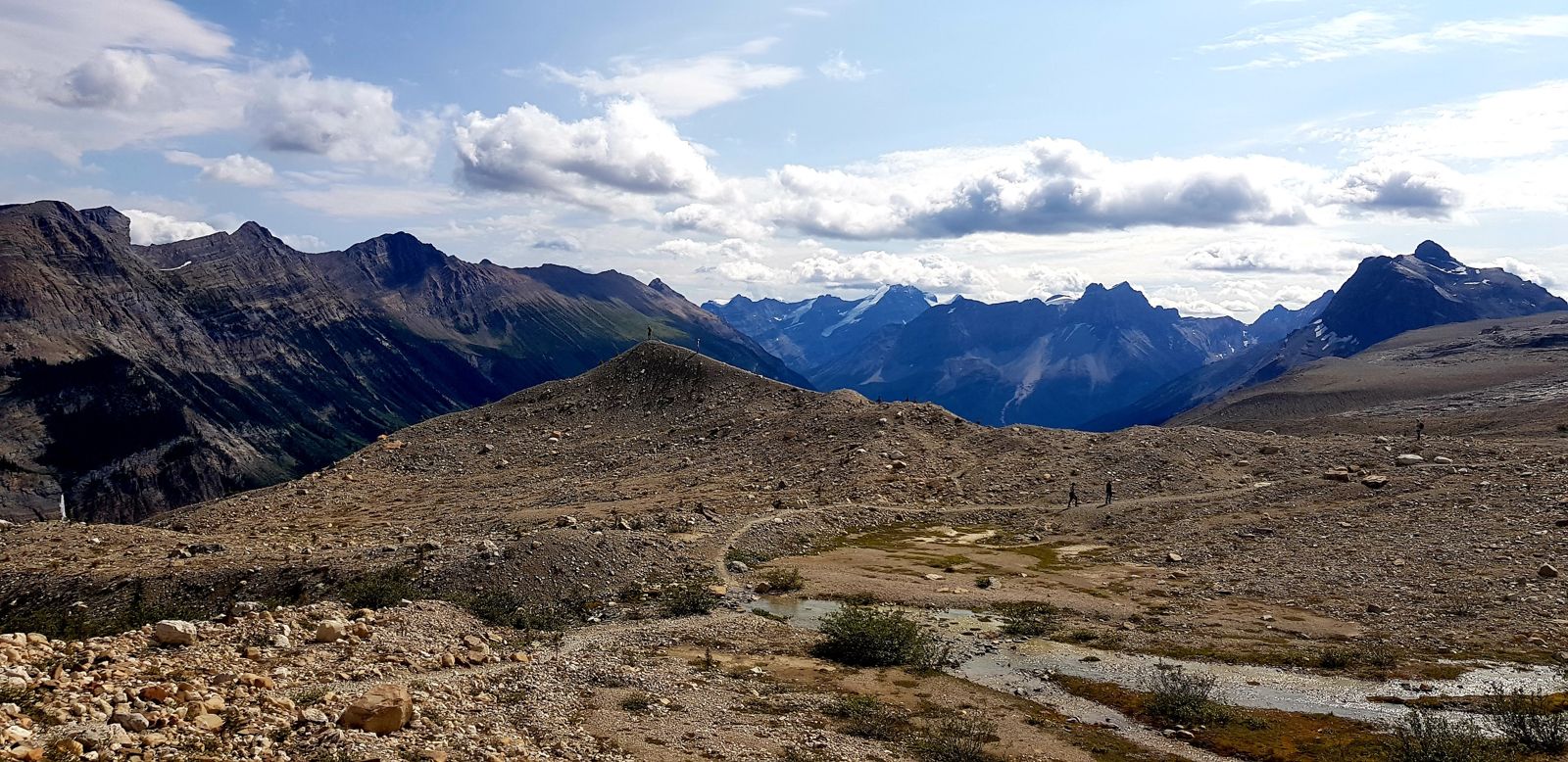
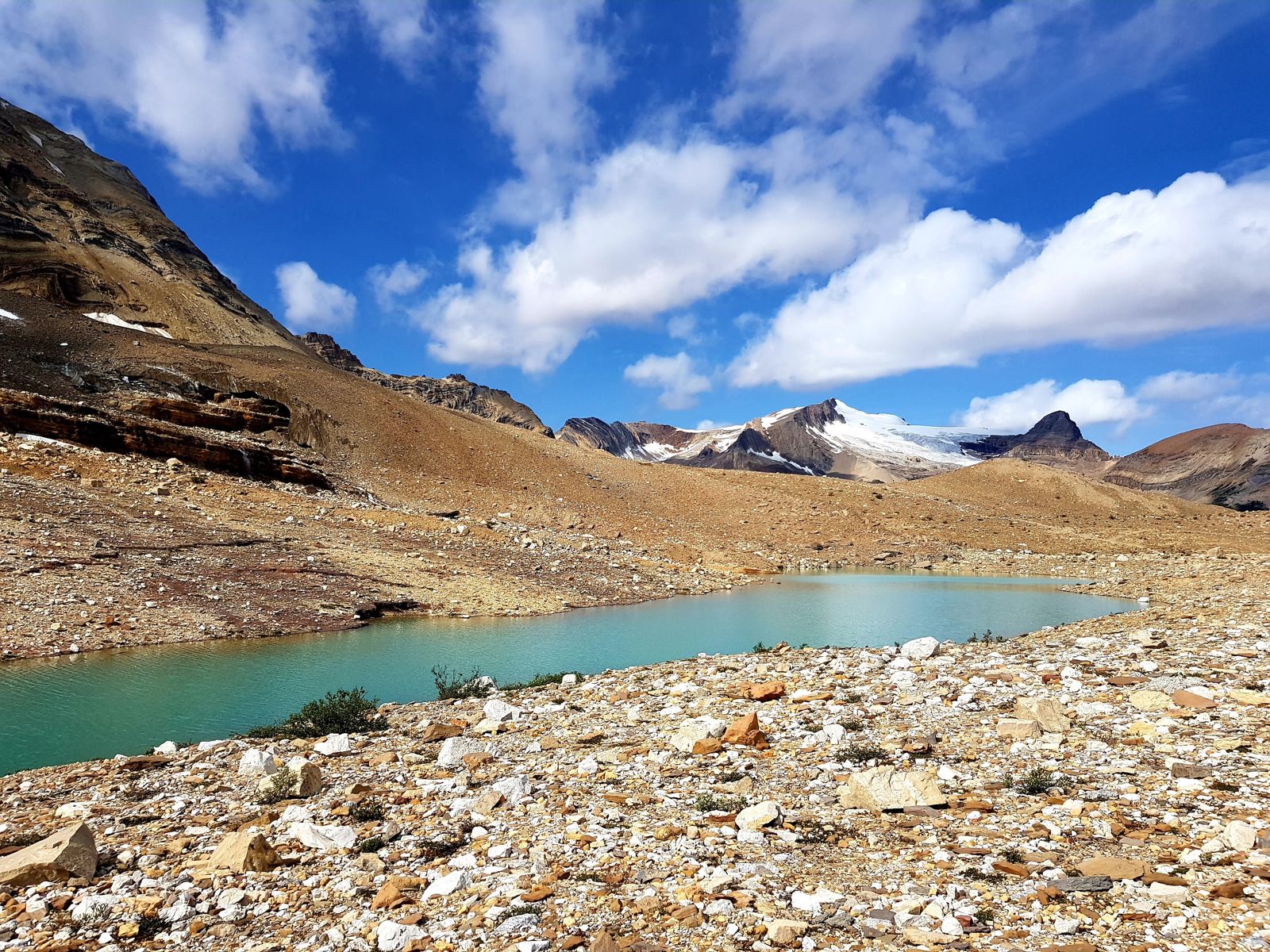
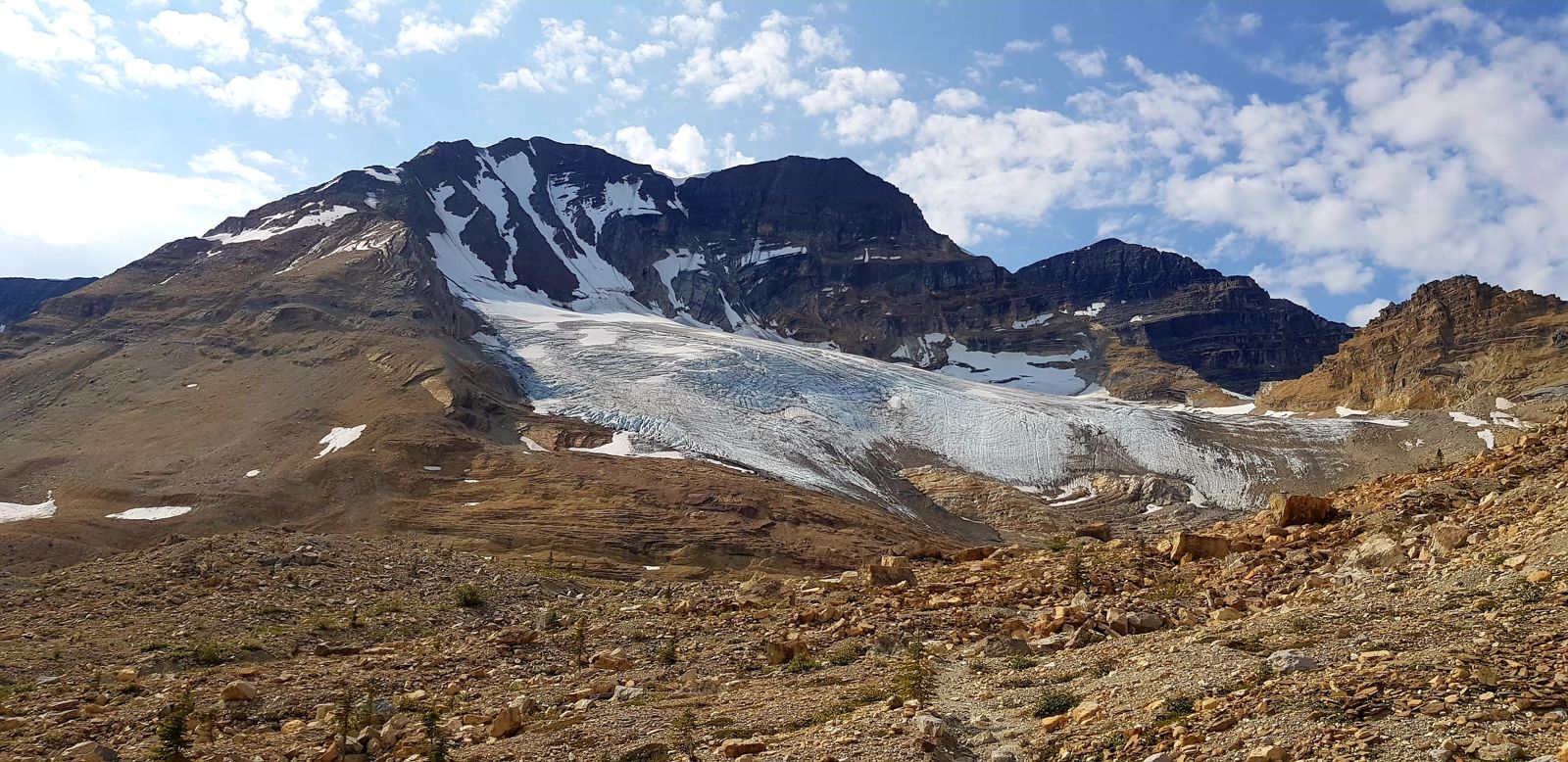
Pretty annoyed by this unpleasant encounter in such an idyllic setting, we can't even understand the logic behind their irritation. It's just a voice coming out of our speaker, which is the same as if there had been several of us talking loudly, and in any case we walk much faster than them, so the nuisance would have been short-lived anyway. Fortunately, the beauty of the place drives the altercation from our minds. Once out of the woods, we find ourselves in a landscape where icy streams wind through a lush green meadow, and then at the top of the slope, there at last is the ridge. For two kilometres we walk over mounds of rock edged by glaciers still covered in snow despite the summer, which pour their water into little high-altitude lakes of ice-cold water. Luckily the sun is out, because temperatures can drop very low, even in August.
After six hours of walking, we're back at Takakkaw Falls and we hit the road again. Our destination: Revelstoke, a town at the foot of the mountains 200 km to the west. This stretch of the Trans-Canada also ranks among the country's top 10 most beautiful roads and takes us over Rogers Pass in Glacier National Park, at 1,400 metres. The pass also marks the switch from Mountain Time to Pacific Time; we're now 9 hours behind France. Arriving in Revelstoke, we sneak into a campsite to use the showers incognito, then go to eat in the town centre. The pubs are packed for a big hockey game between the Vancouver Canucks and the Vegas Golden Knights, so we fall back on a little bar with a pleasant shady terrace at the back. We even meet a friendly French couple who arrived in Canada in late March, just before the borders closed. They've come to Revelstoke ahead of the ski season, which should start sometime in October. In the meantime they're working in one of the town's bakeries. They aren't bakers themselves, but Canada is one of those countries where you can make something of yourself from nothing and where motivation and reliability still count (whereas France only gives a chance to people with a ten-mile-long CV).
Saturday 5 September
The morning ritual is usually the same when you sleep in the car. The first one awake waits in silence for the other to open their eyes, then after a few minutes lounging in the front seats, we reconfigure the vehicle so it can resume its original purpose: driving. The first steps after opening the doors tell you what the day will be like, because the aches are always there and you have to judge whether it's wise to go for a fifteen-kilometre walk. We regularly brave the pain, trying to fight fire with fire, but today our minds also let us down. Never mind the hike; Canada has activities for every taste!
We often tell anyone who'll listen that you need to break free of travel guides. Use them as a base, but certainly not as a bible, because they're often very subjective. They rest on the writing of one or two people who probably don't have the same expectations, tastes or budget as us. For example, the road between Revelstoke and Vernon is described as ordinary and uninteresting in the Lonely Planet. Yet as the Hyundai Elantra's wheels snake over the warm morning asphalt, we're amazed by some parts of the drive. We're still in the Rockies, the surrounding mountains keep their solemn majesty, but the Eagle River and Mara Lake completely light up the valley.
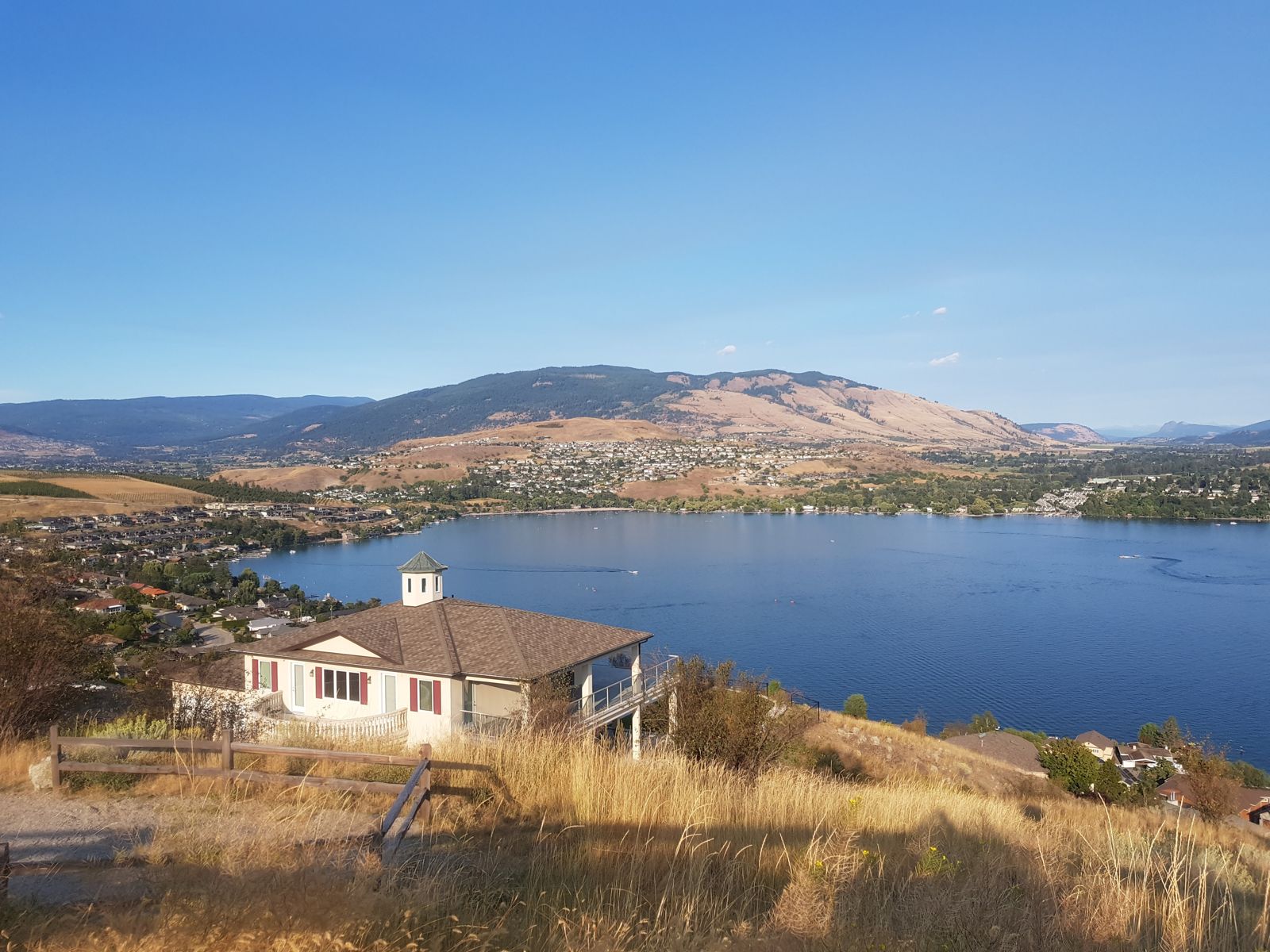
We stop at a little beach and notice that, as we return to wealthier areas, the lakes are once again invaded by boats and jet skis. While the spot is quiet when we arrive mid-morning, the buzzing of engines becomes almost unbearable by the time we leave around 3 pm. Vernon is the next town on the way to Vancouver, and we decide it'll be our stop for the night. It only has 35,000 souls but sprawls as far as the eye can see around Swan and Kalamalka lakes. In Canada's smaller towns, everyone has their own house and garden; there's not an apartment block in sight, but whatever charm the homes add is devoured by the huge boulevards that carve up the towns. Vernon is no exception, and even though we spend an excellent evening on a lovely rooftop patio, it won't stay in our memories.
Sunday 6 September
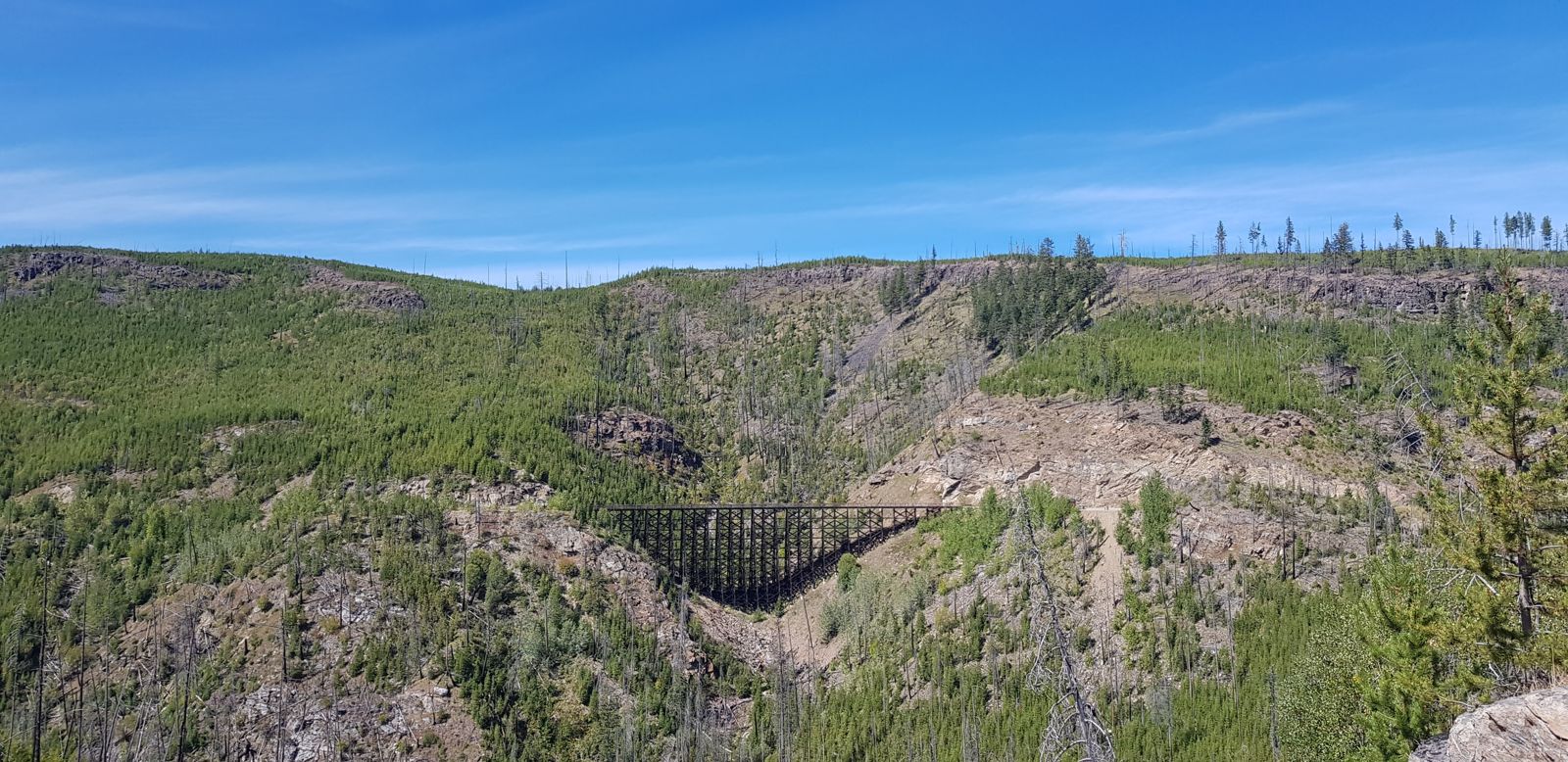
Like the P'tit Train du Nord in Québec, where an old railway line has been converted into a long walking and cycling trail, British Columbia also has its share of former railway works. Walking along Myra Canyon, you can feel the thrill, over twelve kilometres, of crossing huge wooden railway trestles typical of the architecture of the time. This is a long weekend in Canada because of Labour Day, celebrated on the first Monday in September as it is by their American neighbours, so there are plenty of cyclists and walkers with us this morning.
It's just an anecdote, but every time we see someone cycling here, we can't help giggling and making fun. Who knows why, but most Canadians, young and old, women and men alike, sit very low on their saddles, whereas the rule is to sit high enough for your leg to be straight when the pedal is at the bottom. It gives them a rather ridiculous look on their bikes.
After our ten-kilometre walk along the canyon, we get back in the car to head down to Kelowna. The main town and heart of the Okanagan Valley, the country's main wine region, Kelowna is a large town ringed by hills, vineyards and orchards. It also has the huge advantage of sitting on the shore of the gigantic Okanagan Lake and having lots of beaches. It's one of British Columbia's big tourist destinations, which explains the steady stream of cars on the road this long weekend. The region is known for its very hot, sunny summers, and that's quite a change from the Rockies we were in only a few days ago. Temperatures easily top 30 degrees.
We wanted to do some wine tastings, as the wines are excellent around here, but the combination of the long weekend and the Covid measures means all the best wineries have reached their maximum quotas for the day. We opt for a more classic and well-deserved programme: beach and lazing about. The region obviously lends itself to all sorts of water sports (paddleboarding, kayaking, waterskiing, jet skiing, boating…), but like any self-respecting tourist destination, prices are much higher than in less-visited places. Doing nothing on the beach suits us very well too.
In the evening we settle in for dinner on the terrace of a craft brewery. Mid-evening the wind suddenly picks up, so much so that as we walk back to the car we're caught in a mini dust storm right in the middle of town. A few minutes later, Stéphane's phone gets a weather alert warning of violent winds over the region until early morning… Thanks for the heads-up! With 120,000 inhabitants, Kelowna is the province's third-largest city. The papers regularly talk about the opioid crisis this part of the country is going through, and for the first time we see its ravages. Zombies wander the streets, staring into space and talking to themselves, something we hadn't seen since Thunder Bay in Ontario. It's always shocking, especially in such a wealthy region, and we're a bit more careful than usual choosing where to sleep tonight.
On the trail