
 ← PreviousManitoulin, the island at the end of the detour
Tuesday 28 July
That was only our third night under canvas in more than two weeks on the road, which says a lot about how hard it is to find a free, or at least affordable, campsite in the part of Ontario we've just crossed. We slept well and are the first up, around 9. For the next two days we're heading for Lake Superior Provincial Park. It's huge, more than 1,500 square kilometres, and the Trans-Canada Highway, which we've followed almost since we set off, crosses it from south to north for more than sixty kilometres. As an aside, this road linking the Atlantic and the Pacific is one of the longest national highways in the world: 7,821 kilometres.
It's cool today, around seventeen degrees; we'd lost the habit, and we spend much of the day in jumpers, except on the climbs. The upside: the mosquitoes more or less leave us alone. The landscapes we discover as we walk remind us of the Australian coast, a resemblance we never imagined finding here.
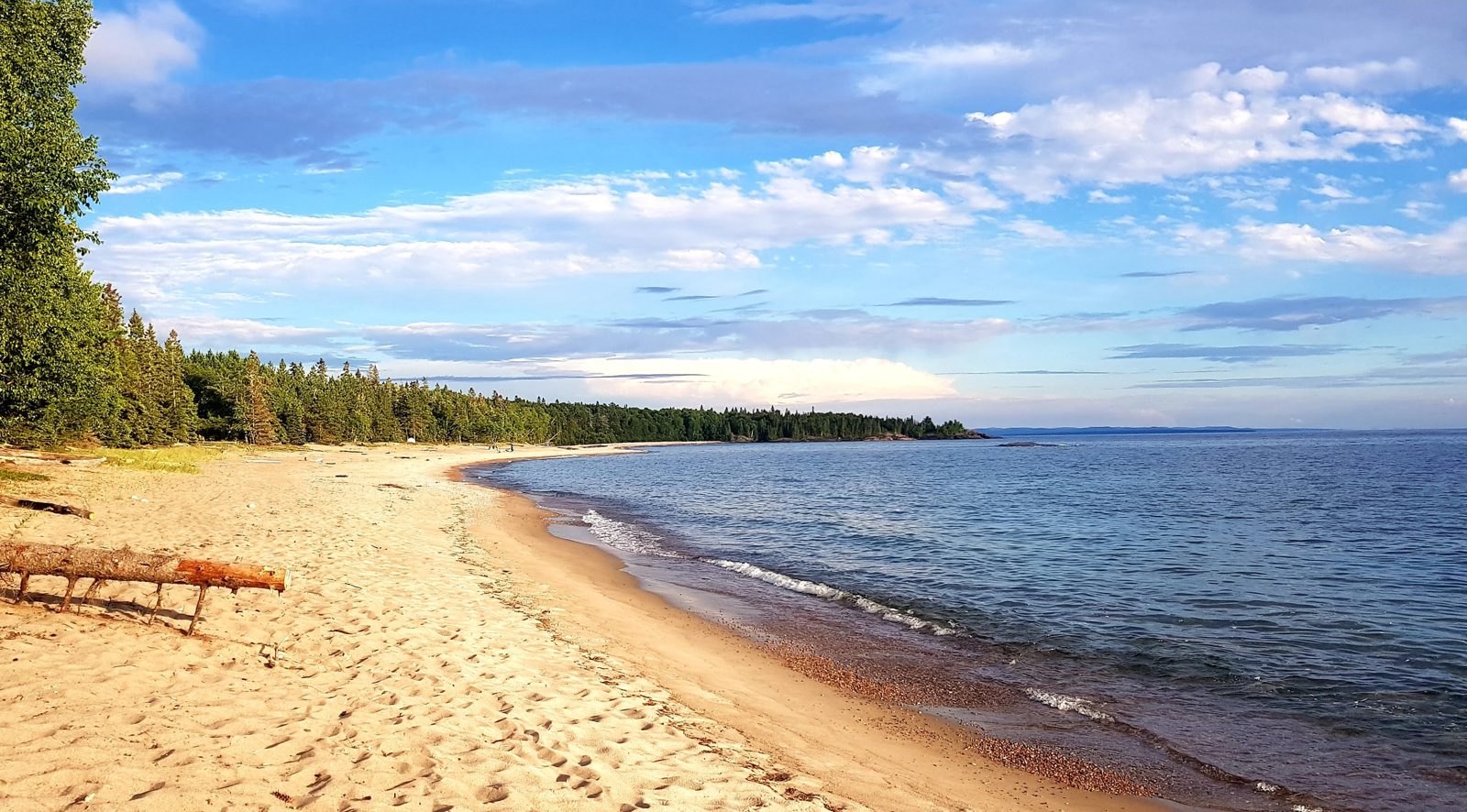
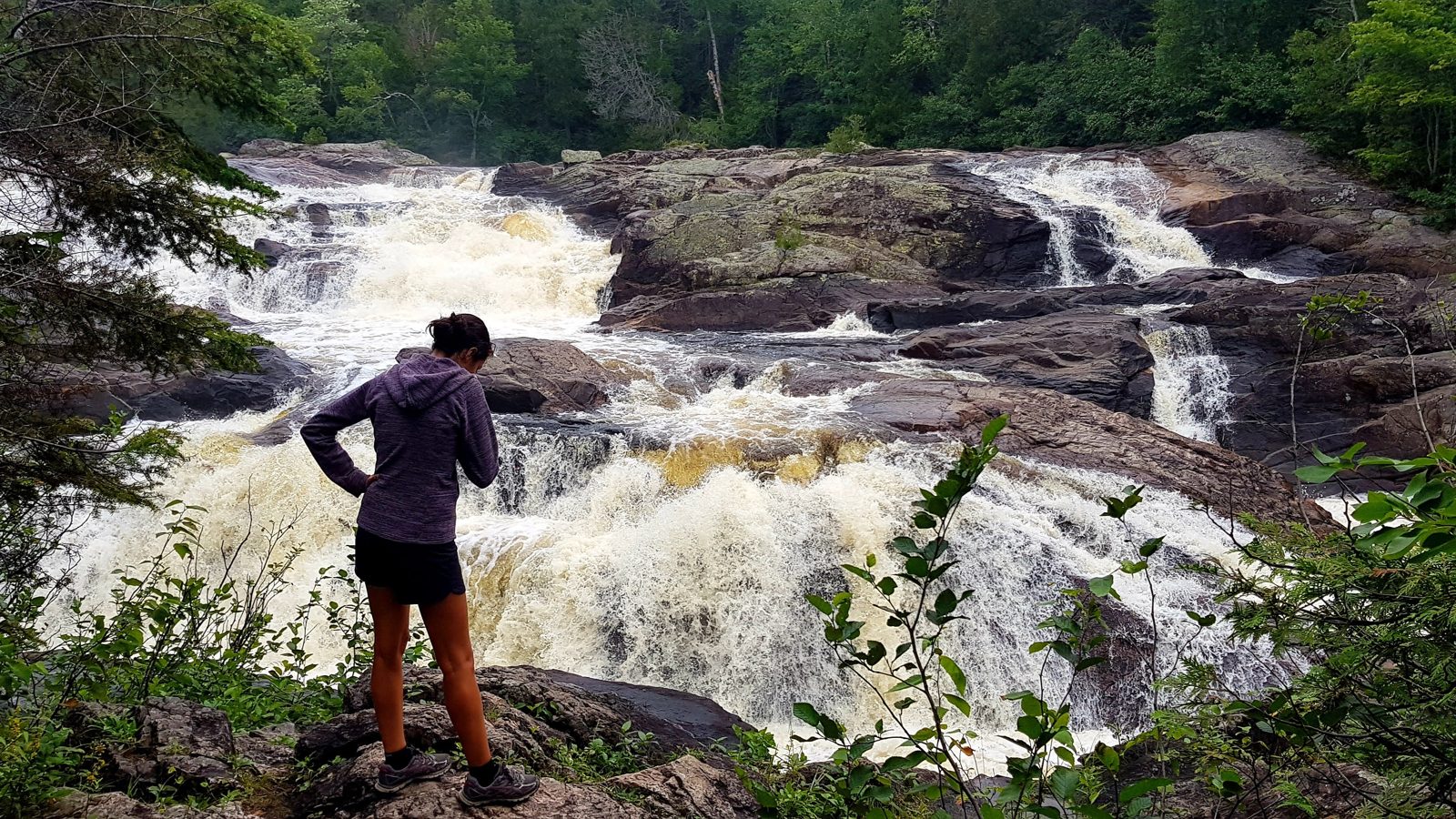
The park has two main campgrounds, one at its southern end, the other in the north. As elsewhere in Ontario, the showers are closed because of the epidemic, but the price stays the same. We already got caught out at Algonquin at the start of the trip and don't want to repeat it. We can't understand why Ontario's park managers keep the same rates when services as essential as showers and laundry are unavailable. Unless the idea is to discourage tent campers like us and keep the place for huge self-contained motorhomes, with shower and toilet on board… Another oddity: most campgrounds are literally by the road, or even the highway. With the roar of trucks and cars and the pollution thrown in, you can imagine the back-to-nature feeling of a night under canvas in such a place!
Like the night before, one of our backpacker apps shows us somewhere to pitch the tent for free: beside a magnificent bay hidden behind thickets. The “road” there is short but made of sand mixed with gravel and stones; a 4x4 would have been wiser, but we make it without damaging the car or getting stuck. The spot is heavenly, there's no one around, and the sun has finally broken through. We laze for hours with some reggae playing and wash in the lake. Then we pitch the tent and make dinner in the fading light.
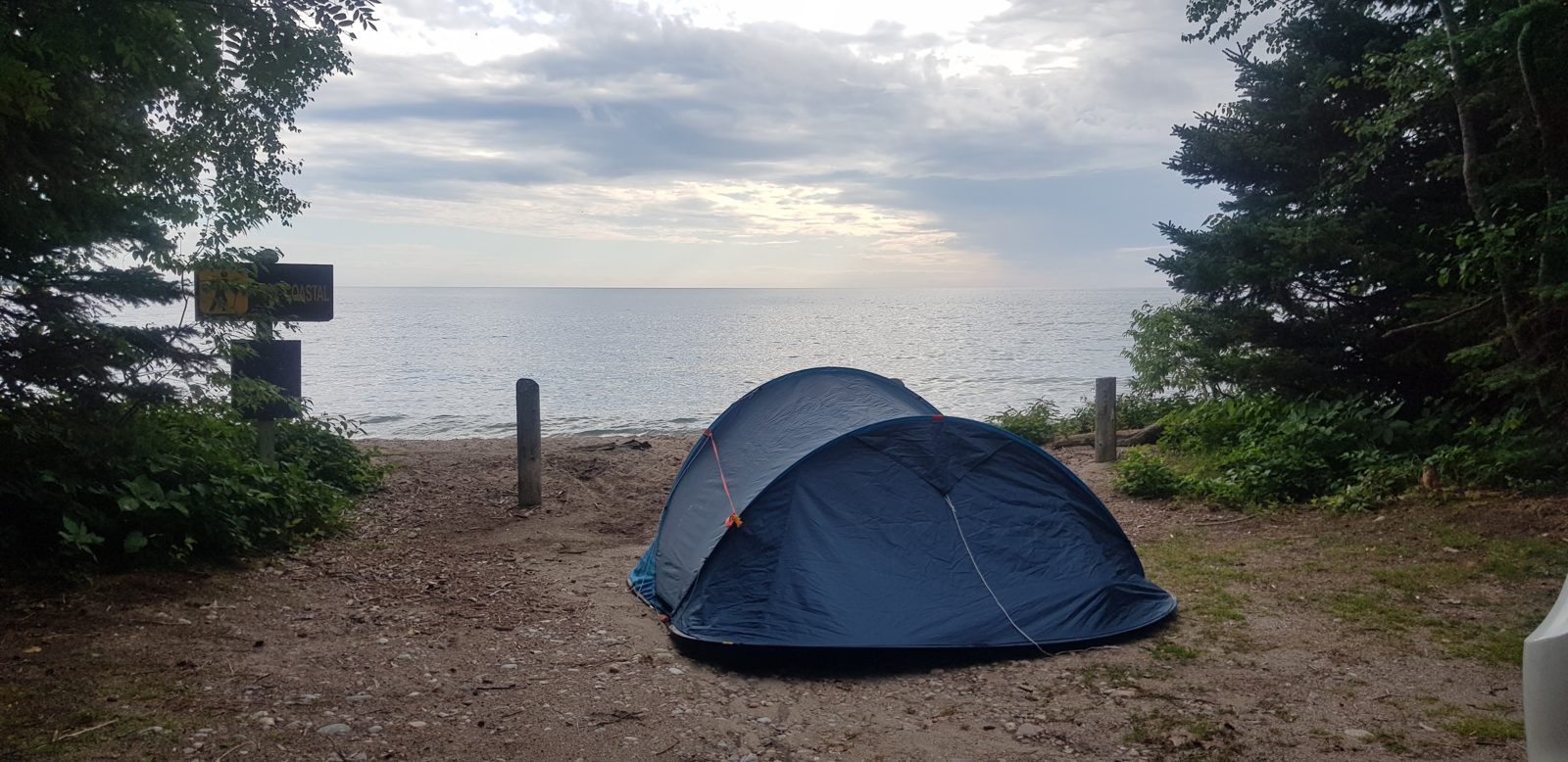
Just as sleep is creeping up on us, we see through the canvas a car arrive on our pitch with its headlights blazing and park behind ours. Probably someone looking for a place to sleep who found it on the same app, we think. A figure gets out with a torch and walks round the tent and the car several times, dazzling us as it goes. For someone looking for a place to sleep, that's hardly discreet, nor very respectful of those already settled! It's when we hear “Anyone there? You're not allowed to camp here, this is a provincial park” that we understand: it's a ranger! We open the tent to a young man who kindly explains that wild camping is forbidden in the park. Having trusted our app blindly, we're caught off guard. As he says, the absence of a sign doesn't mean it's allowed, and a travellers' mutual-help app, however useful, isn't a reliable source. A cold shower when he tells us the fine: four hundred dollars! Luckily he's very nice and lets us off with a warning: he doesn't want to move us on and send us back onto the road at nearly midnight. In return he only asks us to respect the place, leave nothing behind and update the app to warn other travellers that camping isn't allowed here. Phew! Our wallet thanks him.
Wednesday 29 July
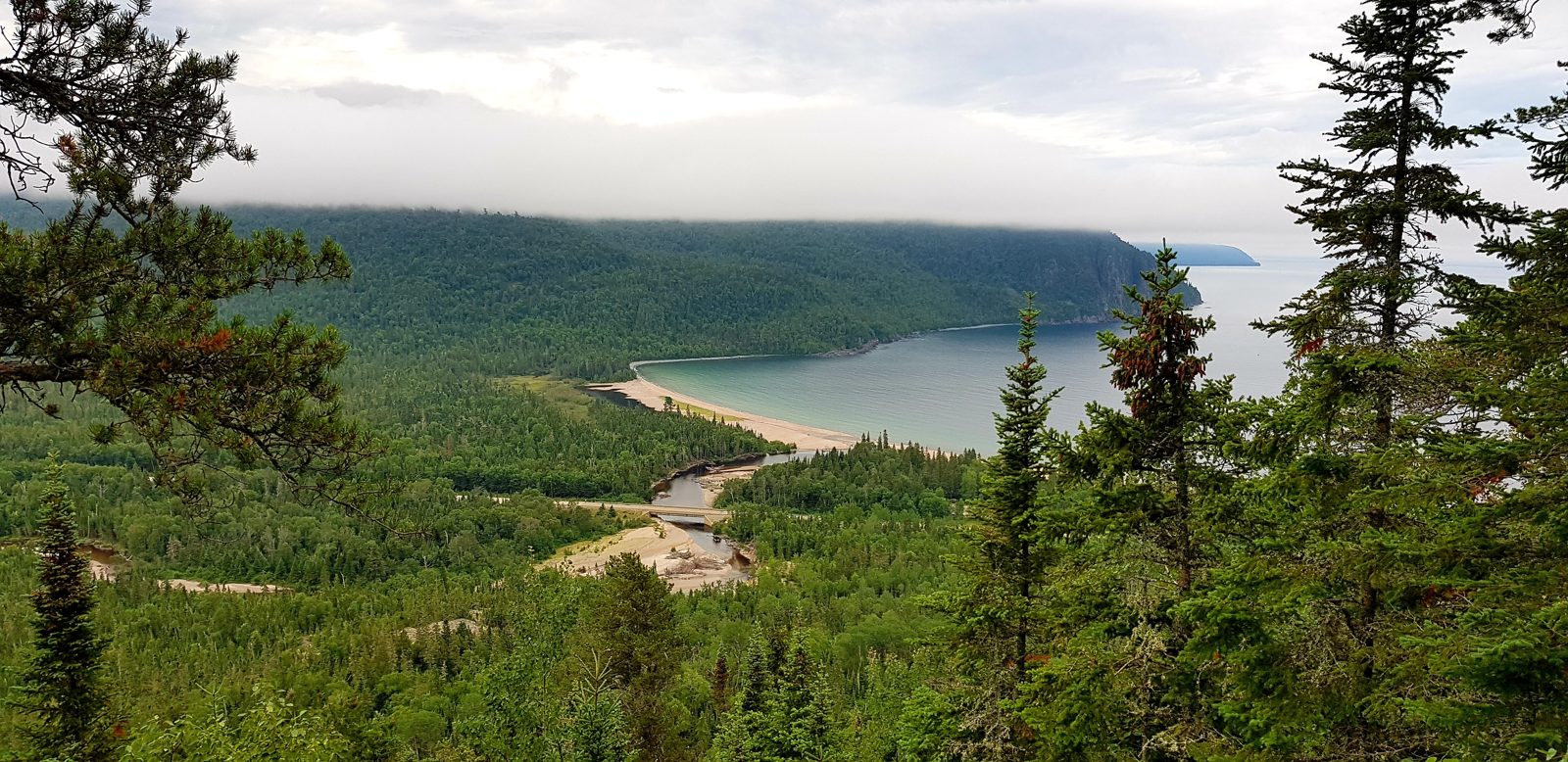
Lake Superior is the largest freshwater lake in the world. It's so big that its water warms only very slowly, and in summer fog clings constantly to its shores, the gap in temperature between land and water being so wide. So we get up in morning mist you could cut with a knife and head to one of the park's campgrounds, where we plan to fill our can and bottles before hiking. Pressing the tap button, we find the water cloudy, even slightly fizzy. A small note explains that the water point has just been installed but not yet tested: drinkable in principle, without any official test to prove it. Not very inviting. We'd rather tailor the day to the water we have left: a short two-hour walk above Old Woman Bay, then off to Wawa, the nearest town, where Google shows a laundromat. The dirty laundry is piling up and clean clothes are running short!
At the address given, surprise: it's a house. The sign confirms we're in the right place, but on entering we find ourselves in the living room of a lady tapping away at her phone. On the right, a few machines so old they must be among the first ever made. The manager isn't very friendly, and given our mountain of washing, we fear we'll be there all day. We leave, saying goodbye to the owner, who has barely looked up from her game, and find another laundromat on our route, in Marathon, two hours away.
Tucked on the north shore of Lake Superior, 215 kilometres away, the town lives up to its name: it takes us ages to get there. Roadworks stop us every twenty kilometres, and the tarmac seems endless. Luckily the scenery is still breathtaking: lakes suddenly appear through the conifer forest, enough to keep drivers awake despite the monotony. Fatigue catches up with us on arrival, and we're delighted to stretch our legs. This time the laundromat really is one, and better still: coffee, Wi-Fi and sockets to pass the time while the machines run. A traveller's paradise! An hour later we come out with clean, fragrant clothes, in the good sense this time.
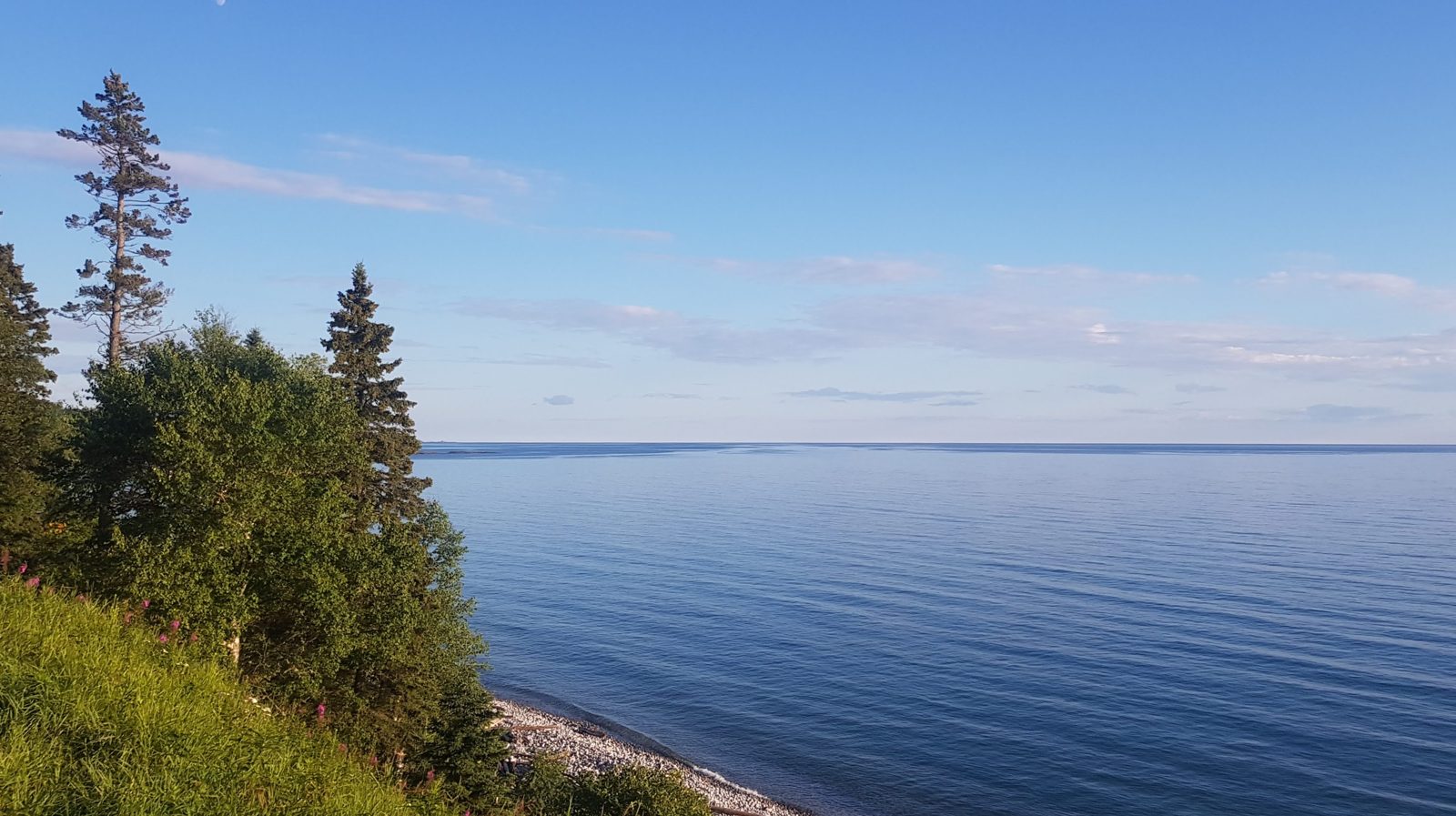
Marathon really is a little haven of peace. On the shore of little Penn Lake, a facility offers free hot showers, quiet spots to park for the night, clean toilets and picnic tables facing the water. We don't say no to hot showers, having not seen one for five days! But for dinner we prefer the majestic view the town offers over Lake Superior. A bit of shopping, and we settle on one of the benches perched above Pebble Beach, a long shingle beach, to admire the vastness of the lake over drinks until sunset.
Thursday 30 July
“Are you going home?” the attendant asks Cassandre as he fills the tank. Rural Canada is picturesque: it keeps jobs we thought had vanished. At petrol stations in small villages, an employee comes out to meet you and asks how many litres you need. At the supermarket one cashier scans your items while another fills plastic bags, because in Canada, as in Australia, they still hand them out, bags we of course refuse every time. All these small communities seem very close-knit, and it's common to see people chatting through their masks in the shop aisles.
This morning we used Marathon's facilities to run around the little lake where we slept. Keeping up a good fitness routine on the road isn't easy: you need a shower (or at least somewhere to rinse off), time and a suitable place. So we jump at every chance. The little trail is two and a half kilometres long and winds through woods where signs remind us we're in bear country. Not very reassuring, but we're in town, so we don't worry too much and do several laps.
After the shower, a stop at a little sandy beach with clear, and icy, water. Then we take up the relentless road west again, stopping often, from village to village, viewpoint to viewpoint. This part of Ontario is noticeably less wealthy: the houses are less grand, the people seem simpler. The towns are also more welcoming to travellers, and we find a shower in the small town of Nipigon; we washed a few hours earlier, but we jump at the chance anyway.
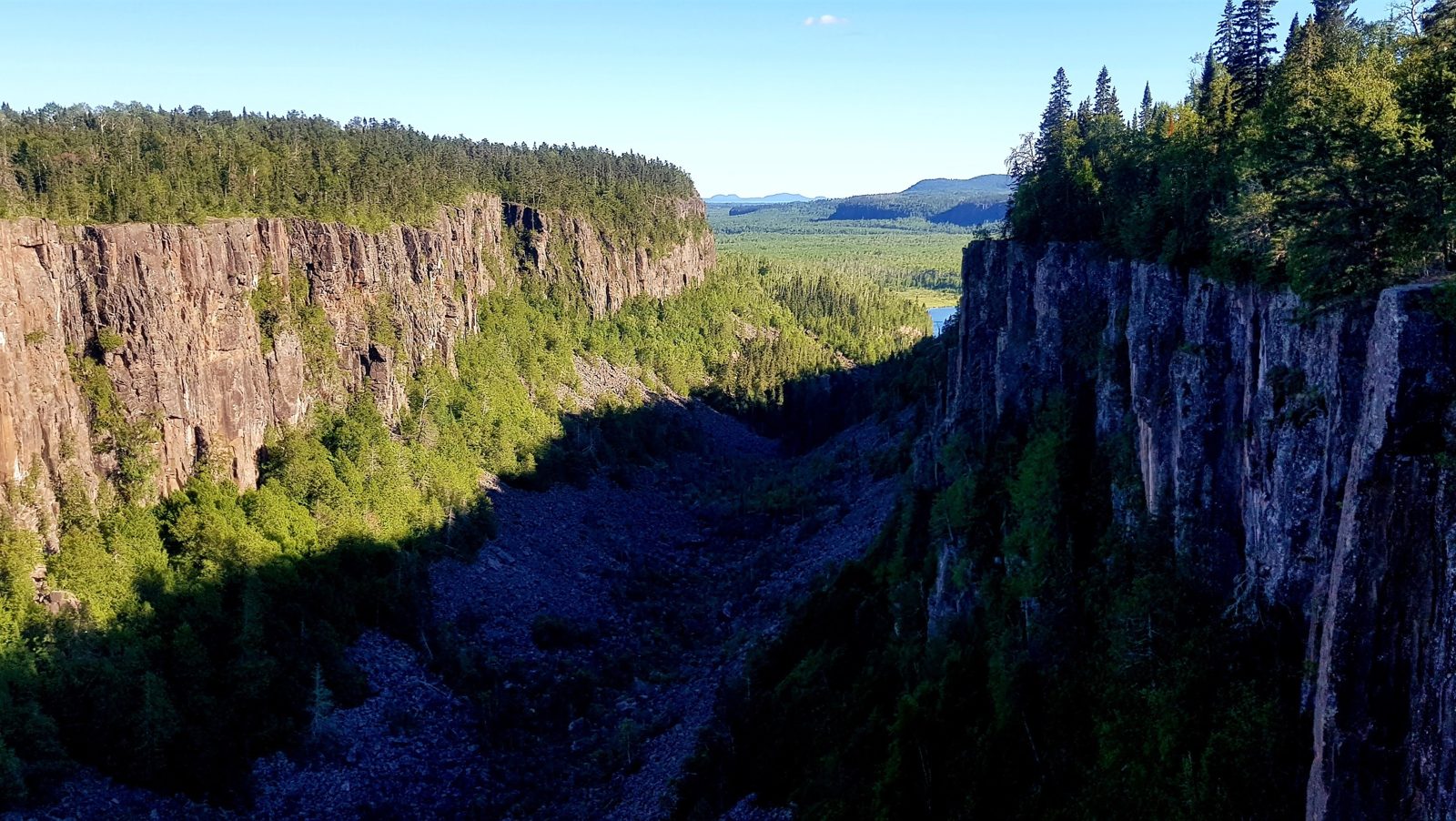
A quick detour to Ouimet Canyon, a vast gorge a hundred and fifty metres wide and a hundred deep, which a trail lets you admire from two spectacular lookouts. On the way there, Stéphane spots a black mass on the verge. At first he thinks it's a wild boar, but there aren't many around in this part of Canada. A few seconds' thought and it's obvious: it's a bear cub! We turn round at once, and it really is a little black bear, crossing the road calmly, without the slightest fear. Mum can't be far, we think, but after a few minutes' wait she doesn't deign to appear, and we head on to the canyon.
Before reaching the spot we've picked for the night, we stop at a truck stop, a service station fitted out for truckers, with showers, toilets and a restaurant. We fill our water can and look desperately for a simple wooden table to cook our pasta: we are at a rest area, after all. We don't find one and end up on a big rock for lack of anything better. At every stop along Canadian highways we're stunned to see truckers leave their engines running for hours to keep the air conditioning on during their nap or night. We've never seen that in France or its neighbours, and it already shocked us in Australia. Global warming, dwindling oil reserves: some mindsets just don't change. In 2020, it's rather frightening.