
 ← PreviousAlgonquin, ridges and mosquitoes
Thursday 16 July
We'd planned a long day of canoeing, but the sky isn't at its best. Everything is grey and nothing suggests it will clear. We give up on the kayak and put it off till later: after all, with all these lakes and rivers there'll be no shortage of chances. We break camp and leave Algonquin. As soon as we cross its boundary, a miracle: Stéphane's phone gets signal and 4G back. We arrive in the charming little town of Huntsville and stop for a coffee. Barely seated on the terrace, a fine rain starts to fall; bearable, and soon over, so we take our time. A quick walk round the centre, a small viewpoint up high, and the rain returns with a vengeance. We head thirty kilometres south to Bracebridge. It too has the typical charm of small Ontario towns, most of them born around a station and a lifeline of a railway that brought the wonders of civilisation several times a week.
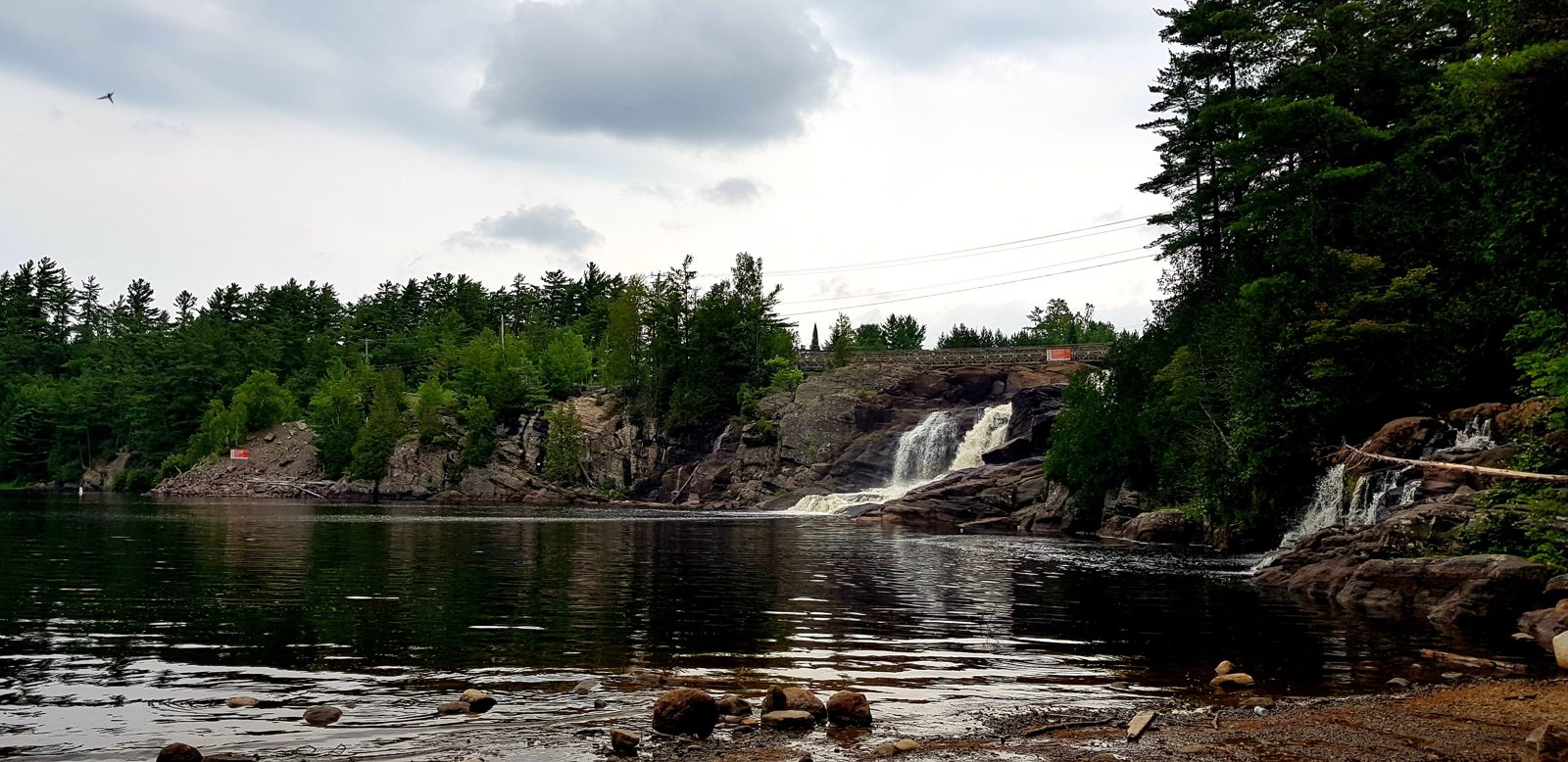
Signs announce the town's falls, the Bracebridge Falls, the area's big attraction. Disappointment: they're only the result of a dam built upstream and look more like rapids than a real waterfall. We carry on walking round the rather pleasant centre. When the sky turns threatening we want to take refuge in a café, forgetting that because of Covid you still can't sit inside. We order two hot chocolates anyway and park right outside to use the café's Wi-Fi. The forecast isn't cheerful: a big storm is coming, right on our first planned night in the car, and it will last until morning. On Airbnb Stéphane spots a room within our budget; it's almost 4 pm when we write to the host, without much hope. To our surprise he replies almost at once: we're welcome, and here are the instructions to let ourselves in while he's out.
We hurry to escape the rain, and five minutes later we've taken possession. Our room is set up in a sunroom: small but very comfortable, and above all it spares us a night outside. As often in Canada, the house spreads over two floors with spacious rooms. Andrew, our host for the night, comes home soon after, and we chat with this man whose warmth is contagious. He puts us at ease straight away and tells us to make ourselves at home. He recommends a few restaurants, but in the rain and unable to eat indoors, we'd rather buy something to cook.
It strikes us every time: English speakers cook very little, and the word doesn't mean the same to them as to us. Here, cooking means grilling sausages on the barbecue or making a sandwich. We make a huge pot of spaghetti bolognese, half of which goes into our boxes: tomorrow's lunch. Two meals for the price of one: when you travel on a budget, you have to be smart!
Friday 17 July
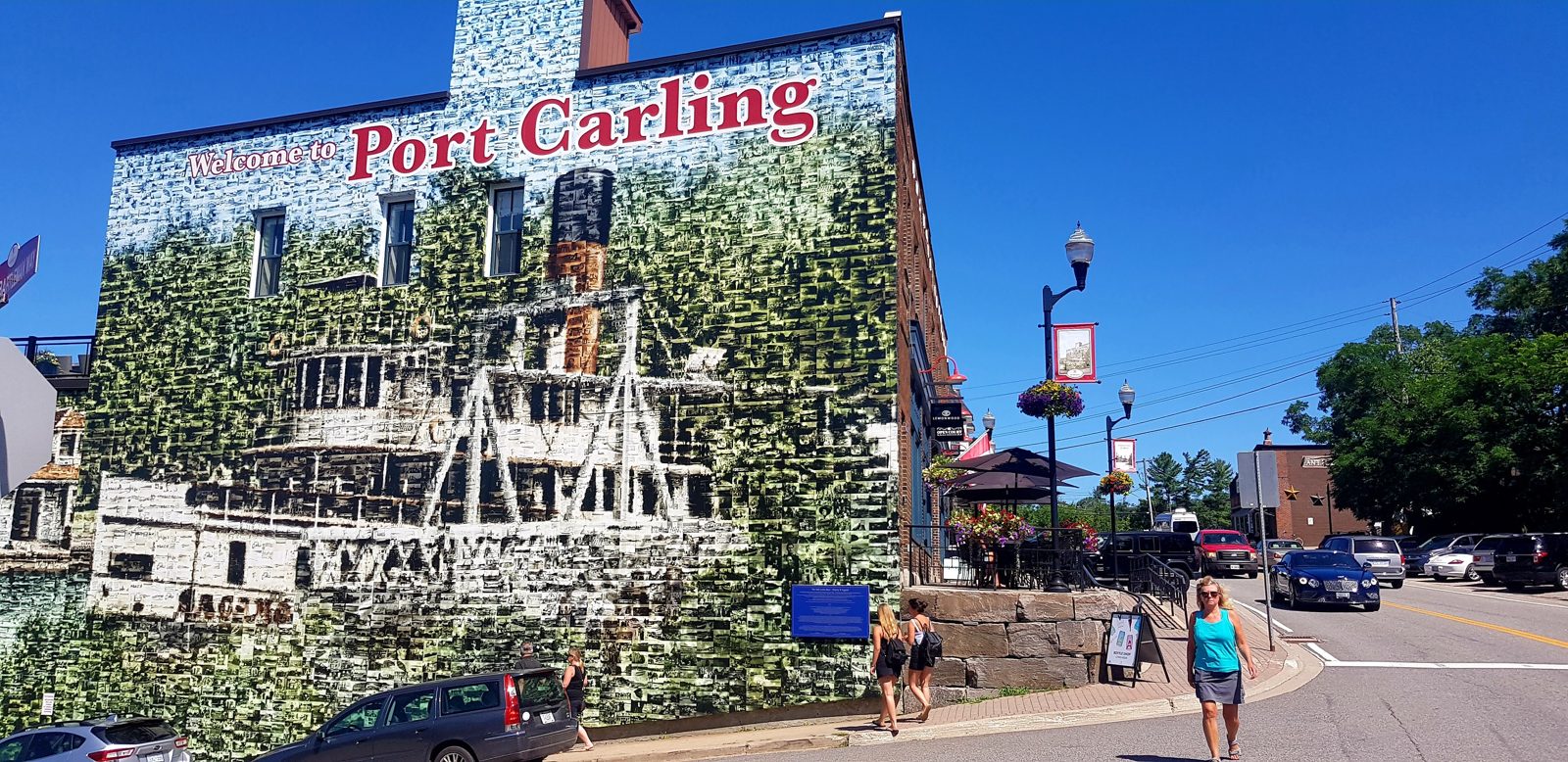
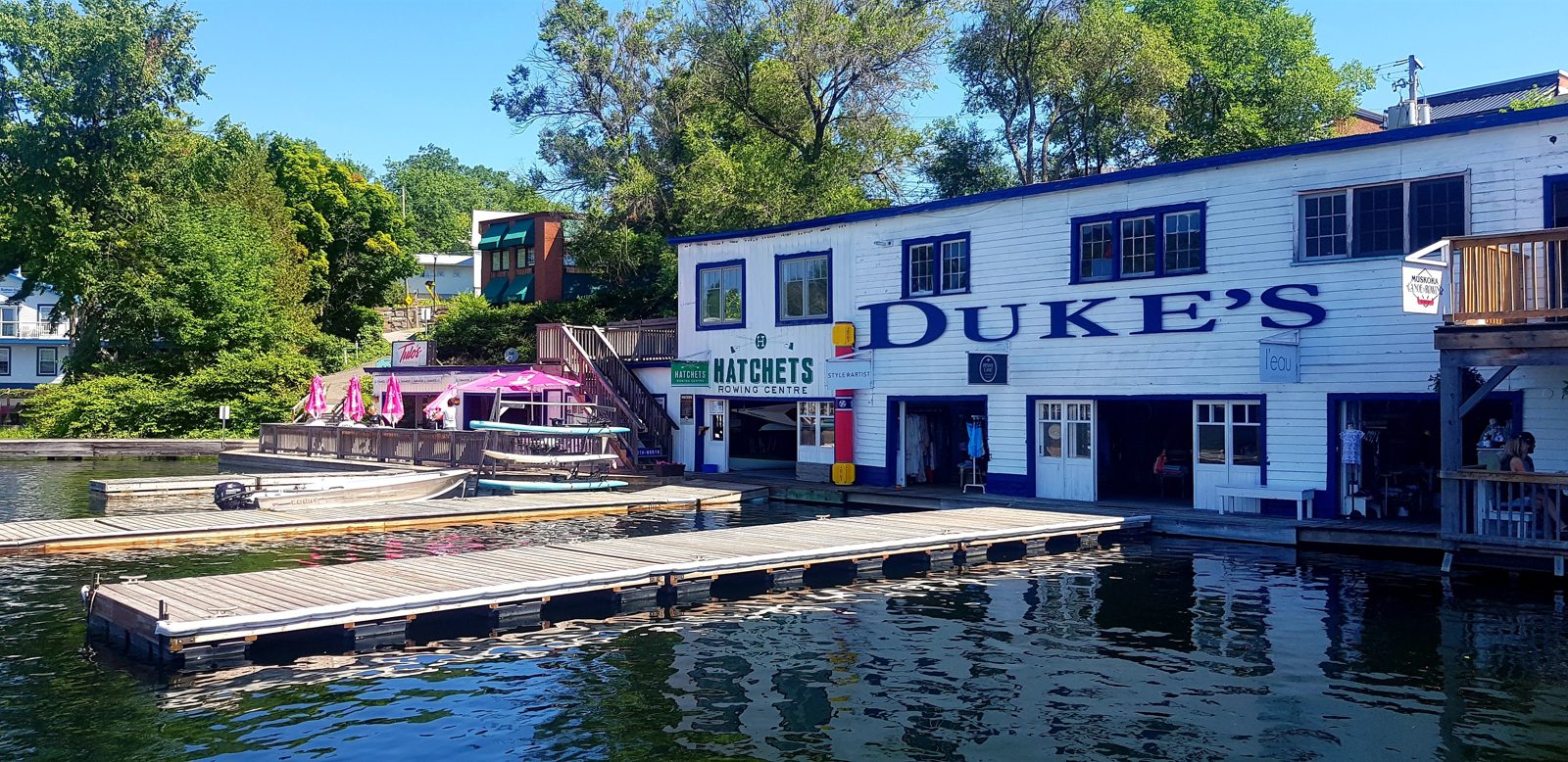
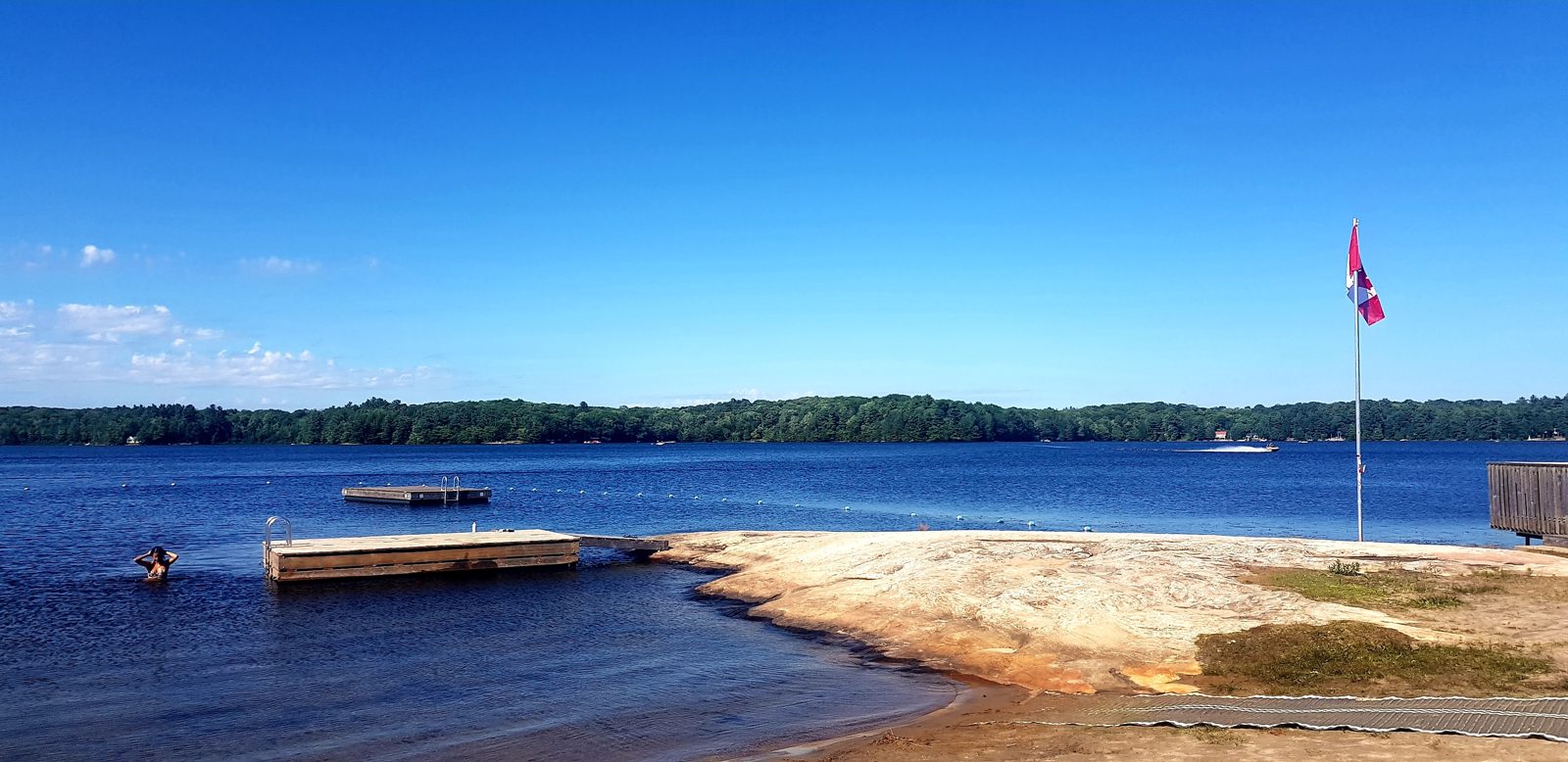
We were right to book that Airbnb: torrential rain fell almost without stopping all night. This morning, luckily, the weather is glorious. We take our time getting ready, having breakfast and packing up, then head for the little port town of Port Carling, where wealth is on such display you fear you'll be charged for breathing. The houses are huge, all facing the lakes and arms of river. Several times we see people arrive by boat, tie up and walk into one of the town's plush restaurants. We sunbathe on the boards of a jetty with the feeling that our mere presence is bringing property prices down. By noon the heat is crushing: we head for MacTier beach, on a lake too. We expected crowds; surprise, the place is almost deserted. Oh, there are two or three people, but it's empty compared with what we knew in Quebec, and neither entry nor parking costs a thing.
We have lunch there, chat with a Colombian family who took Stéphane, in his cap in their country's colours, for one of their own, then spend the afternoon between sunbathing and swimming. While we're playing frisbee in the water, a very funny little chap of about ten comes to ask if he can join in; his dad warns us he's very sociable. He tells us his life story like a little grown-up and shows us a fun game: under the water, a long moss-covered rock lets you slide standing up for nearly ten metres. It really is great fun, and we rediscover our inner children with the boy and his father. When they leave, we take the chance to wash in the lake once more, because we won't have a shower tonight: campsites being so expensive, we'll sleep in the car.
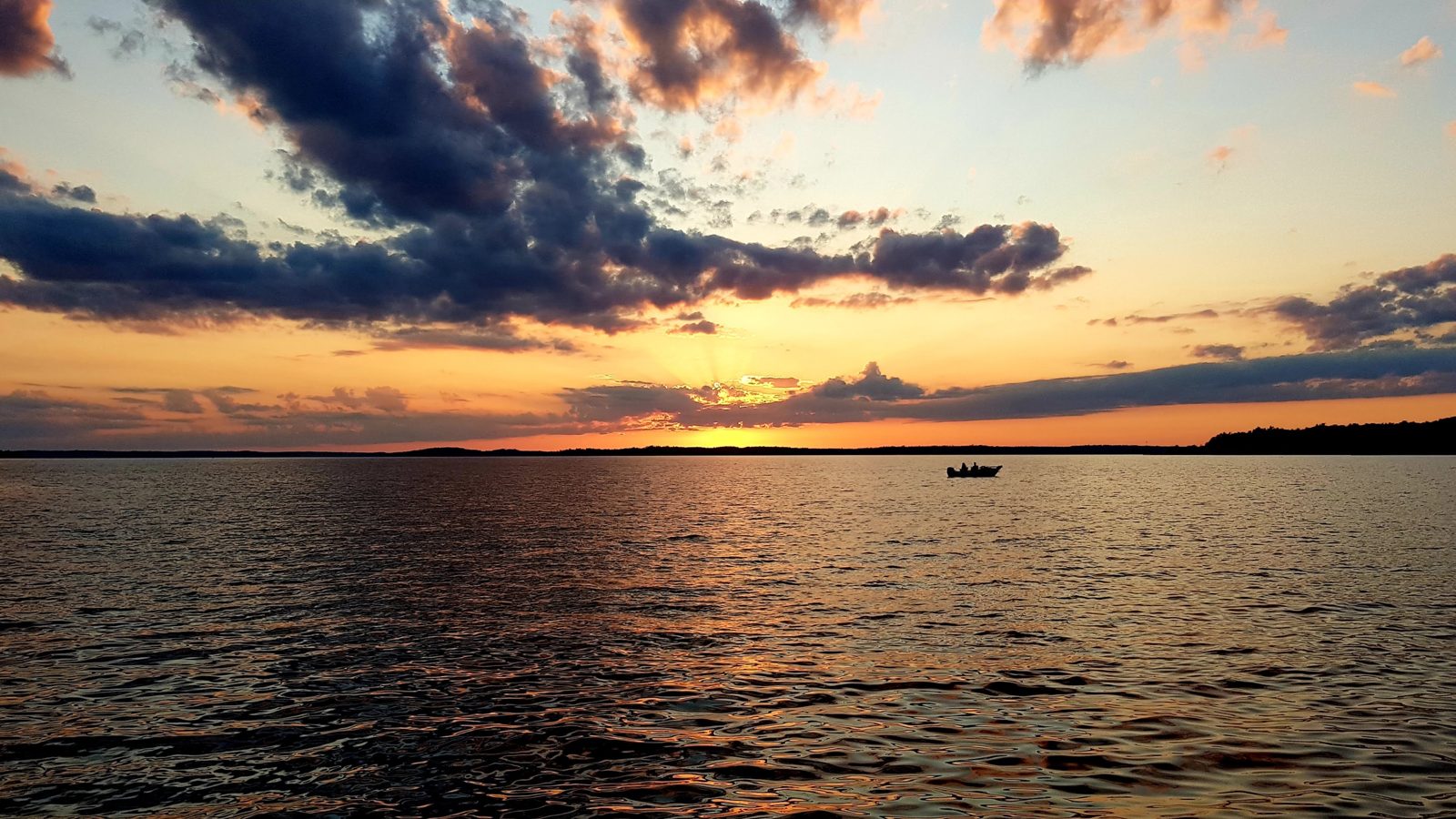
Once clean, we drive to Parry Sound, another affluent Ontario town on the shore of the gigantic Lake Huron, from where tomorrow we'll set off on a cruise among the Thirty Thousand Islands of Georgian Bay. The restaurants don't tempt us tonight: we buy some snacks for the beach and two beers, and settle at a little wooden table with some music to watch the sun go down over the lake. There's no denying it, Canada is a beautiful country, and we're only at the very start of its wonders! We're even lucky enough to watch a true sunset on the bay's horizon, proof of how vast the lake is. Once night has fallen we prepare the car, fit the mosquito nets to the windows and park in a corner of the beach car park.
The temperature is pleasant, around twenty degrees, and the air circulates well through the two half-open rear windows. It's the first time on the trip we've slept in such a big car park; usually we prefer small, quieter streets where we're less visible. Still, we sleep well, despite a few cars passing in the night.
Saturday 18 July
Like Australians, Canadians are early risers: around 7 am the coming and going of cars heading to the beach or the boat ramp wakes us. Breakfast by the water, then we decide to go for a run before boarding at 12:30. On a little cycle path lined with ponds and full of butterflies, we stretch our legs for just under an hour and finish drenched: an excellent excuse to dive into the lake as soon as the run is over. A quick lunch, and off to the port to board.
Aboard the huge boat, we once again witness Canadian, not to say North American, individualism. The ship has three decks: the first, at water level, has a limited view; the second is the best, with a full panorama; the third, open-air on the top deck, also has a restricted view. On the second deck, obviously seasoned passengers have rushed to the seats, left their bags to reserve them, then gone out onto the walkways. So they have both the best seats and the best standing spots: a funny idea of sharing.
We'd already noticed it in other English-speaking countries: on the water, sightseeing means something quite different to them. It's leisure more than culture, and groups of young people don't hold back on the beer. We stay on the top deck for the first half hour; the people behind us are already on their fifth round when we go to explore the other viewpoints. The route takes us among a multitude of islands with sublime contours, crowned with sumptuous houses. The guide, telling the islands' history over the loudspeakers, warns us that wildlife is abundant and that on a lucky day you can spot caribou, even bears! We keep our eyes peeled, but luck won't be with us today. He also explains that bears are more afraid of humans than the other way round and hide at the slightest suspicious noise. Conclusion: in the Canadian wild you don't see these big furry animals, but they've surely heard you from afar.
It's hard to remember you're sailing on a lake, so out of keeping with the Canadian imagination is this archipelago of rocks rising sheer from the water. Canada is so big, so varied, that you find every kind of landscape, sometimes surprising ones. After three hours winding over the water, the captain brings us back to port, and we drive on to Midland, where an Airbnb awaits us for the night: a beautifully fitted, spacious basement, a welcome change from the night before. We make ourselves comfortable, then go out for dinner at an Italian restaurant in town.