
 ← PreviousAdventures at Bow Glacier: hiking and discoveries
Tuesday 1 September
"Because in the end, you won't remember the time you spent working in the office or mowing your lawn. Climb that goddamn mountain."
This quote from the great writer Jack London sometimes crept into the back of our minds when the climb got too hard and our legs felt heavy. That day, on the ascent to the Pocaterra ridge, it took a lot of willpower not to give up, so steep and long was the slope. As on the day before, the climb was almost a wall in front of our crestfallen faces, and the ground was loose — torture for our thighs and calves, already sore. The first hour climbed gradually, but in the second we crept forward one foot after the other, and the groups ahead of and behind us went no faster. Pain and breathlessness were written on every face. Fortunately our low points weren't in sync, and while Cassandre had provided the motivation the day before, that day it was Stéphane who set the tone and encouraged us through the hardest part.
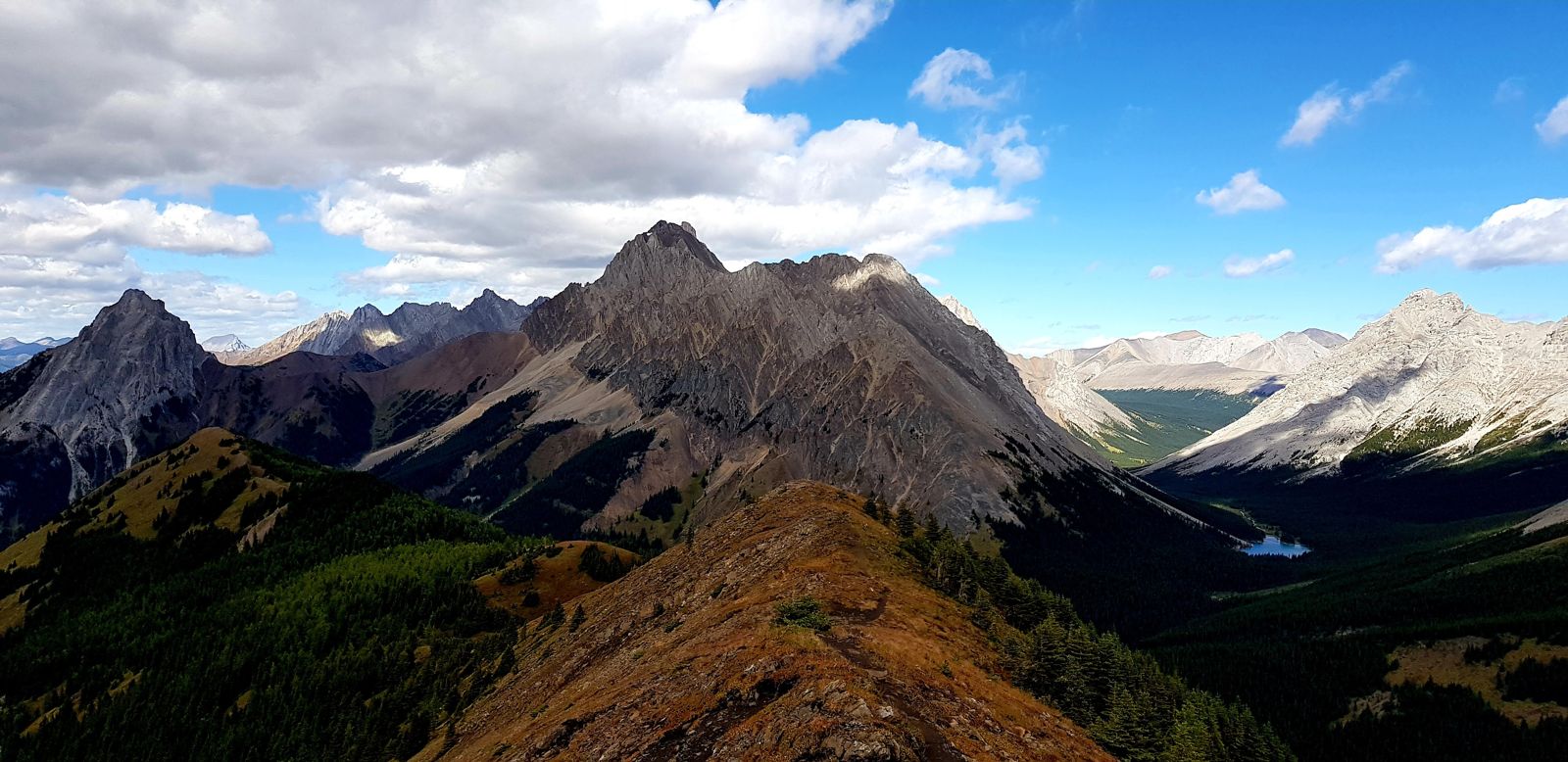
With that little line from the great London still in a corner of our minds, we finally conquered that side of the hill, and as always the mountain seemed to save its finest rewards for the bravest climbers. And what a sense of accomplishment we felt eating lunch with such a breathtaking view over the vastness of the Rockies! Our day wasn't supposed to go like this: we'd set out to tackle the Sarrail ridge, but a sign caught us off guard right at the trailhead. It was closed because of several grizzlies with cubs around the path, and since we lean more towards cautious than reckless, we fell back on plan B: Pocaterra. We'd also been lucky enough to spot our first caribou since arriving in Canada by the roadside! So the detour hadn't been pointless after all.
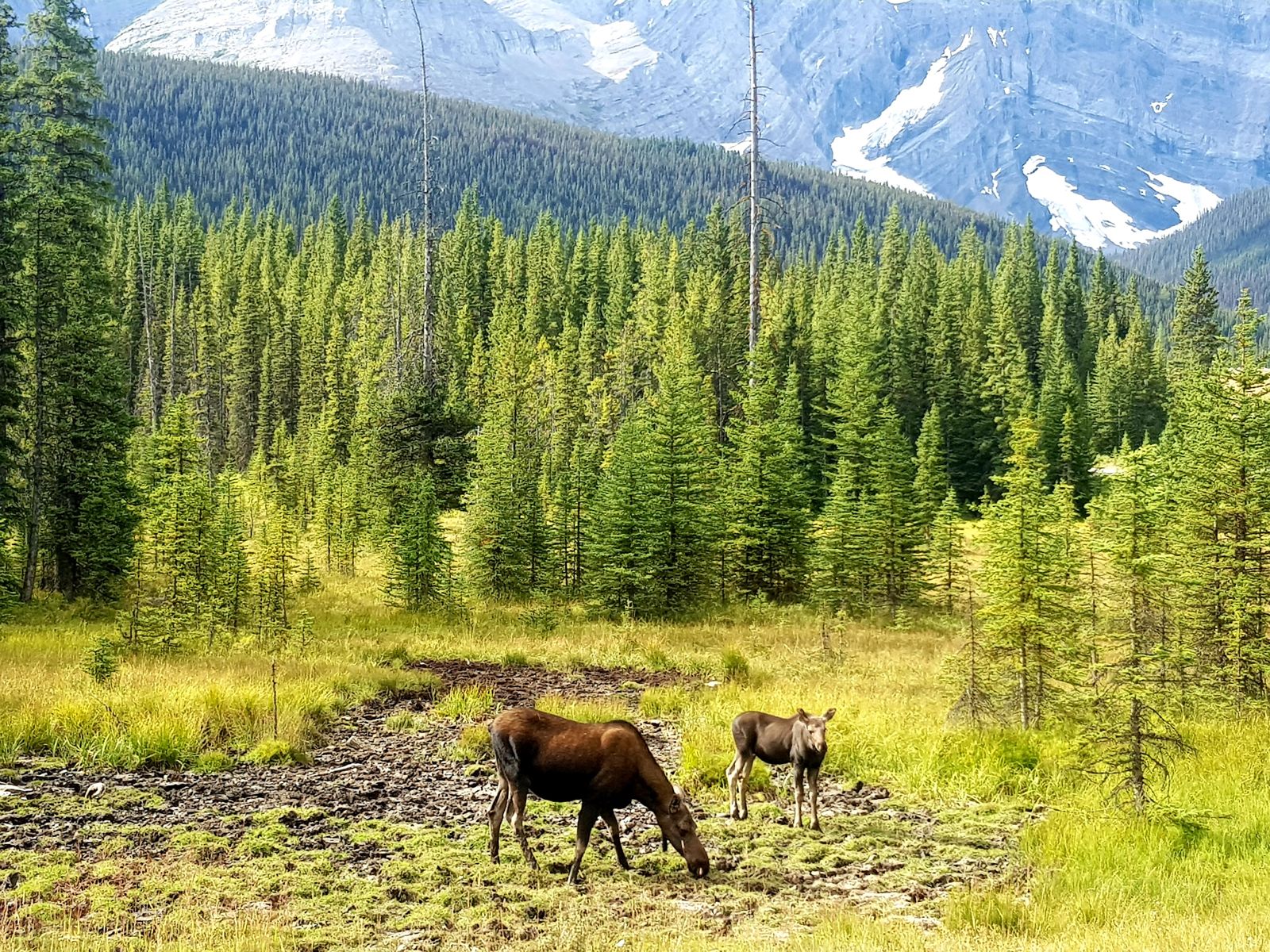
From a hike verging on mountaineering, our walk then turned into a series of ups and downs along ridges whose tops were sometimes no wider than a gymnast's beam. We moved forward carefully, all the more so as we also had to deal with a strong wind, the afternoon's unwelcome guest. In the Rockies you always had to make noise in the forested sections to avoid bears, and even though it went against the idea of calm and serenity often associated with mountain walking, we'd ended up getting used to it. We'd swapped the music, which had become a bit tiresome, for general-knowledge podcasts, combining business with pleasure.
Logistically, not everything could be perfect. This hike had been superb, but to fully enjoy it we'd have needed two cars to shuttle between the start and end car parks, as the ridge was a one-way 10 km trail. With only one car, we had to finish the walk along the roadside to get back to the car park where we'd left it, seven kilometres away. So we walked along the edge of the tarmac, sticking out our thumbs at every passing car. We'd forgotten a little too quickly that we were in an ultra-individualistic country where picking up a hitchhiker was unthinkable, all the more so with the lingering fear of the coronavirus. So we covered the distance back to our car and savoured sitting in its seats more than ever. We then headed back to Canmore, the biggest town in the area, where after a bite in an ordinary pub we discreetly parked the car in a quiet side street for the night.
________________________________________________________________________________________
Wednesday 2 September
When we were young, we tended to feel invincible and to want to pile on the effort. But the body has its way of reminding you of its limits, and aching muscles are a good indicator. On waking, the muscle fatigue was so overwhelming that we decided to rest all day. Doing the maths with our apps, we realised we'd walked almost 400 kilometres in August, which easily explained how weary our limbs were.
We found a little café where you could sit, and stayed there a few hours before calling our parents, who were spending the day together in the south of France. Their good mood was contagious, and we set off again, revived, towards the Smith-Dorrien scenic road, a superb drive winding between peaks and lakes (or so people said). After barely a kilometre, we came upon a stony track in a sorry state, torture for our brand-new tyres. No way were we going to put ourselves through forty minutes of that. Never mind the view: we turned back and went to cook at the sports centre, which had outdoor tables. The fierce wind was once again part of the picture, we were cold, and for the first time on this road trip we were both annoyed at the same time.
It took nearly forty minutes to cook our poor pasta, and we'd barely drained it before it was already cold! It was mid-afternoon by then, and it was clear we wouldn't be starting any hike that day. So we decided to hit the road and continue our journey west. We'd spotted an Airbnb a few hours away in the small town of Golden, British Columbia, and set off almost straight away. The Rockies' climate was starting to make us lose patience.
Once again the road was superb, taking us between the peaks and glaciers of Yoho National Park, which we planned to visit over the next two days. We couldn't help marvelling at the grand landscapes unfolding around us as we drove, and saluting the civil engineering that had built these roads. At 6 pm we reached our destination, got out of the car and — miracle — we were no longer cold! It was mild and we could happily stroll around in T-shirts. After a well-earned bath, we went out to eat at one of the pretty town's restaurants. When we got back, our two Airbnb hosts were sitting in their living room and struck up a conversation. They were two globetrotters over 60 who had travelled all over the world, and our experiences collided when we got onto Australia, where they'd travelled by van thirty years ago!
This couple in their sixties were among the many Canadian retirees who leave their home country every year when winter comes to travel somewhere more exotic. This year was no exception, and they were quietly in the Philippines when the coronavirus struck. The very strict Philippine government put the country into quarantine and cut all sea and air links. Our hosts were stuck for a month and a half in their little hotel on the island of Boracay. There are worse things, admittedly, except that the quarantine in the Philippines banned going out at all, just as in France, so having the beach nearby didn't help much. Until one fine day, six weeks later, a Canadian government plane came to collect all the citizens stranded in the archipelago (for the modest sum of 2,500 dollars a head, non-refundable of course). We talked about all sorts of things for over an hour, then, as tiredness set in, we took our leave to enjoy a real bed.
________________________________________________________________________________________
Thursday 3 September
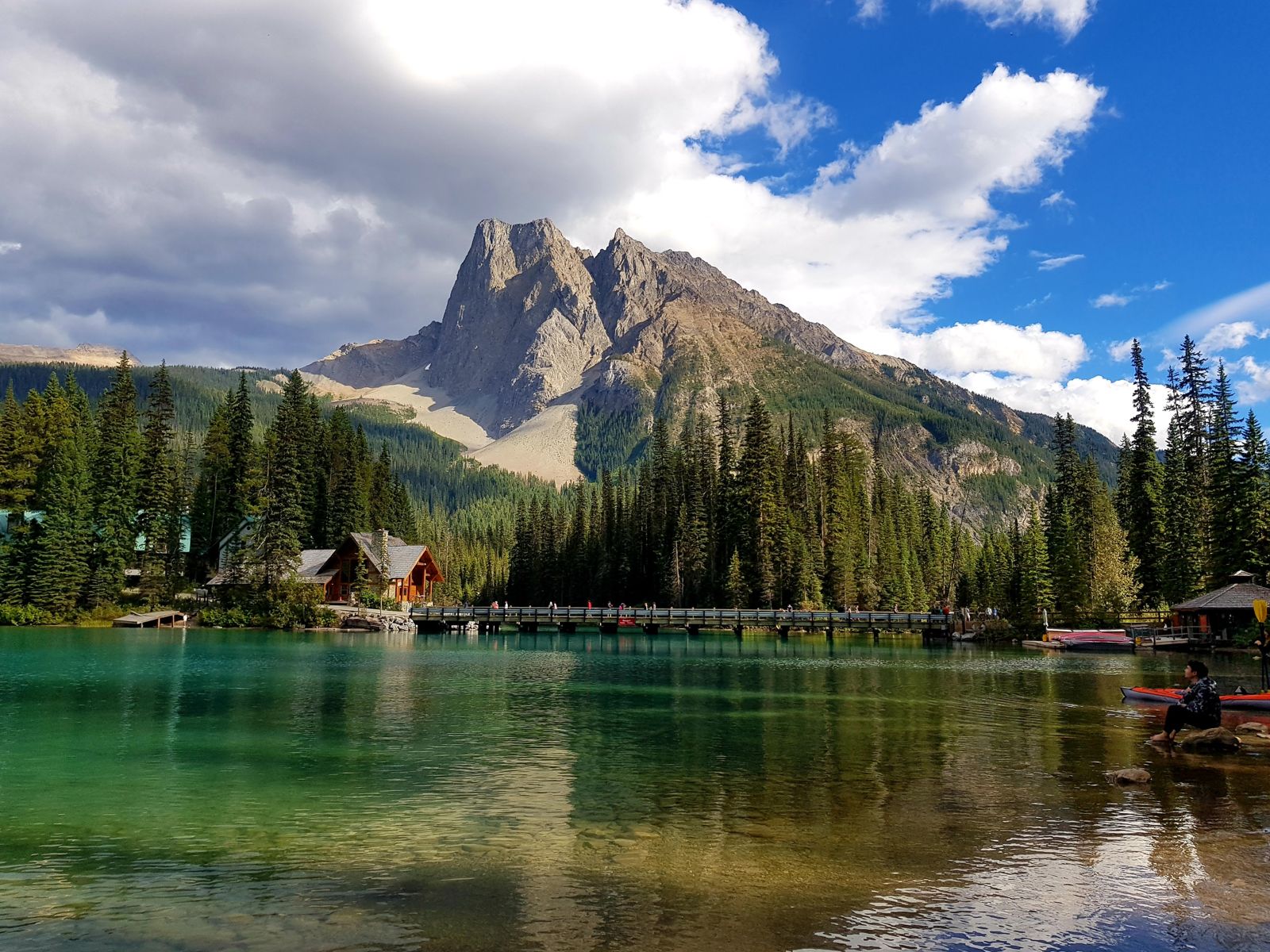
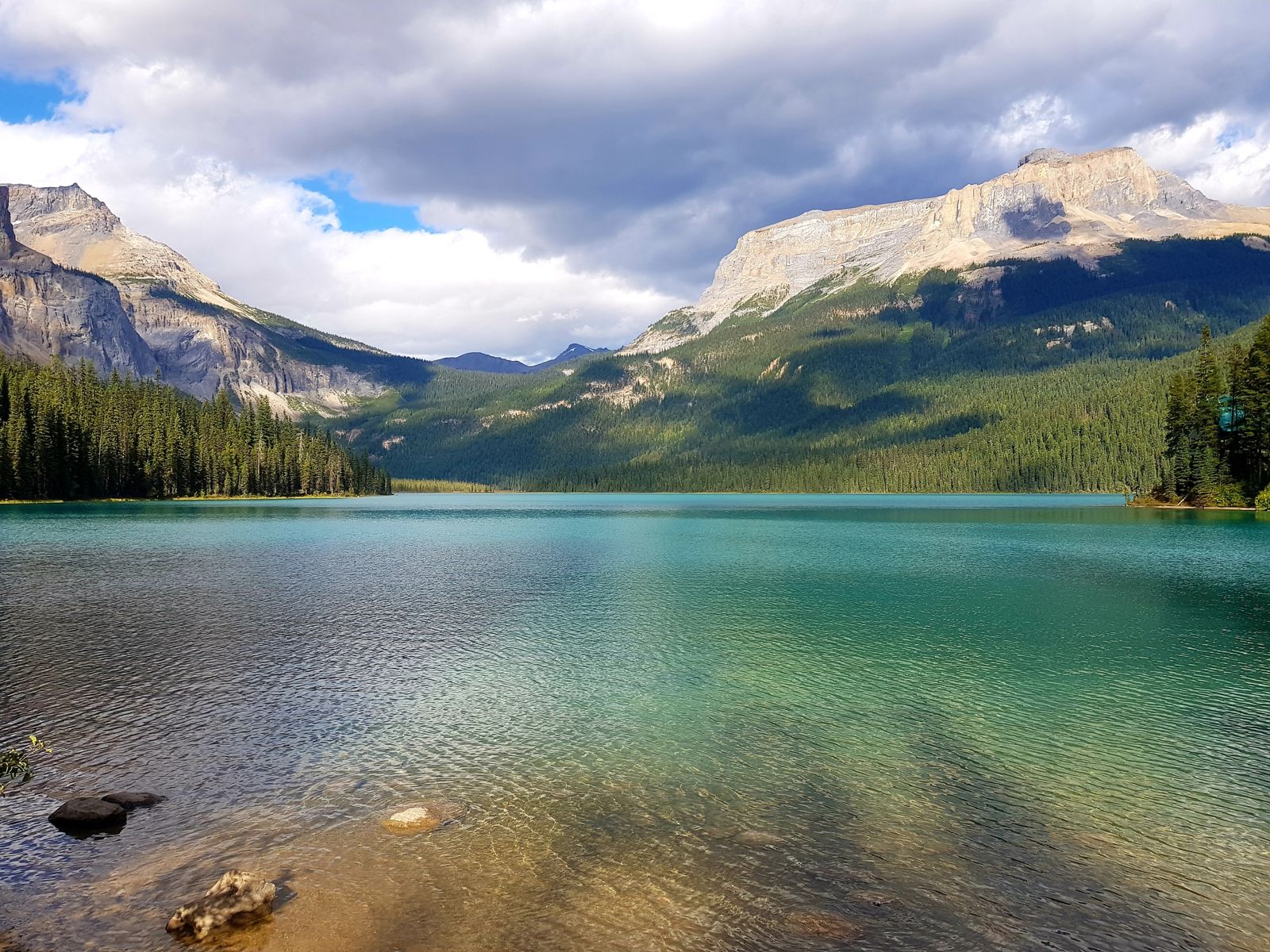
Yoho National Park is also in the Rockies, but on the British Columbia side this time, Canada's westernmost province. In Cree, the word Yoho expresses awe, which does full justice to the landscapes the park reveals, especially around Emerald Lake, a jewel of world tourism. That's where we headed that day, to enjoy the view over the water but also to stretch our legs on an 8-kilometre hike to the Emerald Basin.
English speakers use the amusing expression "nothing to write home about" to say something is a bit ordinary. We wouldn't go that far, because the Rockies remain fabulous in every circumstance, but it's true this hike left us a little unsatisfied. First, its name was misleading: at the end there was no basin, just a trickle of water forming a stream coming down from the glaciers. What's more, most of the trail was in forest, which took away some of the region's scenic character. But we were pleased with our effort and finished the day with the loop around the lake. Although the weather was gloomy, the clouds gave the place a brooding look.
Canada is full of small isolated towns, and we spent the evening in the one called Field. Of course the railway and the highway were still there, since these places only exist thanks to the history of those two trans-Canadian arteries. We found the most remote street possible among the dozen or so in the village and switched off the engine to spend the night in almost complete silence.
On the trail