
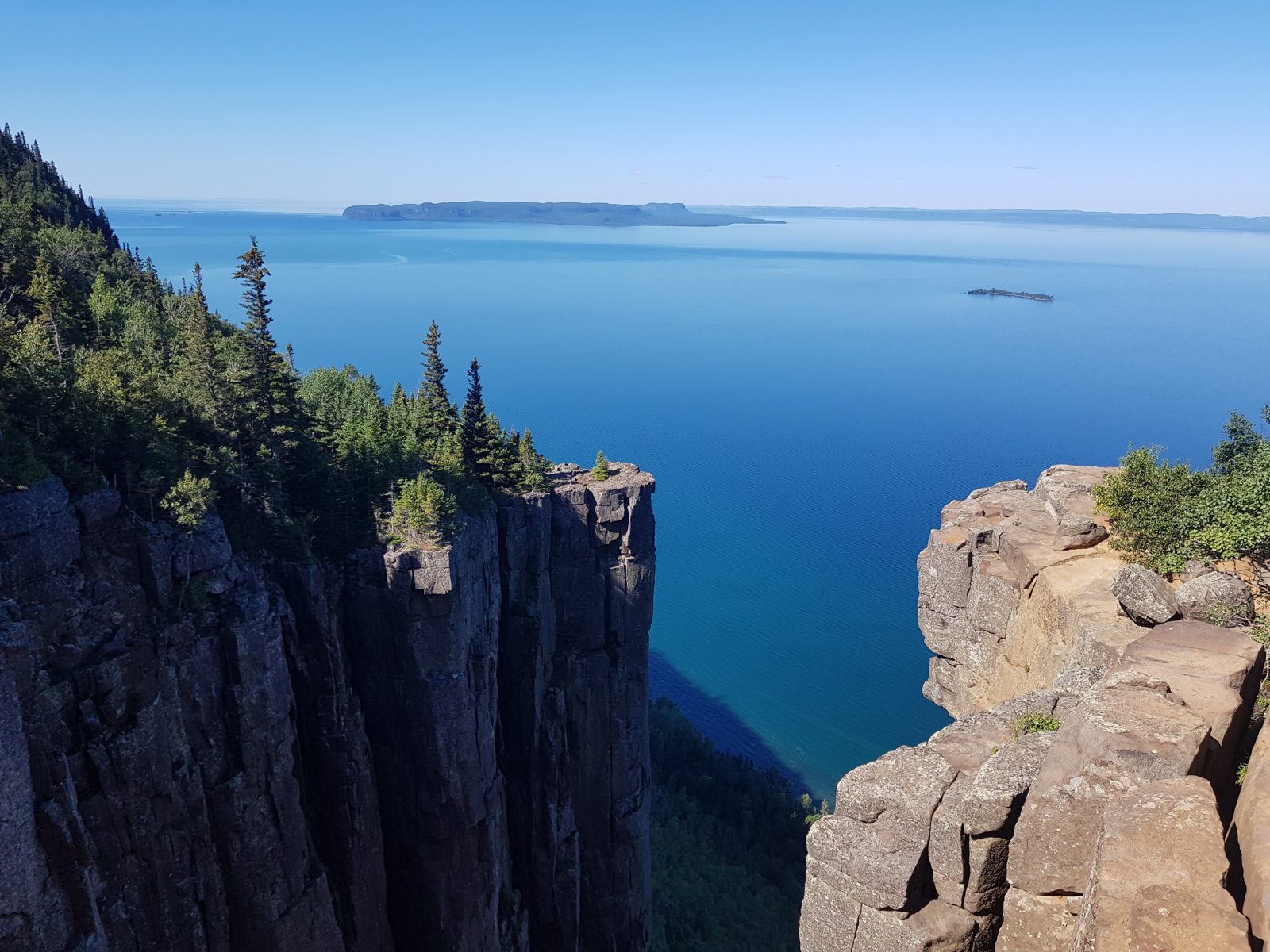
 ← PreviousThe Sleeping Giant and Thunder Bay
Sunday 2 August
What separates a holiday from a journey is time. On a road trip of this scale you have to accept drives that stretch over hours, sometimes days, and get used to a companion rarely associated with freedom: boredom. For some years now we've favoured a relaxed pace, far from the urgent need to see everything at a run, and that means days that aren't necessarily thrilling. Travellers rarely mention it, preferring to pass off every moment as the most exciting in the world, but there are days when nothing notable happens. Today we leave Thunder Bay for five hundred kilometres of road. These long hours of driving are part of the pleasure too, because in the end it isn't the destination that counts but the road. We pass the time with music or conversation. The passenger reads while the driver gets lost in thought, hypnotised by the yellow line and the forests rolling by.
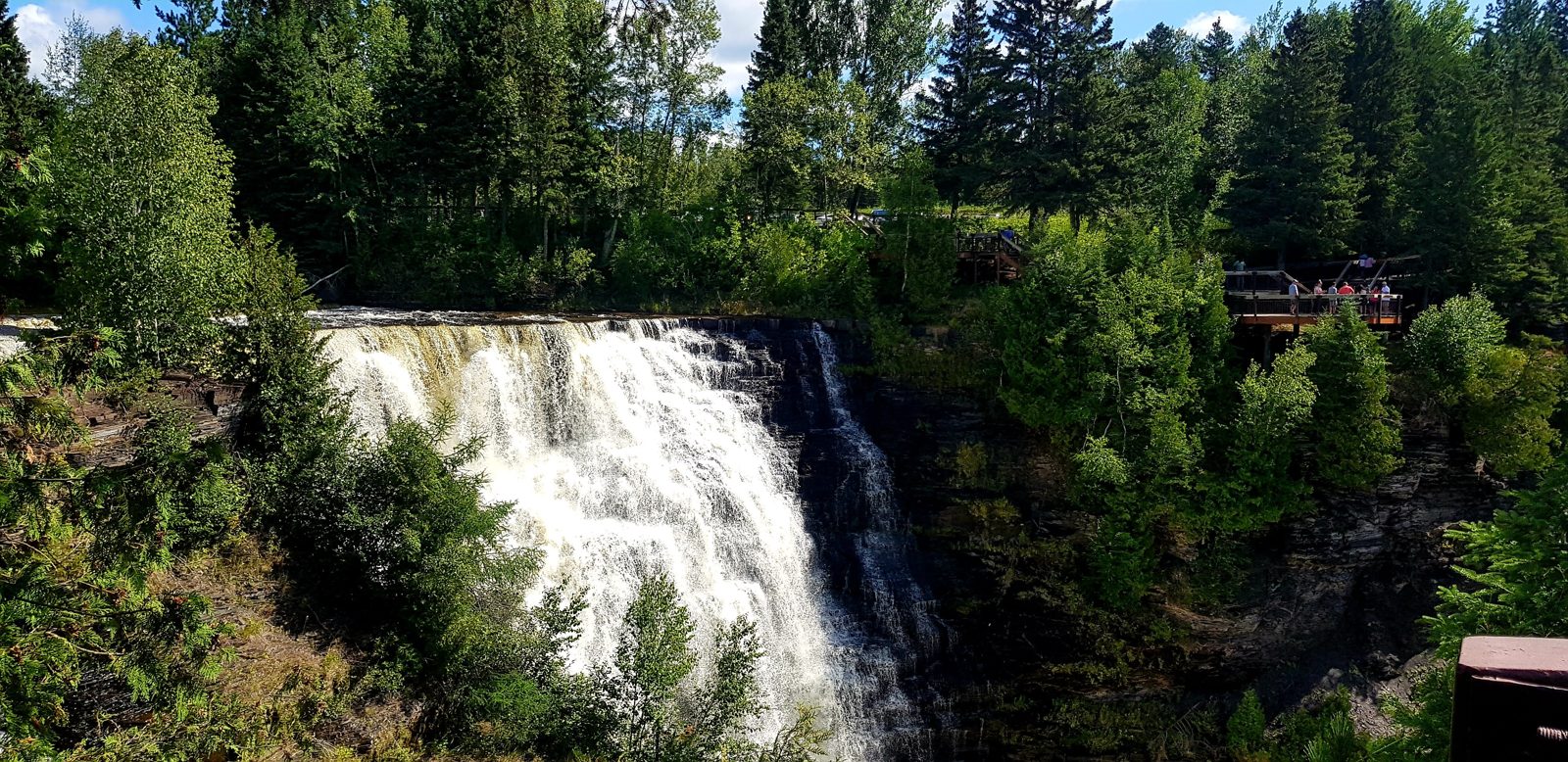
Apart from a viewpoint over a waterfall and the usual stops for toilets and meals, nothing to report on this long stretch of tarmac along the American border, where we're surprisingly alone. At the supermarket in Fort Frances, a small border town, nobody wears a mask; on enquiry, this part of Ontario isn't subject to the same rules as the rest of the province. That's how federal countries work: each province decides for itself, and within it, health regions can decide differently again.
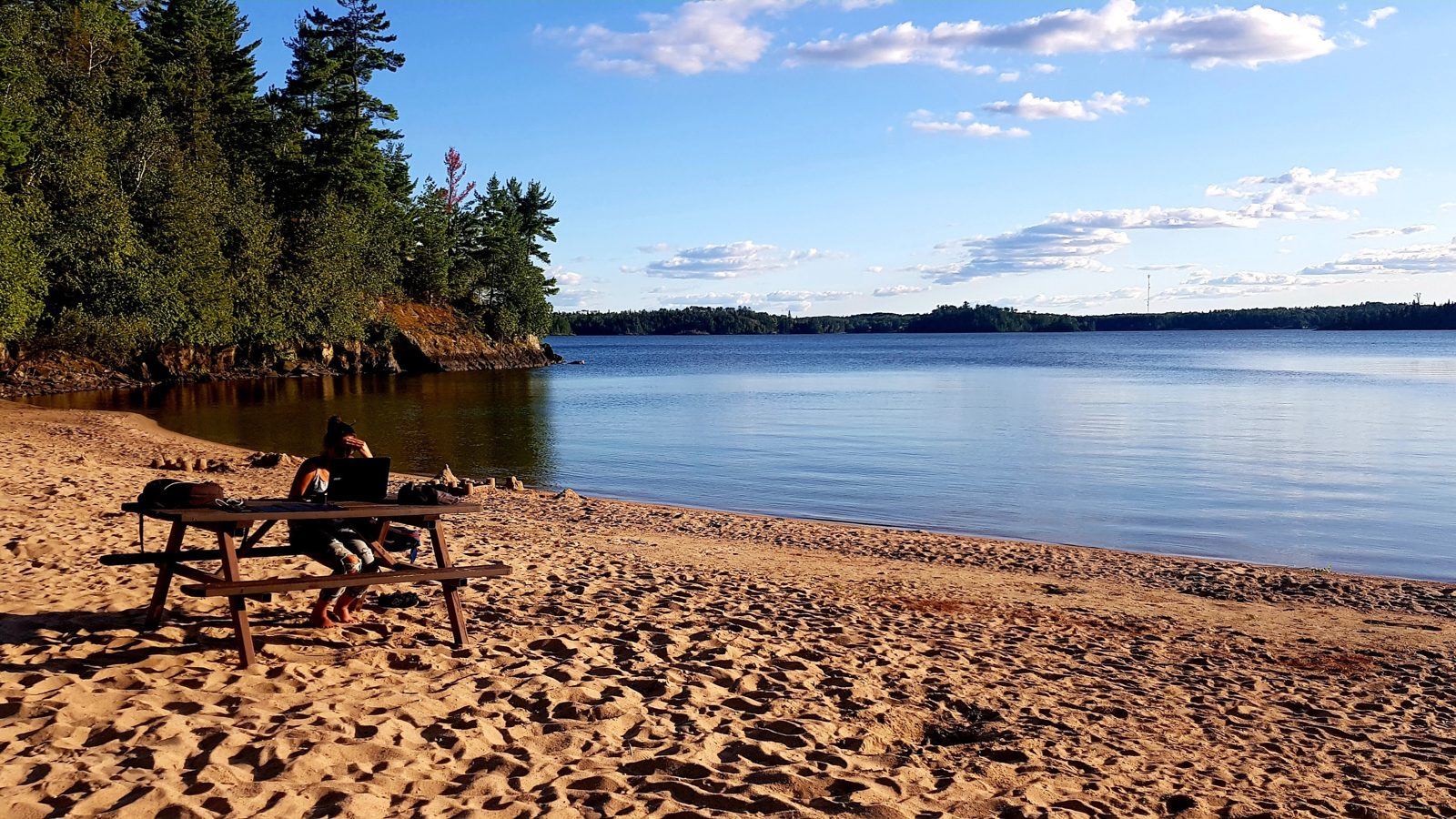
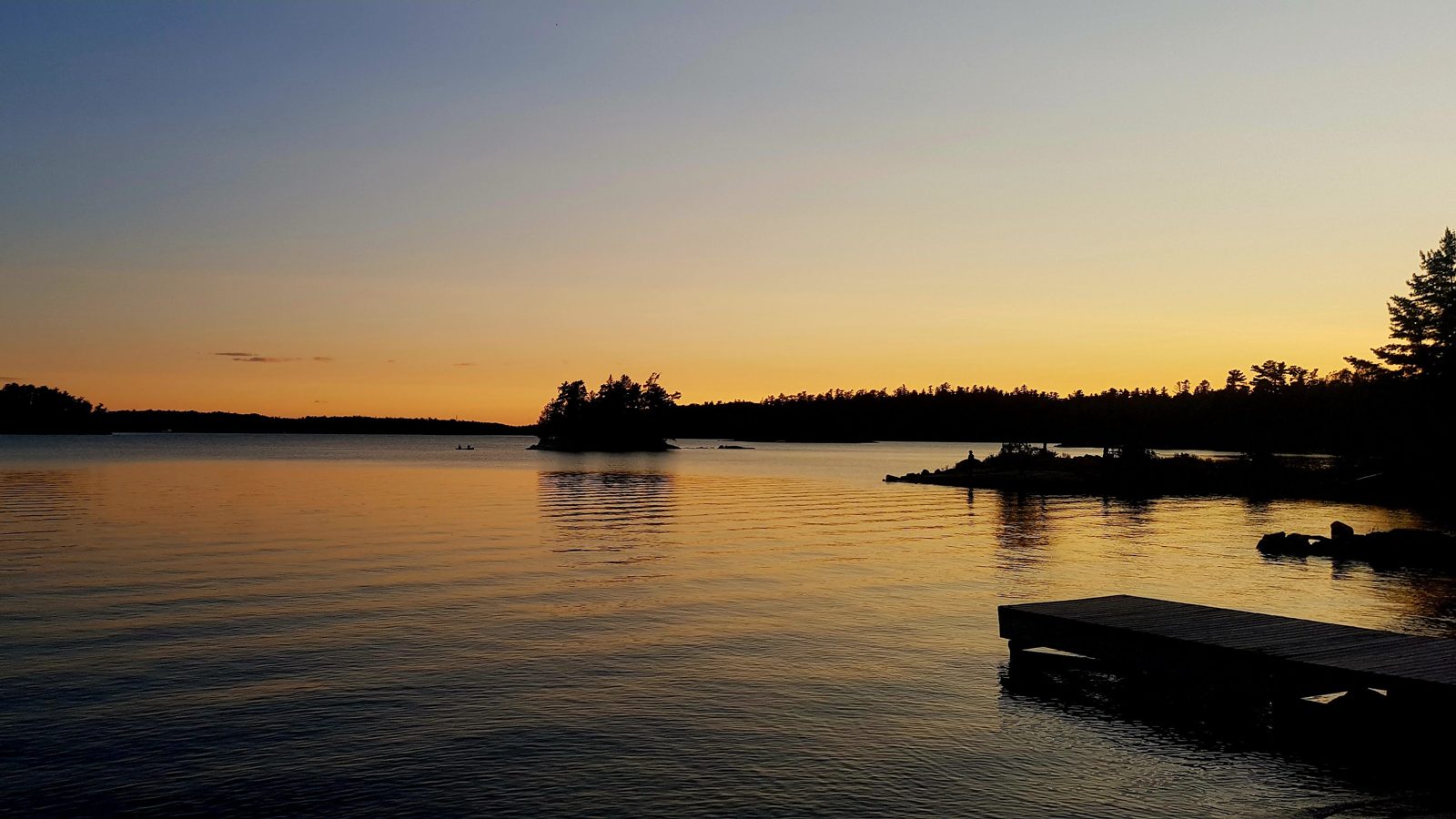
After five hours on the road we reach Sioux Narrows. More than a village, it's a dot on the map devoted to fishing. There's something for every taste, and people come from far away to hunt fish here, starting with Americans from Minnesota, about a hundred kilometres south. With the border closed, the area is quieter than usual. At the provincial park campground, an older lady whose face shows years of smoking tells us there's only one small pitch left. A quick look round: the campground is sweet and peaceful, so we take it. There are plenty of tents and motorhomes, but people are respectful, and we enjoy the beach next door and its superb sunset.
Monday 3 August
The majestic Lake of the Woods region opens its arms to us: a gigantic lake shared between Ontario, Manitoba and Minnesota, dotted with fourteen thousand islands, where kayaks and boats rule. Strangely, the park we're in doesn't rent equipment, and despite our searching, there's nothing nearby either. Perhaps a blessing in disguise: we later learn that many accidents have involved canoes and motorboats. The area is popular, and it seems the boat owners have gained the upper hand over the paddlers, with no one apparently willing to do anything about it.
After a short run in the forest and a morning doing nothing on the beach, we drive to Kenora, a small town of fifteen thousand and the heart of the Lake of the Woods region, one of the great recreational boating destinations in North America. Surrounded by water and small islands, the town can boast a superb setting, and Covid aside, it hosts many festivals. Tourism suits it, as the state of the infrastructure and the villas lining the lake show. Idyllic, isn't it?
On paper, yes. Yet the inequalities are glaring, and they affect us in a way we'd only known before in northern Australia. In every street, members of the First Nations wander or slump against the shopfronts. In Canada too, colonisation wreaked havoc whose consequences are still felt today. As in Australia, you sense lives trapped by alcohol or drugs, and very little help to escape them. There are poor people and injustice everywhere, of course, but we didn't expect to find them so brutal in a well-off little lakeside town. We'd meant to spend the night here, parked on a street corner, but the atmosphere doesn't make us want to stay. An app points us to a spot; leaving the Trans-Canada, we drive a few kilometres along a track and find a small clearing in the wild. We sleep there, far from the noise and the town.
Tuesday 4 August
When you travel for a long time and almost everything you own fits in a suitcase, you need a minimum of organisation so as not to keep opening it. And since we live largely in the car, it has to be tidy, or at least as tidy as possible. We've put the essentials within reach: a bag for swimming, ready the moment a beach catches our eye; another for nightwear and the wash bag. That way we save time and energy, because taking the suitcase in and out ten times a day ends up being exhausting.
This morning the night things go back into their bag, and after just over three weeks across Ontario, we finally cross into Manitoba. Its name is said to come from the Cree language and evoke “the strait of the Great Spirit”. The province is very sparsely populated, just over a million people, about two per square kilometre, and tourists tend to ignore it for lack of varied landscapes and notable cities. But when you like getting off the beaten track, you know that if you dig a little, you always find places worth seeing. A few kilometres from Ontario, Whiteshell Provincial Park promises lovely outings across more than 2,700 square kilometres of wilderness, lakes and rivers. It's especially popular with Manitobans, people from western Ontario and neighbouring Minnesota.
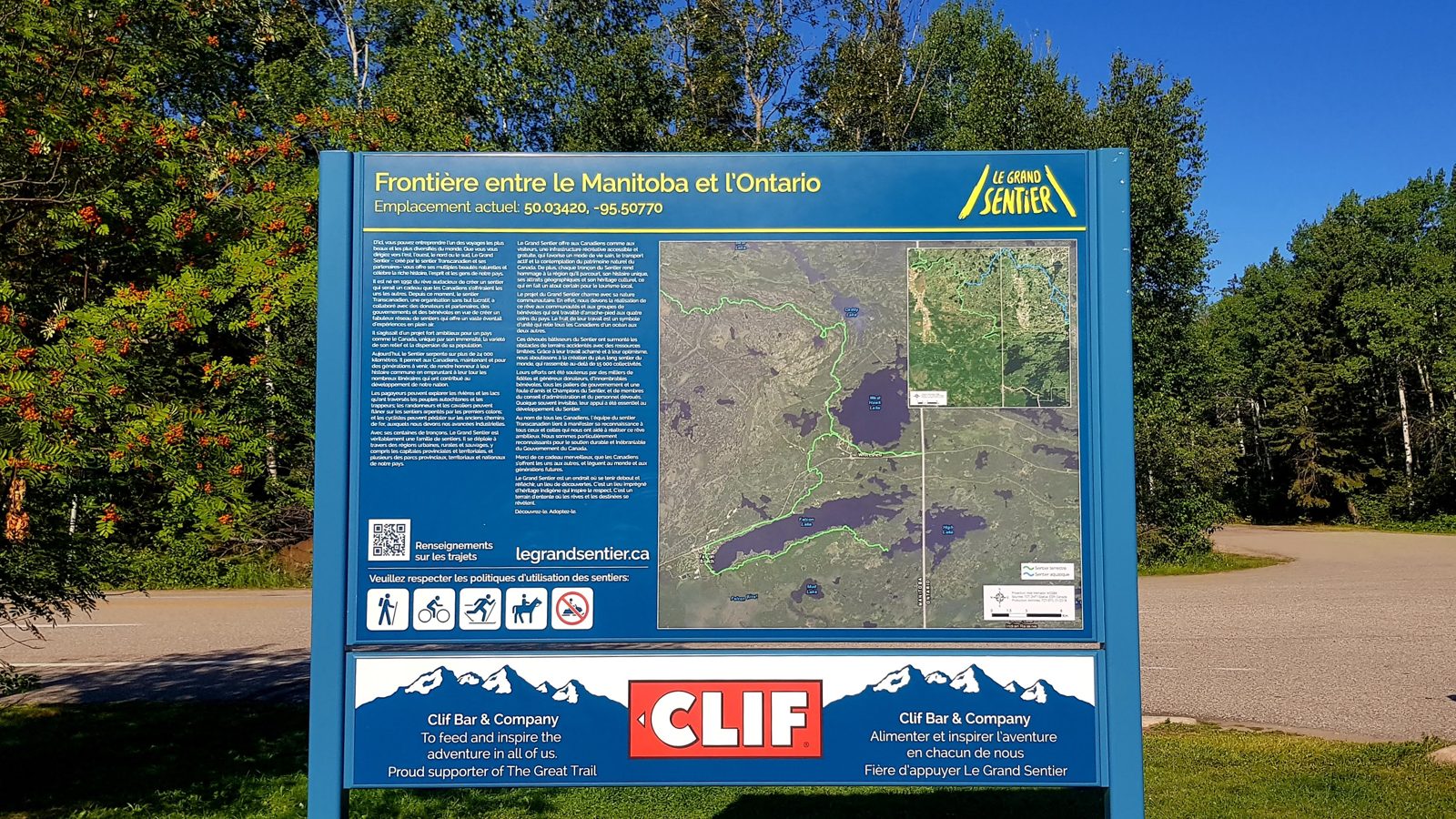
After a hearty breakfast in a little café serving pancakes the size of a frisbee, we run for an hour beside Falcon Lake, the biggest in the area, on a trail so hilly it leaves us on our knees. Off to the beach to cool down and wash, once again, au naturel. We're almost alone, and we wonder why. We've read in several places that the frantic industrialisation of the 1960s and 1970s left heavy marks on Canada's nature and polluted many lakes, so we're sometimes wary. We spot another, better-known beach ten minutes' drive away: busier, bigger, better equipped, but not necessarily more beautiful. We stay until the clouds, grown too thick, put an end to sunbathing. To prepare for tomorrow, we go round the rental places by Caddy Lake and find at the campground a two-person kayak free tomorrow morning: we book it for 8 am.
The little café welcomed us so warmly this morning that we go back for dinner, studying our options for the night. In a provincial park, as we now know, wild camping is forbidden, and discreet places to park the car are hard to come by. We try our luck at the West Hawk Lake campground a little further on and discover that pitches cost just fifteen dollars! At that price there's no point trying to save. The office is closed when we arrive: Canadians rely enormously on good faith, and you often find paying services where no one checks that you actually pay. Here, the office having closed at 8 pm, a board shows newcomers the free pitches: you pick one, settle in and come and pay the next morning. The pitches are small with little privacy, and once again the showers are closed, but for one night at that price it suits us perfectly.