
 ← PreviousFrom Lake of the Woods to Manitoba
Wednesday 5 August
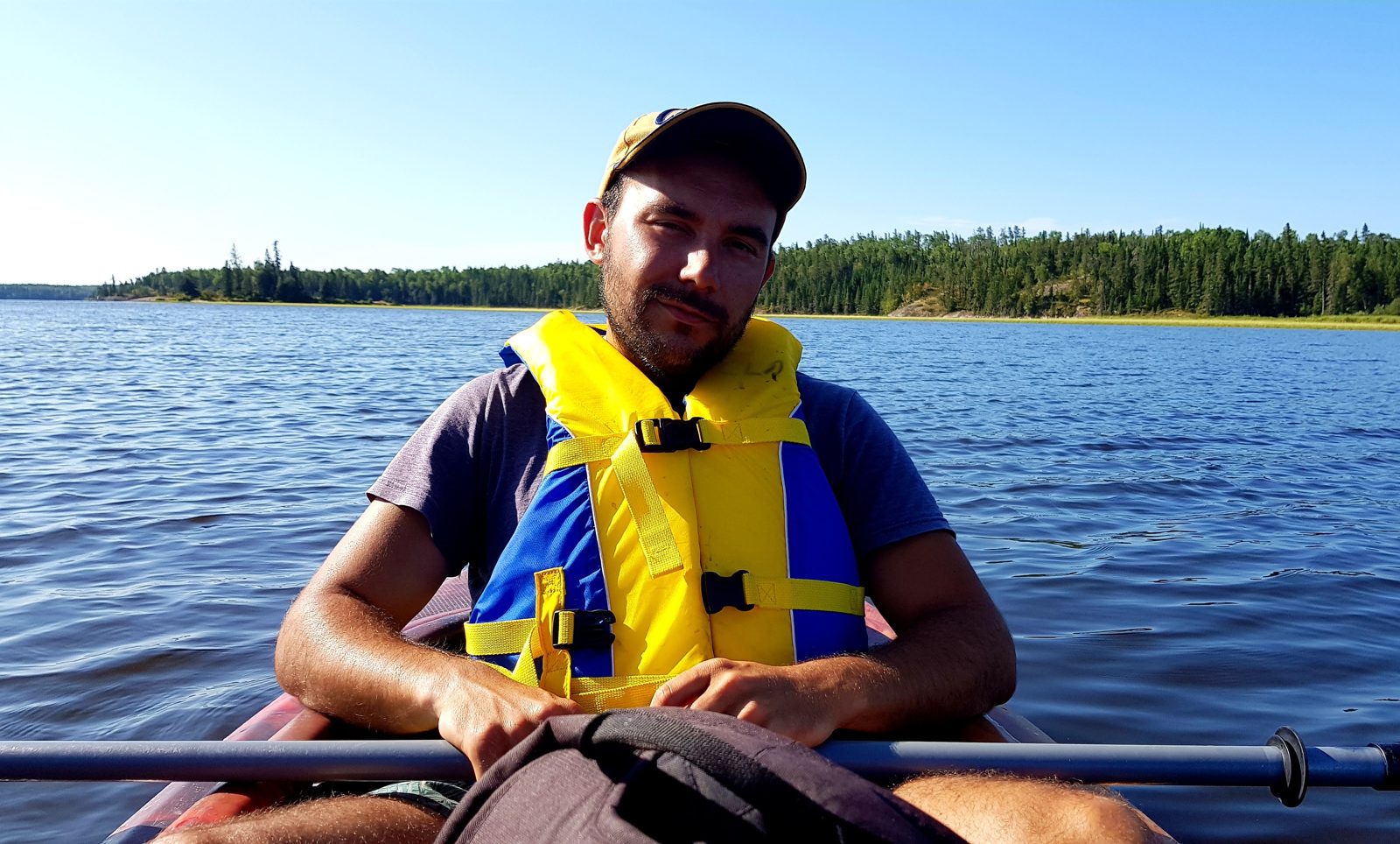
The canoe and the kayak are deeply rooted in Canadian culture. For a long time they were the only way to get around, and they're surely the finest legacy of the Indigenous cultures. We'd have liked to paddle more often, but rentals were exorbitant in Ontario, and the lakes are sometimes taken over by motorboats, which makes paddling dangerous and unpleasant. Luckily Caddy Lake, which we reach early, alone on the winding road, is known for its tranquillity. The young woman at the rental praises our good sense in starting at 8: we'll have the lake to ourselves, she promises.
She was right. After ten minutes of effort, a welcome calm envelops us, and we glide slowly over a glassy lake. The route is very popular because at the end of the lake a tunnel cut through the rock leads to South Cross Lake, itself linked to North Cross Lake by a second tunnel. The loop usually takes a day; we only have a morning, so we won't go as far as the second. The first is only about a hundred metres long, but it's an impressive experience, and since we're the first through, we disturb a few bats that fly off as we pass. When the water is too high the tunnels can't be used, but that's rarely the case in midsummer. South Cross Lake, which we emerge onto, is much bigger and can't be reached by road: the silence is total. We follow the shores hoping to spot animals, but apart from an eagle dozing on a branch, luck isn't on our side. We do spot one or two tents on the banks: canoe-camping is very popular in Canada, and some set off for up to two weeks, though most settle for two or three days.
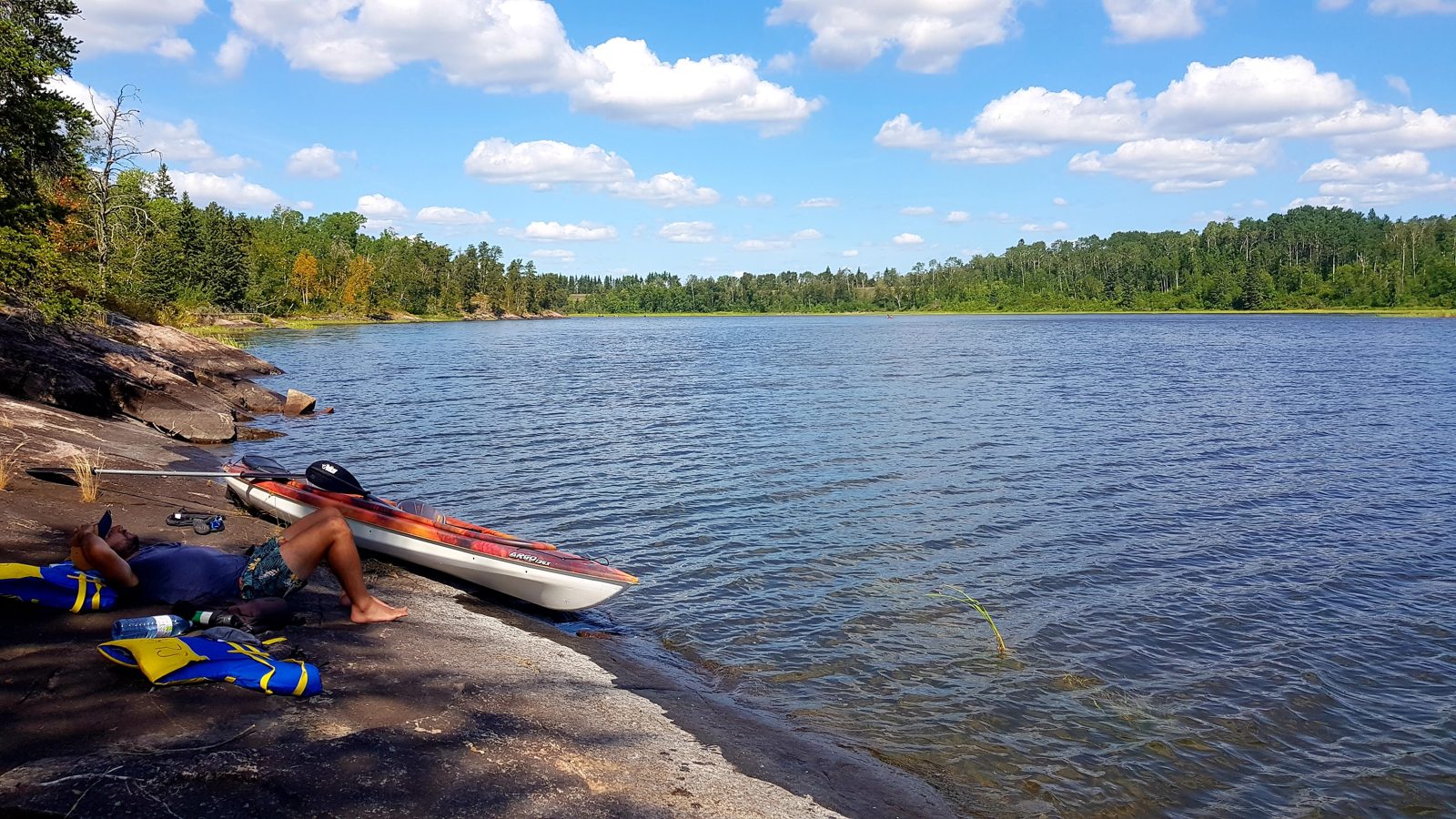
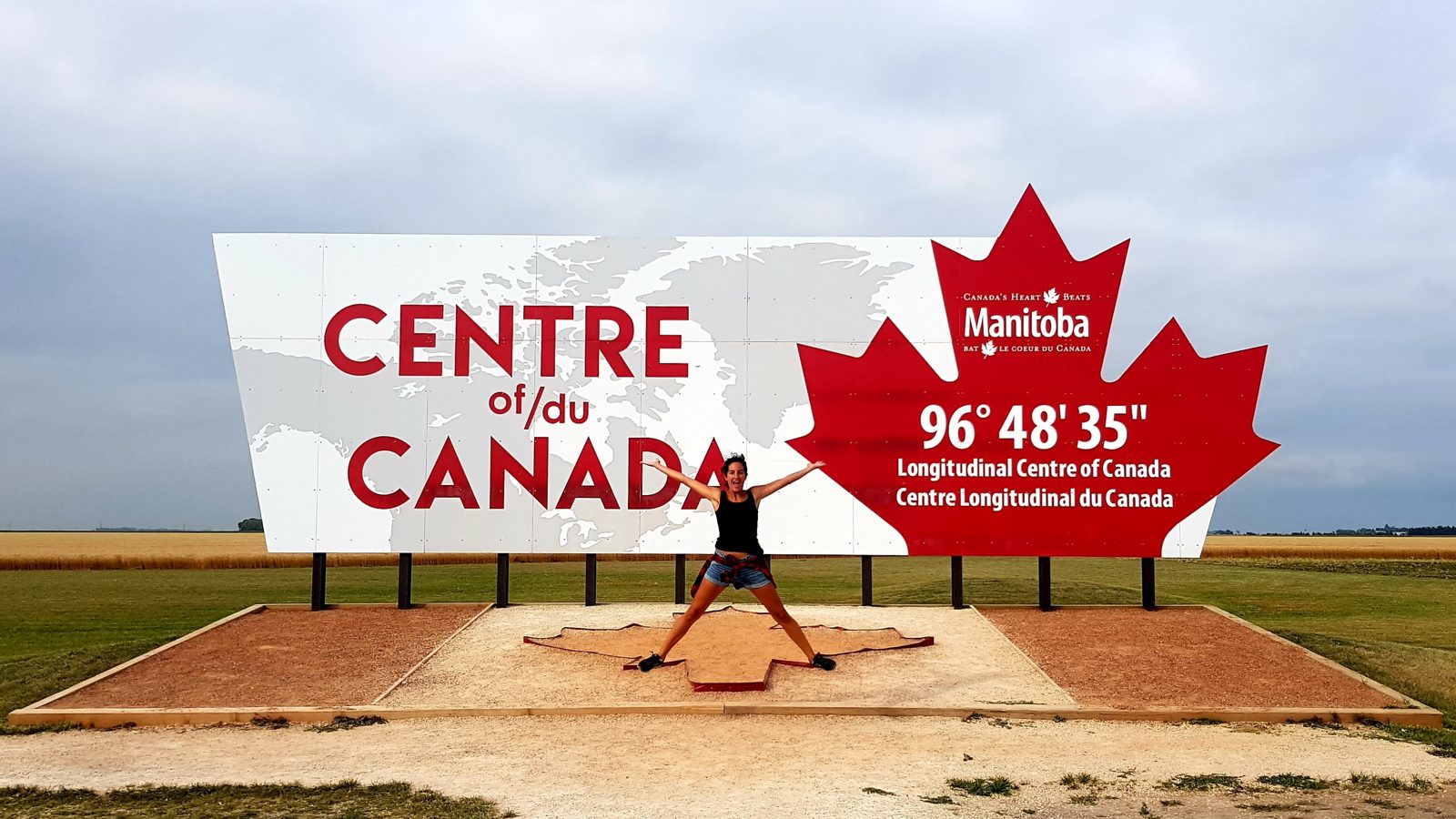
After more than four hours of paddling we return the kayak and take the road to Winnipeg. Manitoba's capital is literally in the middle of Canada, halfway between the Atlantic and the Pacific. Its name comes from what the Cree called Lake Winnipeg, to the north: win-nipi, “muddy waters”. With just over 700,000 people it's one of the country's largest cities, and on its own it holds more than half the population of a province as big as France. As we drive on, the landscape flattens, lakes and cars grow scarce, fields and hay bales multiply. The countryside hugs the city so closely that ten kilometres out there's still not a soul, nor a house or a building. Our Airbnb is with a recently arrived Ethiopian family, in a neighbourhood home to many minorities: clean, straight streets, modern, identical houses, the cliché of North American suburbia.
While the city is overwhelmingly English-speaking, part of its population has French as its mother tongue, concentrated mainly in the Saint-Boniface district, home to important French-speaking institutions such as the Centre culturel franco-manitobain. It houses a restaurant where we have dinner tonight, warmly welcomed by waitresses who speak very good French with a slight accent we take for English, which is in fact Manitoban. As we'll learn over the next few days, Manitoba bears the deep imprint of the first French speakers who came here, and it can still be felt in Winnipeg's culture and spirit.
Thursday 6 August
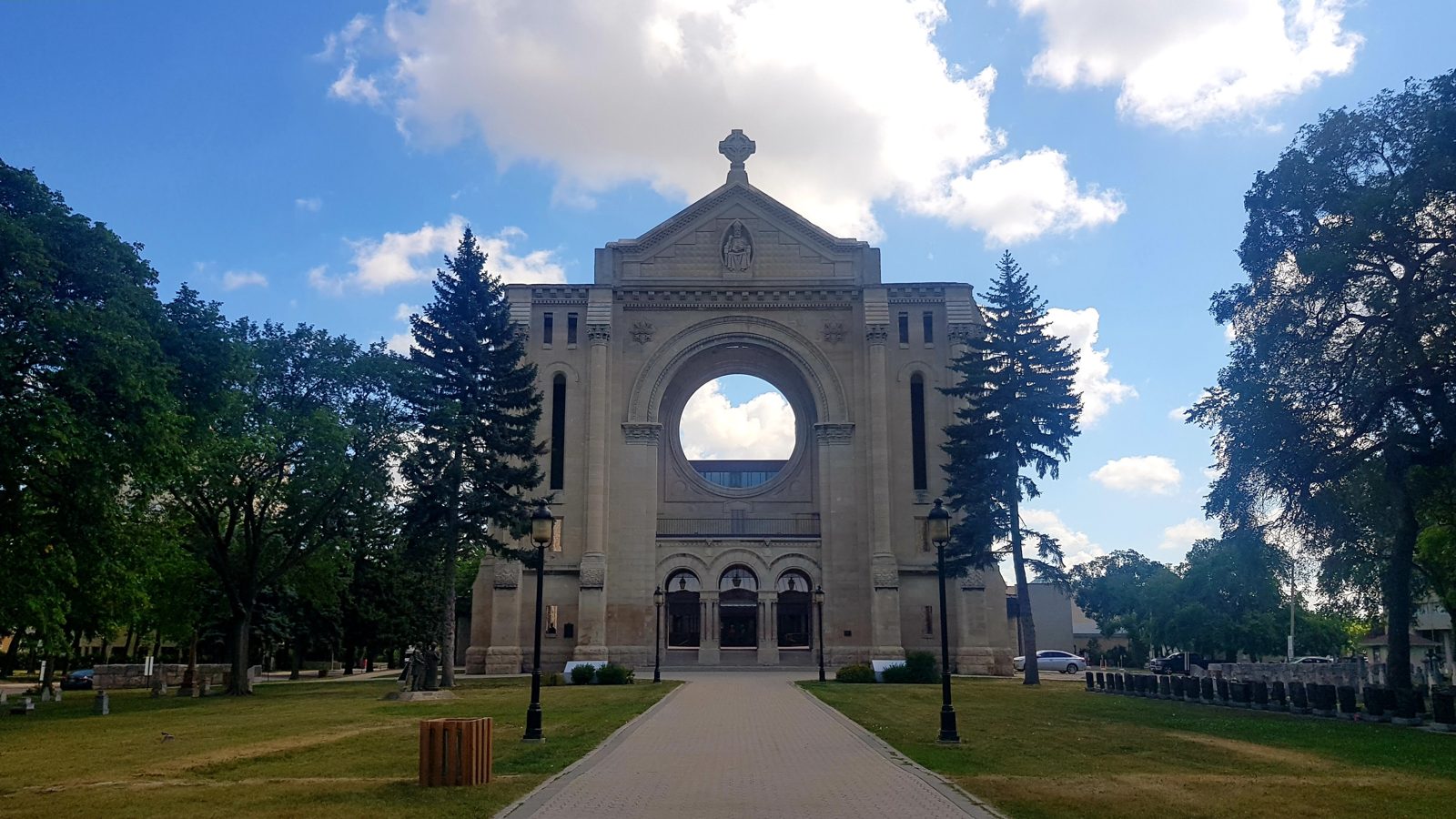
Most travellers ignore Winnipeg, or spend just one night before heading west, or east. Admittedly it doesn't look like much: surrounded by fields, with no thrilling nightlife or stunning architecture. Yet its strategic location has given it a long history, and it remained a major crossroads until the mid-20th century. We start with the French-speaking district of Saint-Boniface. First a Catholic mission, then a parish and an archdiocese, the area still keeps at its heart the ruins of its cathedral, whose stone façade survived the 1968 fire, a relic of that religious past. There are picturesque cafés, restaurants serving French classics such as boeuf bourguignon and coq au vin, artisan chocolatiers and French bookshops…
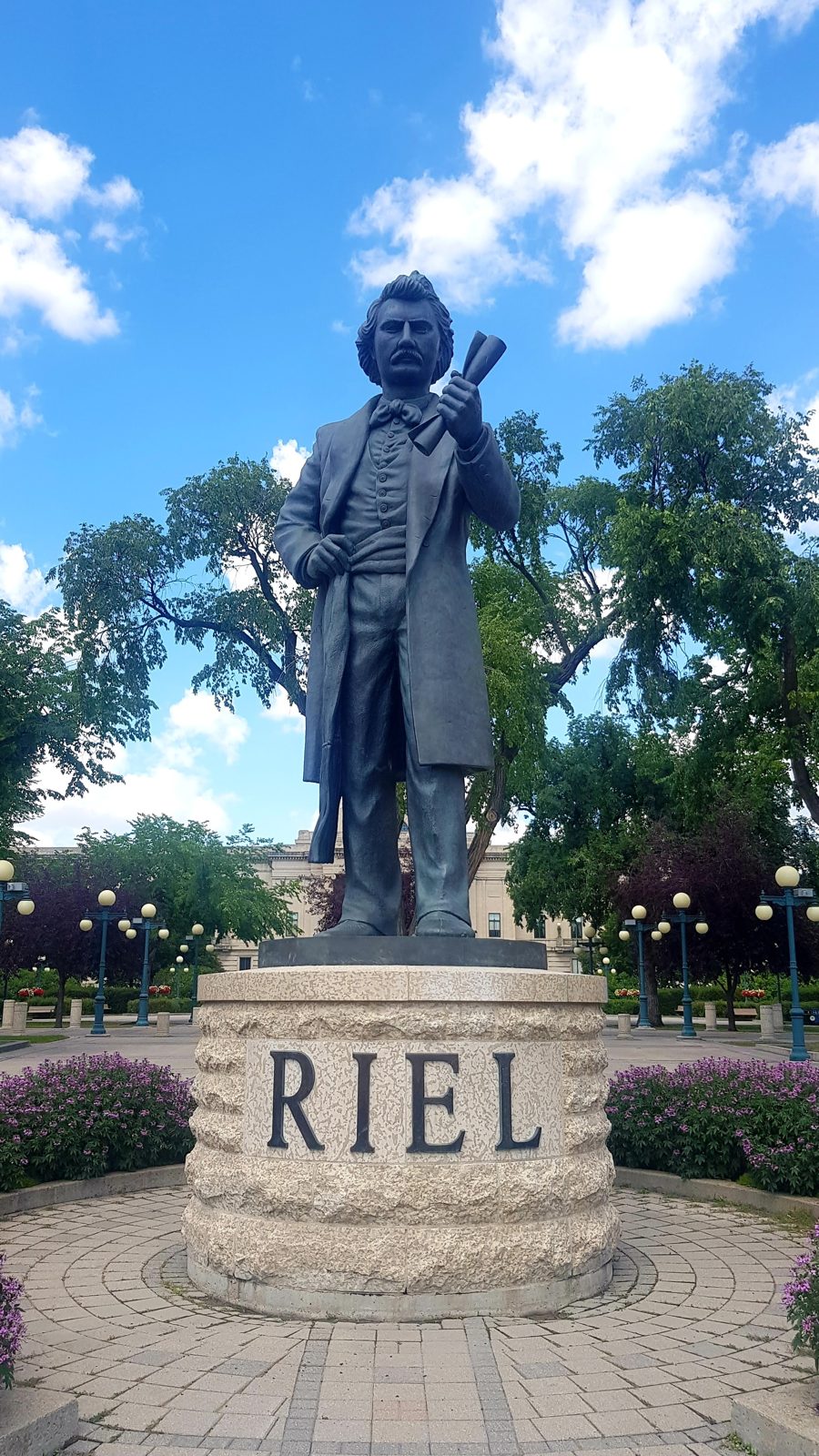
This is also where Fort Gibraltar stands, a hub of the fur trade and of community life in Winnipeg's early days. The present fort is of course a replica of the one built by the North West Company in 1810, and panels and costumed guides bring the period to life. We chat for a while with a young Canadian woman who has worked here for three years and also speaks excellent French. Since Quebec, it's the first time we've really felt we're in a bilingual country. In Ontario you didn't feel it at all; you sensed rather the strong influence of the neighbours to the south…
Our visit continues in the Exchange District. Across some twenty blocks, it's the old business centre, with around a hundred and fifty remarkable buildings from the industrial era and the economic boom Winnipeg enjoyed until the First World War, when it was the great trading hub for the development of the West. It was called the “Chicago of the North”. Its old red-brick buildings and former warehouses with outside staircases recall some New York neighbourhoods, all proportions kept.
Are we following the train, or is the train following us? Since Montreal our route has barely strayed from the railway, always in sight or within earshot. It makes sense: our east-to-west route retraces that of the pioneers who pushed into once-hostile lands and settled the valleys as they went. The train is thus an iconic image of Canada, and you often get stuck at a level crossing watching a convoy more than three kilometres long roll slowly by. The network is old, and even in a big city like Winnipeg it cuts through industrial zones and smart neighbourhoods alike. Tonight we go back to the same restaurant: good, cheap, lovely waitresses and a pleasant patio. But as we leave, the bell of the lowering barriers rings out: we're in for at least ten minutes' wait. Such is life in Canada, and the experience wouldn't be complete without it.