 ← PreviousFrom Santa Fe de Antioquia to Jericó
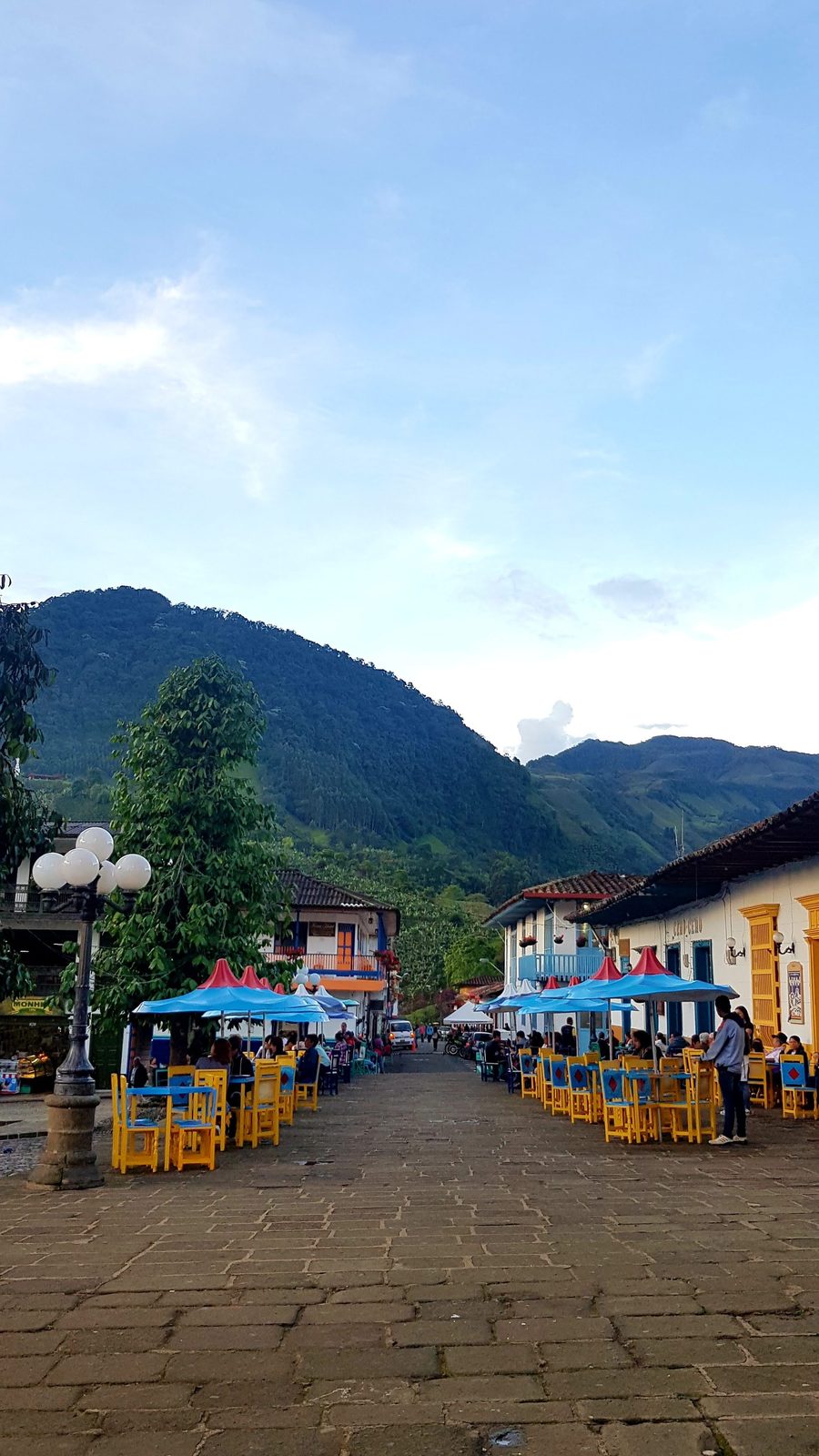
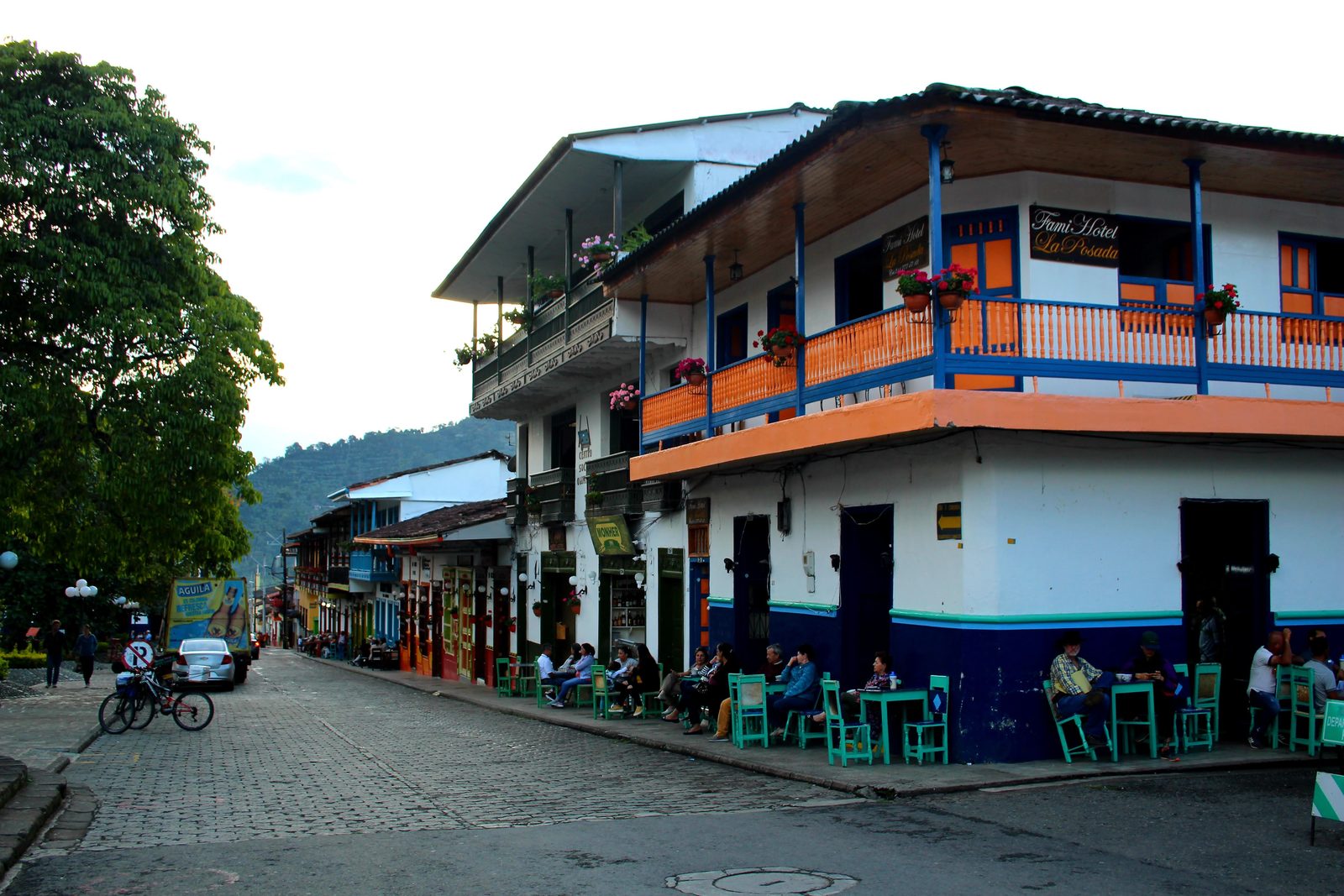
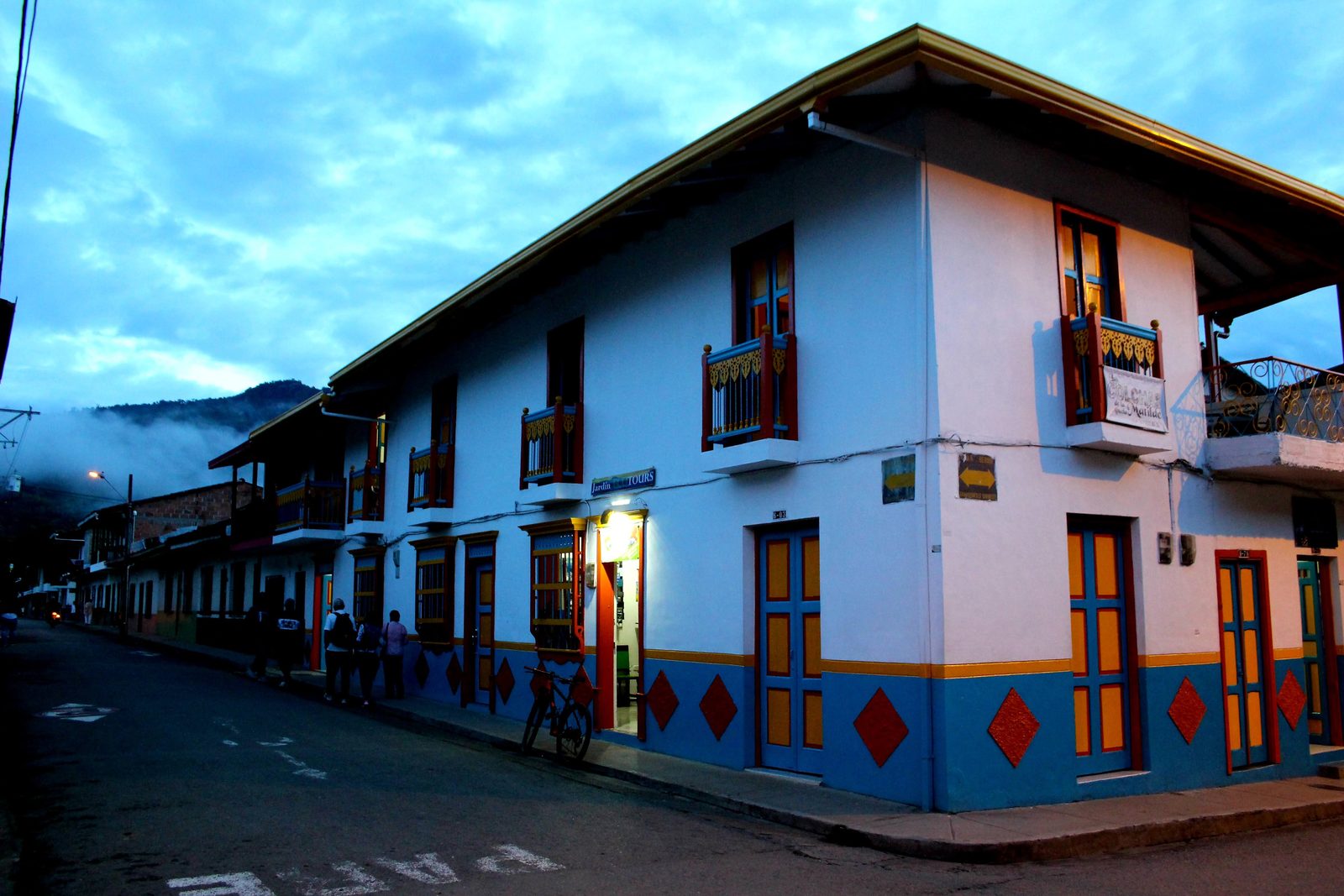
We arrived in Jardín in the late afternoon, a little windswept by the chiva, at the hour when the big square comes to life. On the cobbles, dozens of wooden chairs and tables painted in every colour are set out in front of the cafés, and locals sip a tinto, the small black Colombian coffee, while watching the world go by. The men wear hats and ponchos over their shoulders, horses wait patiently at the edge of the square, and you feel as though the scene has been repeating itself unchanged for a century. All around, the houses compete in colour: blue balconies, yellow doors, red frames, flowerpots in every window.
In Jardín too, we stayed in an Airbnb. For our last stop we had no particular plan, and that was just fine. We spent our days strolling around the village and mingling a little with its inhabitants, at café counters, at the market or on the benches of the square. It was, in the end, the best way to finish this trip, true to what we had been looking for from the start: not to see as many things as possible, but to live a little like the people who live there.
The basilica and the mountains
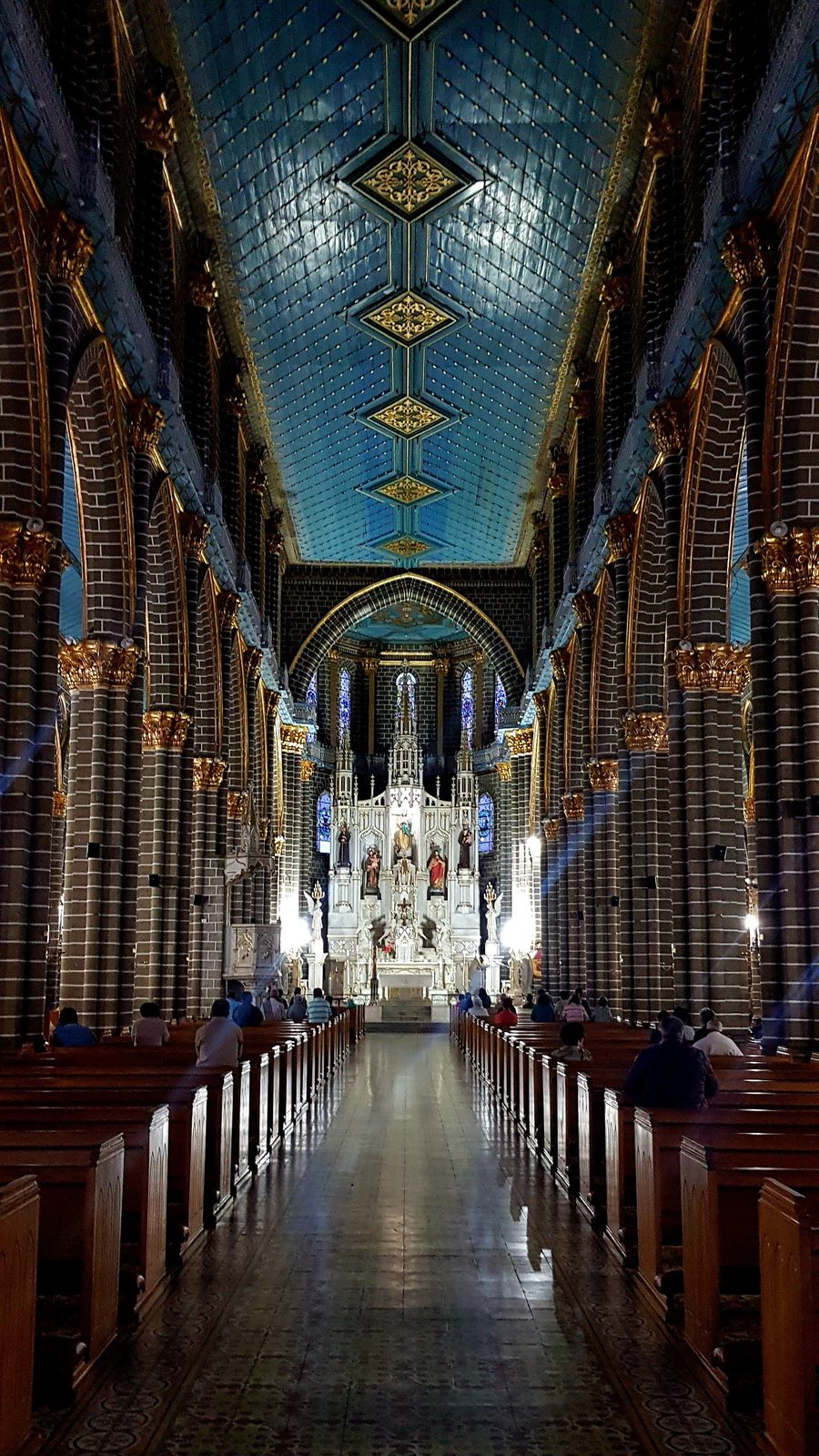
Above the square rises the Basilica of the Immaculate Conception, a neo-Gothic church of grey stone that seems far too big for a mountain village. It took the inhabitants decades to build it, stone by stone, and they are rightly proud of it. In the evening, inside, the vault painted in blue and gold lights up above an all-white altar.
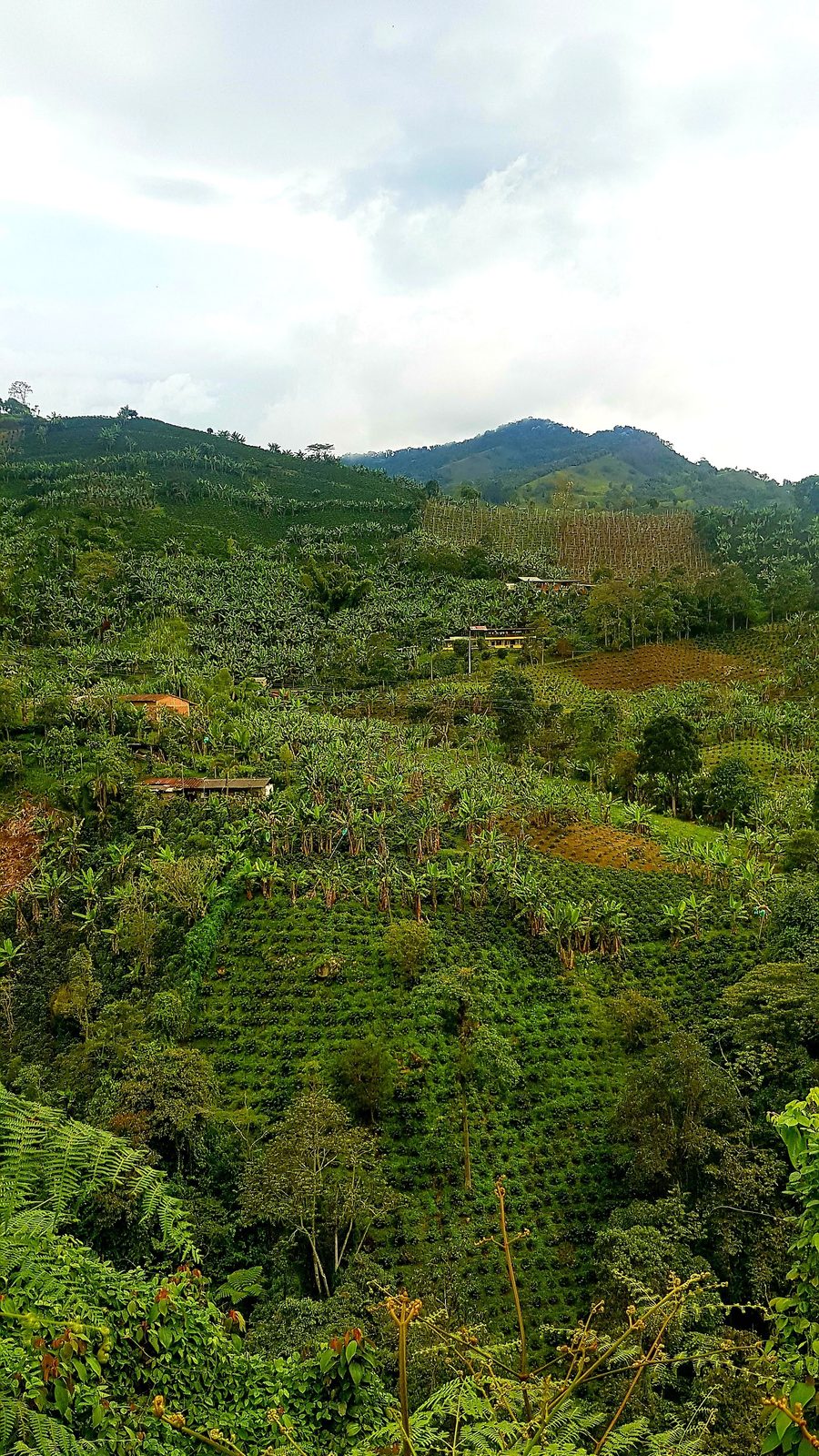
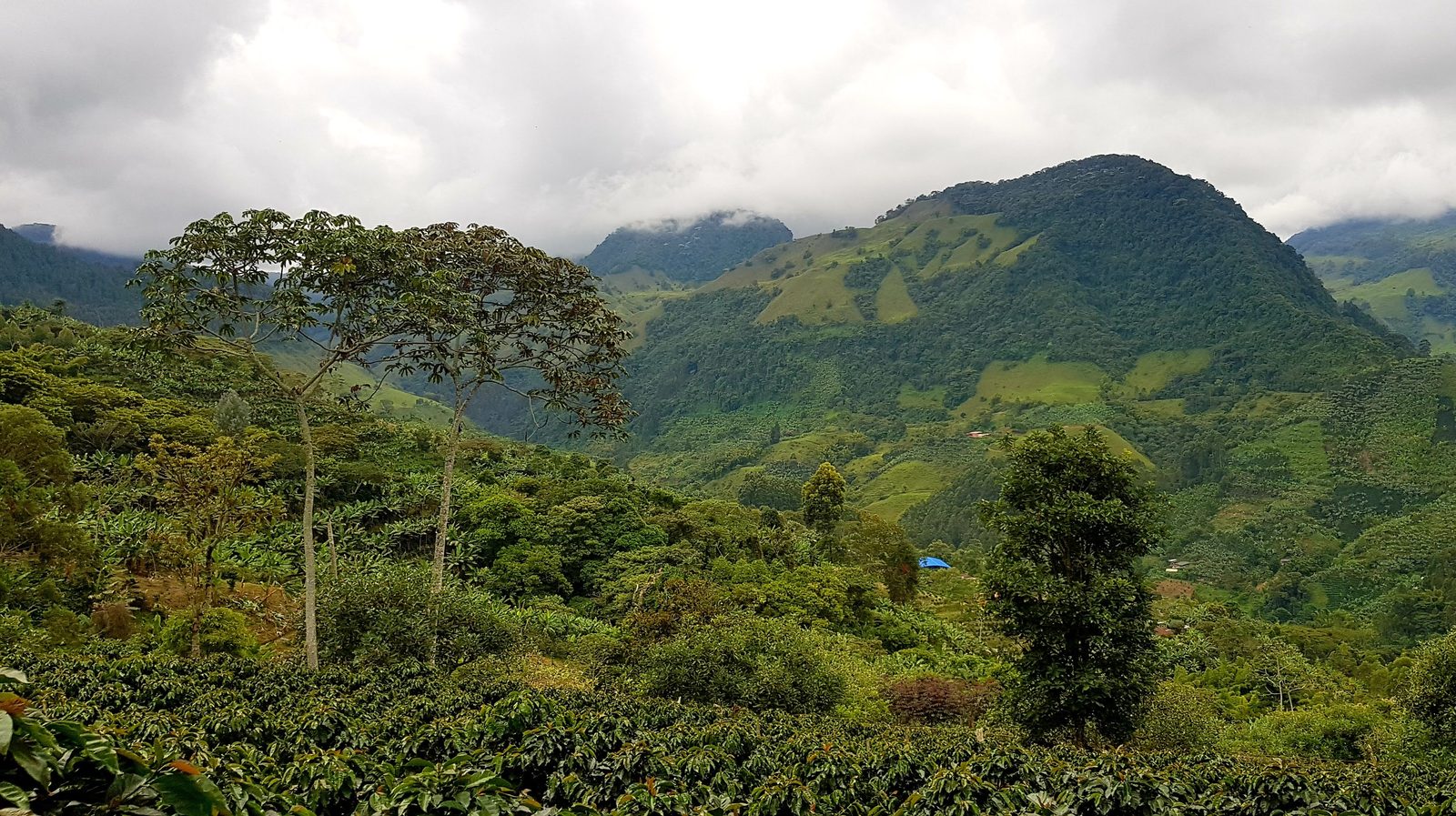
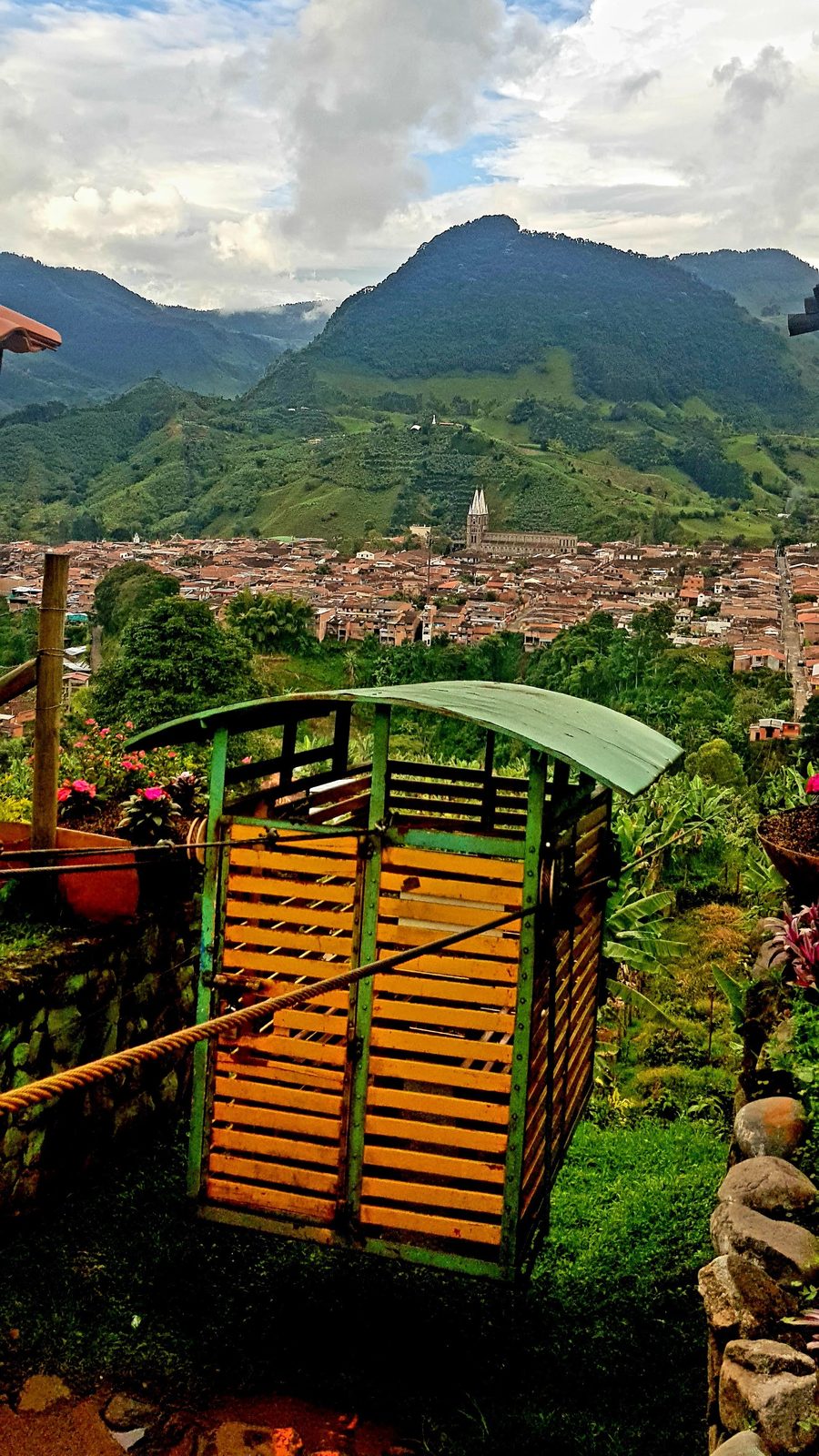
Around the village the hills are covered in coffee bushes and banana trees, and the clouds catch on the peaks at the end of the day. To cross the ravine above Jardín, a little yellow and green cabin slides along a cable, the garrucha, like a shoebox hanging over the void. After Medellín's Metrocable, this was the handmade version, and probably the most picturesque, of Colombian cable transport.
The coffee farm
11 May
On 11 May we visited a coffee farm. We had come full circle: after the cocoa in Minca and the finca in Jericó, we were finally going to understand it all. Under a small shelter among the plants, our hosts explained to us how coffee is made, from the red cherry picked by hand on these impossible slopes to the dried and roasted bean. They talked about their work with infectious passion, and you could measure all the hidden labour behind the cup you gulp down absent-mindedly every morning. It was really good. Ironically, Colombia exports almost all of its best coffee, and Colombians often drink a tinto far more modest than the one we buy in Europe.
The way home
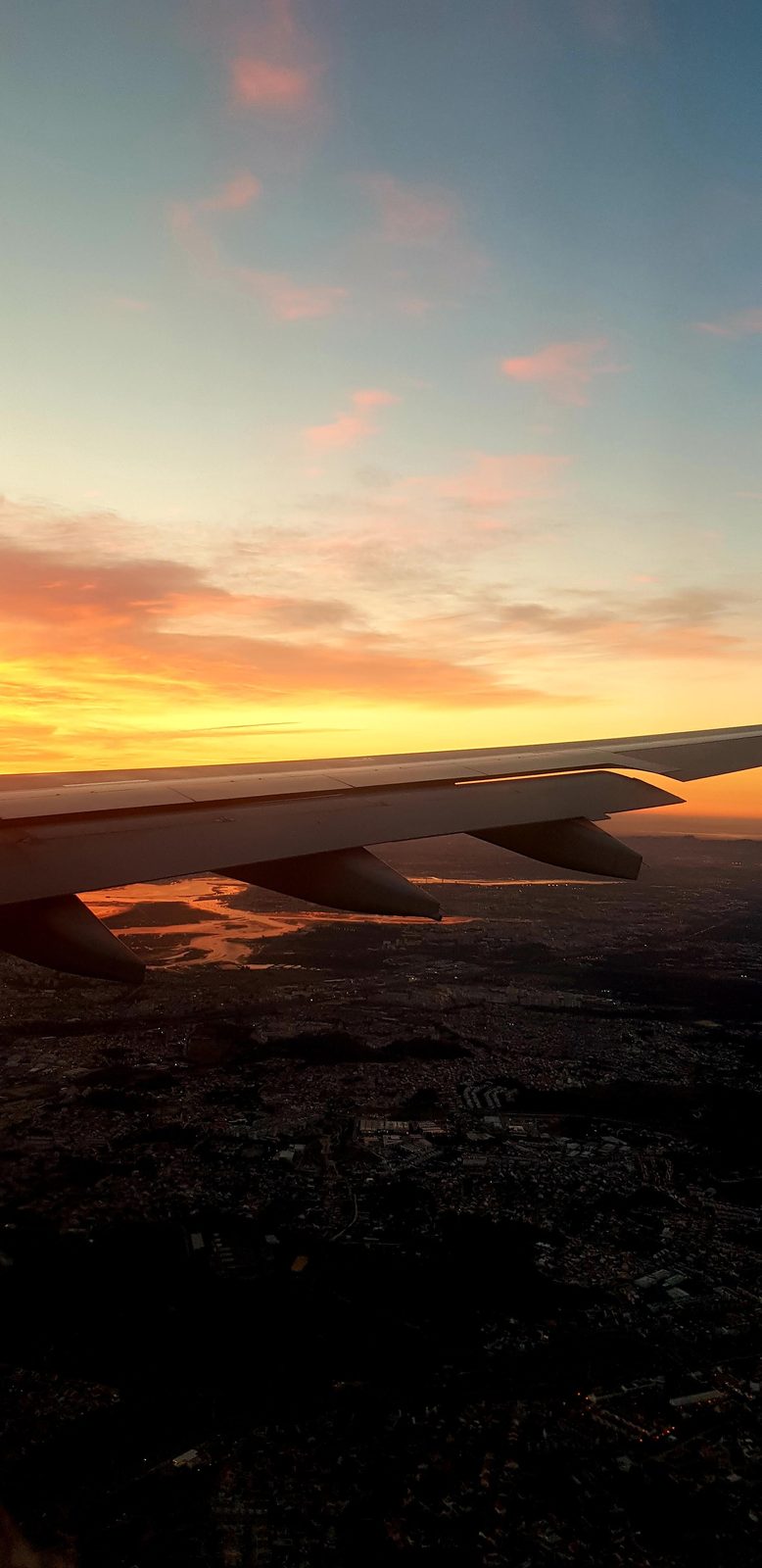
All good things come to an end, and this one was approaching fast. To get home, we first took a flight from Medellín to Bogotá: by road the journey would have been far, far too long, and we had had our fill of buses with extreme air conditioning. On the evening of 14 May our plane took off. Through the window the sun was setting and the wing caught fire in orange.
Two and a half months after our night-time arrival in New Orleans, the trip was coming to an end. We had arrived in Colombia with heads full of clichés, cartels, Narcos and danger. We left with faces: the headmistress in Palomino and her baker husband, the nursery school children, the guides in Medellín, the dog in Jericó. Colombia didn't try to please us, it simply showed itself as it is, noisy, generous, complicated and endearing. Perhaps that's why we liked it so much.