 ← PreviousTravelling around Bogotá: transport and solidarity
20 March
After a week in the turmoil of Bogotá, its traffic jams and packed TransMilenio buses, we needed some air. We took a direct bus to Villa de Leyva, on the high plateaus of Boyacá. Bogotá's bus terminal looks like a miniature airport, with dozens of companies shouting out their destinations at the counters, and it takes a little composure not to board the wrong vehicle. Over two or three hours of road, the landscape gradually opened up: less concrete, more hills, cows by the roadside and bare ochre-coloured mountains on the horizon. We dropped our bags in a small hotel and went straight back out, eager to discover this town everyone had told us about.
A huge square
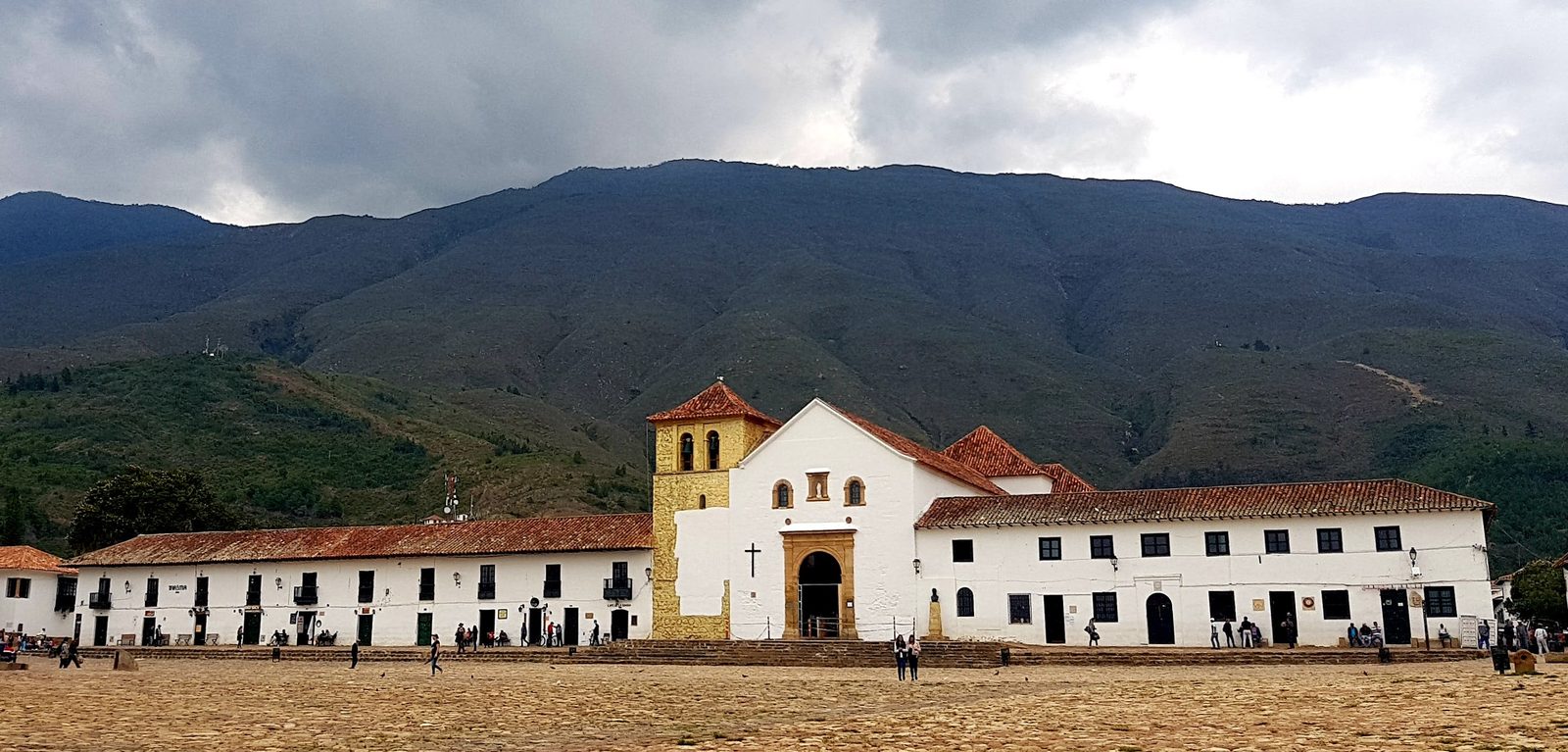
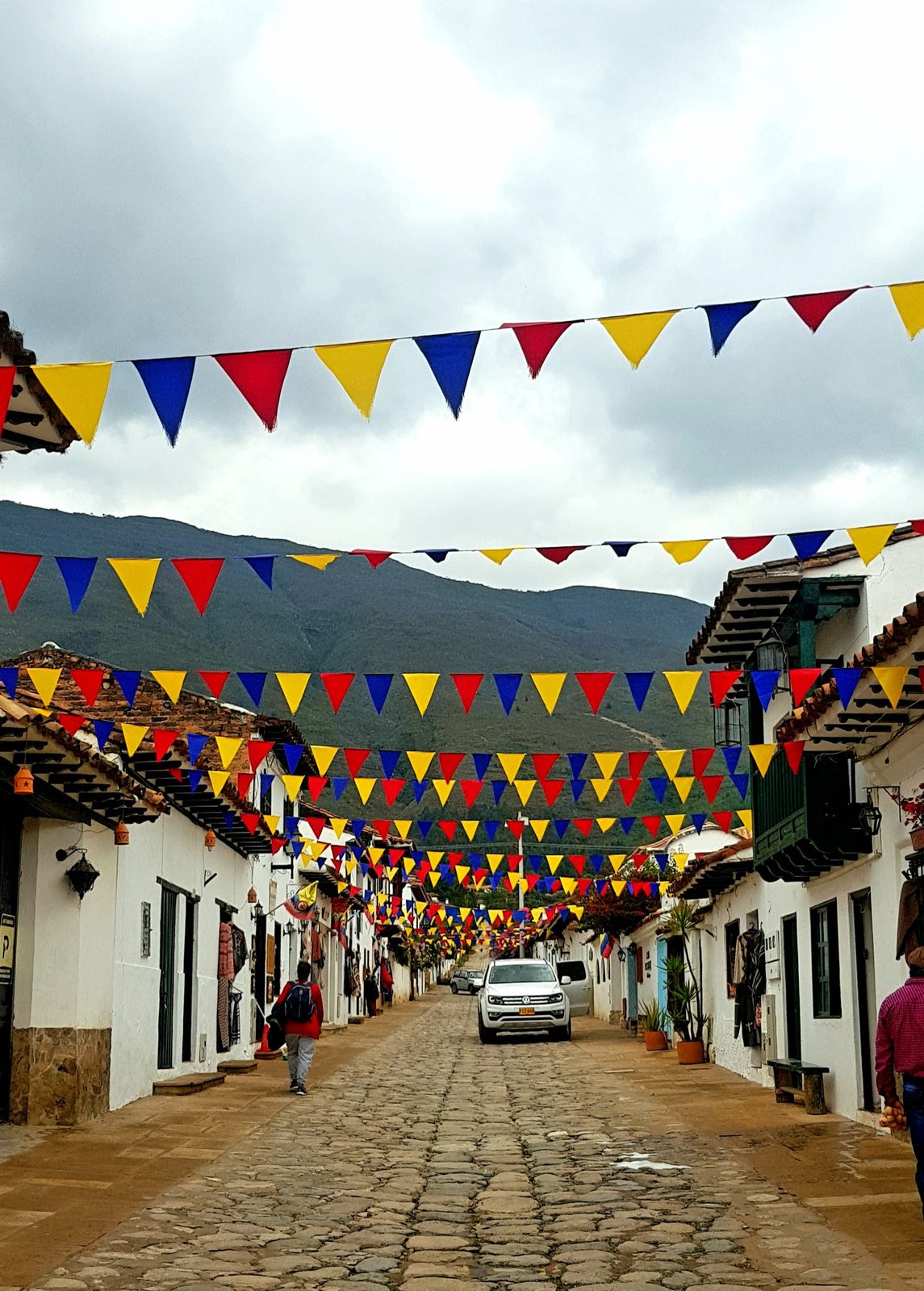
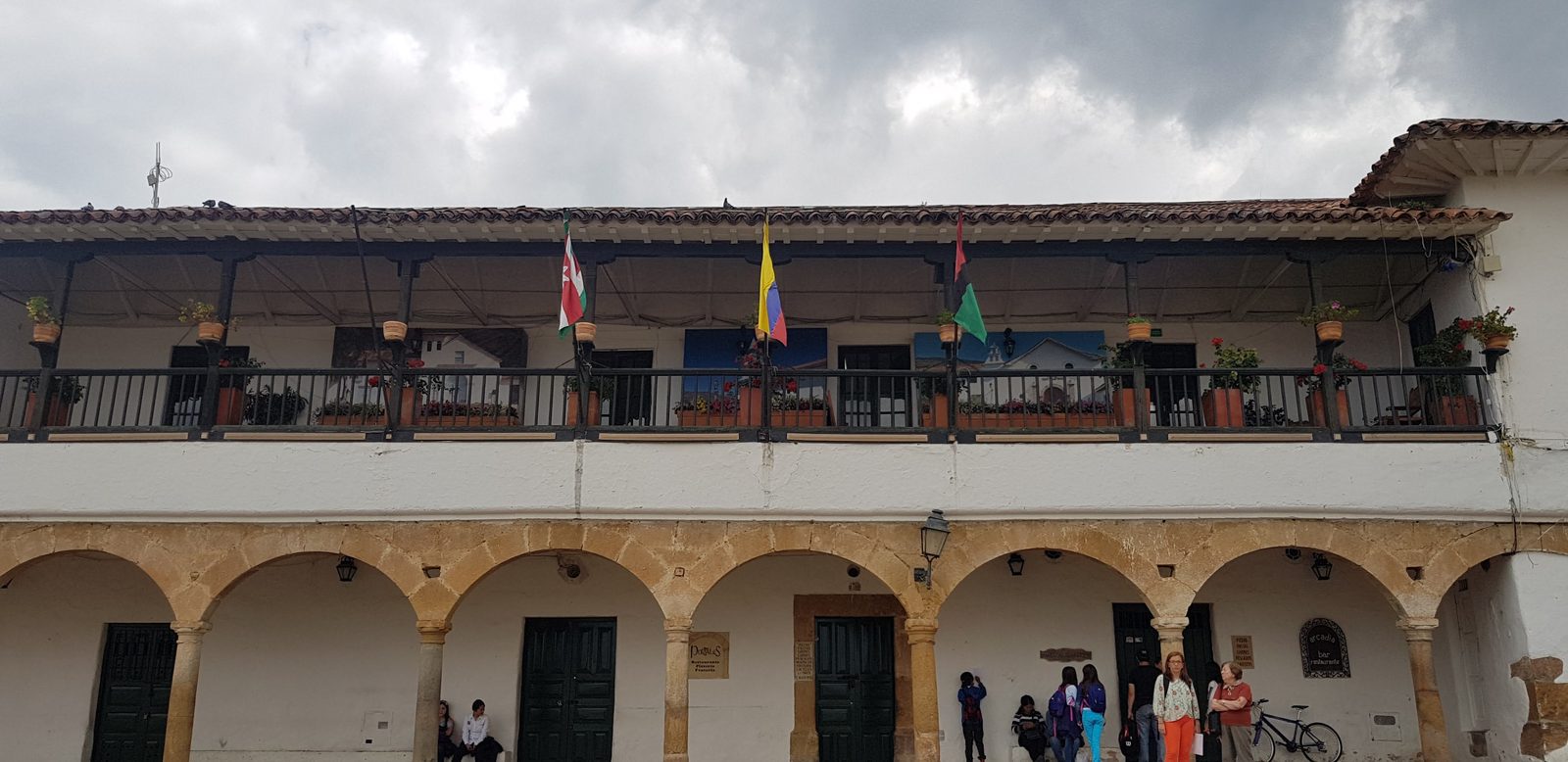
Villa de Leyva was founded in 1572 and has barely changed since. Listed as a national monument in the fifties, it escaped the modernity that disfigured so many other colonial towns. Its Plaza Mayor is one of the largest in Colombia: an expanse of big uneven cobblestones, without a single tree, lined with white houses with wooden balconies and overlooked by a very simple church. The mountains close off the horizon behind the tiled roofs, and under the heavy clouds the whole thing looks like a film set. You almost expect a Spanish horseman to appear around the corner. In the neighbouring lanes, strings of yellow, blue and red bunting, the colours of the flag, fluttered above the cobbles.
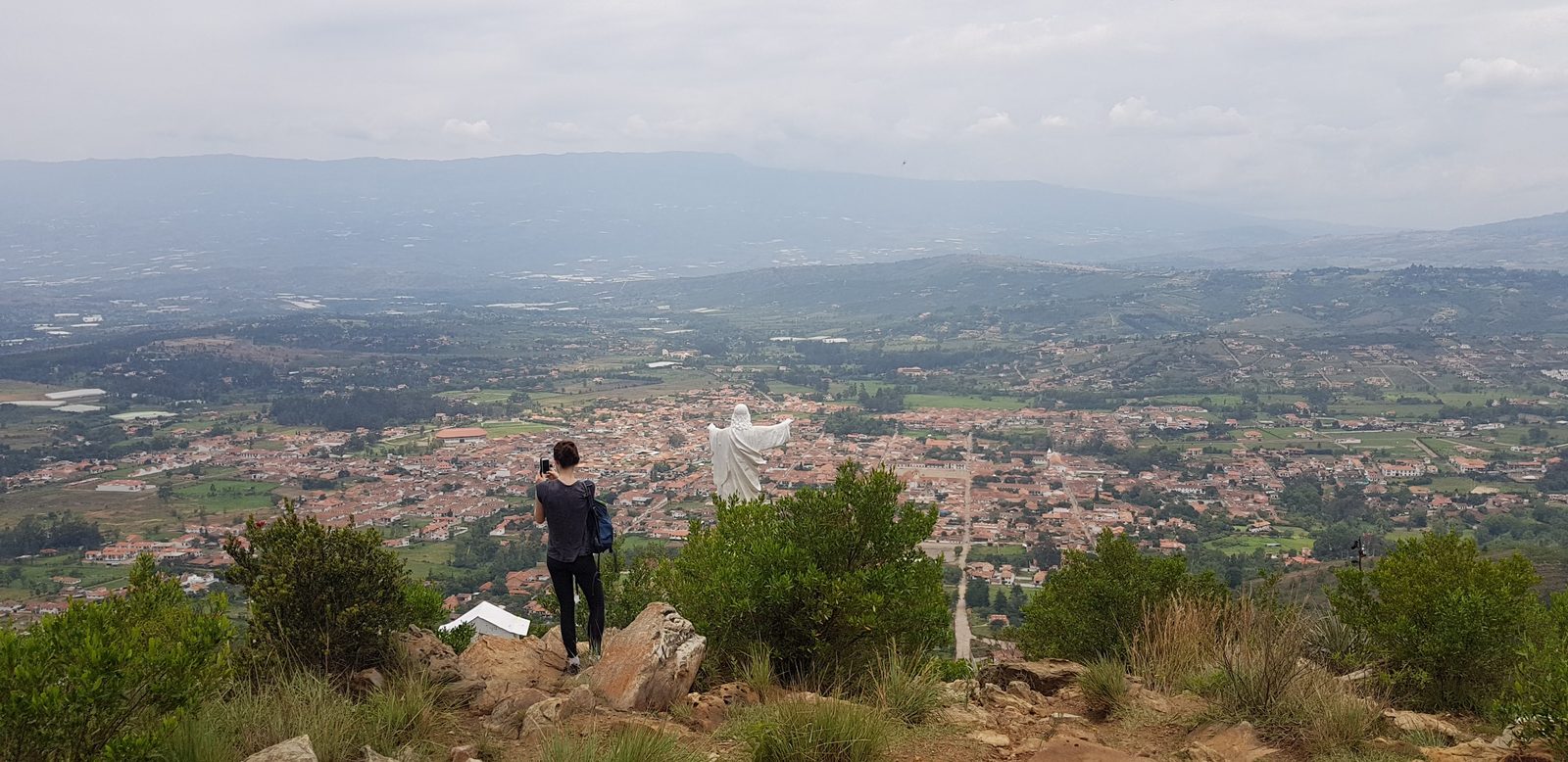
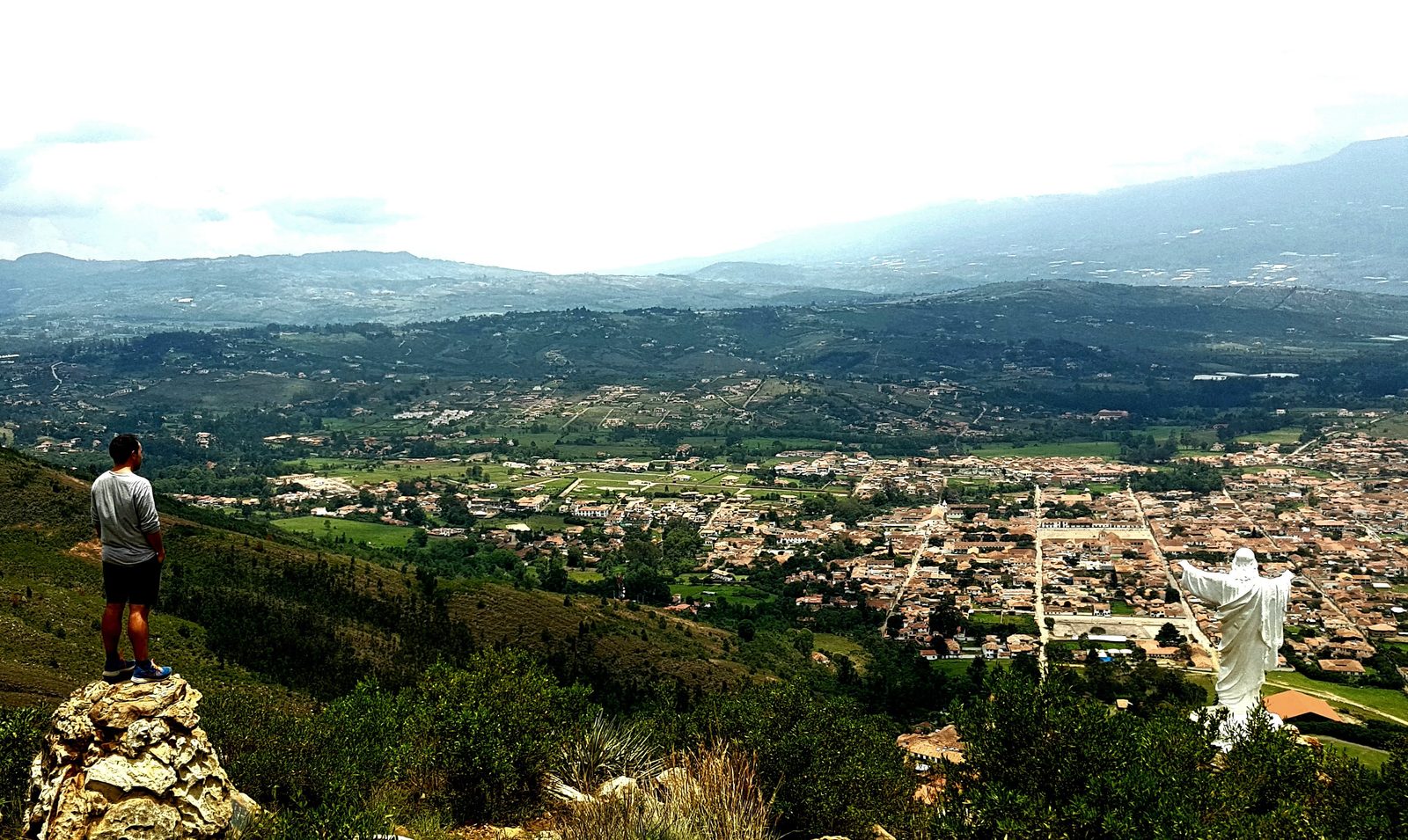
On the first morning, we climbed up to the lookout above the town, where a large white statue of Christ stretches out its arm towards the valley. The climb is short, but at more than two thousand metres of altitude you quickly run out of breath. From up there, Villa de Leyva is no more than a chequerboard of orange roofs lost in a plain that is both green and dry. We understood better why people from the capital come to take refuge here at weekends.
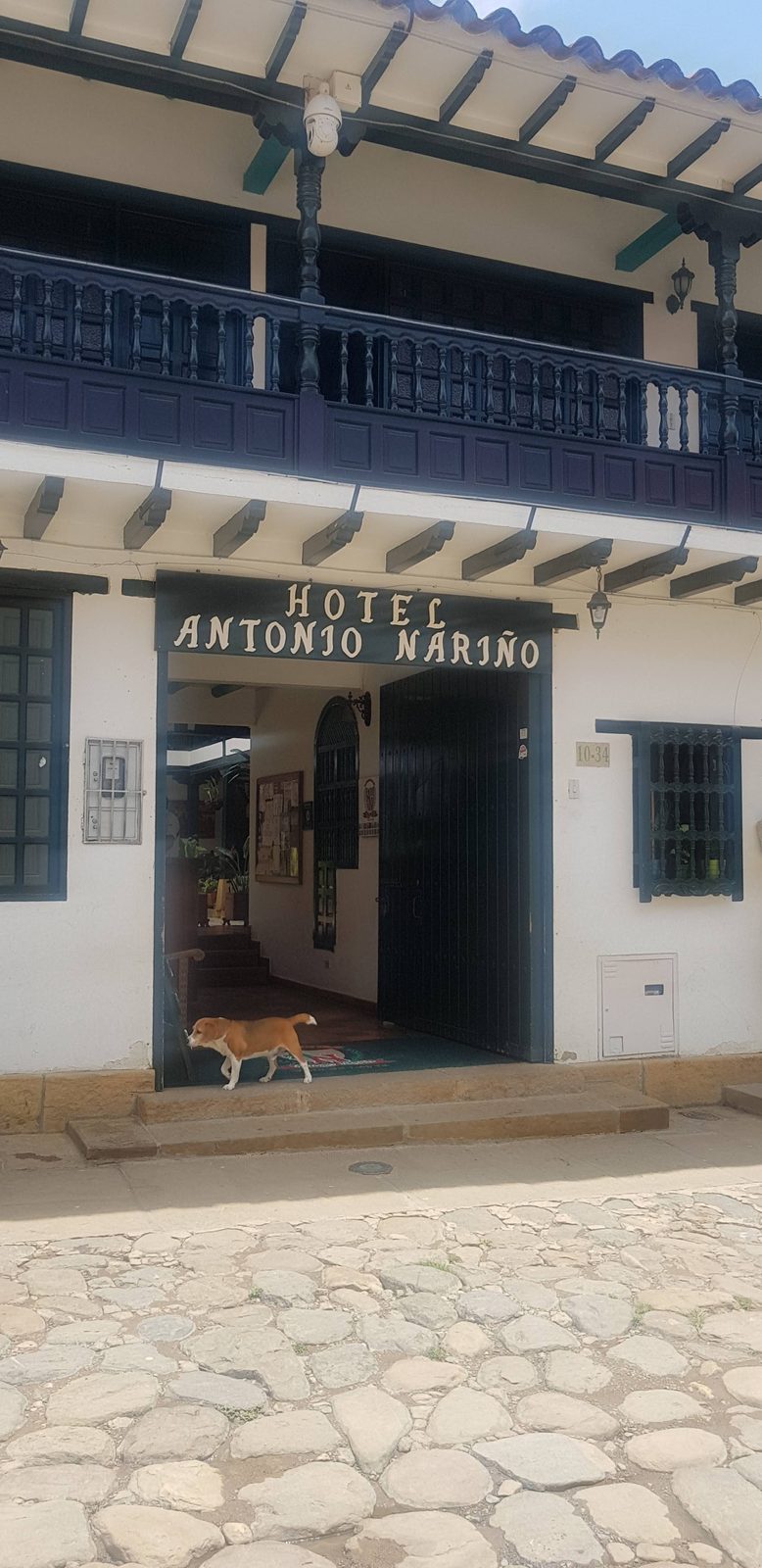
One thing struck us here, as everywhere in Colombia: the number of dogs. In towns as in villages they are everywhere, many of them strays, and are as much a part of the street scenery as the bunting and the cobbles. They sleep in the sun in the middle of squares, cross without looking and sometimes walk alongside passers-by for a few hundred metres before finding something better to do. Nobody seems to mind. They belong to everyone and no one at the same time.
The valley by mountain bike
Next we set off by bike to explore the surroundings. The dirt tracks quickly plunge into an almost desert-like landscape, between cacti, barbed-wire fences and red hills. It's hard to believe you are only a few hours from the greyness of Bogotá. The climbs are sometimes steep and the descents stony, but the scenery soon makes you forget your burning thighs. At the top of a climb, the bikes lying in the dust, Cassandre jumped for joy in front of the valley.
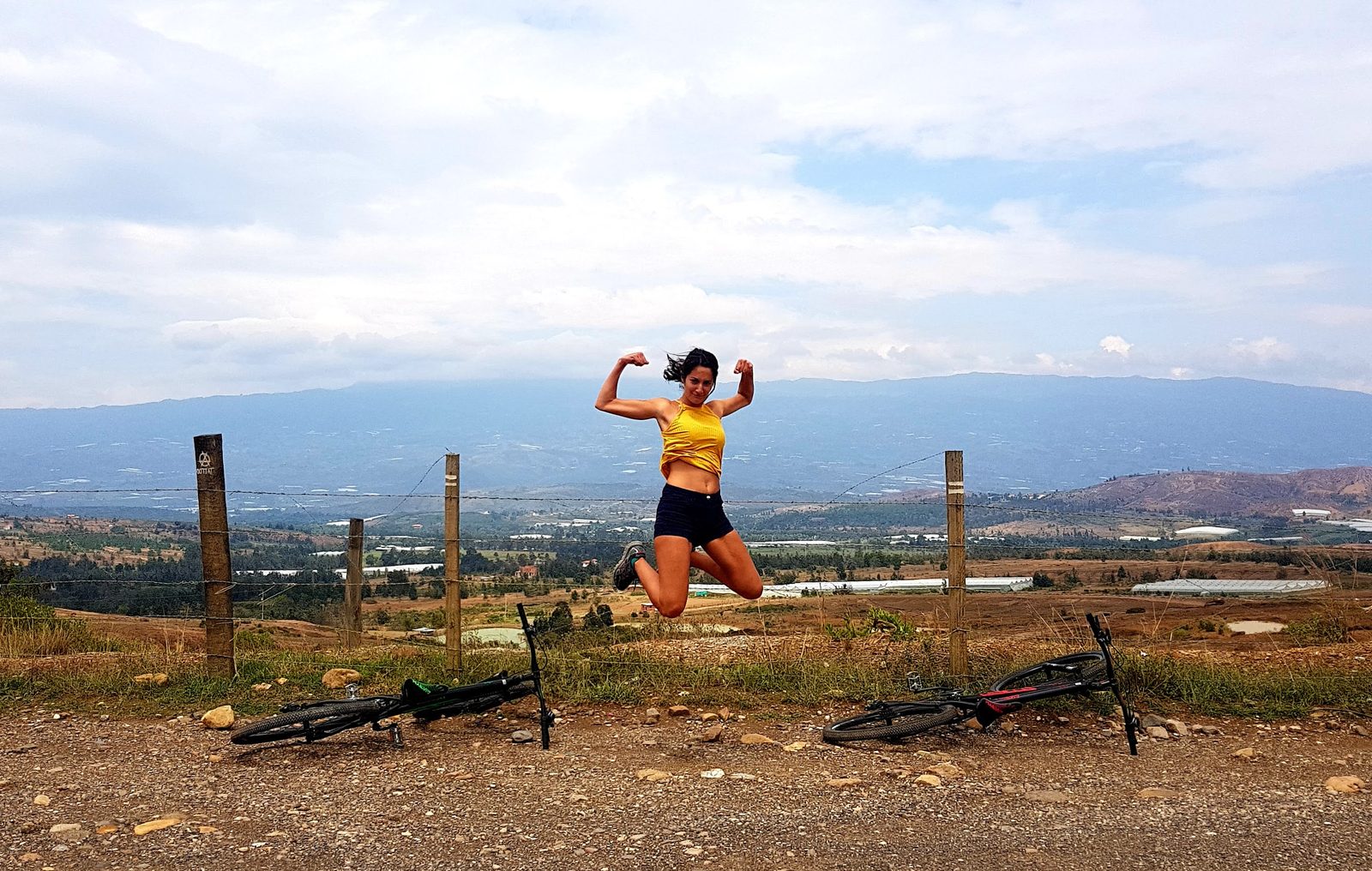
We kept no precise memory of the route, and no mishap came to disturb the day. All that remains is the memory of a lovely day pedalling and having a great time. Perhaps that is what the best travel memories are, after all: the ones that don't tell any special story but leave an impression of lightness.
The clay house and Nariño's house
We also stopped at the Casa Terracota, a house made entirely of fired clay, designed by the architect Octavio Mendoza and often described as the largest piece of pottery in the world. Its rounded orange walls seem to grow out of the ground like a giant termite mound, and you feel a bit as if you were in the house of a hobbit who had decided to think big. Everything is made of terracotta, right down to the washbasins and lamps.
Then back into town, to the house-museum of Antonio Nariño. This forerunner of Colombian independence had translated the Declaration of the Rights of Man and of the Citizen into Spanish, which earned him years in prison, before he died here in 1823. Once again, France turned up where we least expected it, and we were a little proud to know that those few lines written in Paris had travelled so far.