 ← PreviousFrom Cartagena to Rincón del Mar
There are two ways to cross Colombia: by plane, quickly and without seeing anything, or by bus, slowly and seeing everything, sometimes a little too much. To leave the coast for Medellín, we had chosen the night bus, on principle as much as for budget reasons.
A word about these Colombian buses, since we took a lot of them. It is always very, very cold inside, because the air conditioning runs flat out whatever the time, as if the interior temperature were a sign of status. Colombians know this and board with blankets, beanies and sometimes even gloves. We shivered in our T-shirts. And the drivers go very fast on mountain roads full of bends, overtaking on curves and braking at the last moment, to the point where some journeys become frankly dangerous. Better bring a jumper, and not look at the road too much. We arrived in the early morning, frozen and not exactly rested, but in one piece.
29 April
We had left the coast for the mountains of Antioquia, the region of Medellín. Two hours by bus from the city, Guatapé is the favourite day trip of the Paisas, the people of the region, and you quickly understand why.
Seven hundred steps
The Piedra del Peñol rises from the countryside like a giant egg left there by mistake: a granite monolith about two hundred metres high in the middle of a landscape of gentle hills. You can see it from far away, and the closer you get, the less real it seems. To reach the top, a staircase of more than seven hundred steps zigzags up a crack in the rock, like a white seam on the grey stone.
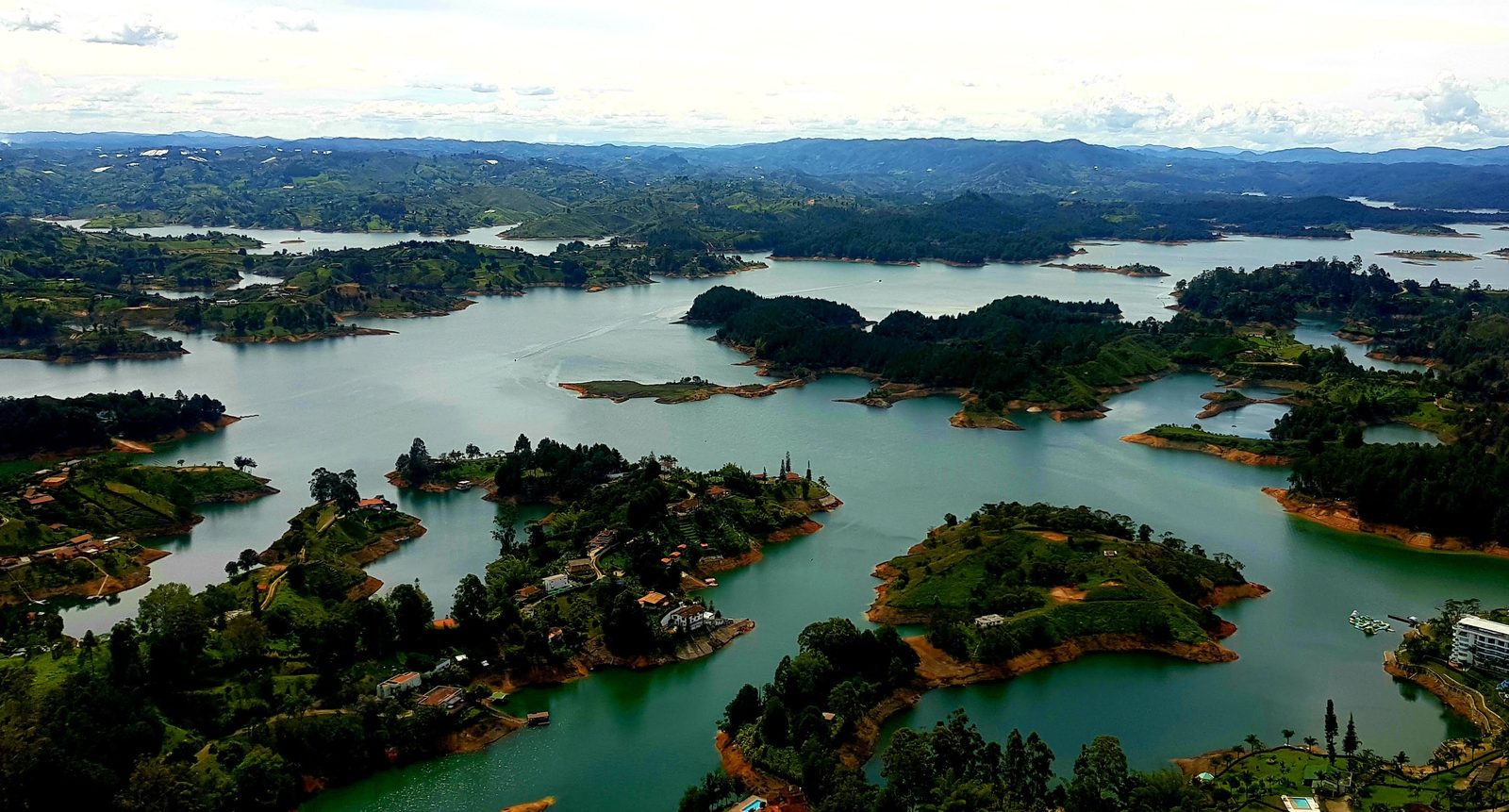
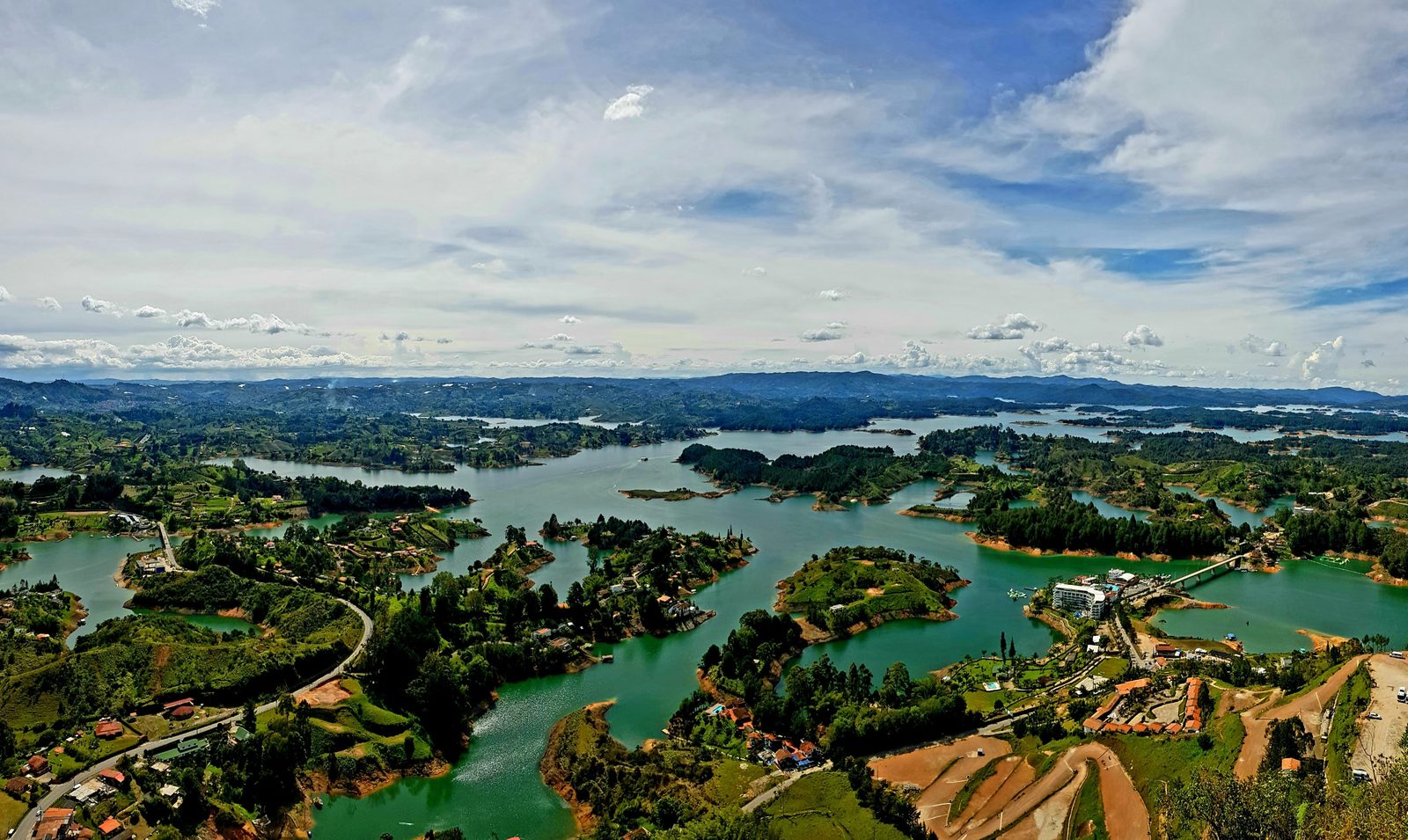
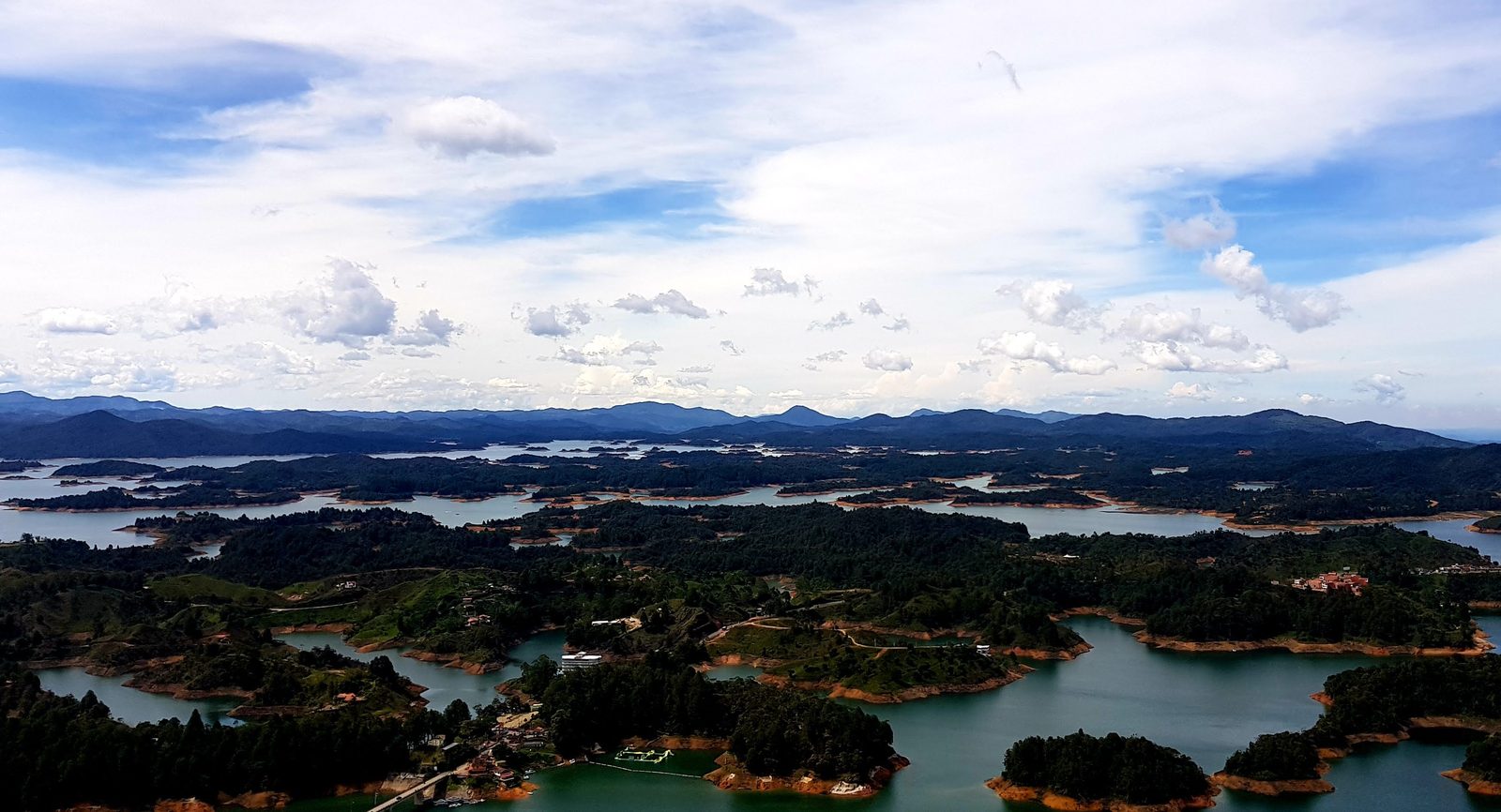
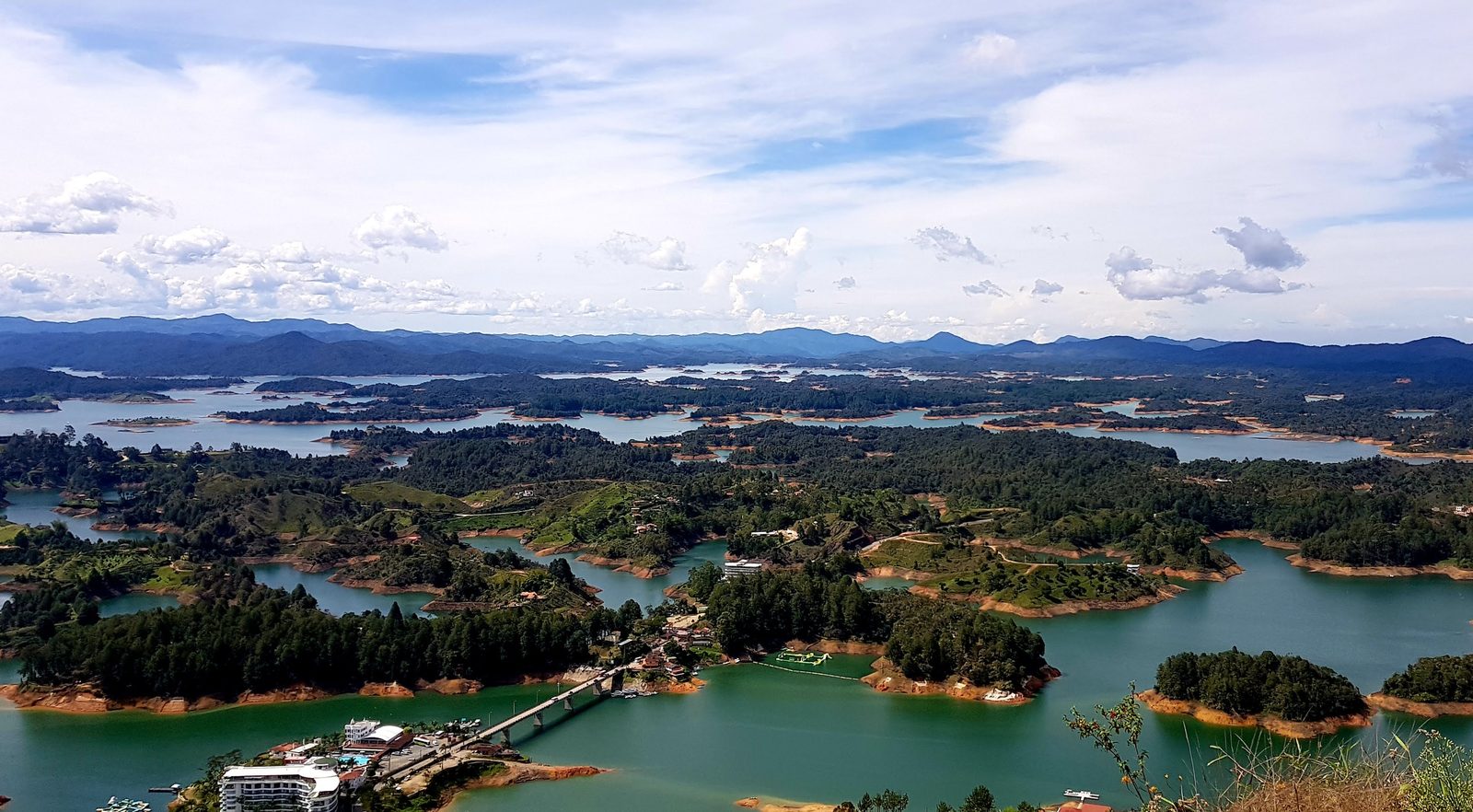
To tell the truth, the climb is shorter than you fear when you see the rock from below, and the reward lives up to it. The view from the top is very, very pretty: all around stretches a huge lake with countless arms, dotted with green islands and peninsulas, as if someone had spilled water on a relief map. Yet there is nothing natural about this landscape: it was born in the 1970s from a hydroelectric dam that swallowed up the old village of El Peñol. The inhabitants were rehoused in a brand-new village built a little further away, and they say the cross of the old church still sticks out of the water when the level drops.
On the side of the rock you can make out a G and the beginning of a U painted in white. The people of Guatapé had started writing their village's name on it, before those of El Peñol, who also claim the rock, came to stop them mid-word. The unfinished graffiti has stayed there, as a testimony to a parochial quarrel on the scale of a mountain. We found this story delightful.
The village of zócalos
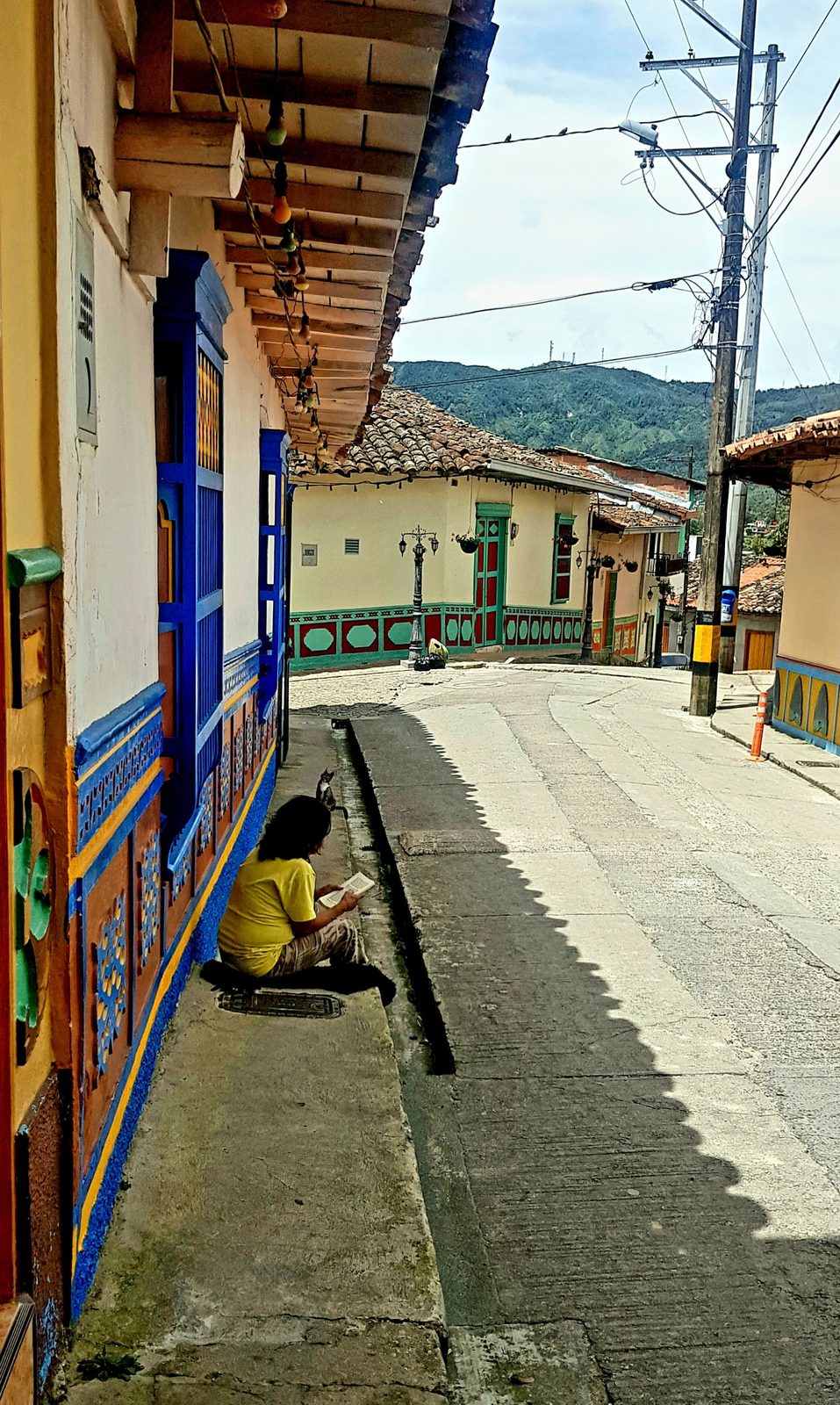
On the way down we strolled around Guatapé, probably the most colourful village of the whole trip, which is saying something in Colombia. Each house has zócalos along the bottom of its facade, raised panels painted in bright colours depicting animals, trades or life in the old days. Originally they protected the bottom of the walls from splashes and hoof kicks. Today each family tells a little of its story on them: a baker shows his loaves, a fisherman his fish. Wooden balconies, painted staircases and tuk-tuks driving through the cobbled streets complete the picture. You sometimes feel as if you are walking through a children's book.