13 March
If you've ever been through heavy turbulence on a plane, you probably know the horrible effect it has on the human body. But when you find yourself in the middle of a huge bout of turbulence, you also understand what it does to the mind. Barely ten minutes before we arrived in Bogotá, a gigantic air pocket sent our plane plunging, almost lifting us out of our seats. People were screaming around us and it was hard to stay calm. Only the reassuring presence of the flight attendants managed to restore some semblance of order, and the pilot finally managed to set the plane down on the tarmac of the Colombian capital's El Dorado airport.
Voted the best airport in South America, as the posters covering the walls proudly proclaimed, it was spacious with very high ceilings. At our late hour, the corridors were fairly deserted and our luggage came out quickly. We weren't necessarily fans of Uber, but all the locals advised avoiding taxis, so we booked a ride through the app and, after some trouble finding our carriage, we met Miguel, a man in his fifties driving a white Renault 19. After a semblance of conversation over the stifling noise of the ageing engine and with our hesitant Spanish, the rest of the ride passed in silence.
Everything was calm around the Torres del Parque too, where we'd be staying for the week. Midnight had just struck and the air was muggy and heavy, especially for people lugging big suitcases. And on top of the tiredness came irritation, because we realised too late that the Airbnb booking didn't include enough directions. We'd expected a single building with a caretaker, but we found ourselves facing three gigantic towers. The caretaker of the first tower lectured us a bit, rightly, in a passive-aggressive way, asking why we didn't have a phone number to contact our host. Our mistake had been to trust the Airbnb app blindly, which left us in a tight spot, as all we had was a first name and a Swedish number.
We had no more luck at the second tower, but the caretaker raised a glimmer of hope by calling the concierge of the third tower, who might know someone by the name of Edda. After grilling us a little, he decided we looked honest and phoned the person in question, who confirmed. With a huge sigh of relief, we got into the lift and met a lady in her sixties. Reading the listing, we'd thought she was a young woman, but we'd been fooled by the youthful language and the mention of Netflix. After her apologies and a quick tour of the place, we put our things away in the spacious room and dropped off to sleep. That was a lot of adventure for one evening.
14 March
Sometimes a small step can be symbolic. The step we took out of the big red-brick towers, for example, was our very first in daylight in South America, the first moment we could really see the capital of a country on this continent clearly. Bogotá, a city so far away and so little known, drenched in the constant clichés repeated by popular culture back home. Walking its streets, you realised it was far too easy to link it to the infamous drug trade. The city was full of people getting on with their own stories, ordinary people leading ordinary lives, with families and plans, no different from us.
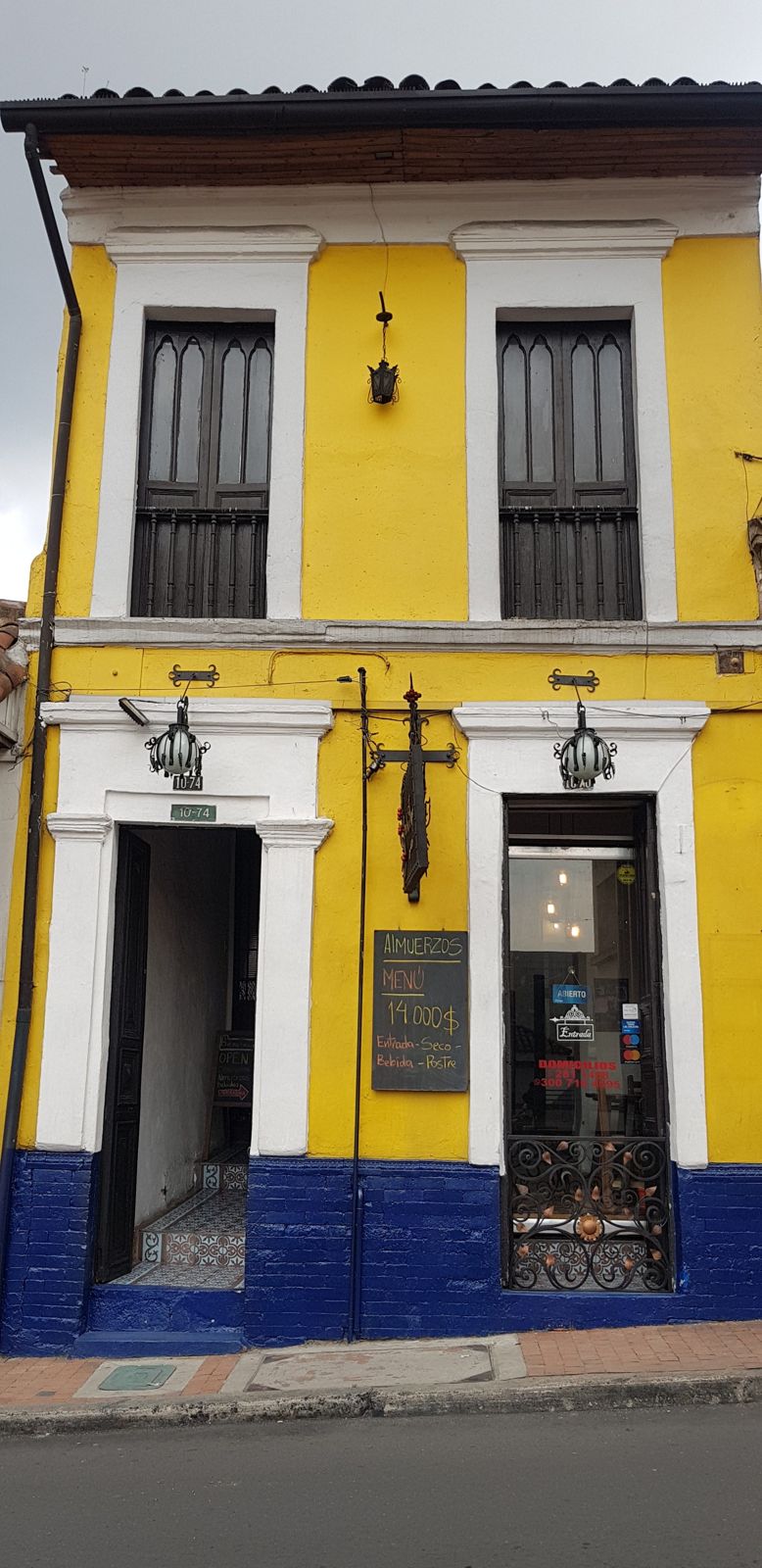
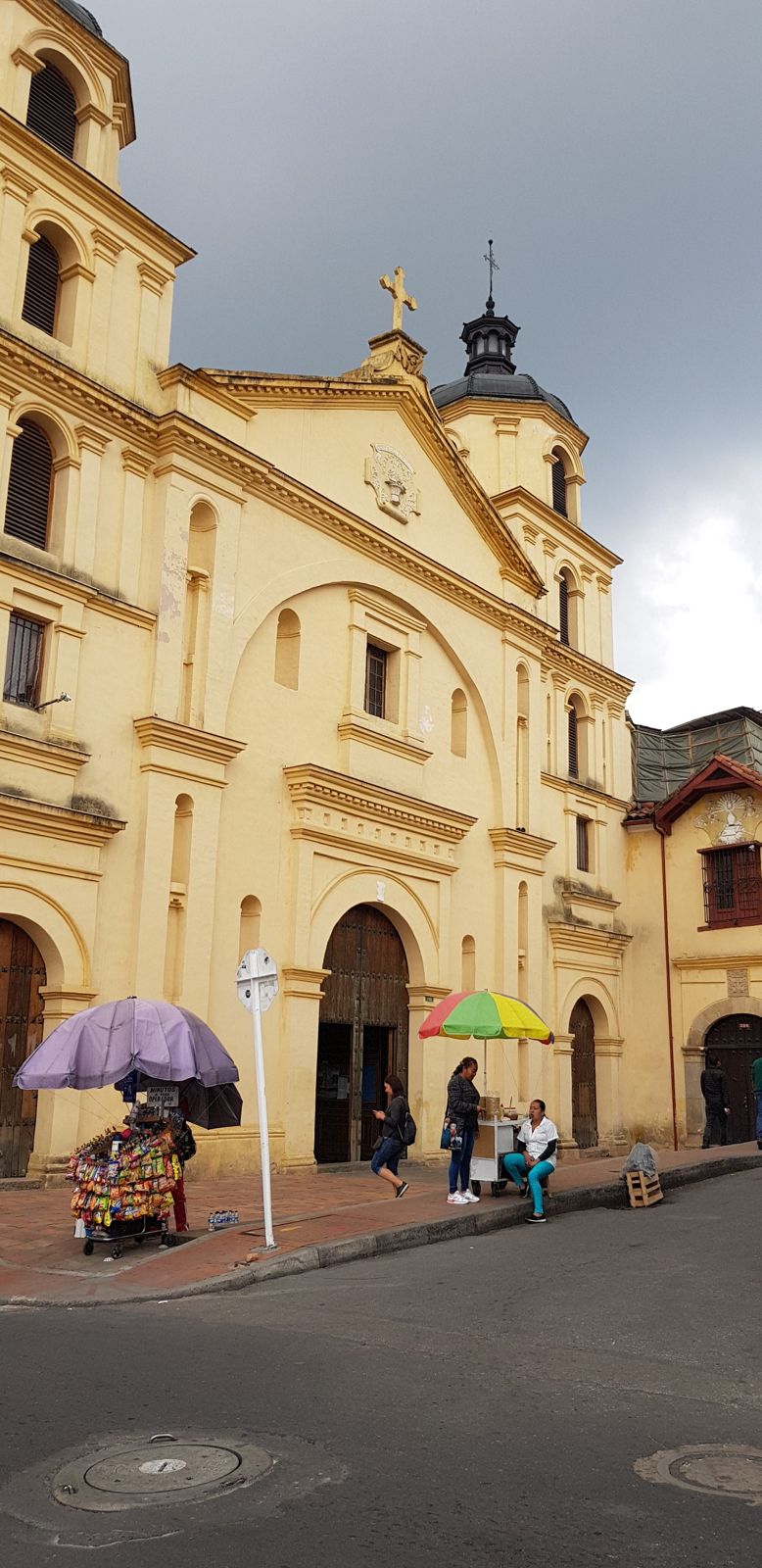
Seated facing a wall in Bogotá's oldest restaurant, La Puerta Falsa, eating dishes we'd never come across, we listened, fascinated, to the flow of conversation around us, trying to understand as much Spanish as possible. It was easier for Cassandre, whose level was advanced, while I had more trouble. Still, I was happy to find I could catch snippets and that the accent wasn't too strong. The weather was mild and we made the most of it to walk around the historic centre between Plaza de Bolívar and La Candelaria, a picturesque and authentic little neighbourhood.
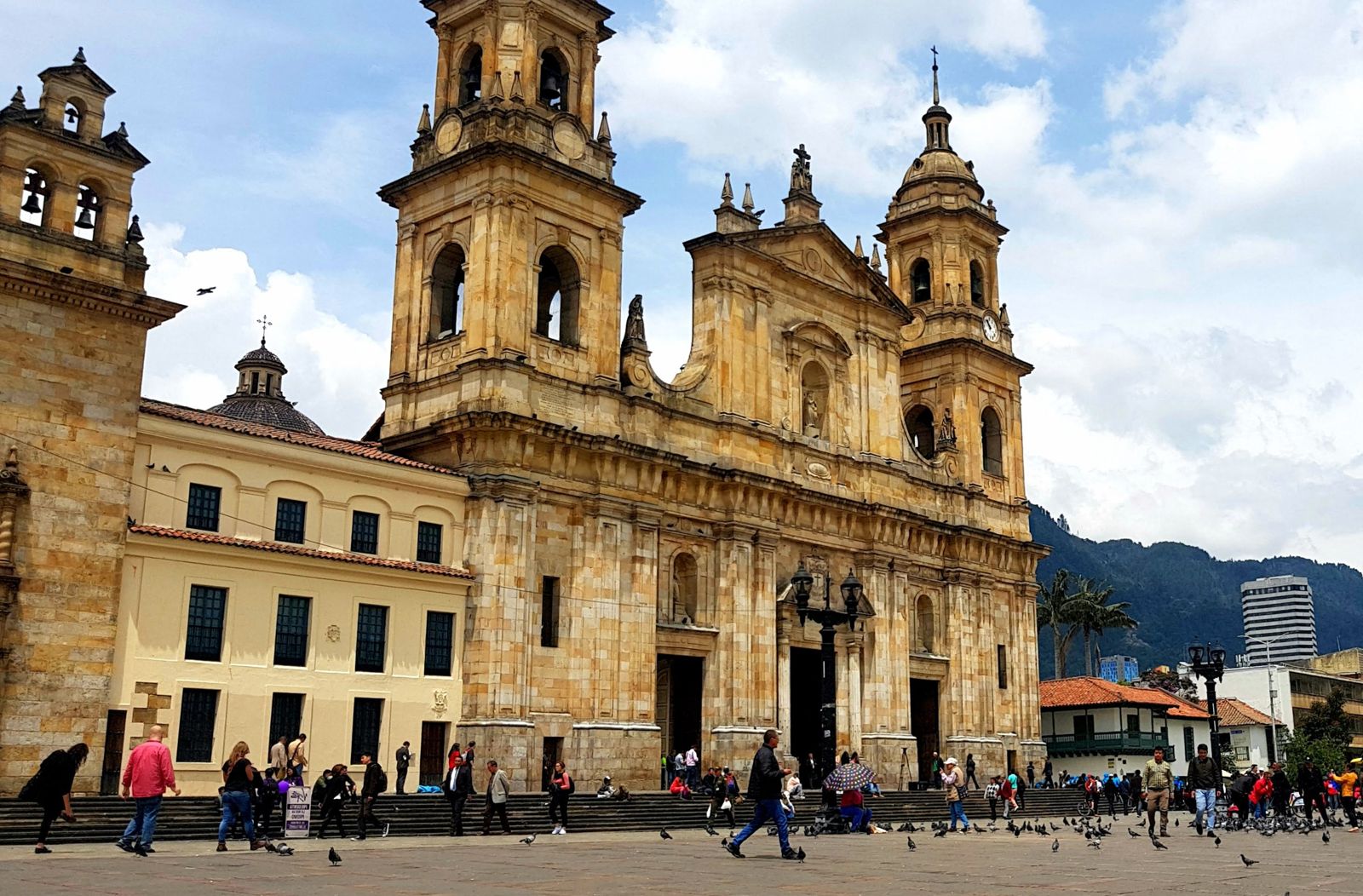
On the big square, it was hard to miss the splendid Cathedral of the Immaculate Conception, one of the largest religious buildings in South America. We noticed lots of people coming and going inside, as at major tourist sites. We went in and admired the sculptures and stained glass. All the seats were taken and we thought we'd arrived at the start of a mass. Going further in, something definitely seemed strange: television cameras were filming from the sides and people were dressed in black. The closer we got to the altar, the more tearful the faces, and it was when we noticed a coffin draped in the Colombian tricolour that we realised it was a funeral! All these honours were for Gloria Zea, a great lady with influence in the world of culture and in giving the poor access to it. Out of respect for the families, we left the church to leave them in peace.
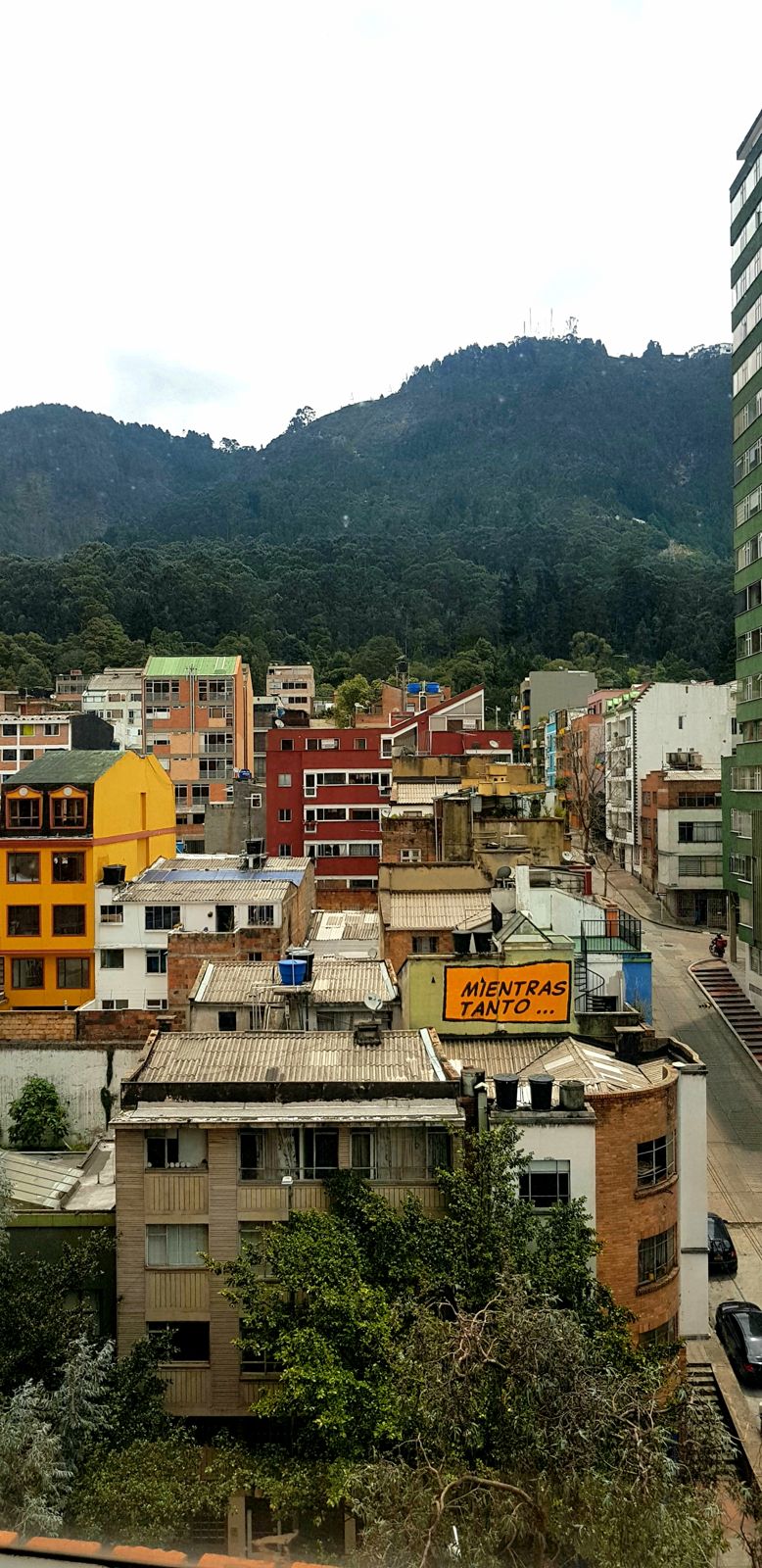
We liked to go slowly when sightseeing, not trying to see everything in record time. We preferred to take the time to absorb the monuments, the views and the stories. Bogotá is backed on one side by a sizeable mountain range, which gives the panorama priceless character. We spent a while sitting and contemplating the Colombian landscape, a new addition to our collection of memories, and after an intense day of walking, we went home to our Airbnb host for an enriching conversation.