 ← PreviousMedellín, the city that learned to climb
7 May
We had one week left in Colombia, and we wanted to spend it far from the big cities, in those Antioquia villages the Paisas talk about with stars in their eyes. Leaving Medellín to the west, the road plunges into the Río Cauca valley and the temperature climbs ten degrees in an hour. You go from eternal spring to tropical summer without transition.
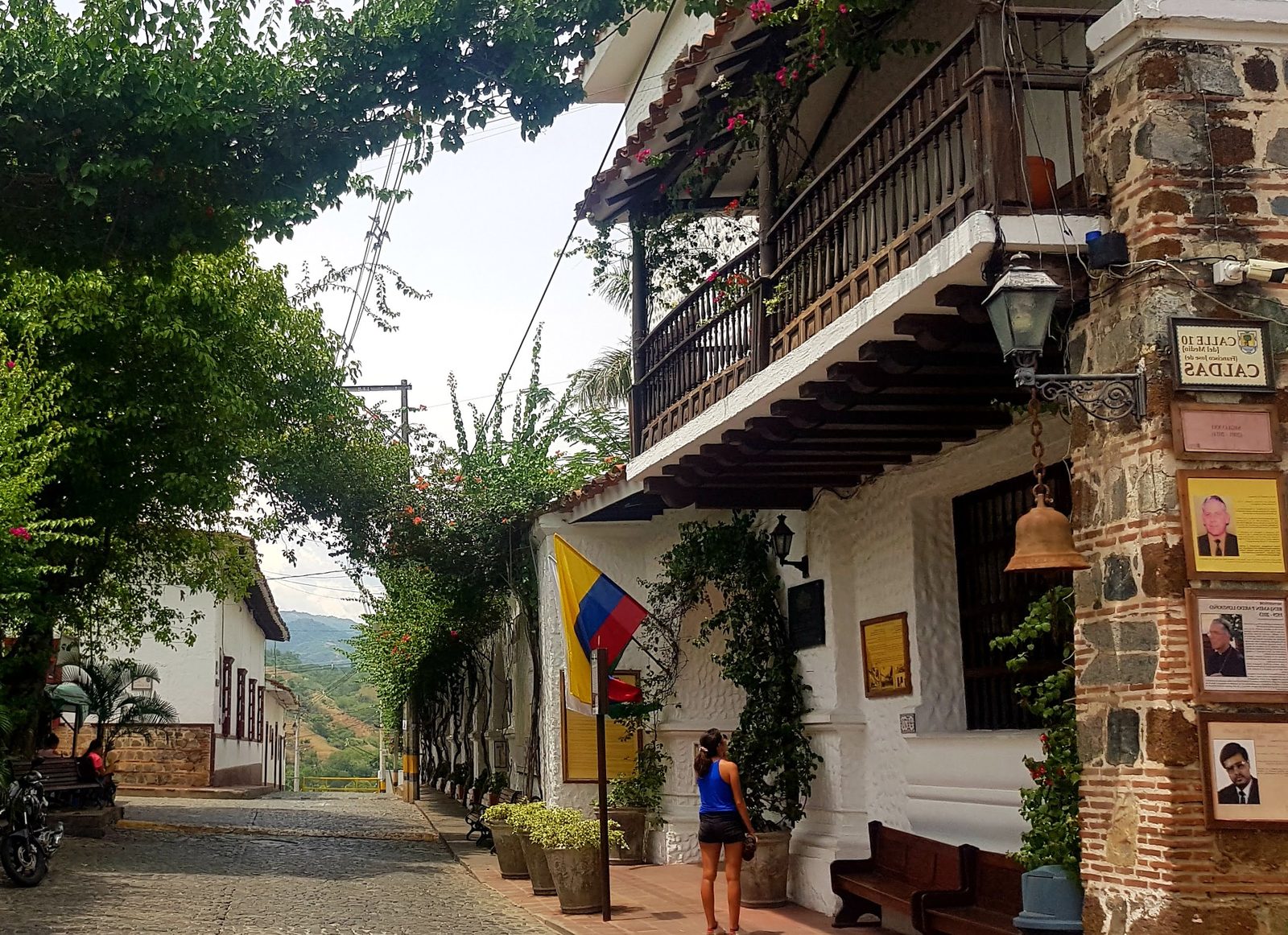
Santa Fe de Antioquia, founded in 1541, was the capital of the province until 1826, before Medellín took that role from it. It never really recovered, which is all the better for visitors: lacking development, it has kept an intact colonial centre. Cobbled streets, white houses with big studded wooden doors, bougainvillea spilling over the walls, and that early-afternoon torpor when only the dogs still dare to cross the square in full sun.
Jericó, the mountain village
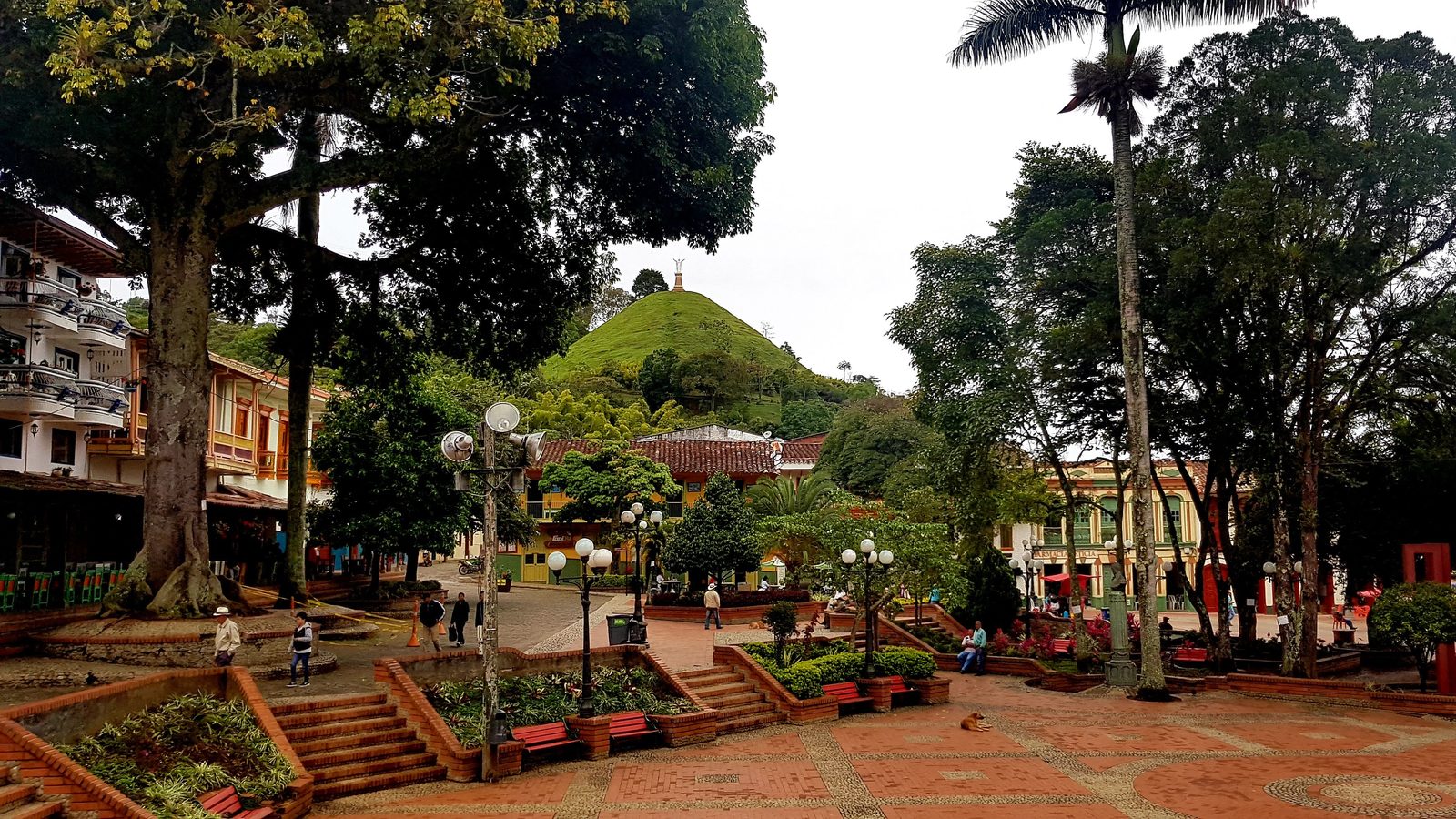
The next day we reached Jericó, perched at two thousand metres among coffee plantations. The road up is long and winding, which probably explains why the village has so successfully escaped mass tourism. No touts or souvenir shops here, but an authentic Paisa village: a large square planted with trees and flowers where old men chat on the benches, hats firmly on their heads, horses tied up in front of the houses, and doors and windows painted red, yellow and green.
Jericó is the birthplace of Laura Montoya, the first Colombian saint, canonised in 2013, and carrieles are still made here, the leather satchels with many secret pockets carried by the muleteers of Antioquia. It is said that a real carriel must contain a comb, a mirror, dice, a razor and a lock of hair from the beloved woman. We didn't check.
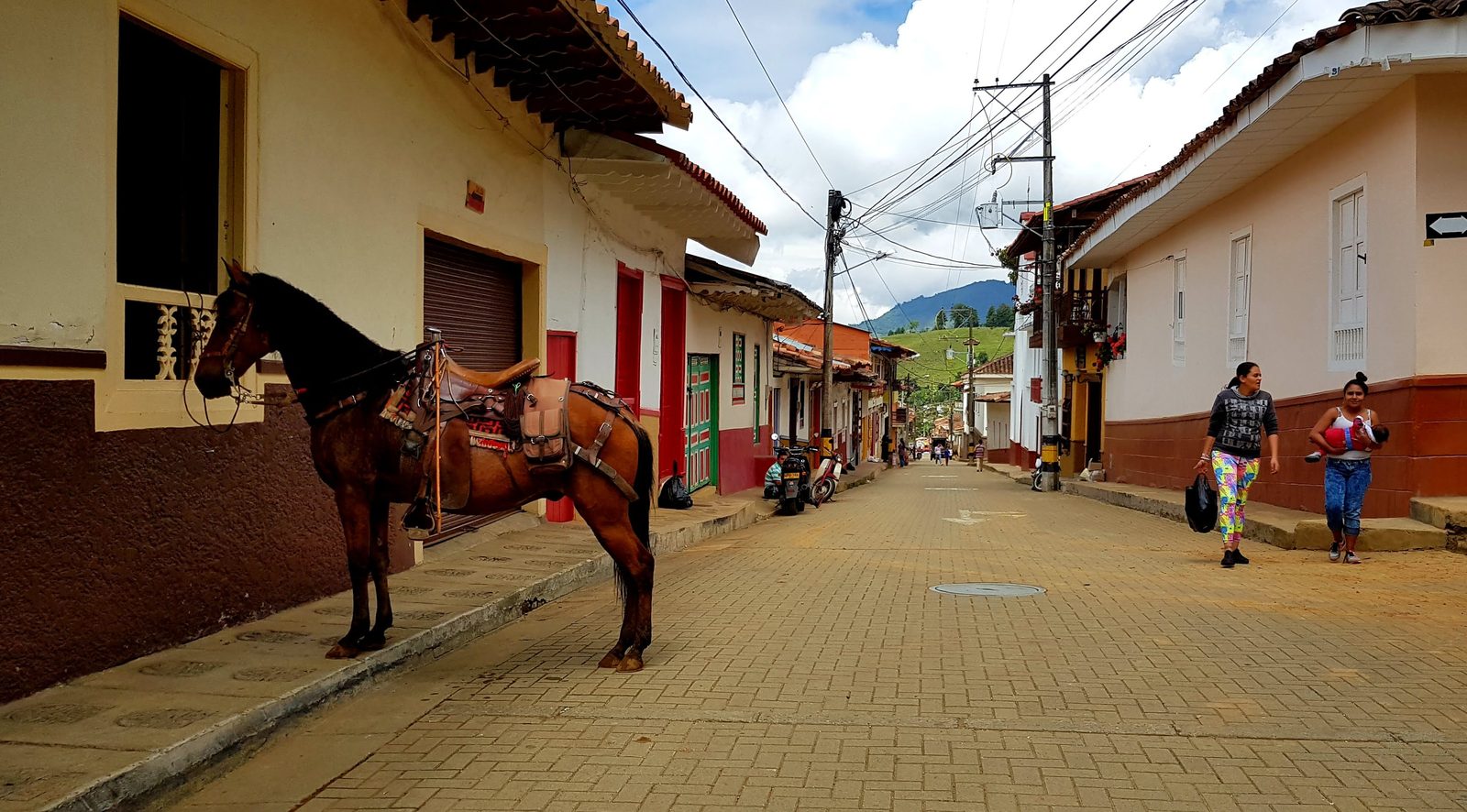
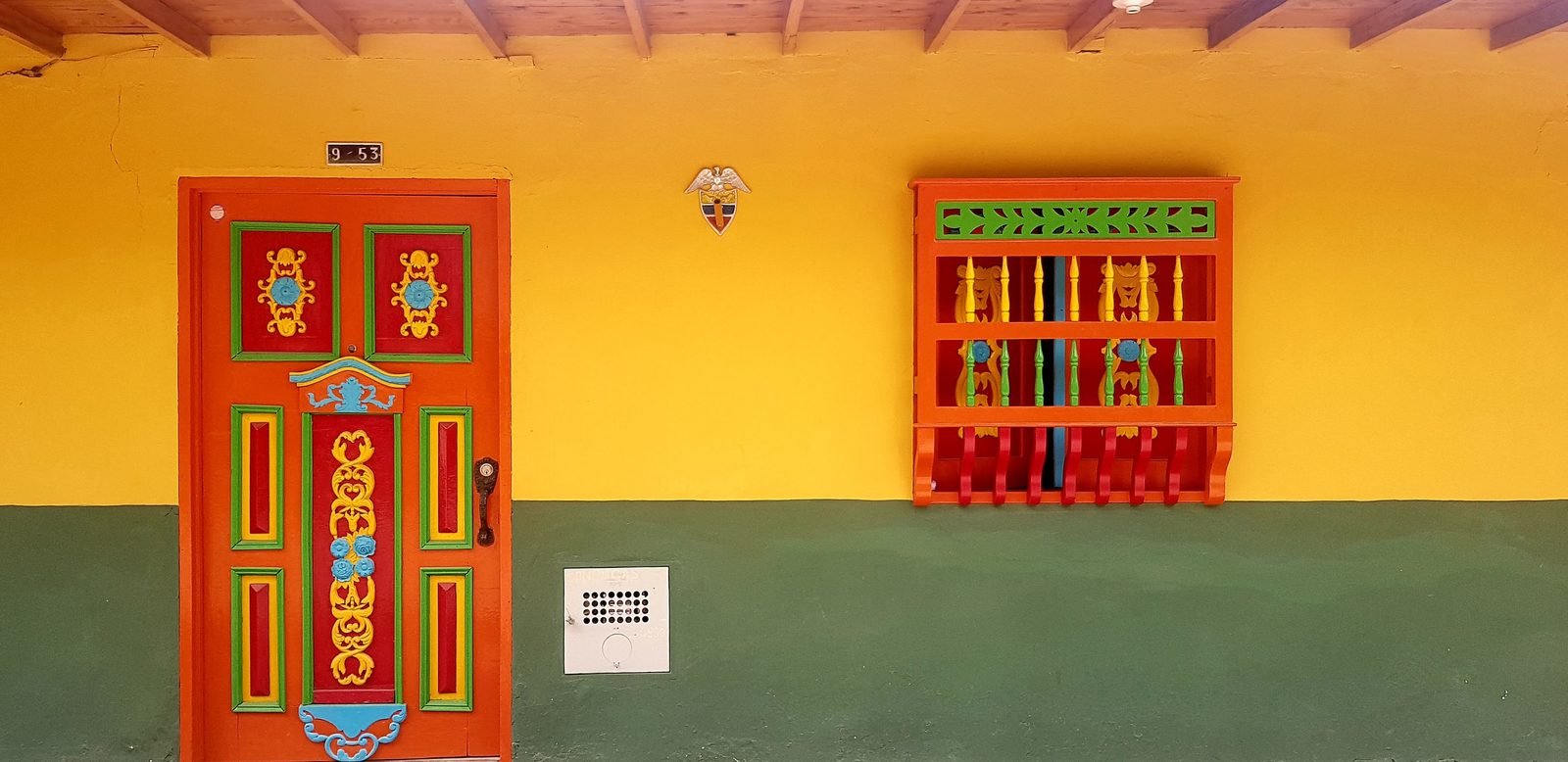
We spent only one night in Jericó, in a very pleasant small hotel, but it was one of those nights when you already regret having to leave.
9 May
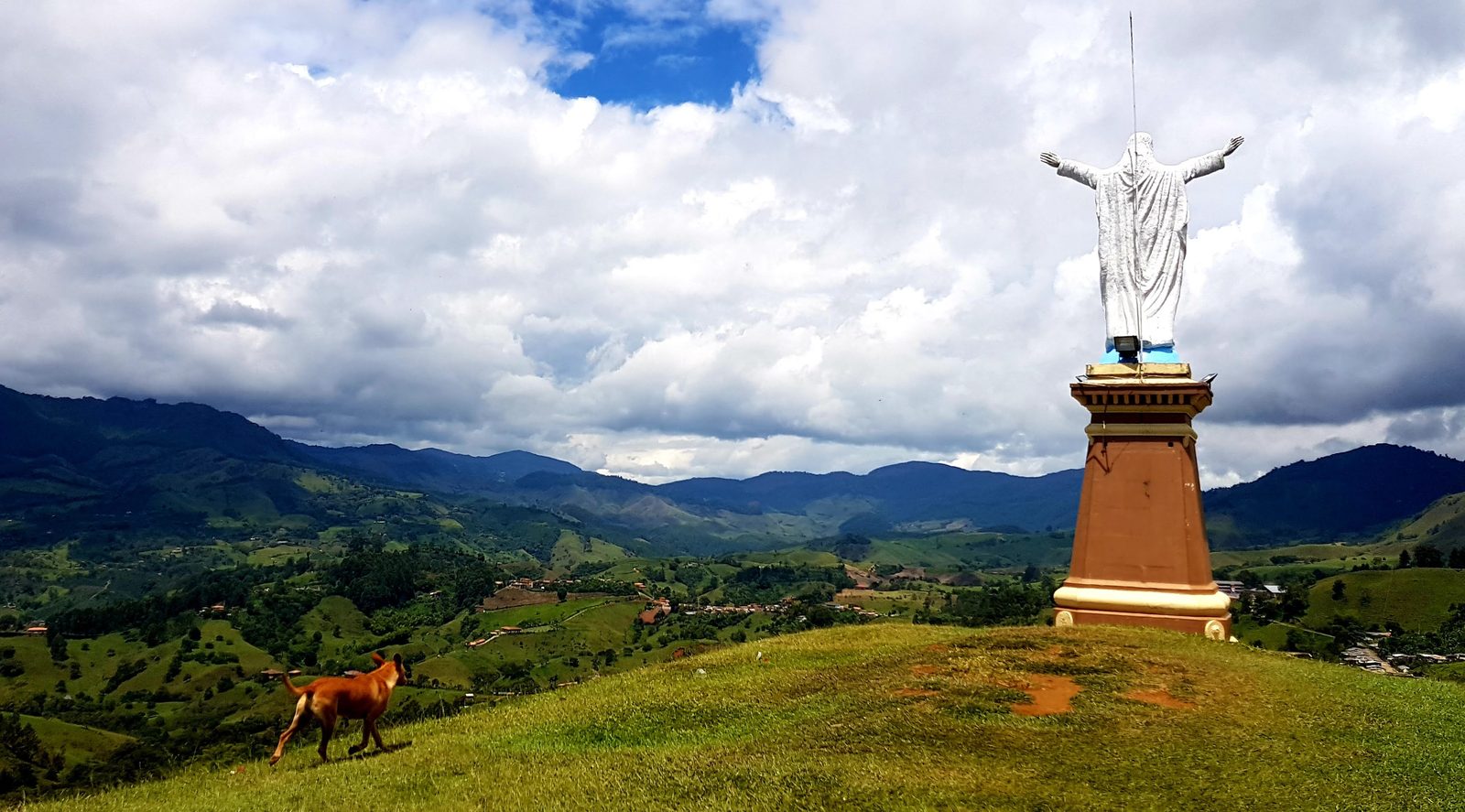
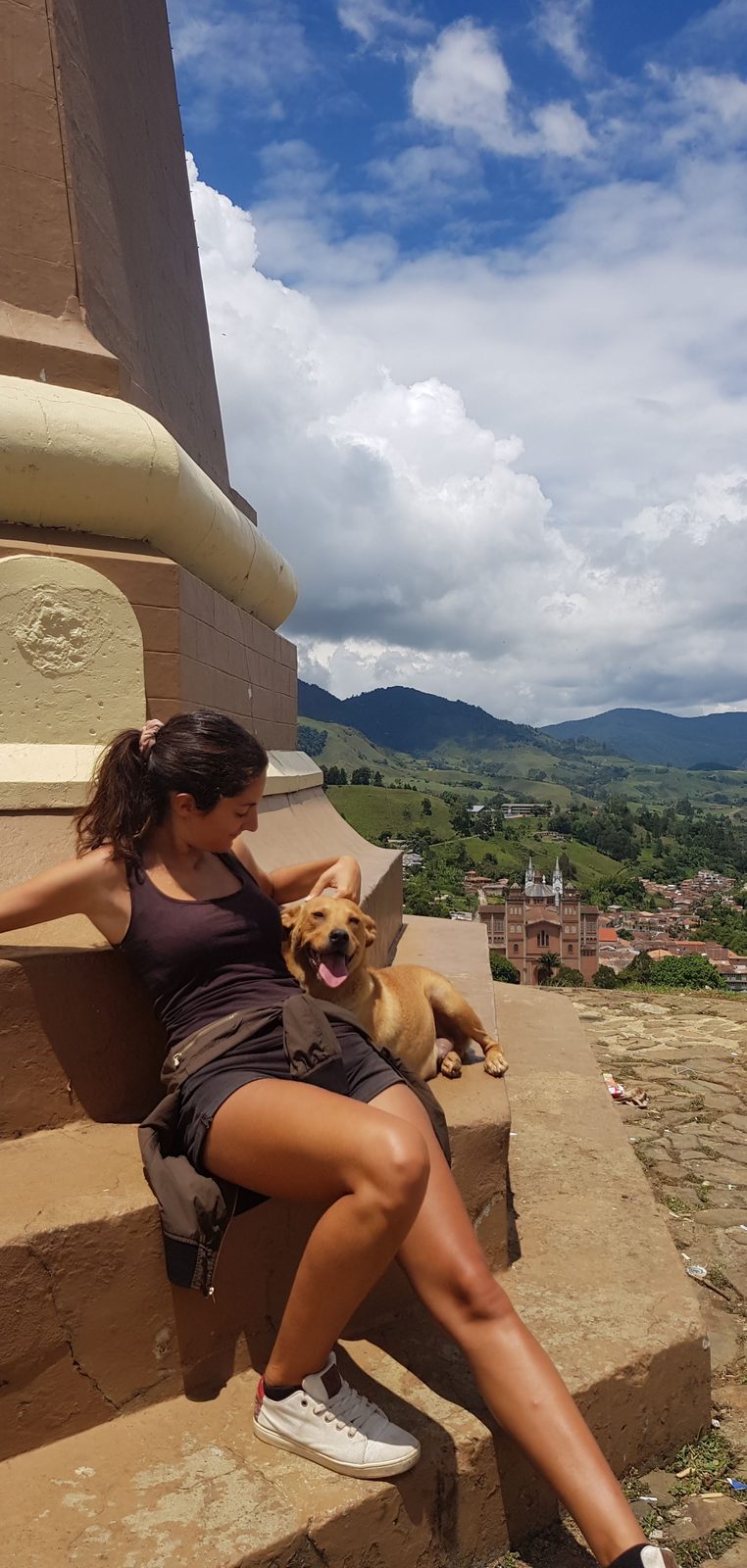
On the morning of the 9th we climbed up to the statue of Christ overlooking the village. We weren't alone: a local dog adopted us from the very first steps and followed us all the way, trotting ahead, stopping to wait for us, like a volunteer guide who had done the walk a thousand times. At the top, it came and settled against Cassandre at the foot of the statue. From up there, Jericó is no more than a grid of red roofs in the hollow of the green mountains, and you understand why its inhabitants never wanted to leave.
We also took the time to drink a coffee in a finca, among the plantations, right where it grows. After two months of drinking it everywhere, it was a bit like finally meeting someone you have heard a lot about.
On the square, on the way down, chivas were waiting for their passengers: those old country buses with bodywork painted in every colour, with wooden benches open at the sides, which still link the villages to isolated farms. We climbed into one of them to reach Jardín, wedged between sacks of coffee, farmers and a chicken cage, our hair blowing in the wind on the bends. The dog watched us leave from the square.