 ← PreviousExploring Bogotá: culture and sport
Of course, with a substantial budget you can afford to travel using drivers or taxis. But the main difference between a holiday and travelling is that when you travel, you enter the daily lives of ordinary people, not just those working in hospitality. Our heads almost pressed against a window aboard the TransMilenio, that was the thought that came to mind. It was far from pleasant, but at least we were sharing the life of the average Bogotano. In the most congested city in the world, there's no rail transport but a dense bus network, of which the TransMilenio is part. Mostly running on dedicated lanes, the buses have the central lanes of the avenues to themselves and move faster than motorists in their little cars. But far from being a cure-all, the system hit breaking point in 2009 with already 1.6 million passengers. In 2019 the total is estimated at 2.5 million a day. Which explains the packed stations, where you sometimes wait thirty minutes just to get in, and the overcrowded buses.
Our bus empties as the stations take us north. We see lots of people, including the usual Venezuelans asking for something to survive on. Colombians show great solidarity with their neighbours' situation, and we regularly see them giving these migrants a few coins. Rummaging in my pockets, I find two lollipops a restaurant owner gave us the day before, and we give them to two children travelling with their father. He thanks us with a smile and the children are over the moon. We then get off at Portal Norte, a huge bus terminal in the north of Bogotá, where we take another, more modest bus. This one takes us to the small town of Sesquilé, where we're supposed to catch the shuttle to Lake Guatavita.
But that's also the spice of travel: nothing goes as planned. It's a weekday and the shuttle only runs at weekends, leaving us standing helplessly in the village square. A woman notices us and doesn't take long to work out that we're tourists. She offers us a taxi at a price we know is outrageous for the area, but we accept because we don't really have a choice and we really want to see this lake.
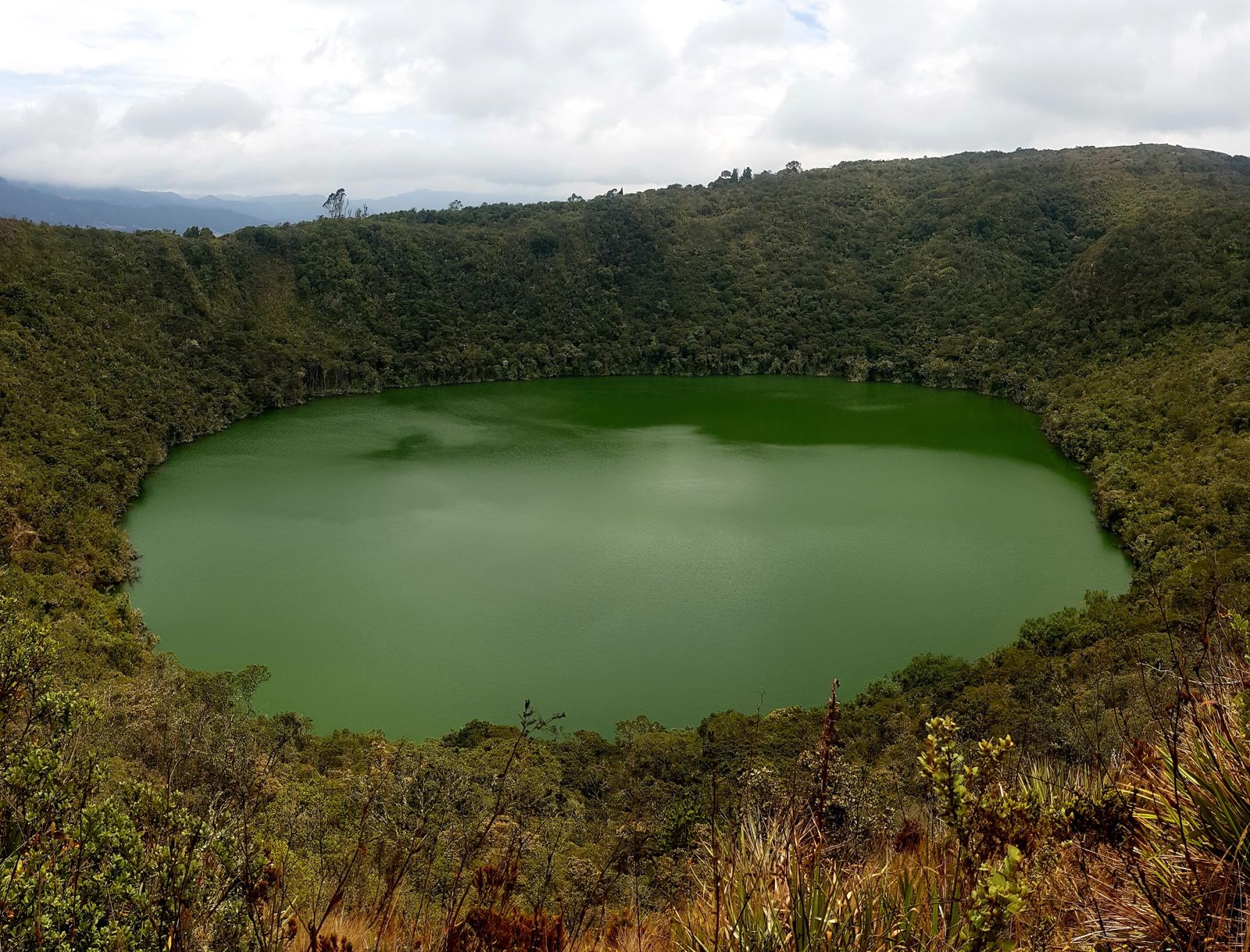
It's said to have been formed by a meteorite impact, and it's true its shape looks like a crater. The theory has never been confirmed, but what's certain is that it was a place of pilgrimage and offerings for the Muisca civilisation, who threw gold objects into the water. When the colonists got wind of this custom, they tried every possible means to drain the lake. They even tried to dig a trench to create a notch in its rim. None of their schemes worked, and the mystery remains buried dozens of metres down. This whole story is told to us by our guide, because to boost the local economy and make sure visitors stay on the trails, Colombia makes you pay for a guide in almost every national park. A simple but effective way to bring more money into the coffers.
On the way back, chatting with the taxi driver, we learn that we were overcharged for the bus on the way out, and he insists on waiting with us until it comes by again. As we get on, he asks the driver in a loud voice whether the fare is indeed the one he believes is fair. Not fooled, the bus driver agrees, though without much good grace. We wave a grateful goodbye to the taxi driver through the window of the bus that's already taking us back towards Bogotá.