 ← PreviousAfter the first day of rain comes fine weather
It's already hot when we wake up. The little room faces the rising sun and the small wooden shutters are no match for its power. We're almost sweating already as we have breakfast on the floor. We collect our bikes from the garage, attach the panniers and take Route 202 towards the western side of the Nagasaki peninsula.
The stage profile pushes us to start early because, of today's 35 kilometres, 16 are really tough, with several long climbs. It's a public holiday today, Marine Day ("Umi no Hi"), which officially marks the start of the summer school holidays, so there are huge numbers of people on the main road for the first 15 kilometres. It makes progress difficult, because the Japanese show very little consideration for cyclists and we get skimmed far too often.
All the more so as there are some serious climbs and we sometimes unintentionally hold up traffic at our slow speed. We go up on the pavement when there is one, and when there is, the lack of clearing turns our progress into a trek through tropical jungle. So the first hour on the road is sheer hell for us. We can't enjoy the scenery, the road is hostile and the heat is atrocious. We can't even stop for a photo on the bridge over the inlet, even though the panorama over Ōmura Bay and its islets is sumptuous. Not a second's respite: we have to ride straight and be careful, as the bridge is narrow with no pavement, and even there we get overtaken.
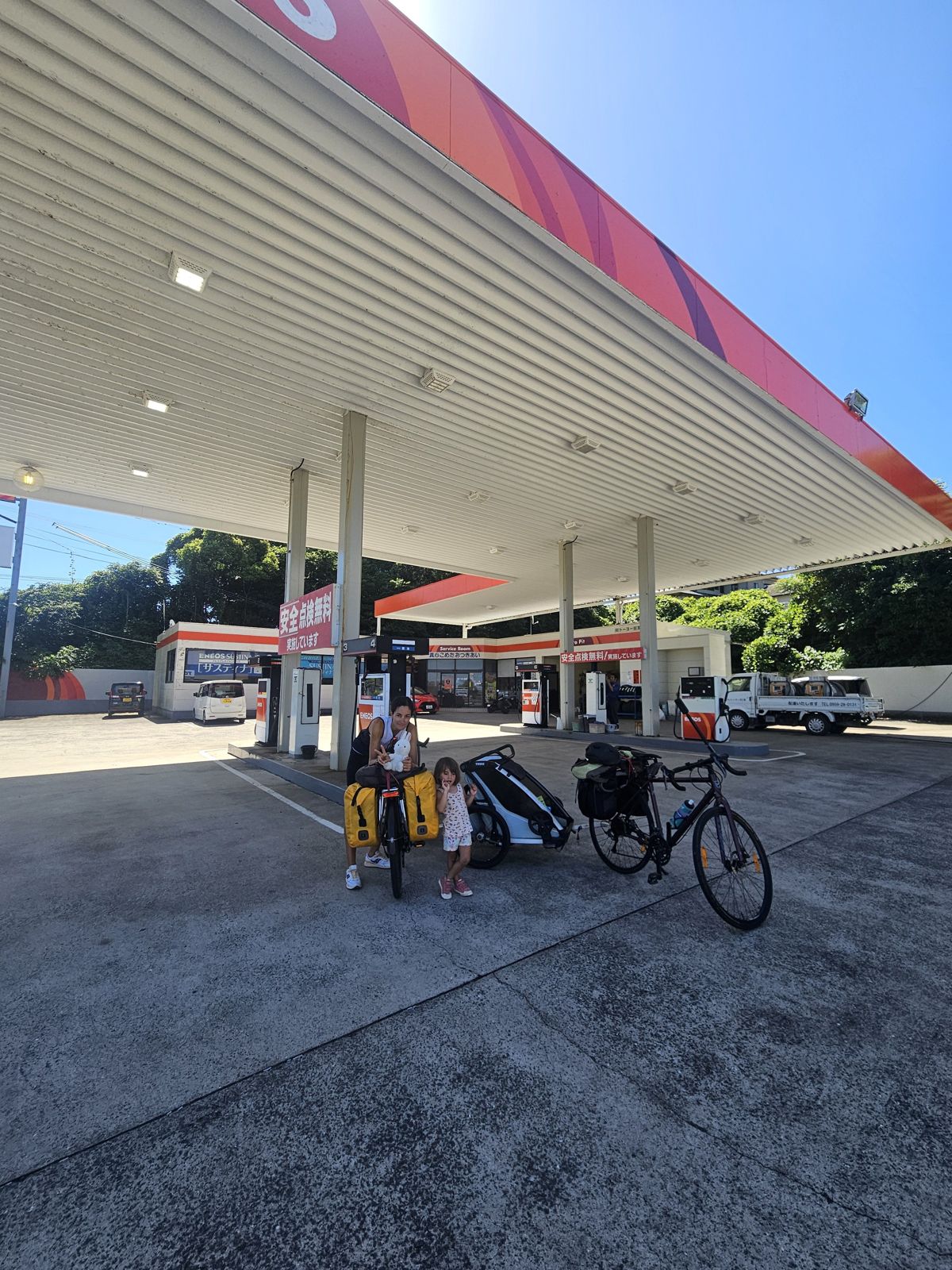
The heat is intense, so we stop at a petrol station to ask for water. The staff are very friendly and fill our bottles with ice. Fortunately, shortly afterwards we finally turn onto a small road climbing to a pass. The climb is 6 kilometres long but pleasant without the constant noise of cars. We hear birds and even surprise eagles, which take off as we pass. Once at the top, we just have to freewheel down to the little village of Saikai, on the west coast of the peninsula.
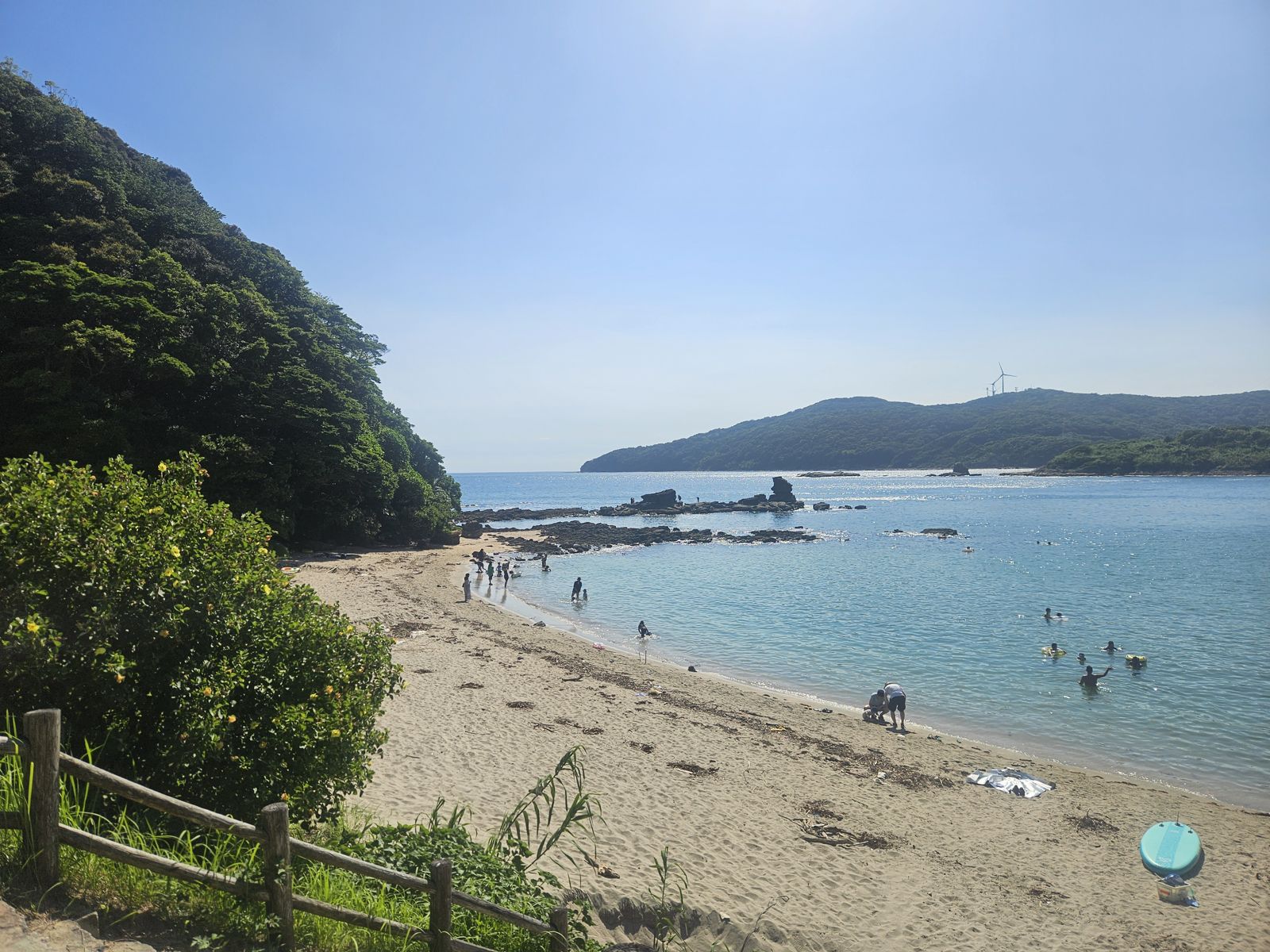
It's noon when we reach the hotel. Given how tough the roads are, how few places there are to stop and how hot it is, we preferred to ride the stage almost in one go to finish as early as possible. We leave our bags at the hotel and go to eat at the local supermarket. We get back on the bikes to climb a hill and reach a pretty cove below, tucked between rocks. There's a very basic little campsite, and the beach is quite busy on this public holiday.
Once settled in the shade, we play in the water with Clémence, for whom we've rented a little rubber ring. Next to us, a young Frenchman is playing with two little Japanese girls. We get talking, and he explains he's been on a working holiday visa for eight months and has been WWOOFing (working in exchange for food and lodging) with a Japanese family since yesterday. He doesn't speak Japanese but says it's not a problem for looking after the children and playing with them. Clémence plays with the two little girls in the water for hours. They don't understand each other but hold hands and laugh together; it's very sweet, "kawaii" as they say here. Japanese children are generally very well brought up and often very attentive to others. The sun is beating down and we leave around 4 pm to take possession of our hotel room.
After showers and a little quiet time, we go out for a walk around the little port. We'd expected a bigger town, but it's almost a hamlet with not much to do. Here too, everything seems to have been new more than twenty years ago. Because of the holiday, the supermarket is already closed, so we grab a bite at the convenience store attached to the hotel before putting Clémence to bed. She falls asleep quickly, worn out by hours of playing in the sea.
Tuesday 22 July
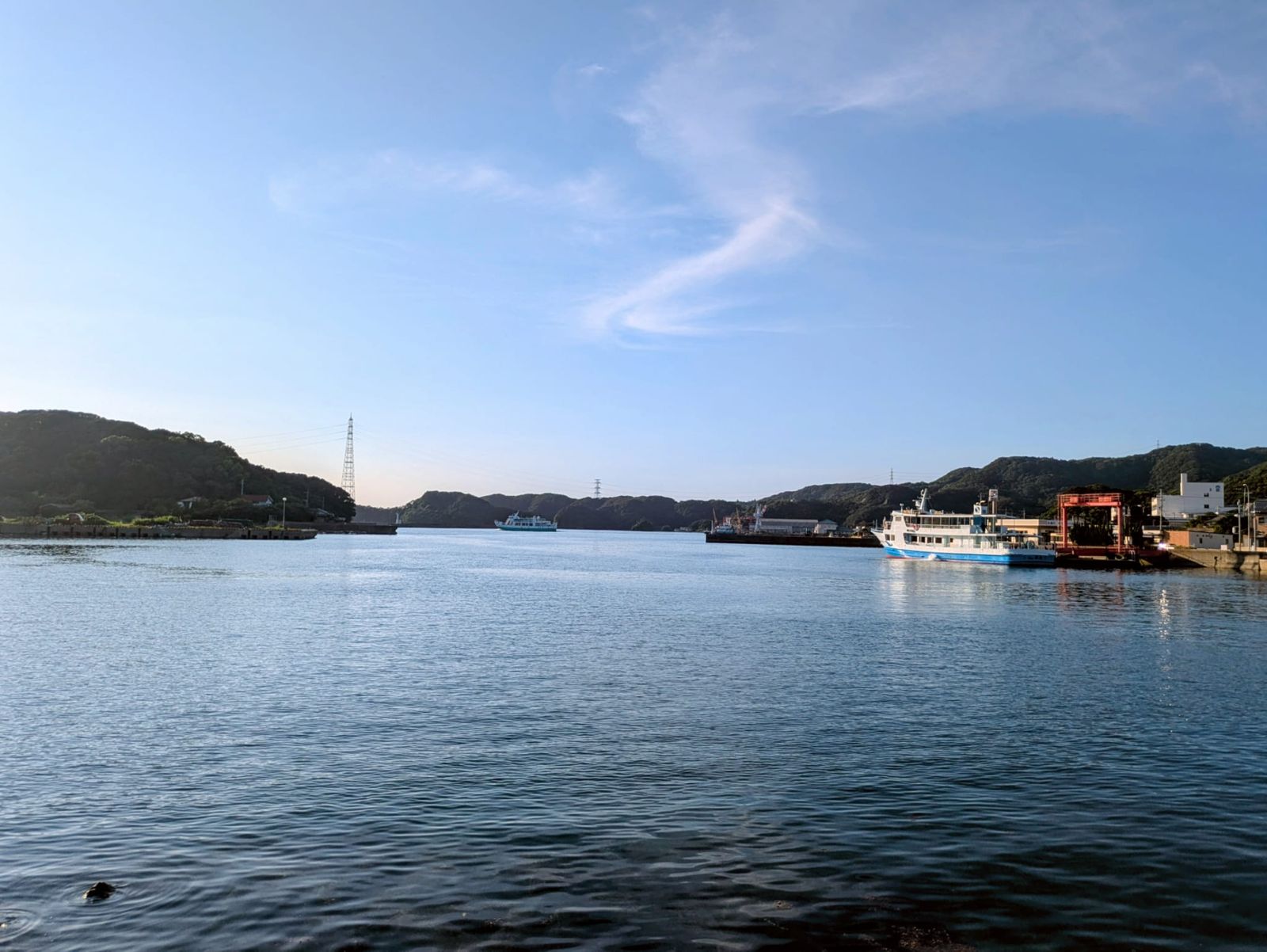
Another very hot day is forecast. After breakfast we start today's stage around 9. 43 kilometres separate us from Nagasaki, and once again the profile won't spare our legs, as it's a series of steep bumps. No big ascent (the longest is barely 3 kilometres), but 600 metres of climbing in total. For the first 20 kilometres there are a few cars, but it's still pleasant, even though we can't enjoy the scenery at all as there's nowhere to stop. We pedal and pedal. The road follows the East China Sea, with cliffs plunging into the water. It's sublime, but we hardly get to enjoy it.
Time flies, and after an hour and a half and 24 km of ups and downs, we arrive in a horrible retail park full of shops and cars. We take the opportunity to buy food but decide to have lunch further on, as this concrete hell doesn't seem conducive to a peaceful meal. Looking at the map, we realise we're only about fifteen kilometres from Nagasaki. So we decide to push on and practically finish the stage. The road is as hard as ever and the Japanese drive as badly as ever.
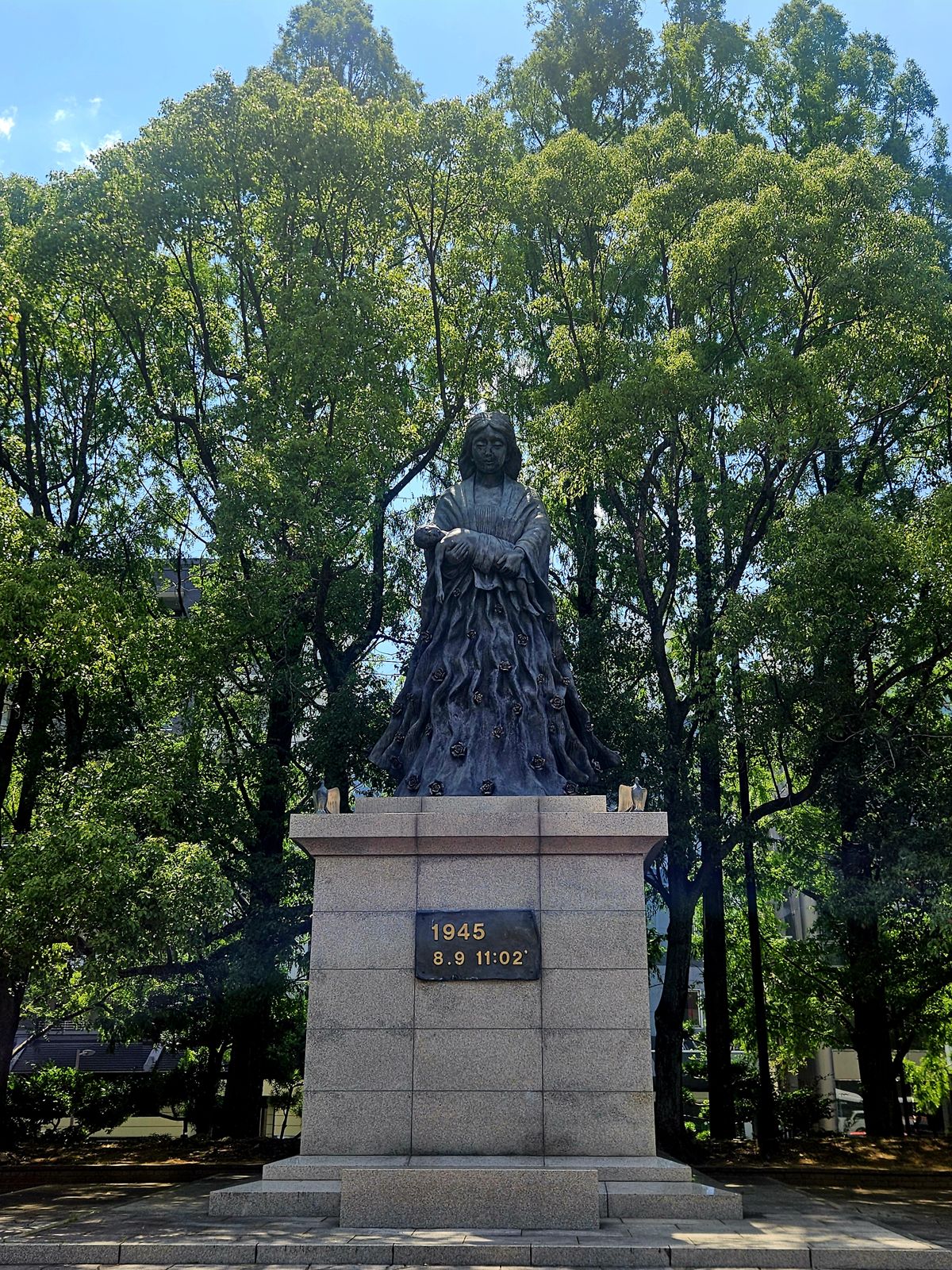
Near the end of the last climb, about ten cars in a row skim past us even though there's a second lane in our direction. They could overtake by moving into the free lane, but no, they'd rather brush past two poor bikes and a child. The way into Nagasaki is through a long tunnel several kilometres long. It's pitch dark and the din is deafening. We finally stop right in the city centre, at the Peace Park. We're exhausted and find it hard to grasp that we're at the epicentre of the bomb that hit on 9 August 1945.
We enjoy the shade of the trees and stroll along the paths. We reach the flat at 4 pm for some rest and washing. For only a little more than a hotel room, we have a tiny flat. It gives us a kitchen, cuts our food costs and above all lets us cook for ourselves.
On the way we'd spotted a Ferris wheel on top of a shopping centre, so we go there for our evening outing. Unfortunately it's closed for maintenance. Never mind, we'll come back tomorrow. We make use of the huge shopping centre to do some shopping and head home to eat. Tonight is the Mont Ventoux stage of the Tour de France and we don't want to miss it!
Wednesday 23 July
We savour our rest days as we should. Life on the road is sometimes exhausting, and so is the morning routine. When we stop for several days, we don't have to repack the panniers every morning, plan routes, look for places to stay and so on. We take our time over breakfast, and Clémence surprises us by being ravenous. She wolfs down eggs, bread and bananas, which is a good sign, as the heat usually dulls hunger.
Nagasaki (長崎市), on the island of Kyushu, has around 397,000 inhabitants. A port city whose past was shaped by trade with the West and the 1945 atomic bomb, it now combines historic heritage, a culture of peace and coastal charm among hills, gardens and museums.
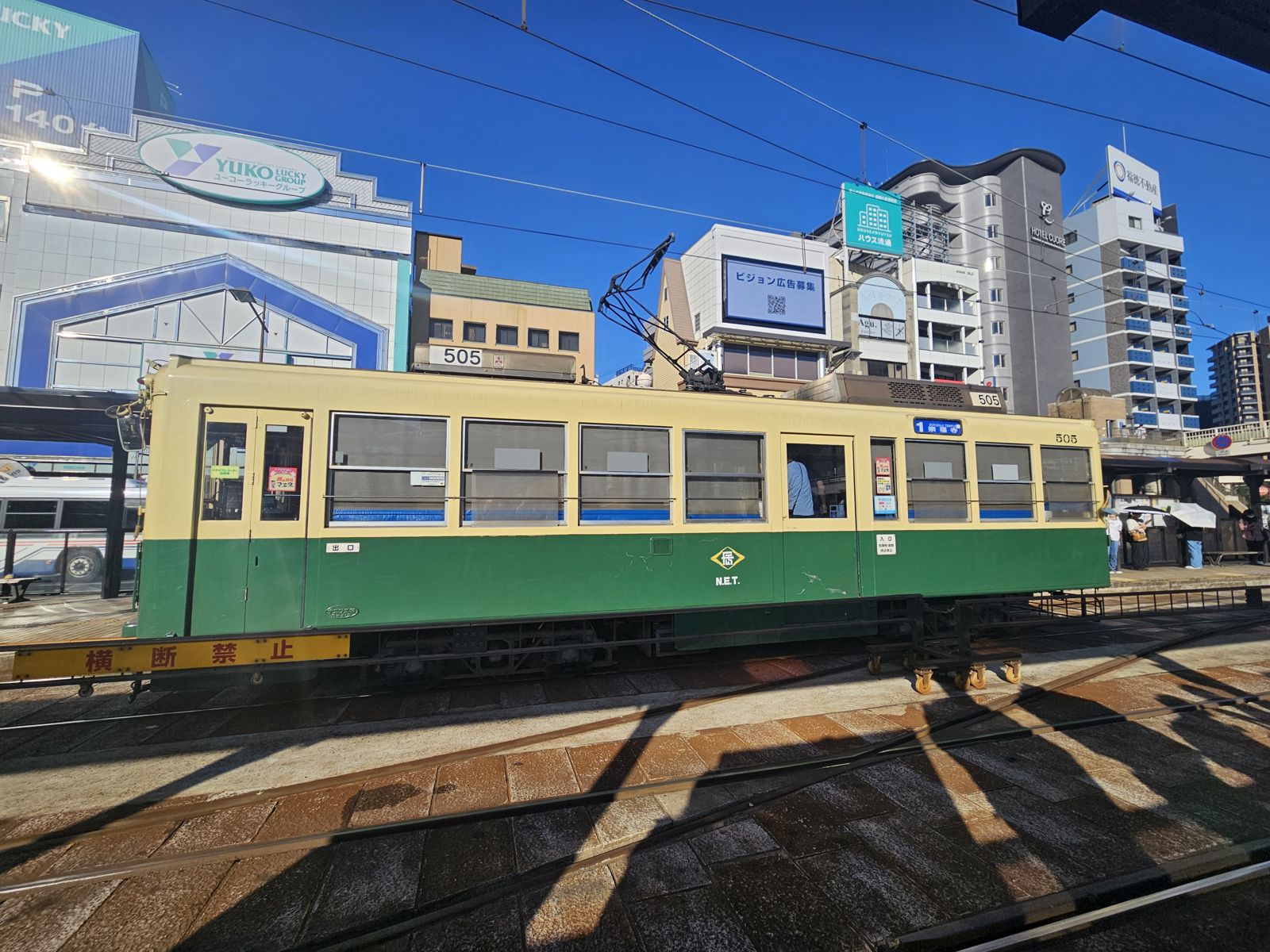
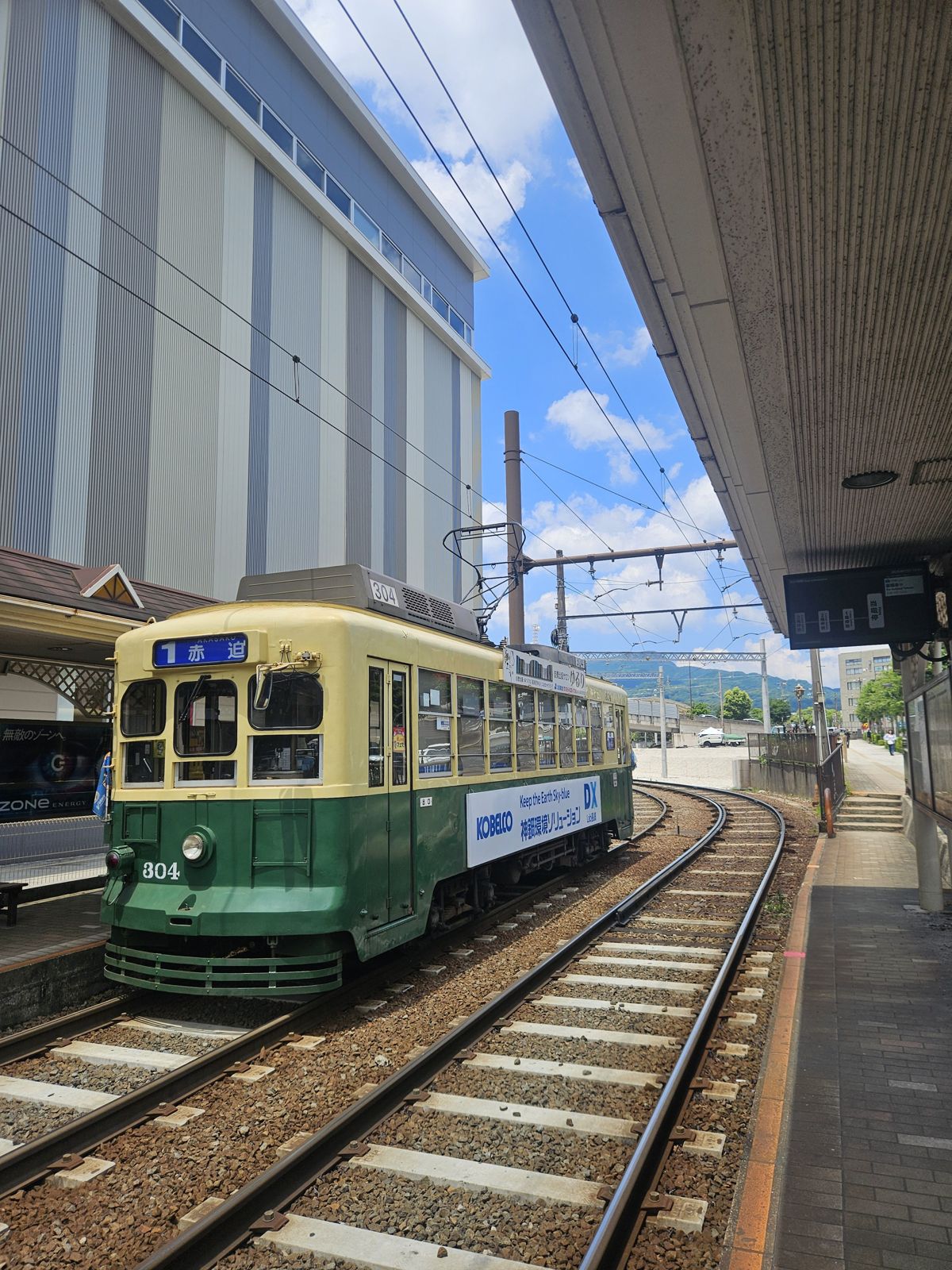
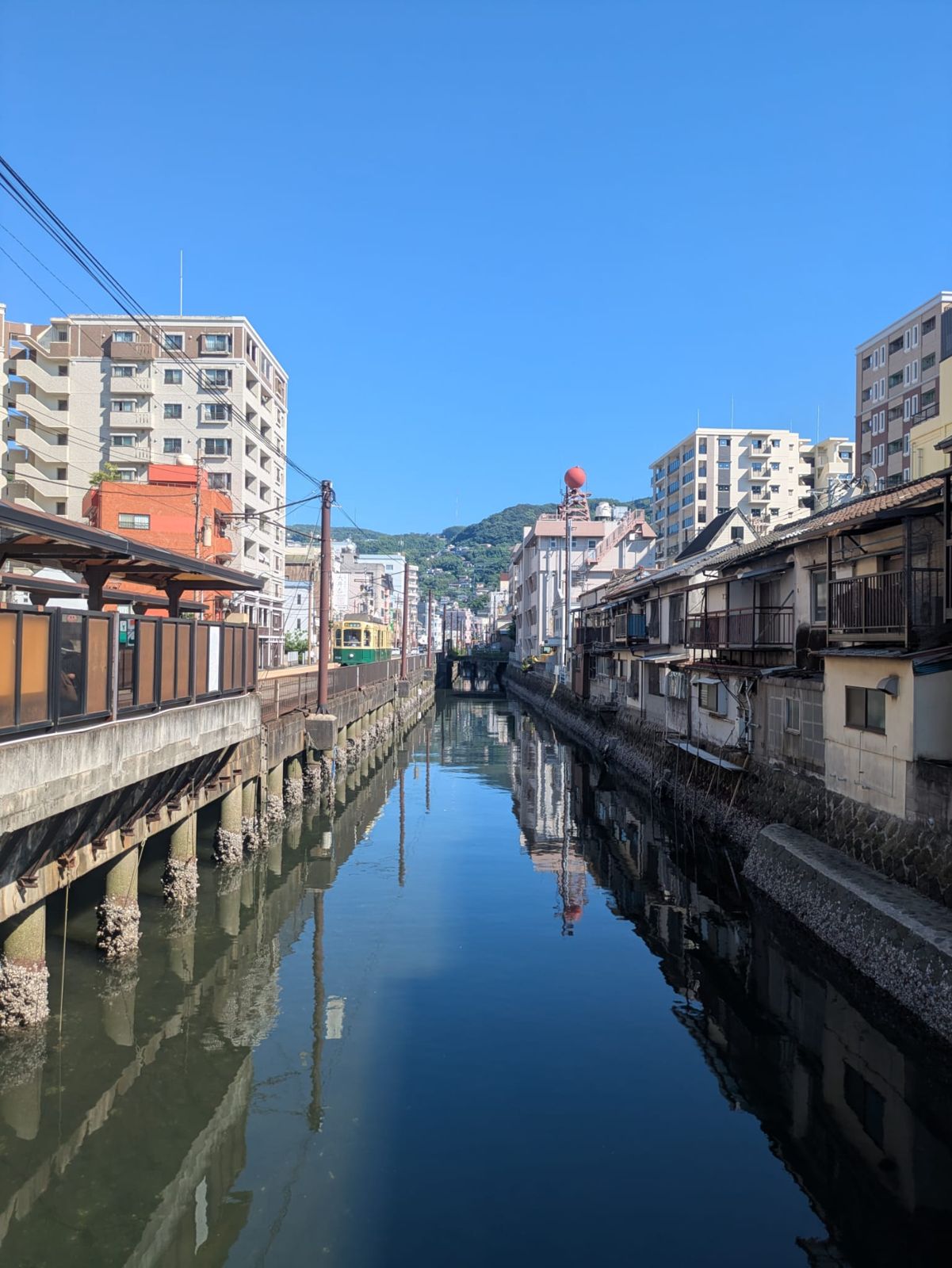
We take the tram to the Nagasaki Atomic Bomb Museum. But nothing is simple in this country: there are day passes, but you can't buy them at stops or on trams. You have to search the internet to find where they're sold, and we finally track one down in a souvenir shop. What could be more logical? Otherwise there's an online app, but it's only available to Japanese users. The trams are strange, sometimes very old, but above all they only have one carriage. You get on at the back and off at the front. On the way out, the driver checks every ticket, which takes ages.
Entering the museum, we feel the same weight of history as a few years earlier in Hiroshima. It's hard to imagine the absolute horror of what happened here. The museum holds many different artefacts. Some are very symbolic, notably the clocks stopped at 11:02, the time of the explosion, and the torn and burned clothes worn by victims at the moment of impact.
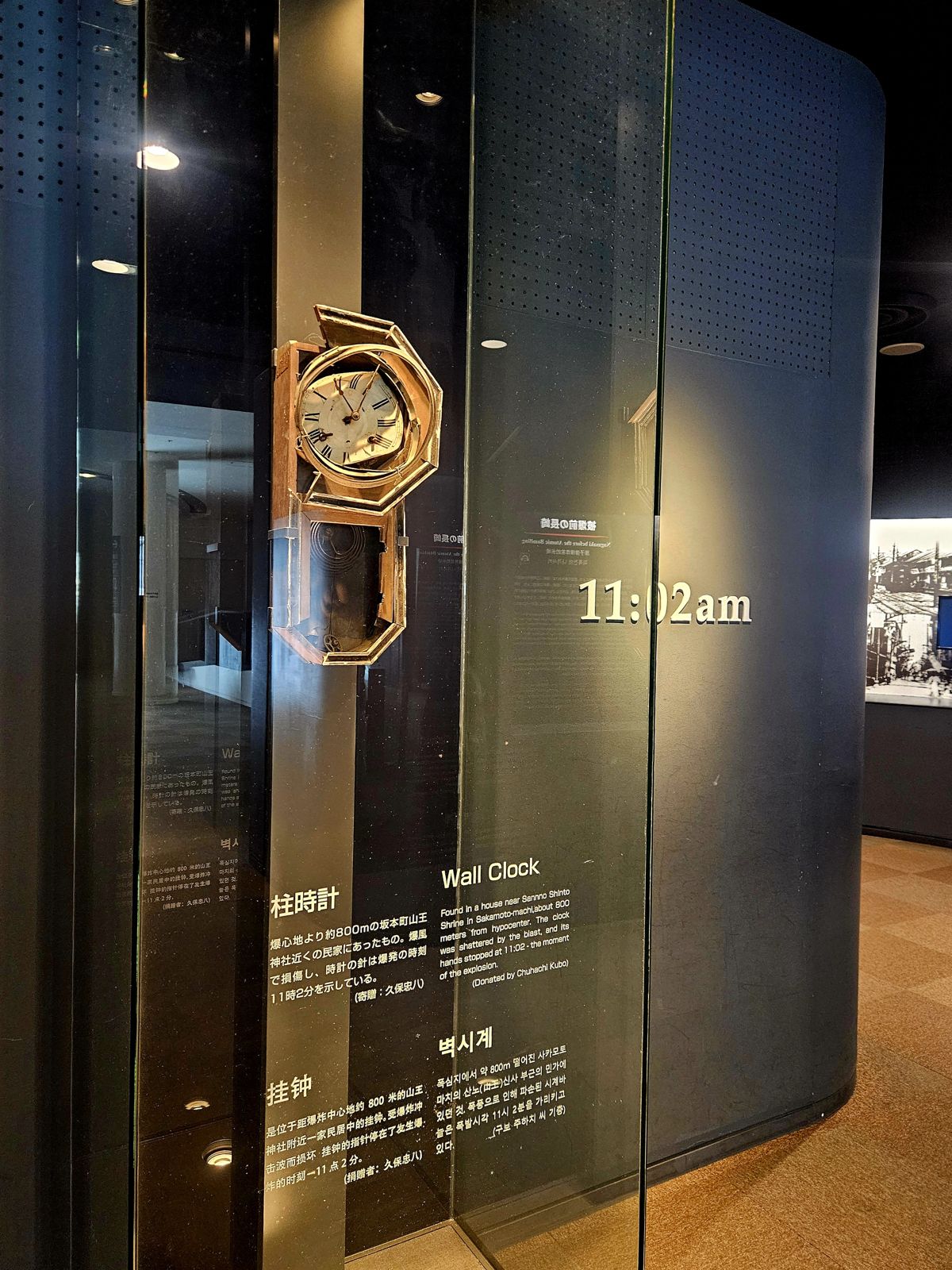
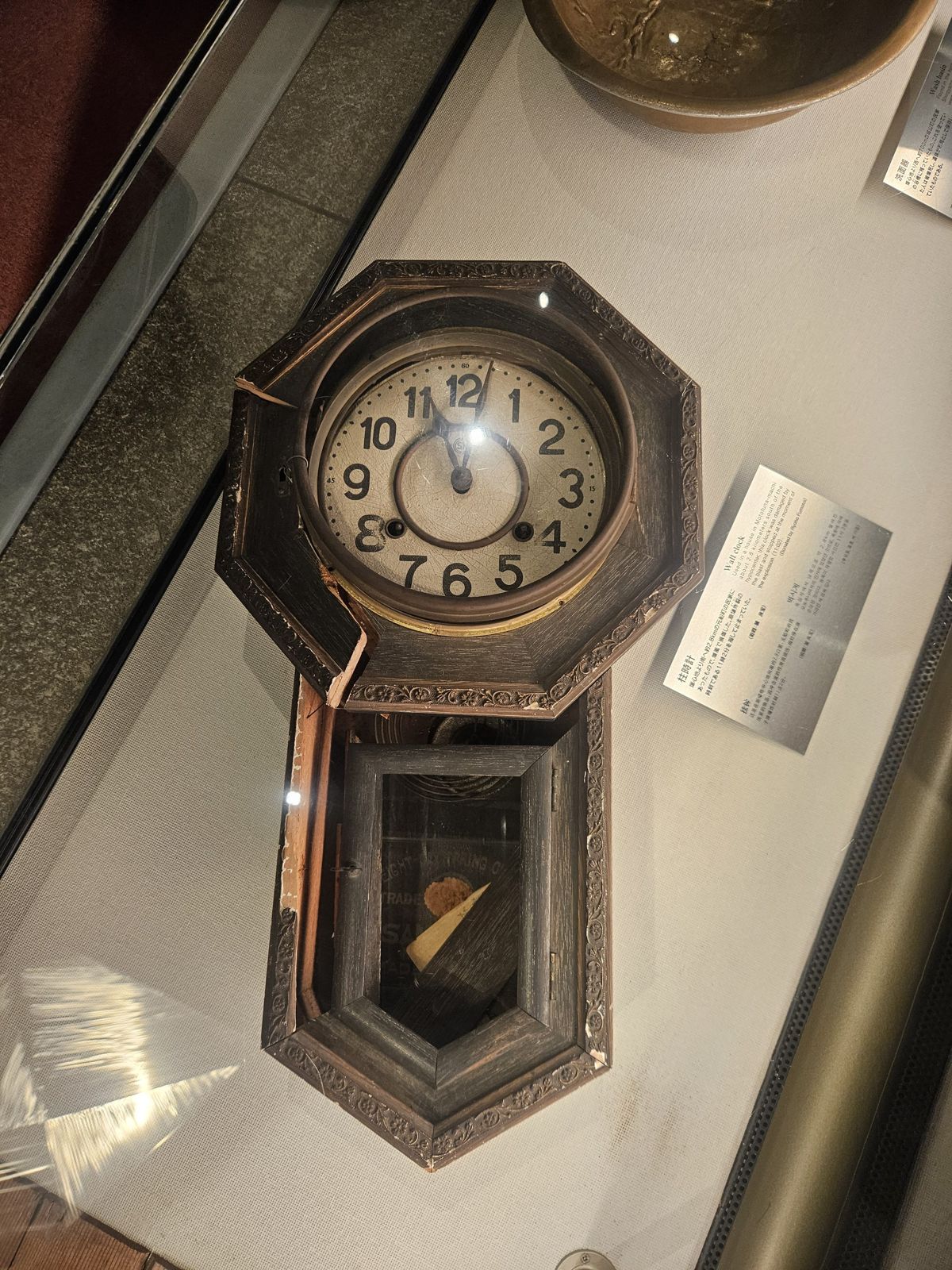
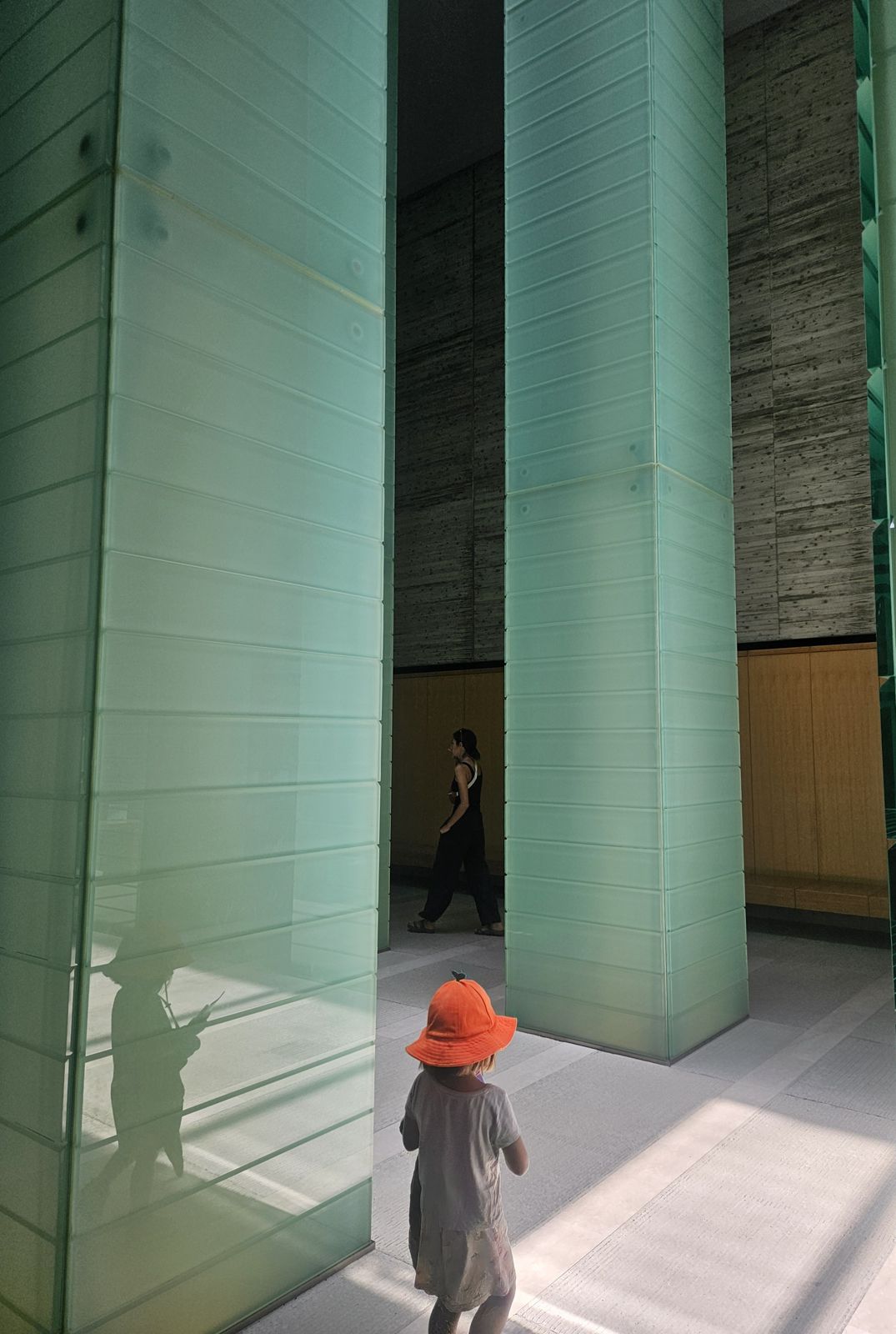
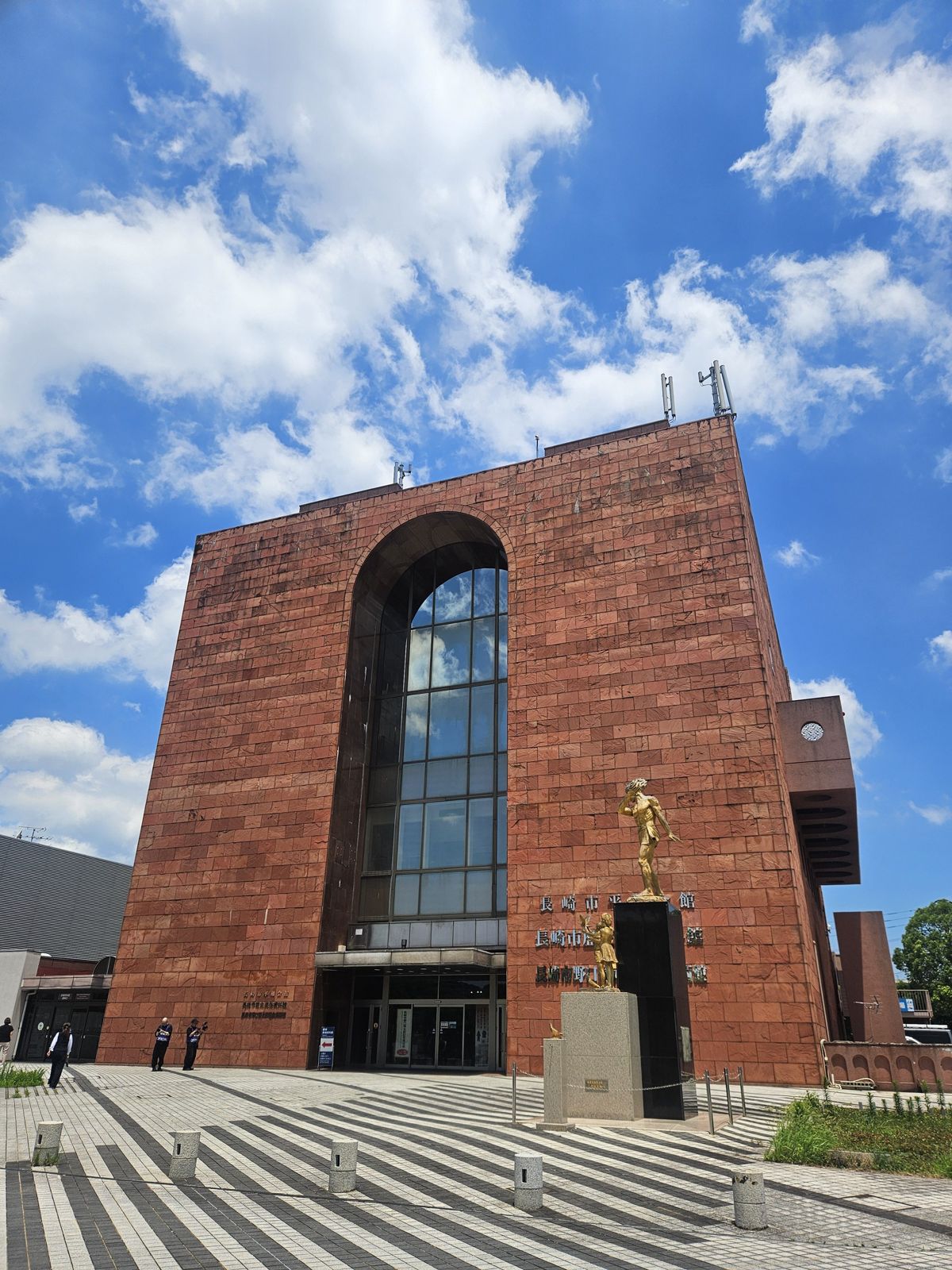
Three days after the Little Boy bomb was dropped on Hiroshima on 6 August 1945, at 11:02 on 9 August 1945 the Americans dropped the Fat Man atomic bomb on the city: it exploded at an altitude of 580 m, directly above the Urakami district. The original target was the city of Kokura, in northern Kyushu. But because of bad weather and smoke from Yahata, just 7 km east of Kokura, which had been bombed the day before, the drop was redirected to Nagasaki.
Fat Man was a plutonium bomb with a yield of 21 to 23 kilotons, much more powerful than the Hiroshima bomb, but the outcome was "less" deadly in Nagasaki because its topography made it a more open site, whereas the hills surrounding Hiroshima amplified the explosion's devastating effects. The total number of victims is still estimated at 200,000 direct or indirect deaths, out of a population of 260,000.
Something strikes us, though, as it already had in Hiroshima. Nowhere in the explanations is there any mention of why the bombs were dropped, nor of Japan's responsibility in the war. It's no distortion of history to say Japan was Asia's equivalent of Germany. Its army was savagely cruel, especially in China and Korea, as we've seen. Nothing justifies using such a weapon on civilian populations, but there isn't a word about the Japanese chain of command that led the country into total war.
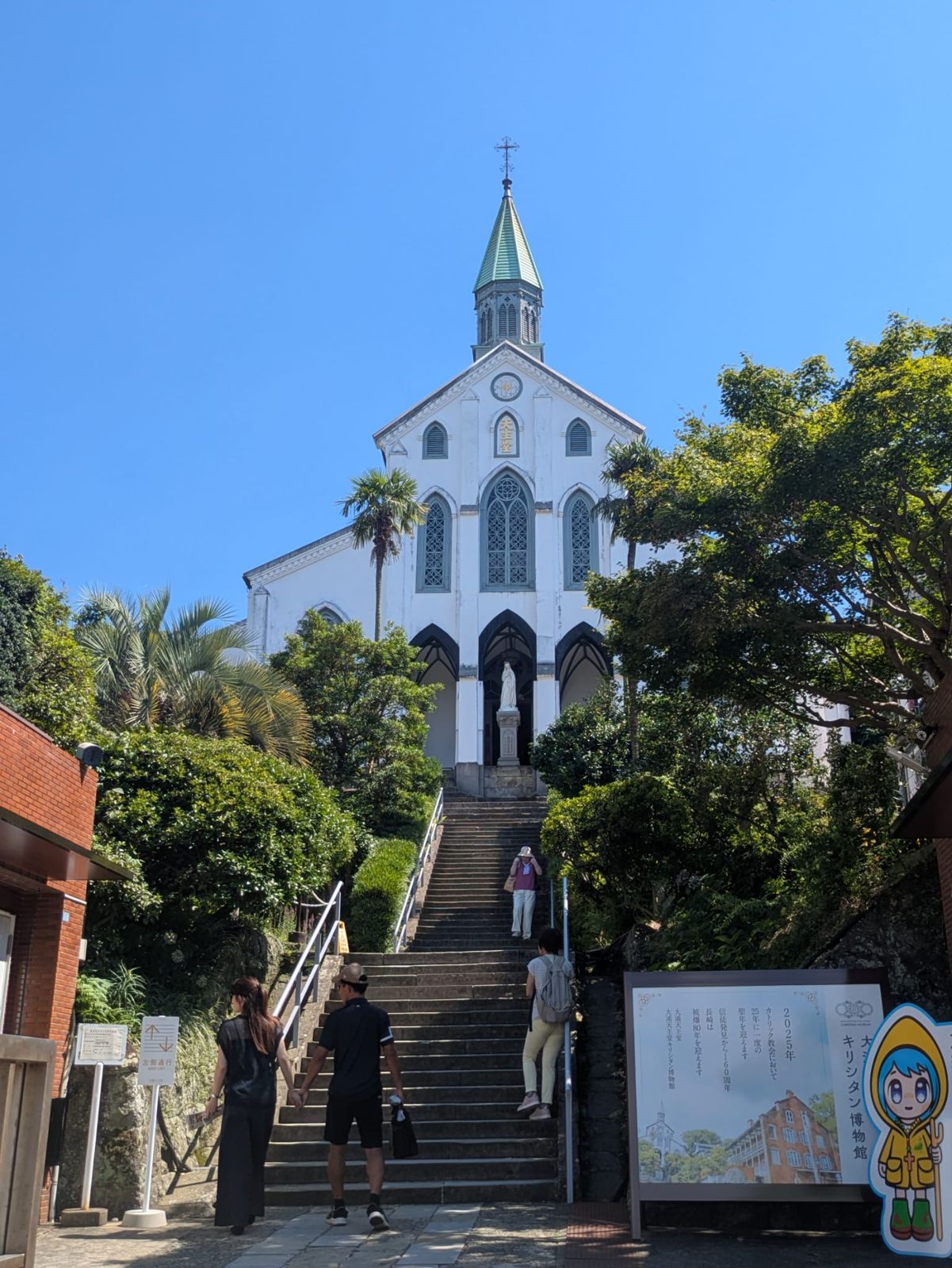
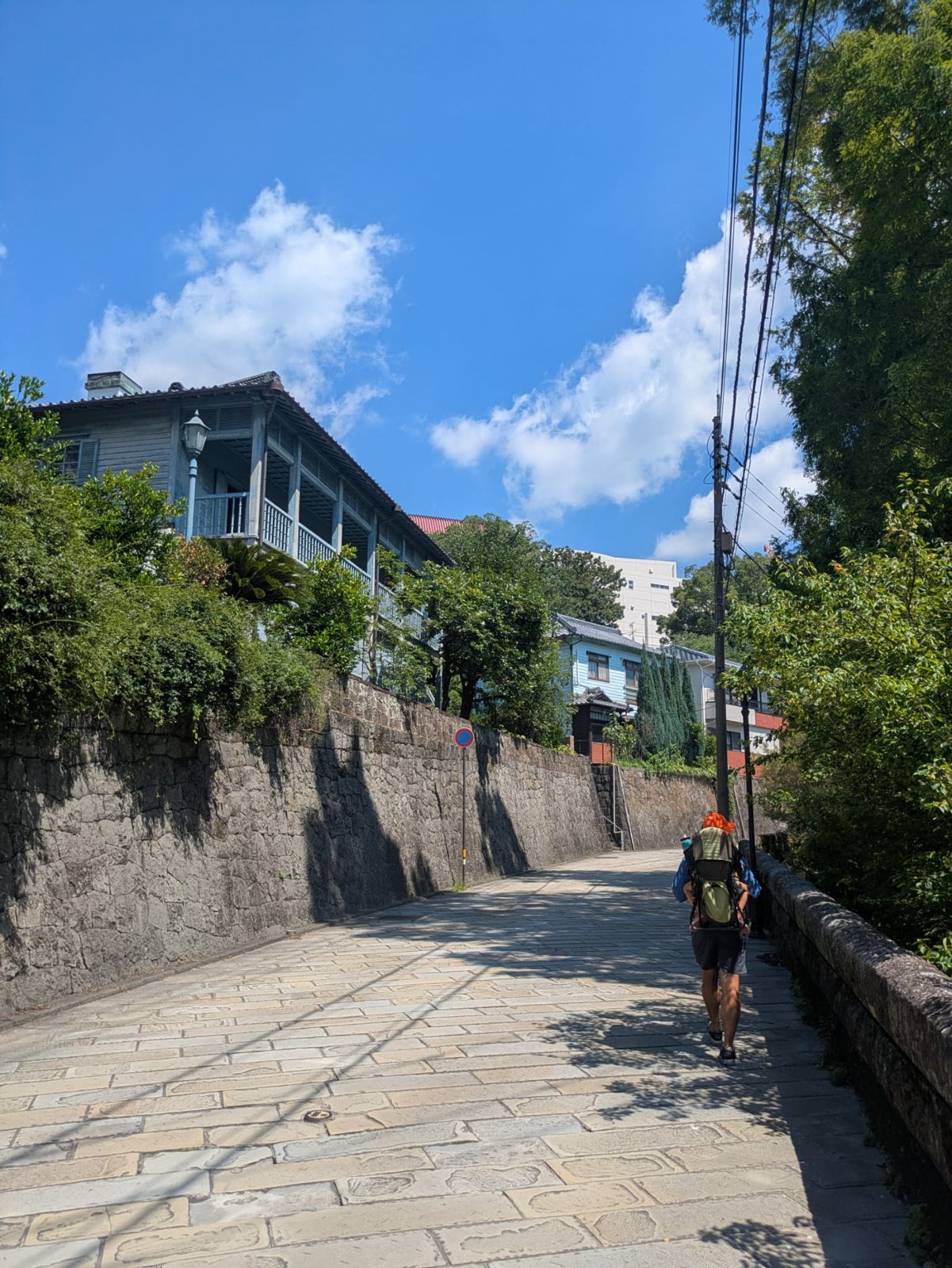
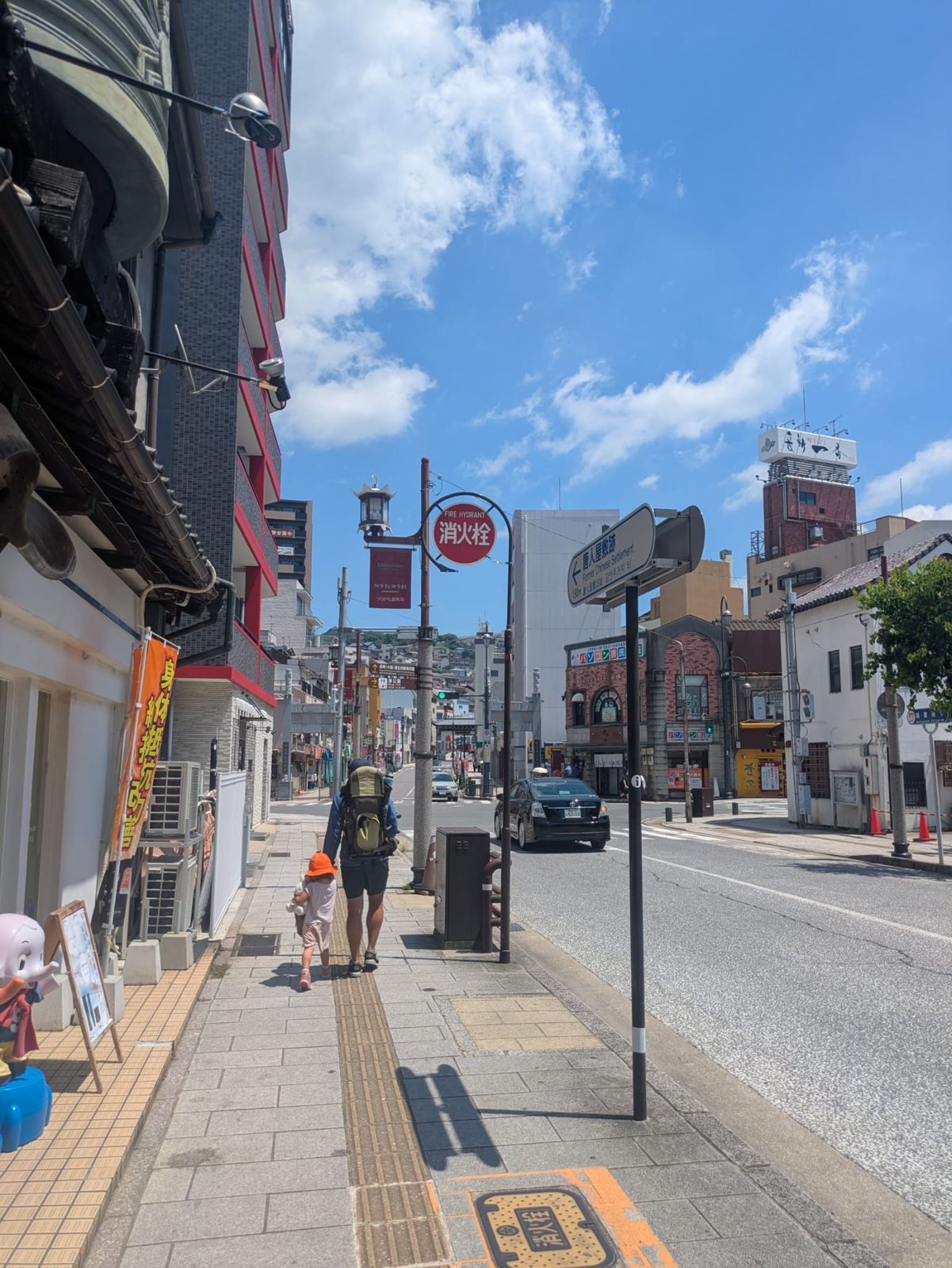
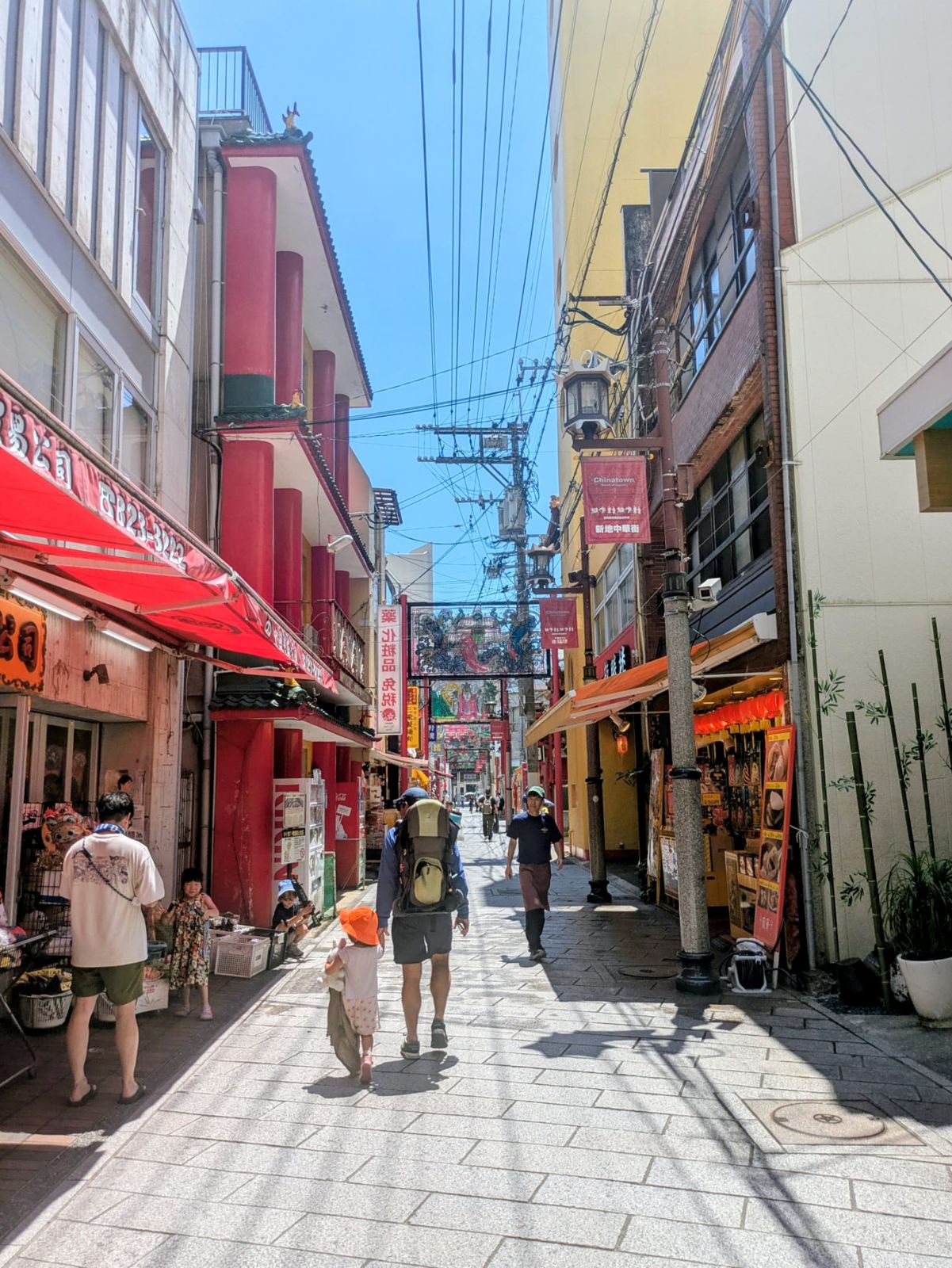
After feasting on delicious udon, we head to Nagasaki's Dutch-Portuguese quarter. Nagasaki's history was built almost entirely by foreigners: it was the Portuguese who turned it into a prosperous port in the 16th century, when it was originally just an isolated village. They brought their goods (tobacco, bread, firearms and so on), their know-how, their cuisine (some dishes have kept their Portuguese names, like Nagasaki's sponge cakes, "castella"), and also their religion. No surprise, then, that the city has many European-style buildings and Christian places of worship.
Under the Tokugawa period, for almost 50 years, the persecution of Japanese and foreign Christians was particularly fierce: all missionaries were deported, and hundreds of people were tortured and killed. Afterwards, Christians had to practise their religion in secret, still subject to occasional inquisitions. The other notable European influence on the city was the Dutch, who among other things supported the campaign of persecution against Christians. Until the end of the 19th century, Japan's contacts with the outside world were strictly limited to Nagasaki.
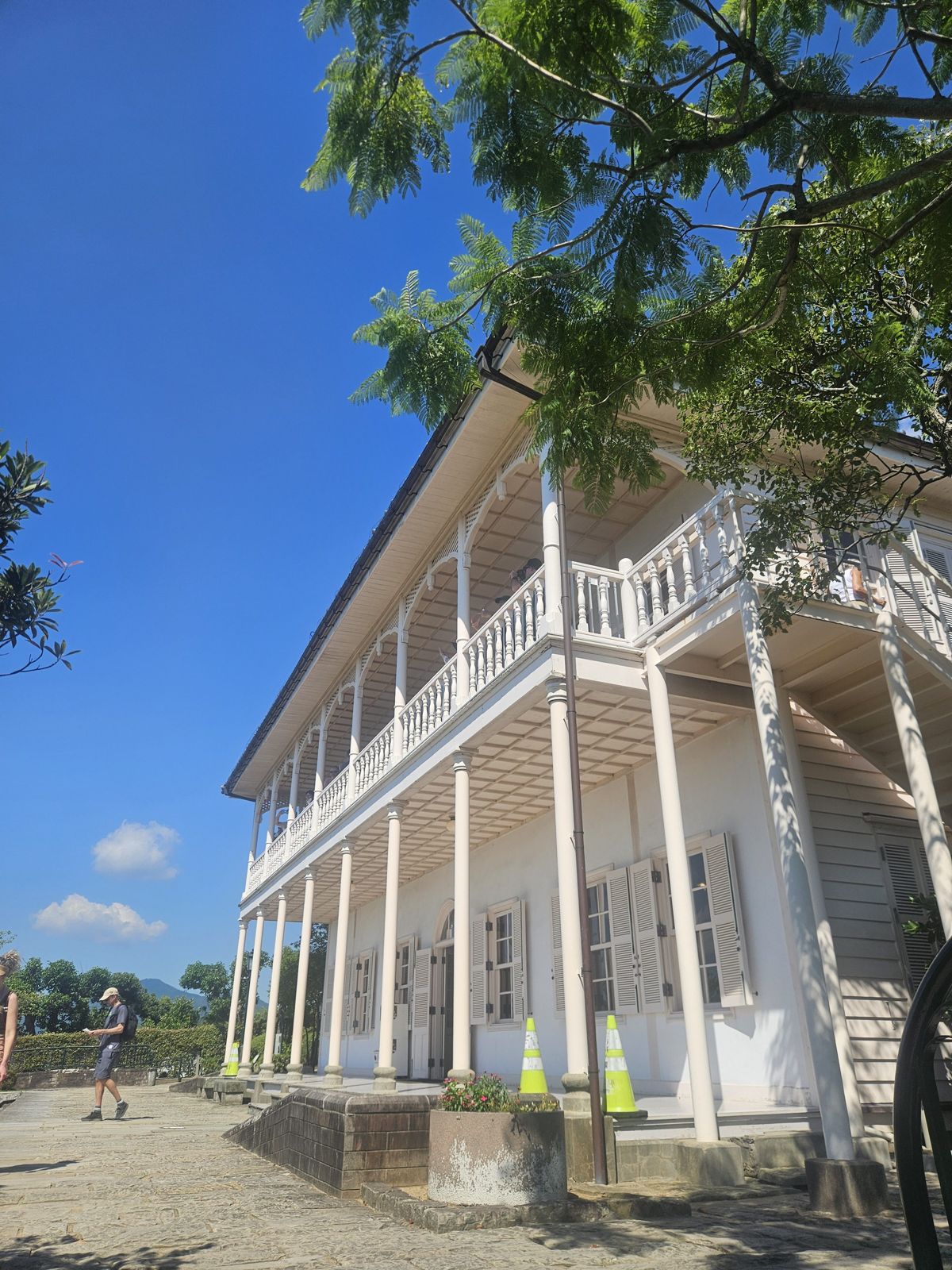
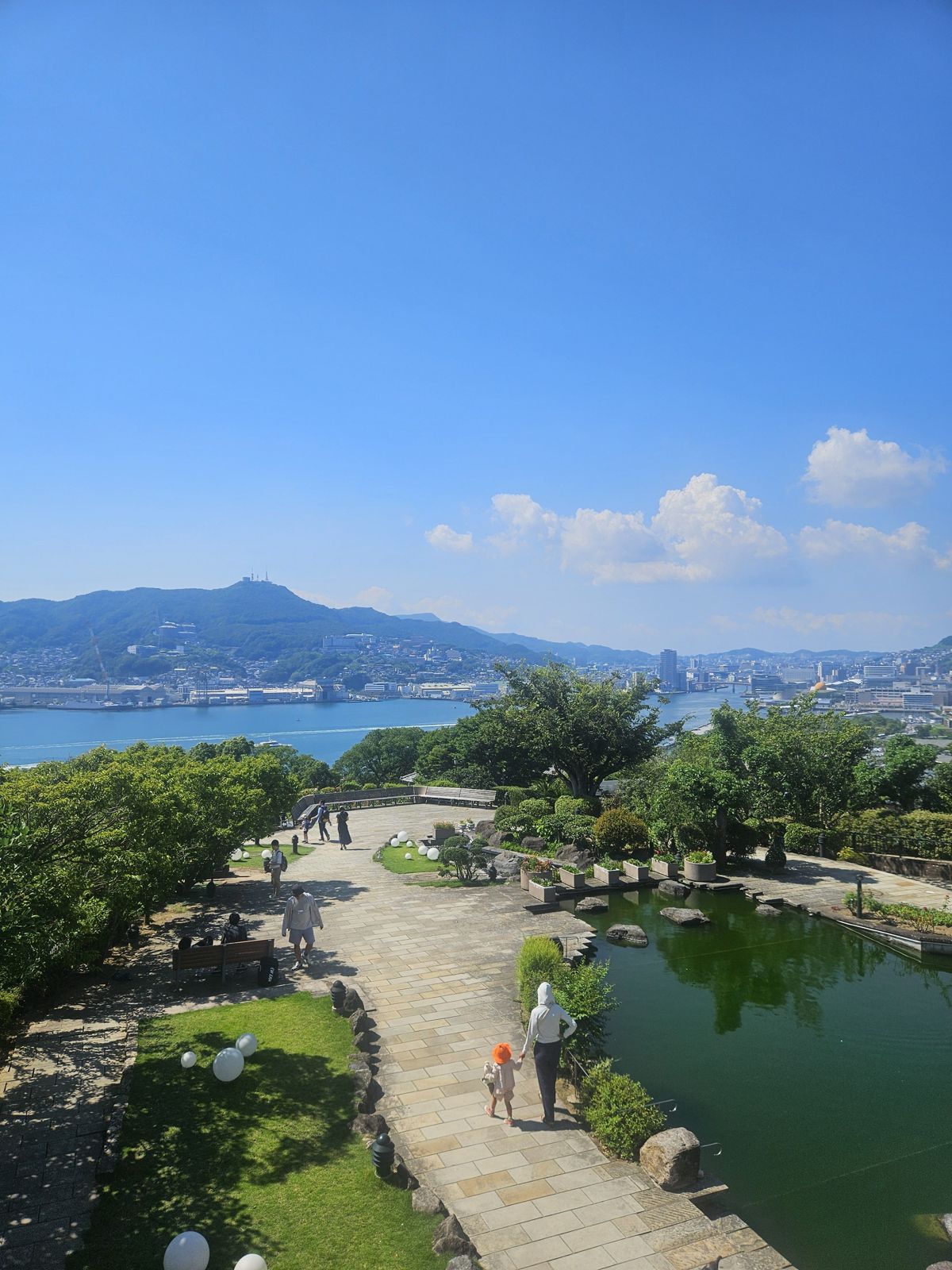
We walk the alleys of the Dutch quarter until we reach Glover Garden. Built by the Scottish merchant Thomas Blake Glover, the park sits on a hill overlooking Nagasaki Bay. When Japan opened up to the world in the 1850s, several visionary Western entrepreneurs, Glover among them, landed in Nagasaki and developed international trade. Glover founded his company there and also prospered in the industrial and mining sectors, which modernised through contact with the West.
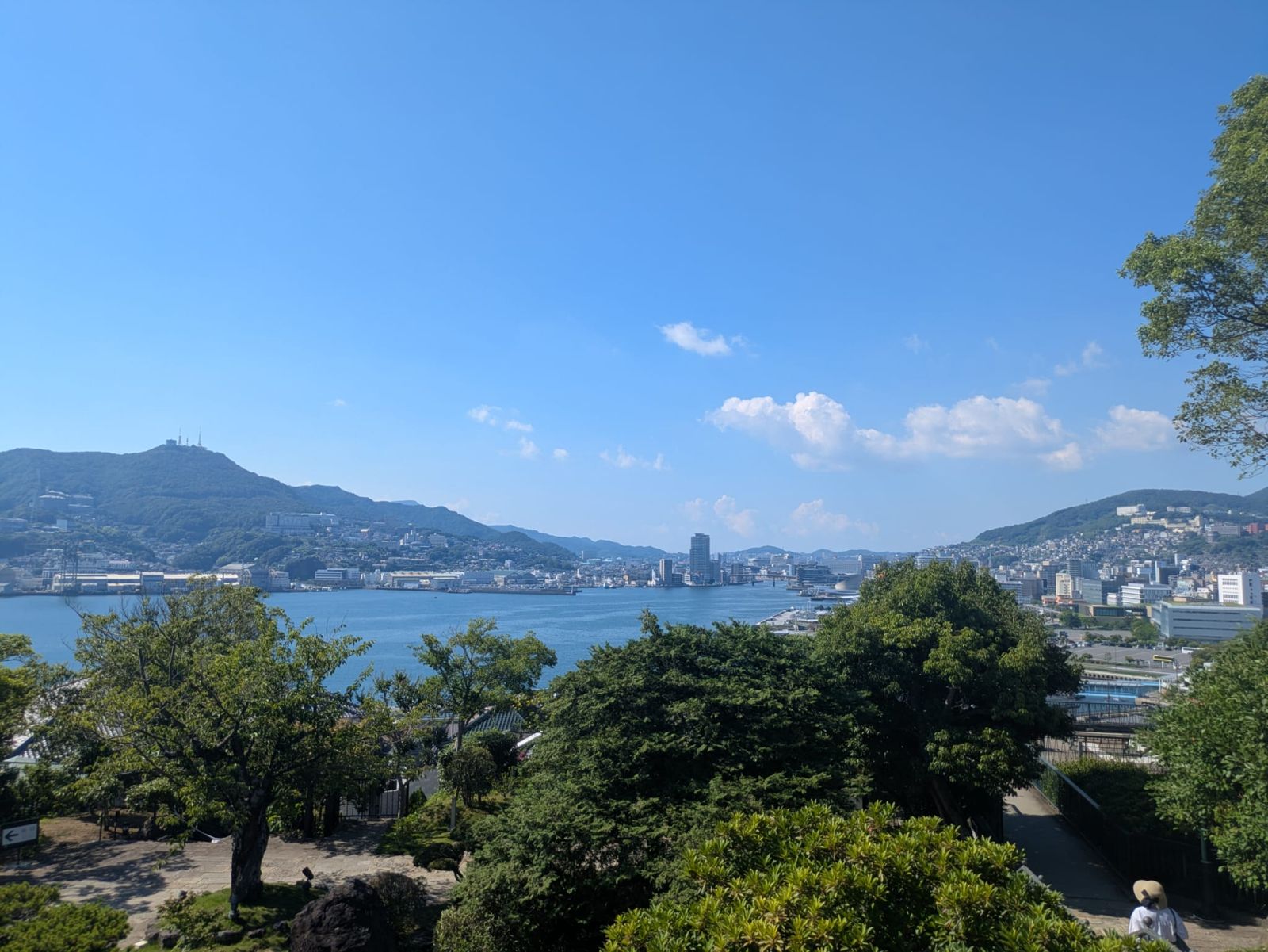
Inspired by his European roots, his residence was the first Western-style house built in the city and is now known as the oldest Western-style house in Japan. We wander slowly, stopping regularly in the shade to shelter from the sun. Nagasaki Bay is very industrial, but the panorama with the green hills behind is still striking. We decide to head back to the flat for a snack and to cool down. We go out again two hours later just to buy a few things for dinner.
On the road