 ← PreviousIn which we discover that Japanese drivers are like any others
Taking several days to visit second-tier cities is a luxury you can afford when travelling by bike. Our bodies and minds need rest, so we wander the streets without hurrying. No rushing from one must-see to the next here, and no list of places to tick off. This morning we go out to visit a small shrine not far from our flat, Suwa-jinja, the city's most important Shinto shrine.
To our great surprise, Clémence really enjoys visiting temples. That wasn't the case when we arrived in South Korea, where she was almost impossible to handle. Travel changes a lot: she has calmed down in two months and now follows the customs of places of worship perfectly. She knows you sometimes have to take your shoes off to enter certain rooms, and she also loves washing her hands and mouth at the "temizuya" found at every temple entrance.
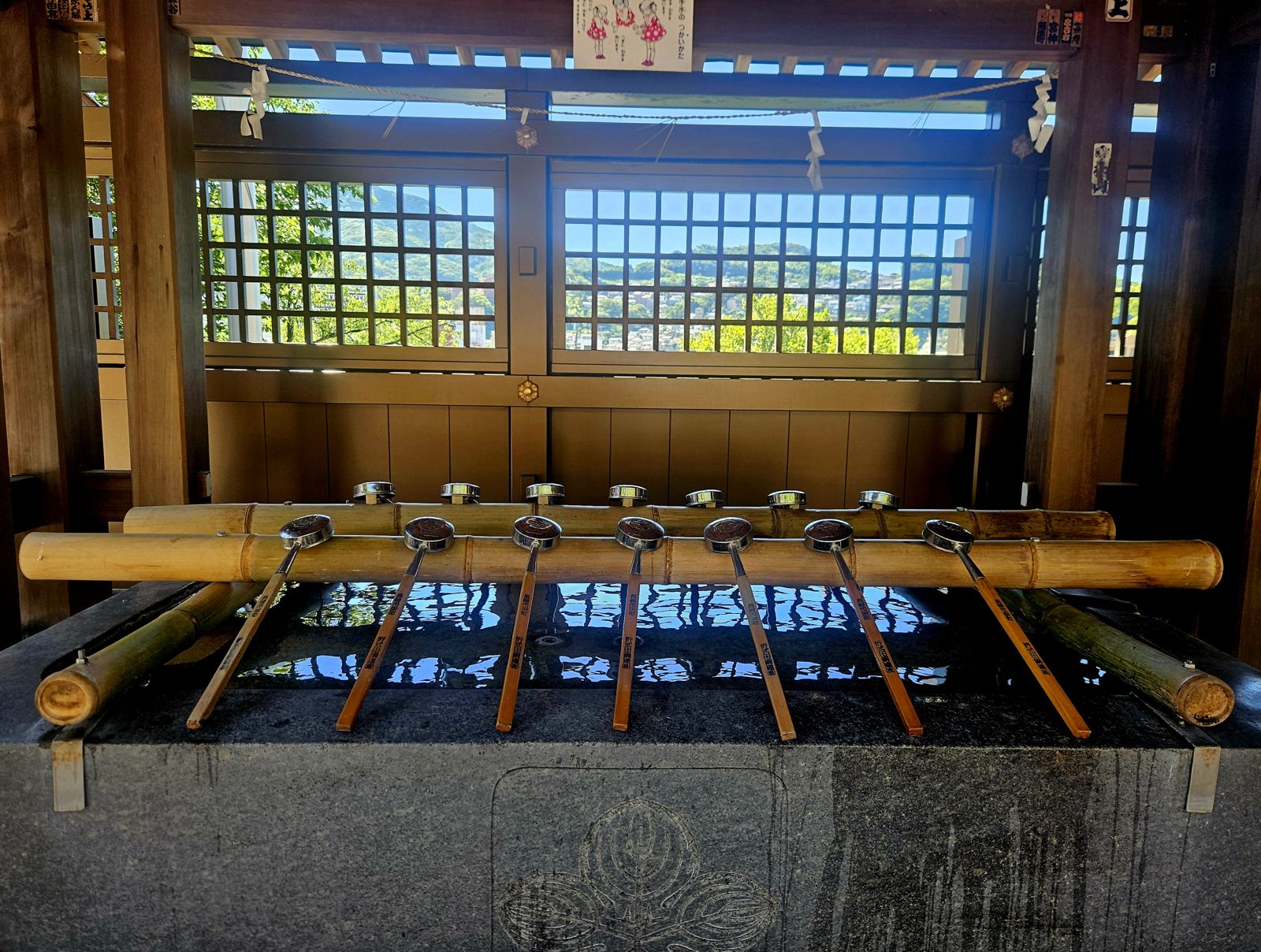
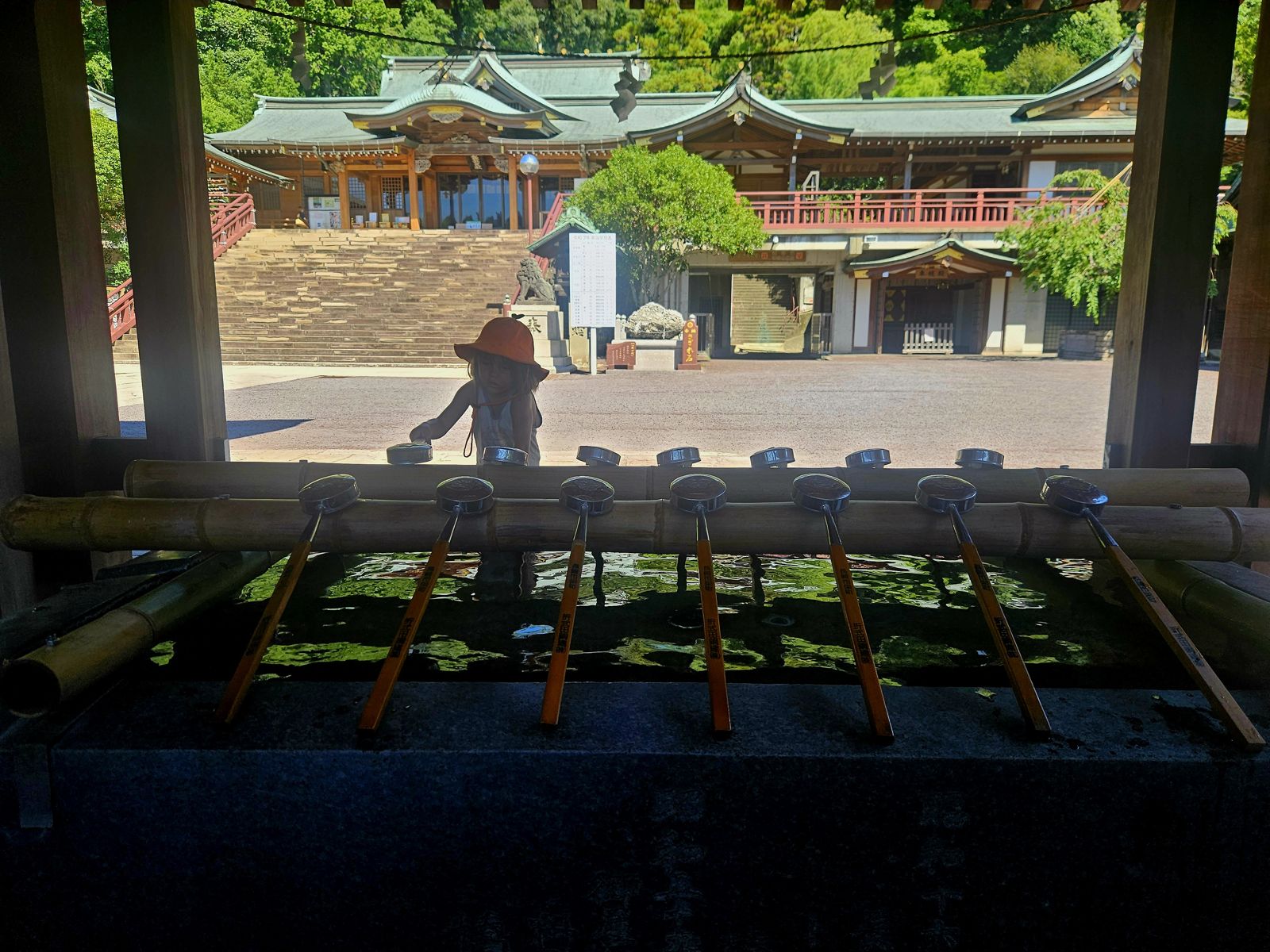
The temizuya is a fountain with constantly running water, provided at the entrance to every sacred precinct. As always in Japan, things are highly codified: before praying at a temple or shrine, you must purify body and mind. Originally the ritual was done in a river, a spring or by the sea. You purify your hands and mouth because those are the two parts of the body you use when praying: you clap your hands to call the deity and pray with your mouth. To do so, you use a hishaku, a sort of long-handled ladle made of bamboo or metal, always placed beside the fountain.
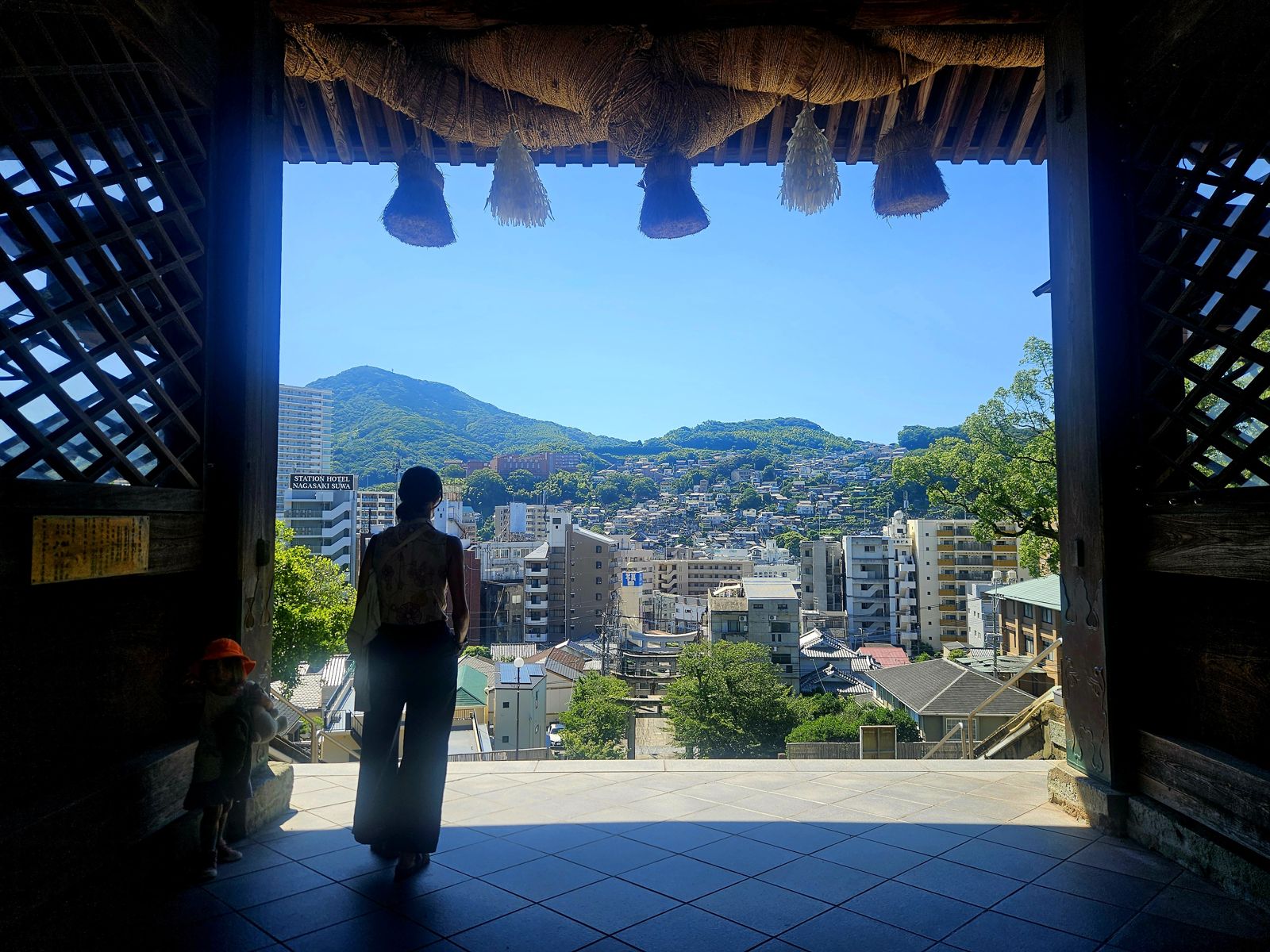
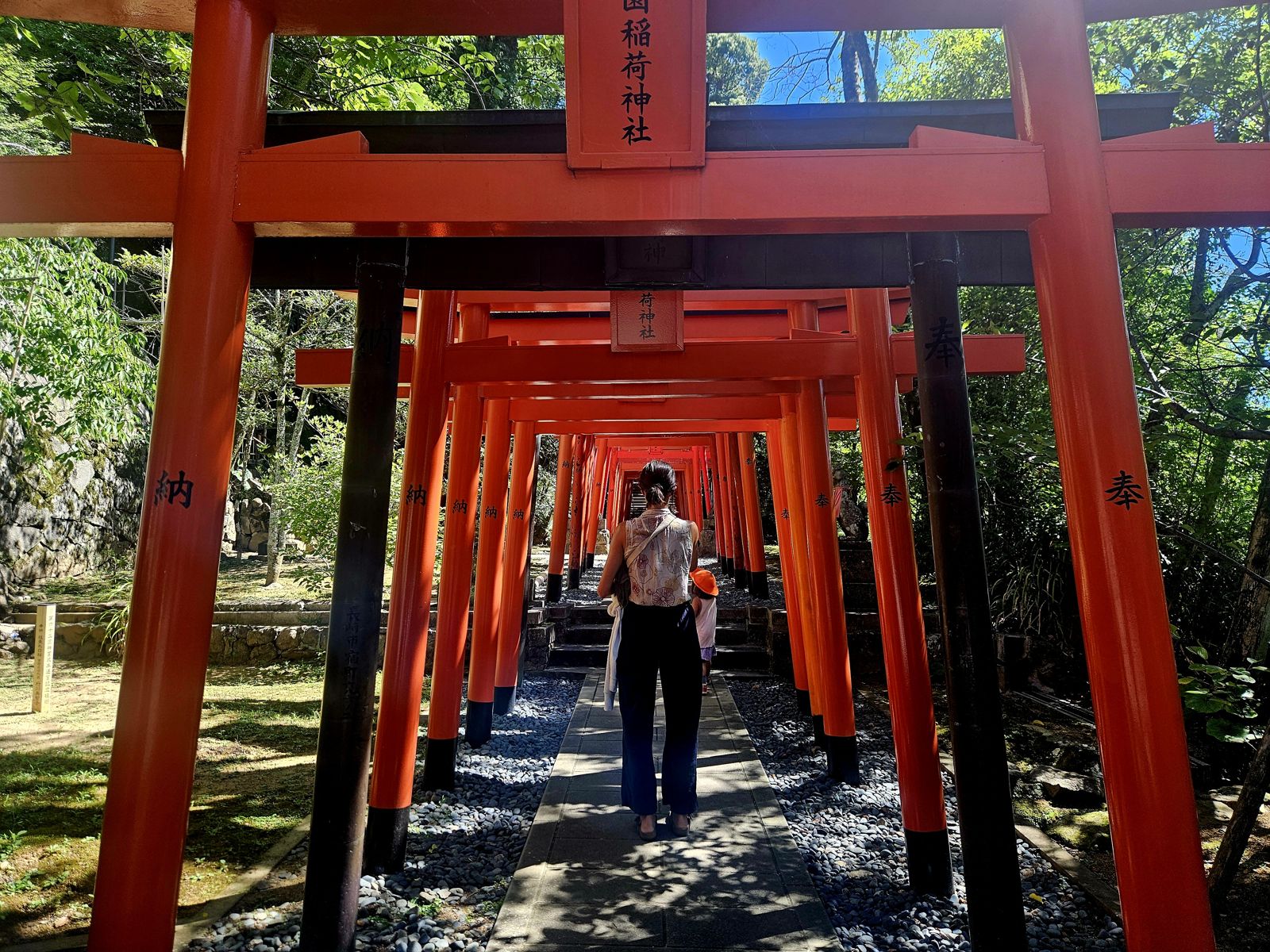
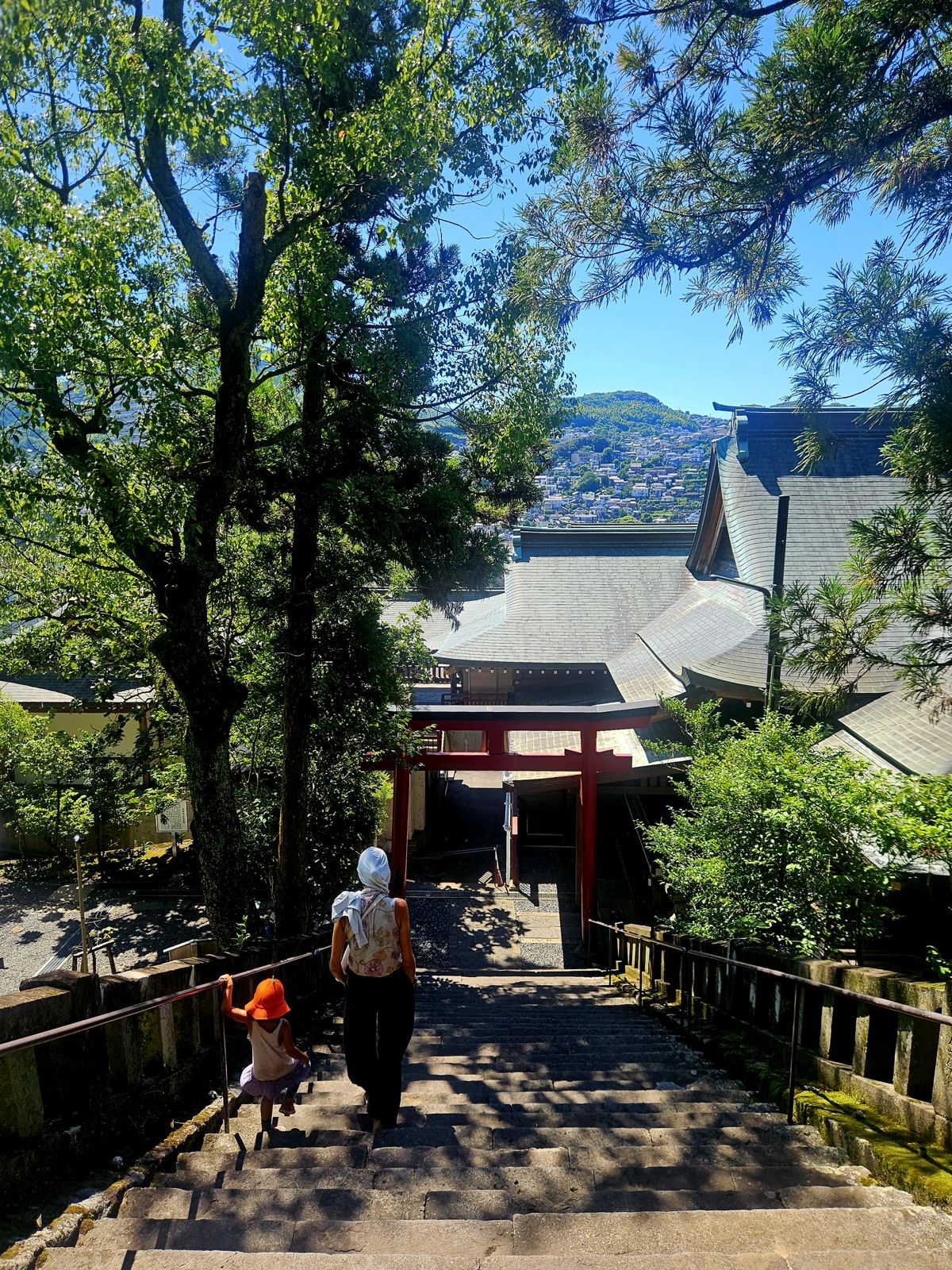
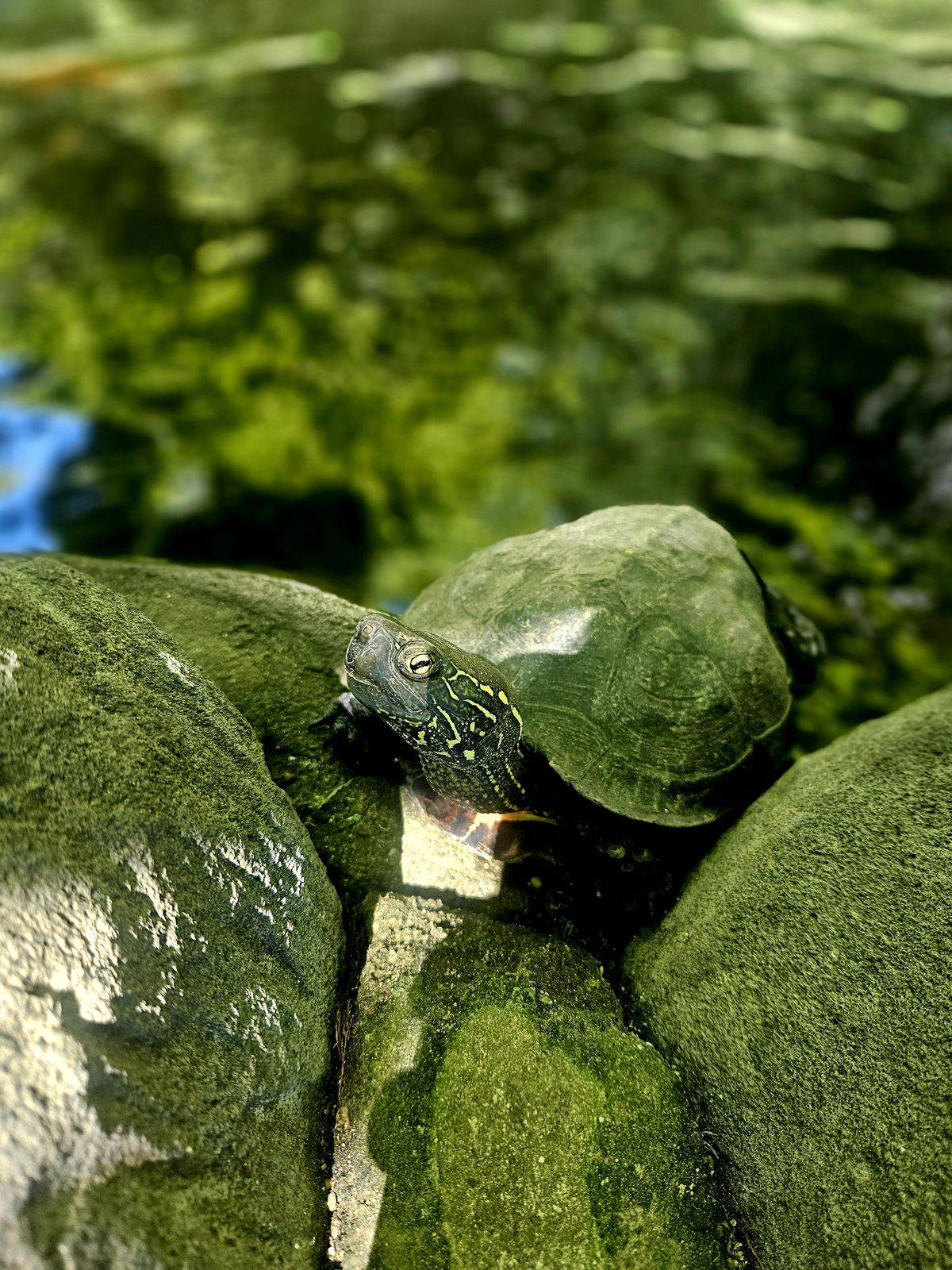
The shrine is splendid. Its great gate opens onto the hills of Nagasaki like a frame around a painting. It's cool inside the place of worship, which the wind blows through, offering a little respite from heat that's already exhausting despite the fairly early hour. A small water point lets us cool off and wet our hats. We pass under torii, traditional Japanese gates, then go and look at a little pond. The Japanese adore these little ponds full of big fish and turtles, and so does Clémence. They're used to being fed, as they always swim towards us and open their huge mouths at the surface.
Further on, a small free zoo has a few animals. The Japanese have a very bad reputation for animal welfare, and it sometimes shows. The caged animals look sad. There's a swan paddling in a few metres of water, a poor fox alone in a tiny wire enclosure and listless monkeys. We don't hang around and continue strolling in the shade of the trees until we come across a playground which has the merit of not being in full sun, so we make the most of it and play for a while.
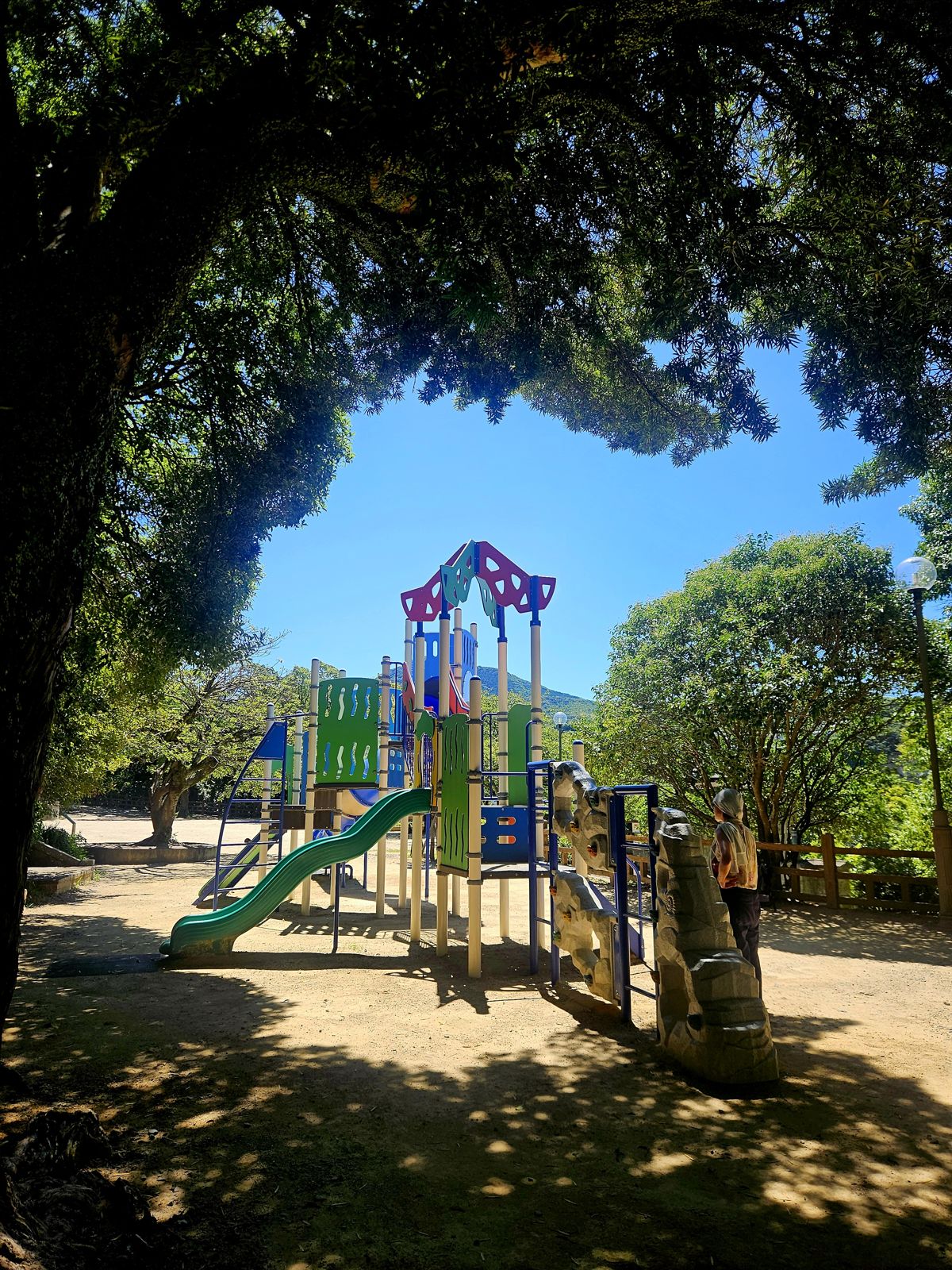
Clémence does enjoy visiting temples, but we still try to fit in moments in the day when she can have fun like any three-year-old. Unfortunately, Nagasaki has very few places for children. And more generally, after more than ten days in Japan, we have to admit the country isn't very "kid-friendly". It's hard to find places to entertain children, especially little ones.
We go back to the flat at noon for a little break in the cool. Later, we head out again to other temples a few minutes' walk from our place. Unlike Korea, almost all temples in Japan charge an entrance fee: €2–3 per adult. At the first one we visit there's nobody at the till, so we "dodge" the fee without really meaning to. At the second there is someone, so we pay, and we end up staying quite a while, as its open, well-kept garden is also very well ventilated. We walk quite a lot in the end, and the streets are fairly quiet, so it's pleasant despite the oppressive heat.
We stop by the flat again for a snack and a bath. Just before 6 pm we get on a bus to the top of Mount Inasa, one of the mountains surrounding the city. You can go up by cable car or by bus; we choose the cheaper option. When the bus arrives, you can either climb about 800 metres of stairs or take a "slope car", a kind of monorail, for the modest sum of €1.50 per adult. The experience looks quite fun, so we give in, and Clémence really wants to ride it.
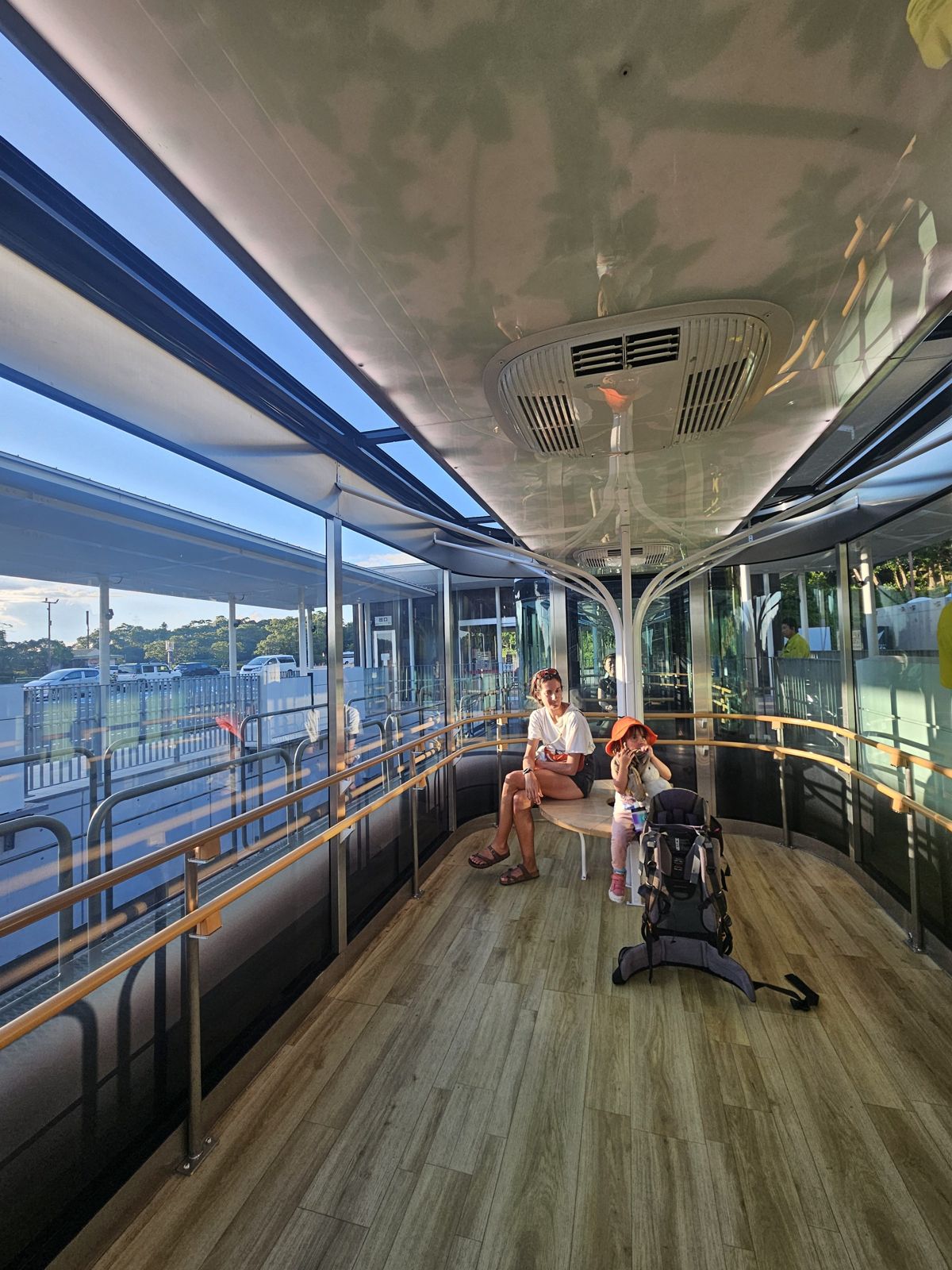
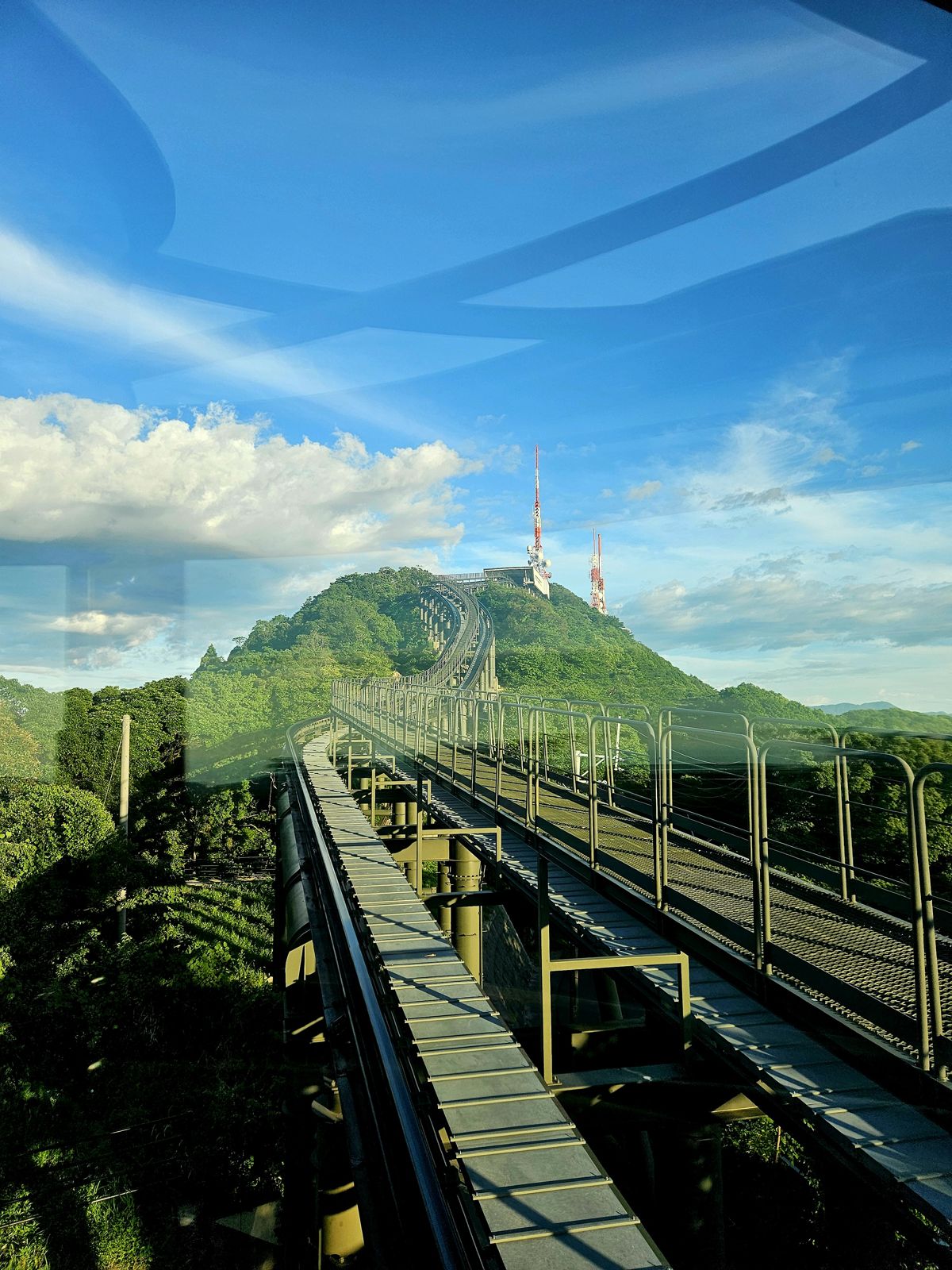
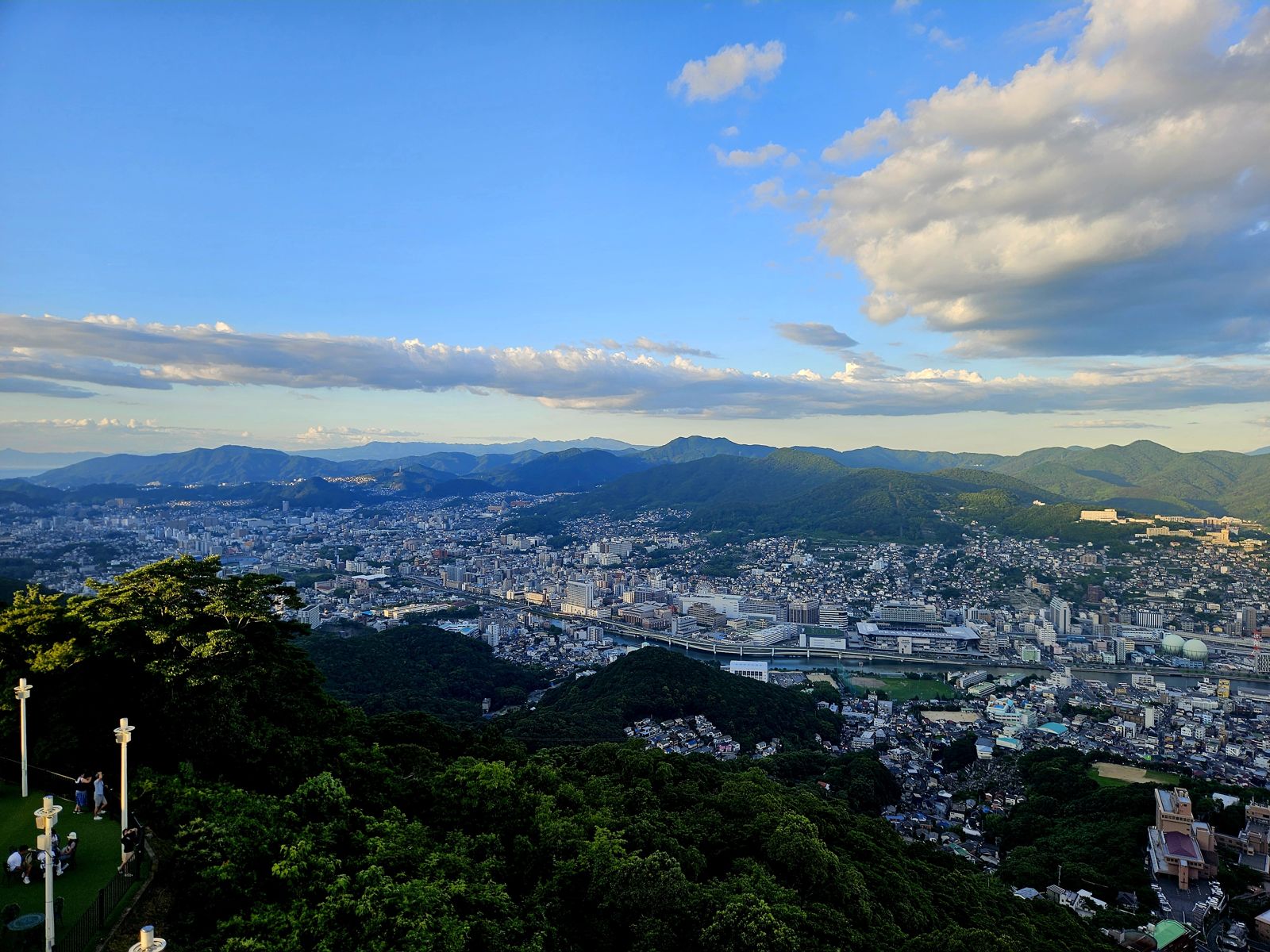
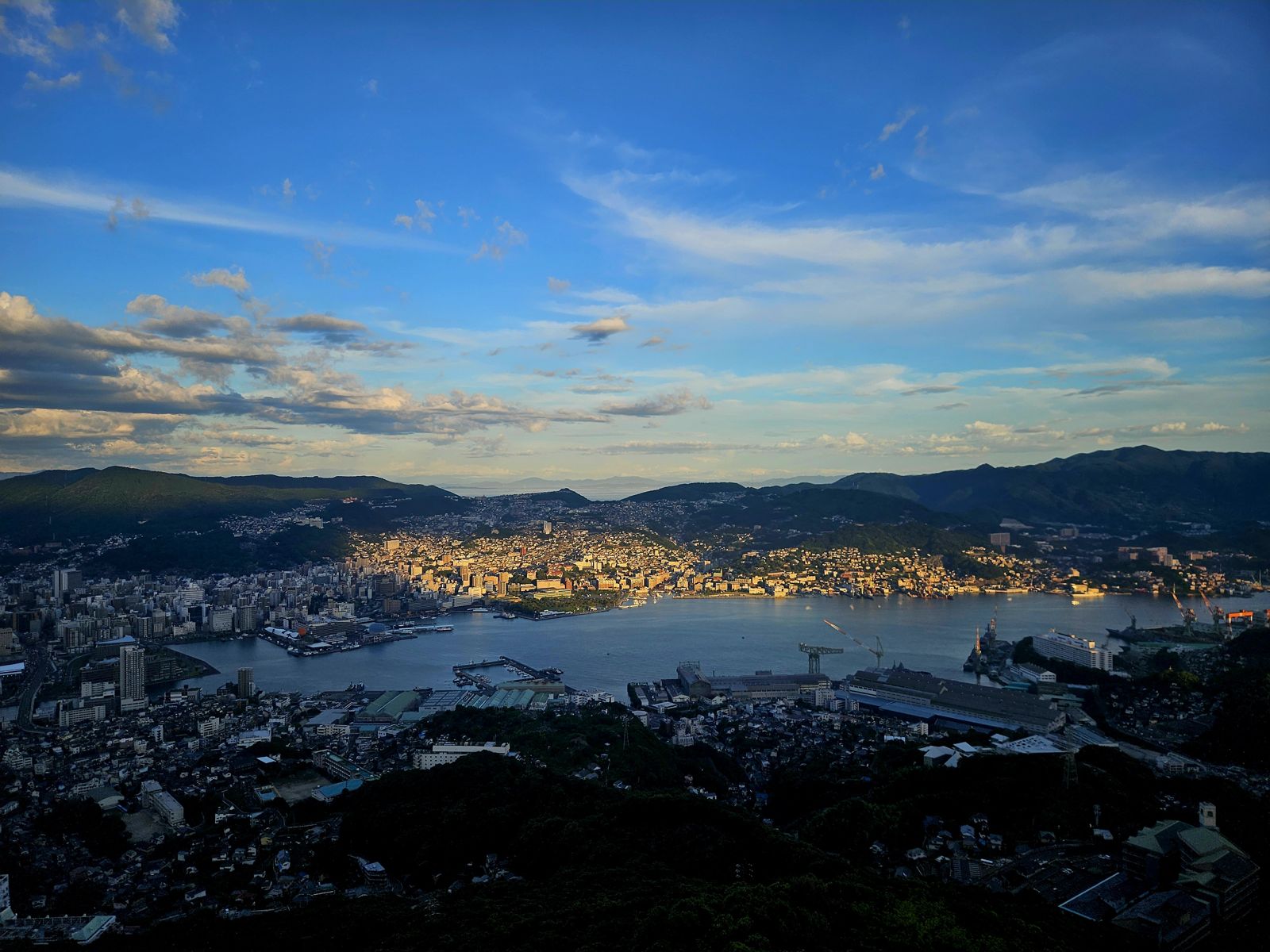
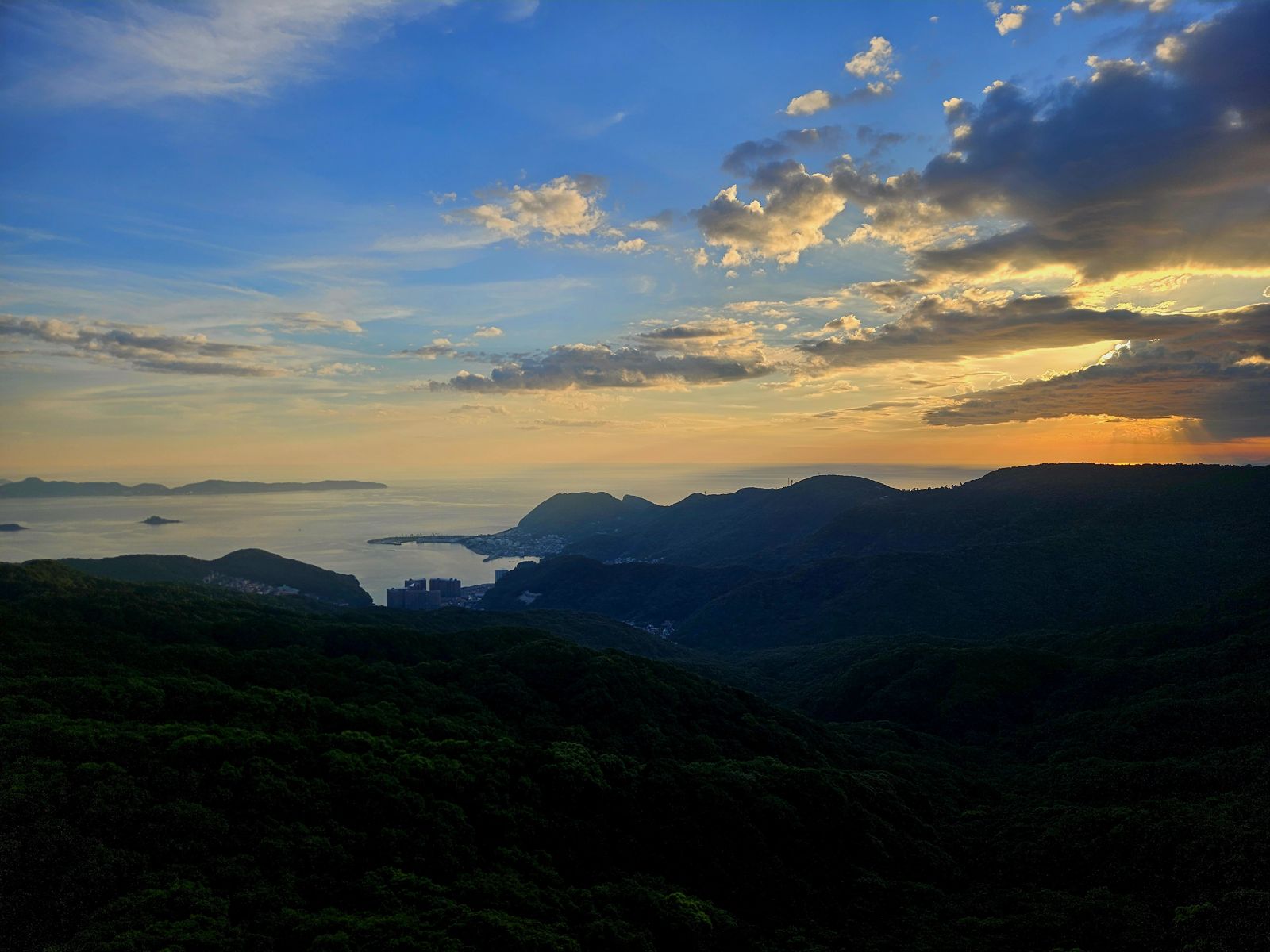
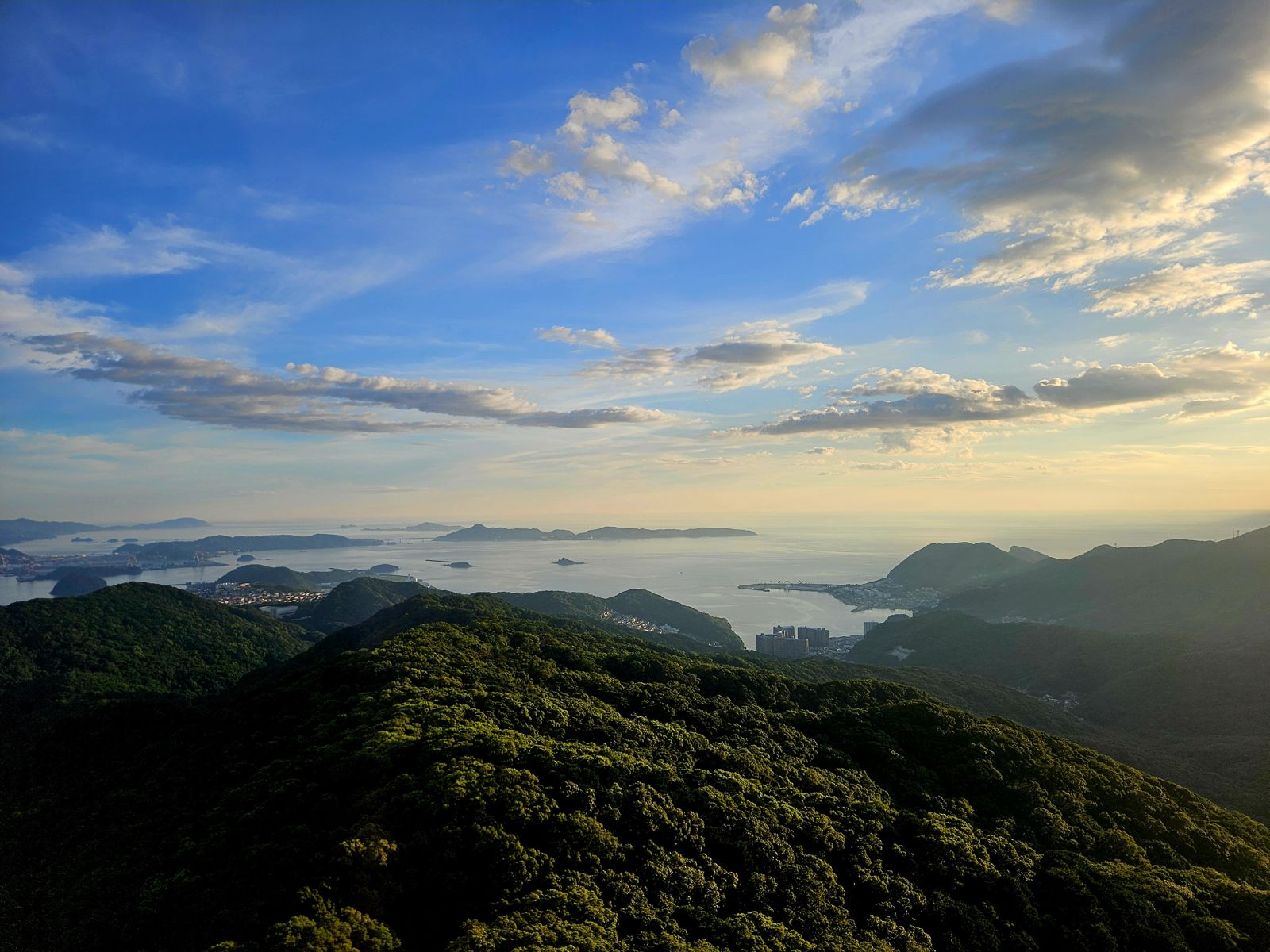
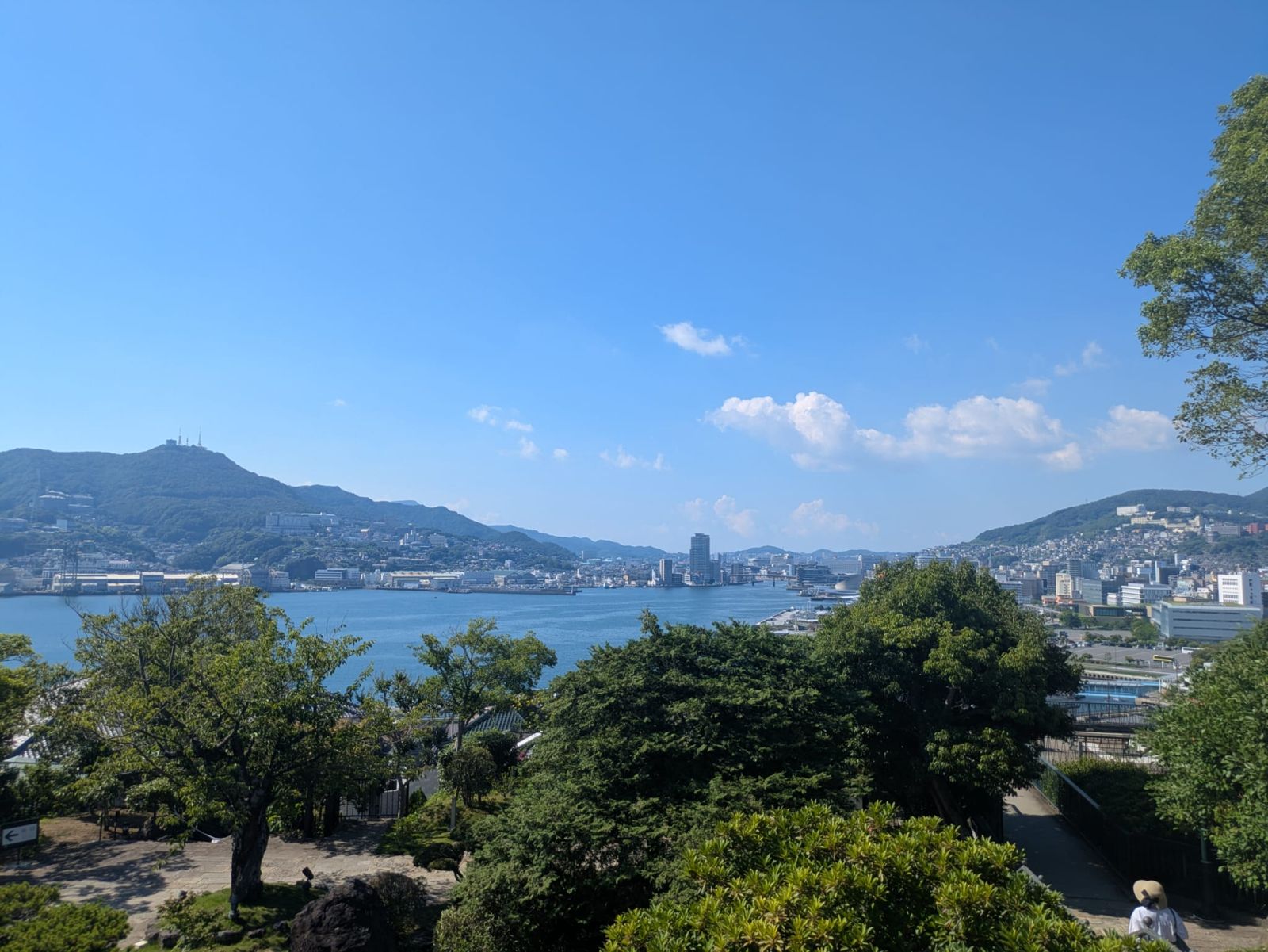
It's lovely indeed: the cabin climbs slowly and reveals Nagasaki's various bays, each more sumptuous than the last in the setting sun. At the top, a spiral staircase leads to an observation platform with a 360-degree panorama. Words fail to describe the splendour of the place. Down in the crowded streets, it's hard to realise you're in such a spectacular setting. The East China Sea that feeds Nagasaki's waters reveals dozens of islets and shapes a postcard landscape. It's hard to leave; we'd happily have stayed to enjoy the sunset, but Clémence is hungry and bedtime is approaching. We head back the way we came so she can eat, and she goes off to sleep without a fuss.
Friday 25 July
The Japanese have a huge problem with plastic. Absolutely everything is wrapped in it. If you buy packets of biscuits for breakfast, each one is individually wrapped. We eat bananas in the morning, and it's not unusual to find them wrapped in plastic too. It's really astonishing to see and we struggle to get used to it. For the first meal of the day, we keep it simple when we have a kitchen: scrambled eggs, bread, butter and bananas.
Once again the pace is slow this morning, as we're not taking the bus to a beach until 10:40. Stéphane goes down to fix the front brake on one of the bikes while Clémence listens to an album of nursery rhymes, her new passion. At the planned time we go out to buy a picnic lunch and catch our bus. We're surprised it comes almost ten minutes early, but that suits us fine. Except that after fifteen minutes the bus stops and the driver calls out to us from his seat. "Finish," he says, crossing his arms in an X.
Looking at Google and out of the window, we can see we're not in the right place at all. No beach here. We did take bus 9, but he explains that there are several number 9 buses with different destinations. Since we can't read Japanese, we foolishly relied on the number. Except that at a fork, the bus turned left while the beach bus goes right. To get back to the fork, we'd have to walk 30 minutes along the road in the blazing sun. Out of the question. We've barely had that thought when a bus comes the other way, the 50, so we quickly run to catch it back to the fork and get back on the route of the right bus 9 — are you still with us? Getting off the 50, we've just enough time to cross the road before we see the beach bus coming. But how do we know it's the right 9? We see a few Westerners, so we assume it's the right destination.
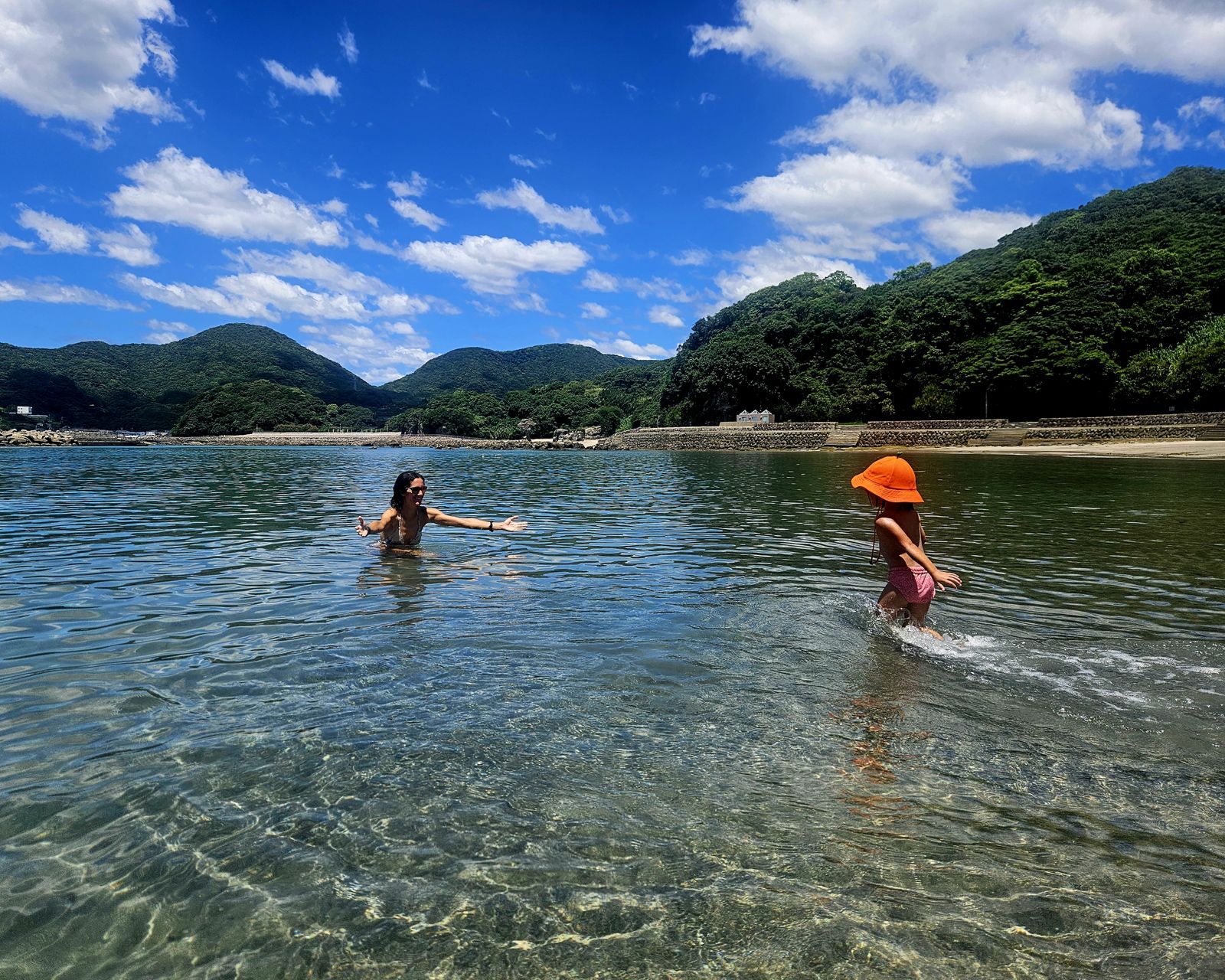
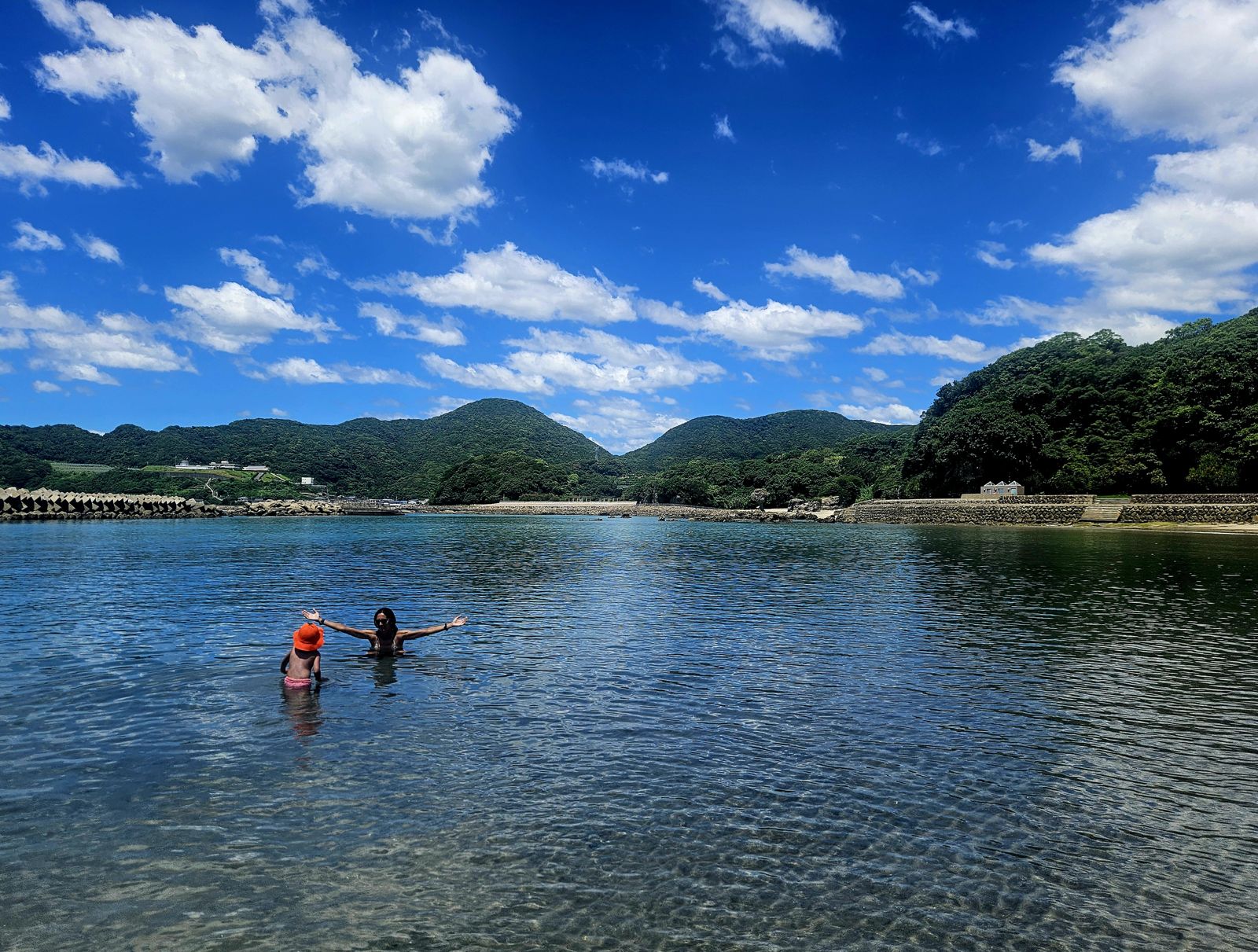
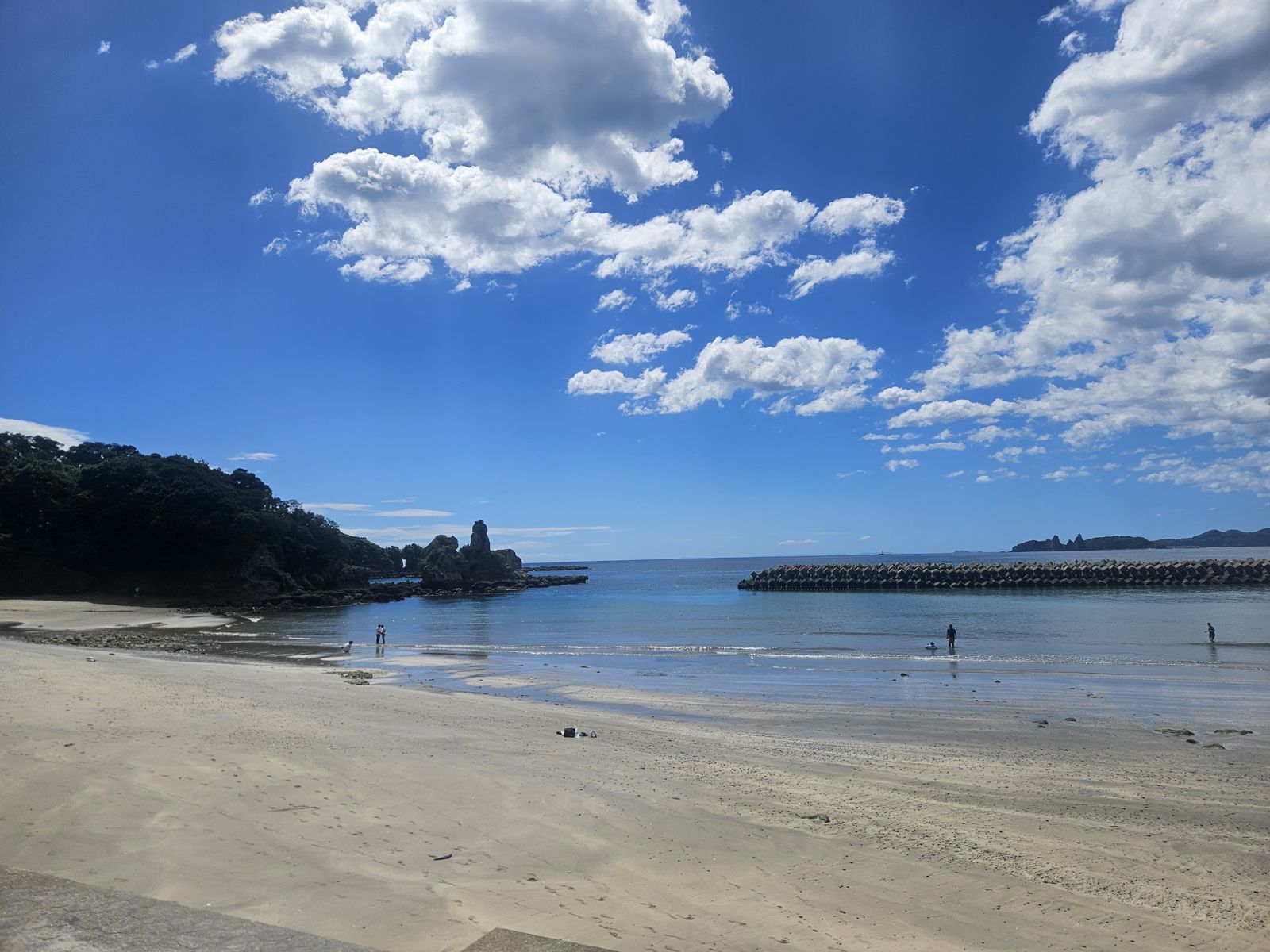
And indeed, it drops us at the beach. It was worth the whole saga, because it's sumptuous. Set in a small cove surrounded by low cliffs, the water is perfectly calm and the trees offer welcome shade along one whole side. Little crabs scurry all over the sand and small fish swim in the water. We have the beach almost to ourselves; only a small group of students is there too. The cool-off is very welcome, as we've struggled to find anywhere cool since arriving in Nagasaki. The city has a big port but no beach, and few fountains or water jets to cool down in.
After enjoying the warm sand for several hours, we head back. In the other direction, the bus is no longer the 9 but the 17. It follows exactly the same route but has changed its number. It drops us in the right place, so we stop trying to understand the logic. To rest our skin and heads, we try not to stay outside too long in the afternoon, so snack time is back at the flat again.
We go out again a few hours later to enjoy a new playground. We see very few children in parks or on the streets. Apparently Japanese children don't go out at all when it's too hot. Here, little ones are often looked after by their mothers until the age of five.
To take a train or bus with bikes in Japan, you must have a rinko bag, a bag designed to hold a bike. We're planning to take the train in the coming days to avoid the stress of some overly busy and dangerous roads. But it's almost impossible to find the famous bag in second-tier cities. Nagasaki has well over 200,000 inhabitants, and we can't find one. Getting around Japan by bike is decidedly harder than expected. What's supposed to be the mode of transport of freedom is starting to look very much like a burden.
The city is really not bike-friendly; we haven't dared ride in it since we arrived. Riding on pavements is forbidden in Japan, but cyclists clearly prefer to break the rule, as all those we see (and there aren't many) ride on them. Not finding the famous bag annoys us and takes away our desire to eat out. Organising a long bike journey is a real headache when you can't travel by bus or train as you wish, as you can in most countries in the world! In any case, Clémence is delighted to have an aperitif at home and very proud to clink glasses with her juice carton. She's growing up so fast!
Saturday 26 July
We're starting to dread Japanese roads. The joy of cycling is gradually being replaced by constant apprehension. Digging through online forums, we read that if you find Japanese roads dangerous, it's because you're not on the right roads. It sounds a lot like victim blaming, because once bikes are allowed on a road, you shouldn't feel in danger there. And we only ride on roads limited to 50 km/h at most.
We haven't been gone five minutes when, sure enough, a driver skims past us on a dual carriageway with the entire right-hand lane completely empty. It's becoming repetitive and depressing. The sun is hidden behind a nice blanket of cloud this morning, which makes the morning climb less hard. We try to ride on the pavements as much as we can, but they always end up disappearing. Sometimes we have to go through tunnels, but they're not designed at all for cyclists to pass safely, and they're very poorly lit. But once you're in front of one, you've no choice, so you go. We switch on our lights and cross our fingers that the cars see us and don't run us over.
Today's stage is only 33 kilometres, a succession of tough climbs. No big ascent, but 600 metres of cumulative climbing in the end. To rest our legs, we stop halfway at Yui no Hama Marine Park, a bay with a pretty beach facing islets. At the entrance we realise there's a fee for all vehicles, even bikes (though there's no bike parking down below, so we wonder what we'd be paying for). So we park a little above the entrance and walk the rest. Beaches are one of the few free activities, so we make the most of them. Clémence has a whale of a time and never seems to tire of playing in the water and sand.
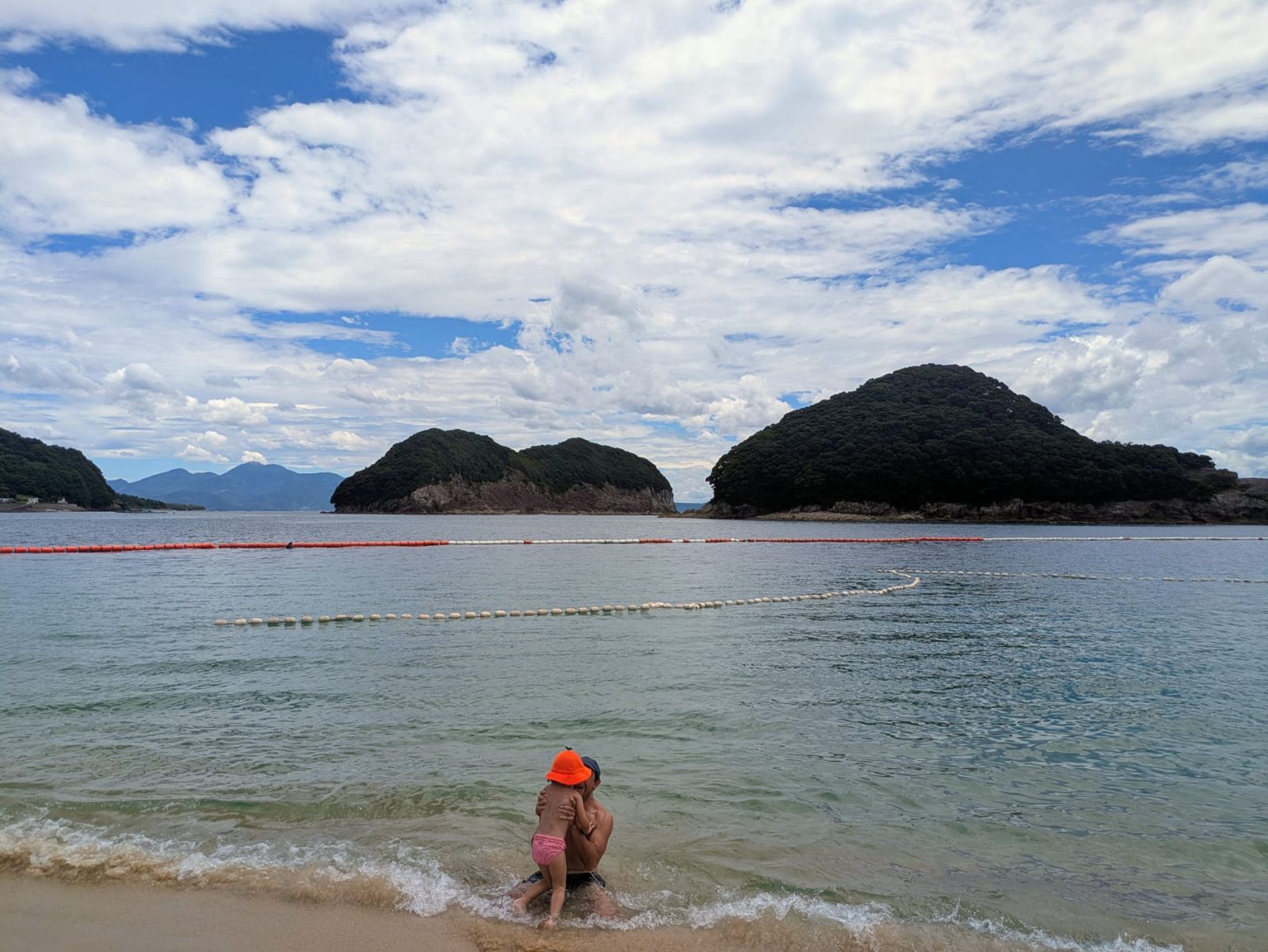
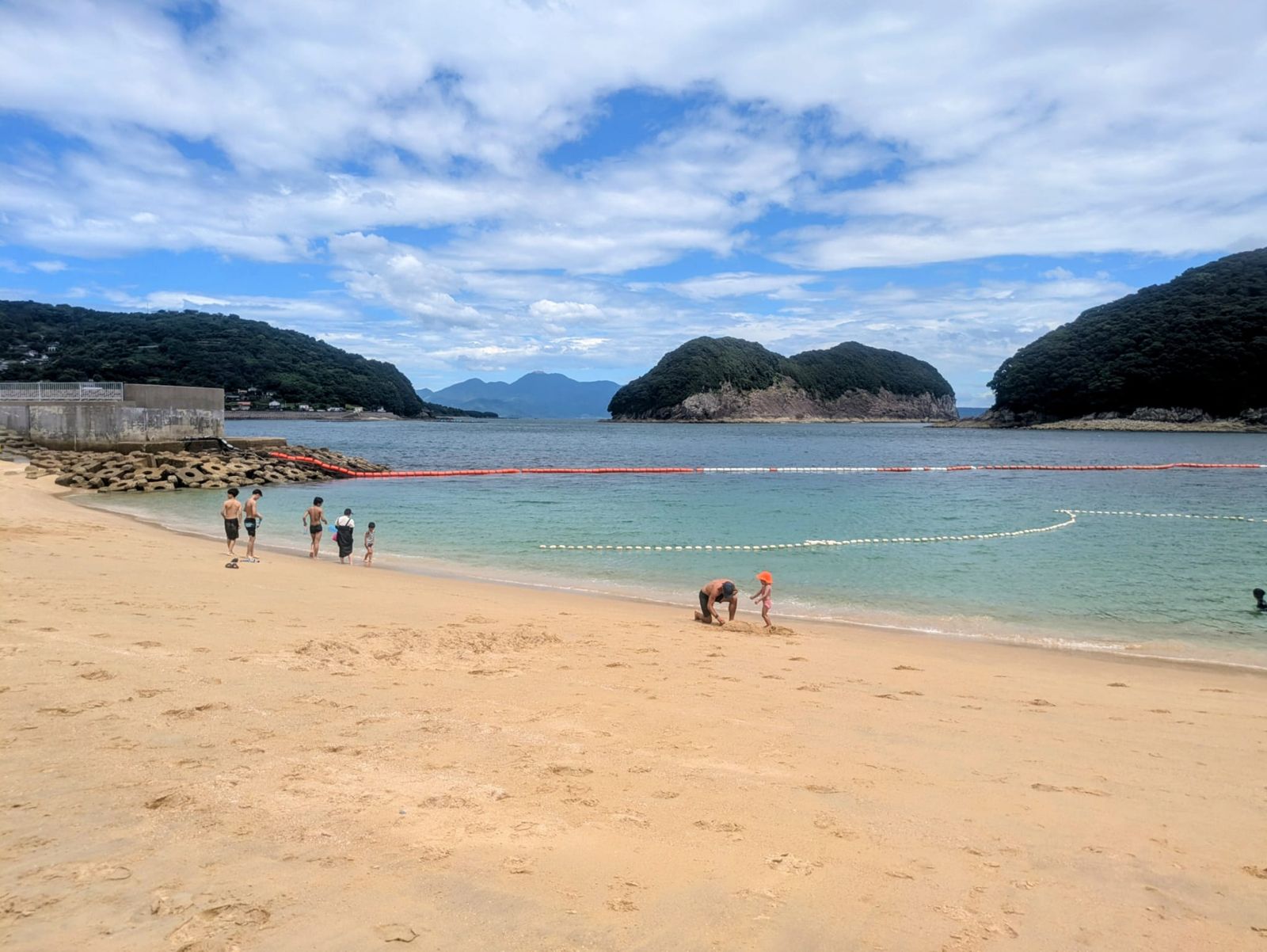
She's an incredible child; she almost never grumbles when it's time to leave. This afternoon she climbs onto her shotgun seat at the front and we set off for the second half of the ride. Unfortunately our route sometimes joins the 50 km/h main road, and it's always very stressful to be on it, as there's no hard shoulder and cars skim past us. When a road lets us turn off, the Japan we'd hoped for really reveals itself. The all-green landscape of tropical forest with the East China Sea on our right is a well-deserved reward. Rice paddies flood the hills; there are so many that even Clémence has given up pointing them all out to us.
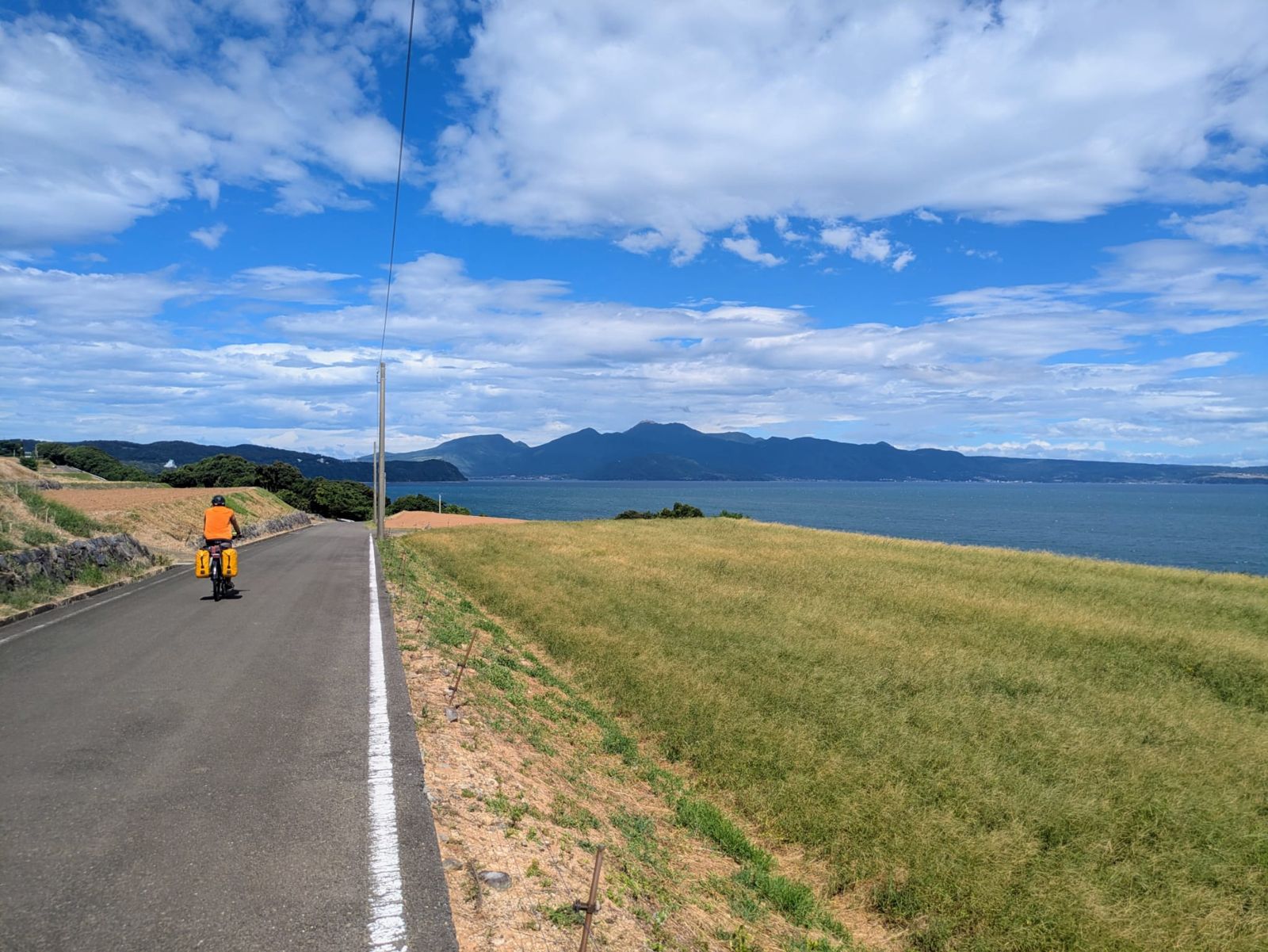
To reach tonight's hotel, we have to take the cursed road again for the last 3 kilometres, and it gives us no respite, as there's an unbroken line of cars on it. It takes us ages just to cross and pull onto it. You can't go at it like a cowboy, because you can't take off with screeching tyres as in a car. We need a certain gap between cars to pull in. The road keeps climbing, it's very busy, and drivers keep skimming past at mind-boggling distances.
When we reach our bungalow, we don't even want to go out again. We notice on one of the walls that we can order food delivered to the room. We don't miss the chance and stay in all evening. Since we're not moving, we take the opportunity to do laundry and dry our clothes, as wind and sun have come together. We also give our bikes and drivetrains a full clean. The evening is quiet and pleasantly cool thanks to the wind, so we linger a while on the terrace before going to bed ahead of tomorrow's very short stage.
On the road