 ← PreviousKagoshima, Kirishima and the urge to be elsewhere
After a quick breakfast in the room and a little detour via the hotel's children's area, around 10 we take a small country bus to Kagoshima airport, about 30 minutes from our village. The bus looks like every town or country bus we've taken so far, but its fare is much higher: it costs us €10 to get to the airport, whereas in Nagasaki, for example, a journey as long cost half that… No wonder it's almost empty. The only people using it are visitors like us, or perhaps people with no other option.
At the airport, we have to wait an hour or so for the long-distance bus that will take us two and a half hours north to Kumamoto, Kyushu's third-largest city. Kagoshima airport is fairly big and has a large outdoor observation deck overlooking the runways, where you can watch planes take off and land, to Clémence's great delight. It's barely 11 and the thermometer on the terrace already reads 34 degrees: that gives you a small idea of the Japanese summer heat… In fact, this July has been the hottest ever recorded in the country, with incredibly low rainfall. A new heat record was set today in the Tokyo area: 42 degrees (in the shade), and you have to add the humidity on top.
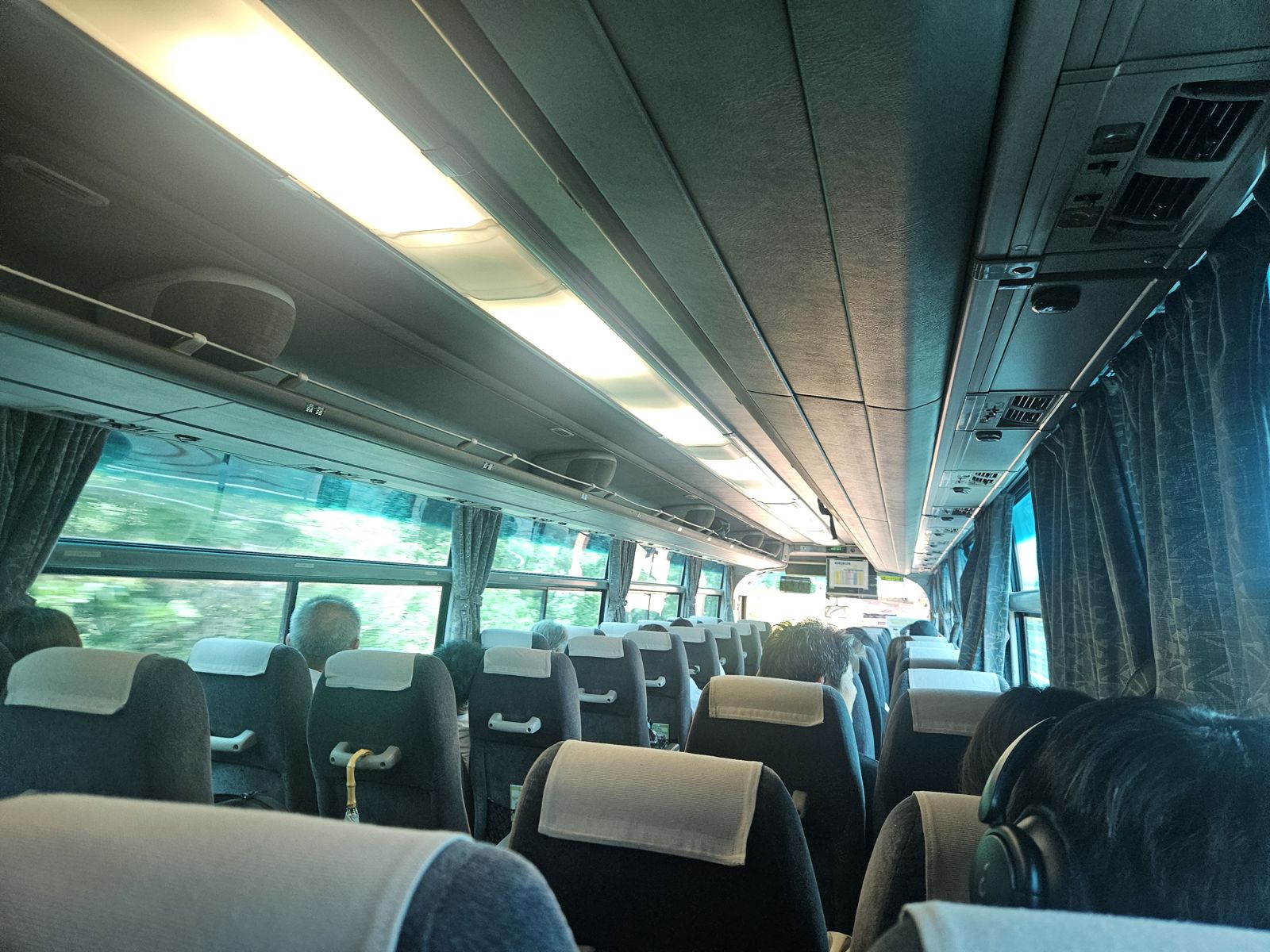
The connection goes fairly quickly in the end, and after a quick snack we board the bus. Long-distance buses are much less comfortable than in Korea and more expensive, but we make do. We have the whole back row to ourselves, so we spread out. As soon as she's settled, Clémence closes her curtain, her eternal ritual on "curtain buses". We play cards and listen to nursery rhymes. The journey goes quickly and we reach Kumamoto around 2 pm. Our hotel is very close to the bus stop; we're a little early for the 3 pm check-in, but the man at reception kindly lets us into the room. It's small but will do perfectly for the three nights ahead. We settle in and quickly head out to visit Kumamoto Castle, which isn't far away.
Dating from the 15th century, it's considered one of Japan's three most beautiful castles, along with Himeji Castle and Matsumoto Castle, which we visited on our previous trip in 2018. Thirteen structures in the castle complex have been designated "Important Cultural Properties". In April 2016, Kumamoto Castle was badly damaged by a series of earthquakes reaching magnitude 7.3. In 2018, the restoration programme launched by the city planned for repairs to be finished by 2037. However, a new study estimates that full reopening will only be possible in 2052, 15 years later than originally planned!
Anti-shake measures such as seismic dampers have been installed, and the work has improved accessibility for people with reduced mobility. Still, many buildings and large parts of the fortifications remain fragile or destroyed and are being restored. 8,000 m² of walls were destroyed and, in total, a third of the stone walls were damaged: 23,500 m² out of 79,000. Kumamoto Castle's stone walls are protected cultural heritage, so every stone must be put back exactly where it was before the earthquakes. That means before any repair can begin, each stone has to be catalogued and analysed to determine its original position. Meanwhile, the site reopens as the restoration progresses, and the main keep, the Tenshukaku, has been open to the public again since summer 2021.
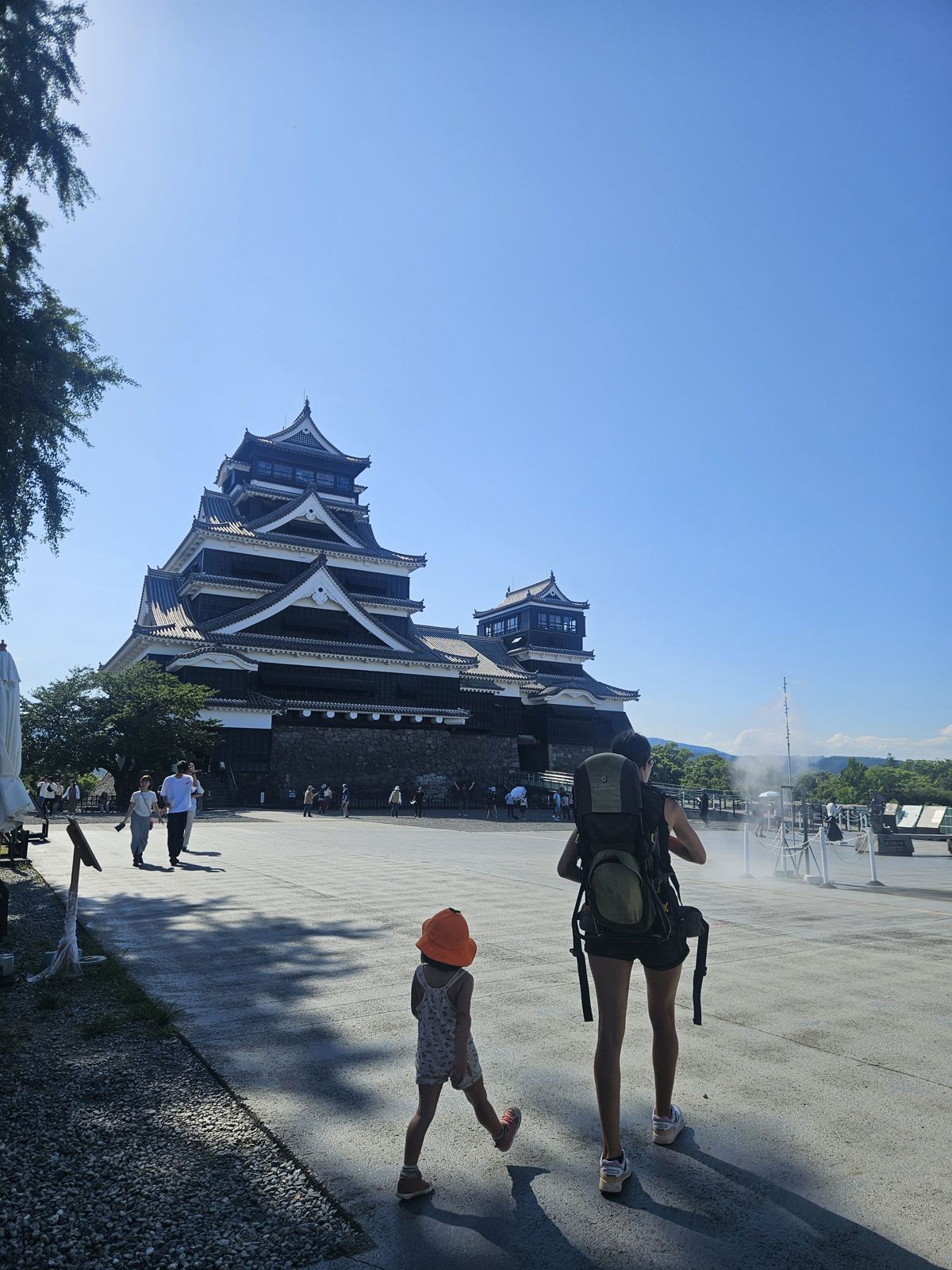
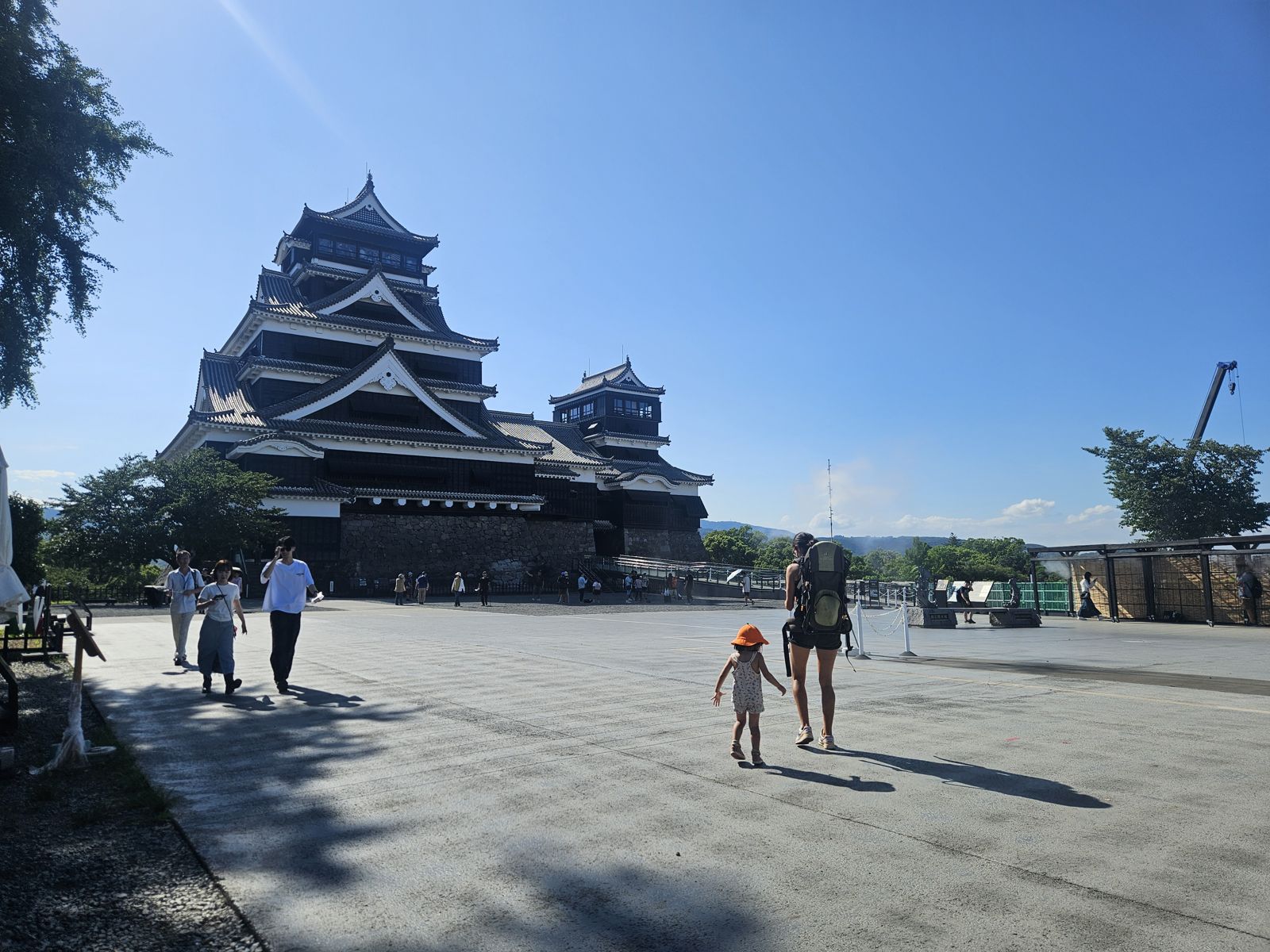
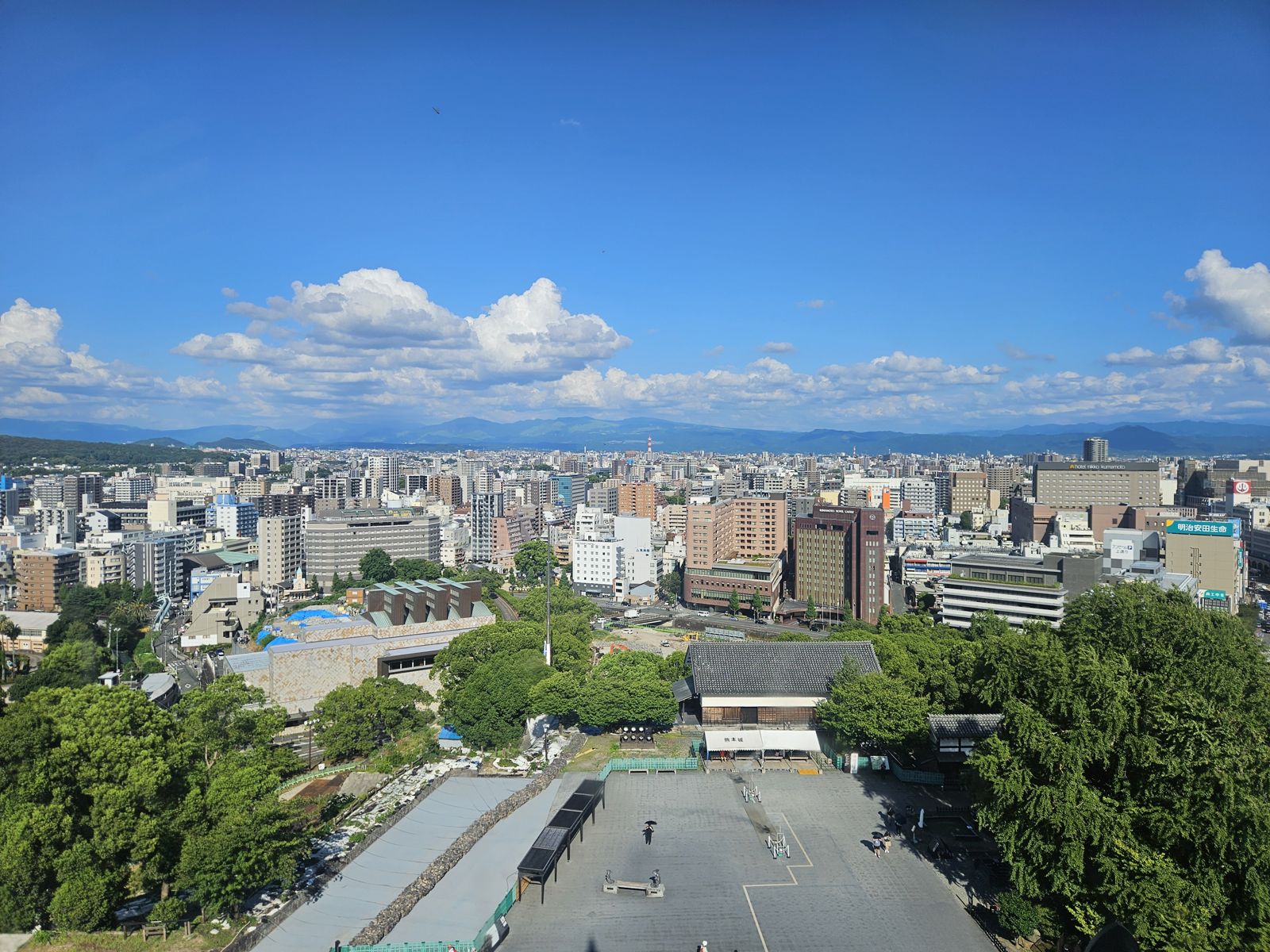
It's terribly hot in the city, and we reach the foot of the castle completely drenched in sweat after just a quarter of an hour's walk. Since the walls are completely closed to the public for restoration, a big steel walkway leads to the castle entrance, which sits above the city. The inside of the castle is no longer authentic at all, due to damage from fires, wars and, more recently, the earthquake. Instead, permanent exhibitions spread over the castle's six floors tell its history. A history we won't understand, as everything is written in Japanese. As so often in Japan, cultural and art venues aren't translated. So the visit is fairly quick, and we soon find ourselves on the top floor of the keep, where big windows let you admire the view over the city and the surrounding hills, dominated by Mount Aso. At 1,592 metres, it's the most active volcano in Japan.
We leave the castle around snack time. On the way out, we bump into a group of Taiwanese people who took the bus with us two days ago to the Lake Ōnami-ike hike. We say hello and wave enthusiastically, because the coincidence is really comical. Here Stéphane leaves Clémence and Cassandre to take the tram and then the train. Yes, you haven't heard about our bikes, but neither have we! They've been at Matsubase station for a week and we have to collect them at some point. So Stéphane goes to get the first one today. After a thirty-minute journey, he finds them in good condition.
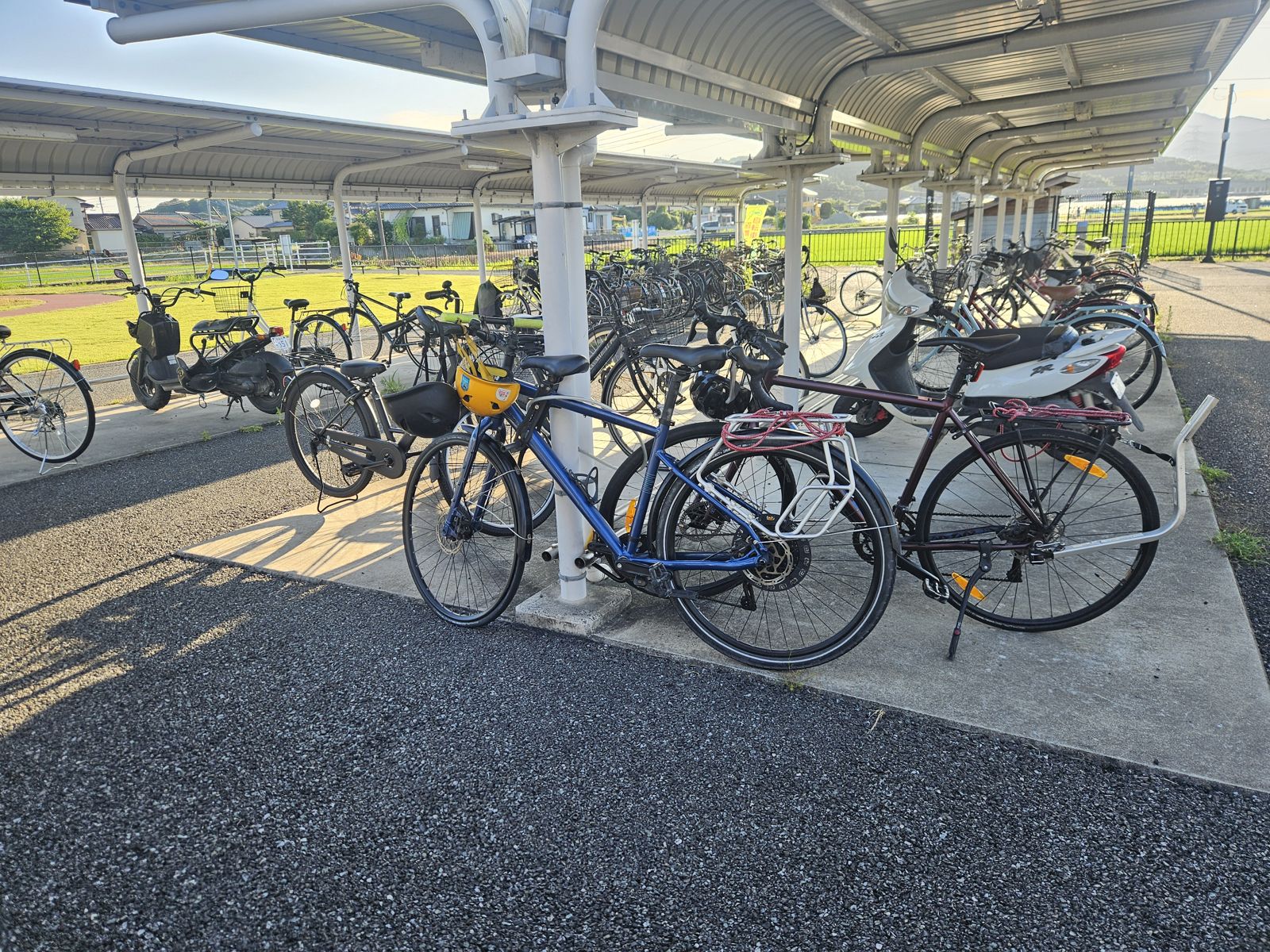
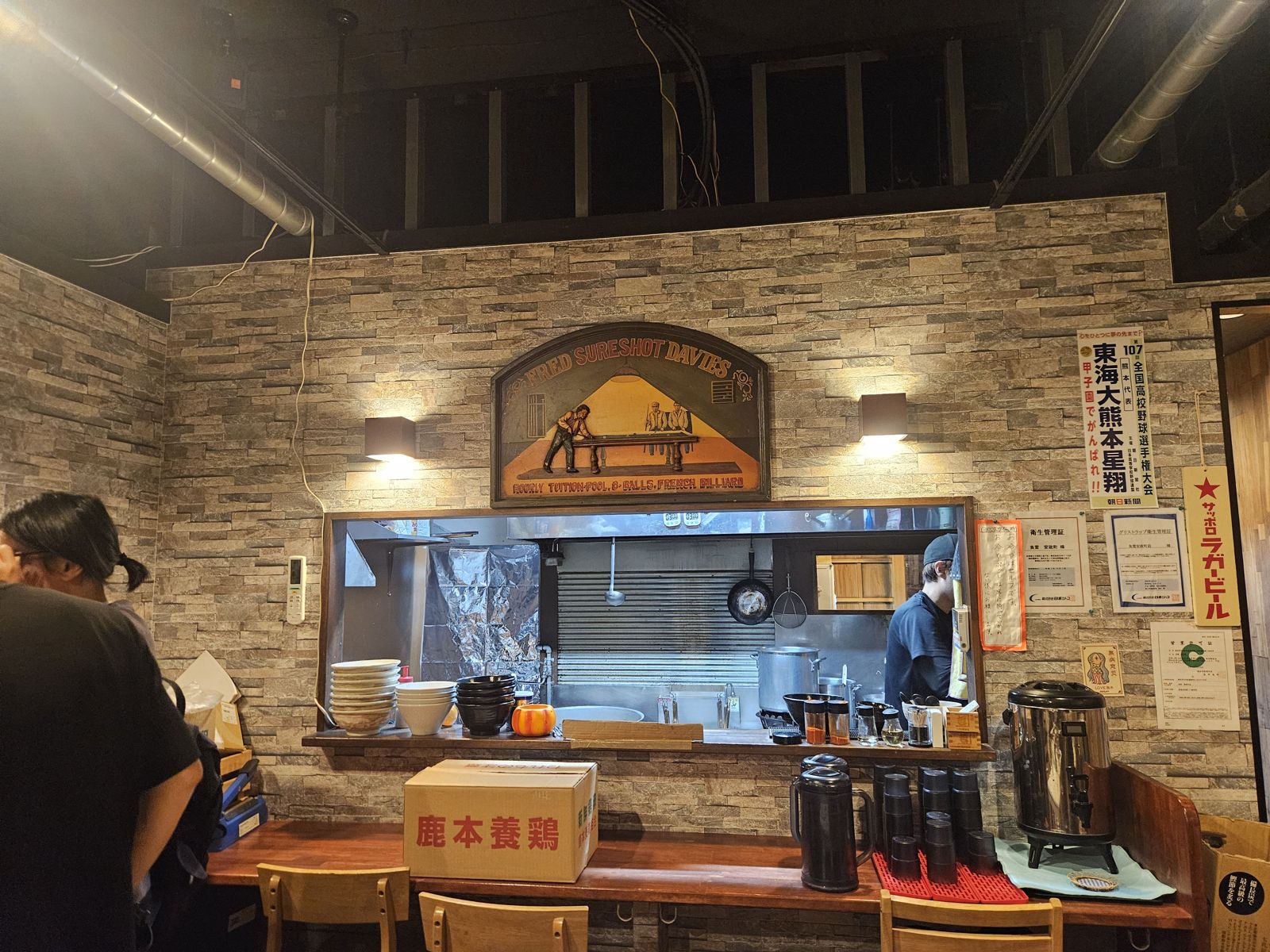
We weren't too worried, as crime in Japan is relatively low. After 18 kilometres on a road where Japanese drivers pass really close, he reaches the hotel. But nasty surprise: they have nowhere to park bikes and refuse to let us leave them in front of the entrance. So we have to use a paid bike garage, which we find 300 metres from the hotel. The system isn't simple; all we understand is that it will cost us 300 yen per 24 hours. To get over this dismay, we console ourselves in an excellent ramen restaurant before going to bed.
Wednesday 6 August
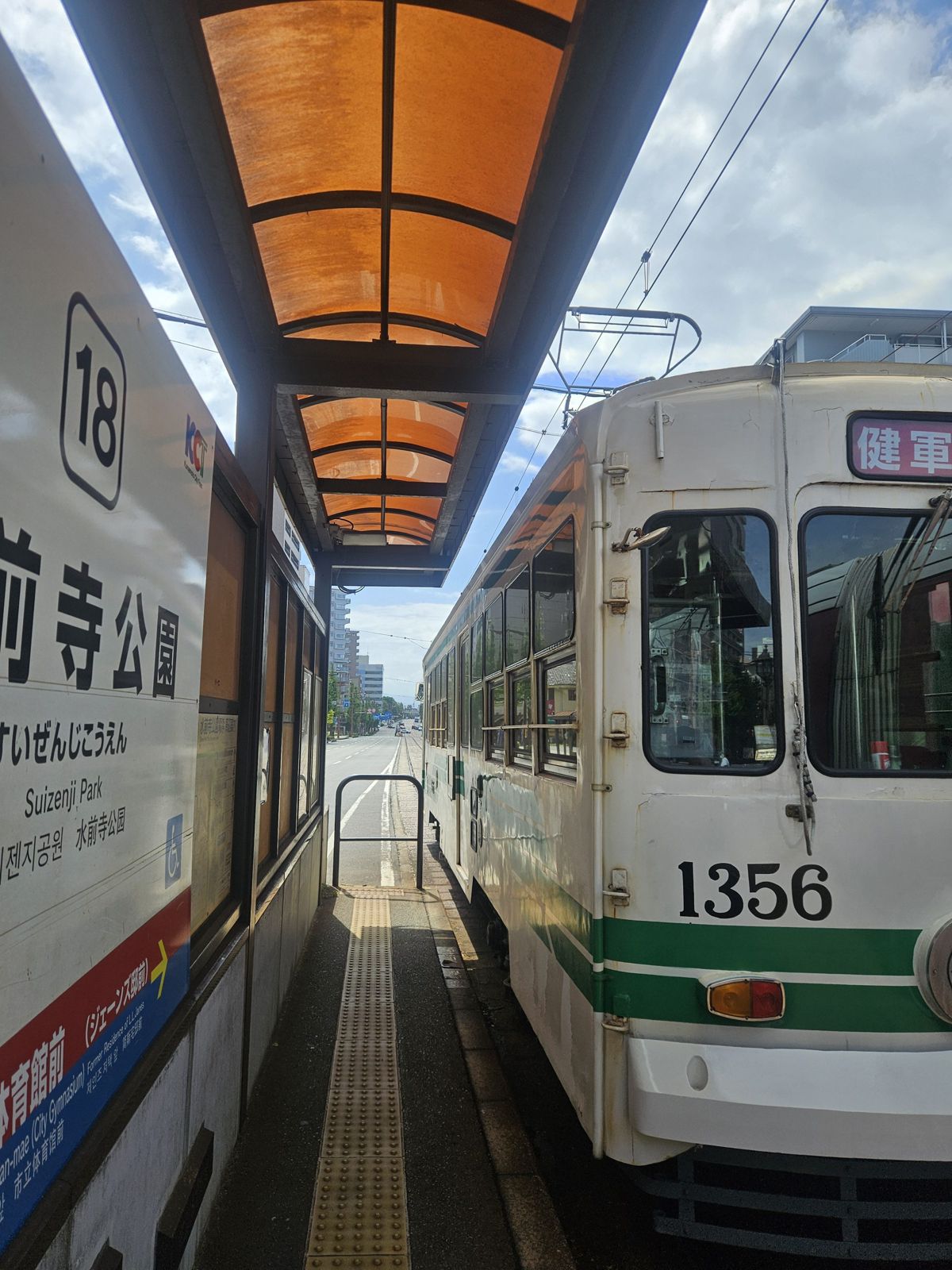
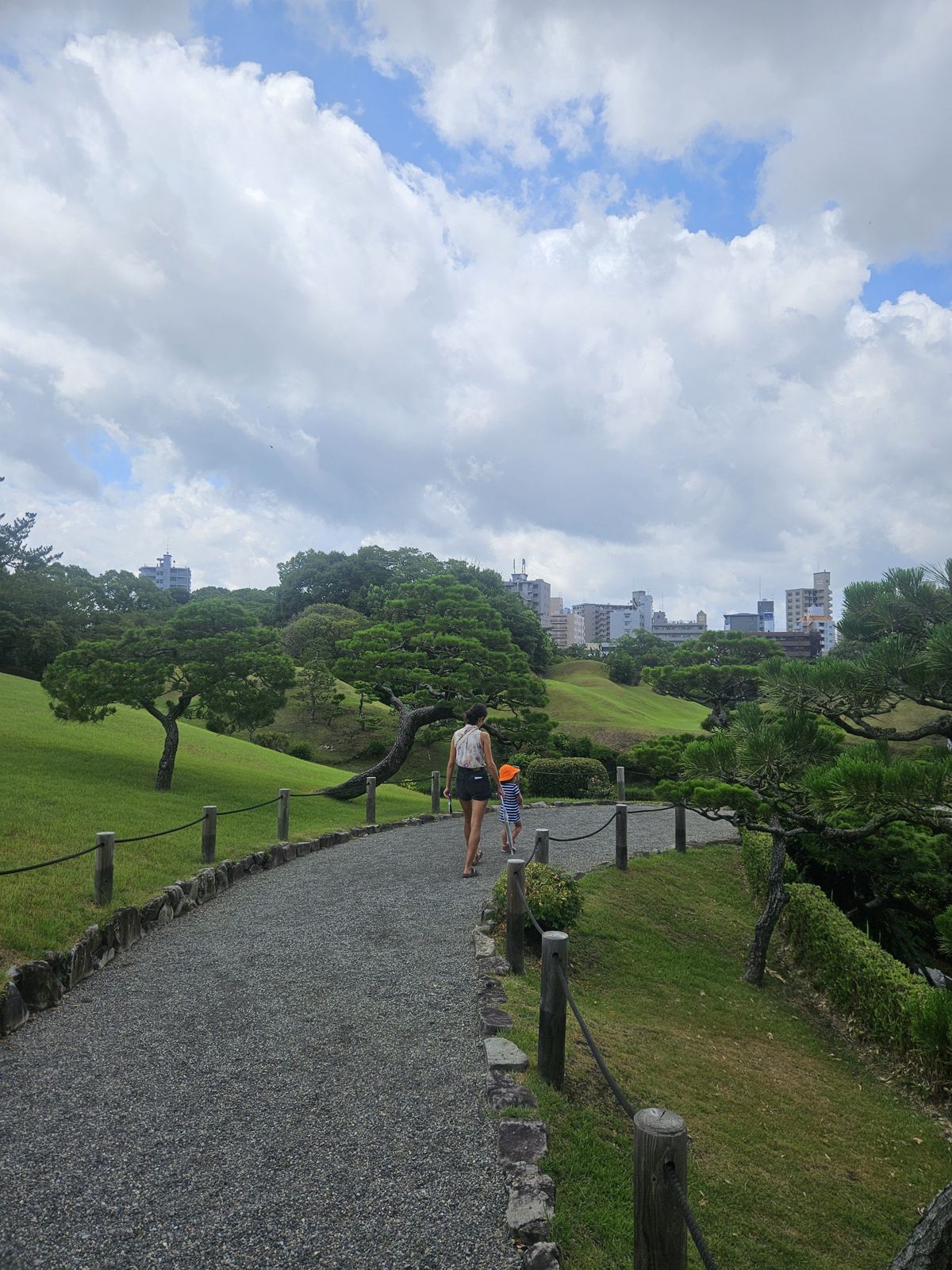
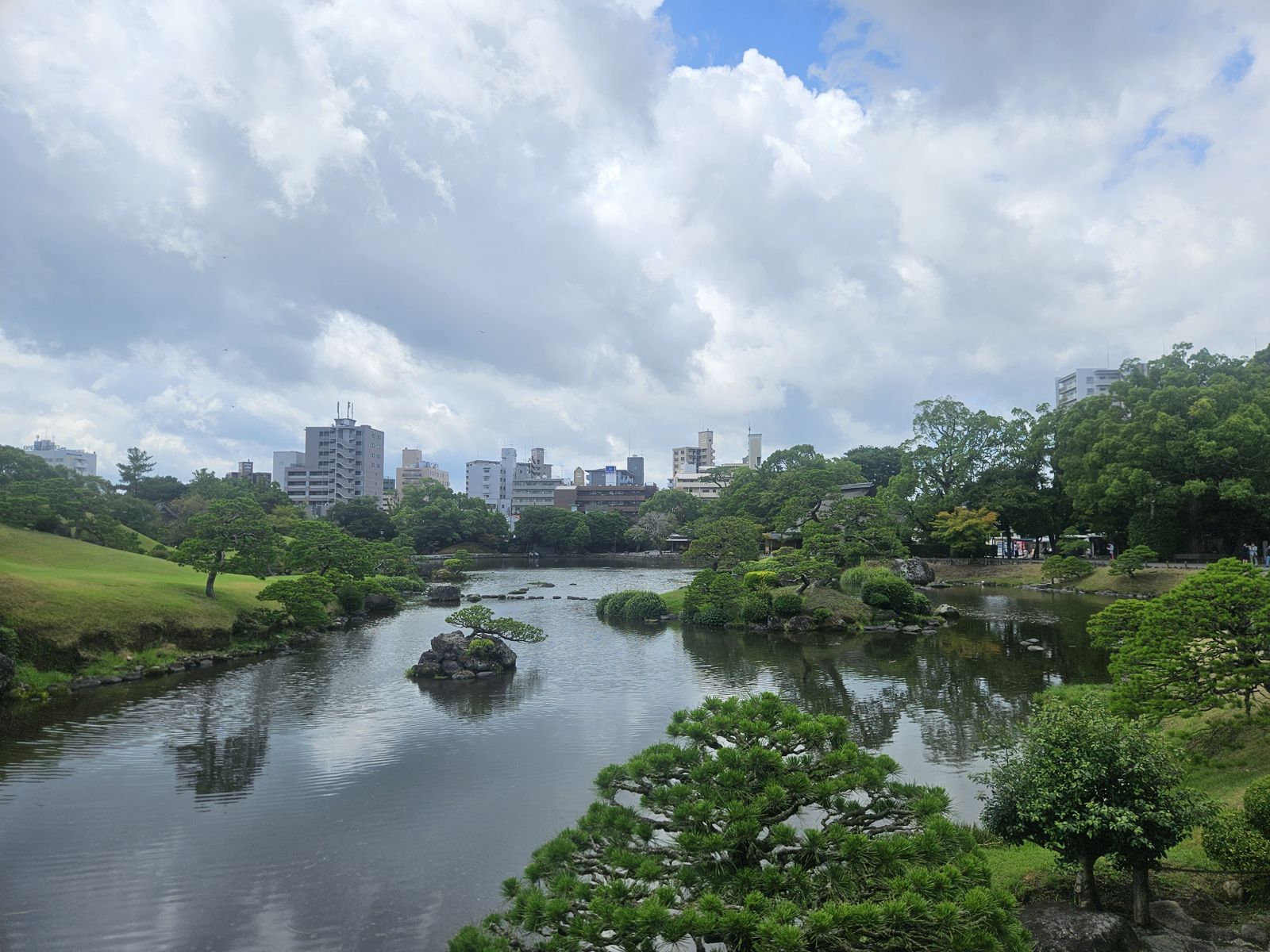
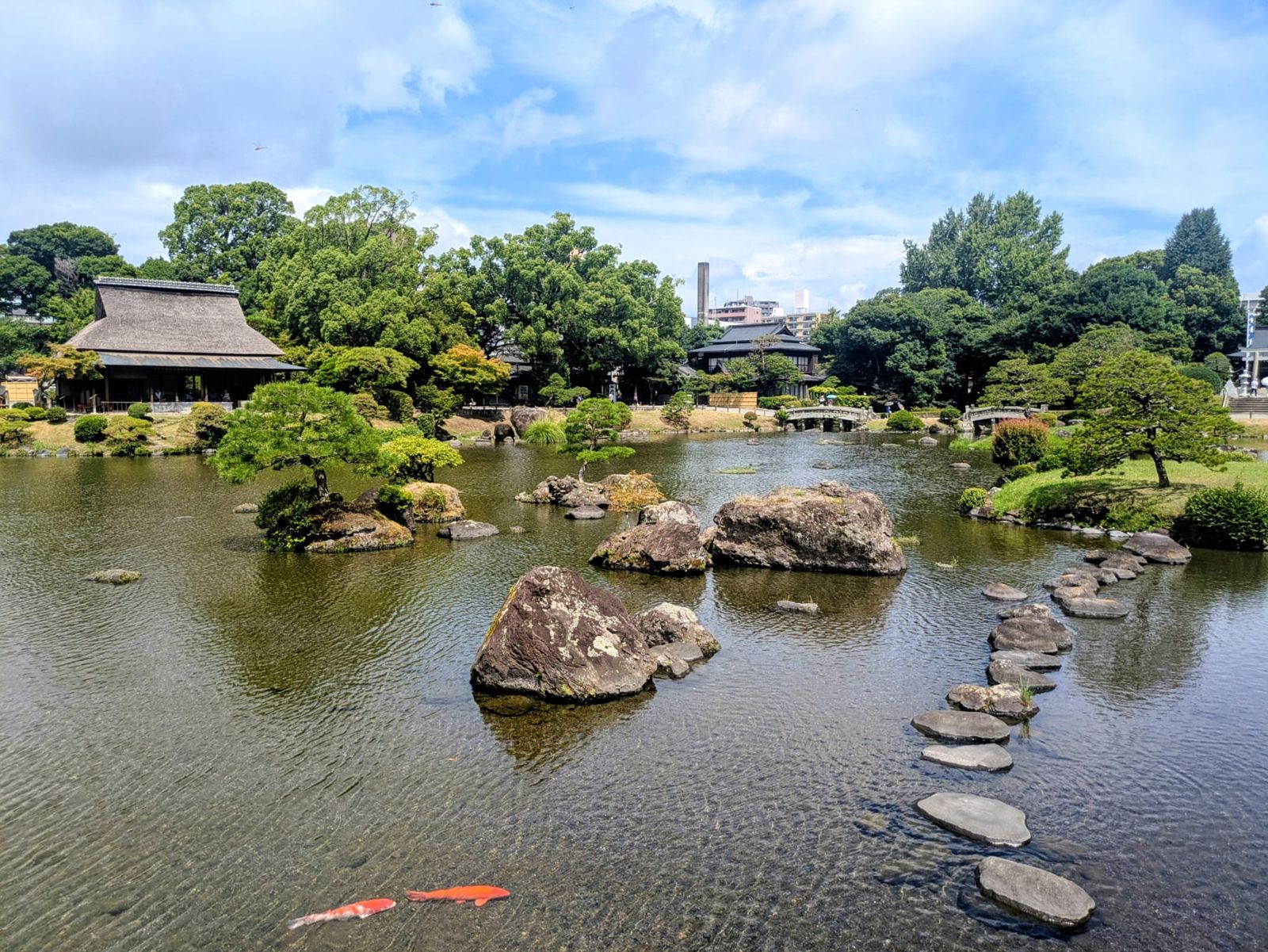
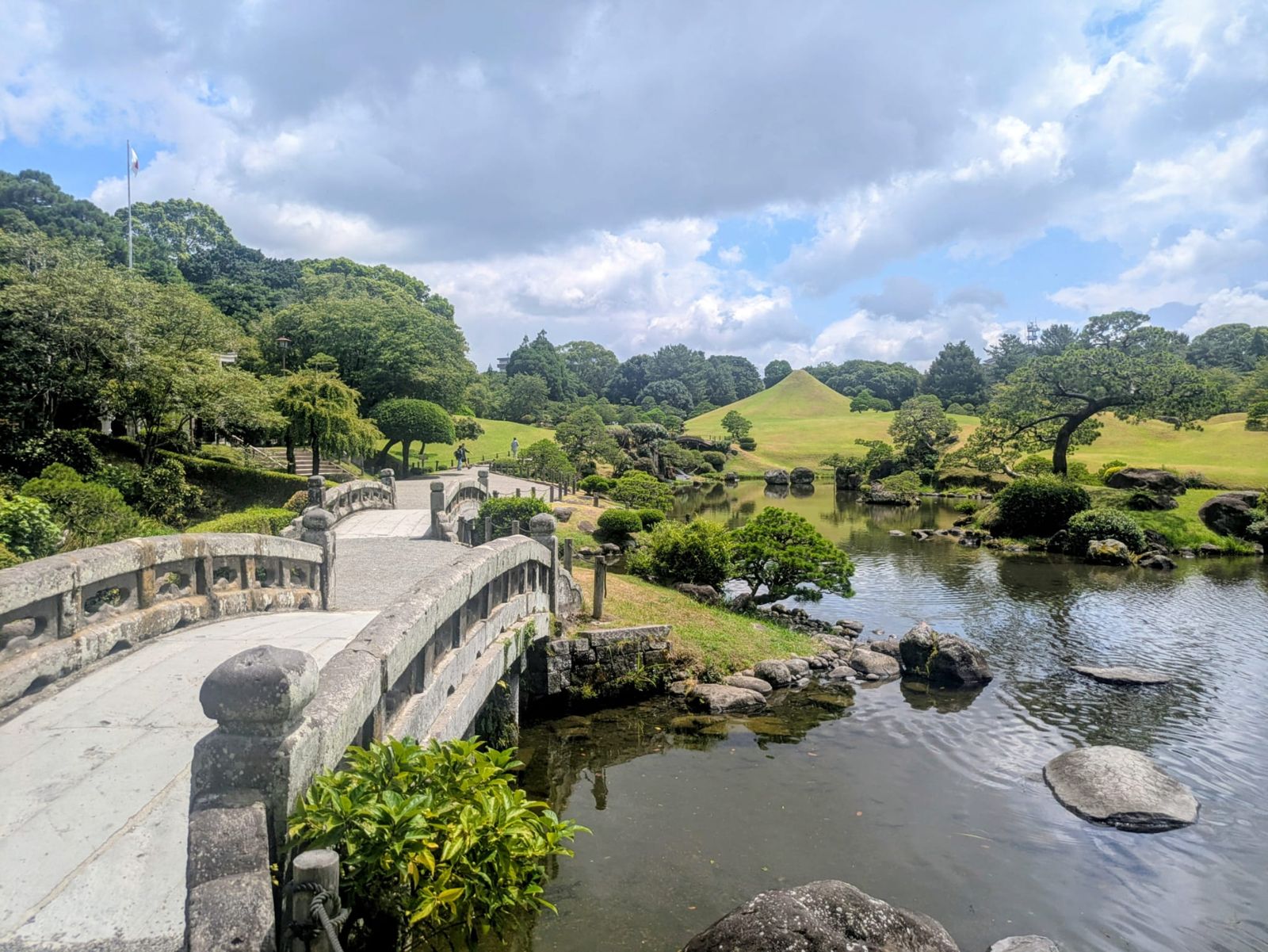
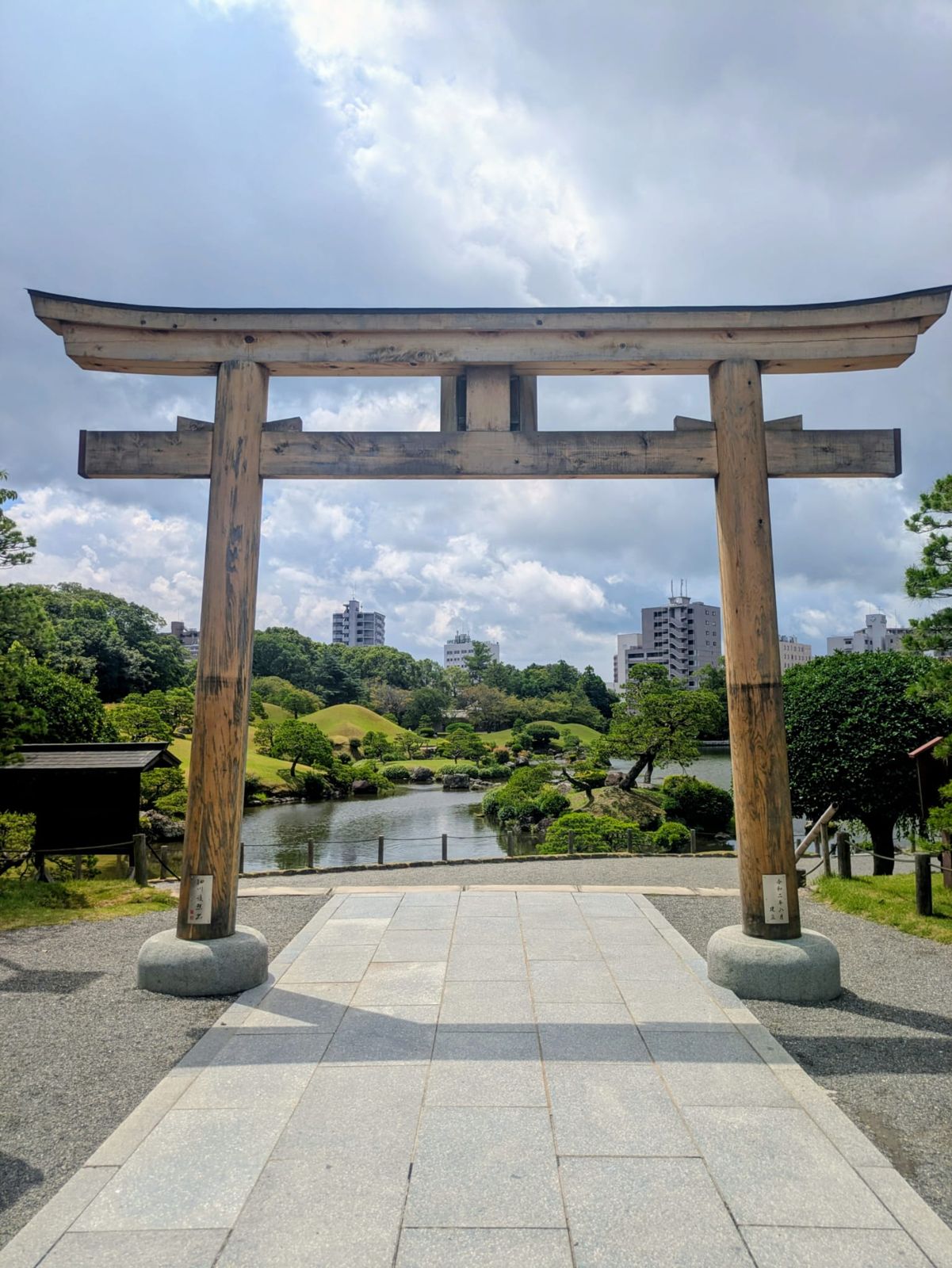
Kumamoto has its tram, like almost every second-tier city in Japan. It works on the same system, with tiny carriages and an almost meditative slowness. We take it this morning to Suizenji Jōjuen park and its huge historic garden. The pond is fed directly by water flowing from Mount Aso, and two stone bridges there are particularly famous. It's a highly historic place in the city, having witnessed battles and important figures, including Tadatoshi, an illustrious samurai.
We take the tram back to the centre to have lunch with a friend from Québec who has lived in Japan for almost twenty years. He has a nine-year-old son, Masaki. We sit down in a little ramen restaurant, one of the best in town, and Clémence and Masaki start warming to each other despite the language barrier. Once full, we stroll through the streets following the advice of Luc, who knows the city like the back of his hand.
The Japanese love mascots and cute characters. Kumamoto's is world-famous and is called Kumamon. Mascots are called yuru-kyara, and they have several criteria to meet. They promote a particular region or town, their movements must be unique and weird, and their appearance must be simple. This fascination with fictional characters harks back to Japan's polytheism and its folklore full of creatures and spirits.
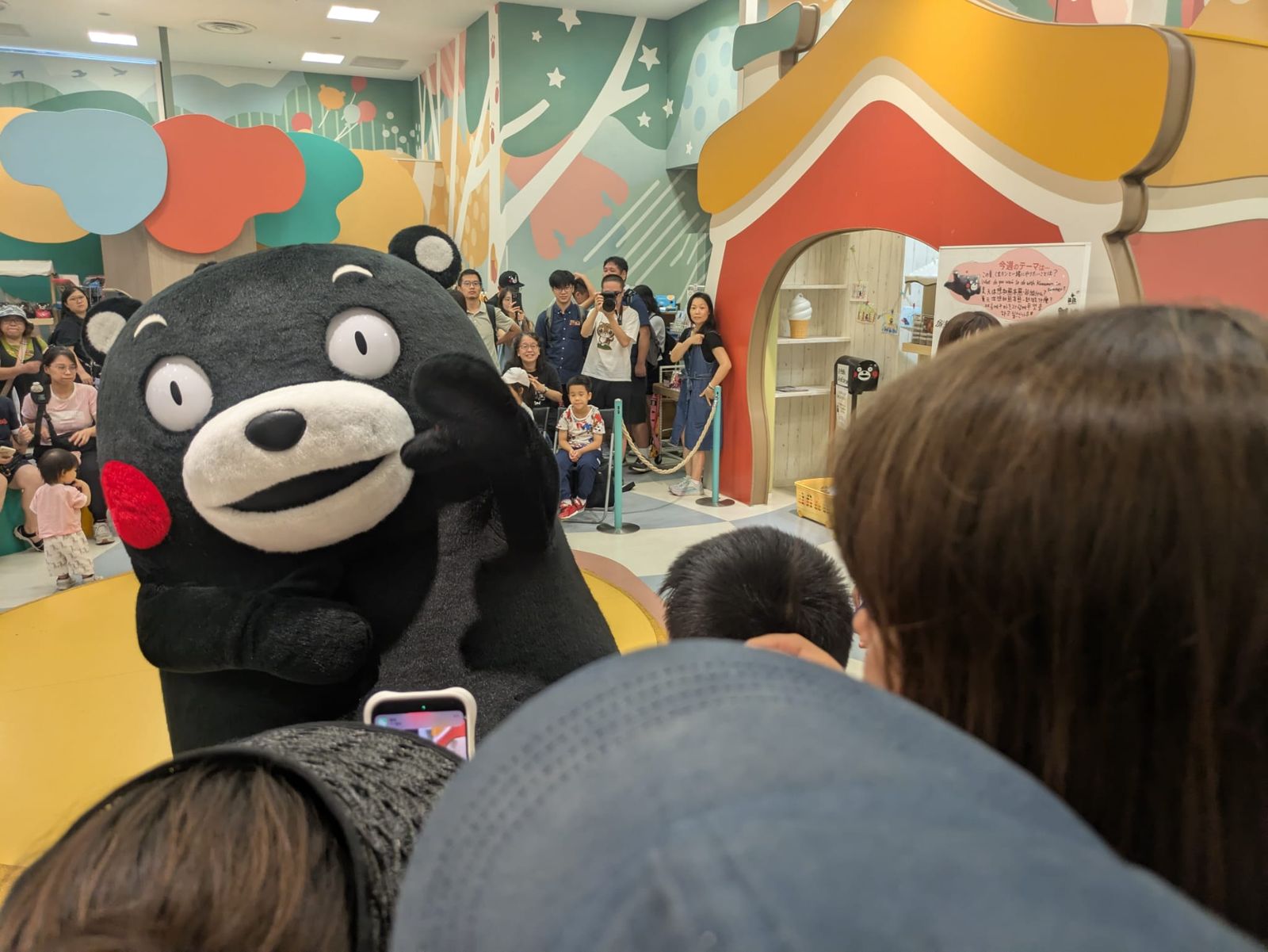
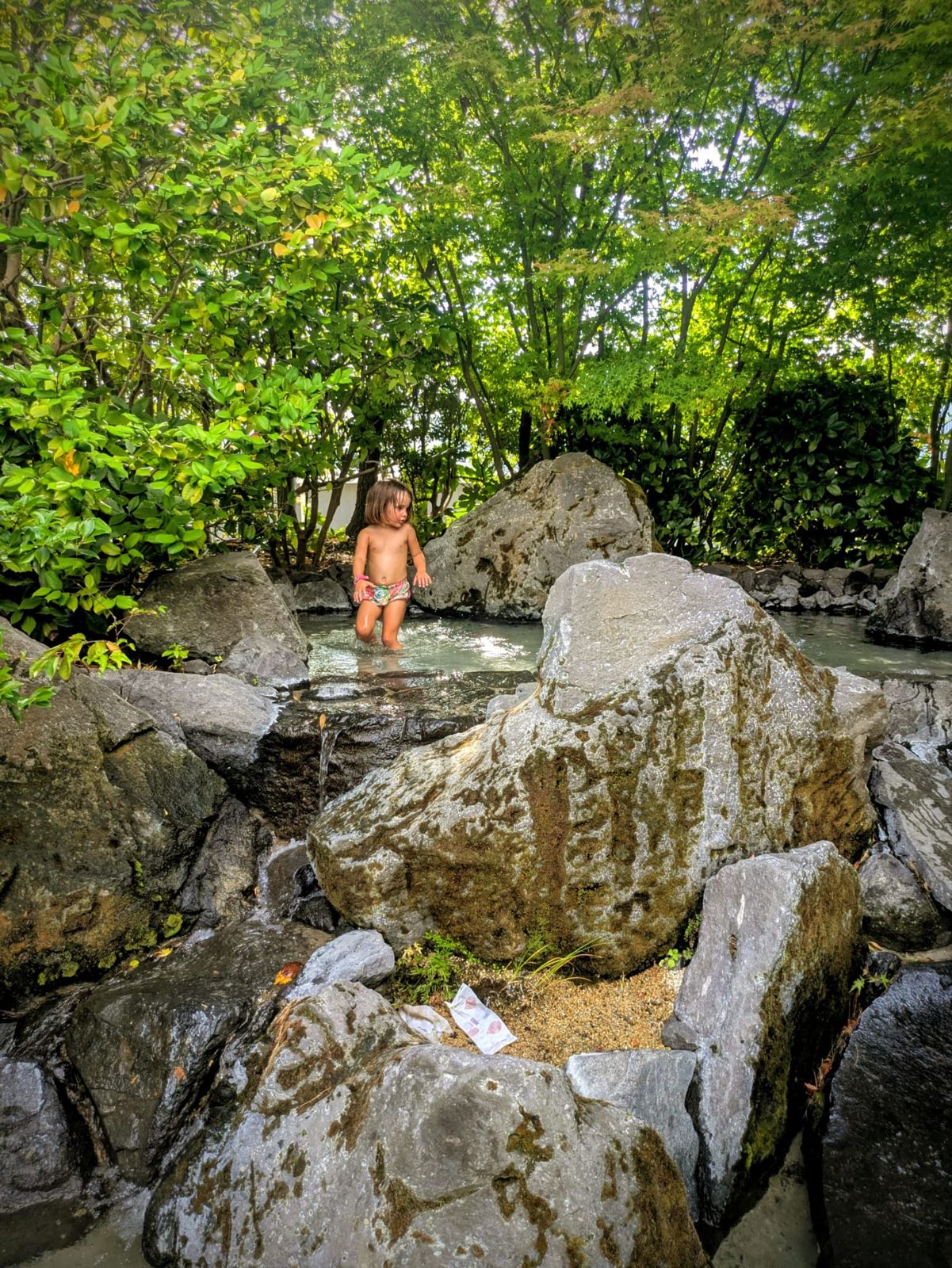
None of this concerns the children who've come to watch the real Kumamon put on a little show in a shopping centre just as we arrive. Even Clémence, who'd never heard of him three minutes earlier, gets into it, and she's very proud when he comes to high-five and hug her. We carry on our tour of the city and end up on the roof of the Sakuramachi shopping centre, a magnificent multi-storey building covered in trees. On the very top floor is a huge free paddling pool for children with courses imitating a wild river. The place is beautiful, green and clean, and makes for a saving break for little ones.
Our friend Masaki isn't shy and makes friends in no time. Clémence has fun following a course and repeating it dozens of times while we chat with Luc about the particulars of life in Japan. He's a professor at Kumamoto University and wouldn't dream for a moment of moving back to Canada. He gives us lots of tips on places to go in the city; he's a real mine of information.
They walk us back to our hotel, as Clémence and Masaki are dropping with tiredness. The evening goes by quickly, and Clémence suddenly falls asleep at 8 pm. We take the opportunity to go to an izakaya right next to our hotel. In Japan and Korea, it's common to find restaurants on upper floors, something you never see in Europe. So we go up to the third floor, walk into the restaurant we'd chosen and… get turned away. "Japanese only," say the three men sitting at the bar in unison. A bit shocked, we go to the one next door, and we're very glad we did. The place is friendly and lively, the cooks are all very nice and welcome us with big smiles. We have a great time savouring yakitori and other specialities while sipping several Japanese beers. Their loss!
Thursday 7 August
Storm warning over Kyushu! The forecast announces catastrophic days ahead, and it seems to be right, because it's already raining when we open our eyes. Clémence doesn't seem to want to wake up, so we go down to breakfast without her. She surfaces at 9:30 after a night of more than 13 hours. Stéphane takes advantage of a lull to fetch the second bike from Matsubase station. He takes the same tram, the same train and rides the same route. Japanese drivers are as dangerous as ever, and he gets brushed past more than once.
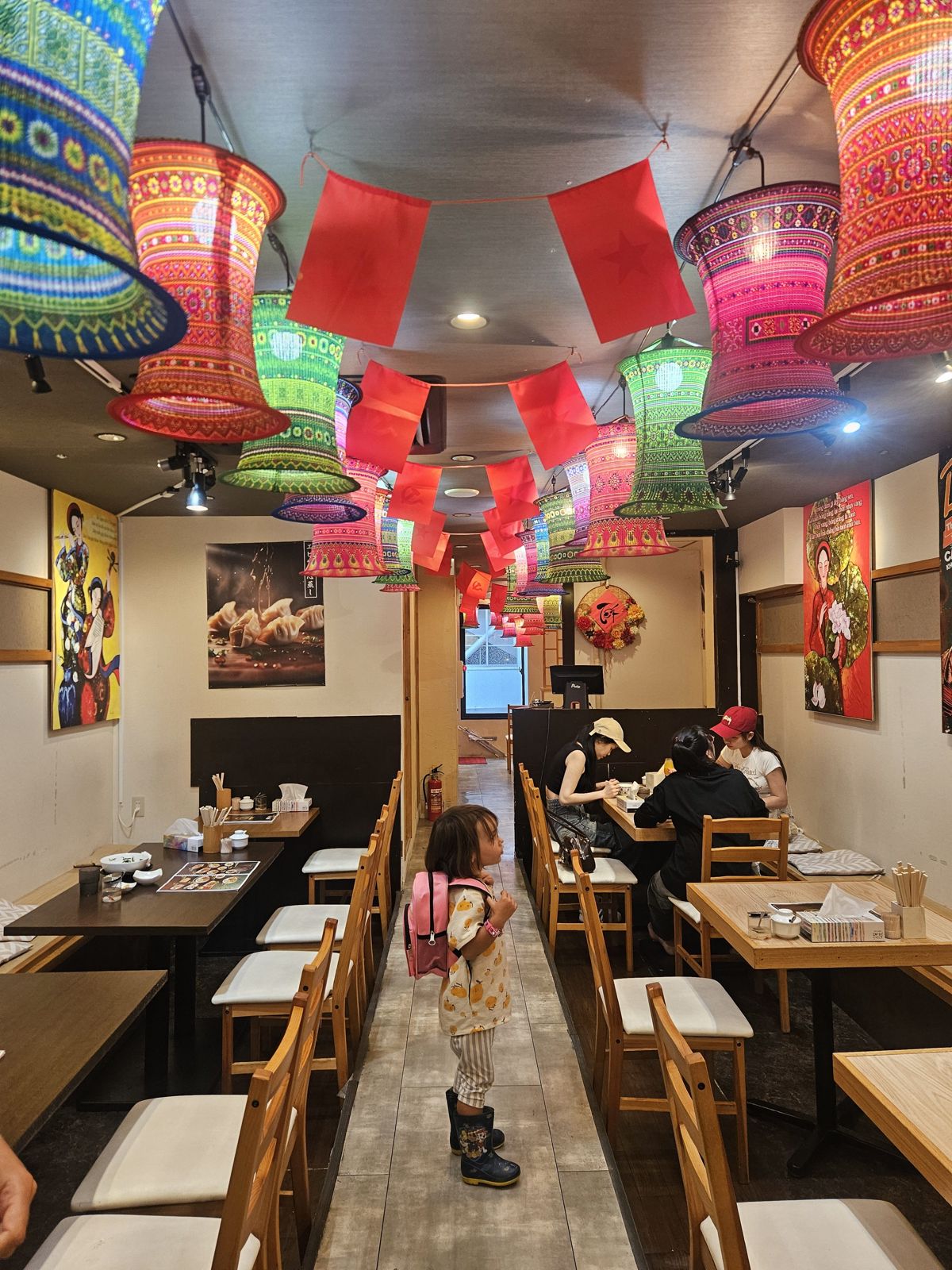
As he reaches Kumamoto, the sky suddenly darkens and a huge grey-black cloud approaches at full speed. He only just has time to reach the bike garage before the deluge begins. It's soon followed by lightning, and one of the thunderclaps sounds like an explosion. In the shopping arcade, people even cry out in surprise. When he meets up with Cassandre and Clémence, curtains of water are pouring onto the city, and we're soaked by the time we reach the Vietnamese restaurant. We eat decently on a small budget, then hurry off to meet Luc and Masaki at the contemporary art museum's playground.
The two of them got on so well that they wanted to play together again today. The language barrier affects children less than adults, and they end up playing with other little Japanese children and their mums. We chat with Luc about cultural differences between countries, and mostly we wait for the rain to end. Because the forecast says more rainy days, and we don't really know what our route to Fukuoka will look like. We buy motorbike covers for 100 yen to cover our bikes if we need to take the train. It's not the official recommended rinko bag, but it'll do. Luc also comes with us to the post office, and thanks to his help Cassandre can send a few parcels to France fairly easily. Our evening then looks like that of every parent in the world, so we won't tell you about it here.
On the road