 ← PreviousFirst impressions of Japan by bike
On a long bike trip, you need to know when to take rest days. But it's always hard to build them in, because even when we're not riding we still want to visit places or do things. The only way to spare our bodies is to force ourselves to do nothing. And what better for that than rain?
It was forecast, the first drops arrived during the night, and it's bucketing down when we wake up. We don't hesitate long before asking our host if we can stay another night. The guesthouse is sadly empty even though it has dozens of rooms, a sign of the total decline of tourism in this part of Japan. She gladly agrees while serving us breakfast.
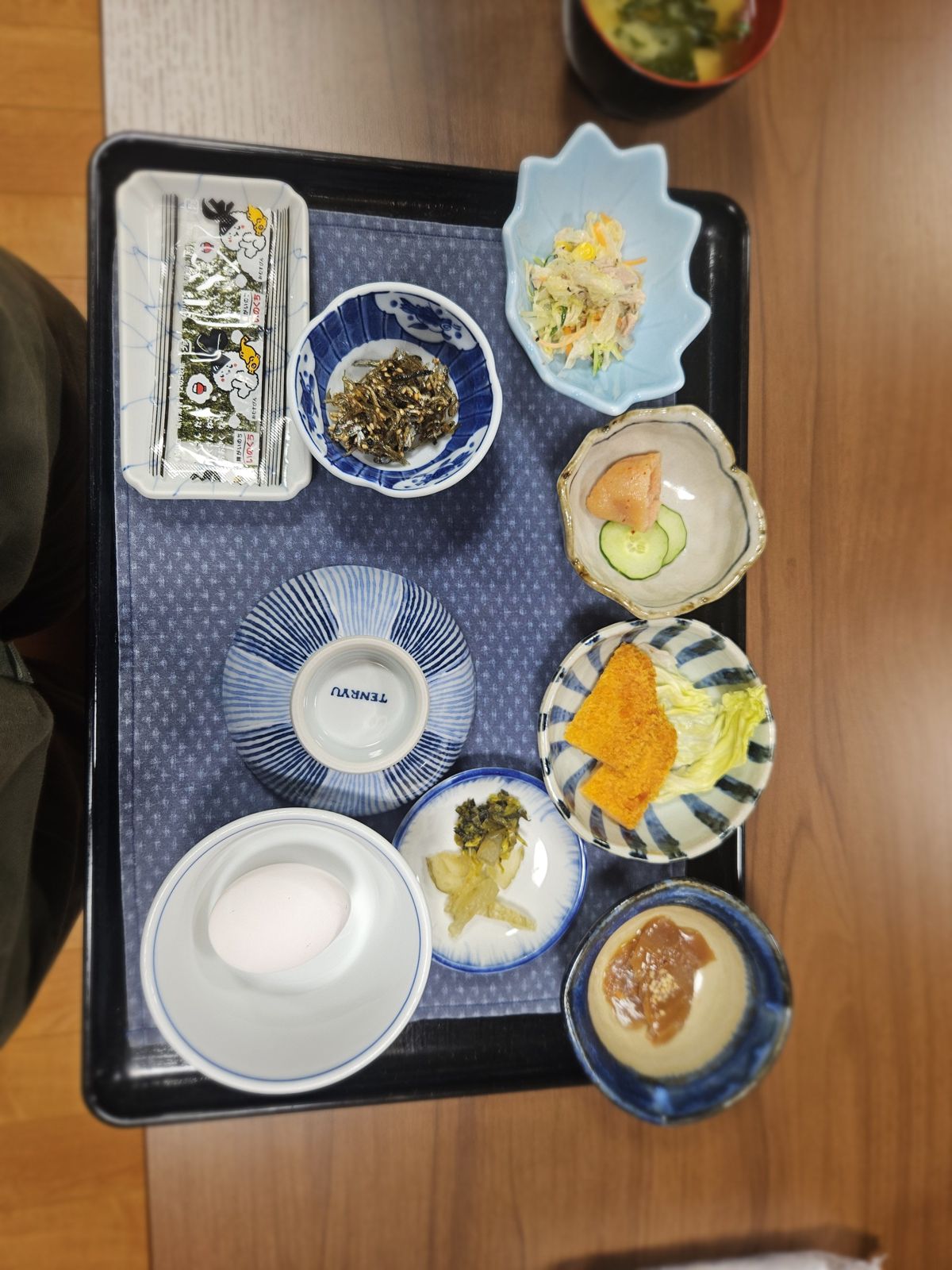
We wanted to try it out of curiosity. There's fried fish, rice, miso soup, eggs (which we realise are raw when we try to crack one open) and little side dishes whose names we don't know and which don't look very appetising at 8 am. It looks remarkably like any other Japanese meal, and we know we won't repeat the experience of the typical breakfast. Clémence wakes up after us and devours a bowl of rice with soy sauce. We go back up to the room and then try out the guesthouse bath. It's very common in Japan to have an "onsen", a shared bath. There are so many mountains on the archipelago that water flows abundantly from hot springs.
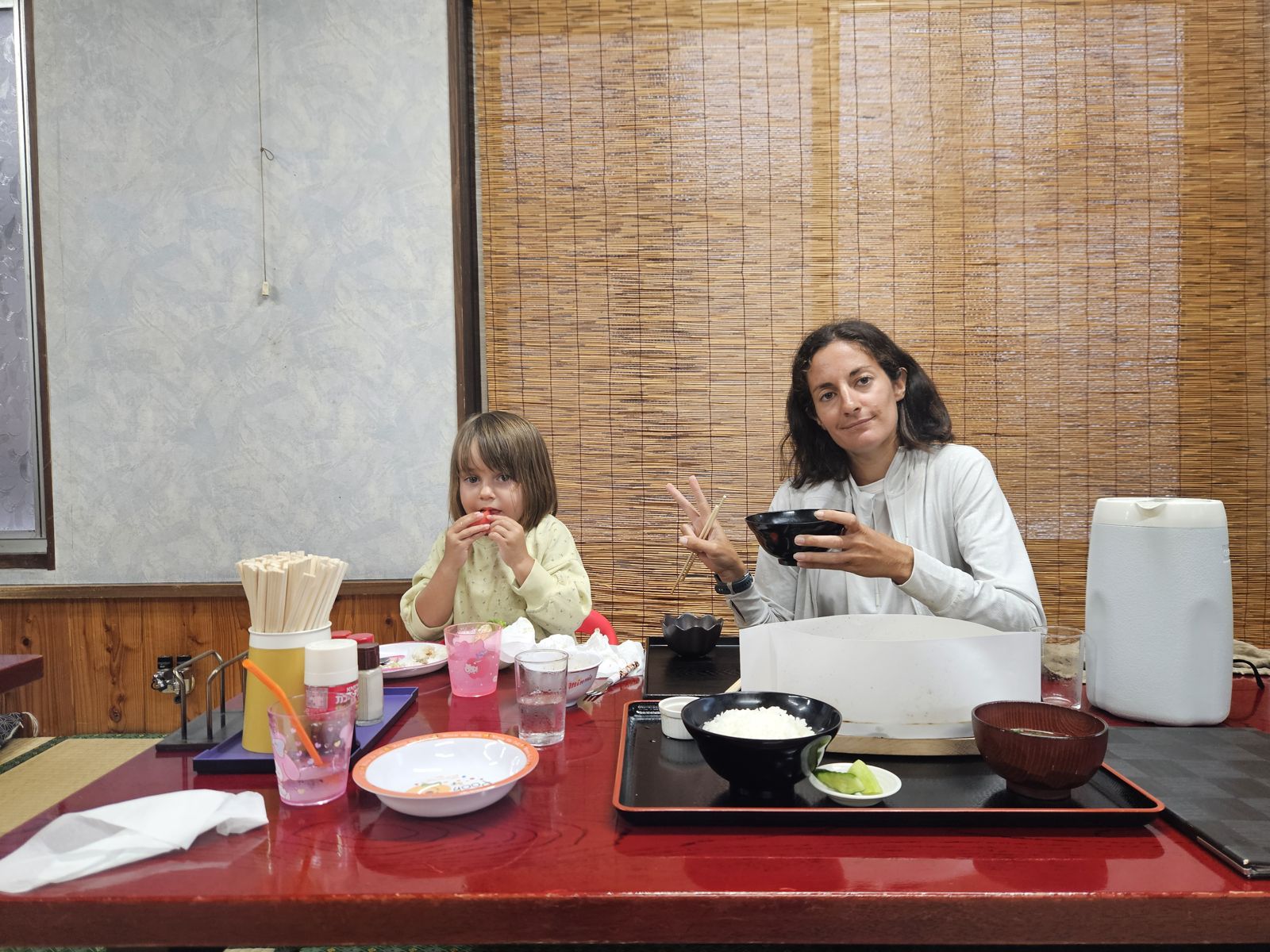
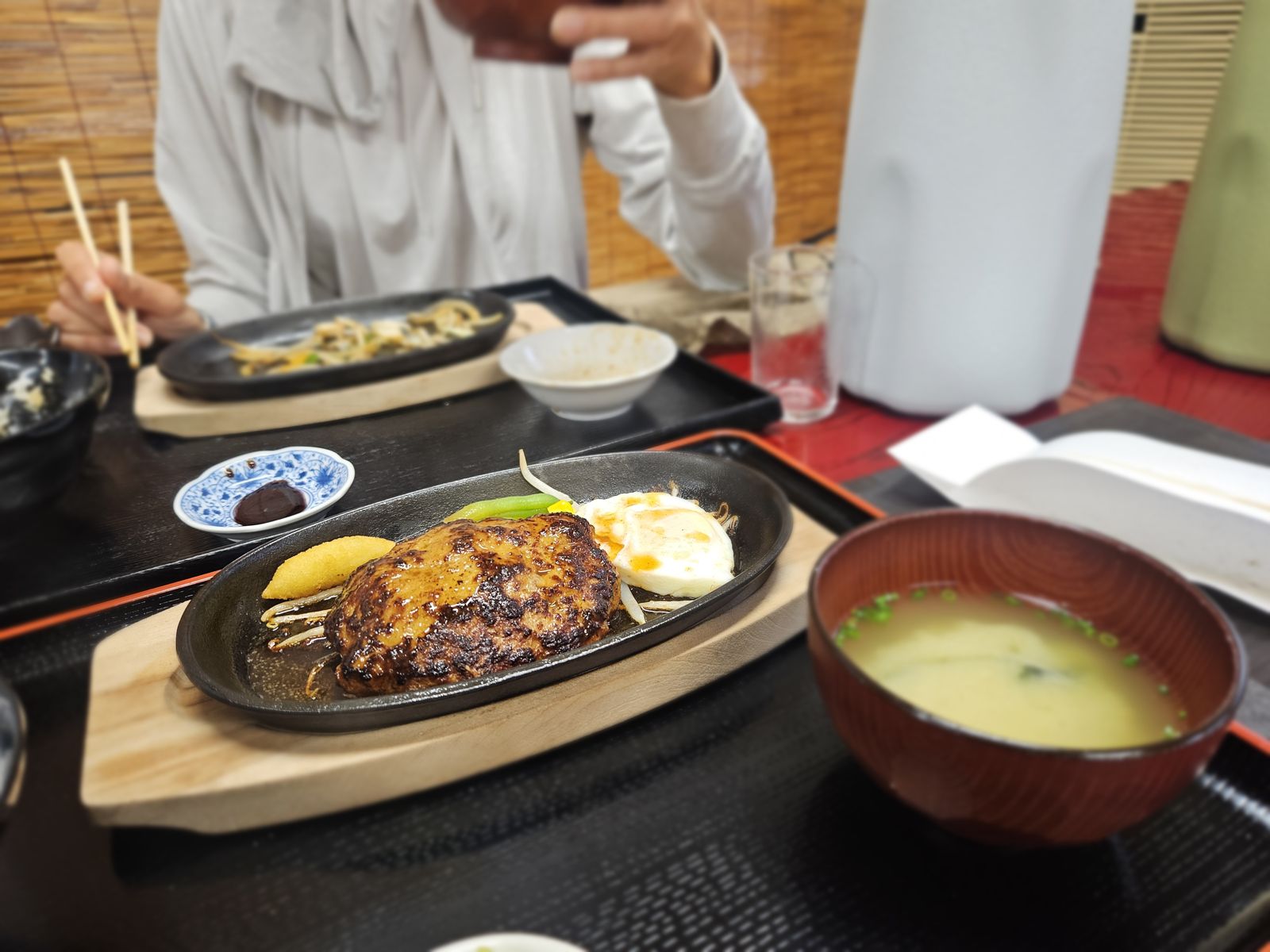
It helps pass the time, because the rain really won't stop. It sometimes eases off, and we use a lull of drizzle to reach a restaurant at the top of the hill. It's a traditional restaurant where you eat sitting on the floor, popular with local workers. Even though we wait quite a while for our food, we're clearly in no hurry and savour it slowly.
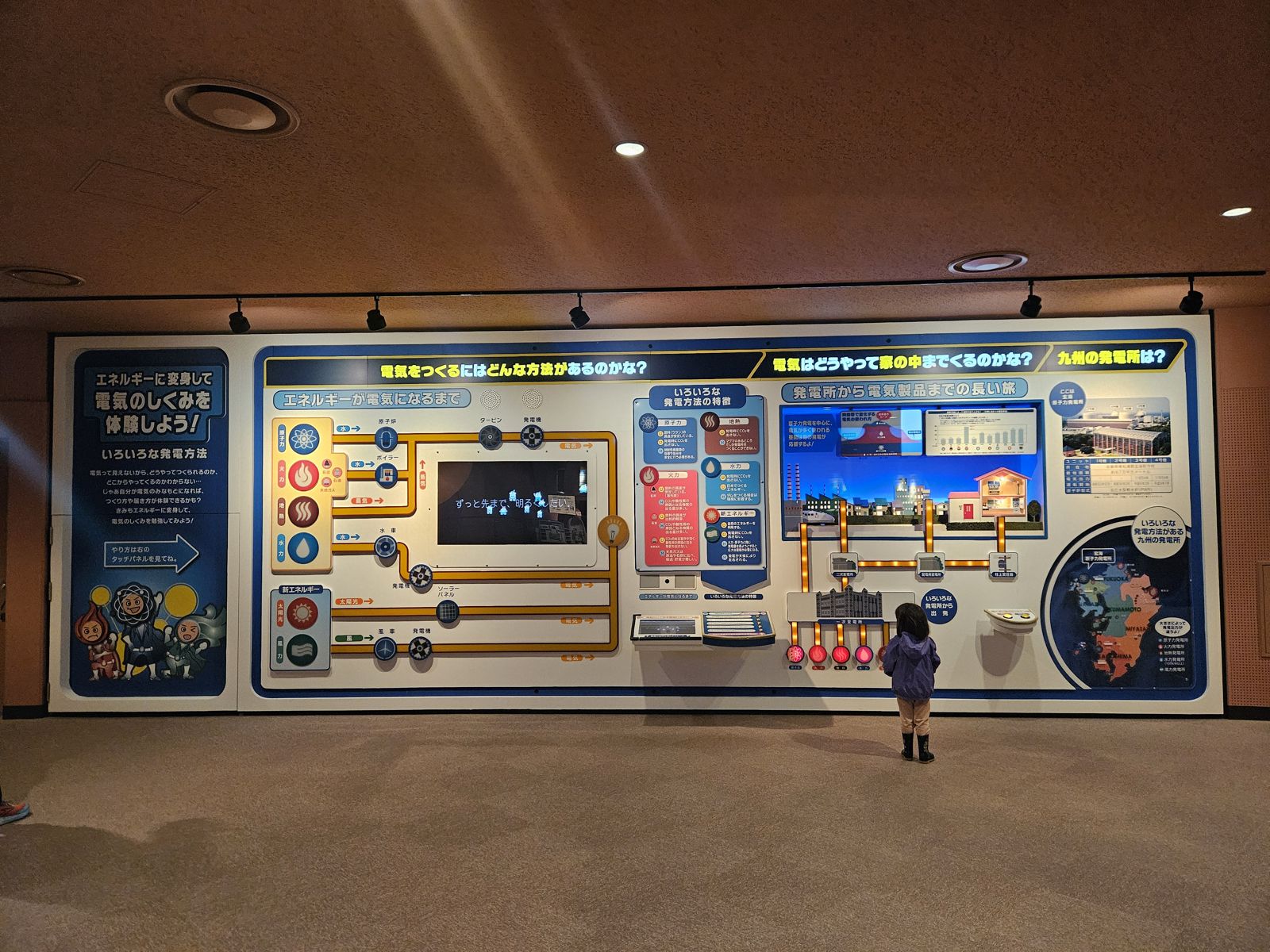
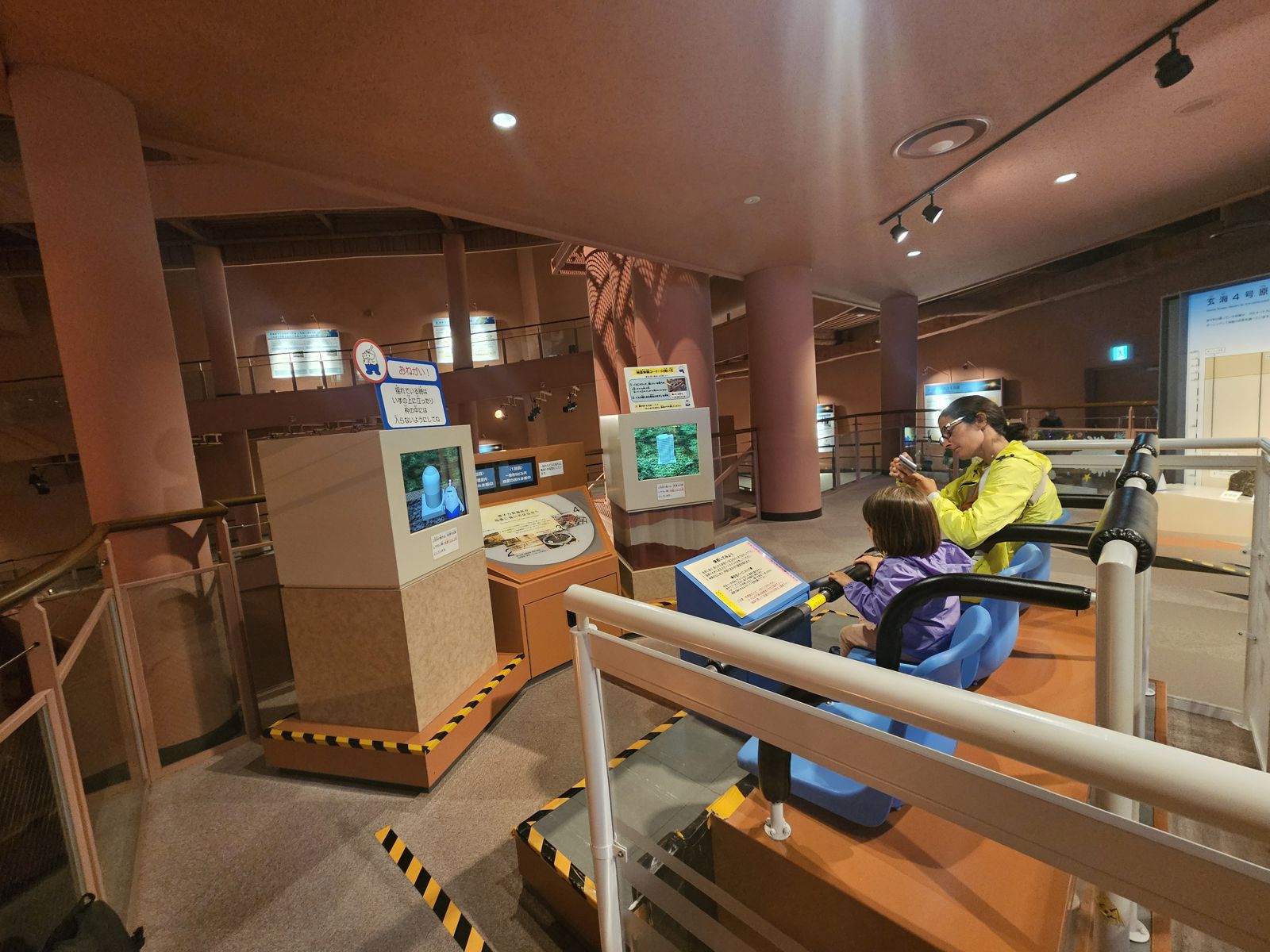
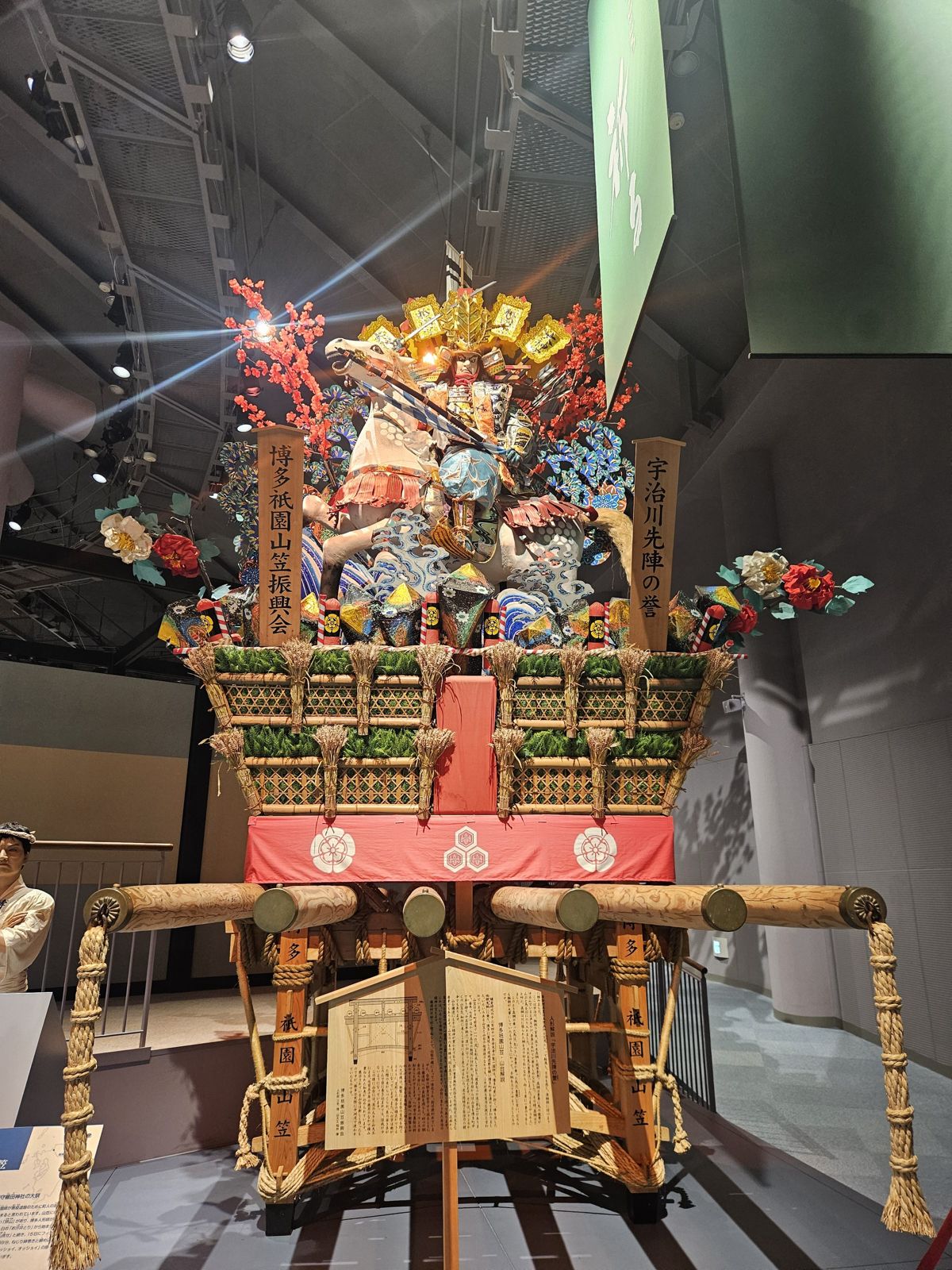
The Genkai nuclear power station, one of Kyushu's two, is right next door, along with a huge, completely free science museum where you can learn more about nuclear power and electricity in general. We go there in the rain and we're almost the only visitors. There's also a big playground and other outdoor activities, but because of the rain everything is closed or unusable. The museum looks interesting, but everything is in Japanese and we don't understand much. We still press buttons at random to try to entertain Clémence. We try a very impressive earthquake simulator and have fun on a video game featuring places we've ridden through. There's also a small library with a few games, which lets us settle down for a bit.
The museum closes at 5 pm, and we see on the weather radar that the rain will ease around 4:15 for a little while, so we take that window. We try to go as fast as possible, but it's a lost cause with a three-year-old who absolutely wants to walk holding her comforter and her soft toy. It takes us almost 20 minutes to cover 800 metres. We reach the supermarket to buy dinner more or less dry, but by the time we've done our shopping and come out, a deluge is falling from the sky. We get out the umbrellas, Clémence climbs into Daddy's arms and we hurry as fast as we can down to the inn by the port. An impressive amount of water is pouring down the slopes, and our feet are almost wading.
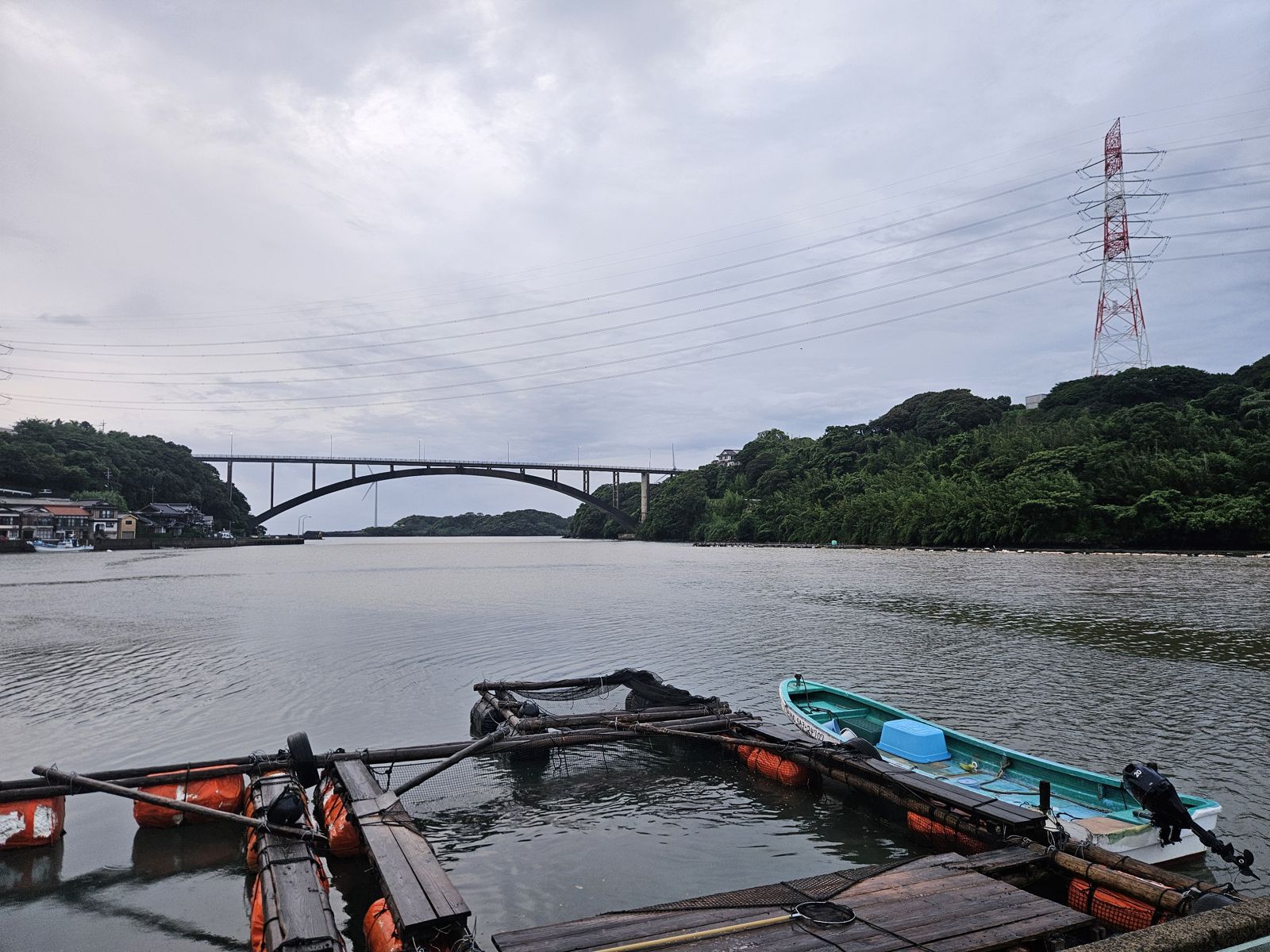
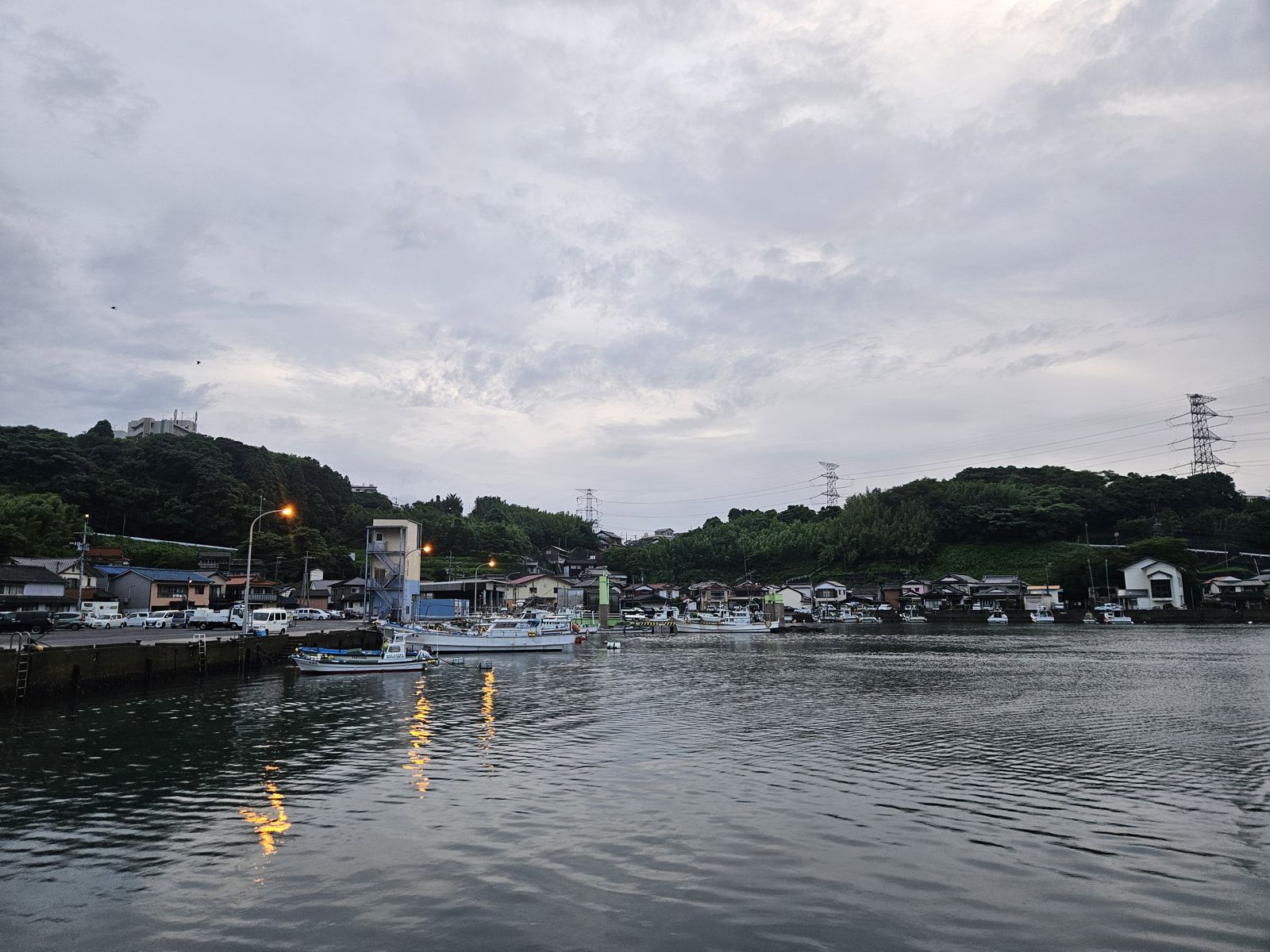
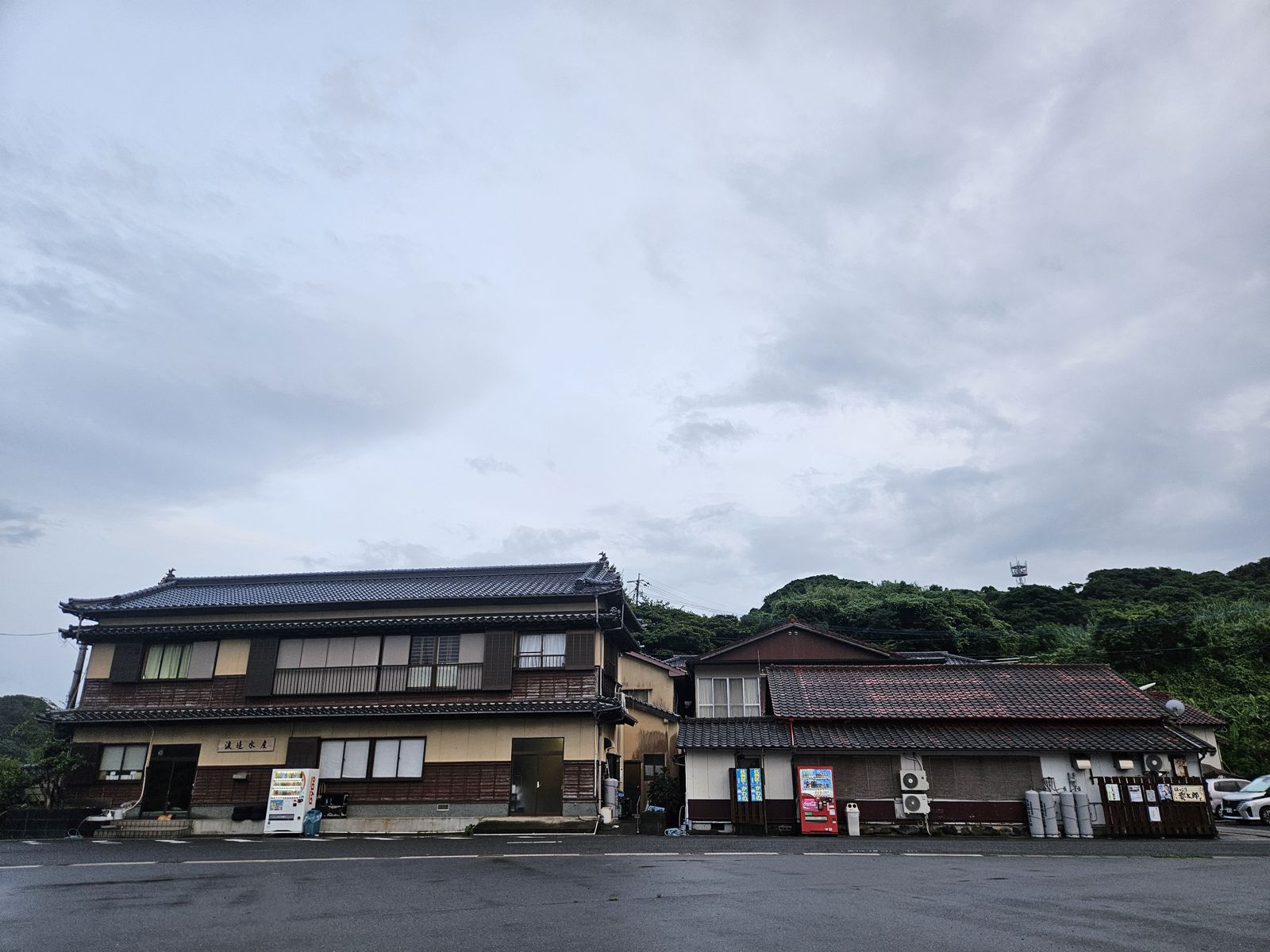
We're soaked when we reach the guesthouse. We change, and Stéphane takes the little one for her second hot bath of the day. Rainy days aren't the most fun, and we end this one eating our dinner in the shared lounge, trying as best we can to communicate with our hosts.
Saturday 19 July
As yesterday, an alarm sounds throughout the village at 7 am. It's a little tune played over loudspeakers. It suits us fine, as we want to leave early. We have a stage of almost fifty kilometres today with more than 750 metres of climbing. Breakfast is wolfed down, Clémence is awake, and we're off at 8:30 sharp.
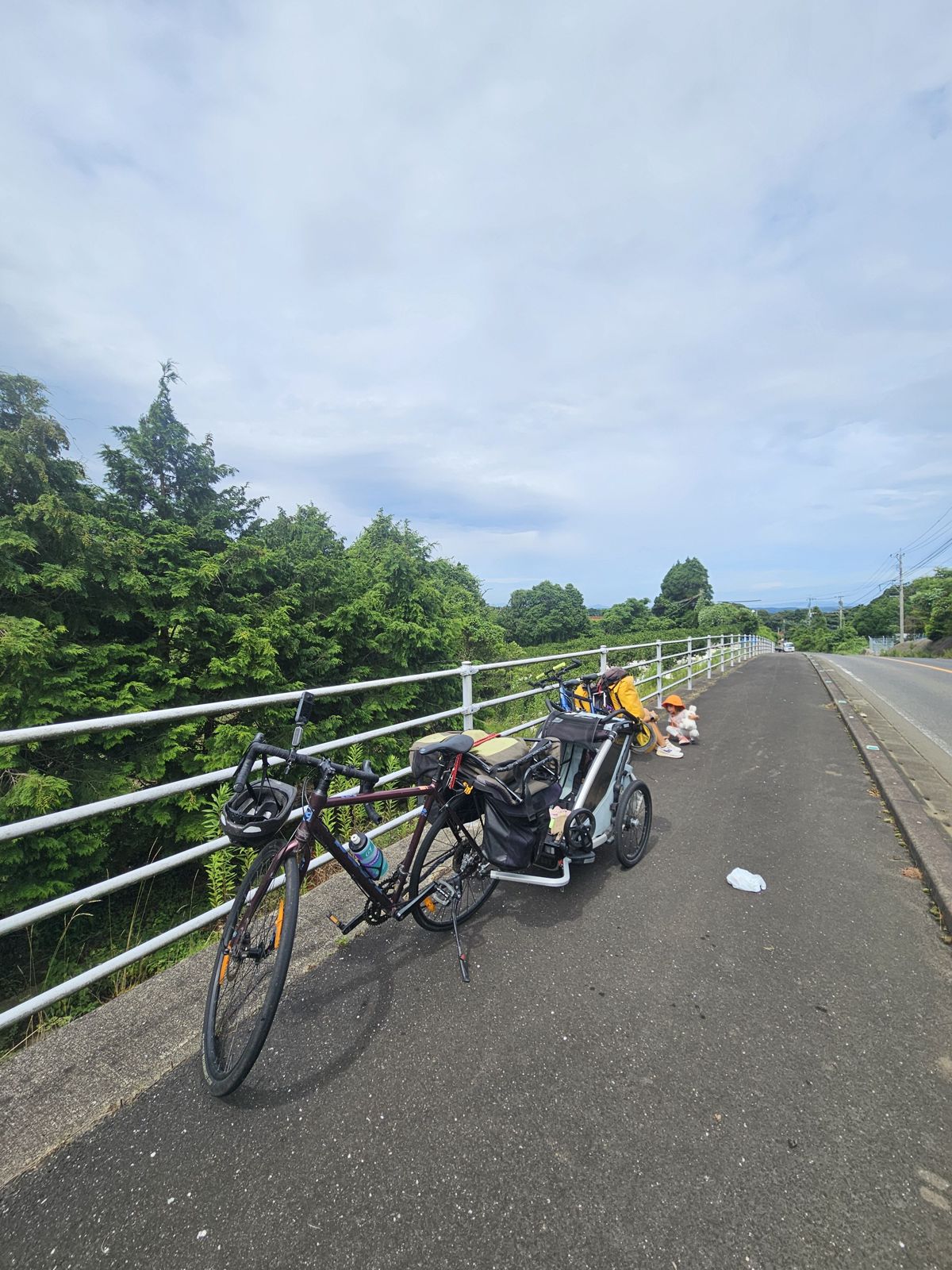
We'll get no respite today, as the first difficulty, a 10% climb, awaits us in the very first kilometre, taking us up from the port where the guesthouse was to the main road we need to take. For the first fifteen kilometres we climb one hill after another and sweat litres in Kyushu's humidity. Fortunately it's cloudy and the sun doesn't join the party, which would have made the route even harder. The roads aren't very busy, we hardly meet anyone, and this part of the country seems a long way from the indecent modernity we associate with Japan.
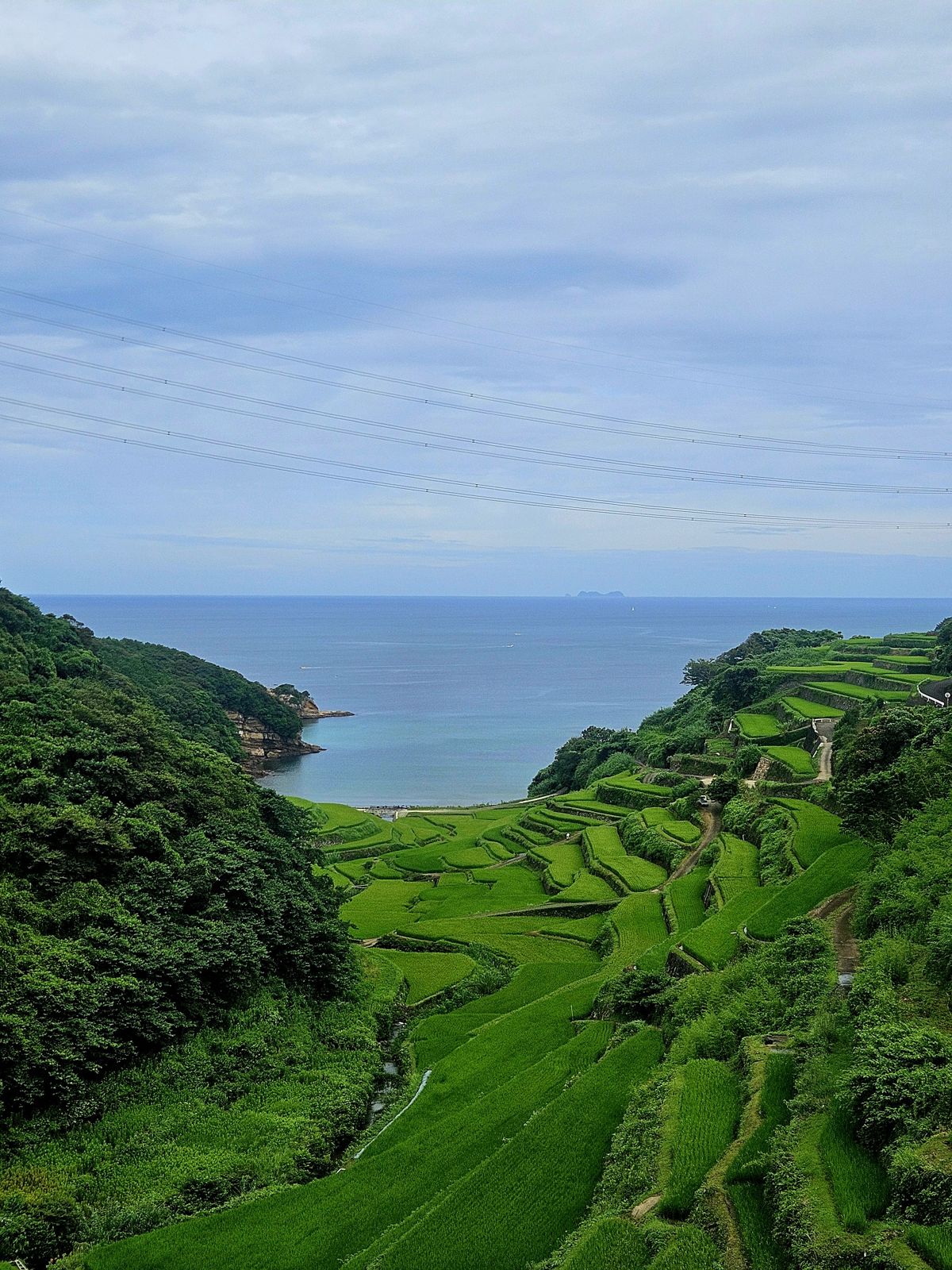
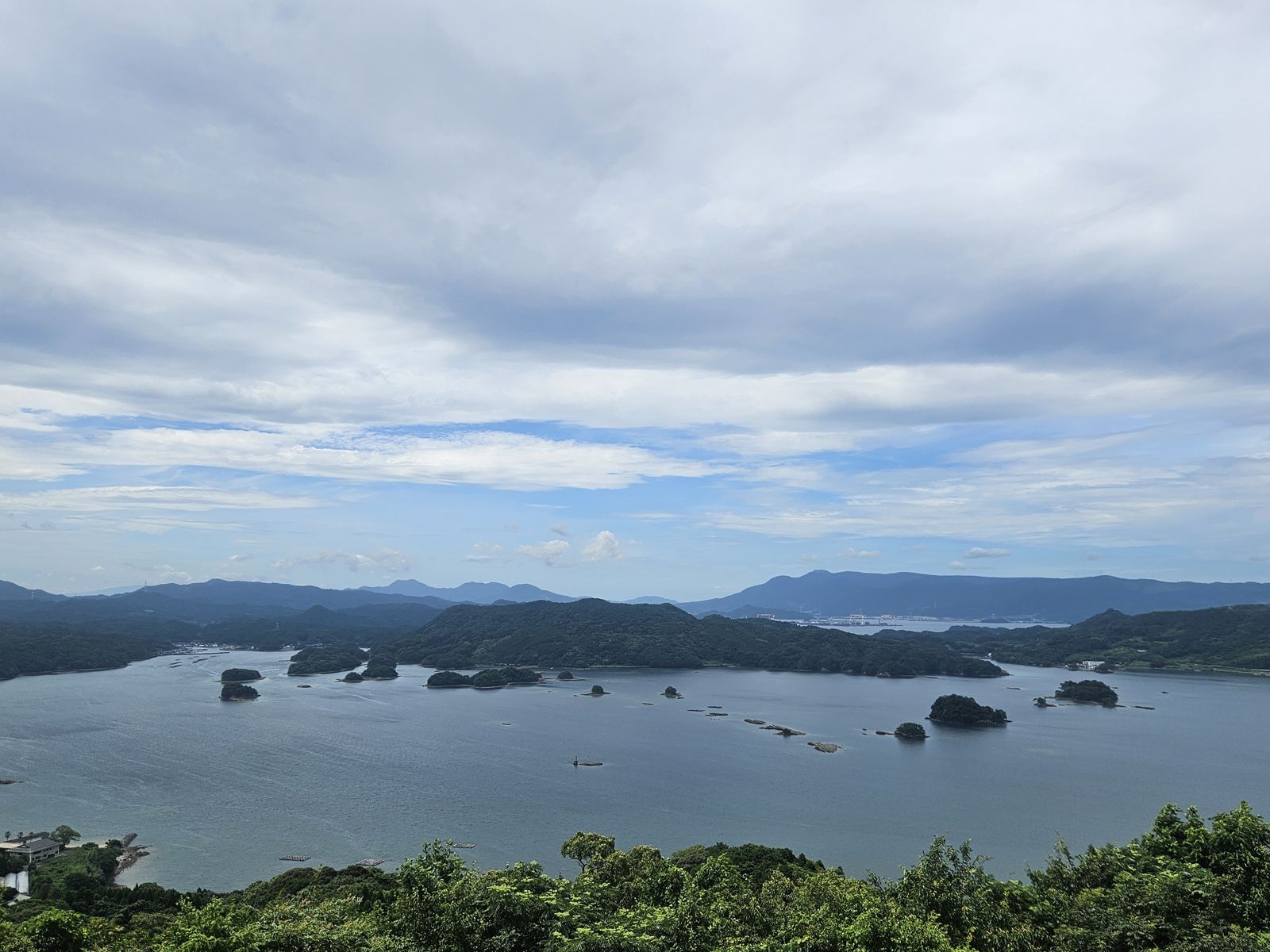
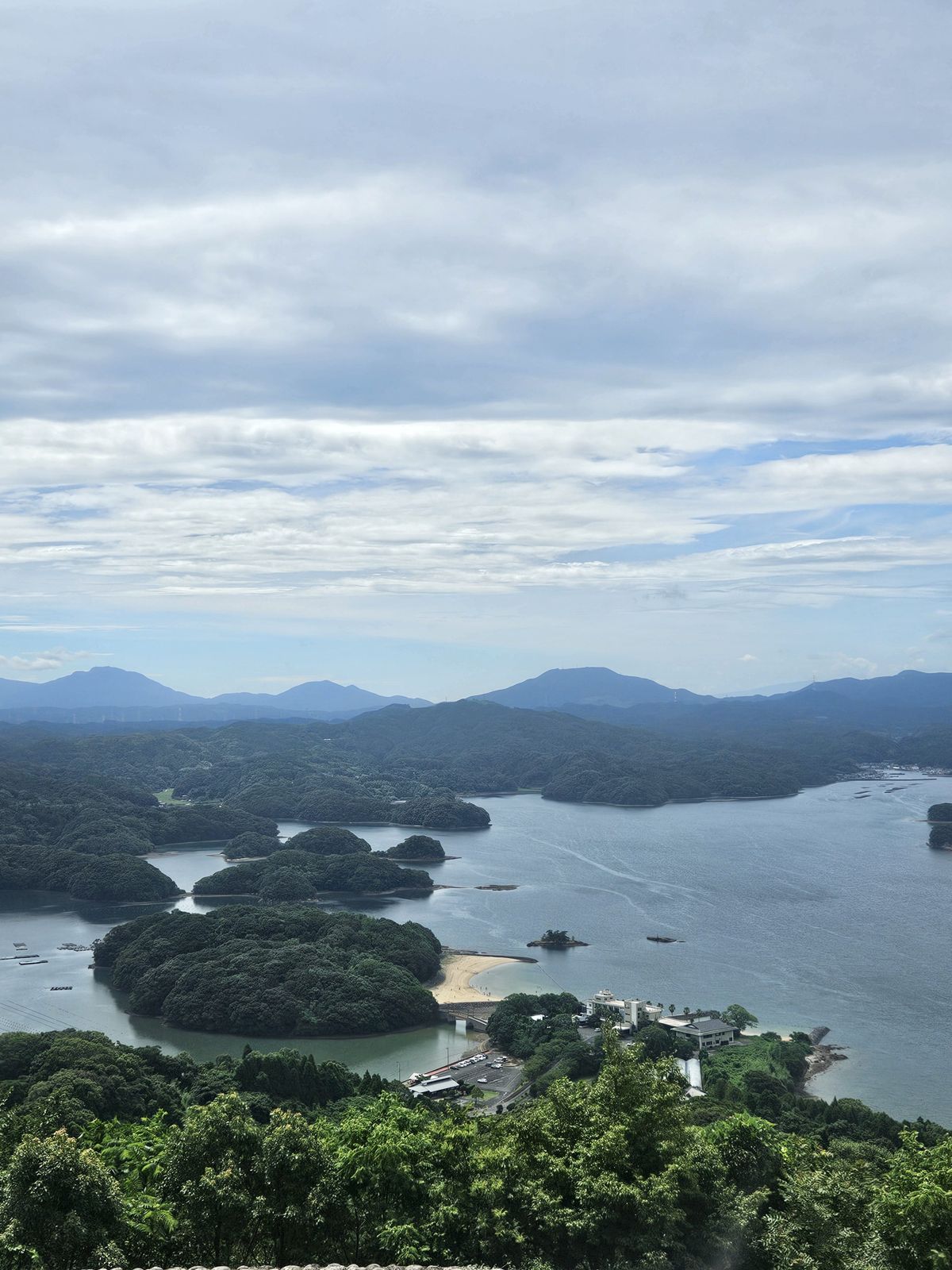
In fact, 80% of the population lives on just 6% of the land, the Taiheiyō Belt, a long corridor running from Fukuoka to Tokyo along the Pacific. Outside that zone, the country is very sparsely populated. We stop at a viewpoint over rice paddies and islets scattered across an estuary, and the facilities look as if they haven't been used for thirty years. It gives us a very strange feeling. Further on we stop in a tiny village to use its supermarket, but the place seems dead. Korean villages were always full of people, whatever the time of day.
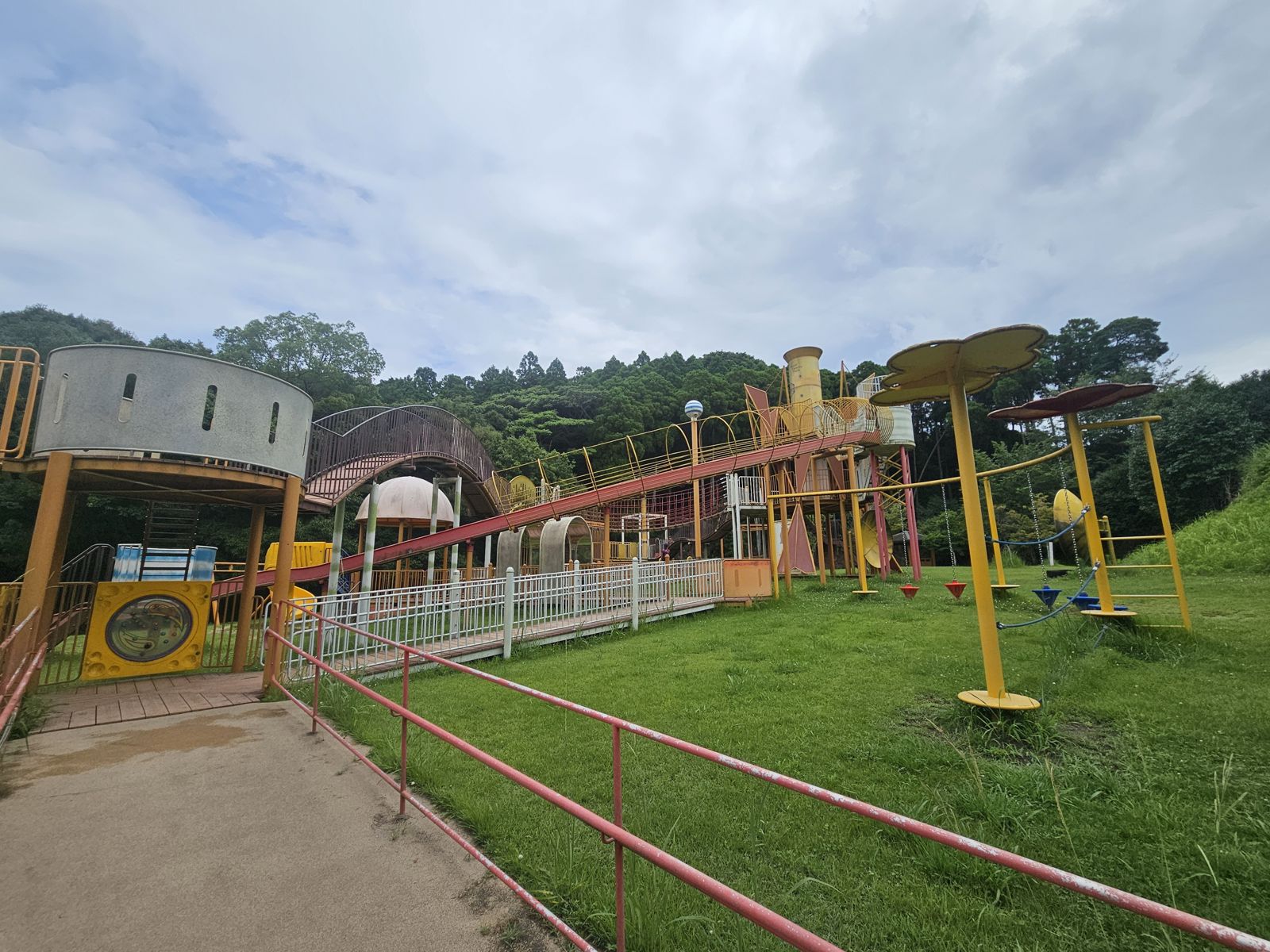
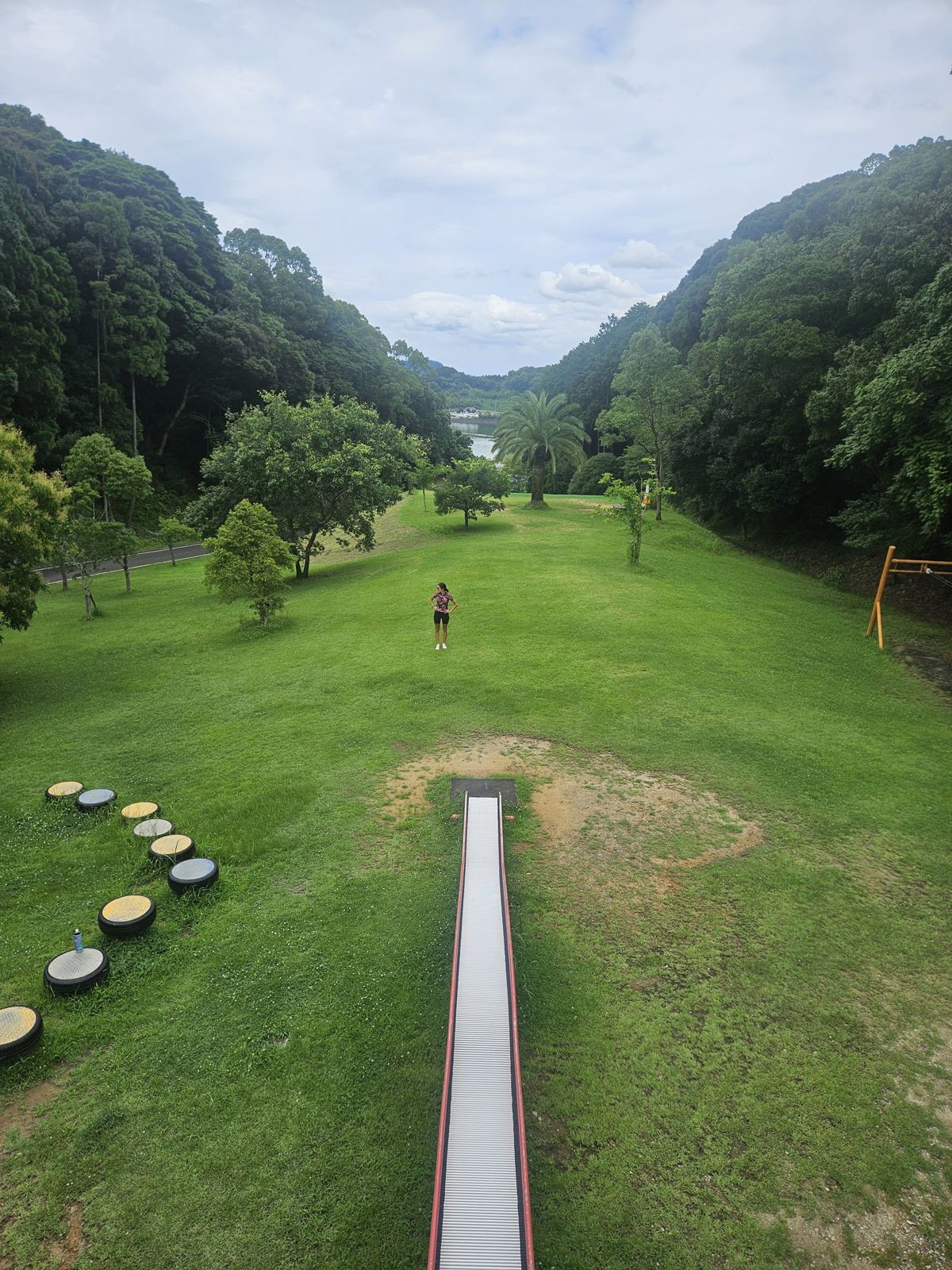
We eat there before heading to a big playground. It looked magnificent in the photos, but in reality it's the same story: it looks straight out of the 1980s. The wood is decaying, the colours faded long ago, the structure is rusting and huge cobwebs betray how little it's used. One saying sums up the impression that's been stuck in our heads for a few days: "Japan has been in the year 2000 since the 1980s." Once at the cutting edge of absolutely everything, a stronghold of innovation and global finance in the 1990s, it's now a country held back by its rigidity and complexity.
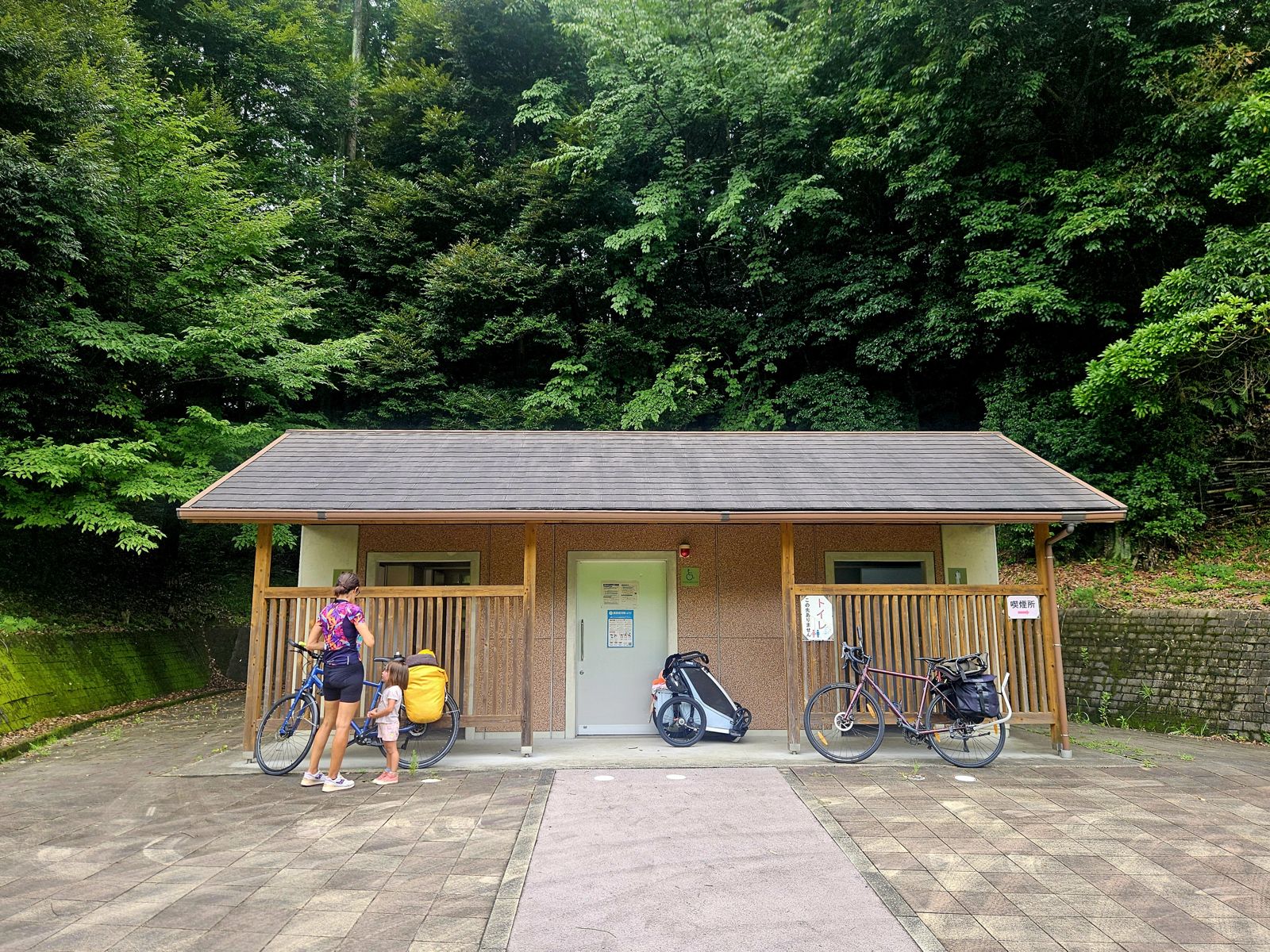
Imari (伊万里市), in Saga Prefecture on the island of Kyushu, had around 56,000 inhabitants at the start of 2025. World-famous for "Imari ware" porcelain, exported from its port from the 17th century, it remains an active centre of traditional pottery. Its sights include the old village of Ōkawachiyama with its historic kilns, and the Ton-Ten-Ton festival, an annual shrine festival with ritual jousting. A quiet town rich in culture, Imari charms with its craft and festive heritage.
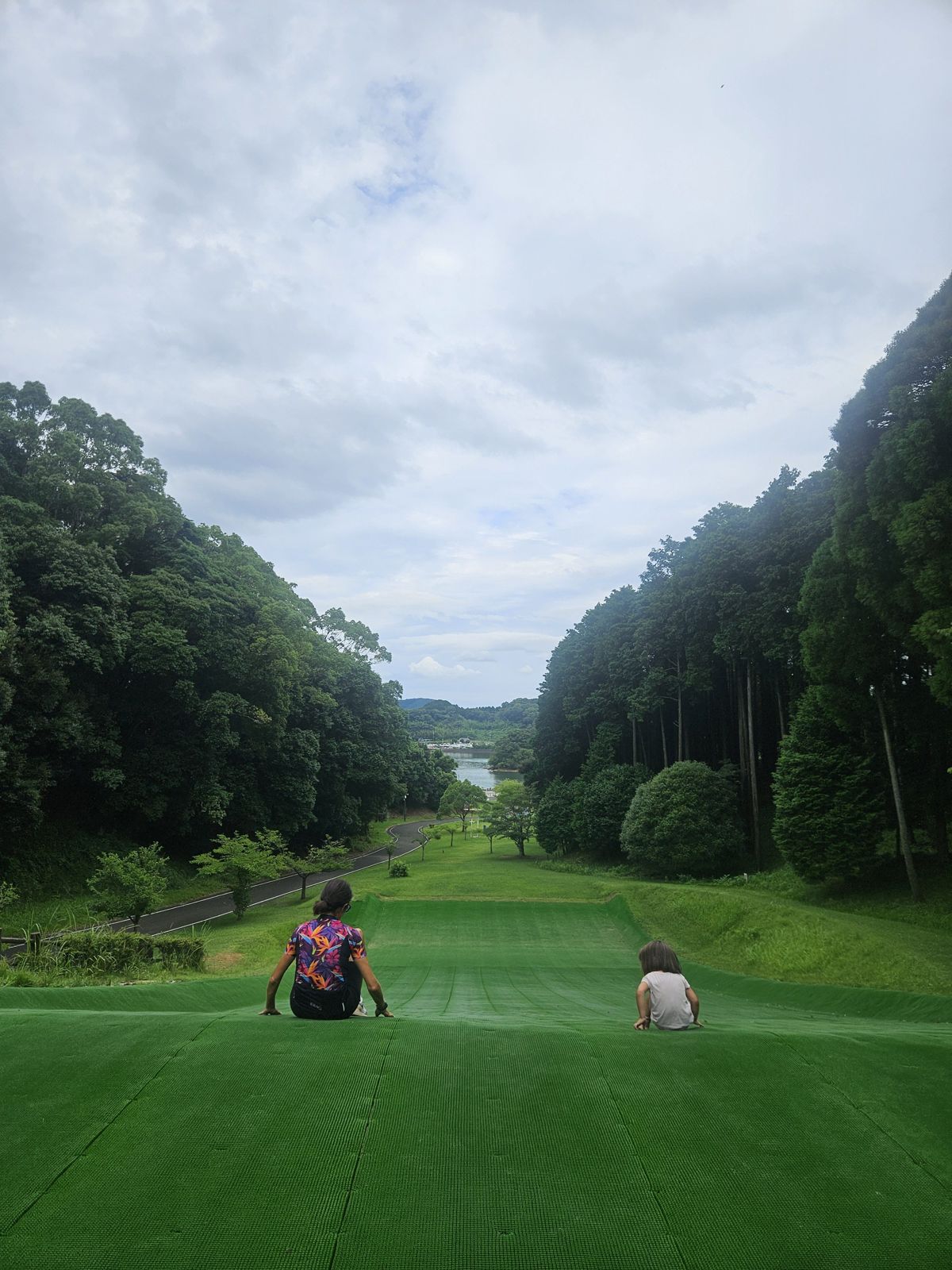
We still stay an hour or so to let Clémence let off steam, as she spent a lot of time in the trailer this morning. But the playground is tucked away at the top of a hill surrounded by trees with no breeze at all. It's very hot, so we end up leaving. We get back on our bikes, stop for an ice cream at the 7-Eleven and reach Imari, our stop for the day. It's our first real hotel in Japan; so far we've only slept in flats, inns and a campsite. The room is tiny, as is often the case here.
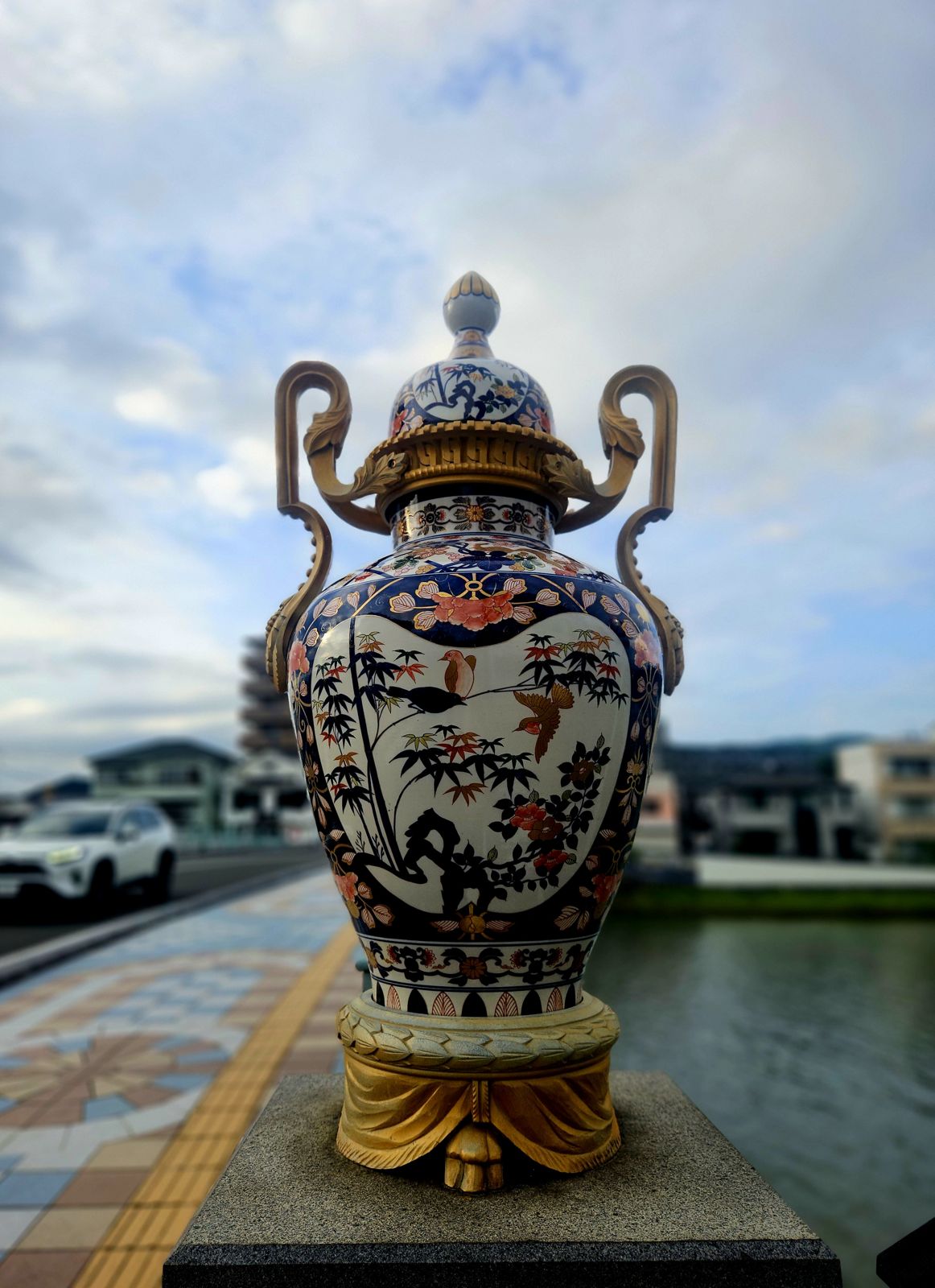
After showers, we go out to walk around this rather ordinary town (though world-famous for its porcelain) and eat in a typical restaurant run by an elderly couple. They're common in Japan and called shokudō. You could easily think you were in their living room: there's just a counter with four stools and two small tables where you sit on the floor. The owners are very friendly and try as best they can to communicate with us. We feast on tempura and katsudon, a bowl of rice topped with tonkatsu (breaded, fried pork cutlet) in a sauce of beaten egg and cooked onions.
Sunday 20 July
Our hotel is full, absolutely packed. The car park is so full that cars are parked one behind the other, and we have to queue to get into breakfast. We'd never seen anything like it: a staff member takes names and calls you when it's your turn. We don't wait long and discover the buffet. The Japanese eat the first meal of the day like any other, with rice, raw vegetables, eggs, sausages, fish, miso soup and so on. The Western corner only has a few frozen croissants and bread rolls. We try a bit of everything and are even starting to get used to eating savoury food first thing.
When it's time to leave the hotel, we leave our bags there, as we're going to visit a small village five kilometres away and we'll be lighter without the panniers. Especially as it's perched in the surrounding hills and the ride is uphill all the way. Ōkawachiyama is a historic Japanese pottery village. The porcelain made here was destined for the imperial court, and potters were granted samurai status, so precious was their work.
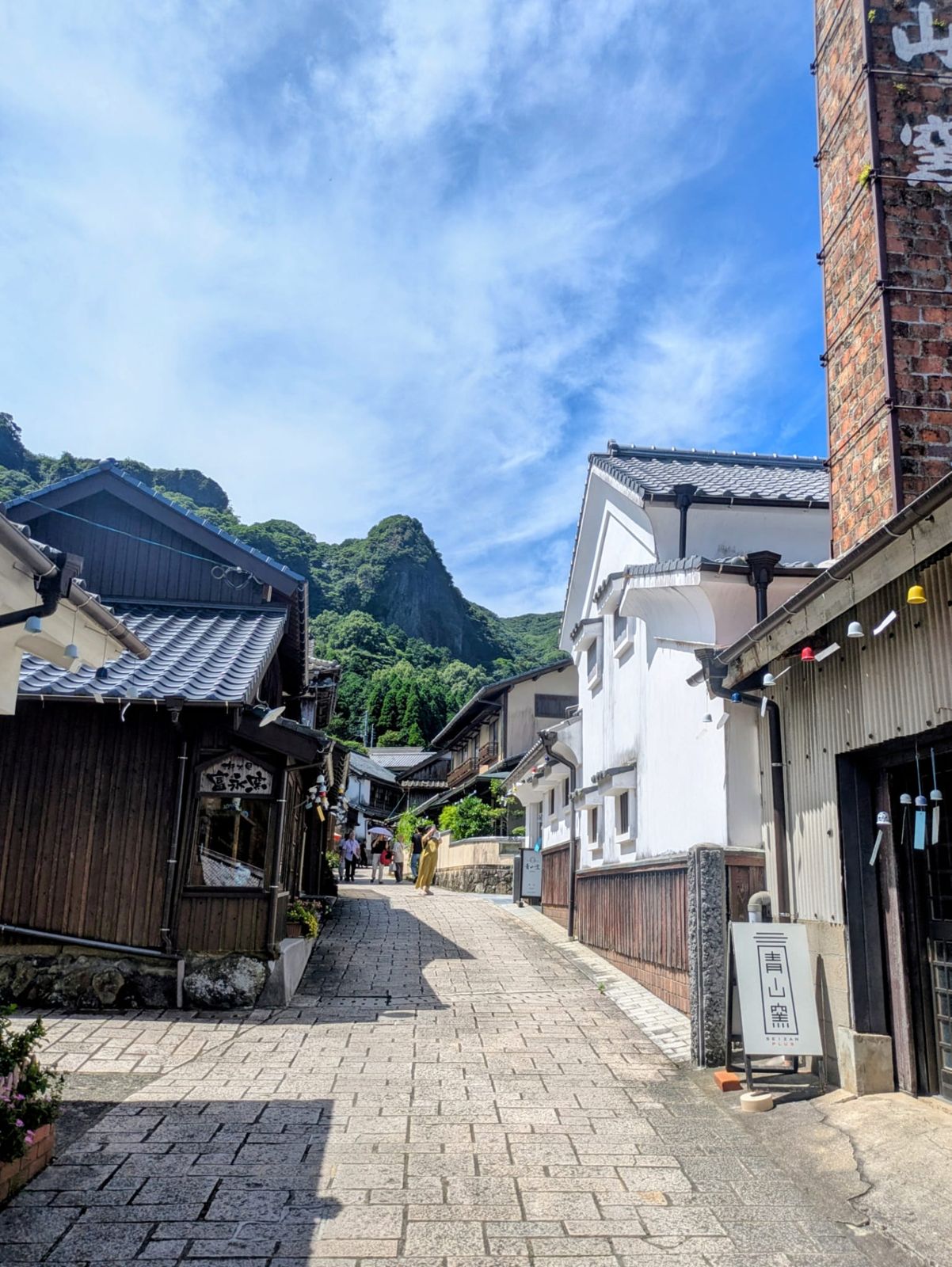
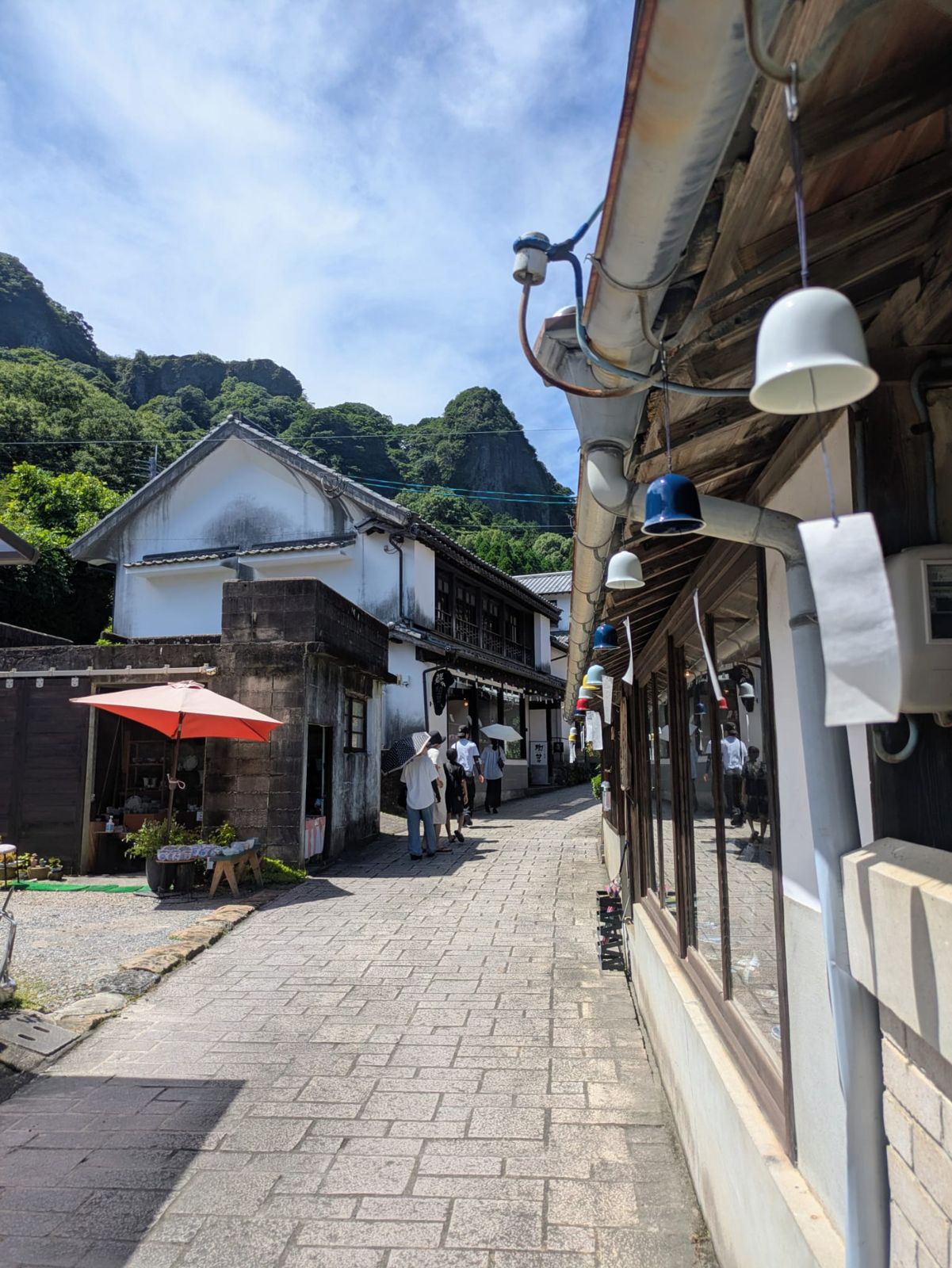
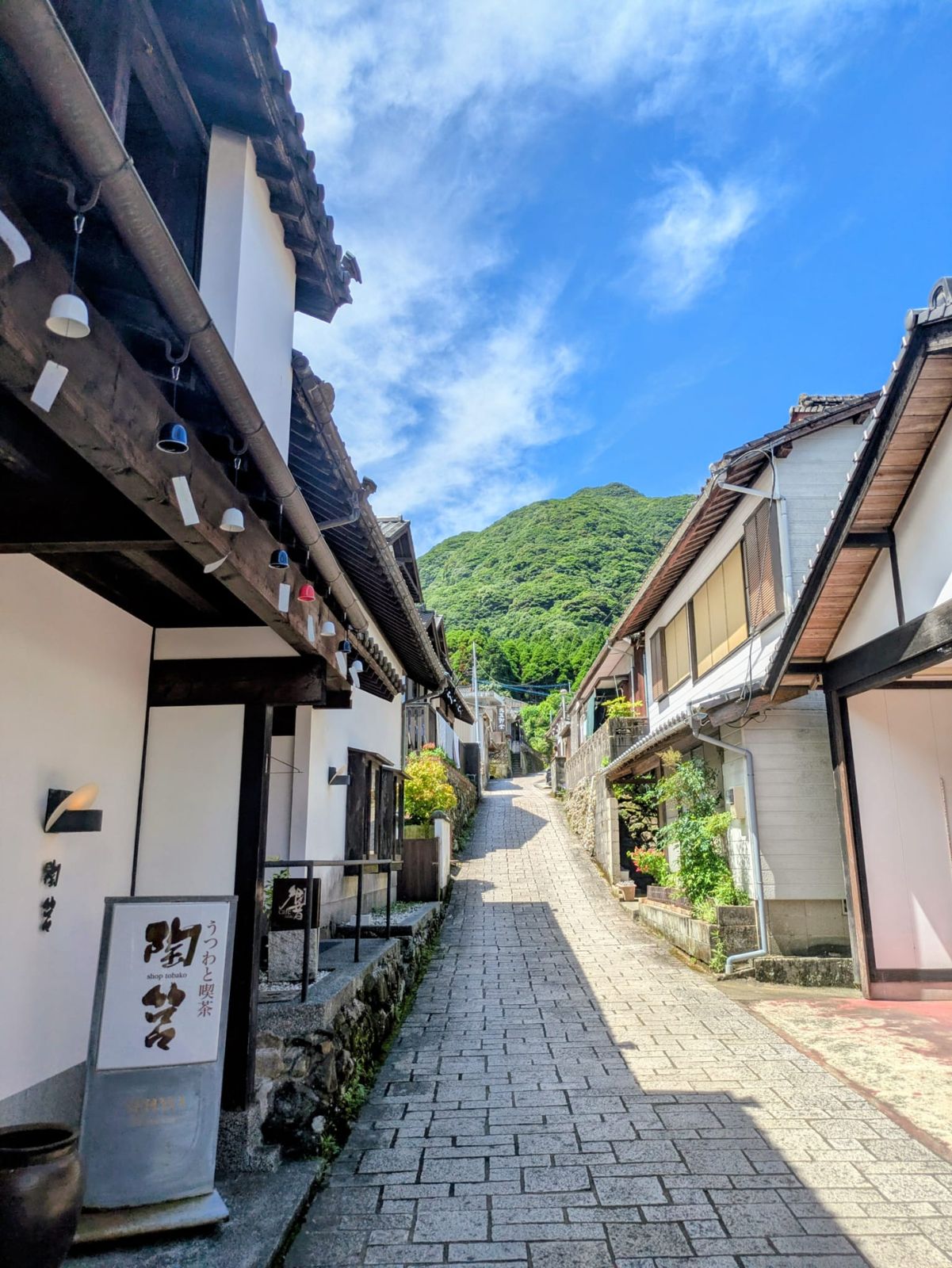
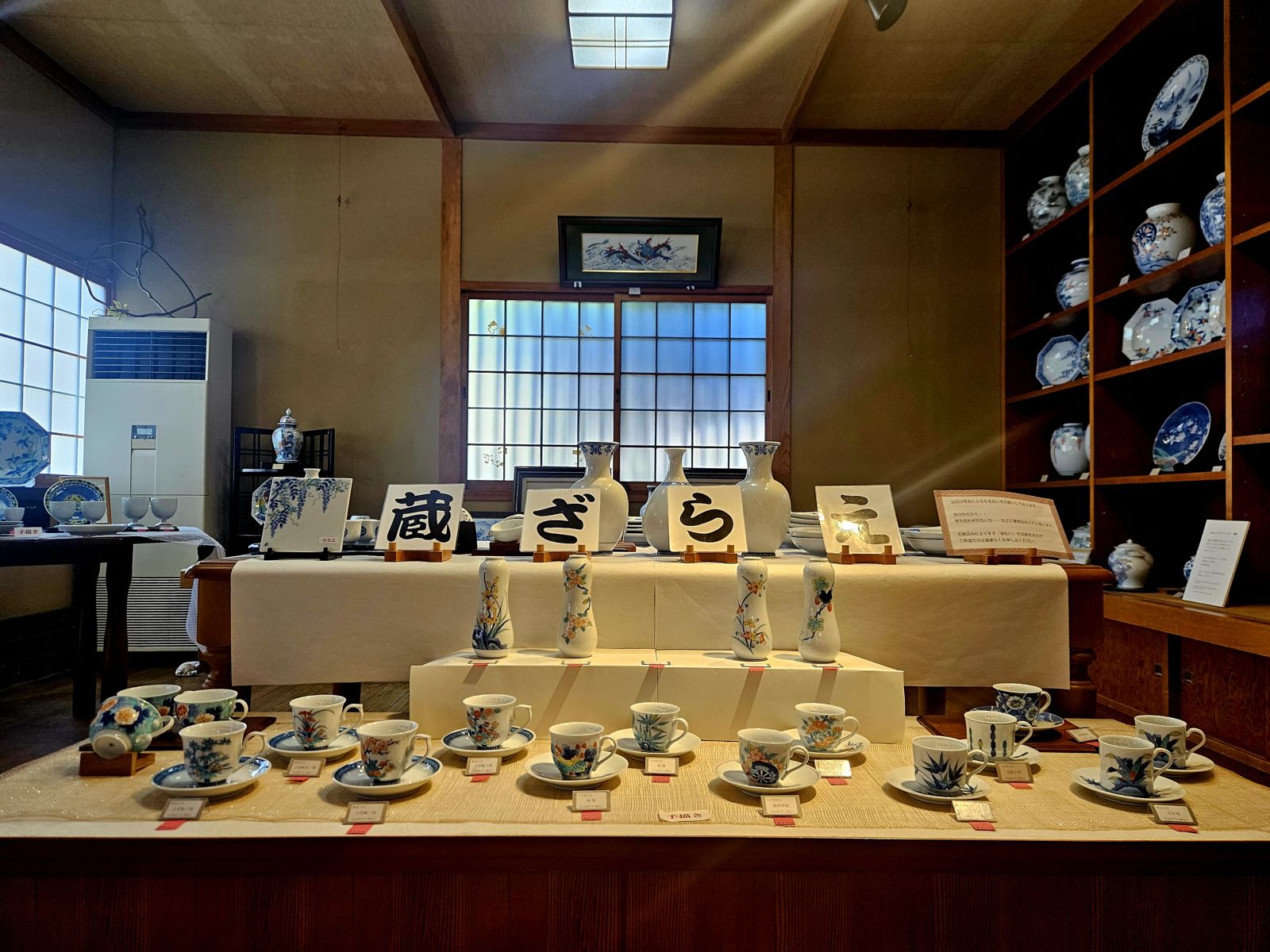
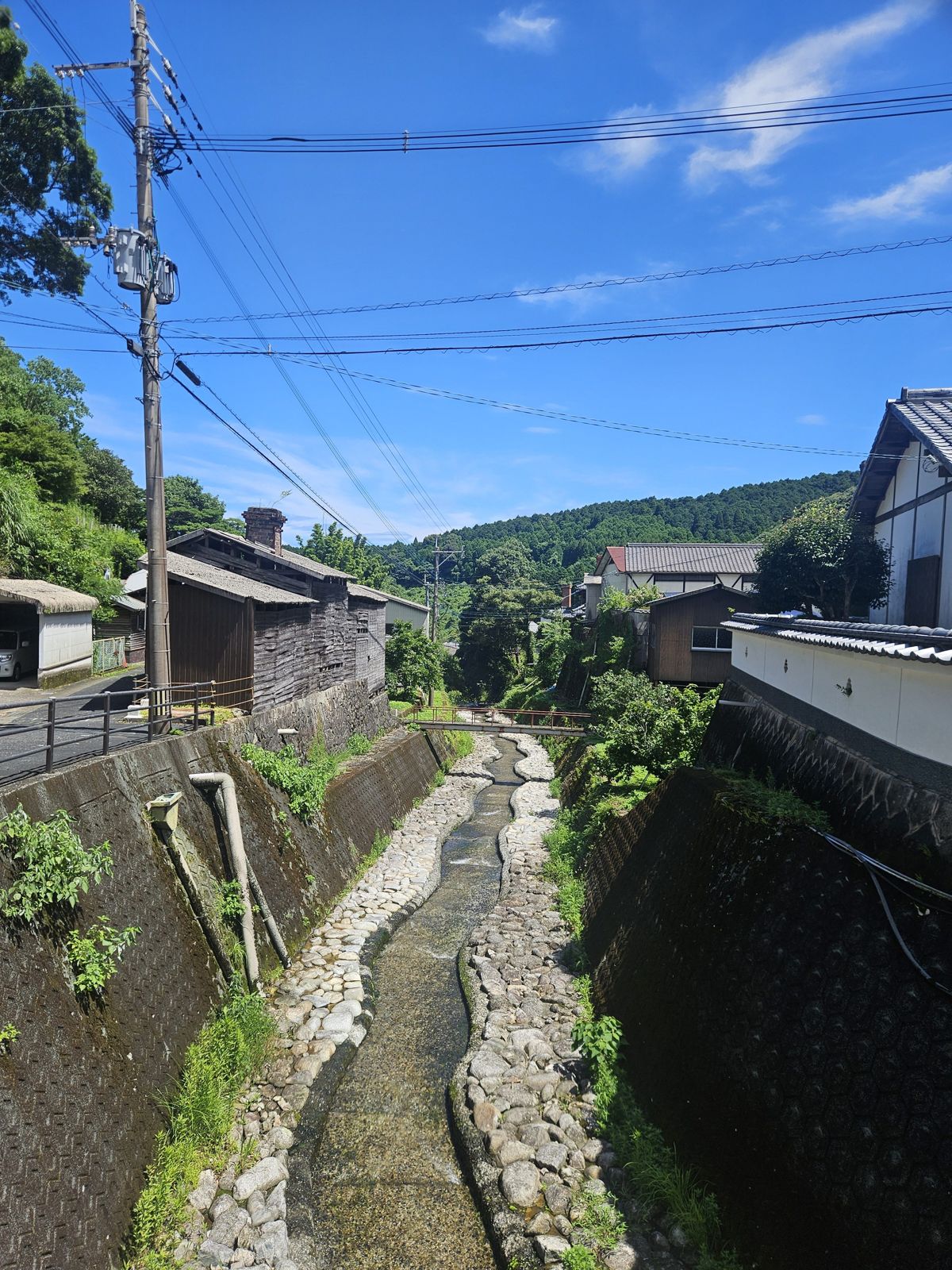
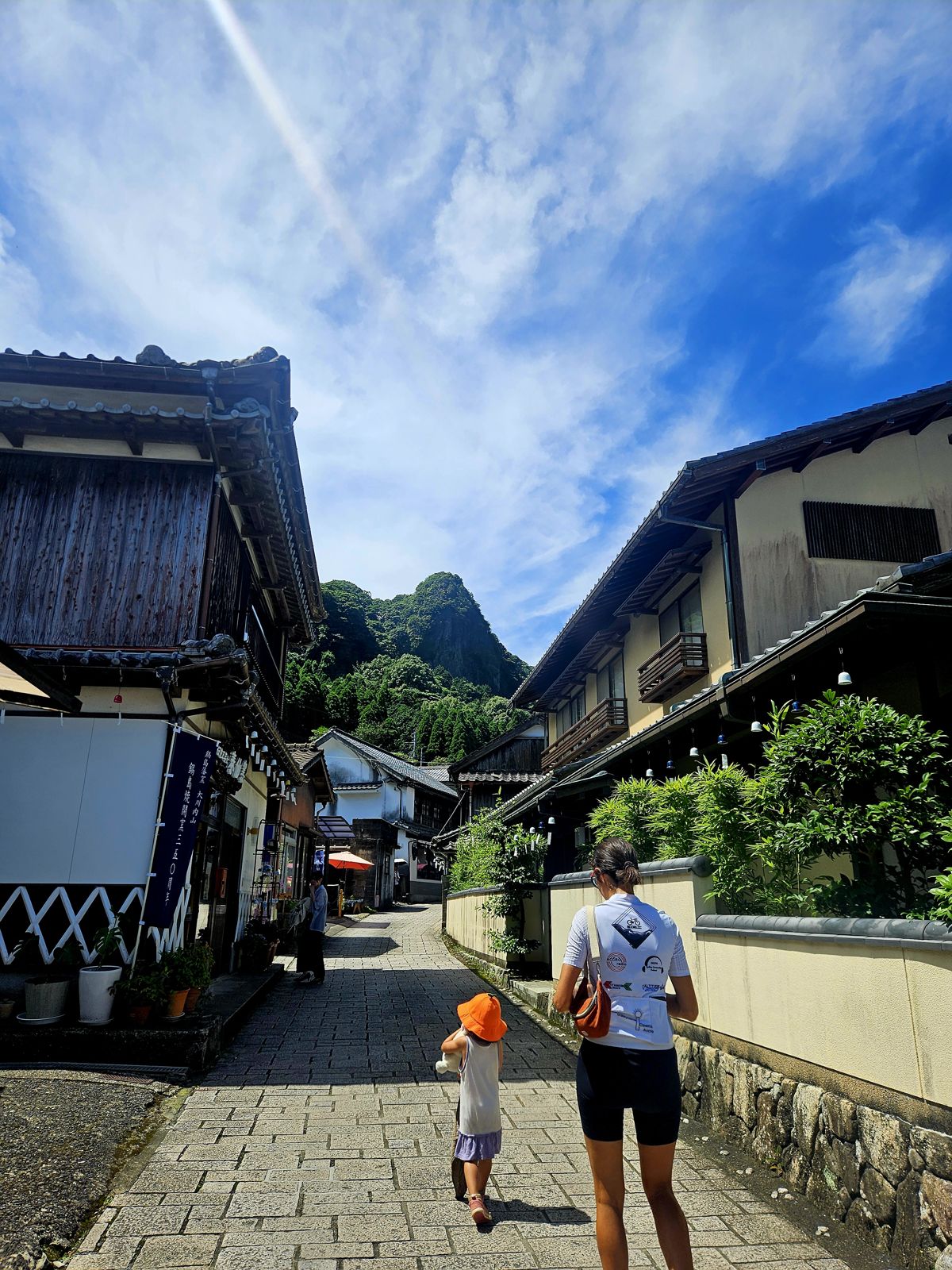
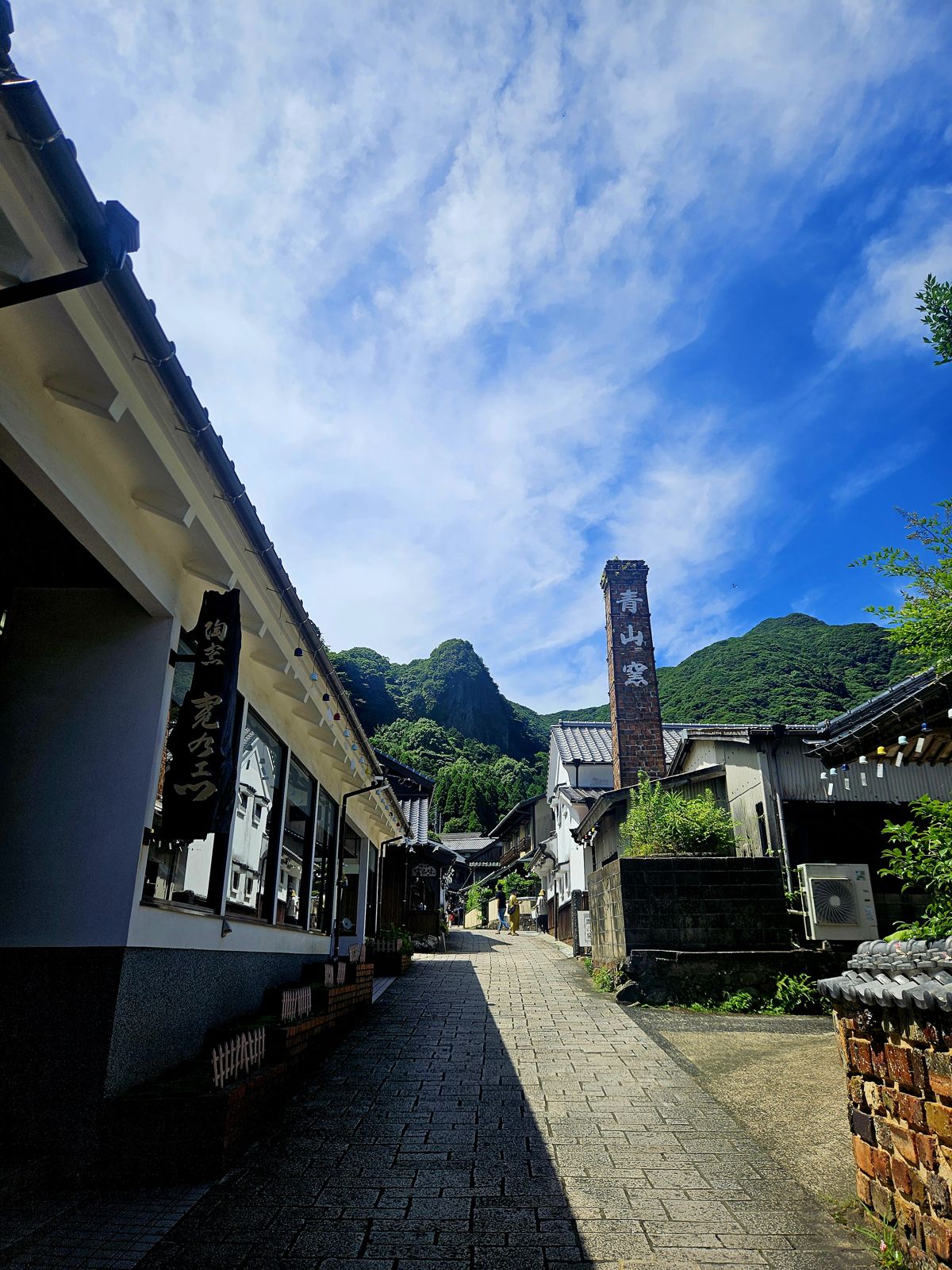
Today the village feels like a tourist museum. Every shop sells blue-and-white porcelain, but it's hard for novices like us to judge the quality. The pieces on display are certainly beautiful, and the biggest vases can cost up to €5,000! The little lanes are still pleasant to wander, with a peaceful atmosphere. We're surprised at how few visitors there are for a Sunday, but it reflects Kyushu's current appeal. We get back on our bikes to start the descent and collect our precious panniers at the hotel. The descent is of course much quicker, and we take time to enjoy riding through this Japanese countryside of hills and green rice paddies.
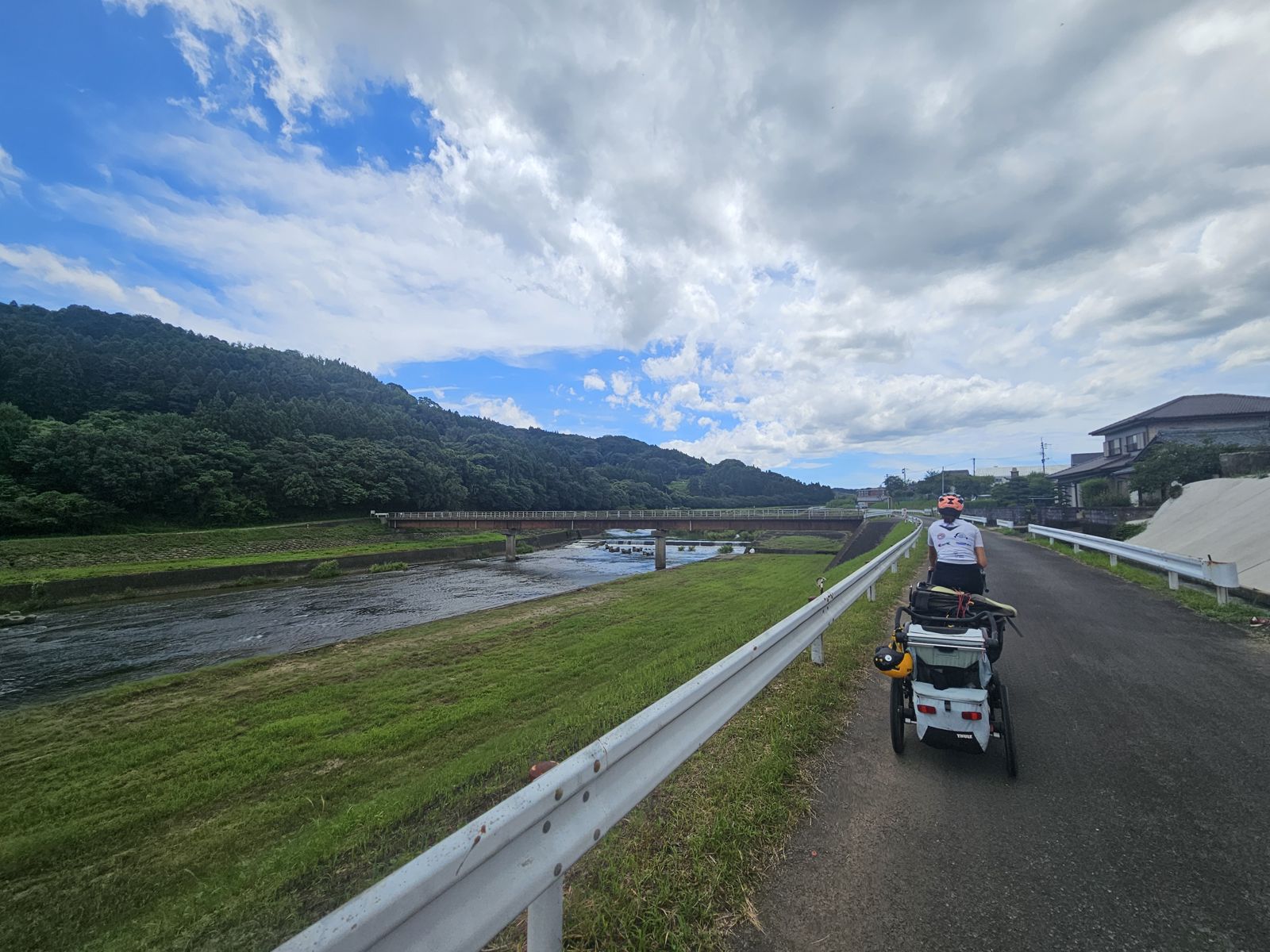
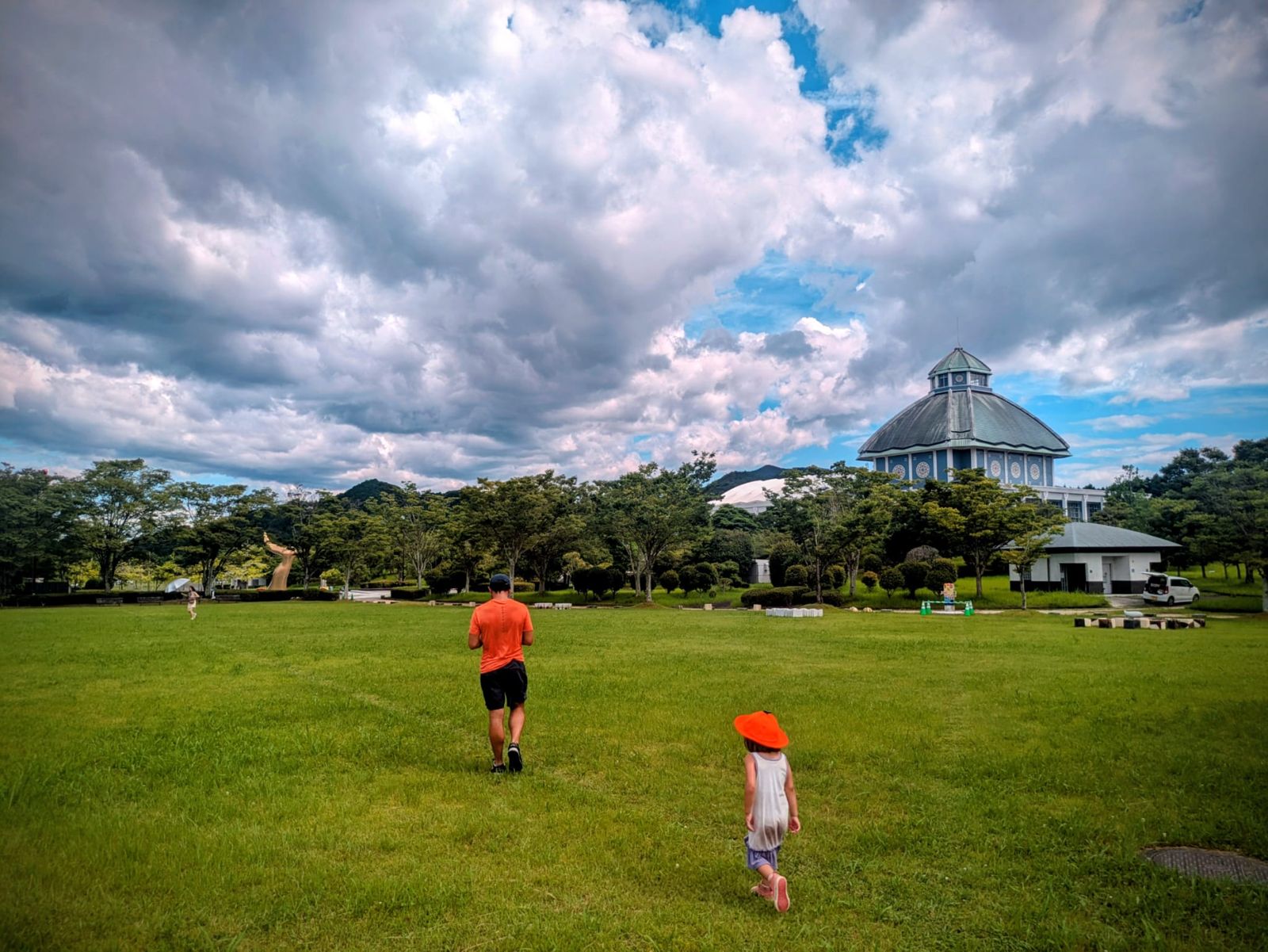
From the hotel we only have twenty kilometres to our stop for the night, so we take our time. In any case the main road is far too full of cars, so we take back roads through the surrounding villages. After shopping at a convenience store, we eat out of the sun on a bench in a big park to find a little "coolness" (read: not cooking on the spot). We dip our feet in the big fountain, then play at the nearby playground. We let time drift so Clémence can make the most of it. The end of the ride isn't pleasant, as we have to go back onto the "big" road, which is really just a small 50 km/h trunk road but with a constant stream of cars. And yet we're in the depths of the Kyushu countryside, which makes such traffic all the more baffling.
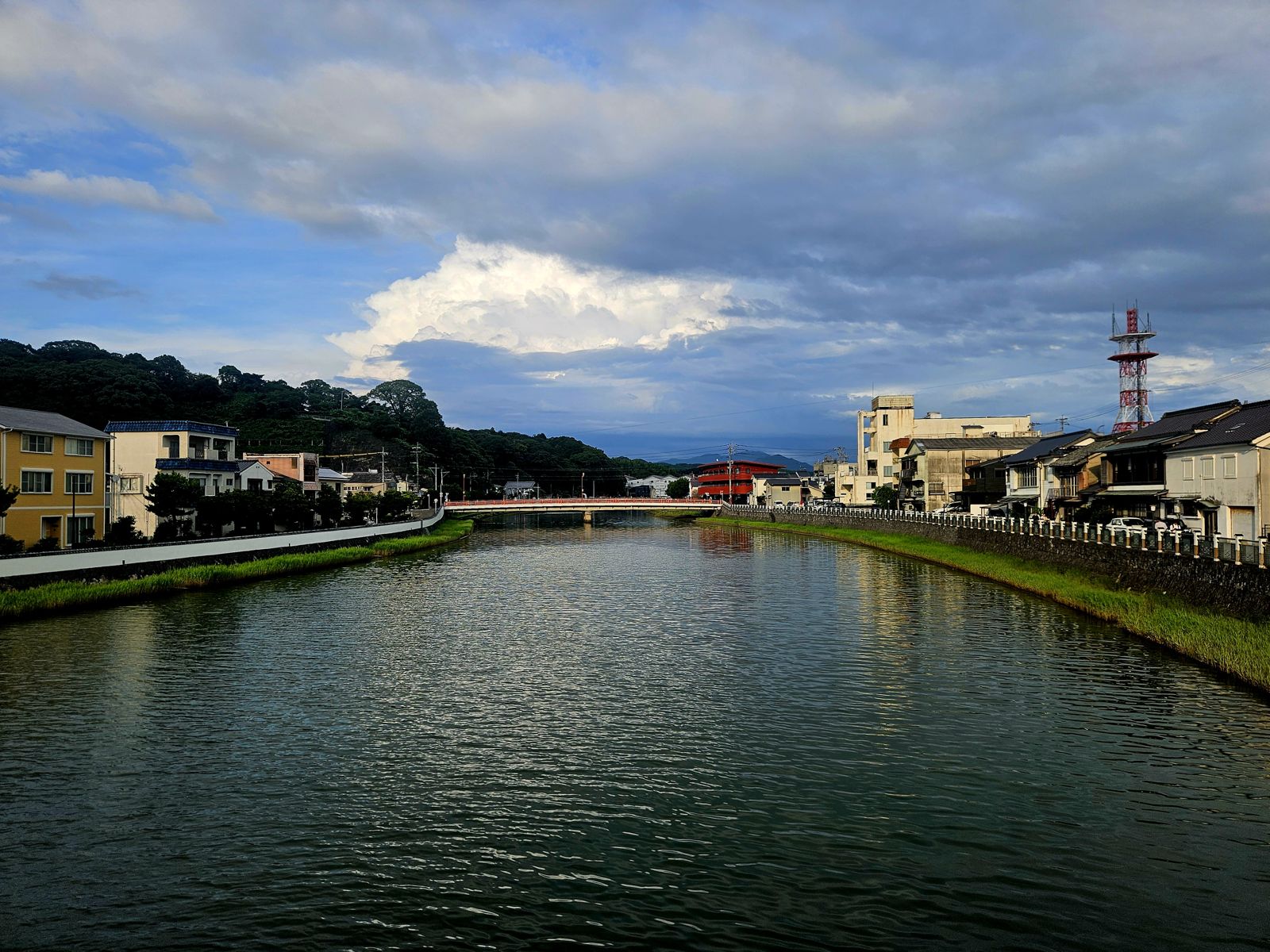
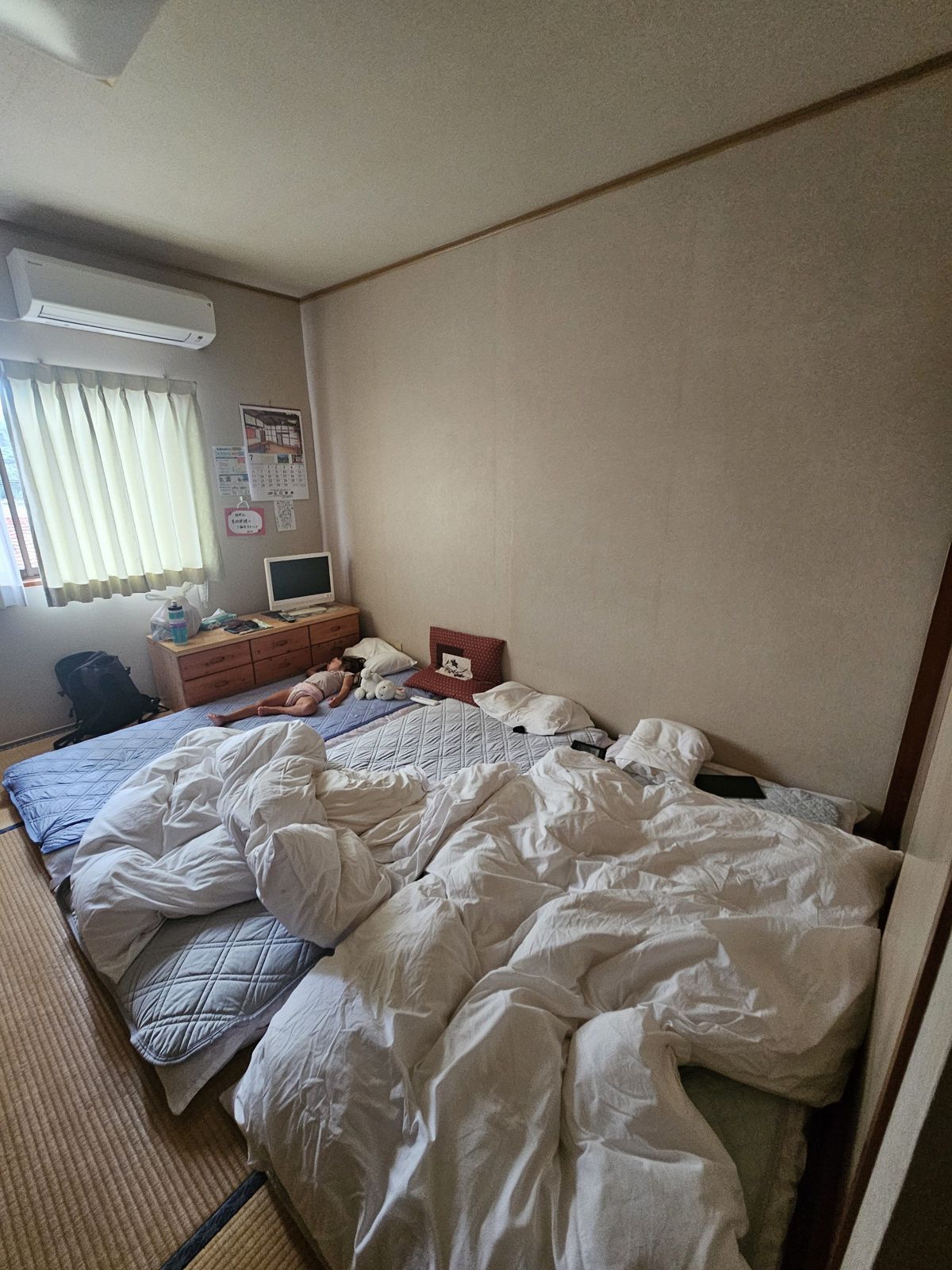
We arrive at the hotel at snack time. The owner isn't used to seeing foreigners, as he reminds us he only offers Japanese rooms with futons on the floor and asks if that's all right. Of course it's no problem at all. We actually rather like Japanese-style rooms. He speaks a little English, so communication is easy. We take a quick shower before going out to explore the little town. Our hotel is right by a bridge over a river.
But looking more closely, it turns out it's not a river flowing here but one of Japan's narrowest straits. Only 10 metres wide in places, its current is exceptionally fast when the tides turn. In fact, the water changes direction with the tides. So it's a very popular spot for kayakers and canoeists. Other than that, the little town of Haiki is of no great interest and rather sleepy. We hardly see anyone walking about; only cars drive through. Once again, dinner is ready meals from the supermarket in front of the daily Tour de France highlights. Nothing wild tonight: a climbing stage awaits us tomorrow.
On the road