 ← PreviousFirst days in the Land of the Rising Sun
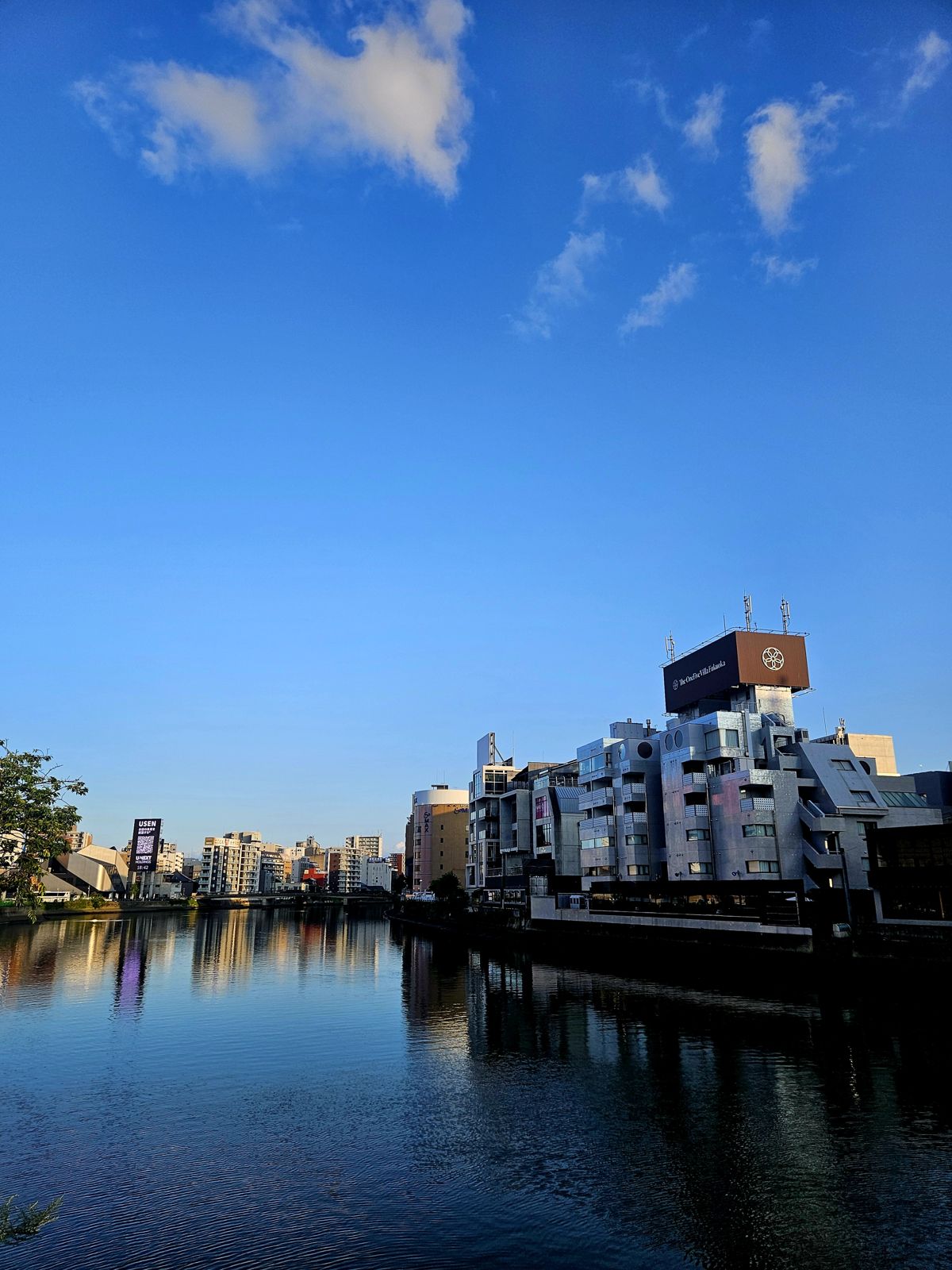
After more than 1,500 kilometres by bike in South Korea, today we start clocking up the kilometres on Japanese soil. After a huge breakfast and packing up all our things, we pump up our tyres and we're off on a new adventure. The tour of Kyushu awaits, but first we have to get out of Fukuoka. The city is really designed for cars, and it takes us ages to cover the ten kilometres or so that roughly mark the way out.
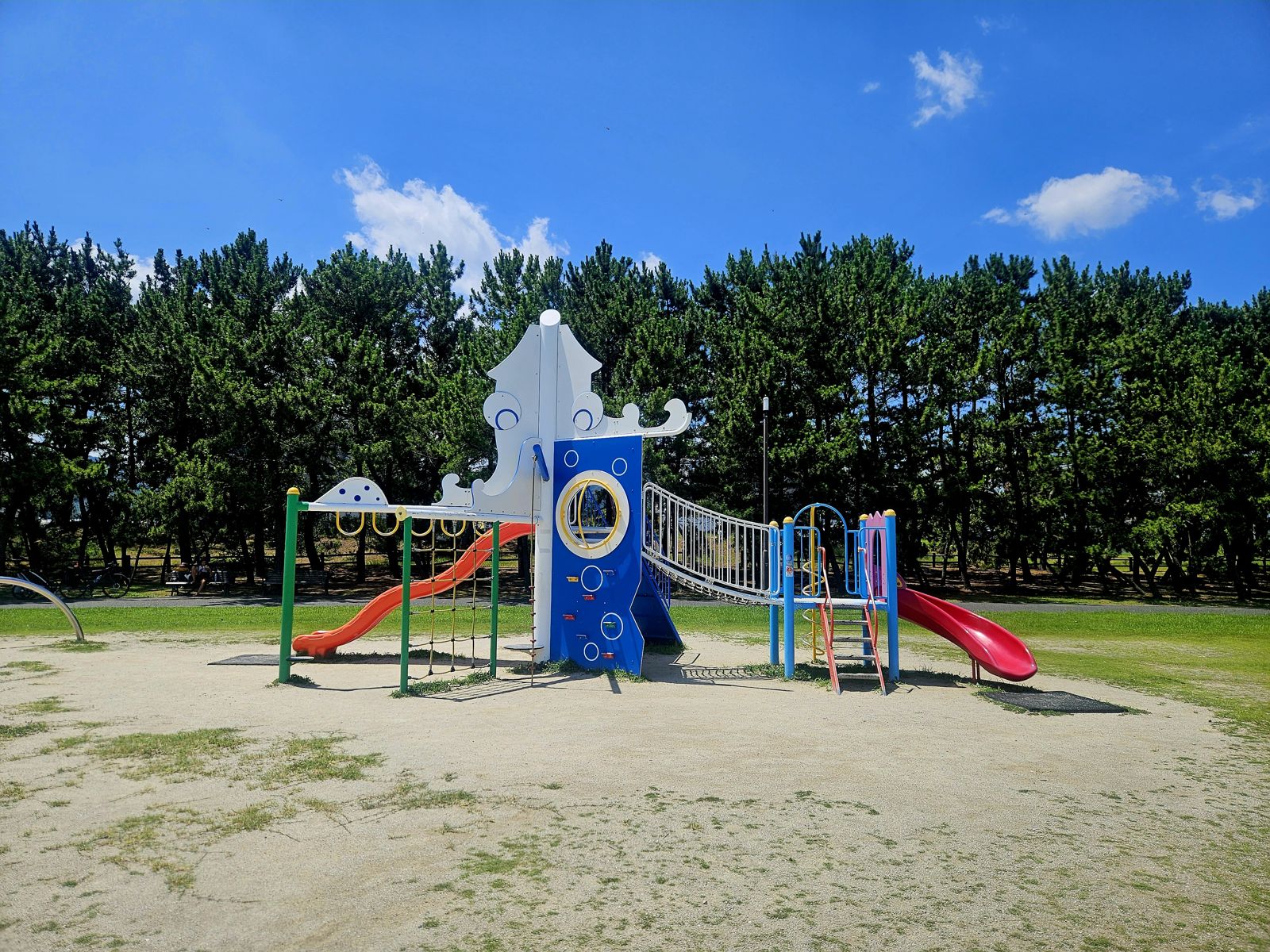
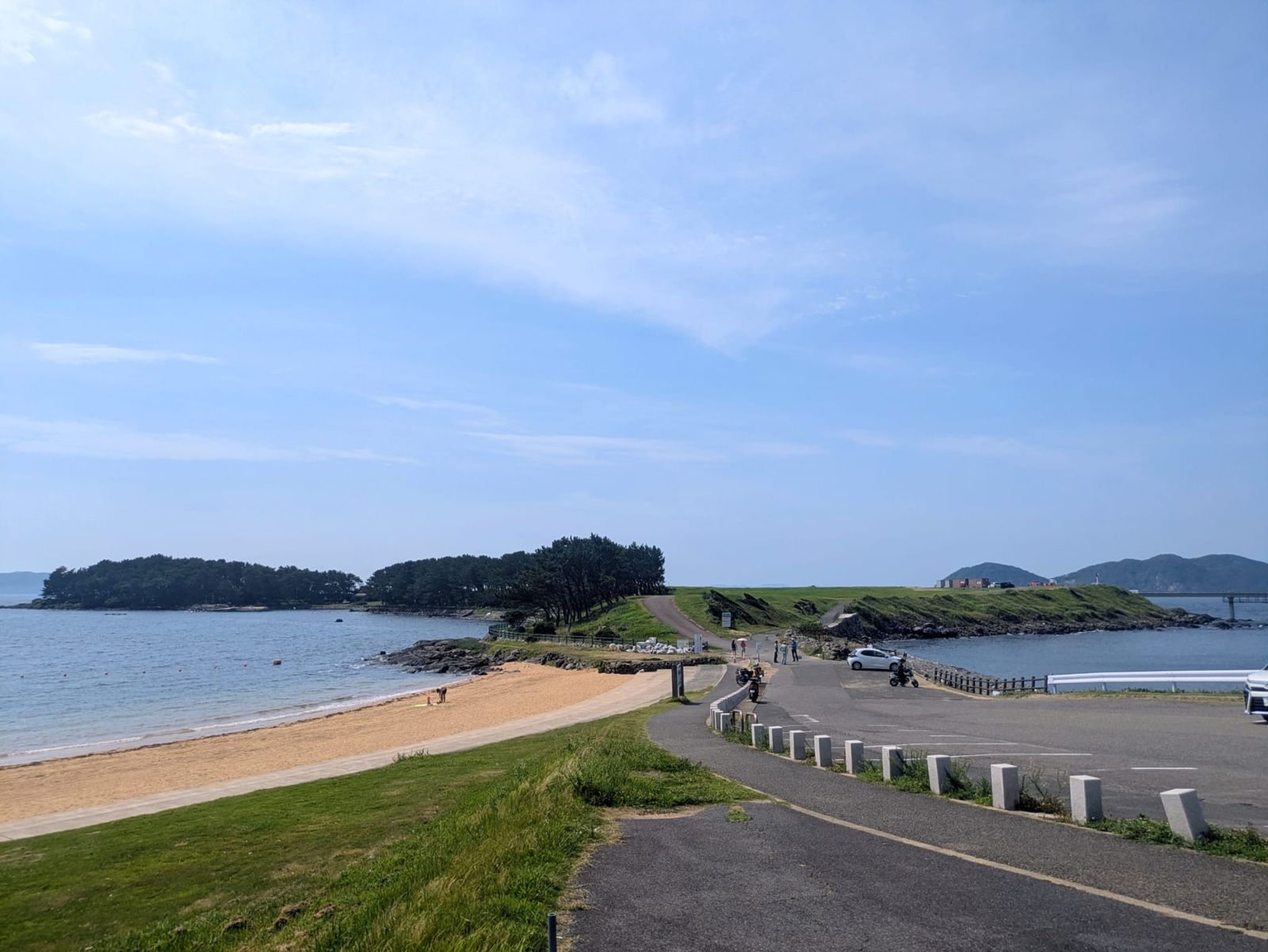
Right at the fifteen-kilometre mark, we spot a playground in the distance by a beach. Of course we stop, and of course we play tag, Clémence's new favourite game. She plays by her own rules: she's allowed to tag us when we're on "safe", but not the other way round. A concept all her own. After a good hour of play, we set off on a nappy mission. Our life as travellers has changed a lot since we became parents. We used to look for the most beautiful beaches, good restaurants and hidden spots. Now we have to type into Google "where to buy nappies in Japan?".
Because we've already tried several shops in Fukuoka without success, and the supermarket, a decent-sized one, doesn't have any either. And yet there are plenty of adult incontinence pads and tons of sanitary products. We discover you have to go to drugstores, which we do two kilometres further on. Here too, the section of nappies for the elderly dwarfs the one for babies. Clémence only wears nappies at night now, which makes logistics much easier, as a pack of twenty should in theory last almost three weeks.
We've done some shopping at the supermarket and eat on a very well-equipped beach. All the facilities look old-fashioned, but they all work. There are picnic tables, a little pool with a slide built into the hull of an old fishing boat, lots of swings between coconut palms, big zip lines and a huge bucket up in the air that fills and then tips onto the brave souls waiting underneath. A huge water play area and leisure park right on the beach, and completely free. The place has a friendly atmosphere and the beach is truly sublime, which doesn't surprise us much, as Japan is famous for the beauty of its beaches. A big group of French students is playing in the water; they're on a university exchange in Fukuoka and confirm that life there is very sweet.
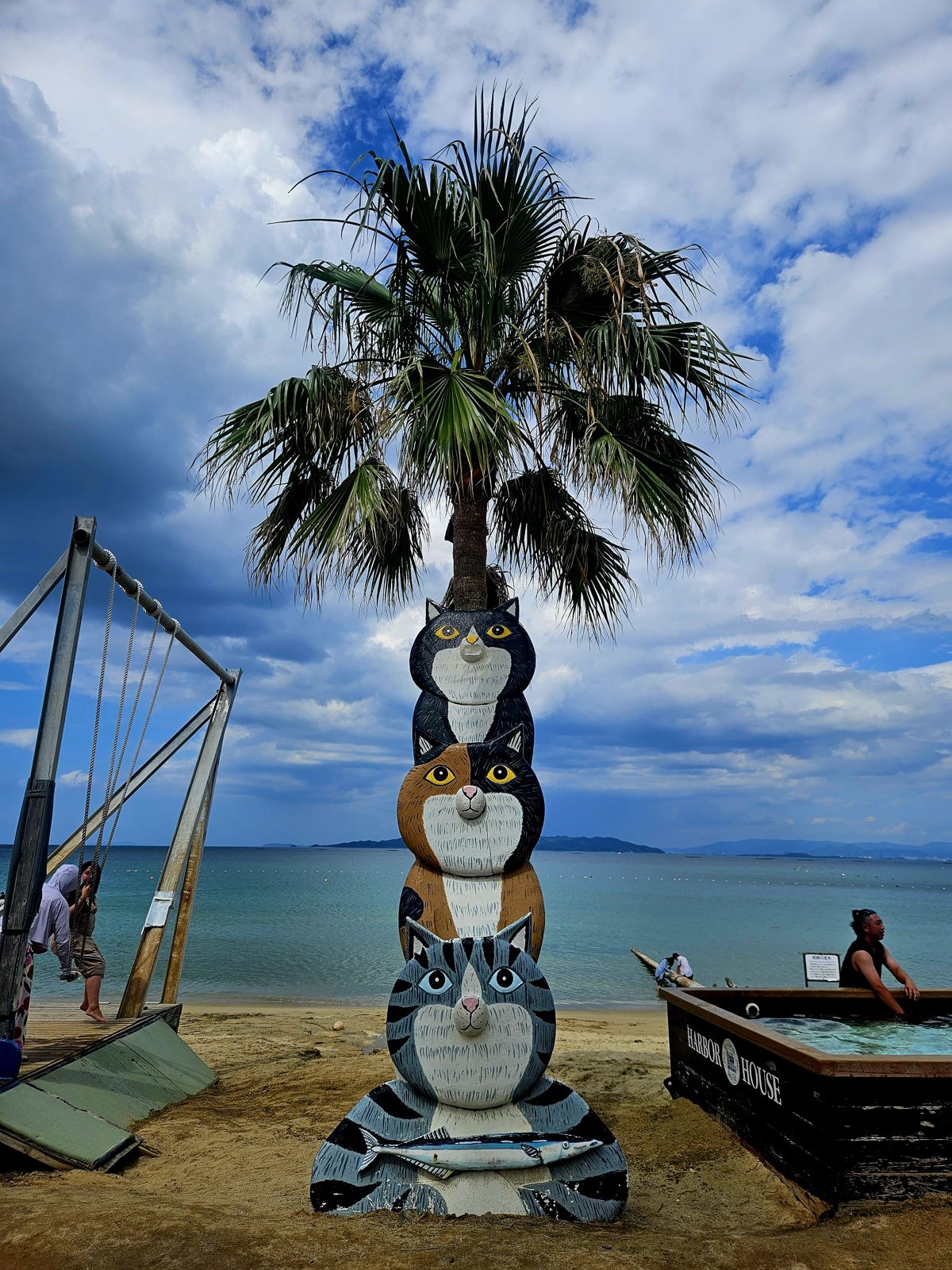
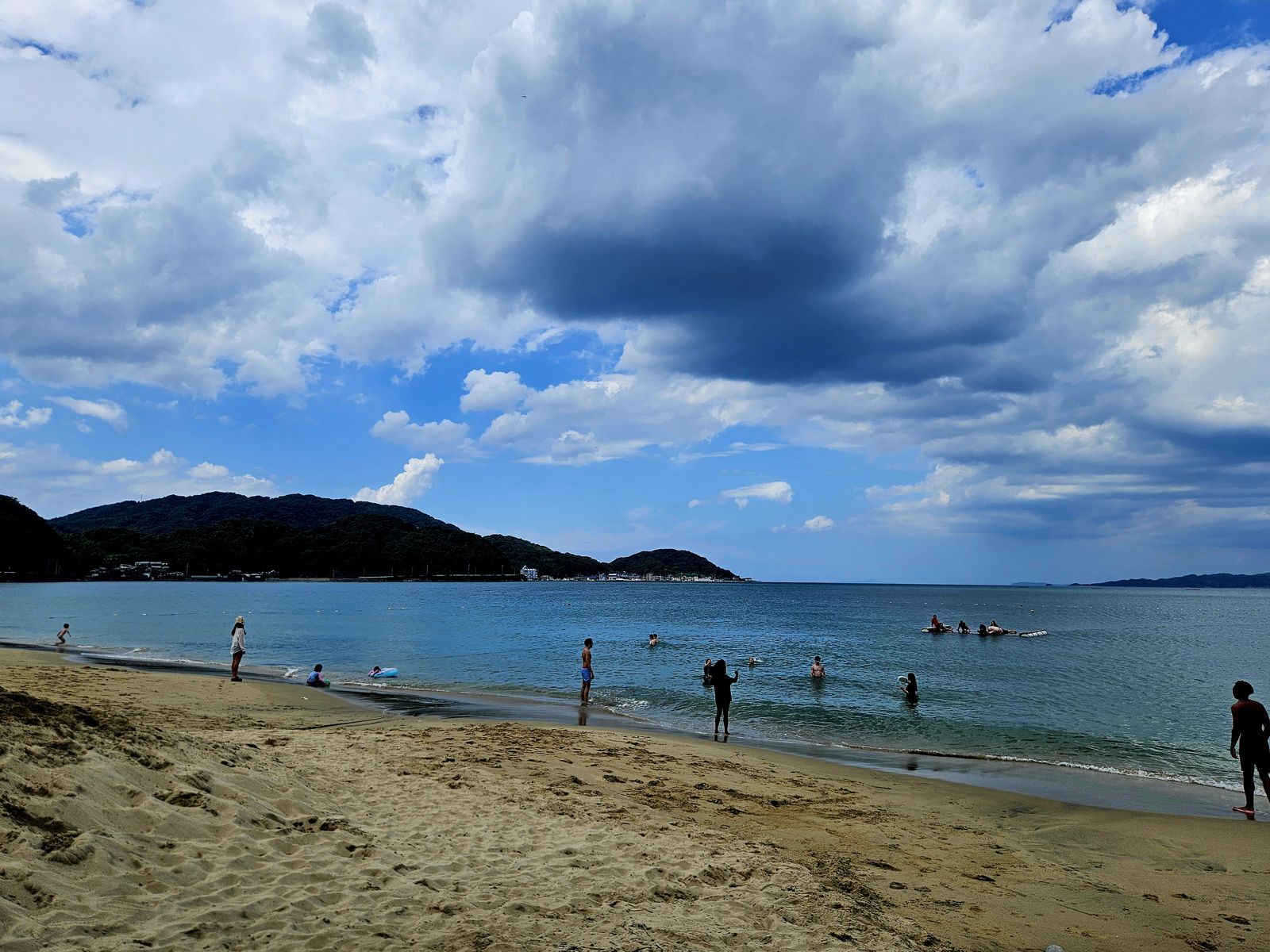
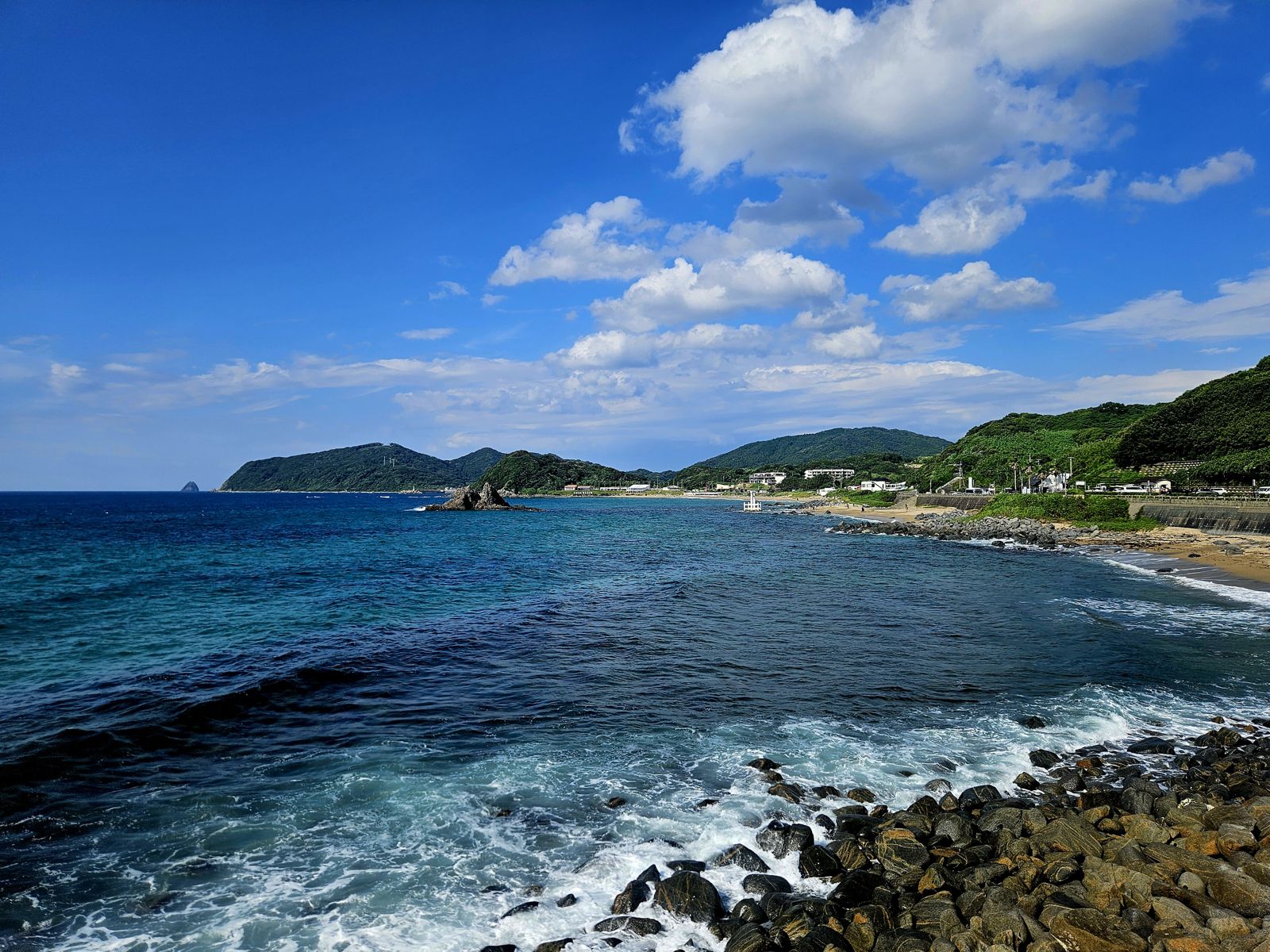
After more than two hours of play, we set off again. And the road finally reveals all its charms. Southern Japan is tropical and the coastal scenery is spectacular. If you showed it to someone without telling them where it was, they'd think it was Hawaii. We feast our eyes as we ride, and even the headwind becomes insignificant. A little shower falls on our helmets, so we stop at a surf café for an iced tea and enjoy the view from deckchairs in the sun. The shower lasted literally one minute.
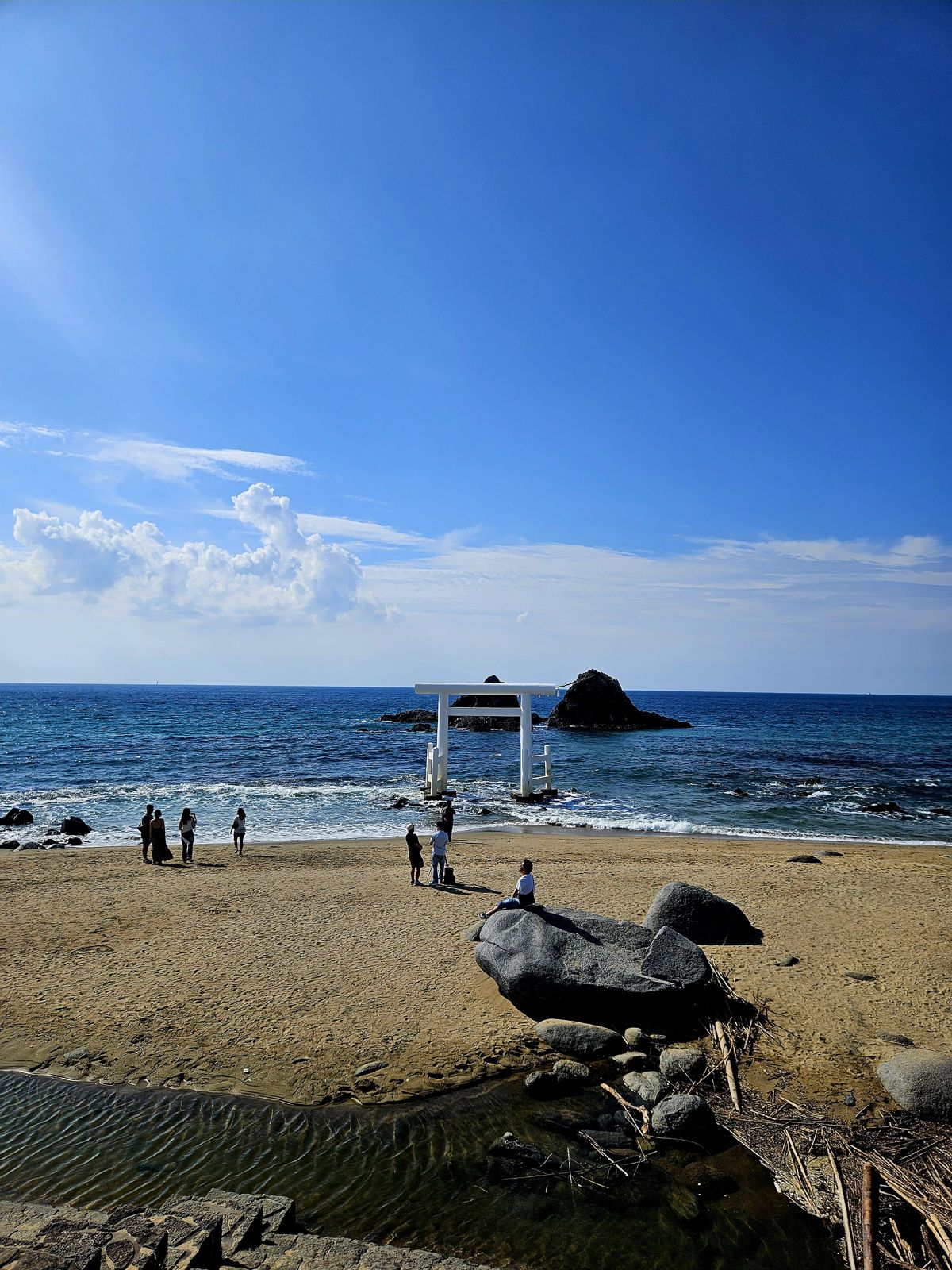
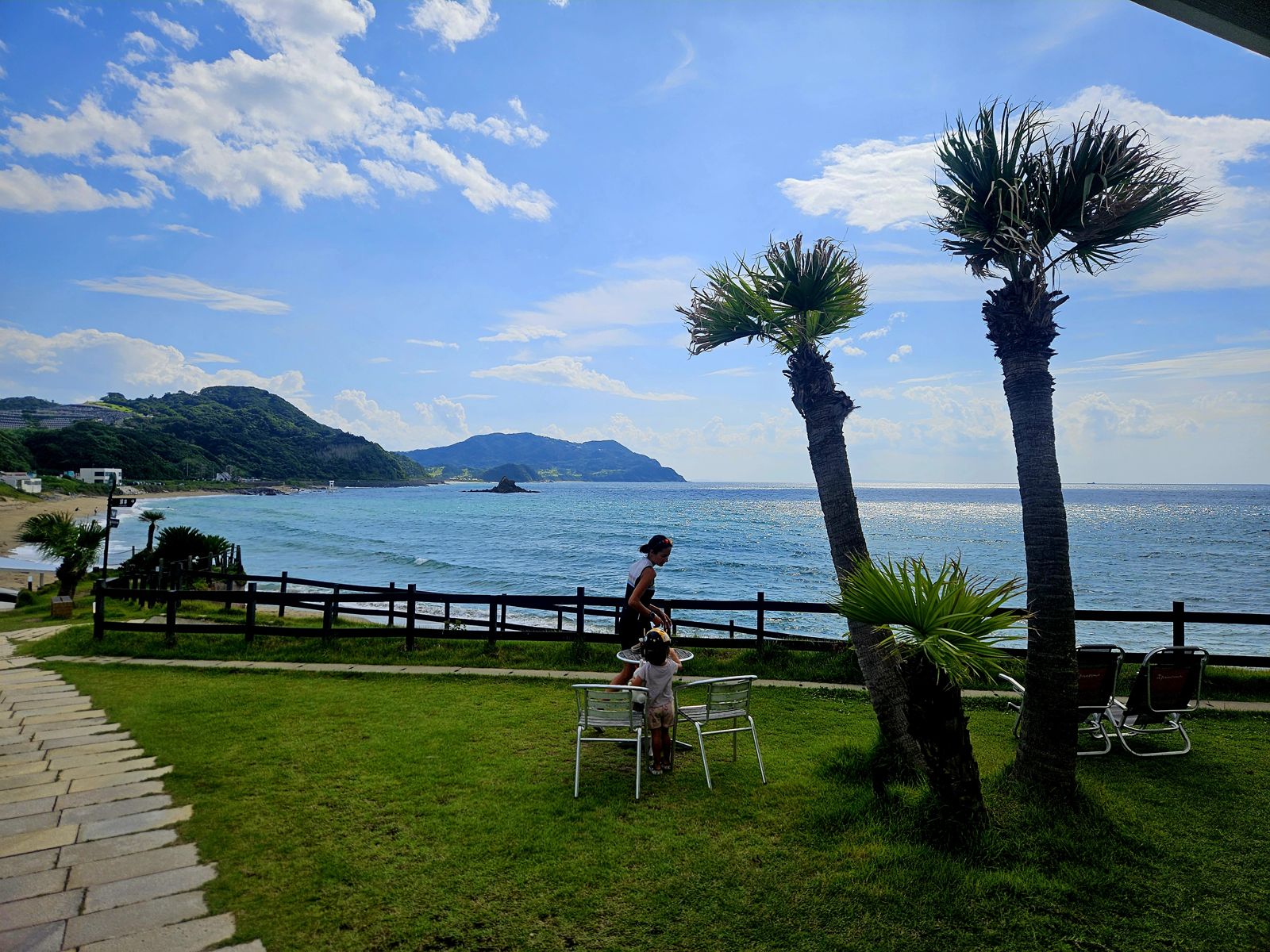
We don't linger too long, though, as we have to reach the campsite by 5 pm at the latest to check in. Yes, tonight we're camping. We've booked a pitch and a rental tent for one night. Outside the big cities, accommodation is very scarce in Japan and we don't have much choice, especially as the peninsula we're on has few places to stay, and those available cost at least €150. It doesn't matter, as it's a new experience for Clémence, who has never camped before. When we arrive, the manager is so surprised to see us on bikes that she takes our photo to post on her Instagram account. The tent isn't hard to put up, and after a few adjustments it's ready. Our pitch has a small wooden shelter with tables and benches, a stone-carved sink with running water and electricity. The grass is beautifully kept and looks soft, and we have a sea view.
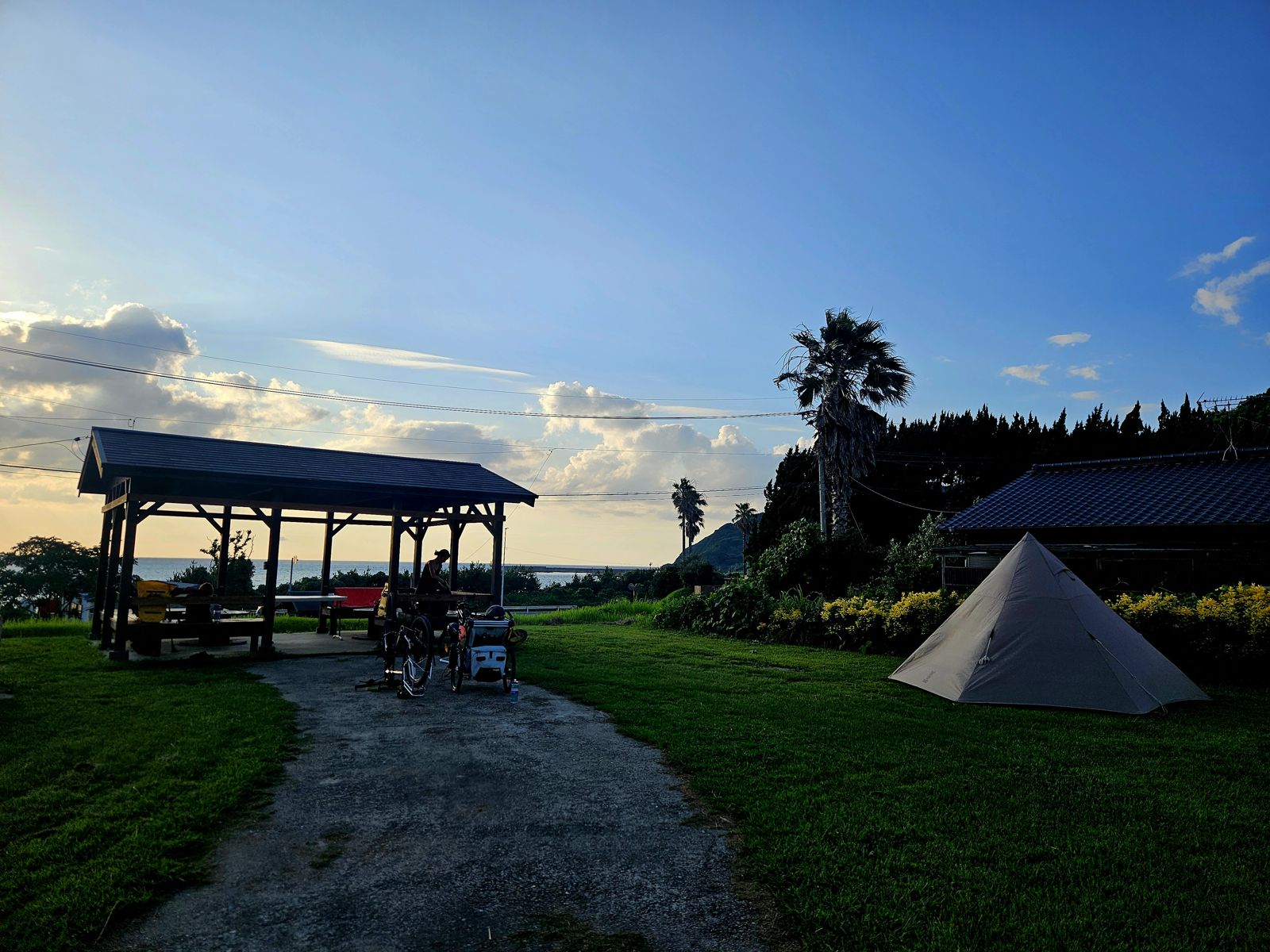
Around 5 pm, the manager leaves, asking us to return the camping gear to reception when we leave tomorrow, as she won't be back until 11. She also lends us a phone charger, because our adapter doesn't fit the socket on our pitch. You can feel that the Japanese have blind trust in others. There's no one else on the campsite and it's completely open: no fence, no gate. In another country we might not have felt safe, but here we leave all our things out on the tables and our bikes as they are on the grass, unlocked. That's the advantage of countries like Japan or South Korea, where the thefts we know so well in Europe simply don't exist.
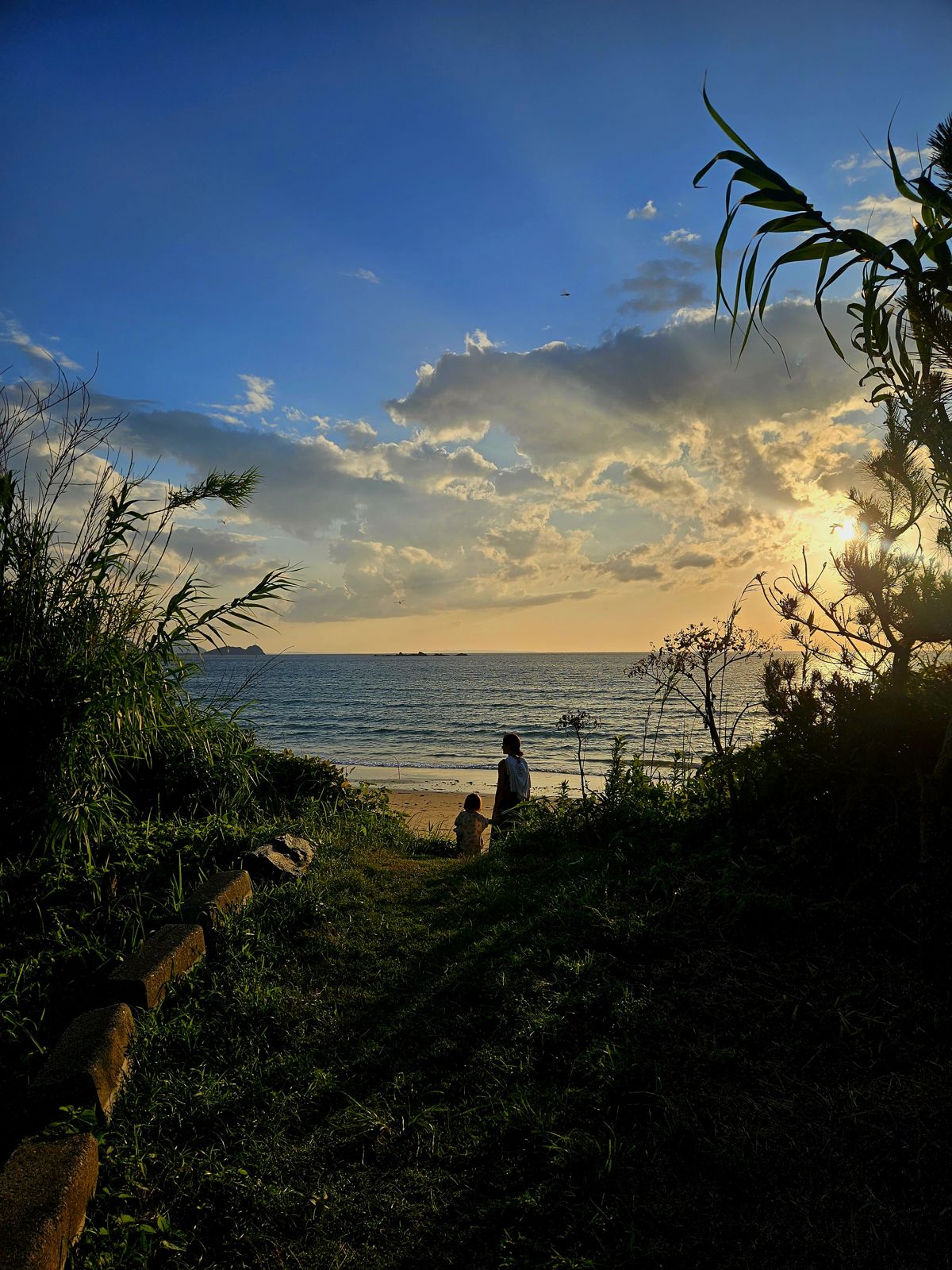
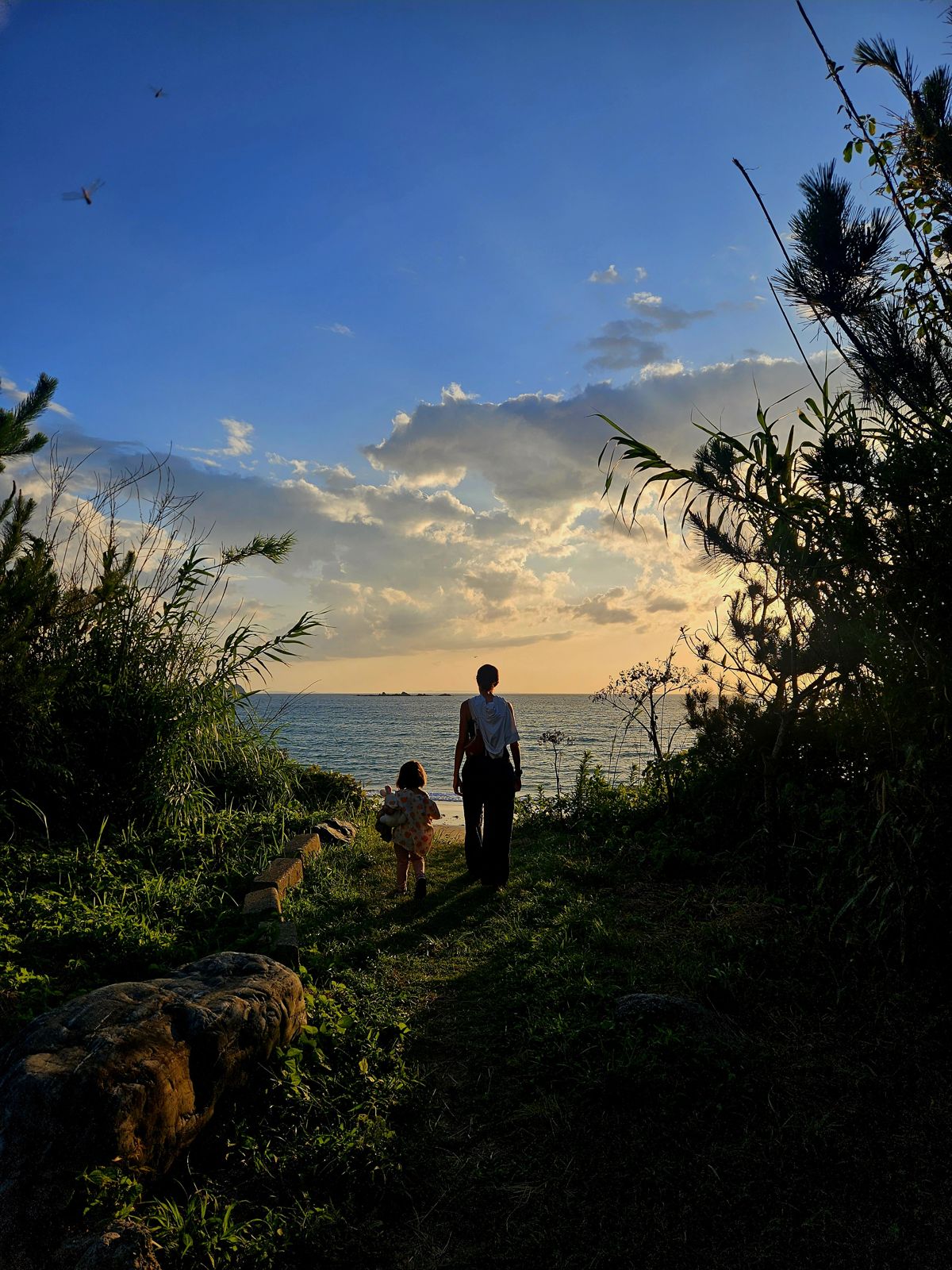
In Korea we'd picked up the bad habit of always having a convenience store close at hand. They really were everywhere, which isn't the case here. We have only one option, an Italian restaurant where we eat lasagne at a fair price but in ridiculous portions. We come out still hungry, as Clémence ate like an ogre, but never mind. The sun is setting as we finish eating, so we go and admire it on the beach. The scenery is idyllic, and even though Clémence struggles a bit to fall asleep, it doesn't spoil the pleasure of this very enjoyable first day on Japanese roads.
Wednesday 16 July
The night in the tent wasn't glorious. Too cold at night, too hot in the morning, a kitten coming to yowl while we slept and birds with improbable songs all livened things up. We wake around 7:30 feeling not far off hungover. We start packing what we can while Clémence is still asleep. After a very basic breakfast with what's left from our last shop in Fukuoka, we start our second day around 9. Not a bad thing, as the sea breeze is pleasant and at this hour still manages to take the edge off the heat forecast for the day.
We ride hoping to find a convenience store or a little snack bar open so we can eat properly (for cyclists who barely ate the day before), but after two disappointments with closed cafés, we finally find an open convenience store in a small hamlet after an hour's ride. We buy milk bread, mini croissants and juice to complete this morning's failed breakfast. Riding a little further along the shore, we spot a quiet little beach with very calm water hidden behind the pines separating it from our road. We decide to stop for a paddle.
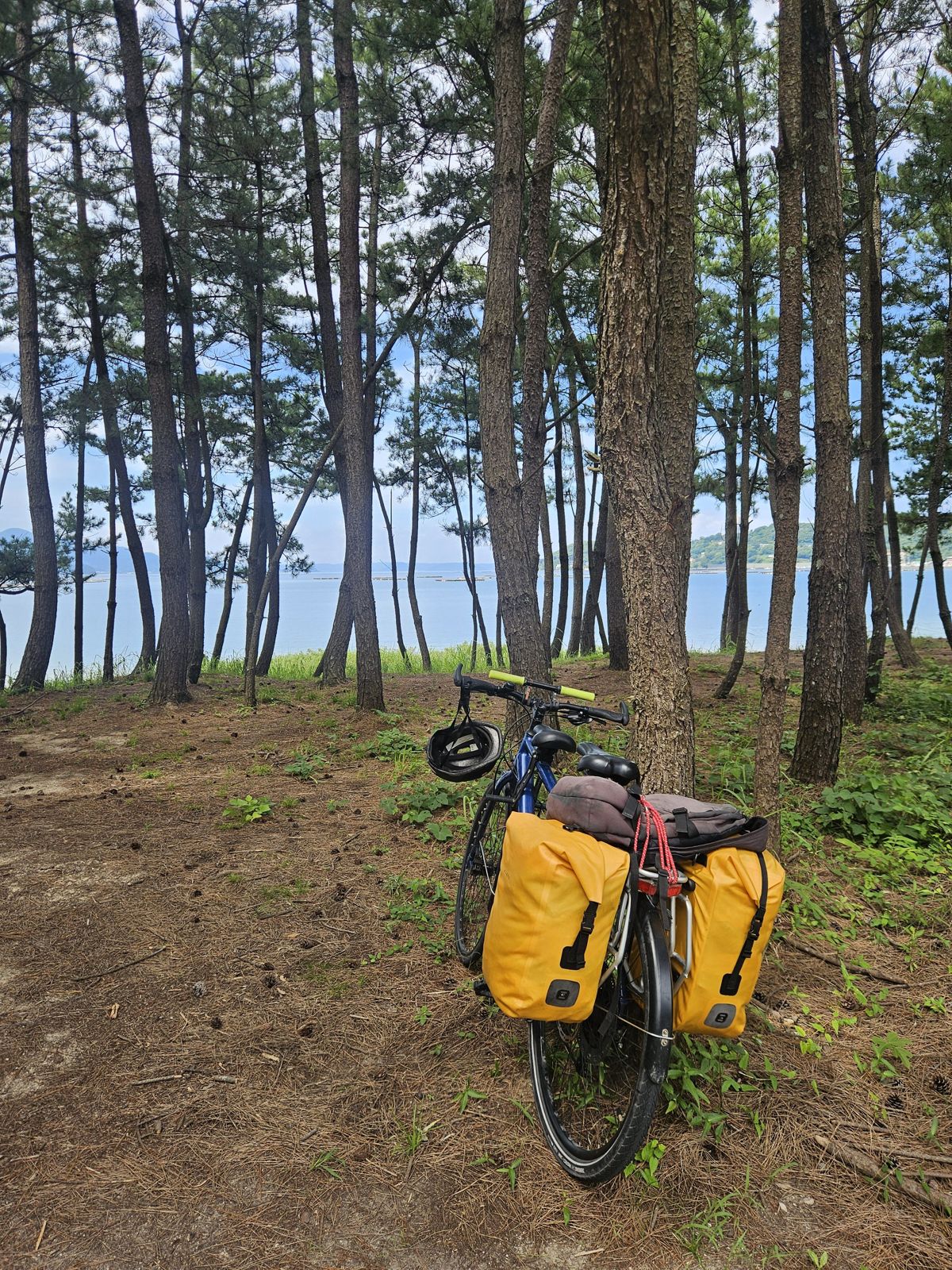
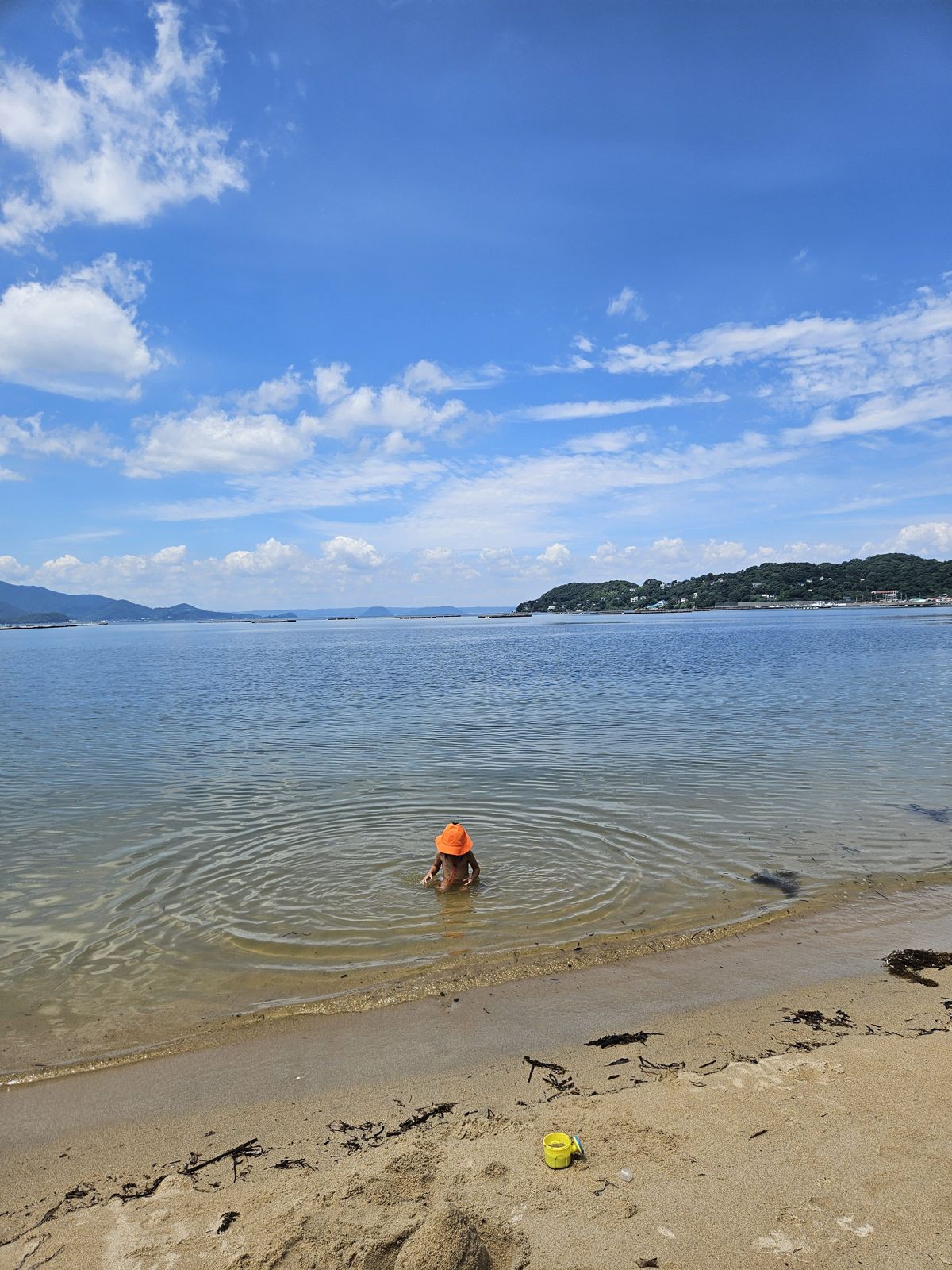
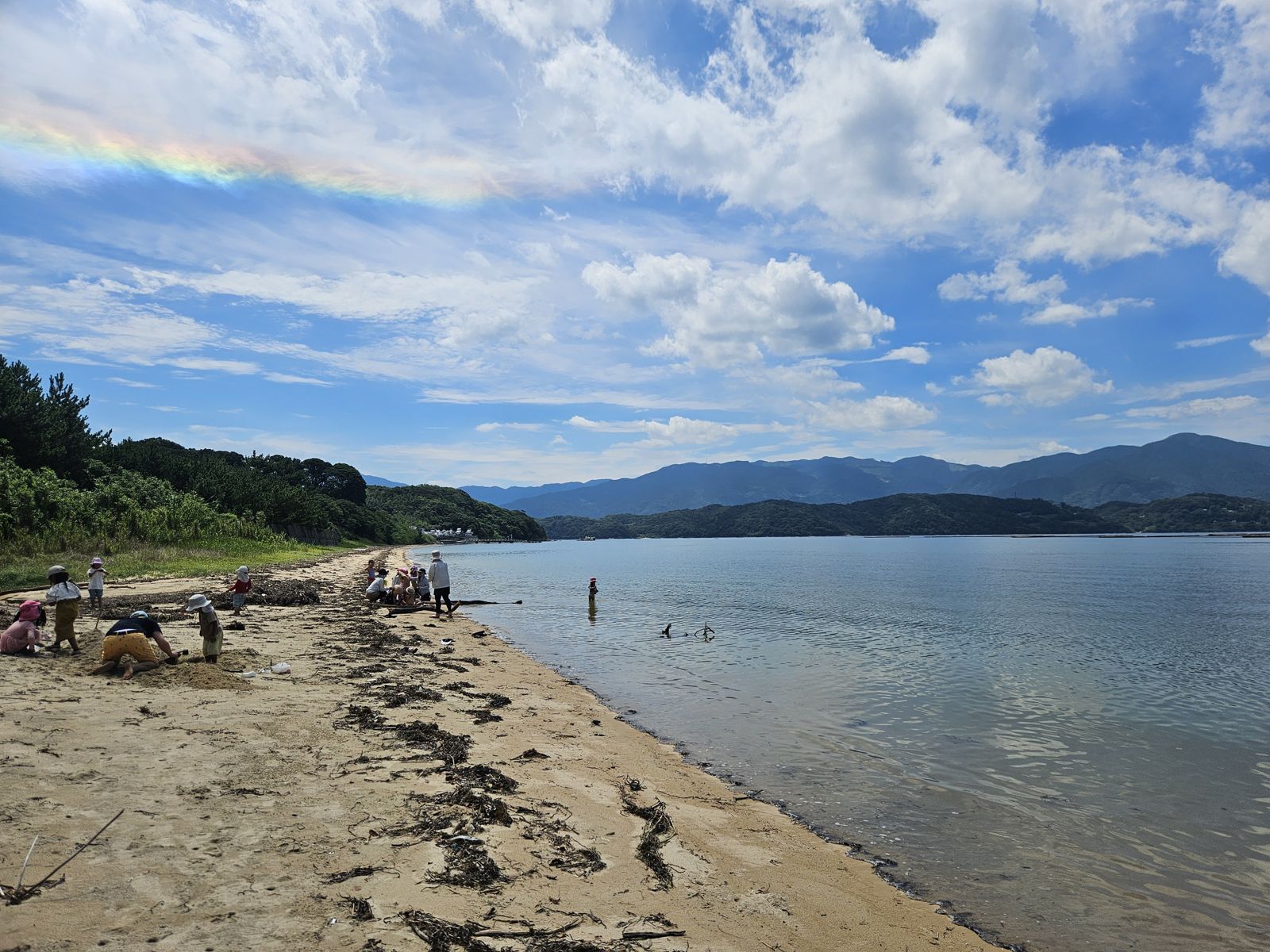
A group of children aged 3 to 6 is there with a few parents. With bin bags, they're picking up the plastic waste lying on the sand and at the water's edge. And there's a lot of it. Sadly, the beach is very dirty. We're in north-west Kyushu, and this side of the coast must catch rubbish from all over Asia washing up on its beaches. The Japanese are surely also responsible for this pollution, since, like South Korea, they still wrap absolutely everything in plastic and haven't yet said goodbye to single-use utensils.
The children are Clémence's age, so we try to encourage her to play with them, but she insists on playing on her own. Stéphane chats with one of the parents, an American from Salt Lake City. Of Japanese descent, he met his wife (also there) in the US before moving here. They're very friendly, but they have lots of children to watch, so the conversation is cut short.
We set off again as lunchtime approaches and we have nothing to eat, so we ride until we find a good supermarket. We have lunch on an almost deserted beach, with only a few people paddling. Compared with Korea, all the coastal facilities look run-down. They're often wood and corrugated-iron structures that seem to have already lived through a few decades. Above all, everything seems closed wherever we go. It's the middle of July, and even if Japanese children are only on holiday in August, it surprises us a lot.
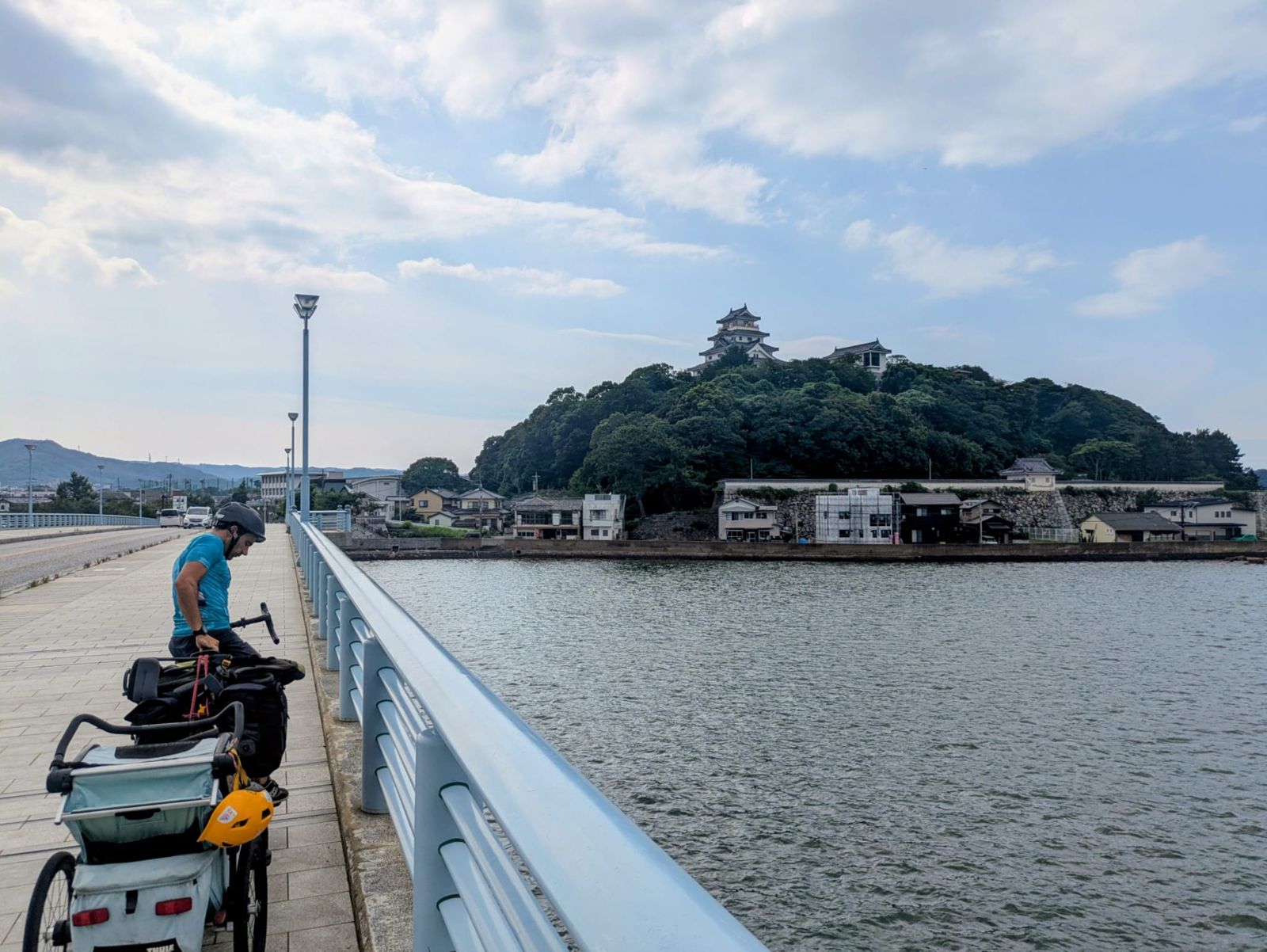
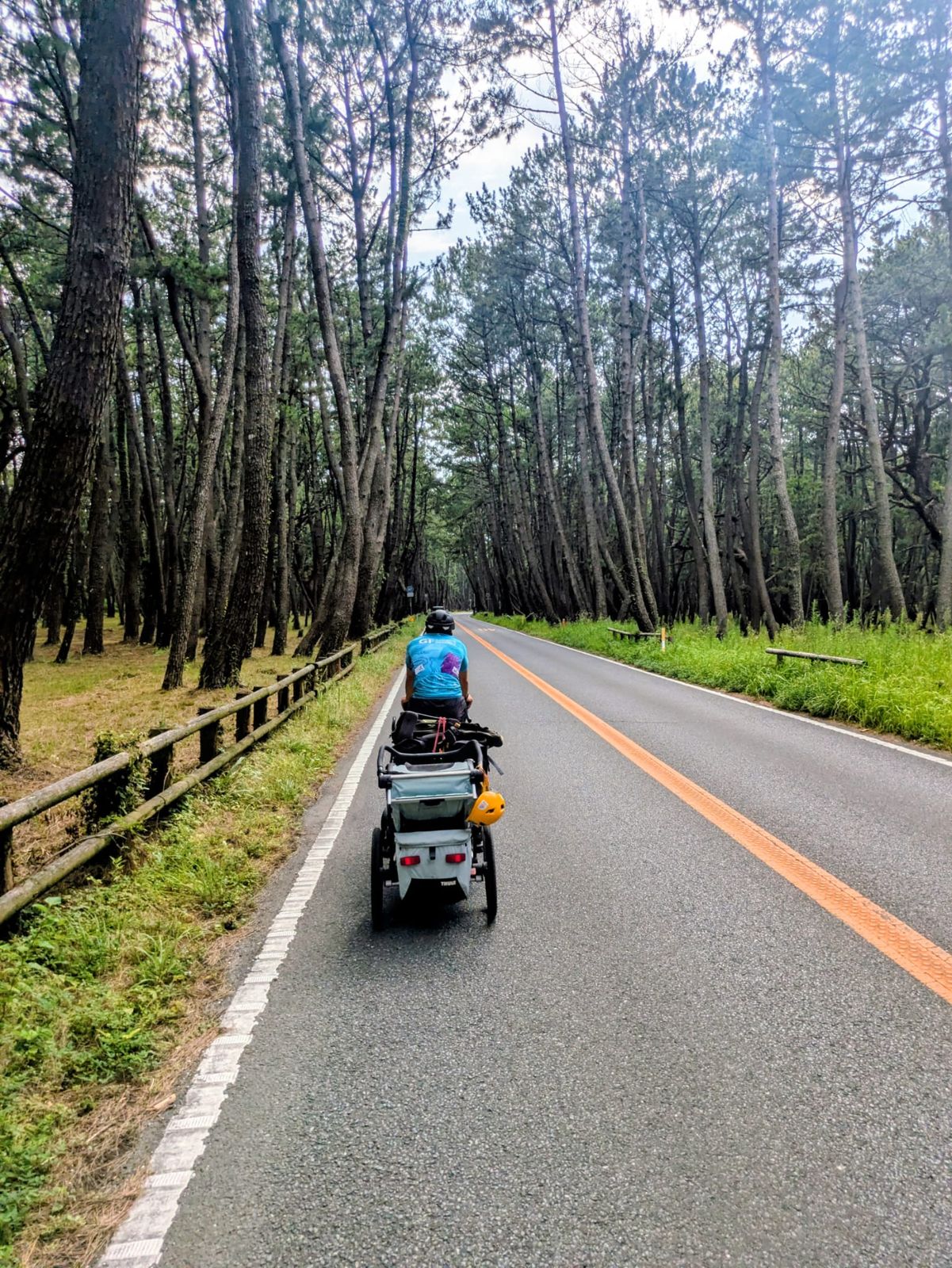
The last part of the ride isn't fun, even if it's scenic. Most Japanese drive like the French: fast and close to cyclists. They also anticipate rather badly and don't care much whether a car is coming the other way when they start to overtake. It's a radical change from South Korea, where drivers overtook using the opposite lane. We try to move as fast as possible, as the urban stretches aren't pleasant at all, and we're happy to reach Karatsu.
We've booked a slightly expensive aparthotel, but with a kitchen to cook in. In the end it cuts our costs. After dropping our bags and parking our bikes, we go out to buy a snack at the supermarket. We'd spotted a café for a cold drink, but we find a tiny space and nothing to drink but tea and coffee. Another big change from neighbouring Korea, where such places were always stylish and nicely decorated.
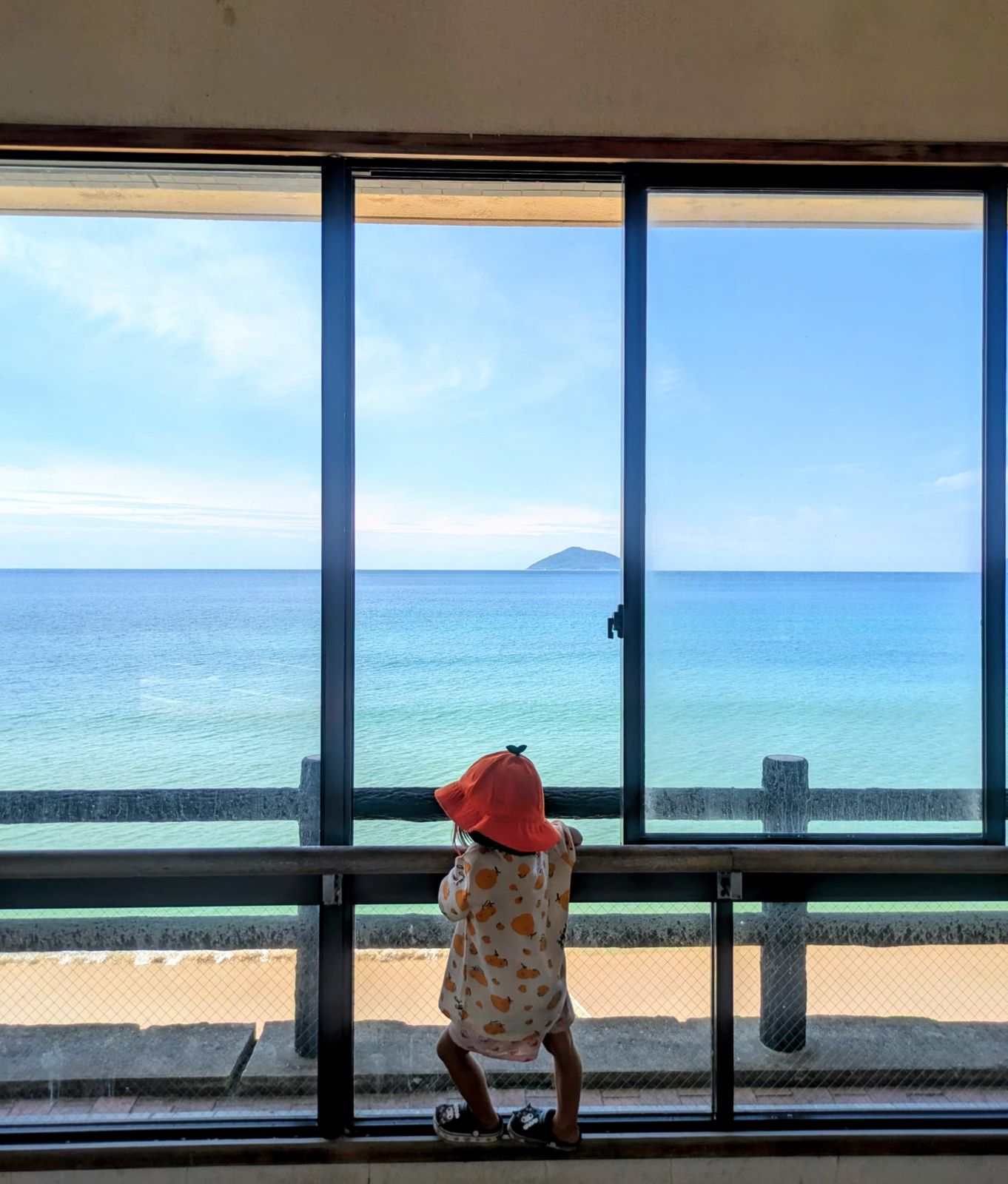
After playing at the neighbourhood playground among little Japanese children, we buy food for the evening. We enjoy an aperitif and dinner while watching the Tour de France highlights. Clémence knows who Pogačar is and never fails to point him out when he appears on screen. We can only hope a night's rest gives us legs like his.
Thursday 17 July
When we wake up, we cook an ogre's breakfast. Sausages, bacon, eggs, yoghurt, bananas, bread, butter. In short, everything we need to get maximum strength for another day of intense heat. We're especially careful to eat well, because paradoxically the body asks for less when it's hot, when it actually needs more.
We set off at ten, and getting out of Karatsu is peaceful, riding on pavements that are generally wide. We've quickly adopted the habit of Japanese cyclists, who all ride off the road. Yet "officially", riding on the pavement is forbidden and cyclists are supposed to use the road. Having passed several police officers in Fukuoka while riding on pavements, we can confirm it's generally well tolerated by the authorities. It's not pleasant, it shakes you about in every direction and there are dropped kerbs every fifty metres, but in town we feel safer there for now.
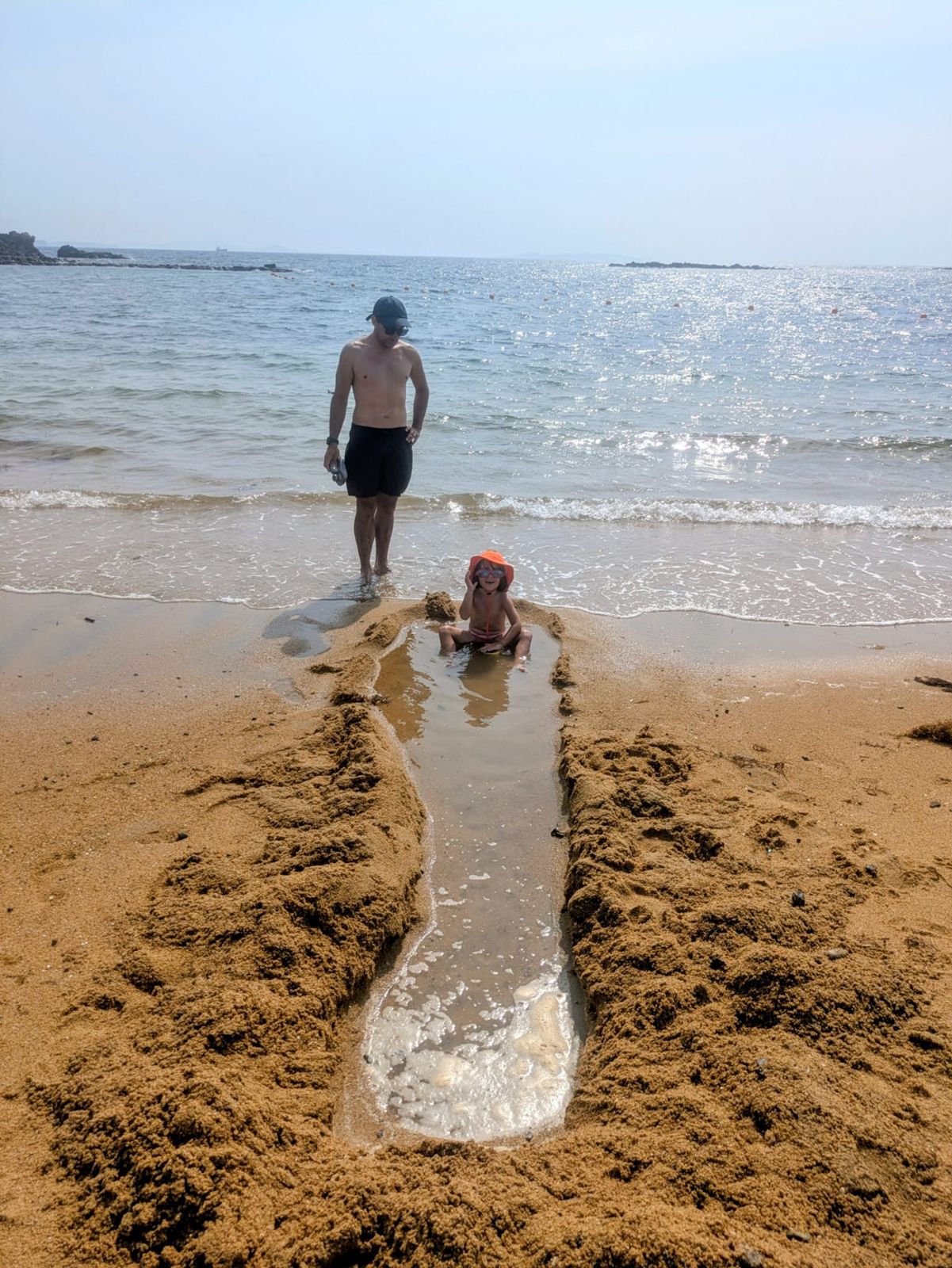
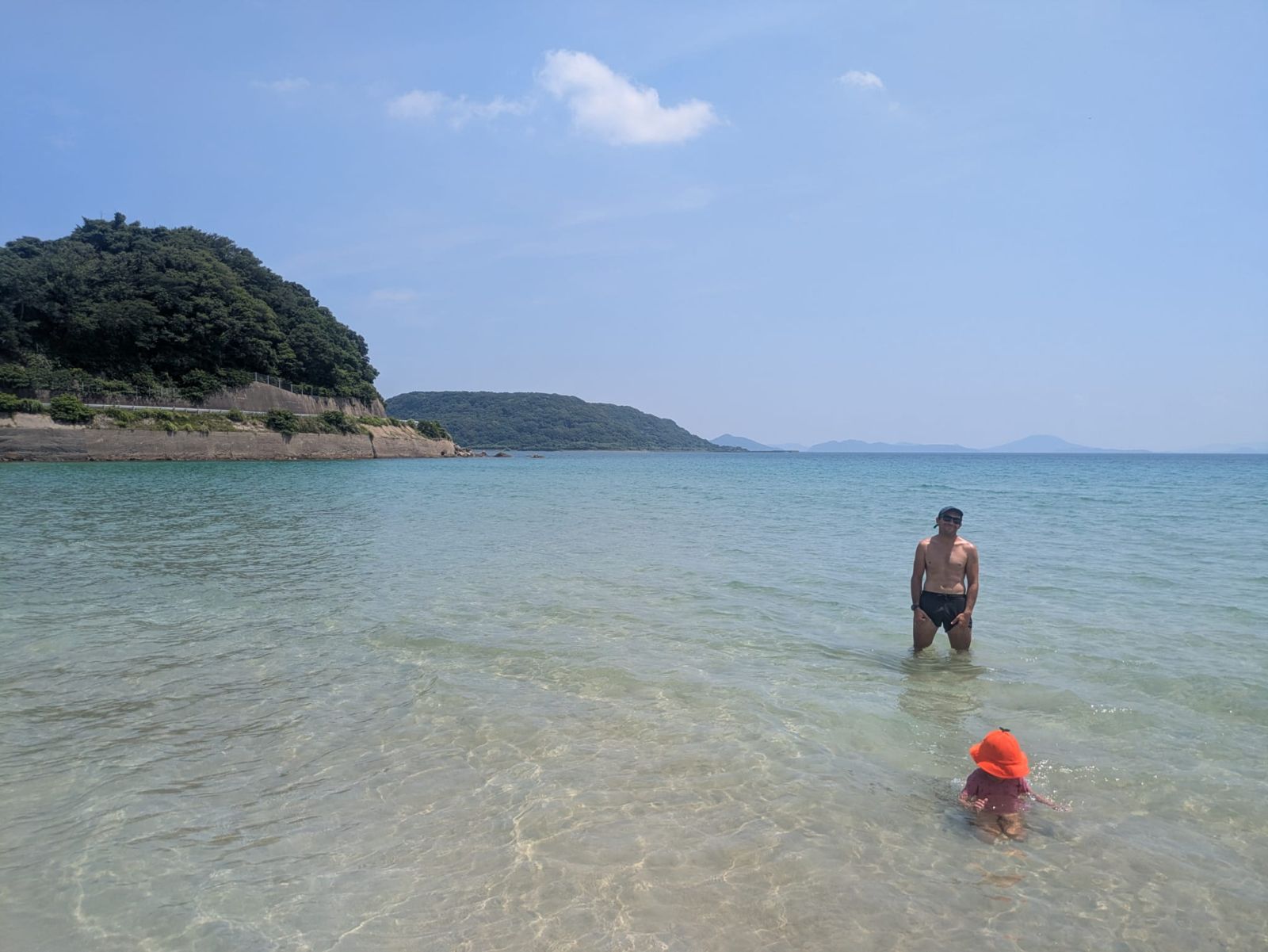
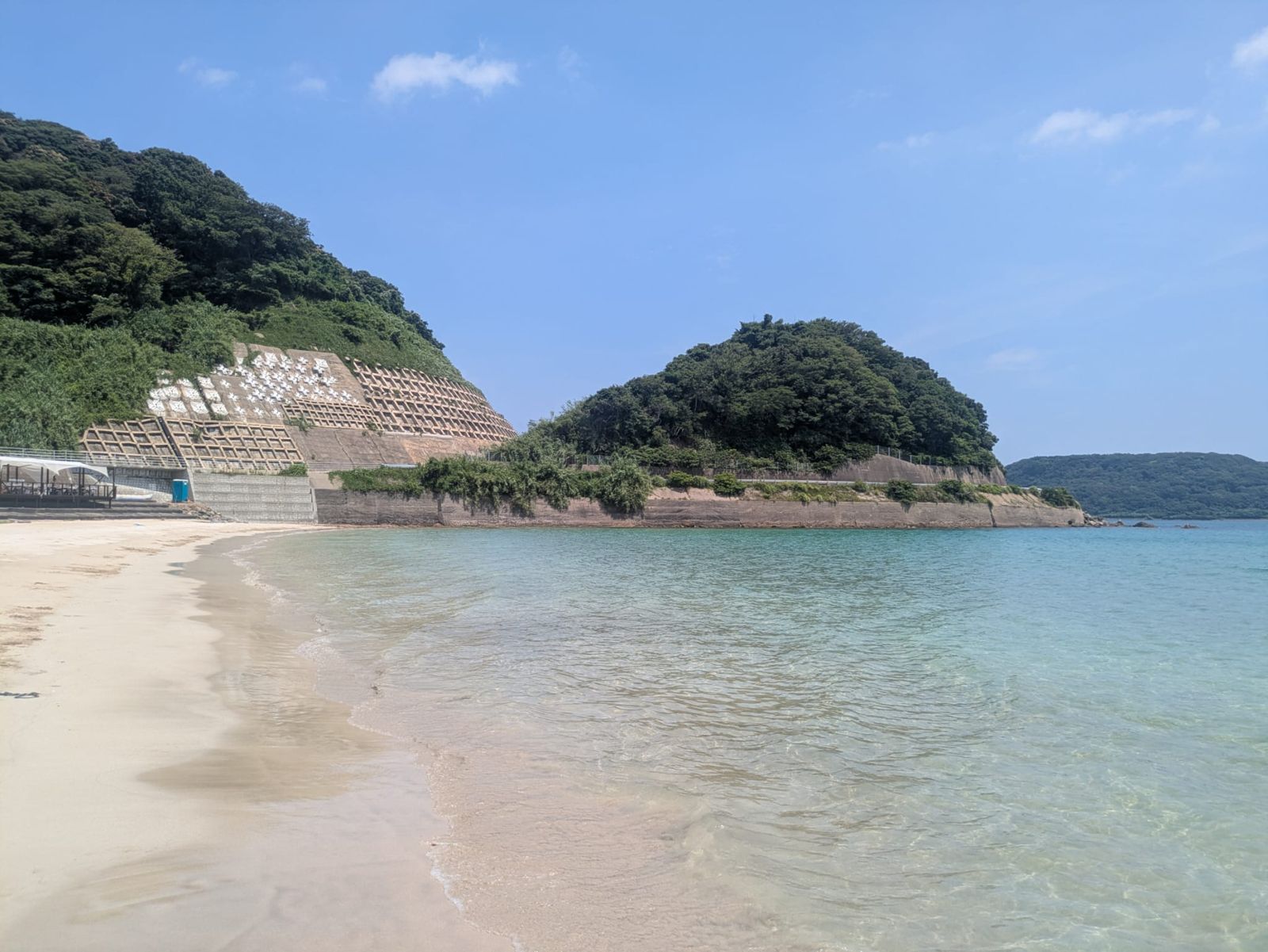
About fifteen kilometres on, we park our bikes and go down to a beach. It's splendid, worthy of the most beautiful postcards, and almost empty once again. We play in the water, very wary of the sun, whose UV index is much higher than our French sun (even in the south). Clémence is always covered in sun cream, even a T-shirt, and isn't allowed to take off her hat.
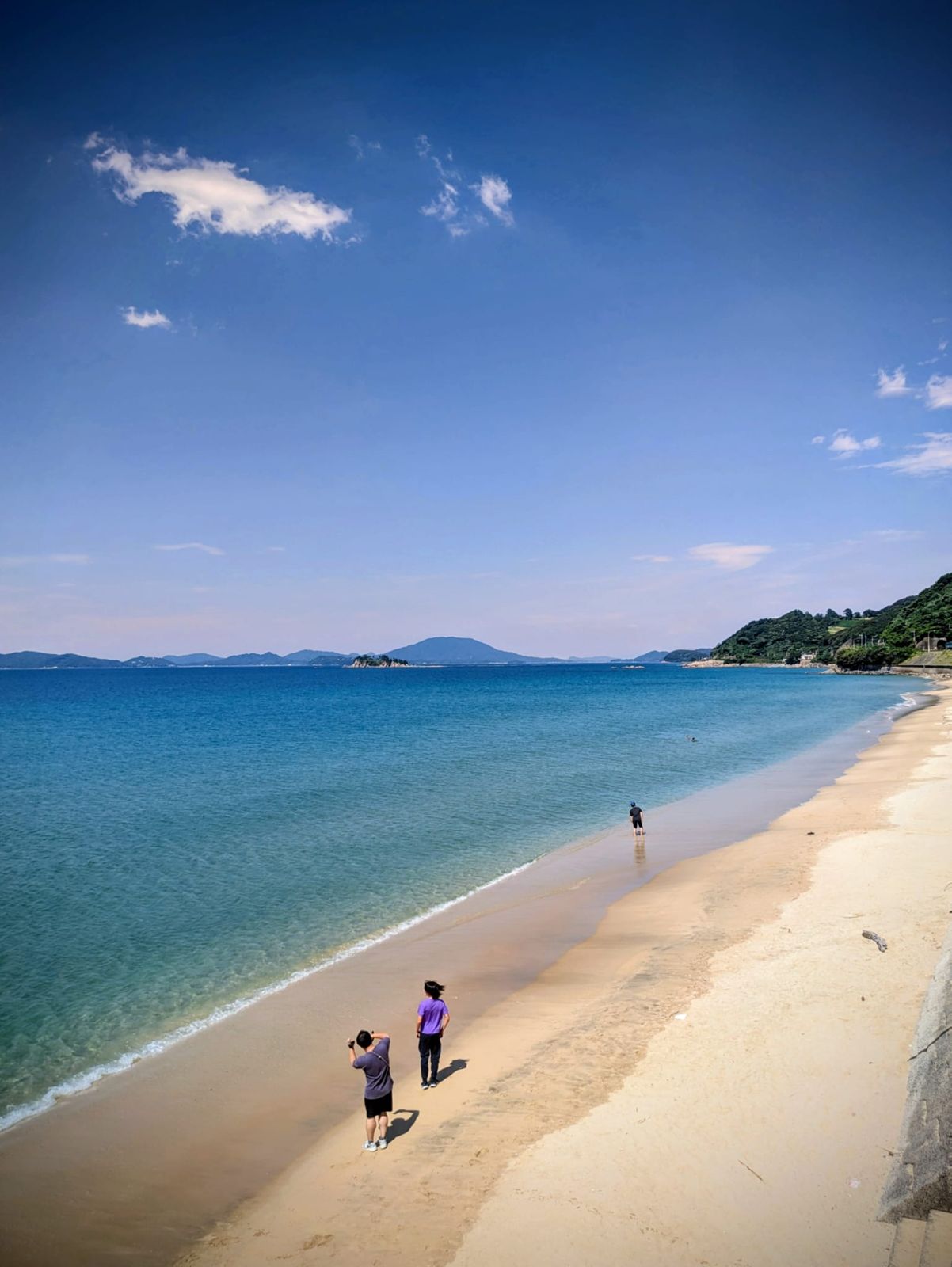
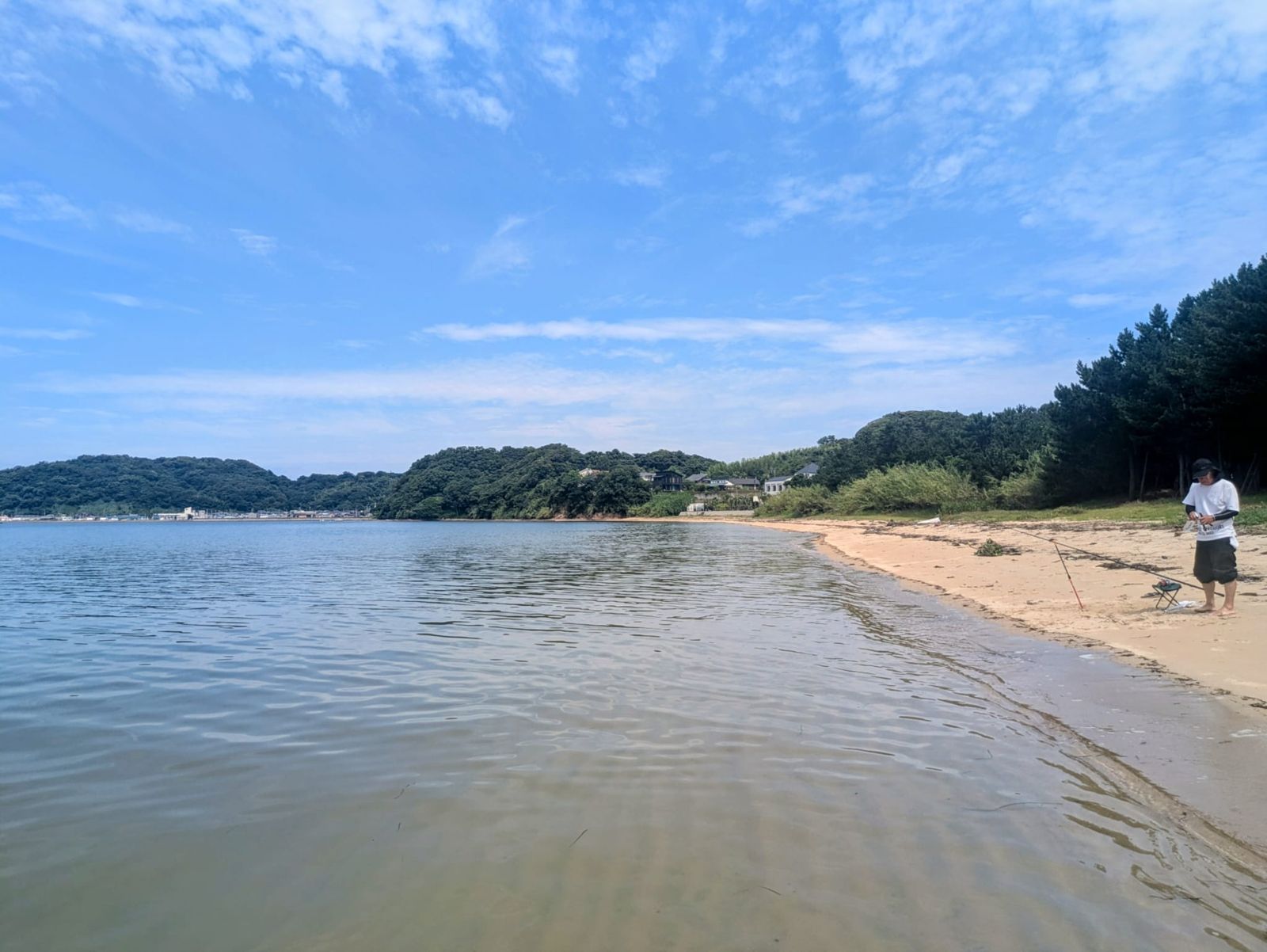
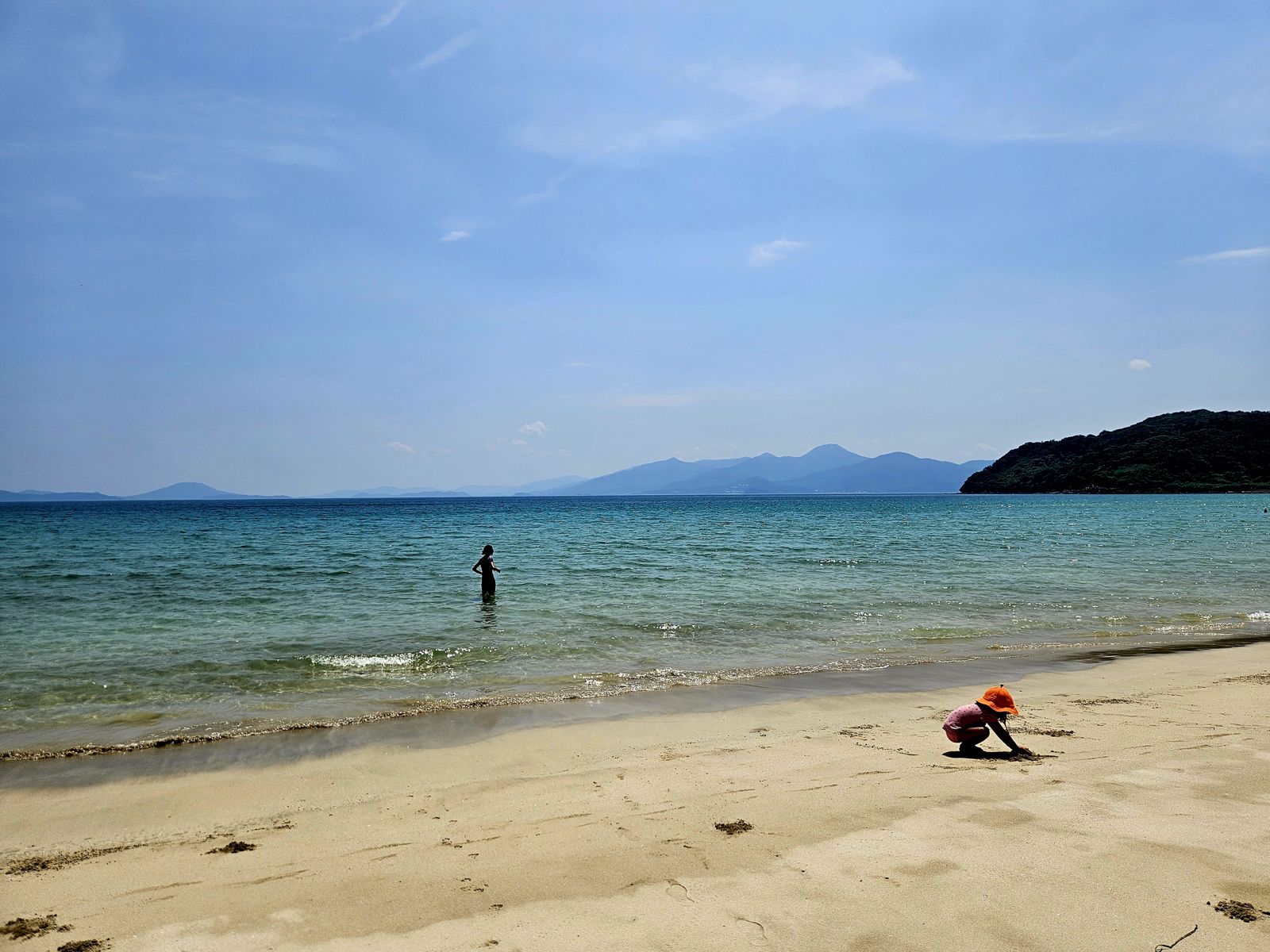
We get back on the tarmac for a supermarket stop. The meals there are of excellent quality at unbeatable prices. We also take the opportunity to fill our water bottles, as places to get water are cruelly lacking. Cafés are rare in this region and there's never a water fountain. So we fill our bottles at the sinks in public toilets, which, luckily, Japan often has. But the water isn't very cold, almost lukewarm.
The cycle route makes a detour via Cape Hado, and the road there is a string of tough bumps for the legs. The beach there is surprisingly ordinary and strewn with rubbish. We even find a huge stranded jellyfish and a dead fish. On our trip to Japan seven years ago, we were blown away by how clean the country was. But we'd stayed on the main island of Honshu and on the biggest tourist routes. Maybe this region of Japan is more rural, less populated and therefore less maintained? In any case, it does the job for cooling off and a break for games and a snack.
Only 7 km left to tonight's destination, a small traditional Japanese inn. 7 kilometres we really feel, as we do almost nothing but climb. The scenery is splendid, as we're in rice-paddy country. We end up dropping almost to sea level to reach the little port where our inn, called a "ryokan" here, is nestled. This most typical form of Japanese accommodation has a set of shared features: tatami floors, futons, private shared baths (sometimes outdoors), yukata (summer kimono), a sumptuous multi-course homemade kaiseki dinner and a traditional Japanese breakfast.
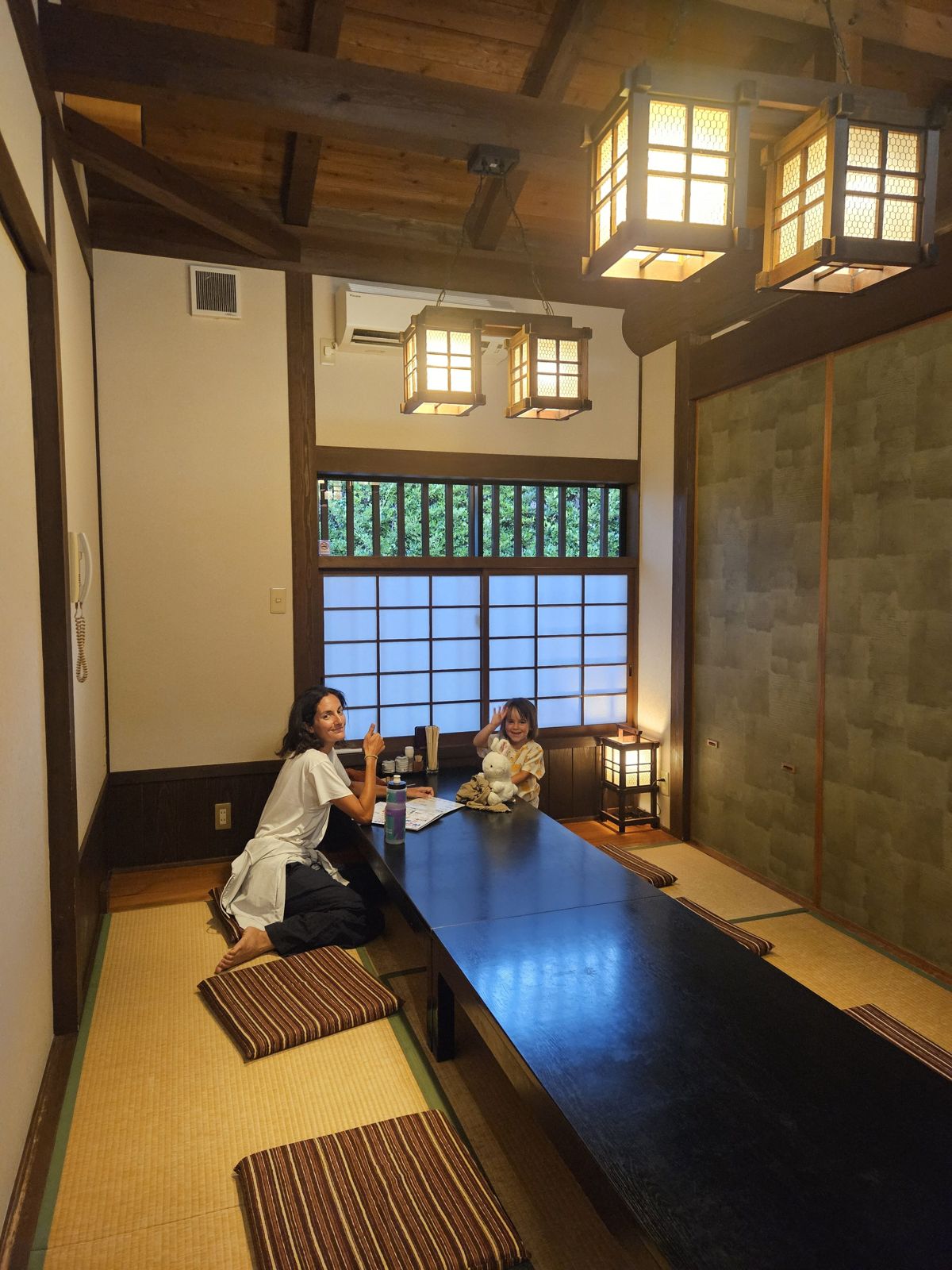
We haven't taken the dinner option tonight, but we have taken breakfast, so we'll tell you what a proper traditional breakfast is like. The lady who welcomes us doesn't speak English, but we still manage to understand each other enough to get to our room. The inn is on two floors with gorgeous varnished wooden floors. After a shower in the shared baths, we go to another traditional Japanese establishment to eat, an izakaya. You eat sitting cross-legged in little rooms separated by sliding doors. The meal is hearty and affordable, which delights all three of us after a big day on the road.
On the road