 ← PreviousWhen the bike becomes a burden
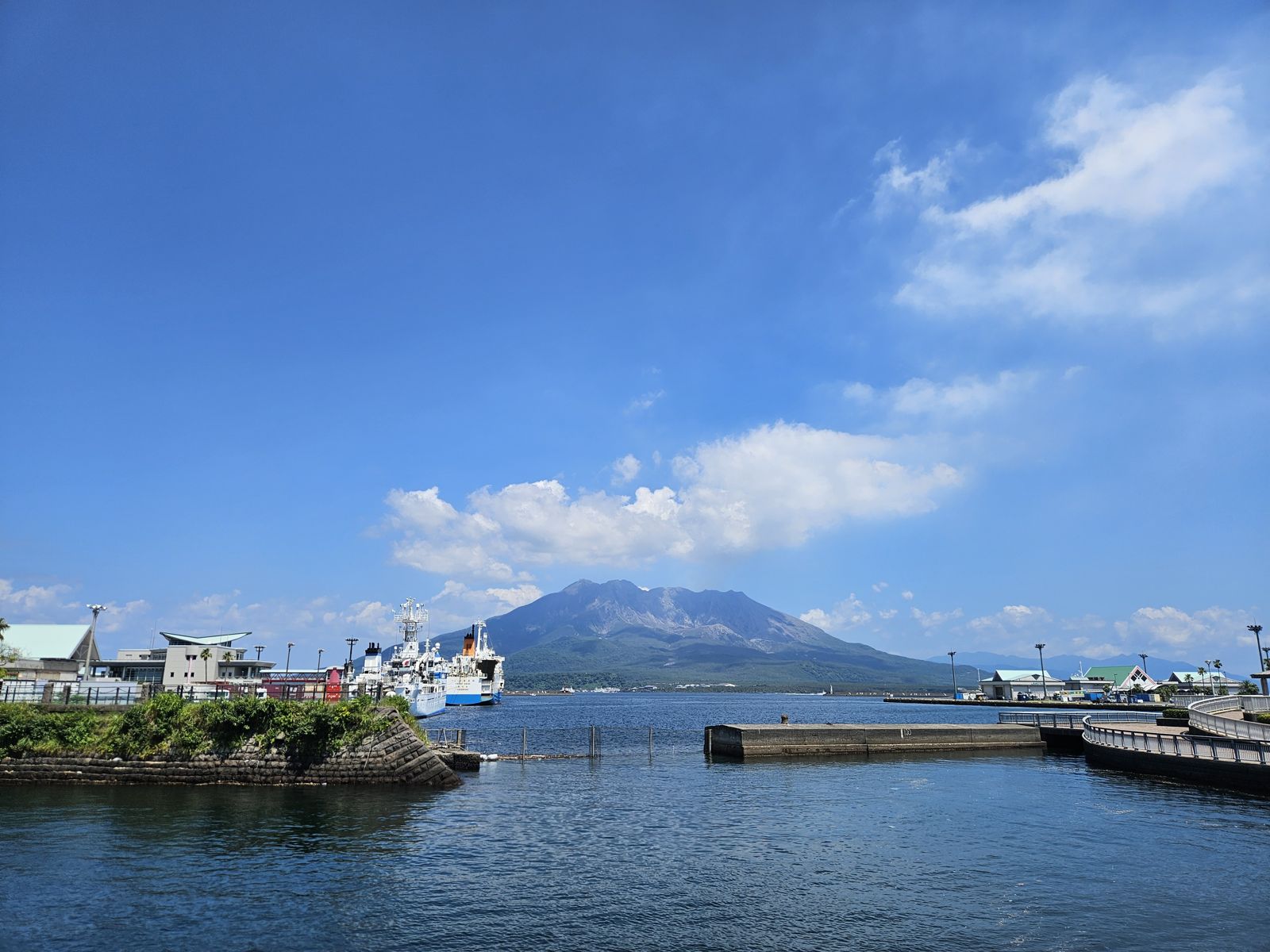
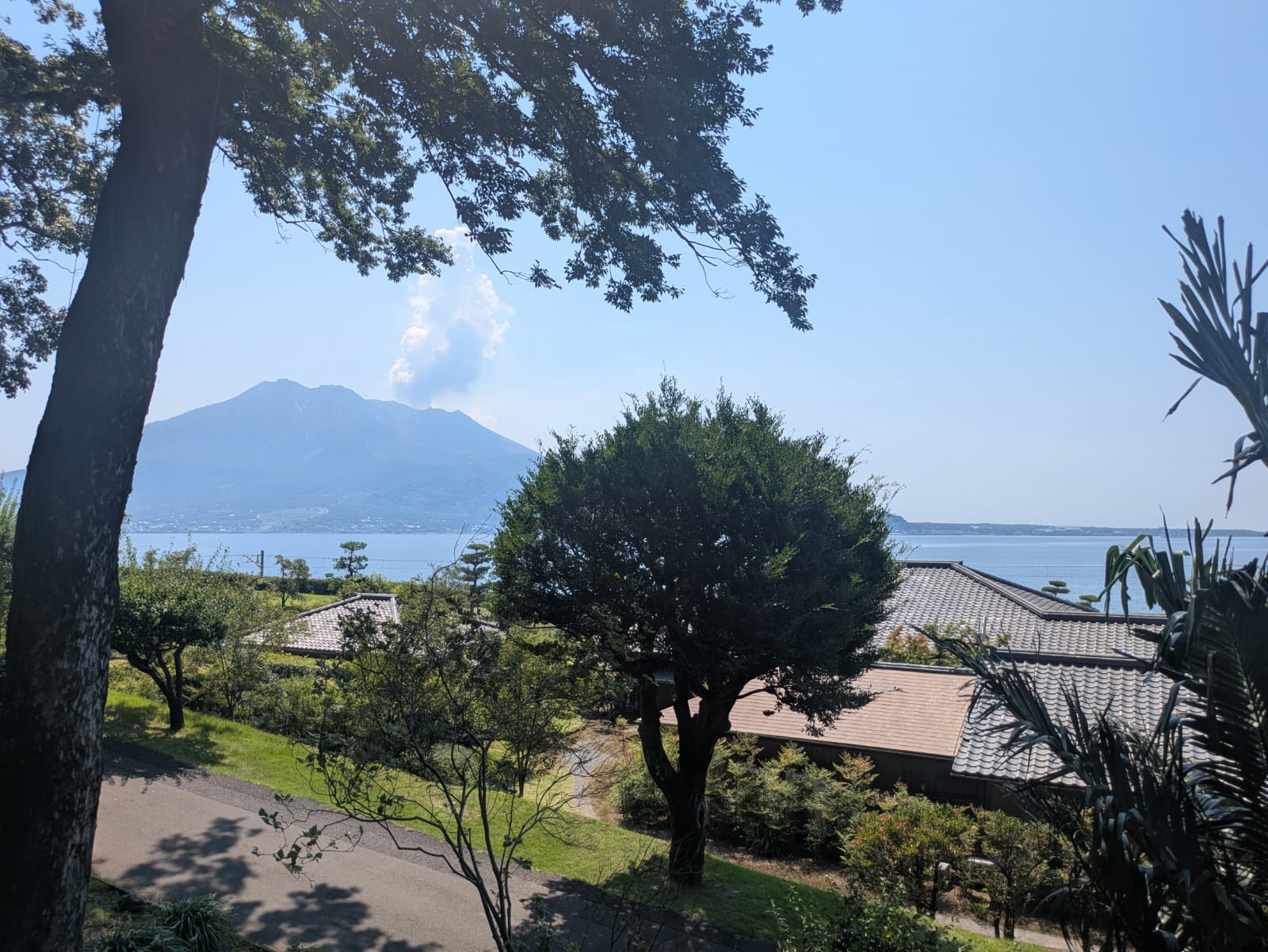
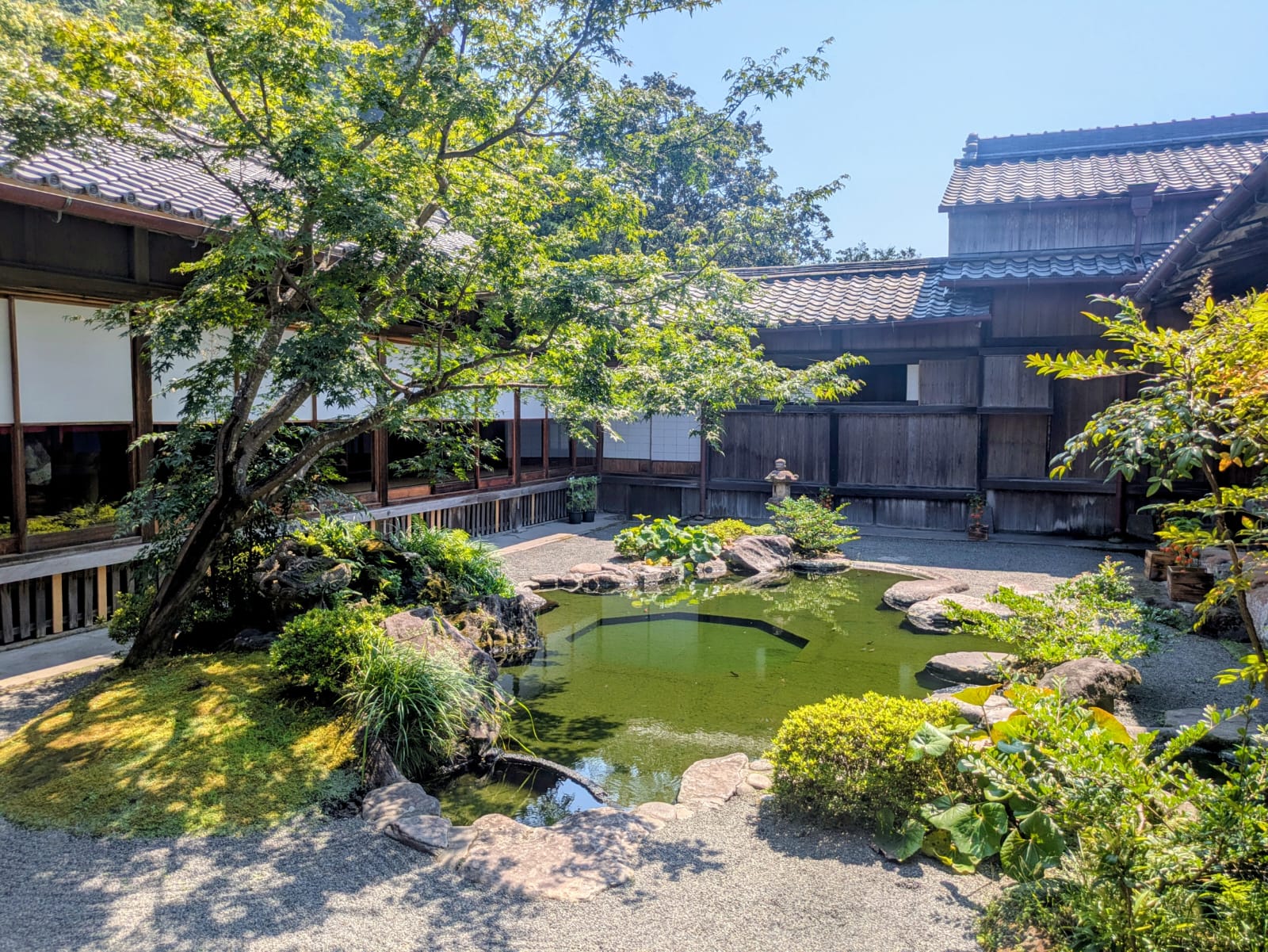
Once again, we've completely lost track of the days of the week. It takes us a while to work out why Kagoshima station is so empty as we go to catch the train. Of course, it's Saturday! We board a tiny train to Sengan-en, only 10 minutes from the city centre. It's home to one of Kyushu's must-see historic sites, Sengan-en garden. Built in 1658 by the Shimazu clan, this magnificent Japanese garden has tropical plants and a stunning view of the Sakurajima volcano. The Goten villa, the former residence of the Shimazu clan, is also worth a visit to understand how the local aristocracy lived. We learn that royals from several countries, including Nicholas II of Russia and Edward III of England, visited this typically Japanese house and were amazed by its design and comfort.
In their memoirs, they all say they were impressed by the cleanliness of the place, the ingenuity of its installations and the geometric beauty of the garden. As early as the end of the 19th century, the house had electricity thanks to a hydroelectric installation. We enjoy walking around all the more as it's intensely hot outside. The view of Sakurajima is spectacular. We see lots of foreigners, especially Chinese visitors.
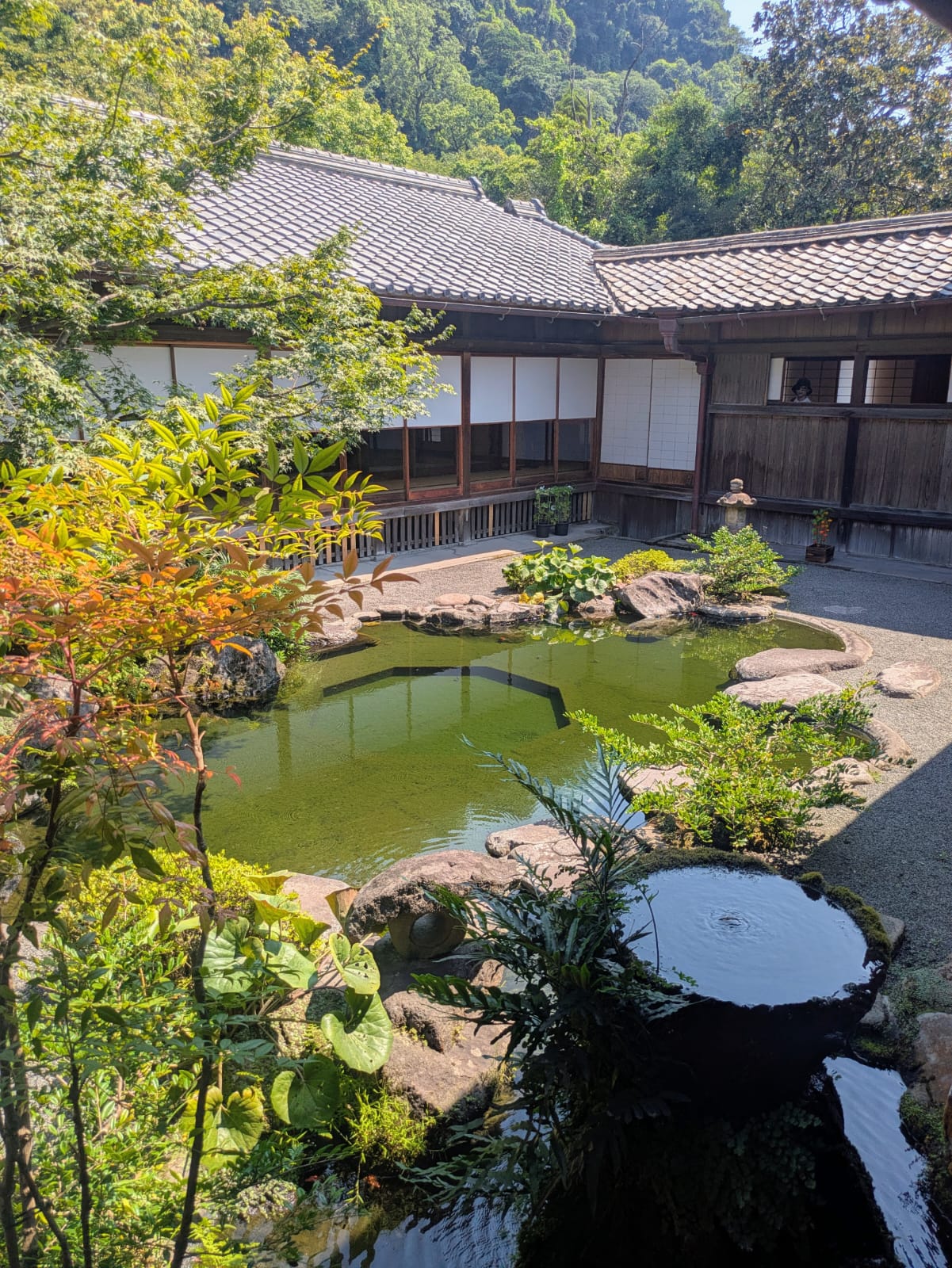
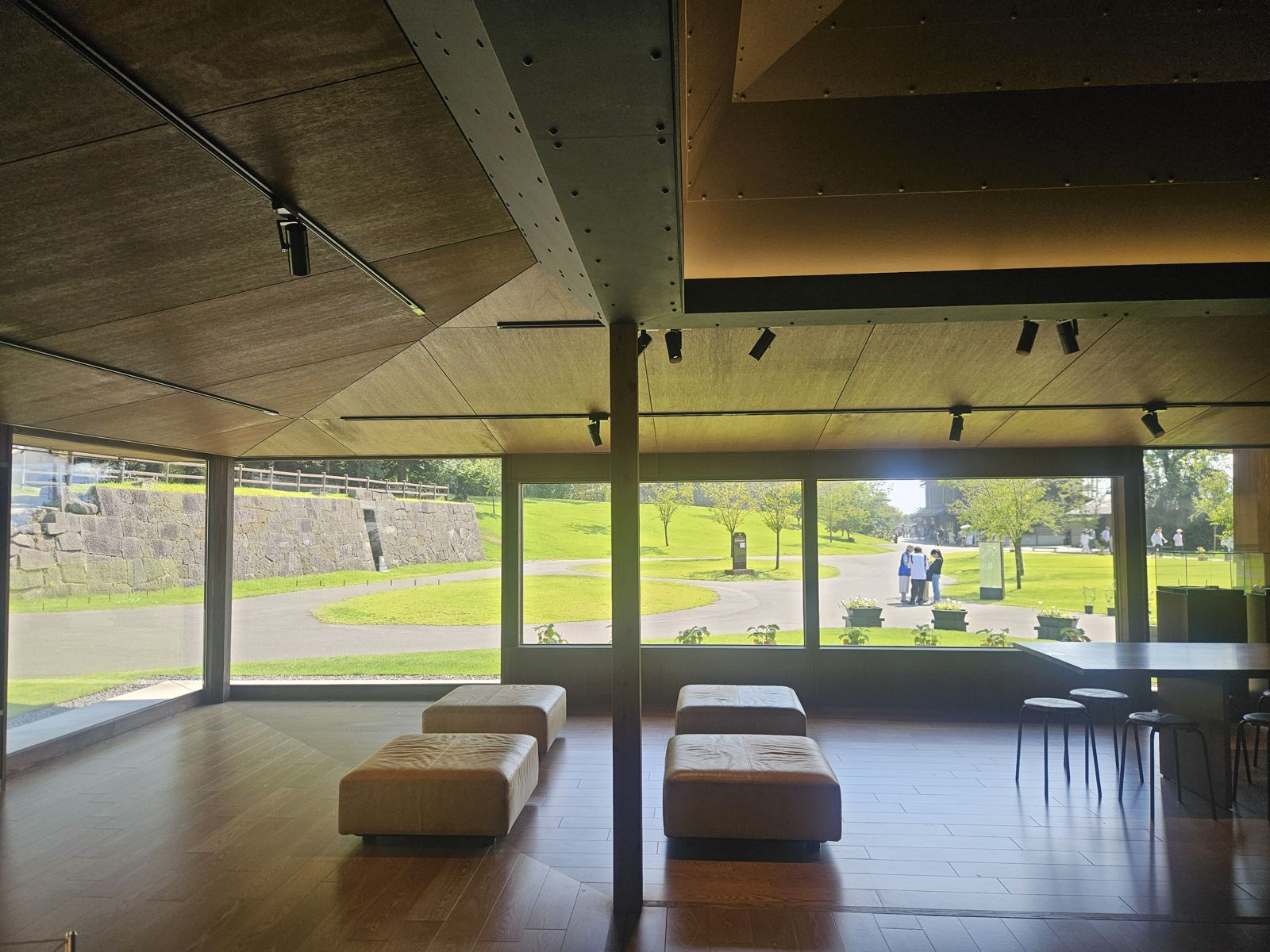
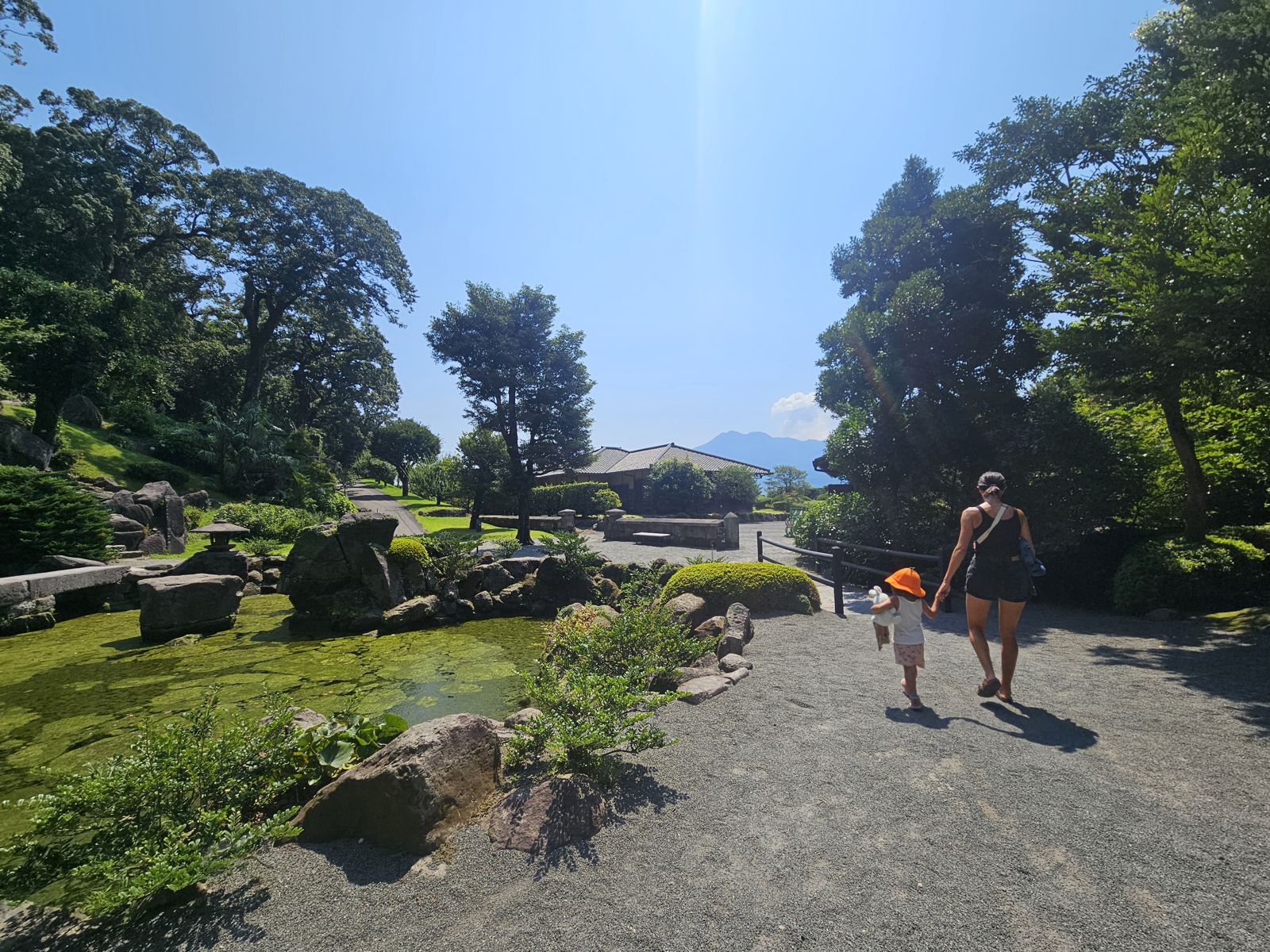
We buy food at the convenience store just opposite and make the most of the air conditioning to feed Clémence inside, in a corner. Well, until a staff member comes to chase us out, saying it's forbidden to eat in the store, even standing up. So much for hospitality… Unlike in Korea, Japanese convenience stores don't let you sit down to eat. You buy your meal, heat it up if needed, and leave. That's why, in every convenience-store car park in Japan, you'll always see several cars parked with the engine running and their drivers sitting inside eating with the air con on full blast. It's already suffocatingly hot in car parks and this only adds to it. Individualism pushed to the extreme will never stop surprising us.
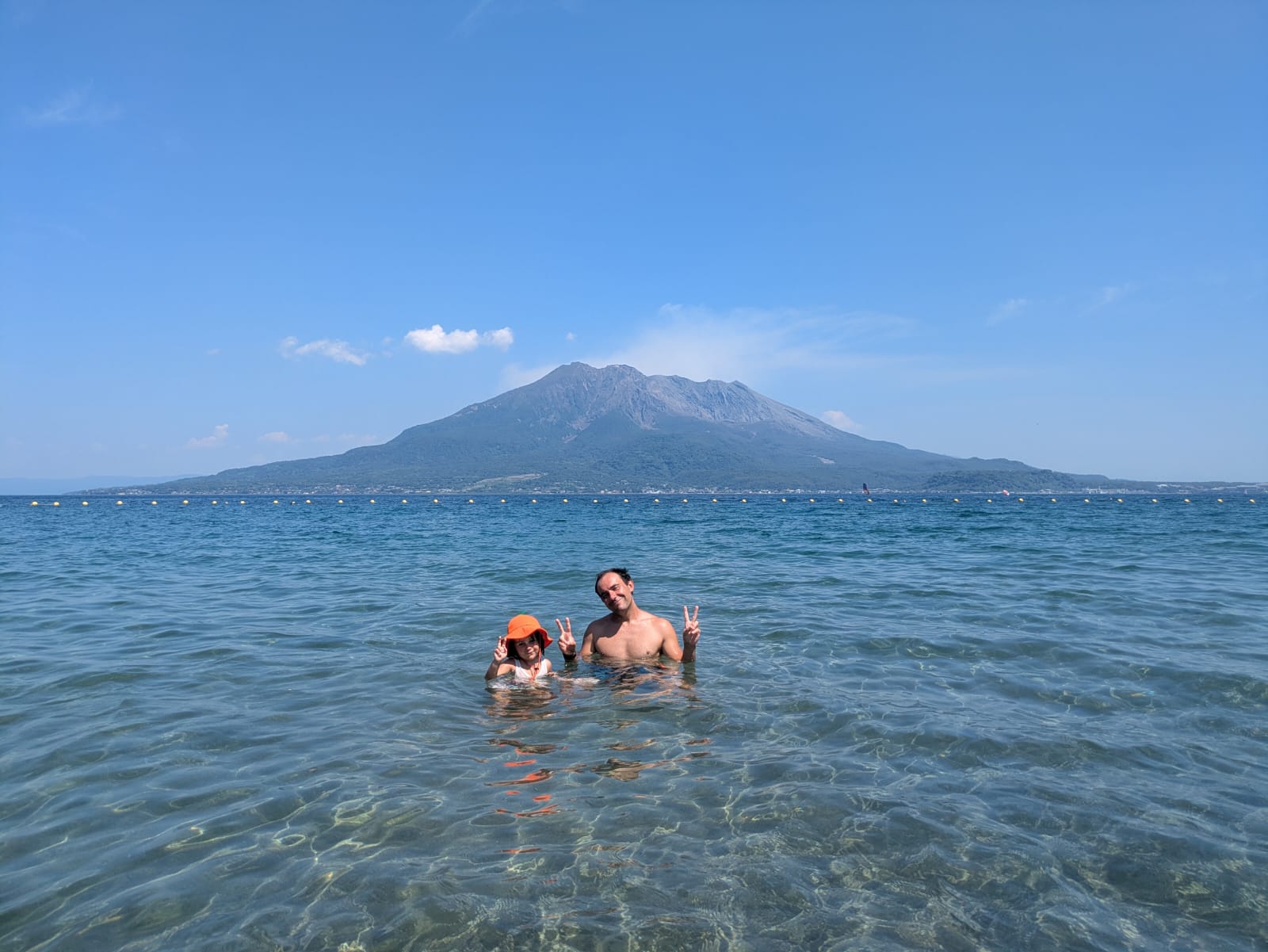
The road between the temple and the beach opposite is part of the cycle route suggested by the Kyushu tourist office. But we really don't regret leaving our bikes when we see the traffic. It's constant, even completely gridlocked, with buses and lorries, and we really can't see how we could have ridden safely among all that. That's what we notice crossing over to the beach. It beckons, and we're soon in the water. As always, we breathe better with our feet in the water and the wind sweeping the sand.
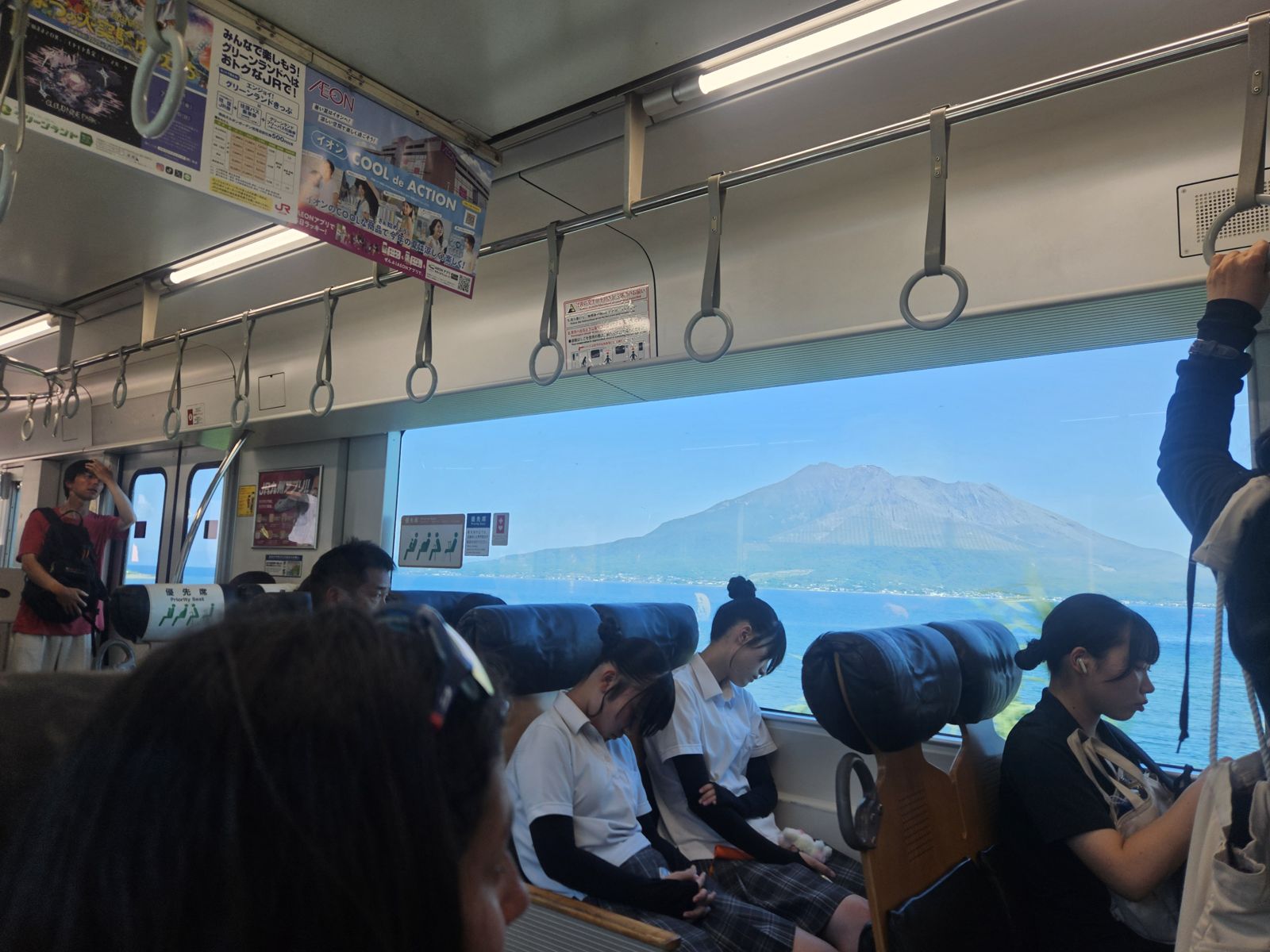
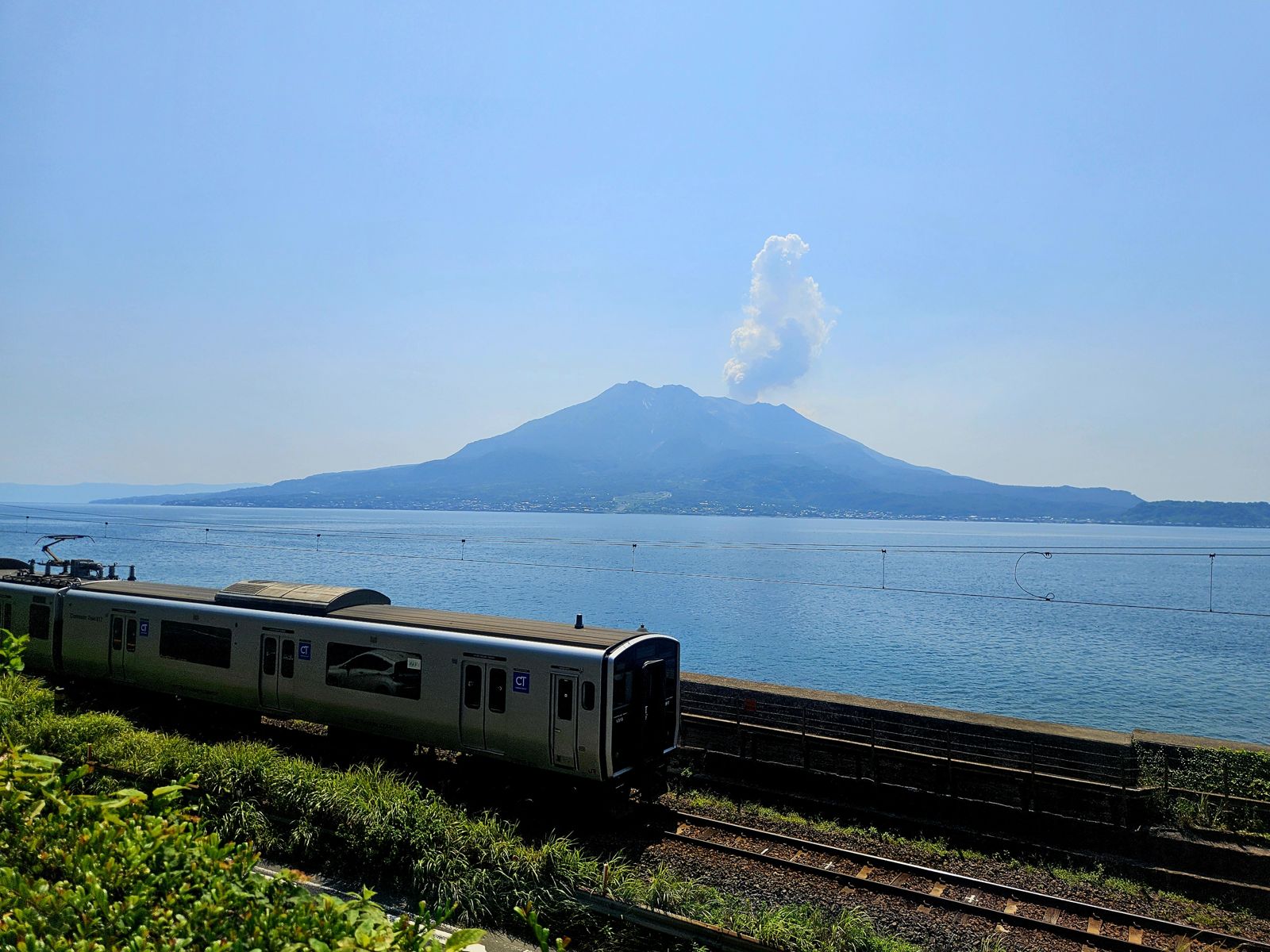
It's Saturday and few trains are running. We leave at three, also to avoid being in the sun too long. Over our afternoon snack, we look for our stops for the next few days. Tomorrow we'd like to go north of Kagoshima to Kirishima-Kinkōwan National Park, Japan's oldest national park, which has more than 20 active volcanoes of various shapes, earning it the nickname "volcano museum". But unlike Korea, getting around Japan by public transport is complicated once you leave the big cities. Of course the country has a fantastic rail network between the big cities (especially on Honshu, so not where we are), but as soon as you want to reach an isolated spot or a less populated area, it's an instant headache. Buses are infrequent, when there are any, and we tie our brains in knots wondering whether our buggy will be allowed on board. During this trip to Japan, we've lost the feeling of freedom that comes with bike travel, and we're starting not to enjoy ourselves at all.
Sunday 3 August
It's Sunday today and few trains are running. We can choose to wait two hours either before our train or after it, before taking a little country bus. Since there's a playground nearby, we leave the flat and take Clémence to play. It's not too hot and there's shade, so it's perfect. When it's time, we go to buy our train tickets at the central station. As usual, we find our stop on the big information board, note the fare for that section and buy two tickets for the amount shown.
But once on board, the conductor tells us we have to pay more. We don't really understand why. Using Google Translate, he explains that we did buy the right ticket, but that on this train, an "express", you have to pay an extra €4 per adult for the seat. Nothing is ever simple. Luckily this is Japan and we know people are unfailingly honest, because in any other country we'd have thought he was trying to scam us.
After barely an hour on the train, we arrive at a tiny station where we still need to take a bus for a ten-minute ride. But you can't buy a single ticket; you have to buy a day pass. So instead of costing a hundred yen or so like a normal bus, it costs more than 1,000 yen. Seeing some taxis waiting, we ask their fare, and it turns out to be the same. So we go with them; at least we're sure our bags and buggy will be accepted.
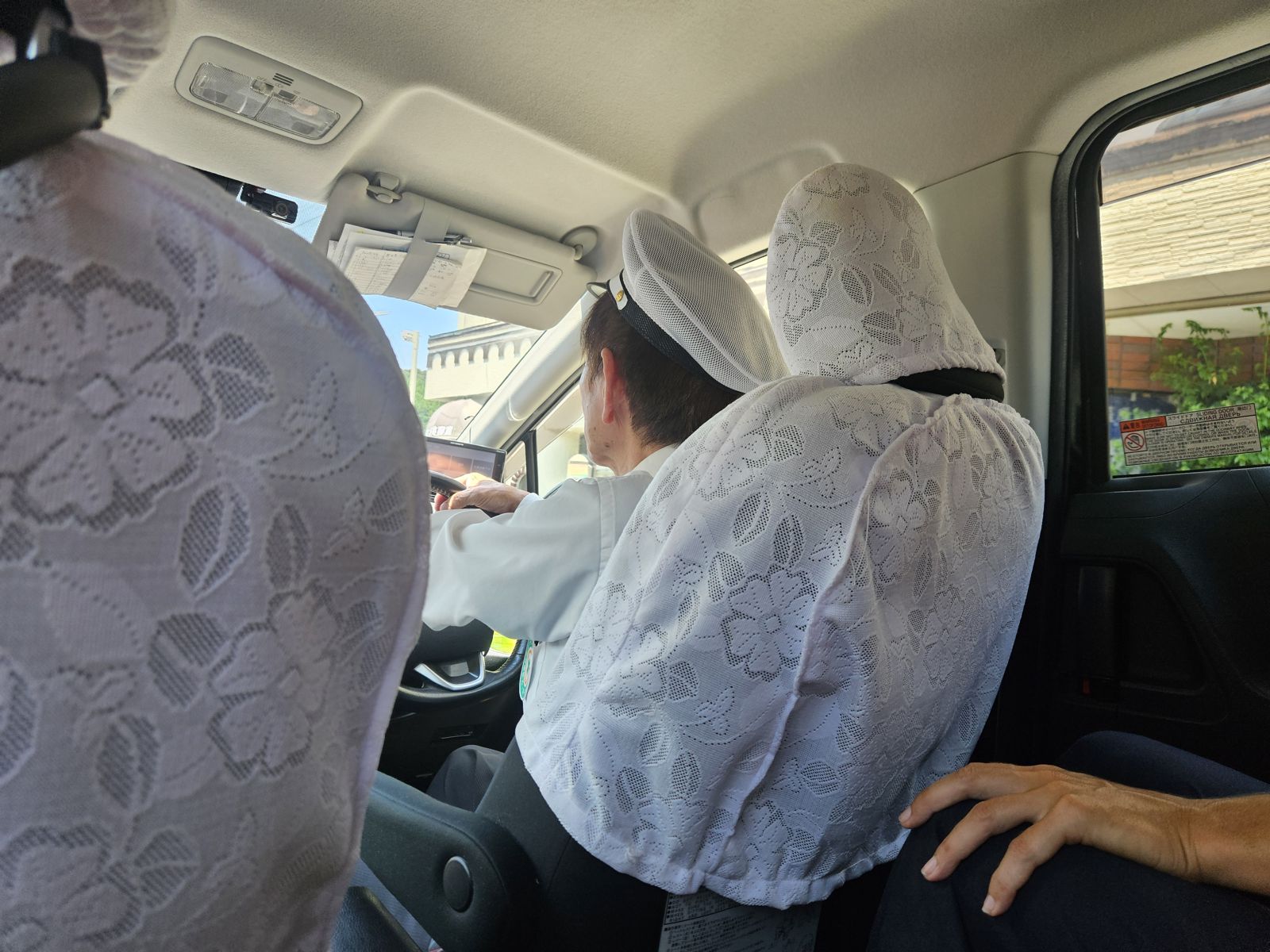
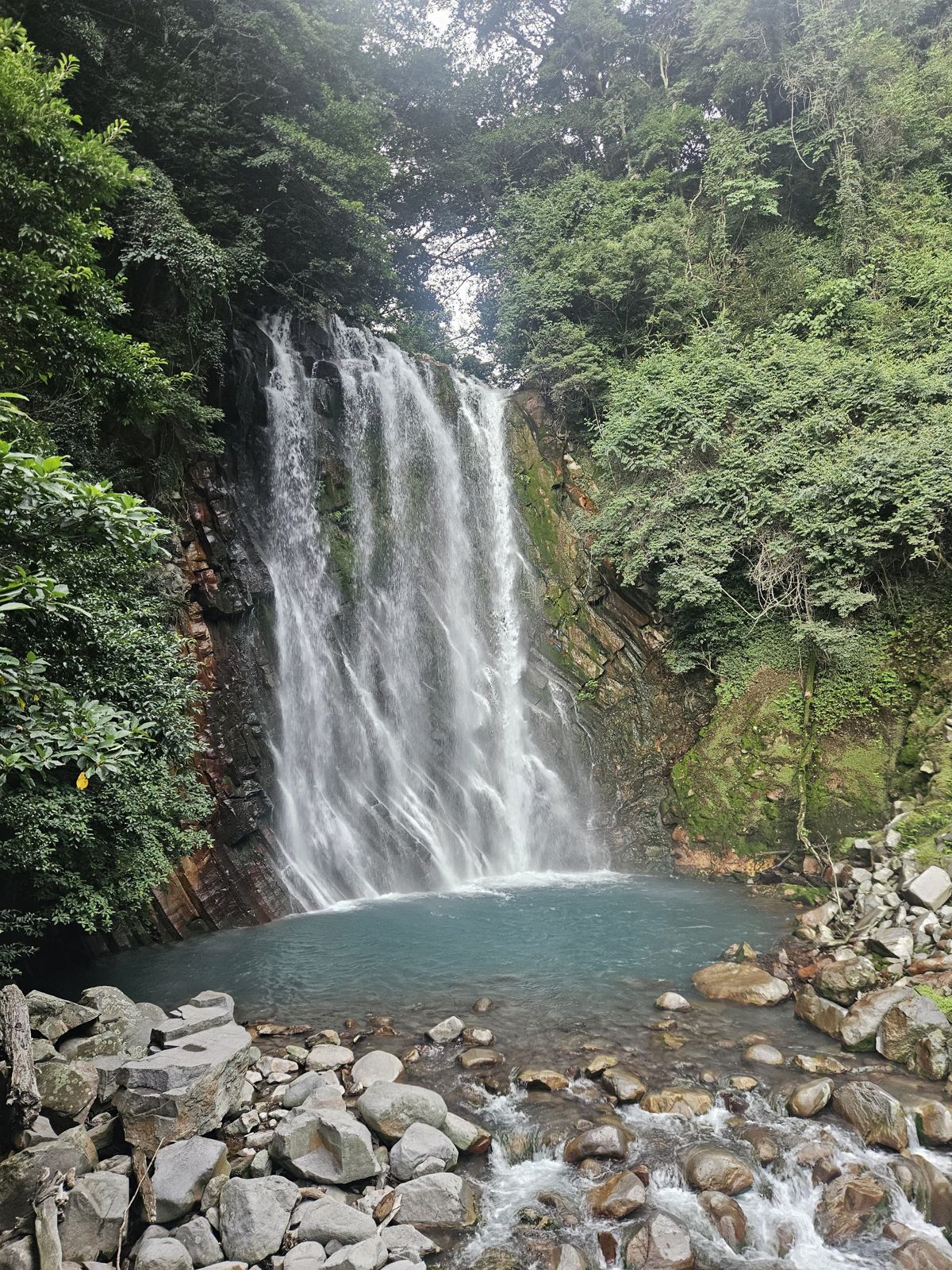
At Kirishima shrine, we get out of the taxi to drop our bags at the inn just opposite, where we're spending the night. It doesn't look like much: the hotel is very ugly and the walls are all peeling, but that doesn't mean the inside isn't fine. In Korea especially, rooms were often incredibly clean and spacious even when the outside of the hotel looked very uninviting. We start exploring the area with Kirishima-jingū, one of Japan's oldest and most visited Shinto shrines. It has a superb bright-red façade and detailed colourful carvings that contrast with the lush nature. We then take a little nature trail past pretty waterfalls and small gorges before going back to our inn to settle in.
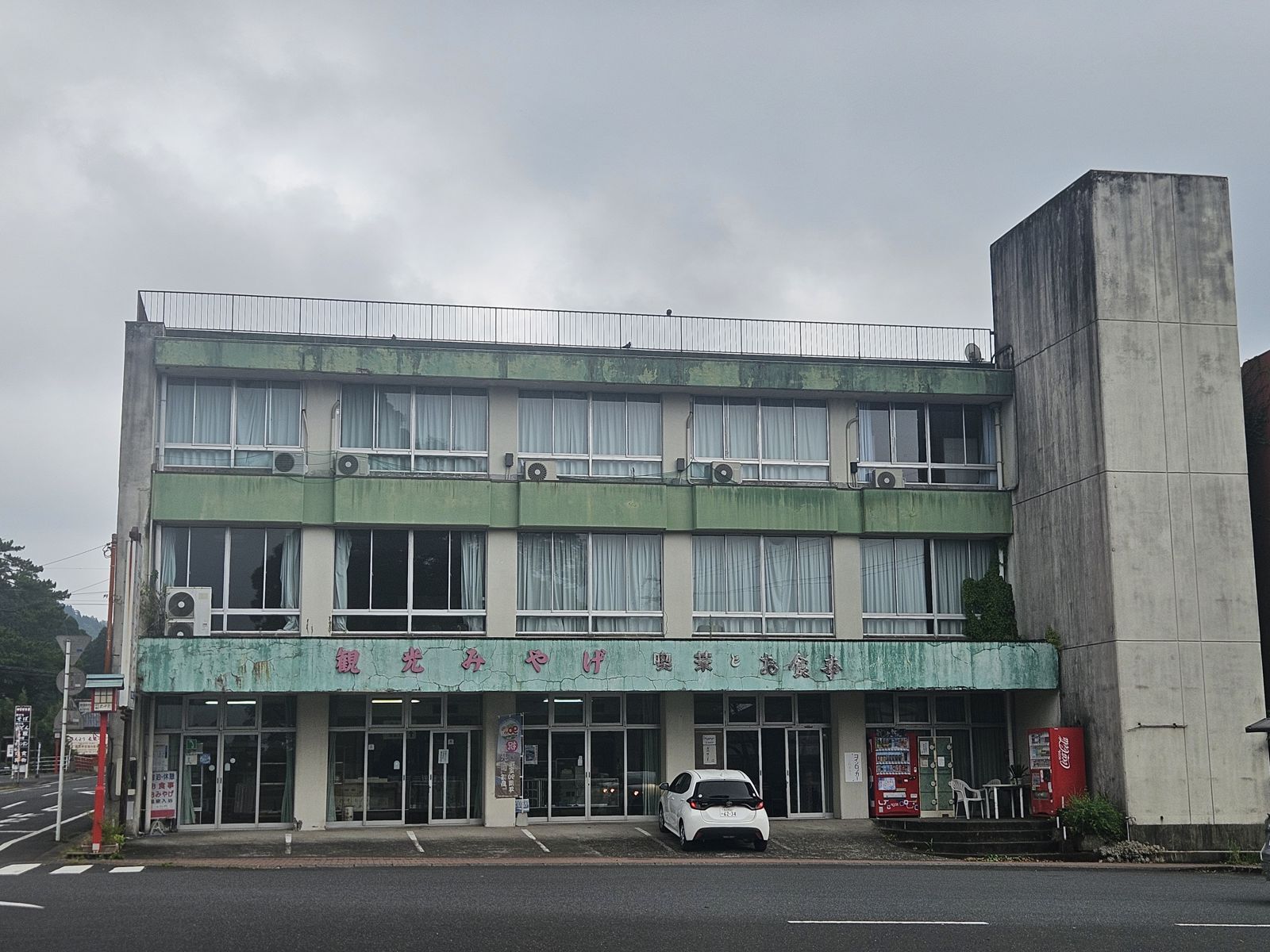
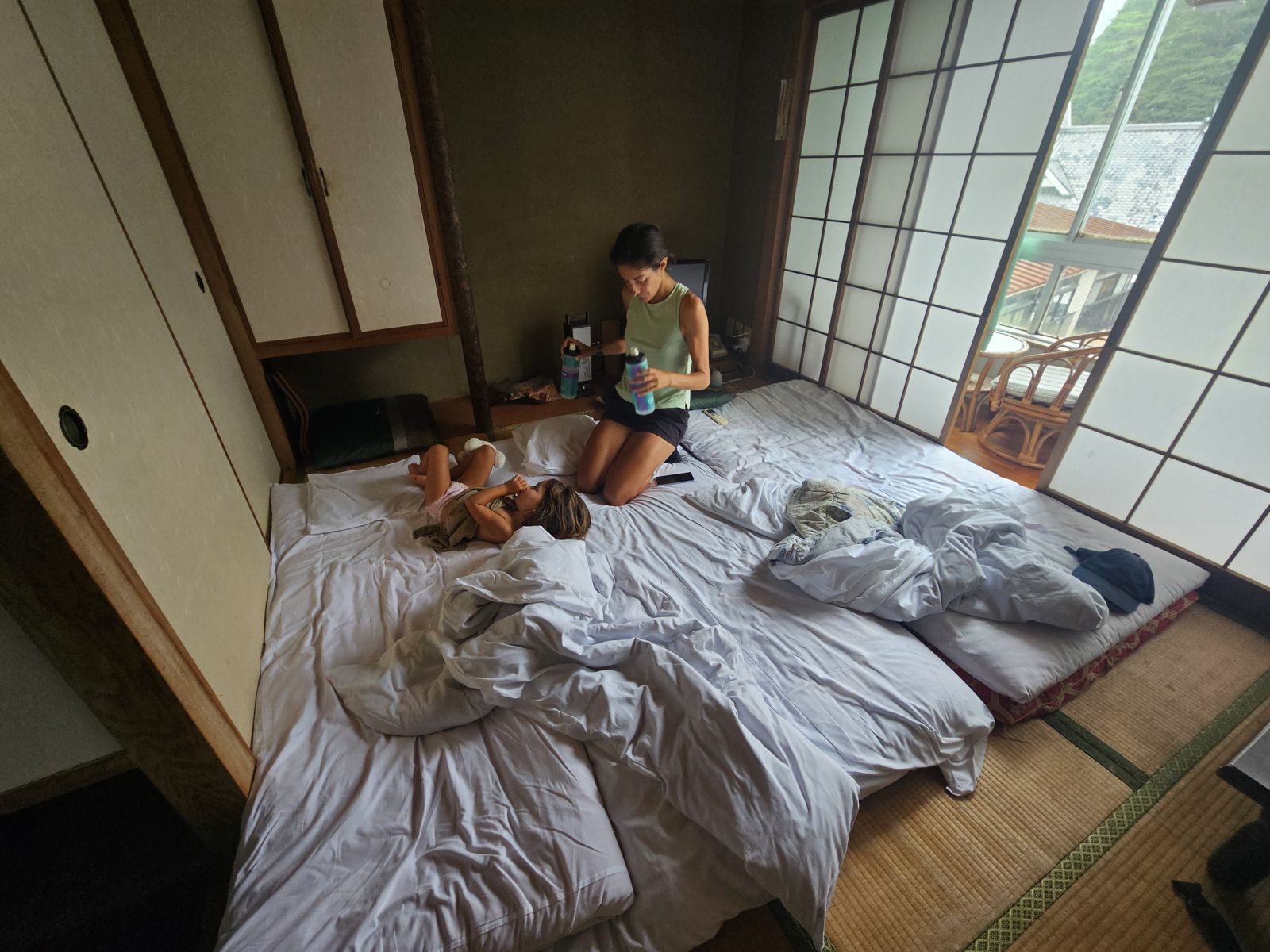
And the least we can say is that first impressions were right. The hotel is very run-down, dirty and poorly maintained. There are cracks in the walls, dust everywhere, and on top of that it reeks of sulphur. We're in a volcanic region where every hotel has its own onsen fed by volcanic water. Fortunately the room itself is acceptable. We try not to pay too much attention to the stains on the ceiling and the dust bunnies. A bit of a bitter pill when you know you've paid €50 for the night, but that's the reality of tourism in Japan: luxury hotels at unaffordable prices reserved for a privileged few, a big mass of hotels at around €100–300 a night, so not affordable for many people either, and shabby hotels for those who can't afford better, without them necessarily being cheap.
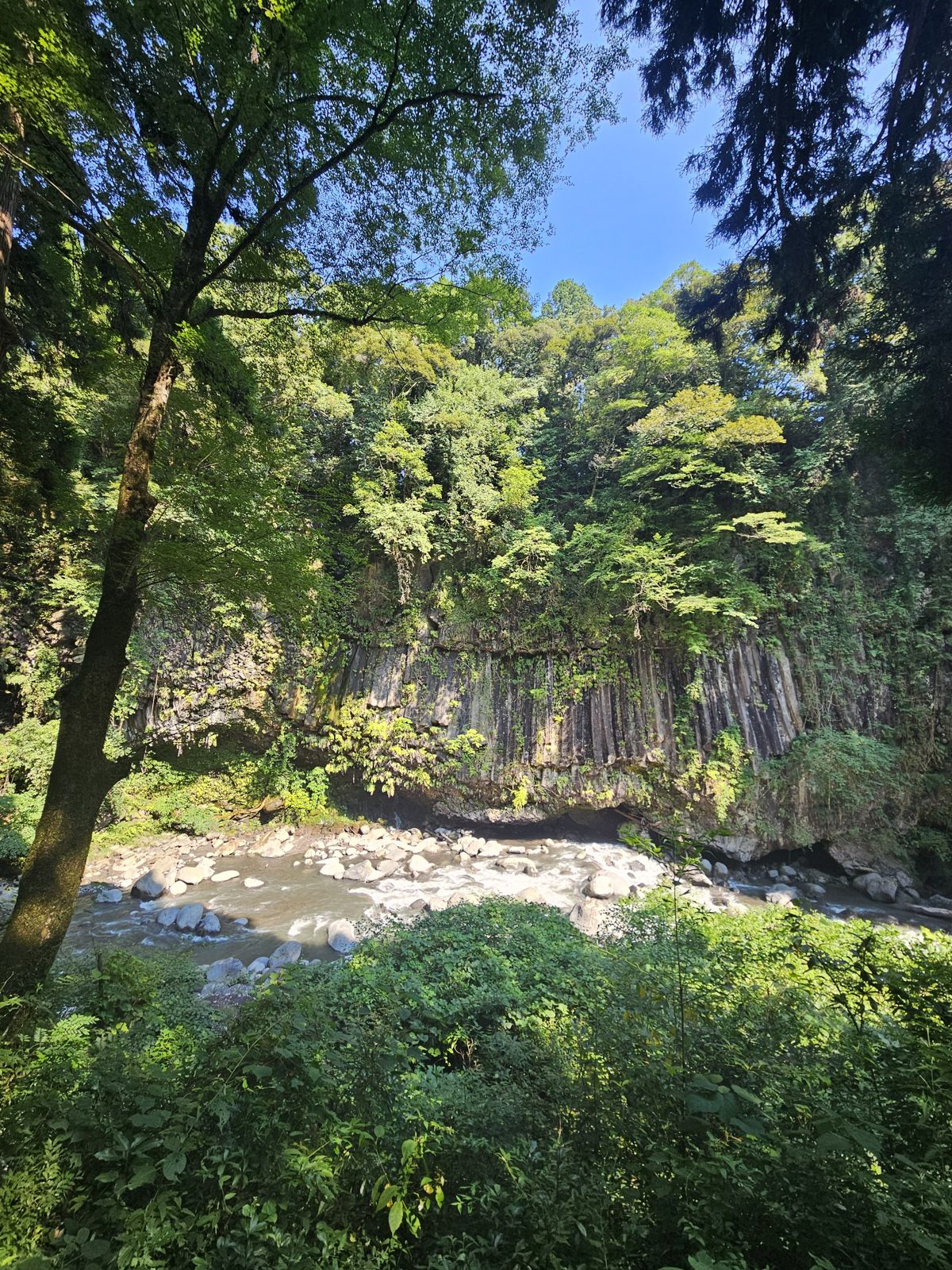
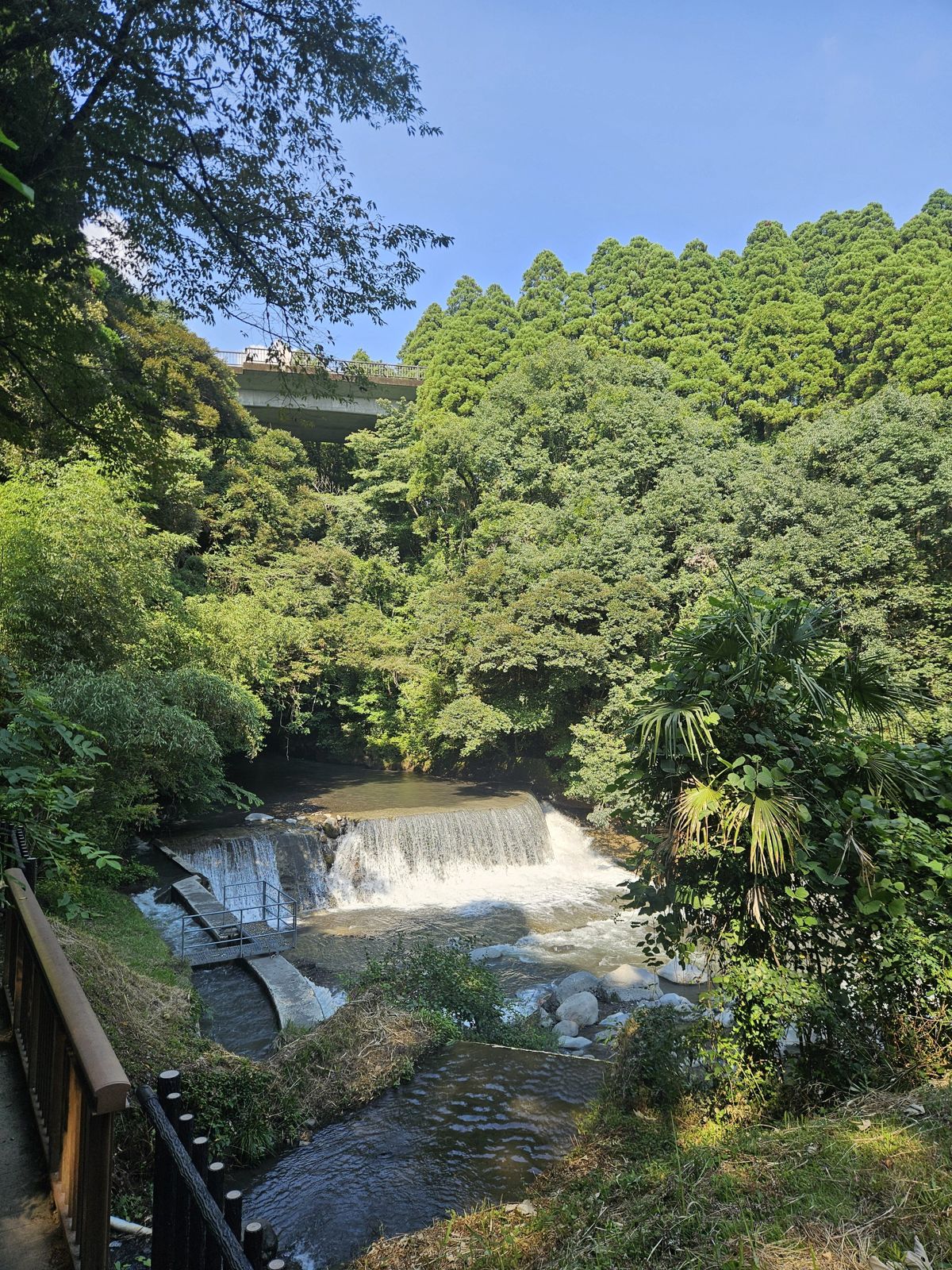
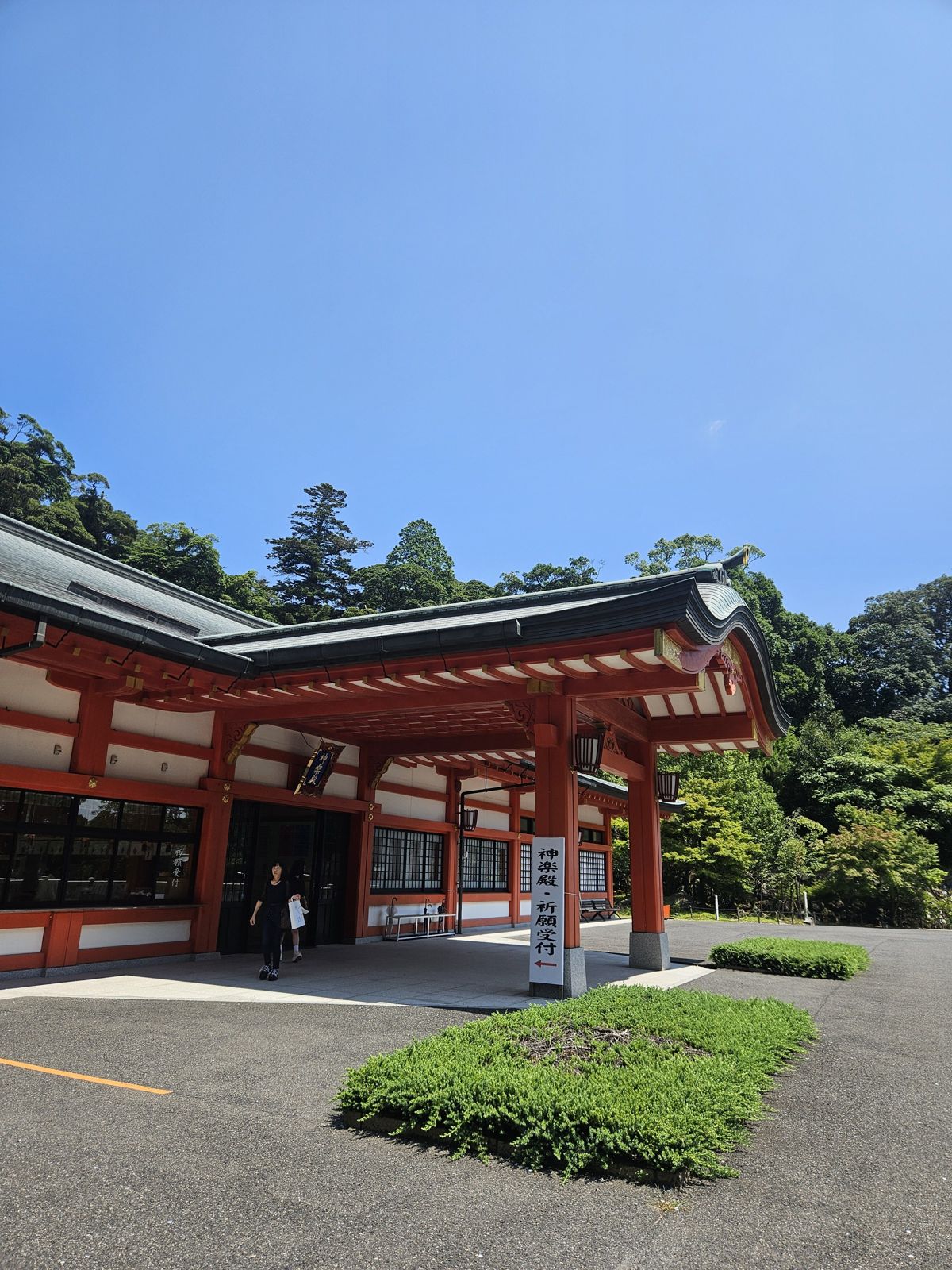
The little town is deserted. It must have seen tourism in the 90s, but everything here breathes decay. We see lots of ruined houses and dilapidated places. Luckily a small izakaya is open and the owner is very friendly. We eat simple food in generous portions, but when it's time to pay we see there's an extra 1,000 yen on the bill. We think it's a mistake, but no: she explains we're paying a 500-yen seat charge per person. We're starting to get fed up with hidden charges, because for 2,000 yen of food, we're paying half as much again in unannounced fees.
To make matters worse, we find cockroaches in our room when we get back to the hotel. We're not fussy, but the prospect of sleeping on the floor with these creatures doesn't appeal. We go down to reception and ask to change rooms. The owners are an elderly couple who seem overwhelmed by running this huge hotel. It too must have had its heyday thirty years ago. But today it smells bad and is full of dust and rust. The old couple are kind, though, and you can tell they're doing their best. The woman checks a room from top to bottom before offering it to us. We don't turn up our noses and sleep in it.
Monday 4 August
After dozens of sneezes because of the dust, we wake up at a reasonable hour. With breakfast eaten in the room, we catch the 10:04 bus to the Maruo onsen. It's a very touristy little town, famous for its many hot springs. We don't go unnoticed with our load. Our bags are in the trailer, which we fold before taking public transport. Japanese bus drivers drive slowly, which we appreciate, as it stops Clémence getting carsick.
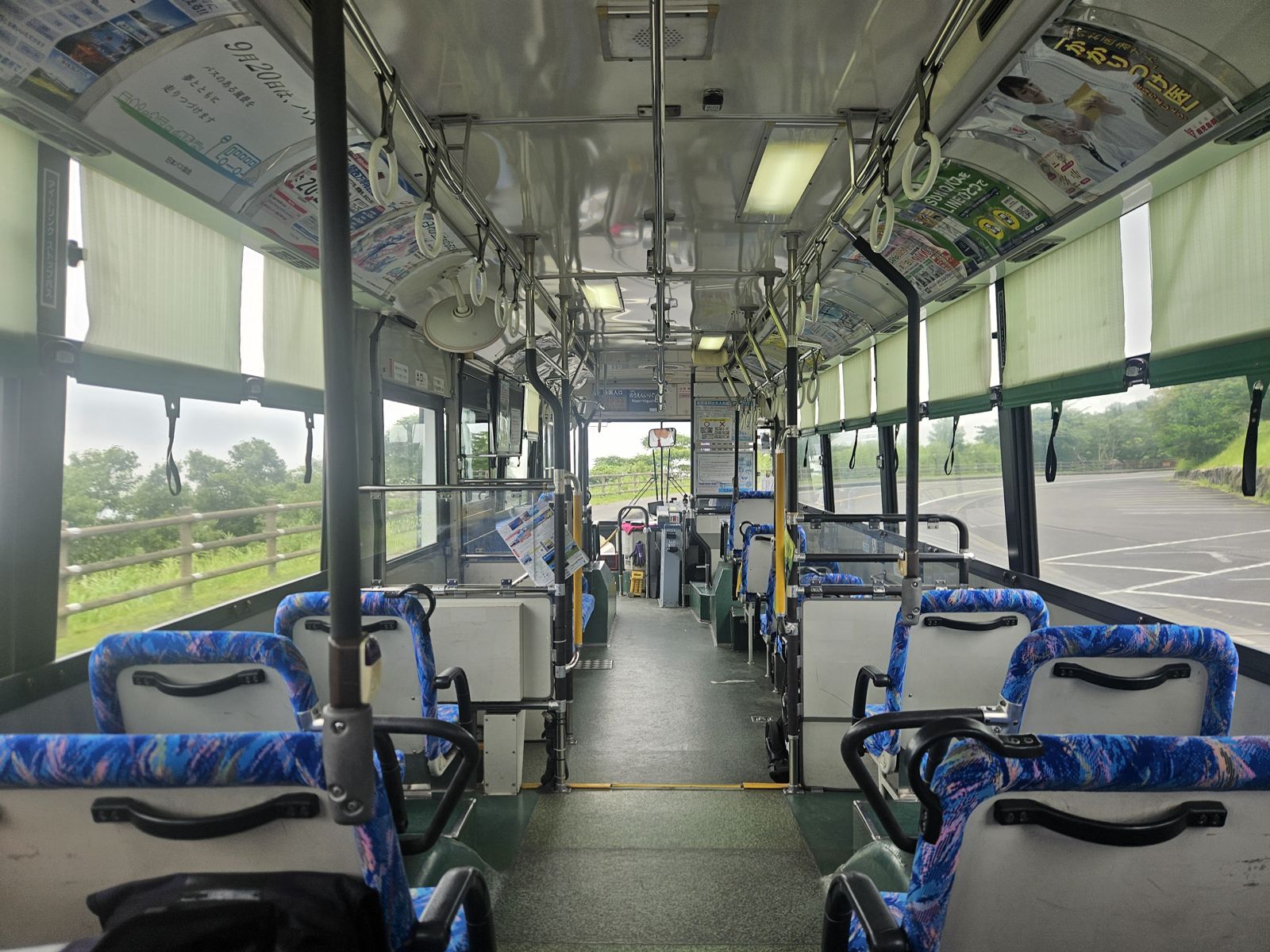
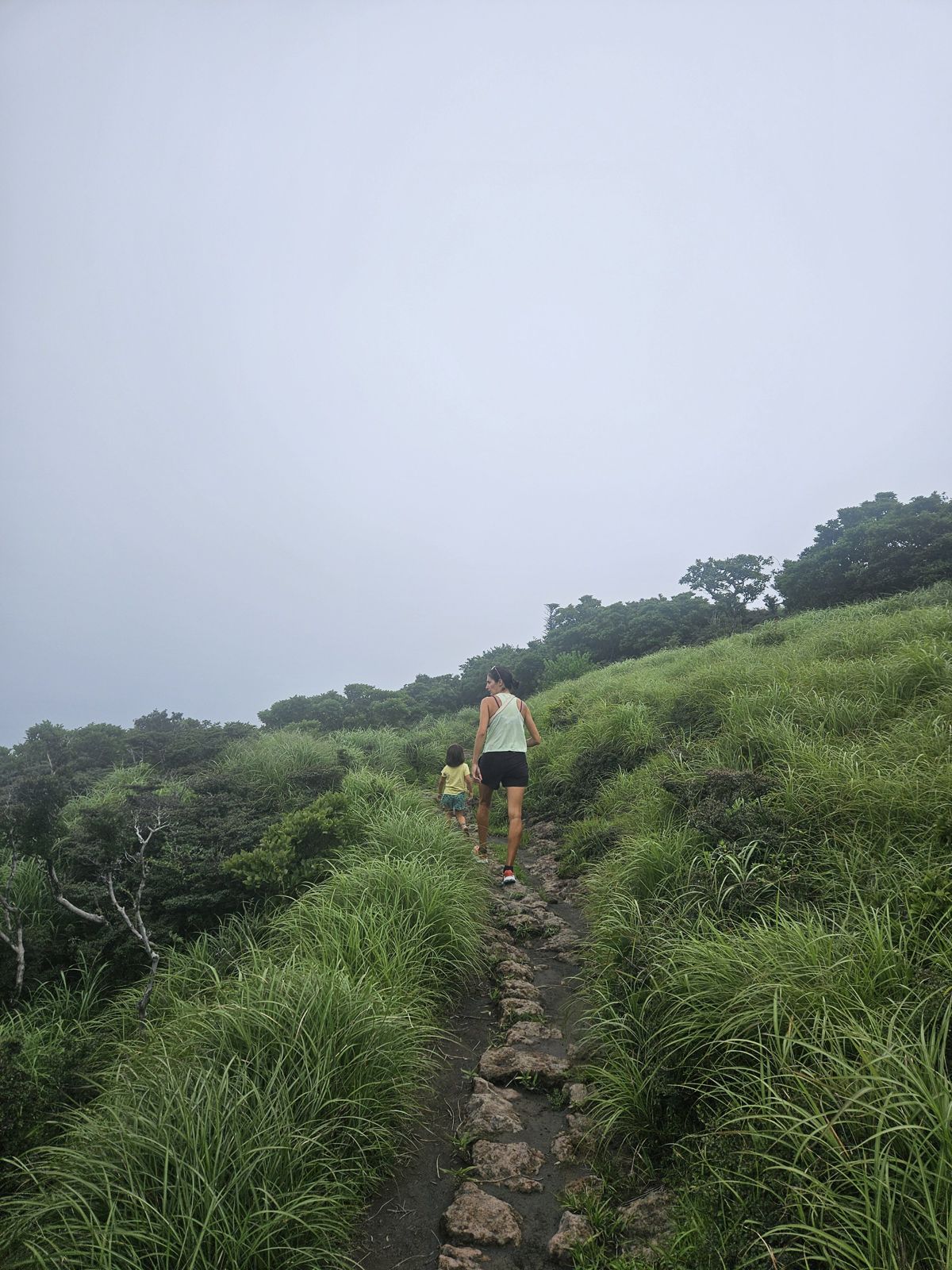
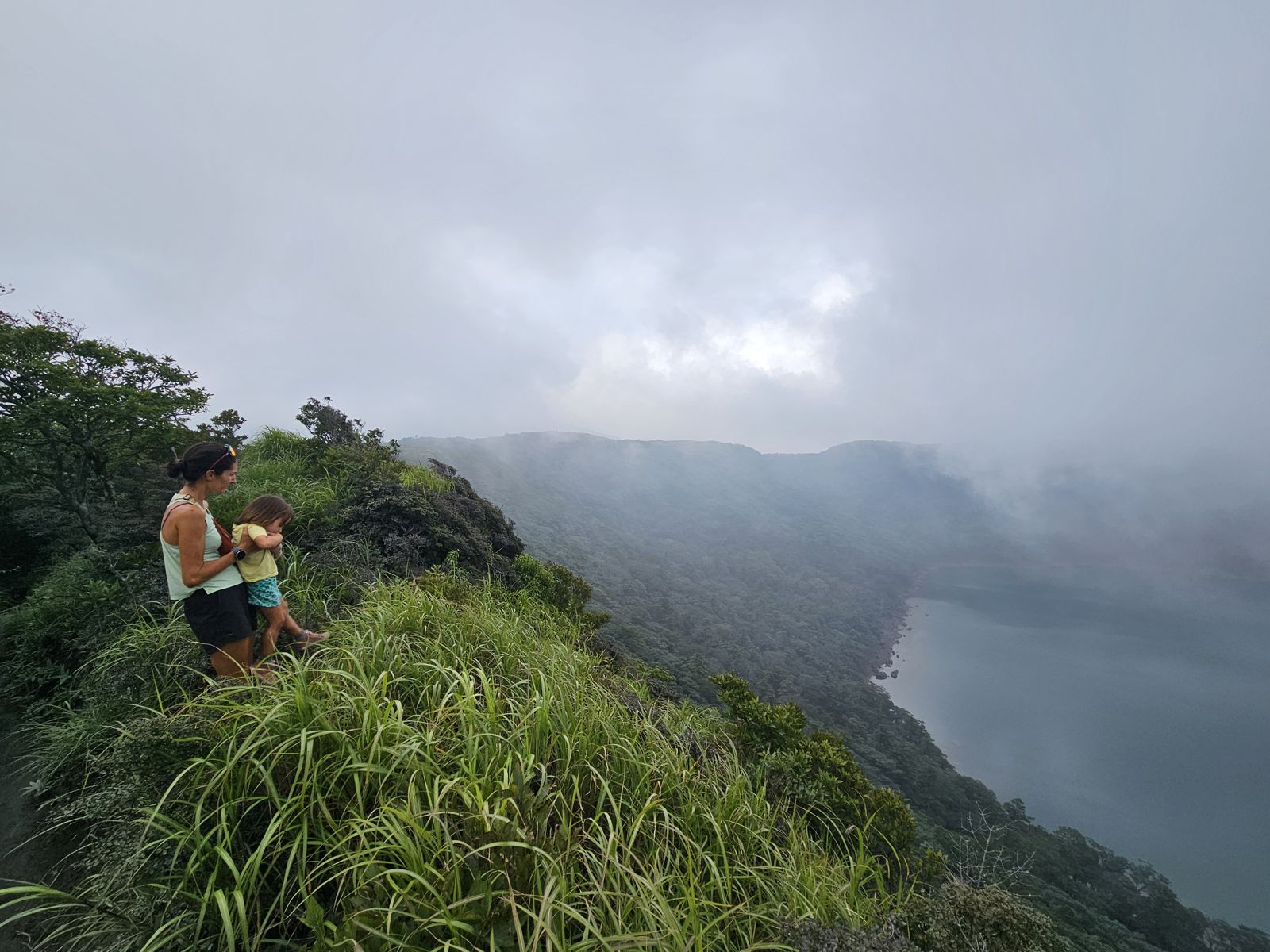
It's grey today and the sky is low, a striking contrast with the days of brilliant sunshine Japan has given us so far. Mixed in with the clouds is sulphur-laden steam from the volcanoes' boiling water. We arrive at the hotel very early, leave our gear there and head off for lunch while we wait for the bus. The national park is Japan's oldest, but there are four buses a day to visit it. Allowing for the return, that leaves us three hours to walk. We climb a kilometre of steps to reach the volcanic crater lake Ōnami-ike. Clémence climbs more than half of them on her own before hopping into the backpack.
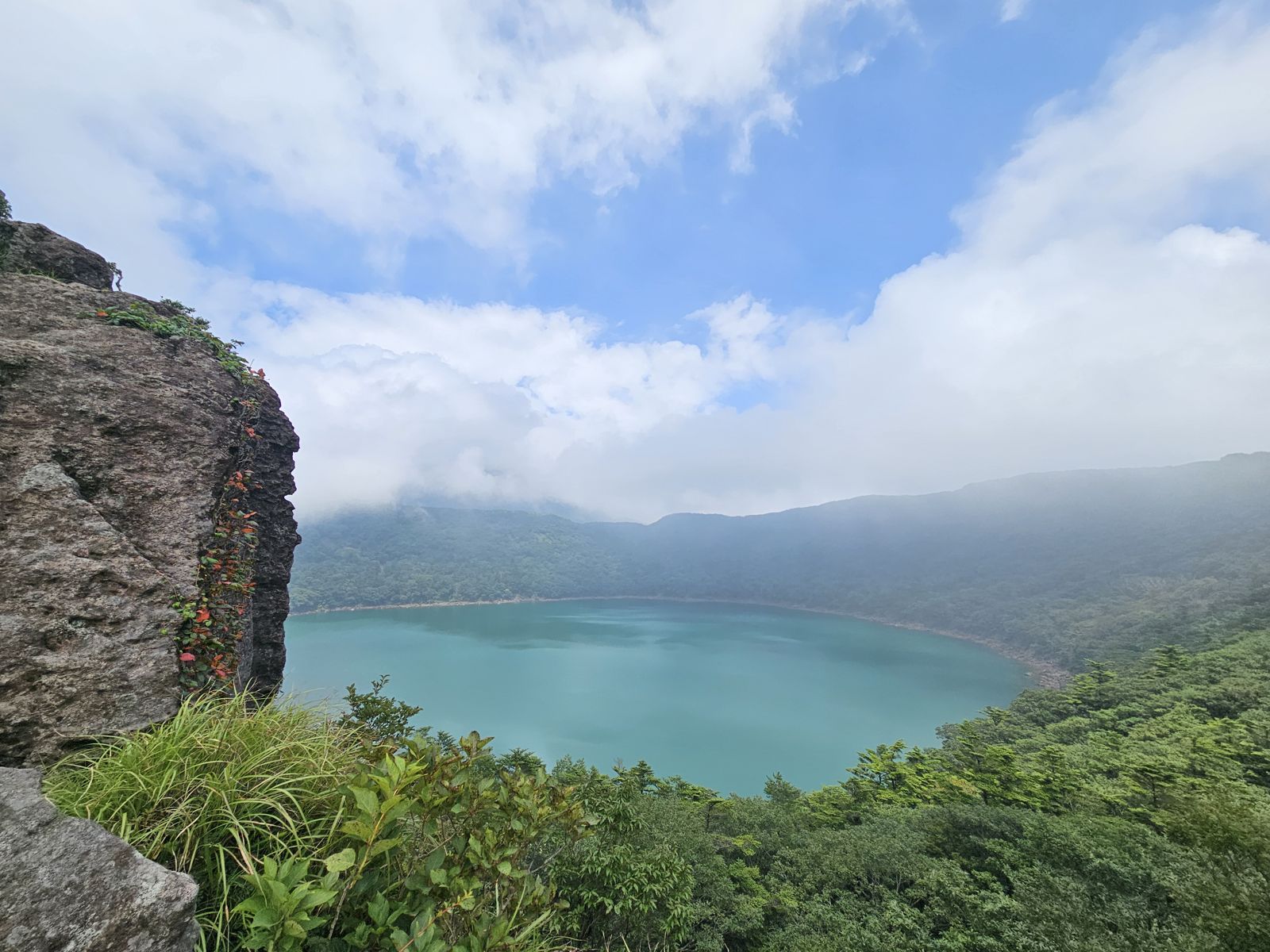
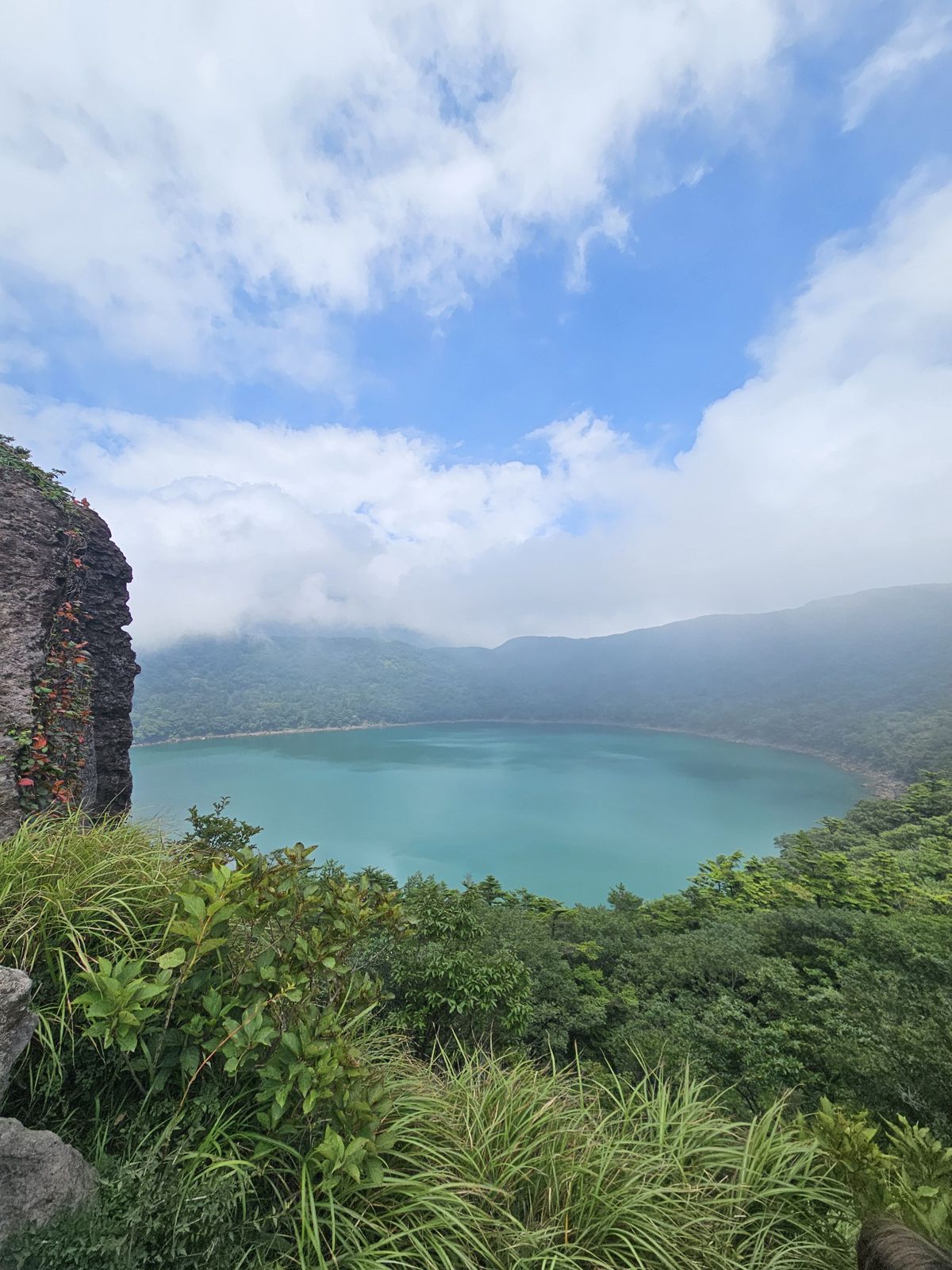
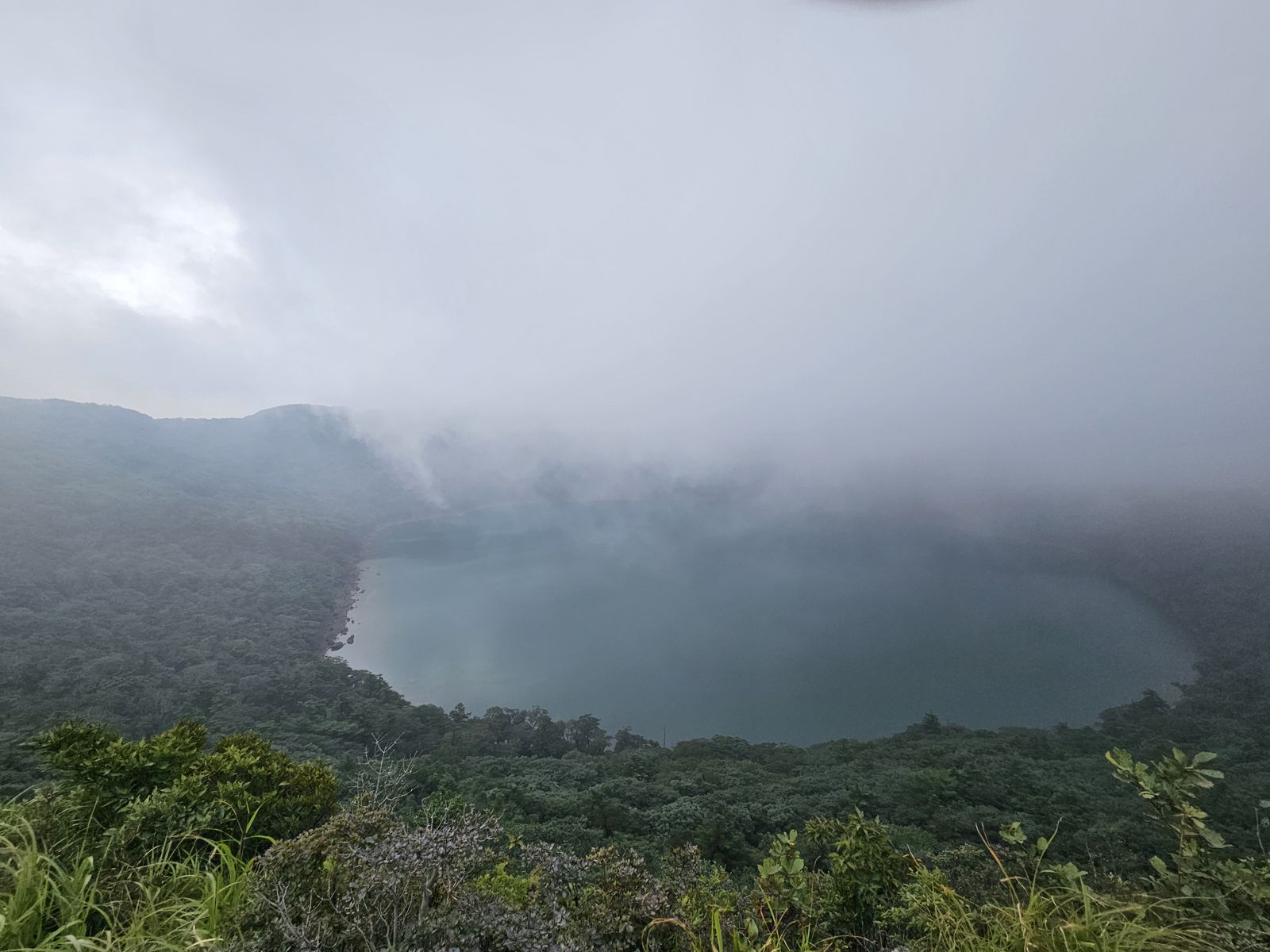
At the top, a loop goes around the lake, but we don't have time to finish it as we're going at a child's pace. It doesn't matter much: there are clouds, fog and steam, and we only catch glimpses of the lake. Still, all three of us are happy to walk in nature, stretch our legs and make a bit of effort. We left the bikes four days ago and we're starting to miss them. Very calmly, we walk back down to catch the 4:06 pm bus back to the hotel. We've booked fairly spacious, pleasant accommodation. There's even a play area for children and several hot baths, which keep our evening busy. Once Clémence is in bed, we think about what's next and make a decision: we're going back to South Korea on 12 August.
On the trail