 ← PreviousIn which we visit a Japanese hospital
Wednesday 30 July
What are the odds of a child being so excited by her new toys that she wakes up at 4 in the morning? Probably next to zero, and yet… Clémence calls us at 4 am on the dot to ask if it's daytime. We tell her no, which is easy enough since it's still dark. But she tries again an hour later, and this time the sun is already up and the first rays are starting to pierce the thin curtains. When we explain that she still needs to sleep, she informs us that she wants to go to the beach to play with her new spade and rake.
Nothing works; she won't go back to sleep. Stéphane hops on his bike to fetch breakfast 5 kilometres away, and so we have an early first meal. By 9:30 we're already at yesterday's beach. It has to be said it's very pleasant and well equipped. That's when a friend from Québec living in Japan writes to warn us that a tsunami alert has been issued. We're standing in the water, and after a brief moment of panic we realise it's on the other side of Japan.
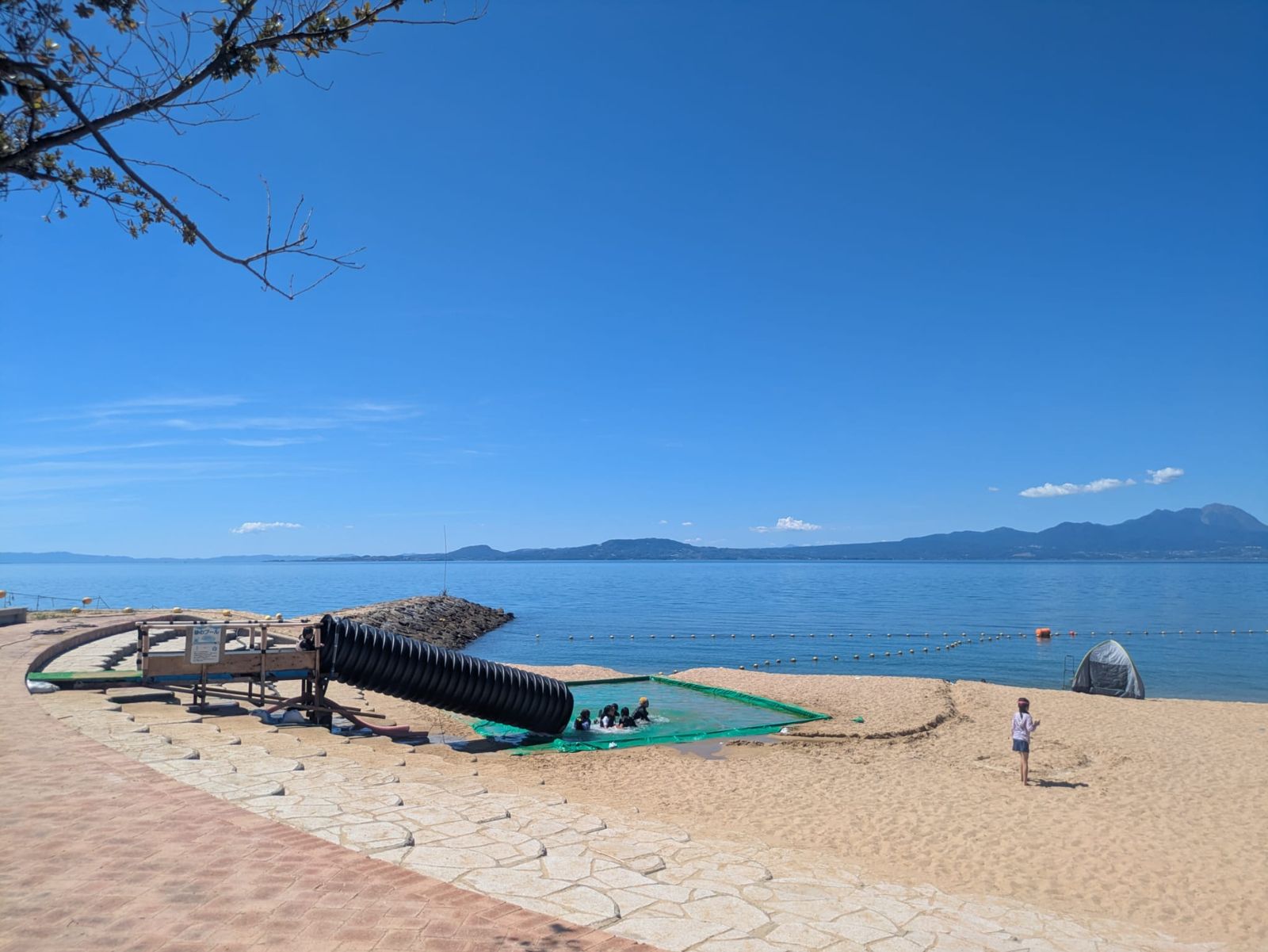
We stay two hours at the beach before heading off to a restaurant. We're so careful with our budget that we haven't eaten out often since arriving in Japan. So a little treat now and then is welcome. It's a pasta restaurant that's surprisingly cheap: for 1,000 yen (about €6) we get a salad, a drink and a plate of pasta. 3,000 yen lighter, we take shelter in the shade of an open-air hot foot bath facing the bay.
The place is well ventilated and shady and the water isn't scalding, so our digestion break is very pleasant. What's less pleasant, as so often, is getting back on the bike. The road is still splendid, winding between little islands with breathtaking views, but our problem is, as ever, the omnipresence of cars and the lack of bike infrastructure.
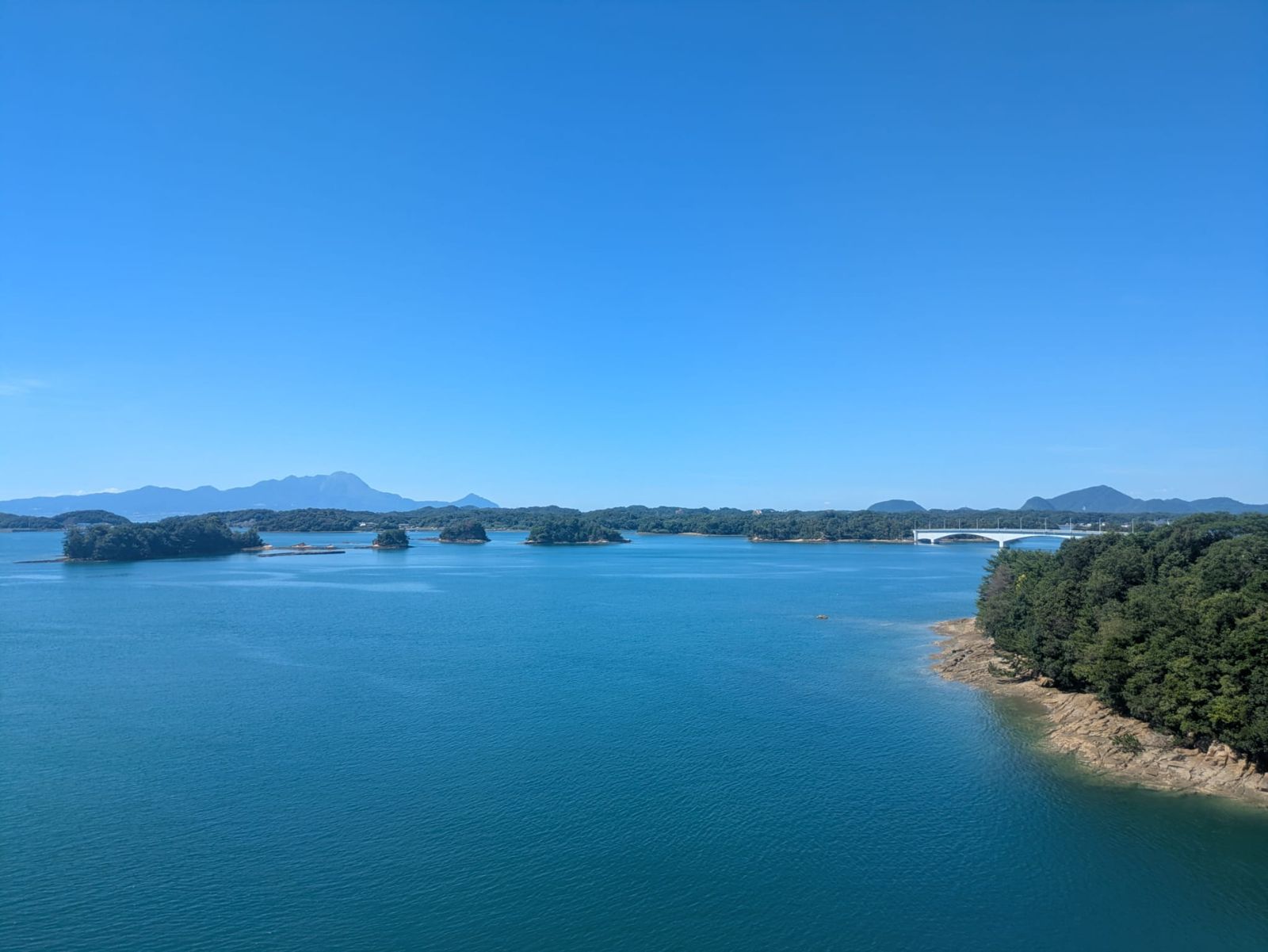
We've resigned ourselves to riding on the pavements, sometimes very narrow, which goes against the image of a country everyone sells as "bike-friendly" (in our view, that's subjective and depends on where you come from). But when the pavements run out, we have no choice but to go back onto the cycle route approved by the Kyushu tourist office, in other words the main road, the only way to cross the islets and reach the mainland. And on this road we've clearly understood that the Japanese are not at all happy to see bikes. The tarmac leads us across a series of bridges. On the first, we just about squeeze along the pavement, and the cars take the opportunity to skim past us.
But on the second there's no room left, and we have to go down onto the road. The bridge is very busy, there's not a second's respite, and drivers overtake us really, really close and fast (even though the limit is 40). Stéphane is in front with Clémence on the front of his bike, while Cassandre protects us from behind, slightly offset. That's too much for one Japanese driver, who can't stand us taking up space on the road and starts honking like a madman for us to hug the kerb. He has the oncoming lane clear to overtake, but that's not good enough; he has to make us understand we're in his way. After this umpteenth dangerous overtake and umpteenth micro-aggression, we quickly reach today's hotel, but completely dejected.
It's the last straw for a cup already full of bitterness and regret. We have to accept that what we'd imagined as a cycling El Dorado isn't living up to our expectations. So be it: after a long discussion, we decide to cut our time in Japan short. What was supposed to last several months will only last one, because we're put in danger far too often, and that's not sustainable with such a young child.
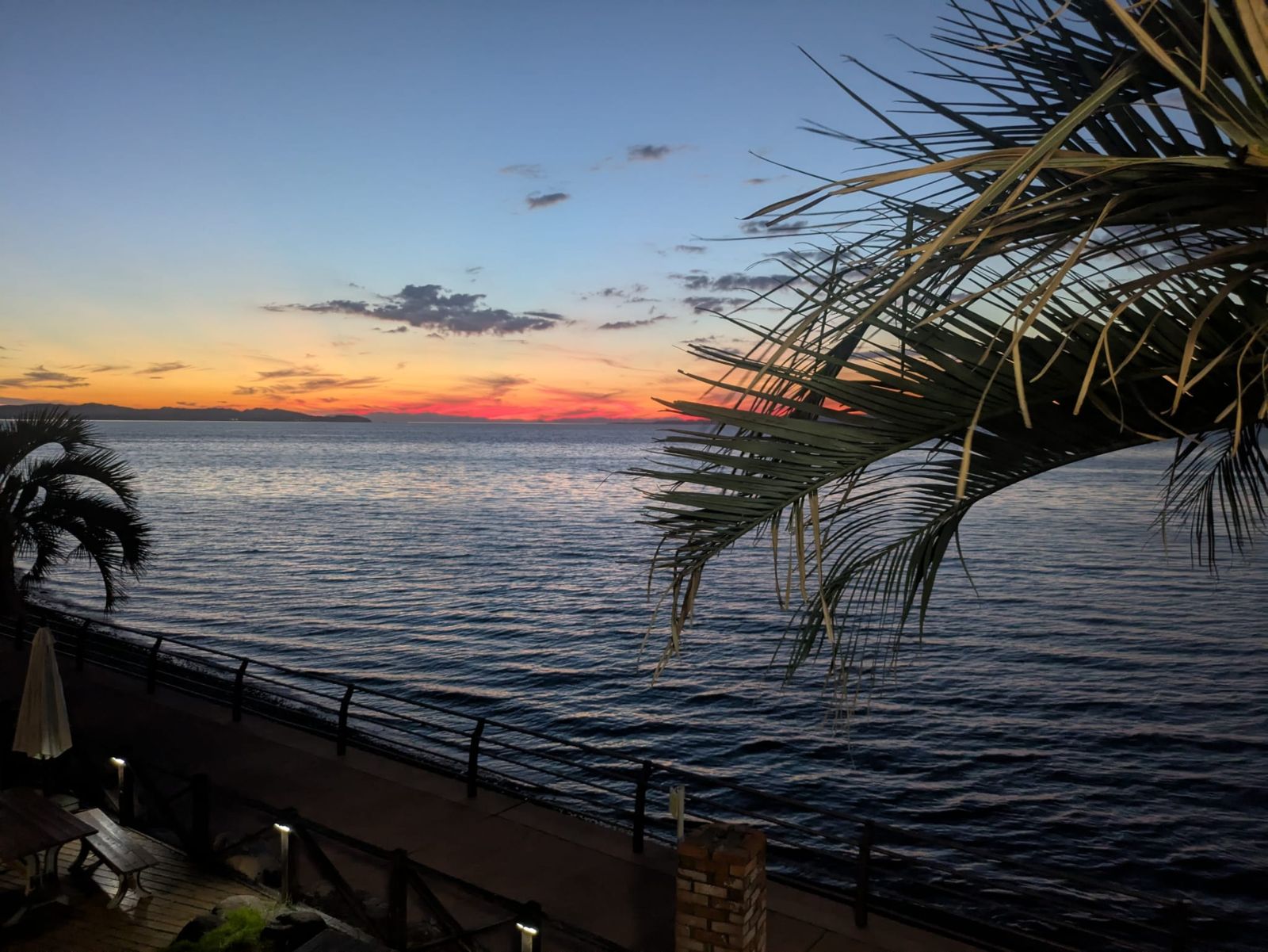
Our hotel overlooks a bay; the sea is soothingly calm, a silver carpet, as Charles Trenet sang. We're thinking out loud about the rest of the trip when the water suddenly stirs. We hear big swirls, waves crash against the rocks, then it's flat calm again. The tsunami has finally reached the other side of Japan. Luckily for us, it was only about thirty centimetres.
Thursday 31 July
Clémence wakes up at a reasonable hour, thankfully. She's been a very good sleeper for a long time, and we wouldn't have liked to go back to the too-early wake-ups of babyhood. Setting off is becoming hard, because we're anxious even before getting on our bikes. Will the route be pleasant? Will we end up on very busy roads again? Will we be skimmed past constantly? All of this clouds our minds and ends up spoiling the joy of cycling. Today we're doing something new: we're leaving our bicycles at a station. Through no fault of their own, they're becoming a burden.
We ride just under forty kilometres this morning to reach Matsubase station, but it's no longer a pleasure. For the first 15 kilometres we take very quiet little country roads. The rest is a different story. The road is shared once again with hundreds of cars, buses and lorries, and we're not sorry to see the station finally appear. With heavy hearts, we lock up our bikes and set off without them on a train journey to the city of Kagoshima. We could have taken the Shinkansen. The journey would have taken an hour, but it would have cost us almost €50 per person, and it isn't as scenic as the lines we're about to take.
We love slow travel anyway, so we take the cheapest option, which means nearly four hours of travel but at half the price. That involves three different trains. The first only takes a quarter of an hour; it's a standard limited express. It struck us back in 2018 on our previous trip to Japan and it jumps out at us again now: there are people asleep everywhere on trains. The Japanese work a lot, with long hours, and you can feel it in the general level of tiredness. In theory they work 8 hours a day, up to 40 hours a week. In practice, though, nearly 22% of Japanese people work more than 49 hours a week, and almost the entire population believes working more is necessary to keep their job. The result is a phenomenon called "karōshi", in which several thousand Japanese people die every year from work-related stress, poor health or even suicide.
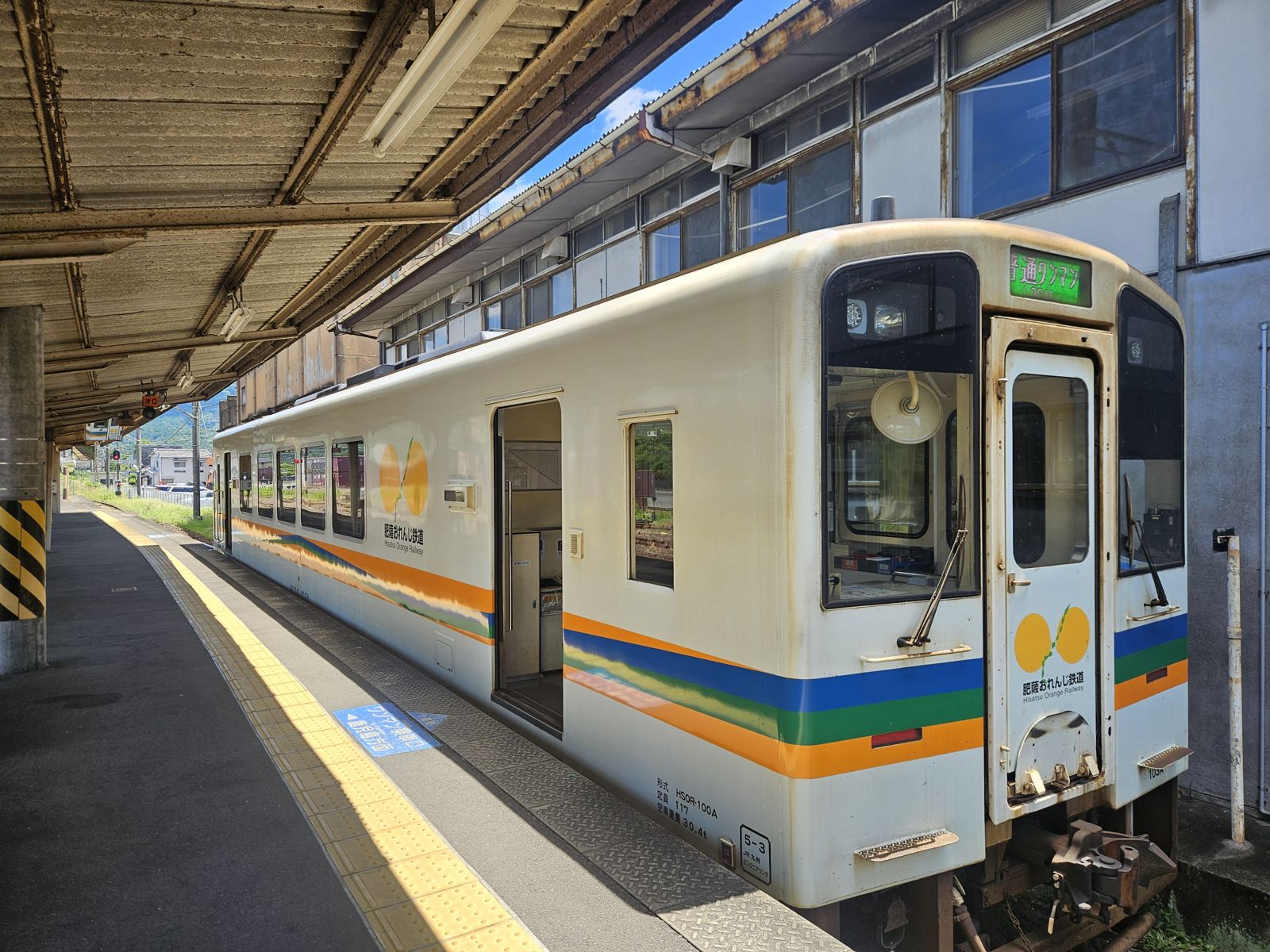
We then take the Hisatsu Orange Line, a 118 km line that runs along much of Kyushu's west coast and so offers scenic views over the East China Sea. The track is slightly raised above the road we would have taken by bike. Given the traffic, we don't regret our choice. It's much nicer to enjoy the journey from behind a train window. The ride takes almost three hours, but we keep ourselves busy and the time passes quickly in the end. At the end of the line, we finally take the last train of our journey, which brings us after 50 minutes to Kagoshima's central station.
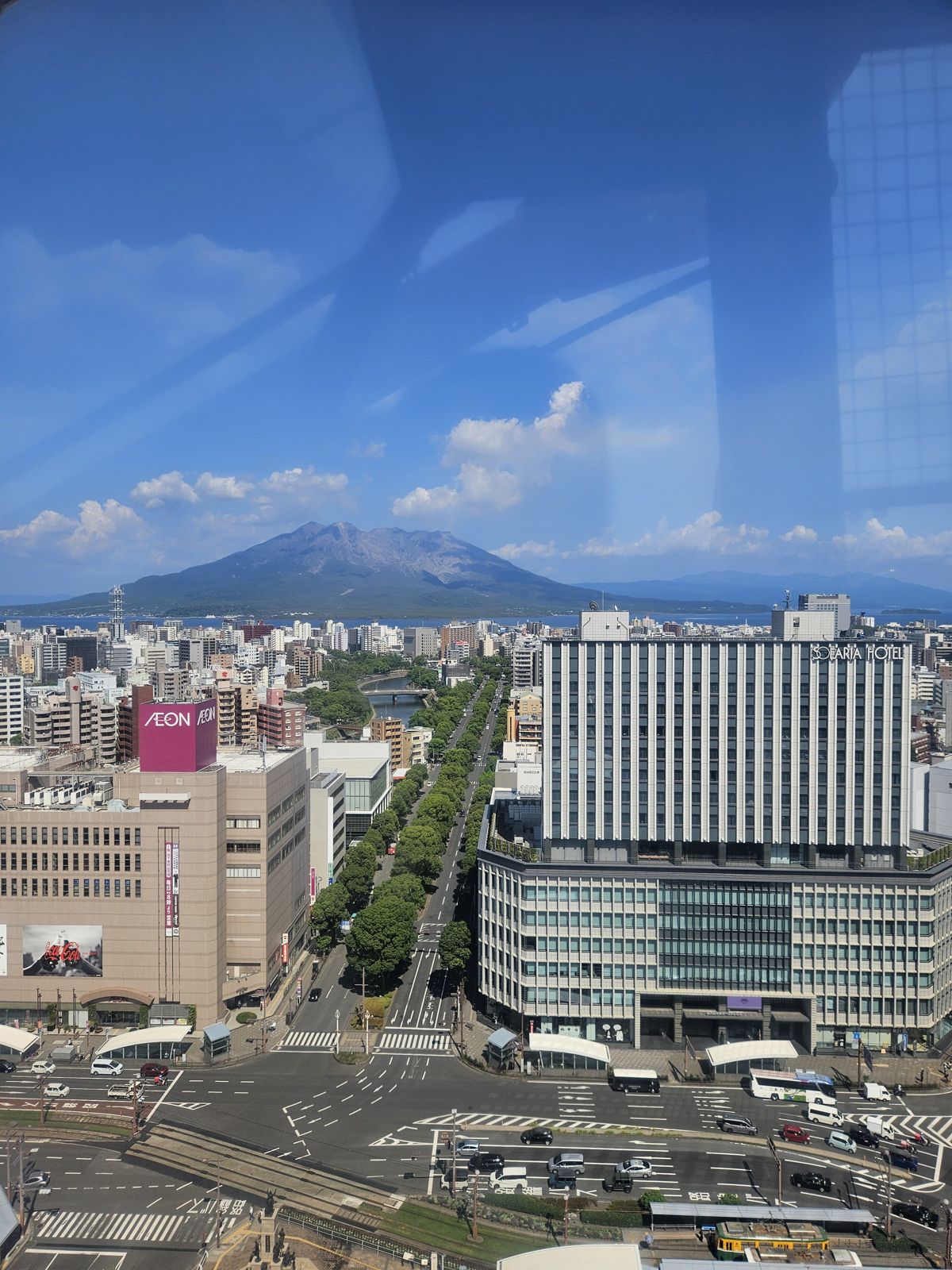
Nicknamed the "Naples of the East" for its comfortable climate and its magnificent bay dominated by the Sakurajima volcano, Kagoshima strikes us as a much calmer city than Nagasaki, where the noise and traffic were intense. The area around the station where our hotel is located is very peaceful; we go out to buy something to cook and call it a day after what turned out to be a fairly intense one.
Friday 1 August
As with every day in town, the motto could fit in three words: take it slow. It also adds a little oasis of stability for Clémence in this constant movement. She copes well with it, though, and is always happy to discover new places.
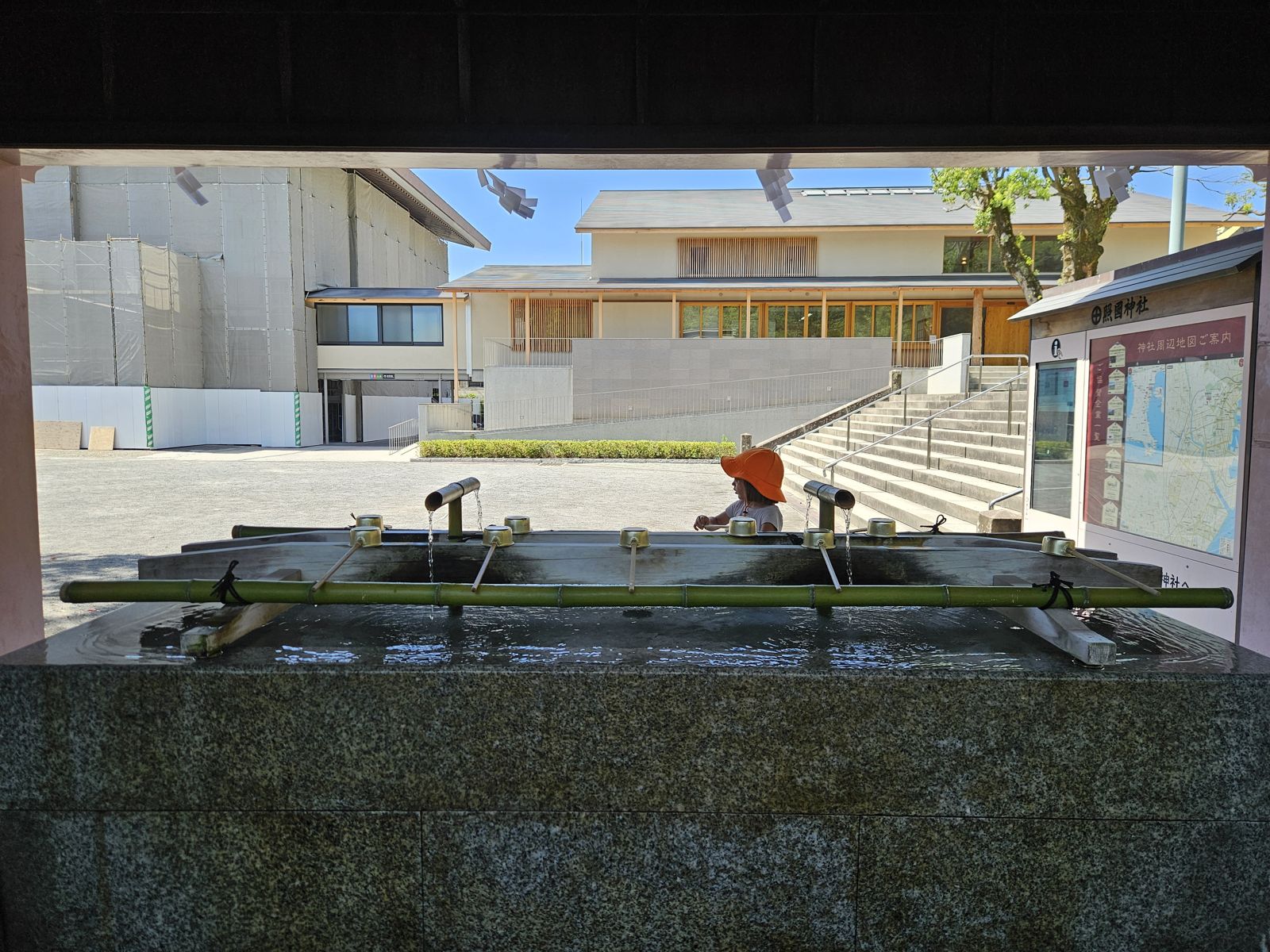
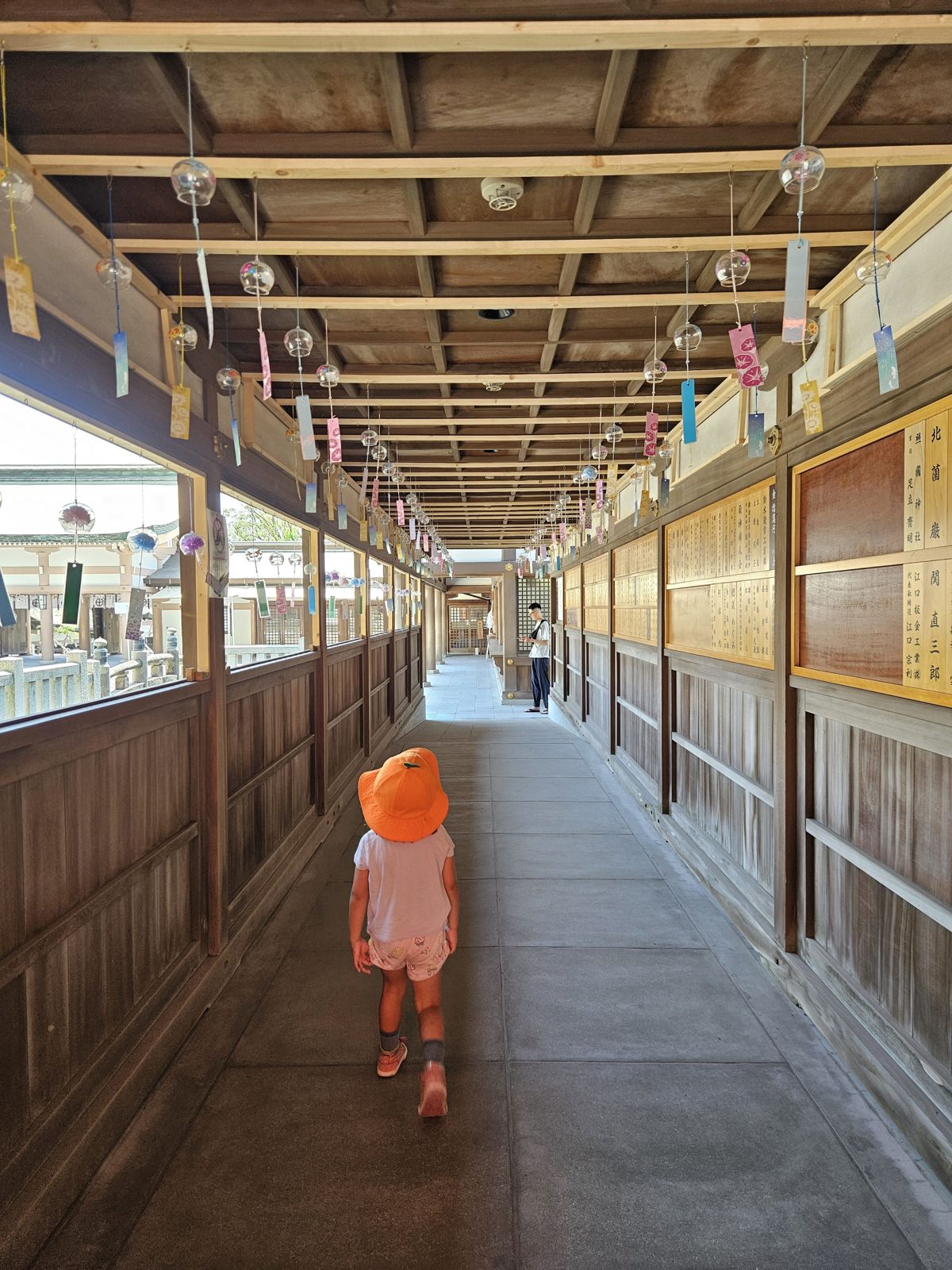
We don't yet feel the temple fatigue that travellers in Asia sometimes describe. It's true you could tire of them and they could all end up looking the same, but we always enjoy visiting them. They're peaceful, shady and often breezy places. That's the case this morning at Terukuni Shrine, where we explore every corner with Clémence leading the way. Built in honour of Shimazu Nariakira, the shrine reflects the importance of this leader who opened the region to Western influences. Kagoshima's history goes back to 1549, when the Jesuit missionary Francis Xavier landed in this small port to evangelise the archipelago. But it was in the 19th century that the region became crucial in Japanese history. Under Lord Shimazu, passionate about science and European culture, Kagoshima became a centre of innovation, especially in firearms and ships.
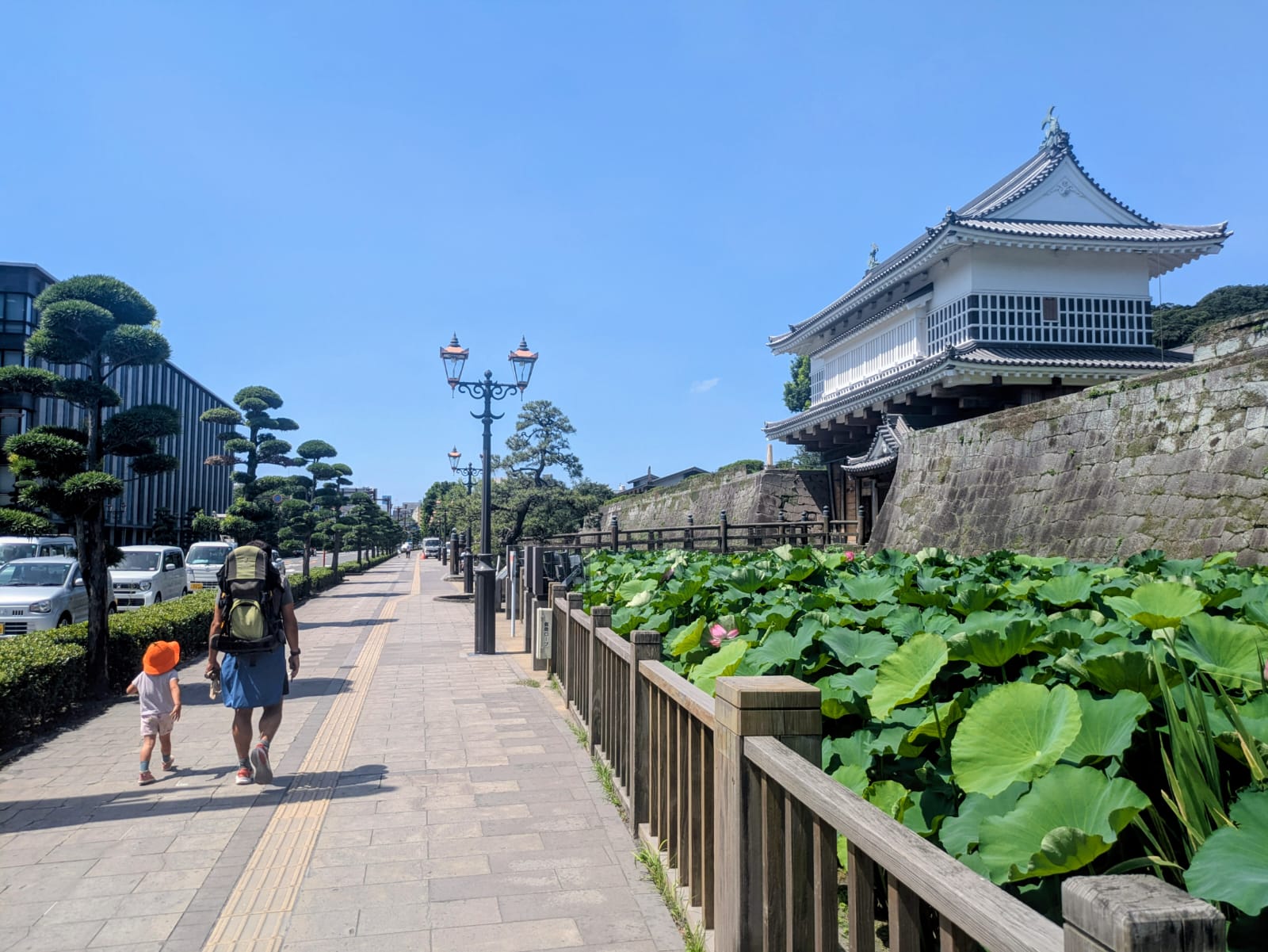
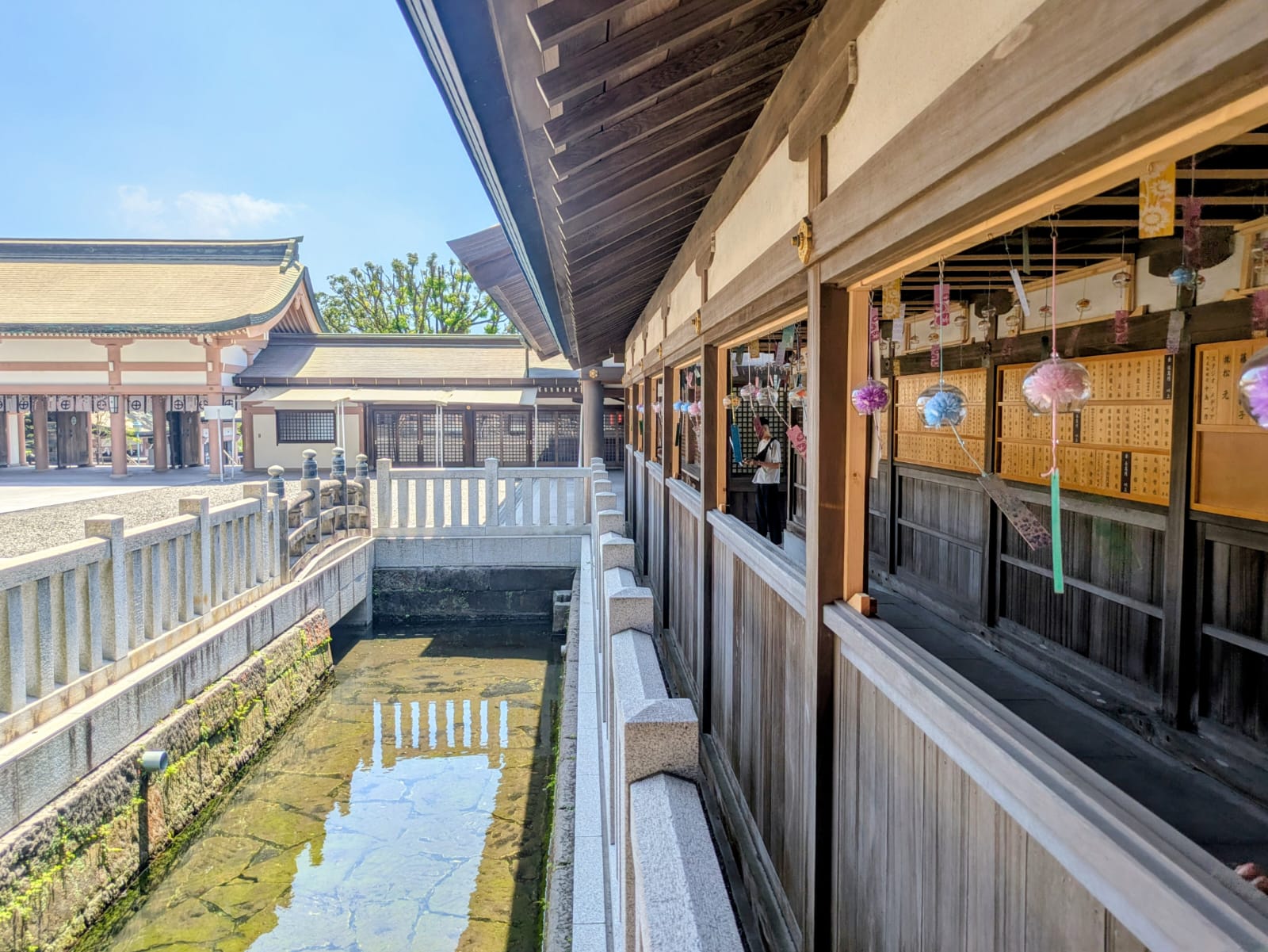
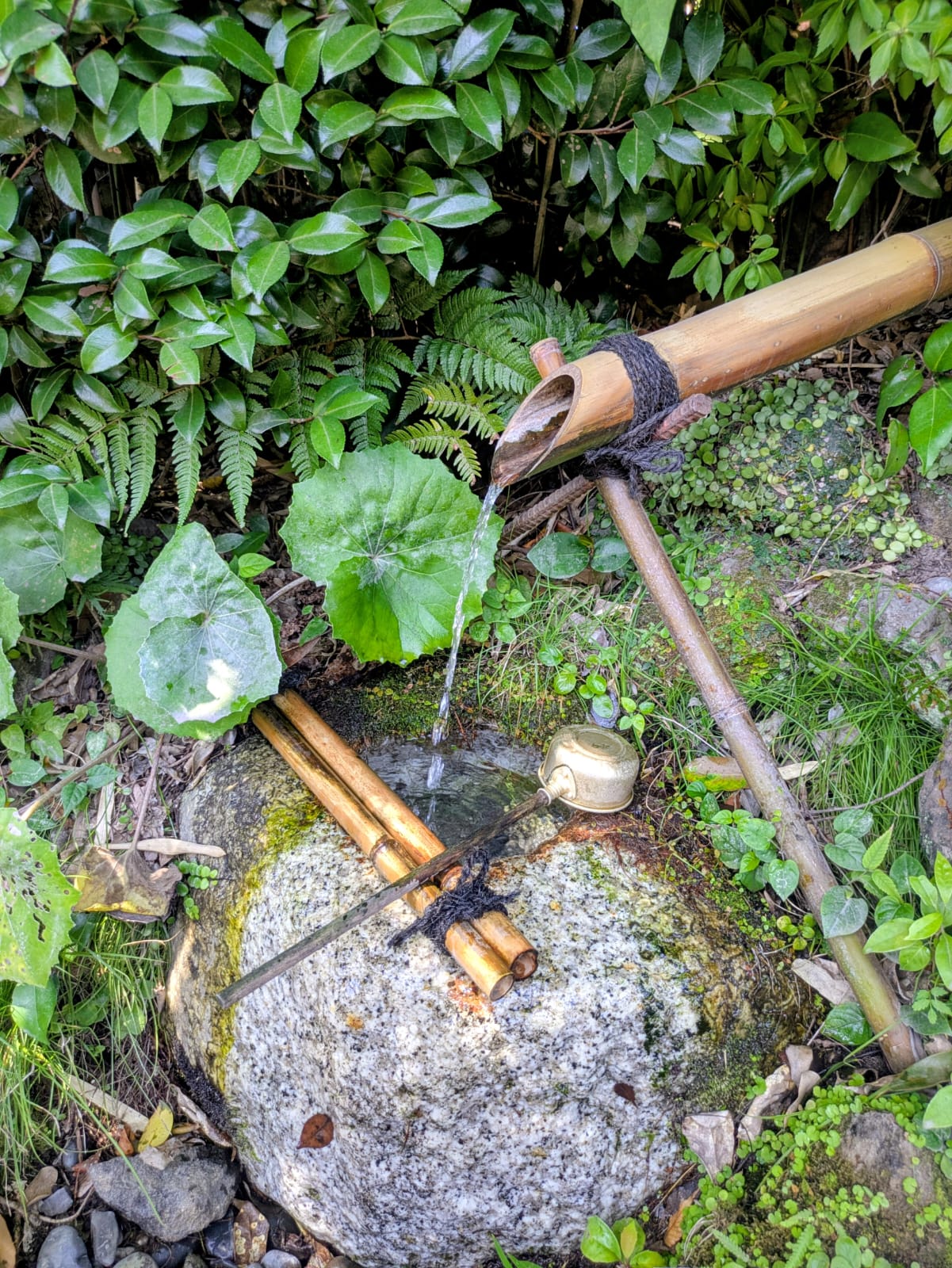
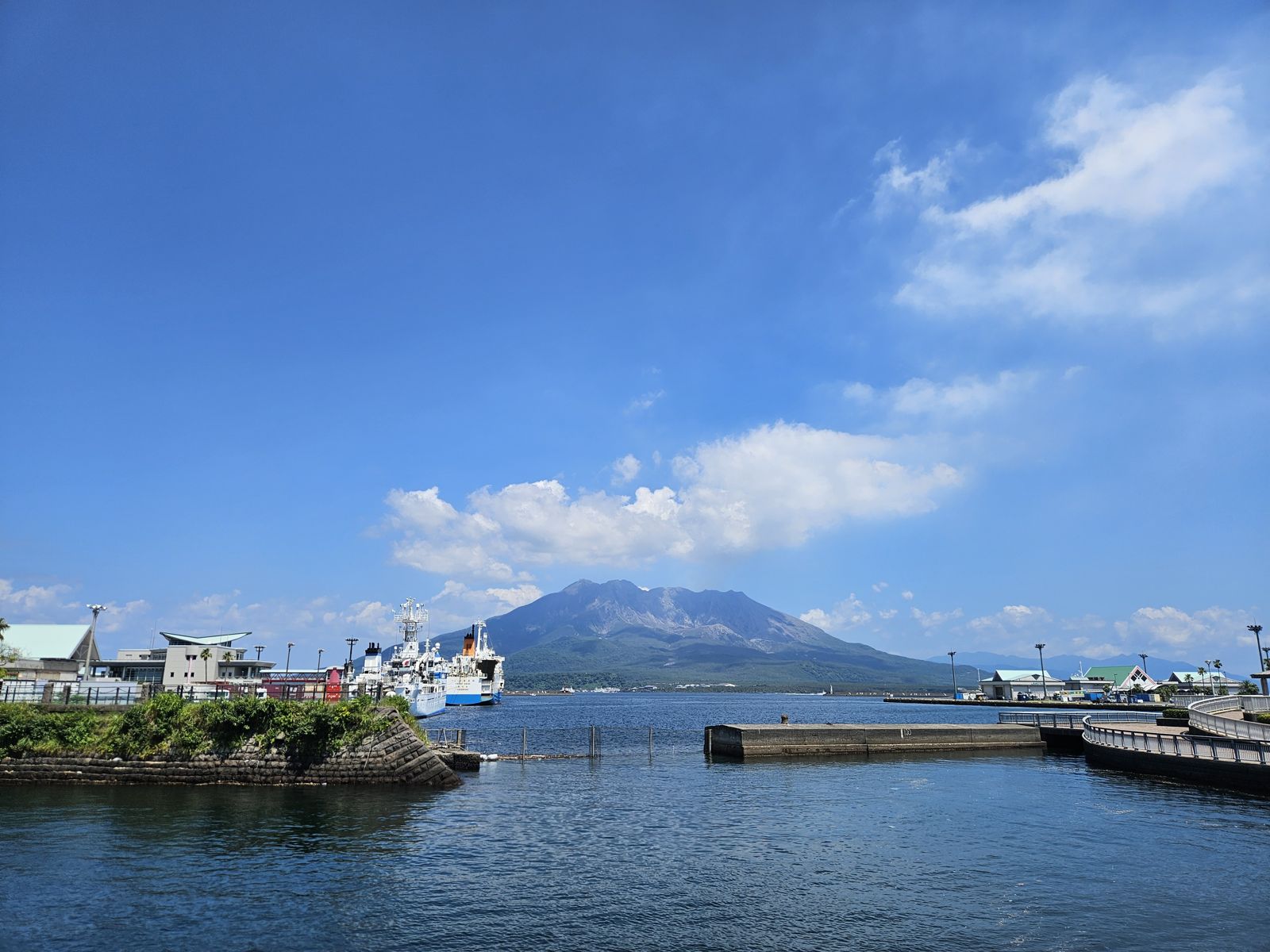
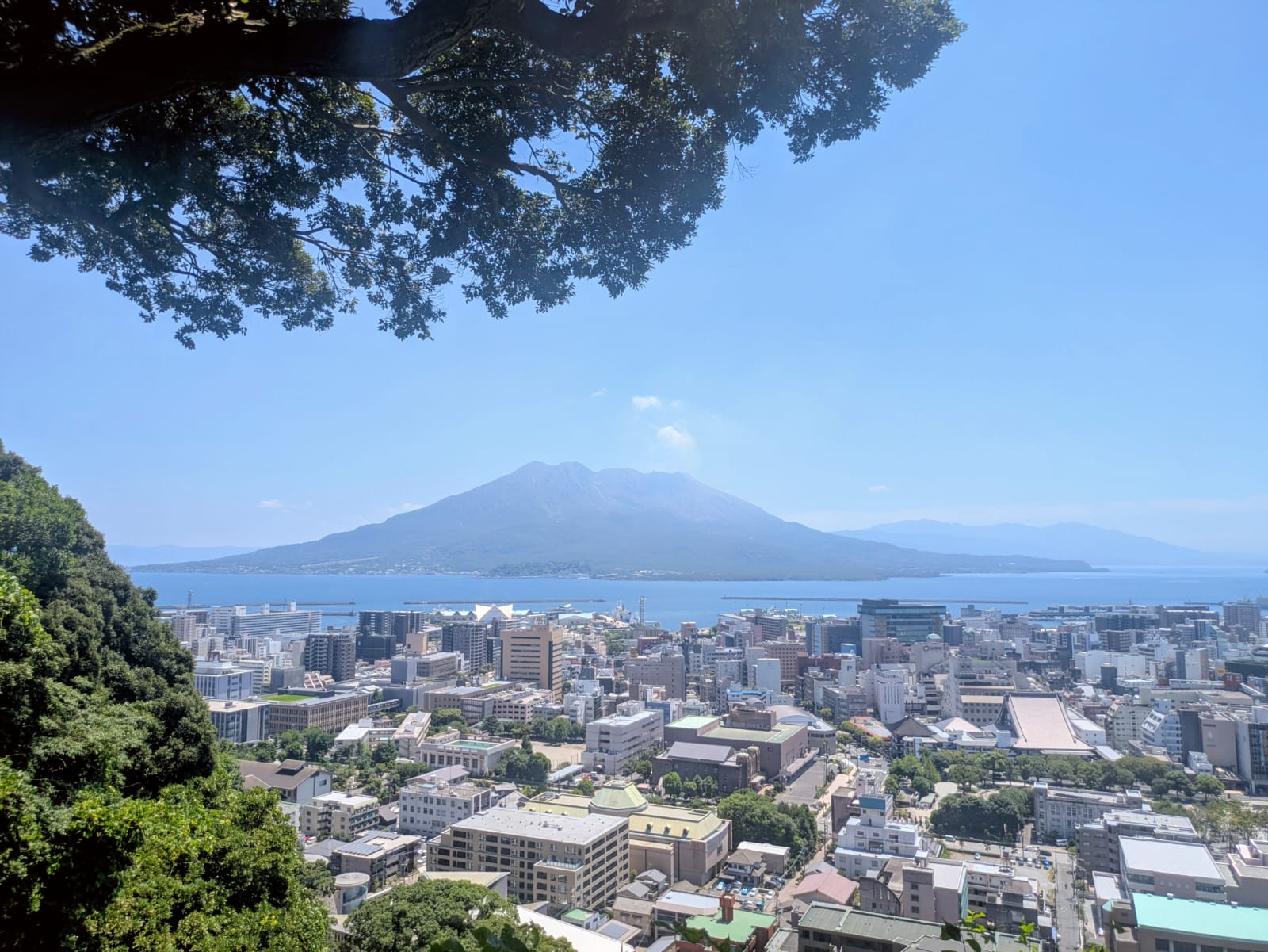
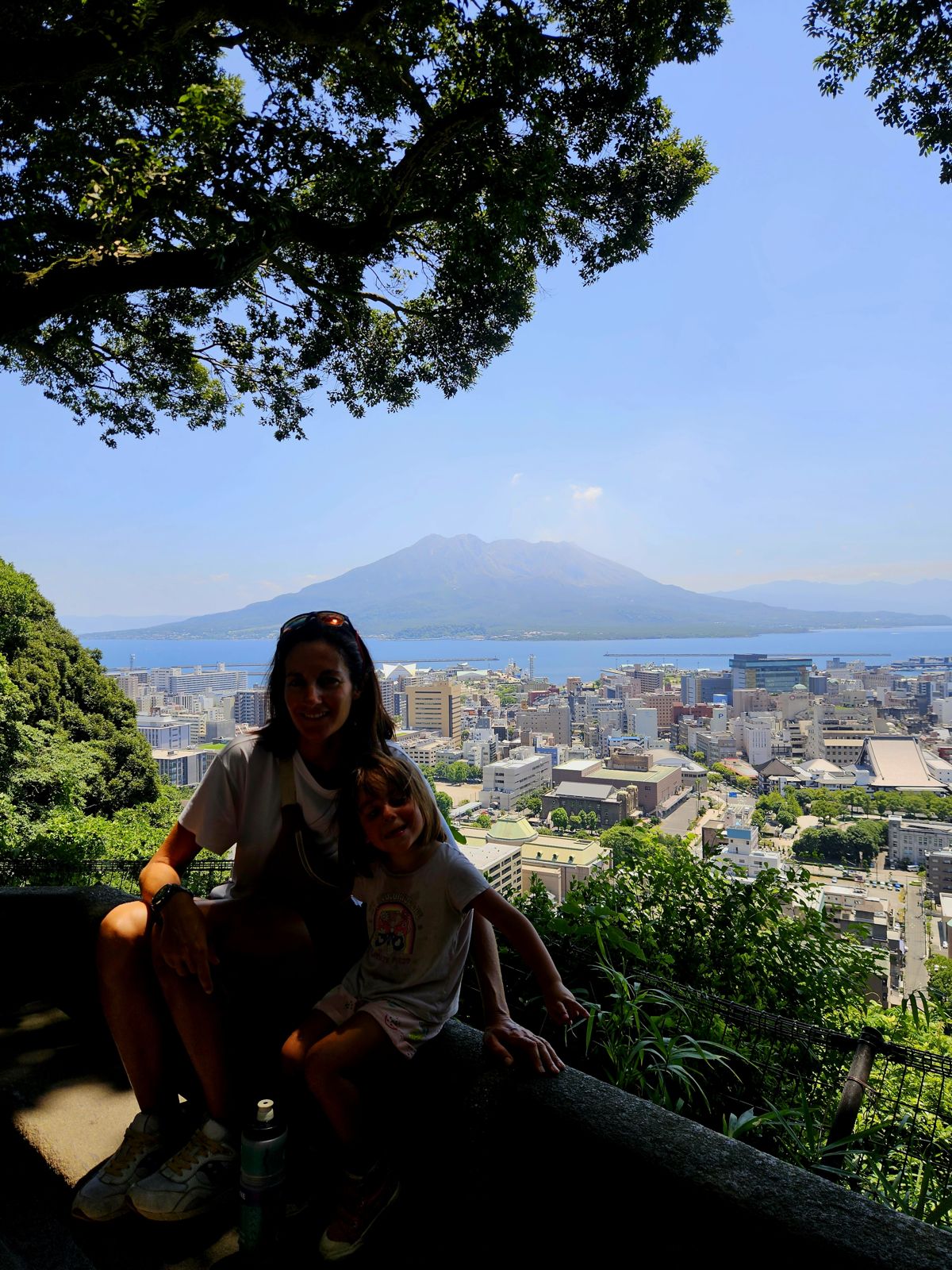
The shrine doesn't take long to visit and isn't exceptional compared with other temples we've seen, but it has notable cultural importance for the Japanese. From there we climb several hundred steps to a high viewpoint with a panoramic view over Kagoshima Bay and its volcano. Because yes, the city sits just eight kilometres from the most active volcano in Japan and one of the most active in the world. Its last major eruption was in 1914 and its most recent in 2022, but it regularly spits ash and smoke. The smoke above Sakurajima could easily be mistaken for a cloud, but no, it's just the volcano letting us know it's wide awake.
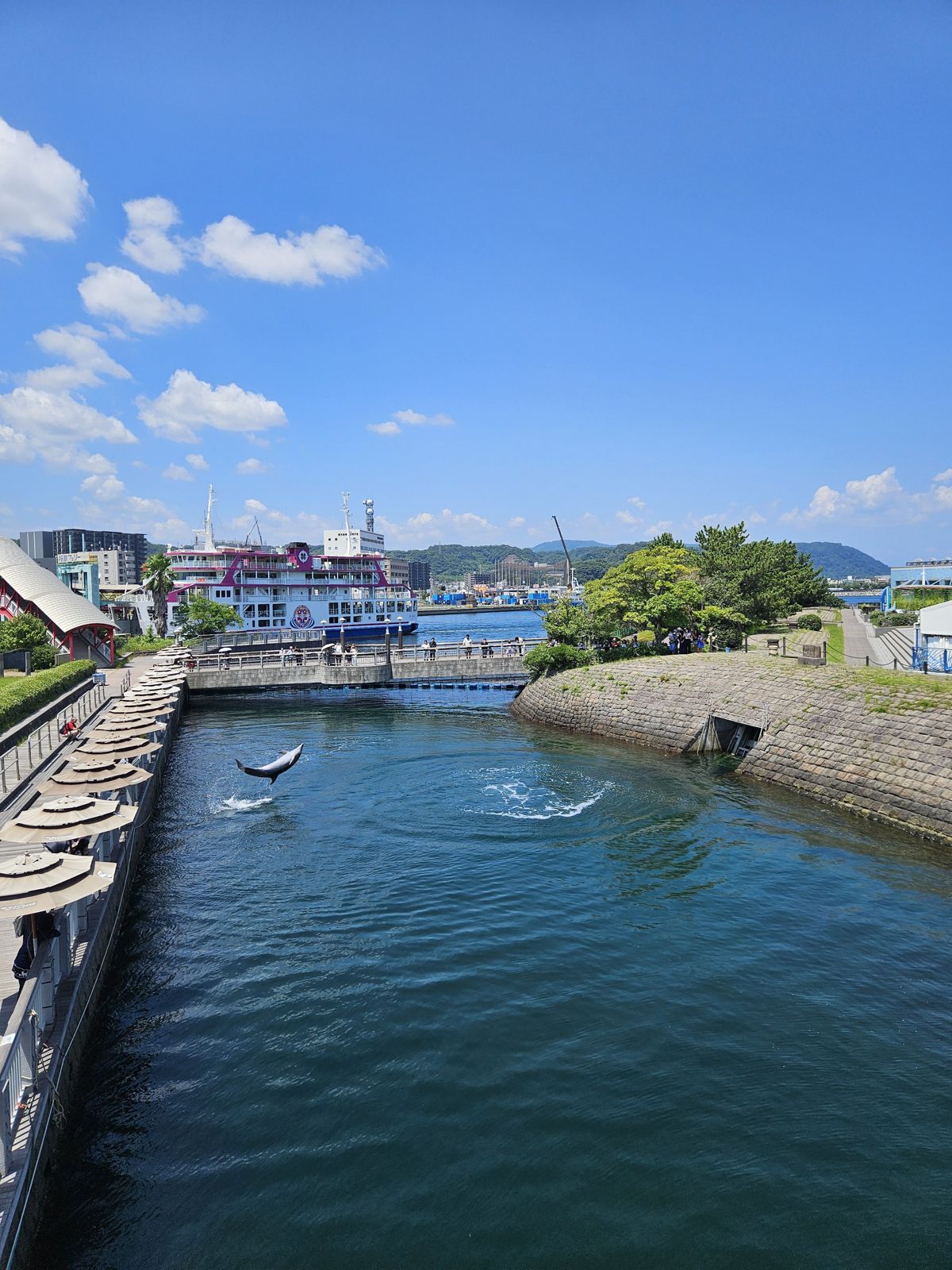
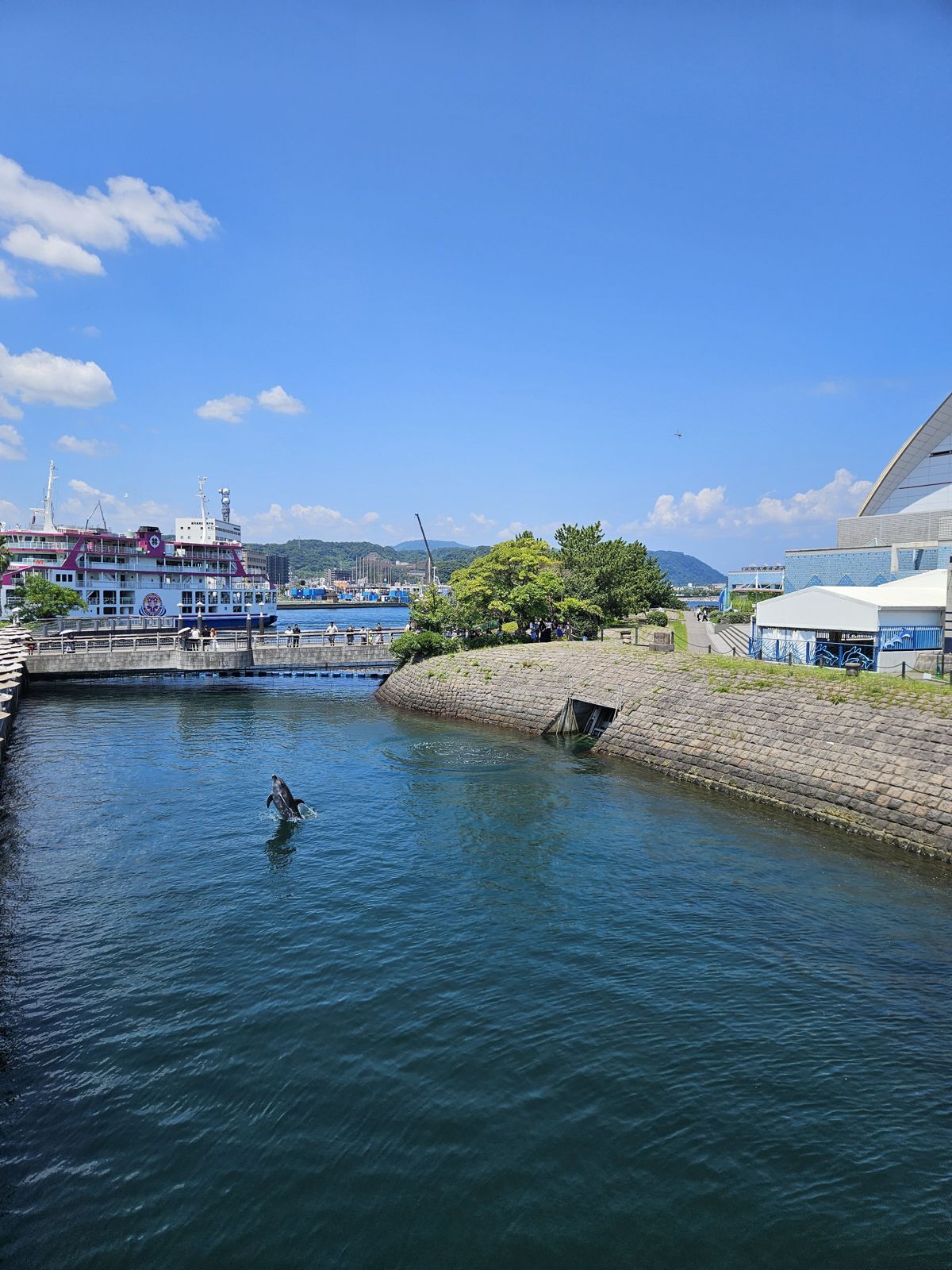
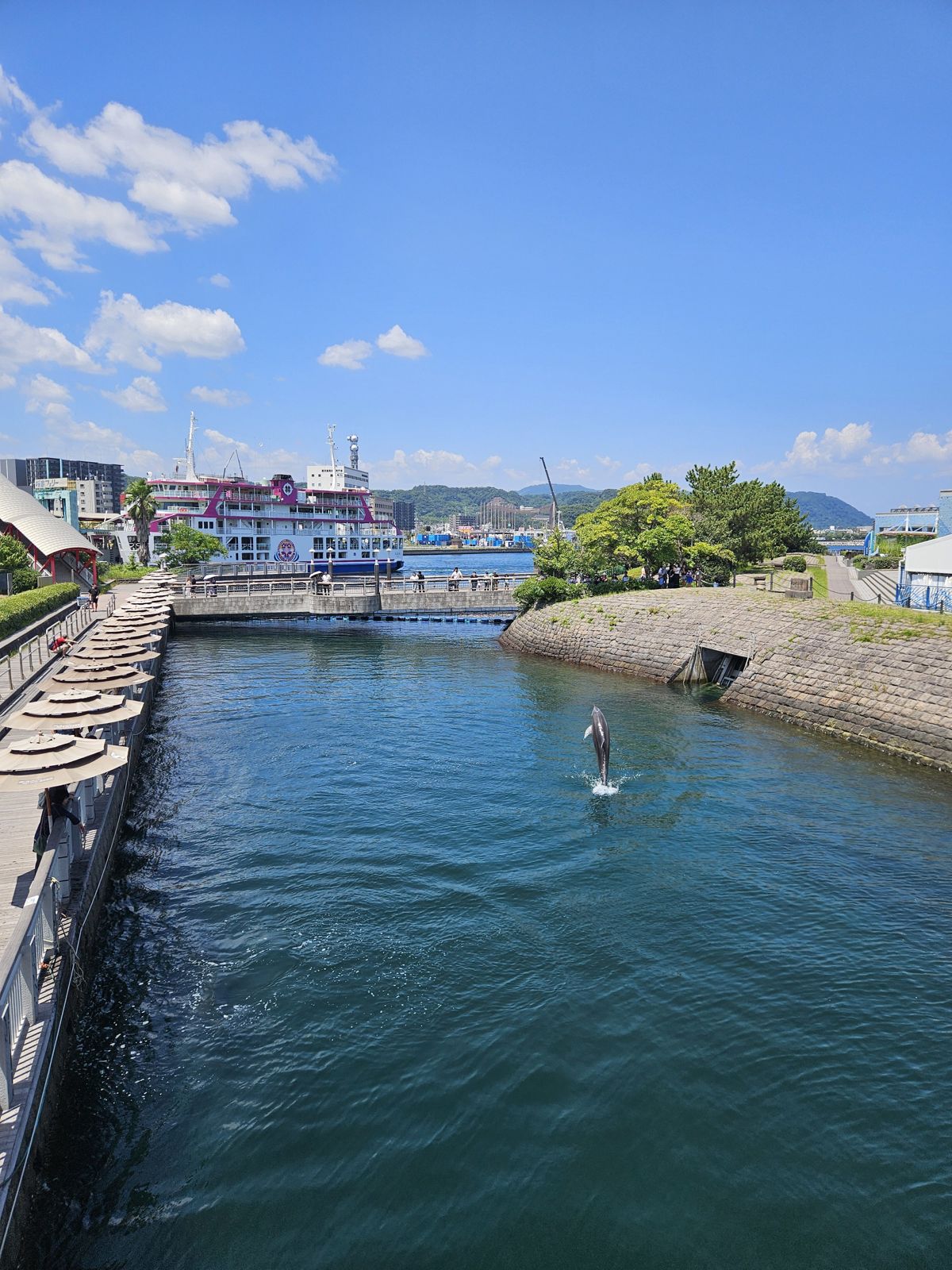
After a quick go at the park playground, we go down to eat at a convenience store, then head to the marina. Cassandre had read online that dolphins swim in the canal next to the city aquarium. As we arrive, a presenter is speaking and we understand something is about to happen. In fact, the aquarium's dolphins are allowed out three times a day to swim around the canal. It's not a show as such, as the animals do as they please, but they're mischievous and play with the onlookers, splashing them and leaping. As you can imagine, Clémence is dazzled, and so are we.
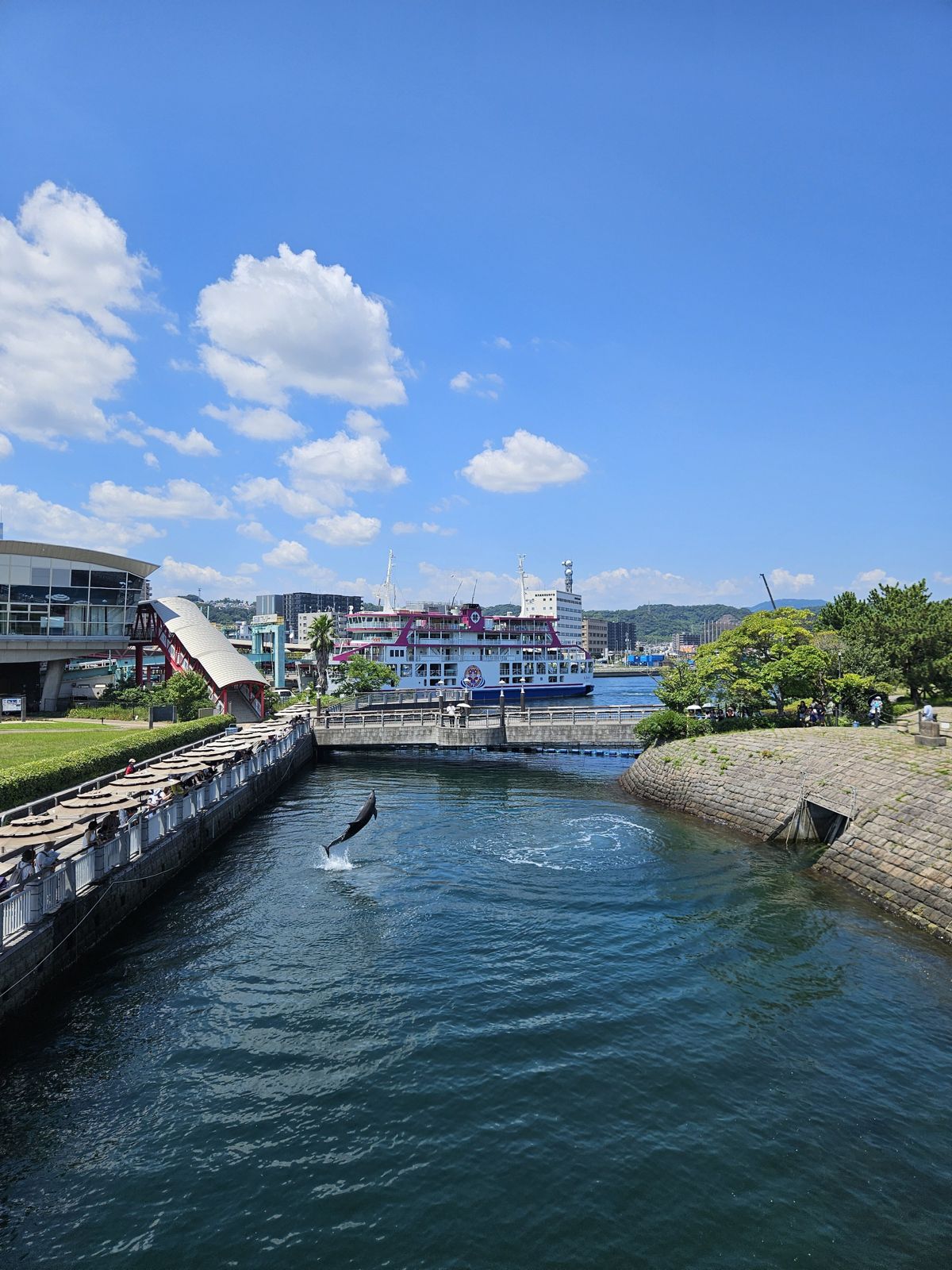
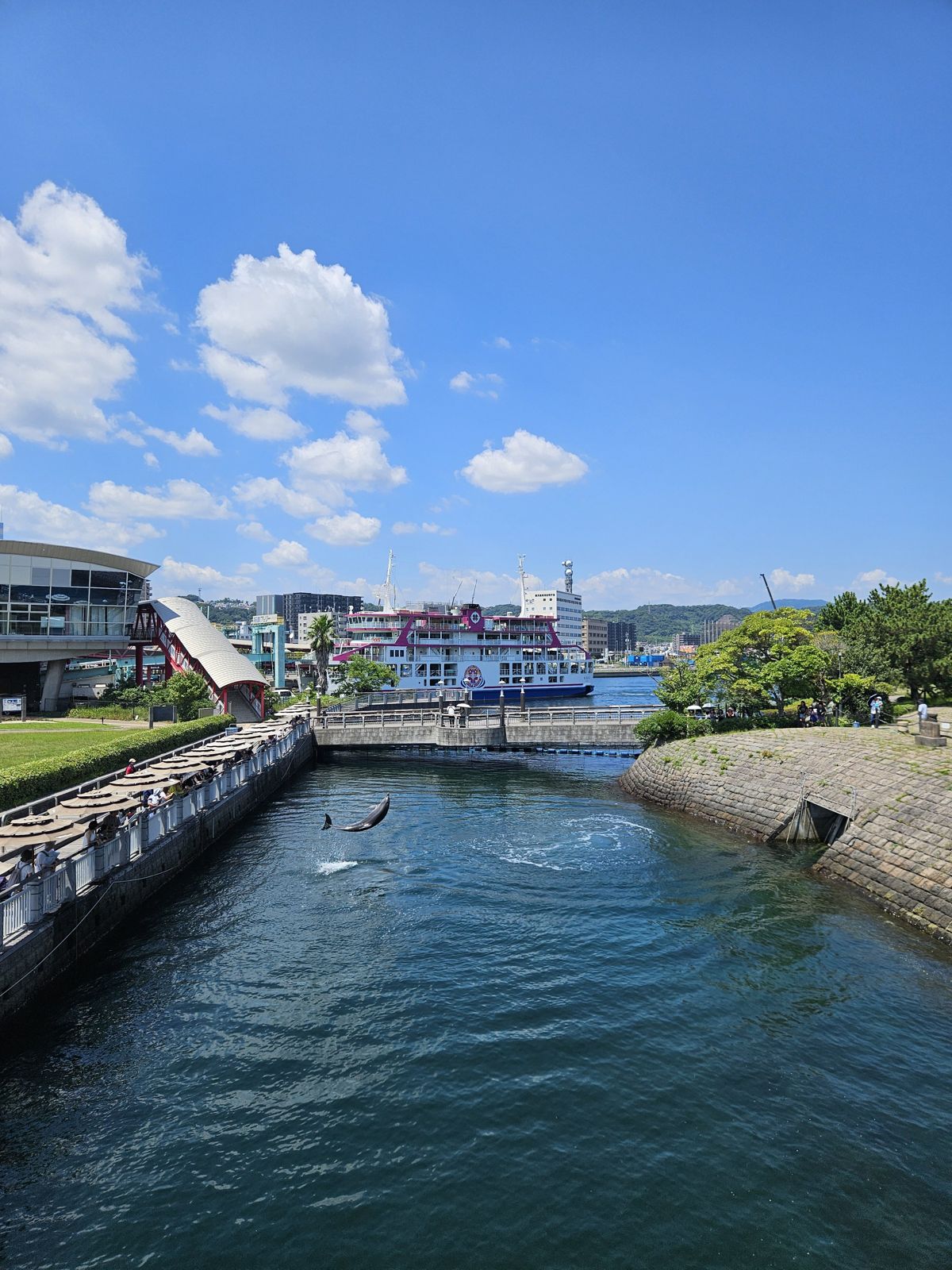
We look in vain for water play areas or fountains in the city, but they all seem to be switched off. No water anywhere to cool off. It's very hot and we haven't seen rain for almost two weeks, so we imagine the drought may be why none of them are working. We take refuge in a shopping centre with a Ferris wheel on the roof, because Clémence now loves riding Ferris wheels. We make the mistake of going in the middle of the afternoon when it's 40 degrees outside. The cabins are old and very poorly ventilated, and the heat inside is suffocating. The attendant did give us fans at the entrance, but it's not enough; we come out dripping after ten minutes. We even think it isn't very responsible to let people ride in such conditions, as someone with a weak heart or sensitive to heat could have a serious turn.
After a simple snack and some quiet time in the cool of the flat, we go back out to eat in the Tenmonkan district. The tram is an old single carriage and painfully slow. At every stop, the driver checks everyone's tickets, and when people pay in coins it takes even longer. You can only get off at the front, which creates endless queues and stops people getting on, since those getting off clog the central aisle. Japan must be the only country in the world to use this system. At the restaurant we eat tonkatsu, breaded fried pork usually served with shredded cabbage, miso soup and rice. Clémence loves it, but she soon tires, so we head back to put her to bed.
On the road