Waking up in a new country is never trivial. It only happens once per trip and, in the end, not many times in a lifetime. We have to wake Clémence this morning, as she fell asleep late after all our adventures. We have to leave the hotel at 10, so we don't hang about.
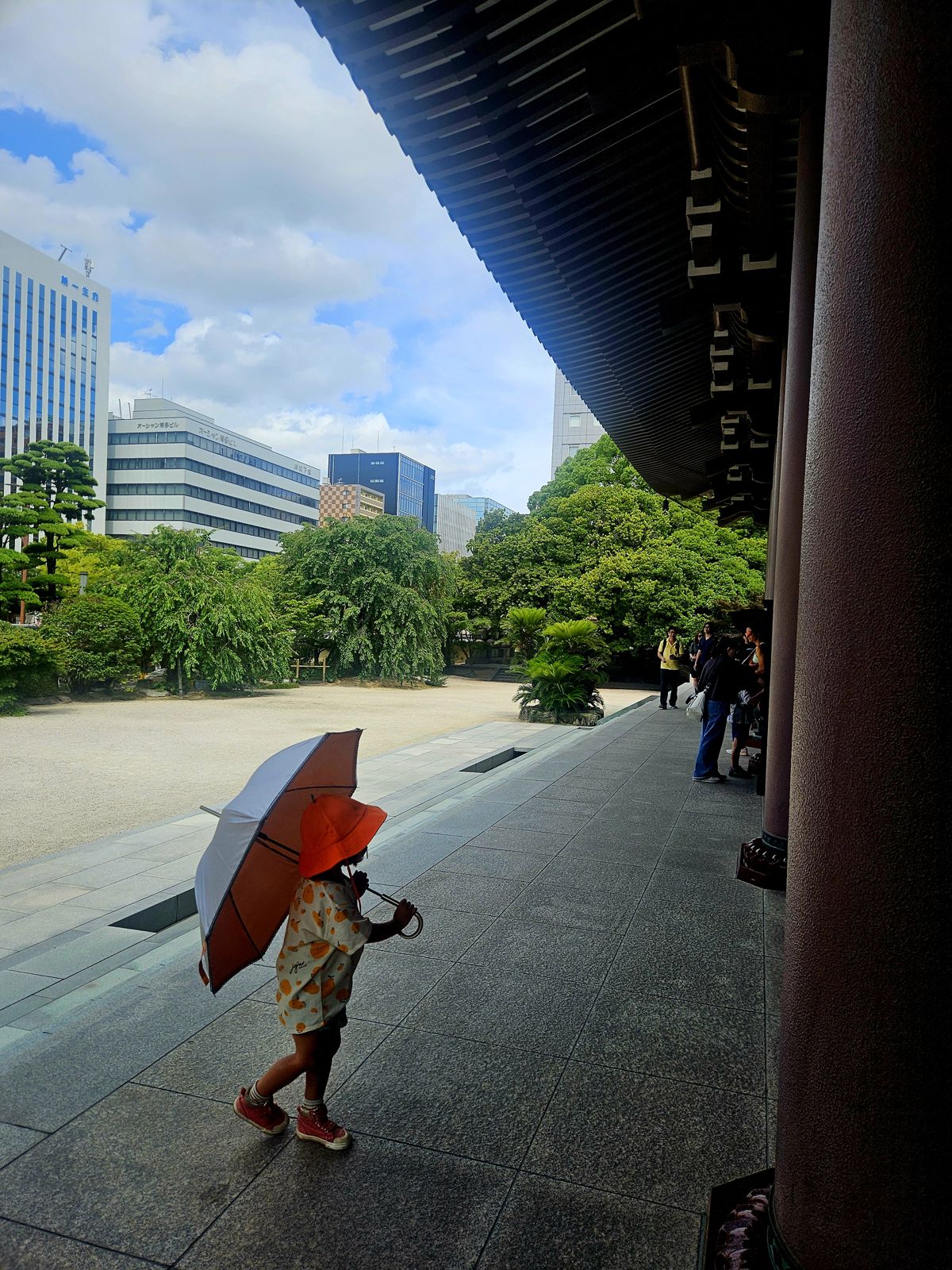
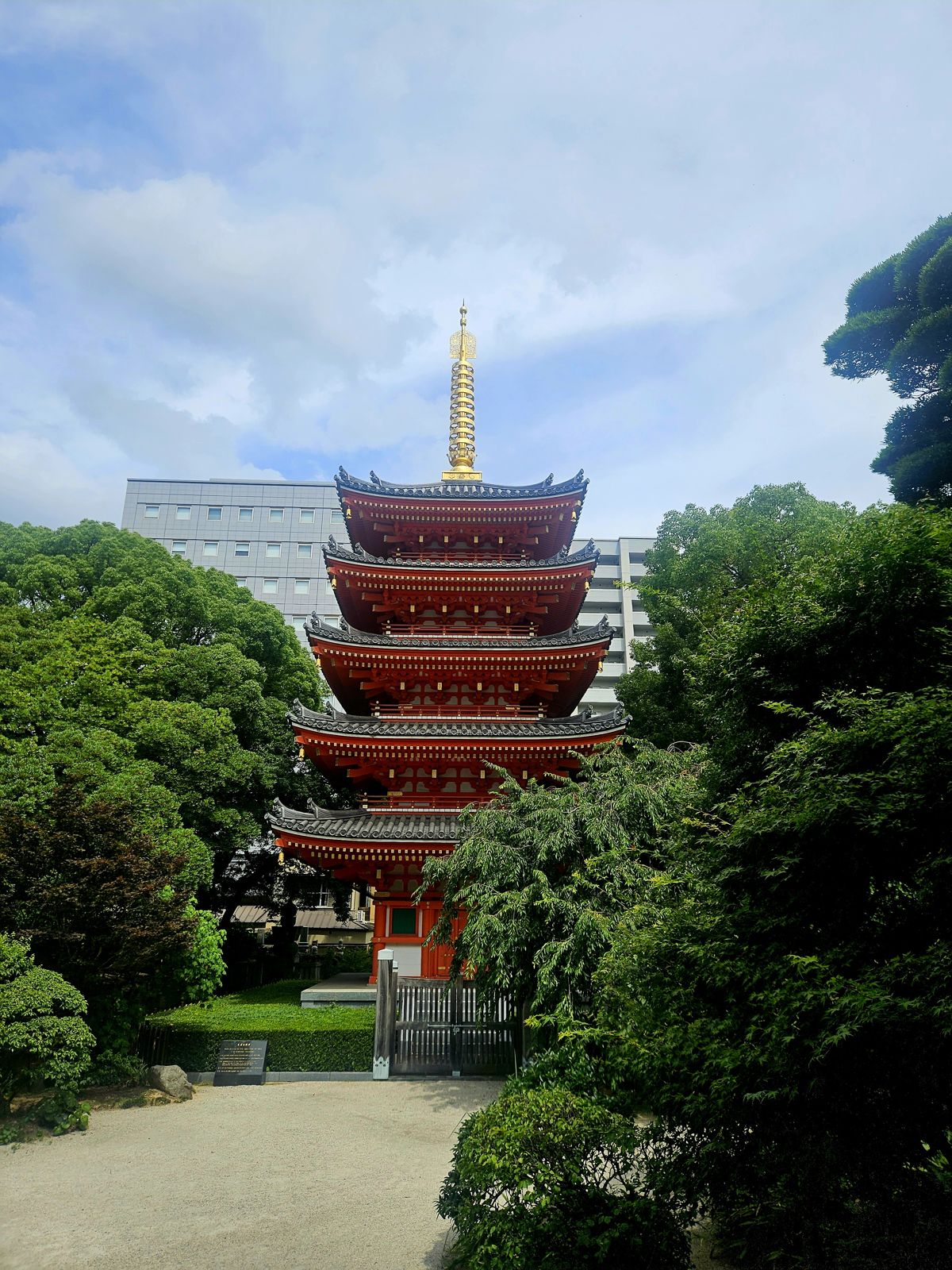
On the dot, we're on our bikes, ready to face Fukuoka's traffic. First we visit Tōchō-ji temple, then Kushida shrine, the most important in the city and the hub of the famous Hakata Gion Yamakasa festival, held in the first half of July in Fukuoka and drawing nearly two million visitors every year. Teams of men in traditional dress race yamakasa, one-tonne floats decorated in every colour, over 5 km through the streets of Fukuoka, especially in the Hakata and Gion districts.
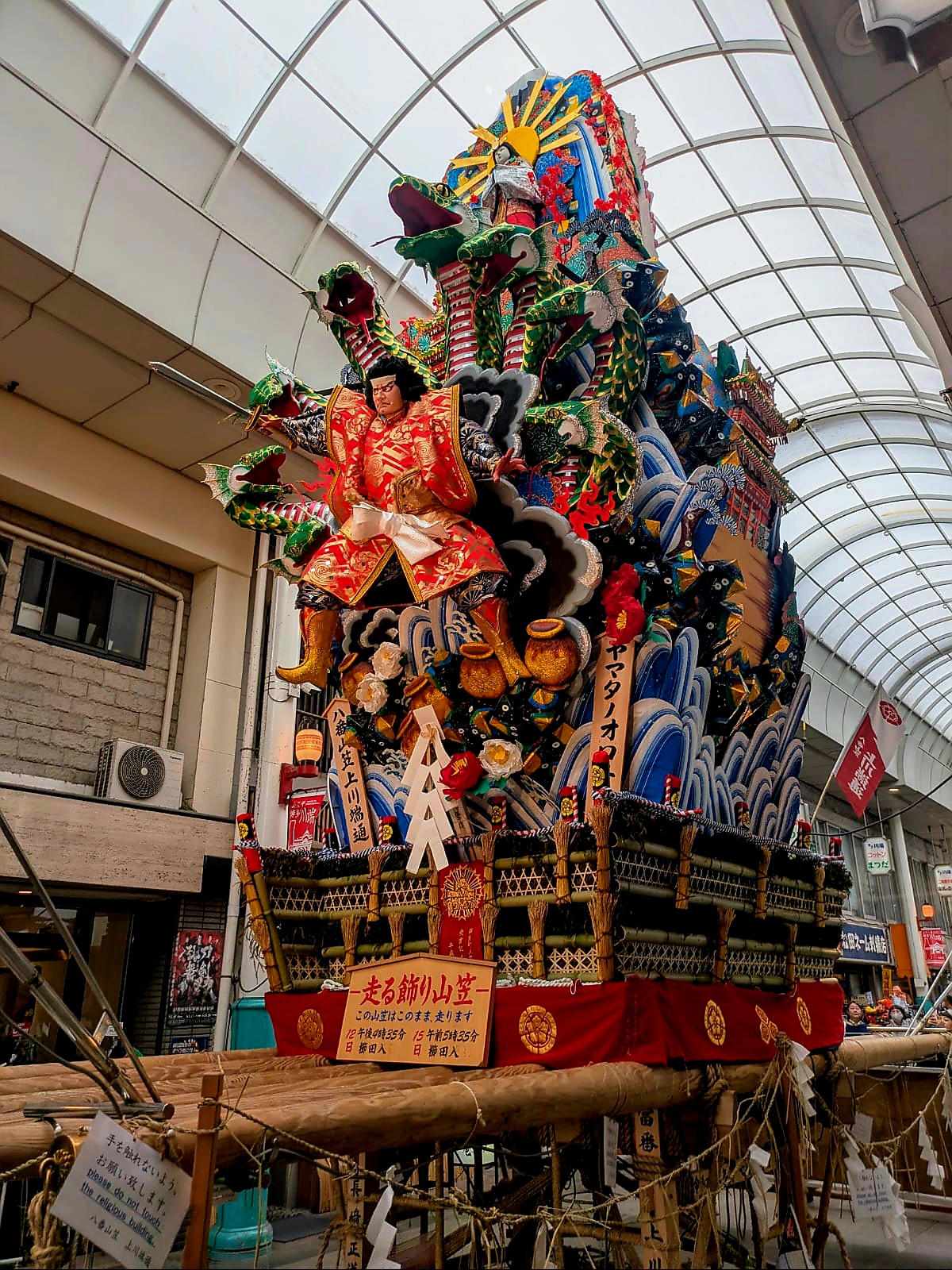
The floats are more than 10 metres high and decorated with samurai or popular anime characters. From 10 July, many events let you admire the racing floats around the city. On 15 July the festival reaches its climax: Oiyama, the famous race that starts early, at 4:59 am. The fastest teams finish in about thirty minutes and are judged on both speed and style: teams must look graceful and heroic while carrying their float on their shoulders.
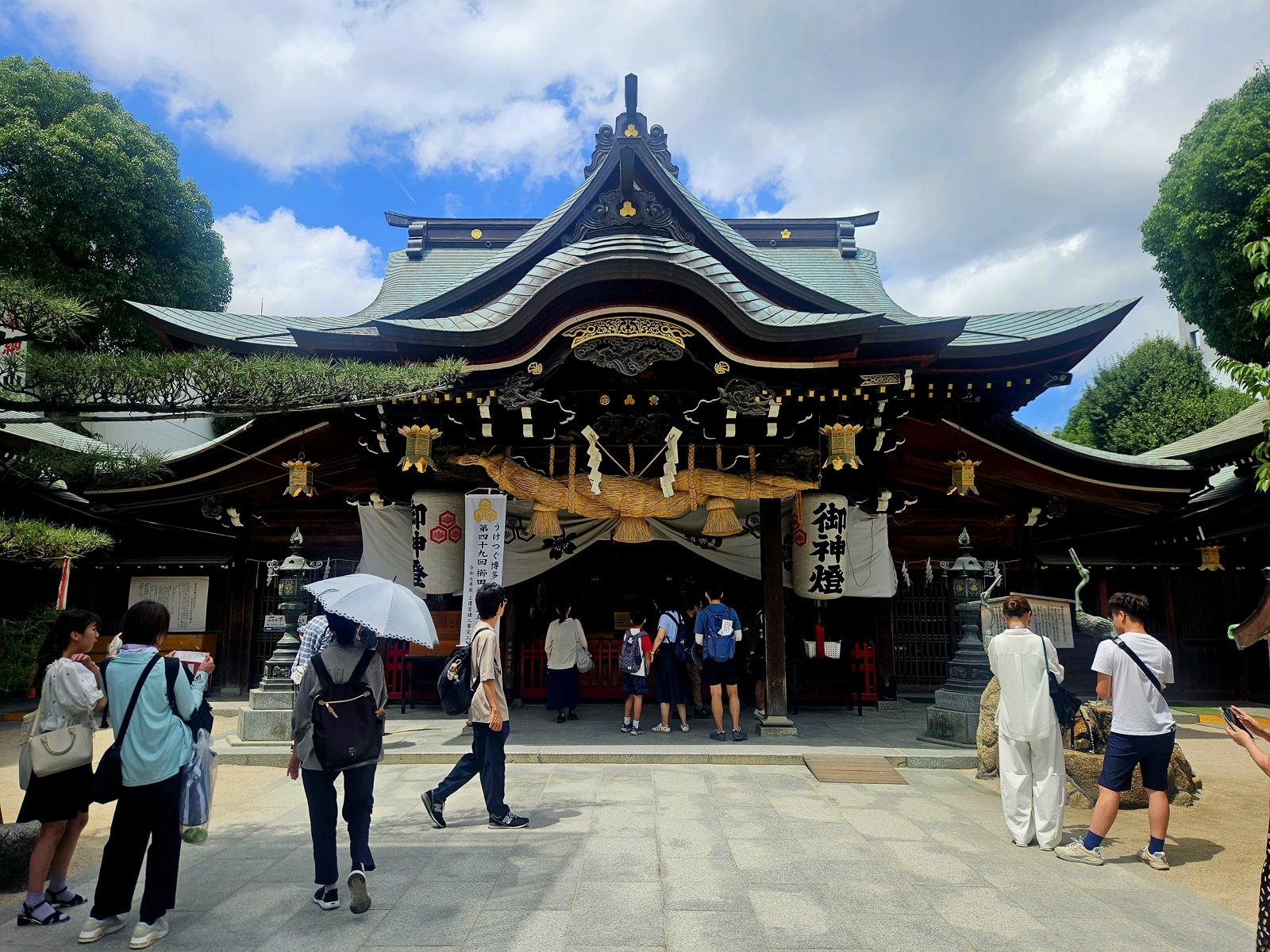
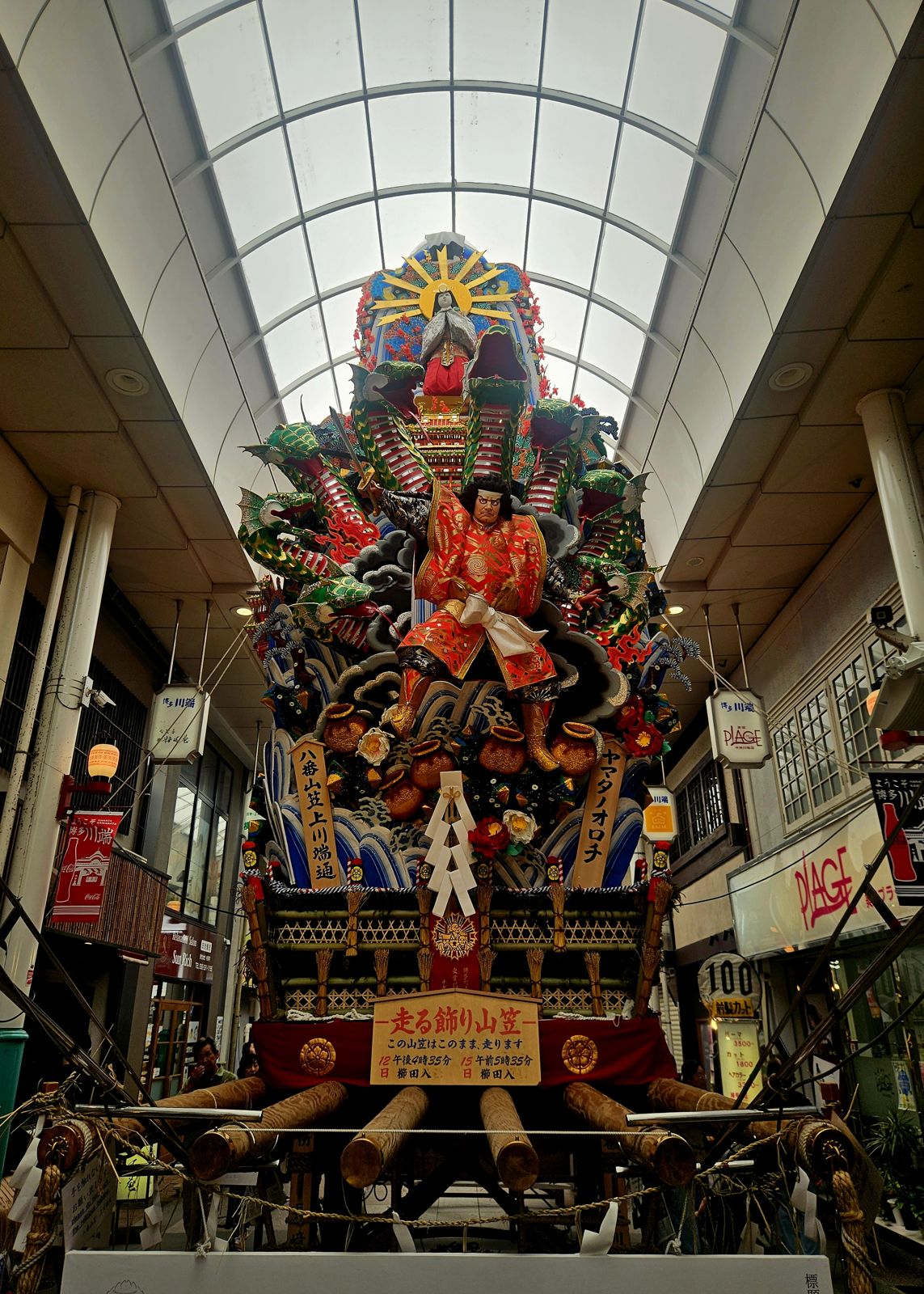
The festival's climax is approaching, so Kushida shrine is crowded. It's lined by a shopping arcade, a kind of market where we stroll. We have to get used to a new currency, but luckily you just divide by 10 compared with the Korean won. €10 is roughly 16,000 won and 1,700 yen. There are many more urban cyclists than in Korea, and we also have to get used to not parking our bikes in front of the places we want to visit. Here, signs clearly say it's forbidden. Bikes can only be parked in very specific places. Japan doesn't like mess: you won't see shared scooters or bikes lying around anywhere, nor cars parked on the street, for that matter. In Japanese cities, cars can only park in paid car parks. There's very little on-street parking, and where there is, it's usually paid. Being a cyclist is sometimes good for your wallet.
We then go to a big shopping centre, one of whose façades is a huge terraced garden. As sometimes happens, the place looks prettier from a distance, in aerial photos. We start up the flights of steps but stop halfway, as the view isn't interesting at all. The restaurants are all full, so we buy lunch at the local convenience store. The shelves are much better stocked and more varied than in Korea, and we're sure not to eat anything spicy here. What's more, while accommodation and restaurants are more expensive than in Korea, supermarkets are surprisingly cheaper. You can eat two good, very generous ready-made (so fresh) dishes for €5.
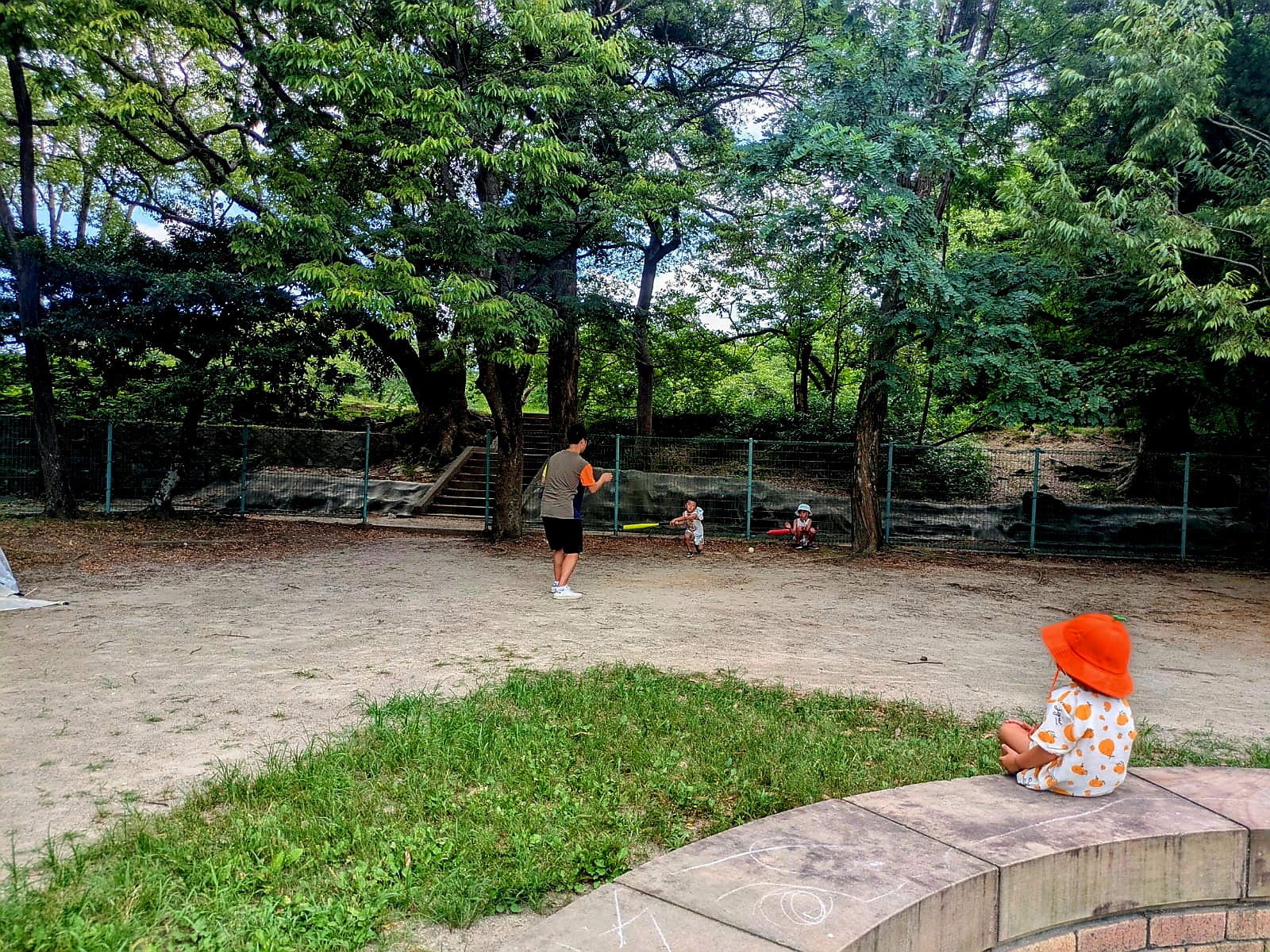
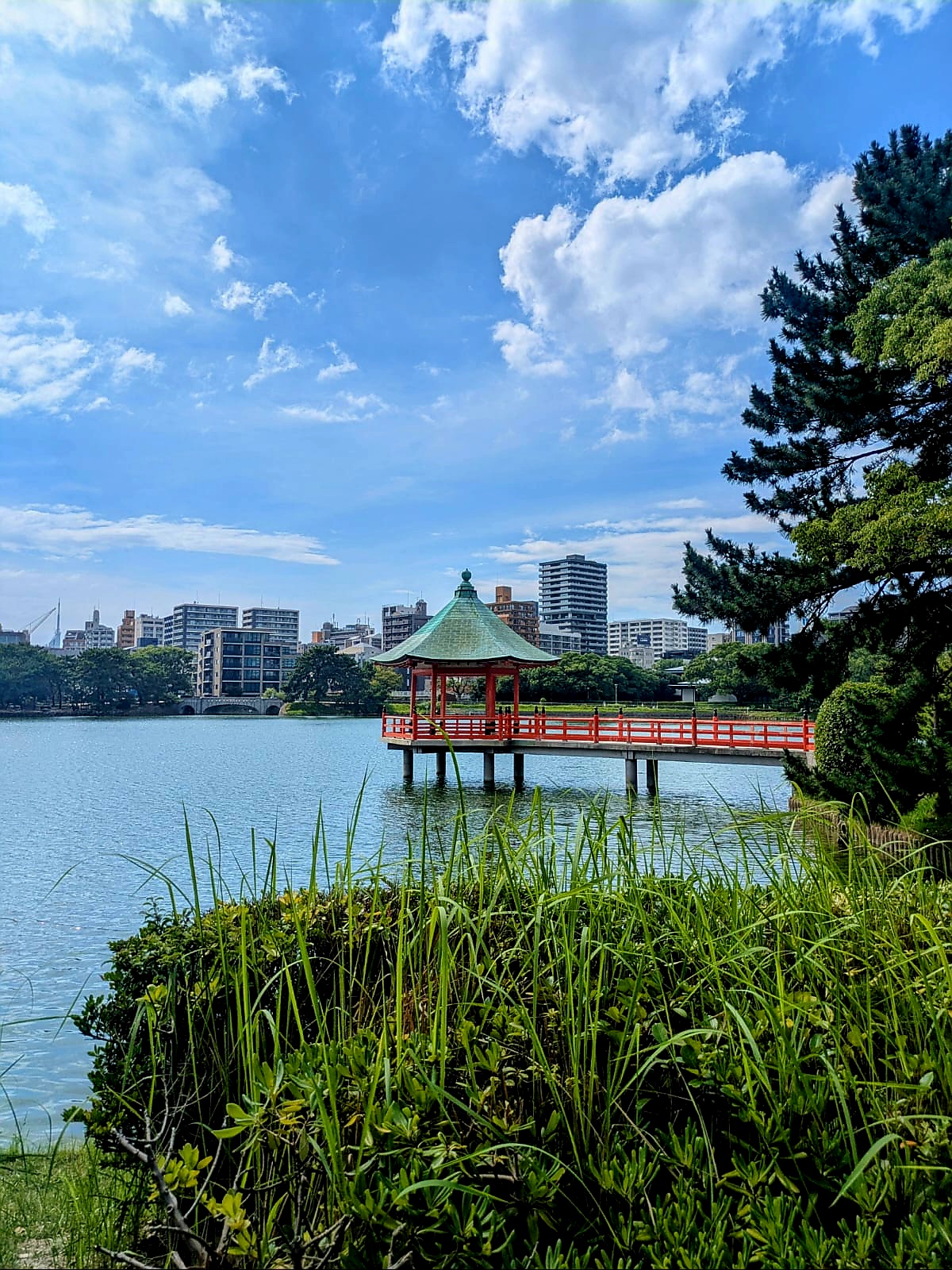
We have lunch in a park, watching life go on around us. We immediately notice there are many more children and that clothing tastes show a bit more variety. We get back on our bikes to go to Ōhori Park, Fukuoka's green lung, with a pretty lake two kilometres round. There's a huge playground, so it's Clémence's moment, and she doesn't need to be asked twice to mingle with the little Japanese children.
Baseball is the king of sports in Japan, and two little Japanese boys of barely six are practising in a corner. Clémence is fascinated; she watches them closely and delights in throwing the ball back when it comes near us. On the way out, we ride round the lake, which clearly marks out three lanes: one for runners, one for pedestrians and one for bikes. But contrary to the persistent cliché of Japanese people following rules to the extreme, here everyone does as they please, which suits us just fine.
After a quick stop at the hotel, we go out for a snack in a café. But we have to face facts: the days of little treats in Korea are over. In Japan, accommodation will cost us much more and we'll have to cut out the extras. Especially as we get a bit ripped off in the little local café: €15 for three measly hot chocolates and a tiny cheesecake. We only wanted a hot chocolate for Clémence, but the barista insisted on one drink per person, which we don't really understand. We feel a bit as though we've thrown money out of the window as we leave; we'll have to get used to the exchange rate!
Japanese supermarkets have an excellent reputation, and we shop to eat cheaply tonight. The aisles are full of inexpensive food, which will make up for the cost of accommodation. After a meal at a table where you sit cross-legged, Clémence drops off at 8 pm. We make the most of the evening to have an aperitif and catch our breath.
Sunday 13 July
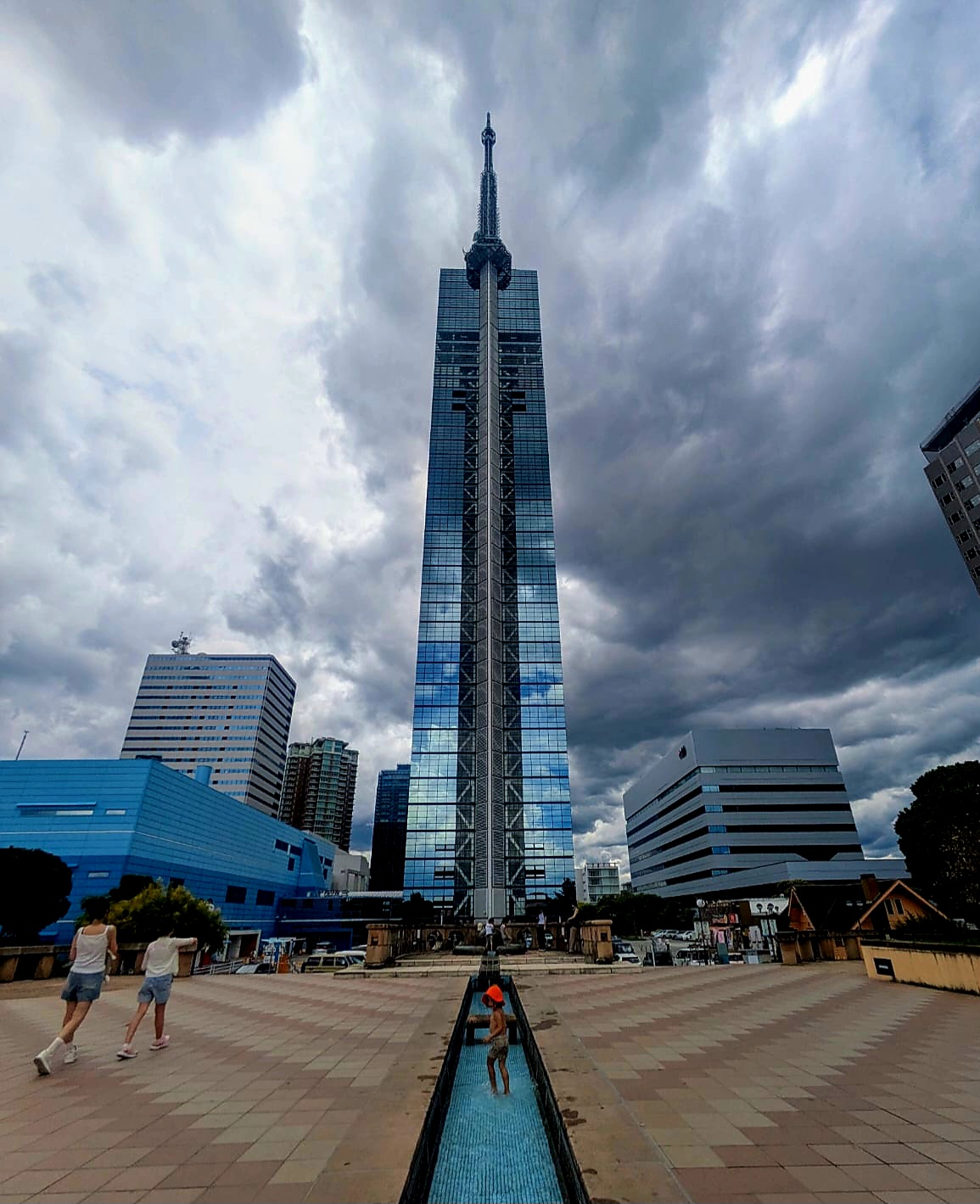
Breakfasts out are over too. We eat a good meal at the flat and make the most of the fine weather to ride to Momochi beach, overlooked by the 234-metre Fukuoka Tower. It's only 5 kilometres and it's Sunday, so it's very quiet and we really enjoy the ride. When we arrive, bike parking awaits and we head onto the sand. We immediately notice the differences from Koreans. The Japanese go in the water much more and cover up much less, though still far more than in France.
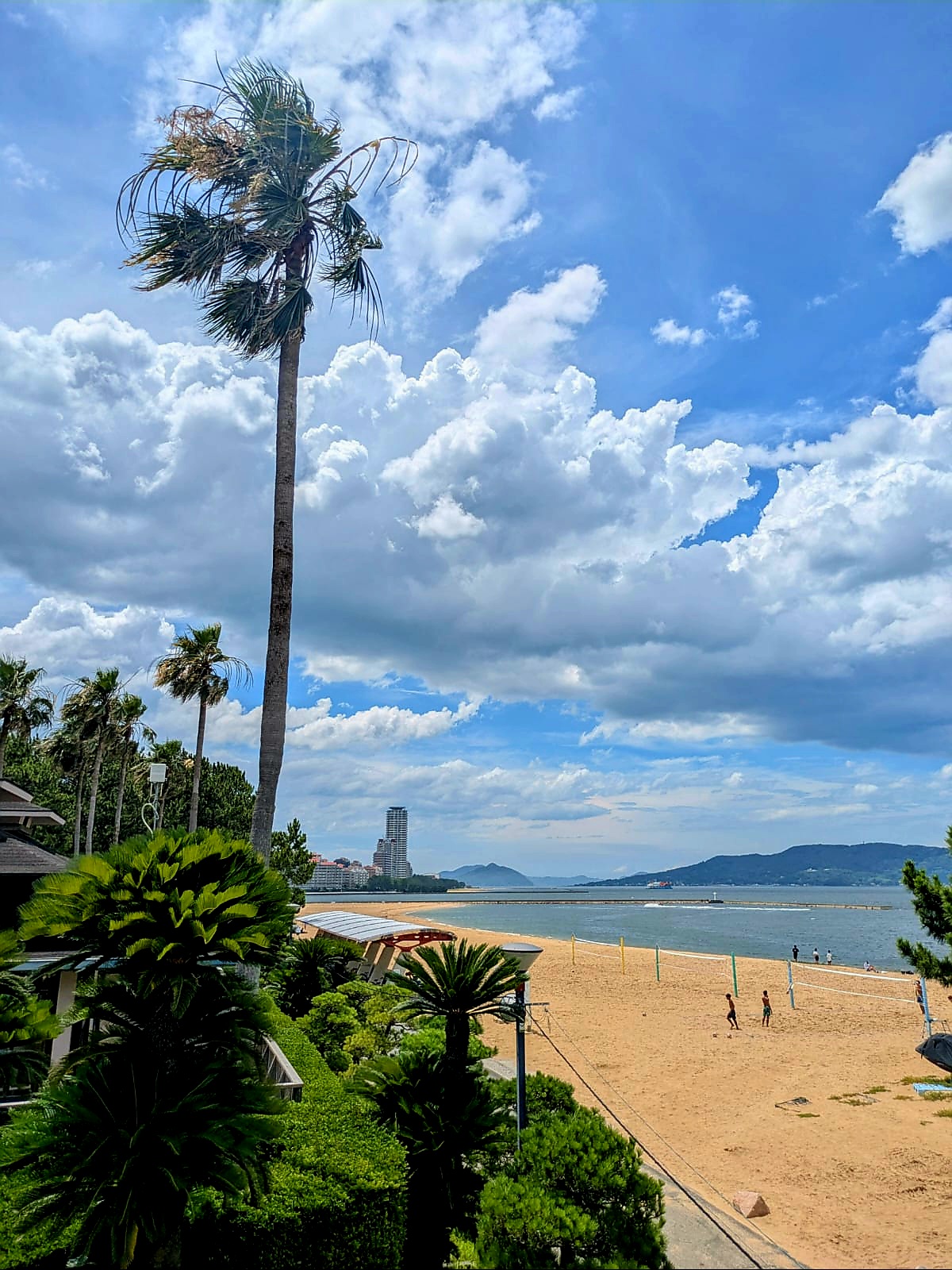
We lay our towel under a big parasol and rush off to play in the water. As we're paddling, a Western woman arrives with her daughter, who looks the same age as Clémence. Our eyes meet and we quickly realise we're from the same country. She's French, from Annecy. With her Japanese husband, she has lived here for seven years. Clémence plays with her daughter's rubber ring while we learn more about what living here means. She lives in Kobe, a city whose charms she praises at length.
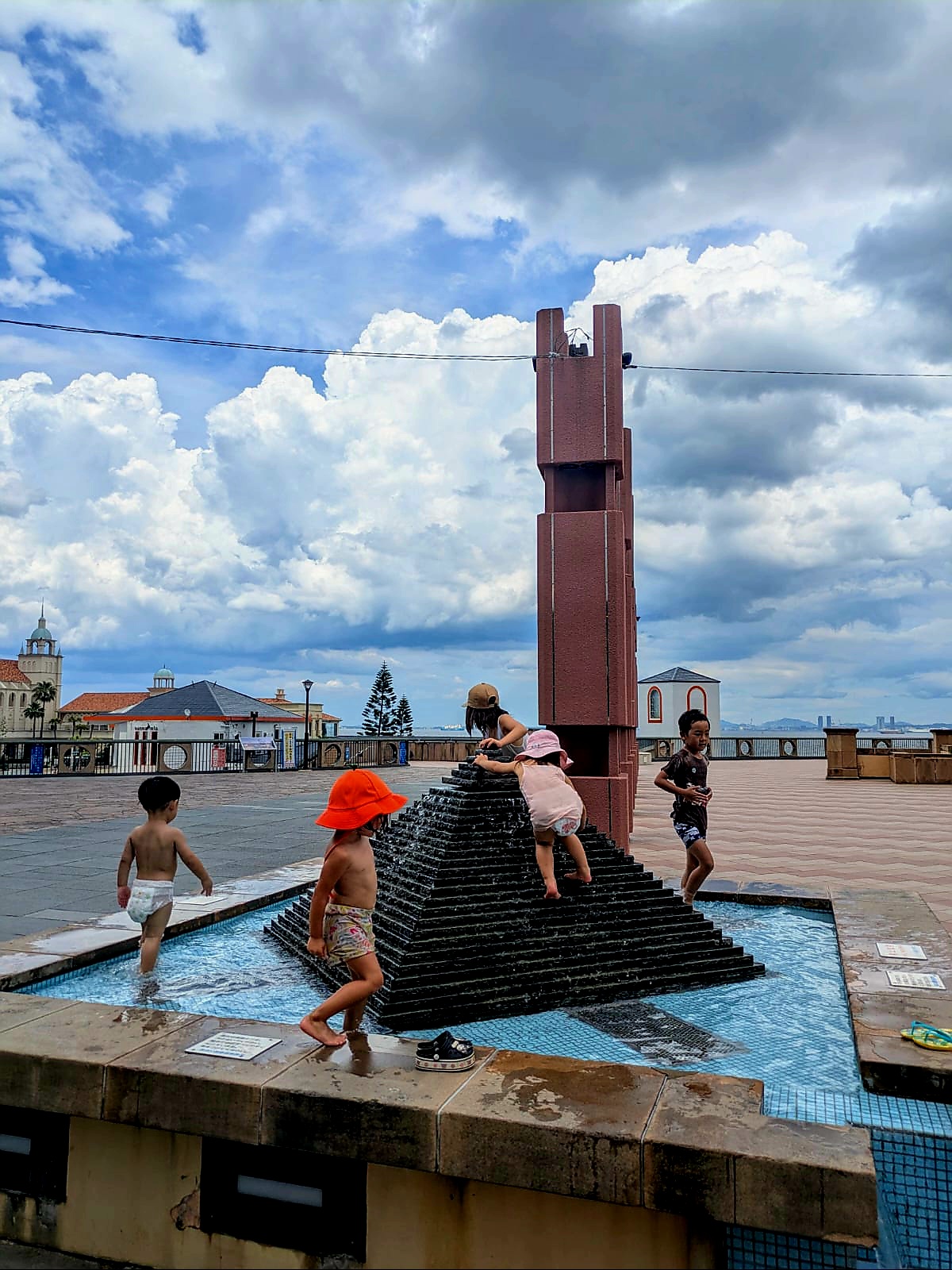
Clouds start rolling in, so we play it safe and part ways after swapping contacts. At the top of the beach steps there's a little water channel with a fountain; little Japanese children are playing in it, and Clémence joins them. She has fun copying her new friends, and they all enjoy it in their own way. After an hour of play, the storm seems to be right above us, so we make ourselves scarce.
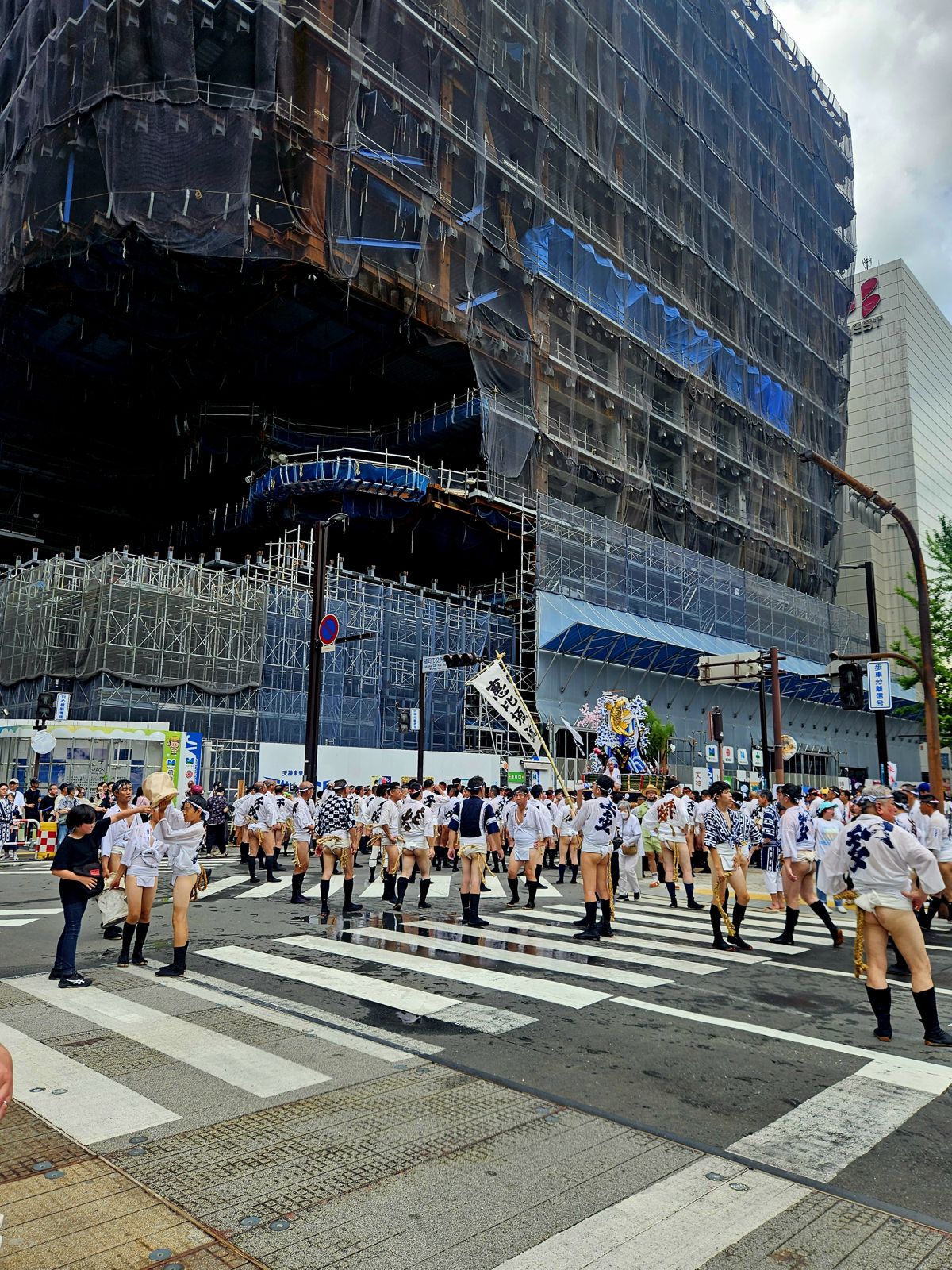
We wander round a big shopping centre nearby, where we buy clothes better suited to Kyushu's tropical heat. Clémence is delighted with a new pair of little trousers; she won't stop talking about them and can't wait to put them on. We buy a snack, and in the end it doesn't rain, so we eat calmly outside before heading back to the flat. On the way, we come across the famous runners with their floats, training as they parade through the streets.
Their outfits are funny, as they're only covered on the upper body, with a simple white cloth passing between their buttocks. So it's quite comical to see men making such an effort in this get-up. The exercise is gruelling, mind you. About thirty runners at a time carry the float, while others run in front, behind or alongside. Two men ride on the float (one facing forwards, the other backwards) and direct the runners. They use teppō, red sticks, to point out runners who need to be replaced by fresh ones. The float is so heavy that even the strongest runners can't last more than three or four minutes before being replaced by a more rested participant.
At that point it starts to rain, so we hurry back to our place. We rest there briefly before going out again to the Canal City shopping centre, a stone's throw away just across the river. We'd read there were water and light shows, and we're rather disappointed to find they only last four minutes. The show is still nice and fun, but it leaves us wanting more. Our flat has a fairly well-equipped kitchen, so tonight we cook stir-fried noodles with vegetables and steamed dumplings. Once again it comes to a very reasonable price. At least we know food won't cost an arm and a leg in this country, which is reassuring.
Monday 14 July
It's our last day in Fukuoka, so we intend to make the most of it. First by taking it easy in the morning, as tomorrow we start our bike tour of Kyushu and it won't be restful. But also because Fukuoka has a reputation as a very pleasant city to live in. It's one of Japan's trendy cities and gains residents every year. It's the island's biggest city, with almost two million people.
We ride to the station, and our Korean carefree days are definitely over. Here, there's no question of locking your bike just anywhere. Signs direct us to a bike garage. As for cars, we take a ticket and a barrier opens. There are lots of bicycles parked; we do the same and head for the train.
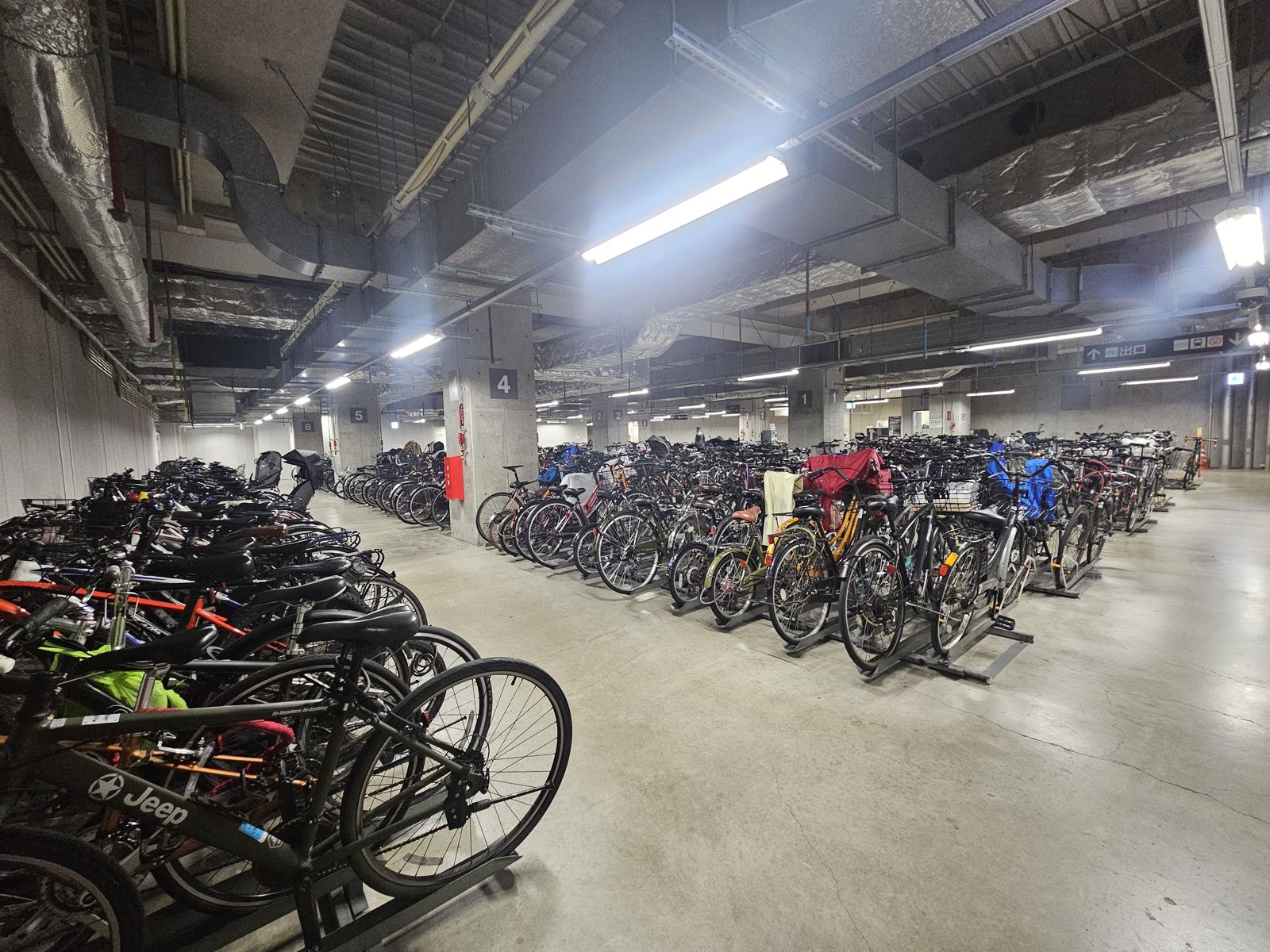
Whereas everything in Korea was also written in Latin letters, that's no longer the case here, and Fukuoka's gigantic station soon feels like a maze. To buy a train ticket in Japan, you have to find your destination station on a map, note the fare shown for the section you want, then pay that amount at the machine so your ticket shows the right sum. The Japanese love making life complicated; that's no legend. Once the tickets are in Clémence's hand, we still have to find the right platform among many. No small task, as the departure boards show destinations in Japanese, but we manage by asking a member of staff.
Our train is a slightly old-fashioned local one, but the views outside are worth it. It's raining when it stops at Kidonanzoin-mae station, and we get off with the other tourists to visit Nanzoin temple, famous for its huge bronze reclining Buddha, the largest in the world. Once again our bad Korean habits catch us out. There, we could pay for absolutely everything everywhere by credit card. We only withdrew cash twice, mainly as a precaution. It's another matter in Japan. The lady at the entrance tells us they don't take cards. We have to go upstairs to the main temple hall, ask one of the monks to pay on his terminal, then come back down to show our proof of payment. Nothing is simple, really.
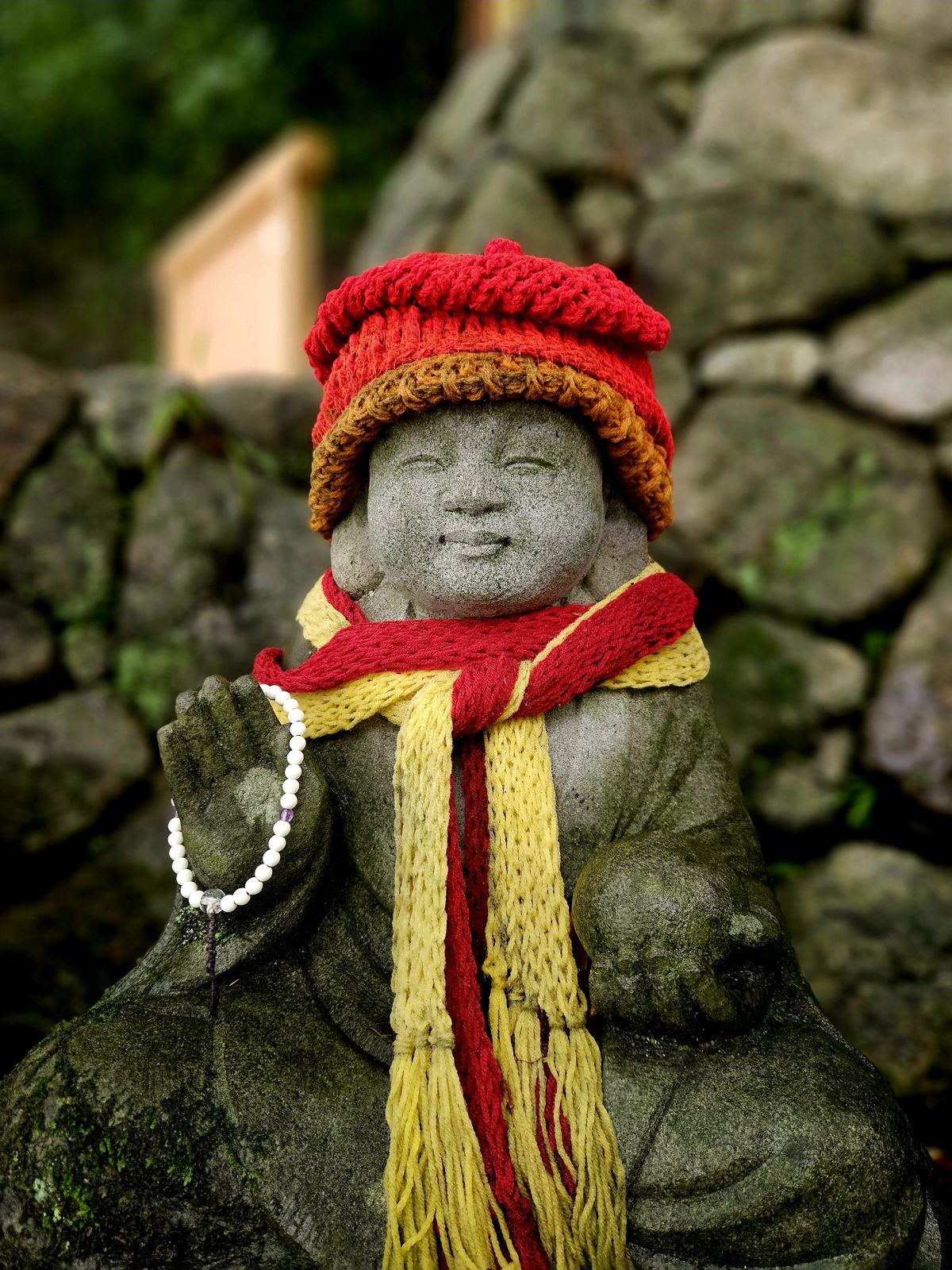
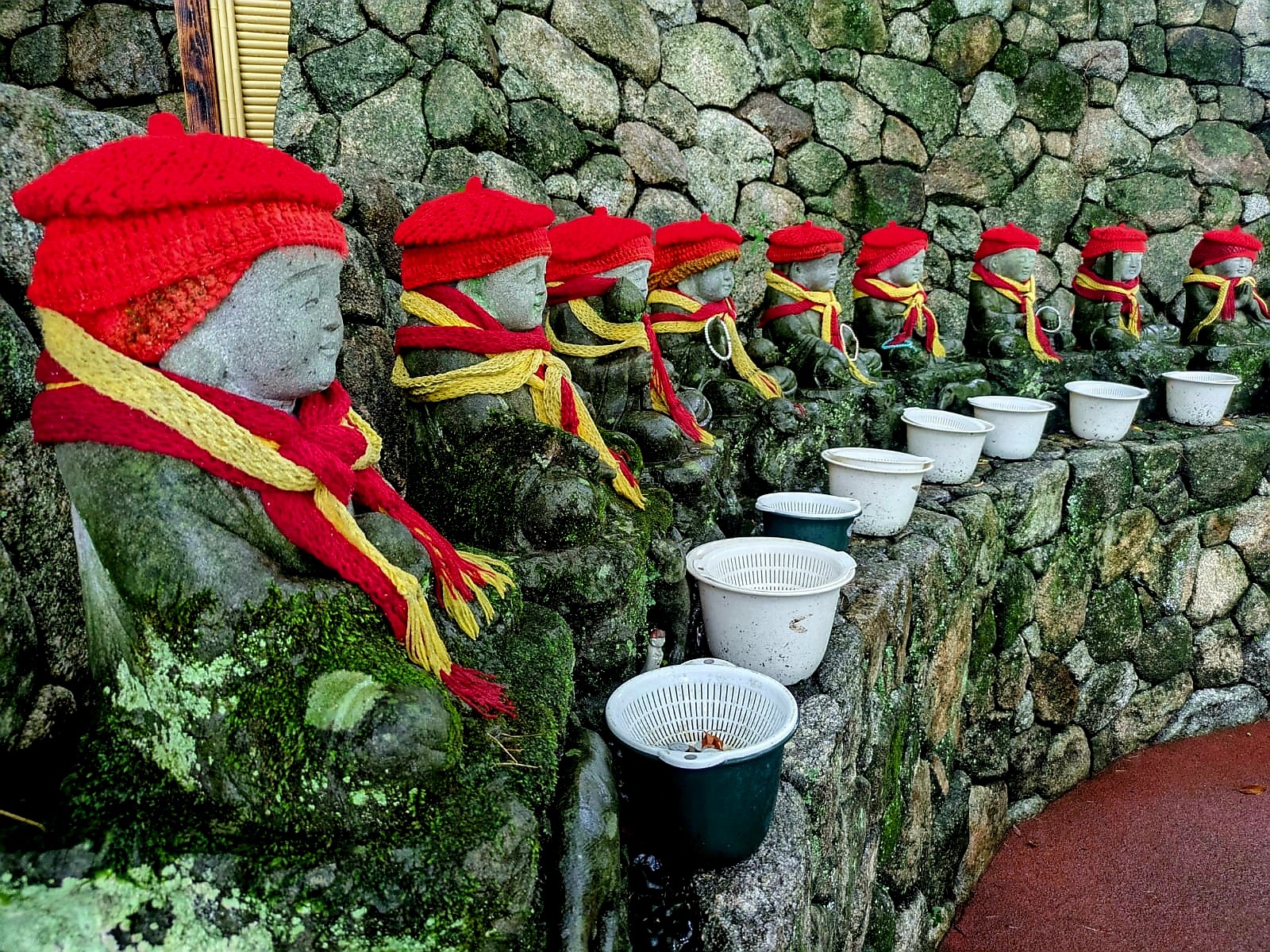
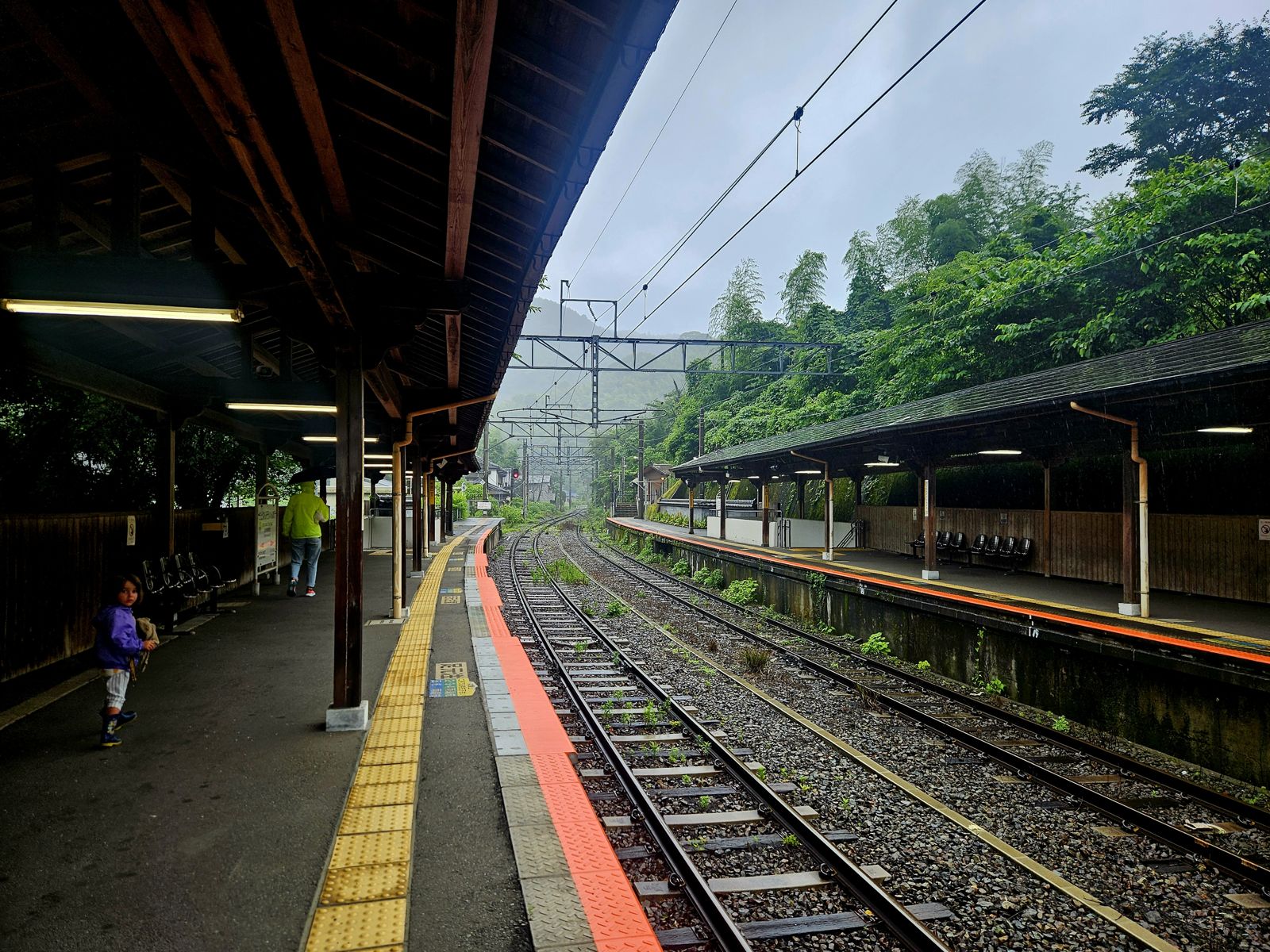
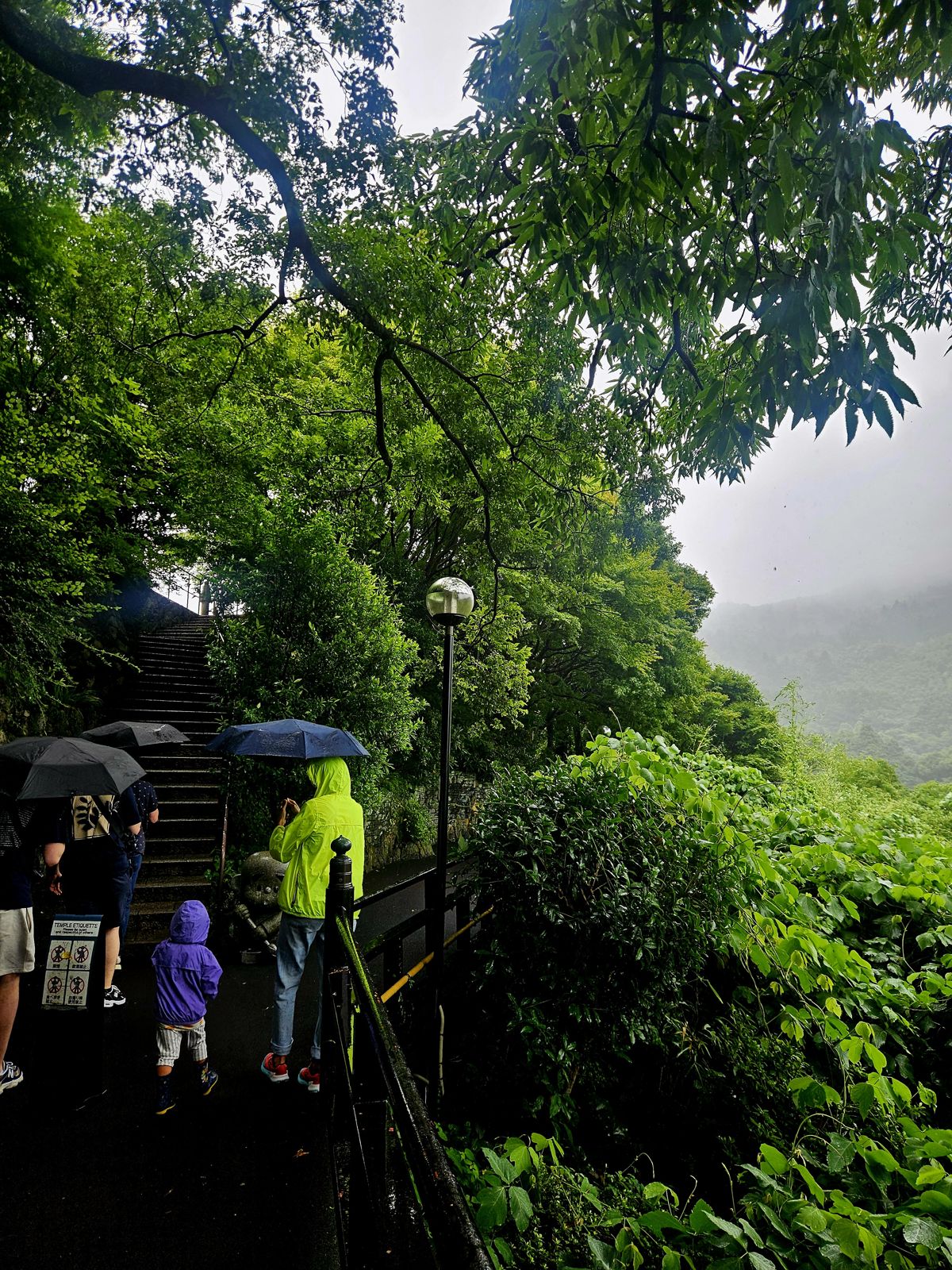
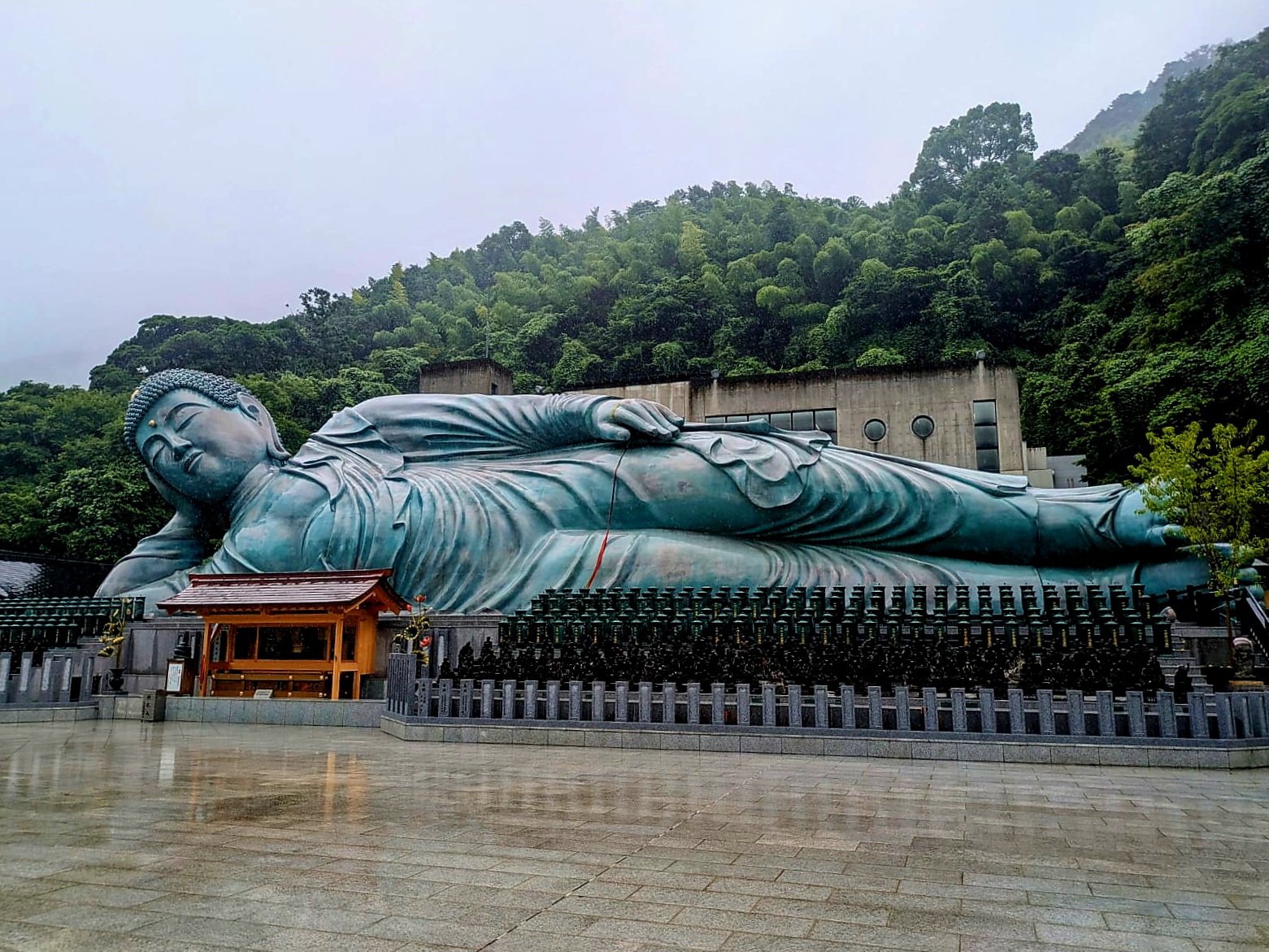
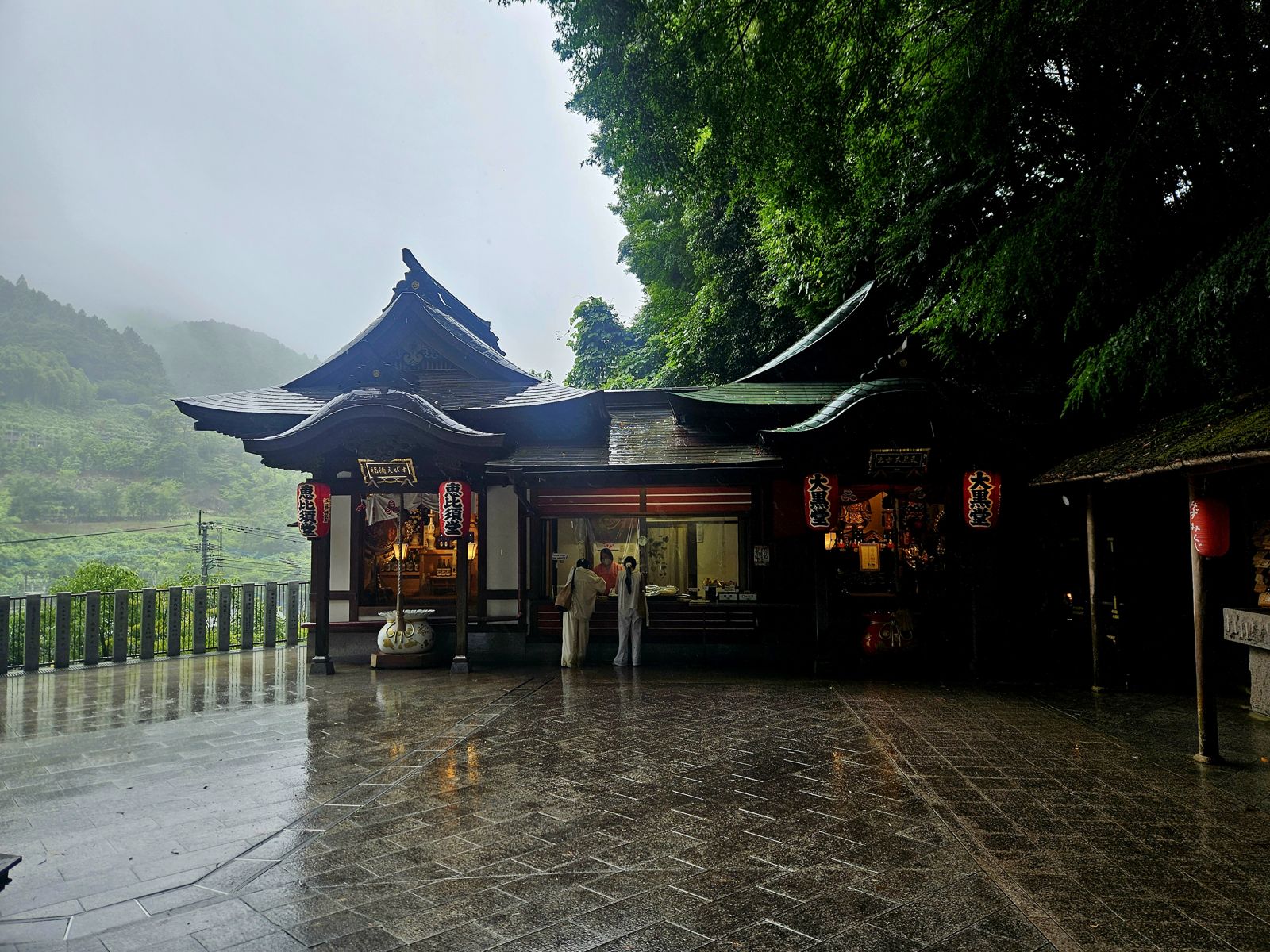
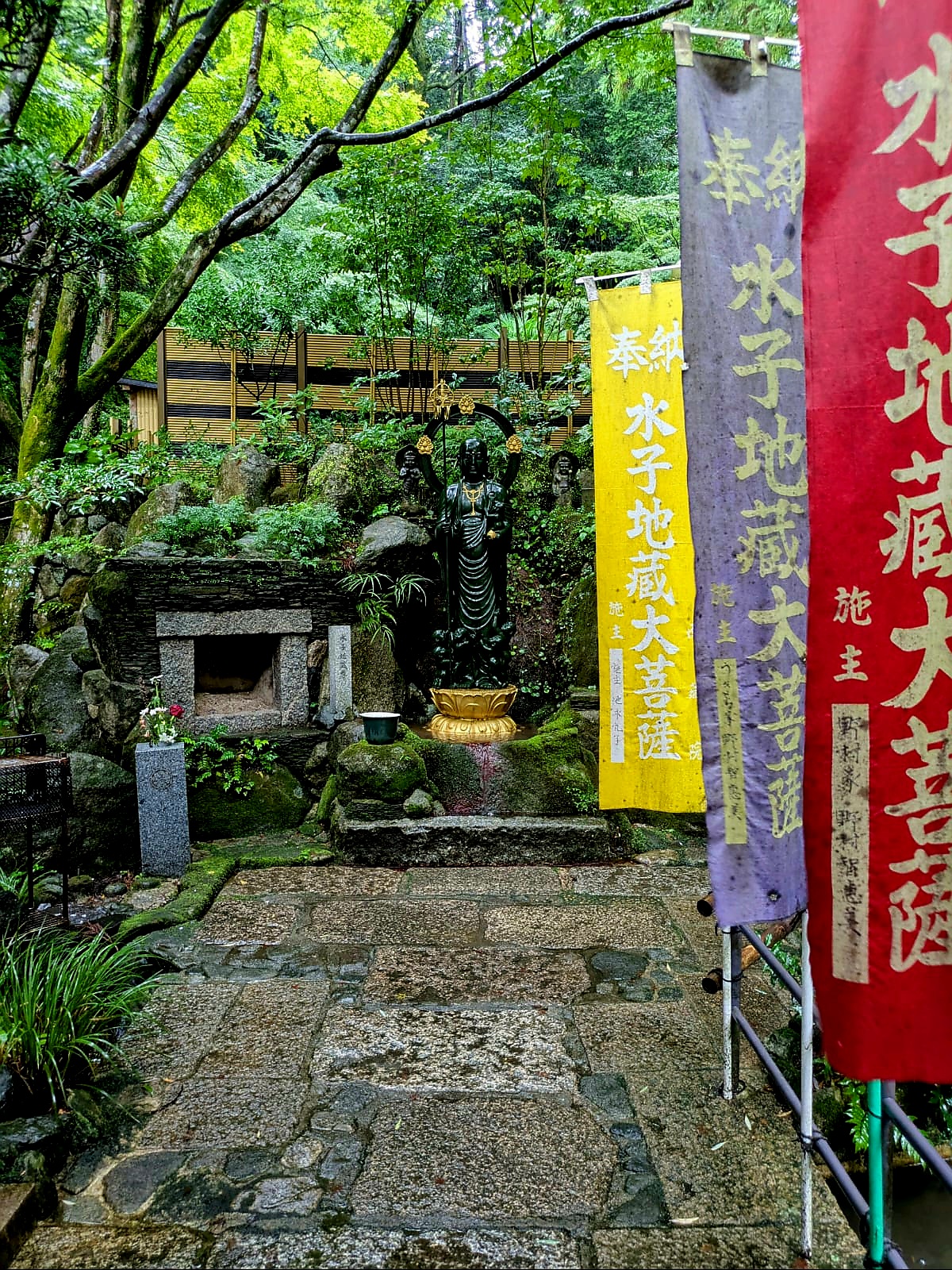
The place of worship is very pretty, and the fine curtains of rain give it an almost mystical charm and bring out the lushness of the surrounding jungle. At the top lies the huge reclining Buddha. The statue is so big that the Buddha's feet are taller than we are. We enjoy it as best we can, as the rain has doubled in intensity. We wander between little flights of steps, admiring the waterfalls and Japanese architecture.
Back at the station to leave, we realise there's no ticket machine like in Fukuoka. The stationmaster explains you can't pay by card at this station. So he writes us a little note to hand in at Fukuoka station on arrival to pay what we owe, which we do. Japanese stations always have counters for fixing ticket problems. But once again, the man at the counter explains they don't take cards either. We don't know how to sort this out, but the clerk eventually gives up and lets us out without paying.
Our troubles aren't over, as the bike garage is free for two hours and then costs 100 yen per day after that, so we have to pay 200 yen for our two bikes, but once again, no credit cards. You need either cash or specific transport cards to pay. The attendant doesn't insist and lets us out. We really need to withdraw some cash.
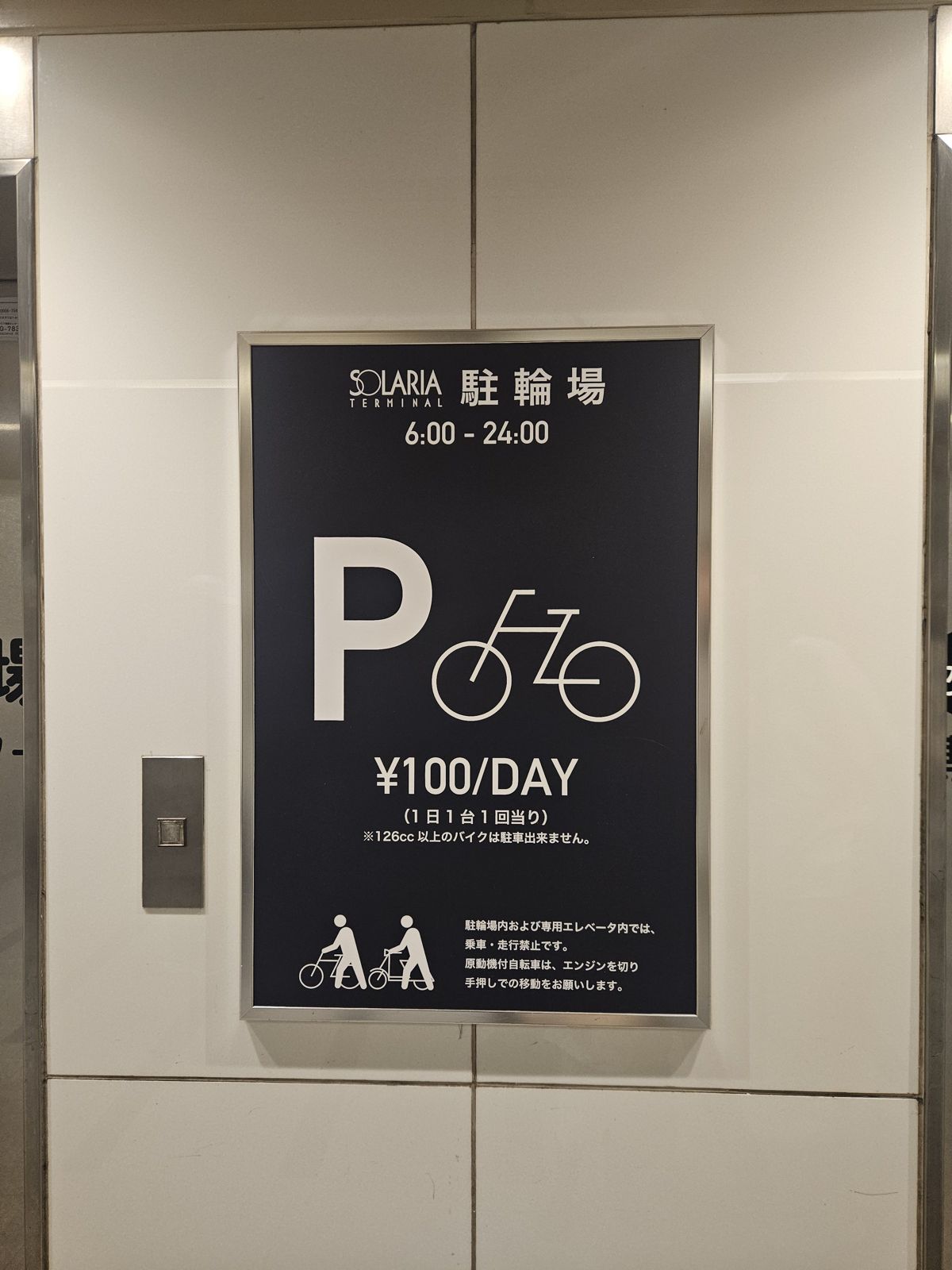
We need to take the train from another station in the city to get to the pretty village of Dazaifu, and since we pass the flat, we stop to eat yesterday's leftovers. We don't dawdle and are soon out again. At this station too, it's off to the bike park. The Japanese want to keep public space clear. This station is smaller and easier to navigate. We're soon in Dazaifu, where we wander without any real aim other than enjoying the house fronts, visiting its shrine, crossing the typical little bridges and admiring the beautifully kept gardens.
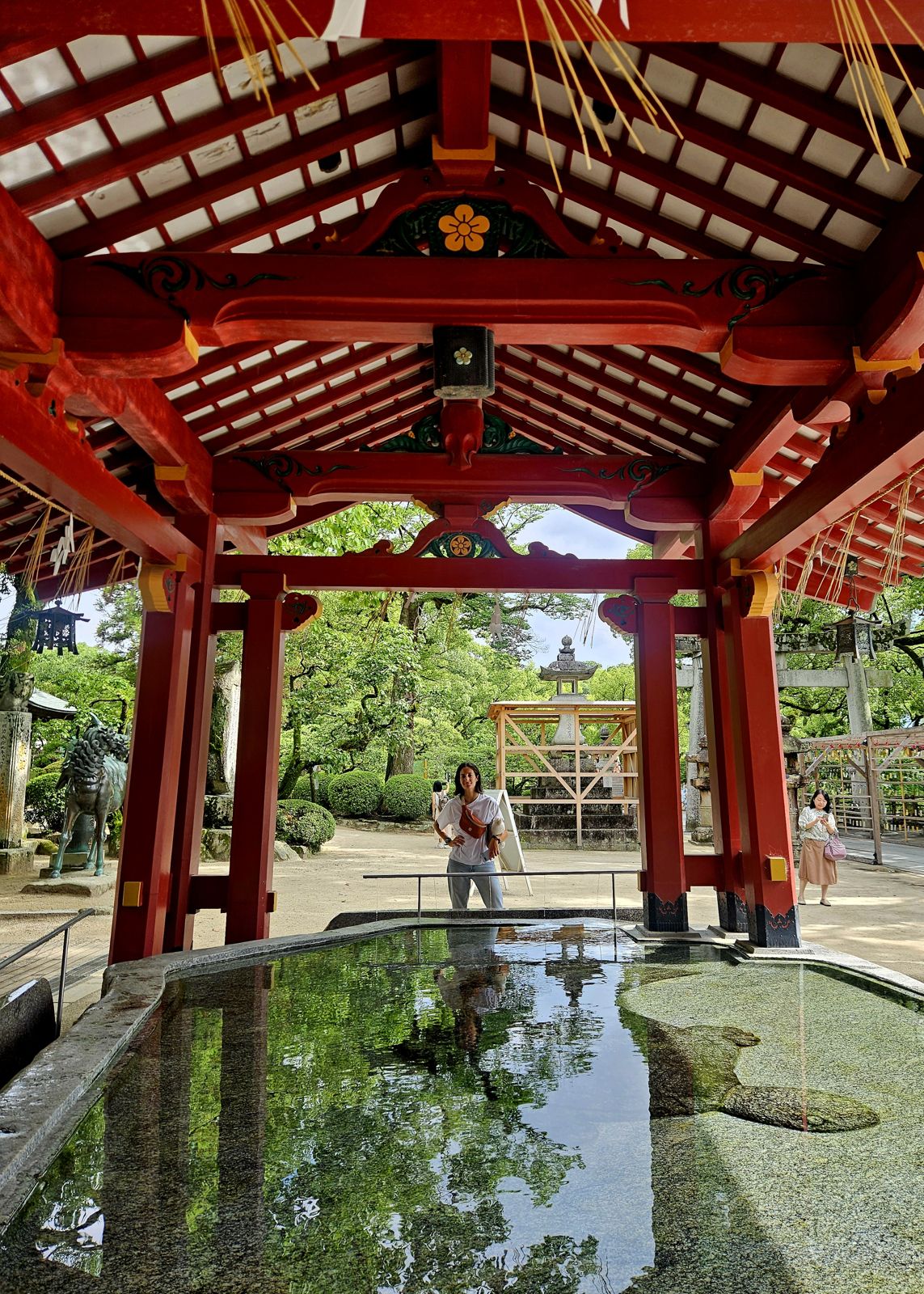
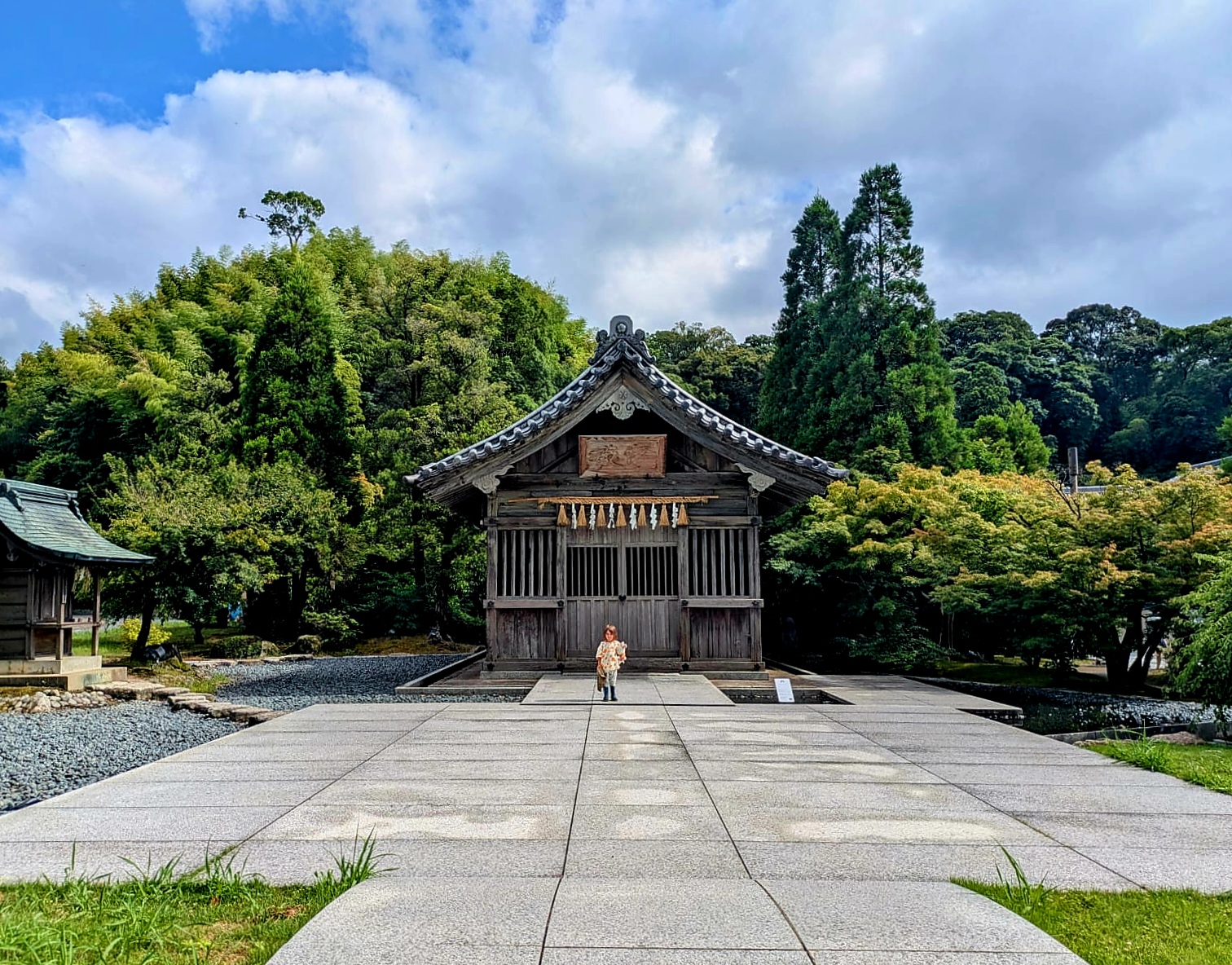
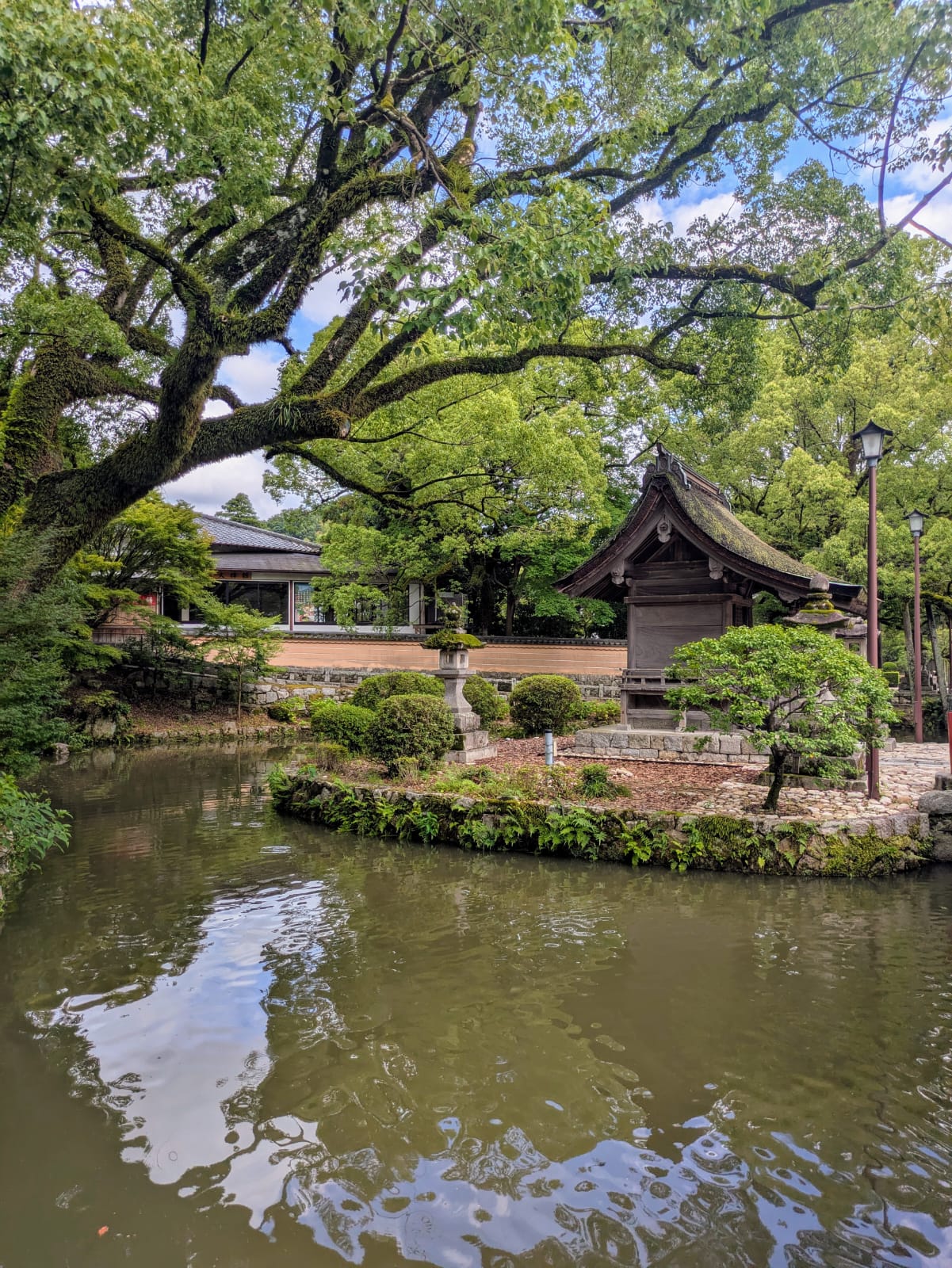
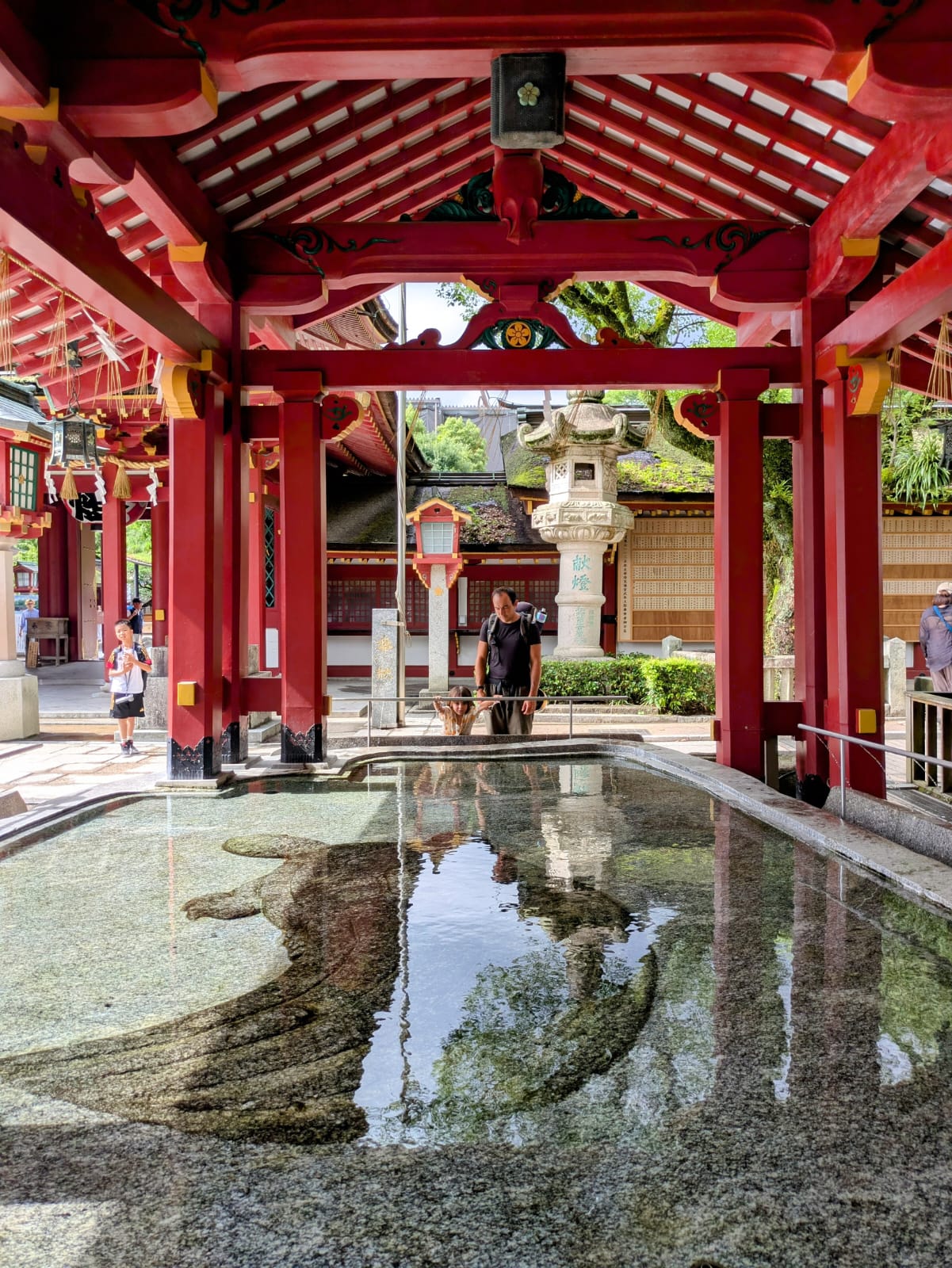
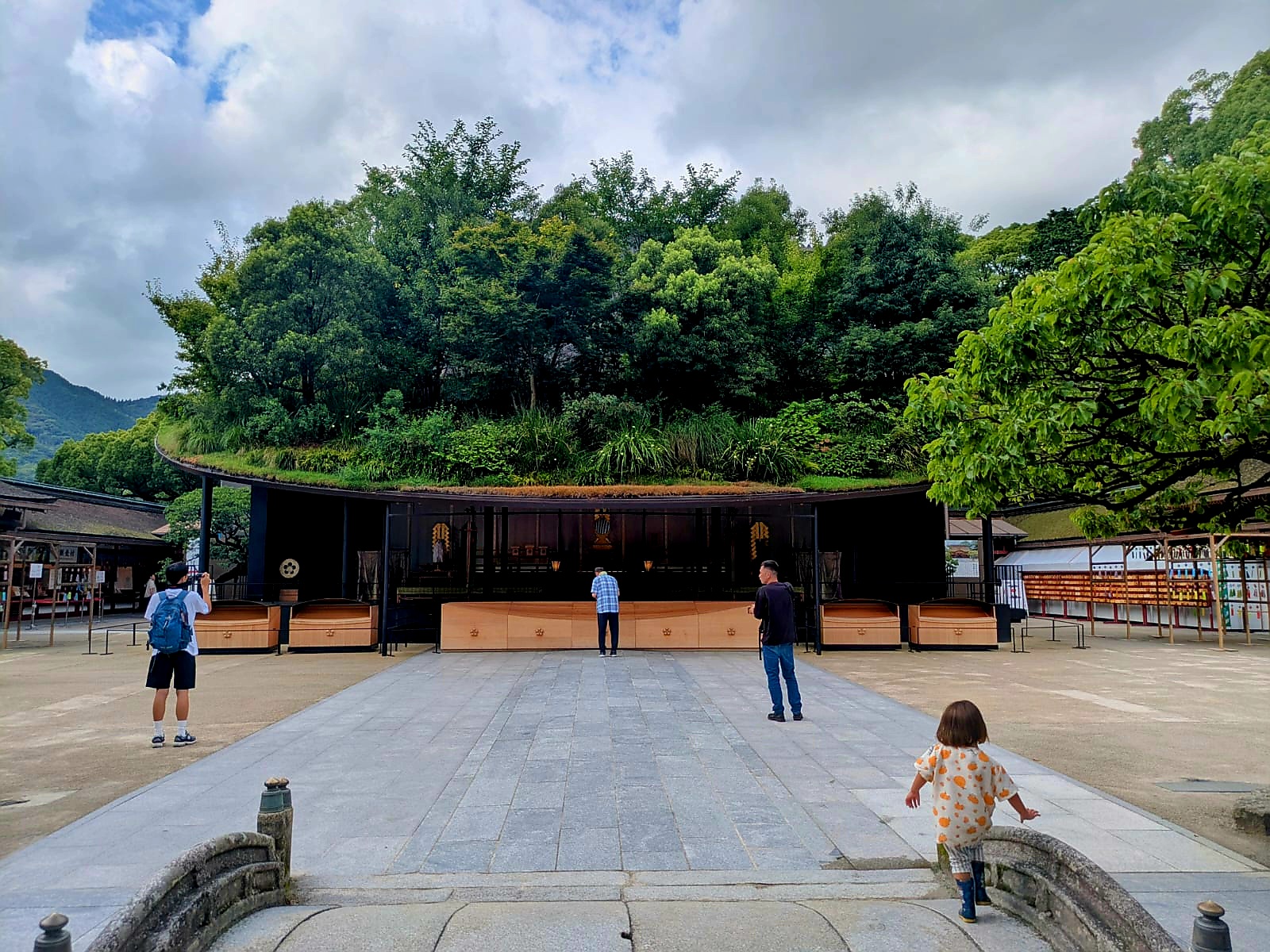
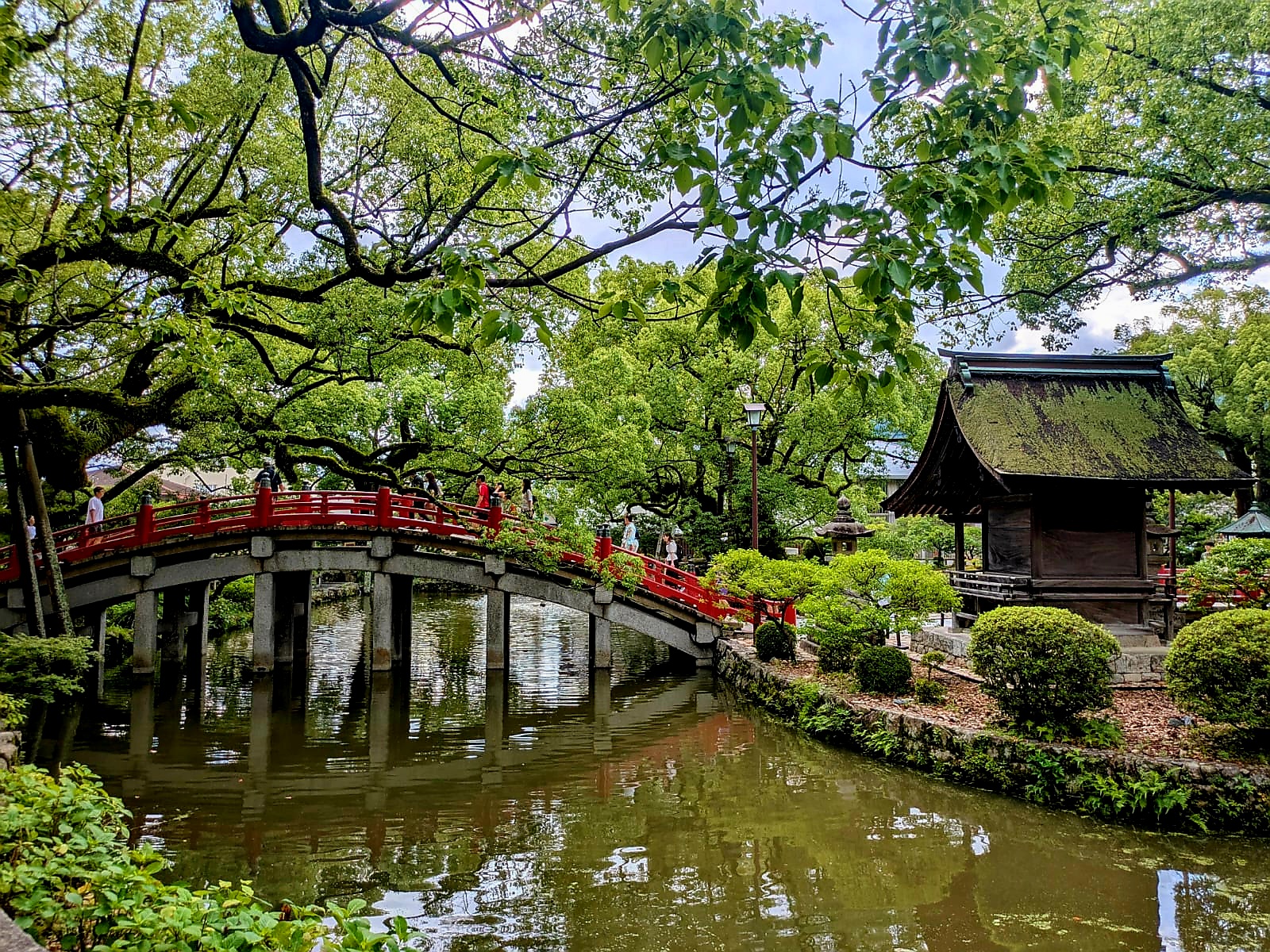
After a snack, we go back to the flat to freshen up, then go out to eat. Fukuoka is Japan's street-food city, and the little stalls, called "yatai" here, spring up like mushrooms as soon as the sun starts to set. You find them in several parts of Fukuoka, and one of the main spots is a short way from our place, along the Mikasa River running through the city. We sit on wobbly stools at a little stall and order a bowl of ramen and some yakitori. Clémence loves it, but we're left wanting more. We can't order everything we'd like, as the budget is tighter in Japan.
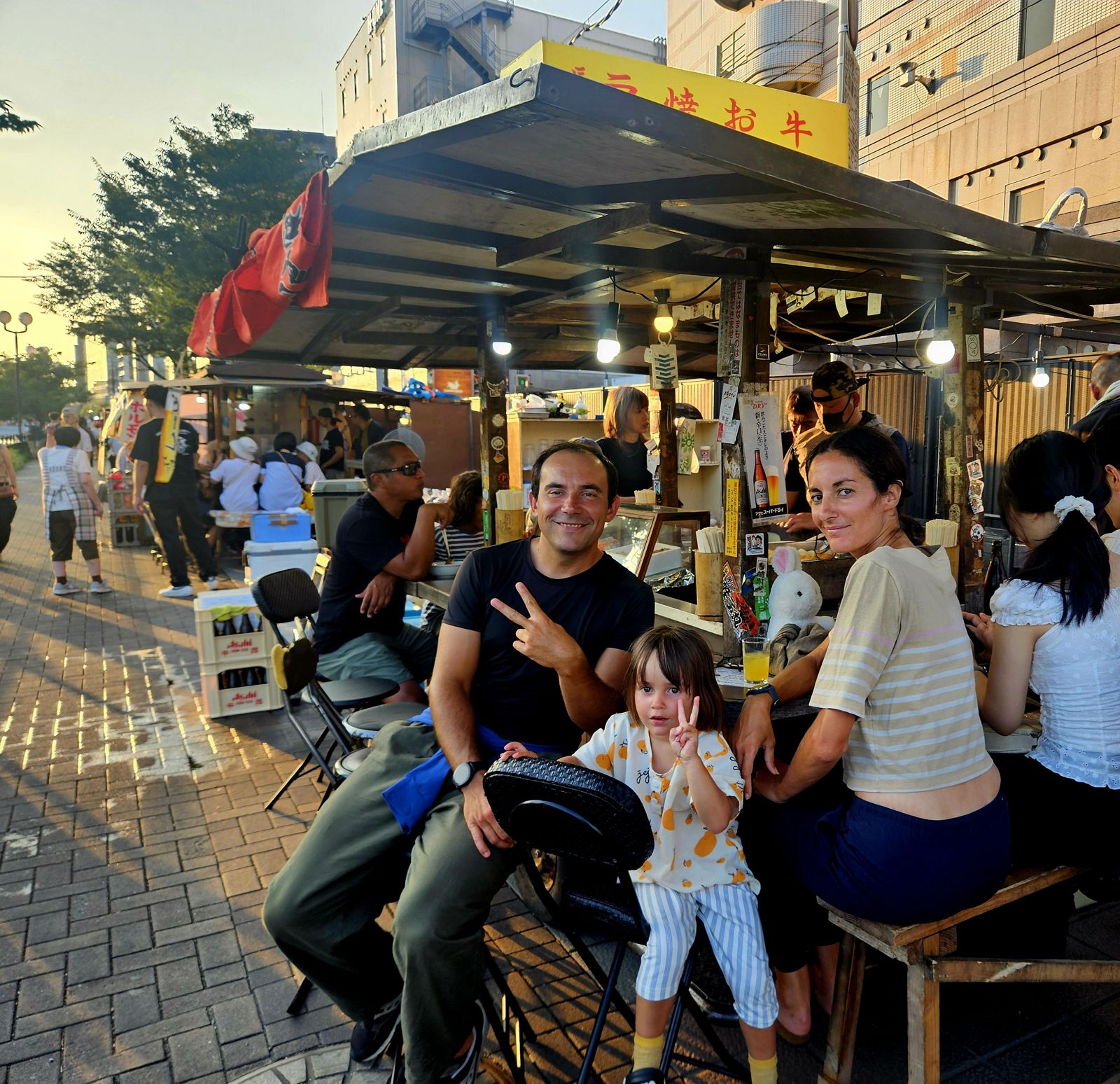
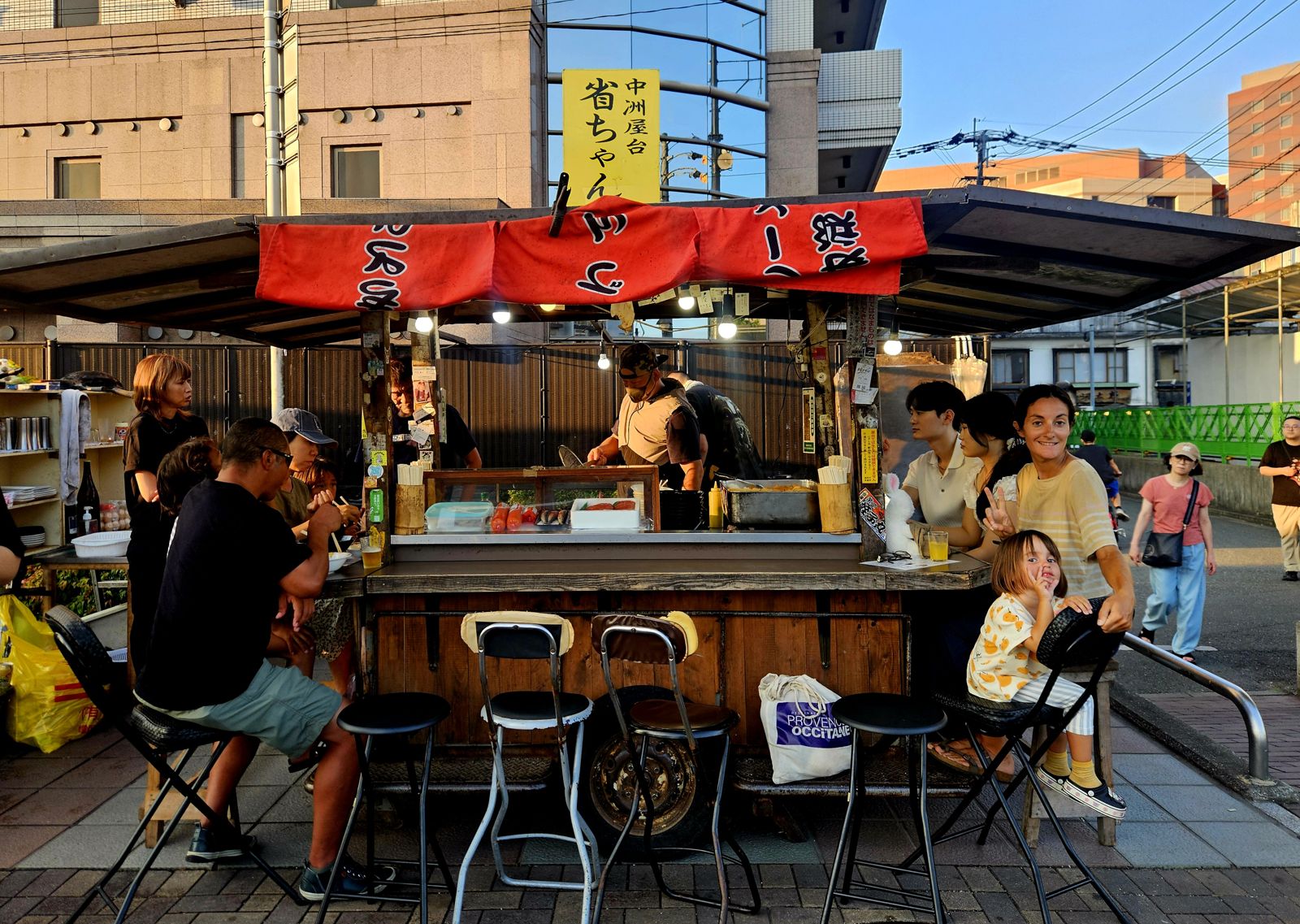
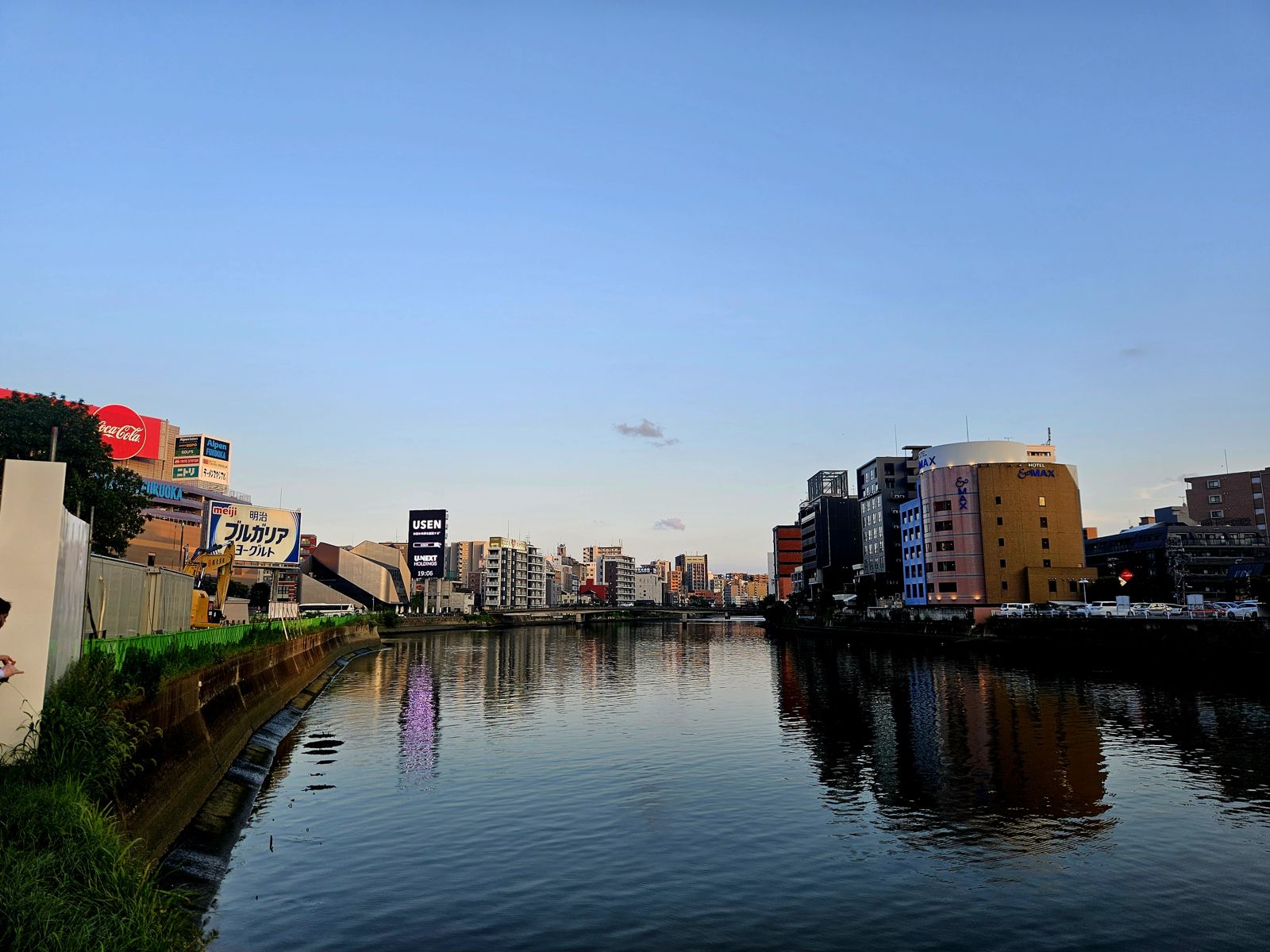
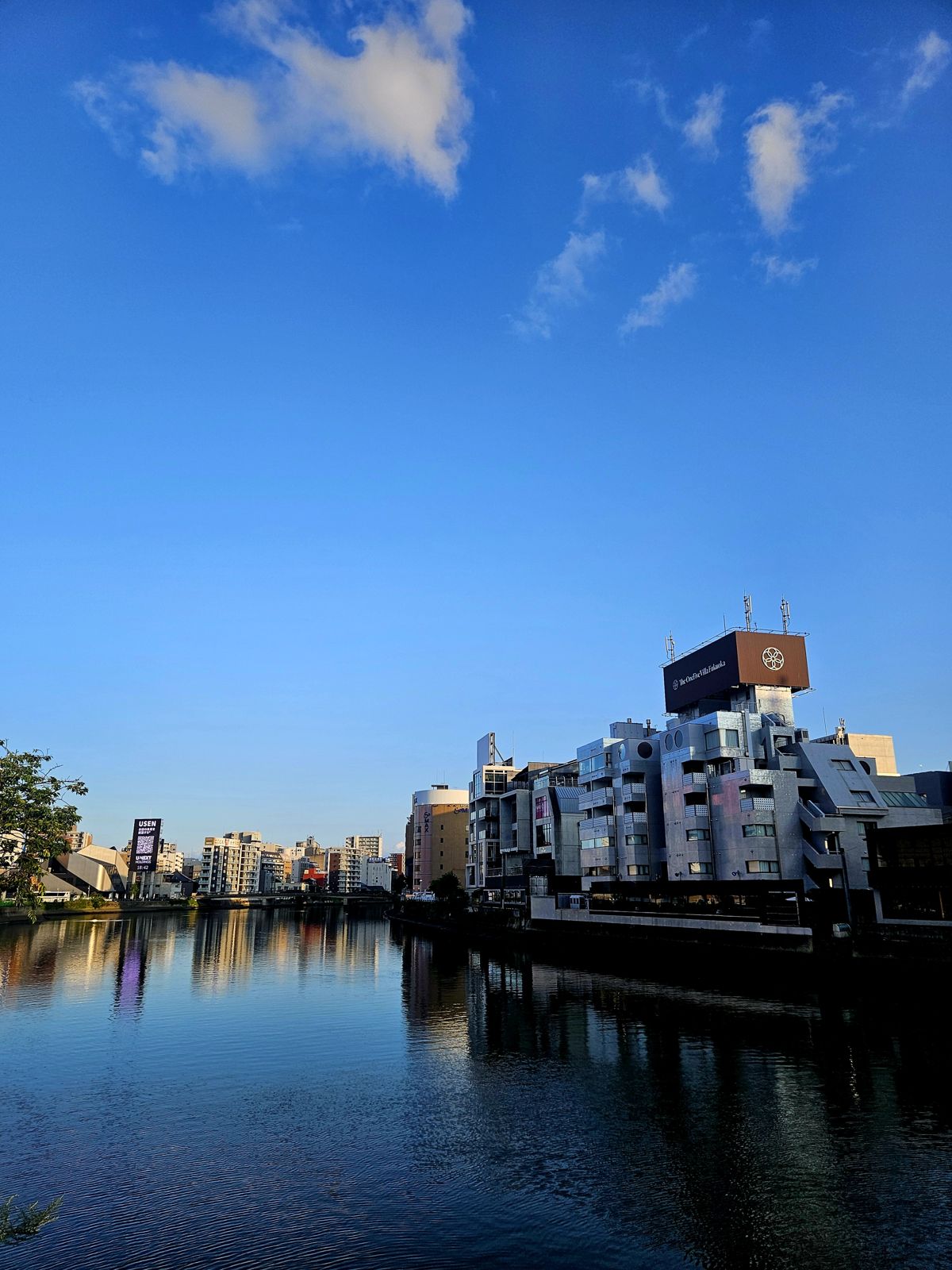
It doesn't matter, because after enjoying the riverbanks at sunset, listening to street singers and watching the nightlife, we go home to put Clémence to bed, and she falls asleep like a log. Stéphane fetches a dish from the supermarket at the foot of the building while Cassandre goes for a run. The ready-made dishes are truly delicious, and we go to bed well fed.