
 ← PreviousWorking at Gilmac, the hay plant
On 16 December, after working three hundred and sixty hours in less than two months, we finished our last day of work. We reckoned we'd handled around ten thousand bales of hay, broken a good hundred and walked at least three hundred kilometres in our allotted space. The company threw a Christmas party, and the thirty or so employees came with their children. Clay surprised everyone by arriving in the back of a pickup dressed as Father Christmas, the tray full of presents. Christmas was approaching, and we couldn't help noticing it has a different soul depending on whether you celebrate it in the sun or the cold. Perhaps you have to have grown up that way to feel the change, but the atmosphere didn't match the festive season we knew at all. Apart from a few scattered decorations, Australia seemed to approach Christmas with its usual nonchalance, without overdoing it.
But the biggest surprise of the evening came during a chat with Skinny. He'd come with his wife, a small, jovial-looking woman, and he mentioned in passing that he'd turned forty-one the year before. Cass and I exchanged stunned glances, as he looked at least fifty-five. We'd noticed that in the Australian outback people quickly looked older than they really were. The sun was probably the main cause, but alcohol didn't help, and Skinny wasn't light-handed with the bottle. When we asked him what he planned to do with his four days off, he'd often reply in surprise, "Well, drink, why?" as if it went without saying. We realised alcohol was part of the culture, the "drinking culture" some people denounced, though often to no effect.
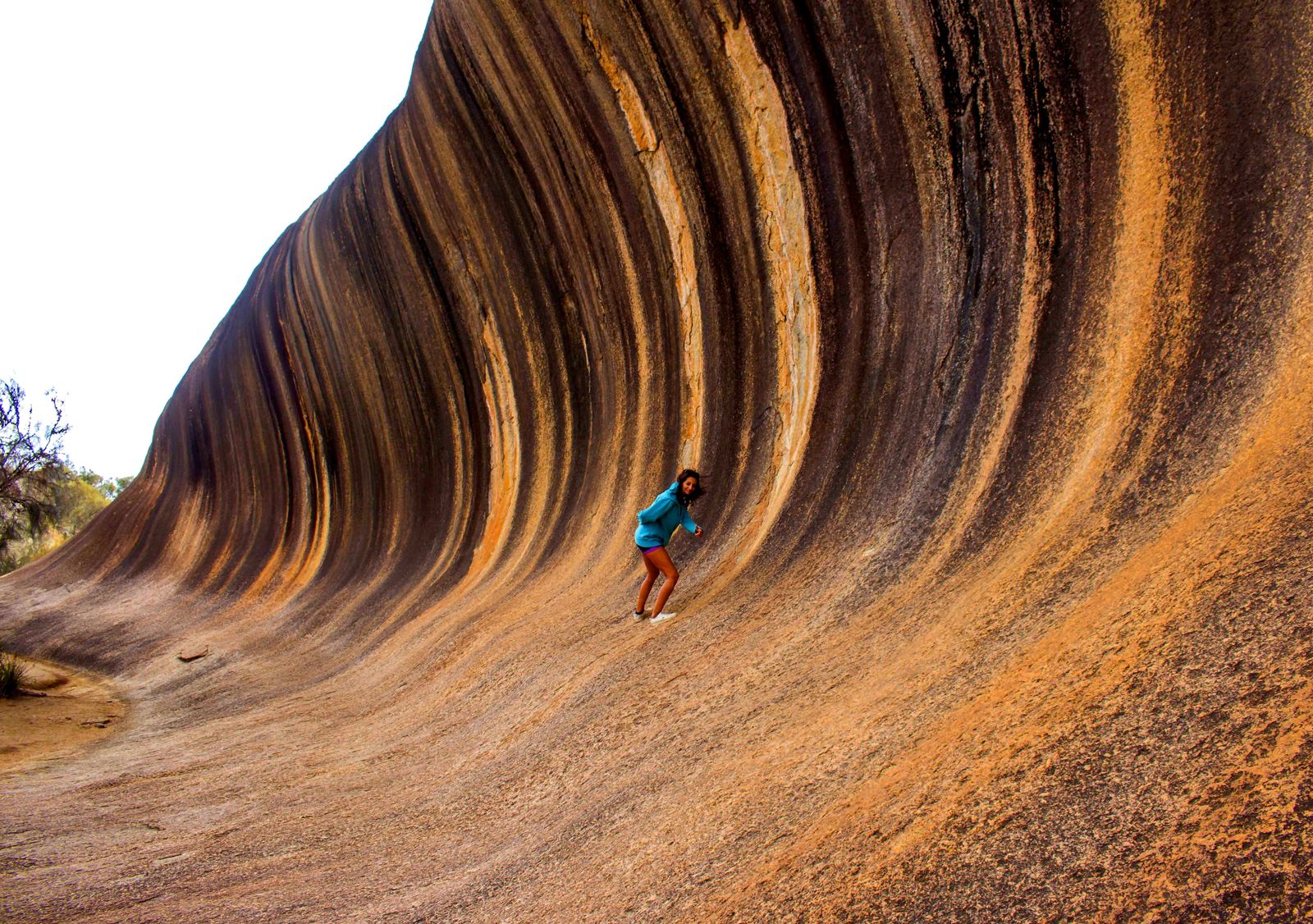
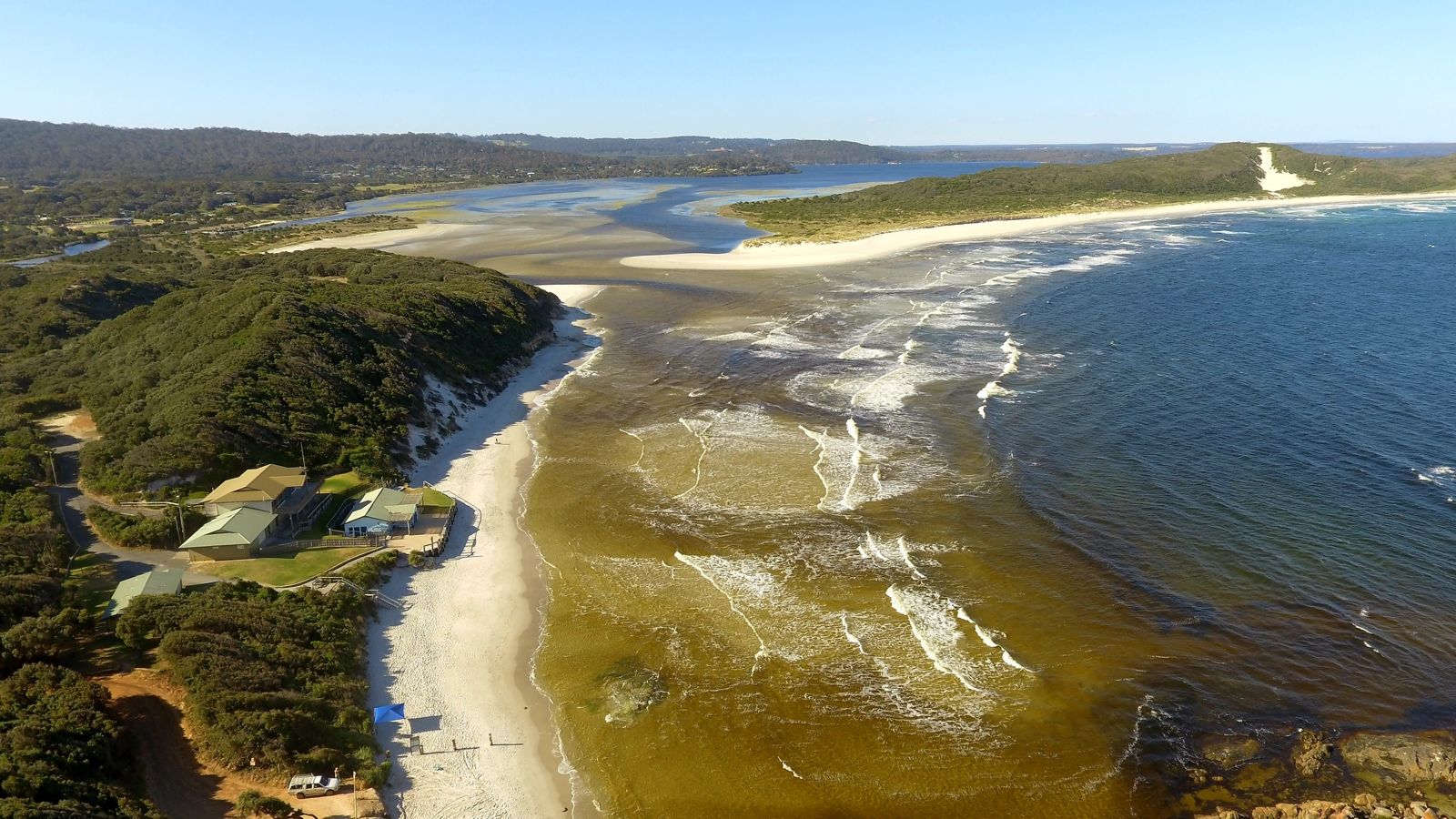
After a very pleasant evening, we left the plant the next morning. It was a very quiet Sunday, and as we left the property we began a four-thousand-kilometre drive in fourteen days that would take us to Melbourne. We went from the famous Wave Rock to Albany and then Esperance, where we spent two busy days before starting the desert crossing. Here we were. Ahead of us stretched Australia's longest straight road. In this landscape where nothingness met emptiness and you half expected Mad Max characters to appear at any moment, Cassandre set off for the 146.6 kilometres without a single bend. We'd swapped drivers under the sign proudly marking the start of the "90 Mile Straight". You might think it's extremely easy to drive straight for an hour and a half, but it's not as simple as it seems. The stretch was limited, like many Australian highways, to 100 kilometres an hour, and in our 1999 Honda CR-V there was no cruise control or air conditioning. The outside temperature was close to forty degrees, but we preferred to avoid using the cold air to save petrol.
Sometimes we'd spot a shape in the distance, but with the heat haze rising off the tarmac it was hard to tell what it was. At first it looked like a car, but we didn't pass many. Then it seemed to be a possible tree in this otherwise lunar landscape. Then, getting closer, we'd finally realise it was just a flock of wedge-tailed eagles devouring the shredded carcass of a dead kangaroo. It had probably been hit by a road train, those long trucks with two or three trailers that speed along at around a hundred kilometres an hour and obviously can't brake when a kangaroo throws itself onto the road, drawn like all its kind by the glow of headlights. Road trains are fitted with huge bull bars so as not to damage their bodywork, and they leave little chance to animals unlucky enough to cross their path. The birds of prey seemed to relish their meal and didn't budge an inch as we passed. One of them turned its head and looked at us so fiercely that we thought it would be best not to break down there. Australian roads like to remind you regularly that death isn't far away and that there's nothing for you in the outback. We didn't plan to linger anyway.
After an hour and thirty minutes of driving, the first bend appeared in the distance. We were relieved to see it, but we also knew it hid another straight, then others just as straight. Our only distraction while driving, apart from music, was watching the kilometres tick by on the counter, hoping we'd calculated the distances right so as not to run out of petrol. Shortly after eight in the evening we crossed into South Australia, and since we were heading east and regularly changing time zones, we could afford to push on a bit further, reaching the nearest roadhouse at nightfall. The place was shabby and reeked of age, but the rooms easily cost around a hundred dollars, so we stayed true to our habit of sleeping in the car. We made the most of the free showers to wash off all the sweat accumulated in the stifling car and ate a meagre meal before parking in a corner of the desert to sleep.