
The alarm went off at 8, and in the pitch-dark room we woke instantly. It was of course the big day, the one that would take us to a new country, a new continent and a new life. I'd had the brilliant idea of catching flu two weeks before leaving and still felt a little weak. No matter: adrenaline would take over. I went to get pastries to say goodbye to French food culture and took the opportunity to say goodbye to the baker, who wished me a good trip. After breakfast, we checked for the hundredth time that nothing had been forgotten. Of course, everything had been ready for a week.
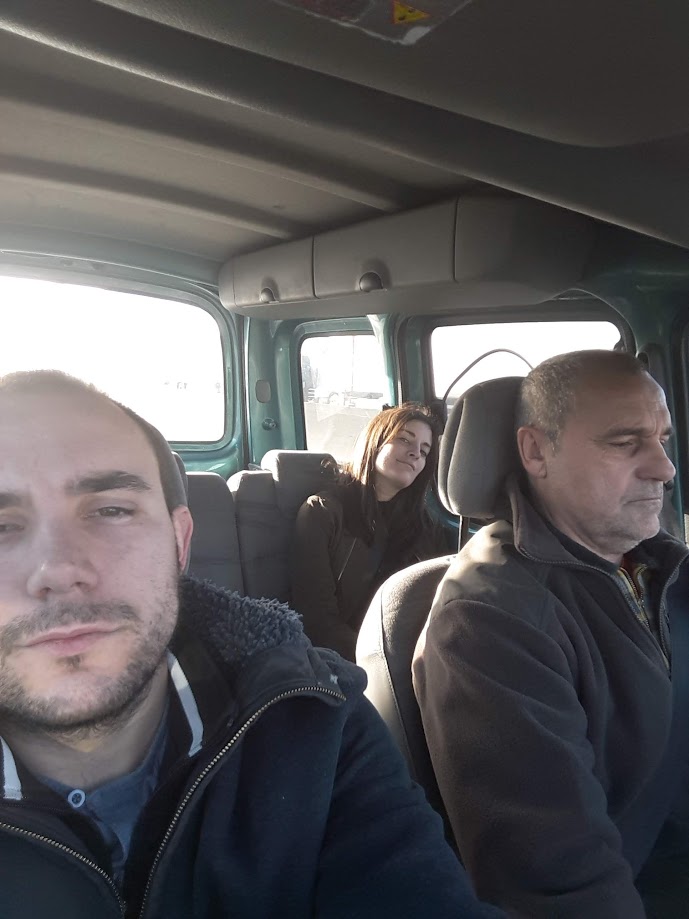
You don't plan this kind of adventure lightly. My father had decided to drive us to the airport so we wouldn't struggle with our luggage on the RER train or be at the mercy of its vagaries. In the iconic green family Kangoo, I watched the road closely. All sorts of questions went through my head. Would I miss these roads? And these signs? Would I miss France? Would there be a hollow deep inside me when I thought of the French?
I was still lost in these thoughts when the geometric architecture of Roissy Charles de Gaulle international airport appeared on the horizon. What state of mind would I be in when my feet touched this ground again? And when would I come back? In three months, sheepish and disgusted by a failed adventure? Or after an indefinite time, so in love with Australia that we'd have stayed there? All these questions were stirring at a subconscious level, of course. On the surface, conversations were more down to earth.
In the chaotic queue for the Chinese airline Hainan Airlines, I chatted with my father about this and that. As we were in the zigzag queue, we noticed a bag that hadn't moved from its spot at the corner of a bend. Intrigued, we watched it for about fifteen minutes before deciding to alert someone. I spotted a soldier nearby and went to tell him about the problem.
"Hello sir, it's probably nothing, but in the queue," I said, pointing, "there's a suitcase that hasn't moved for 20 minutes. We've asked the people around, but nobody seems to know who it belongs to."
The man in khaki fatigues suddenly stiffened and asked me to wait a moment. Barely thirty seconds later, he came out of an office with two colleagues. I led them to the suitcase in question. The eldest of the three soldiers took it out of the line and began examining it. In a loud voice he said, "Does this suitcase belong to anyone?" Everyone then turned towards the voice of a small woman coming back with a coffee in her hand. "It's mine, what are you doing?" You could tell from the soldiers' faces that they were astounded by such a lack of vigilance.
The one who seemed to be in charge looked at her and said: "Madam, you know very well that you must never leave your luggage unattended in an airport under any circumstances." "But it's fine, I just went to get a coffee," she replied brazenly, showing her paper cup. "You know the current situation, madam. We don't really have time to deal with people's carelessness. Make sure it doesn't happen again," the officer lectured before signalling to his colleagues that it was time to go.
The soldier I'd gone to see gave me a nod, which I returned, and we carried on with the usual formalities. We were a bit anxious about the weight of our suitcases, as we were only allowed 23 kilos and hadn't been able to check they were under the limit. I handed my brand-new passport to the Chinese airline's agent and put my bag on the scales. Verdict: 17 kilos each. Those 17 kilos were almost everything we had left. Apart from a few clothes in boxes at my mother's, we had almost no possessions any more. Apartment handed back, car paid out by the insurance, bike and various other things sold.
Our whole life now fitted into these two 90 cm by 30 cm suitcases. 17 kilos to last two years, holding a whole life. We were now walking towards the departure gate. The stress didn't show, but a few days before D-Day a bald patch had appeared in my hair between my right temple and ear. Appearing out of nowhere, I saw it as an inner manifestation of the upheaval of completely changing my surroundings and taking this great leap into the void. Amid these thoughts, the security staff came into view, and it was time to say goodbye to my father.
To my great surprise, this man I'd never seen cry in my whole life burst into tears. And although I hadn't felt any sadness until then, a wave of emotion hit me full on. It was with wet eyes that I went through the security barriers, casting one last look back to see my father. It was a thought I shouldn't have had, but it came all the same: "What if this is the last time I see him?" We pushed that kind of idea into a corner of our minds, but we were leaving knowing we'd miss events and might be brought home by a tragedy. These were possibilities you had to consider before embarking on such a long absence, and we were well aware it wasn't without risk.
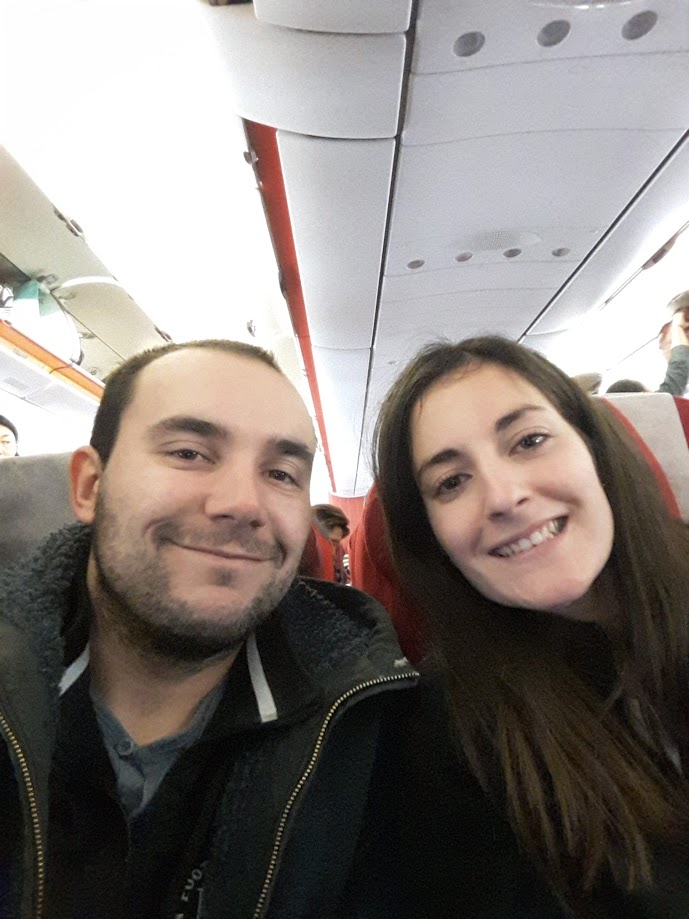
Security formalities were quickly dealt with and we were now at our gate. Goodbye messages poured onto our phones. Cassandre called her parents, and I was surprised to hear her father burst into tears at his end of the line. And although she hadn't shown any sign of emotion, she broke down too. We boarded the plane in a highly emotional state. That didn't stop us immediately noticing how poor the service of the airline we'd chosen was. Our seats weren't very comfortable and we didn't even have an entertainment screen on the headrest. Our flight was full, 99% full of noisy and slightly rude Chinese passengers.