
 ← PreviousAn unexpected meeting in Turkey: a cruise and Australian friends
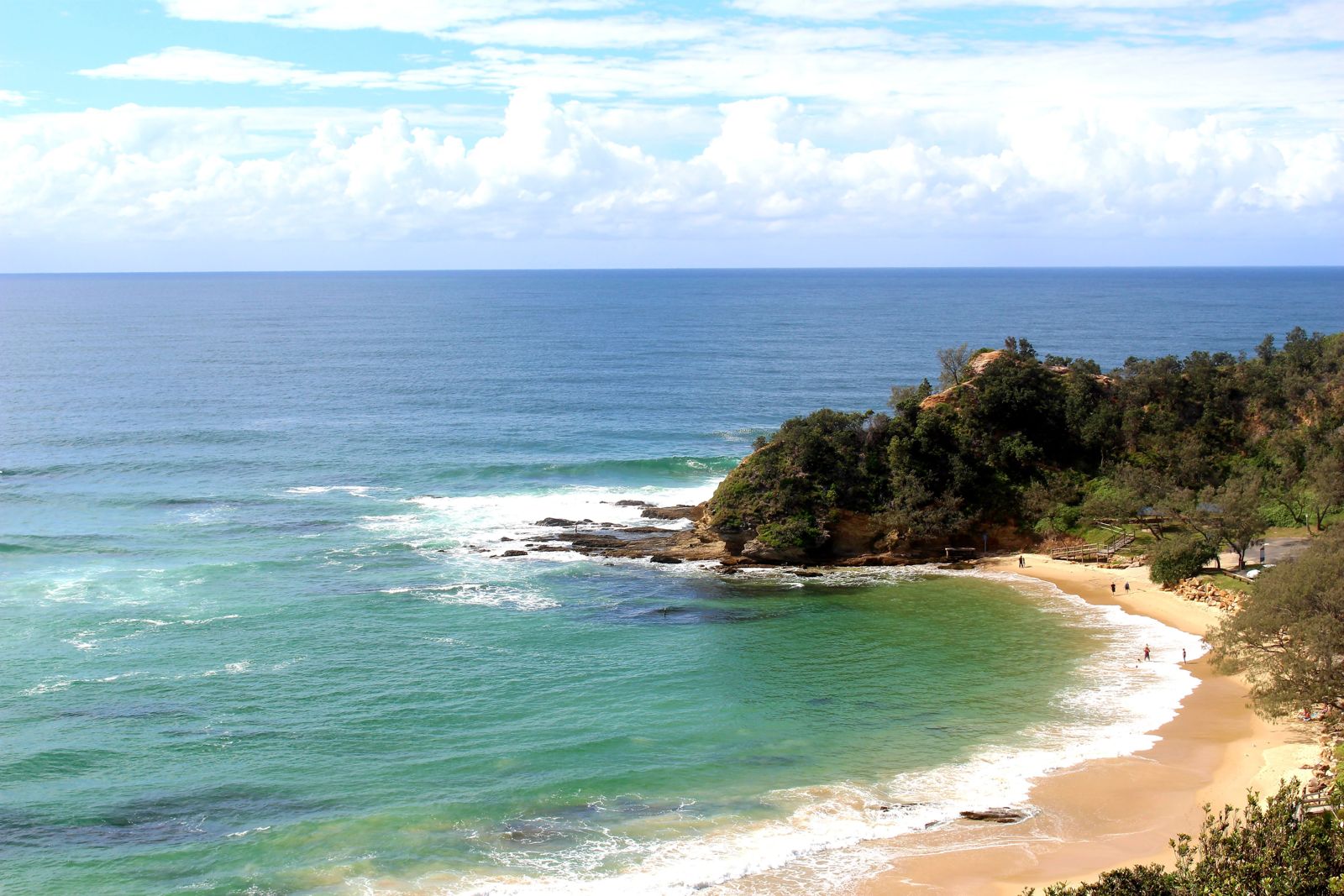
The next morning we left Lionel and Christine, promising to drop in again whenever we were in that part of the country, and typed South West Rocks into the GPS, 100 kilometres north. The spot combined two key elements of the Australian experience: kangaroos and a sublime beach. We arrived in time for lunch, and I suggested to Romain and Cass that we sit at the picnic table in the middle of the field, under a tree, so we could see the animals up close.
It wasn't a bad idea in itself, but we'd barely sat down when an enormous male crossed the park in great bounds and covered the distance between us at lightning speed. He stopped ten metres away and stared at us with his big black eyes before planting his tail on the ground and leaning back on it. We weren't quite sure, but we had the impression we'd read that this was a bad sign, the attack position. Standing up, he was around a hundred and eighty centimetres tall, and we didn't much fancy seeing him in action. We got up very slowly and backed away a few steps before returning to the path and settling down near a few other travellers.
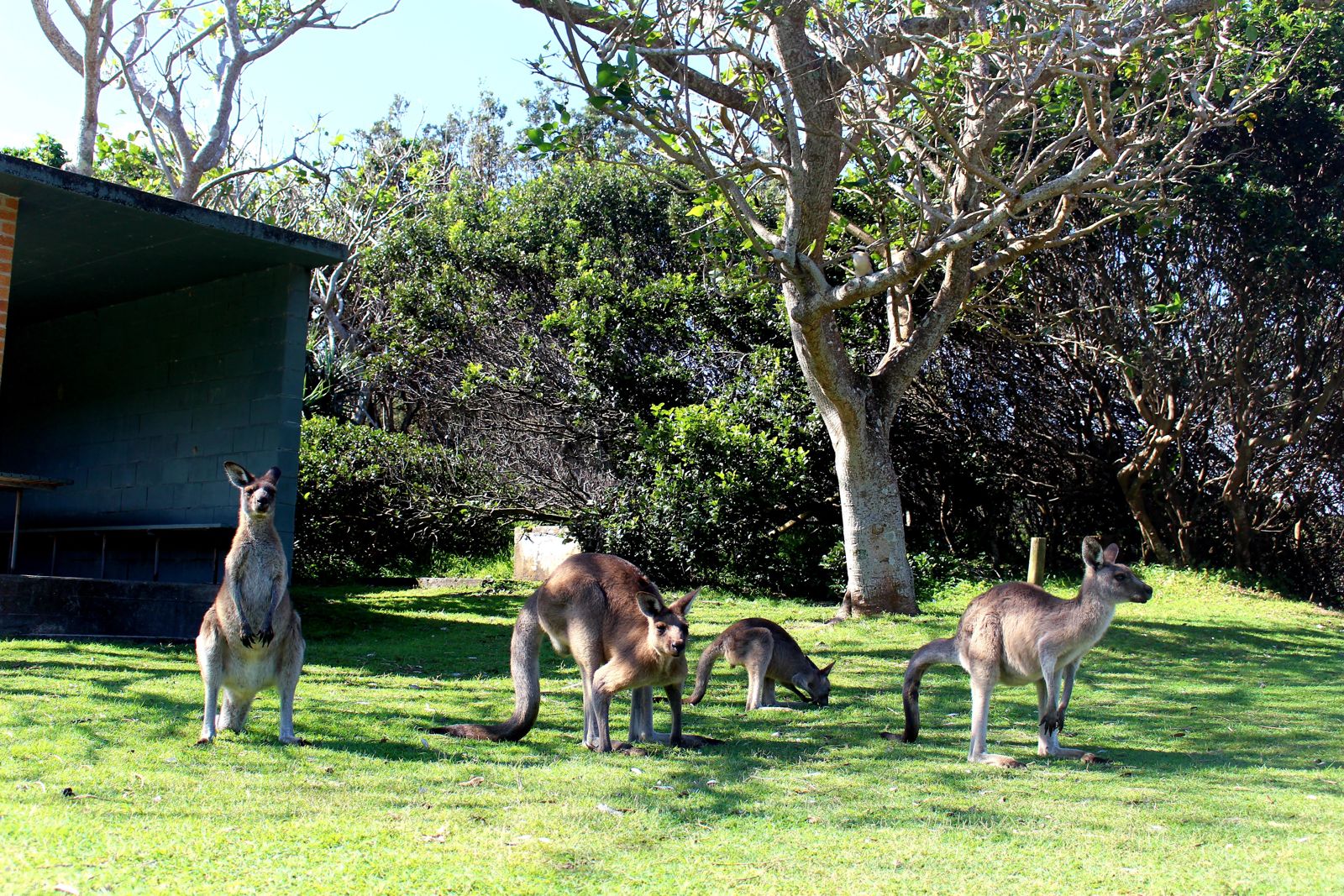
The boldest kangaroos didn't hesitate to come and rummage through bags, and we were almost forced to give them little bits of bread so they'd leave us alone. In lots of places in the country we were confronted with the impact of humans on animals. These kangaroos had nothing wild left about them; they waited every day for the crowds of humans who visited the spot, knowing they'd find food. Beyond the souvenir photos and the selfie for the social network of the moment, we were all endangering the ecosystem.
After a meal in a little industrial-looking Indian restaurant, not very good and too expensive for the quality, we went looking for somewhere to pitch the tent, but the outskirts of the Gold Coast, built-up and residential, didn't offer many options. Once again we resorted to Google Maps' satellite view to spot parks and places away from civilisation, except there weren't many around. We drove around hoping to spot a promised land and stopped at the edge of every patch of forest we passed.
One park seemed to fit the bill, and we stopped to look for a slightly secluded corner to pitch the tent. We rather liked the look of the place, but an animal was making very strange noises, somewhere between a growl and a bellow. In no hurry to become statistics on the great map of deaths in the Australian wild, we backed away slowly and returned to the car. We were getting further and further from the city and starting to get fed up. We unanimously decided to set up home by the next patch of land we found, come what may.
The night was intensely dark over Queensland, and we couldn't see three metres ahead when we switched off the dipped headlights in the little car park of a few spaces at the entrance to a small forest. We quickly got the tent out, went a little way into the trees and drove our pegs in between three trees that hid us from the road. The tree above the tent was full of bats, and we regularly felt impacts on the roof of our little home. Their cries could also chill your blood if you had an imagination as vivid as Cassandre's; she was terrified and not the least bit reassured by my attempts to calm her down. Telling someone "it's nothing, they're just big bats" doesn't tend to be comforting, especially in Australia, as I found out.
We had a night broken up by the noise of passing cars and animals putting on a full demonstration of the power of their vocal cords once the sun had set. In the early morning, Cass opened the zip and stuck her head out before bursting out laughing. "Steph, come and see," she said, giggling. I poked my head out too, and we probably looked like two newborns delivered by our camping gear. We were five metres from a children's playground with swings, a slide and so on.
An elderly couple were walking hand in hand along the path not far from us. We packed up laughing and went back to the car, where we found Romain was awake too. The couple walked past us again. "Excuse us, were we allowed to sleep here?" we asked very politely in English. "No, but as long as you don't leave any rubbish behind, it's not a problem," the old man replied, before adding, "the council had to ban camping because of the rubbish."
That was also part of the reality of backpacking in Australia: young people without responsibilities — mainly English when this visa started in the 90s, but international now — who didn't necessarily care about places they'd never see again in their lives. The country served as a huge playground where consequences were limited, and you heard about behaviour that probably wouldn't have happened in their home countries. We ourselves, although mature and nearly thirty, felt free and less responsible. In fact, it was the first time in our lives we'd felt such freedom.
We were on the road with a vague, approximate goal, no apartment, no loan, no social pressure. We were starting to really get a taste for it. You have to live it once in your life to understand the feeling of escaping the norm and not being held by any imaginary strings. We were also becoming minimalist in our way of thinking. Travelling so much with so little made us aware of the futility of possessions, and without becoming apostles of degrowth, we could see we were no less happy with our few things in a suitcase and our scant belongings.