
 ← PreviousDiscovering marine wildlife: the Saguenay fjords and Tadoussac
8 October 2019
That morning we went to Les Bergeronnes, 20 kilometres north of Tadoussac, to watch whales, but this time from a boat. We could have done it in Tadoussac, but we wanted to get away from the tourists and the big tour operators who monopolise the area. Above all, we wanted to avoid the big polluting boats carrying three hundred tourists, preferring to be as close to the water as possible without being jostled by photo enthusiasts. With the company we chose, the price was admittedly higher, but there were only eleven of us aboard a small inflatable boat (called a "zodiac" here), and we were given gear worthy of a far-north fisherman (big skipper's coat, trousers and so on).
After fifteen minutes of fast sailing, we reached the meeting point of the Saguenay and the St Lawrence, where the converging currents encourage animal life. Whales find a feast of krill and plankton there, and we spotted several groups. Fin whales swam in small groups and regularly broke the surface. Captains are forbidden to come within fifty metres, but it's impossible to predict where an animal will surface. Luckily, some brushed past our zodiac, putting on an impressive show. Watching the water slide over their shiny black skin was fascinating. But the highlight of the morning was without doubt the humpback whale, which we spotted thanks to its blow, a spout of water five metres high.
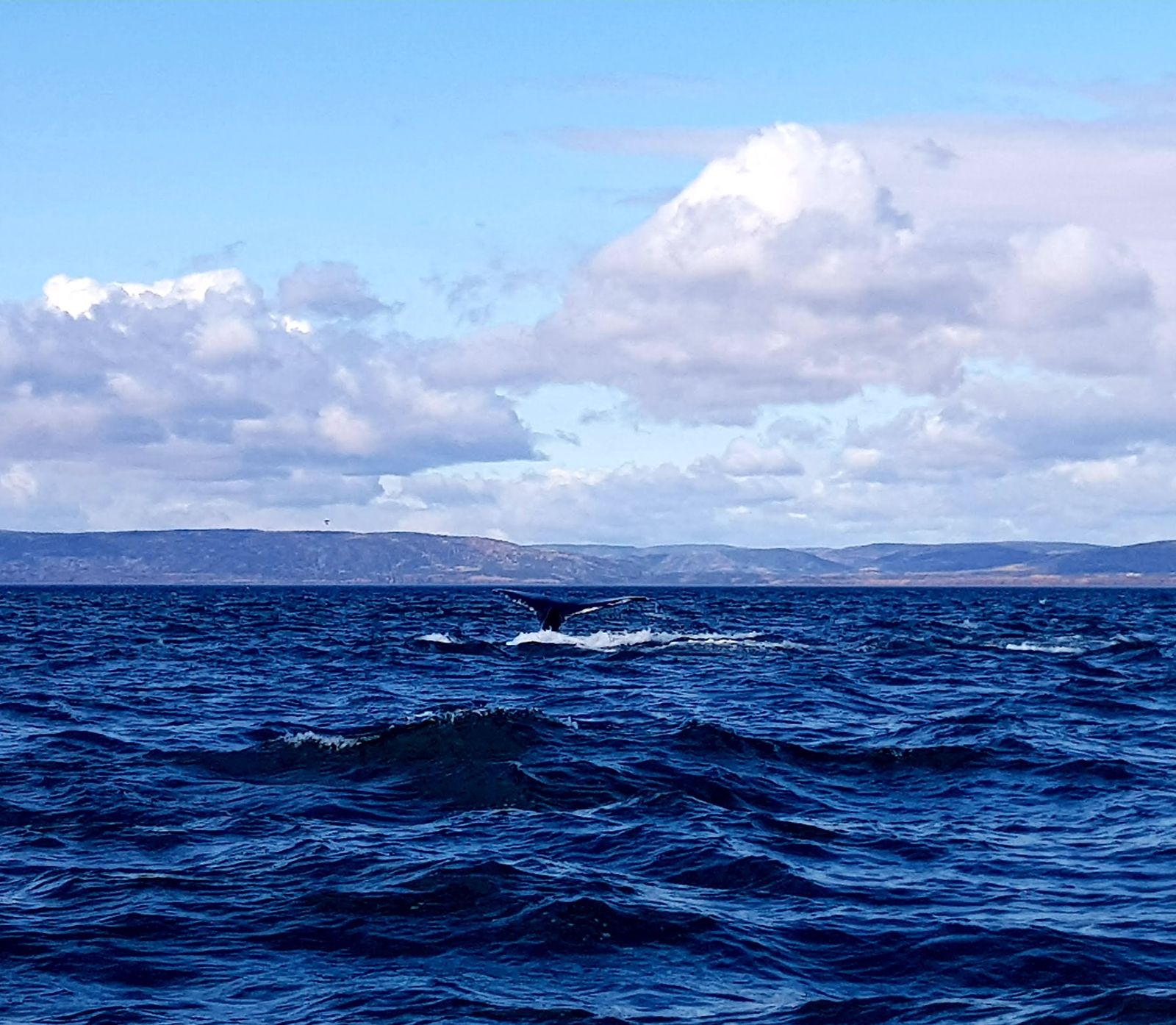
The skipper manoeuvred skilfully to get us close to their feeding area. We saw three different groups, including a mother and her calf. The sight of this huge animal breaking through the foam ten metres from us, before disappearing into the depths with a great flick of its tail, will stay etched in our memories forever. After two hours at sea, we'd been lucky enough to see countless fin whales, humpbacks and even seals drifting with the current, heads above the water.
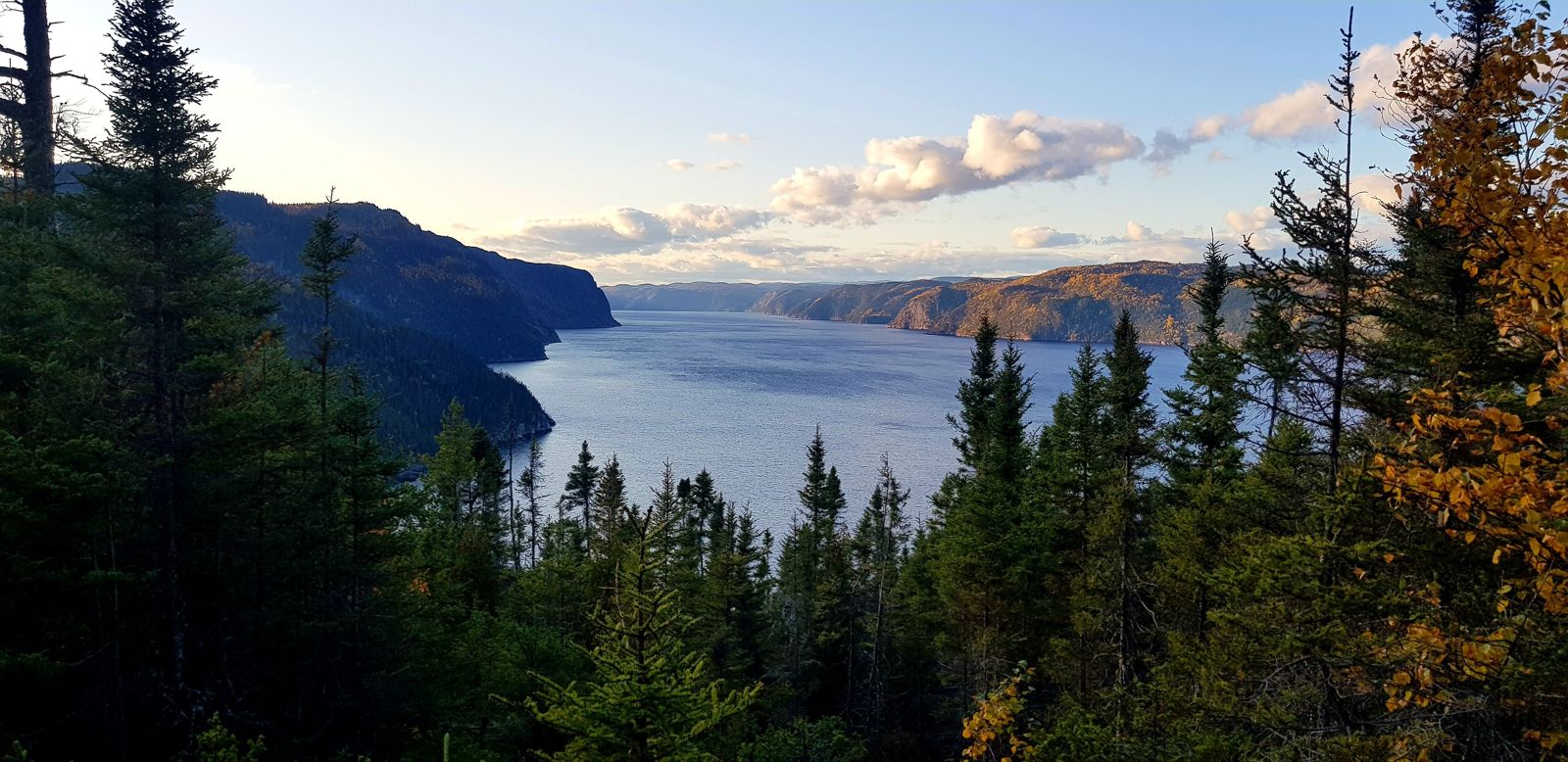
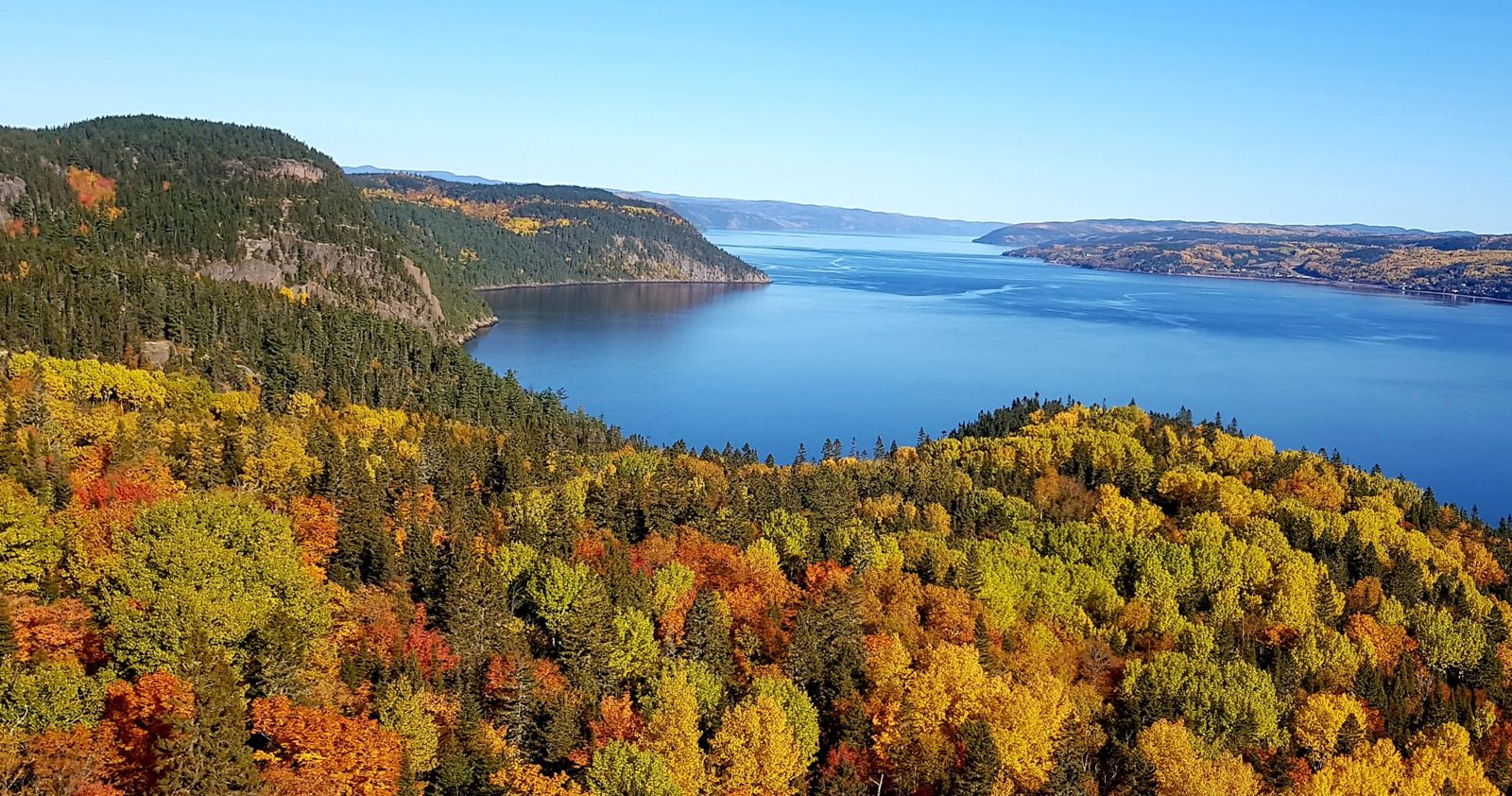
We returned to the marina starry-eyed. After handing back our suits, we realised the outing had given us an appetite. After a simple but restorative meal, we visited several viewpoints. At each stop, the forest plunged into a river so vast you'd have taken it for the ocean, and the scene was sublime. On the ferry back, we got out of the car to admire the mouth of the Saguenay Fjord, that immense river hemmed in by cliffs.
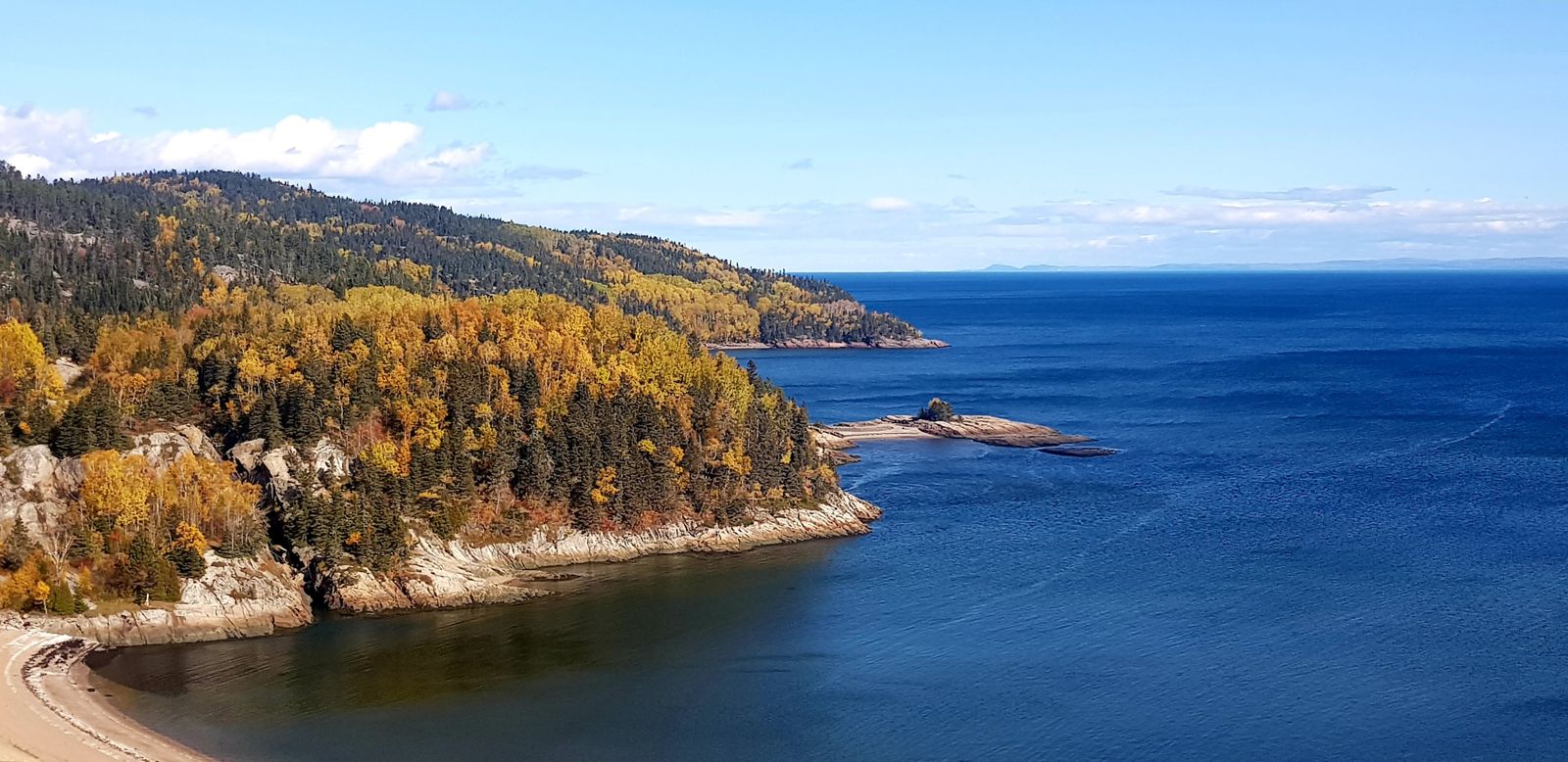
Our lodging for the night was in L'Anse-Saint-Jean, a little village an hour's drive away on the south shore of the fjord. We drove slowly to enjoy the scenery and, once there, climbed up to the Anse de Tabatière lookout, which gave us a striking panorama over the fjord. We finished the walk with a hot chocolate in a charming all-wood café by the river. The very friendly waitress explained how taxes and tips work in Québec, so we'd go to sleep a little less ignorant.
9 October 2019
We set out to climb up to the statue of Notre-Dame-du-Saguenay. As a fun fact, we used a small section of the 215-kilometre "Petit Compostelle" trail linking the statue of Notre-Dame-de-Lourdes to that of Notre-Dame-du-Saguenay. After an hour of fairly steep uphill walking, the trail suddenly began to descend sharply. We then realised we'd end up back at the same altitude as the start and would have to climb it all again. Fortunately, the view of the Saguenay River fjord was worth it, and although the statue was pretty, we were less interested in it than in the panorama. We didn't linger, knowing a whole lot of steps awaited us on the way back.
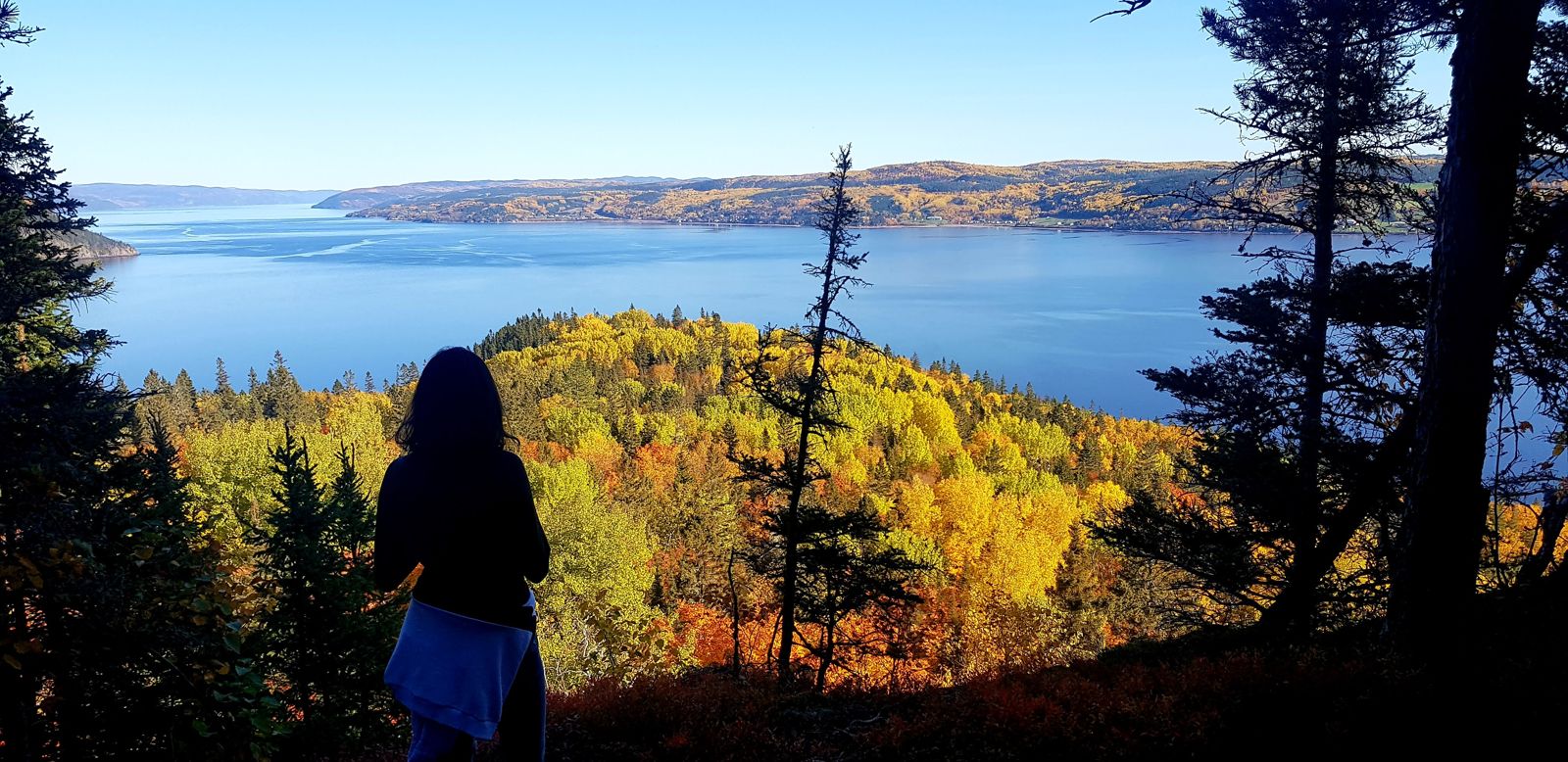
As on all our hikes, we passed a large school group and wondered whether their PE lessons looked like this: walking through splendid landscapes in the heart of nature. After three hours of hiking, we decided to settle on a jetty for lunch. Well, lunch... let's say eating bread with raw mushrooms, all we had left from the day before. There we met a man fishing for smelt, and we chatted about the scenery, our trip and life in Québec.
We then got back on the road towards the Baie des Ha! Ha! The name has nothing to do with laughter; it probably comes from a distortion of an Algonquin place name that's hard to pronounce in French, meaning "place where bark is traded". We started a hiking trail where we had to juggle slippery stones, countless roots and mud. As in the morning, the climb seemed endless, but the views of the bay and the trees in autumn hues were spectacular. The route was like a roller coaster: we'd climb fifty metres only to go back down. What was meant to be a quick stroll turned into a long, tough hike that we struggled to finish. We finally got back to the car exhausted, ready to head to our Airbnb for the night.
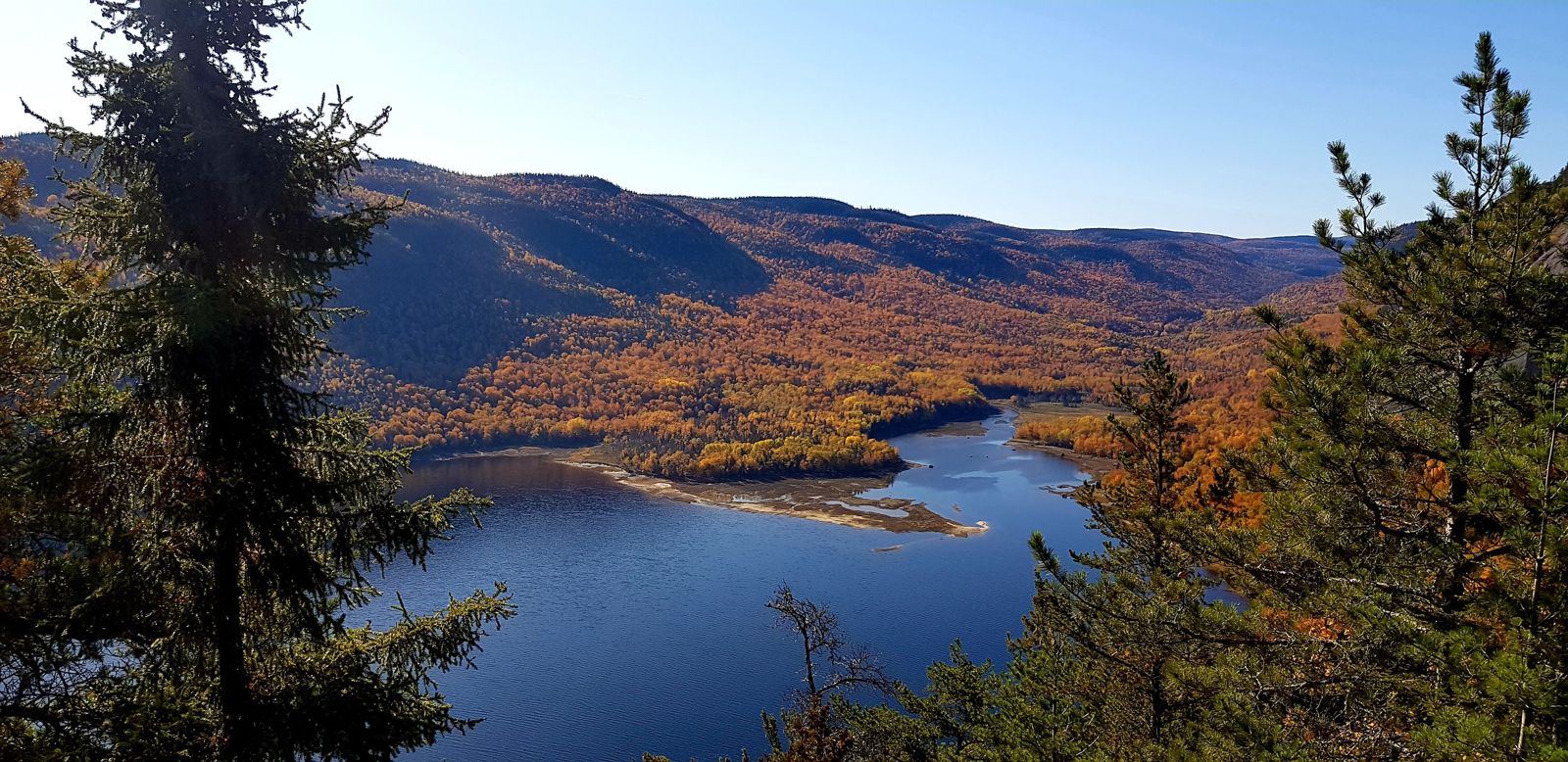
Nasty surprise at the address: our host wasn't there, and we couldn't contact her without Wi-Fi. After a detour to the nearby McDonald's to get internet, she told us where she'd hidden the key, apologising profusely. We went back and enjoyed a superbly fitted-out basement with every comfort. We even did our first laundry of the trip, a luxury that had become highly urgent.
10 October 2019
Nothing special was planned for the next day. We had to start heading south to get closer to Montréal, as we had to return the car in three days. La Mauricie National Park was our next stop, 4.5 hours south-west of where we were. So we decided to devote the day to the road, stopping whenever we felt like it. That worked out well, because La Mauricie has one of the most beautiful roads in Canada: the impressive Route 155. We chose to take it.
Running alongside the magnificent Saint-Maurice River, this 130-kilometre stretch offers travellers spectacular mountain scenery lined with breathtaking wooded cliffs. Opened in 1966, the road was mainly used for logging, as shown by the many trucks loaded with huge tree trunks overtaking us at high speed. In Québec, trucks, like cars, drive fast. Unfortunately, chances to stop were rare, so we didn't really get to capture these images anywhere but in our minds.
We arrived at our host Steve's place around 5 pm. Unlike our previous Airbnbs, which had been in pretty houses, we found a rather rustic and rickety one. Big beams propped up part of the roof, which threatened to collapse, and the wobbly staircase to the door was made of weather-worn wood. Steve, our host, was like his house: extravagant and messy. He greeted us by asking if we were the Airbnb guests, because the room hadn't been cleaned and the sheets hadn't been changed. That didn't bother us; we weren't fussy.
While he got our room ready, we chatted and soon understood that he led a precarious, unstable life. Later in the evening he explained that hosting people through Airbnb let him fill his fridge, when he hadn't had much before. Yet he seemed resourceful: he built tasers from scratch in his living room for a company owned by a friend of his. All over his place we saw salvaged equipment he'd restored, including a gigantic TV that took up almost a whole wall. He lived off odd jobs in DIY and electronics.
We talked politics, in particular Trump and Justin Trudeau, their prime minister, whom he hated, like many of his fellow citizens. When we asked why, he said Trudeau was a clown who couldn't find his words in his speeches and who dressed up as a woman. Right — we understood politics wasn't his strong suit. As dinner time approached, we took our leave to eat at a nearby restaurant. When we got back we went to bed soon after, knowing we had to get up early the next day to visit La Mauricie National Park.