 ← PreviousHiking Mont du Lac-des-Cygnes: adventure and panorama
6 October
Getting used to the Québécois accent had gone fairly smoothly. Admittedly, we'd sometimes come across someone with poor diction, but that could also happen in remote corners of France. In fact, over time we'd found that Québécois speech had a hint of northern French, even Picard, about it. Looking into it a little, we discovered that Québécois French was actually old French, the French from before the English conquest. From that point on, the French of France and the French of Québec followed two different paths: one set about pronouncing every letter properly (ours), while the other kept swallowing certain words (Québécois).
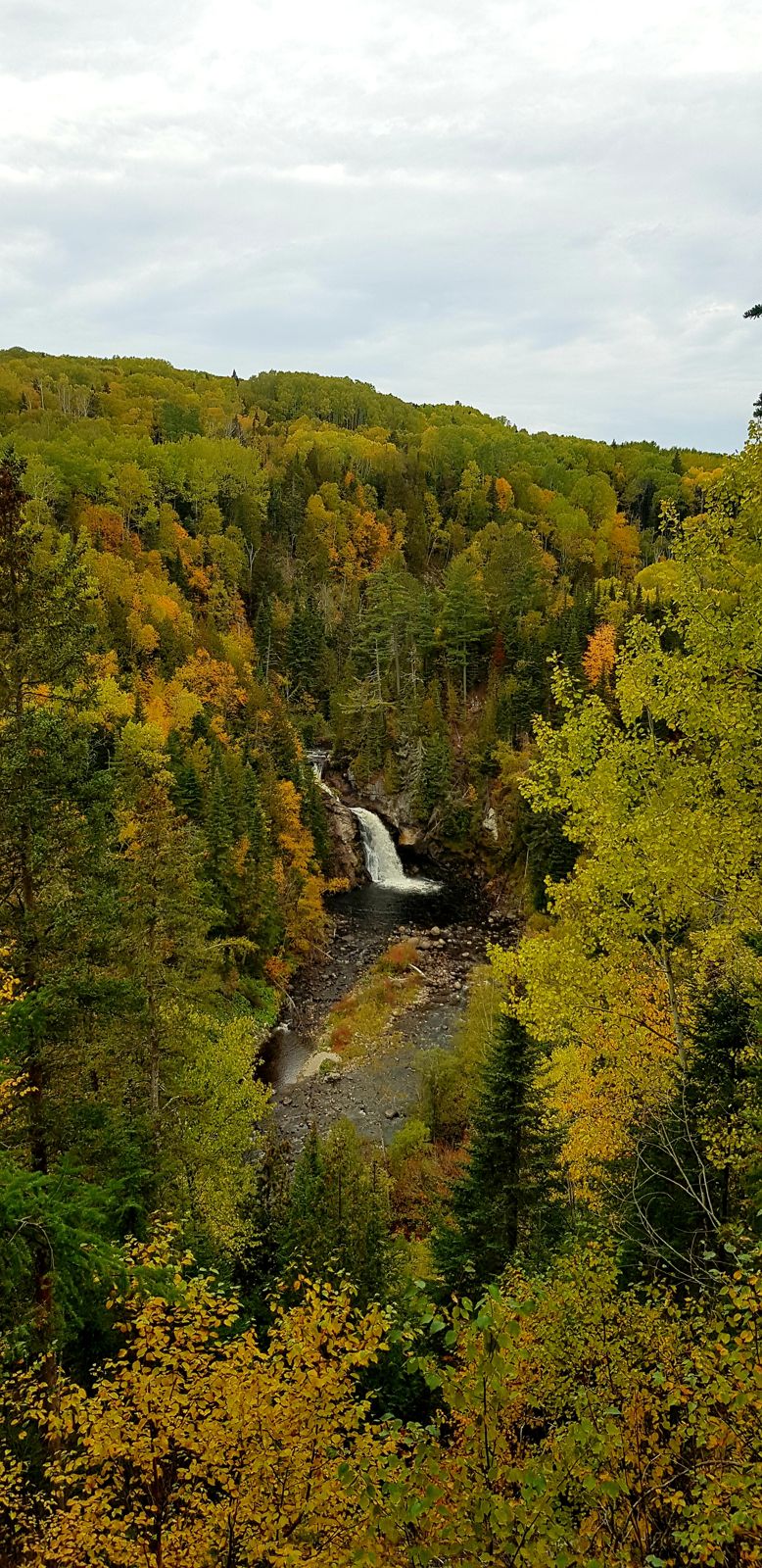
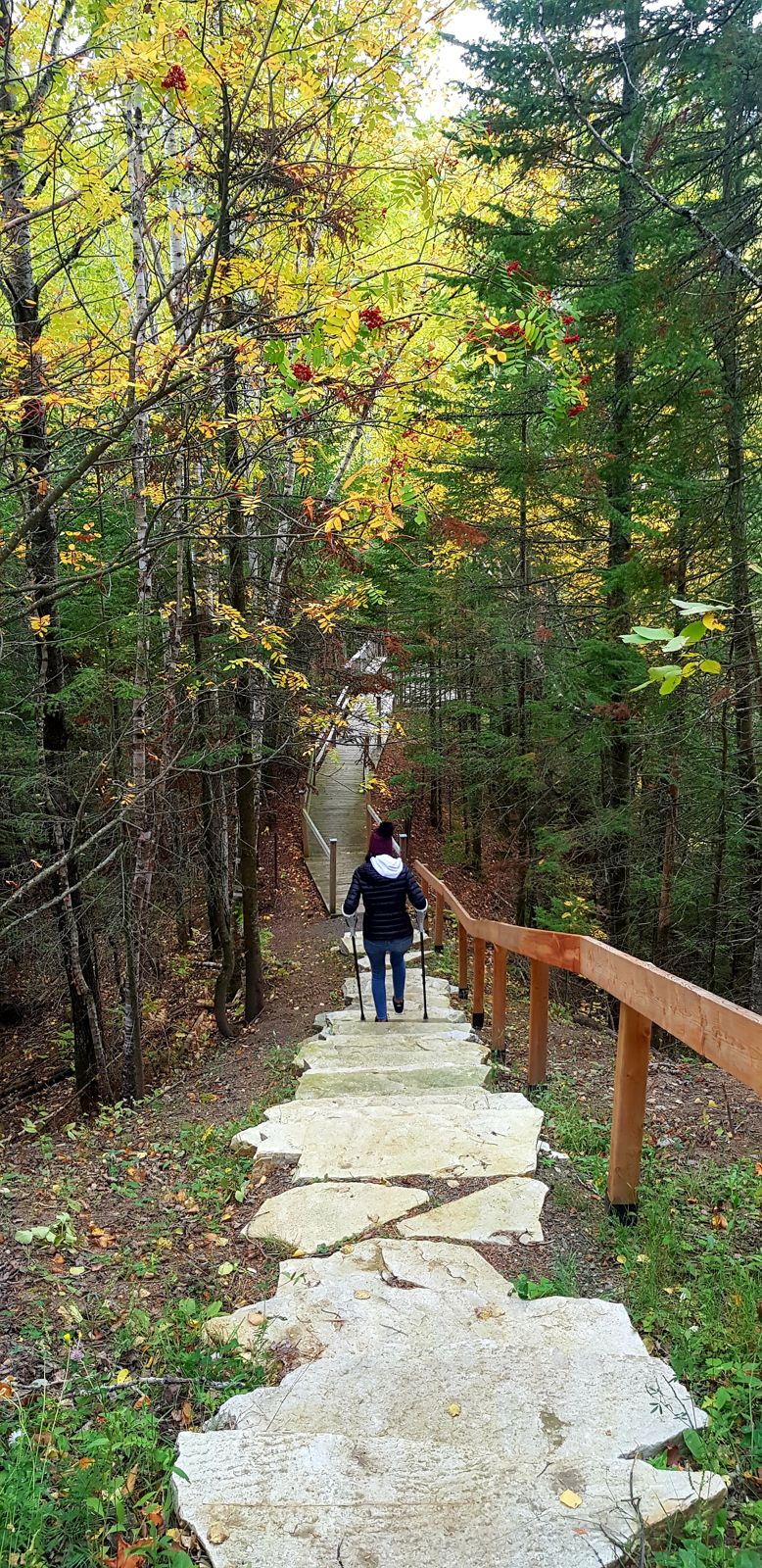
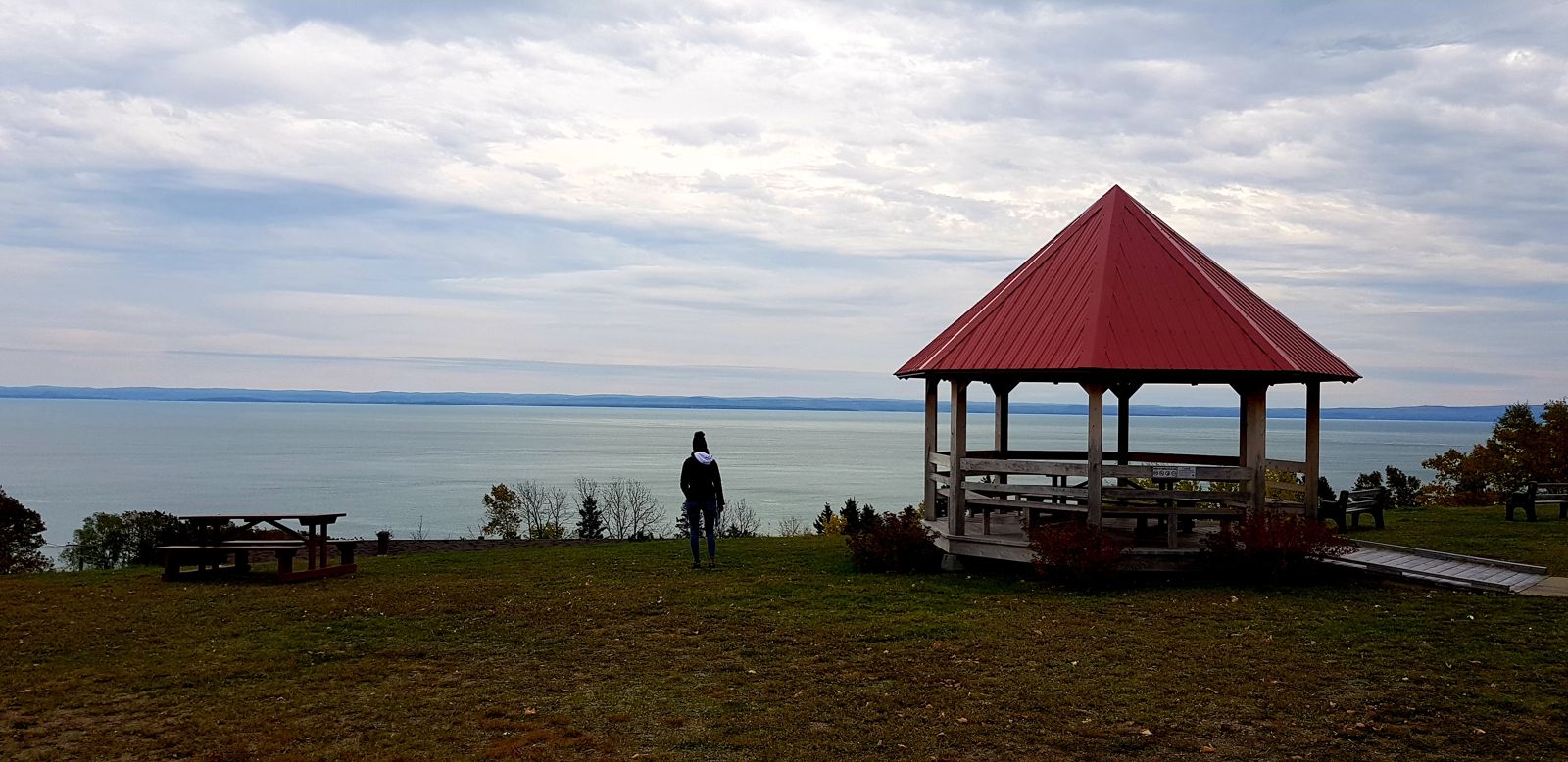
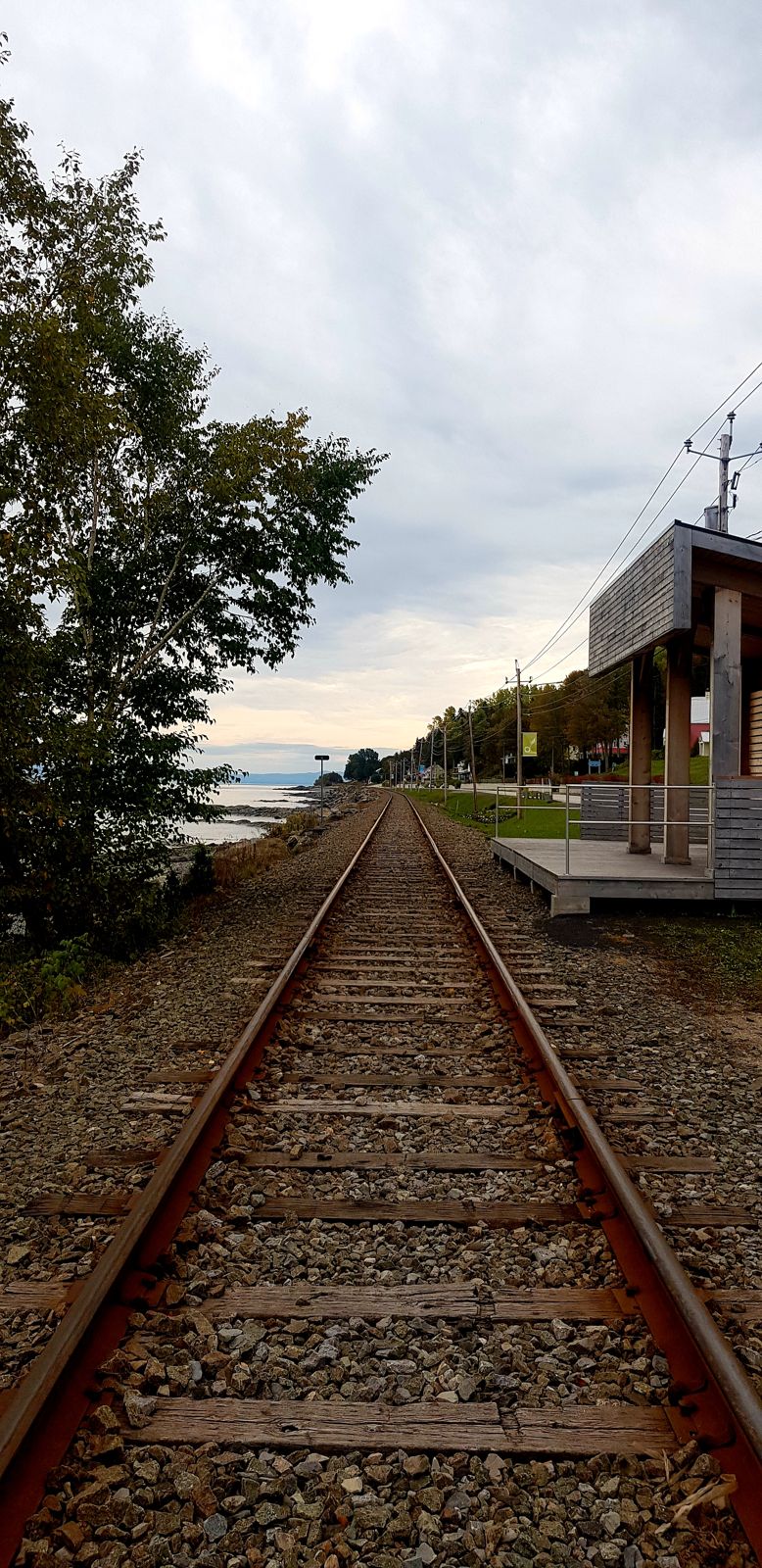
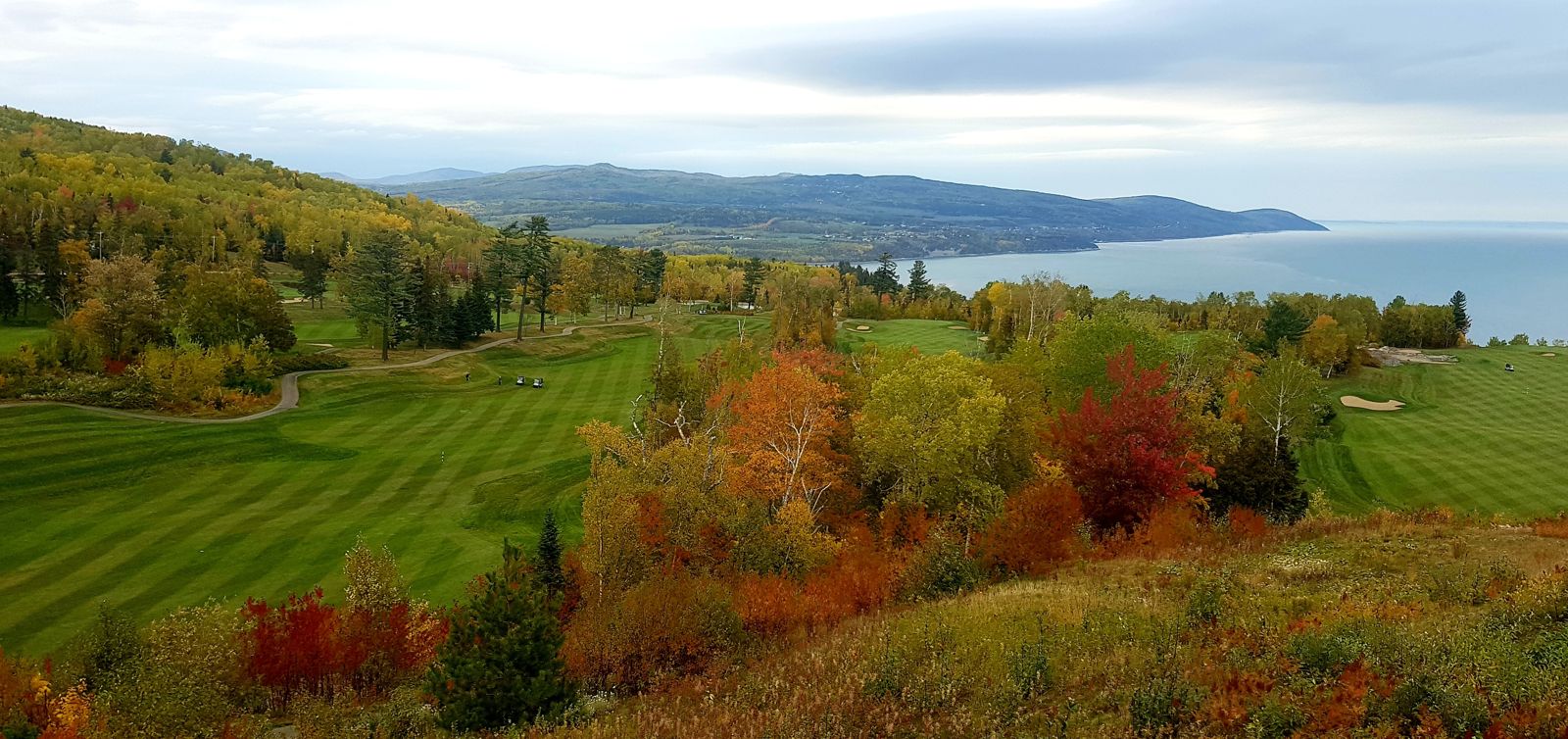
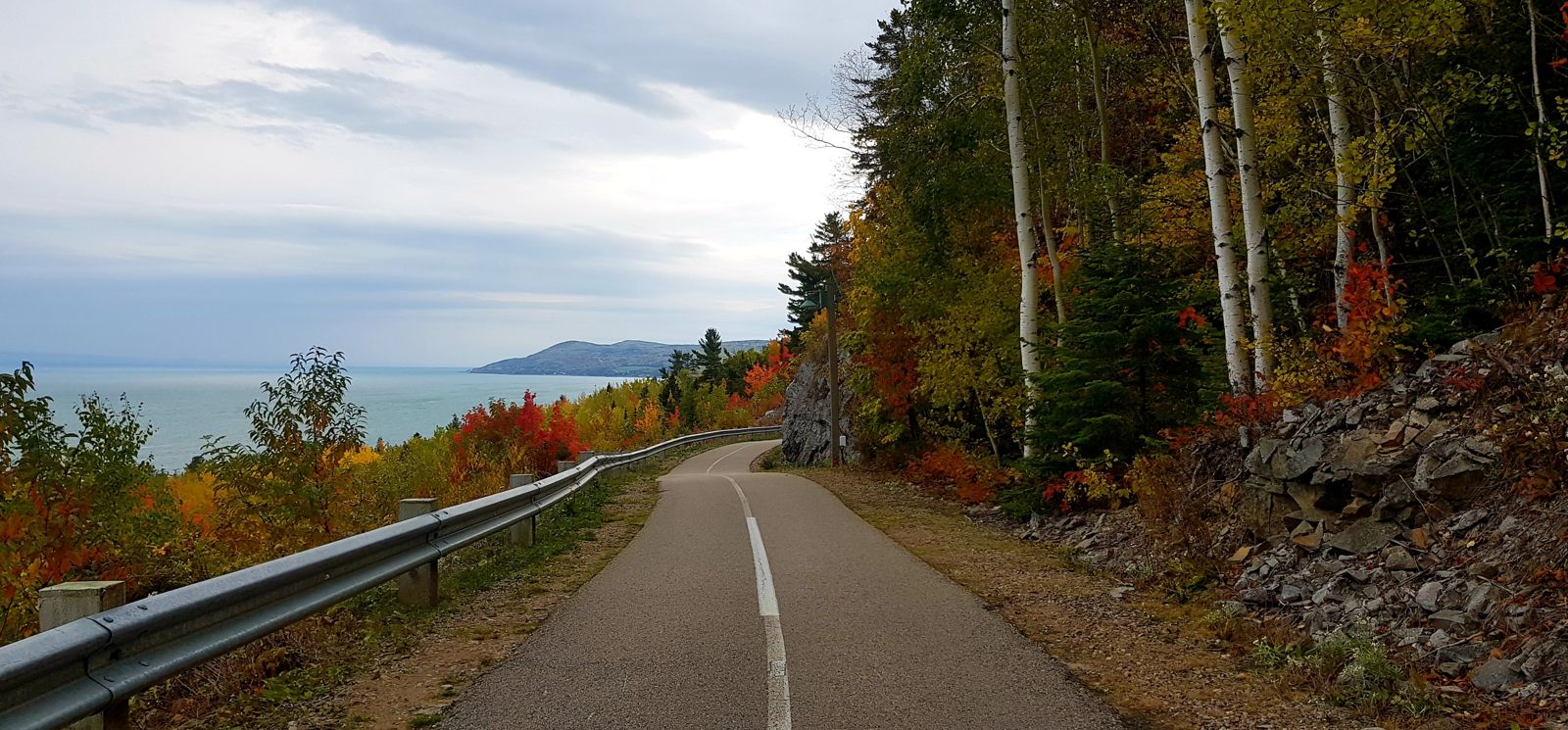
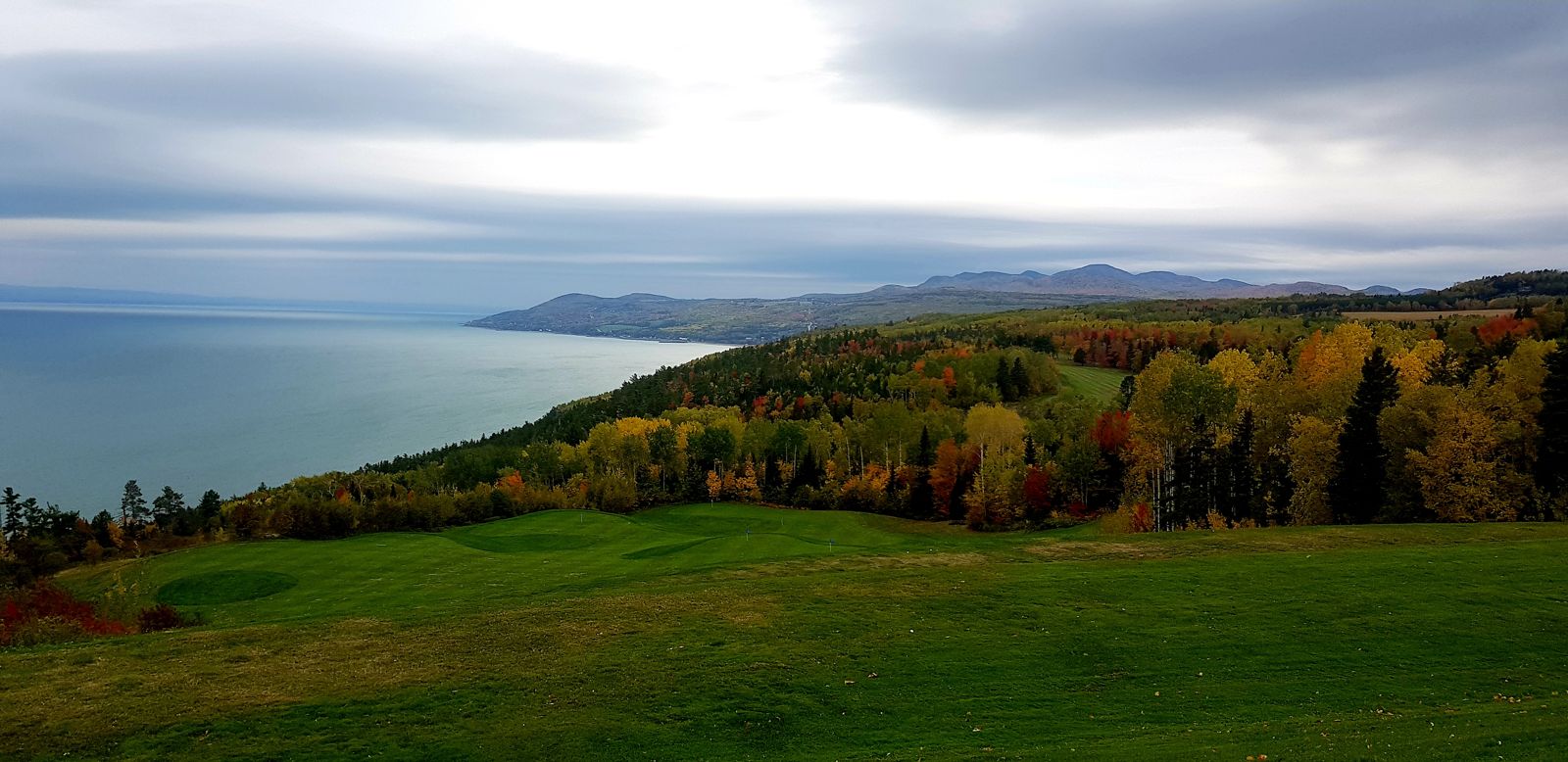
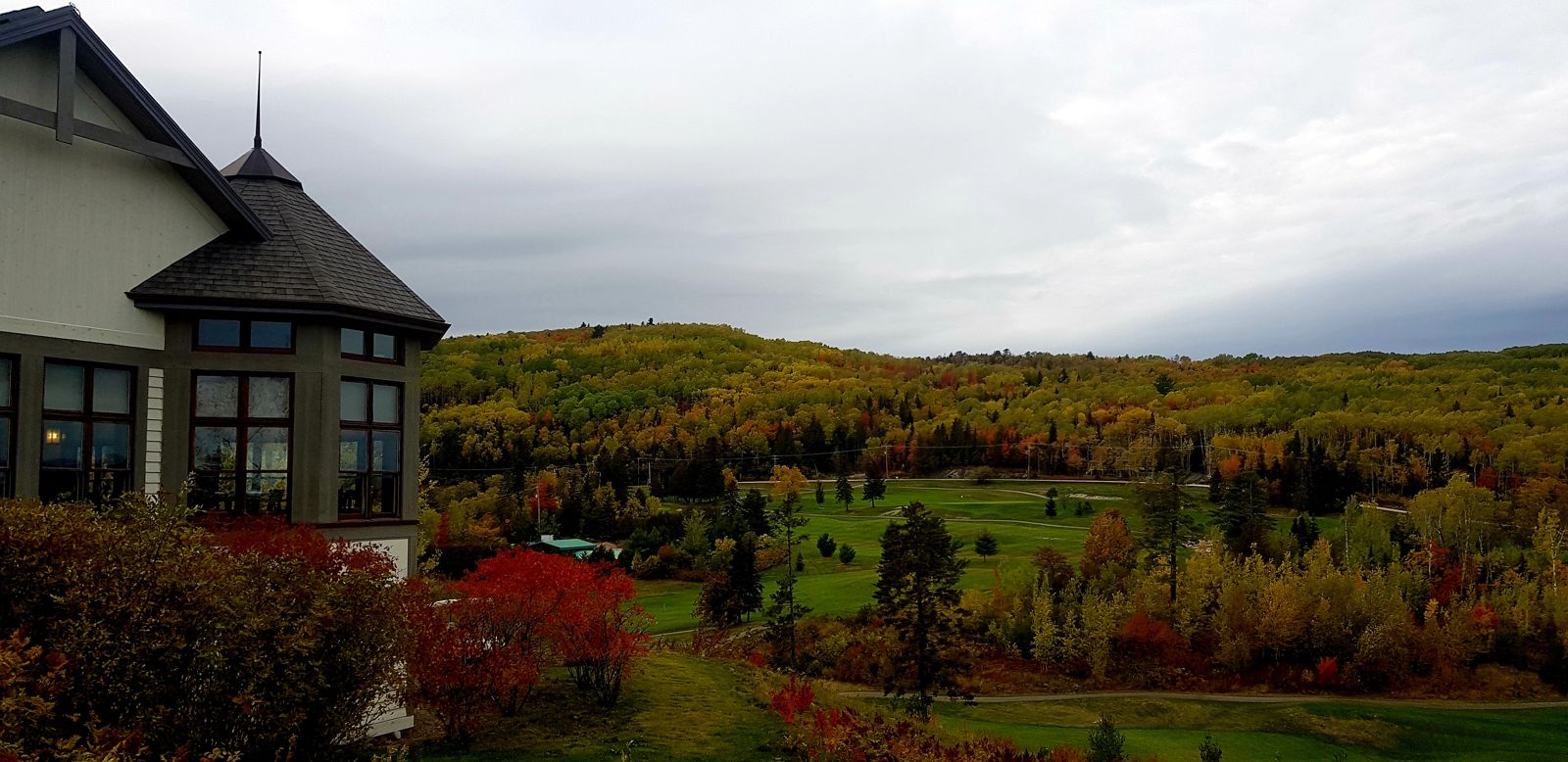
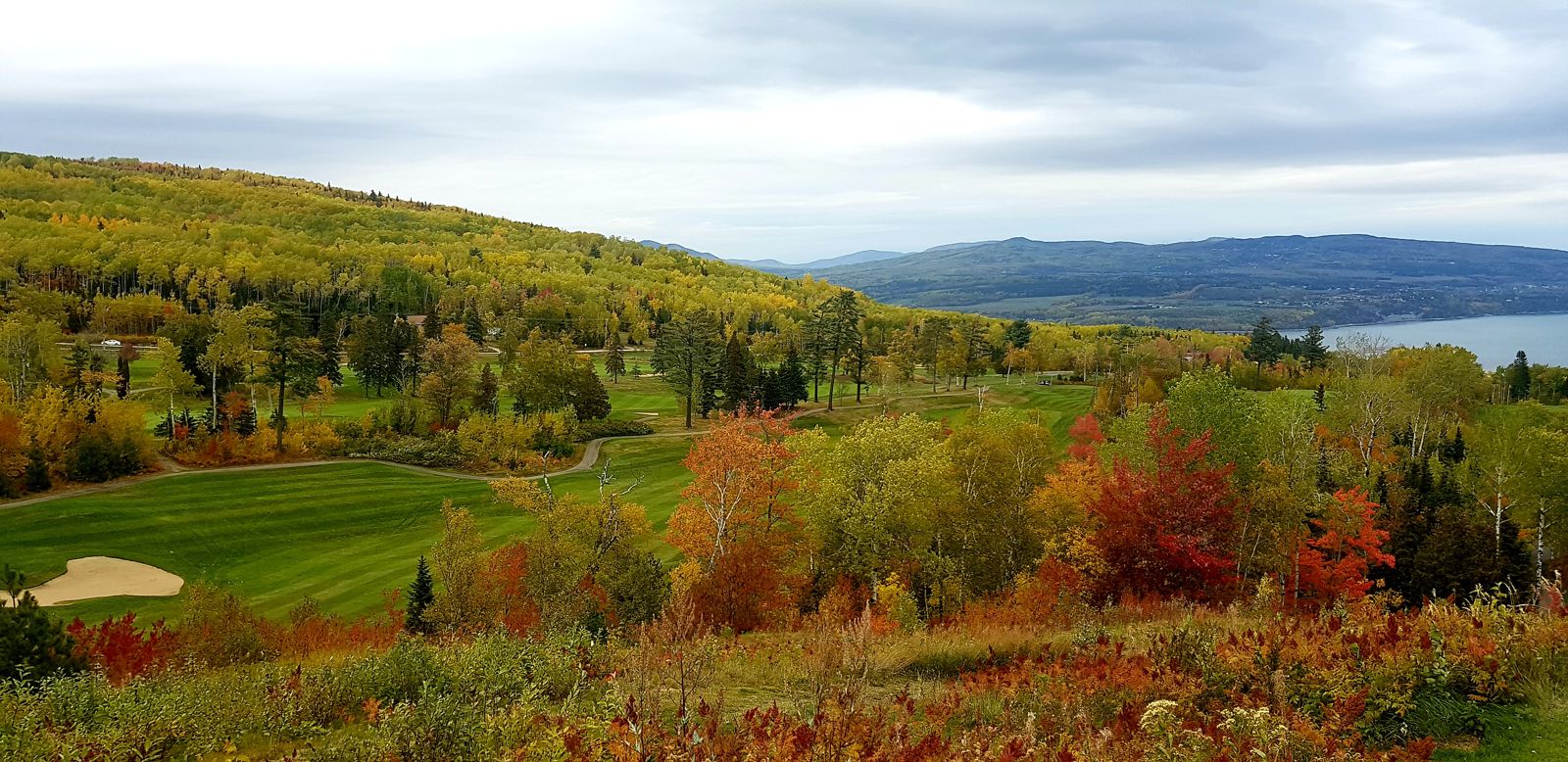
The accent of the man who pulled up beside us in his golf cart, however, was perfectly understandable. We were on the scenic trail behind the Manoir Richelieu, a very luxurious hotel that had hosted, among others, the G7 in 2018. The view was beautiful but the slope very steep, and he must have taken pity on Cassandre, because he offered to drive us to the top. Up there was a restaurant with a panoramic view over the region and a golf course on the mountainside. The St Lawrence lay below, so vast we almost forgot it was a river. We decided to enjoy the spectacle sipping a hot drink by an open fire. It was the end of a less active day than the previous ones (an "old folks' day", as Cassandre would say), a well-earned rest for our joints.
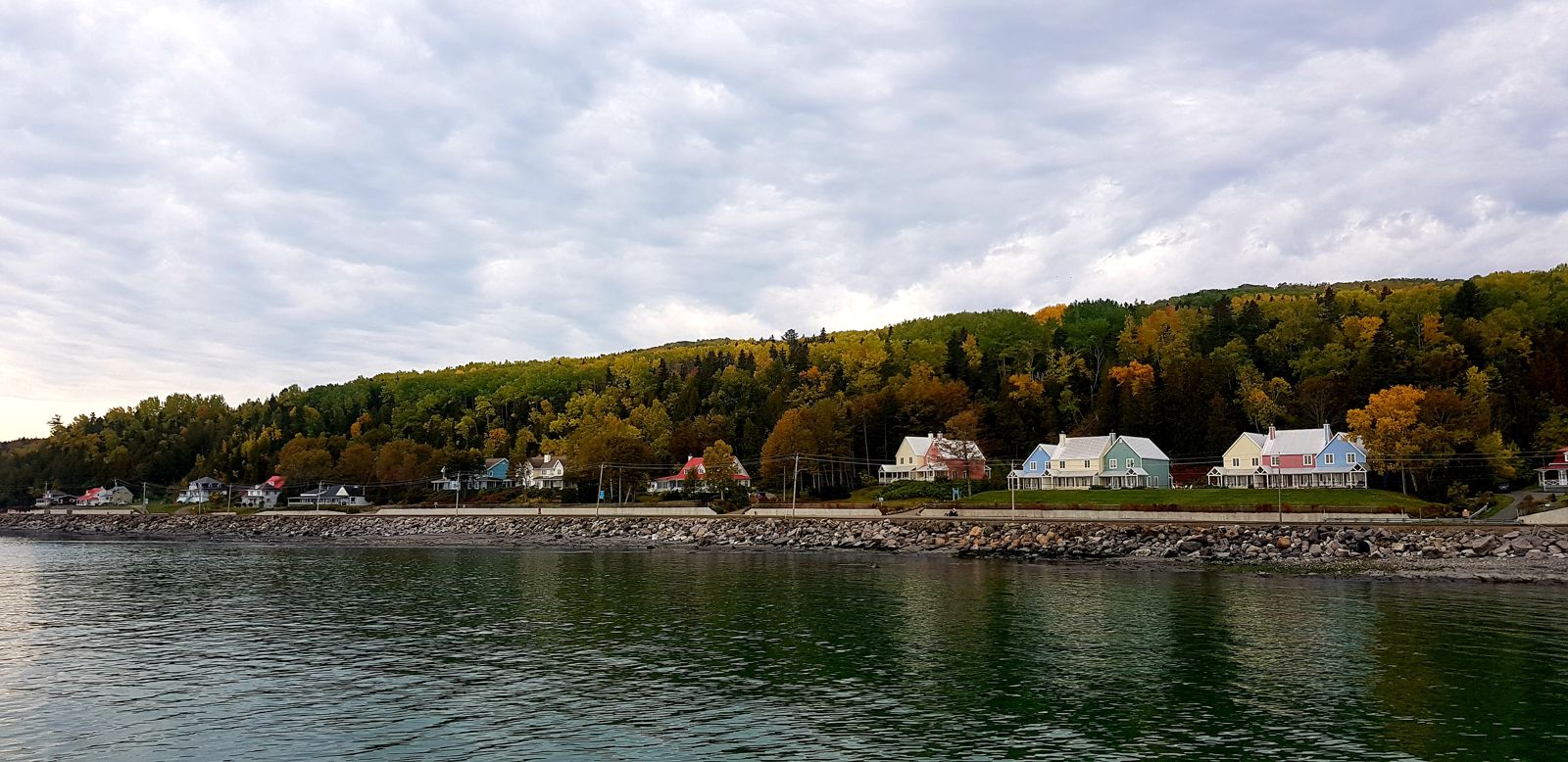
During the morning we'd visited little villages along the river, strolled on jetties, walked to a waterfall lost in the wilderness, and admired the blazing autumn colours again and again.
7 October
Opening the window on waking, you didn't need to be a meteorologist to see the day would be gloomy. We took our time in the gigantic Airbnb where we'd spent the night, and at breakfast Dany, our host, came to chat at our table. Located in La Malbaie, her little house-hotel was an ideal stop for travellers heading up to the fjords or down to Québec City. A massage therapist by profession, she'd also set up a room in her house dedicated to massage and wellbeing. Over coffee we talked about life in such remote places, and she told us about winter, its fairy-tale landscapes and its own rhythm.
As we were leaving, we met Albert, her colleague, also a massage therapist. Noticing Cassandre's limp, he asked what was wrong and offered to massage her. He came back with products with strange names and began pressing where it hurt. After ten minutes of painful manipulation, he assured her the inflammation would soon go down and recommended applying frozen rubbing alcohol in twenty-minute sessions. He gave us the rest of a bottle and a beanie in the colours of an old local hockey team.
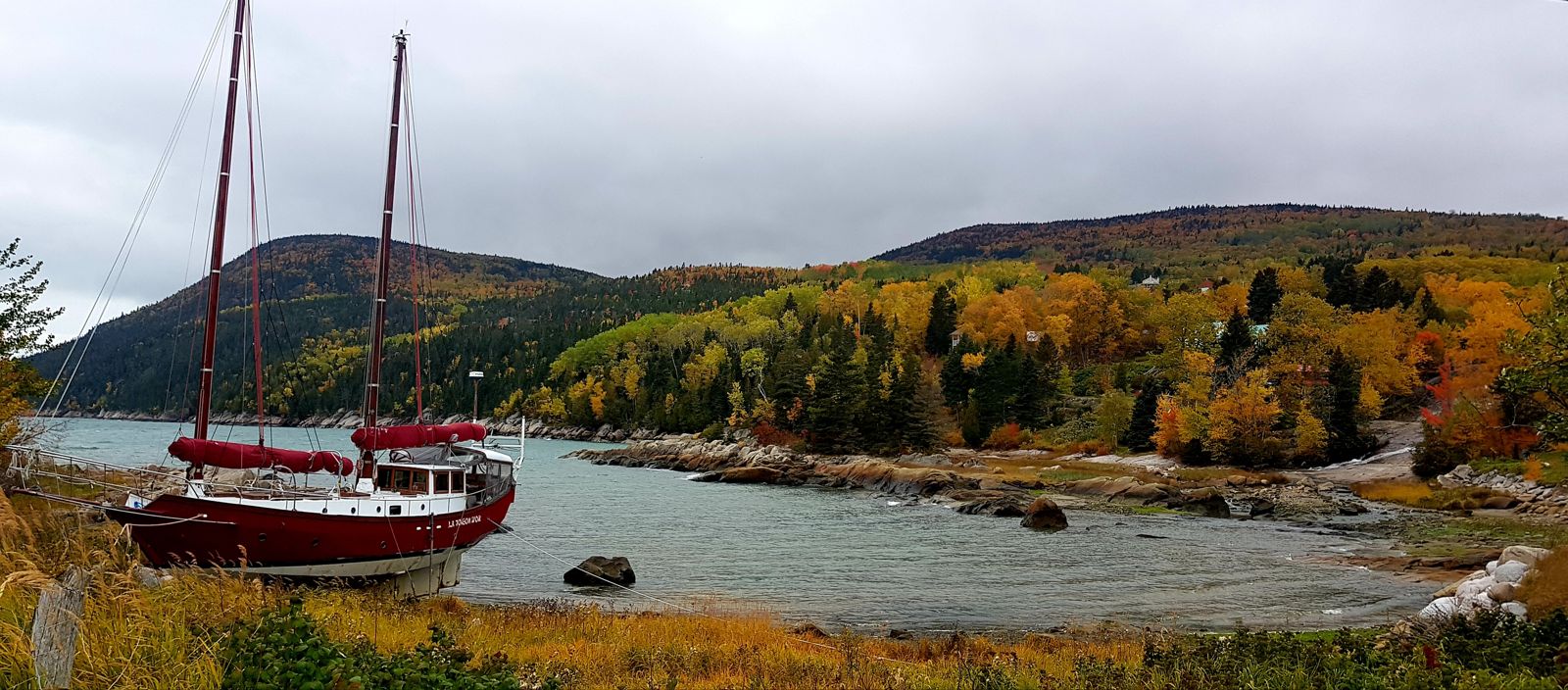
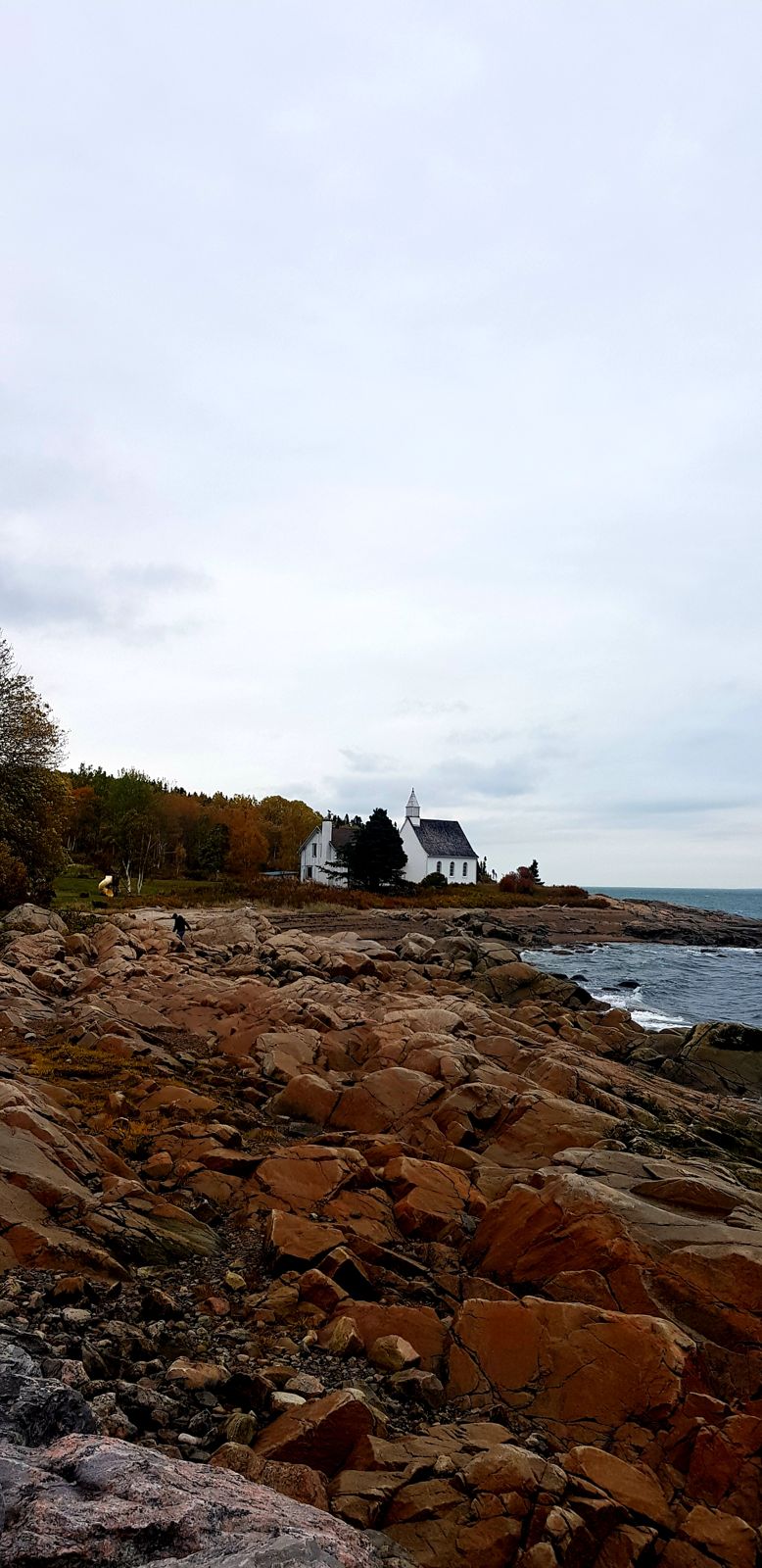
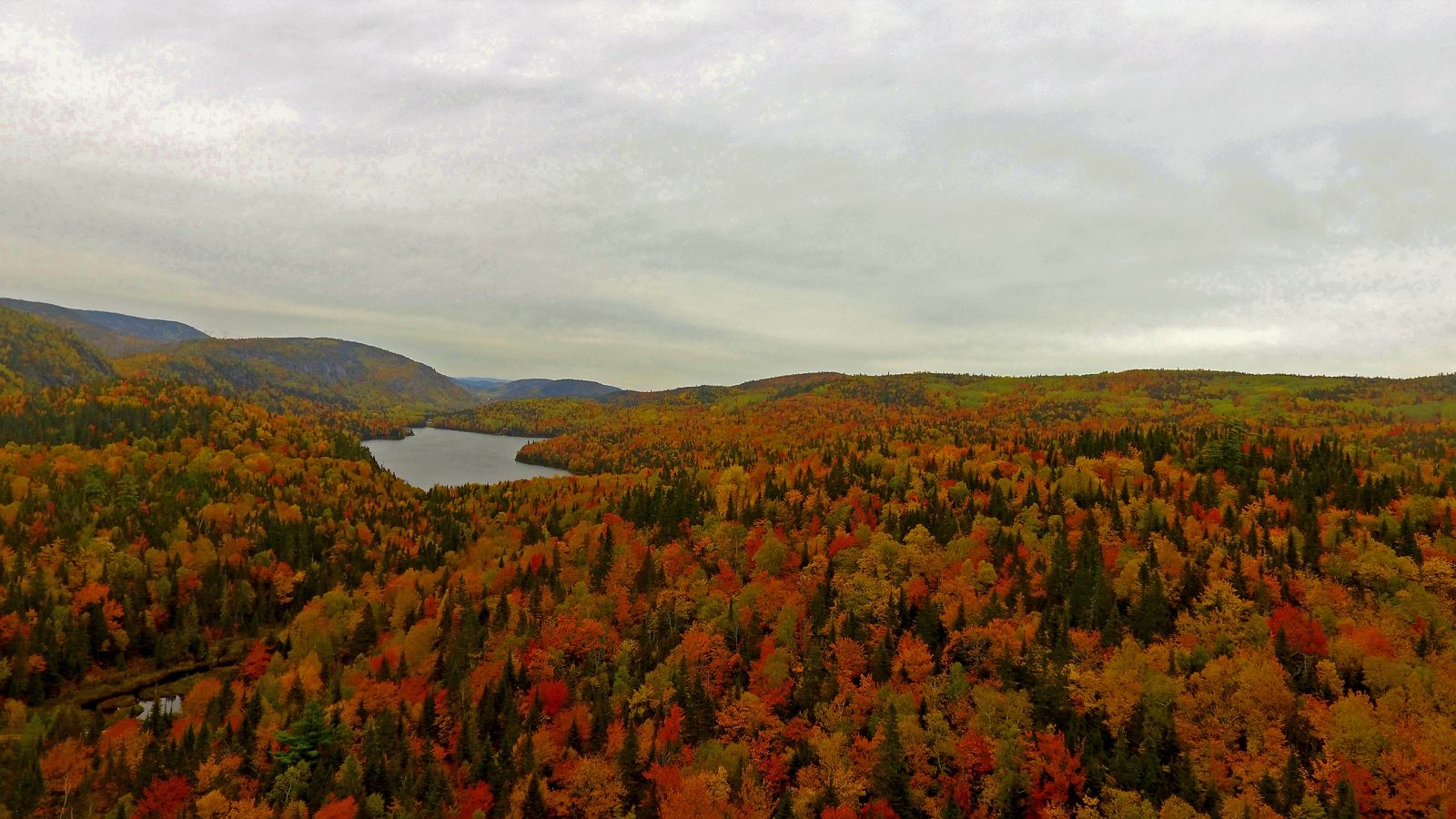
We then set off slowly, stopping in villages with picturesque names like Port-au-Persil, Saint-Siméon and Port-aux-Quilles. Long without roads, these hamlets remained resolutely turned towards the sea, with their little jetties and pretty bays. On the road through the forests, lakes regularly dotted the roadside. We stopped to photograph the first ones before realising our whole route was strewn with them until we reached Baie-Sainte-Catherine.
There we stopped at the Pointe-Noire observation and interpretation centre, one of the best viewpoints for watching the Saguenay Fjord and the whales and belugas (also called white whales) in their natural habitat. Luck wasn't on our side, though, as we didn't see a single one.
Baie-Sainte-Catherine also marked the end of Route 138, which we'd been following since Québec City. The village lies at the mouth of the Saguenay River on the bank of the St Lawrence. The only way to continue north was to take the "traversier" (ferry) to the north bank of the river, which saved us a three-hour detour to reach Tadoussac. Crossing the Saguenay Fjord by boat was a superb experience for tourists but a pain for locals, who had been campaigning for years for a bridge. That Monday we only waited ten minutes, but it could be much worse. In late June, for example, passengers had had to wait four hours because of an accident.
We finally arrived in Tadoussac, a hotspot for whale watching and a member of the very exclusive club of the world's most beautiful bays. The meeting of the cold fresh water of the Saguenay River with the warmer salt water of the St Lawrence lets a unique ecosystem thrive. That's why so many marine mammals gather there. We walked slowly along the Pointe de l'Islet trail — first because Cassandre couldn't go any faster, but also because the sight of whales surfacing at regular intervals held us spellbound.
We then went to the Pointe-Rouge lookout at the other end of Tadoussac bay. From the cliff we watched the whales rolling playfully in the water in silence, fascinated by their grace and the beauty of the moment.