
29 September 2019
It felt very strange to cross an ocean, change continents and arrive in a country where French was also an official language. After a very bumpy eight-hour flight, we landed at Pierre-Elliott Trudeau airport in Montréal, Québec, Canada, where we'd be staying for an indefinite period. After the immigration formalities, and now certain that all our papers were in order, we collected our luggage and a Volkswagen Jetta rented for two weeks, then set off towards the small town of Mont-Saint-Hilaire, which turned out to be a perfect stop between Montréal and Québec City.
Behind the wheel, we quickly understood that Québécois drive fast: when the signs said 70 km/h, they cruised easily at over 100. We even wondered whether the signs were in miles, before remembering that Canada uses kilometres, like us. Told about our late arrival, our hosts for the night, Annie and Richard, welcomed us warmly and immediately put us in perfect conditions to recover from the long journey. After a restorative hot shower, we quickly fell asleep.
30 September 2019
We woke around 7:30 and packed so we could set off for Québec City, still more than two hours away. As we were taking our bags up, we realised to our delight that Annie had generously prepared a hearty breakfast. So we sat down at the table and started chatting with her. She told us she'd arrived in Québec in 1961 from her native Lorraine, just after finishing her studies in physio (more commonly called "kiné" back home). As the profession was rare in Québec at the time, the government offered lots of jobs to French people and other immigrants. Six months after arriving, she met her future and still current husband Richard, a German who had also recently settled there. Once breakfast was over we took our leave, a little reluctantly, as Annie was endearing, and set off for Québec City.
We were discovering our new adopted country for the first time under a lovely sun. What struck us straight away was how much it looked like its North American neighbour: the same big cars, the same highways, the same road signs, the same wide avenues, the same shops.
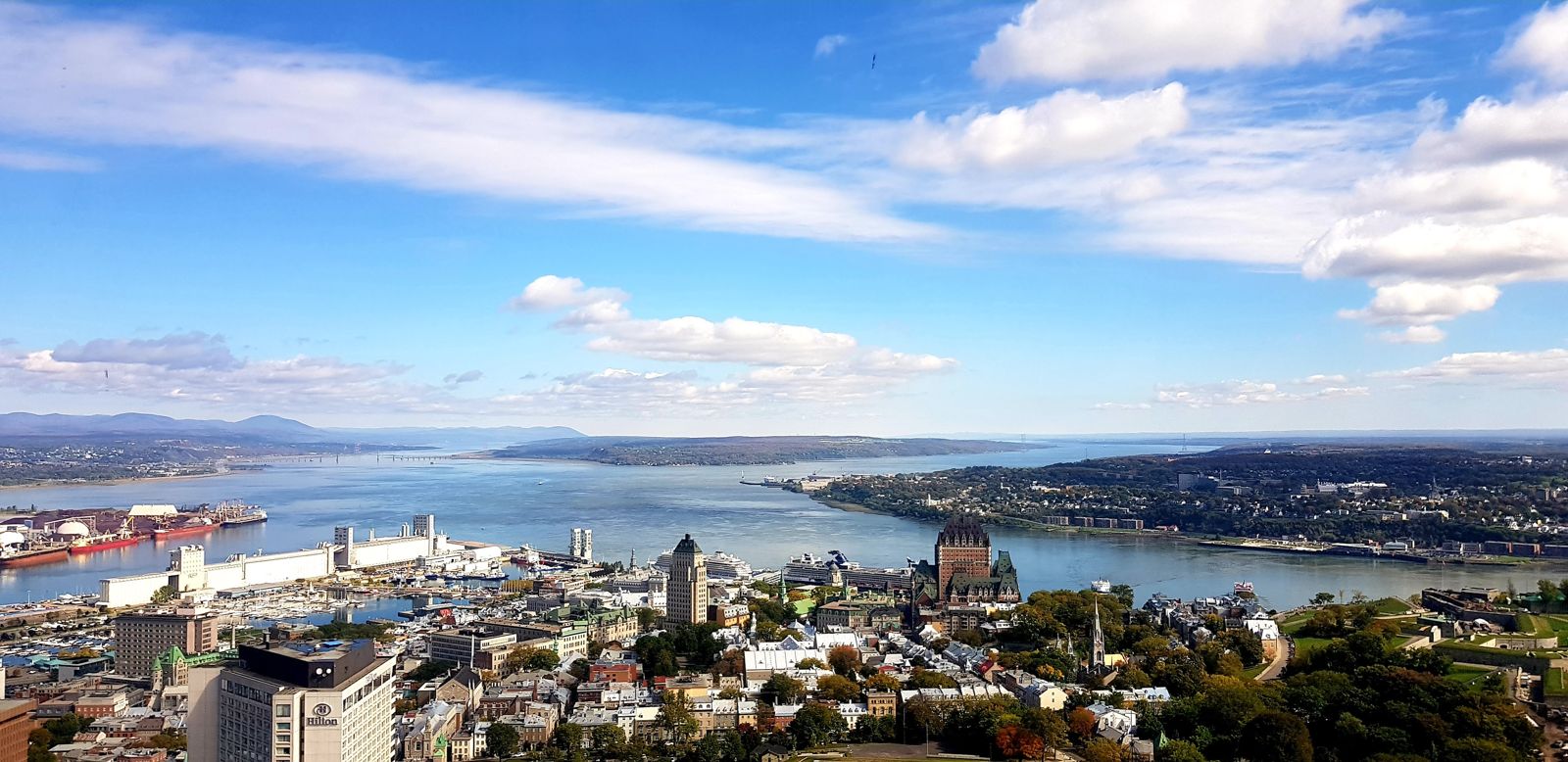
Two hours later we arrived and began our discovery at the Observatoire de la Capitale, the highest viewpoint at 221 metres, on the 31st floor of the Marie-Guyart building. The Observatory's vast glass walls offered plunging views over Old Québec, the St Lawrence, Île d'Orléans, the foothills of the Appalachians, the peaks of the Laurentians and more. Once the visit was over, with lunchtime fast approaching, we headed for the heart of the city, Old Québec, along one of its oldest streets, Rue Saint-Louis. We stopped at Chez Jules, a little neighbourhood bistro serving delicious, affordable food.
Once fed, we set off to wander the pretty little streets and squares. First we came to Rue du Trésor, a picturesque pedestrian alley turned open-air art gallery. We admired works by Québec artists depicting typical scenes of Québec City. Then we discovered the Cathedral-Basilica of Notre-Dame de Québec. Built in 1650, it was rebuilt twice: in 1759, after bombardment by British troops, and in 1922, after a fire devastated it. It was declared a historic monument in 1966 and represents more than 300 years of Québec architecture.
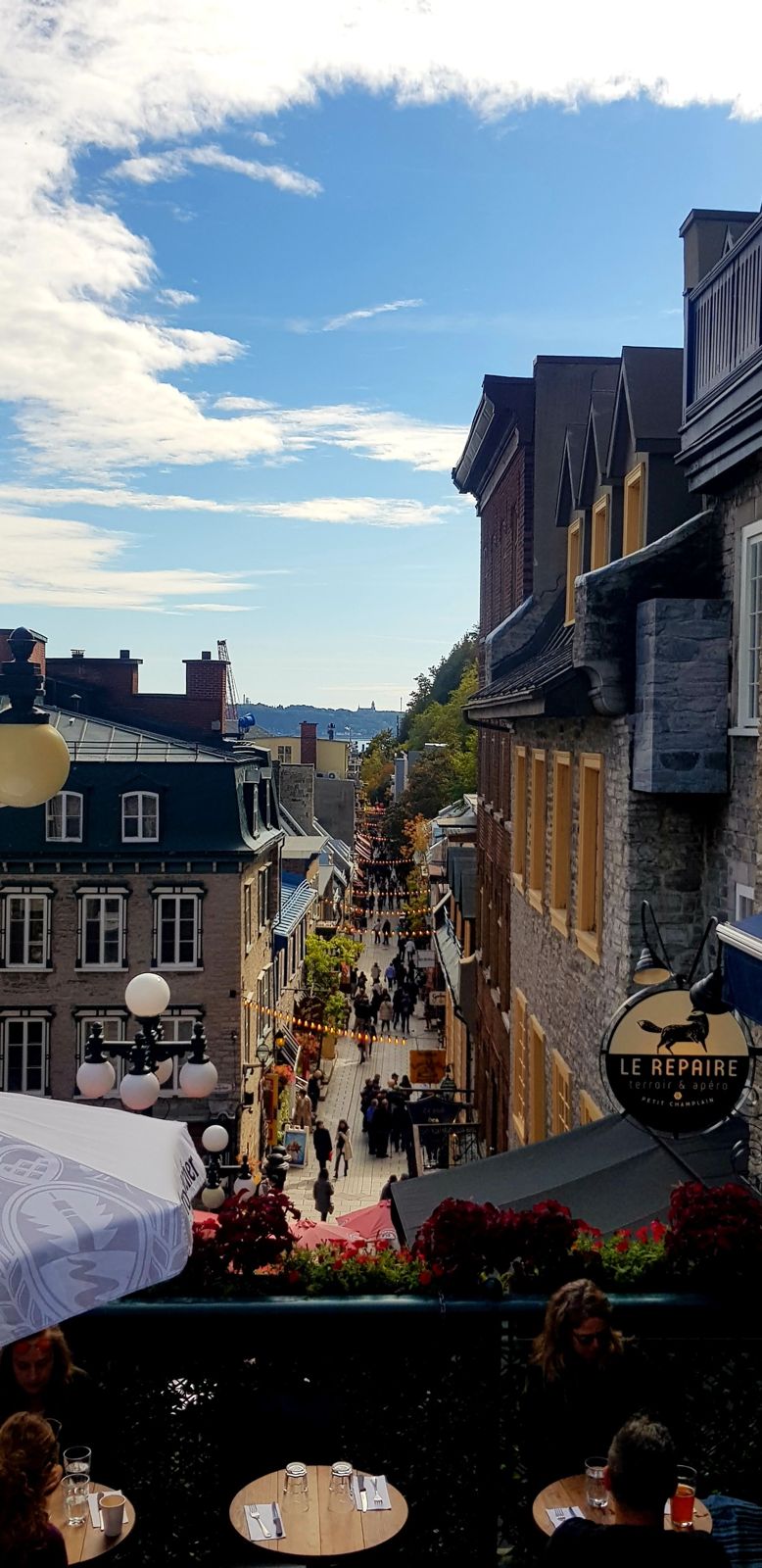
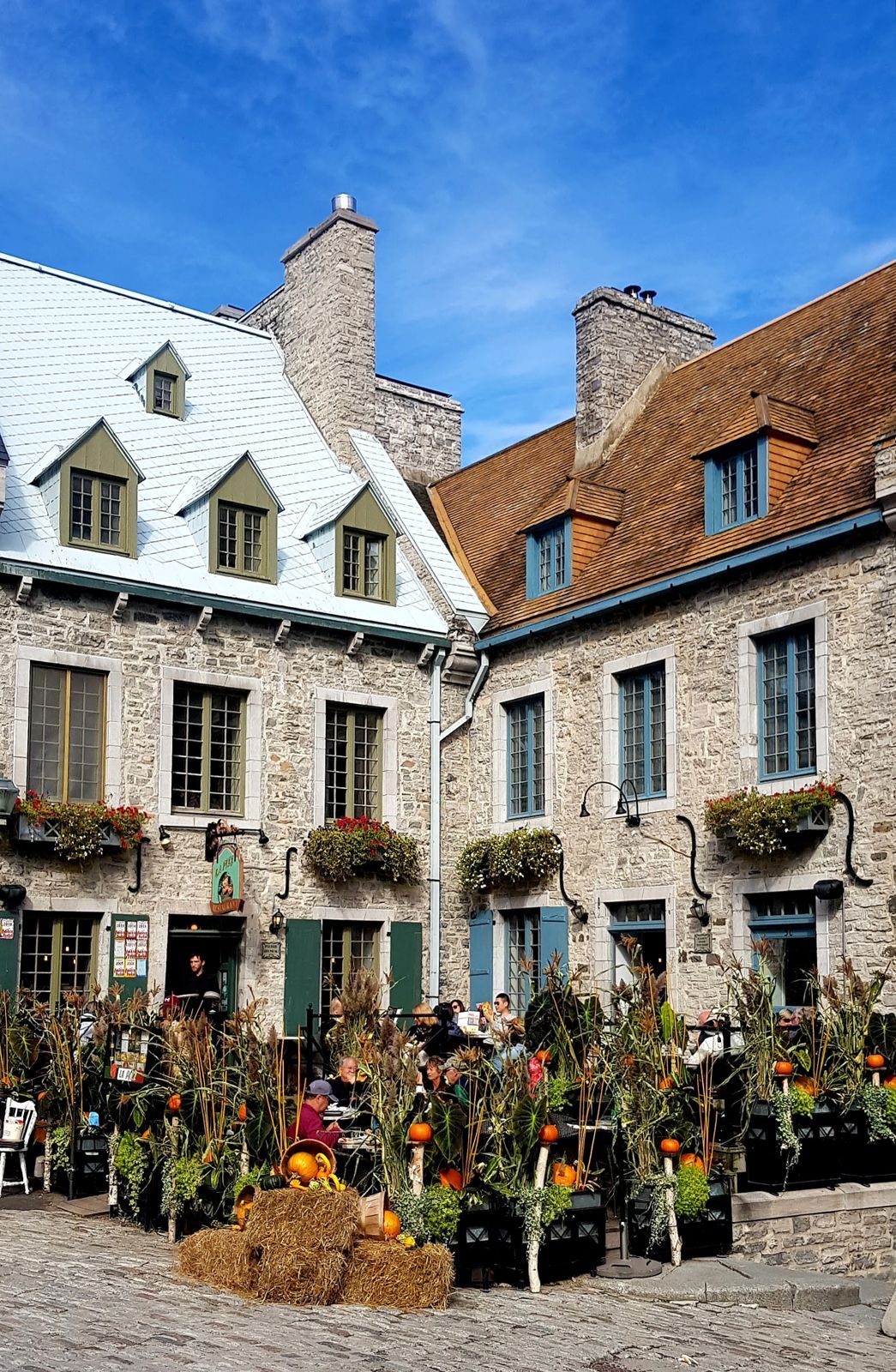
Next we went down the Escalier Casse-Cou ("Breakneck Stairs"), the oldest staircase in the city. Built in 1635, it was given its name by local residents because of its steepness. Québec City has nearly 30 staircases linking what are still called here the Upper Town and the Lower Town. At the bottom, we headed for the pretty Place Royale and its church of Notre-Dame-des-Victoires (a film was being shot there when we passed), then to Rue du Petit-Champlain, another very photogenic little street with lots of cafés, restaurants, shops and galleries.
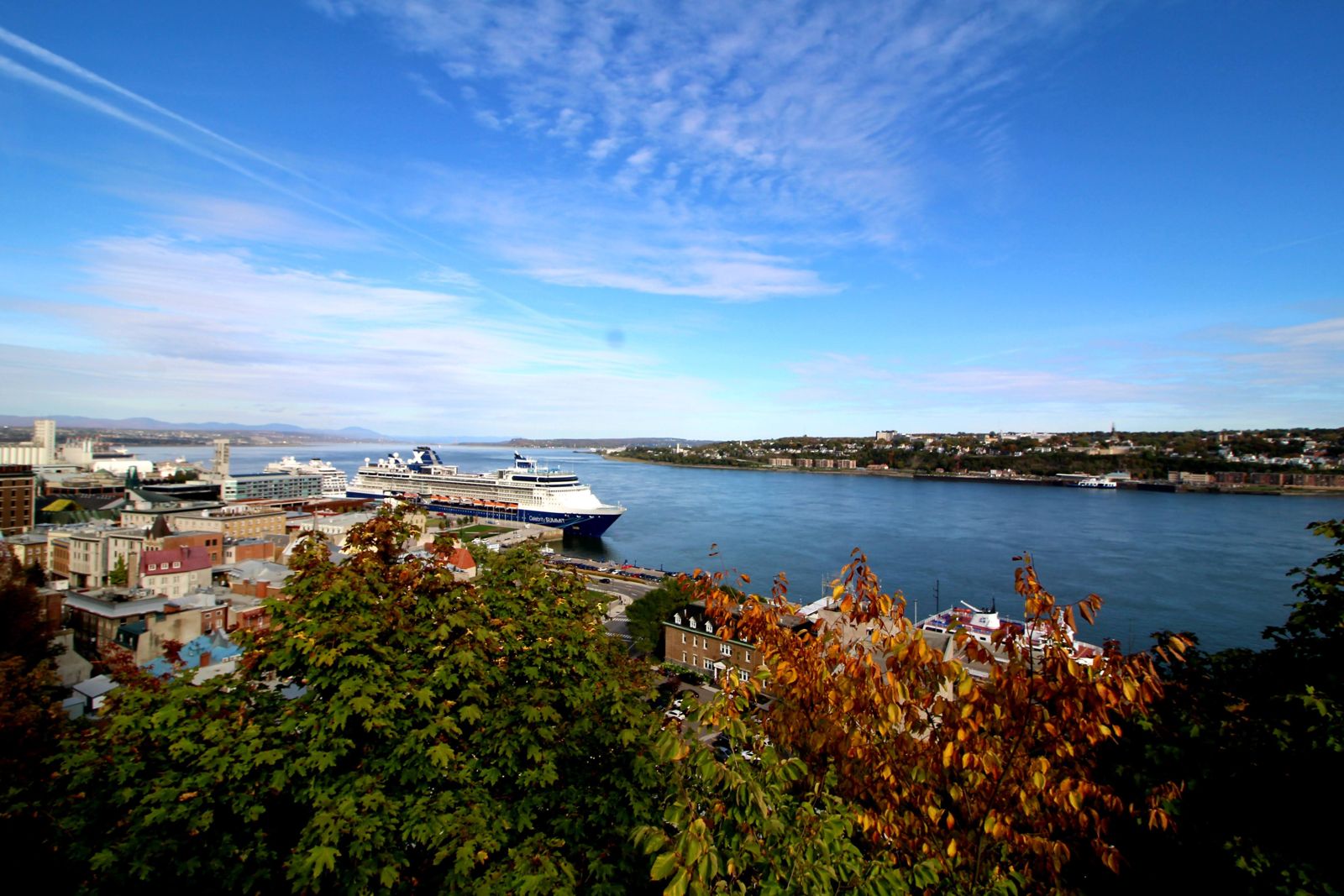
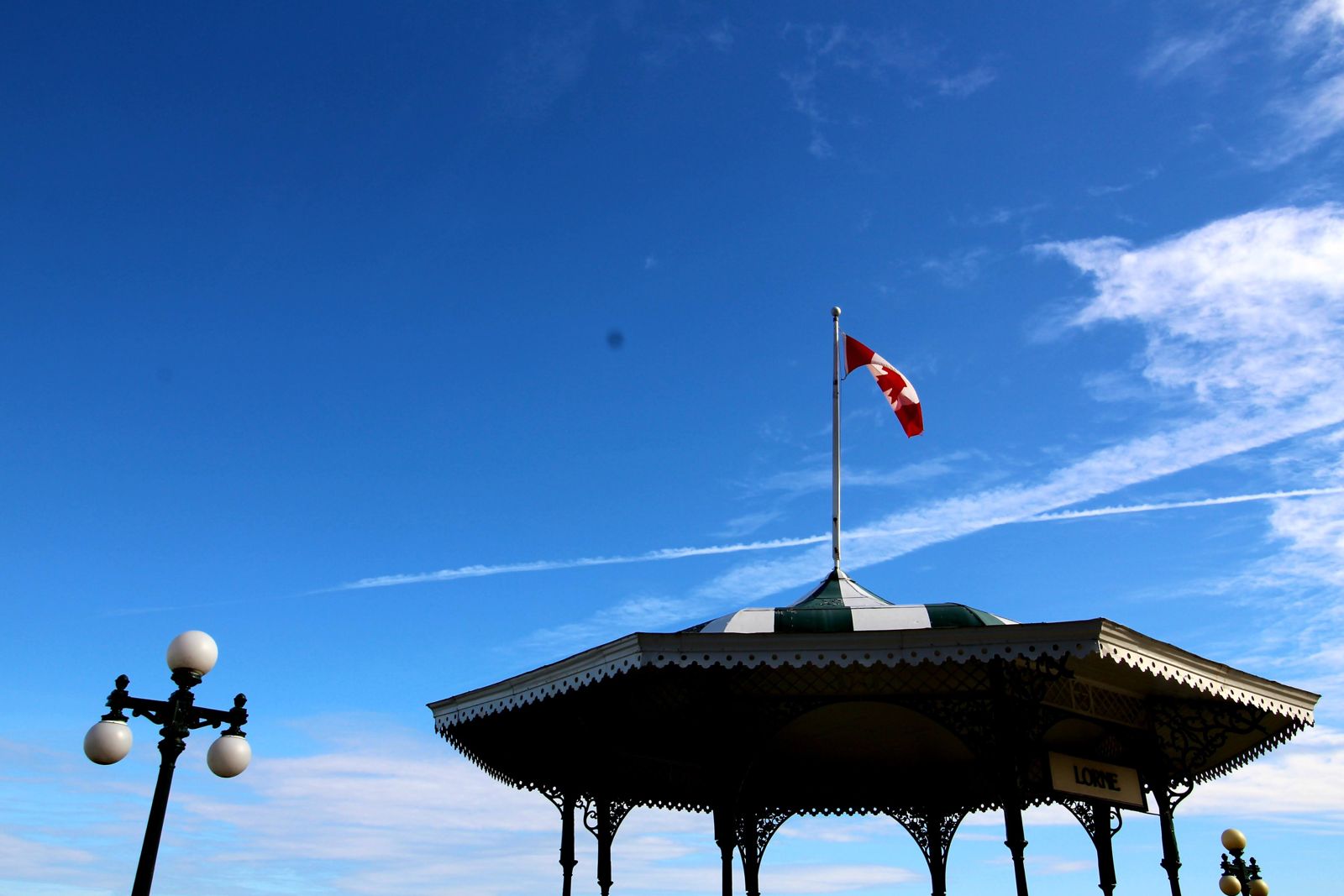
After laboriously climbing back up the Breakneck Stairs, we arrived at the foot of the sublime Château Frontenac, surely the city's best-known building and its emblem par excellence. Before 1893 the site housed all the government's administrative offices and reception rooms. It's now run by the Fairmont hotel group and bears the title of "most photographed hotel in the world". From Dufferin Terrace at the foot of the château, we enjoyed lovely views over the St Lawrence and the surrounding area. In winter, there are even toboggan runs on this 430-metre-long esplanade. We then took the Governors' Promenade, which extends Dufferin Terrace and runs alongside the Citadelle of Québec to the Plains of Abraham, a huge park created in 1908 for the city's 300th anniversary. It commemorates the terrible battles between the British and the French during the British conquest of 1759–1760.
Thanks to our friendly and very funny Québécois guide at the Citadelle, we learned lots of interesting things about the history of the fortress and of Québec more generally. After the visit we went back to the car, exhausted by this first day of sightseeing (especially Cassandre, who had covered nearly 9 km on crutches!). At our Airbnb we were welcomed by Sylvain, a born-and-bred Québécois, very friendly, sociable and talkative. We'd barely had a few minutes to settle in before going out again for dinner, because in Québec City most restaurants close at 10 pm, or even 9. We set our sights on Poutineville, a restaurant specialising in poutine, the region's traditional dish, made in its classic version with fries, cheese curds and gravy. The restaurant offered about fifteen different poutines, and you could even create your own with the ingredients of your choice. After the meal we quickly went back to the apartment, exhausted.
1 October 2019
With the jet lag we fell asleep early and, inevitably, woke up early too. At seven in the morning our eyes were already wide open to observe some sad news: it was grey and raining, the worst weather for visiting a city. We motivated ourselves to leave our cosy nest and head for the Musée de la civilisation, a very interesting place to learn and understand how today's Québec was built through its history, culture and traditions. The museum had two permanent and three temporary exhibitions, and thanks to Cassandre and her crutches we got in free. There was so much to see that we spent two and a half hours navigating Québec's past, from its first Indigenous villages to the rise of the metropolis of Montréal.
Then, still in the rain, we walked up Rue Saint-Jean, a very popular, busy street. It's the shopping destination par excellence in Old Québec, with a multitude of shops and restaurants. As the rain wouldn't stop, we decided to visit the Parliament Building, home of Québec's National Assembly. There were completely free one-hour guided tours, and we didn't miss out. We went into the entrance hall, the presidents' gallery, the Legislative Council chamber and the National Assembly chamber, where we were even lucky enough to briefly watch a sitting with members of the assembly. After the tour we decided to head home, as it was still raining.
In the evening we went to La Cuisine, a friendly little bistro-bar with a "just like home" feel in a retro, colourful setting. There were even board games and consoles to liven up the meal. Stéphane chose the classic ratatouille gratin and Cassandre the "pâté chinois", a typical Québec dish of minced beef, corn and mashed potato layered in that order. It resembled a French hachis Parmentier (a sort of cottage pie) with a layer of corn added between the meat and the mash. It was neither exceptional nor bad. Conclusion: hachis Parmentier is much better, and we're not saying that out of chauvinism.