
 ← PreviousCanoes on the ice and a real snowstorm
14 February
Cassandre's parents have spent four days in Quebec City and its region and are coming back today from their little trip. But we don't plan to stay in Montreal this weekend: we want to take advantage of their being in Canada to visit one of its iconic places, Niagara Falls. Located near Toronto, they have shaped the world's imagination for more than a century. Johann and Evelyne pick us up from work, which we leave exceptionally at 3 pm, and we're soon on the 401 West. After an hour's drive we leave Quebec and here we are in Ontario. Already the signs are in English and petrol is much cheaper ($1.20 a litre in Quebec against $1 in Ontario). We stop at a station to fill up and swap drivers. Stéphane takes the wheel so Johann can rest, and carries on to the end. A big accident has congested the road and we reach the Airbnb later than planned, a little before 10 pm. As Canadians often do, our hosts have converted their whole basement into a big apartment with two bedrooms, a kitchen, a living room and a bathroom.
The man who welcomes us is called Dominic, an Asian man with Chinese features who in fact has no connection with China: he was born in Calcutta, India, where he grew up, before emigrating to Canada. Once we've settled in, he comes to invite us for a drink and introduces us to his wife, Suzanna. She's Chinese, from Wuhan, the city at the epicentre of the coronavirus that's in all the headlines these days. We have a pleasant conversation with them and Dominic even gives us a bottle of wine! He has a heart of gold, and that's exactly why we stay in Airbnbs rather than hotels. It's soon 10:30 pm and we still haven't had dinner, so we reluctantly take our leave to go and cook. On the menu, pasta carbonara, which we wash down with the bottle so kindly given to us. We put the world to rights until midnight over this feast before reason catches up with us and we go to bed. We'll need to be in good shape to enjoy the falls and Toronto!
15 February
The alarm goes off around 8:30 am and we get ready slowly but surely. We're an hour and a half away and aim to arrive by 11. We set off at 9:30 and enter Toronto's labyrinthine road network. There are motorways everywhere, enormous interchanges at every exit and plenty of cars on the tarmac, because it's a long bank-holiday weekend (Family Day) throughout Canada except in Quebec, which clearly doesn't fancy doing things like the rest of the country. We follow the signs for Niagara, wait in the slowdowns along the way and finally see the town of Niagara Falls. It's a very built-up place, with its share of buildings, fast-food outlets and wide avenues, something quite ordinary in North America. But at a set of traffic lights, as we turn left, we see at the bottom of the slope a torrent of water rushing down.
We hadn't expected to see Niagara Falls like that, so suddenly, and the mood in the car changes instantly. We're like children who weren't told there was a surprise and spot the Disneyland sign as the car takes the exit. We park in the car park Cassandre found, the cheapest of course, and take the footpath. We also realise that Johann and Evelyne are very moved to see this wonder of the world with their own eyes. Following the current, we walk towards the most impressive and iconic of the three falls: the Horseshoe Falls, named after their shape. The noise isn't as deafening as all that in the end, but the view really is unrivalled. We stay a long time contemplating the snowy landscape and taking photos. And although people stay clustered at the most accessible spot, the path runs for more than a kilometre and offers many viewpoints over the attraction and over the American Falls, literally opposite us on the other side of the river, on Trump's American soil.
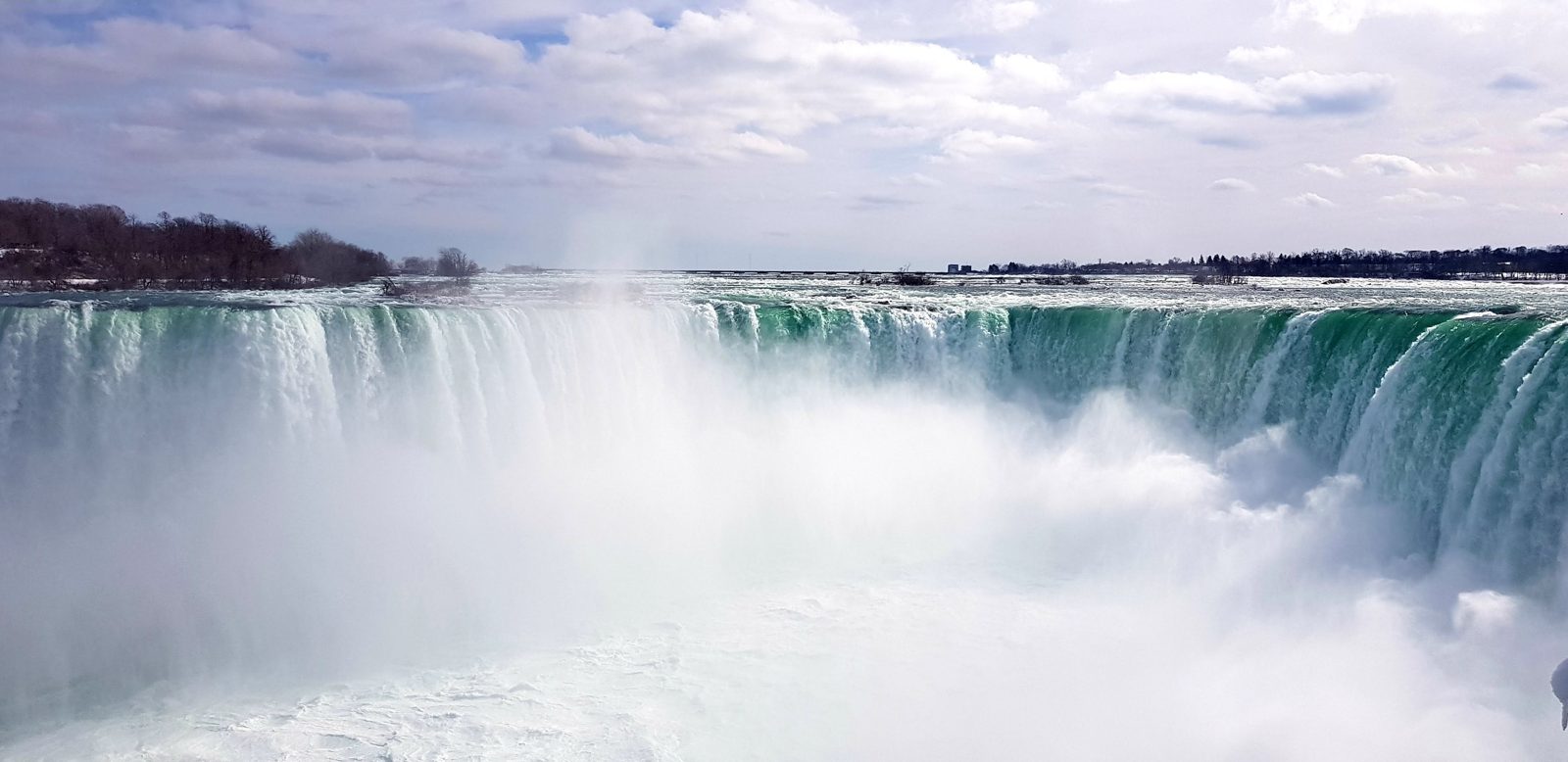
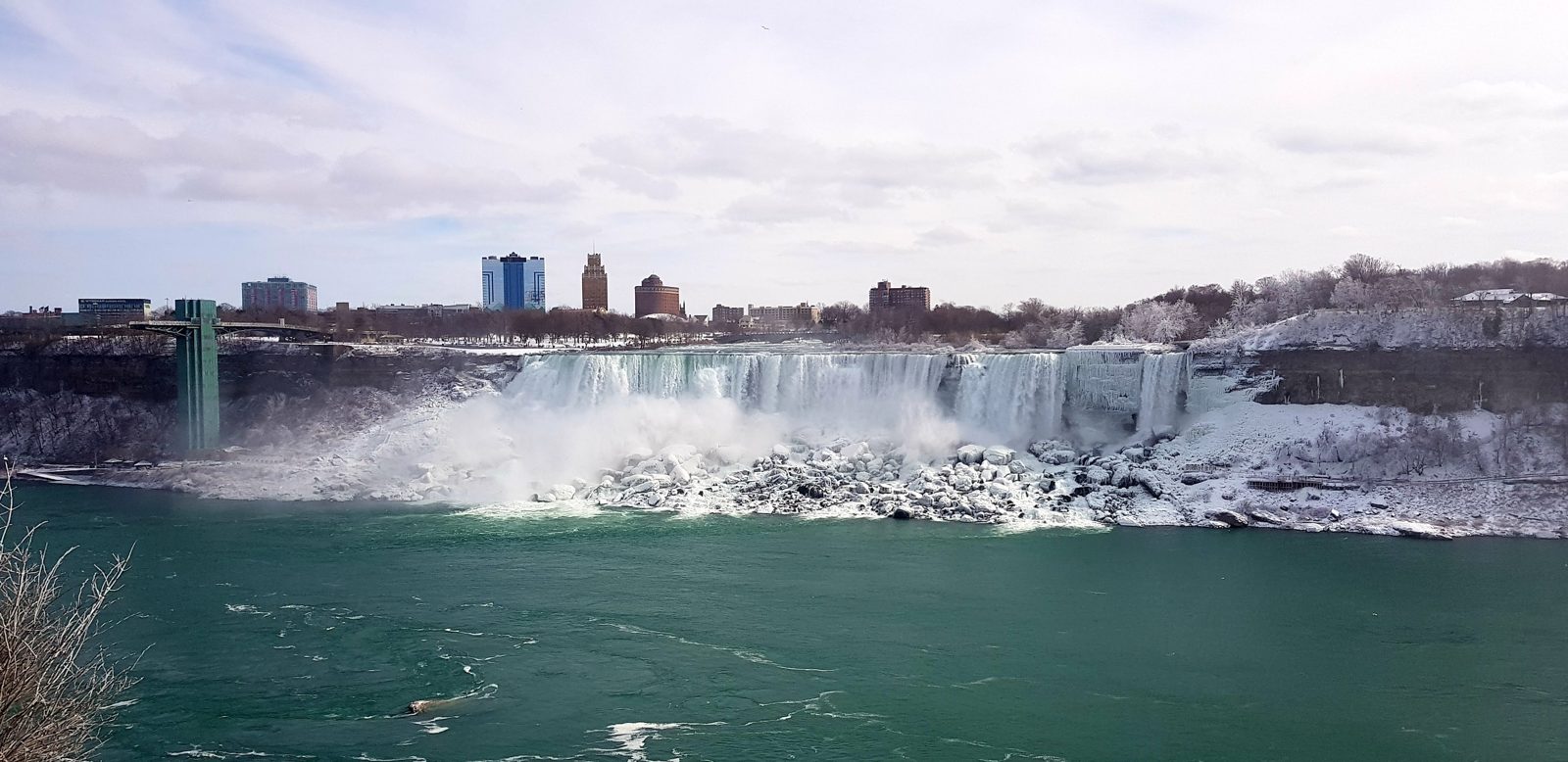
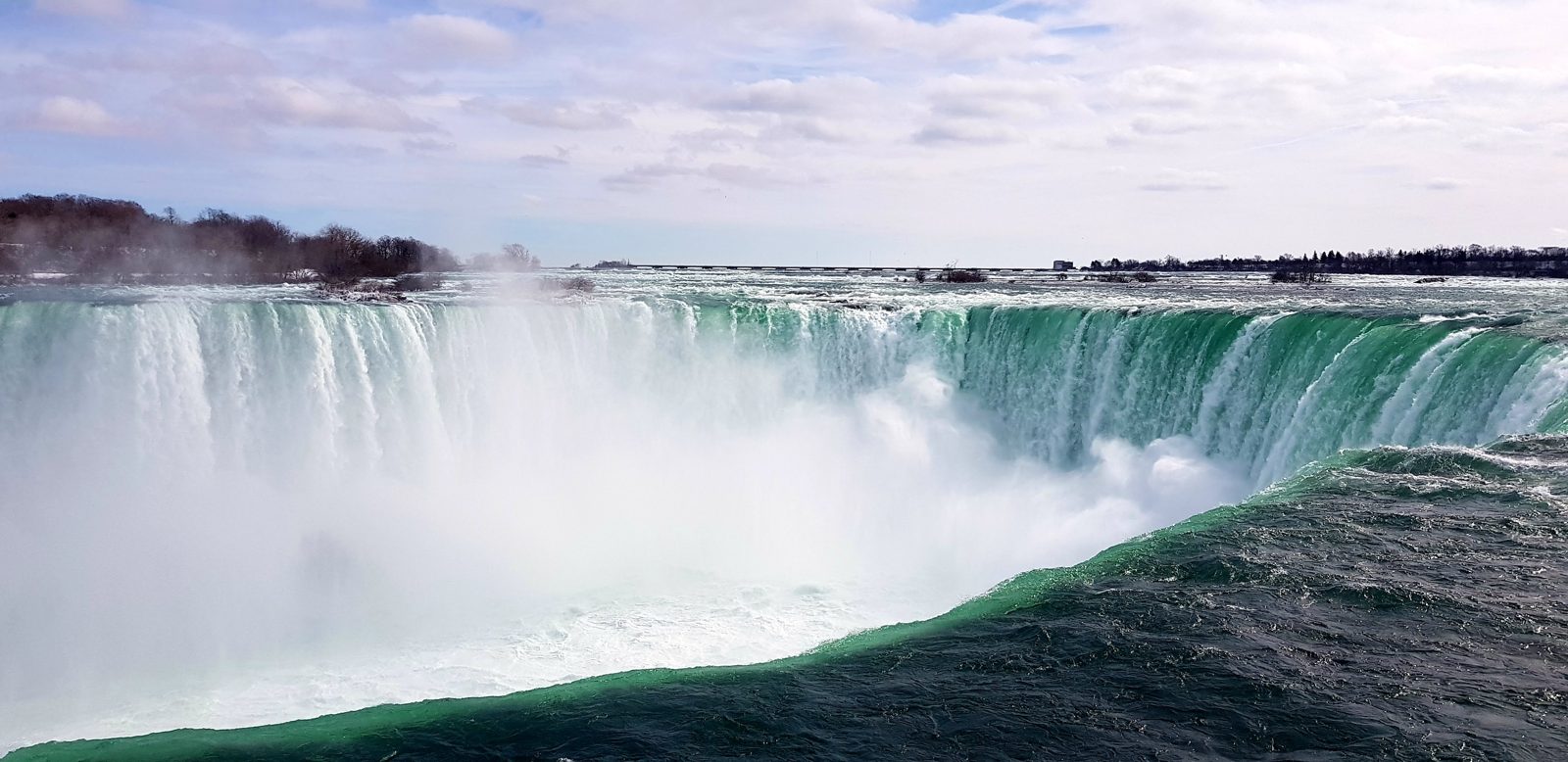
Having recorded this memory deep in our brains, we take the road back to Toronto. It's always so easy to drive in these countries where straight lines are the absolute norm, and after almost two hours on the road we reach the city. We park in the Queen Street West area, Toronto's trendiest street, and make a short stop to eat at a pierogi fast-food place. A typical dish of Polish cuisine, pierogi look like a kind of ravioli and are traditionally filled with potato, meat, vegetables or cheese, depending on your taste. After this excellent culinary experience, we finally tackle Canada's largest city. Capital of the province of Ontario, with almost three million people, it's the country's centre of influence. Its big avenues are crossed by eleven streetcar lines, which we won't use because we prefer to explore on foot. We cross the Alexandra Park area before turning towards Graffiti Alley, a gloomy street covered, as its name suggests, in street art. Our steps then lead us to Nathan Phillips Square, with its skating rink and iconic TORONTO sign in red and white letters.
Toronto is often nicknamed little New York and it goes as far as having its own little (really very little) Times Square. Created in 1998 to rehabilitate a run-down area, Yonge-Dundas Square is today the nerve centre of the city, and the giant pedestrian crossing across the avenue is the busiest in Canada, with more than a hundred thousand walkers a day. Not far away is a place you certainly won't find in NYC: the Hockey Hall of Fame, which Quebecers would call the Temple de la Renommée. The best players of all time are honoured there, but unfortunately, like many French people, we don't know a single one. That doesn't stop us wandering around and admiring the imposing statue of a goalie that hugely blocks the entrance. We come out to admire another sculpture, that of Glenn Gould, the world-famous Canadian pianist, sitting on a simple bench at a street corner.
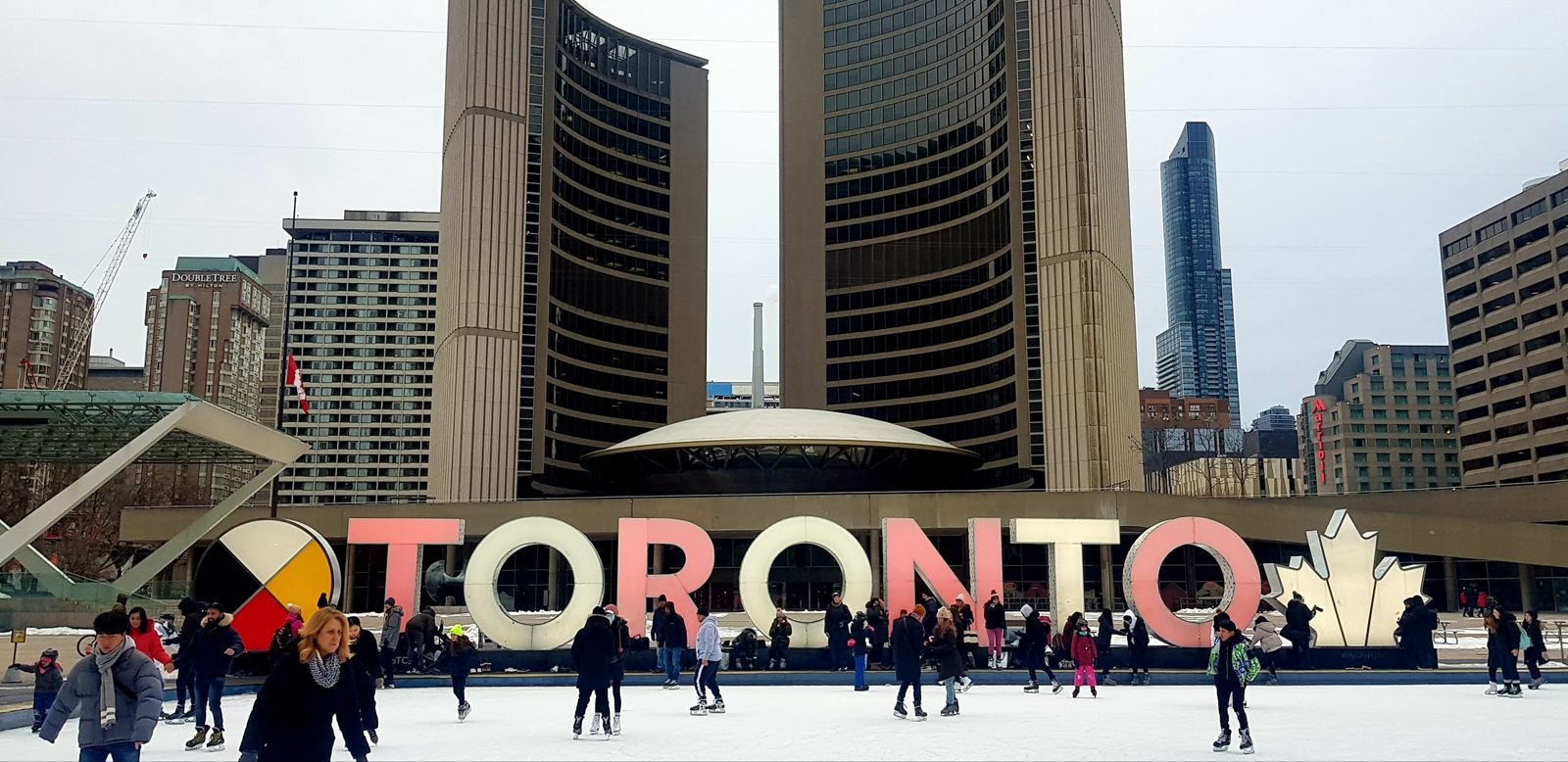
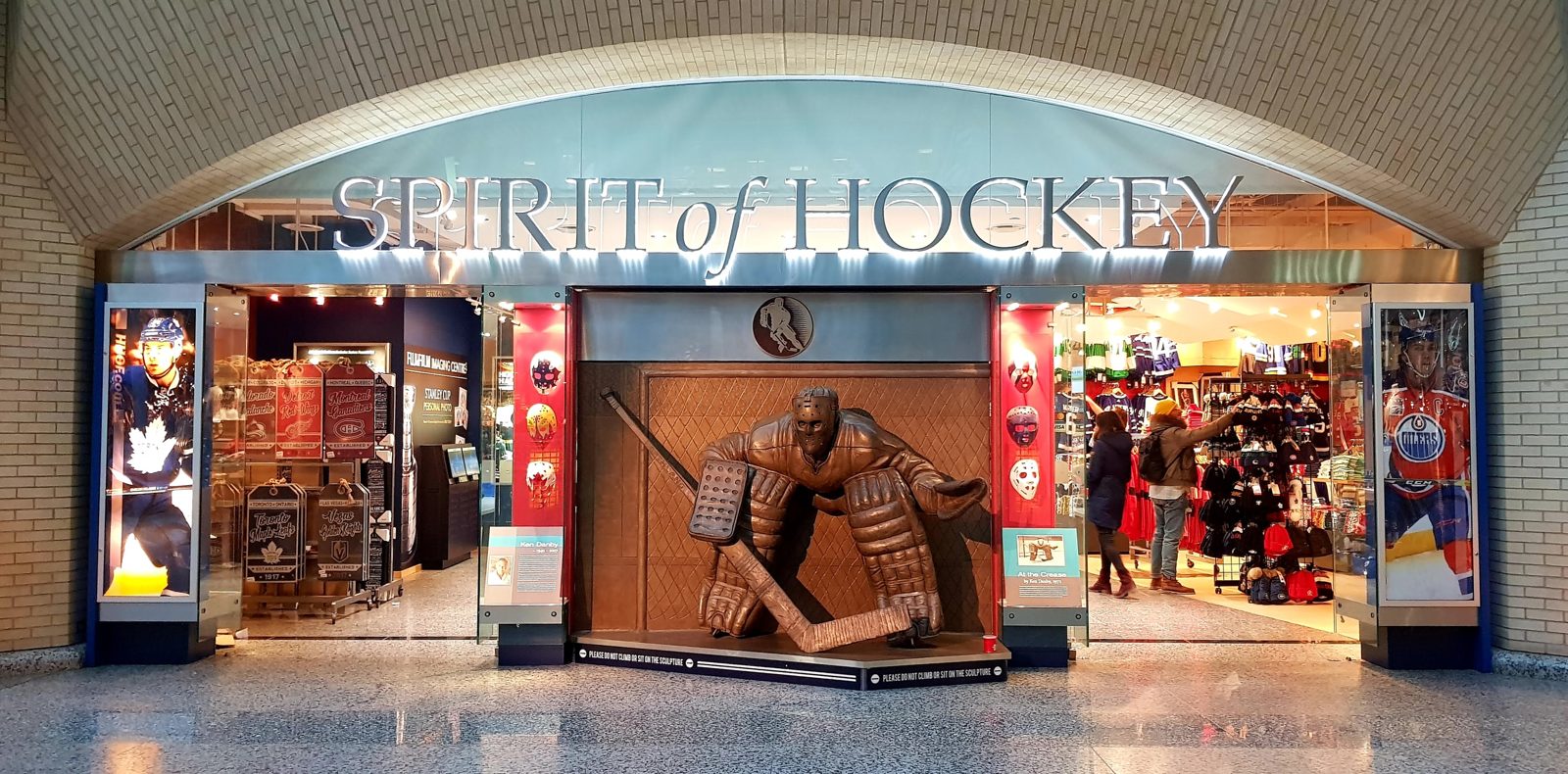
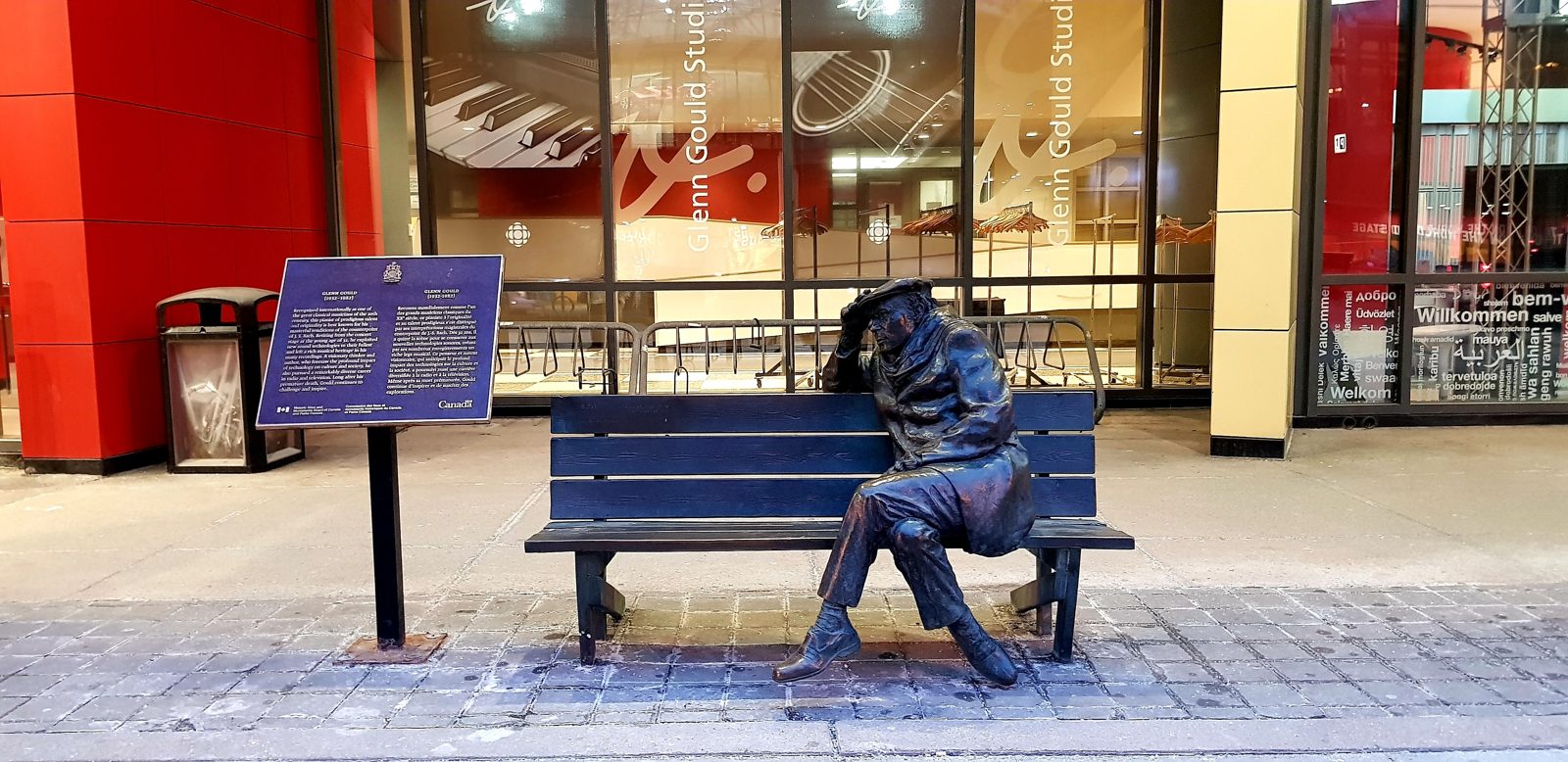
Further on still, the CN Tower starts to reveal itself between the buildings. At 553 metres, it was the tallest tower in the world until the Burj Khalifa was built. In the 1970s Toronto's urbanisation and population boom forced the city to build ever-taller buildings, with the unfortunate consequence that radio waves no longer reached every neighbourhood. To remedy this, and to prove Canadian industrial might, the railway company Canadian National decided to build the tallest structure in the world. Originally intended as a gigantic radio and TV antenna, the CN Tower has since become one of the country's main tourist attractions, and its needle-shaped architecture is recognisable at first glance.
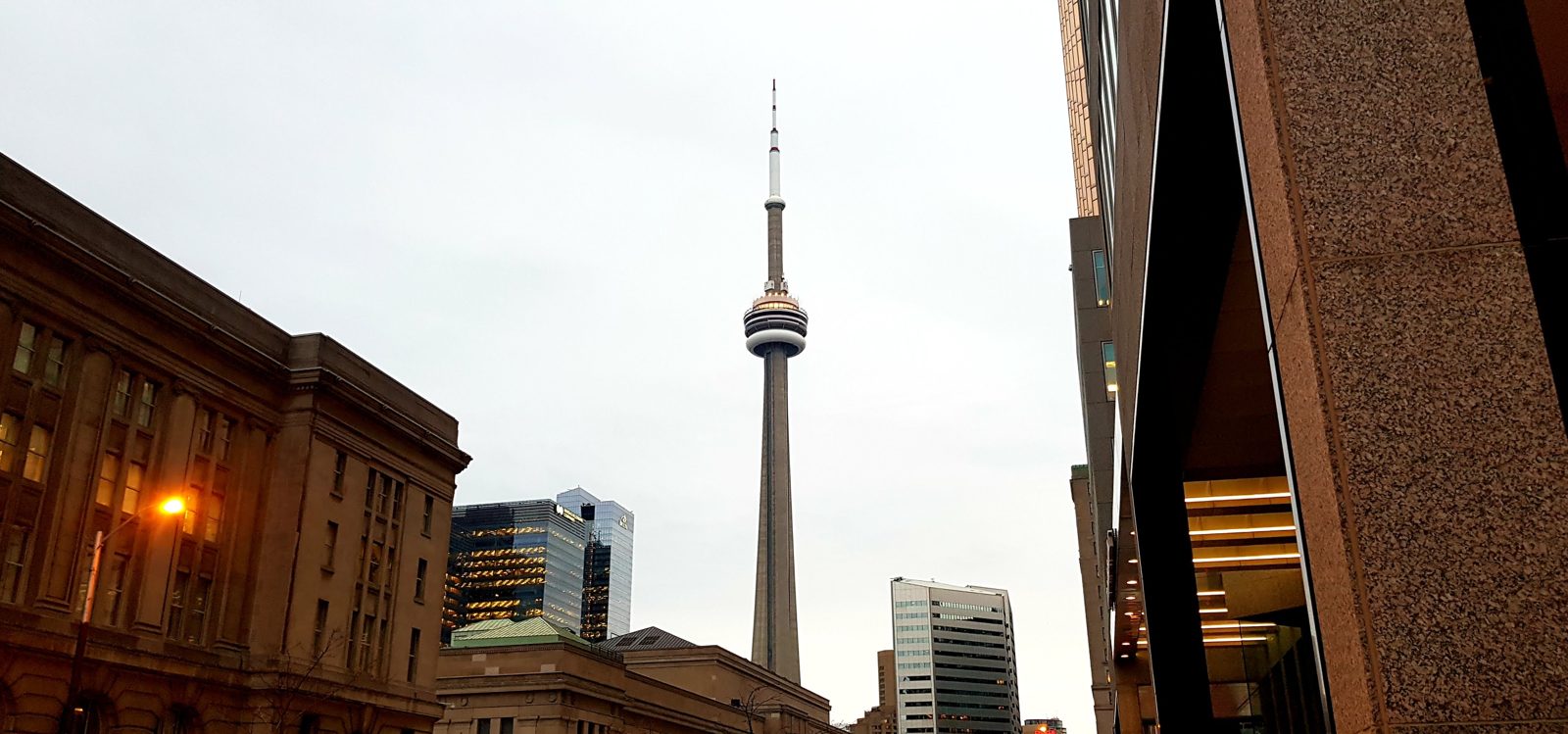
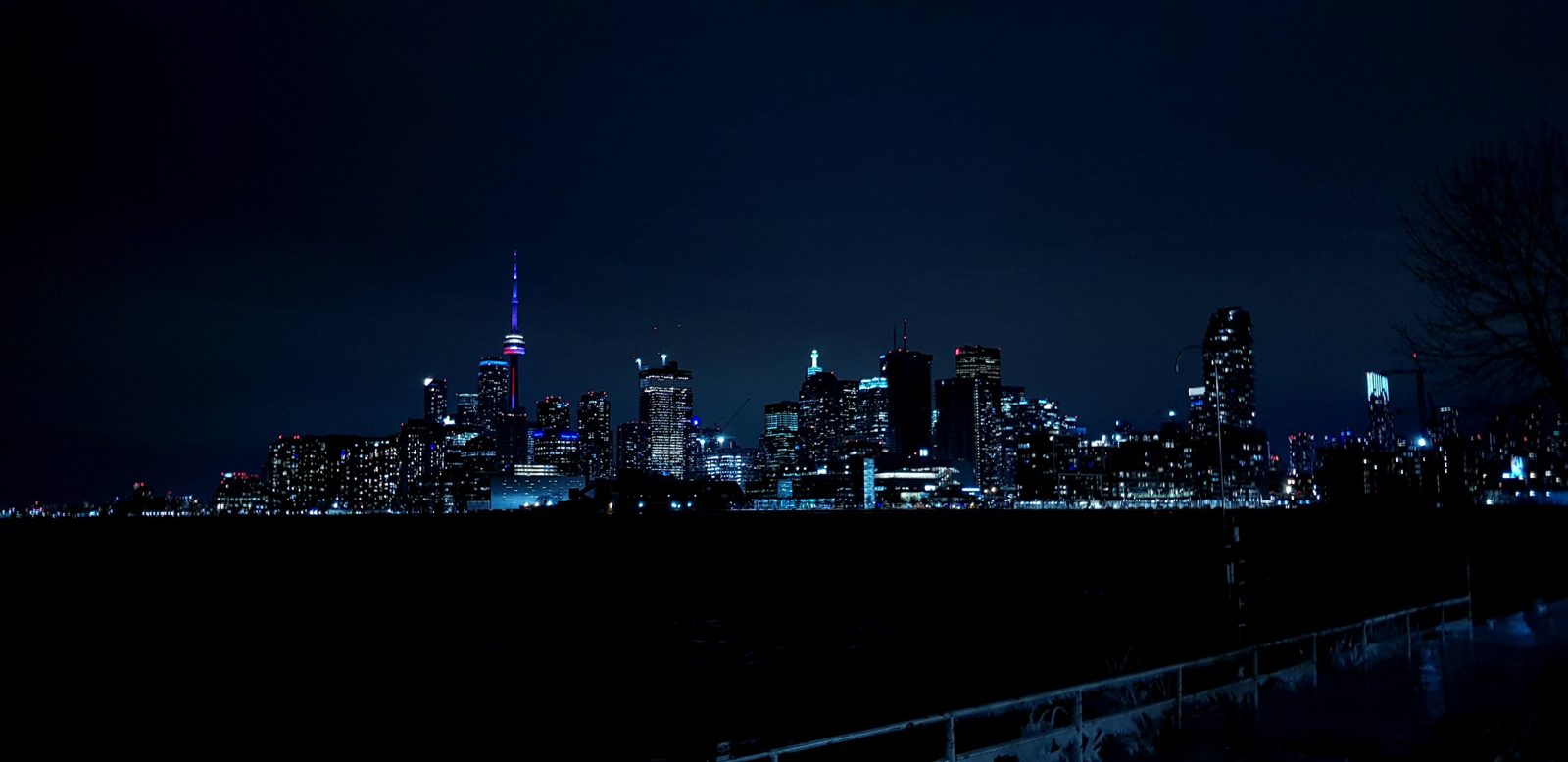
The sun is already starting to go down. We were already cold, and things don't improve with nightfall, so after three hours of walking we go back to the car to reach a viewpoint somewhere else. From the harbour, the illuminated skyline appears in the dark night, but the wind has turned icy and blows so hard that we can barely stand. Stéphane ventures carefully onto the icy wooden boards of the harbour to take a few photos. No railing separates the walker from the choppy water of the lake, an astonishing lack of safety for the country's economic capital. This time we really do head home. We wash and warm up before eating at Remezzo Italian Bistro, a little place near our accommodation. The food isn't bad without being excellent, but we have a lovely family evening.
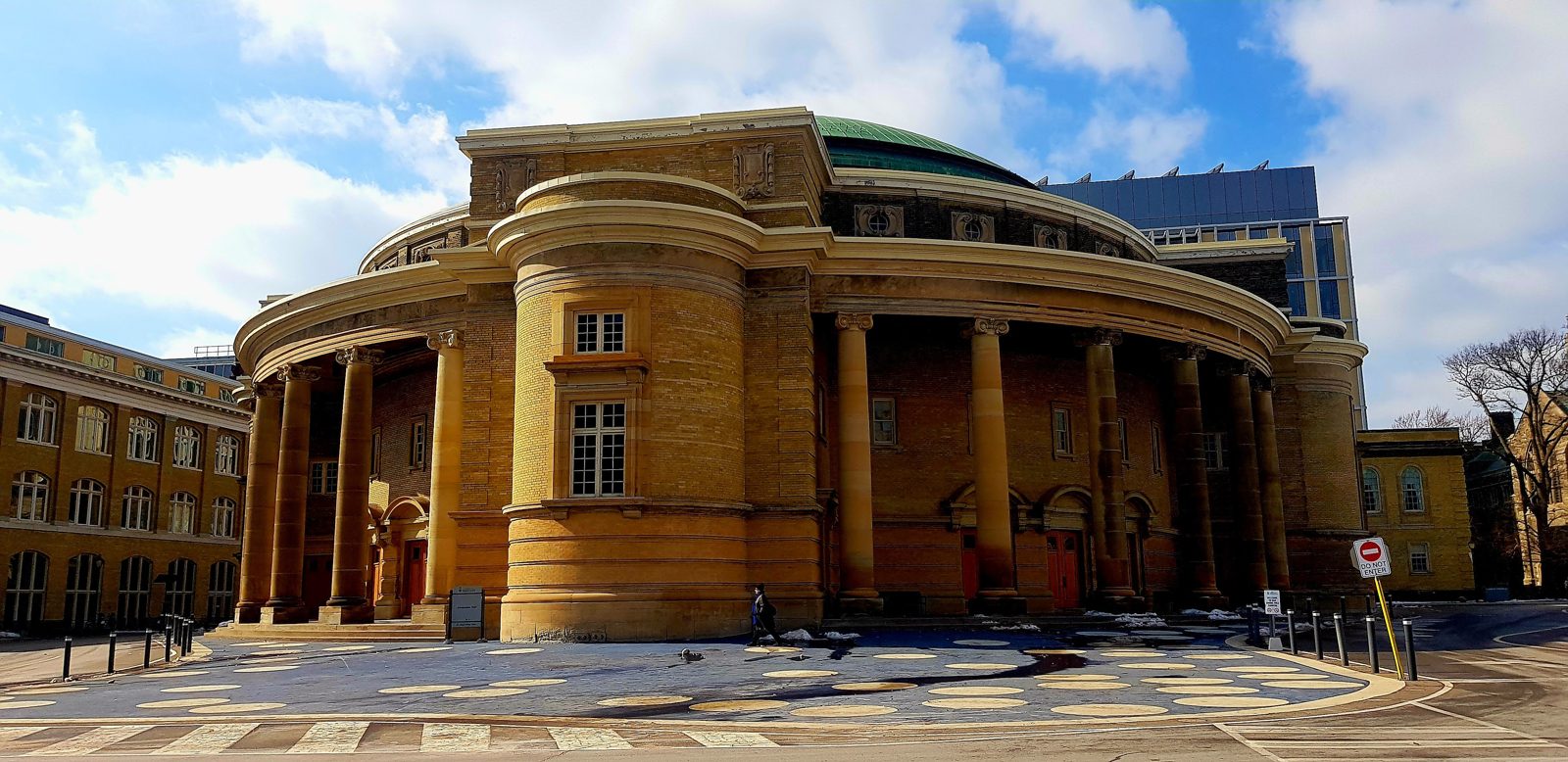
The next day we decide to make the most of it by getting up early. We take different routes to explore the city thoroughly. Our feet lead us to the impressive University of Toronto campus, home to sumptuous cream-yellow Victorian buildings, and, chatting as we go, we make a big loop to end up in the very chic Yorkville neighbourhood. There we've spotted a diner, those typical American restaurants, because we know Johann is very keen to see one with his own eyes. Because of its location, prices are much higher than usual, but we eat our fill and we're ready for the drive back, six hours of almost straight road to reach Montreal around 8 pm.
22 February
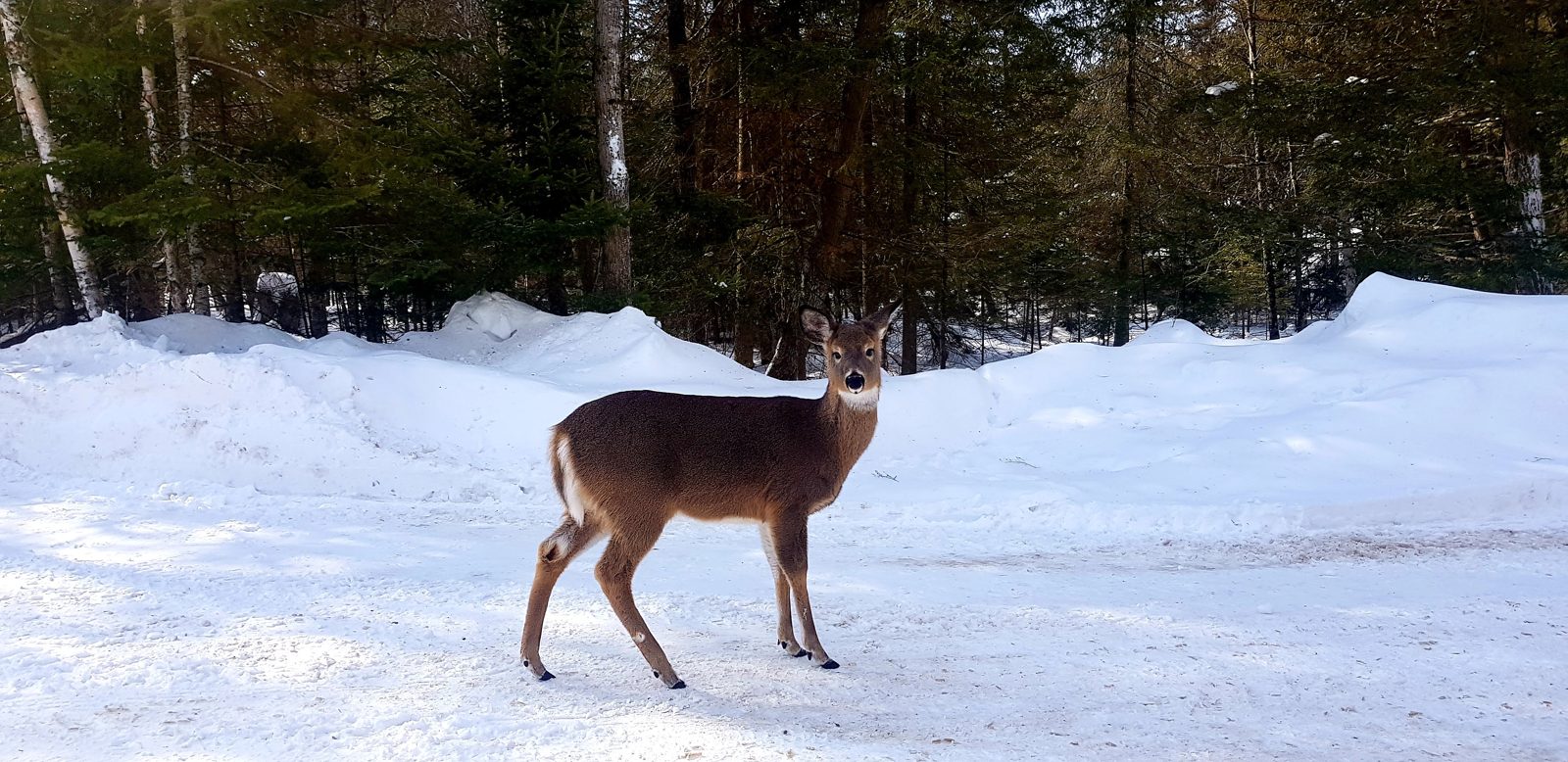
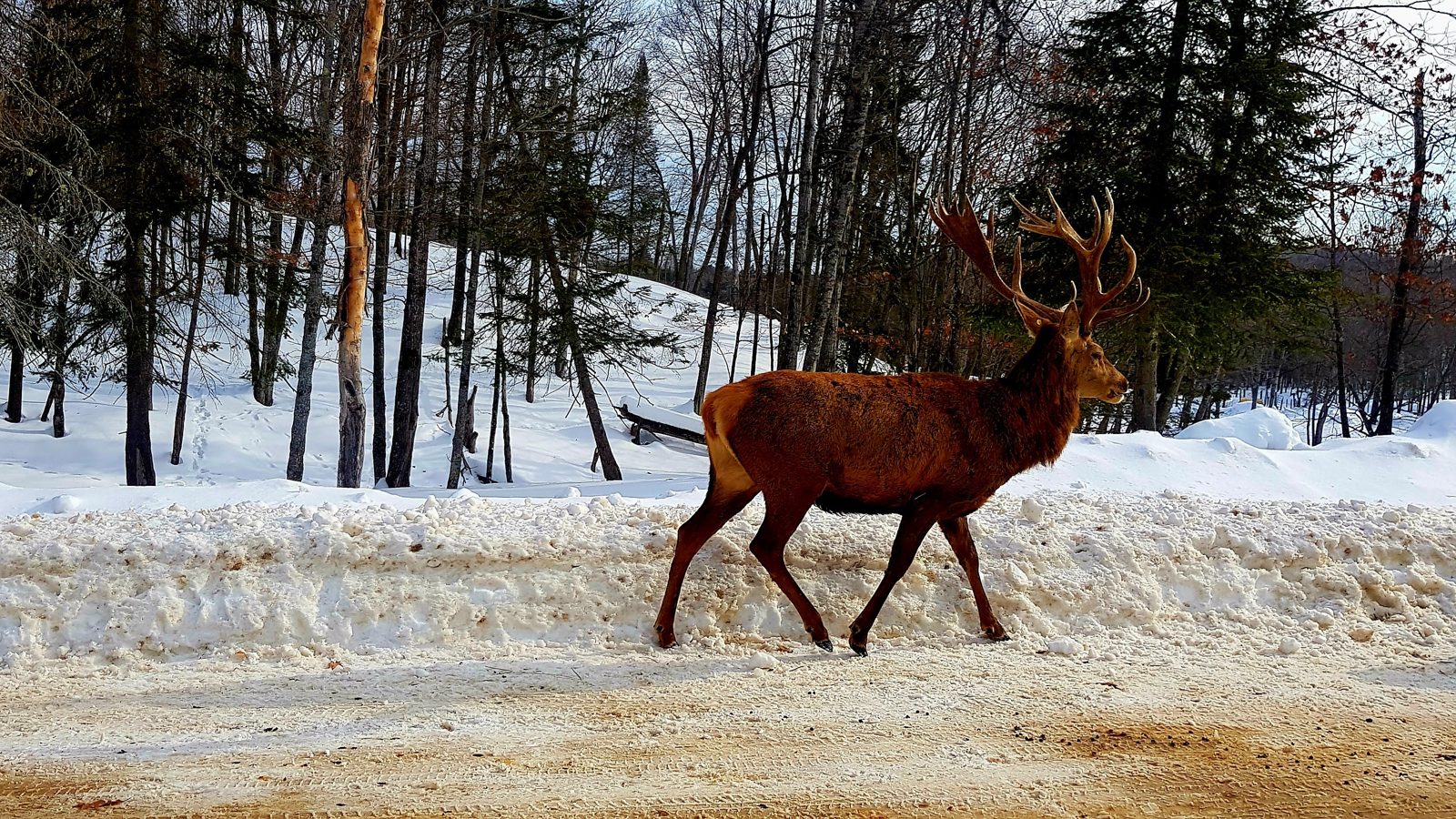
Parc Oméga is a wildlife sanctuary about 100 km from Montreal, in the Outaouais region, where you can see many species of North American wildlife roaming free: bison, deer, elk, wolves, fallow deer, bears… The park is visited by car along a route of about fifteen kilometres, but part of it can be done on foot. We hadn't particularly planned to visit it at first, but since Cassandre's parents are here and it's not every day you get the chance to see deer and bison roaming free, we think it'll still make a nice wildlife experience. We've barely driven 200 metres inside the park when we hit our first traffic jam. Dozens of cars are packed in front of us, blocked by herds of deer crowding around them to get food. Because yes, although in this kind of place where animals roam free visitors are generally forbidden to feed them, here it's completely tolerated and even encouraged! You can buy carrots for the modest sum of $2.50 at the welcome chalet to hand out to the animals. It's a practice we don't condone at all, but we put our French critical spirit aside to enjoy the moment.
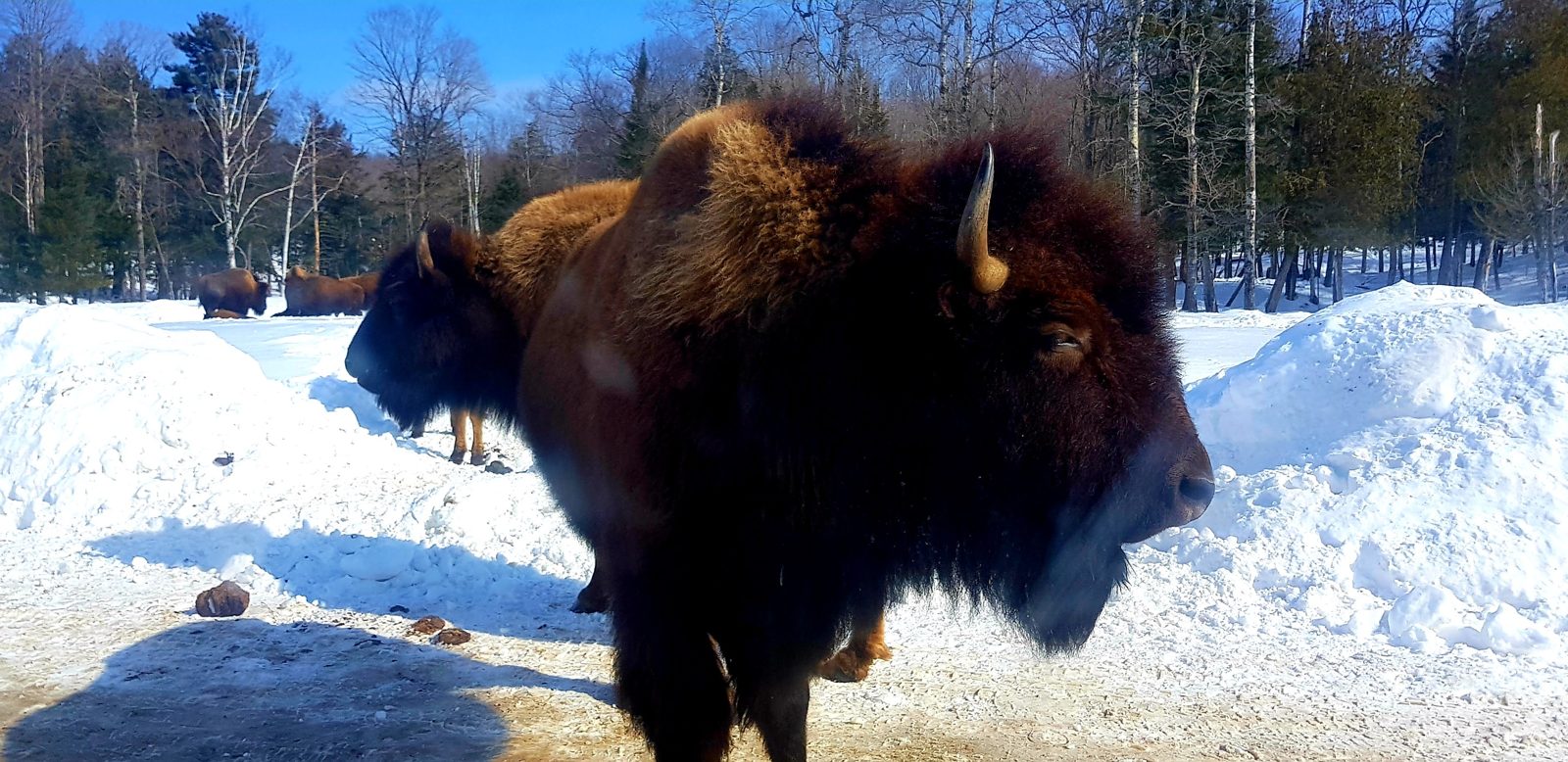
Of course the park is teeming with animals, and crowding at the entrance made no sense. As we drive we come across deer, fallow deer and even wild boar, completely used to the noisy presence of vehicles. They look at us with barely a hint of curiosity, and the deer lose all interest in you once they understand you're not going to feed them. It's yet another harmful consequence of mass tourism: these animals are free but still dependent on humans. The bison, for their part, impose their impressive bulk and slow gait. Despite their stocky build, their facial features are very fine and harmonious. We watch them respectfully and nobody dares try to feed them. When they stand in front of your car, you pray they don't have a moment of madness, because they'd make short work of the bodywork.
At the old-time farm we can finally park and stretch our legs. A few shops, toilets and a picnic area let visitors enjoy the fresh air a little. After a quick meal we walk to the wolf presentation enclosure. And while we expected to find them in a huge area, it's actually a big cage. The guide, whose face is completely made up without our really understanding why, explains the social dynamics of this wolf pack through a microphone. We find it unfair and cruel to keep animals so used to the open air like this. It seems all the more absurd when the host ends up explaining that this pack communicates with the others living free in the surrounding area. A little dismayed, we go back to the car to finish the tour of the park, but we come to the same conclusion when we reach the Arctic fox enclosure. In a tiny space, these magnificent animals rest on a ridge, looking jaded.
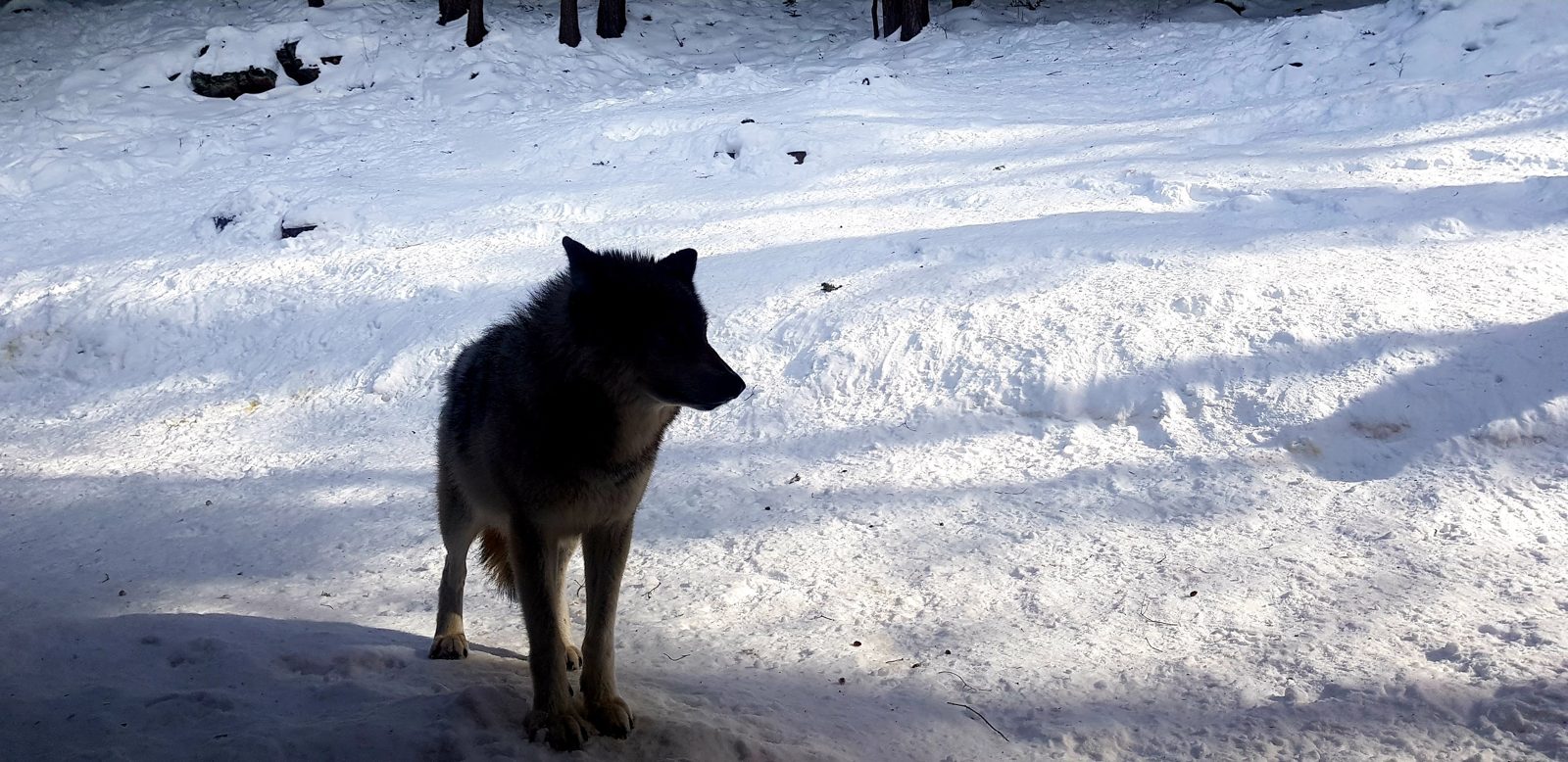
We're of course aware that we'd surely never have seen them if they hadn't been locked up, but the pleasure of our eyes isn't worth the distress of these poor creatures. We finish the huge loop, coming across coyotes, ibex and does galore. Without even noticing the time pass, we realise we've been wandering for more than four hours and it's time to go home.
23 February
What winter sport can you do when you're not a great skier, like Stéphane? Sledging, of course! Quebecers call them glissades and you find them all over the region. At most of them you go down on big black tubes that make you pick up crazy speed, if the slope is right. We go to the Glissades des Pays-d'en-Haut, a little under an hour's drive away, for a day of fun. It's two degrees and there isn't a single cloud in the sky, so conditions are ideal for sledging. Across 61 runs you can get a taste of the thrill of speed. Of course they're not all the same level, and we start with the easiest before quickly moving on to the ones called “Formula 1” or “Adrenaline”. With an 80-metre vertical drop, the thrills are there despite the strength of the sun, which is starting to soften the ice.
The crowd here is very family-oriented, as we see when we stop to eat at the chalet. Parents and children eat quietly at rough wooden tables, and we join them to wolf down a modest burger and a few chips before tackling a second side of the hill. In the queue we have two choices: the raft or the tornado. The raft is a long boat that seats twelve people. A hook catches the boat to pull it up to the top of the run. From there we set the craft against a barrier on the slope. When the operator presses the start button, the thing shoots off at crazy speed down a straight line, slowed only by a few bumps and rough mats at the finish.
The mechanism is the same for the tornado, except that this time it's a big round ring that seats eight and spins endlessly all the way down the run. Both activities have us in fits of laughter and we keep doing them until the end of the day. The fresh air makes you hungry and tired, and by 5 pm we're completely worn out and take the road back to Montreal for a well-earned rest. All the more so since Johann and Evelyne leave for New York tomorrow and will need to be in top form!