 ← PreviousThe Montreal syndrome
31 January
When it's time to leave work this Friday at 5 pm, the start of the weekend has a different flavour. This time the house isn't empty when we get home! Evelyne and Johann are in the living room, comfortably settled, and they're starting to find their way around our little apartment. They've already scouted out our neighbourhood and spoil us with good things bought in the local shops. We have an excellent aperitif while showing them travel photos we'd never shown them before. And to celebrate their arrival and the end of their first day in Montreal, we take them to dinner at Bagatelle, an excellent little Québécois bistro-style restaurant near our place.
1 February
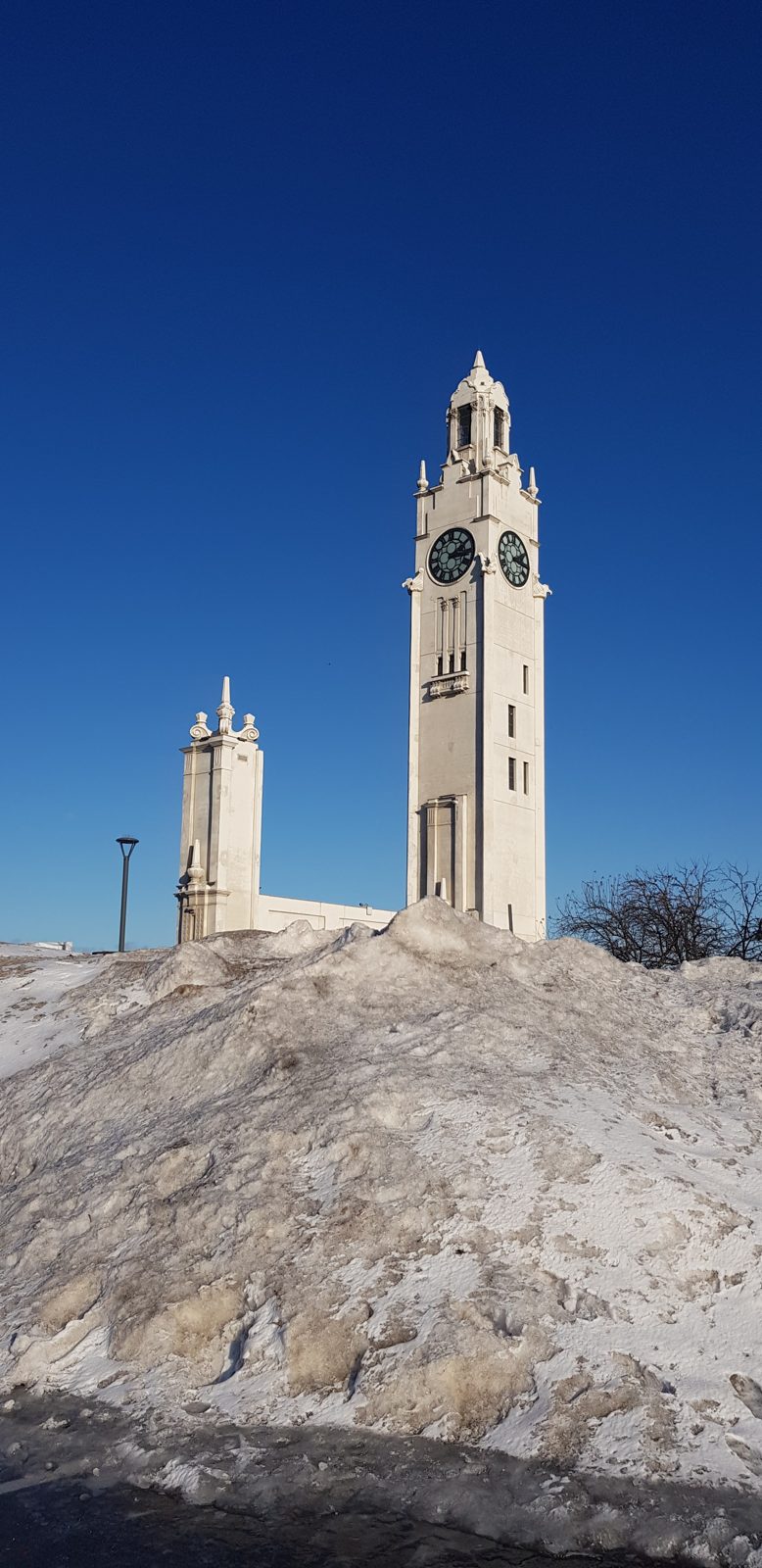
When it's below zero for almost three months of the year, doing sport can be complicated. As always, Canadians have the answer. You row in summer? They have a solution for winter. This lunchtime, Montreal's Old Port hosts a stage of the Quebec Ice Canoe Circuit. Rooted in a two-hundred-year-old tradition, from a time when boatmen had to battle through chunks of ice when the whole river wasn't yet frozen, this rather original sport is spectacular. The start is from the Clock Tower basin which, since its water is still, is completely frozen, and it looks like bobsleigh. The athletes, in teams of five, push their canoe across the ice, running alongside it, before jumping in as soon as it reaches the water.
From there they round the clock tower, dodging the chunks of ice swept along by the river, then paddle upstream to the Alexandra basin before crossing the St Lawrence one way and then the other. One of the great strengths of this course in the heart of Montreal's harbour is that it stays close to the banks, keeping spectators on the edge of their seats throughout the race. The legendary crossing to Île Sainte-Hélène is particularly impressive, as the crews have to fight the powerful current of the St Lawrence to reach the clock tower quay opposite and struggle not to be swept away. The canoeists carry on like this for two to four laps depending on their competition level, between 9 and 17 kilometres. The race is quite open: you see boats full of big strapping lumberjack types, others slighter, all-women and mixed crews, and the event has a very good-natured atmosphere. After an hour of paddling, the competitors approach the finish line and we crowd against a railing to better enjoy the show. The reverse of the start: they jump out of the water as soon as the canoe touches the ice and sprint, pushing their boat! We don't quite catch the winners' names, but we're pleased to have discovered a new sport!
We then show the parents the heart of Montreal, also known as “the Old”: Bonsecours Market, Place Jacques-Cartier, the cathedral, Place d'Armes… We quickly go round, then head for the unmissable Jean-Talon Market, a haunt of lovers of good fresh produce and cooking. After touring the stalls to introduce Cassandre's parents to as many specialities as possible, we take the metro back with bags filled to the brim with food. We won't starve!
2 February
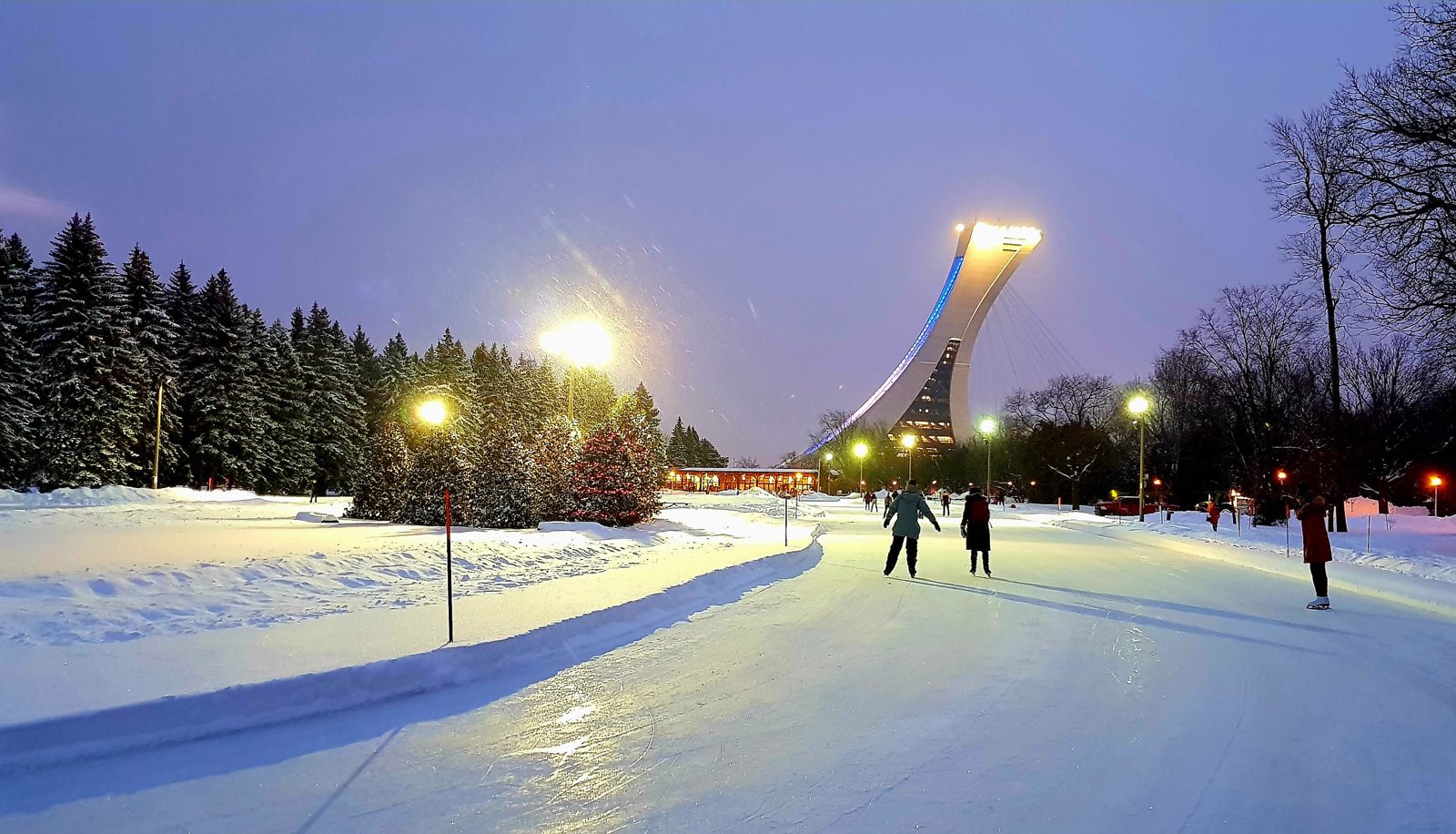
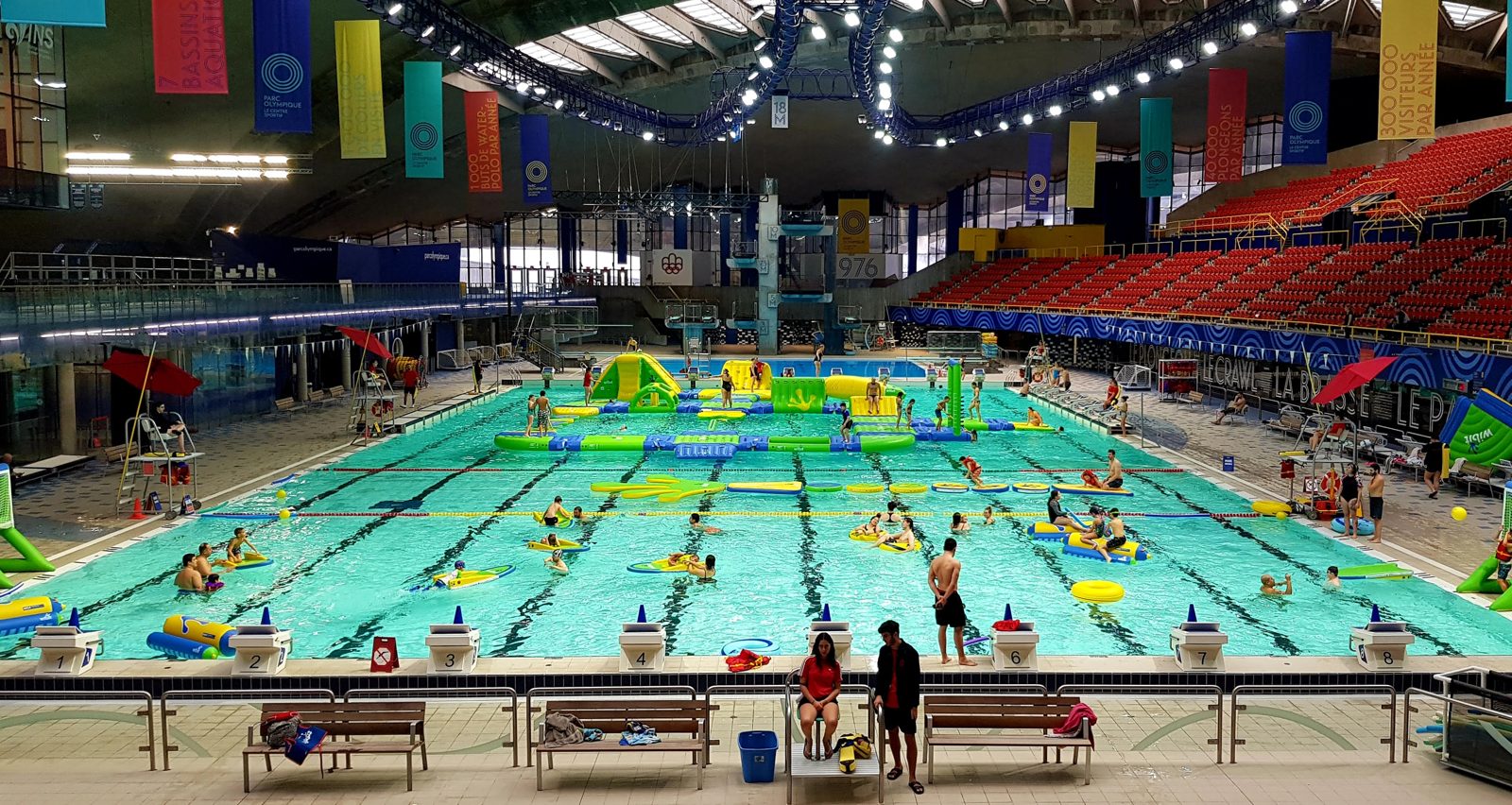
Human beings have the ability to adapt to almost anything, and to get used to things quickly too. Very handy as it is, it also has its drawbacks. What we found marvellous a few months earlier soon becomes routine, and that's true everywhere. We forget the beauty of the Eiffel Tower, the incredible bay of Sydney and its Opera House, or the original architecture of the Montreal Tower when they're in our field of vision every day. That's also why it's essential to make the most of visitors to rediscover places we won't see for the rest of our lives. So today we put on our snow boots to show Johann and Evelyne around our neighbourhood. We walk up to the Olympic Stadium, that huge spaceship-like building set on a patch of wasteland, and go into the complex. Inside is a huge swimming pool where children are having a whale of a time on this Sunday. We ask about prices so that Cassandre's parents can come and swim whenever they feel like it. We also show them the cinema next door and teach them the “cheap Tuesday” trick, common in English-speaking countries, where film tickets are heavily discounted on Tuesdays.
Through a thick layer of snow we climb the steps leading to the botanical park. We watch the cross-country skiers with amusement and set off to explore some of the trails. We even end up finding the tiny passage linking this park to Maisonneuve park, and the locals make good use of it. The squirrels are out too, gathered in gangs under the bird feeders to collect the crumbs left by the birds. We chat with a gentleman we often pass when we go running. Armed with a camera and a sprightly old age, he photographs the different birds that take refuge in the park from every angle. He explains that he comes every day to practise his passion for photography and that he supplies pictures to the green space's official website. We take the address, promising to have a look, and head back to the road to go into our local bakery. Arhoma is a beautiful, superbly fitted-out space with a wide range of local produce: cheeses, saucissons, milk, bread of course but in every shape and form, and lots of pastries. It's hard for anyone with a sweet tooth not to give in, and since Evelyne and Johann are here, we don't deny ourselves the little pleasures. We end the day enjoying good food and chatting over a glass of wine.
7 February
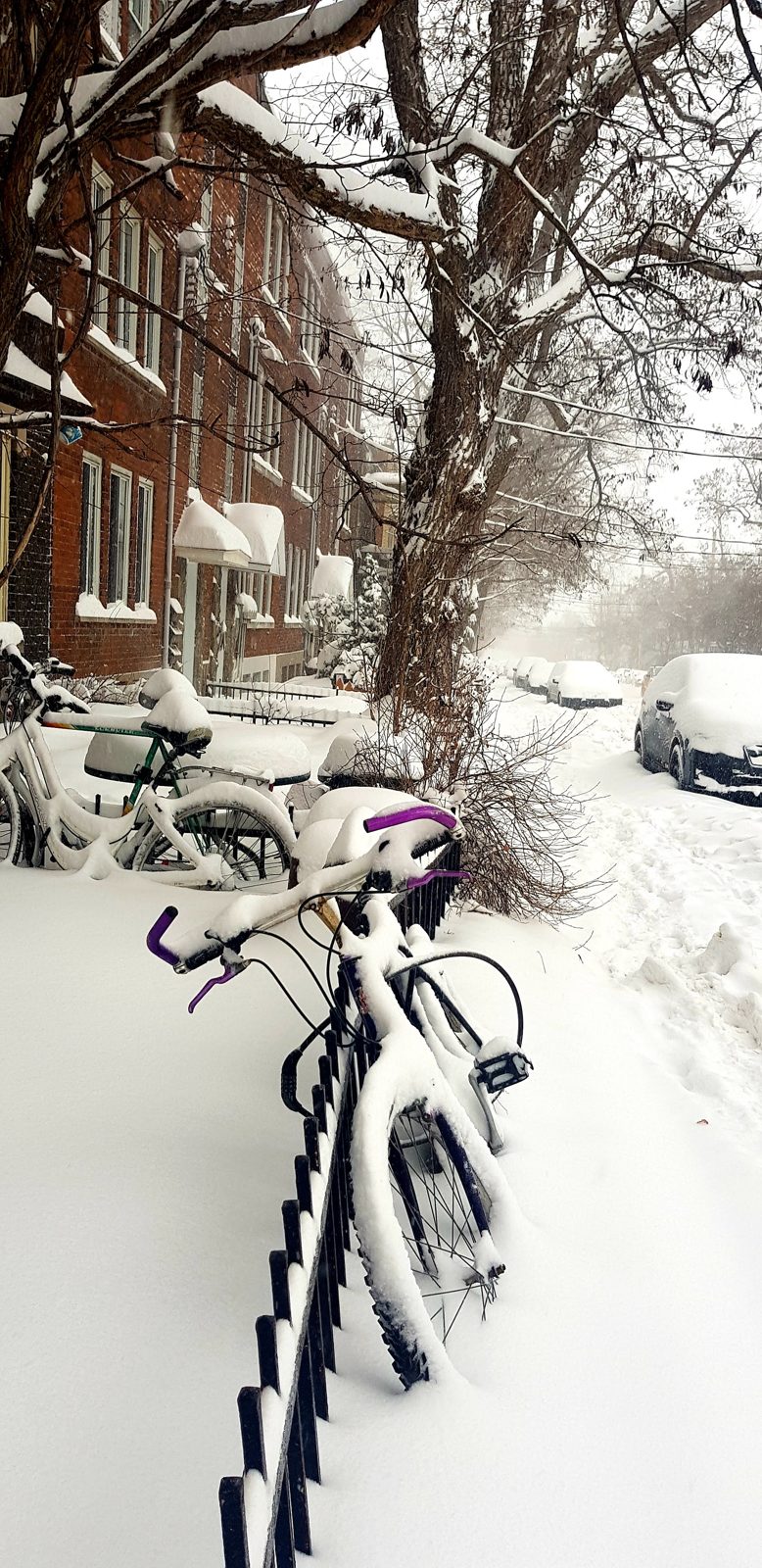
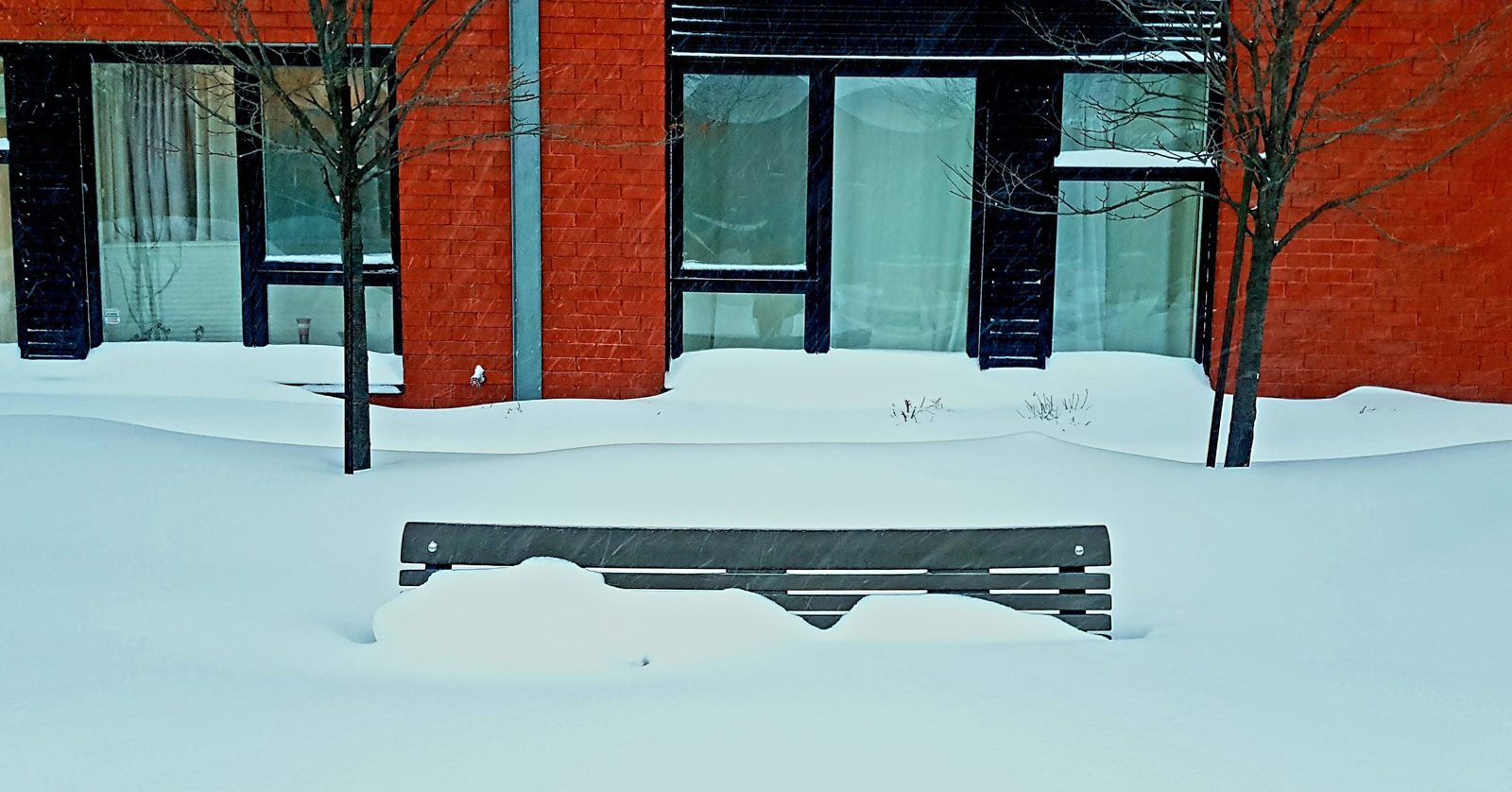
It's every Quebecer's dread each year and, despite a milder winter than usual, 2020 won't be an exception: on this 7 February, Quebec has its worst snowstorm of the winter. We're not talking about the five or so centimetres of snow that hit Paris and its region in 2012, causing monstrous chaos on the roads of the capital and its suburbs and sometimes even forcing people to abandon their cars for the night. No, we're talking about a REAL storm. Between 10 am and late into the night, close to 40 centimetres of snow fall on Quebec, and therefore on Montreal. All the schools had to close, and many people who usually drive to work stayed home as a precaution. That's not our case, so today we go to work like any normal day.
Leaving work, on the other hand, is a real obstacle course: there's so much snow on the pavements that it takes a lot of balance and leg strength to put one foot in front of the other, even in the old centre where Cassandre works, which is usually the best-cleared neighbourhood in the city. The thing is, today the snow is falling faster than the clearing crews can pack it down, especially as the main roads around the city have to be cleared first. In short, the crews are overwhelmed and it shows. Along the roadsides and in front of buildings and houses, centimetre after centimetre piles up, in some places reaching hip height. Parked cars are completely buried; sometimes you wonder whether there really is a car under the snow, the layer is so thick. In these conditions the authorities advise all citizens to limit their journeys as much as possible, especially by car. That's what we'll do tonight.
8 February
No more than ten minutes' walk from our place, in Maisonneuve park, lies the second-largest network of urban cross-country ski trails in Montreal. The only downside is that they don't rent equipment on site. Luckily, when you live in this city you don't necessarily have to drive for hours to go cross-country skiing. Some 61 kilometres of groomed trails criss-cross several sites in Montreal. The tracks are marked and maintained, some are lit, and warming huts are set up along the way. As we don't have a car, we need to find a park reachable by public transport. A little anecdote on that subject: since December 2019 you're allowed to take skis on the metro and bus at any time of day, including rush hour. In 2016 a Montrealer had made the headlines after getting a $102 fine for going down into the metro “armed” with his ski equipment.
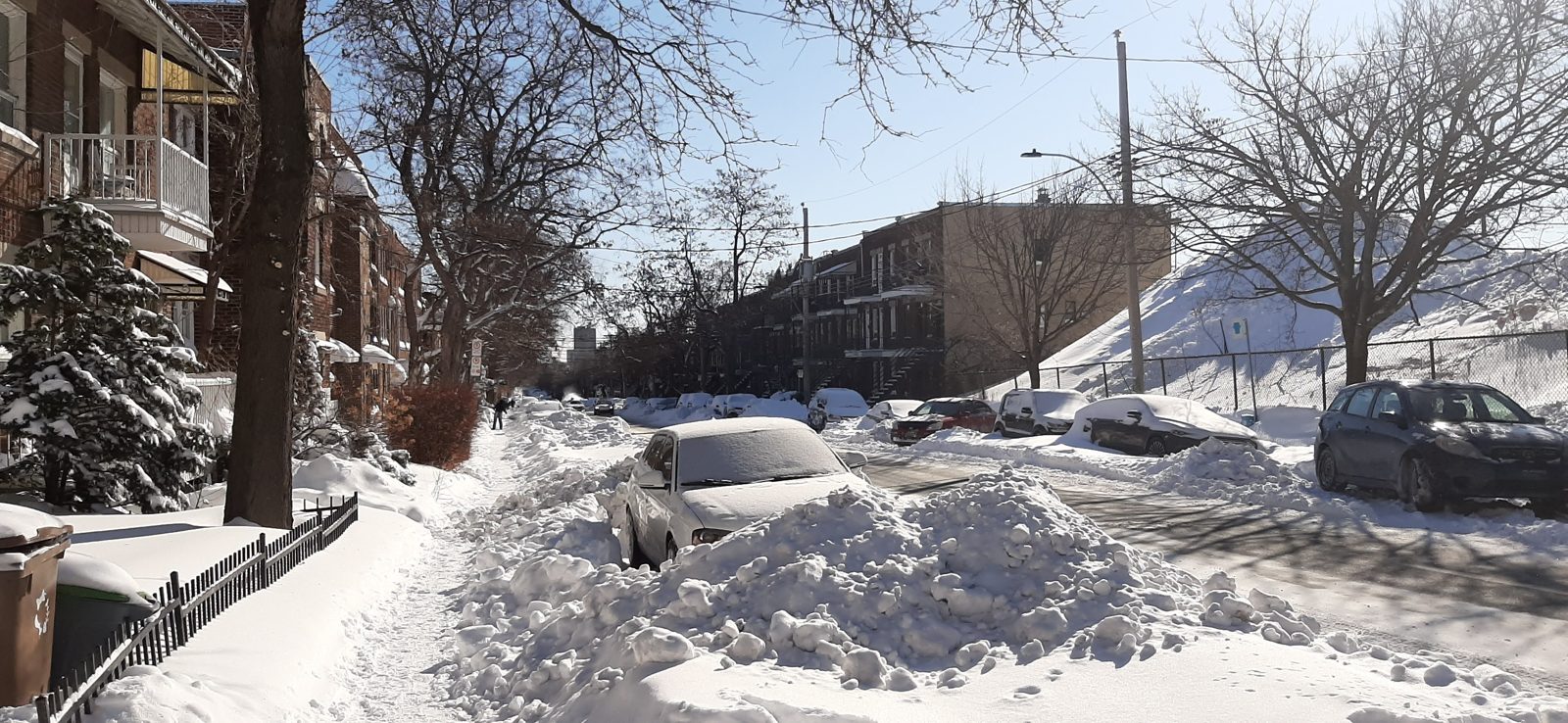
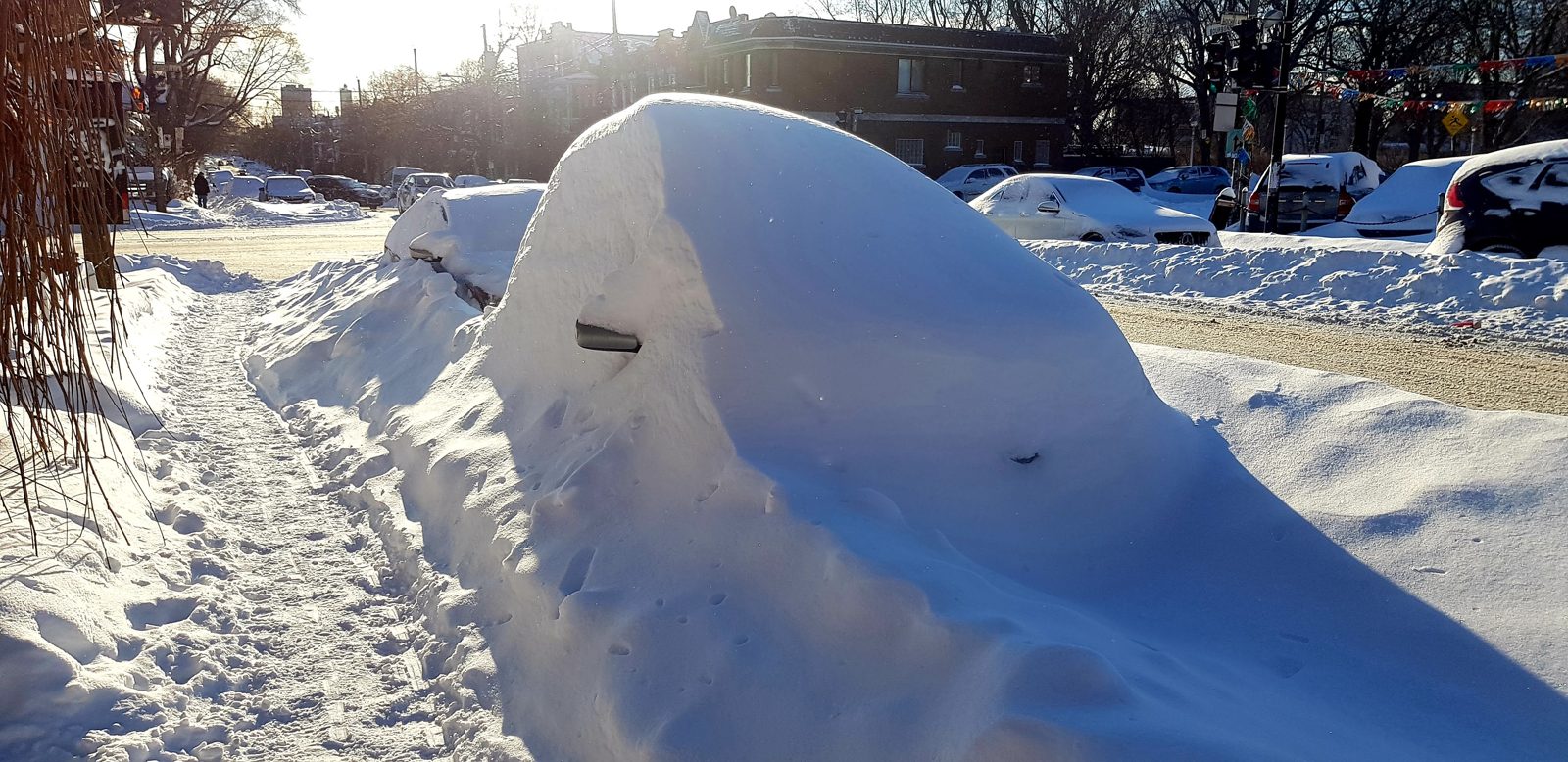
Pointe-aux-Prairies nature park lies at the eastern end of the island of Montreal, an hour by public transport from our place. With its 247 hectares and 22 kilometres of trails, the park lets cross-country skiers indulge their passion while immersing themselves in nature. It also offers cheap equipment rental. Just what we need. Today is one of the coldest days of the winter in Montreal; the wind chill is close to minus thirty. But never mind: the sun is shining and yesterday's heavy snowfall promises ideal conditions to try out Martin Fourcade's sport. When we leave the house, calm has followed the storm: a magnificent thick layer of snow covers absolutely everything.
Having reached the park after a metro and a bus, we head for the chalet with the rental service. After ten minutes of explanations we collect our equipment (Rossignol, French quality), which we've decided to rent for two hours. Putting on cross-country skis turns out to be harder than putting on downhill skis. There are several types of binding. In our case you have to press the front of the binding with a ski pole (or your hands), slot the front of the boot into it, then release the pressure to lock it. When the man at the rental counter showed us, it looked simple. But the huge amount of snow that fell yesterday makes it more complicated than expected, because it keeps getting under our boots and into the binding. We struggle for a few minutes and then, finally, the miracle happens: we're all clipped in!
As we're starting to get used to here in Quebec, the trails are very poorly signposted. We've barely been going five minutes and we're already lost. Few people have been through before us, so it's hard to find our way using the tracks, and the fresh snow that has piled up is extremely soft and sticky, making progress hard. There are two skiing techniques: the traditional one, known as “classic” or “diagonal stride”, which consists of moving forward in two parallel tracks, and “skating”, whose leg movement is similar to rollerblading or ice skating. In our case we'll stick to classic. We take our cue from the skiers we see going past and, after a few minutes, we start to get the movement and move forward more easily.
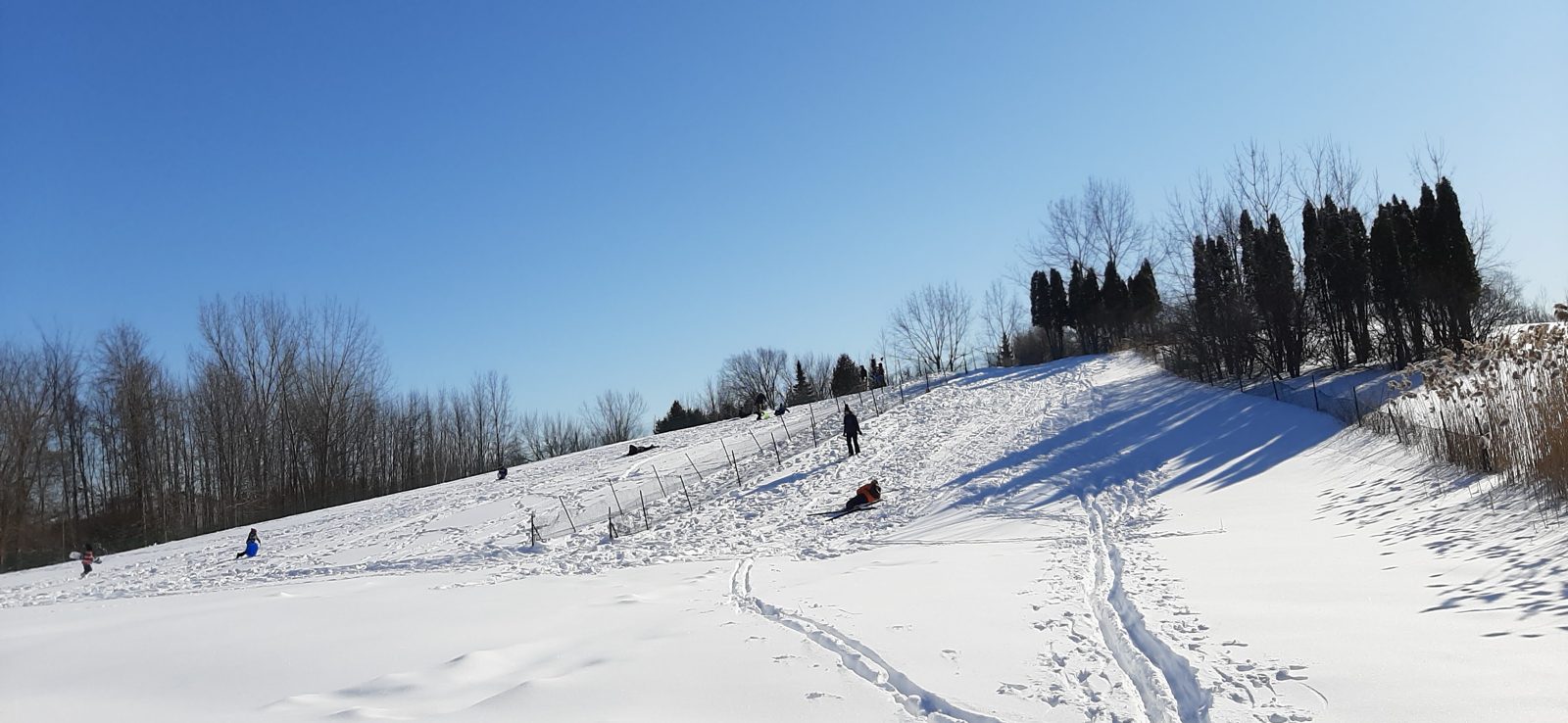
At the end of one trail a little hill appears and tempts the downhill skiers among us, Johann, Cassandre and Evelyne. They quickly herringbone up and come down at full speed before letting themselves fall into the powder at the bottom of the slope, because balance is much more precarious on cross-country skis than on downhill ones! After that good laugh we have a bite to eat, French-style. Quebecers, like all Anglo-Saxons (don't tell them we call them that), are big consumers and never hesitate to buy food on the spot, wherever they go. Our French habits push us to bring our own supplies and have a quick lunch; our wallets feel better for not having to overpay for mediocre food.
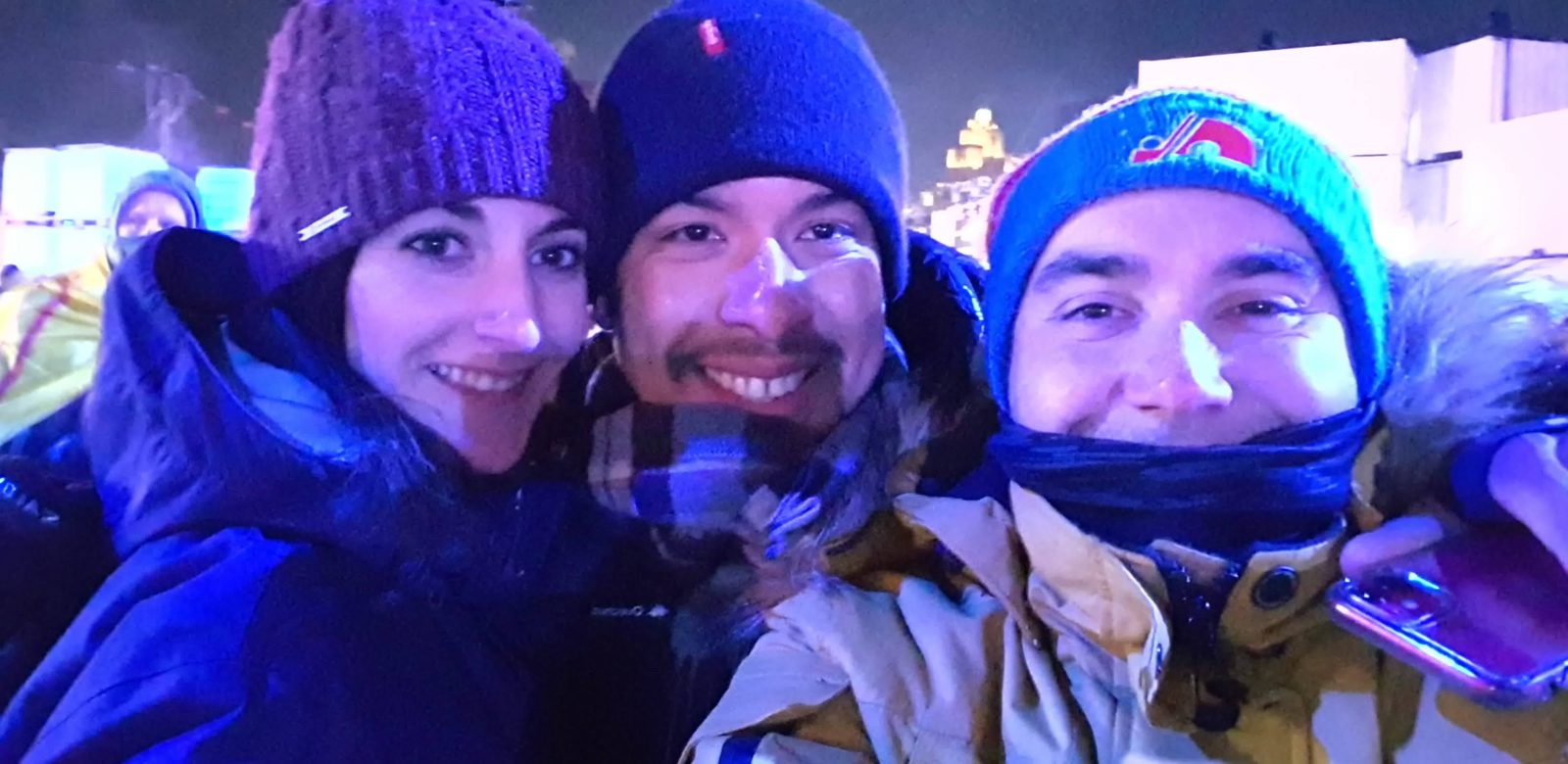
The complex also offers walking trails for visitors who aren't winter-sports enthusiasts, and after returning the skis we take one of the paths to enjoy the snowy forest and its very particular atmosphere. Unfortunately, this isn't the place to enjoy the enchanting silence of the woods, as a huge motorway runs along the park in all its noisy hugeness. Walk over, we catch the bus to the metro and finally get home around 4 pm. We eat and have an aperitif with the parents before heading back to Igloofest. After all, how many times in our lives will we go to the coldest festival in the world? This time the star of the night is Charlotte de Witte, the Belgian electronic music DJ, who literally sets Montreal on fire for the very last night of the event. We meet up with a friend and his gang there and have a superb evening full of laughter and dancing, despite the minus twenty that takes away any desire to stand still. We get home between one and two in the morning and slip into bed trying not to wake our flatmates.
9 February
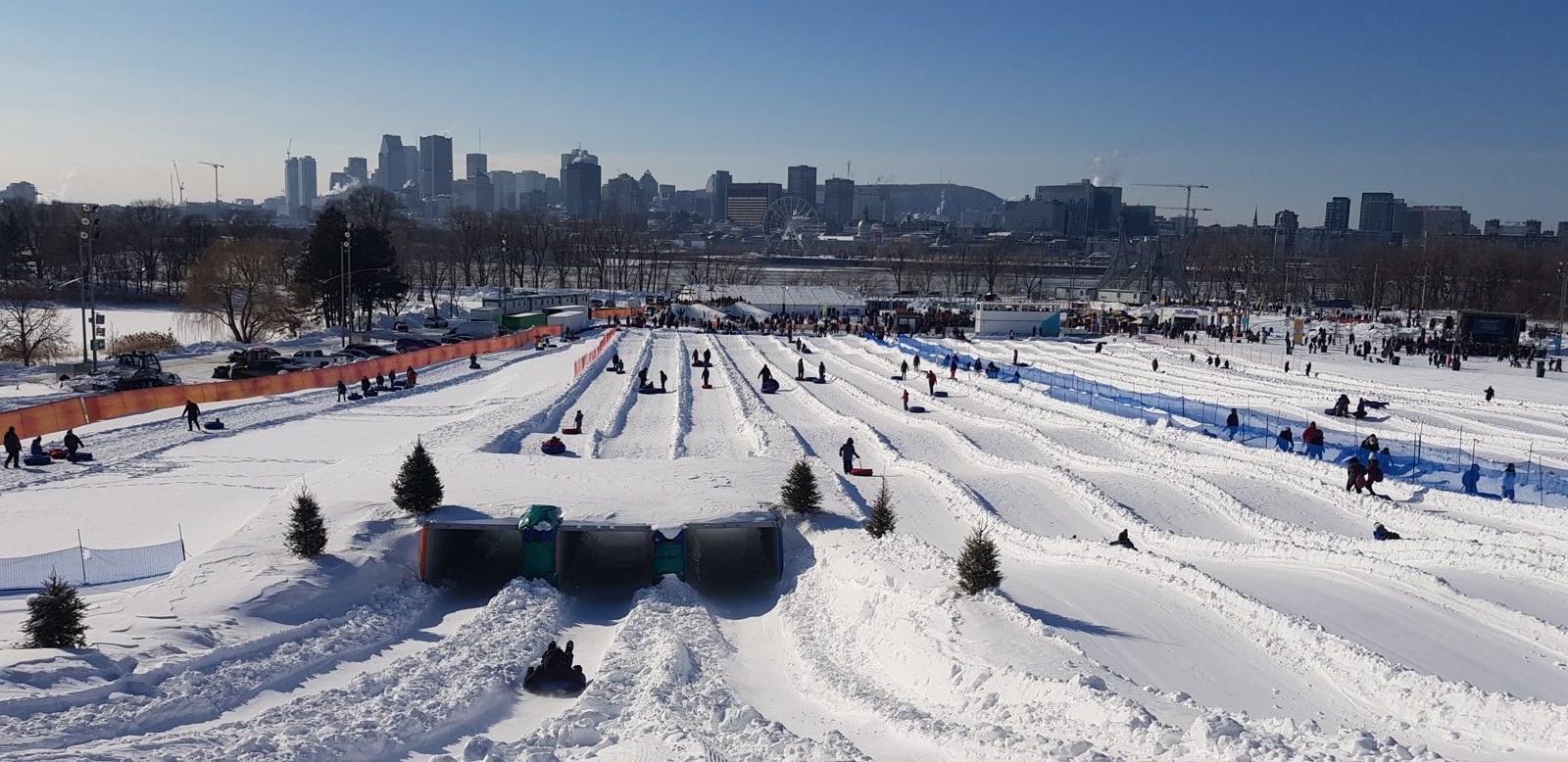
Parc Jean-Drapeau is one of the largest parks in Montreal and sits right in the middle of the St Lawrence River. It's made up of two islands: first Sainte-Hélène, then Notre-Dame, home to the Gilles-Villeneuve Formula 1 circuit. A stone's throw from the heart of the city, this expanse of wild nature lined with water and rapids is much loved by Montrealers for the many possibilities it offers in summer and winter: a huge outdoor Olympic complex, a beach, a rowing and open-water swimming basin, a casino, an amusement park, cycling and snowshoe trails, function rooms, cultural spaces… not forgetting all the music festivals and sporting events held there every year. Every winter the park hosts the Fête des Neiges over four consecutive weekends, a family event focused on the outdoors with lots of shows and activities. There are 16 snow-tubing lanes, a 300-metre skating trail, ice-sculpture shows and plenty of other activities, mainly for children. The weather is fine again today and, as we have nothing particular planned apart from a crêpe evening, we decide to go to the event, which will also be a chance to discover the park.
As it happens, on this Sunday entry to the event is exceptionally free for everyone. The Super Bowl, the final of the American football championship (NFL), took place the week before and, for the first time in its history, a Quebec player, Laurent Duvernay-Tardif, lifted the prestigious trophy. For the occasion he'll be presented to the jubilant crowd and, in a fit of euphoria, the city of Montreal has decided to make entry free so that everyone can enjoy it. We're not at all interested in the young man, but we never miss a good opportunity to save money.
We've barely left the metro when a festive mood is in the air. At the festival entrance, big speakers are blasting Caribbean music, which makes the experience all the more amusing, because although the weather is lovely, temperatures are below zero and a long way from those of the Caribbean. We'd originally come to rent snowshoes and set off on an expedition along the park's trails, but when we go to collect the equipment, the woman at the rental desk tells us they're only for getting around the site and can't leave the event area. We don't really see the point and decide to drop the idea. We wander through the various activities and, although the place is small, we end up spending time between the different stages. An ice sculptor gives a demonstration, carving a sublime butterfly out of the frozen block just before a group of costumed dancers puts on a circus-flavoured performance. We also have a bit of fun on the tubing slopes set up for the event and then, having done the rounds, we leave the festival as the park starts filling with fans of the athlete. The host is shouting himself hoarse on his stage and struggling to get the audience going, a crowd of Quebecers more curious than truly interested, and we end up thinking they know American sport about as well as we do.
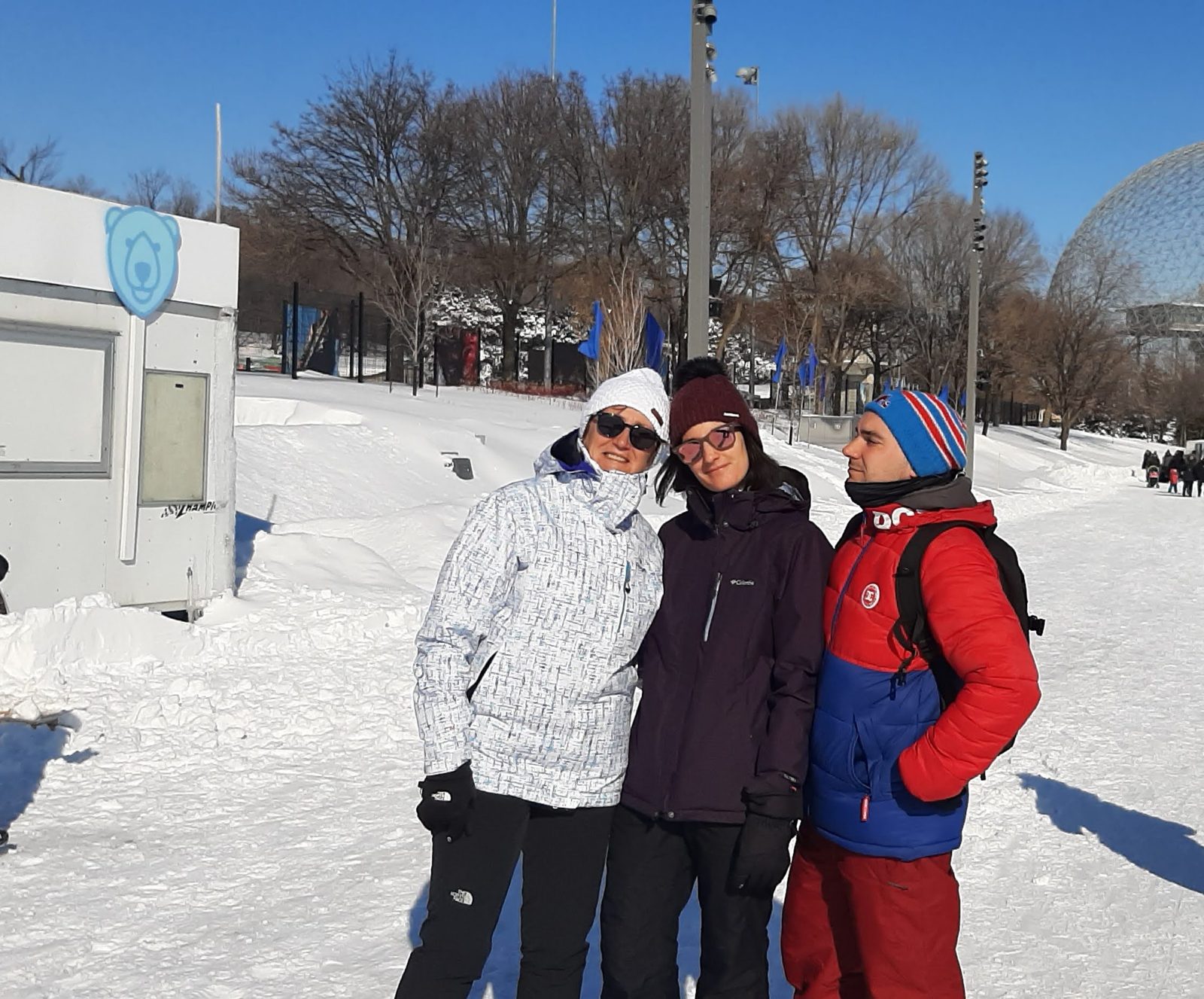
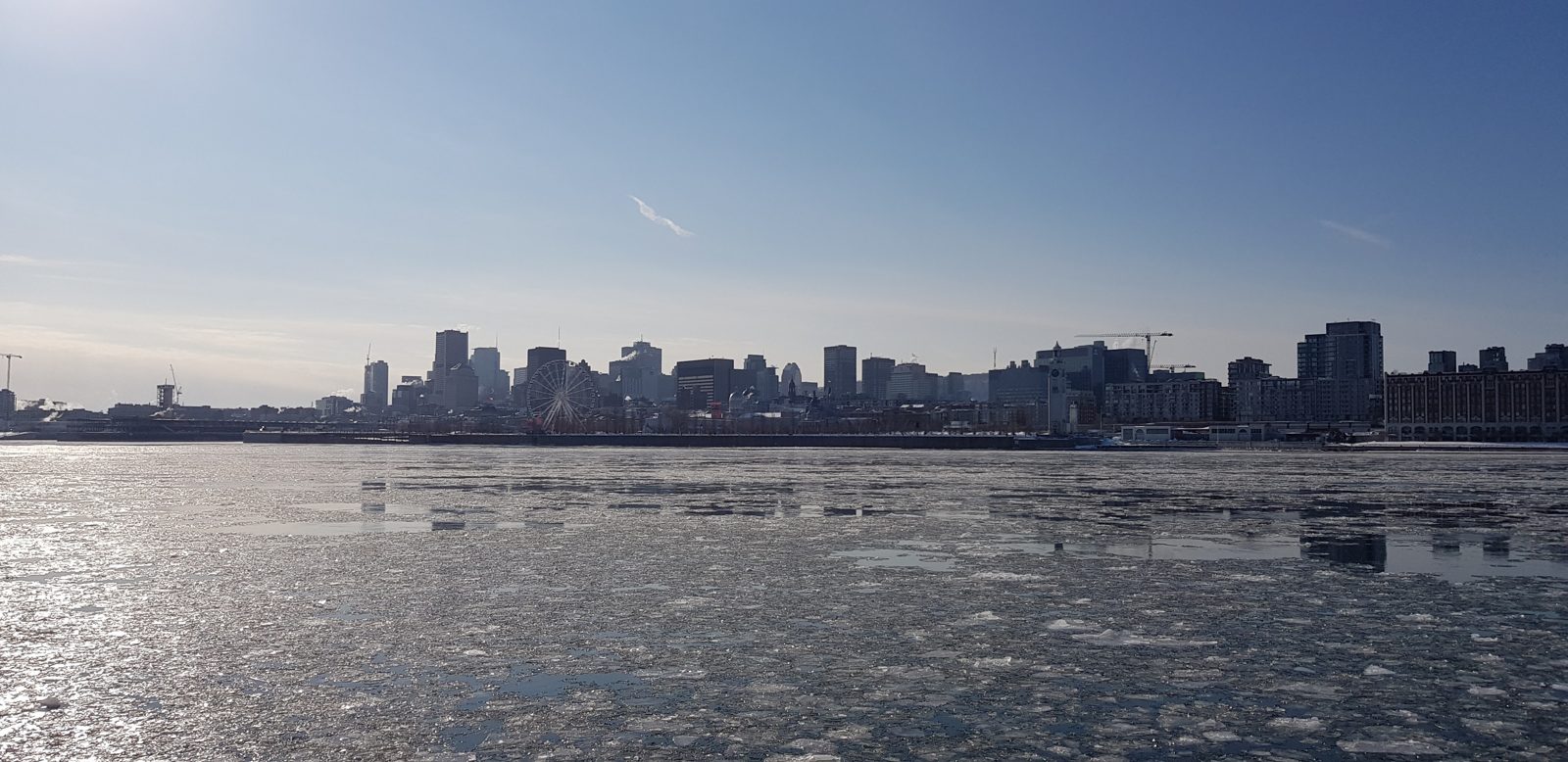
Parc Jean-Drapeau is very pleasant, with little paths laid out along the mighty St Lawrence. We see the consequences of the extreme cold snap that hit us in the flow of ice the current is carrying. The sound of the pieces constantly knocking together is soothing, a reminder that despite the urban silhouette of the city on the other bank, nature is here, very much here, always stronger and more impressive. After a long walk we take the metro back and buy everything we need for a big batch of crêpes.