 ← PreviousFrom Slovenia to Italy over the Alps
Friday 19 September
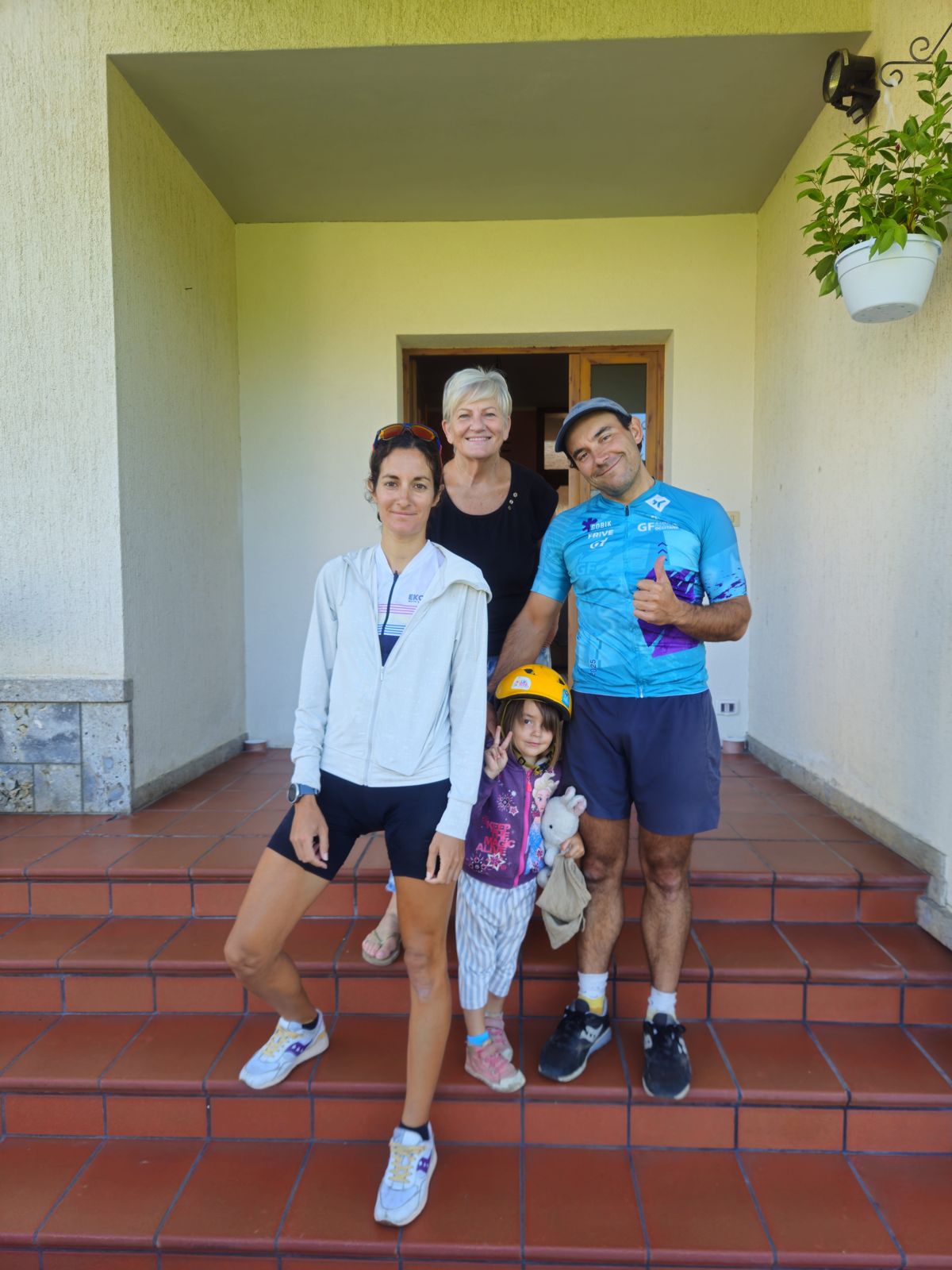
In the morning, we're surprised by a breakfast made especially for us. She didn't have to, but Alessandra insisted on making us coffee and toast, a gesture that touches us deeply. We take our time; her house is big and comfortable, but the time to leave always comes in the end. As we wheel the bikes out of the garage, we see that the Touring's rear tyre hasn't survived: it's flat. Worse still, we can't pump it up because the pump has stopped working.
Fabio, Ale's son, drives off to fetch a new pump from one of his uncles, and we set off with a rock-hard tyre. Unfortunately it doesn't hold, and we're forced to stop at the village hardware shop. Italy really is a country of cyclists: a modest shop in a small village stocks tyres, inner tubes and repair kits. We buy everything we need and go to do the repairs at the local playground. Might as well combine what's useful for us with what's fun for Clémence. The tyres have really hardened in the extreme heat of Asia and they're tough to take off and put back on. We manage it anyway, and after a few minutes of wrestling with the wheel, we're finally off.
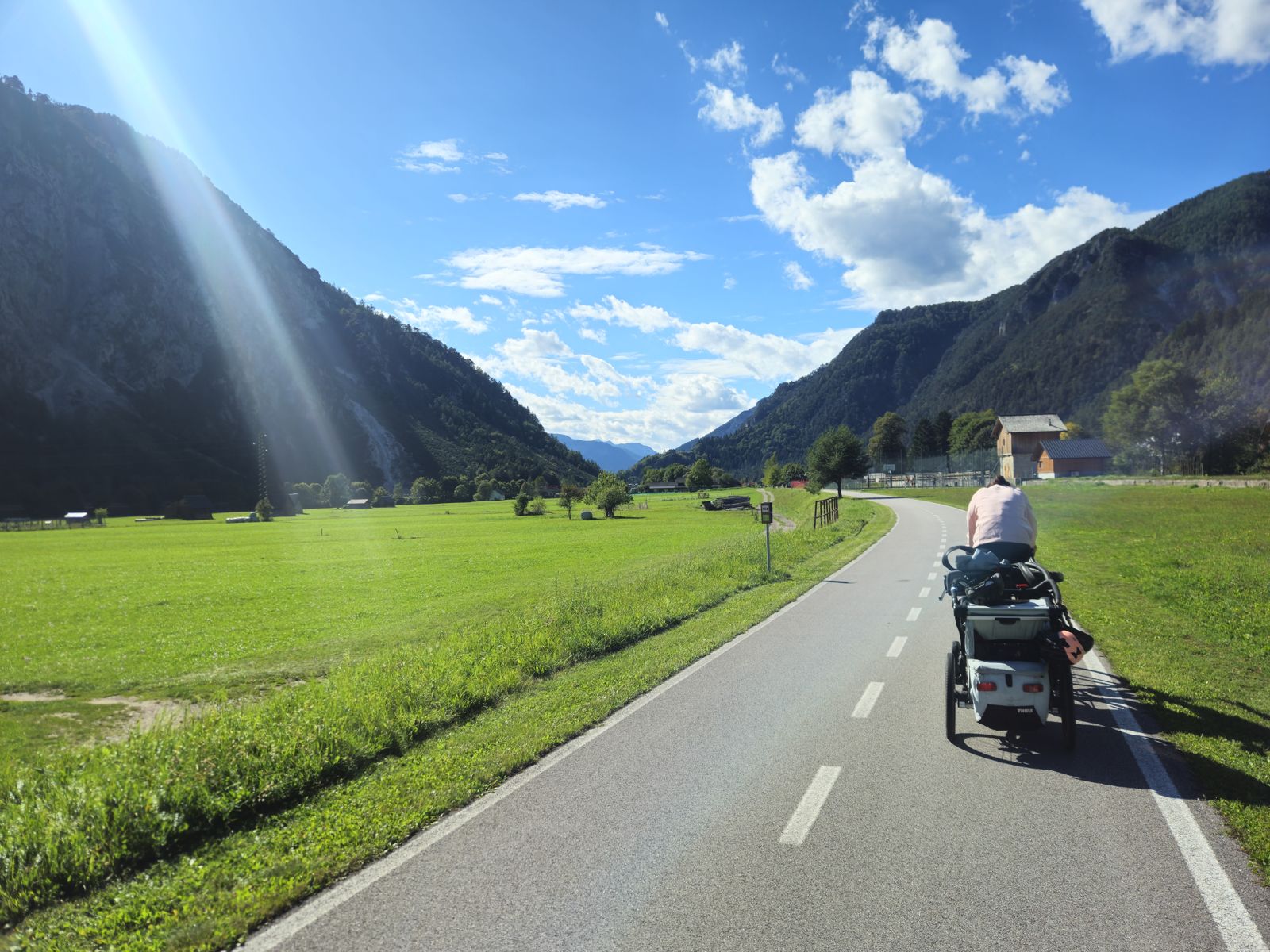
The official cycle route once again goes along gravel tracks, which doesn't do our gear any favours. It's always a nasty surprise because there's no warning: you think you're following a cycle route and end up on paths barely fit for hiking. After 25 kilometres of consistently stunning road, with the Alps on our right, we come out in the little village of Pinzano, where we find a pizzeria with a small playground. An opportunity we don't pass up. The kitchen is run by a family, the atmosphere is friendly and everyone knows each other. Groups of old men are deep in discussion, and we savour carefully prepared dishes.
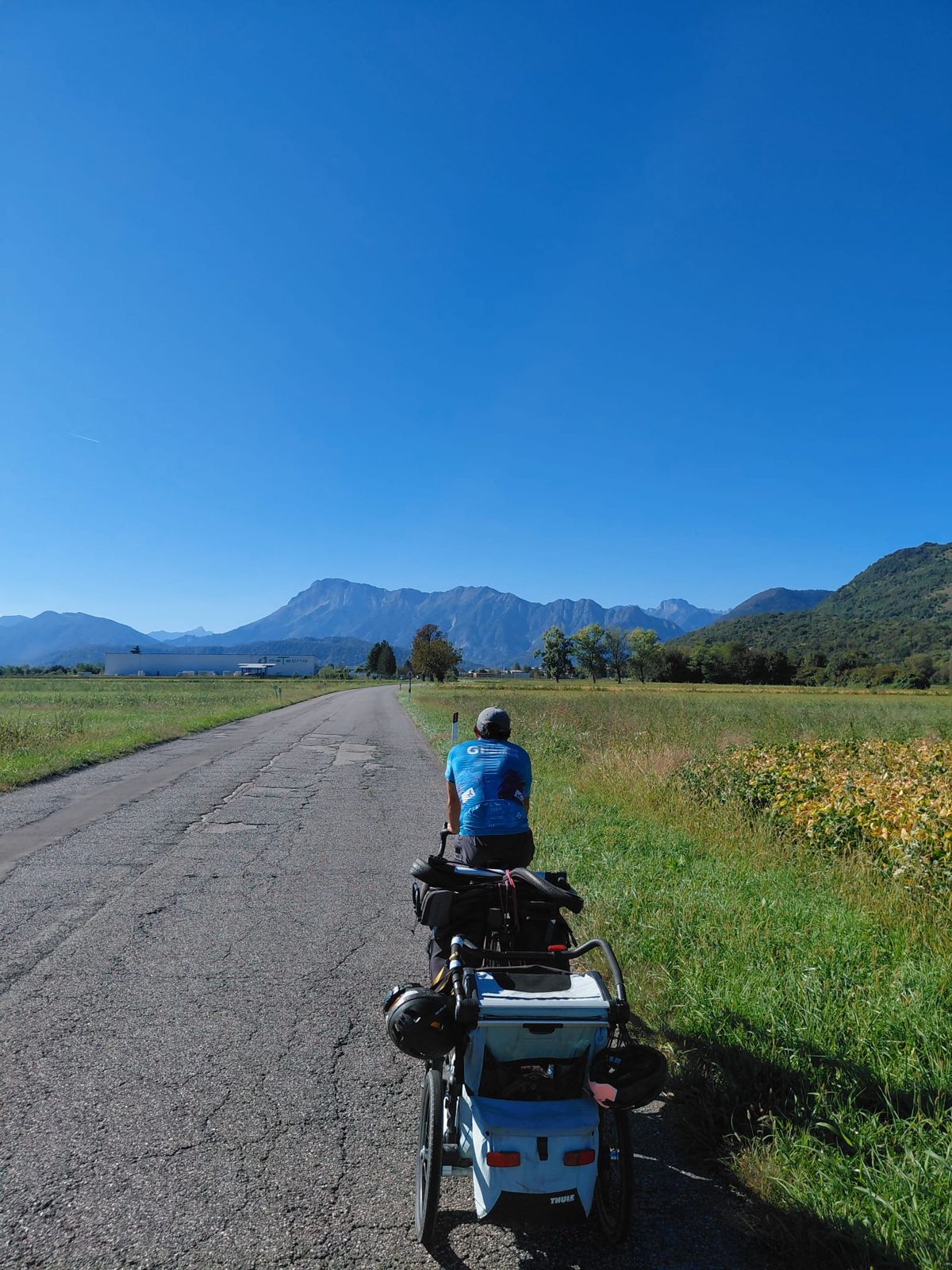
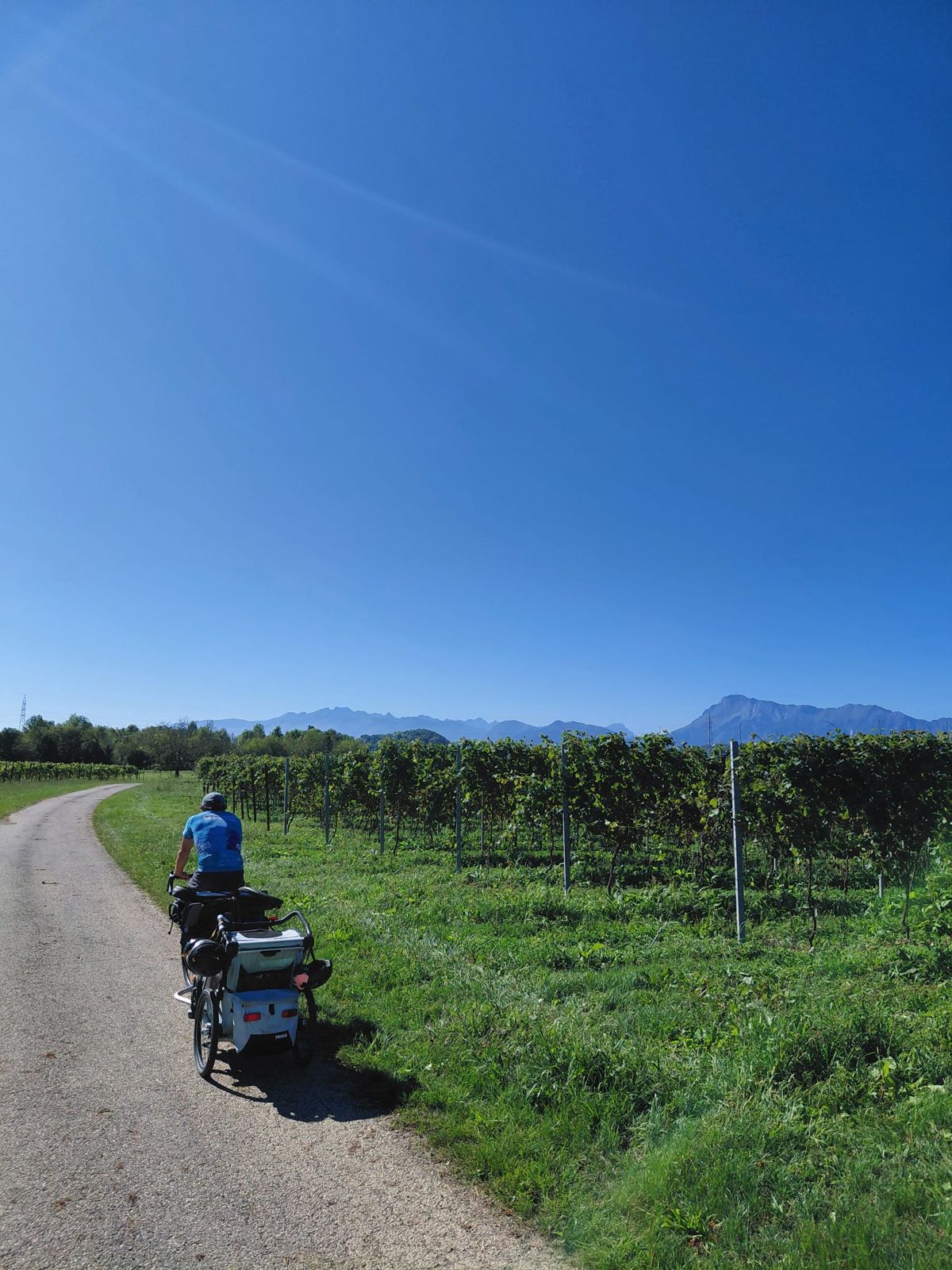
The last twenty kilometres go gently downhill, and we arrive fairly early at Residence Stefania, where our host for the day welcomes us warmly, Italian-style. After showers and settling in, we head out to shop in the little village of Cavasso Nuovo. Even though we always check that there are supermarkets and restaurants in our overnight stops, things don't always go to plan. Like this little sign reading "eccezionalmente chiuso oggi", exceptionally closed today, on the front of the town's only grocery shop.
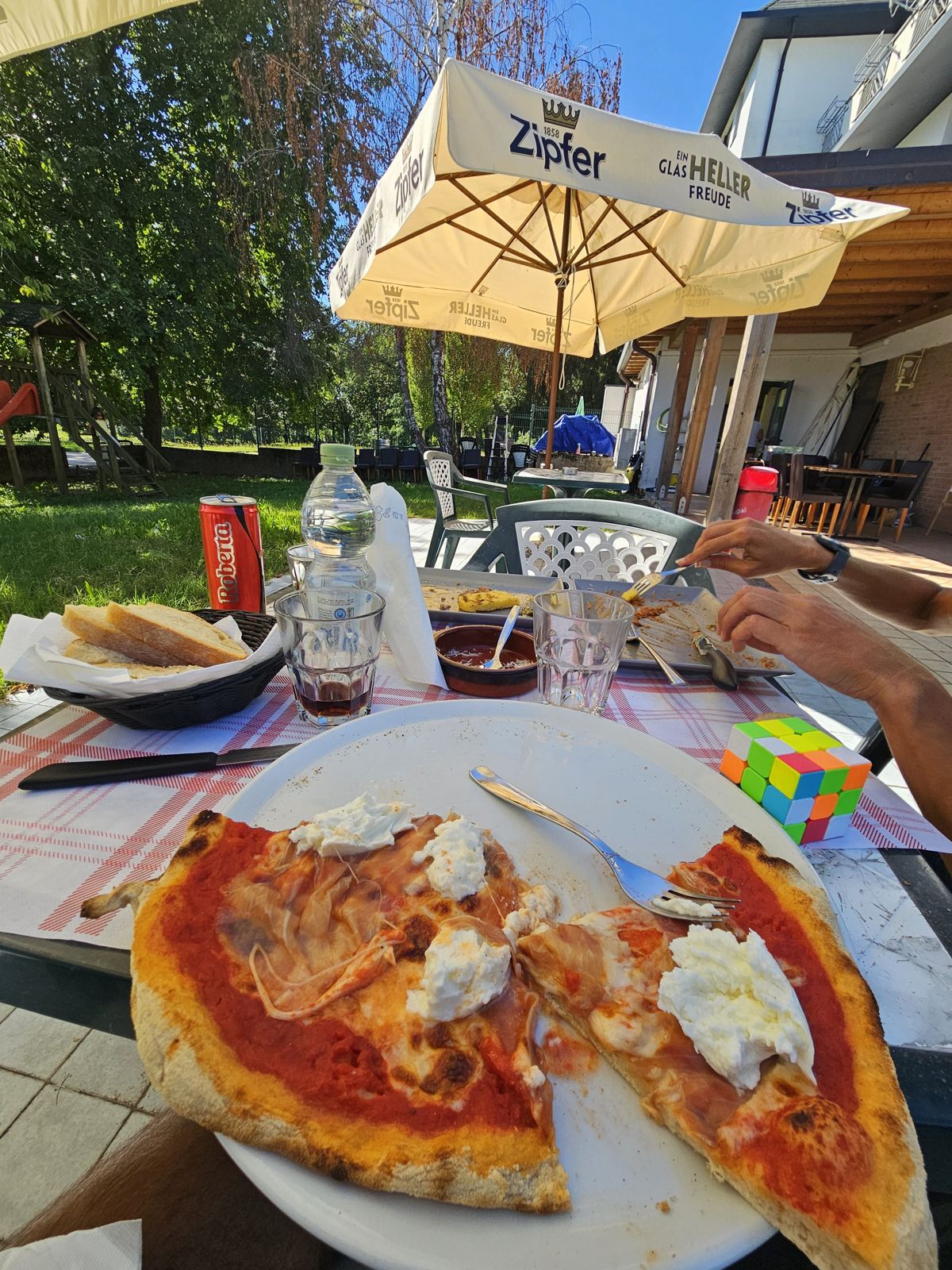
It's one of the few downsides of bike touring: when it happens, you have to get back in the saddle and put your legs to work despite the fatigue. Stéphane rides eight kilometres there and back to the nearest village to find something for dinner. Without the panniers he flies along and soon joins Clémence and Cassandre at the village playground. Once again we're surprised to see that northern Italy is more cosmopolitan than you'd think; we often see women in headscarves and people of colour. After this lovely day on the bike, we head home to cook and go to bed.
Saturday 20 September
Getting the bikes ready this morning, we notice that the Kona's rear tyre is at death's door. The rubber is gone in several places; it's split open. We've had the spare tyre firmly strapped to our luggage for over a month, so we wait patiently for the moment it gives up. Sure enough, about ten kilometres later in a wood, Cassandre feels something wrong with her steering and the air rushes out of the inner tube. While we fix it, lots of cyclists ride past and ask if everything's all right. "Tutti a posto," we reply, to say the situation is under control.
Further on we stop in the little town of Aviano. Small Italian towns are all lovely, full of charm, with churches poking up through the landscape. As at lunchtime today, we always find playgrounds easily for picnic stops. Back on the road, we have to admit that northern Italians are good drivers. They overtake with plenty of room, rarely pass too close and are generally very patient. If they need to turn, they always wait politely behind us, where the average French driver would have sped past only to cut us up straight after.
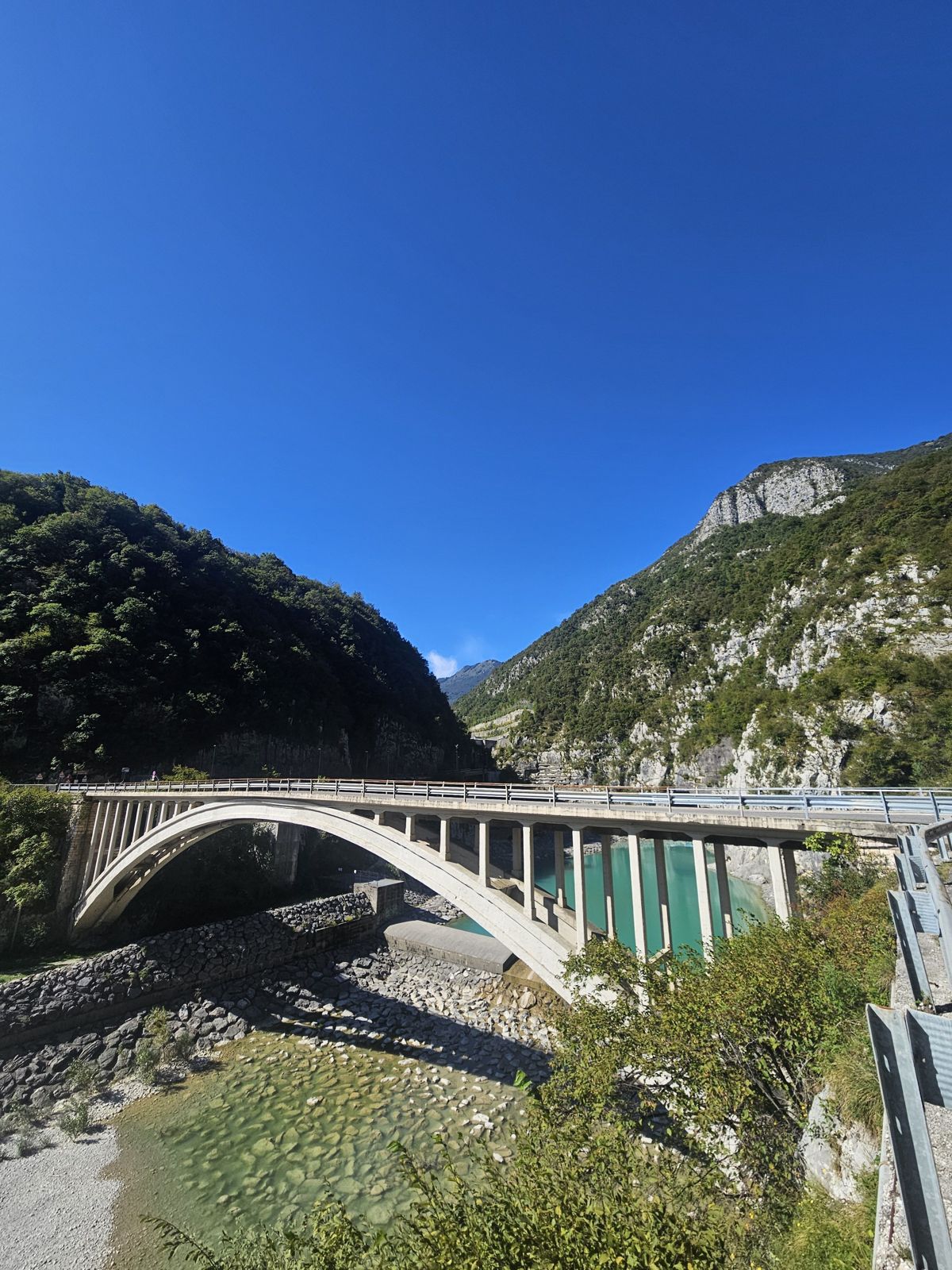
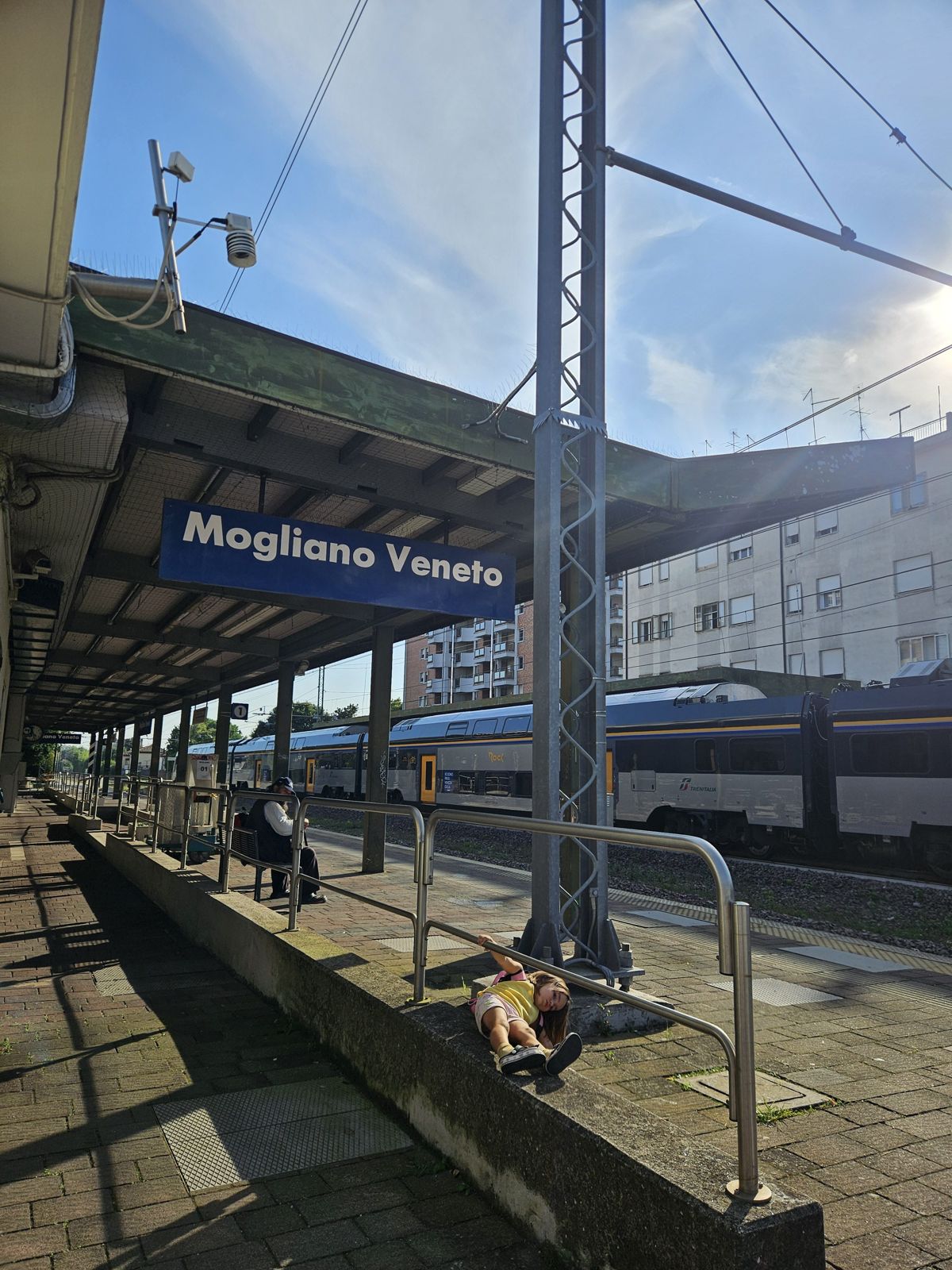
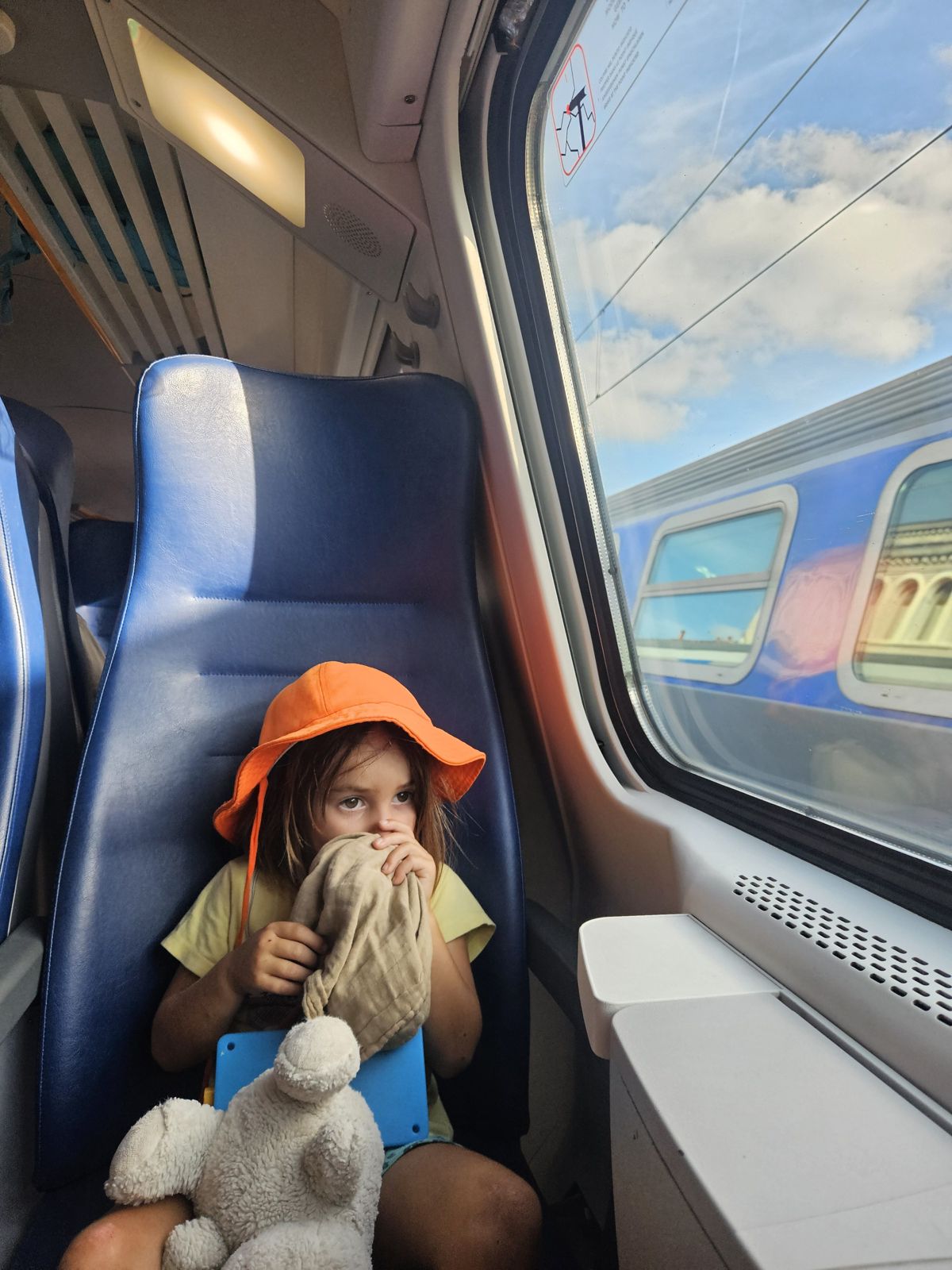
Our wheels take us to Sacile, a small town of 20,000 people. It holds no particular interest for us, apart from having a station with trains to the Treviso area. Stopping on the main square, we check the timetable and learn that the next train leaves in ten minutes. Do we have time to catch it? We give it a go and race to the station. As so often, there are no ramps, only stairs, so we have to carry the bikes several times and lift them again to climb into the train. Luckily it's almost empty. We haven't boarded the right carriage for bicycles, but as usual we had no way of positioning ourselves properly on the platform. The conductor is very friendly and understanding. The train fills up a little at Treviso and we get off two stops later in Mogliano Veneto.
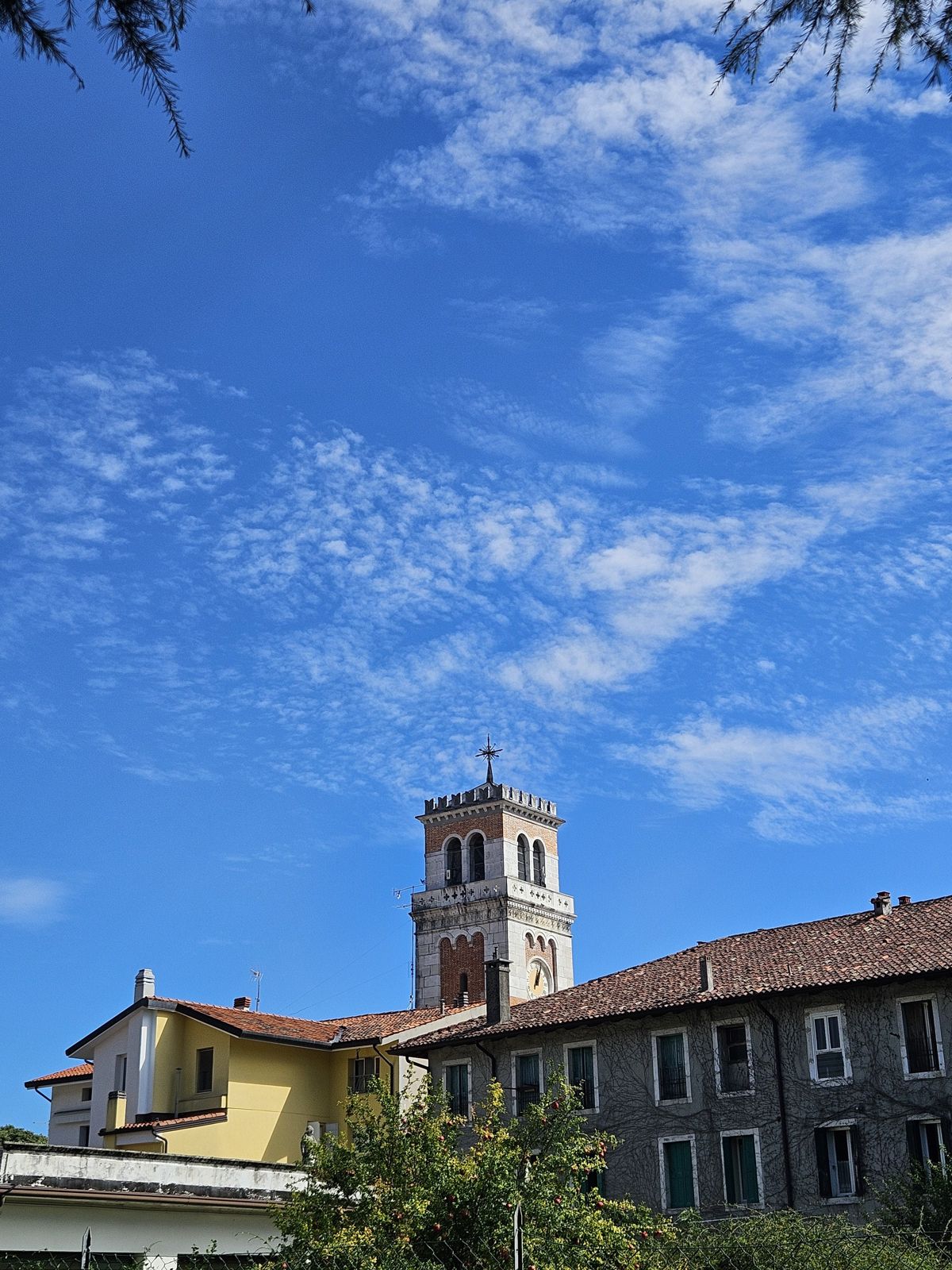
Mogliano Veneto is a small commuter town for people working in Treviso or Venice, on the busy railway line between Udine and Venice. We stay in a small, well-equipped flat, and after dropping our bags we head out to explore. The streets are busy, people are sitting out on terraces, and we make the most of a popular ice-cream parlour to enjoy delicious Italian gelato. We shop at the local supermarket, where we discover that Italy now grows exotic fruit: mangoes, bananas, kiwis and so on. With global warming, Sicily has become fertile ground for many crops.
Sunday 21 September
Whichever way we went, our bike route passed within train distance of Venice. So we thought this was the chance to see with our own eyes the epicentre of the world's overtourism. We stayed in Mogliano Veneto because prices on the lagoon have become completely mind-boggling. We're only thirty minutes away by train and we take the 11:36. It's Sunday, there's only one an hour, and we dawdled too long to catch the earlier one.
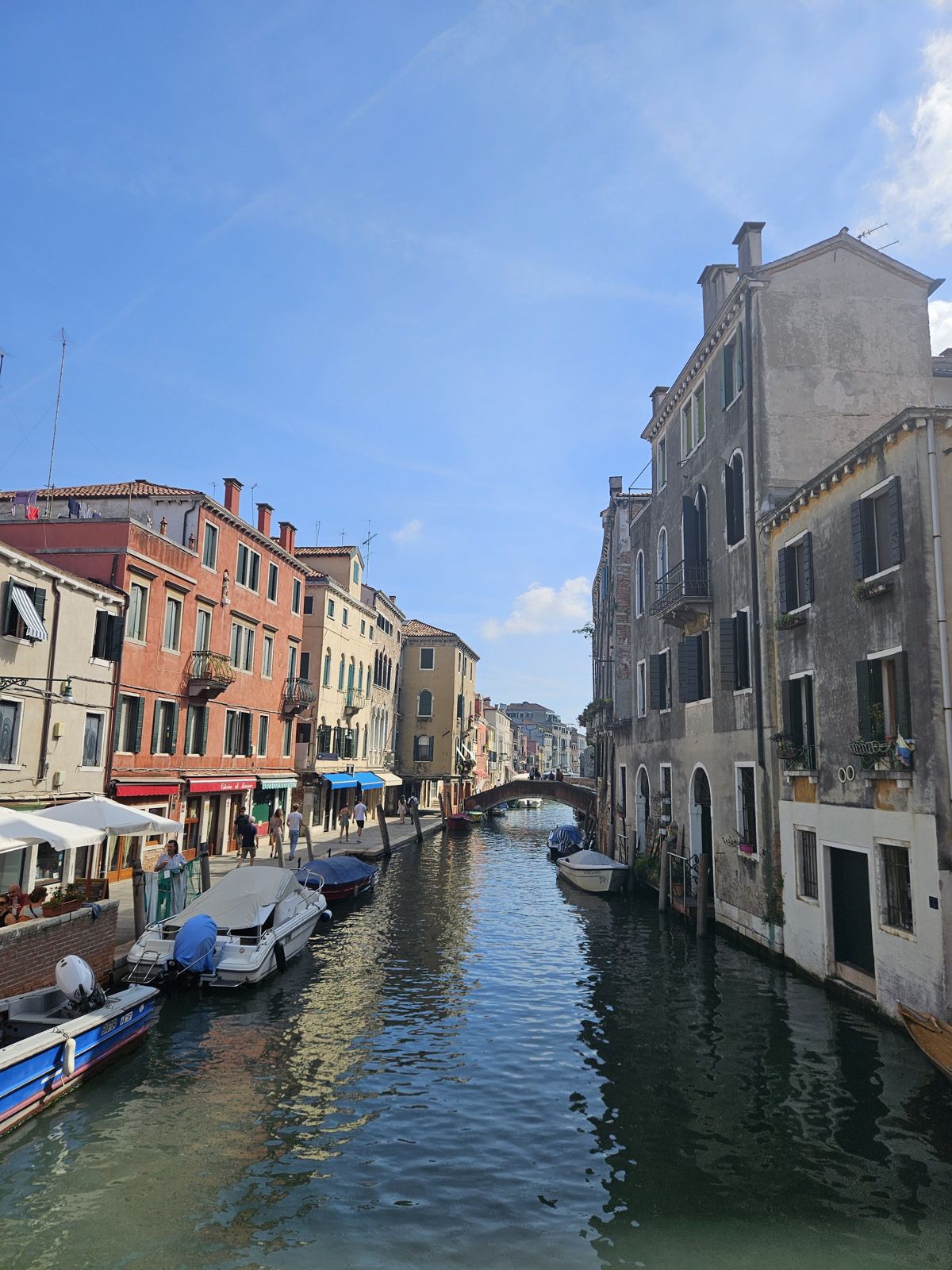
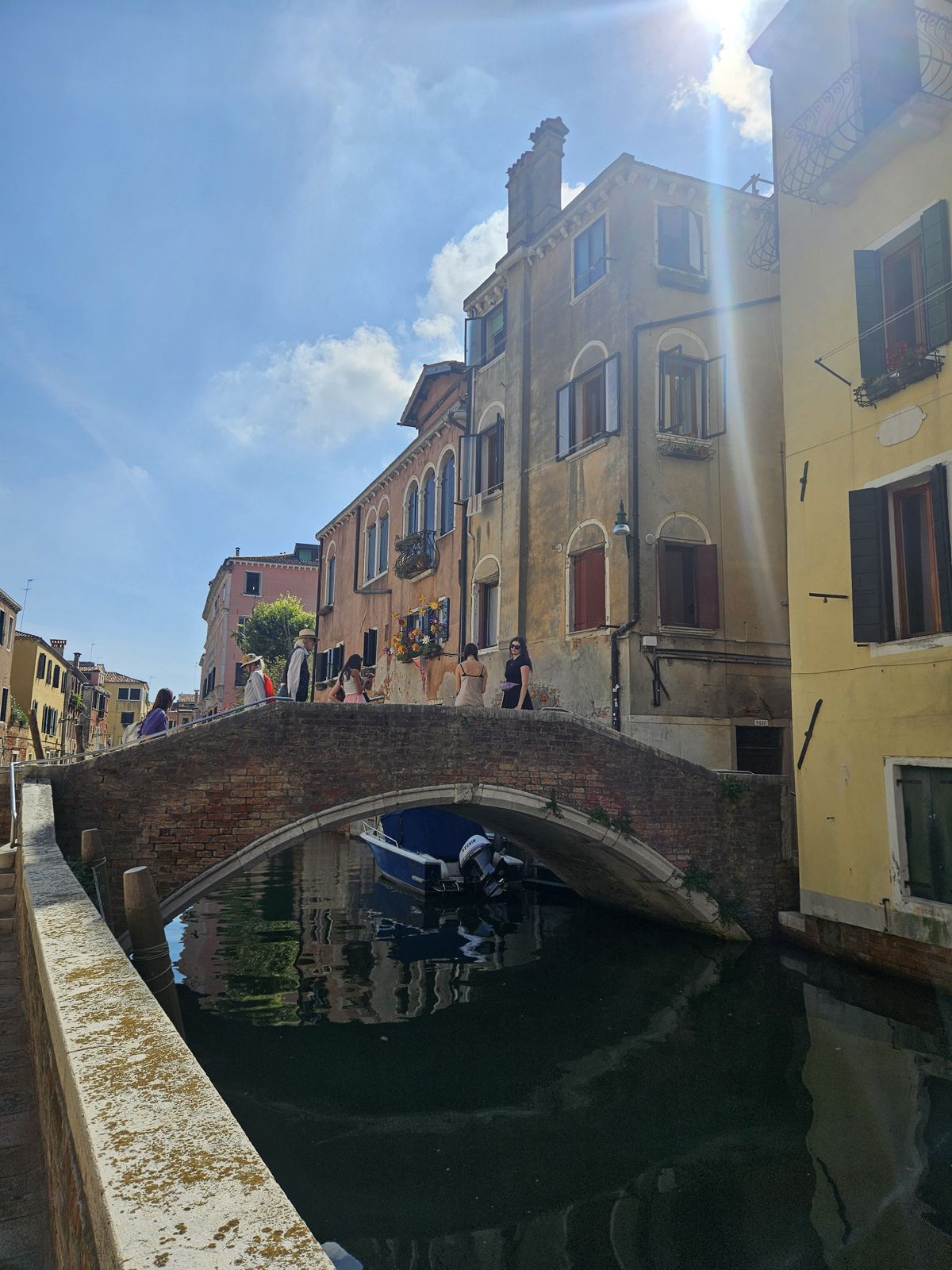
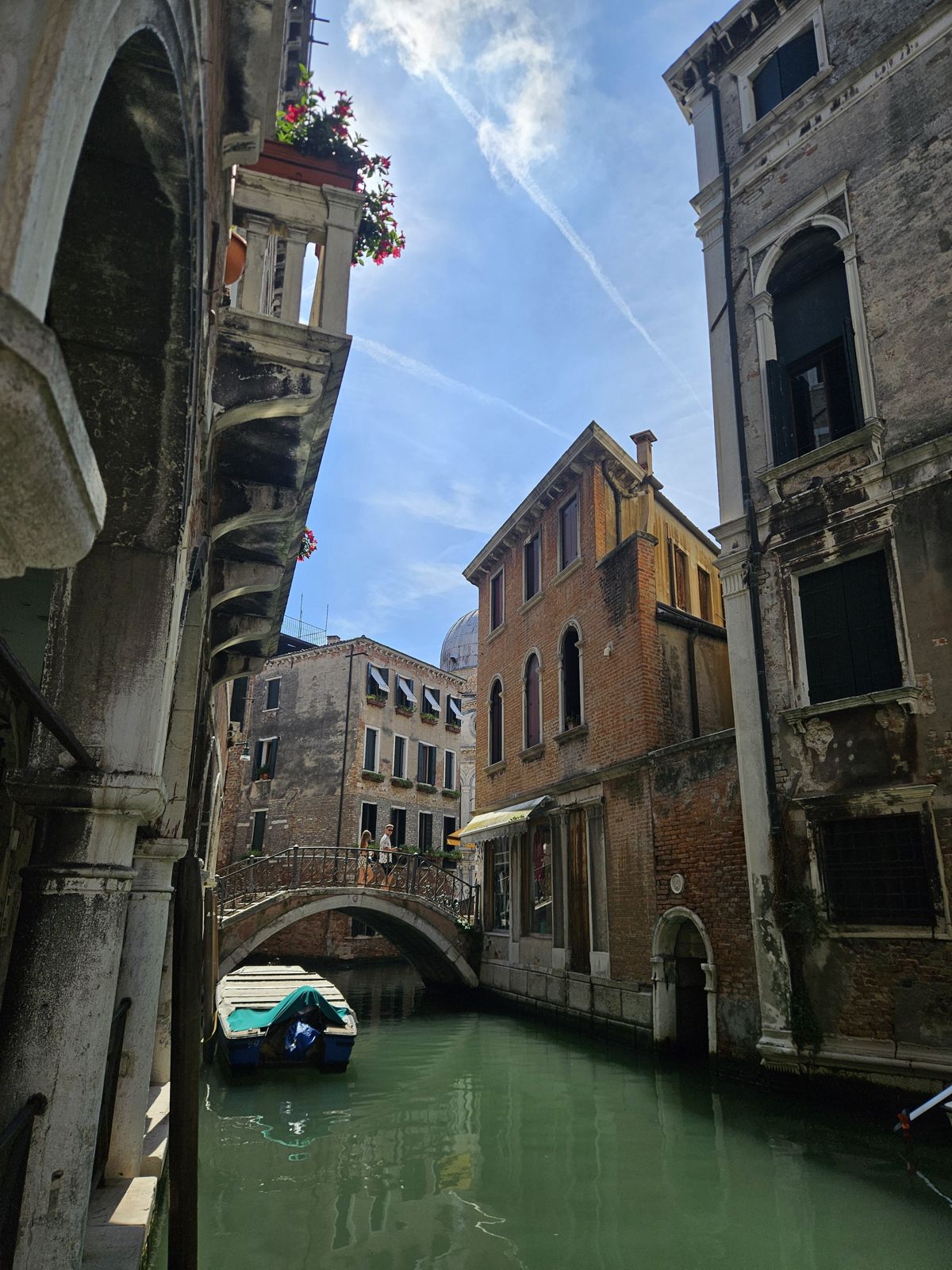
As expected, the train to the most famous city in the world is packed. We stand, but the journey goes quickly and we walk out of the famous Venezia Santa Lucia station at noon. It's the stuff of many travel fantasies, having long been the terminus of the Orient Express. Instead of following the stream of other travellers over the Ponte degli Scalzi, we head north-east, where we hope it will be quieter. And it is: this city has the peculiarity that you can be in the most crowded alley in the world, take two steps to the side and find yourself alone.
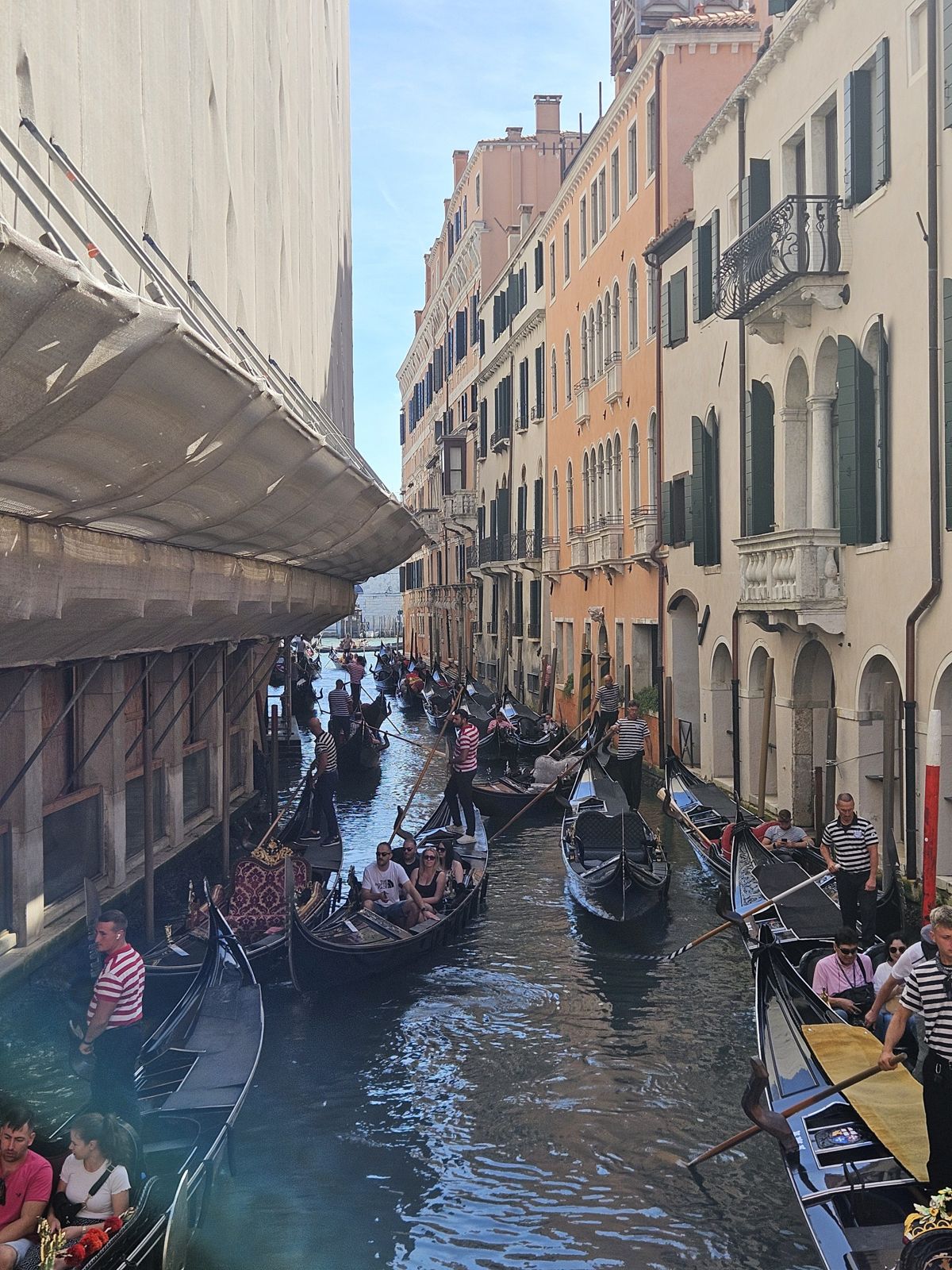
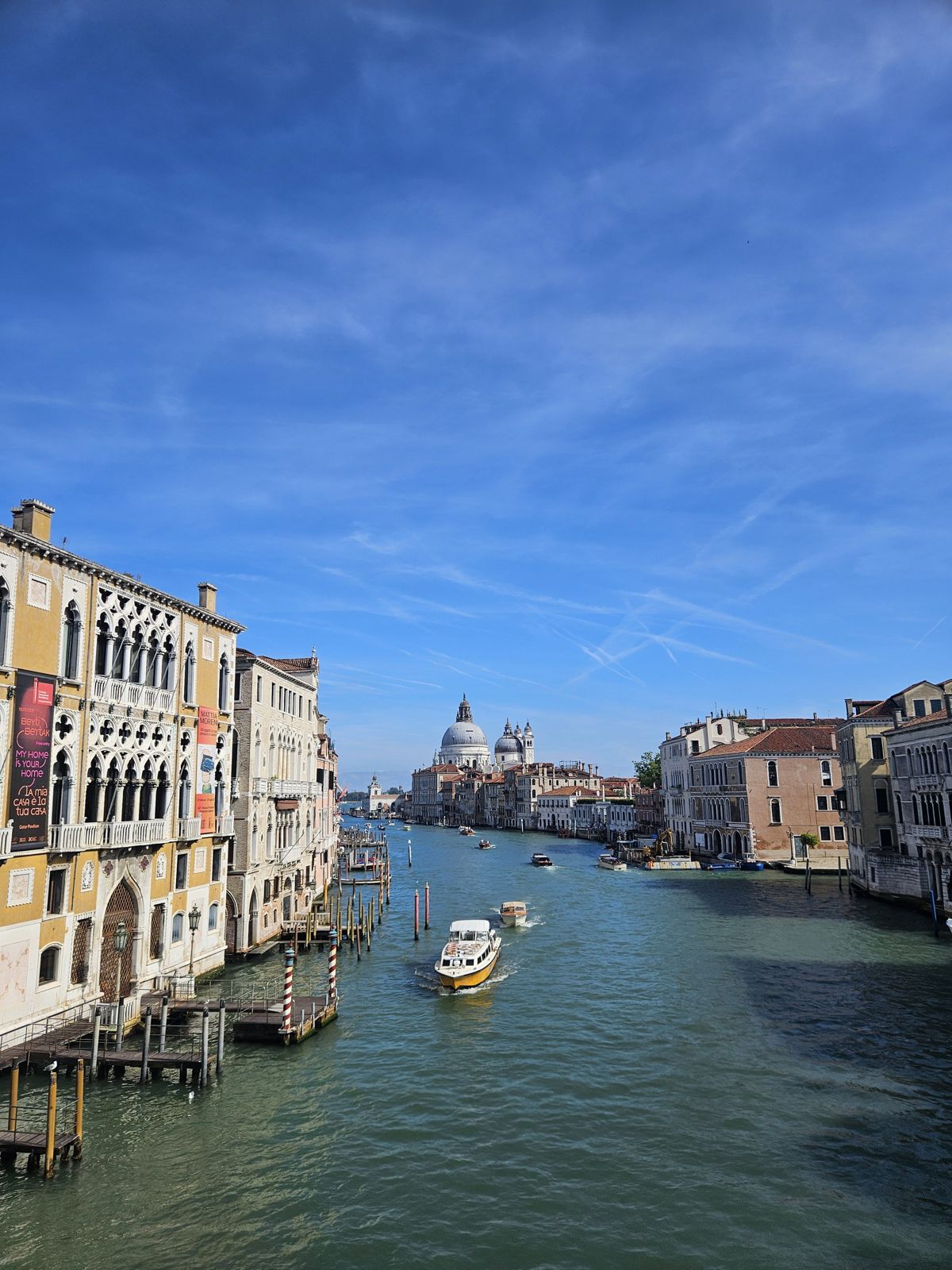
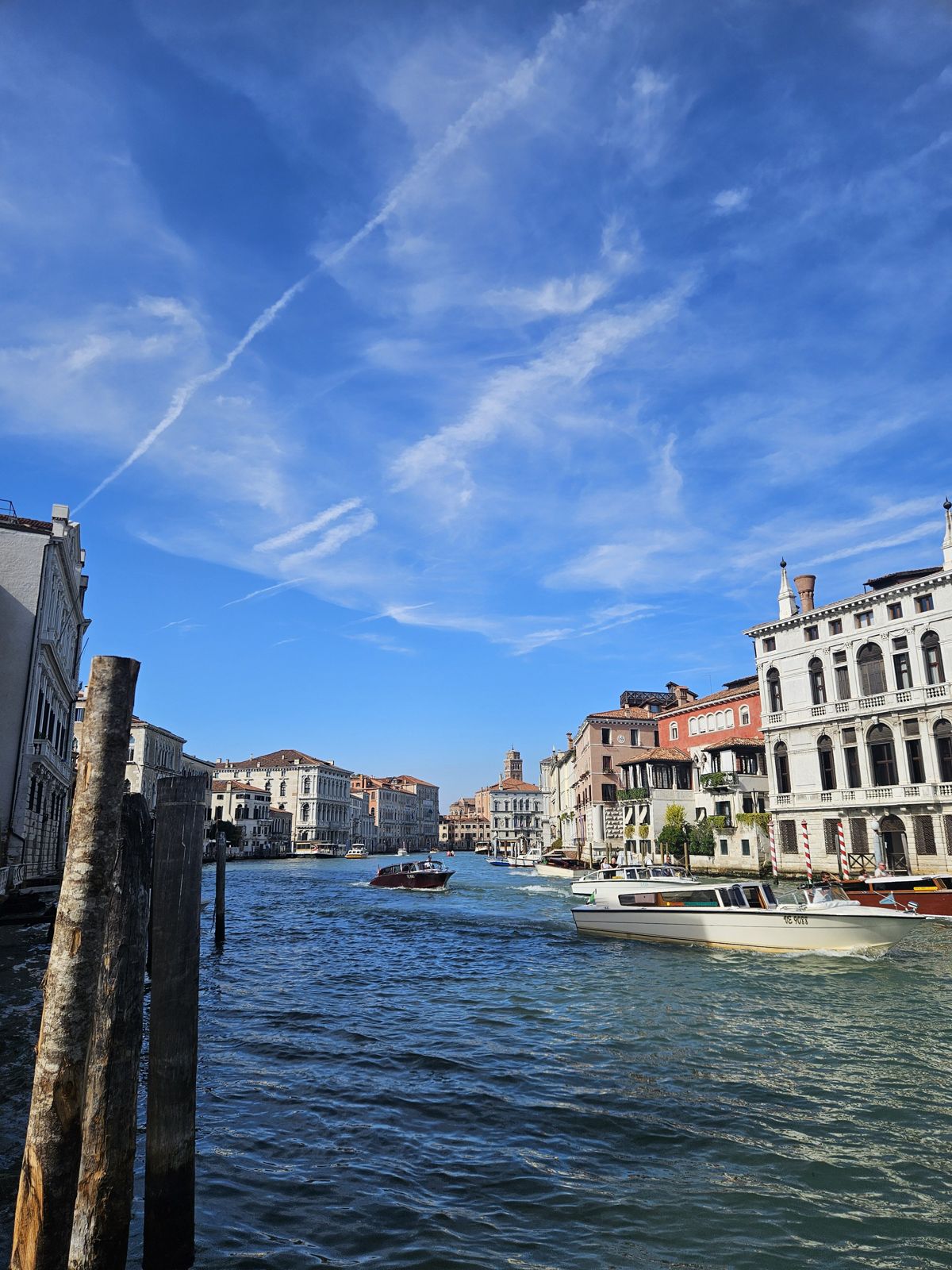
We wander aimlessly, with the return train at 6 pm as our only fixed point of the day. Clémence is fascinated by the gondolas gliding peacefully along the many canals. We stop on a little square to eat our sandwiches and watch people go by. Visitors really come from all over the world; clothes and faces change from one group to the next. After two hours of slow meandering, we hit an unbroken wave of tourists: a sign that we're getting close to San Marco.
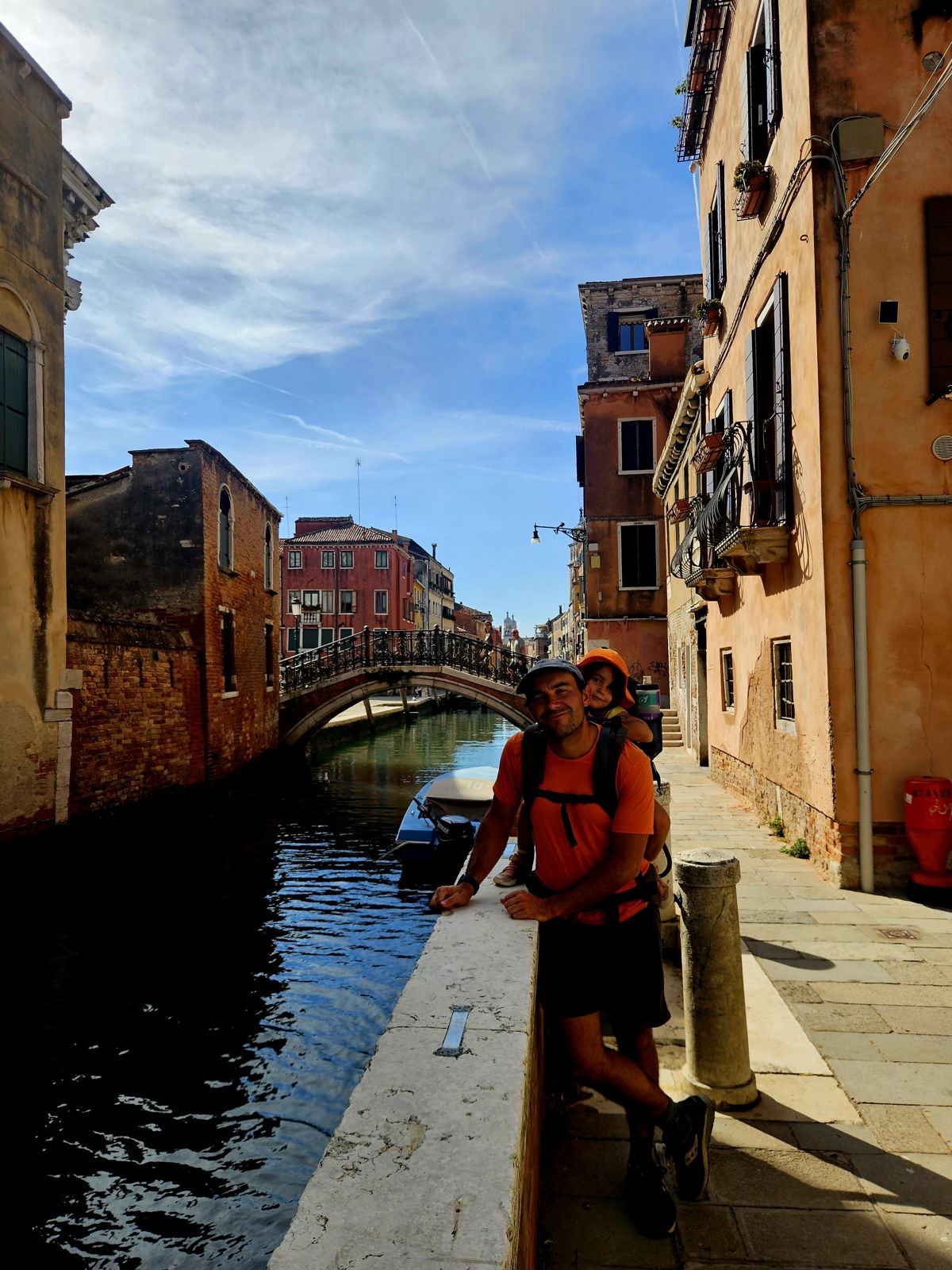
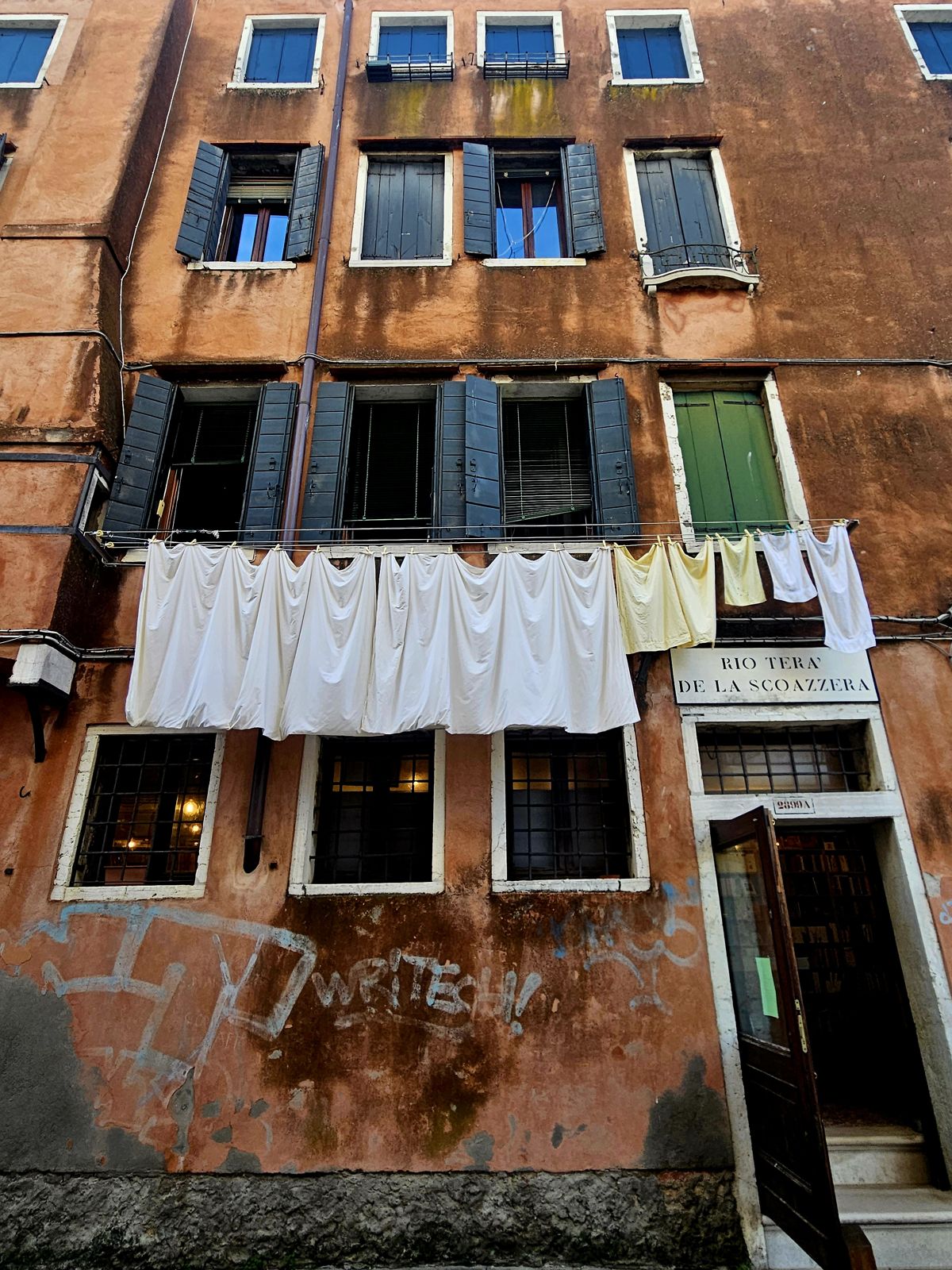
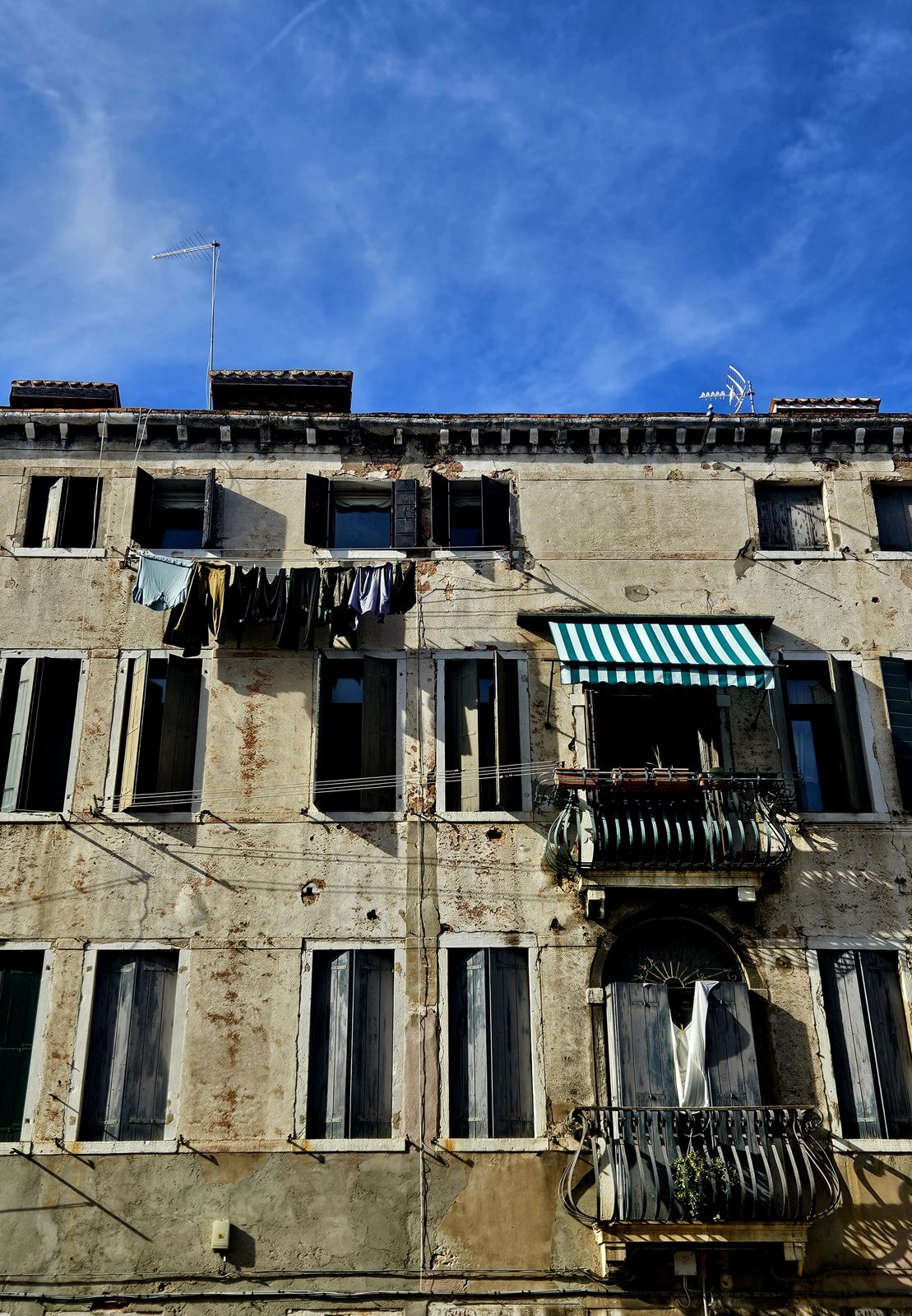
We're quite happy to leave the claustrophobic shade of the cramped buildings and alleys and see the horizon again. St Mark's Square is as beautiful as ever, and its basilica is striking in the finesse of its detail. We then walk up the Grand Canal; the sun lights up the historic buildings, and it would be dishonest to deny Venice's exceptional beauty at this exact spot. And, surprising as it may seem, we find a playground in a museum garden. The place is perfectly calm, an almost absurd contrast with the streets flooded with sightseers just behind.
We hop from bridge to bridge to the much quieter south-west of the island. Clémence is still walking like a champion, and we pass people who clearly live here. Children are playing football, mothers are chatting, and it's a chance to learn that 55,000 people still live in this incredible city. For the record, there were more than 300,000 inhabitants in the 15th century, before it became an open-air museum. We're back at the station earlier than planned, and after an outrageously expensive pain au chocolat we take the train back. We're happy to have seen Venice, but not sorry to leave after doing the rounds.
On the road