 ← PreviousCrossing Italy
Monday 22 September
We have two options today. From Mogliano Veneto, we can pick up a cycle path or take a shorter route inland. Italian drivers have earned our trust since we crossed the border, so we decide to plot our own route to tonight's stop on the outskirts of Padua. It's only 35 kilometres, and we can always turn off towards a station if the ride gets too dangerous.
We very quickly know we made the right call, because the cycling infrastructure is everywhere. It doesn't show up on maps, but every roadside has its own separate lane, which makes progress calm and quick. We ride through industrial estates, yet the planners have thought about every way of getting around. We've been noticing for a few days now that Italy is a real cycling country. The number of elderly people on bicycles is staggering. They pedal very slowly, but they calmly claim their space on the road, a sign that getting around this way is completely accepted.
The villages we pass through are no longer a potential source of danger. They're easy to cross, drivers are patient, and we often mingle with other people on bikes. We stop in Mirano, where a funfair is packing up its stalls. There are so many people in the streets that we wonder whether it's a public holiday as we grab a bite in a little shop down a side alley. The sky darkens alarmingly and we have to hurry back on the road. Unfortunately, the rain catches us at Vigonza-Pianiga, where we shelter in the underpass of the train station. Since the storm shows no sign of passing and we are, quite obviously, at a station, we jump on the train, get off at the next stop and reach tonight's flat in Busa di Vigonza, a dull and uninteresting town in the suburbs of Padua.
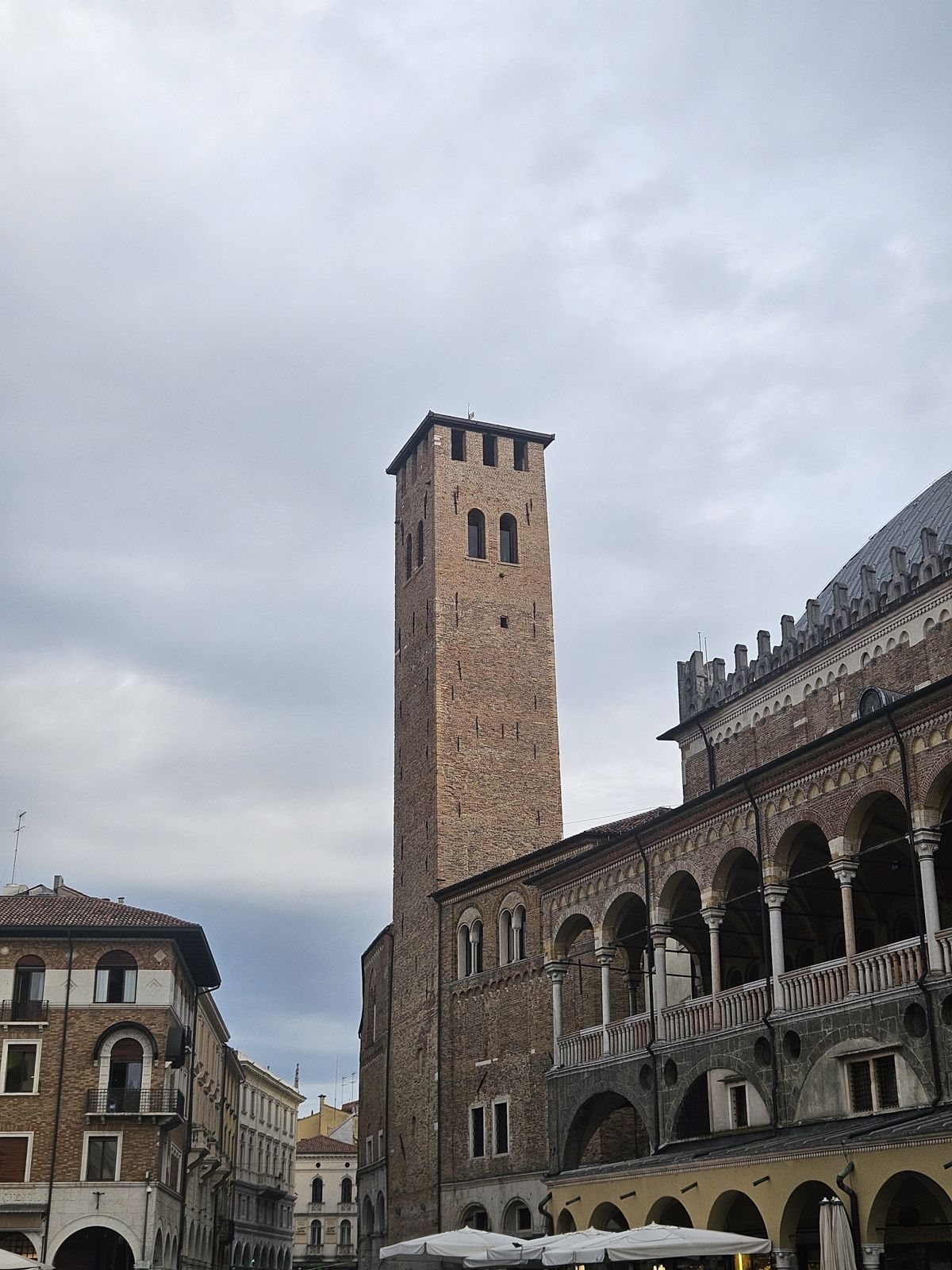
Once again we've chosen the outskirts of a big city, because we dread having to ride through them. Prices are also part of the equation: it's almost impossible to find somewhere affordable to stay (and by affordable, read under €80 a night). We're only ten minutes from Padua by train, so after a shower we wait for the rain to stop and go and visit this lovely city. With 200,000 inhabitants, it's almost an eternal city, as it already existed before Christ. You can wander on foot or by bike through a dense web of arcaded streets leading to squares, each prettier than the last.
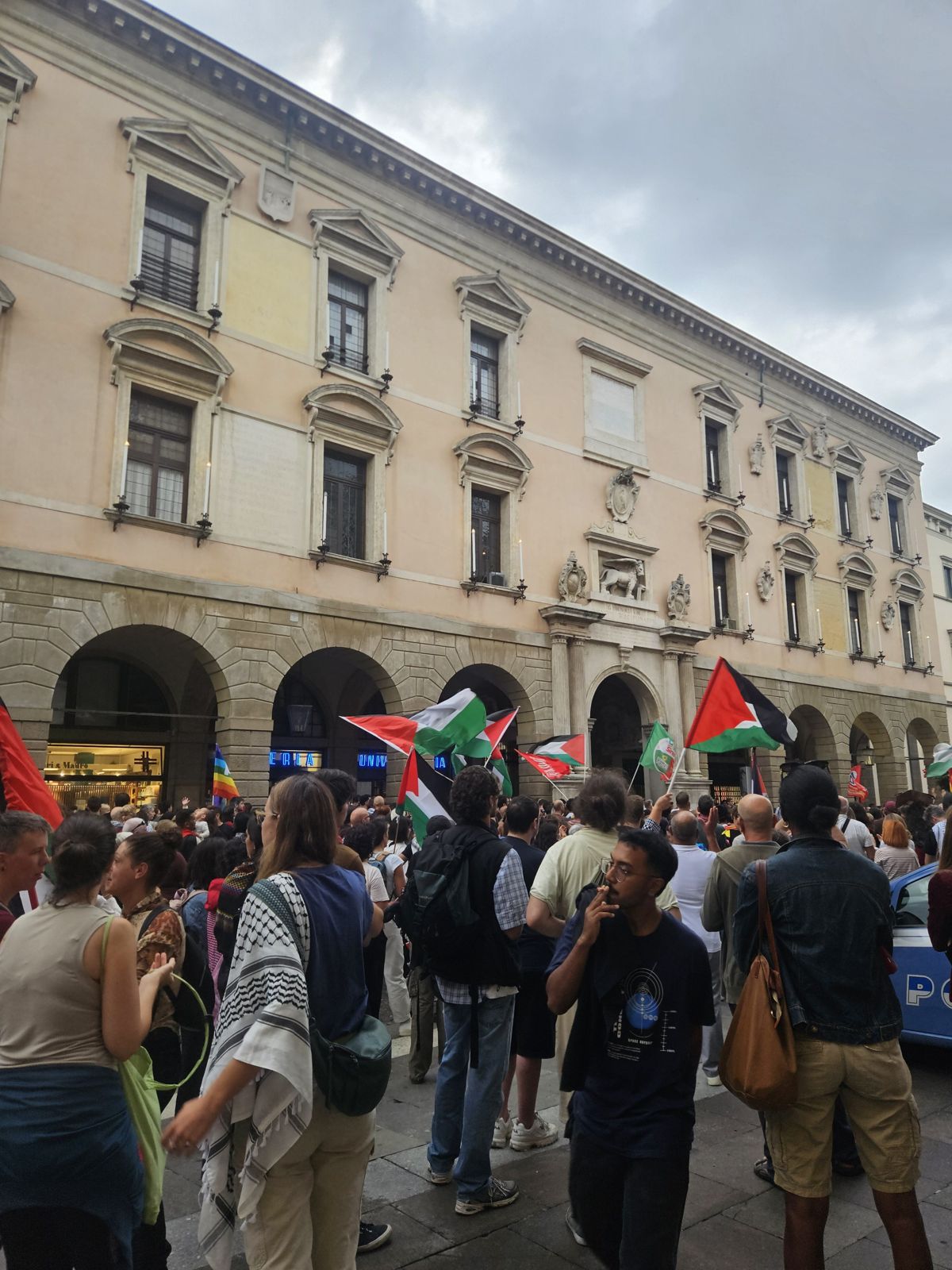
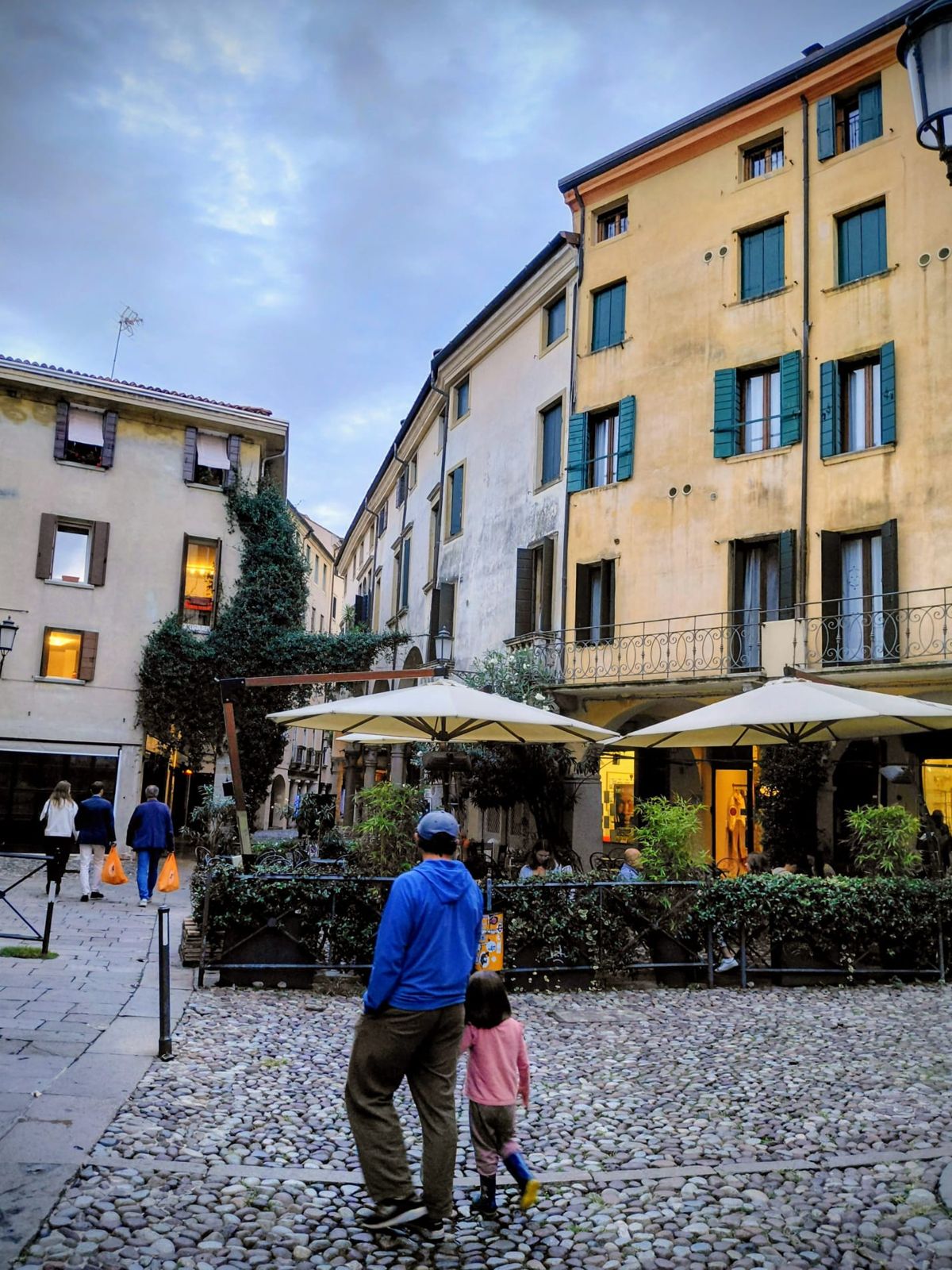
On one of them, we understand why Italians were on strike today. They're protesting against the far-right government's refusal to recognise the State of Palestine alongside other European countries, and the University of Padua has organised a big rally. Travelling shows you the fundamental differences between countries, and policing is one of them. Italian police officers here do carry guns, but they wear ordinary uniforms; it's like seeing the French police of the 1990s. Nothing like the American-football armour French riot police wear at demonstrations.
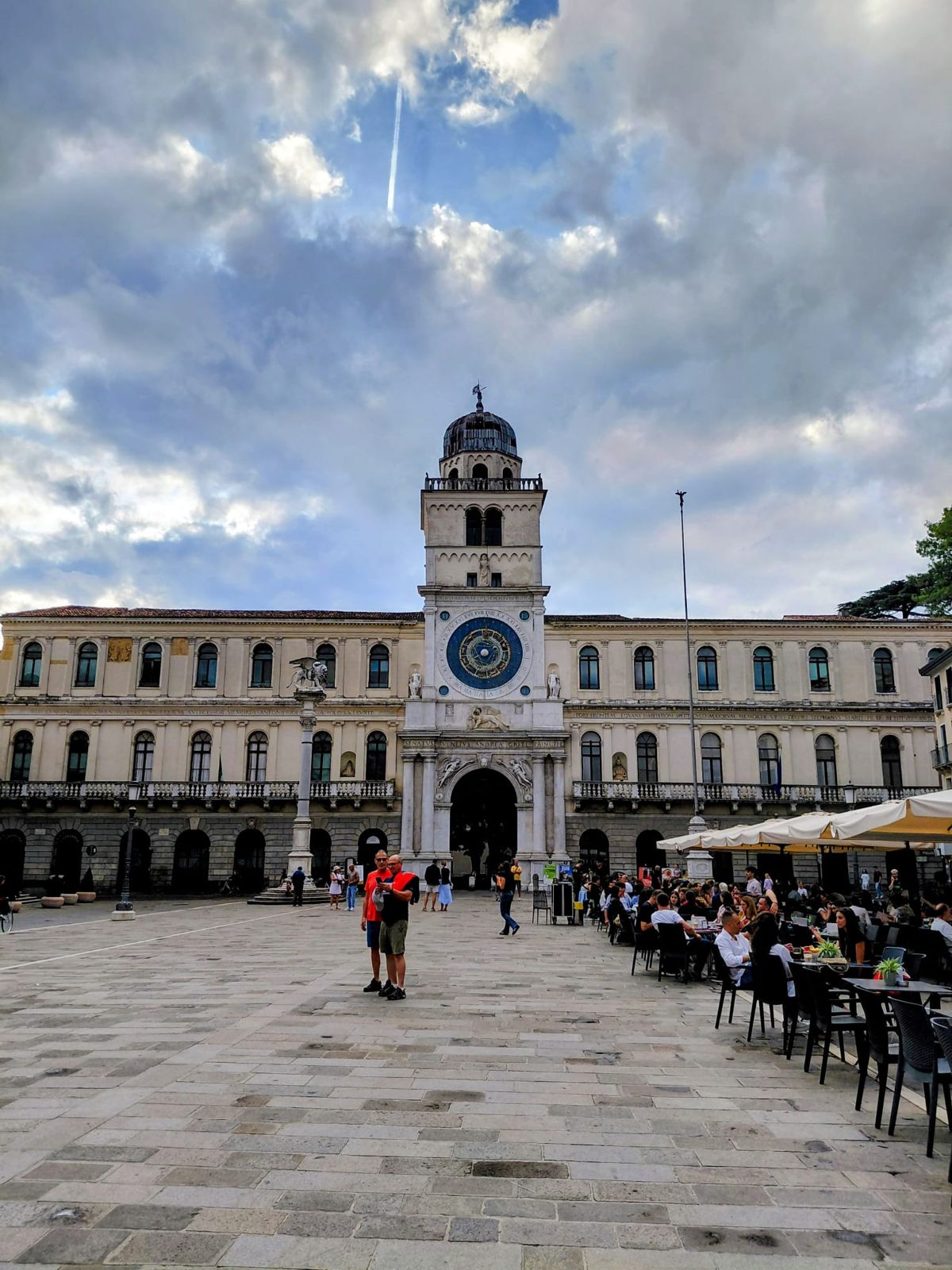
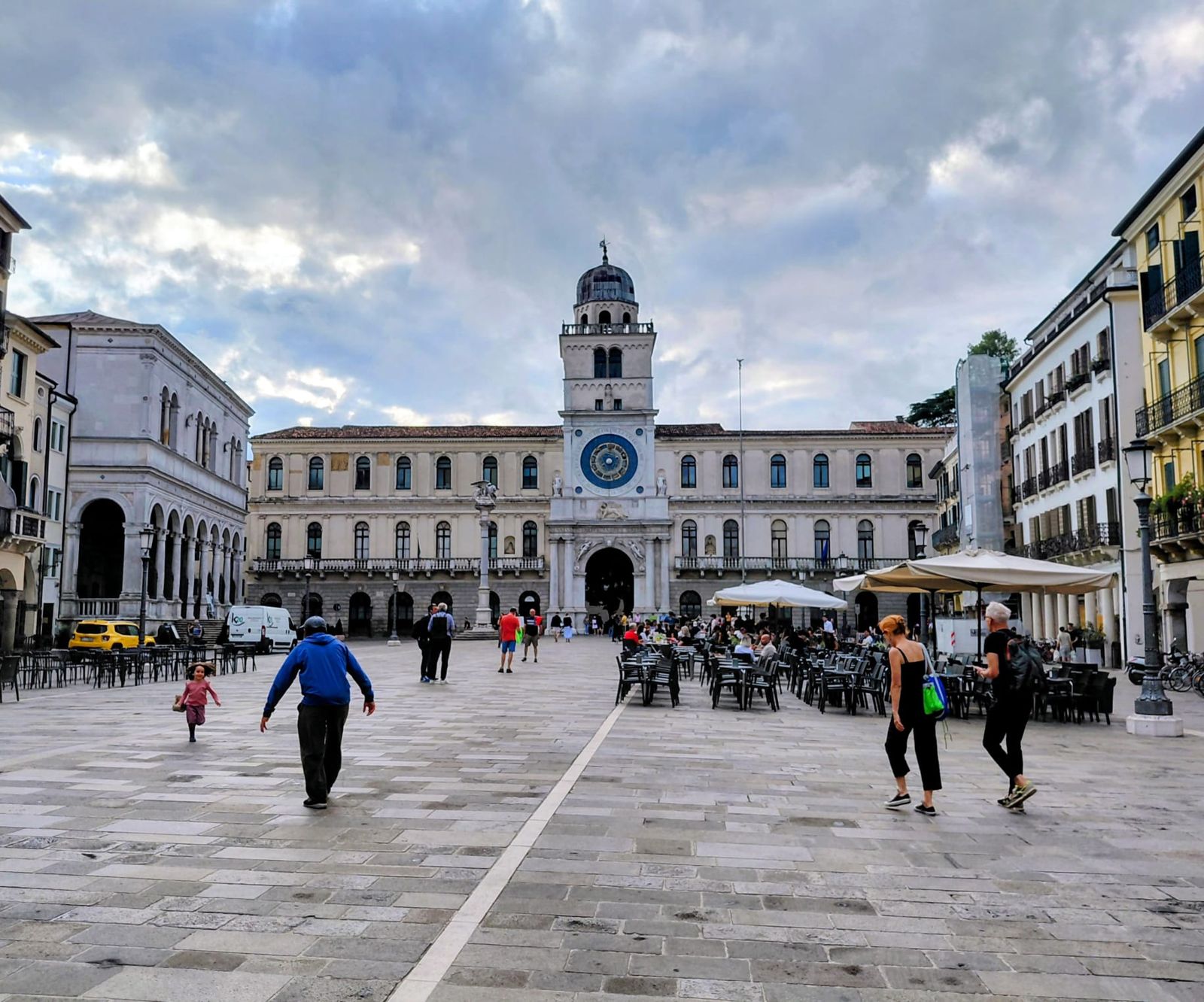
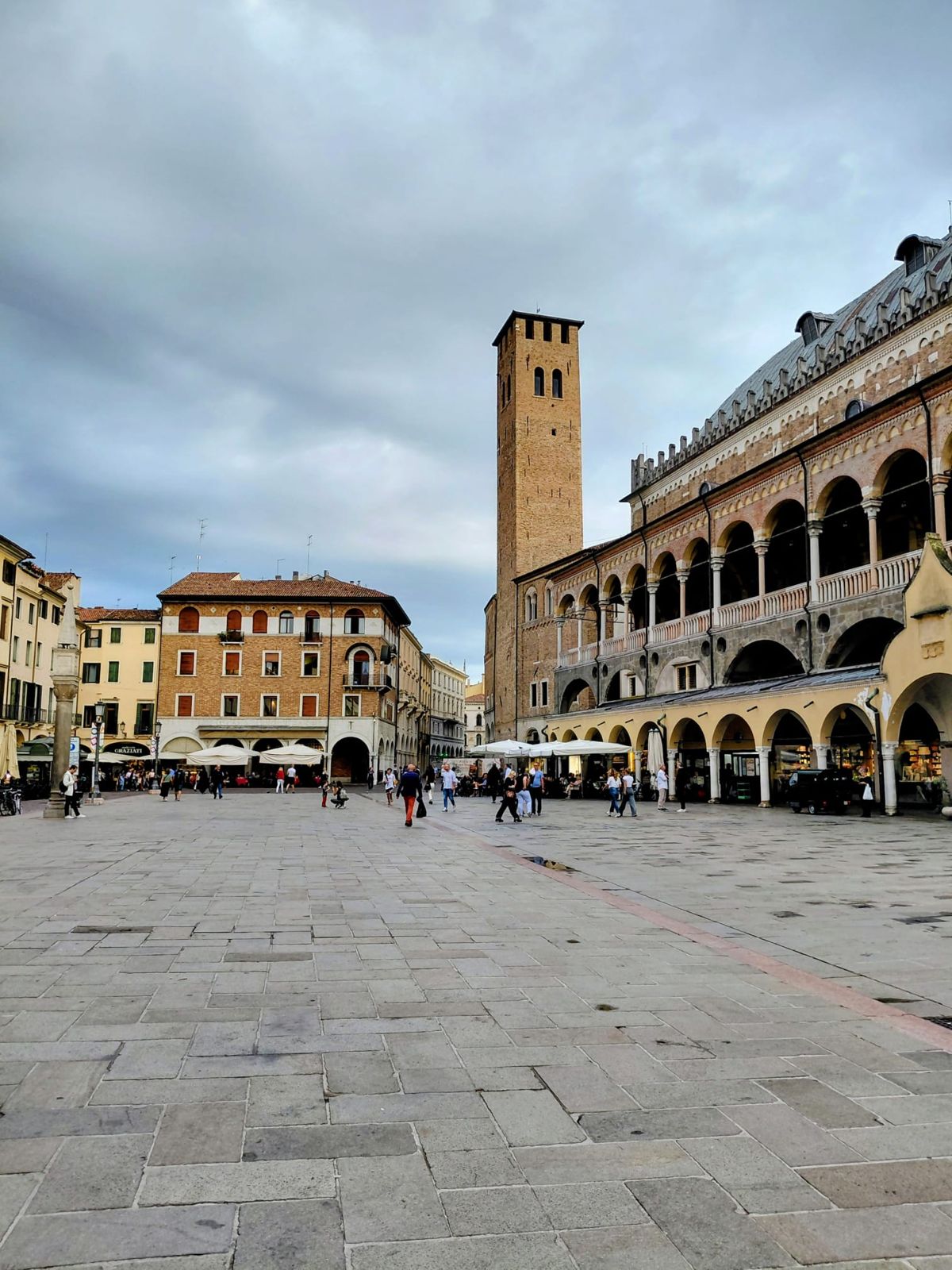
We carry on wandering. Clémence plays at running as fast as she can across every square she finds. She even tries to climb the statues, showing little respect for historical figures. We find a pizzeria in a narrow street and enjoy two excellent pizzas. It's getting late for the little one, so we walk back to the station and take our suburban train home to bed.
Tuesday 23 September
Italy is criss-crossed by railways. Different kinds of trains will take you to every corner of the country. In our case, we use regional trains because they take bikes without any problem. Which explains why we're standing on the platform at Busa di Vigonza this morning. We're heading for Cremona in Lombardy, leaving Veneto behind. The rain comes and goes, and of course it pours just as we reach the platform. There's only one shelter, and we end up squeezed in with two French people in their fifties and their much older mother.
Within five minutes we're reacquainted with French bitterness and smugness. She explains that our trip is pointless for Clémence since she won't remember any of it, asks whether "the Chinese" are nice when we tell her about South Korea and Japan, and informs us that "slanty-eyed" people have always walked around Venice wearing surgical masks, where she spends six months of the year. Her posh Parisian accent leaves little doubt that she lives in the French capital, where the three of them are heading back.
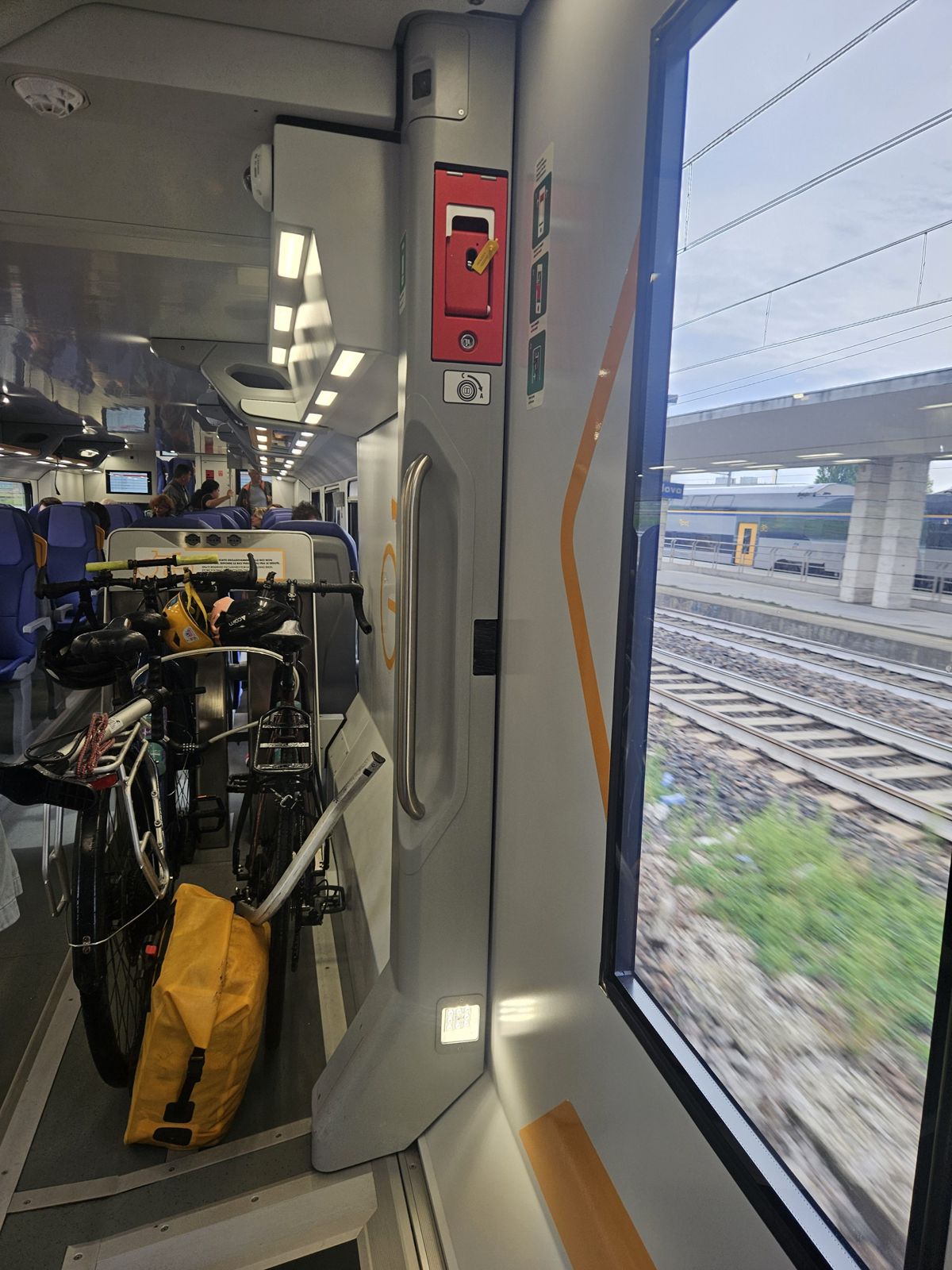
When the train arrives, we're quite happy to slip away and find the bike carriage. Every train has several, which takes away the stress of standing in the right spot or running along the platform. We ride to Verona, where we change for Brescia. Stations are still the enemy of bikes, but we've found a routine that's quick and efficient. We put the panniers in the trailer, Cassandre takes it and Clémence to the lift, and Stéphane carries both bikes up the stairs at once.
That allows us lightning-fast connections, like in Brescia, where we get from platform 3 to platform 14 in under four minutes to catch our last train of the day to Cremona. The doors close behind us and we're glad not to have to wait an hour for the next one. We're getting closer to the Po. We get off in Cremona at 3 pm and are surprised to find an extremely bike-friendly city. The historic centre is completely closed to cars, which makes for a peaceful, family atmosphere. After dropping our things at the hotel, we head back out for a walk.
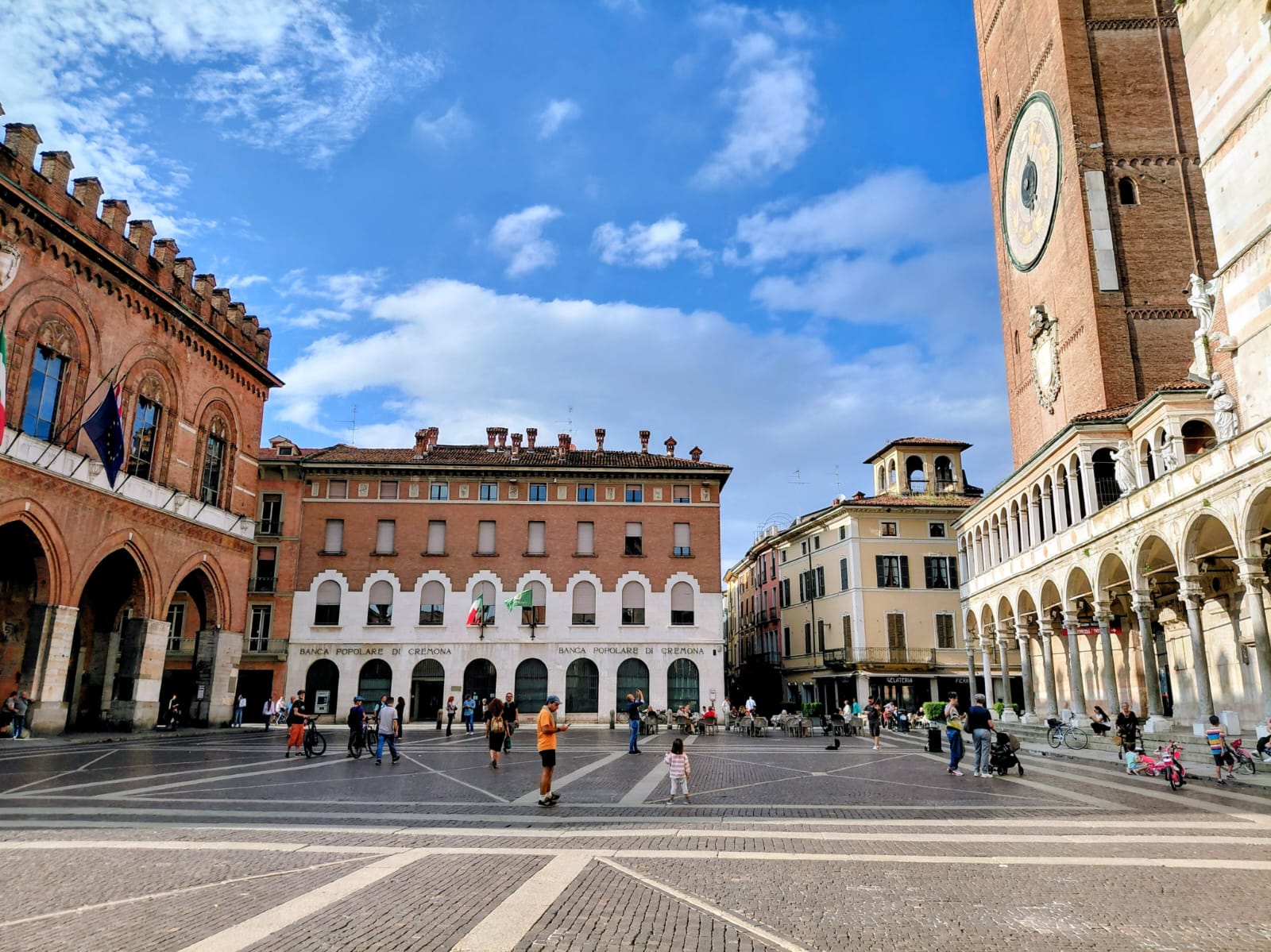
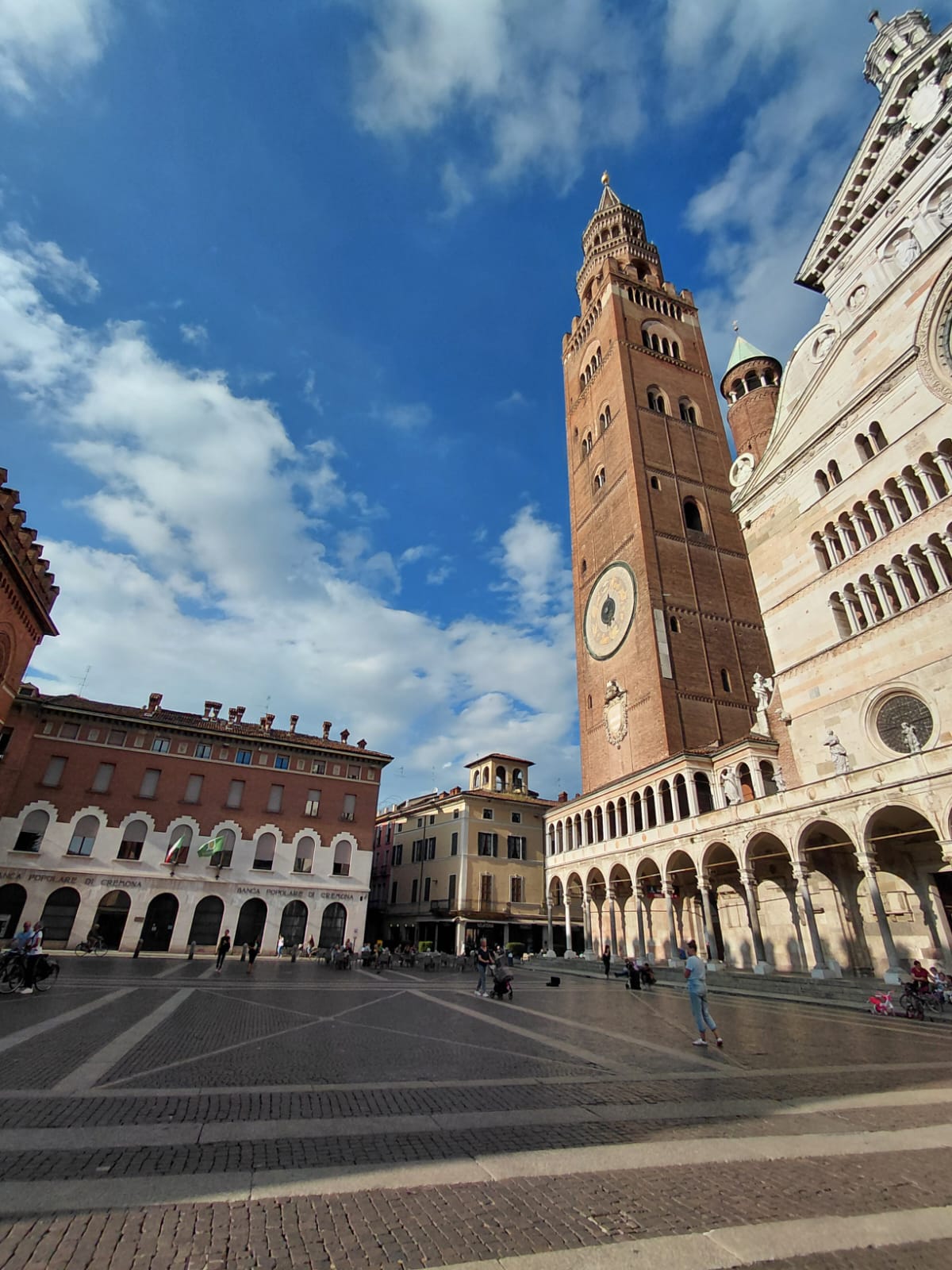
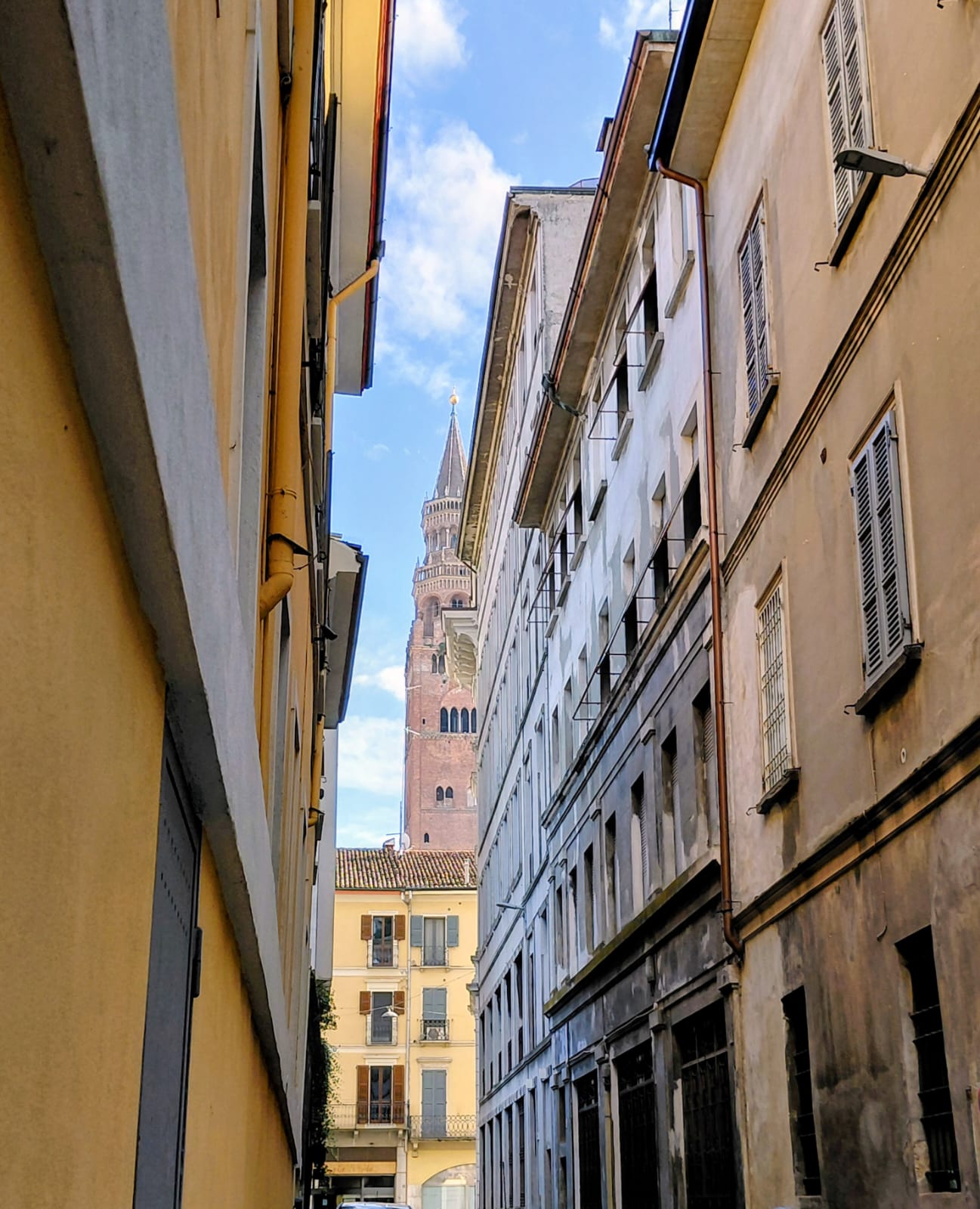
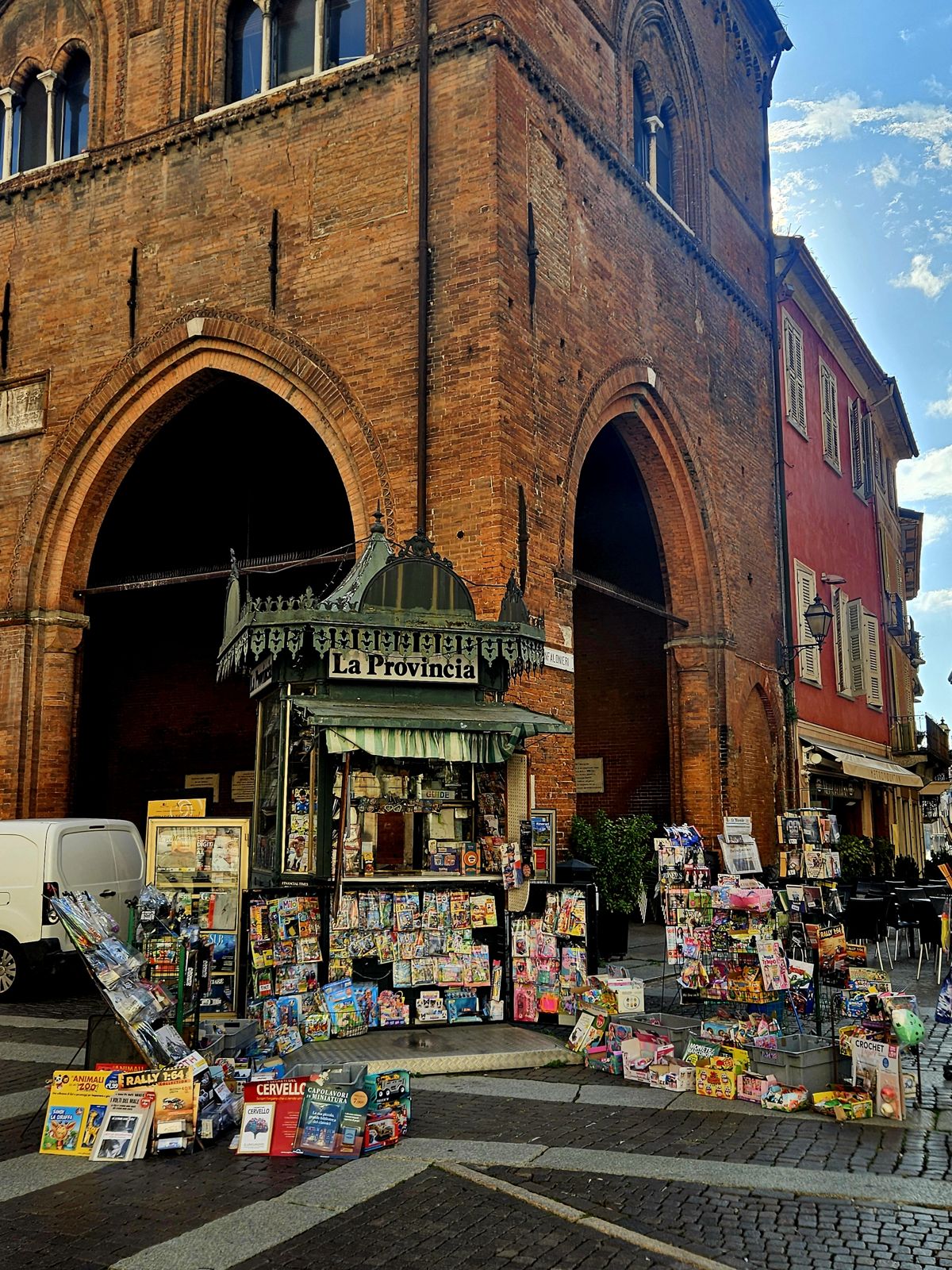
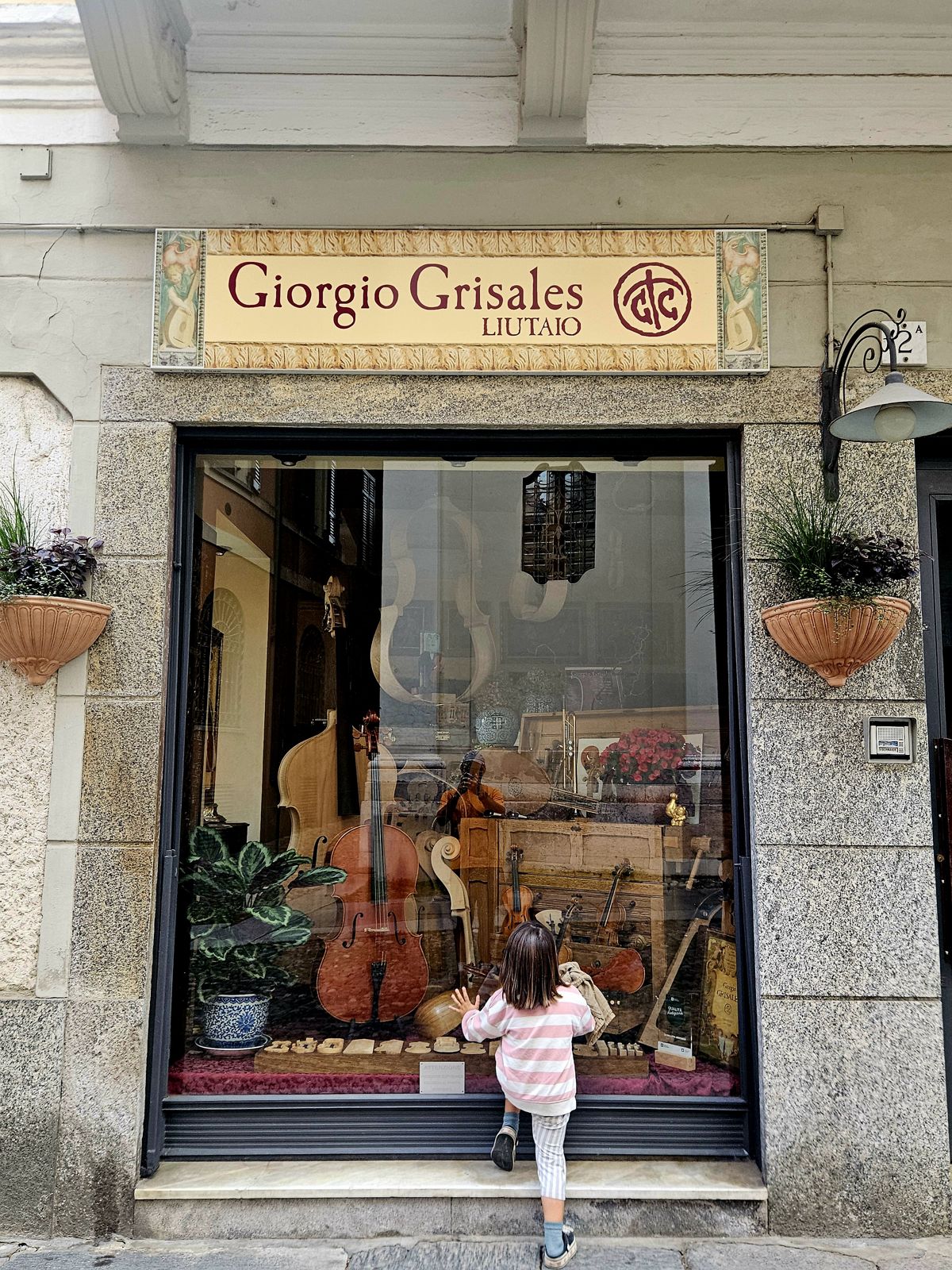
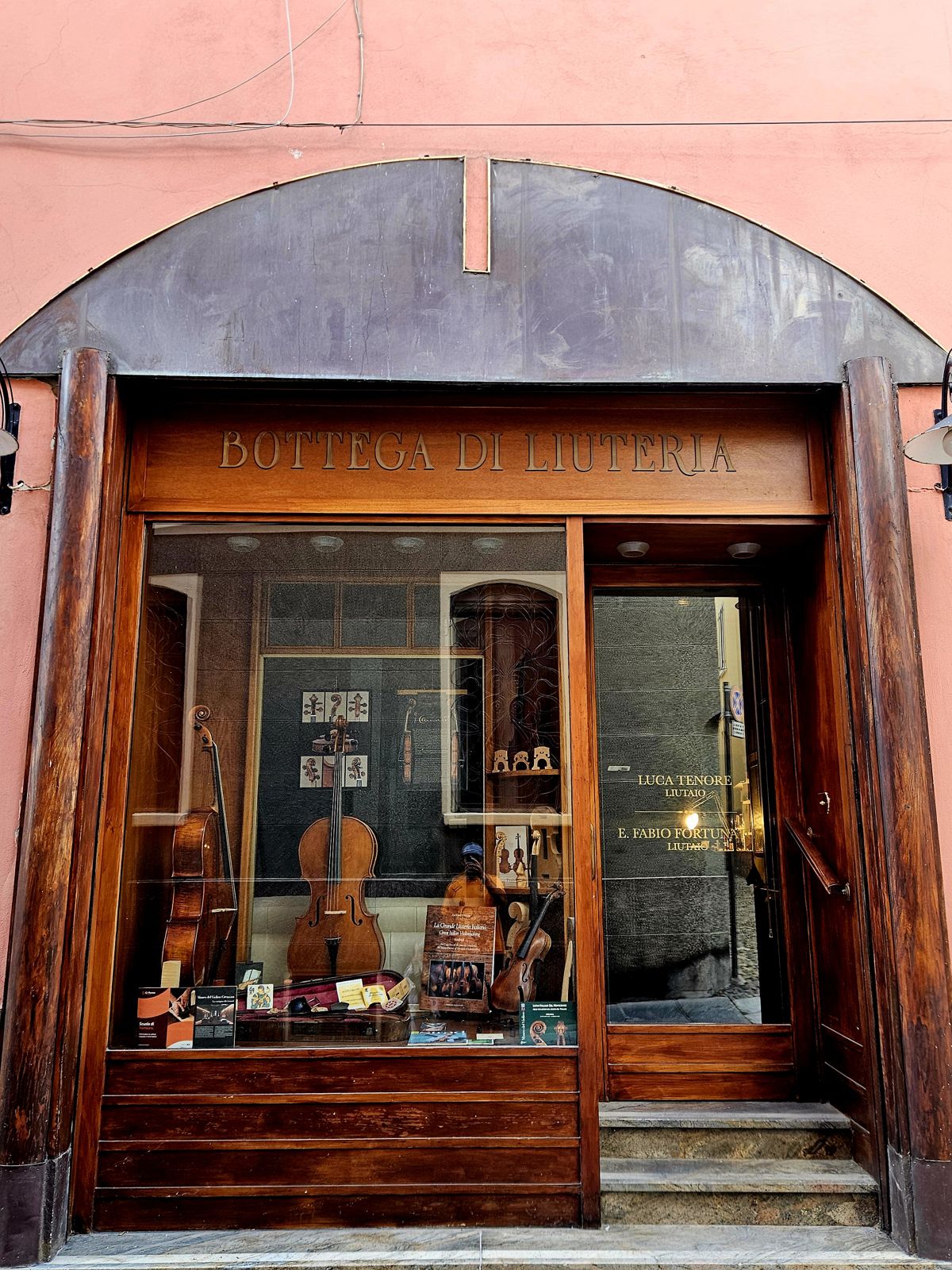
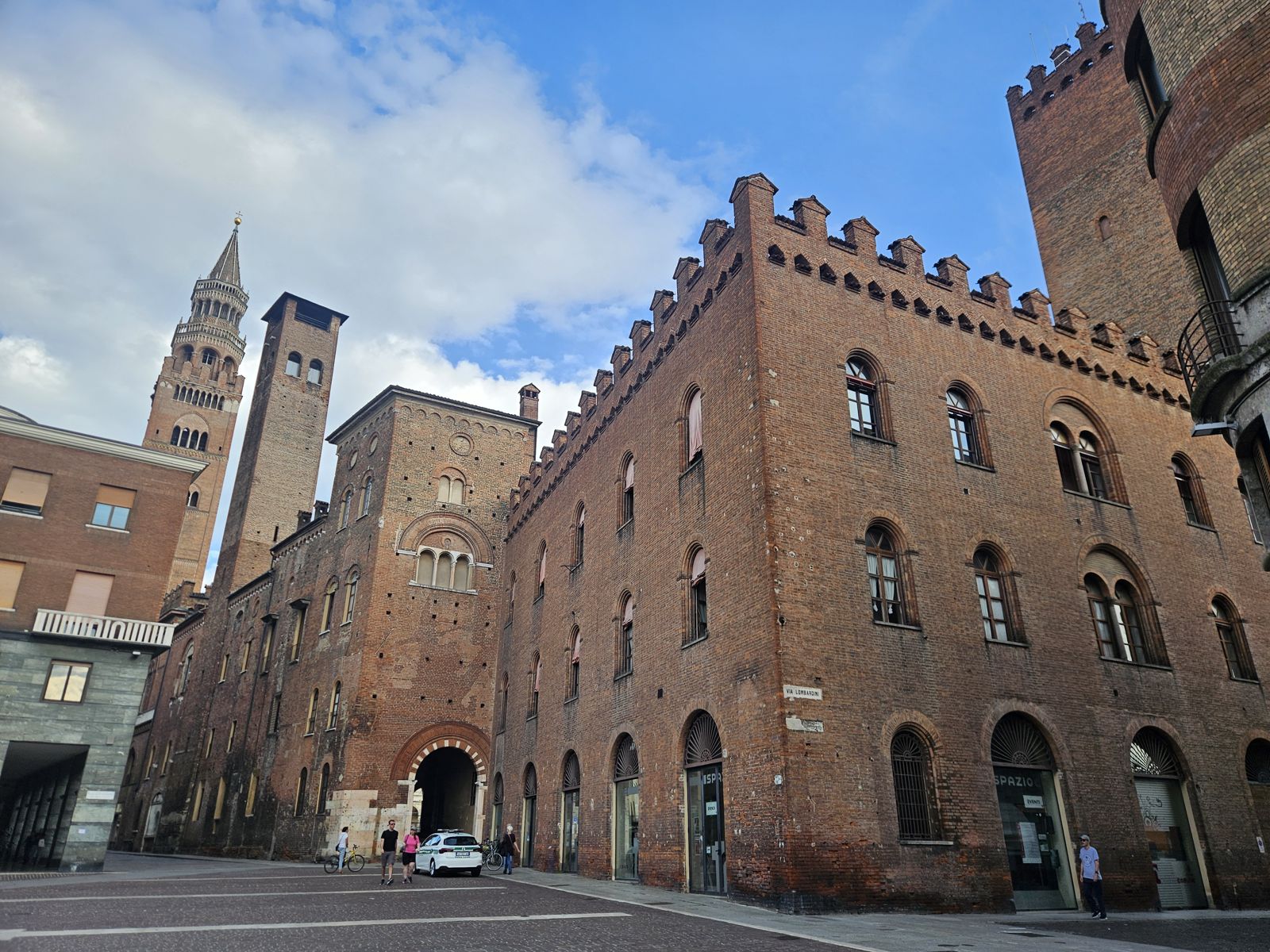
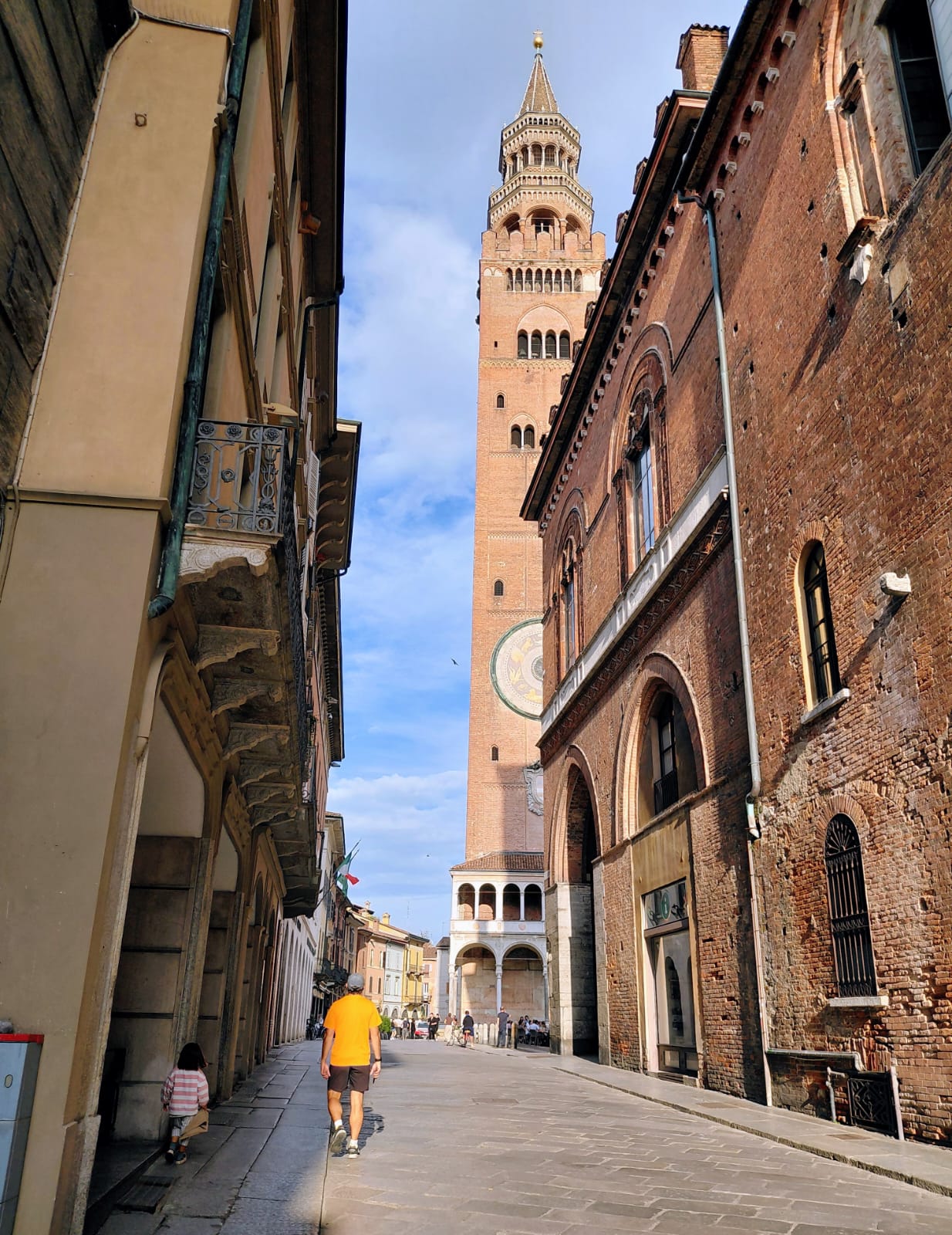
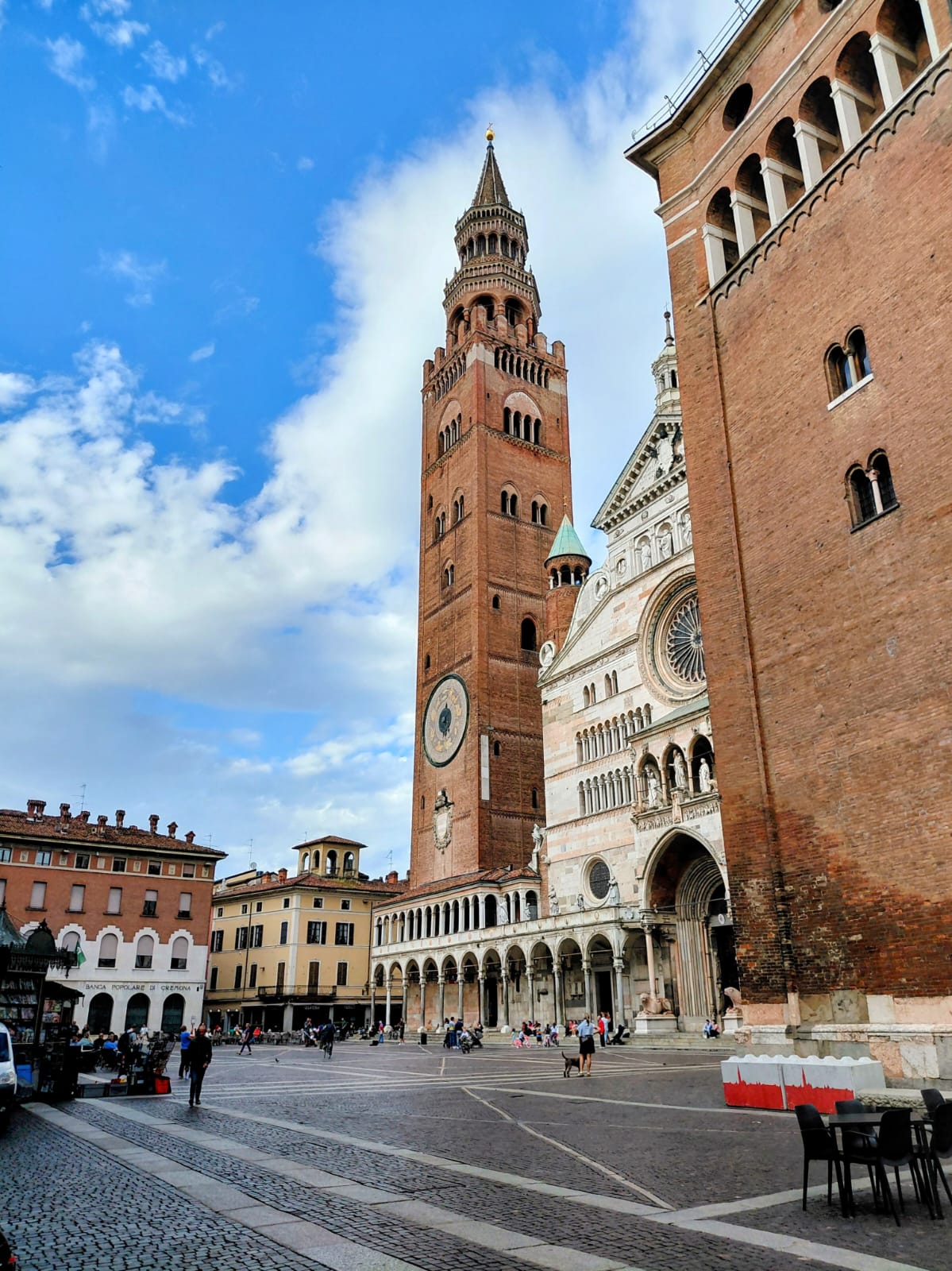
Cremona is another eternal city, dating from well before the birth of Christ, and its streets breathe history. It's also where the famous violin maker Antonio Stradivari was born and died. As we stroll, we come across countless violin workshops, "bottega di liuteria", statues of the instrument and tributes to Stradivarius. On the main square, Piazza del Comune, a young man plays popular tunes beautifully. We listen while gazing at the Duomo di Santa Maria Assunta and its baptistery. It's mild, families are playing with their children on the big square, and there's a refreshing calm for a city centre.
We wander at random and are amazed by the number of people on bikes. There are lots of elderly people and women on old bicycles, going slowly but surely and greeting each other with an enthusiastic "ciao!" as they pass. We also see children riding alone and parents with little ones, a sign that never lies about how bike-friendly a city is. As night falls, the streets are lit by the orange glow of the streetlamps and a veil of magic settles over everything. It feels like a Fellini film. We walk slowly, taking everything in, to a fairly well-known Greek restaurant.
The food is good, but it leaves a bitter taste once again. Restaurants in Italy can charge an extra fee called the "coperto" (cover charge), and they rarely pass up the chance. It's usually €2–3 per person. It even applies to small children like Clémence, so by the time we sit down, the bill is already close to ten euros before we've ordered anything. It gets tiresome, because the dishes suddenly aren't as cheap as they look. The tradition dates back to the Middle Ages, when people could bring their own food into taverns and paid a fee to use the table. We still eat heartily and end the evening drifting through the quiet streets back to our hotel.
Wednesday 24 September
From the Turin area to Venice, the Po stretches its banks over 650 kilometres. For a long time it was a trade route linking all the big cities of the north, and today it's part of EuroVelo 8. Unfortunately, the route is a cycle route in name only, as many sections are actually hiking trails or busy roads. That's why we take our time this morning: we're only riding the separate, safe section between Cremona and Piacenza. Just 40 kilometres of flat road that we expect to eat up quickly.
We reluctantly leave Cremona behind, a small city where we could easily have seen ourselves staying. After a few kilometres of navigating, we find the cycle path and the famous river, its current roaring. It has rained a lot in the north of the country these past days, and you can tell from the water level: it's almost swallowing the banks. We make good speed, zigzagging through the Lombard countryside, which looks a lot like France. You notice the difference near the villages, whose bell towers are different, and inside them, where the architecture is distinctive.
We stop at a big playground in Roncaglia, then eat in a small restaurant where we're charged €3 a head again just for sitting down. It annoys us once more, especially since Clémence eats almost nothing. The road to Piacenza is monotonous and we're glad we didn't follow the whole length of the Po; we'd have been bored stiff. Piacenza is the opposite of Cremona. Here cars are allowed in the centre and the atmosphere is immediately less inviting. We have an ice cream on a terrace to the sound of lorries and cars driving across the main square, Piazza dei Cavalli. It isn't shown off at all, and that is reflected in the rather shady crowd hanging around. We're a far cry from yesterday's family atmosphere.
None of this makes us want to linger, but our next train isn't for two hours. We don't choose our destinations for sightseeing but for the price of accommodation. The cost of places to stay in Italy has doubled since our last trip in 2016, and it's hard to find nights within our budget. So we end up in second- or even third-tier towns, like Tortona tonight. We take two more trains to get there, first to Voghera, then on to our destination. The carriages are modern and it's generally easy to bring bikes on board. On the other hand, the trains are constantly late.
We notice that they have to let other trains pass at random, often just before stations. And instead of pulling in to let passengers on and off, they wait five minutes with their noses almost touching the platforms. It causes delays and frustration, although it doesn't really affect us since we travel slowly anyway. From Tortona station, we have less than a kilometre to the Airbnb. You can tell we've changed region: space for bikes shrinks to almost nothing and cars are everywhere. Our place is big and spacious, a pleasant spot to rest before tomorrow's new challenges on our way back to the Mediterranean.
On the road