 ← PreviousBack in Europe
125 kilometres by bike and 50 by train across a Slovenia whose face changes as we move towards the Alps. The Sava has shrunk into a modest, shallow stream running through impressive gorges. You'll find the map of our bike route below.
Saturday 13 September
A beautiful day lies ahead. The weather is set fair, which helps us recover from a night broken by a group of fishermen in a neighbouring room. Clémence, of course, heard nothing and is still asleep when we wake up. We wait patiently for her to have breakfast in the common room. It reeks of dirt: there are wrappers, food scraps and dirty dishes everywhere. We clean our corner of the table to eat and, after packing our panniers, go downstairs for a coffee in the restaurant below. Clémence enjoys the playground right in front, then the kids' corner. Cafés and restaurants in Slovenia often have little play areas for children.
We're in no hurry, as we're only riding forty kilometres today. The stage isn't long, but from today the road climbs noticeably. The Slovenian countryside stretches out peacefully on this September Saturday, so the road is fairly quiet. We're still following the Sava and the railway line between Brežice and the capital. The landscape is reminiscent of the French and Swiss foothills. Every village has its little castle or picturesque church. The architecture is really different from ours, baroque or neo-Gothic. It makes the scenery extremely picturesque, especially as we pass through isolated hamlets. Slovenia is a small country of two million people and we don't see many of them.
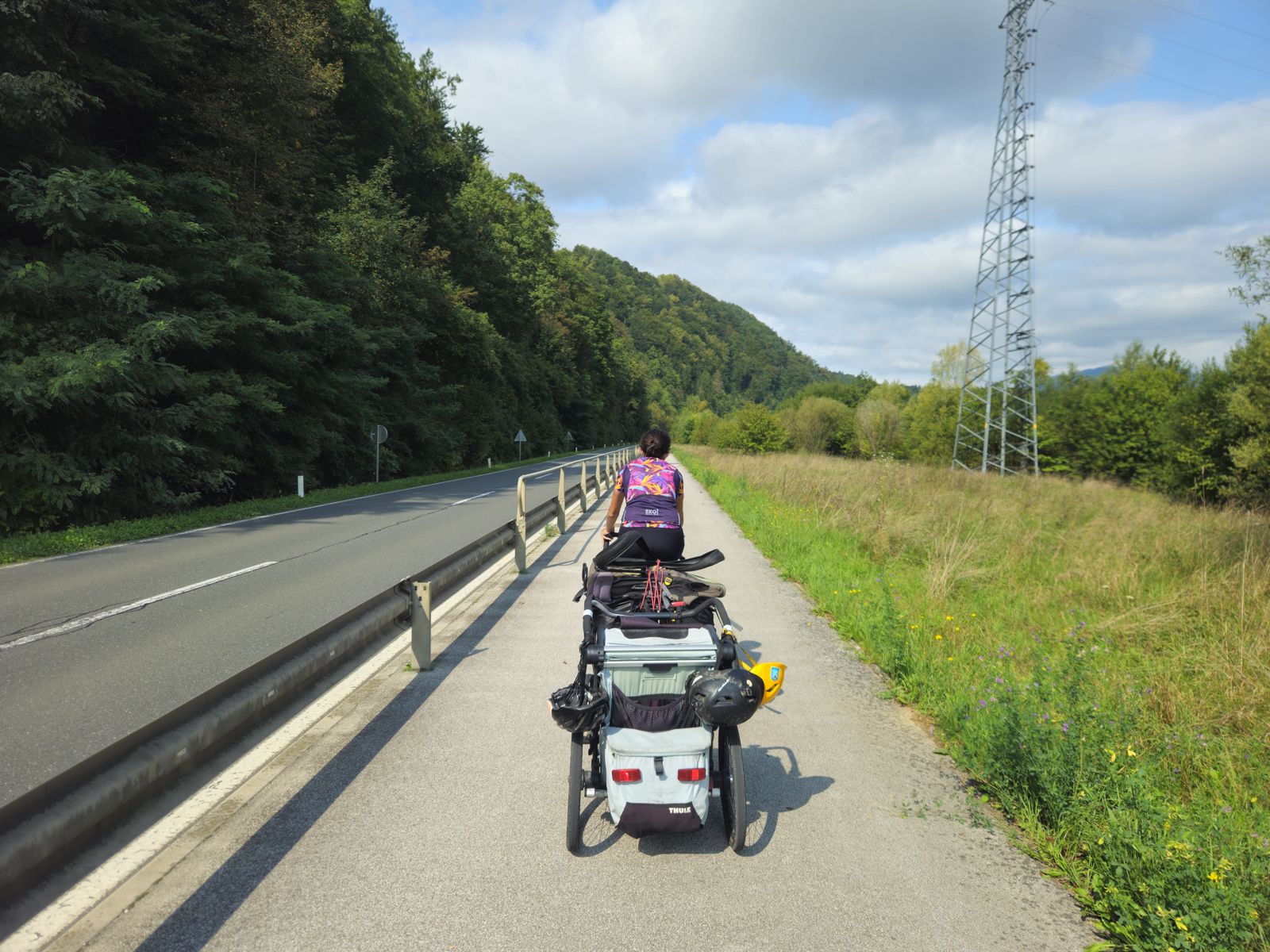
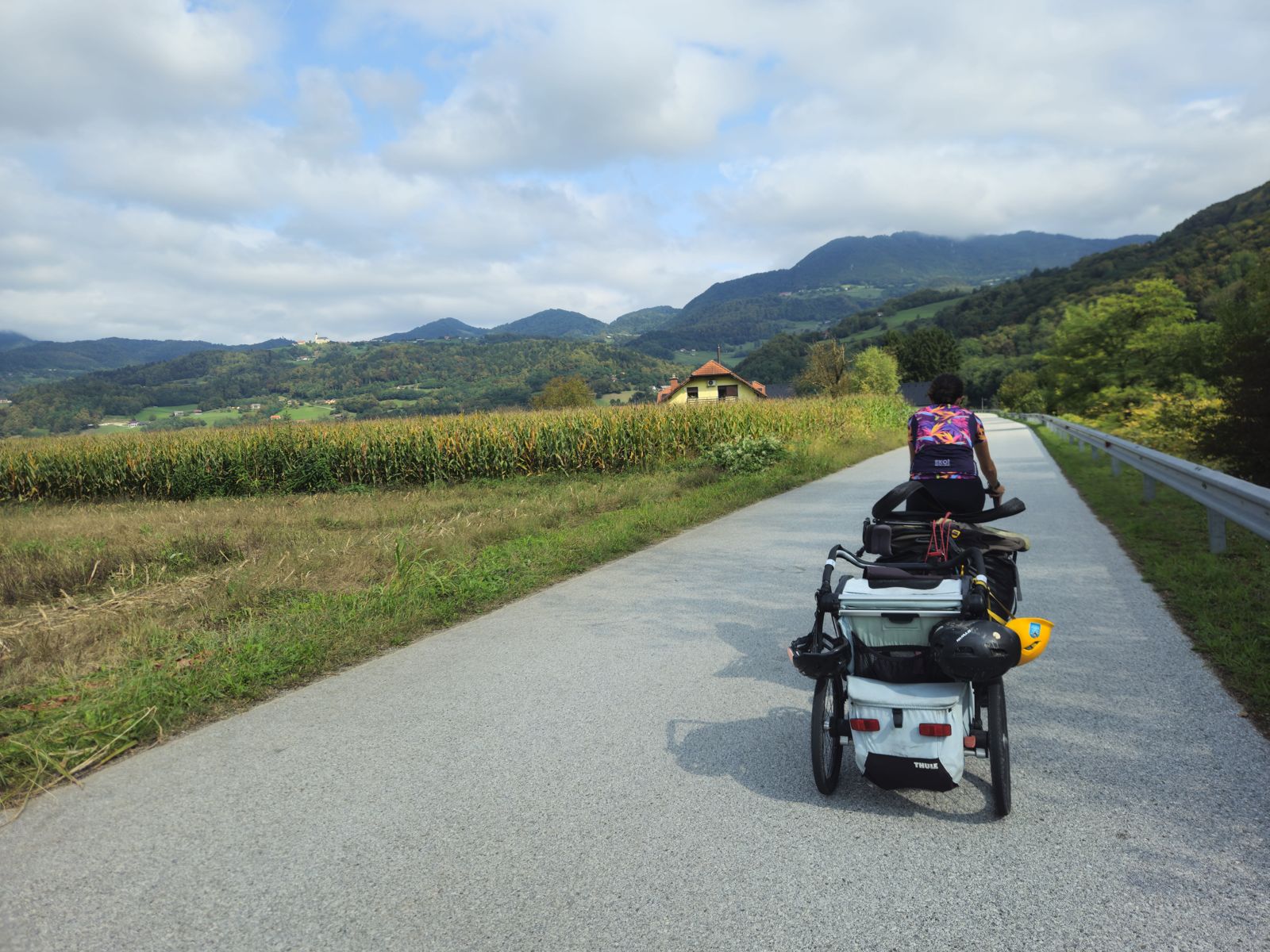
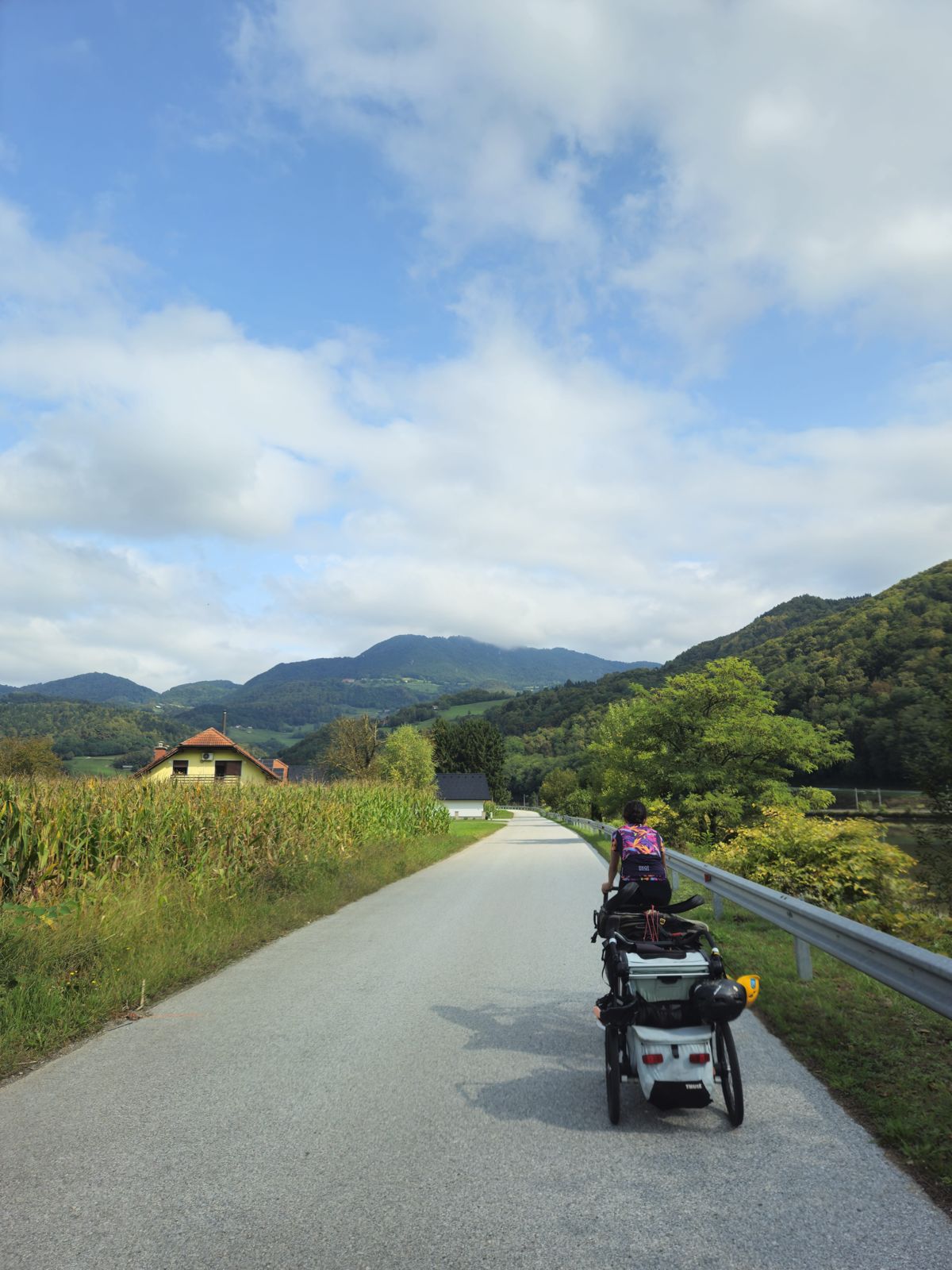
We ride through Sevnica, Melania Trump's birthplace, an unremarkable town of no interest. We push on to Radeče where, crossing the river, we spot a Spar right next to a playground. Can you see the picnic coming? We stock up on groceries and go and play tag, Clémence's new passion. It's not the most restful game after racking up kilometres on the bike, but we bow to the joys of childhood.
Slovenians all speak English, which makes communication easy, but they all seem cold to us. Their faces are closed and they always look bothered by something. Often our greetings go unanswered when we pass other cyclists. In Slovenian you say "dober dan" for hello, and the reply is a quick "dan". Sometimes, when they're in a good mood, they double up and give us a "dan dan". The man on his bike we pass as we set off again is friendly and greets us with a smile.
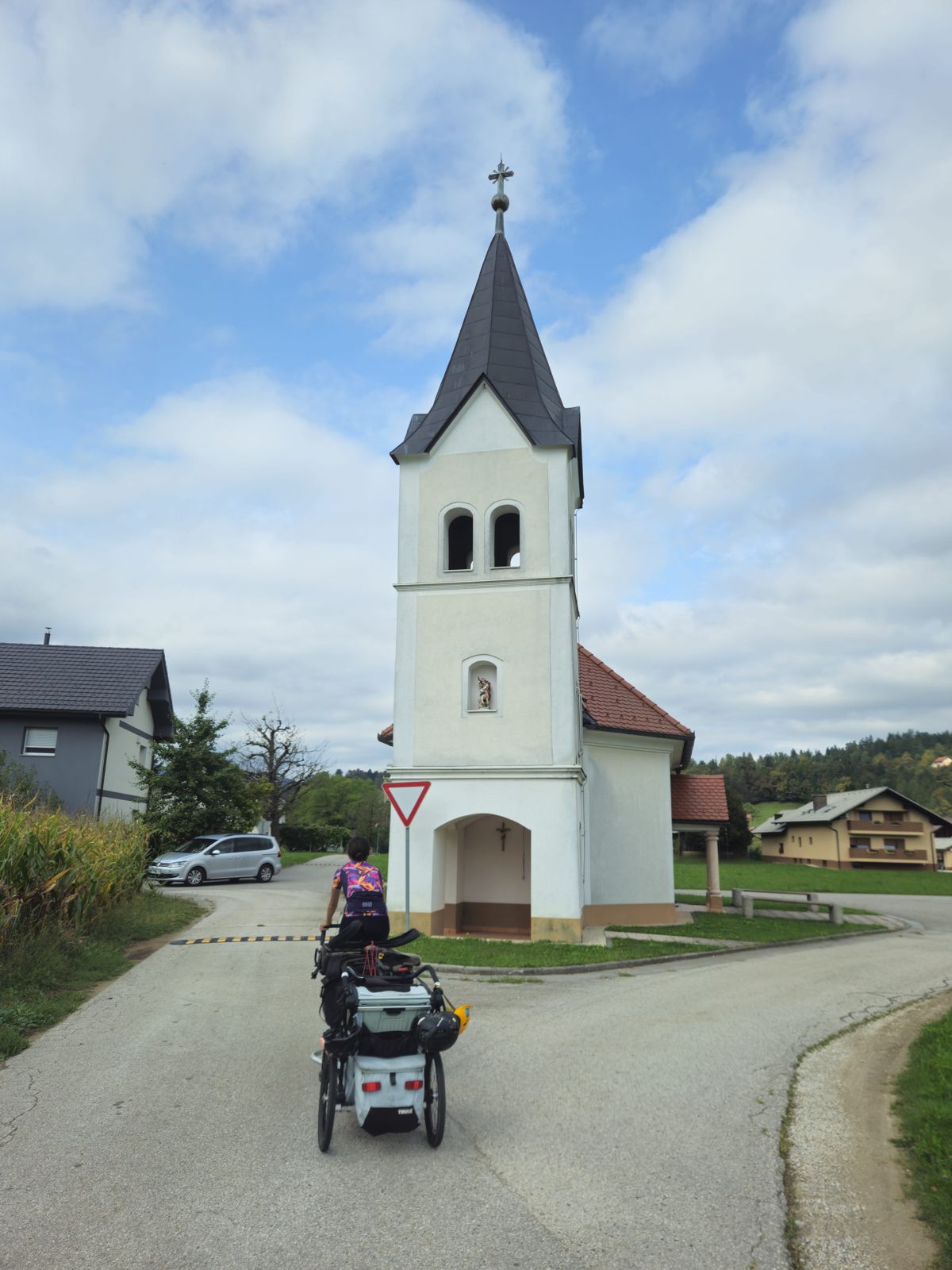
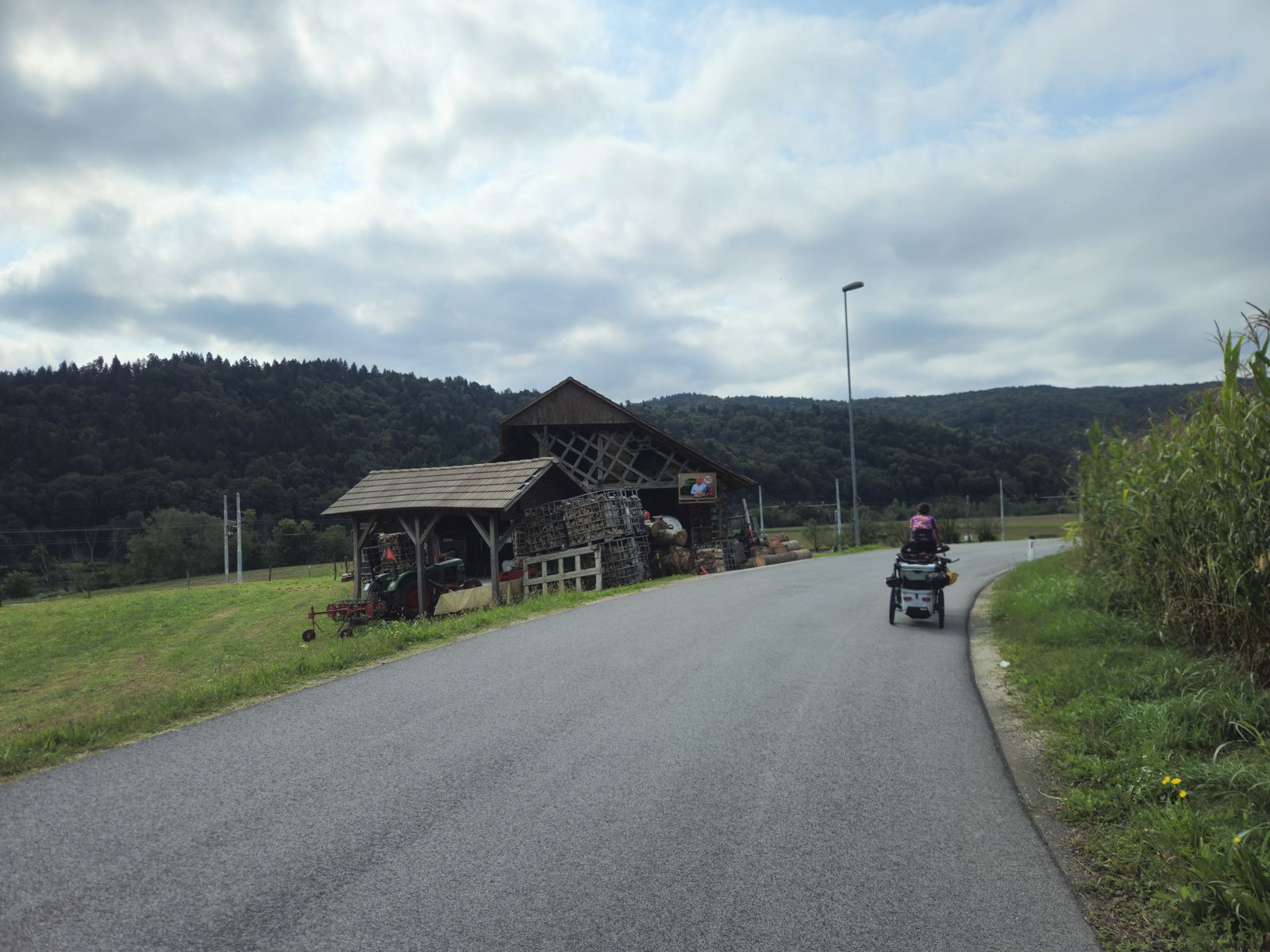
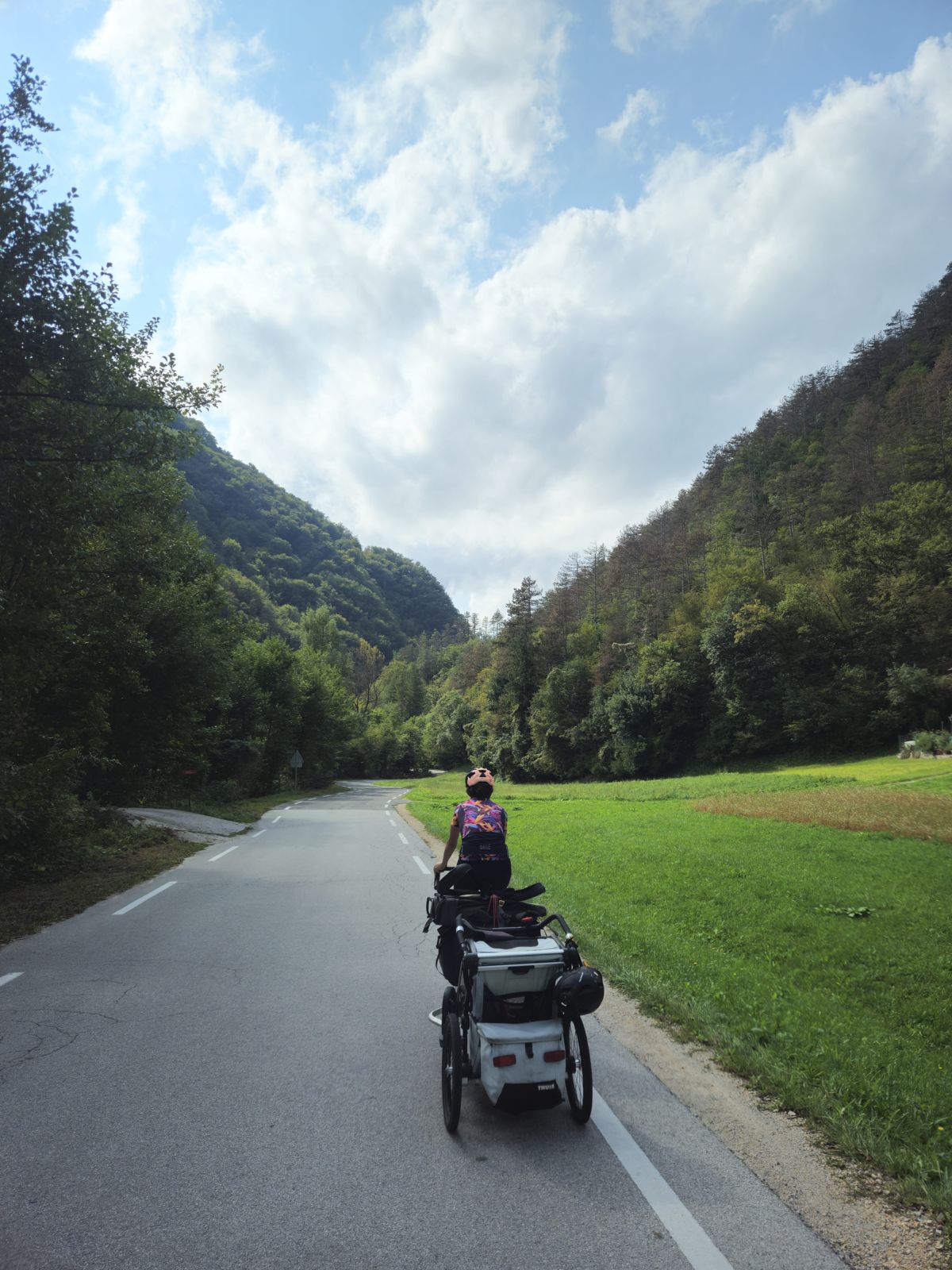
It warms our hearts, and we need at least that to face the twenty kilometres of climbing ahead. As usual, we go slowly without redlining our engines. You have to keep your heart rate in check to sustain such a long effort. The traffic surprises us: we thought this stretch snaking through the mountains would be deserted, but a few cars still use it, as villages and isolated farms are dotted all along. Cassandre is pulling the trailer and she's suffering, because the gradient is much steeper than we expected. We take a break on the edge of an abandoned hamlet.
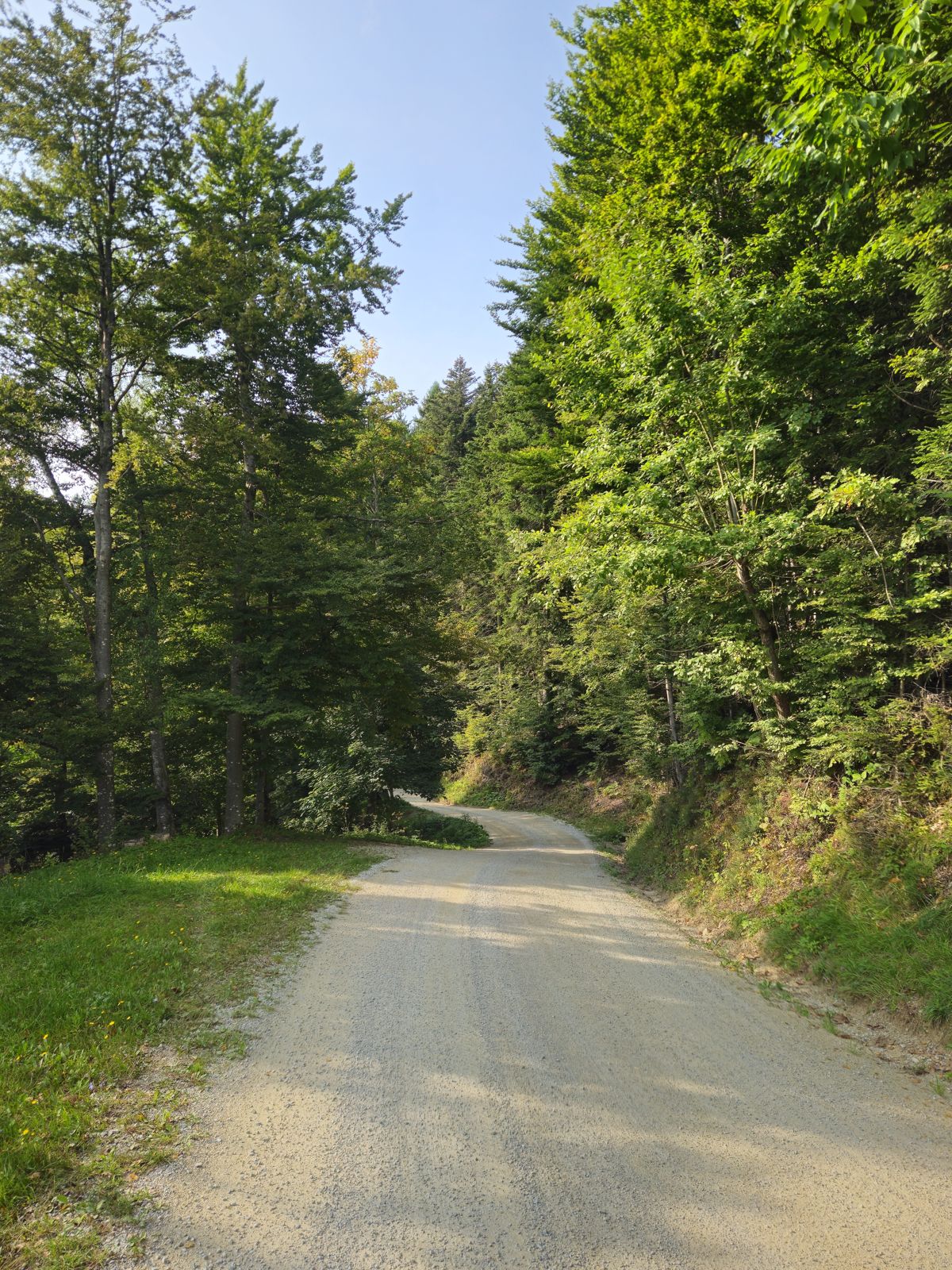
When we set off again, the slope doesn't let up and we arrive at the top exhausted, thinking our troubles are over. After all, there's only the descent left, so it should be easy. But to our dismay, the tarmac disappears and gives way to a stony track. It's passable at first but soon becomes impossible to ride, especially downhill. We have to get off when it's too steep and try not to get carried away by the slope. The last 4 kilometres, which should have taken no time at all, turn out to be much longer than expected. The sight of tonight's accommodation is far more welcome today than on other days. We're on top of a mountain, looking out over all the surrounding hills.
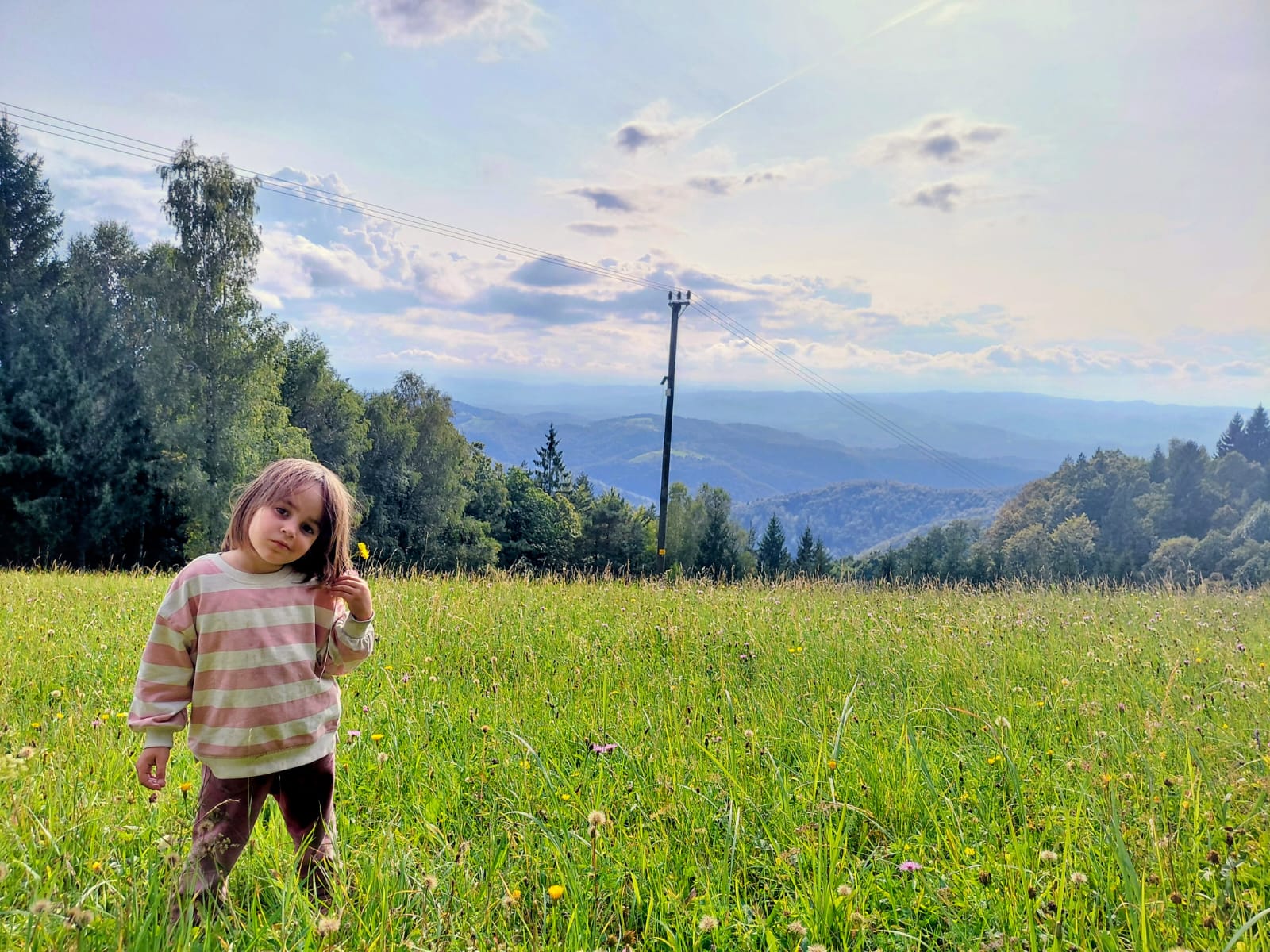
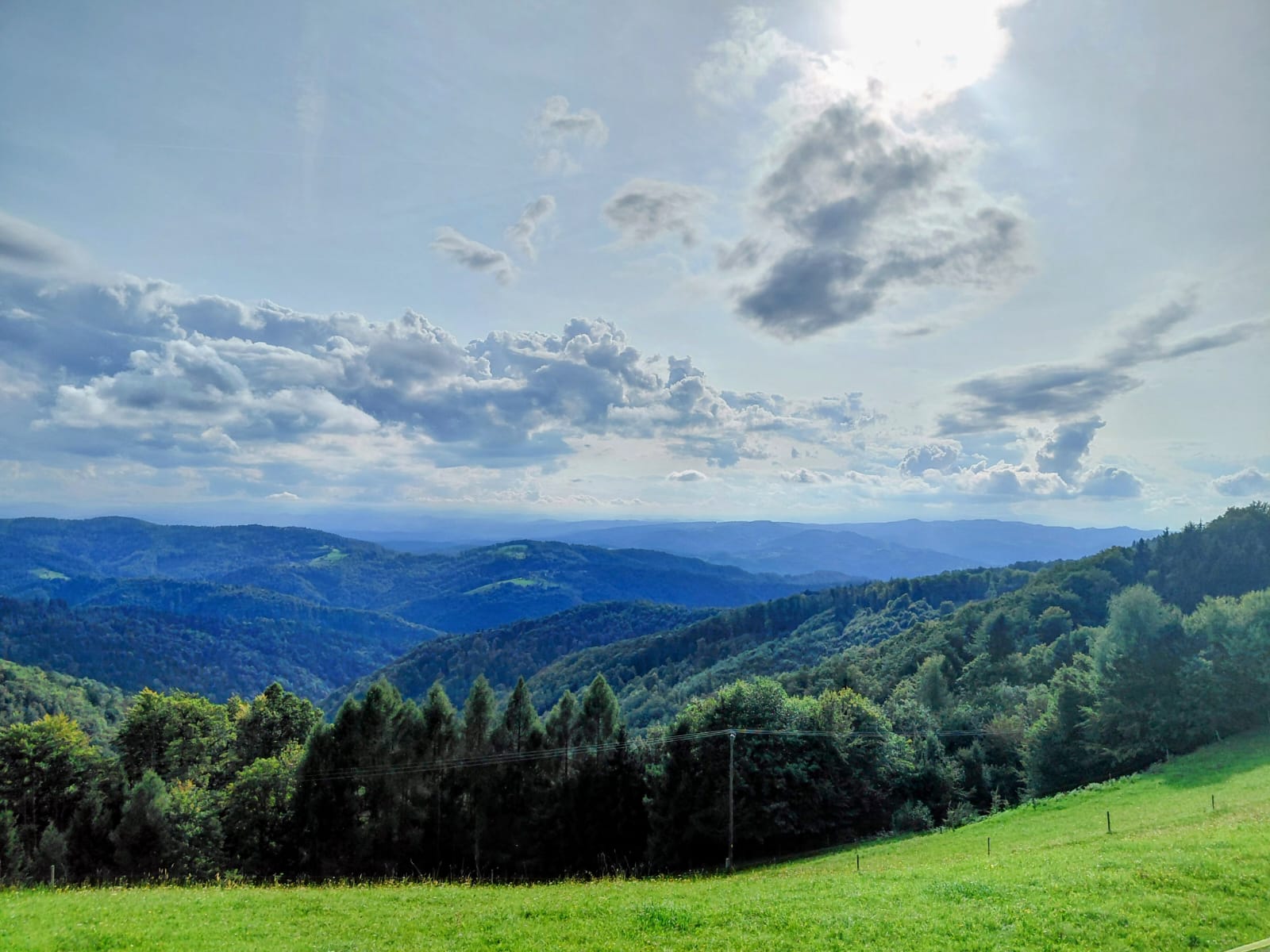
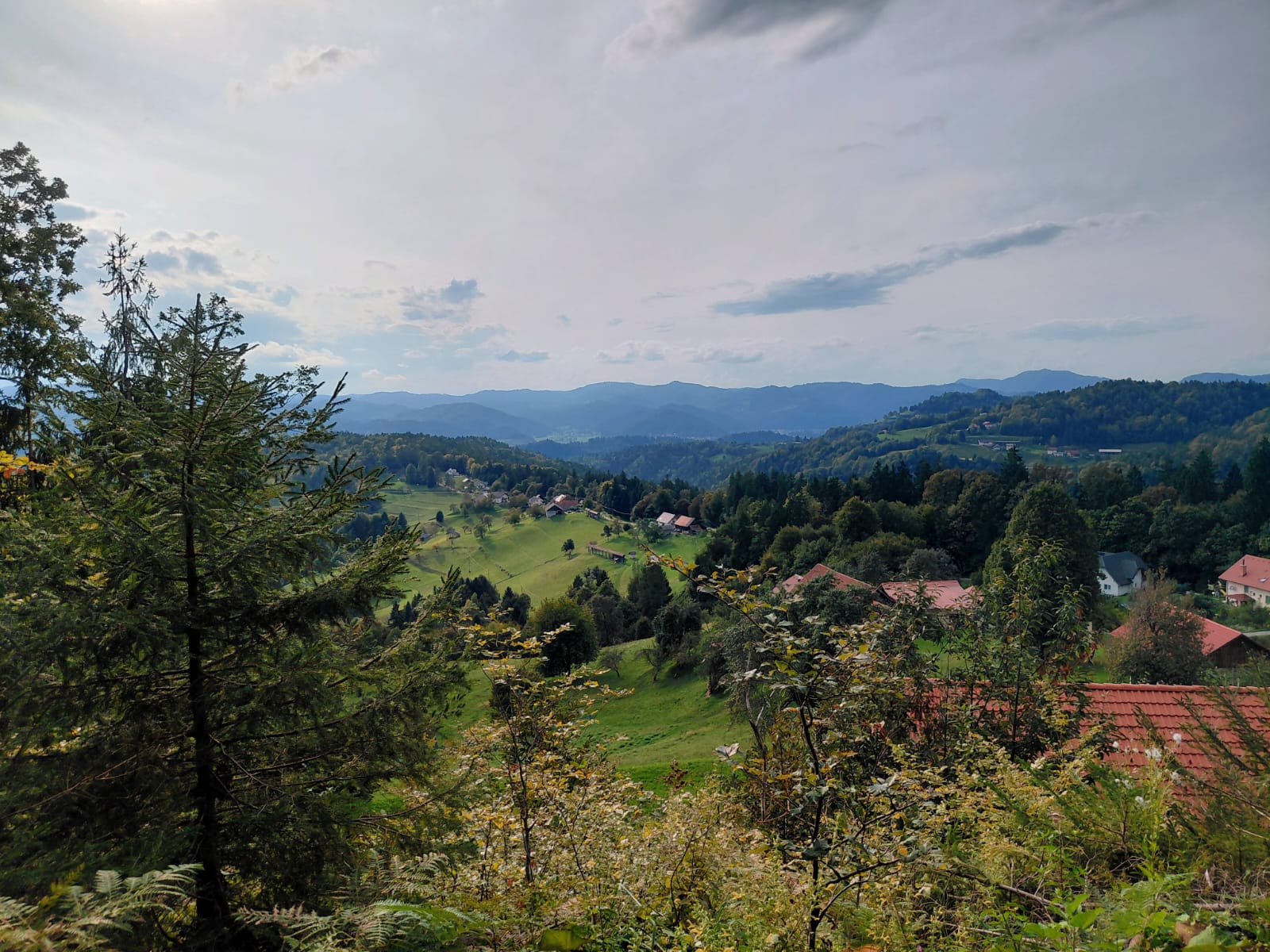
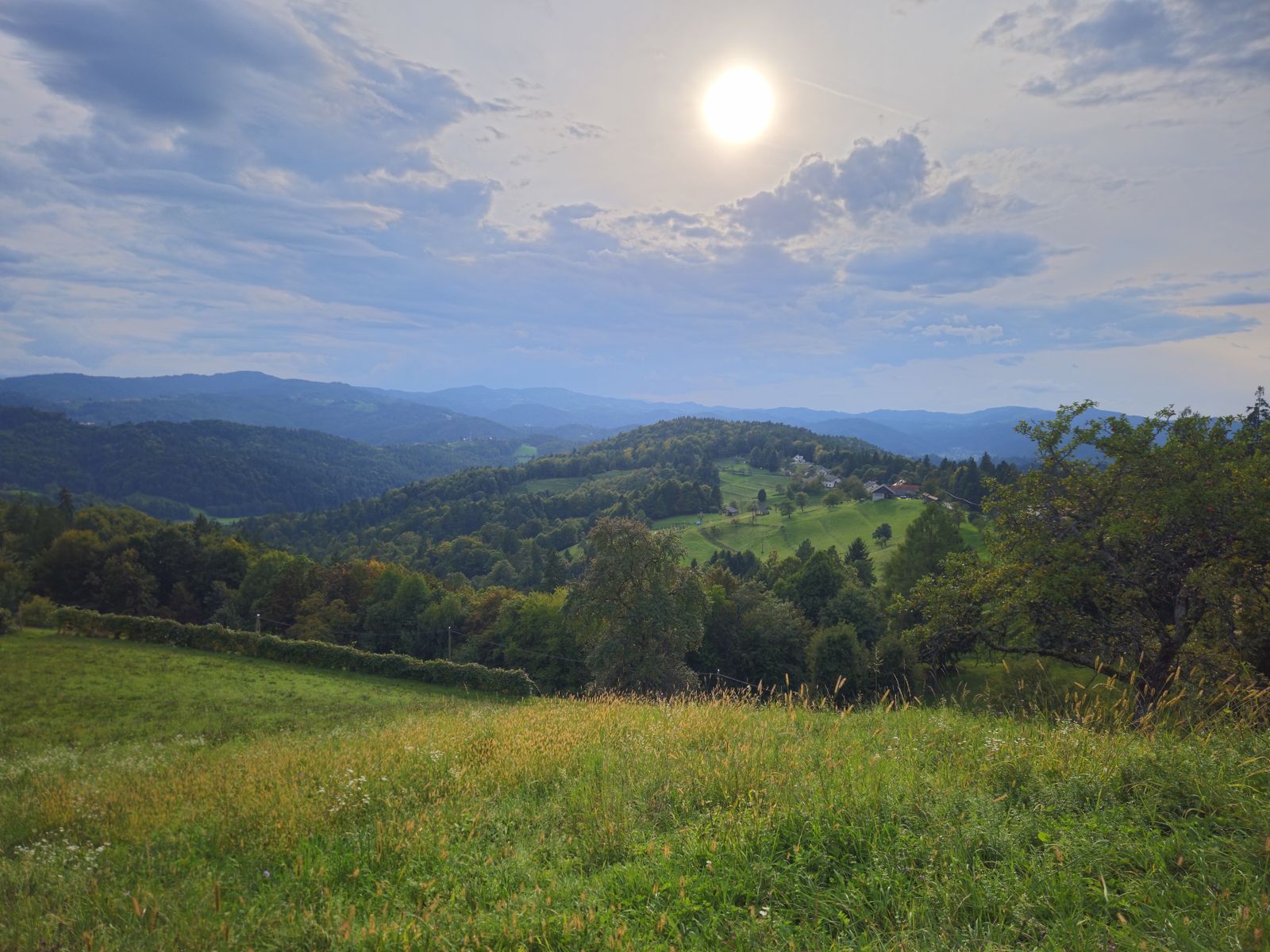
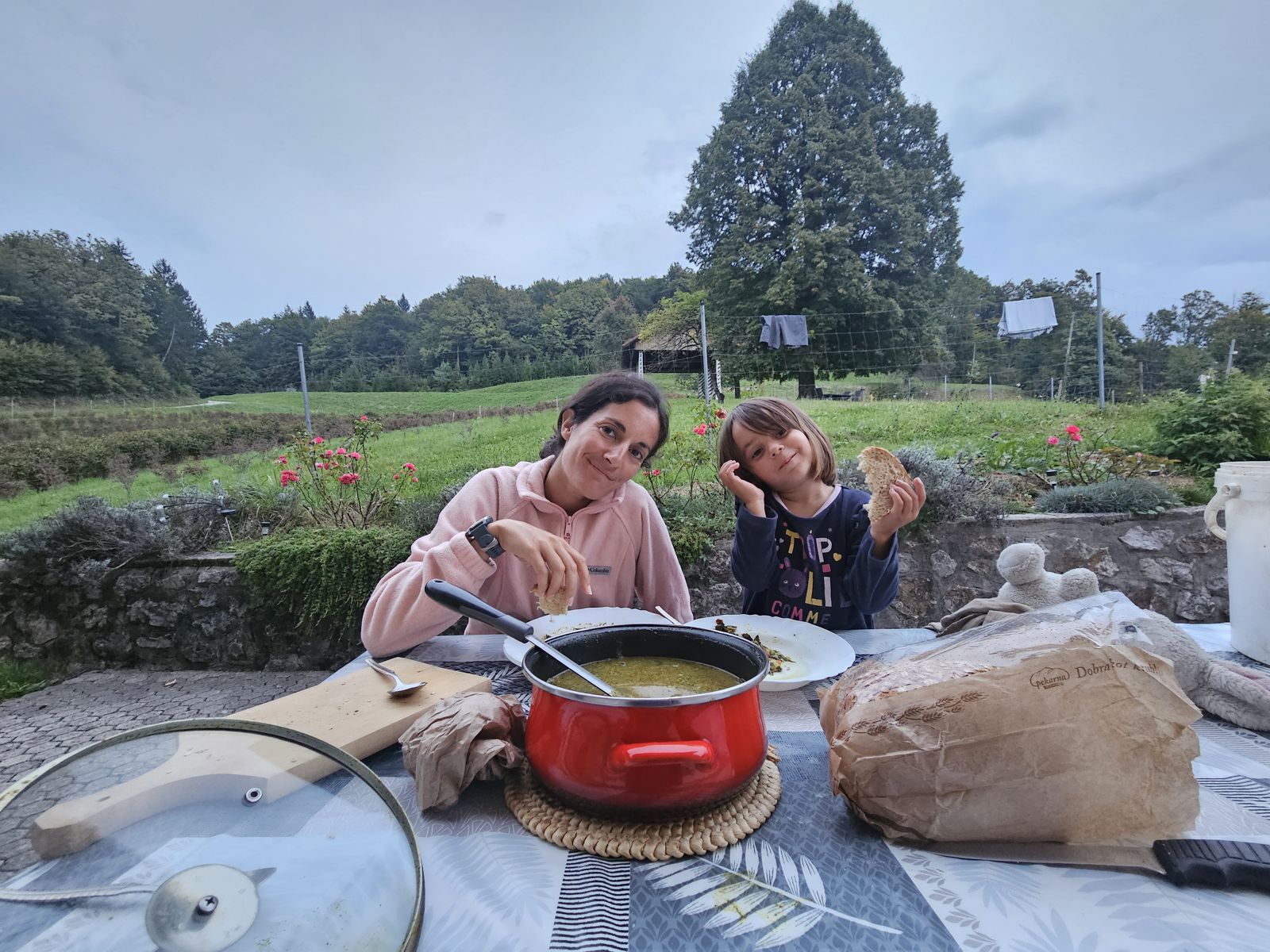
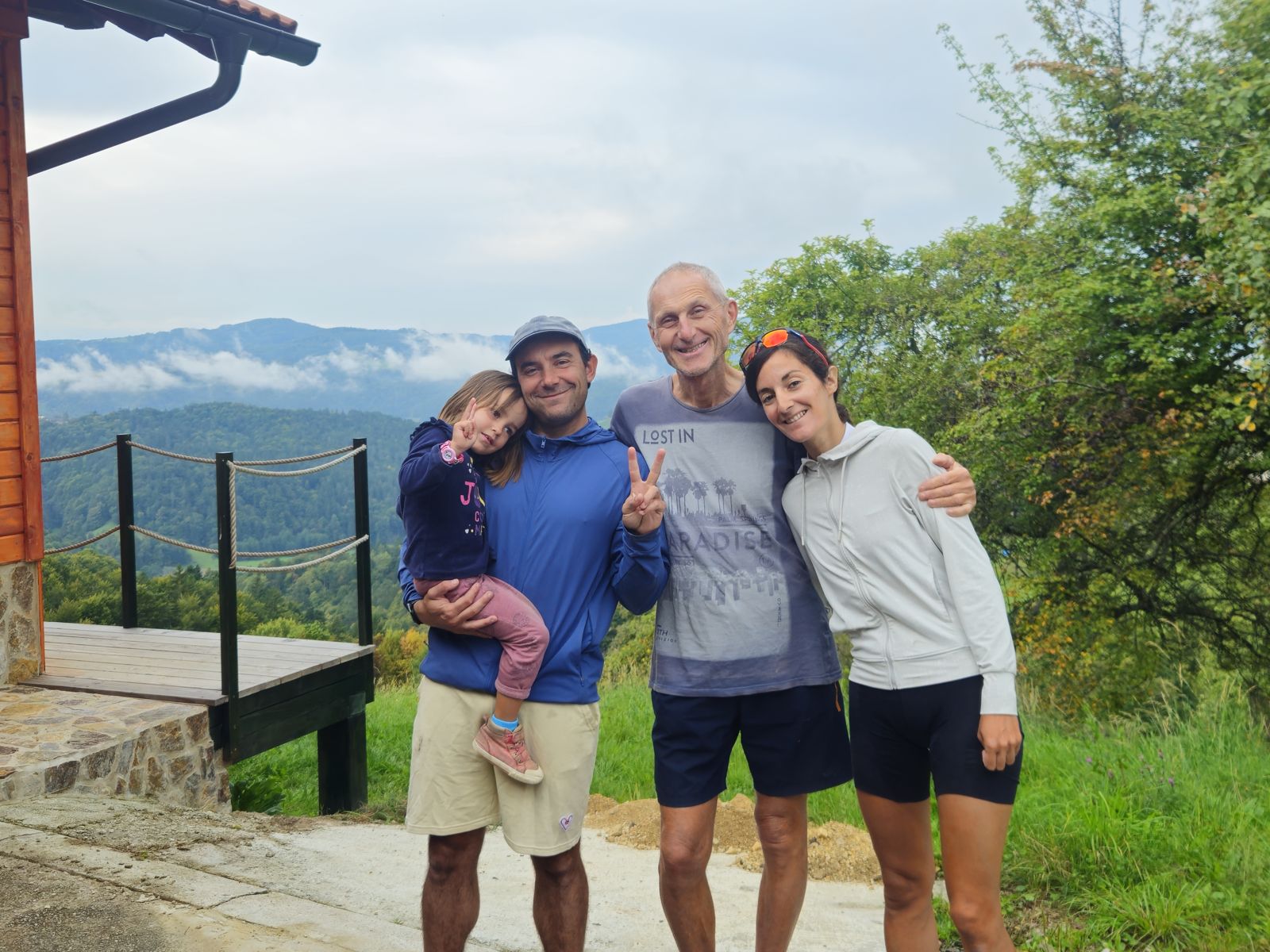
We park in front of a big farmhouse and Robin comes out to meet us. We contacted him through Warmshowers, a hospitality exchange app for cyclists. We've hosted dozens of people in our house in Avignon, and this is the first time we've asked to be hosted. Robin is a Slovenian in his sixties who has ridden his bike through around a hundred countries, so he has exhaustive experience of bike touring. He shows us our room, modest but fine, and tells us he's cooking for us. We hadn't expected that much, and we share the meal with his housemate Eleanor and Armin, a twenty-year-old German volunteering there. The estate is huge and everything in the meal (vegetables and fruit) comes from their vegetable garden and fruit trees. We have an excellent evening swapping travel stories, but we're dead on our feet by 10 pm.
Sunday 14 September
We set the alarm for 7:15 because Robin asked us to come to breakfast at 7:30. He has made a huge pot of porridge, which we enjoy with a cup of coffee. So as not to impose any longer, we leave at 9 on the dot and start the long descent to the village of Litija. It's Sunday and the town is deserted, apart from a few cars passing through the centre. We keep following the signs for Ljubljana, and the Slovenian capital is now only about twenty kilometres away.
The Sava is still with us, as is the railway, but the villages we pass are all deserted. It feels like the sad French countryside where people live shut away indoors. We thought we'd at least find a bakery on the way, but there isn't a single shop. Only Jevnica shows any life, because we arrive just as Mass is starting and every car in the area seems to be converging on the church. Once past this tiny highlight, we have to swallow thirty kilometres before reaching the edge of Ljubljana.
Here we can finally stop to buy something to eat at a bakery before enjoying a hot drink. The little café next door has more games, and Stéphane and Clémence have fun doing a jigsaw. A big playground beckons right behind, but we find the gate locked when we get there. It's not the first time this has happened, for the simple reason that these are nursery schools. We notice that school playgrounds in Slovenia are big play areas made for having fun, which seems obvious when you think about it but is quite a radical change from home.
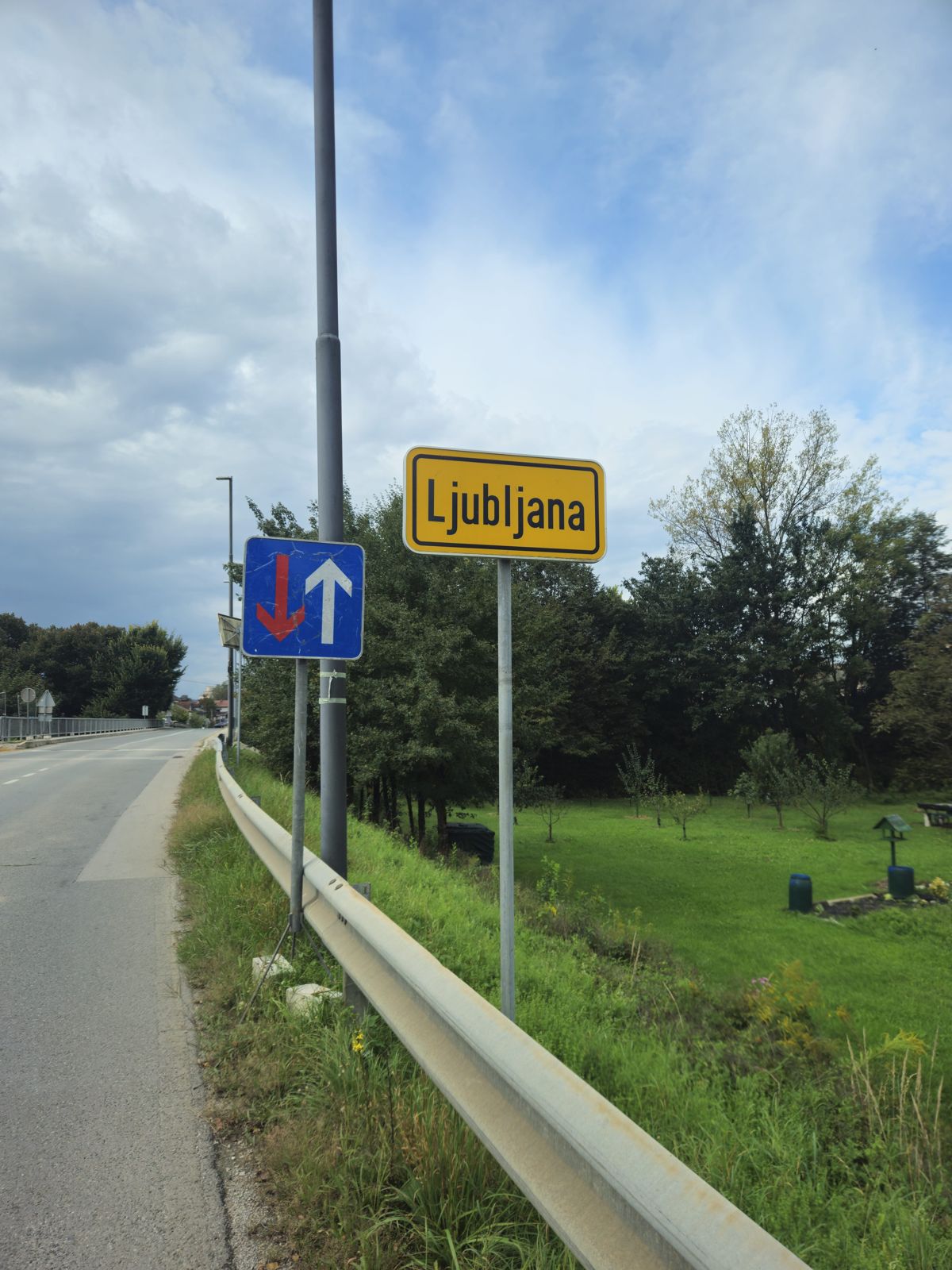
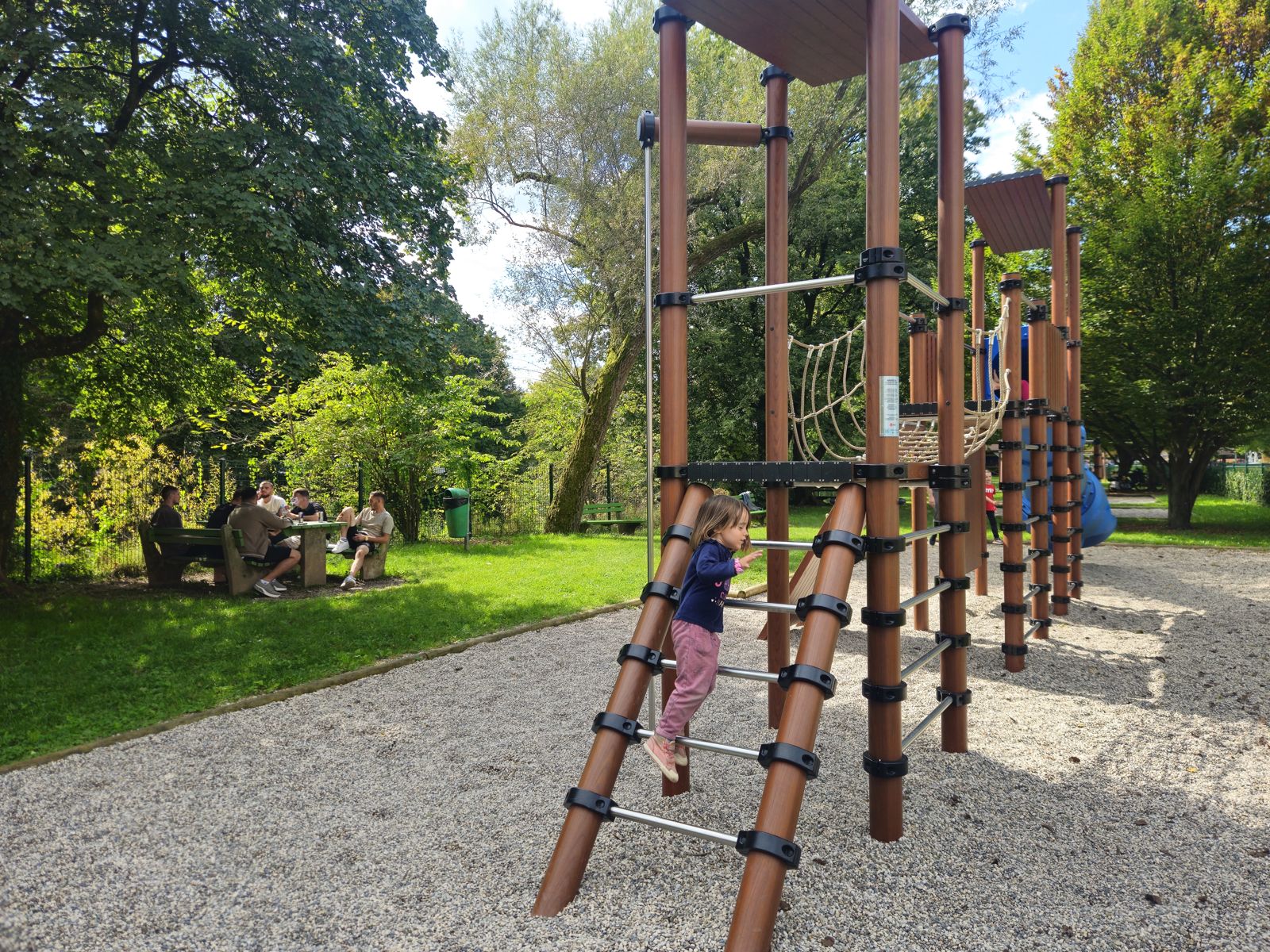
So we head further into the city and find another one, open this time. It's fairly busy, but Clémence still refuses to play with the other children. In a corner of the park, a group of teenagers is smoking and drinking, which seems to be a European constant. After this little break, we ride the rest of the way to Ljubljana's pedestrian centre. It's often described as a modern car-free city, but the label is a bit overused.
The heart of Ljubljana began its revolution in 2007, when the newly elected mayor decided to follow the advice of mobility experts who assured him that banning cars would make his city more attractive. Of course he had to win over plenty of opponents, as only 40% of residents supported the project. And, as with every such undertaking, approval today stands at 97%. Needless to say, nobody would consider going back. The centre's new face has also drawn tourists in droves and boosted the city's economy.
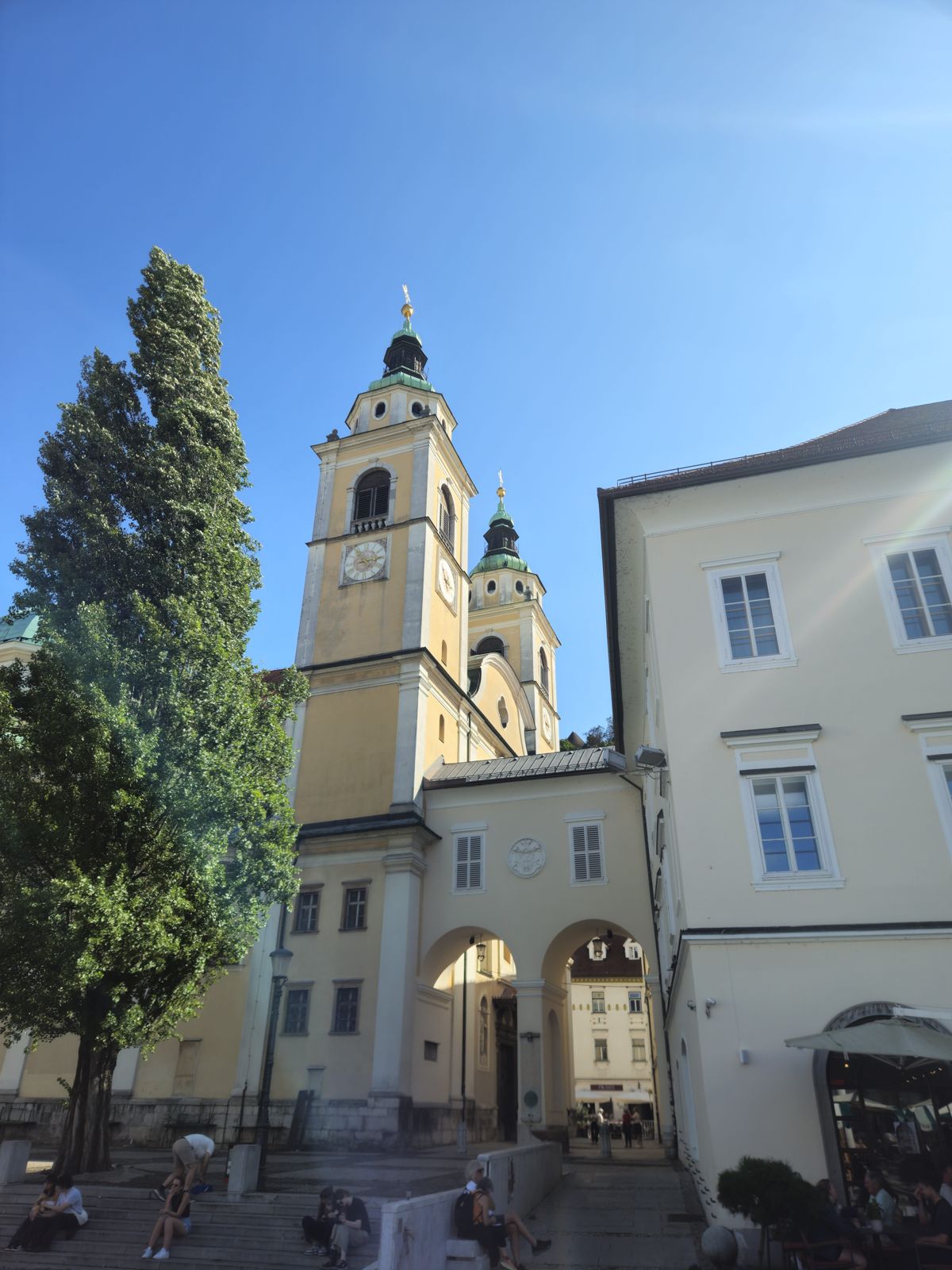
After dropping our things at the hotel, we go for a walk, and we have to admit it's very pleasant. There are still a few roads, but they're minimal and the overall feeling is one of complete calm. The only noise is church bells, a striking contrast with Zagreb, where traffic filled the whole soundscape. We hear many languages, a sign that the capital is a draw, and we'd forgotten what it feels like to be among so many tourists in one place. It's also strange to see so many terraces with people sitting outside in the streets. Pavement café culture is a very European thing; there was none in South Korea or Japan. The centre is small but truly beautiful, and being pedestrianised adds a lot of charm. We have pizza as an afternoon snack at the foot of St Nicholas Cathedral, whose bells never stop ringing. We're right underneath and it's torture for the ears; we can't even hear ourselves talk, which sends us scurrying off.
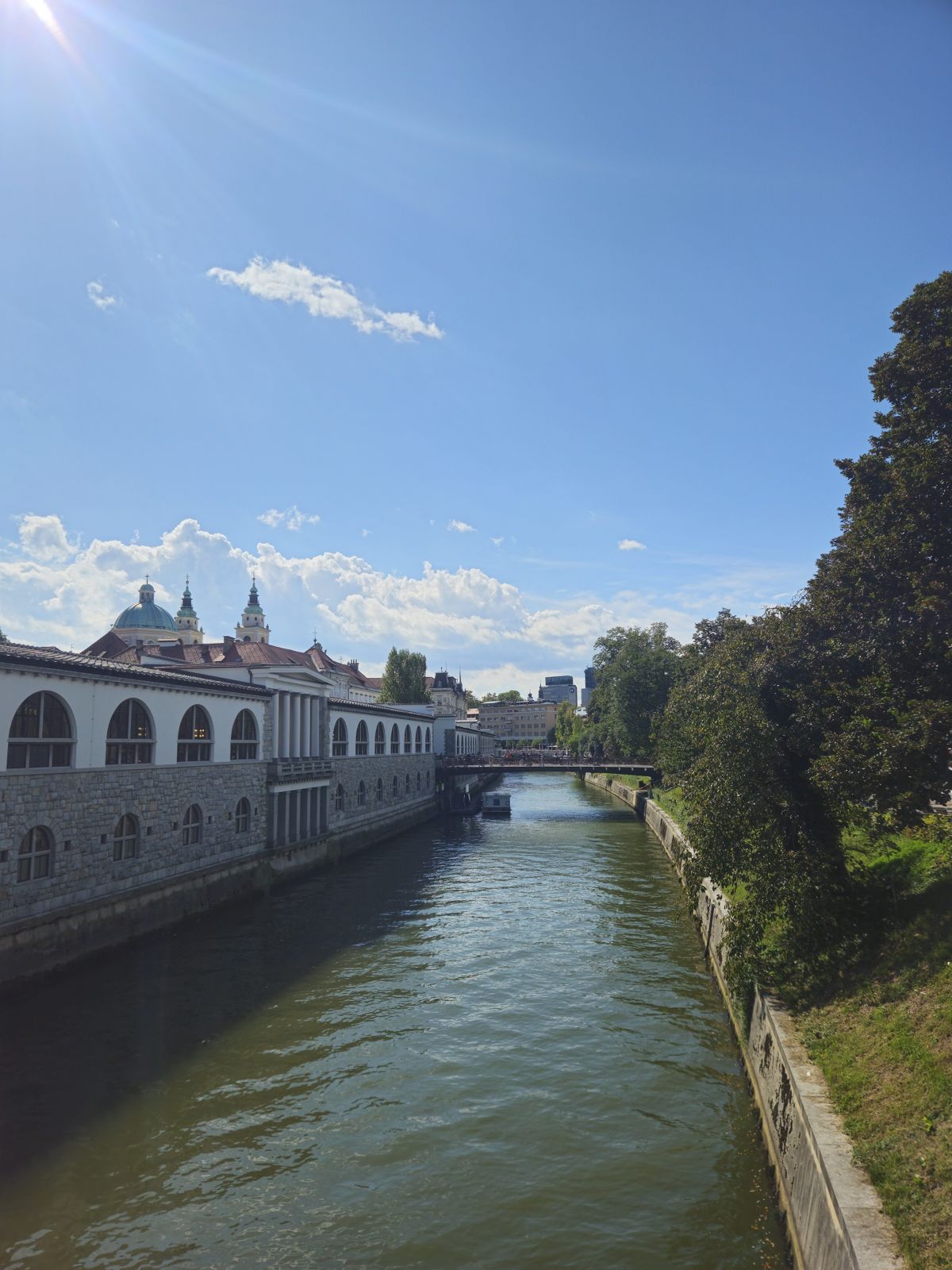
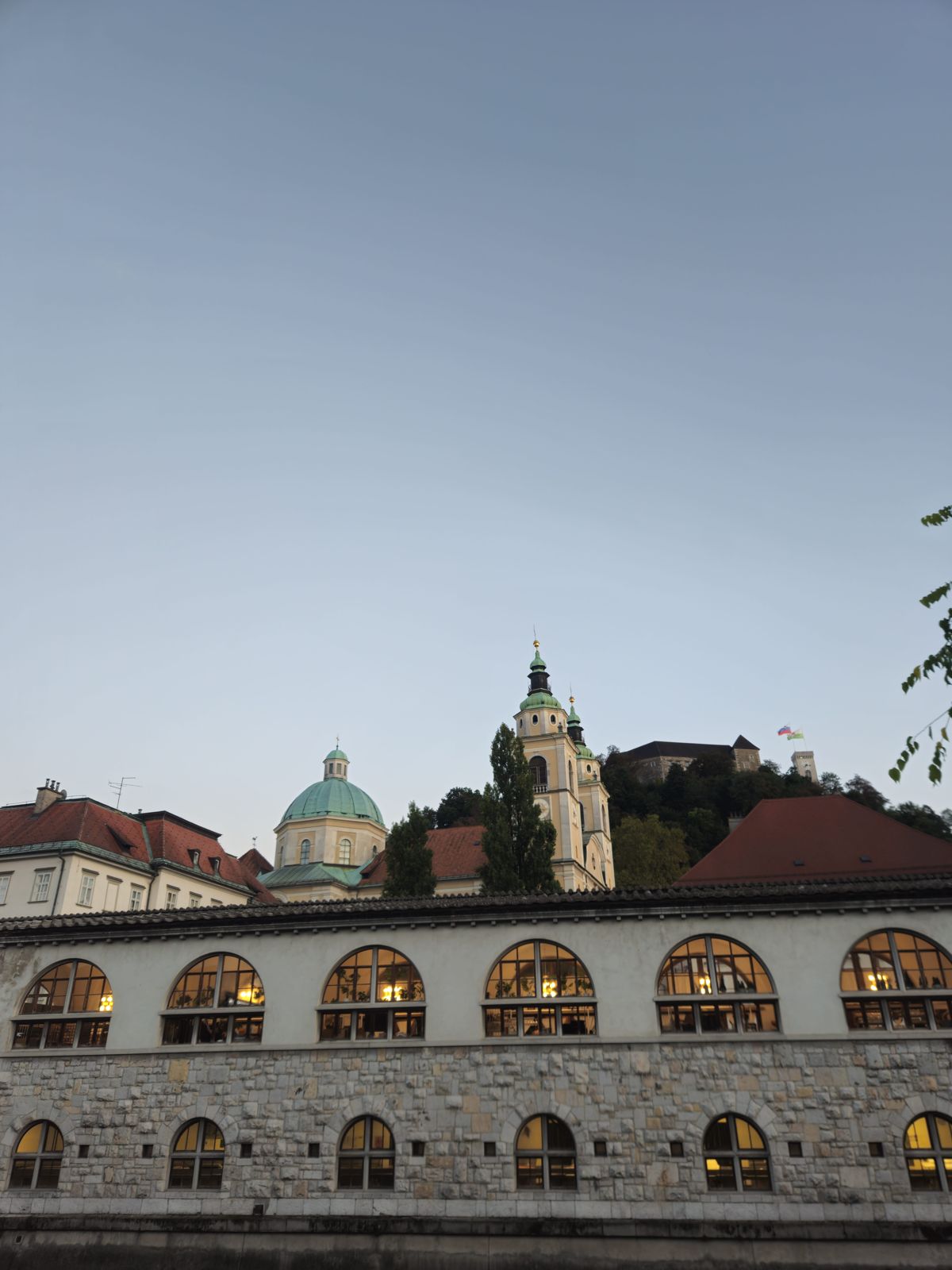
We go back to the flat for Clémence's quiet time before setting off in search of yet another playground. We find one in Park Tabor, a green space with basketball courts. There's clearly an event on, as music is blaring from speakers and people are sitting at tables everywhere. Several groups of very different ages are battling it out under the hoops, which reminds us that Slovenia has quite a reputation in world basketball. The atmosphere is pleasant and cosmopolitan, something we haven't seen since leaving France. We stroll a little longer through the cobbled streets before treating ourselves to a good night's sleep.
Monday 15 September
Since we've settled on Clémence going back to school on 1 October, we've started getting her back into a sensible sleep routine. No more mornings letting her sleep as long as she likes: we now set the alarm for 7 for ourselves and try to bring her gradually back to a school rhythm. We're in no hurry this morning, as we're taking the 9:56 train from Ljubljana station. Accommodation is terribly expensive in Slovenia and we have to cut our stay as short as possible so as not to blow our budget. People in France often don't realise it, but this small Central European country has a high standard of living, comparable to or even higher than ours.
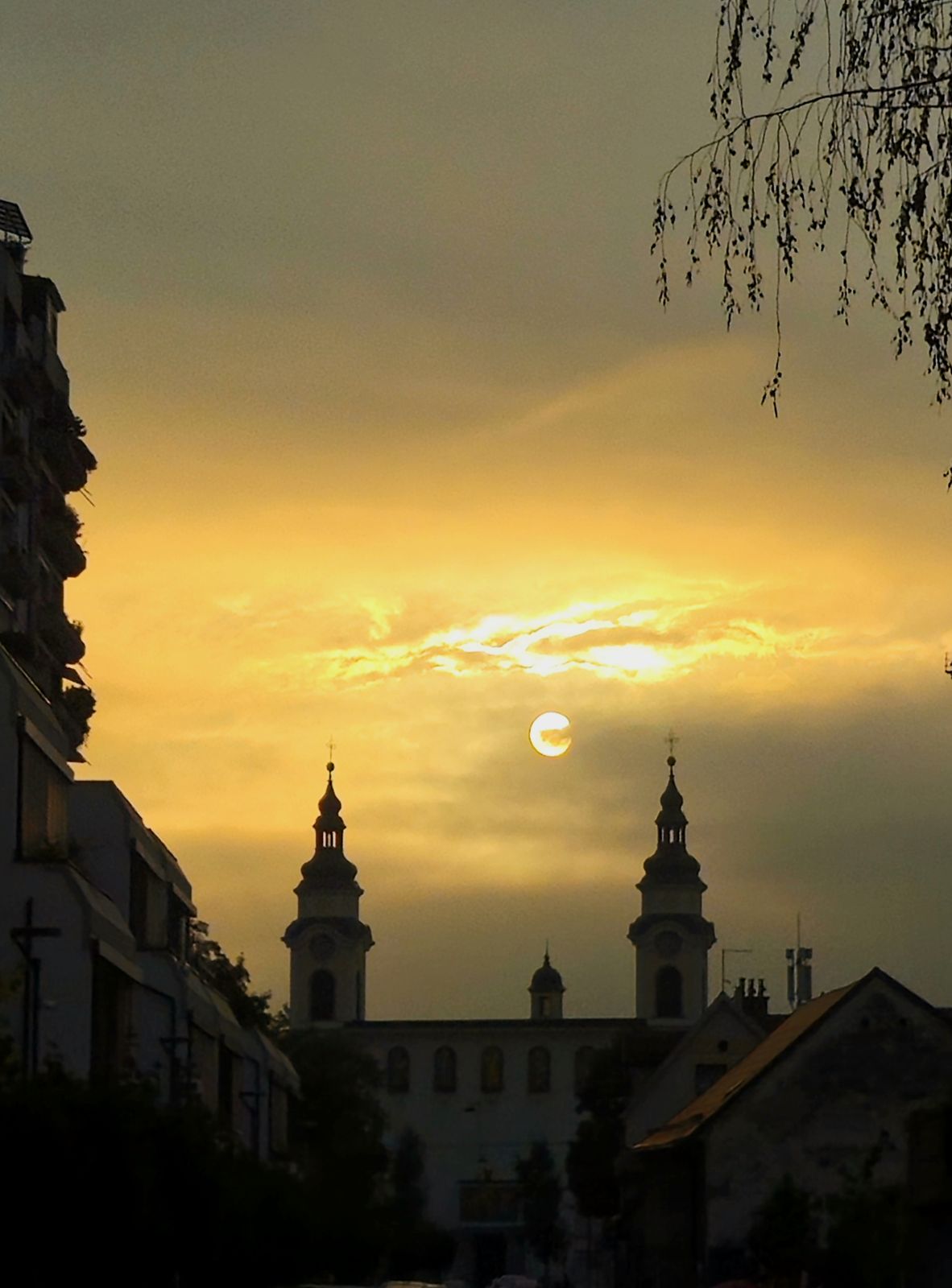
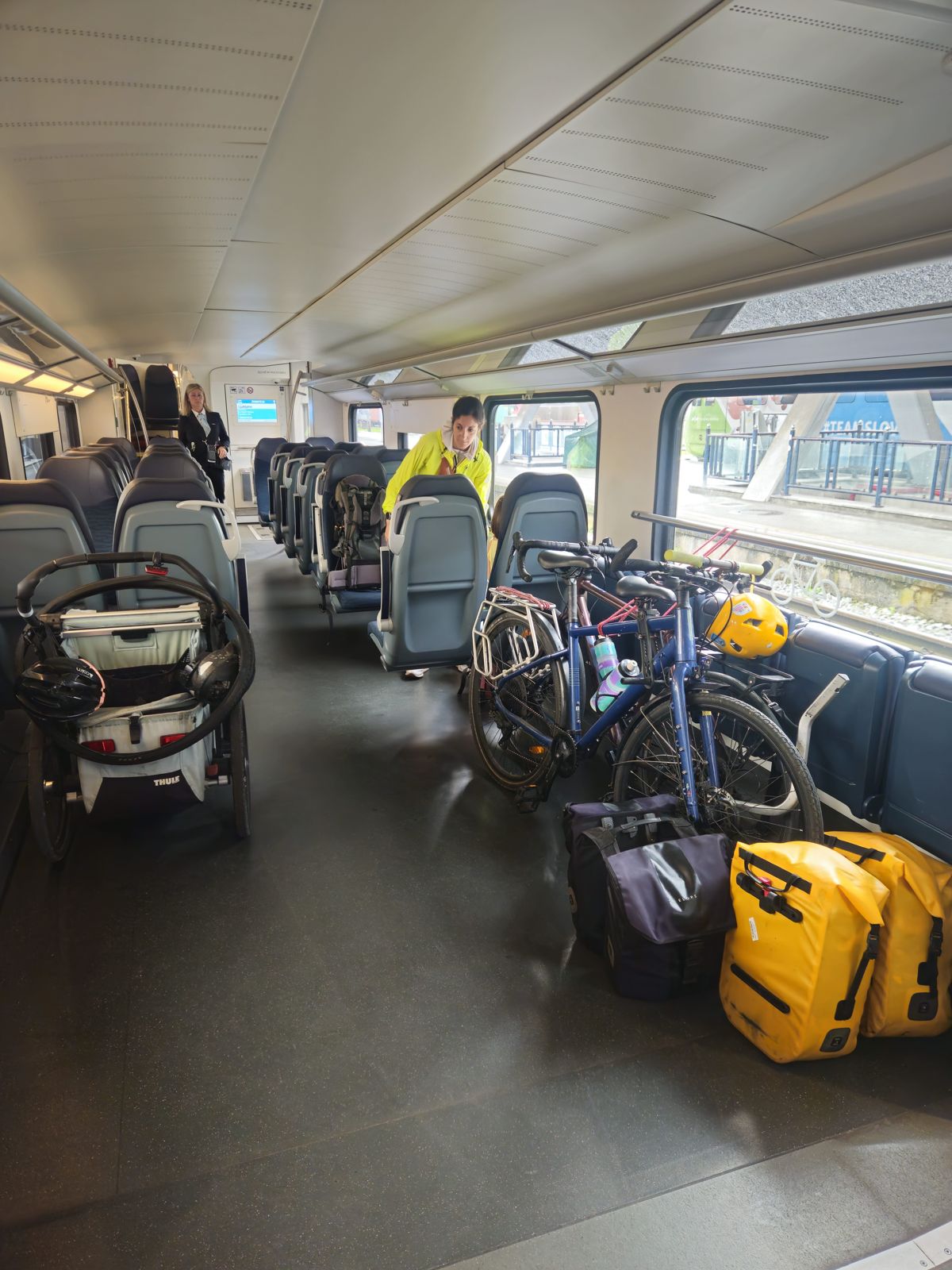
We head to the nearby station and, as always with bikes, struggle to find our way through its innards. Stations are never adapted; there are always stairs, and it must be a nightmare to take the train in a wheelchair, a constant in almost every country in the world. Our train is at the platform. It goes to Jesenice, but we'll get off before, about fifty kilometres from the capital. The bike carriage is big and we have no trouble fitting ours in. The conductor is as cold as a prison door; she makes us pay €1.50 per bike, which we'd expected. But we're a little surprised to have to pay €5 for the trailer because it's oversized. We don't argue and then enjoy the passing scenery.
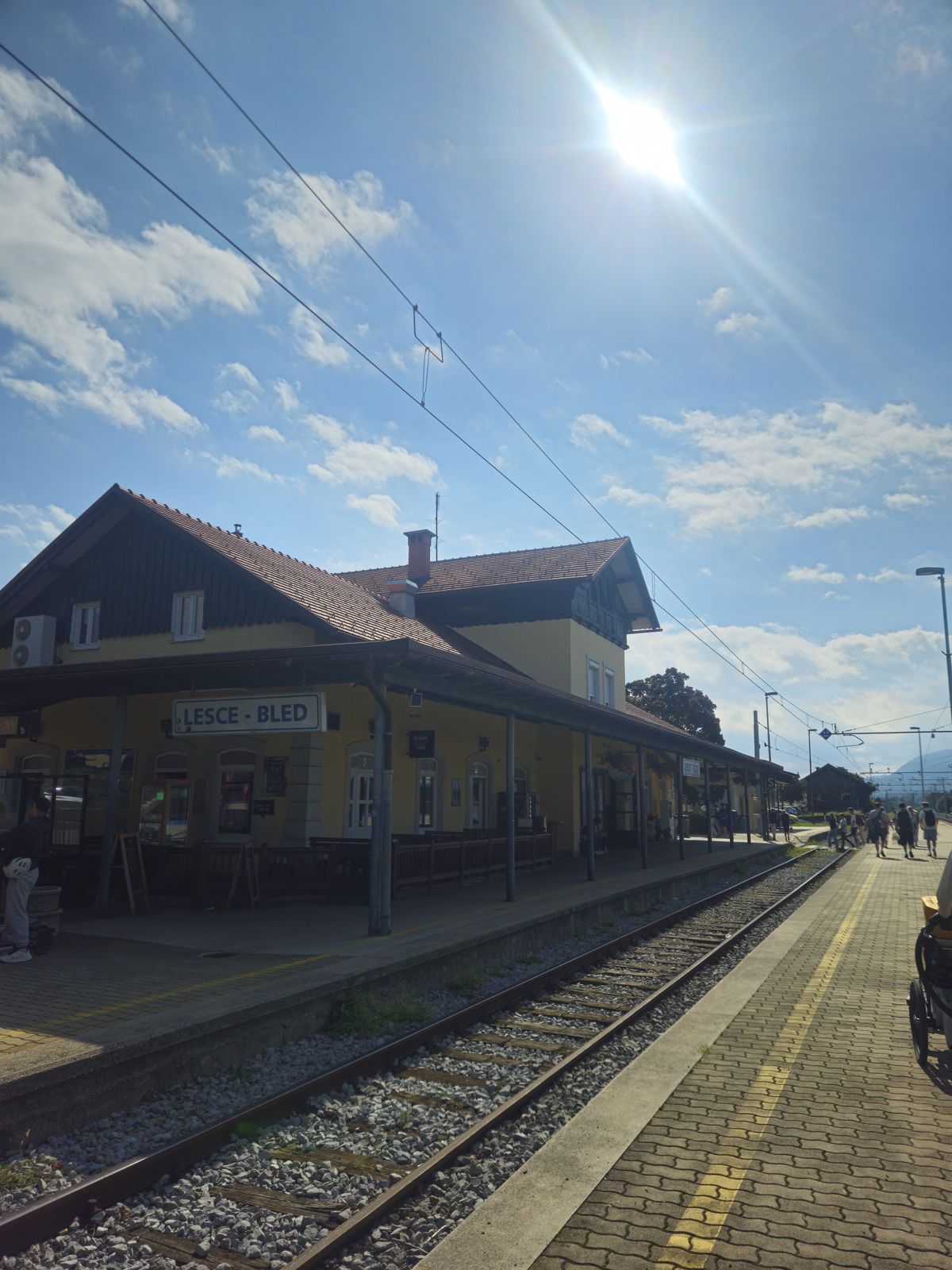
Slovenian public transport has a bad reputation, and this journey is no exception: it drops us at Lesce-Bled station more than fifteen minutes late. Lake Bled is five kilometres away, and only now do we realise just how popular the place is. We knew it was the most touristy spot in Slovenia, but we didn't expect queues of cars to get to the lakeside. We take a cycle path, which keeps us away from the cars, but it stops 1 km from the lake, and then it's the same old dilemma: we're in the way of cars on the road and in the way of pedestrians on the wide pavement, so where can we ride safely without bothering anyone? Why didn't they build a cycle path all the way, given how popular the place is?
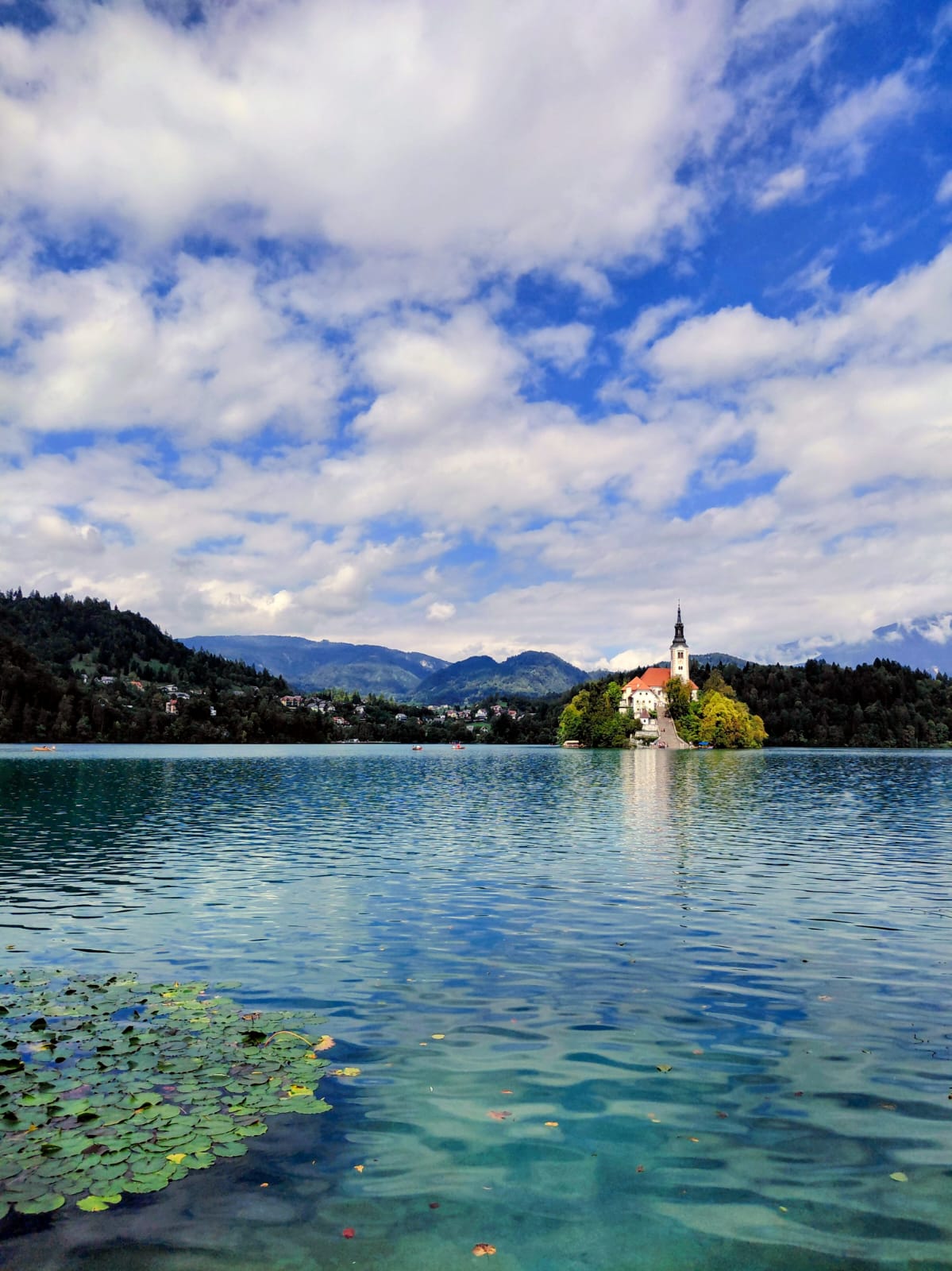
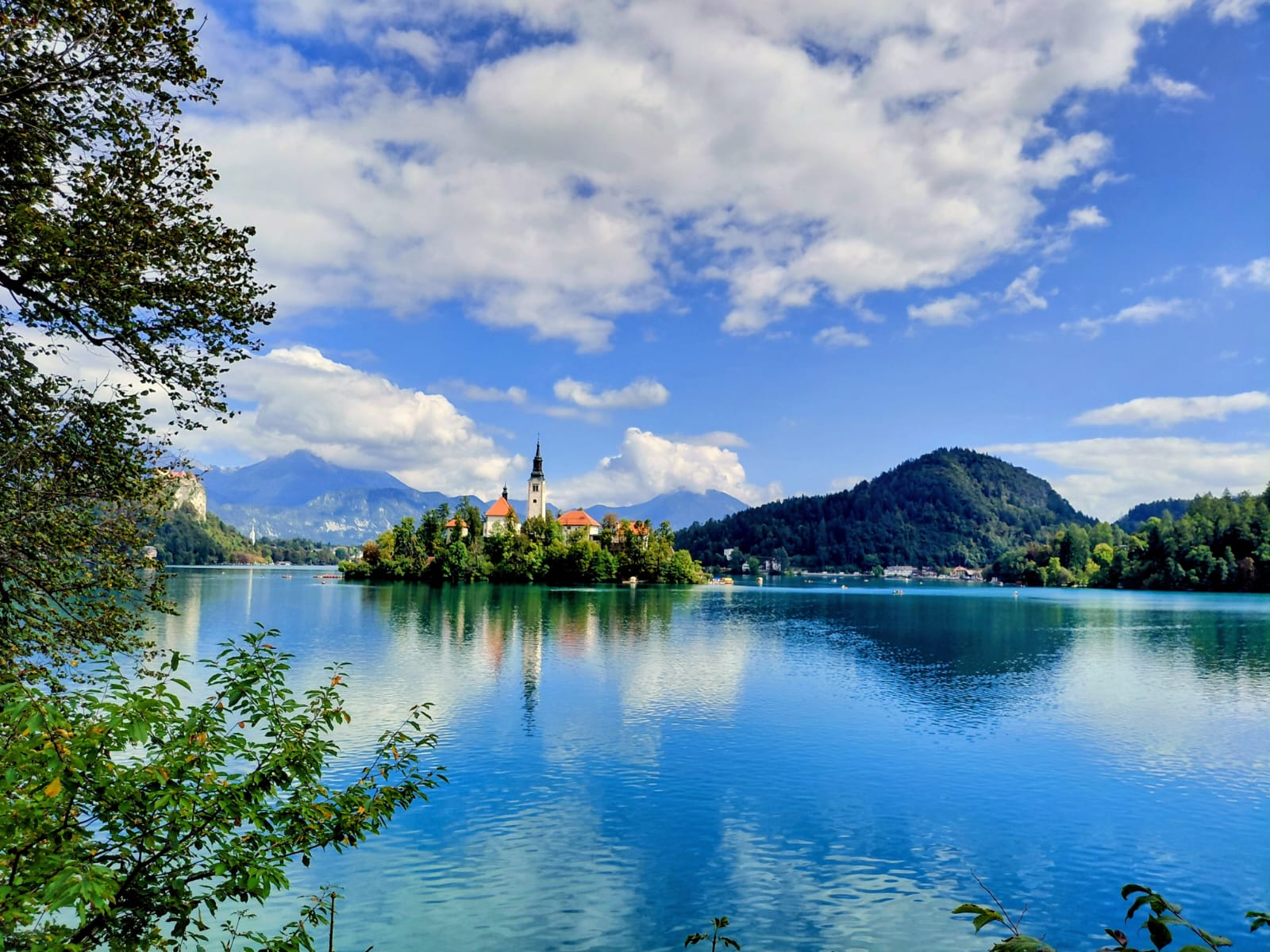
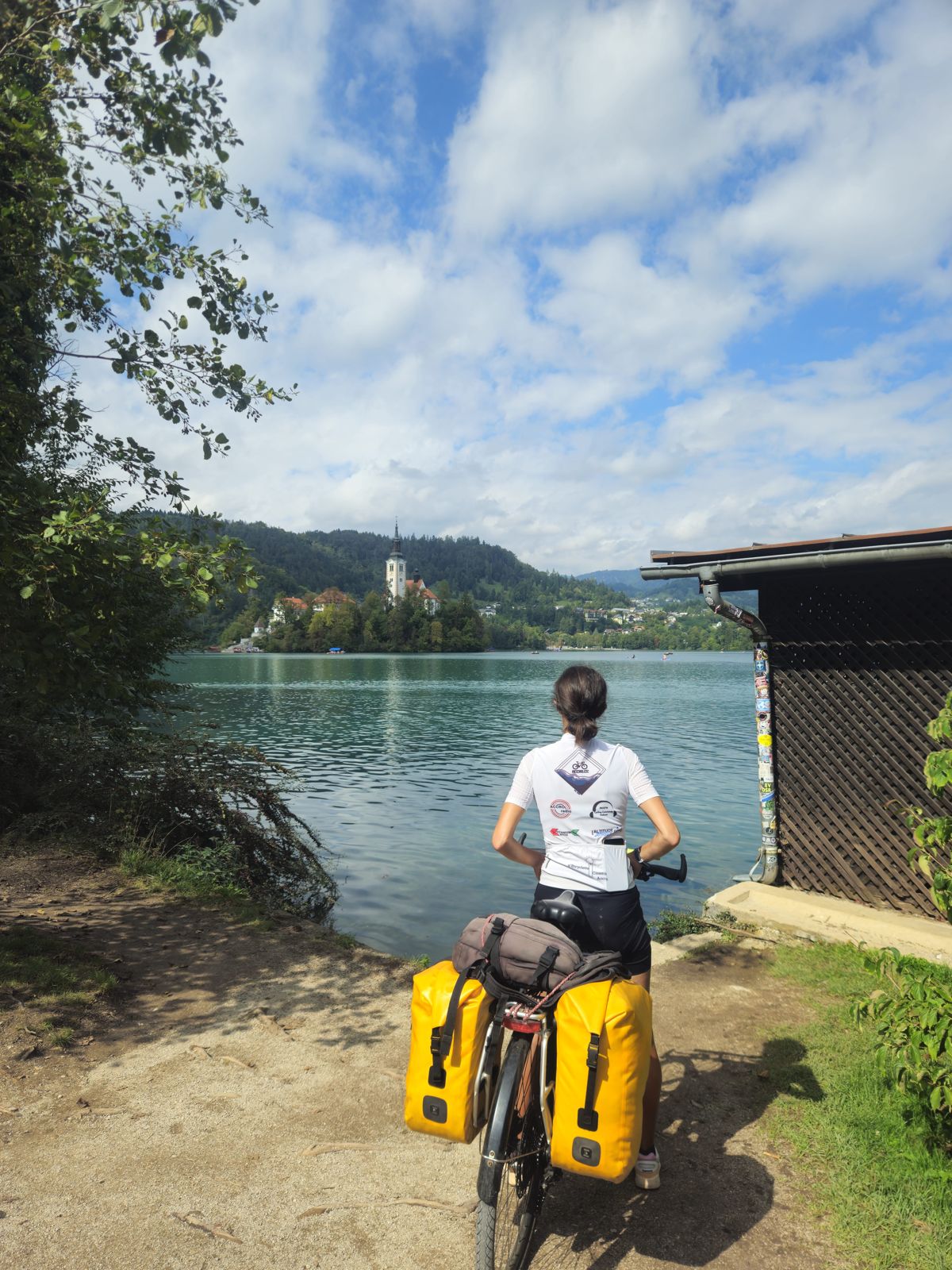
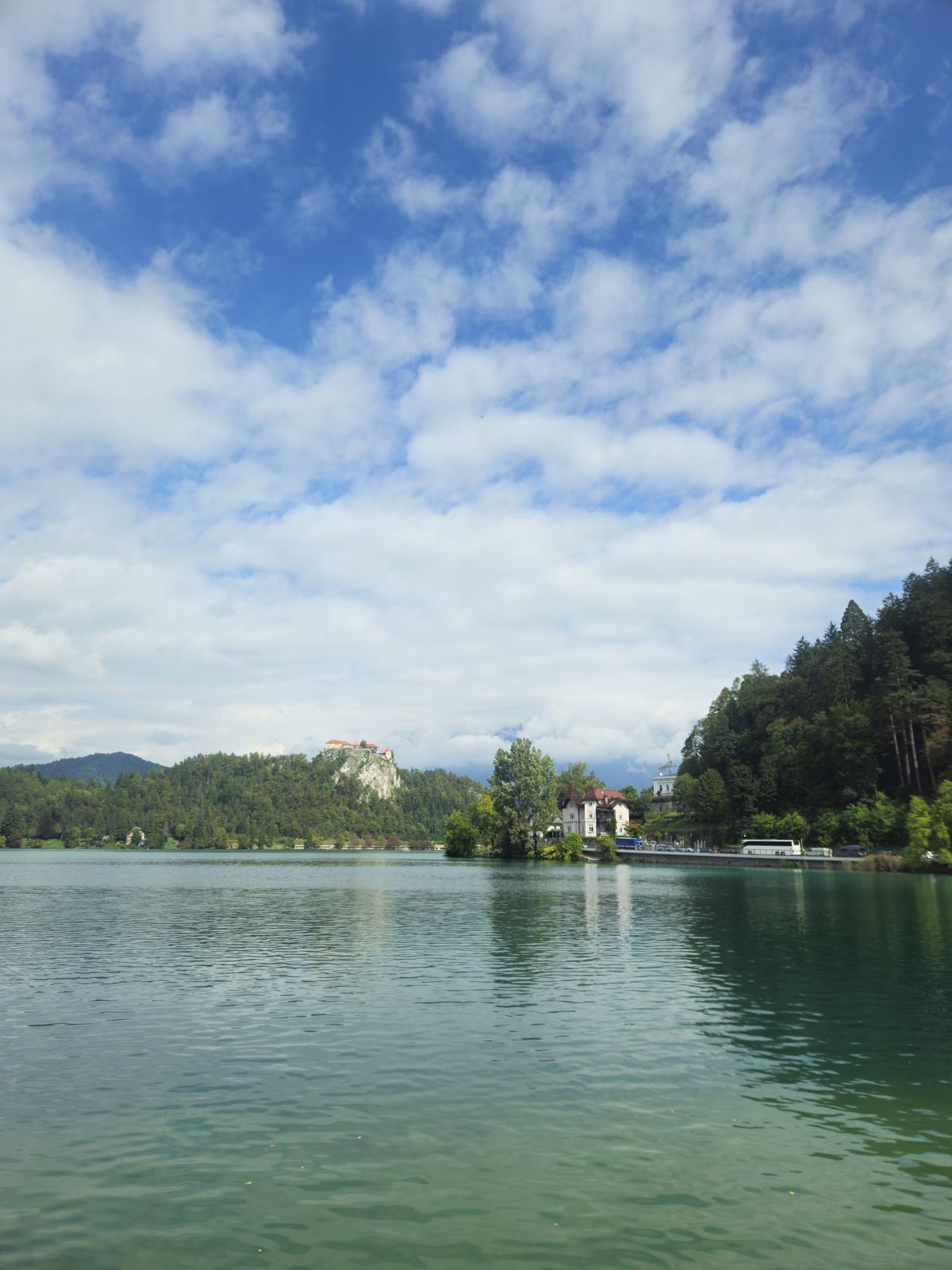
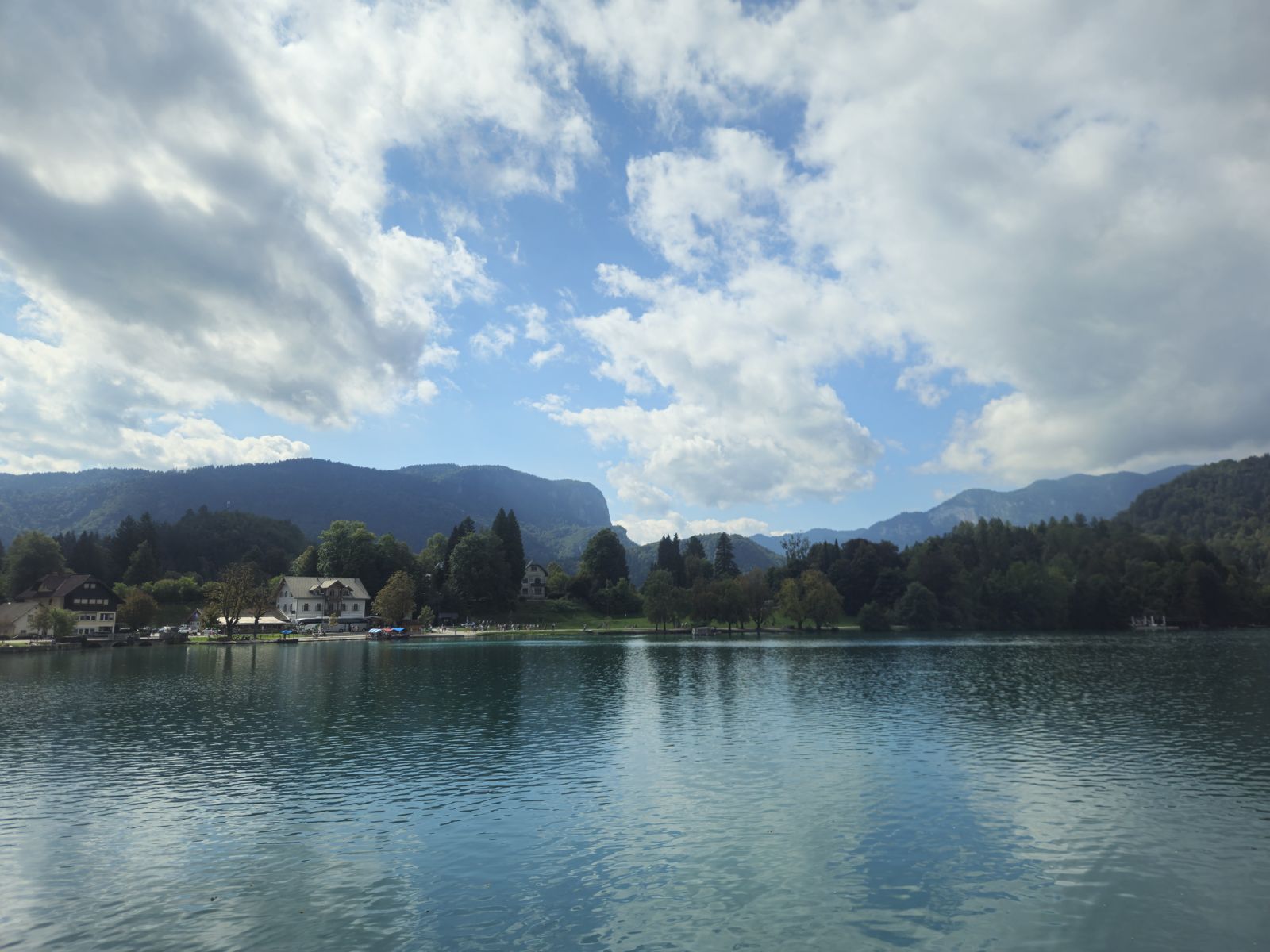
Cyclists squeeze through as best they can. We see some on the road among cars and huge lorries loaded with tree trunks, and others like us on the footpath. We ride very slowly so as not to bother anyone and to enjoy the spectacular view of the lake. Some places more than live up to their reputation, and this lake is one of them. You could walk around it ten times and never tire of the incredible panorama. The Julian Alps add character to the landscape. We picnic with our feet in the water and enjoy the little beach to play with Clémence.
She doesn't want to leave, but we have to, as we still have a pass to climb. The first part is very steep, and the slope kindly evens out after the first village, Zgornje Gorje. From there the road becomes incredible. We're in low-mountain country, tucked into a valley surrounded by peaks. It's sunny, so the sky is blue and the vegetation green, bringing out an incredible palette of colours. We ride slowly through this peaceful setting. Clémence agrees and falls asleep in the trailer for the first time in months.
All goes well until we approach a sign warning of an 18% climb. We think we've misread it, but no: a wall of concrete looms ahead. More cautious cyclists would probably have started walking straight away. But we know only too well how hard it is to push loaded bikes up a vertical slope, so we give it a go. On the Touring bike (meaning the one without the trailer), Cassandre climbs easily, pedalling in short strokes. It's another story for Stéphane, who struggles to move forward as the trailer drags him back with every metre gained. He stops to catch his breath at the start of a bend while Cassandre is already well ahead. Once he's got his breath back, he rounds the corner to find the top just behind it, and Cass running down to push from behind. Phew, we can say we conquered a serious chunk of mountain.
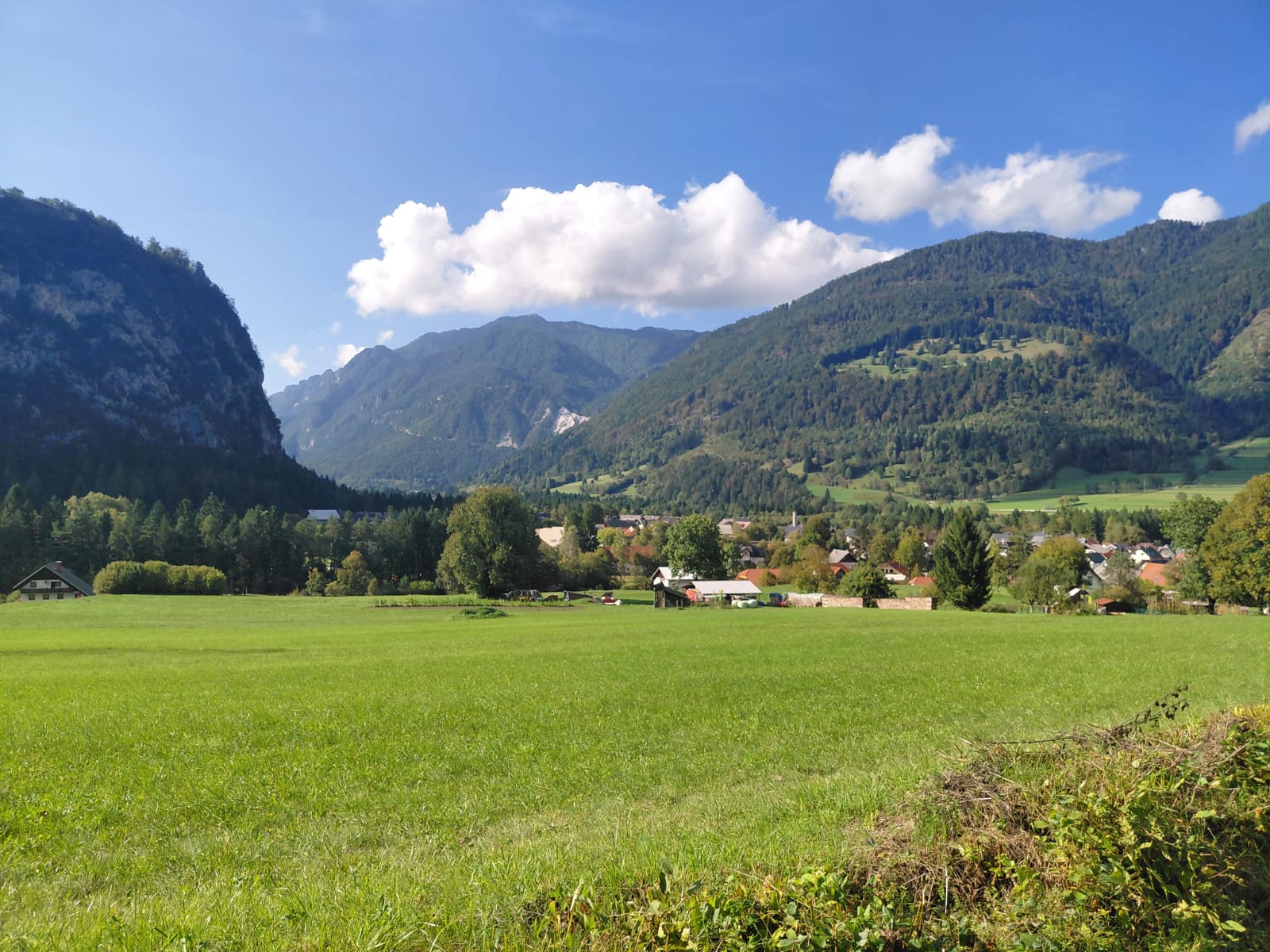
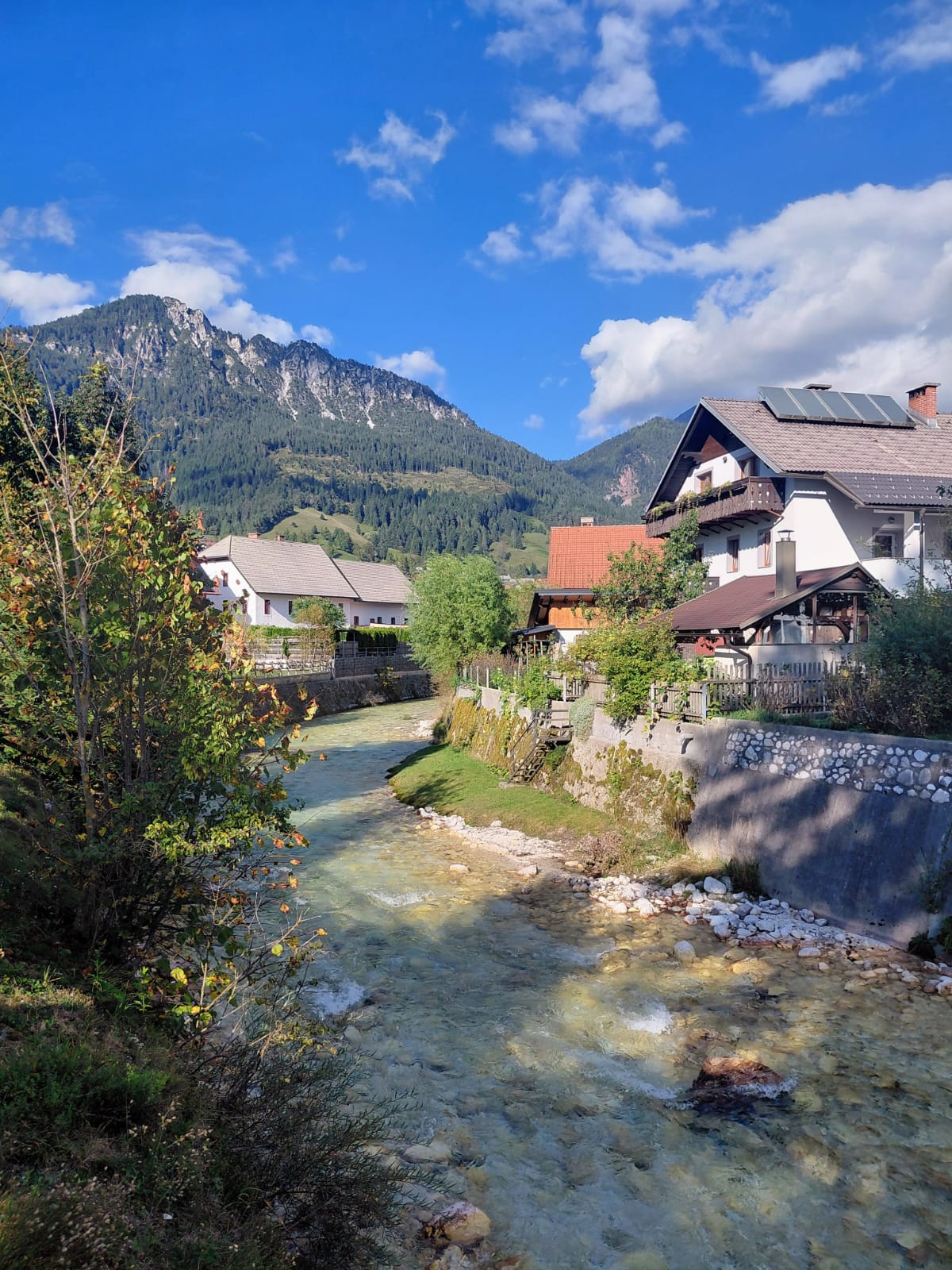
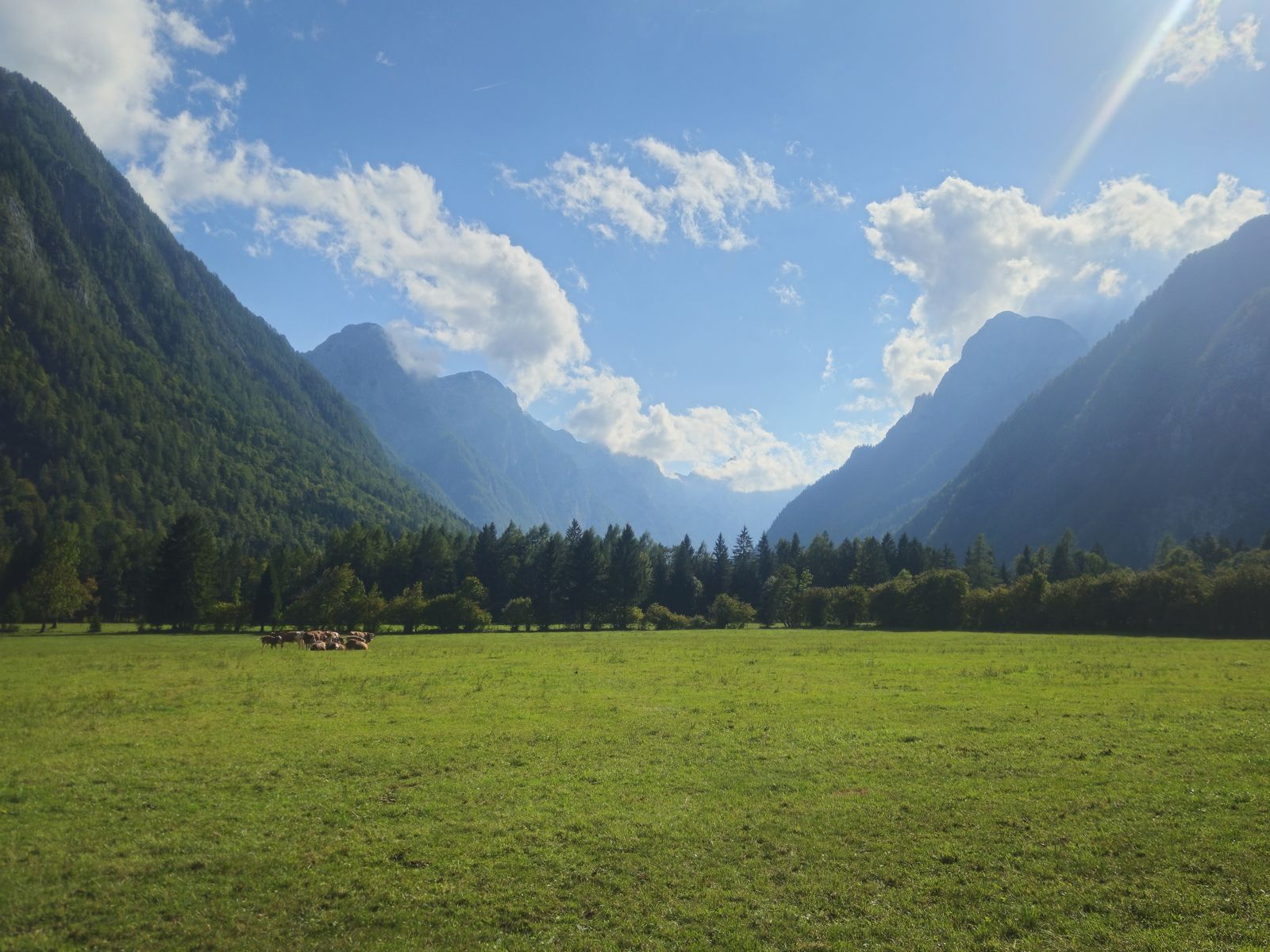
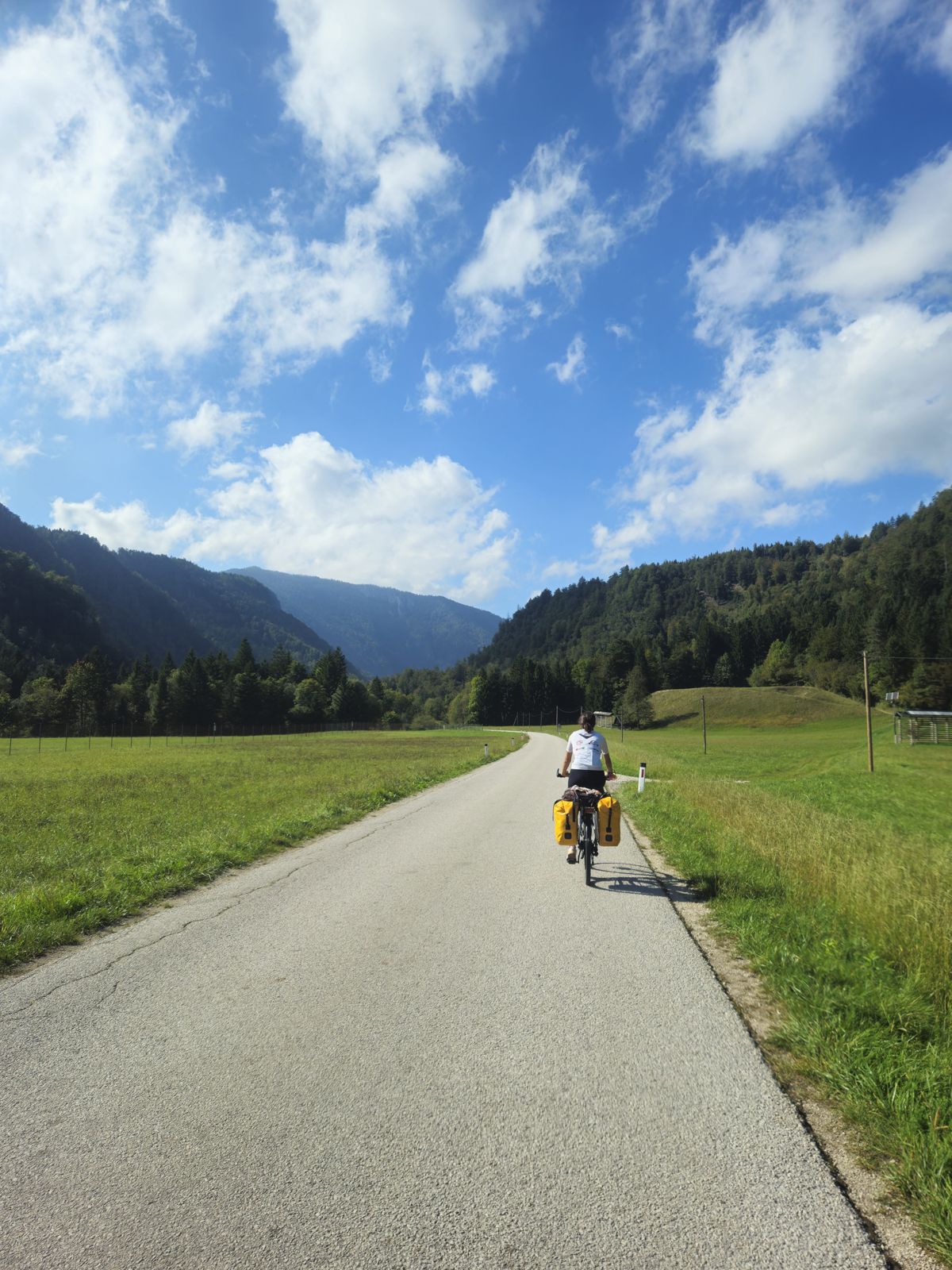
Clémence wakes up on the way down with perfect timing, as we arrive at a supermarket and a playground. Supermarket prices are lower than in France, which helps us make up a little for what we spend on accommodation. European food is of course radically different from Korea's, and we're delighted to be able to buy fruit and vegetables by the armful. We end our day in Dovje, a little village by the road that leads to Italy.
On the road
The routes of this story
- By bike · September 13, 2025Bianca → Jablaniške Laze49 km · 838 m D+ · 3 h 55View on Strava →
- By bike · September 14, 2025Jablaniške Laze → Ljubljana43 km · 265 m D+ · 2 h 47View on Strava →
- By bike · September 15, 2025Lecze Bled → Dovje32 km · 481 m D+ · 2 h 35View on Strava →
- By bike · September 16, 2025Dovje → Kranjska Gora12 km · 168 m D+ · 51 minView on Strava →