
 ← PreviousVisiting Miyajima island: culture and beauty
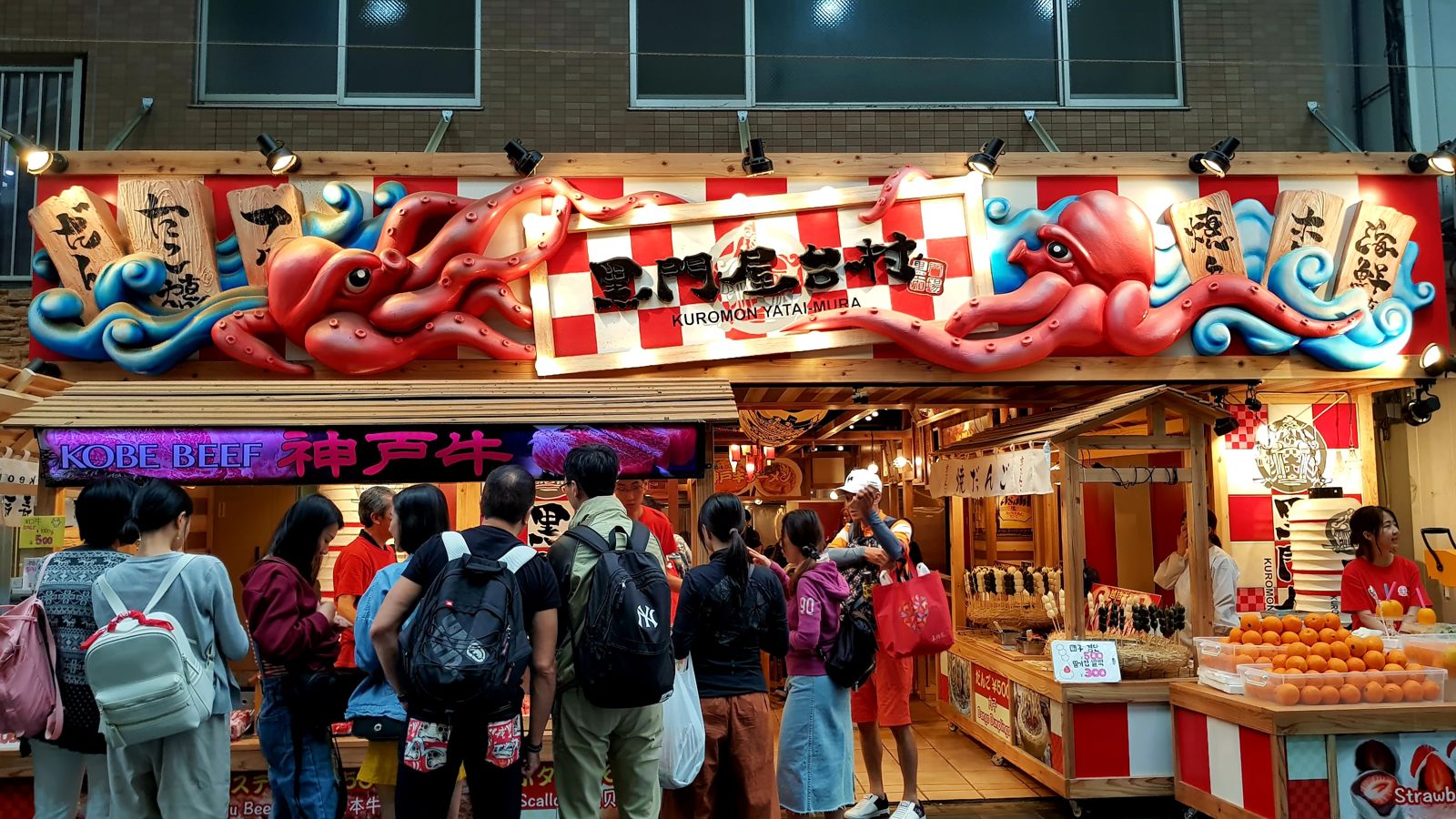
At seven in the morning the bus dropped us in Osaka. We'd slept reasonably well and set off for the hotel without being too tired. About thirty minutes on the metro and ten minutes' walk later we arrived at the Very Hostel, a small building where once again they surprised us by announcing our room was already ready. It was small but well laid out, with the usual mattress straight on the floor. After a quick coffee in a chain popular with the Japanese, we strolled over to the Kuromon Ichiba Market, Osaka's culinary hotspot. Wandering between the stalls, we really soaked up Japanese food culture. Fried octopus sat alongside giant lobsters, skewers of every kind and fritters. Every stall was carefully arranged, and the sellers were extra friendly towards foreigners like us. We went into some shops and noticed that certain fruits were packaged like luxury goods. Watermelons, grapes and peaches sat in sumptuous velvet cases, so beautiful you hardly dared touch them. Prices were around thirty euros for fruit that's so common back home.
Before visiting Japan, we'd done exhaustive research on what we'd enjoy most and how to get around. The Land of the Rising Sun has a rail network covering the whole surface of its various islands, and the choice can be so varied that it's hard to pick your lines. As tourists, we had the option of a Japan Rail Pass, which would have given us access to the national company's network and its famous Shinkansen.
However, we saw two major drawbacks: price and speed. First, we'd have had to pay more than five hundred euros each, an exorbitant price completely outside our budget. And speed no longer interested us. We understood that an American who's never taken a TGV would find the thrill of novelty in the experience, but as Europeans it left us cold. Worse still, since we'd discovered the pleasure of slowness — the long hours on the road before reaching a goal, the endless journeys to a destination — we'd come to understand that the journey is sometimes more enriching than the arrival.
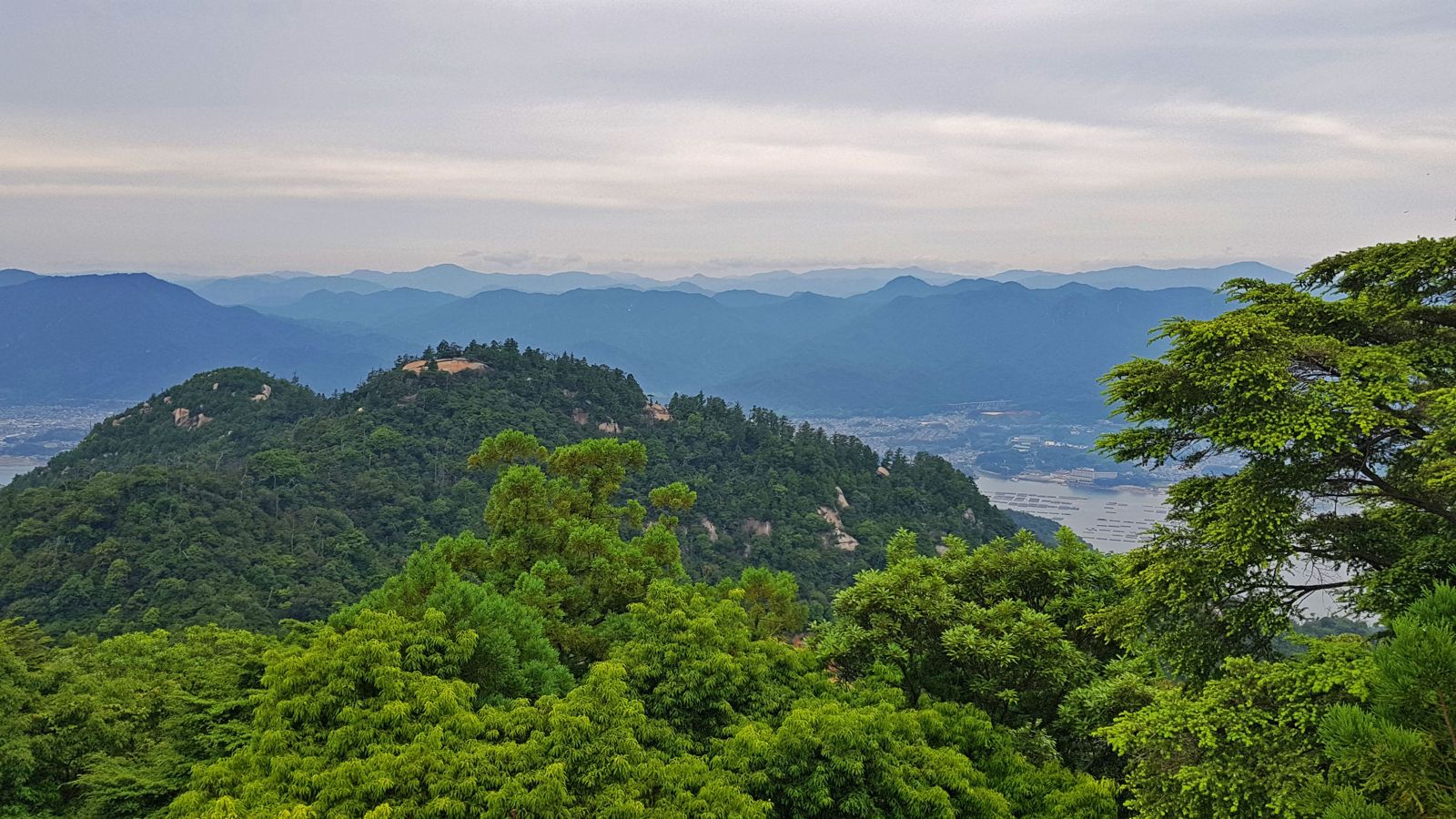
That's why we found ourselves on suburban trains, slow at times but giving us all the leisure to watch the landscape roll past the window. Small hills or big mountains almost always accompanied the long green plains that make up most of the country. Our trains passed through picturesque villages where the sight of old people on bicycles made us smile; we didn't miss a thing. In the carriages we discovered a very diverse social fabric and played at inventing lives for people.
"What do you reckon he does?" I asked.
"Hmm, he looks exhausted. He must be an overworked manager," Cass replied.
The number of Japanese people fast asleep on public transport never stopped amazing us. In every carriage of every train we took, at least three people were dozing in incongruous ways, mouths wide open, in unlikely positions. You could tell that beyond the cliché, workers really were working themselves to death. Salaries aren't very high in Japan, but life is expensive. As always, we'd carefully prepared a sensible budget within our means. Because although we loved travelling, we also liked our adventures to last as long as possible, even if it meant living simply and skipping meals. After exhaustive research, we set ourselves a daily budget and stuck to it no matter what, recording all our spending in a handy little app. When we were working in Australia, the cost of a day of travel even became a source of motivation. When we were paid 25 dollars an hour, we'd say to ourselves, "Right, that's a day of travelling in Colombia or the Philippines." We invented our own imaginary index to keep travelling on and on.