 ← PreviousThe national parks of the American West: Zion and Antelope Canyon
The next day we followed the road along the Grand Canyon, stopping in villages scattered here and there. We were still just as surprised by the wildlife roaming free. We saw a profusion of birds but also deer walking calmly about, without a care. Residents and tourists accommodated them and showed great patience, even when it meant waiting for them to cross before driving on. The views of the Canyon were spectacular, though not at all photogenic. We could see the Colorado below, moving delicately, winding in curves, and we got back in the car to join it lower down on the legendary Route 66. In itself there was nothing exceptional about it; you had to know its history to understand the legend.
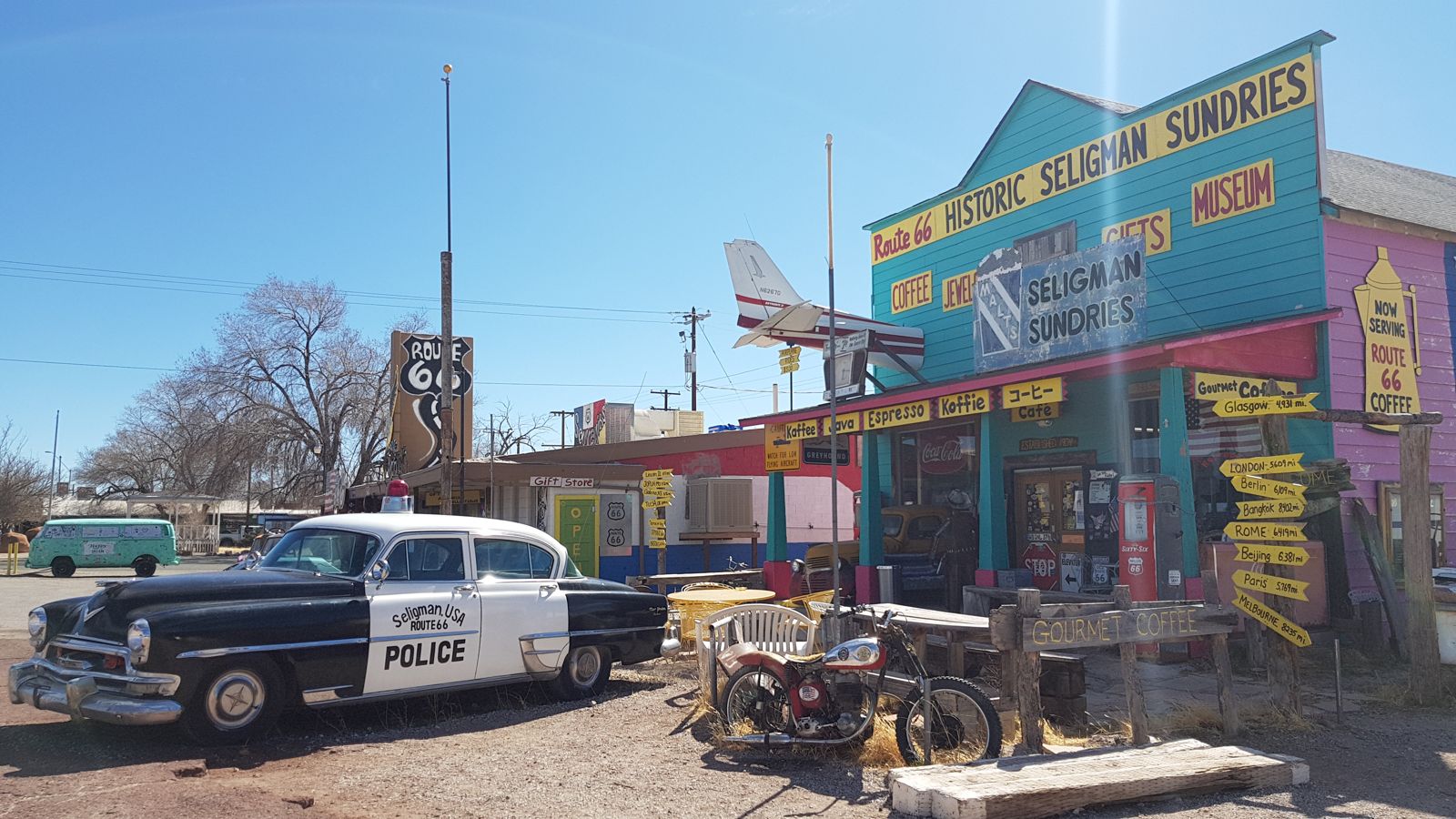
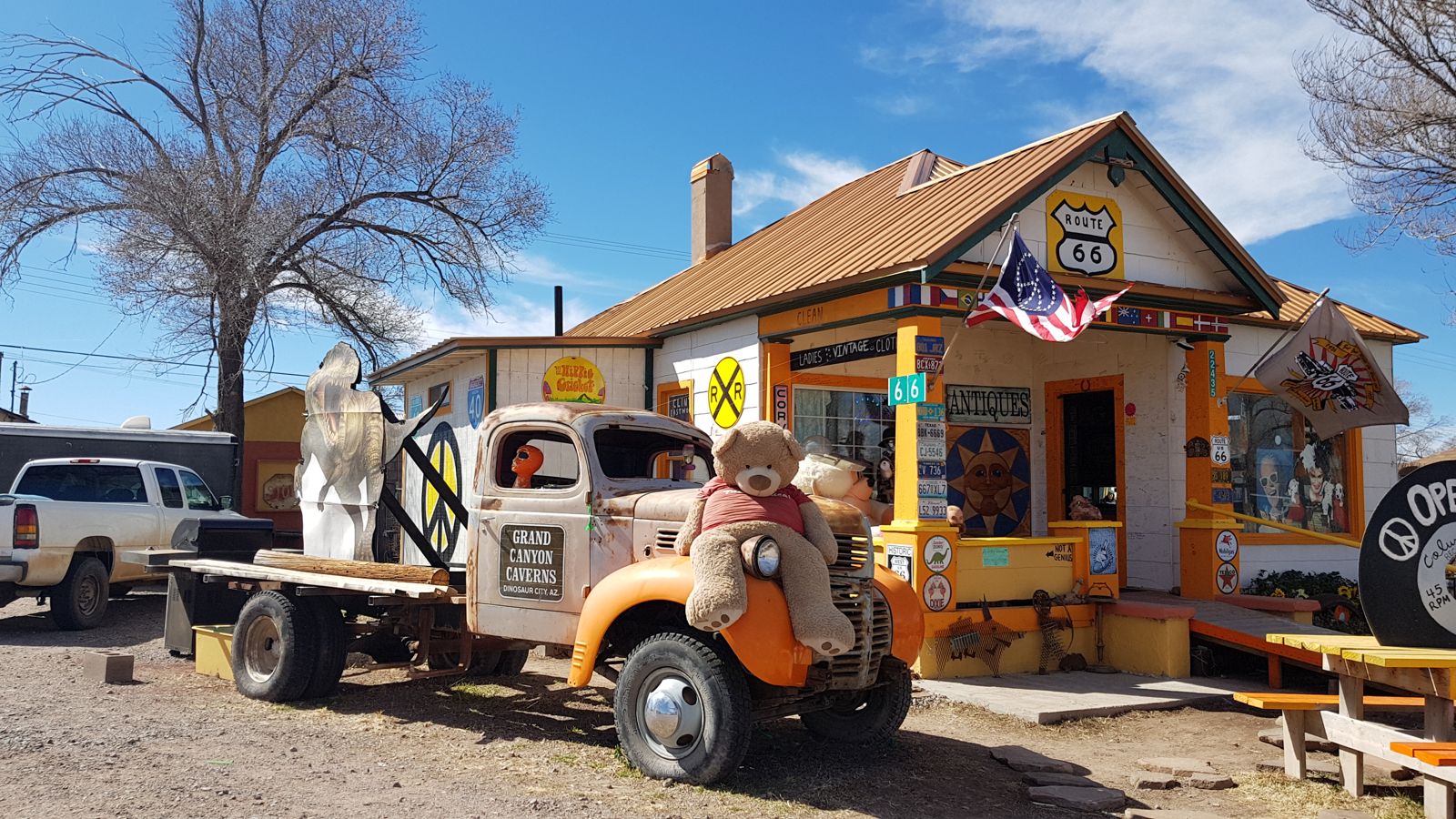
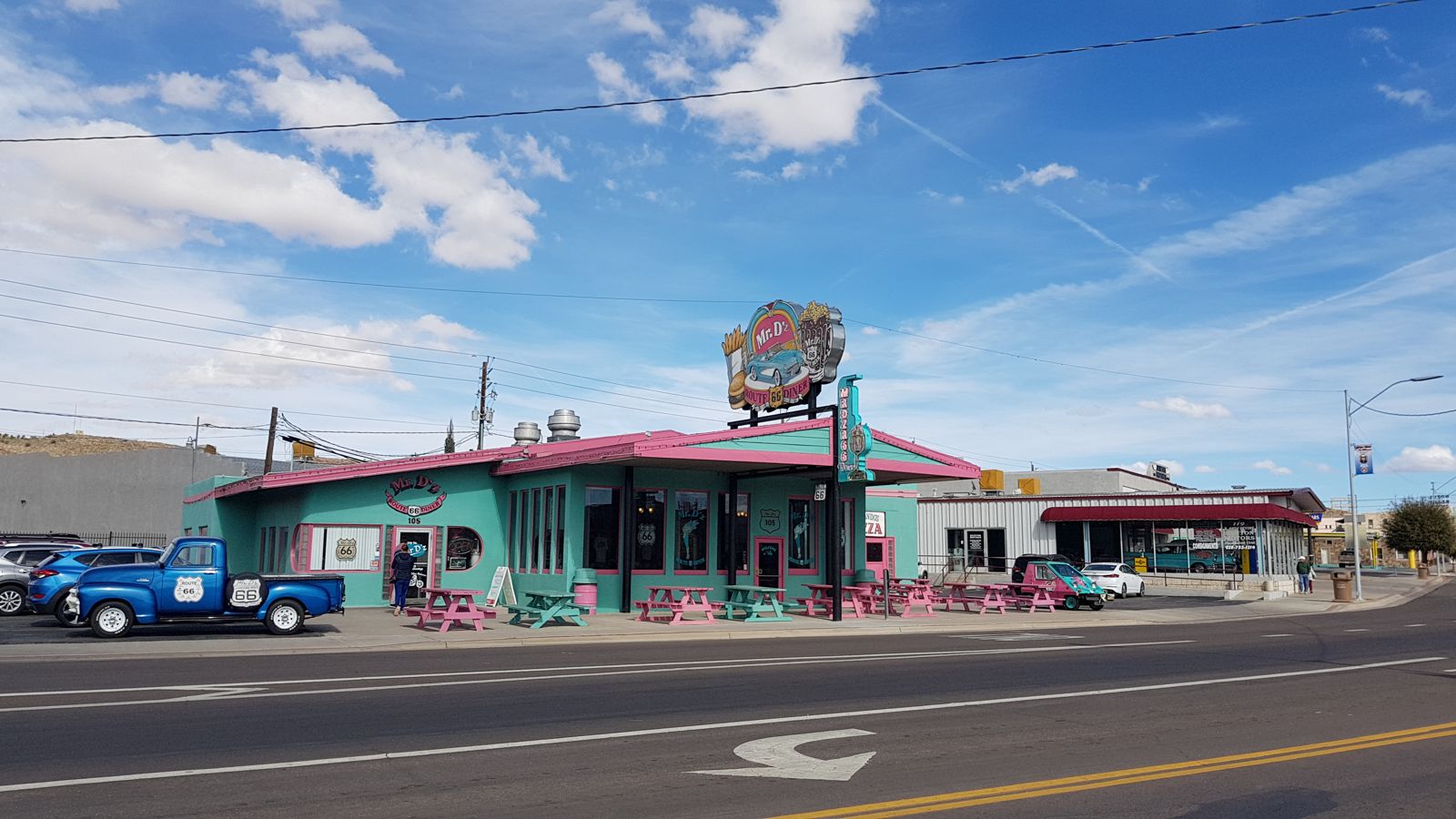
It was the first of the great American highways, linking Chicago and Los Angeles over almost four thousand kilometres in its day, immortalised for posterity in John Steinbeck's The Grapes of Wrath. It had become a tourist attraction in its own right, and the villages along the way strove to be attractive with old decorated trucks, gaudy shopfronts and restaurants with period designs. Following the road, we came completely by chance upon Oatman, the town of donkeys. They were literally everywhere, forcing us to drive at walking pace. We parked the car and walked around this village out of time. The residents clearly wanted to preserve the authenticity of the pioneers: houses and shops were made of rustic wood in the characteristic Wild West style. We realised this return to roots went a bit far when we saw Confederate flags proudly hanging from several façades.
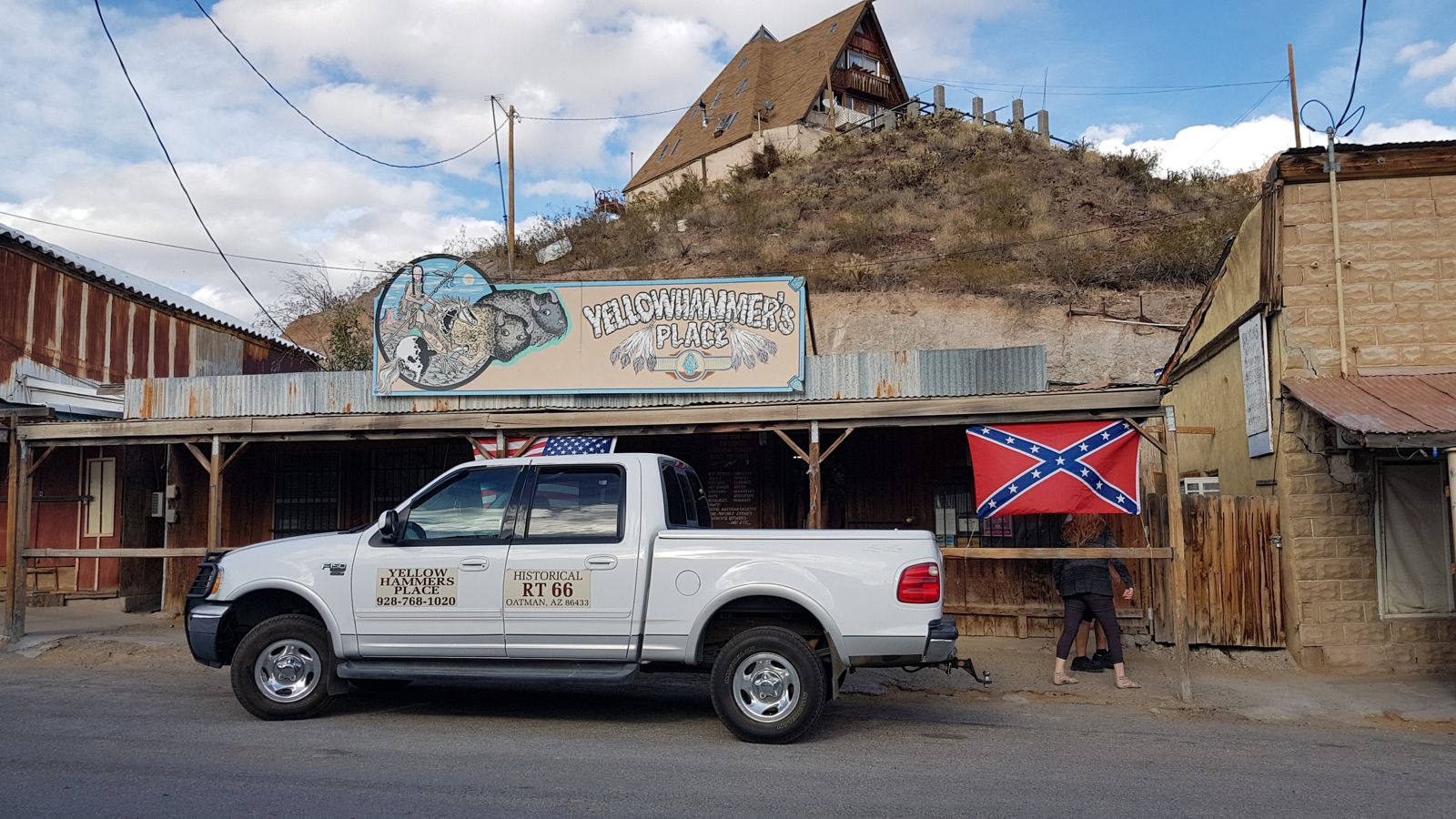
The rest of Route 66 was in the same vein, halfway between authentic and tourist set. This whole vast region of the United States has served as the backdrop for a thousand films, and we made a detour to see the church from the cult film Kill Bill. We had to drive through godforsaken villages and along a bumpy road to reach it. It really was in the middle of nowhere, and the atmosphere you feel watching the film was the same on the spot. Of course you could visit it for a fee, as Americans never lose sight of the financial side of things for long. We stayed at the door to admire it from outside, sitting on a bench enjoying the sun. We reached Los Angeles in the late afternoon, completing a three-week loop. It was Oscars night and we toyed with the idea of going to look around this world-famous event, but our two Airbnb hosts told us you had to book a year in advance just to get into the surrounding area.
We ended the day dining at an ordinary little restaurant full of locals. That's what we liked best when travelling: we tried as best we could to flee places overrun with tourists so we could mingle with local people and get a glimpse of their way of life. The next day we treated ourselves to a visit to Universal Studios Hollywood. The rides didn't impress us much, but the guided studio tour was fascinating. The little train went through several film sets, from Jaws to War of the Worlds, as well as series like Desperate Housewives and Alias. We stopped in reconstructed towns used variously to represent Mexico, Europe or New York. The tour lasted two hours but flew by, it was so fascinating.
The next day was our last in the USA, and we wandered around Los Angeles with no particular aim. We went up to the observatory beloved by fans of James Dean and Rebel Without a Cause and had a picnic in the park. We made several shopping stops to take advantage of the unbeatable prices in American shops, then went to the airport to return the rental car. We'd really miss it, it was so comfortable and spacious. It was time for us to set off on a journey that would take us to Auckland and then Melbourne, where we'd be reunited with our old Honda 4x4 from another era.