
 ← PreviousImmersed in Vegas: Red Rock Canyon, casinos and contrasting realities
The next day's route took us through three states: Nevada, where we started, Arizona, which we crossed for about fifty kilometres, and finally Utah. The Mormon state is home to world-famous national parks we couldn't wait to discover. We stopped to sleep in St. George, a small town of "only" a hundred thousand people that looked like other American towns, with big chain stores, fast-food outlets and long perpendicular streets. On this road trip we were realising that views of the United States are often full of clichés.
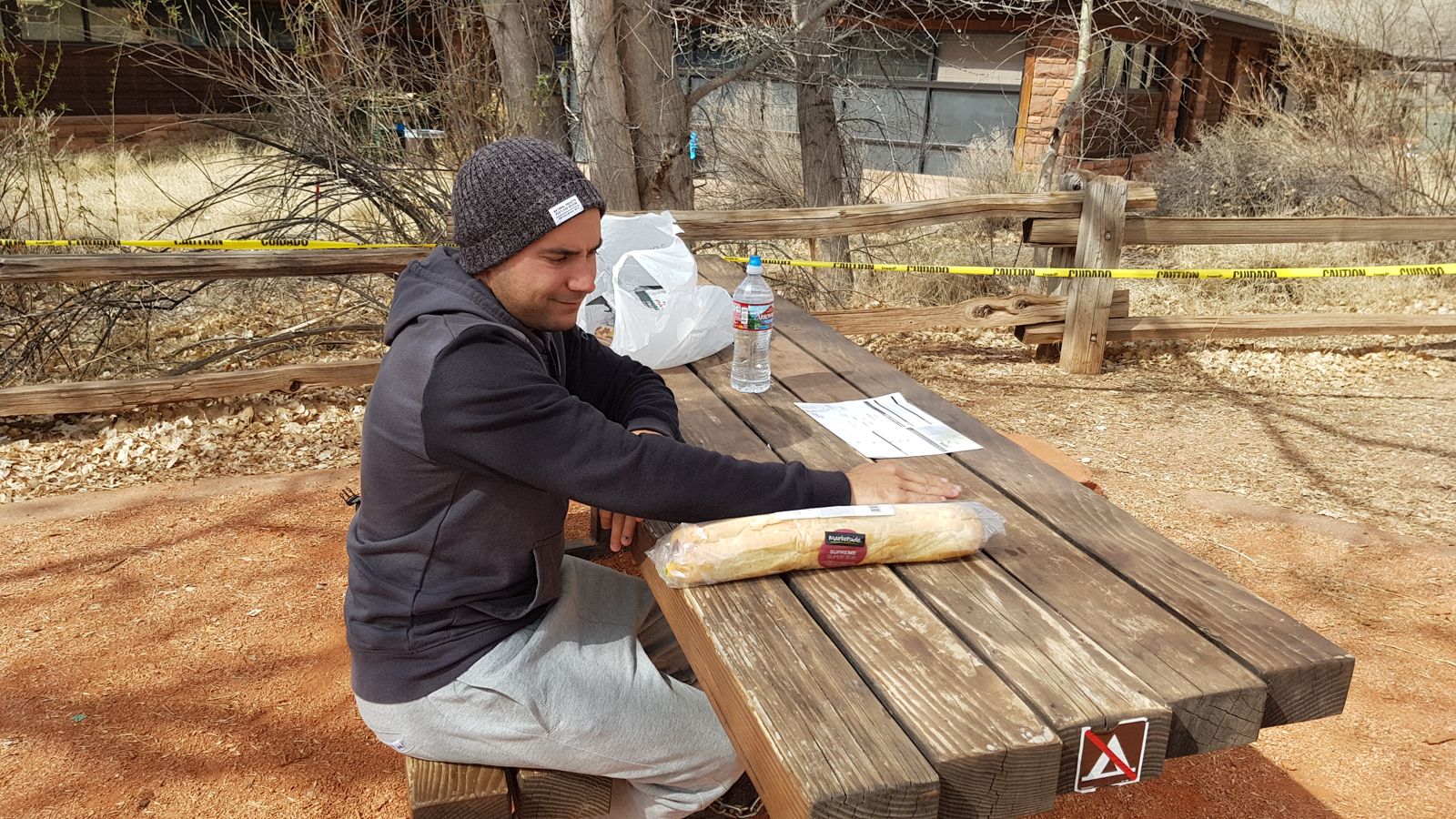
Of course there was some truth in them, but this country was so much more than the ready-made opinions you hear all the time. For example, you could eat very well anywhere, and we were spoiled for choice when it came to restaurants. Supermarkets were just as well stocked, and we often went for that option to save on our budget. Between eating out every day and extending our travels by several days with the money saved, our choice was quickly made. We also took the opportunity to buy the next day's lunch, a generous sandwich to fuel us on the trails of Zion National Park.
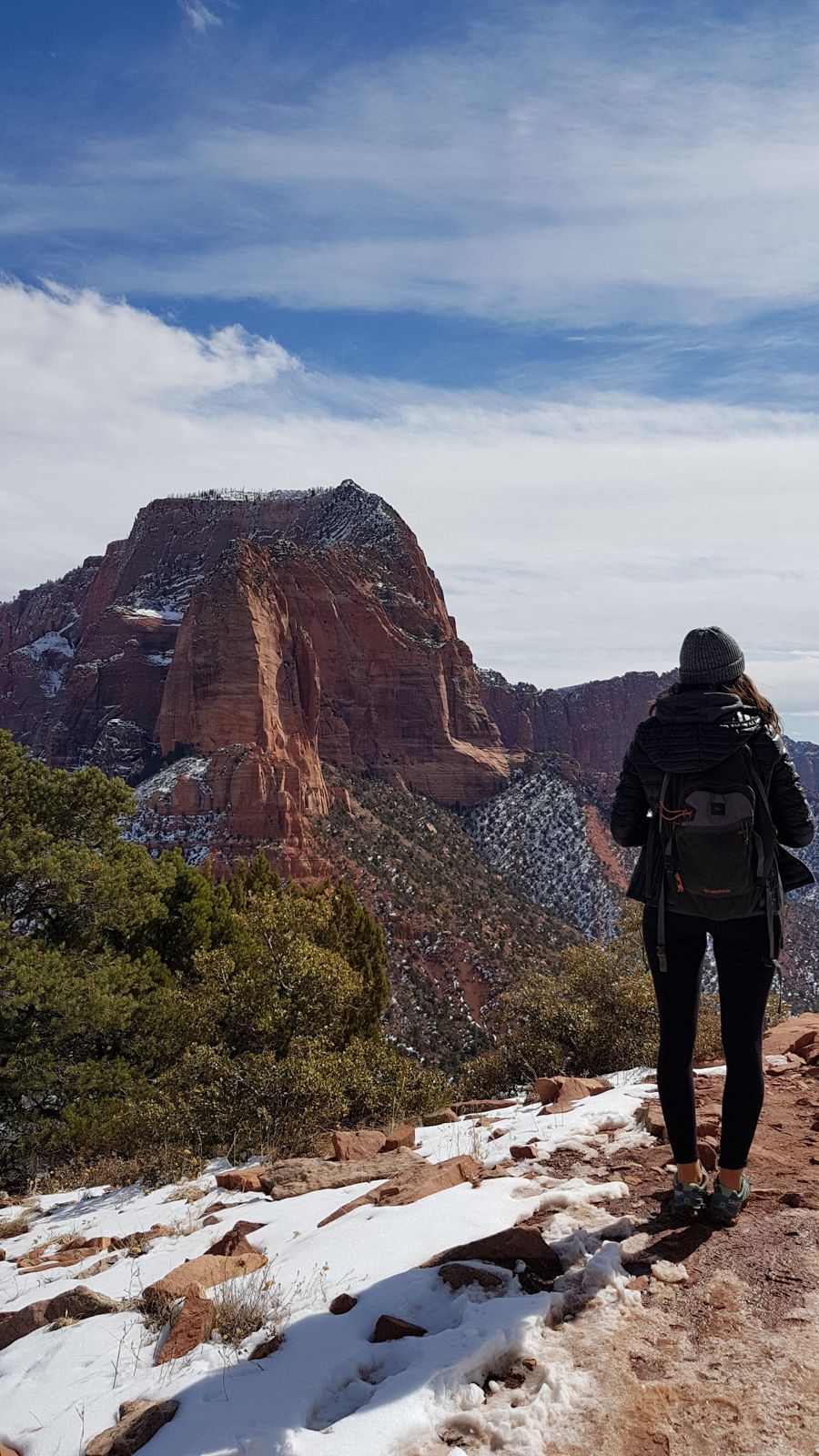
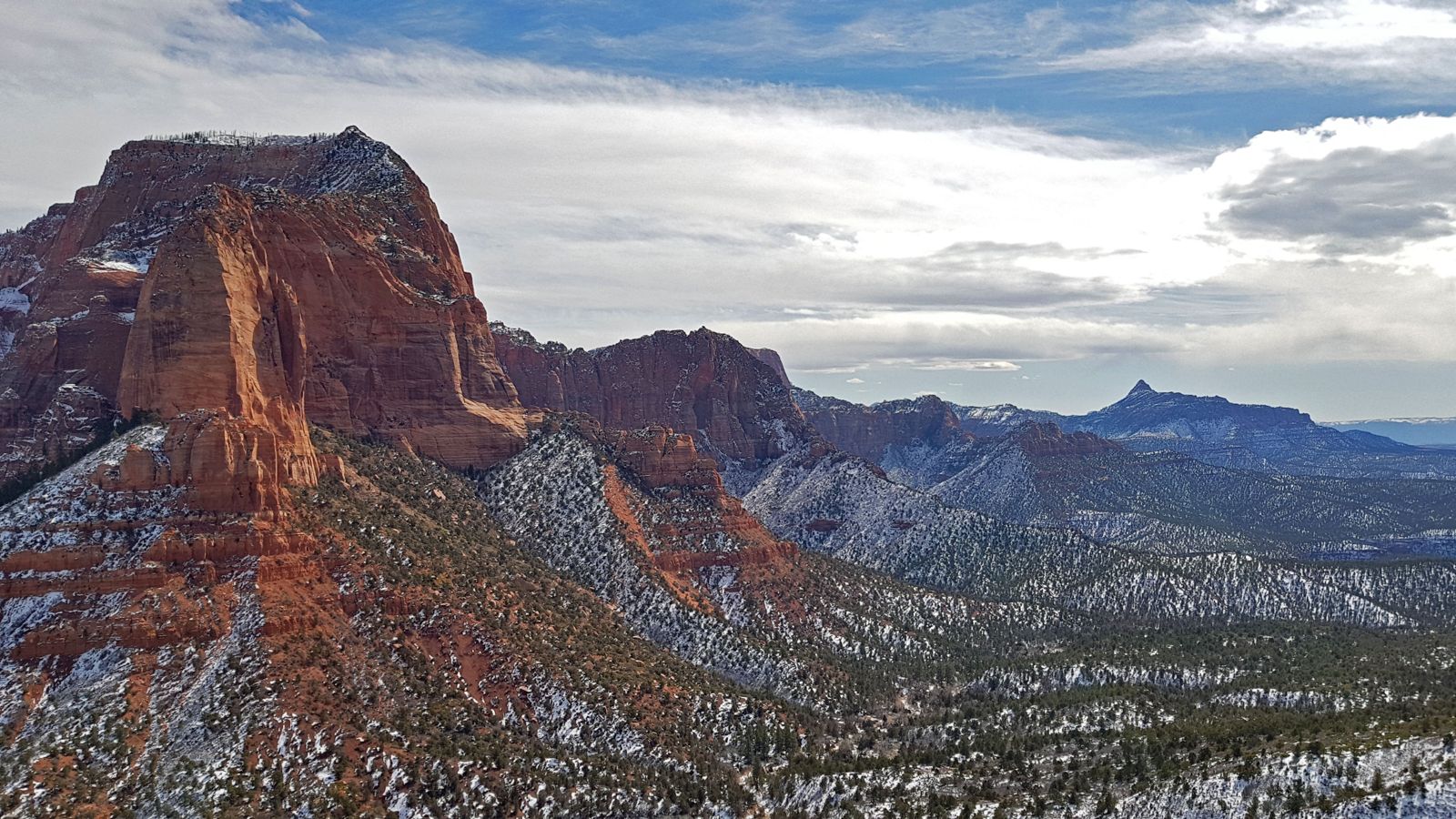
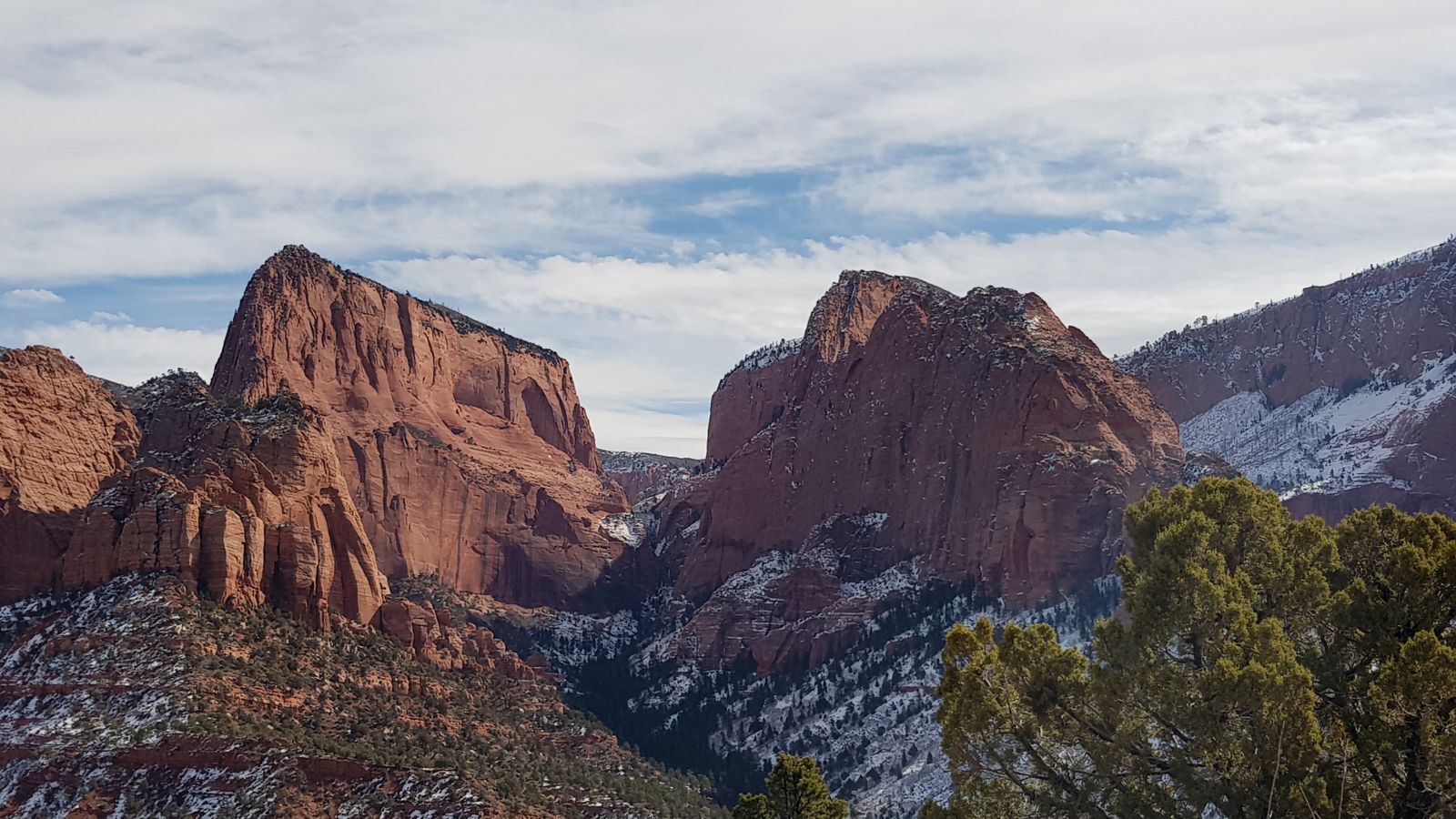
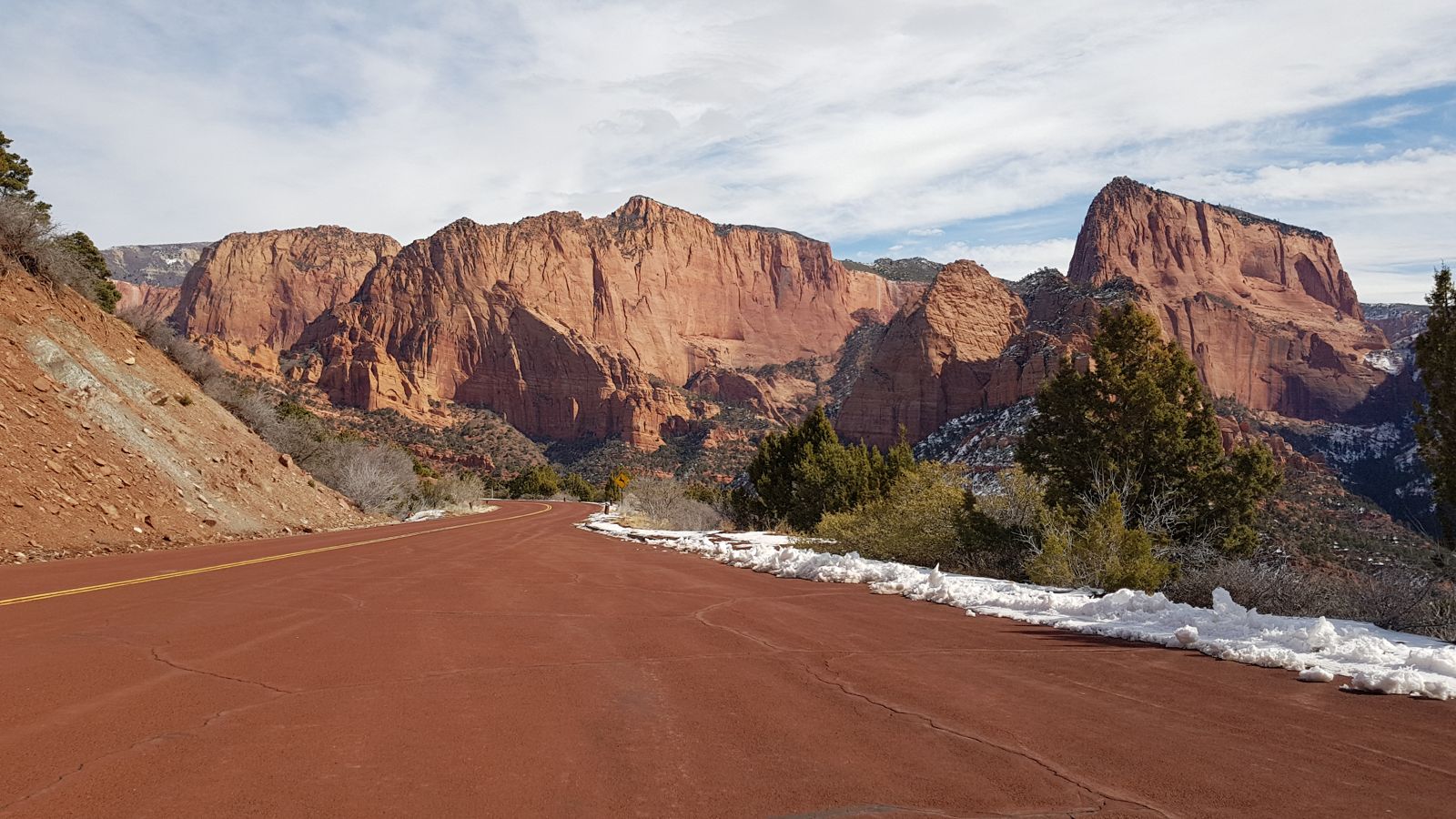
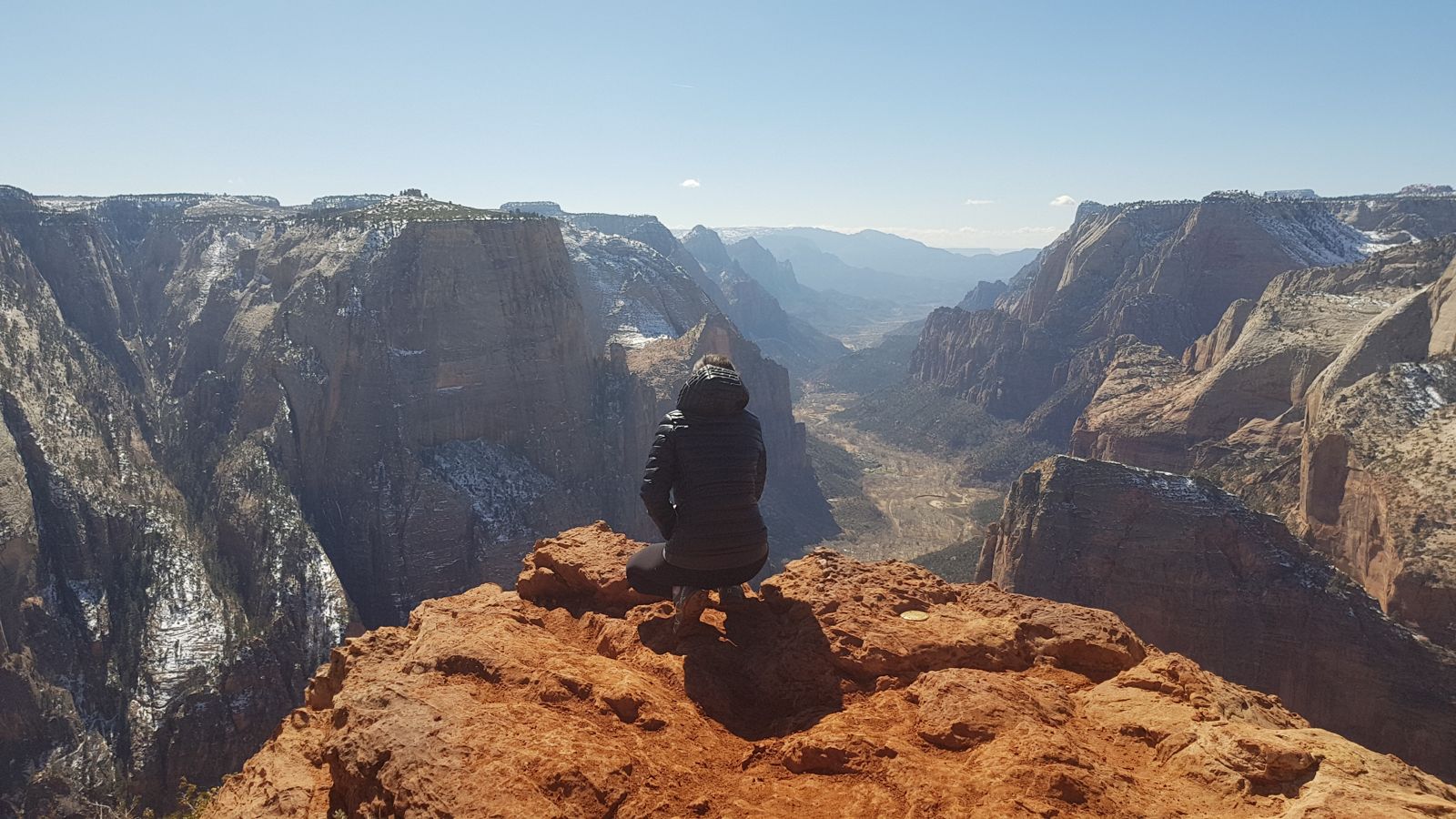
A legendary park of the American West, not least for its appearance in Butch Cassidy and the Sundance Kid, it would have left even the most jaded person in the world open-mouthed. It was still winter and snow was clearly visible on all the red faces of the surrounding mountains. What we hadn't planned for, though, was that everything was frozen above a certain altitude. Cassandre's shoes were more slippery than mine and she sometimes had to hold on so as not to fall. We fooled around as usual, and after twenty minutes of walking we found ourselves completely alone in the world.
Not a sound but the wind gently sweeping through the gorge we were walking up. During our whole ascent we passed just one family, two parents and two children, kitted out as if for mountaineering with crampons and ice axes. We cut a sorry figure in our trainers and tracksuits, but we reached the top without too much difficulty. It was called Angels Landing, probably because the view gave you the feeling of flying over the valley, as if touched by angels. You could see the canyon and the elegant curves it revealed below. We sat on the red clay to eat our sandwiches, and the moment the bread came out, lots of rather bold little squirrels came scurrying up. They were obviously used to seeing humans, and even though we refused to feed them, they came to pinch every crumb that fell to the ground.
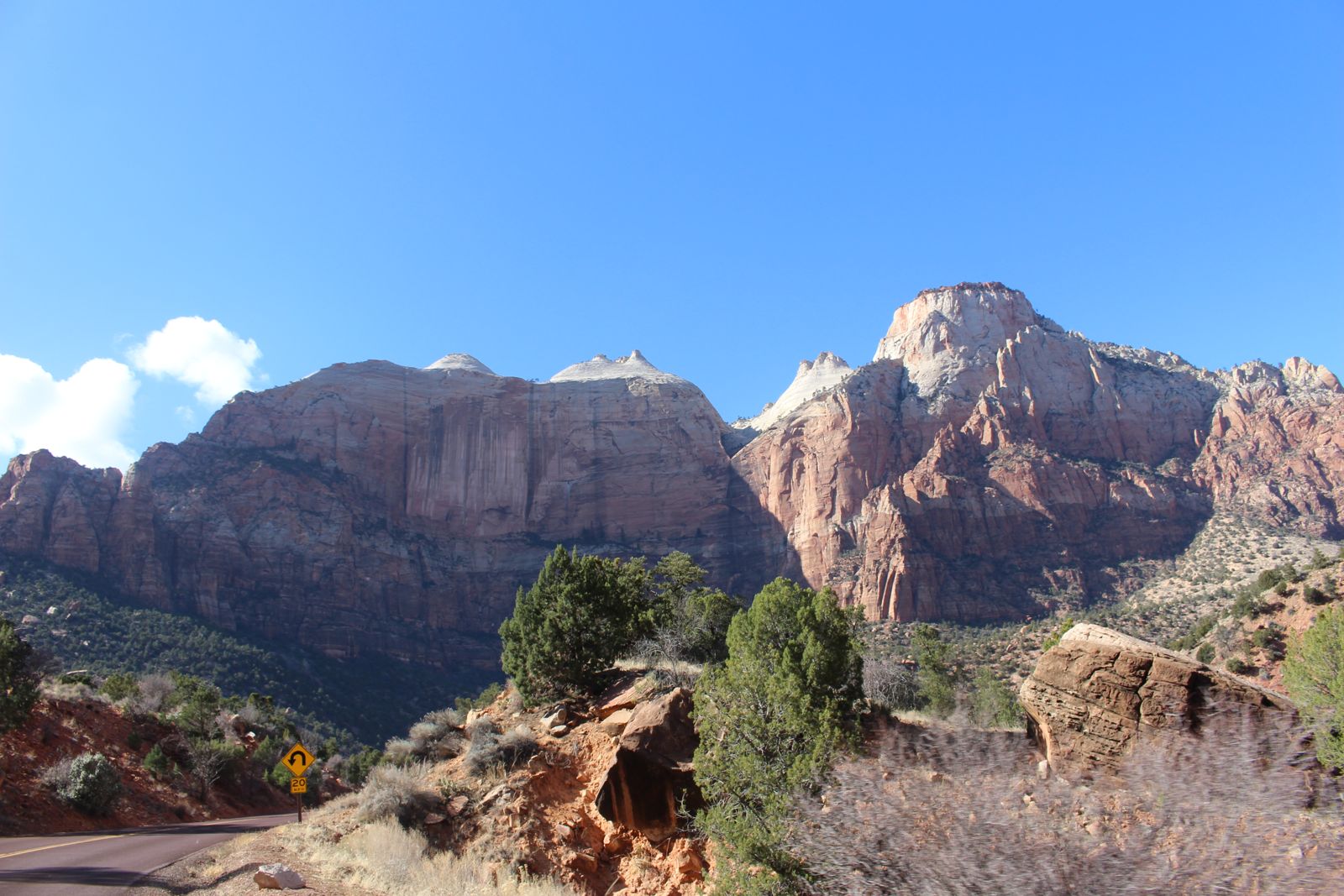
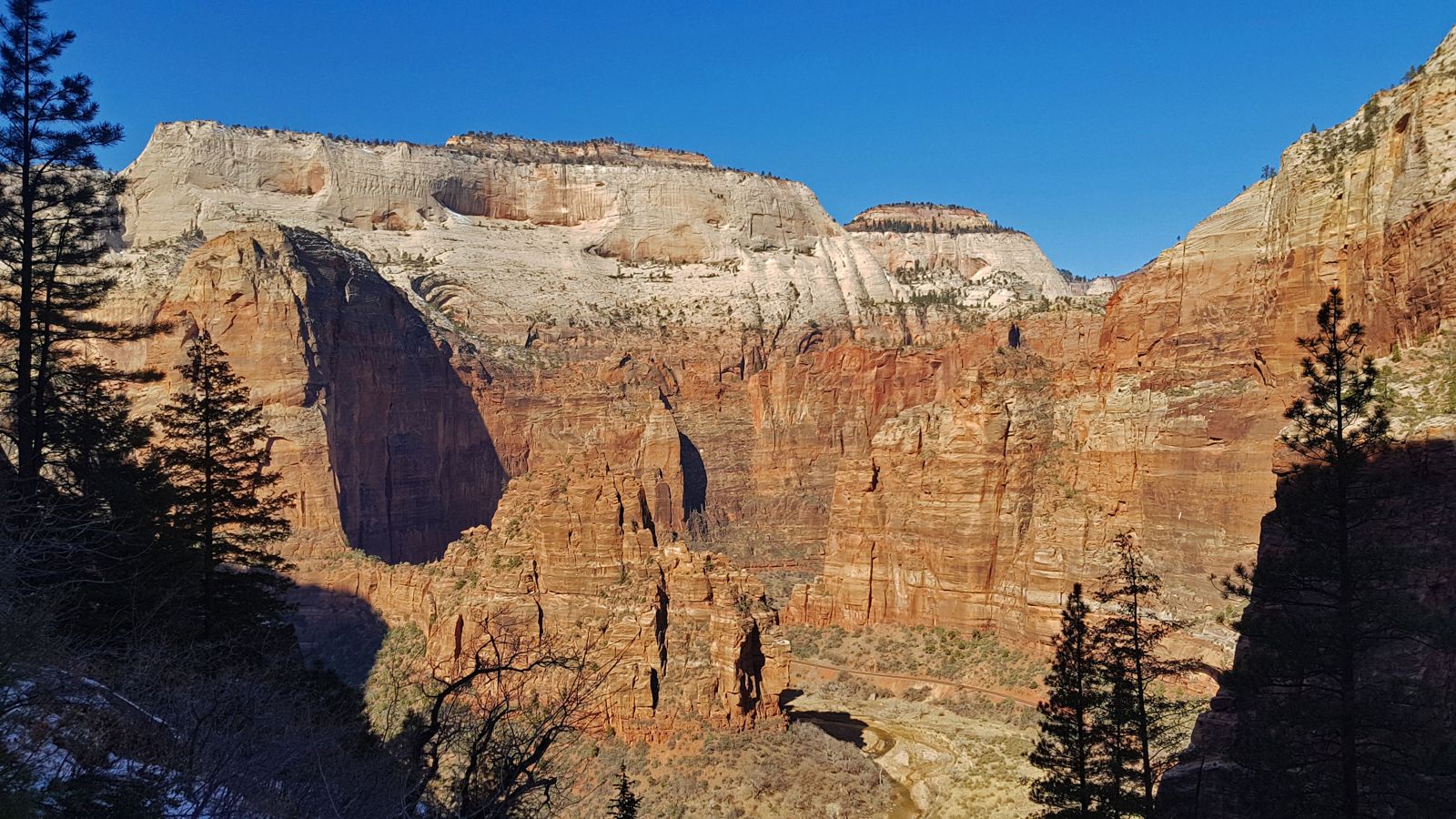

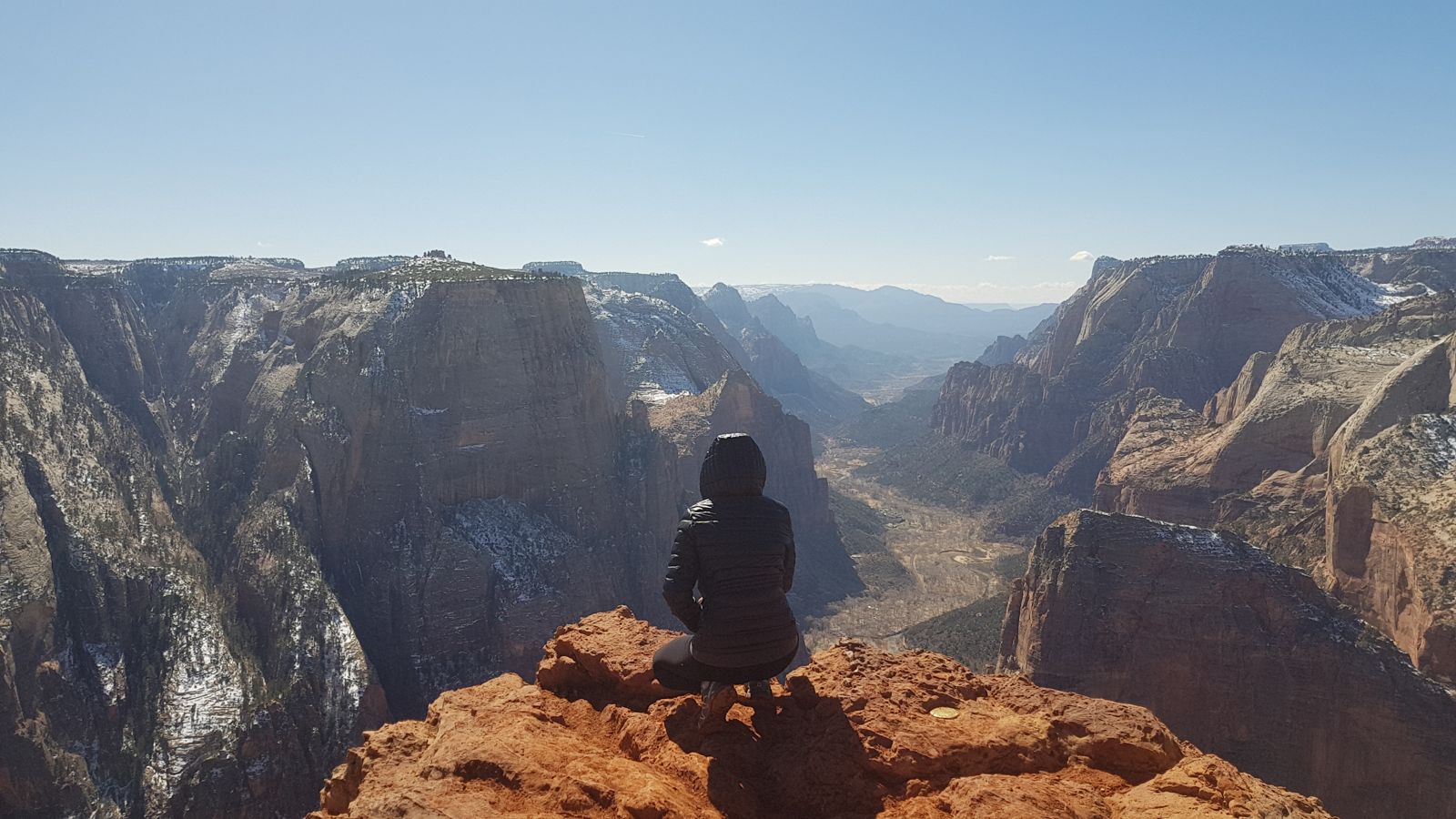
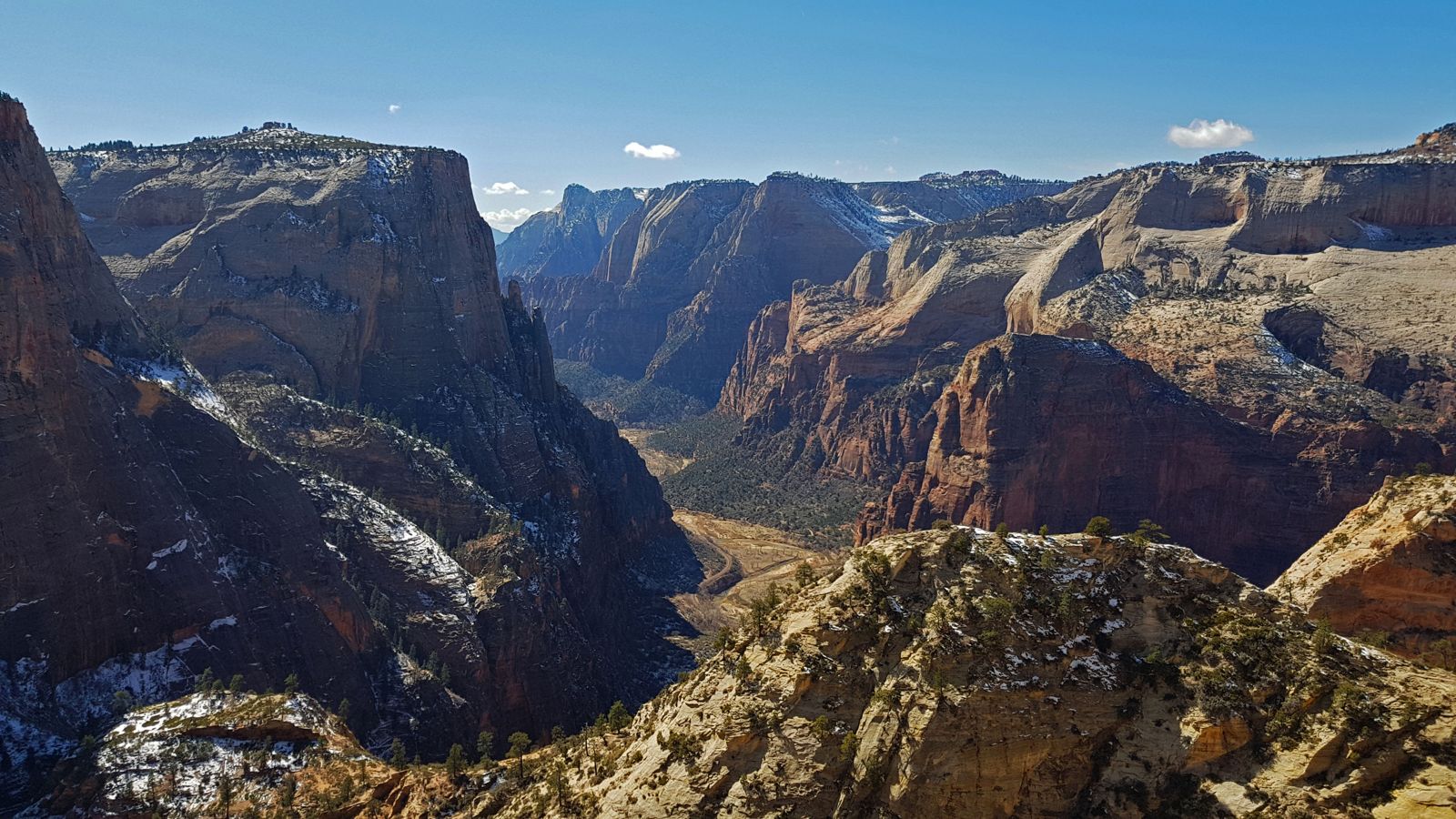
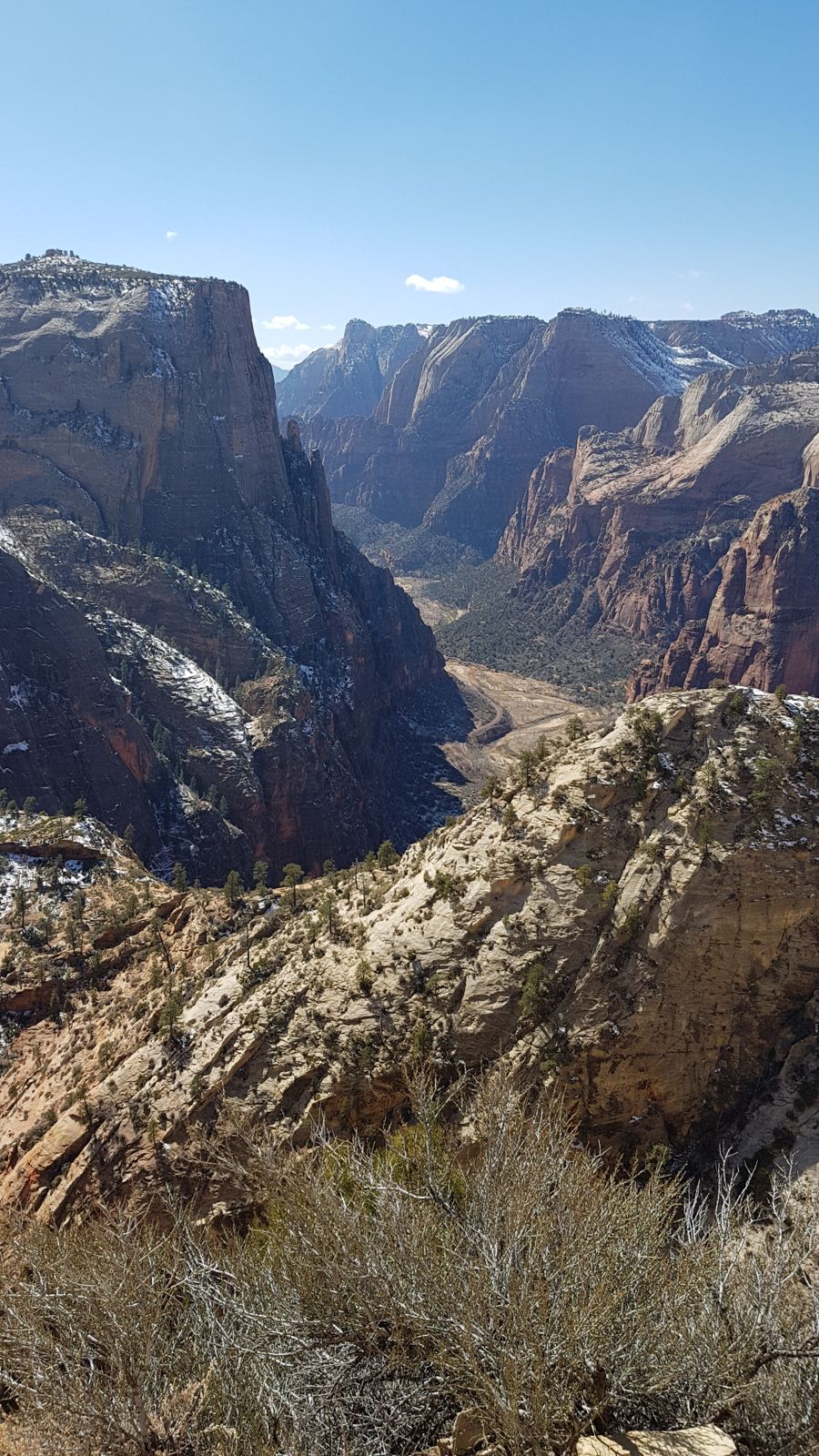
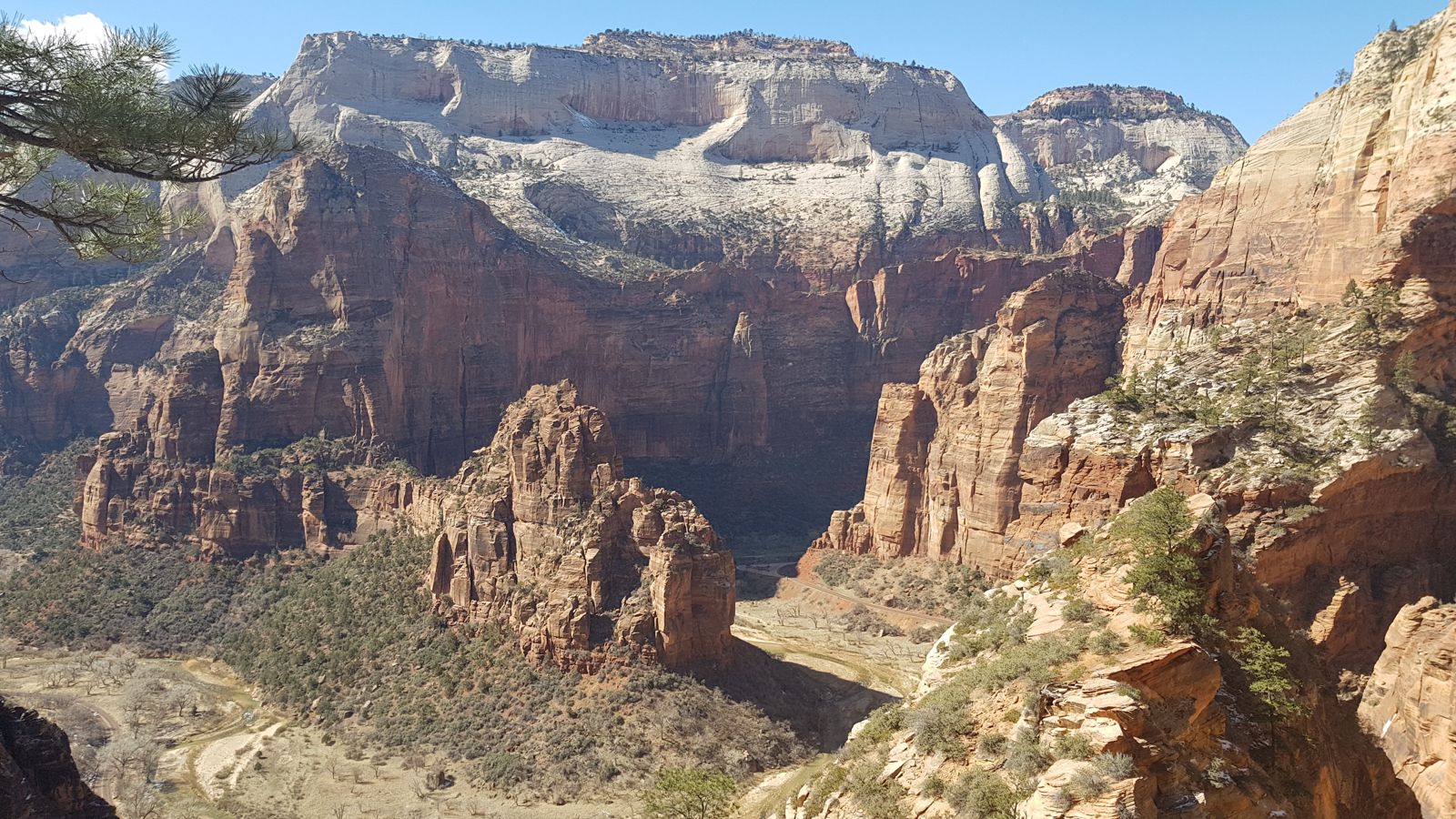
Although it was cold, the sun was beating down on our faces and we preferred to head down before getting sunburnt. Keeping our balance on the steep parts was sometimes tricky, but we were still laughing just as much. I fell over stupidly while pretending to be a skier going straight down the slope, and luckily landed in the powder at the side. We got the car back and took the scenic clifftop road through Zion National Park to reach Page, further south in Arizona.
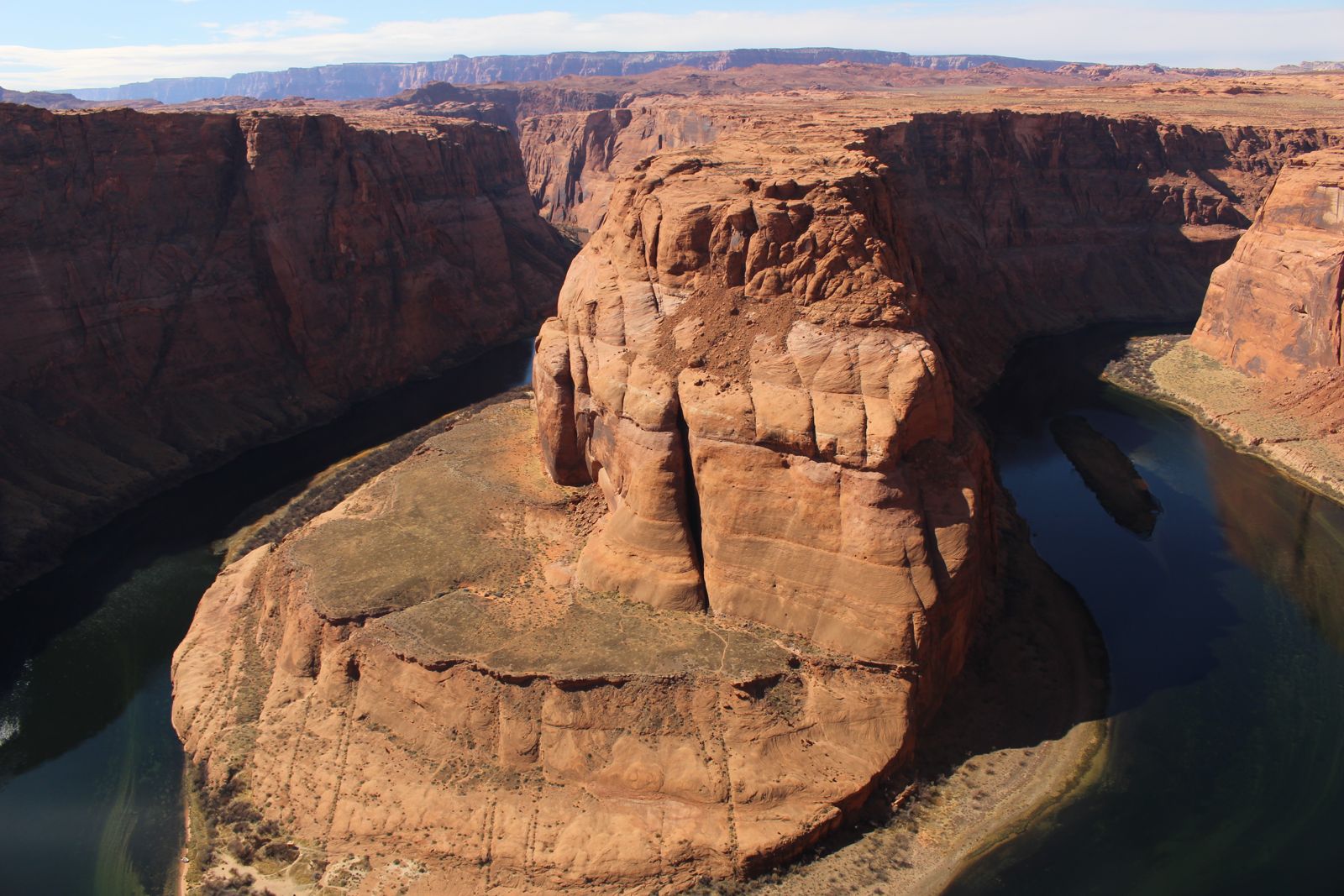
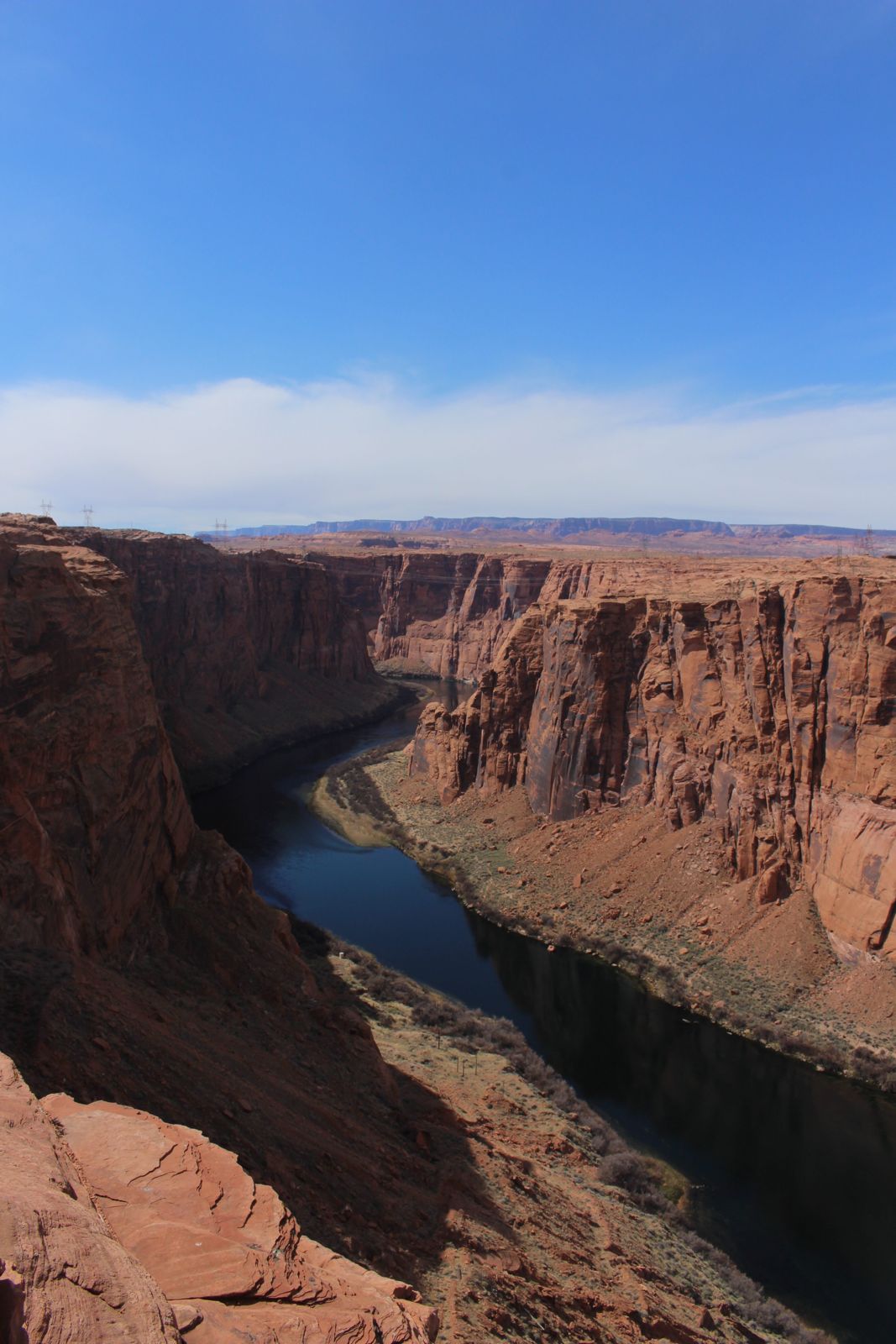
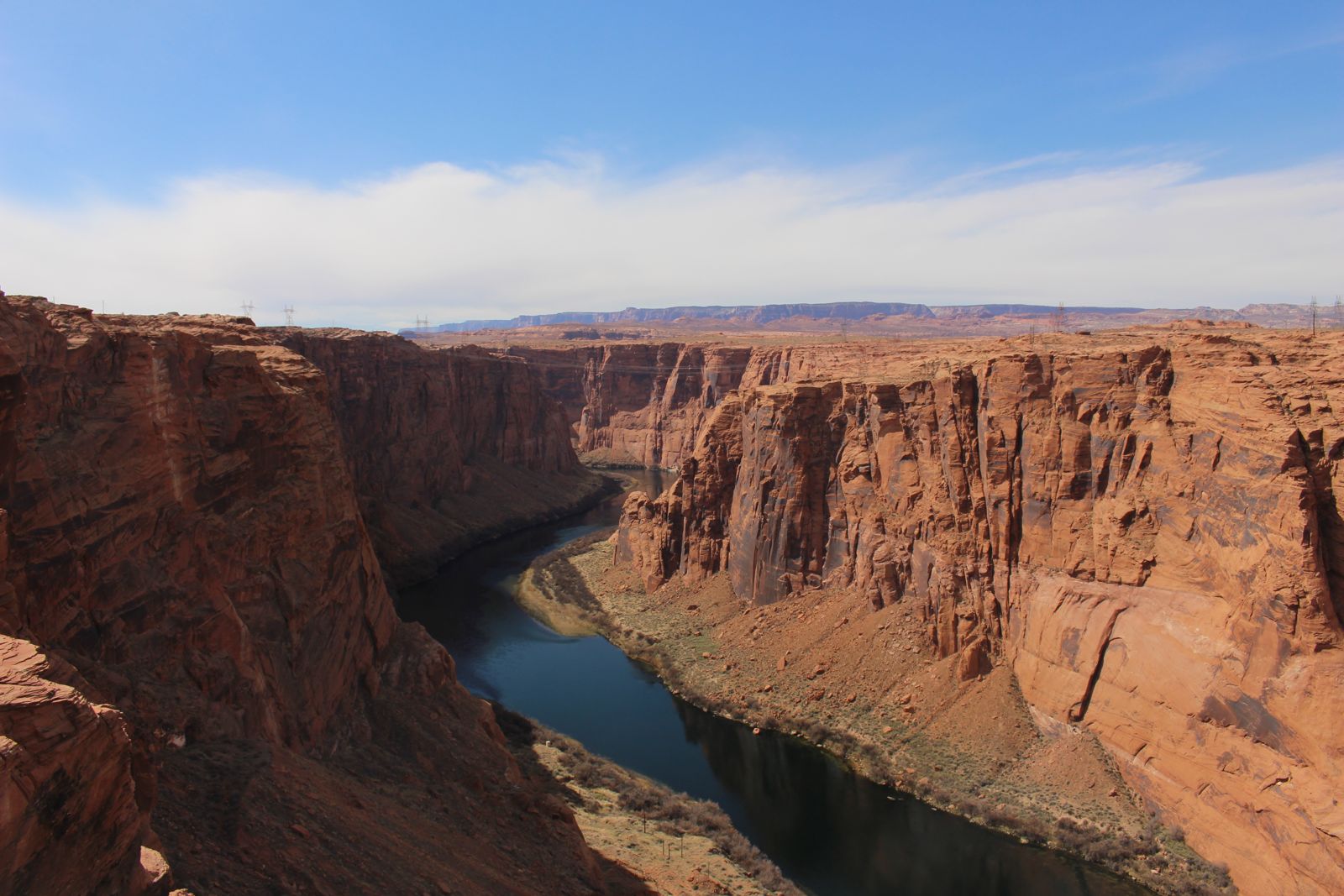
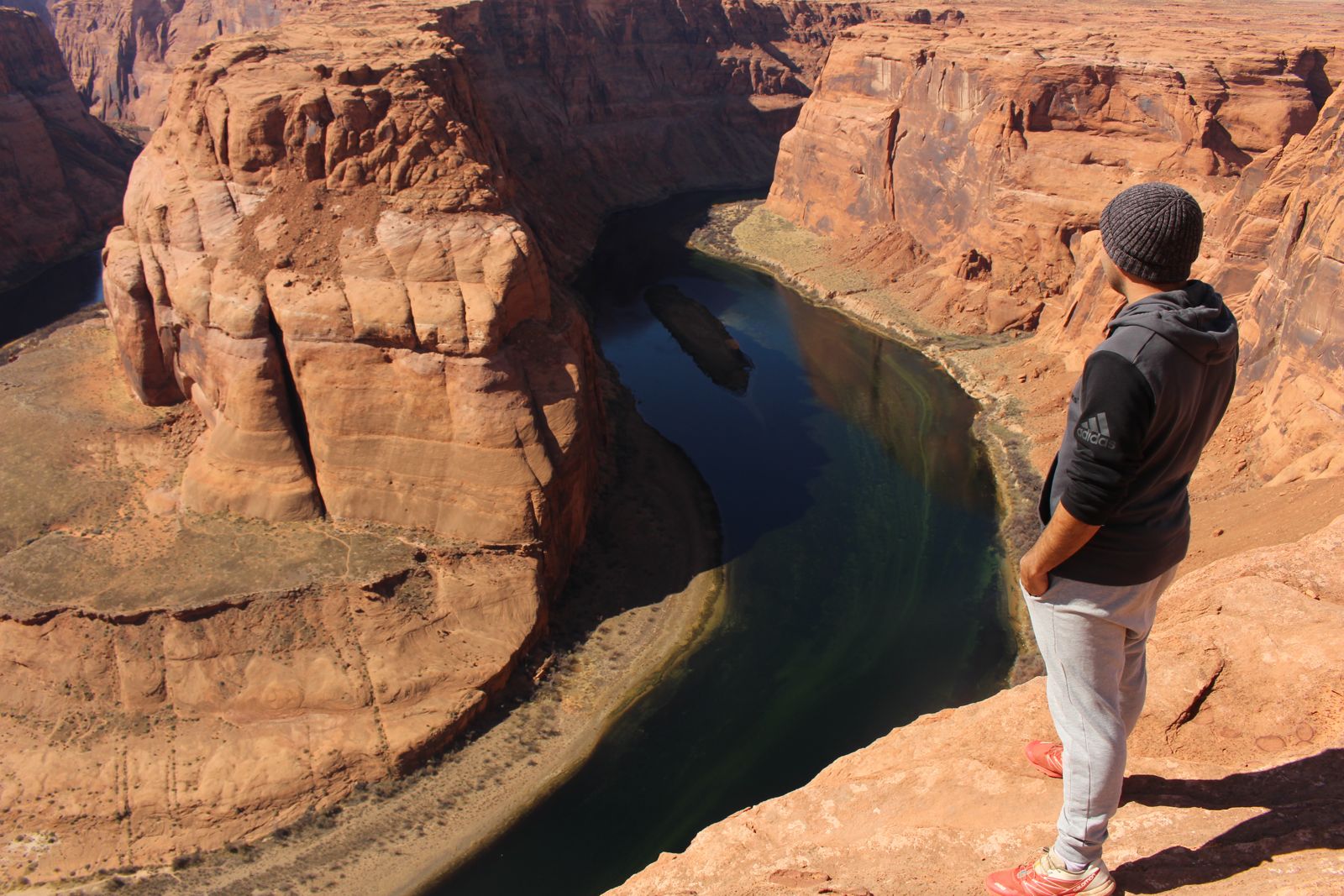
It was the gateway to several world-famous tourist attractions, notably the Grand Canyon and Antelope Canyon. We checked into a cheap hotel and first went to see the famous Horseshoe Bend, the horseshoe-shaped curve carved by the Colorado River, which you can see in films like Into the Wild, where the main character canoes down it. The absolutely threadbare safety measures surprised us enormously. Nothing separated us from the drop, and the edges of the canyon were full of irregularities that made it all really dangerous.
We weren't surprised to learn that around ten people die there every year, often while taking photos too close to the edge. We noticed that we didn't have the same sense of danger as people from other cultures. When we got within a metre, some Chinese women started shouting loudly to get us to step back. Caution was clearly more the norm for them.
We then headed to Antelope Canyon, where we'd booked a guided tour of the crevices formed by regular flooding. When we arrived, the host warned us about safety measures related to "flash floods", frequent in the area, and said we might have to get out very quickly. It doesn't even need to rain on Antelope Canyon for it to flood, and a group of tourists paid the price in 1997, all killed by a wall of water that came out of nowhere. On Navajo land, we were welcomed by a Native American man performing a traditional dance. Our guide arrived, a young Navajo man in his twenties, and led us to the entrance of the site. We went down via metal ladders firmly anchored in the rock, the previous wooden ones having been swept away by floods.
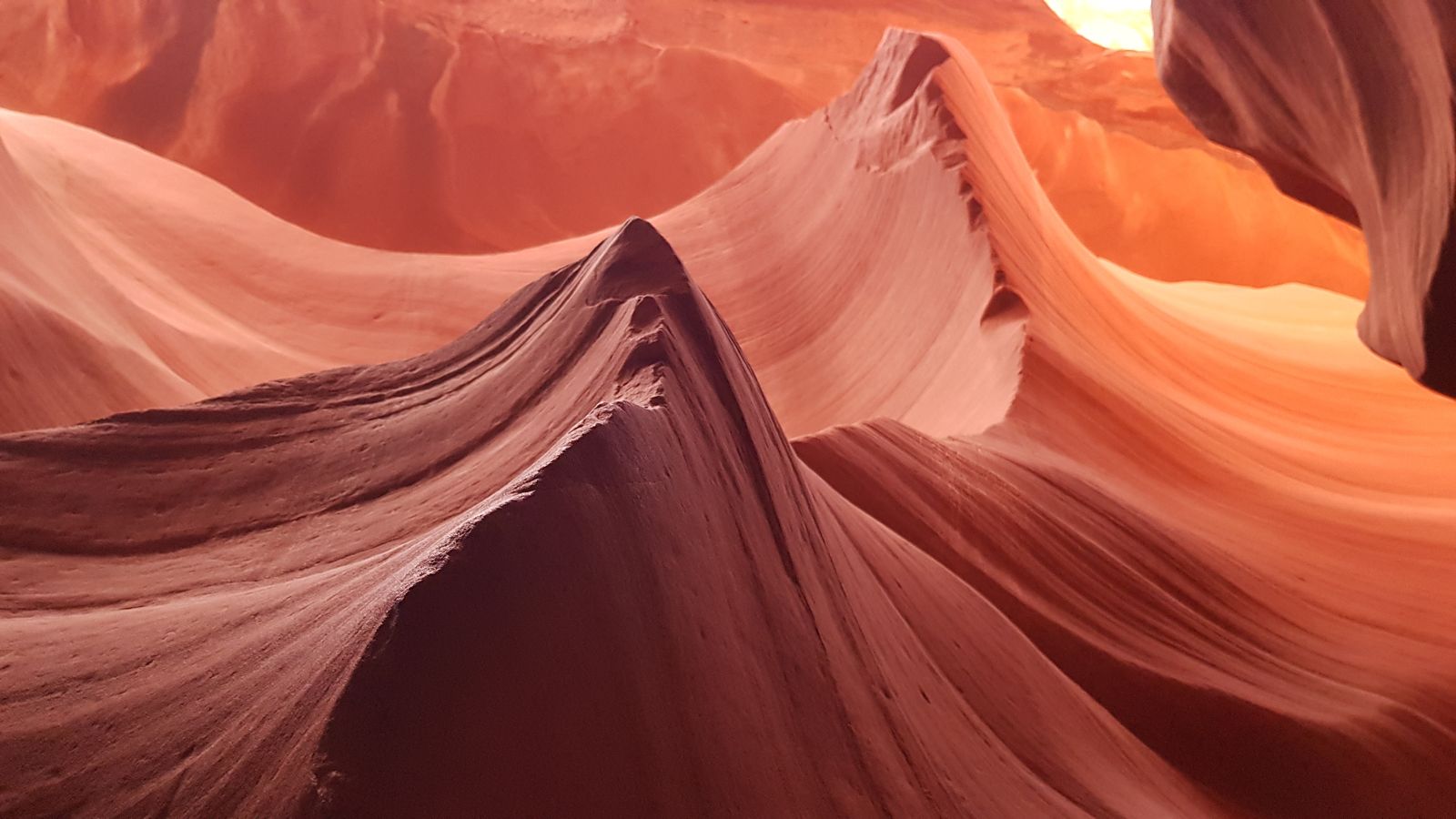
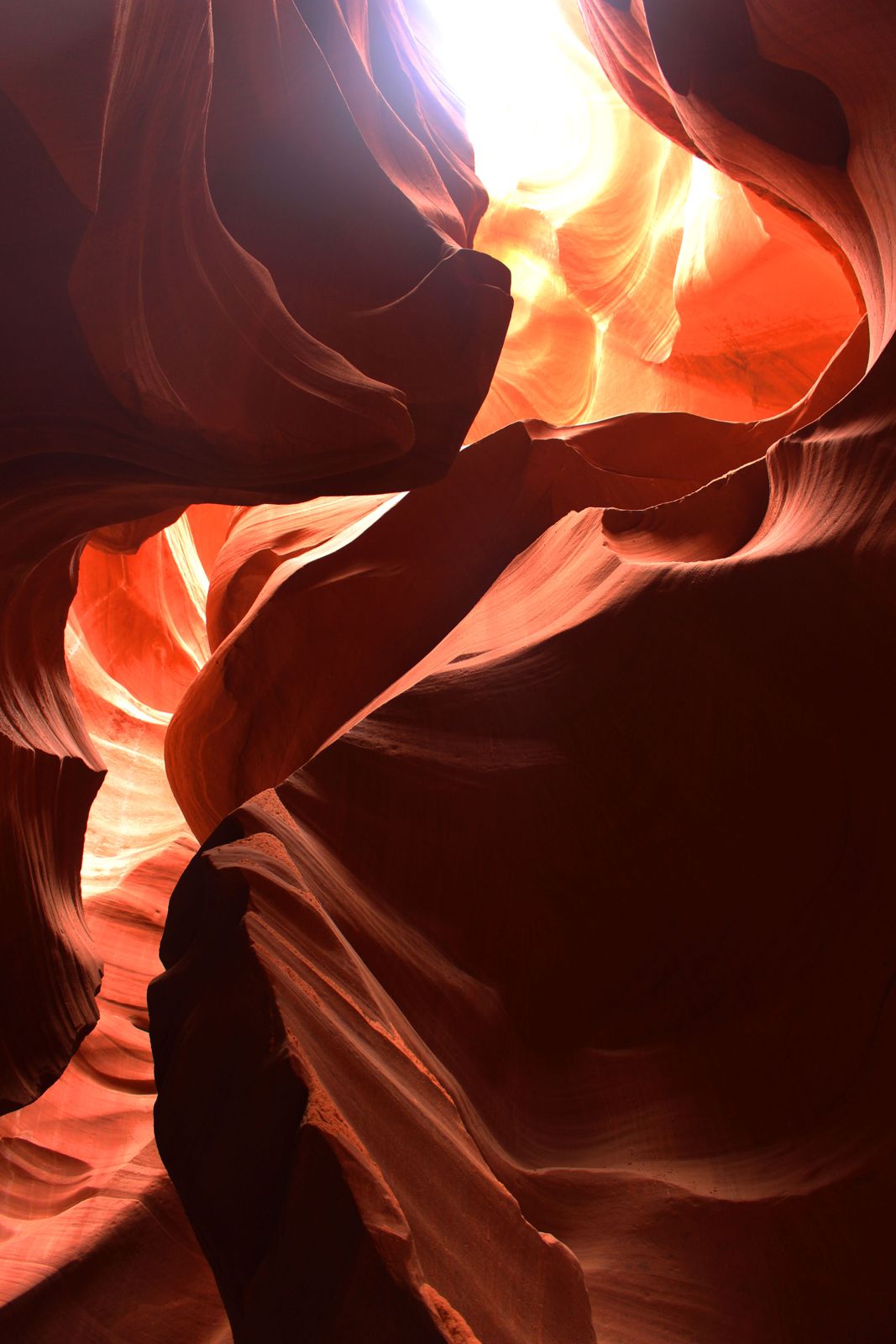
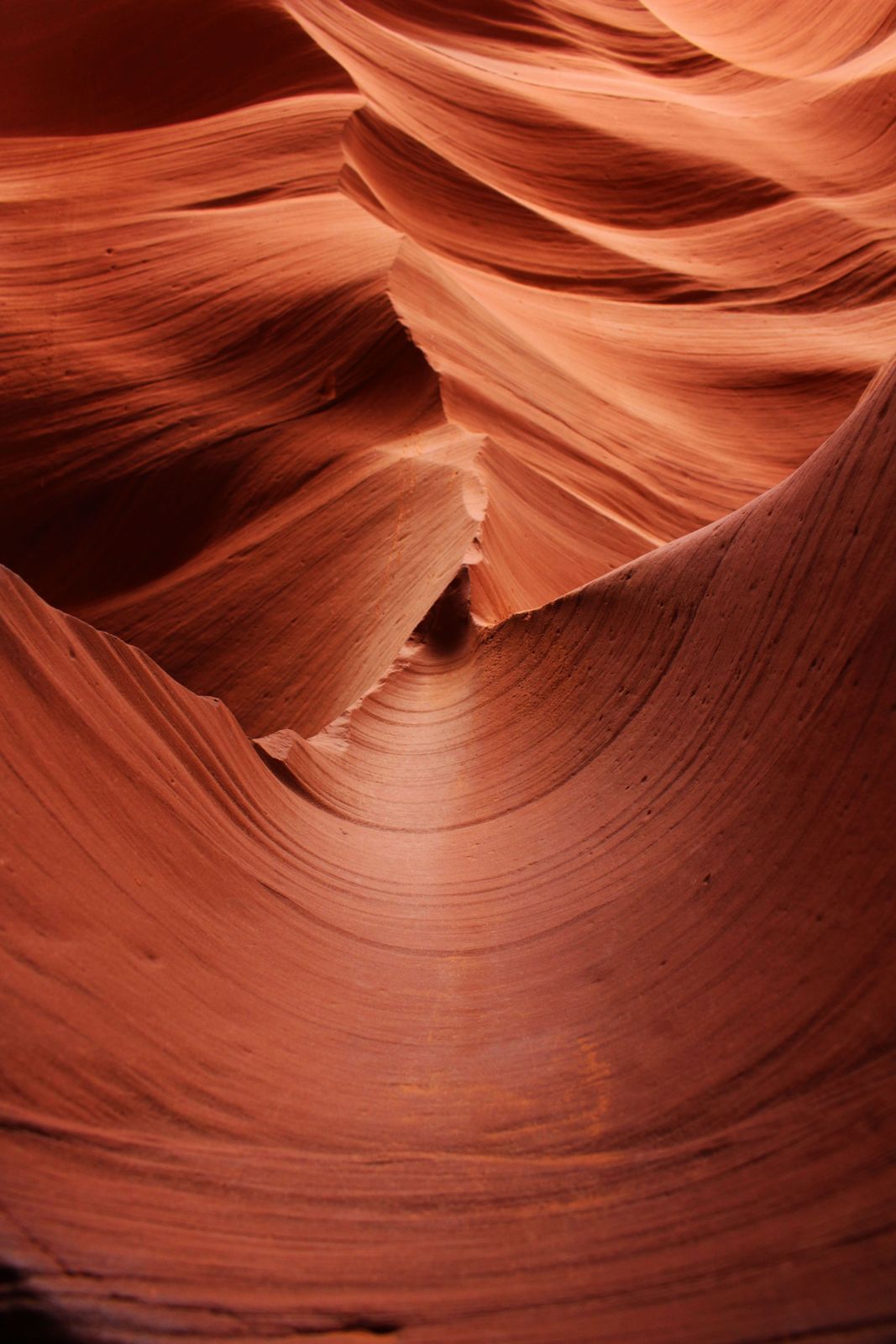
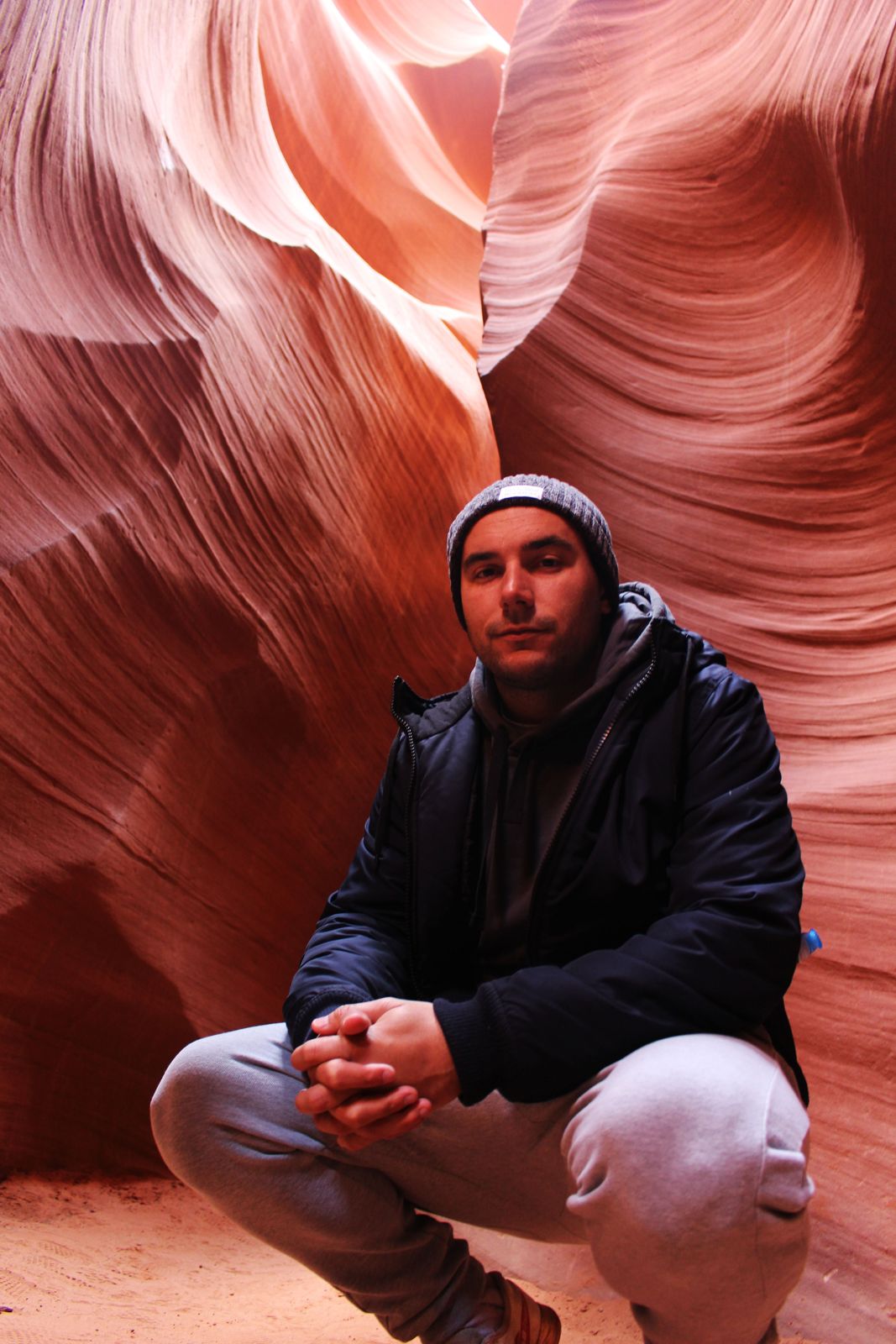
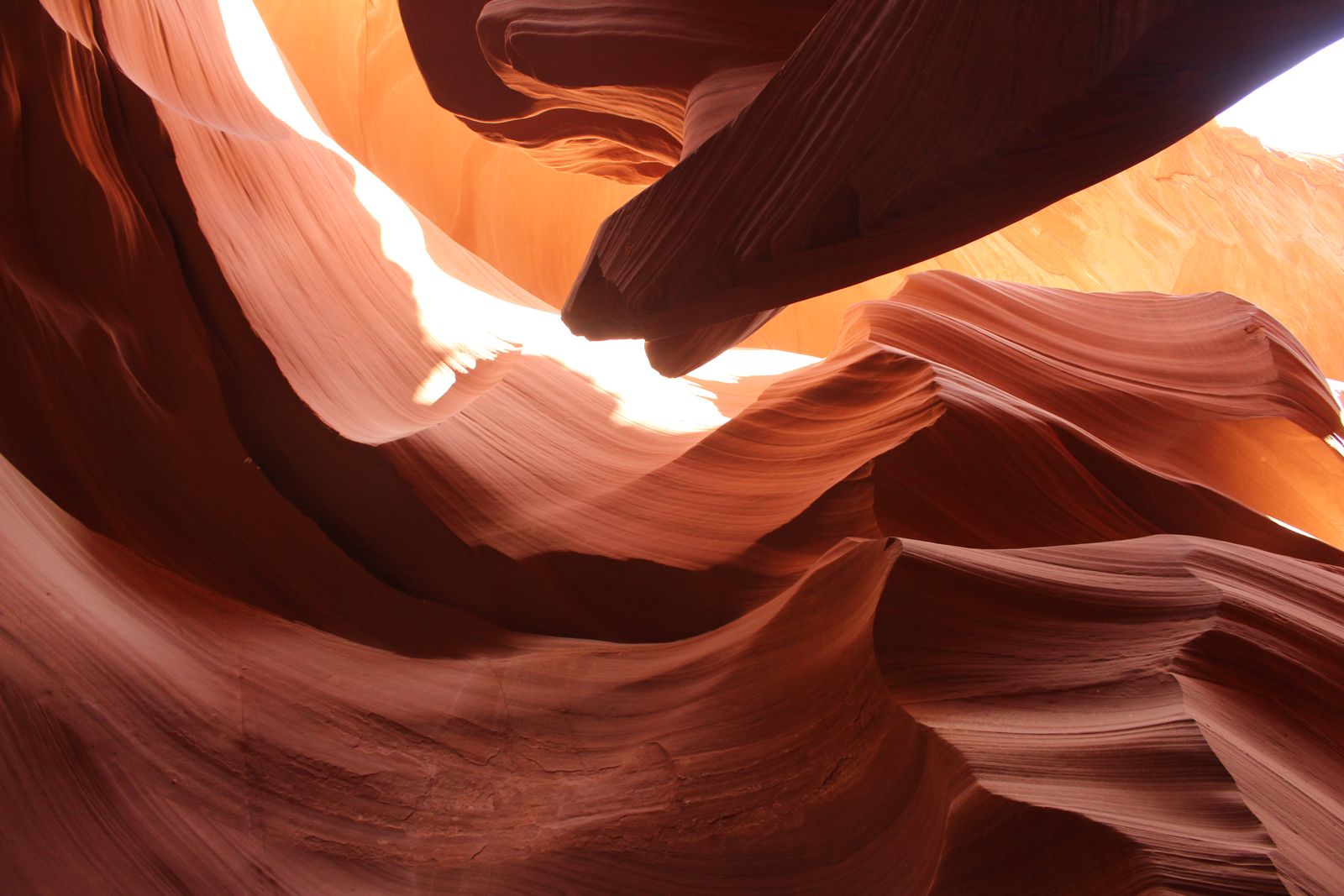
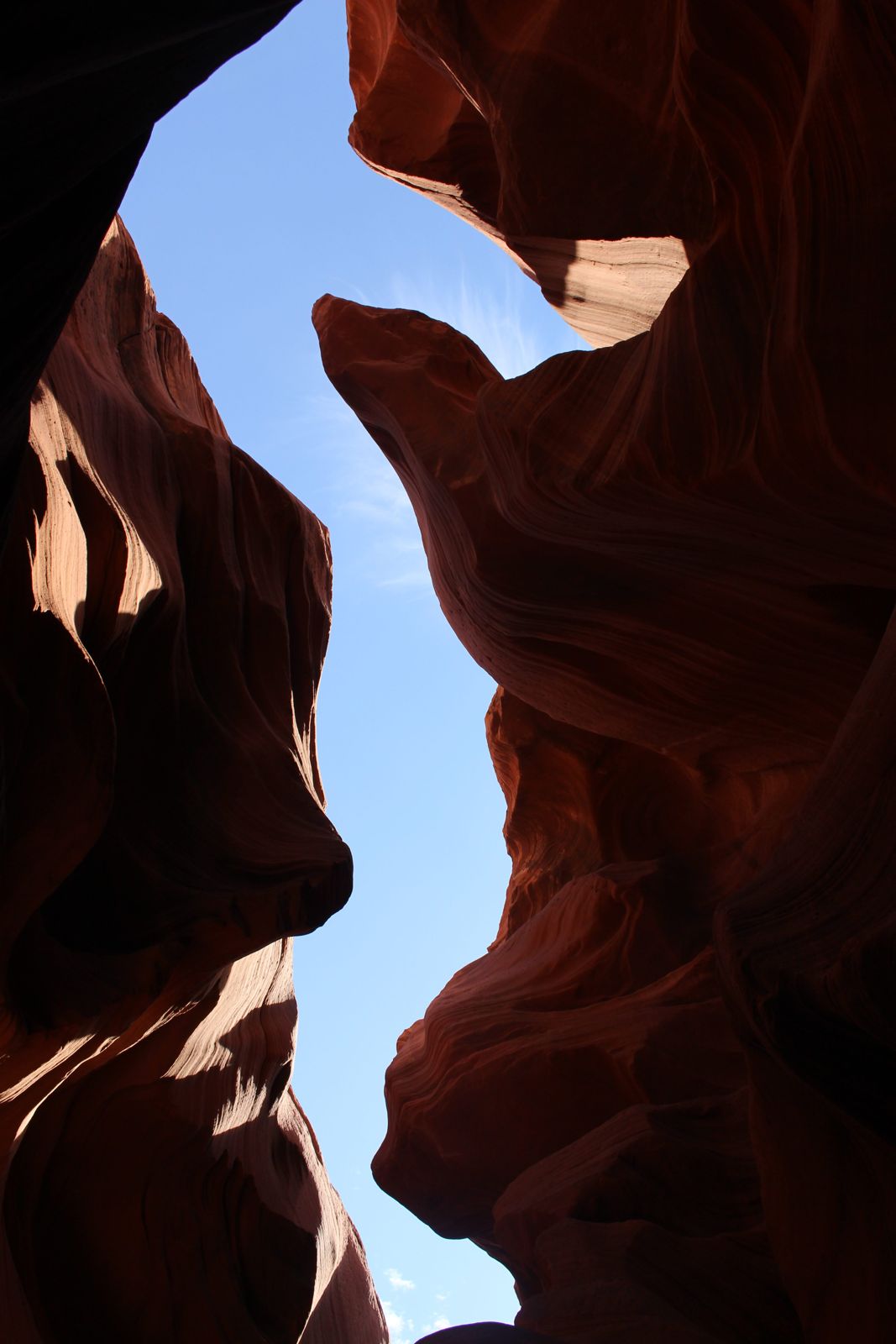
Inside, we were surrounded by orange-red rock and could follow a chaotic path up the bed of this occasional stream. The sun only touched the place when it was at its highest, so it was colder there than elsewhere. The rock took on incongruous shapes: sharks, women's heads and whatever else the imagination could find. Our guide was an expert photographer and adjusted our phones to get the best possible results. The walk was very pleasant, and the quiet was soothing to the ears. The guide's stories captivated us, and after climbing the ladder out, we left him a generous tip.