 ← PreviousFrom the P'tit Train du Nord to the Rawdon falls
Sunday 21 June
Before a long road trip in a new country, we have a habit: do a short one first. It shows what works and what needs fixing. In Australia, two weeks between Sydney and Brisbane had shown us how easy it was to live day to day there: the wide open spaces were ours and the facilities lined the road for travellers.
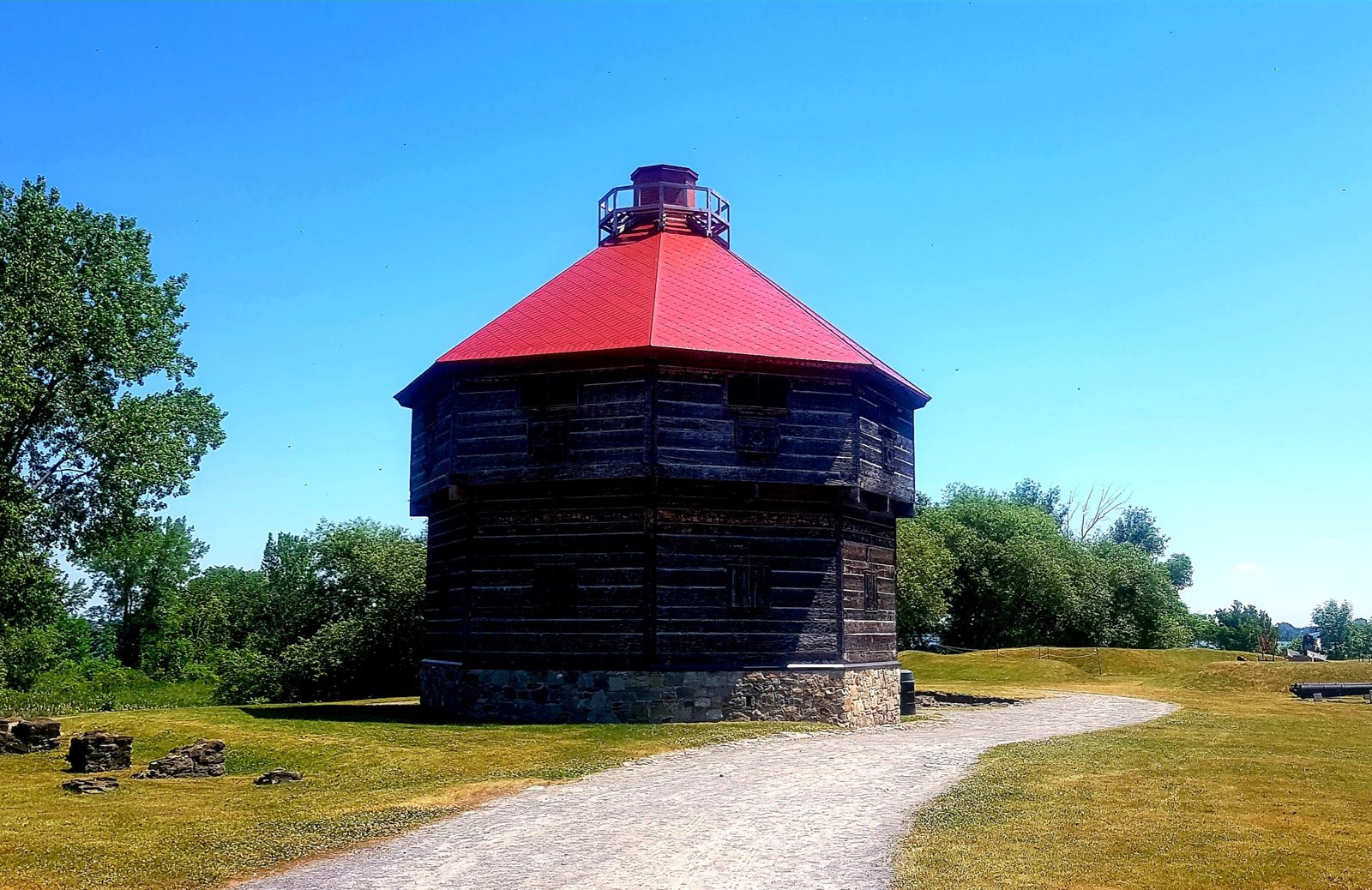
On Wednesday 24 June Quebec celebrates its “national” holiday, Saint-Jean, and we take the chance to make a long weekend of it and test our gear. Everything is new, from the car to the tent and the sleeping bags. We head for Ontario and the Thousand Islands, which will save us a few days on the real road trip, now fast approaching. We leave at 11 am and stick as close as we can to the majestic St Lawrence. A scenic road runs alongside it, stopping at sites often linked to the War of 1812, when the British held the river against the Americans: outposts, blockhouses, fortifications. The historical interest is slight, but it's a beautiful day, so we dawdle.
We cross the border between Quebec and Ontario, unguarded for two weeks now: we change provinces quite legally, our first big move in four months. Through small towns and unremarkable stretches of road we land at our stop for the night, Brockville. This town of 22,000 people has a quiet charm, no doubt heightened by Covid. The streets are deserted, but a few bars have reopened their terraces, a luxury still forbidden in Montreal that we save for tomorrow. Tonight the mission is to find a safe place to pitch the tent. Canada may be huge, but its most populated areas are locked up by landowners, and it's very hard to settle where you like, even on land that looks wild.
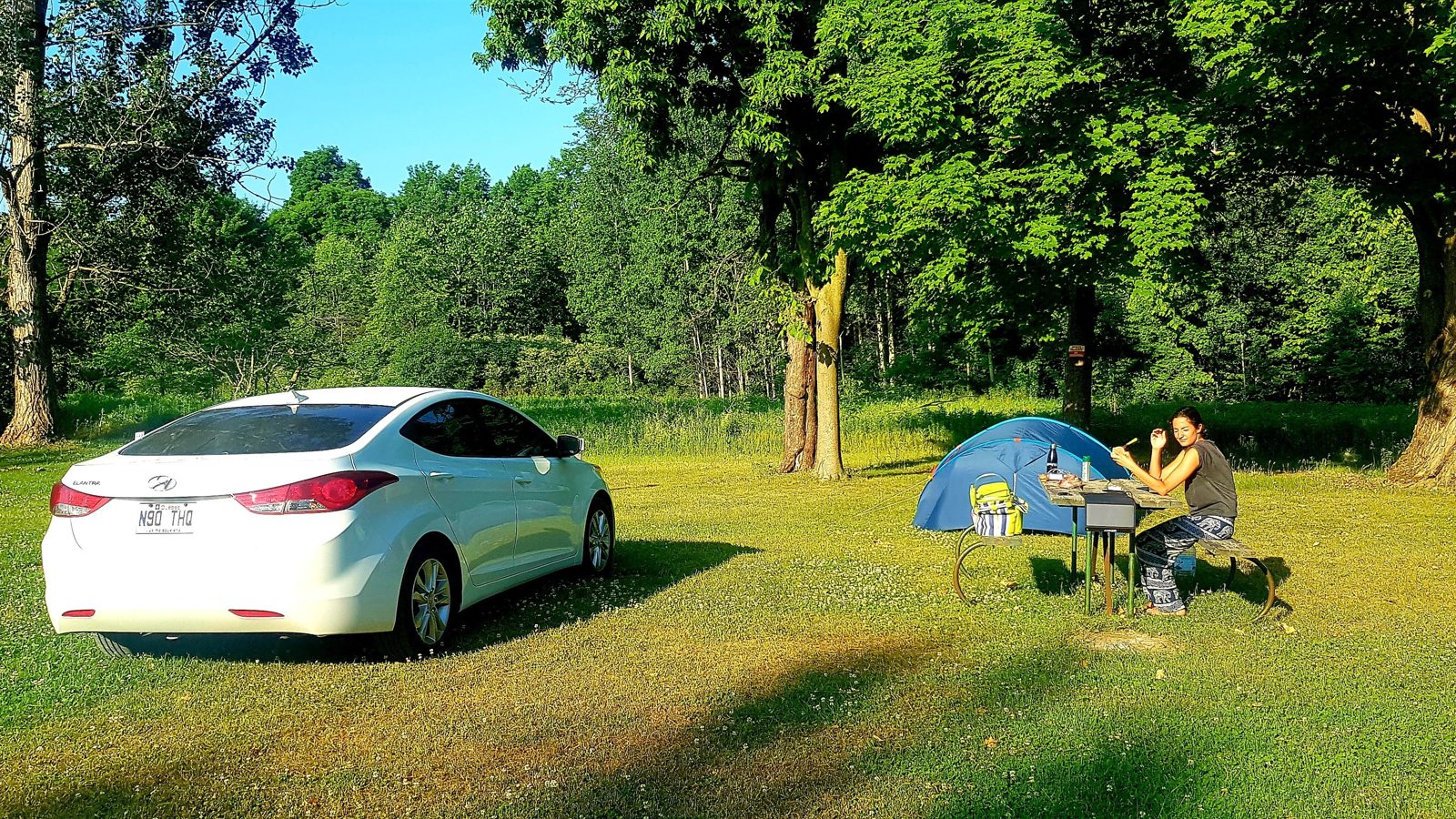
So we end up at a campsite that charges us the excessive sum of 42 dollars to occupy ten square metres and drive in five tent pegs for one night. The second-hand Quechua tent pleases us, and we even congratulate ourselves on choosing the three-person model, ideally roomy. The chairs do the job very well, and we eat salads in the fading light. Then it's time to test the tent in real conditions, and it isn't its fault the night will be bad. The campsite, the only affordable one around, sits beside the motorway, and what sounded like white noise in the evening becomes an unbearable soundtrack: trucks rumble endlessly along the 401 between Montreal and Toronto. Out come the earplugs, a tool you often forget when travelling and that sometimes proves a lifesaver.
Monday 22 June
We still manage to grab a few hours' sleep, and the gear passes its trial by fire: nothing to change there. After a modest breakfast we fold up our portable home; we'd dreaded it, and we're done in under five minutes. On to the Thousand Islands Bridge, which spans the river between Canada and the United States: a footpath is supposed to let you enjoy the view for free. By car the crossing costs five dollars, and we're not prepared to pay to cross an arm of the river and come straight back. Unfortunately, at the toll booth an old lady tells us the bridge is closed to pedestrians and will stay that way until the border reopens. One more sign of American influence: the border is two kilometres further on, yet pedestrians can be banned from the bridge on Canadian soil.
Disappointed, we follow the Thousand Islands Parkway towards Gananoque. On the empty road Stéphane brakes hard and pulls over: a turtle is crossing, and it risks ending up under the wheels if oncoming drivers aren't paying attention. We run to pick it up and set it down on the other side. We'll learn later that these shelled creatures are everywhere on this part of the river and the sight is nothing unusual. A passing cyclist calls out “Good job, guys!”, which makes us laugh a lot. Further on, a big stretch of land between the road and the water: a day-use rest area where you're also allowed to sleep in your car at night. We scout it out and discover, behind the trees, a little bay of crystal-clear water. Towels spread on the rocks, we dive into surprisingly warm water. Another unexpected creature then comes to say hello: a water snake, swimming a few metres from us without the slightest fear.
Coincidence or not, we leave soon after for the little town of Gananoque, an Indigenous name often translated as “the town of two rivers”. It's little known, because people think more of Native Americans in the United States or Aboriginal Australians, but Canada too is a widely colonised land whose Indigenous heritage was long simply erased from memory. The official term “First Nations” does justice to the primacy these peoples ought to have over the territory. Before the settlers came, dozens of nations shared the land, and although no one knows how many people lived there, estimates range from one to twelve million. By comparison, Canada has 38 million inhabitants today. Some peoples have won a place in the popular imagination through the tales of the first explorers and the clichés that go with them: the Inuit, notably.
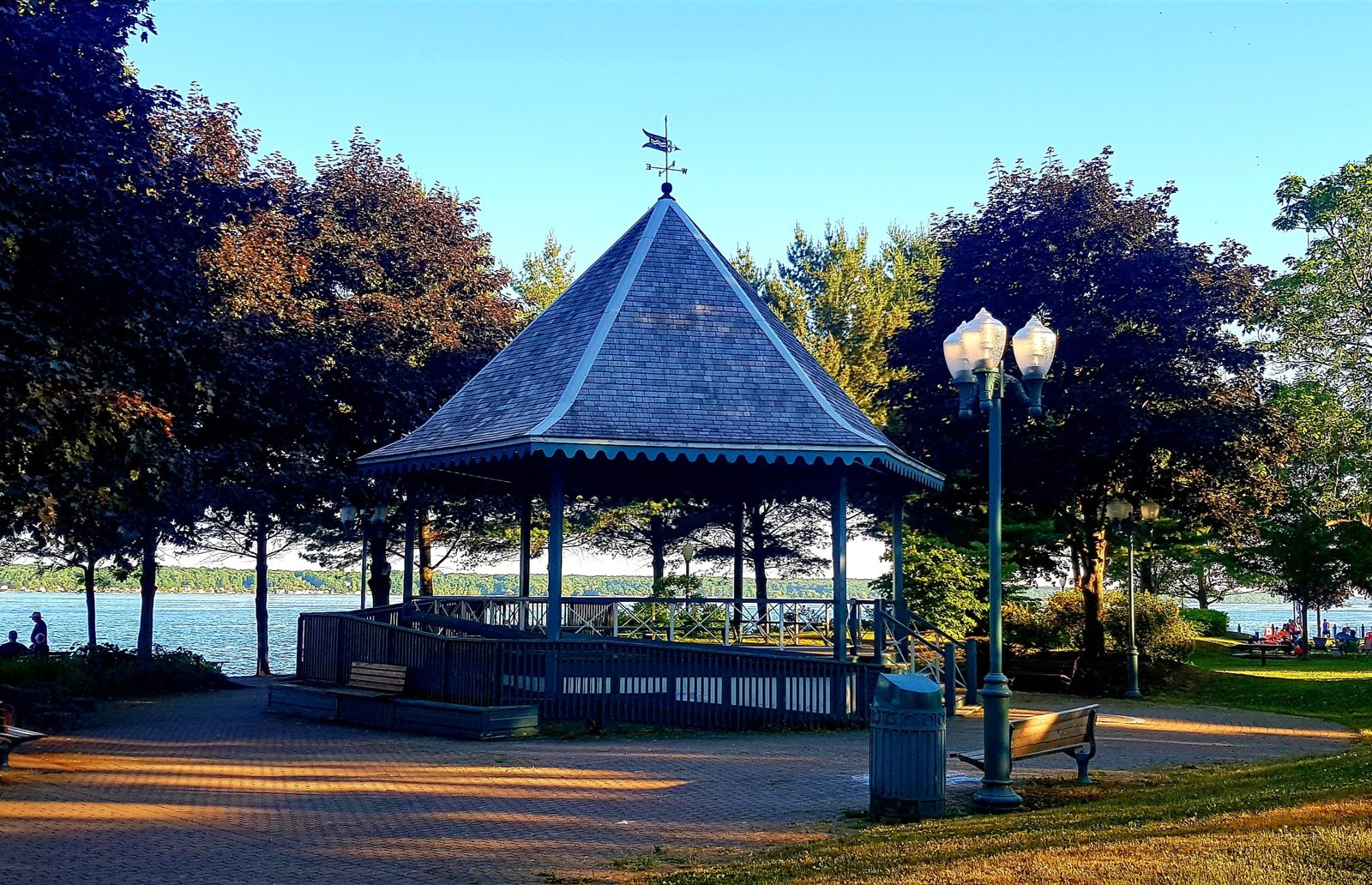
In Gananoque, though, apart from a few place names, there are few traces of that heritage; rather a strong whiff of wealth. The houses along the river are luxurious and the town has undeniable charm. It even has a little beach where we spend the afternoon, sitting like two pensioners on our camping chairs, reading and chatting in the sun.
Like many, we used lockdown to get fit and start running regularly again. Not wanting to break the momentum, we go back to our little bay from lunchtime, change and set off for ten kilometres. It's hot, very hot, and we finish soaked and jump straight into the water. Out comes the Aleppo soap: we take the chance to wash in the river. It takes a good ten minutes to stop sweating, and the warm St Lawrence doesn't help. Once clean, dried like oysters on the hot rocks, we head back into town to finally have a drink on a terrace!
Two ciders, and the terrace's lazy atmosphere traps us: when the waitress asks if we'd like to eat, we say yes. What a mistake! As so often in tourist spots, the food is barely passable and far too expensive. We don't leave upset, but we won't be caught again during the road trip. A man comes over on hearing us speak French. A former soldier, he came to live here for the calm of the river and is surprised to meet so many French speakers these days. We explain that the Quebec holiday gives a long weekend: the canniest Quebecers have slipped off to Ontario, where they know they'll be left in peace.
The sun is already setting; we cut the conversation short and head to our spot for the night. Two other cars are parked there: we won't be alone. We settle in, get our sleeping things out, and the night begins… or so we think. Because a recent car means a well-insulated car, and a tightly closed cabin means rapid condensation. We open the windows, and the mosquitoes pour in with delight. An impossible situation: we go and park in town, hoping there'll be fewer insects than by the water. A quiet little street, windows slightly lowered, and we wait and see. The pests are scarce, the air comes in with a cool breeze. We fall asleep like that, until the sun wakes us early in the morning.
Tuesday 23 June
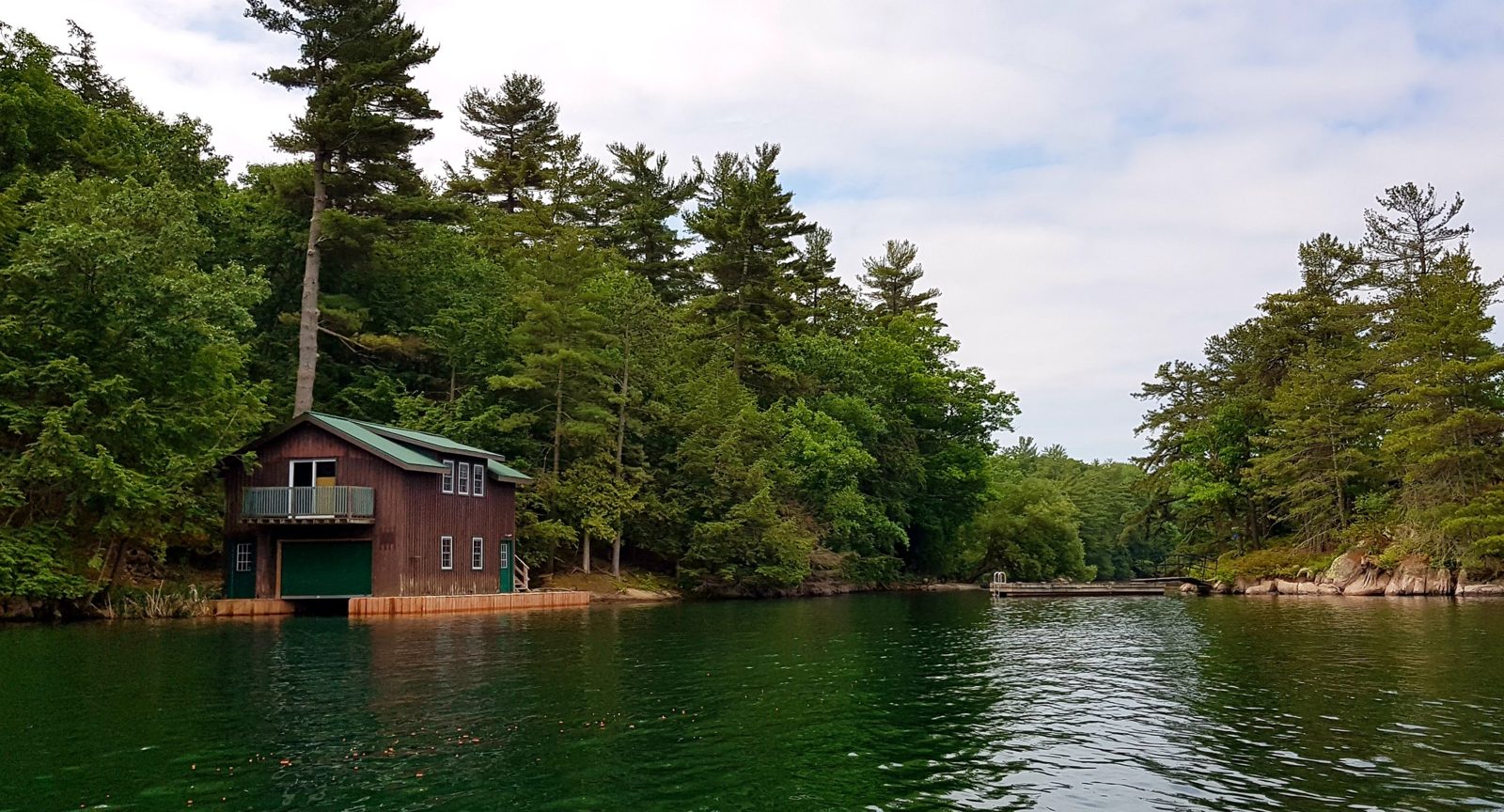
Lesson learned: we need mosquito nets to fit to the windows for nights in the car. Travellers' tip: always test your gear before setting off for a long time. A little shopping for the day, and at 9 am we turn up at a small cottage that rents canoes. The owners are, to our surprise, Quebecers, and get our boat ready in a few minutes. Here we are on the water for the day, ready to explore the heart of the Thousand Islands, which only truly reveals itself from the river. A bit of a cold shower: we can only land on four islands, owned by the Canadian government. All the others have been bought up over the decades by private owners, who have put this natural place under a bell jar. The result glides past our paddles: sublime houses built on bits of rock rising from the water, empty ninety per cent of the year since they're only second homes.
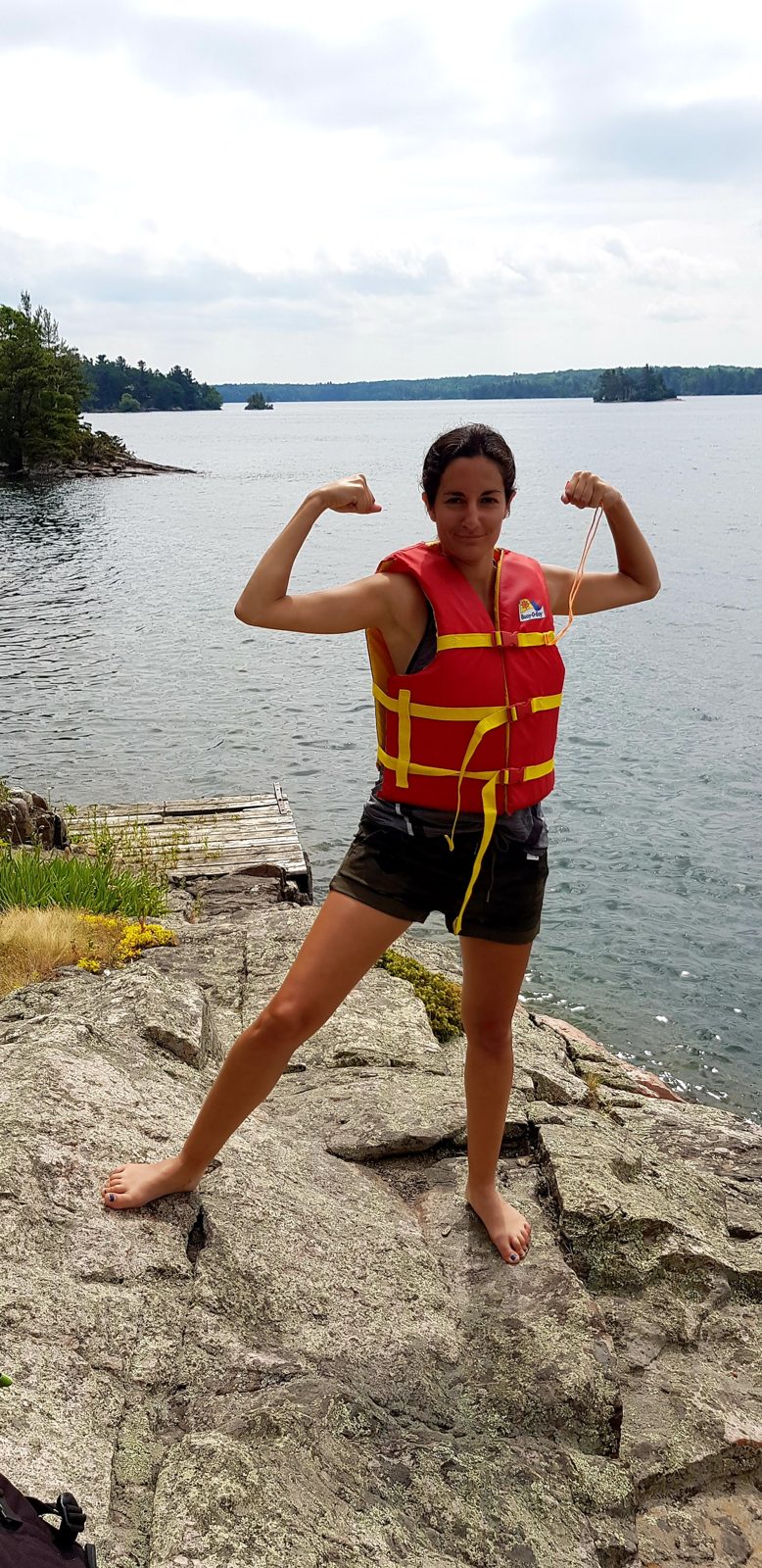
An hour of paddling to reach the furthest island open to ordinary non-millionaire visitors like us. The current is with us, and above all the wind. It's a very windy day, hence the good waves we ride in the open arms of the St Lawrence. But as soon as we slip into a small archipelago, the river turns to glass and paddling is a delight: no need to push, you just let yourself drift and listen to the birds, the paddle barely needed to steer. After an hour and a half we tie up the canoe at Mulcaster Island. Usually full of life and campers, the island is ours alone today, and we savour its sovereign calm. We eat some fruit while keeping an eye out for raccoons, which a sign describes as very aggressive. To reach the second island, rather than face the river's wide open stretches, we weave between the islets, where the current is gentler, taking time to admire the magnificent scenery unfolding around us.
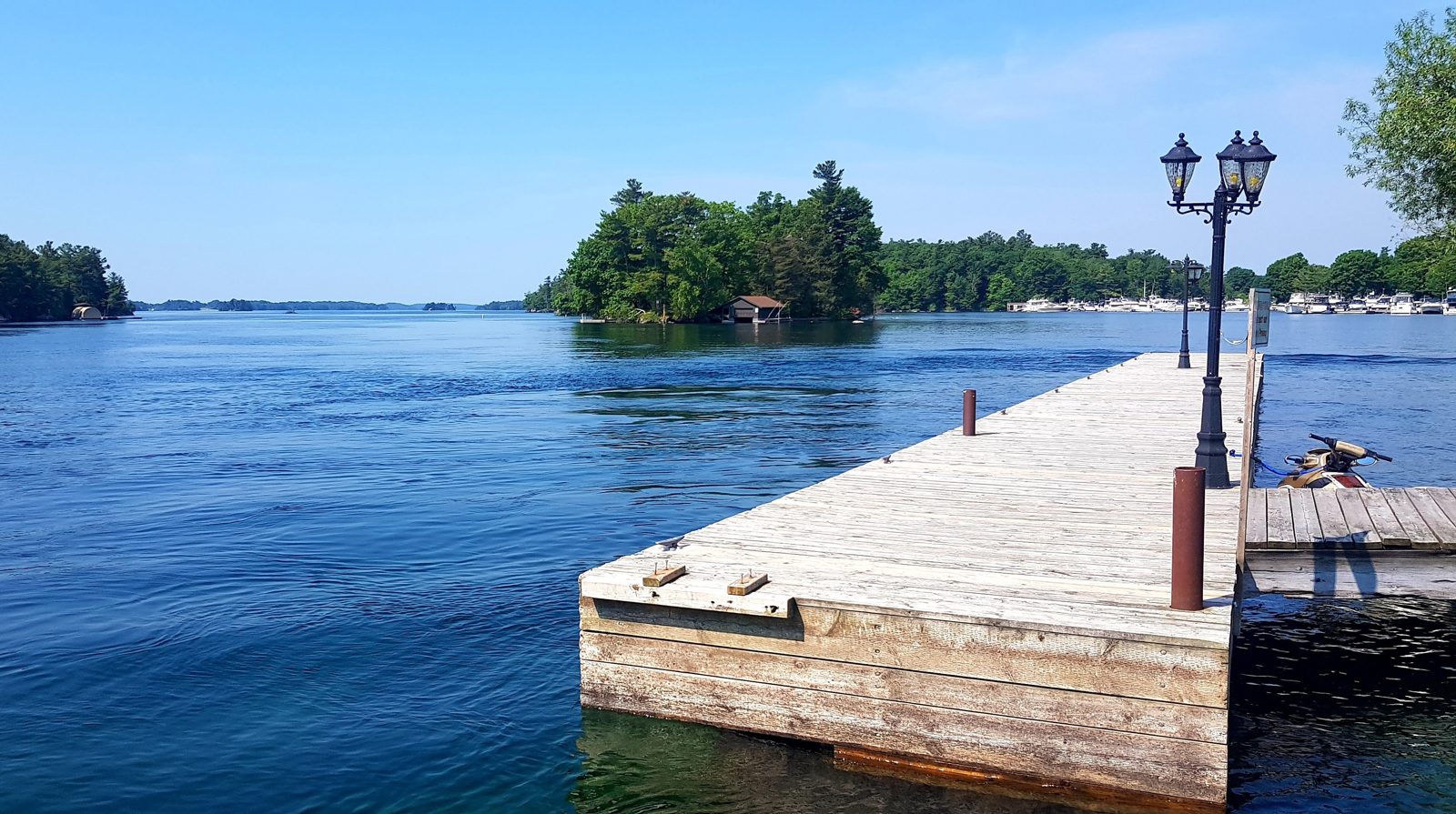
The second crossing is far less restful: we have to fight the wind and the current. We almost paddle on the spot for over half an hour and arrive exhausted after nearly an hour of effort. Rest well earned. A simple picnic, then we lie down on a scorching jetty that we cool with great splashes of river water. We stay there nearly two hours, savouring the moment, the view, the silence. Around 3:30 pm we get back in the canoe for the return to the cottage. Wind and current are against us again, but less than on the way out, and we cross in barely thirty minutes.
Gear returned, we head for Kingston. Cassandre is exhausted from the restless night and the day of canoeing: we stop at a small beach by the river for a well-earned nap in the shade of a tree. But the sky darkens with threatening clouds and we weigh anchor for the city. We'd spotted a public facility with showers and toilets; Covid oblige, everything is closed. No way to wash, use a toilet or even fill our water bottles. And to top it all, it starts to rain. Faced with this impasse, we book an Airbnb at the last minute, and luckily a host agrees to take us in. A quick beer on a terrace, a stop at the supermarket, and here we are in a real bed for a night far calmer and more comfortable than the last.
Wednesday 24 June
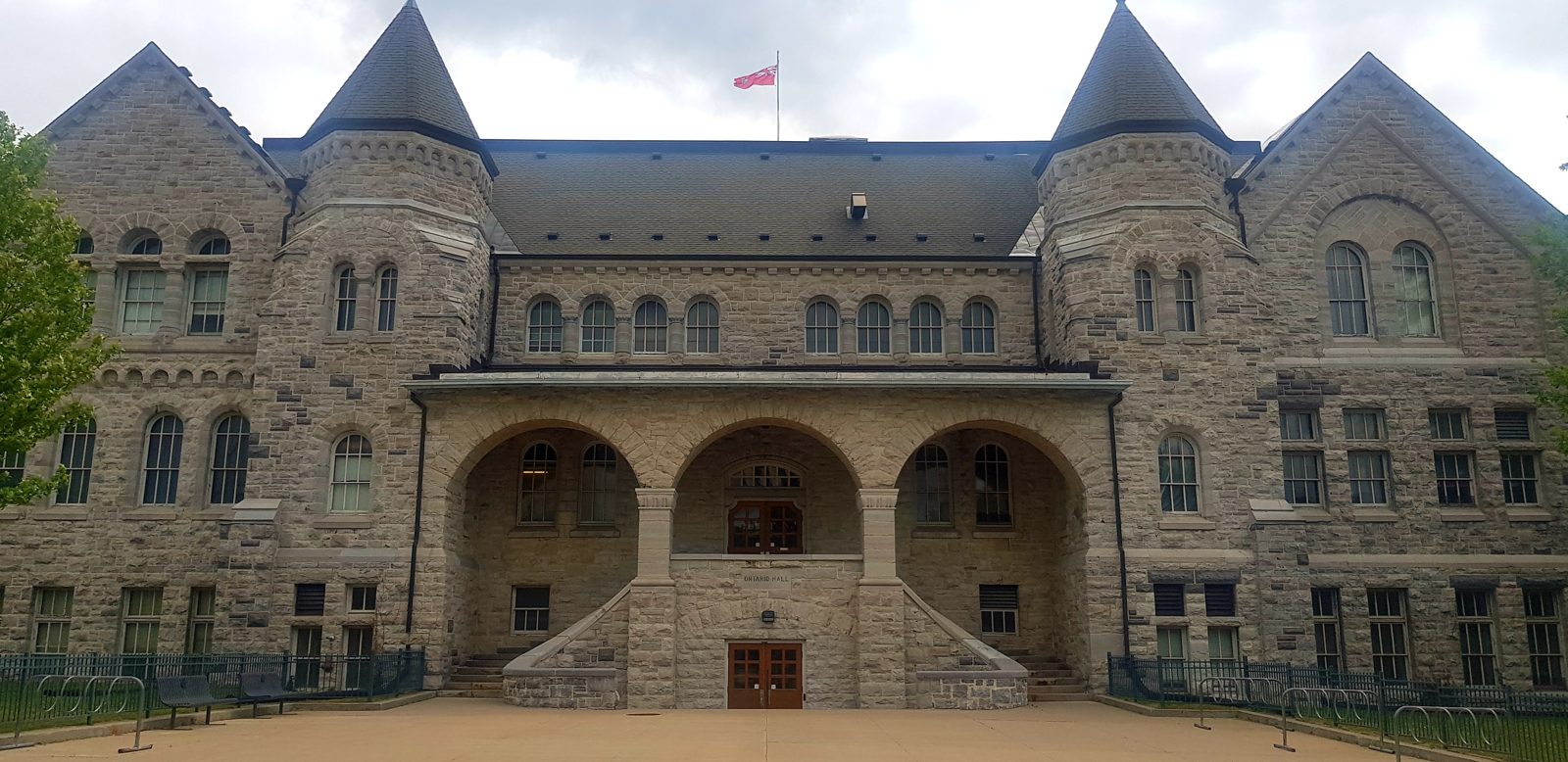
Founded in 1673 and the first capital of the Province of Canada, Kingston stands where the St Lawrence, the Rideau Canal and Lake Ontario meet. That strategic position made it an important military town: there's Fort Henry, a national historic site, a military base and the Royal Military College of Canada. In 1840 a fire ravaged the town, and the mayor of the day banned wooden buildings in favour of brick and stone, above all limestone, hence its nickname “Limestone City”. Strolling around, you do indeed pass many historic buildings, including the magnificent Queen's University. As in most English-speaking countries, its campus spreads over several buildings and parks where anyone can walk freely, student or not. Normally it would be buzzing with life; for the reasons we all know, its paths are empty.
Next we reach the shores of the huge Lake Ontario, where a gale is blowing. It's not the mistral, but nearly, and several windsurfers are having a whale of a time. The city is famous for its exceptional sailing conditions: it has hosted many sailing competitions, including the events of the 1976 Summer Olympics.
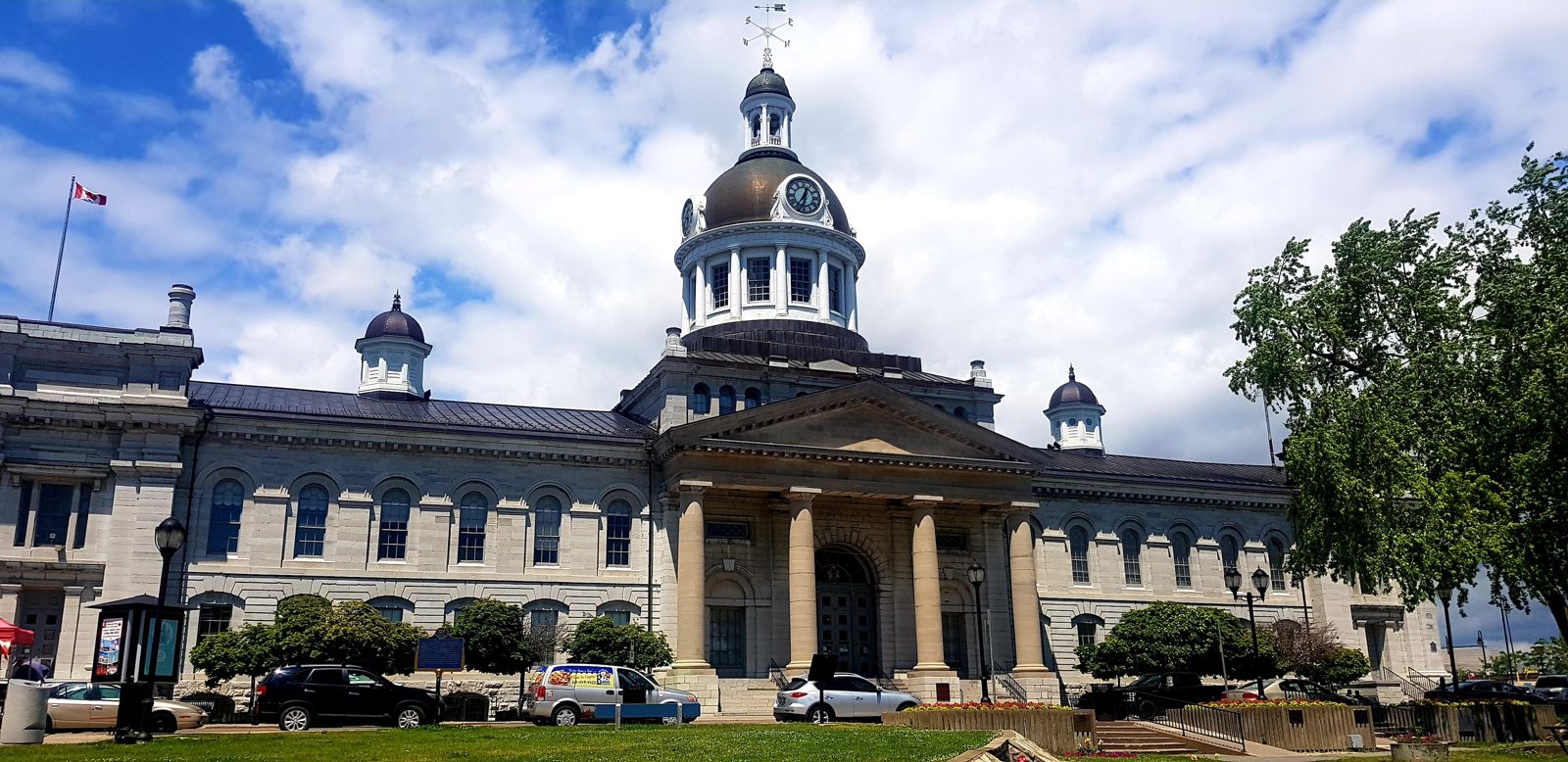
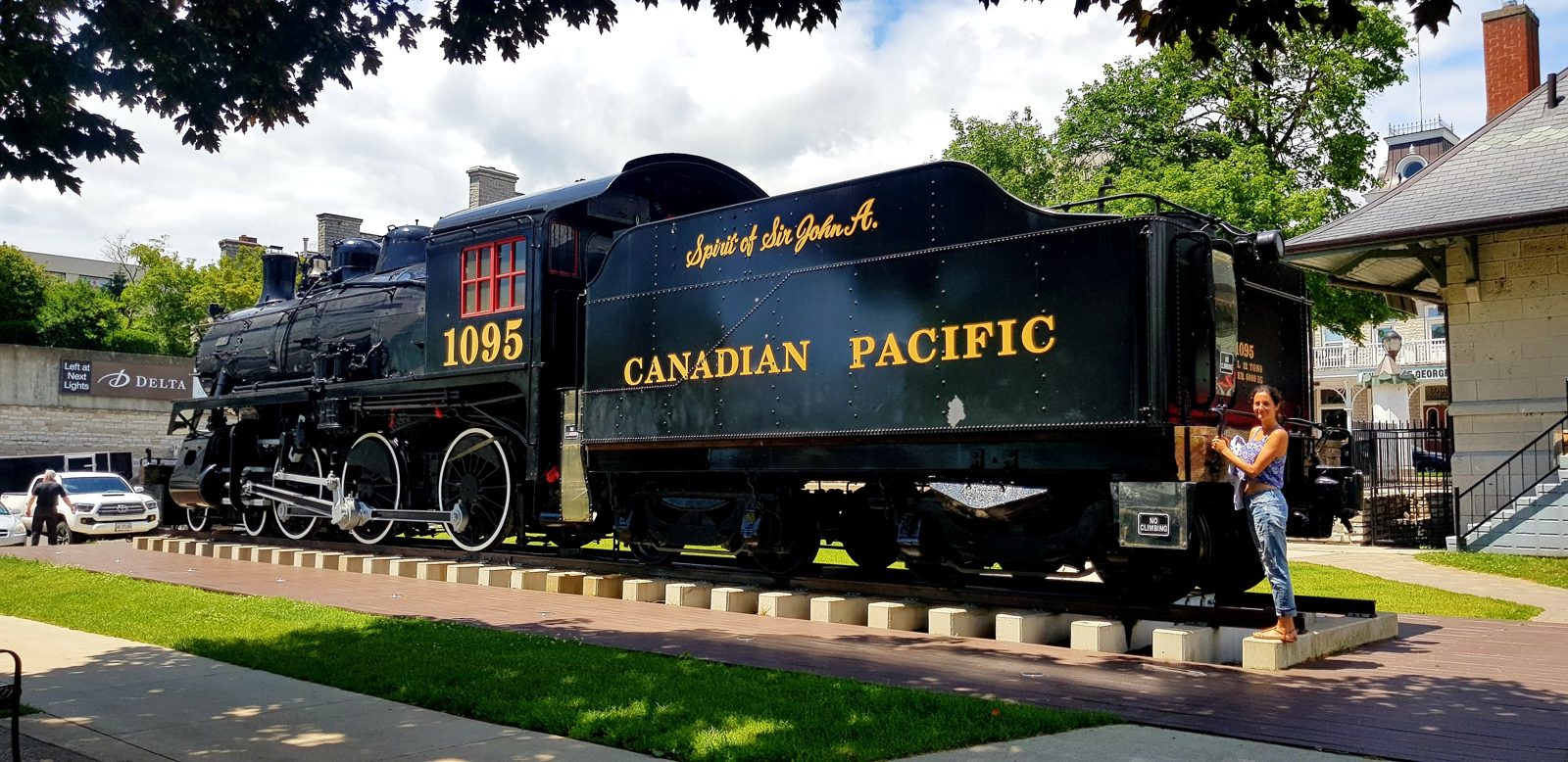
Finally, the historic centre. It isn't very big, but it has real charm and the relaxed feel of a seaside town. The main streets are full of shops, restaurants, bars and cafés. The magnificent City Hall, reminiscent of the great Anglo-Saxon buildings of American cities, faces the lake. Across the street, between City Hall and the waterfront, the old Kingston and Pembroke Railway station, once the southern terminus of the line, now houses the tourist office; a restored old locomotive stands right in front, a reminder of Kingston's major role in the rise of the railway. Then we take the road back to Montreal, and three short hours later we're home, tired but happy to have finally got out of the city and seen some of the country.